On this page
- Key takeaways
- What is maitake, and is it the same as hen-of-the-woods?
- What are the benefits of a maitake mushroom supplement?
- What do federal health sources say about maitake?
- Maitake vs shiitake: what's the difference?
- How much maitake is in Betterly's supplements?
- Is maitake extract better than maitake powder?
- How do you take a maitake supplement, per the label?
- When don't you need a maitake supplement?
- Who should check with a healthcare provider first?
- FAQ: maitake mushroom supplements
- Sources
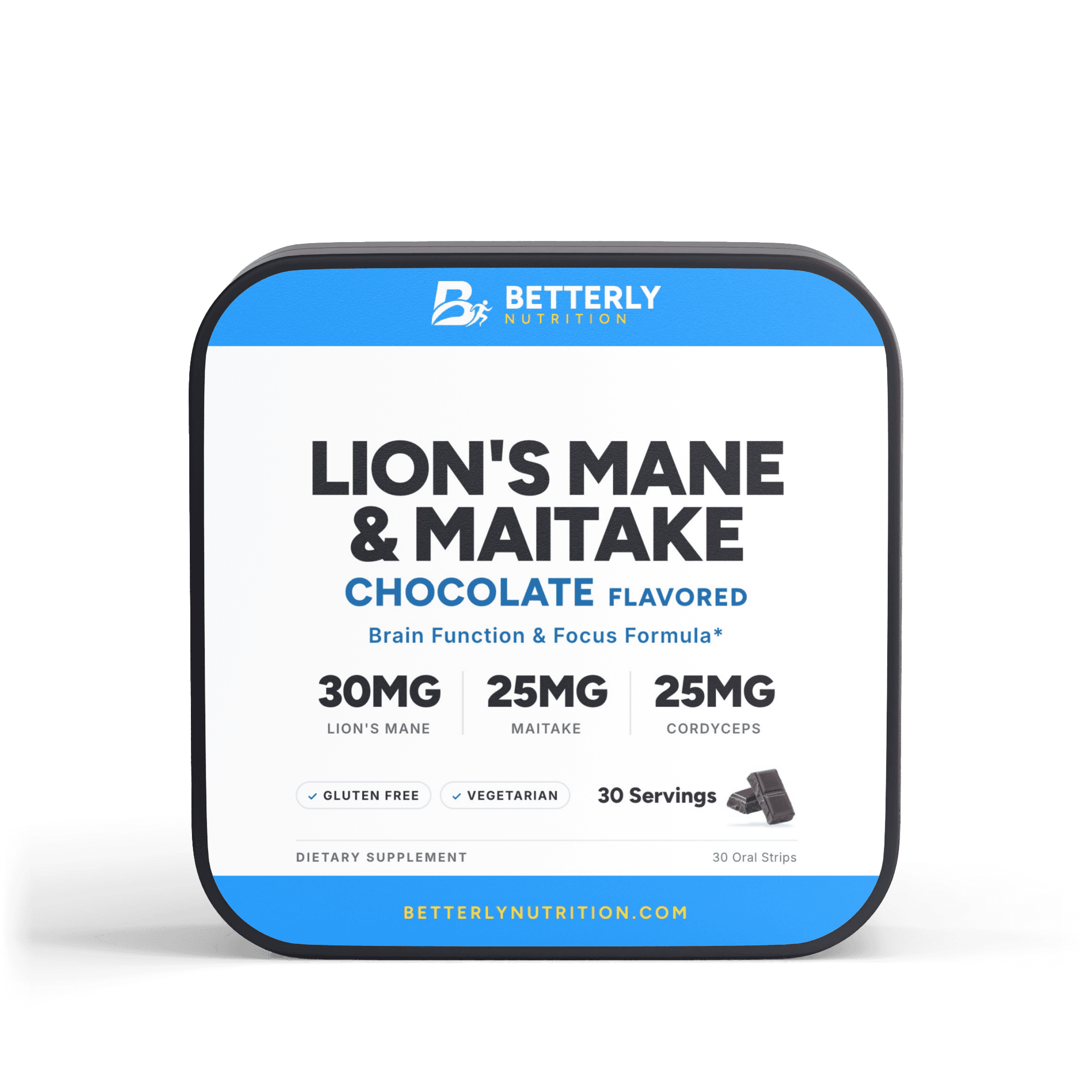
The short answer: Maitake mushroom supplement benefits center on one role. Maitake (Grifola frondosa), a long-eaten food mushroom, is sold to support normal immune function. Yet Operation Supplement Safety, a Defense Department program, says the evidence falls short on both safety and effectiveness for functional mushrooms like maitake, in any use other than food. Our Lion's Mane & Maitake Focus Strips list 25 mg of maitake per 1 Oral Strip (260 mg) serving.
Key takeaways
- Maitake and hen-of-the-woods are the same mushroom, Grifola frondosa, a frilly cluster that grows at the base of oaks and other hardwoods.
- Maitake is sold to support normal immune function, but no federal source we checked confirms that role, and neither NCCIH nor MedlinePlus has a maitake page.
- The side effects Operation Supplement Safety lists, such as nausea, diarrhea and allergic reactions, were reported with mushroom supplements as a group, not maitake alone.
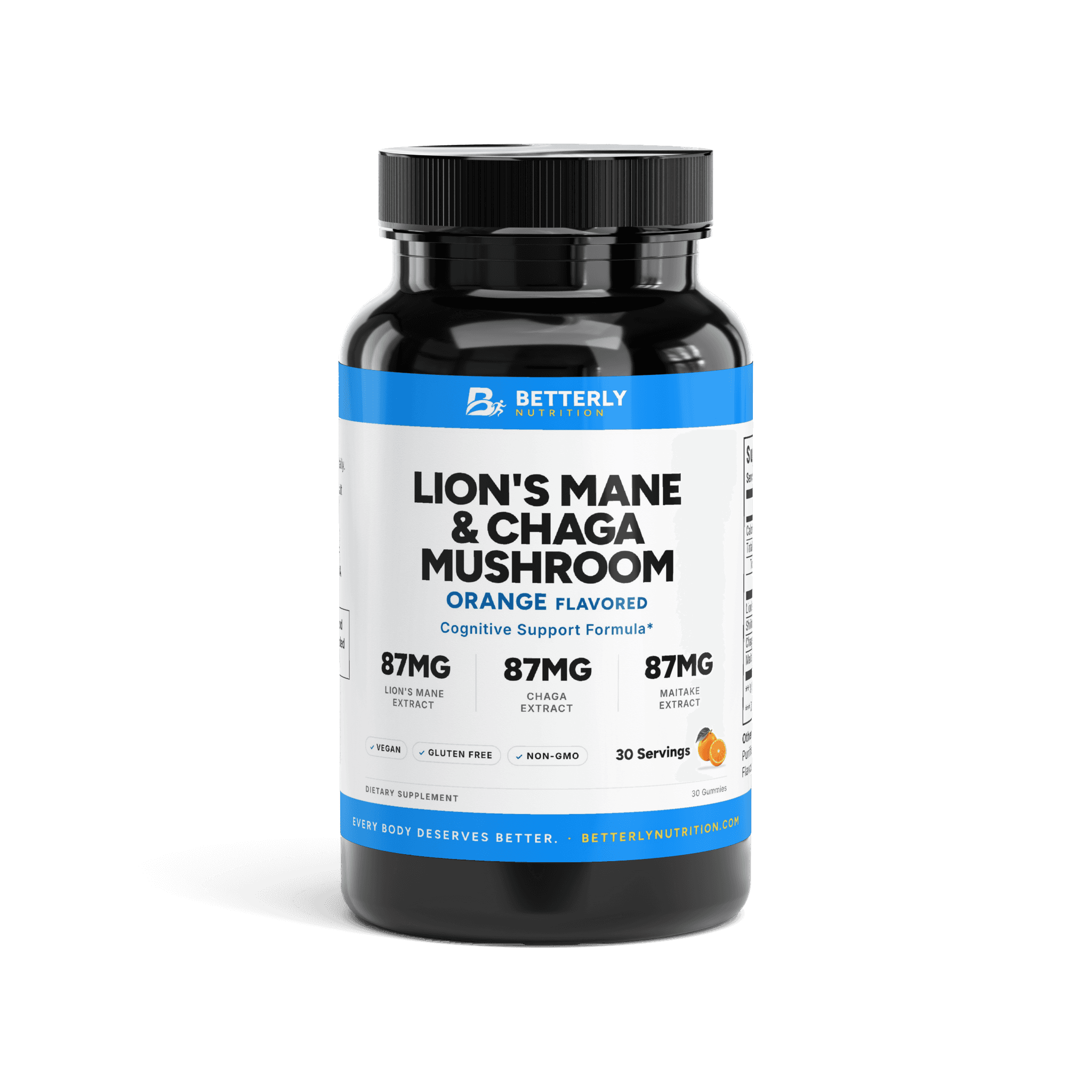
- On our shelf, the largest printed maitake amount is 87 mg of maitake extract per 1-gummy serving of our Lion's Mane & Chaga Mushroom Gummies.
- Five of the seven Betterly labels that list maitake put it inside a pooled blend, so its exact amount isn't printed.
Betterly is a seller here, with maitake on seven of our panels. Our strip is the only one with maitake in its name, yet it prints a smaller maitake number than a gummy named for two other mushrooms. Five of the seven print no maitake number.
What is maitake, and is it the same as hen-of-the-woods?
Yes, maitake and hen-of-the-woods are two names for one mushroom, Grifola frondosa, which grows in overlapping grey-brown fronds at the foot of old oaks and maples.
"Maitake" is Japanese and is usually translated as "dancing mushroom." In the US, many foragers call it hen-of-the-woods, and a big clump can look like a hen with her feathers fluffed up.
It's been a kitchen mushroom in Japan and China for centuries, usually torn apart and roasted or sautéed until the edges crisp.
Don't confuse it with chicken of the woods, a bright orange-and-yellow shelf fungus on trunks and logs.
You'll find maitake in several formats across our mushroom supplement collection, from a dissolving strip to a daily scoop.
What are the benefits of a maitake mushroom supplement?
The benefit most often tied to a maitake mushroom supplement is support for normal immune function, though we found no federal source that confirms it.
When a brand, ours included, says maitake "supports normal immune function," it's describing what the ingredient is sold for, not a result to expect.
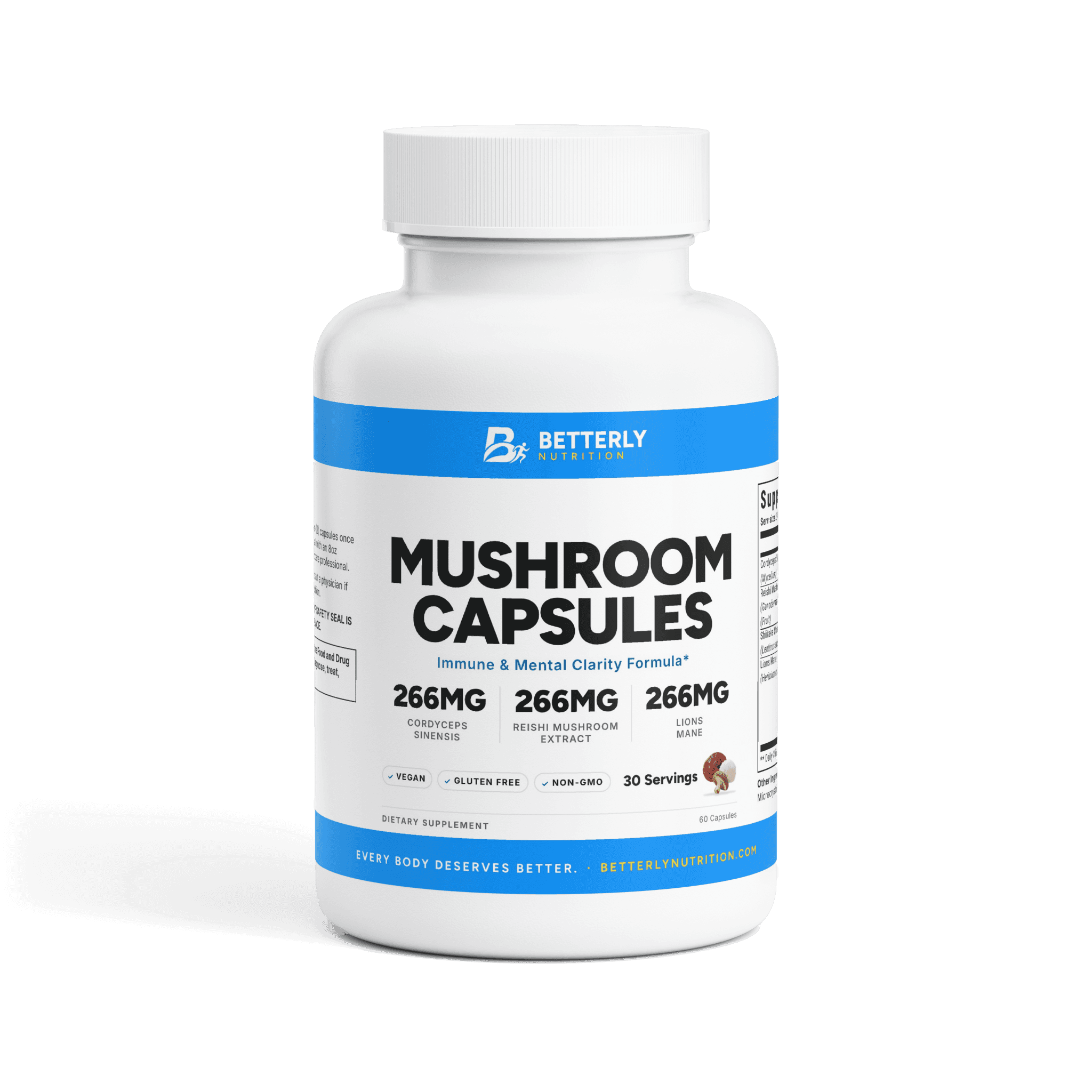
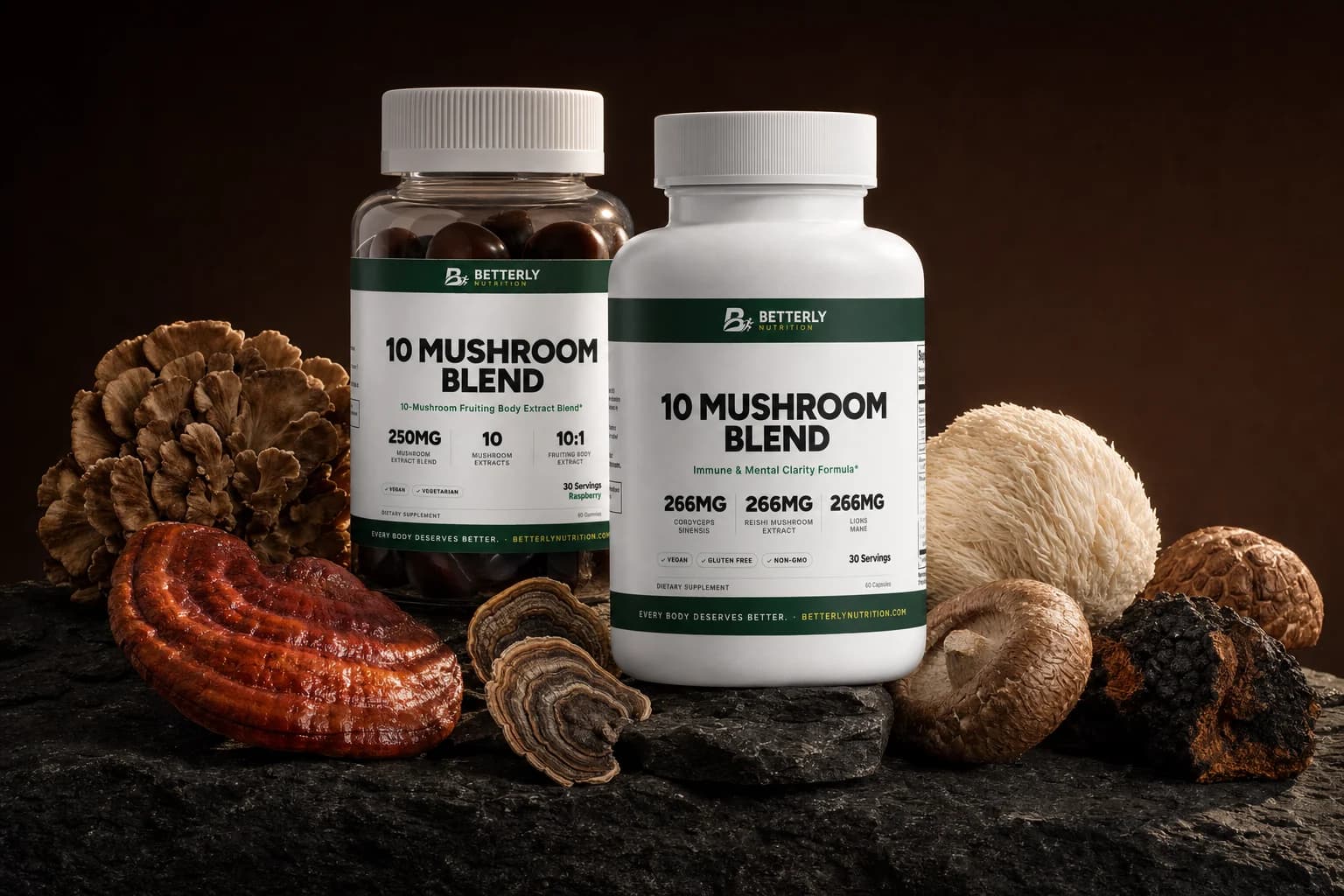
Our own front labels describe whole formulas, not maitake. The strip named for maitake reads "Brain Function & Focus Formula," and it's led by 30 mg of lion's mane. The Mushroom Capsules read "Immune & Mental Clarity Formula," with maitake one of ten species.
Where beta-glucans come in
Beta-glucans are glucose chains woven into a mushroom's cell wall, and they're what most maitake marketing leans on. What matters on a label is how much lands in a serving, and whether anyone measured it.
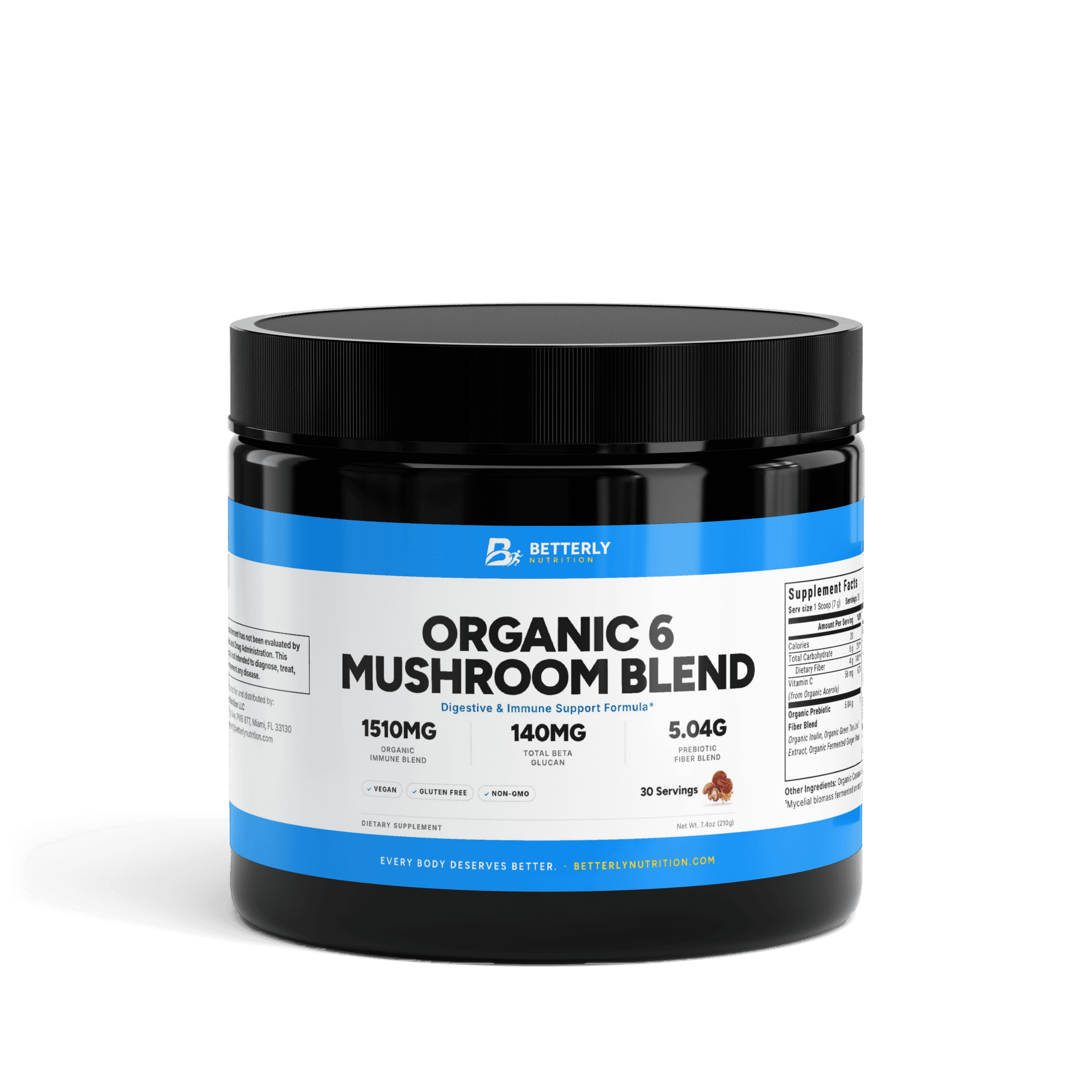
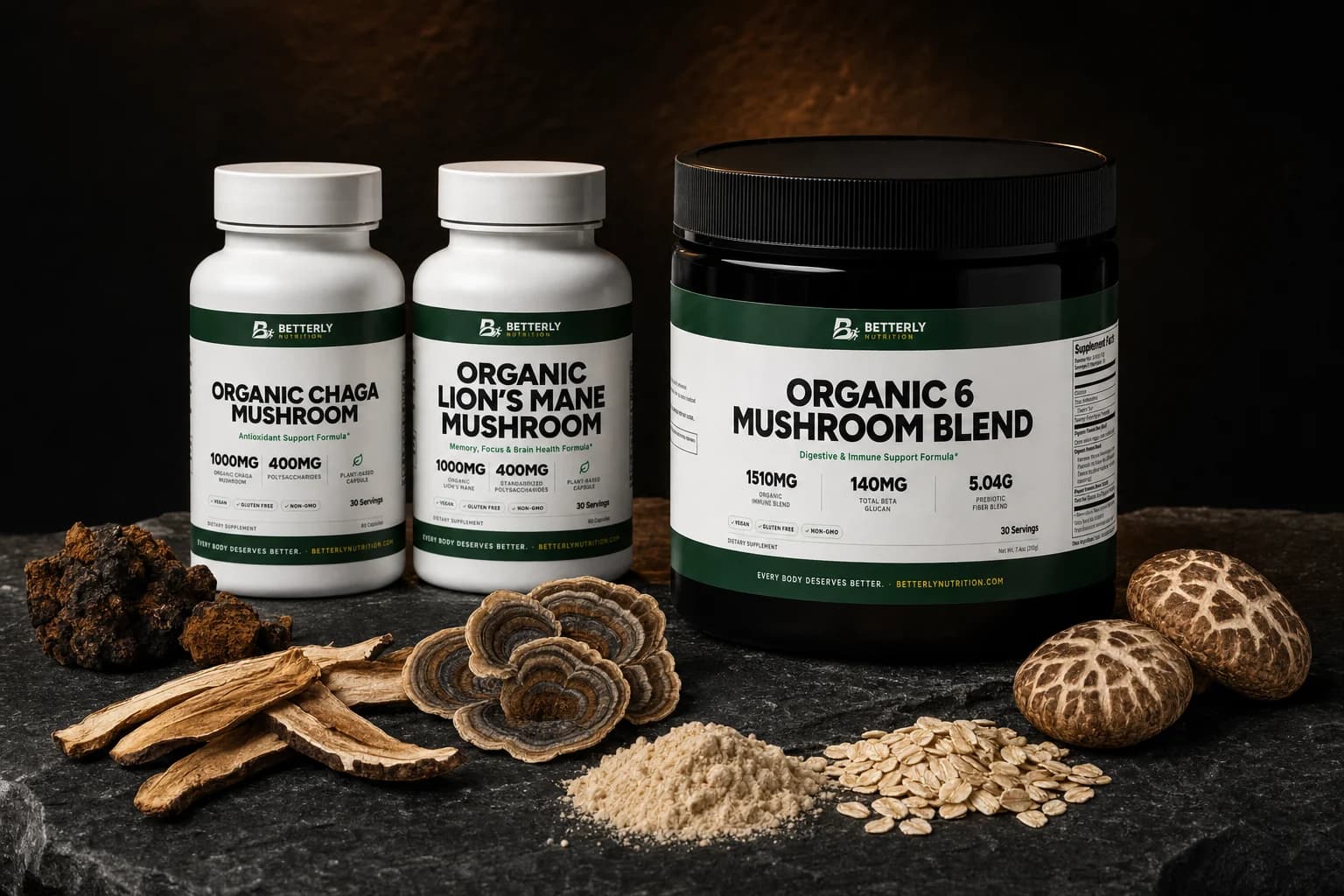
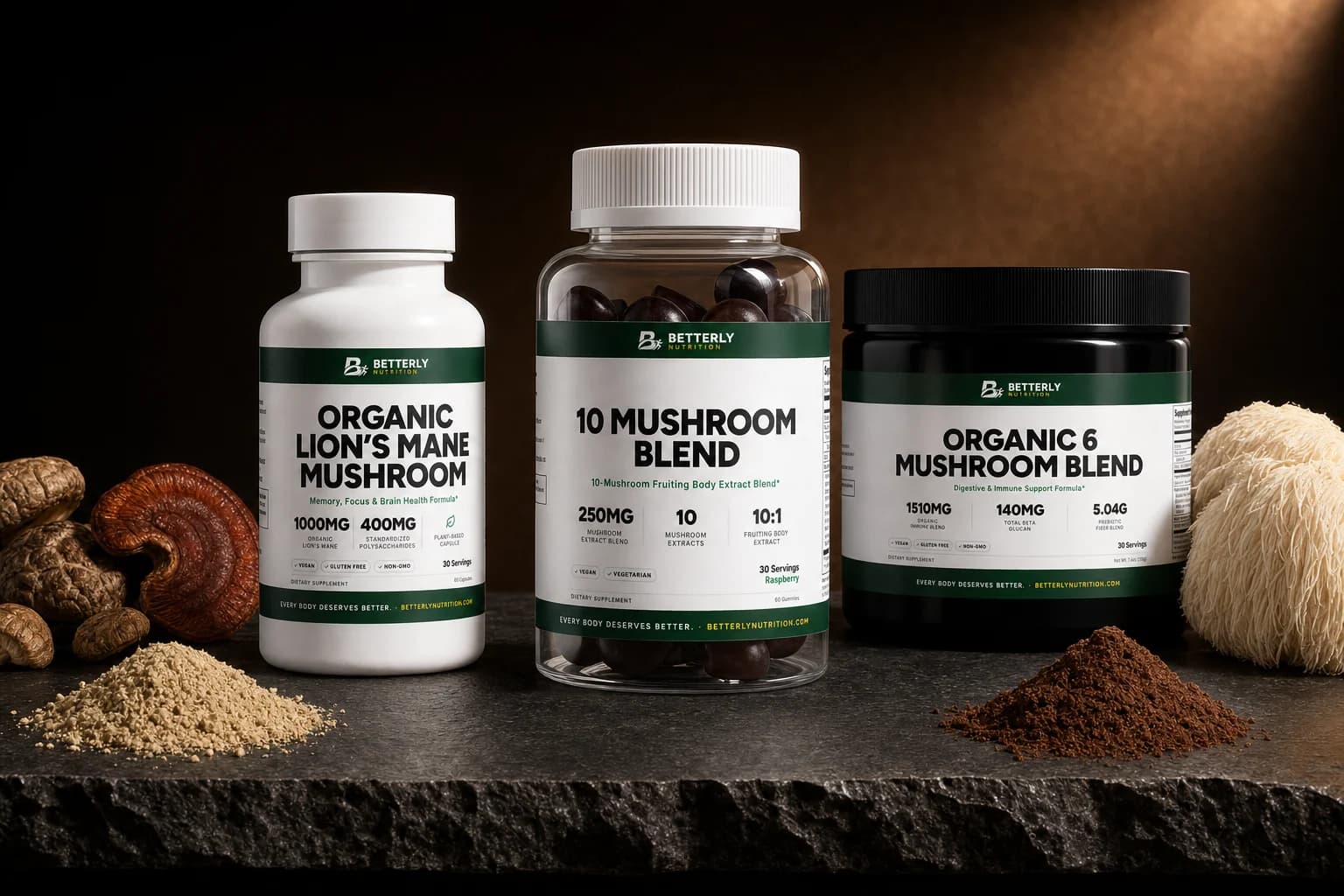
None of the four maitake products we feature here prints a beta-glucan figure. The one mushroom panel we sell with a beta-glucan line is the Organic 6 Mushroom Blend Powder. It lists 140 mg of total beta glucan per 1-scoop (7 g) serving, from the whole Organic Immune Blend. Our explainer on beta-glucan mushroom supplements covers why that figure can't be split by species.
What do federal health sources say about maitake?
Federal sources say little about maitake by name: NCCIH and MedlinePlus have no maitake page, and Operation Supplement Safety covers it only within a group of supplement mushrooms.
When we checked in September 2026, maitake wasn't in the Herbs at a Glance series from the National Center for Complementary and Integrative Health (NCCIH), or in the MedlinePlus herbs and supplements list.
Operation Supplement Safety (OPSS) is the Defense Department's dietary supplement program, run from the Uniformed Services University. Its page on mushroom supplements puts maitake beside lion's mane, reishi and four other "functional mushrooms," with immune health first among the uses they're marketed for.
Its bottom line is that these mushrooms haven't shown enough evidence of safety or effectiveness for any use beyond food. It also isn't clear, the page says, that a capsule or gummy matches what eating the mushroom itself gives you. OPSS writes about the group, so none of it is a maitake-only finding. That's why this guide sticks to what our labels print.
Maitake vs shiitake: what's the difference?
Maitake and shiitake are both food mushrooms eaten in Japan and China, but maitake grows as a ruffled cluster at a tree's base, while shiitake has a cap and stem.
Both turn up on our panels, often side by side:
| Detail | Maitake | Shiitake |
|---|---|---|
| Name on our panels | Grifola frondosa or Polyporus frondosus | Lentinus edodes or Lentinula edodes |
| How it grows | Frilly cluster at a tree's base | Cap and stem, grown on wood |
| Per 1-strip serving | 25 mg | 20 mg |
| Per 1-gummy serving (Lion's Mane & Chaga) | 87 mg extract | 87 mg extract |
| Per 2-capsule serving (Mushroom Capsules) | Share of a 266 mg blend | 266 mg, own line |
The takeaway: on our labels, shiitake is easier to measure. The Mushroom Capsules give it a 266 mg row of its own while maitake sits in a pooled blend, and the strip is the one place maitake edges ahead, by 5 mg.
How much maitake is in Betterly's supplements?
Betterly's Lion's Mane & Maitake Focus Strips list 25 mg of maitake per 1 Oral Strip (260 mg) serving. Our Lion's Mane & Chaga Mushroom Gummies list 87 mg of maitake extract per 1-gummy serving, and our blends don't print maitake's share.
| Our product (serving) | How the panel names it | Maitake amount | Not stated |
|---|---|---|---|
| Focus Strips (1 strip) | Grifola frondosa (Maitake) | 25 mg | Extract or powder; part used |
| Lion's Mane & Chaga gummies (1 gummy) | Maitake Extract | 87 mg | Part used; extract ratio |
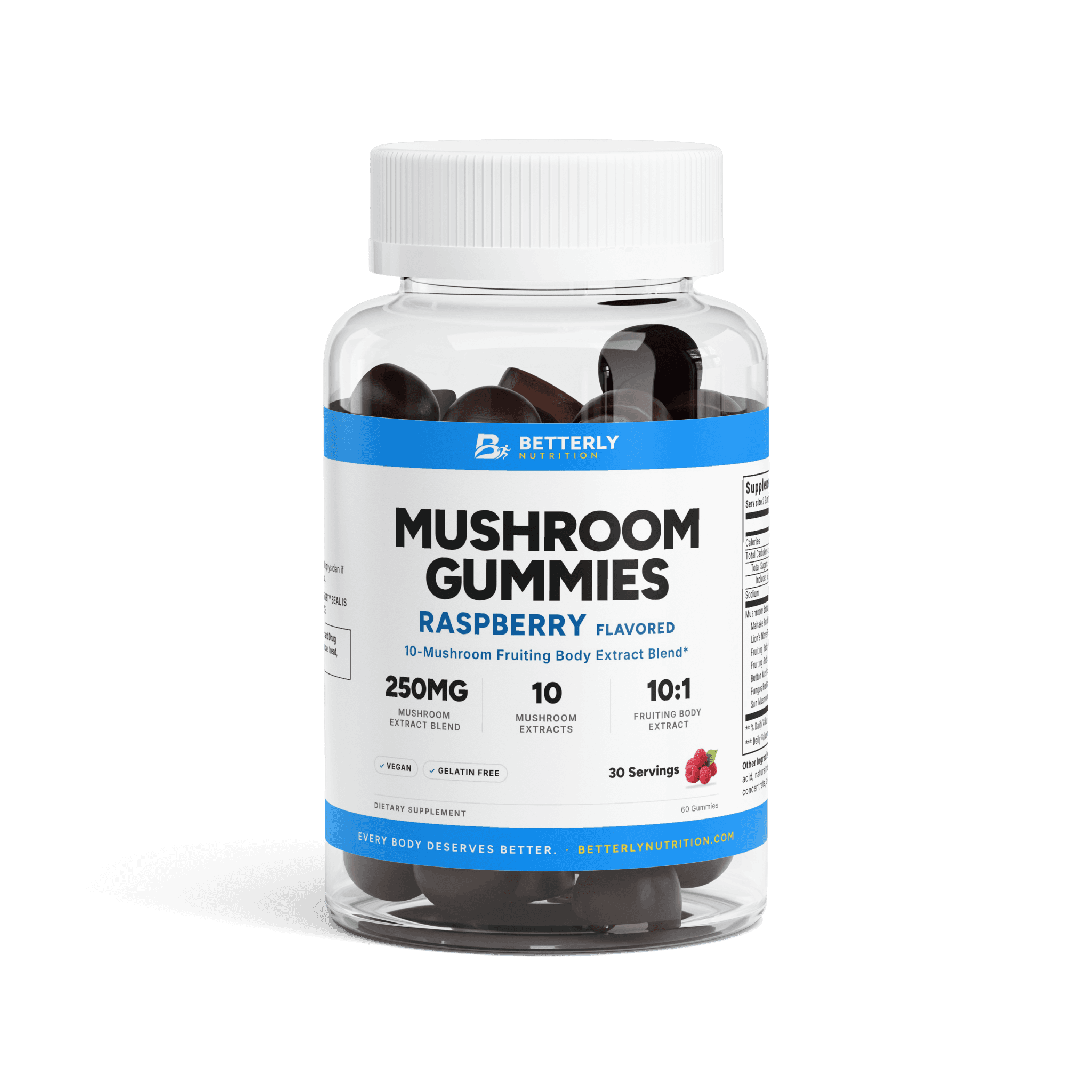
| Mushroom Gummies (2 gummies) | Maitake Fruiting Body 10:1 Extract | In a 250 mg blend | Its share |
| Mushroom Capsules (2 capsules) | Maitake Mushroom Extract (Fruit) | In a 266 mg blend | Its share |
| 6 Mushroom powder (1 scoop, 7 g) | Organic Maitake, fermented mycelium | In a 1,510 mg blend | Its share |
Only two of these panels give maitake its own number. By printed weight, one Lion's Mane & Chaga Mushroom Gummies serving holds about three and a half times the maitake in a strip, though an extract and an unlabeled form aren't the same material.
The blends still leave a clue. Blend ingredients are listed heaviest first, as our guide to proprietary blends explains, and maitake leads two of them. If a panel follows that rule, here's what it implies:
- In the Mushroom Gummies, maitake is first of ten in a 250 mg blend. The largest of ten parts can't be under an even tenth, so maitake would be at least 25 mg per 2-gummy serving.
- In the Mushroom Capsules, maitake is first of six in a 266 mg blend, so it would be at least about 44 mg per 2-capsule serving.
- In the 6 Mushroom powder, maitake is fifth of six, so the list doesn't pin down a minimum.
Those are floors, not amounts.
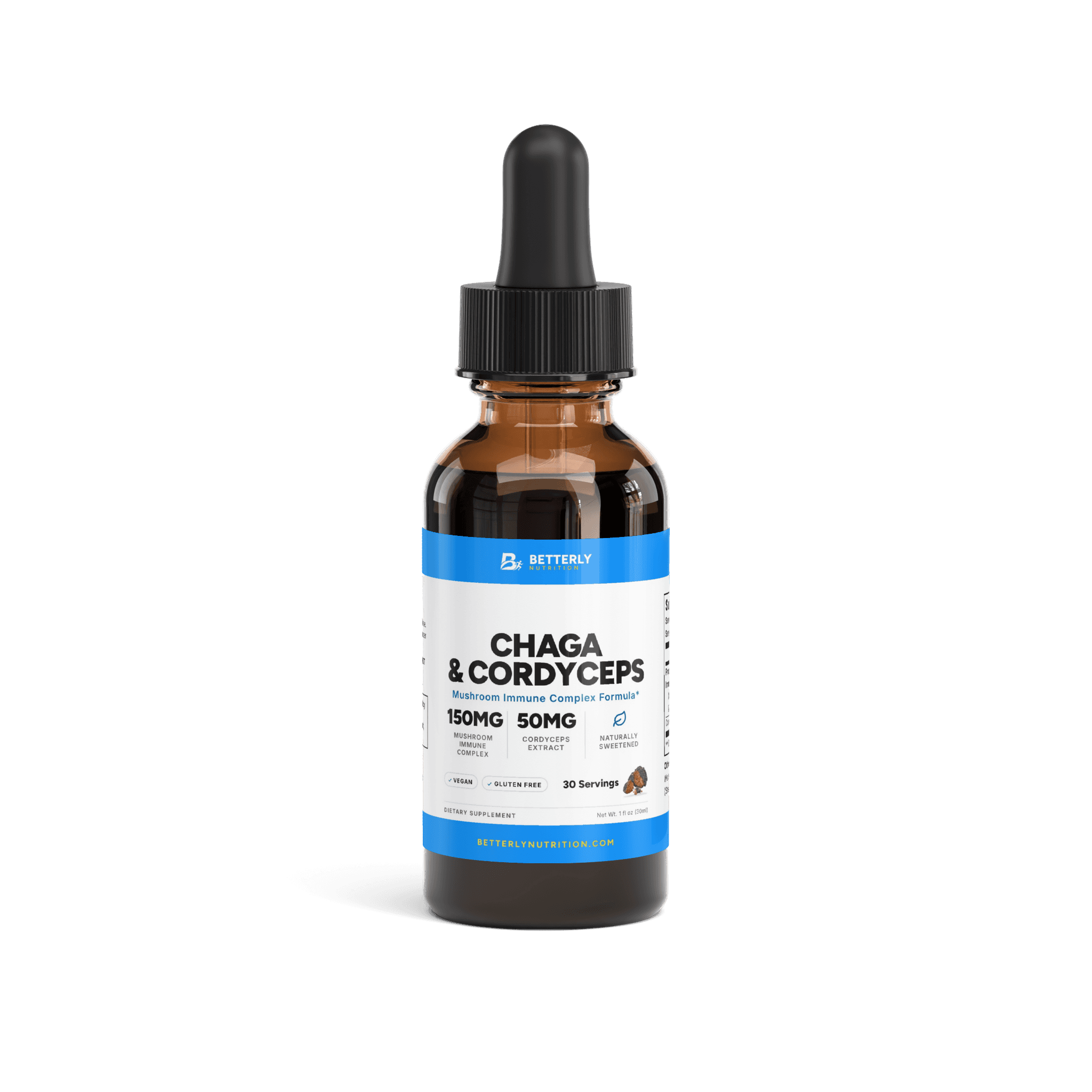
Two of our liquid drops list maitake third of five in a "Proprietary Mushroom Immune Complex," 150 mg per 1 ml serving in the Chaga & Cordyceps Mushroom Drops and 50 mg in the Reishi Mushroom Calm Drops. By the same rule, a third-place ingredient can't top a third of its blend, which would cap maitake at 50 mg and about 17 mg.
Shopping for maitake capsules? We don't sell a maitake-only one. Our Mushroom Capsules pool it with five other species in one 266 mg blend, so whichever capsule you're weighing, look for maitake on its own line.
From our shop: Lion's Mane & Maitake Focus Strips — the only Betterly product named for maitake, with 25 mg of maitake beside lion's mane, cordyceps and shiitake in each chocolate-flavored oral strip.
Is maitake extract better than maitake powder?
A maitake extract isn't automatically better than a maitake powder. A label only helps when it says which part of the mushroom was used, whether it's an extract, and at what ratio.
Our comparison of mushroom extract and powder explains ratios like 10:1. For maitake, check these lines:
- The name. Grifola frondosa is the current scientific name. Our capsule prints the older Polyporus frondosus, and it's still maitake.
- The part. "Fruit" or "fruiting body" means the ruffled cluster itself. Our powder uses mycelium, the root-like network, fermented on organic oats. The strip and the Lion's Mane & Chaga gummy don't say which part they use.
- The form. Only the Mushroom Gummies give an extract ratio, 10:1. The strip names the species and nothing more.
- The number. A line of its own beats a spot inside a blend if you want to know your dose.
- The rest of the panel. The Lion's Mane & Chaga gummy adds 2 g of added sugars per 1-gummy serving, and the ten-mushroom gummies add 5 g per 2-gummy serving. The strip is sweetened with monk fruit extract and steviol glycosides.
How do you take a maitake supplement, per the label?
For the Lion's Mane & Maitake Focus Strips, the label's suggested use is one strip a day, placed on the tongue to dissolve.
- Focus Strips: "Place 1 oral strip on the tongue daily and allow it to dissolve."
- Lion's Mane & Chaga Mushroom Gummies: "Take one (1) to two (2) gummies daily." Two gummies means 174 mg of maitake extract, the top of that range.
- Mushroom Gummies: "2 gummies daily or as directed by a healthcare professional."
- Mushroom Capsules: two capsules once a day, 20-30 minutes before a meal with an 8 oz (237 ml) glass of water.
- Organic 6 Mushroom Blend Powder: one scoop daily, mixed into food or drinks.
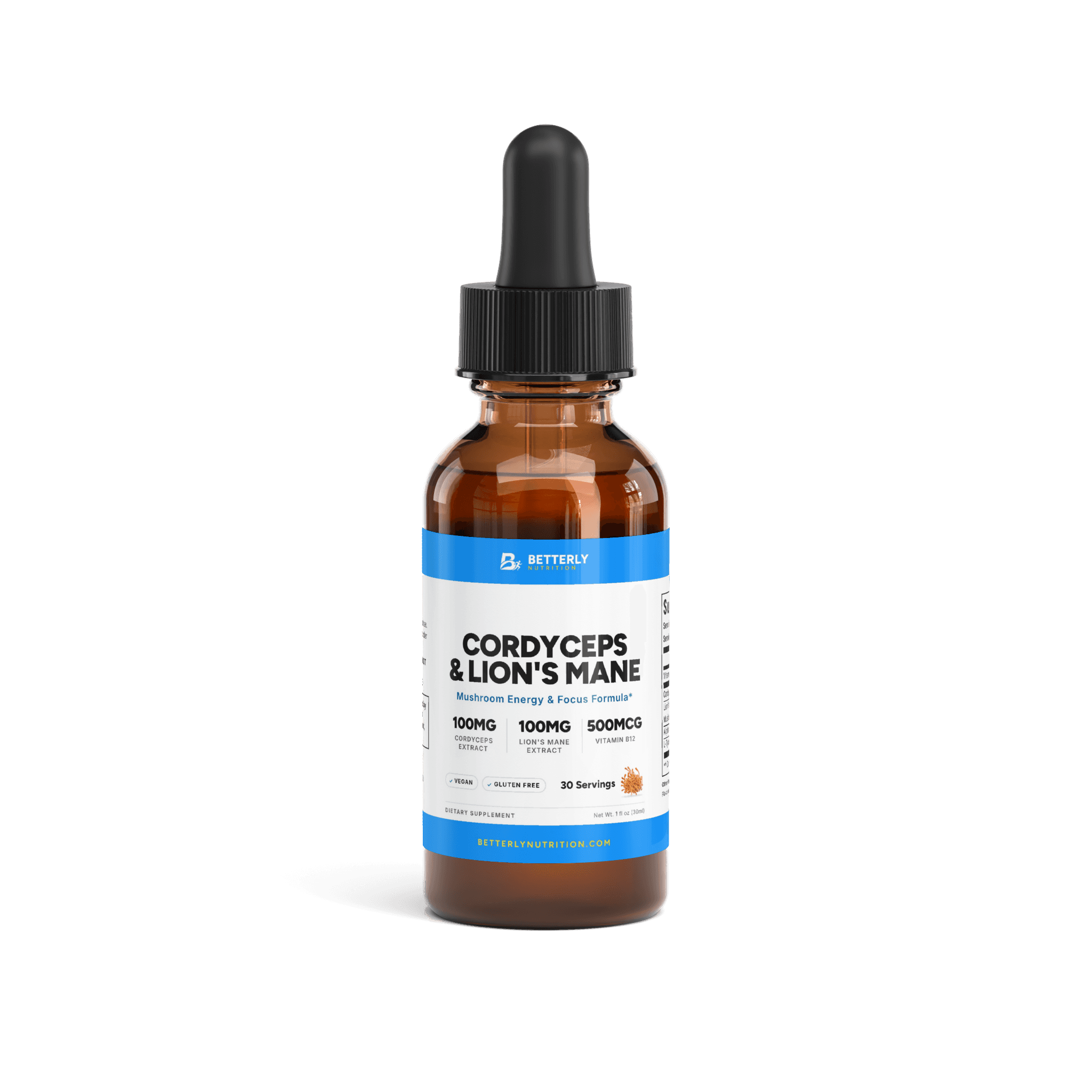
- Both mushroom drops: "Shake well. Take 1 ml (30 drops) daily."
Pick one rather than stacking them. The strip and the Lion's Mane & Chaga gummy share three of their four mushrooms: lion's mane, maitake and shiitake. All of them carry the same line: "Do not exceed recommended dose."
Keep strips in a cool, dry place, as the label asks, since they're made to dissolve.
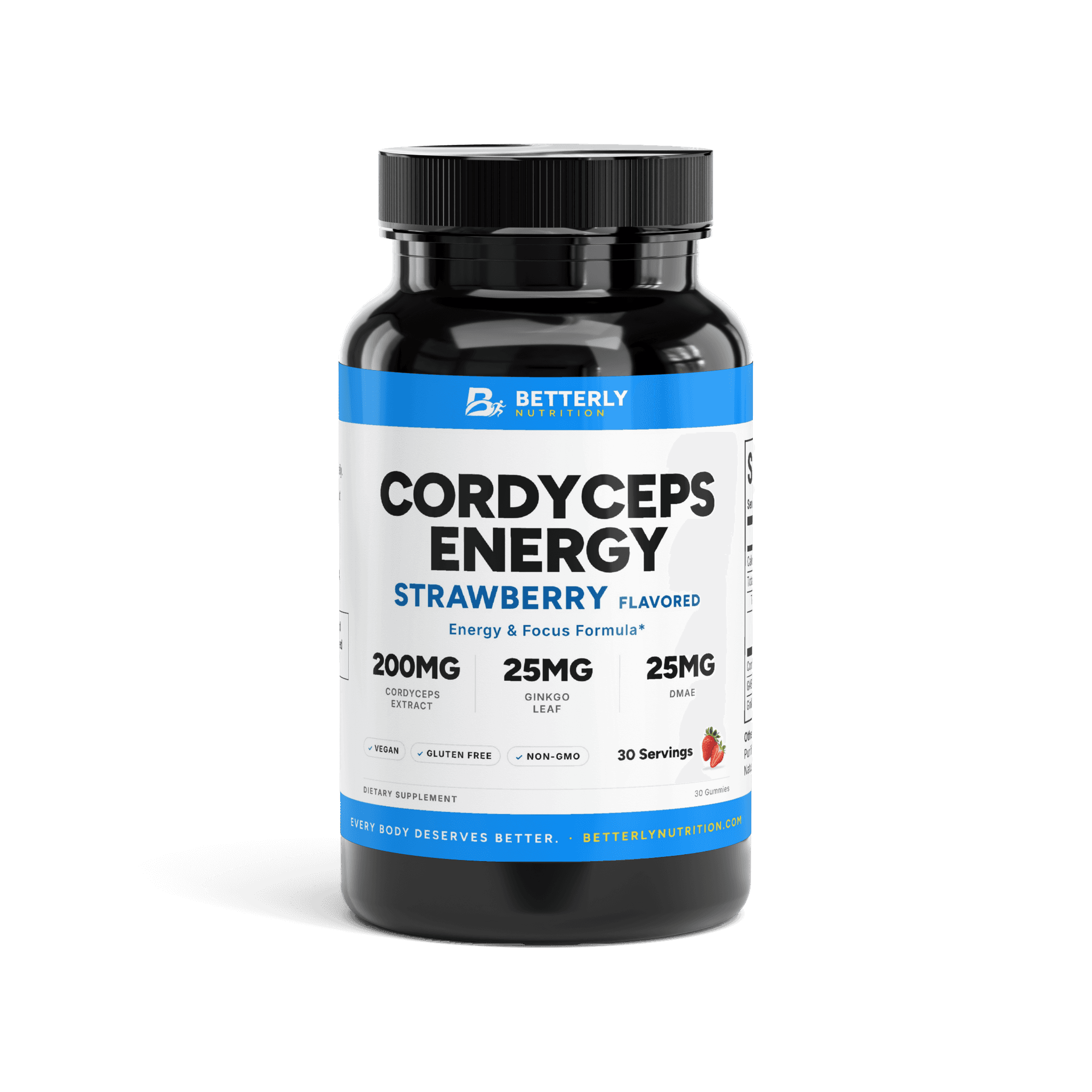
From our shop: Lion's Mane & Chaga Mushroom Gummies — the highest printed maitake amount on our shelf, 87 mg of maitake extract per 1-gummy serving, alongside lion's mane, shiitake and chaga extracts in an orange-flavored gummy.
When don't you need a maitake supplement?
You probably don't need a maitake supplement if you already cook with maitake, if you're hoping to feel a specific effect, or if you already take a mushroom blend.
- It's already in your kitchen. Fresh maitake from a market is the same mushroom, eaten as food.
- You want something you'll notice. Nothing on our labels, and nothing in the federal pages we checked, supports a felt result from maitake.
- You already take a blend with it. Maitake is already in our Mushroom Capsules and Gummies, so adding the strip doubles up.
- You want an exact maitake dose. Five of our seven maitake labels won't show you one.
Who should check with a healthcare provider first?
Ask a doctor or pharmacist about maitake first if you're pregnant or nursing, younger than 18, on prescription or over-the-counter medicine, due for surgery, or living with a medical condition.
The caution printed on all seven of our maitake labels reads: "Do not exceed recommended dose. Consult a physician if pregnant, nursing, under 18, or have a medical condition."
NCCIH's guide to how medications and supplements can interact says taking the two together may have unintended effects, including making a medicine work more strongly or less strongly. So bring the actual package to that conversation.
Mention it, too, if mushrooms you've eaten haven't agreed with you. Shiitake and maitake appear together on every product this guide features.
FAQ: maitake mushroom supplements
Does maitake have side effects?
Yes, side effects have been reported with mushroom supplements like maitake, though the federal list we found covers the group, not maitake alone. Operation Supplement Safety's list covers stomach trouble (nausea, vomiting, diarrhea and GI discomfort), dry mouth and allergic reactions. Stay at the label's serving, stop if something feels off, and check with a provider first if the label's caution applies to you, such as during pregnancy or while taking medication.
Does maitake mushroom interact with medications?
Maitake's effect on medications isn't described by NCCIH, MedlinePlus or OPSS, so we can't tell you either way. NCCIH does say supplements in general can make some medicines work more strongly or less strongly. If you take any prescription or over-the-counter medicine, show your pharmacist the product's label before you start.
Is maitake mushroom psychedelic?
No, maitake isn't psychedelic. OPSS counts it among functional mushrooms, a group it calls non-psychoactive. Hen-of-the-woods is a cooking mushroom, sold fresh by some grocers and farmers' markets, and it isn't a psilocybin species. If a maitake product's marketing talks up a high, look elsewhere.
Can you take maitake and lion's mane together?
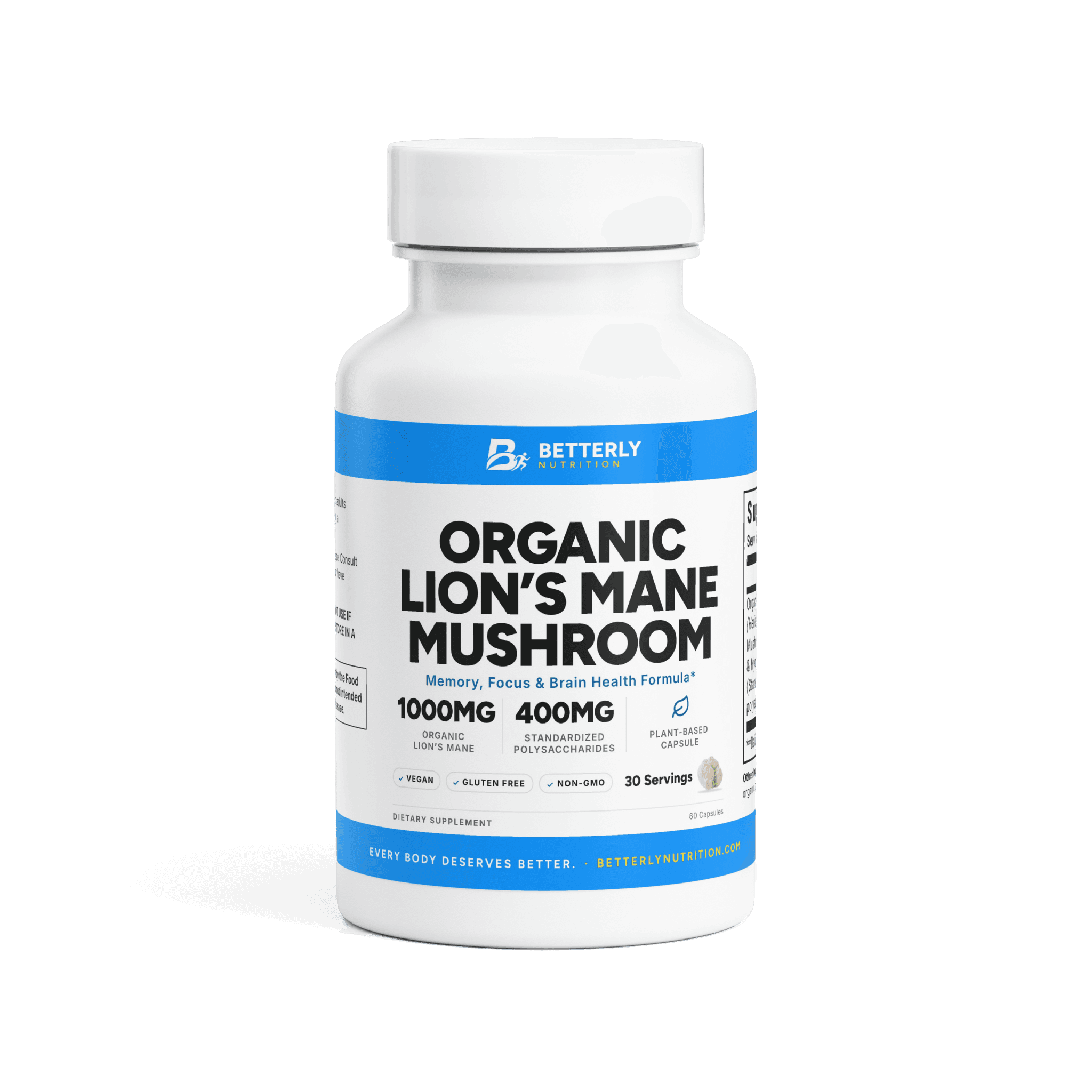
Yes, maitake and lion's mane can be taken together, and four of our products already combine them. The Focus Strips pair 30 mg of lion's mane with 25 mg of maitake per 1 Oral Strip (260 mg) serving, and the Lion's Mane & Chaga Mushroom Gummies list 87 mg of each extract per 1-gummy serving. The Mushroom Capsules and Gummies pool maitake in a blend. Pick one product, not several, since they overlap.
When should you take maitake?
Maitake's timing depends on the product, because only one of our seven maitake labels names a time. The Mushroom Capsules ask for 20-30 minutes before a meal. The strips, gummies, powder and drops say daily, so the hour is up to you.
Is eating maitake the same as taking a supplement?
Not exactly, because a cooked portion of fresh maitake and a milligram line on a panel measure different material. Fresh mushrooms are mostly water and extracts are concentrated, so the weights don't compare. A supplement's edge is a fixed, printed amount, which only two of our seven maitake labels give.
Sources
- Herbs at a Glance, National Center for Complementary and Integrative Health
- Herbs and Supplements, MedlinePlus, National Library of Medicine
- Mushroom Dietary Supplements, Operation Supplement Safety (OPSS), Uniformed Services University, U.S. Department of Defense
- Know the Science: How Medications and Supplements Can Interact, National Center for Complementary and Integrative Health
If this left you looking for somewhere to start, read maitake mushroom oral strips with lion's mane — its amounts per serving are listed on the page. For the practical questions this raises, how dosing, sourcing and subscriptions work is answered in one place.