On this page
- Key takeaways
- Is lion's mane good for studying?
- Did any lion's mane trial measure learning?
- Does lion's mane make you smarter or raise your grades?
- Should you take lion's mane right before an exam?
- What helps learning more than any supplement?
- How do our lion's mane strip and capsule compare for studying?
- How do you add lion's mane to a study routine, going by the label?
- When don't you need lion's mane for studying?
- Who should check with a healthcare provider first?
- FAQ: lion's mane for studying
- Sources
The short answer: Lion's mane for studying is a hopeful bet, not a proven one. No trial we found has tested it on grades or exam scores. Two small trials in healthy young adults timed lab tasks 60 to 90 minutes after 1.8 to 3 g of lion's mane, with mixed results. Betterly's Lion's Mane & Maitake Focus Strips list 30 mg of lion's mane per 1-strip serving. Sleep, spaced sessions and self-testing have far deeper evidence for learning.
Key takeaways
- No published trial we found has tested lion's mane (Hericium erinaceus) on real studying, grades or exam results.
- In a 2023 pilot, the first 1.8 g dose of lion's mane sped up a color-naming attention task, but recall of a fresh word list, one of the tasks closest to studying, got worse.
- A 2025 study that gave 18 younger adults one 3 g drink of lion's mane extract offered nothing a student could count on: a hand-skill score rose while scores on two focus tasks fell.
- A 2023 review of 56 studies of health professions students found that spacing out study and quizzing yourself improved test and exam scores in most of them.
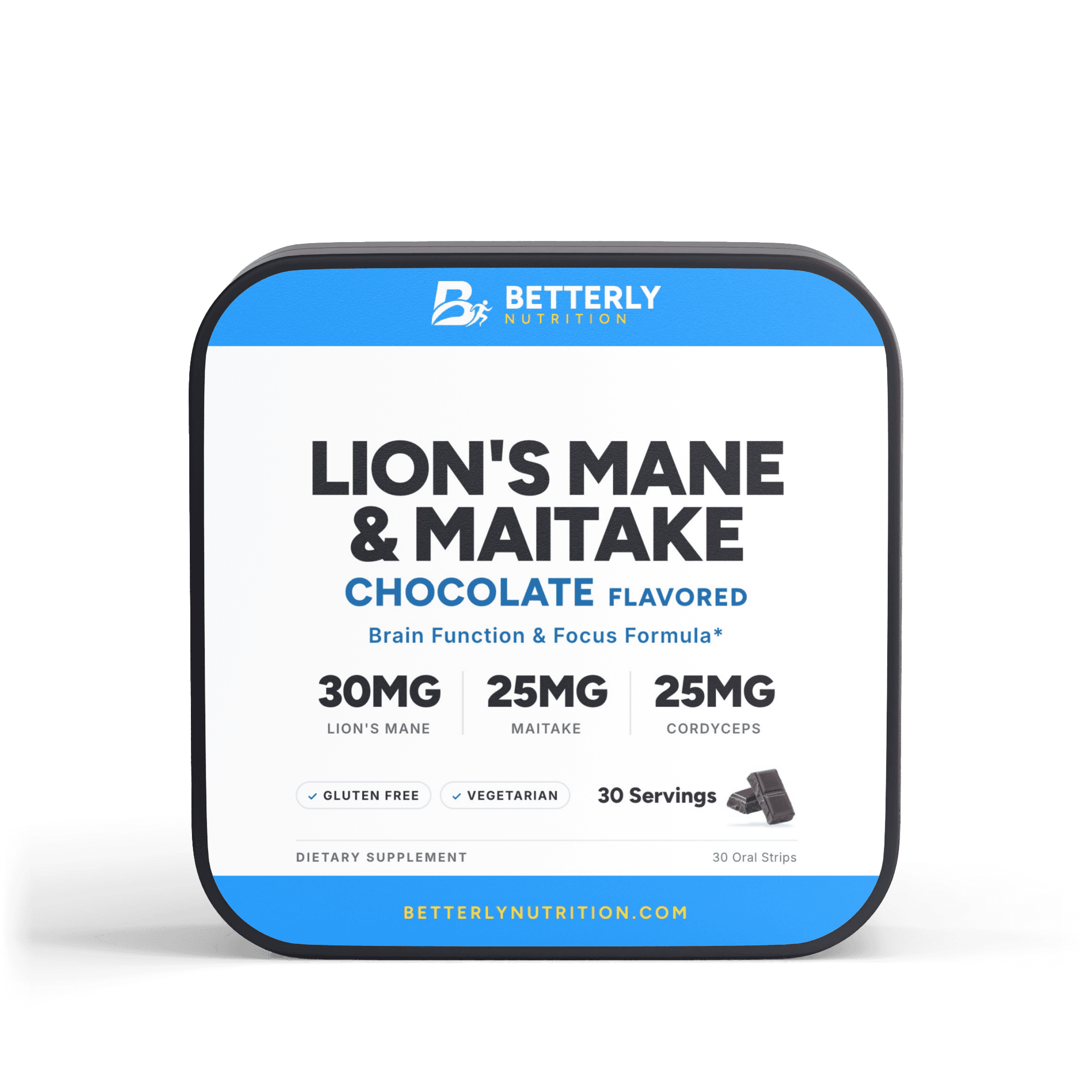
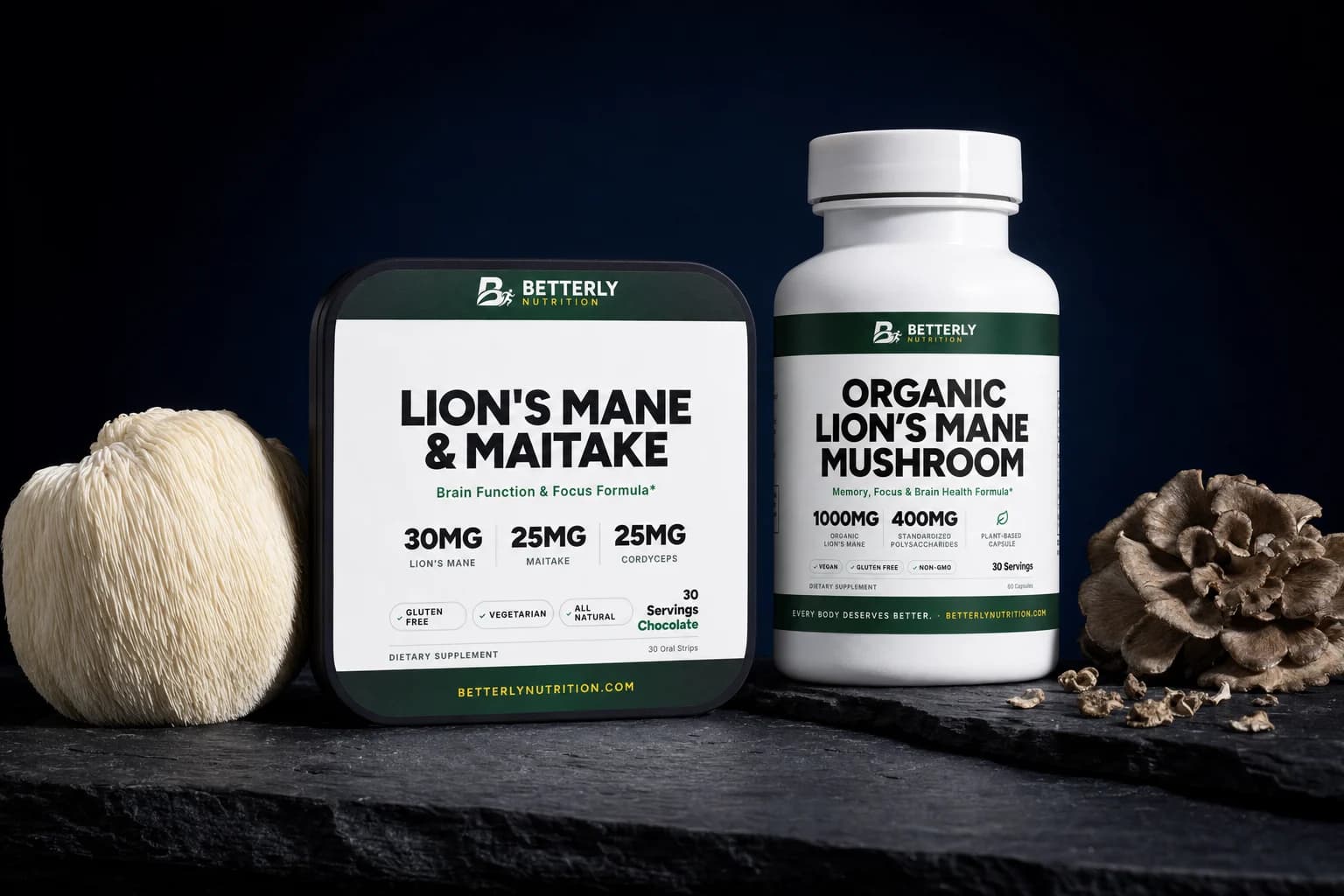
- Betterly's Lion's Mane & Maitake Focus Strips carry 30 mg of lion's mane per 1-strip serving, far less than the 1,000 mg in our 2-capsule serving.
A note on where we stand: lion's mane goes into several Betterly products, including the strip and capsule compared below, and a study-aid story would sell more of them. This guide sticks to what the research actually tested. It's written for adults facing college finals, grad school or a licensing exam.
Is lion's mane good for studying?
Lion's mane hasn't been shown to be good for studying, because no trial we found has tested it on what studying is for: learning material and recalling it days later.
What exists is a handful of small trials in healthy adults, scored on speed and accuracy in short tasks, with mixed results. None of it tells you whether a strip at your desk will help you recall the Krebs cycle next Thursday.
That doesn't prove lion's mane does nothing. Many online lists of lion's mane benefits for studying lean on nerve-growth research in cells and mice, which is a long way from a lecture hall. For the wider evidence, see our full rundown of what lion's mane does.
Lion's mane itself is an edible white mushroom with long, hanging spines.
Did any lion's mane trial measure learning?
No lion's mane trial we read measured learning new material; the two healthy-adult trials we read in full timed short lab tasks 60 to 90 minutes after a dose.
Here's what each involved:
- The 2023 pilot, published in Nutrients: 41 adults aged 18 to 45 finished 28 days of 1.8 g a day. An hour after their dose on day 1 and day 29, they sat a lab battery of about 25 minutes, including a Stroop color-word task and word lists to recall right away and after a delay.
- The 2025 study, published in Frontiers in Nutrition: 18 adults aged 18 to 35 drank 3 g of a 10:1 fruiting-body extract on one visit and a placebo drink on another. Ninety minutes later they did trail-making, digit-span and pegboard tests, plus a flanker task, which checks how well you ignore distracting symbols around a target.
Those are fair tests of speed and attention, but studying means taking in new material, sleeping on it and pulling it back out weeks later. Neither trial handed anyone a chapter to learn or followed anyone into a real exam.
The 2023 authors also describe an earlier trial in college-age athletes who ate muffins holding 10 g of lion's mane a day for 4 weeks. It found no effect on a Stroop and mental-math test done during a balance task.
The nearest thing to a study-setting trial we found is registered but unreported: 67 university students took a lion's mane and L-theanine gummy for 8 weeks, and no results were posted when we checked in September 2026. Our lion's mane vs L-theanine guide covers its design.
So the evidence on lion's mane for learning, in the everyday sense, is missing rather than negative.
Does lion's mane make you smarter or raise your grades?
Lion's mane hasn't been shown to make anyone smarter or raise grades; no trial we found measured either, and the college-age muffin trial found no effect.
"Smarter" is a big word for studies scored in milliseconds on a single morning. A grade rewards understanding a topic, still knowing it after days away, and writing it out against the clock. None of the trials we read asked people to do those things, so even a real lab change can't be read as a better GPA.
If an ad promises better grades from lion's mane, it's running ahead of the research. We won't make that promise for ours.
Should you take lion's mane right before an exam?
Lion's mane isn't a proven pre-exam aid: single doses in two small trials helped some timed tasks, hurt others, and were never tried before a real exam.
- 1.8 g, an hour before testing (2023): quicker at naming ink colors, yet weaker at a step that resembles cramming: recalling a word list seen moments earlier.
- 3 g of extract, 90 minutes before testing (2025): a finger-dexterity task went up, while two focus tasks went down. No one had to learn material first, which is what an exam tests.
By printed weight, 1.8 g is 60 times our strip's 30 mg and 3 g is 100 times, though extract, powder and the strip's unstated form aren't the same measure.
Exam day is also the wrong day to try anything new. The night before, a last round of practice questions and a full night's sleep are better uses of your time.
What helps learning more than any supplement?
Sleep, spaced study sessions and practice testing have far more human evidence for learning than lion's mane does, and none of them costs a thing.
Start with sleep. On its page about why sleep is important, the National Heart, Lung, and Blood Institute notes: "Sleep helps with learning and the formation of long-term memories." It adds that too little sleep can make focusing harder.
A 2023 systematic review in Advances in Health Sciences Education pulled together 56 studies of students in medicine, nursing, pharmacy and other health fields. It focused on two methods:
- Distributed practice: spreading study across several sessions instead of cramming it into one.
- Retrieval practice: pulling information out of memory, for example with practice tests.
Most of the studies found one or both methods improved test and exam scores. They also flag limits: most studies came from a single school, and study time often wasn't tracked.
For a licensing exam or a heavy course load, spread the same hours across the week and open each session by answering questions from memory before checking your notes. For movement, meals and other daily habits, see our guide to supporting focus naturally.
| What you want | Step with human evidence | What lion's mane trials show |
|---|---|---|
| Material that sticks for weeks | Spaced sessions plus self-testing | Not tested |
| Today's learning kept overnight | A full night's sleep | Not tested |
| Higher exam scores | Spaced and retrieval practice | Not tested |
| Faster answers on a timed lab task | Outside these sources | Mixed: some tasks better, others worse |
The exam goals that matter most are the ones lion's mane has never been tested on, so the middle column deserves your effort first.
How do our lion's mane strip and capsule compare for studying?
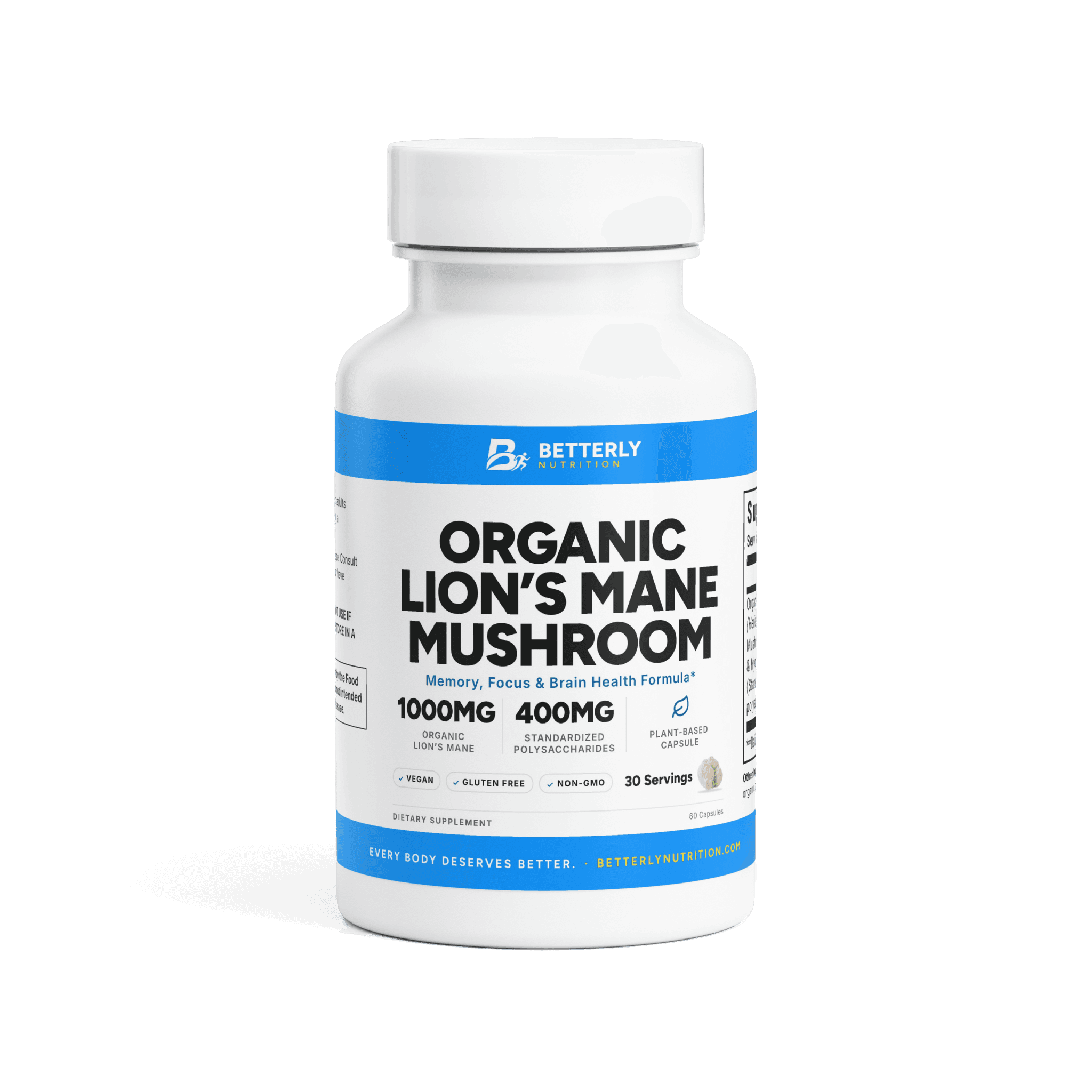
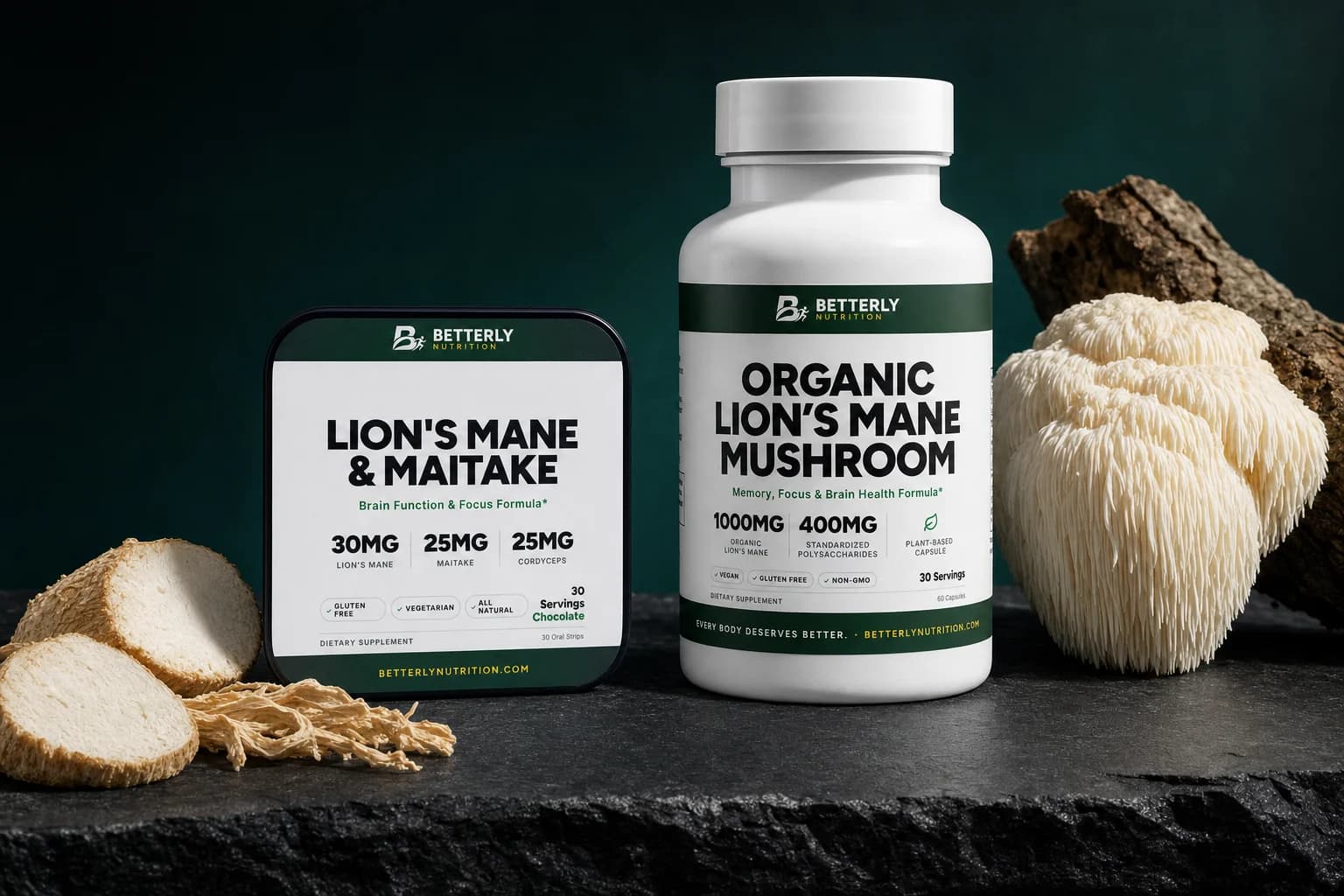
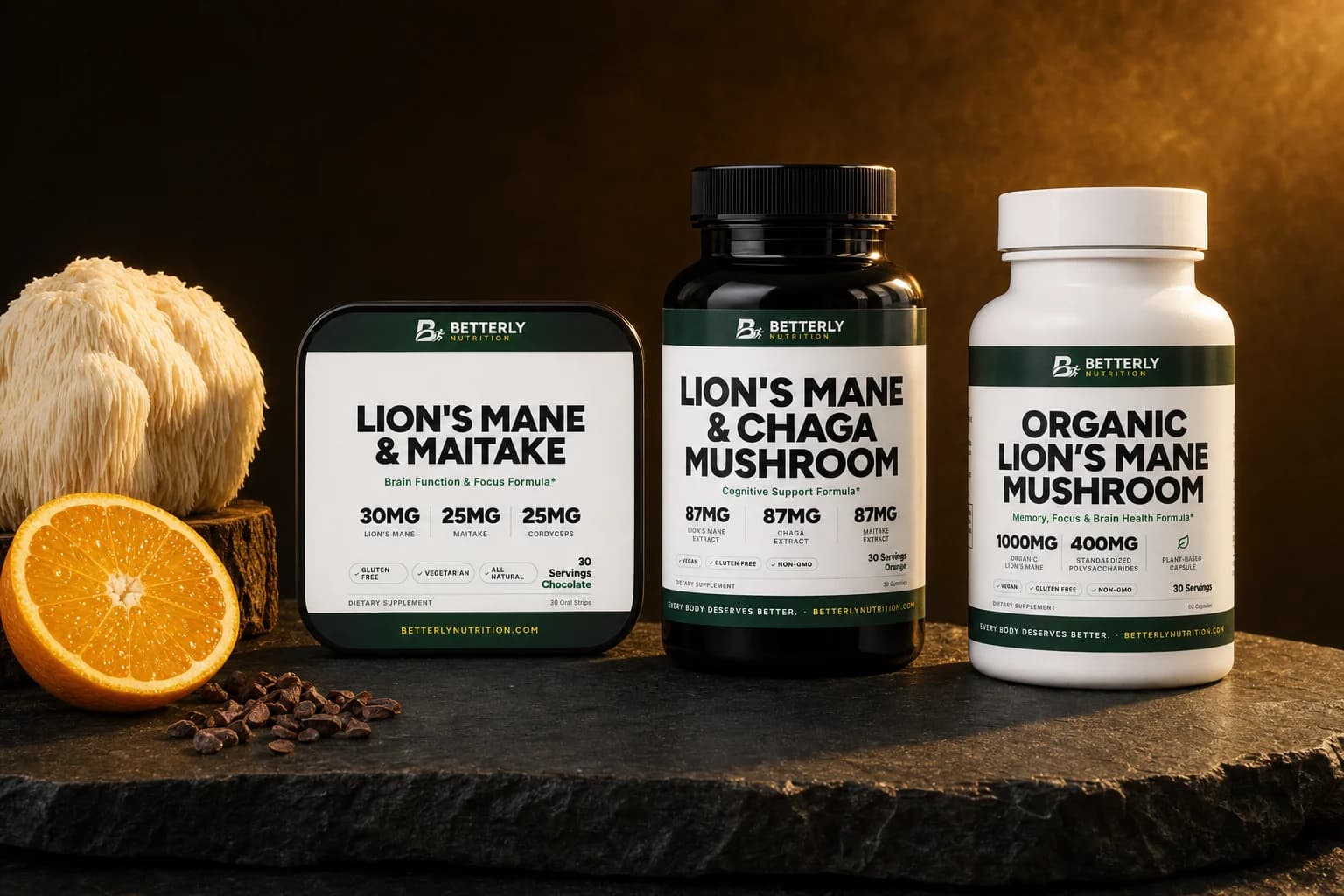
Betterly's Lion's Mane & Maitake Focus Strips give 30 mg of lion's mane per strip, and our Organic Lion's Mane Mushroom Capsules give 1,000 mg per 2-capsule serving.
For comparison, we've added two non-mushroom products from our nootropics and focus shelf. Every amount comes from its label.
| Product (serving) | Per serving | Label's daily use | Worth knowing |
|---|---|---|---|
| Lion's Mane & Maitake Focus Strips (1 strip) | 30 mg lion's mane, 25 mg maitake, 25 mg cordyceps, 20 mg shiitake | 1 strip on the tongue | Chocolate flavor; labeled gluten free, vegetarian |
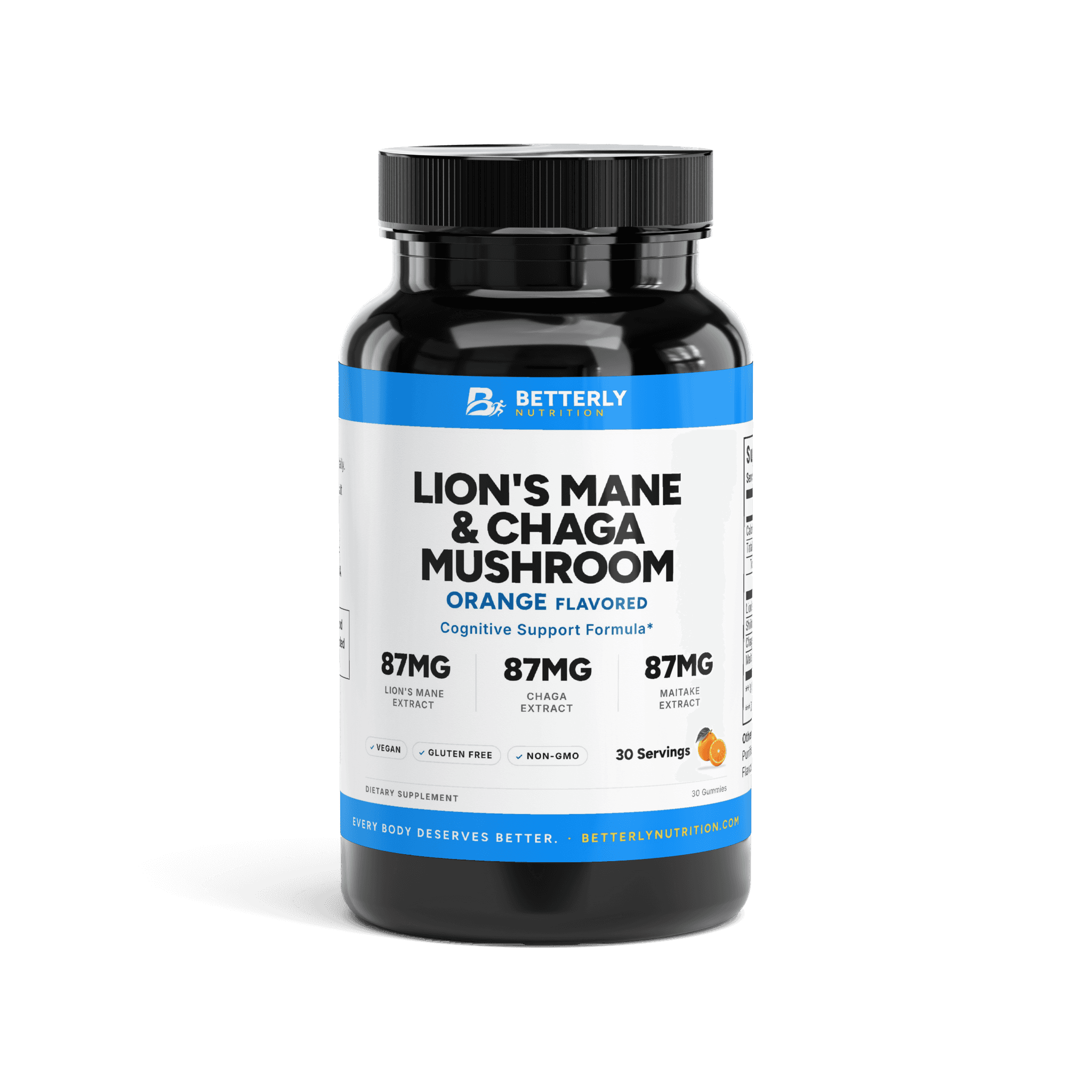
| Organic Lion's Mane Mushroom Capsules (2 capsules) | 1,000 mg lion's mane powder | 2 capsules | Lion's mane only; labeled vegan, gluten free, non-GMO |
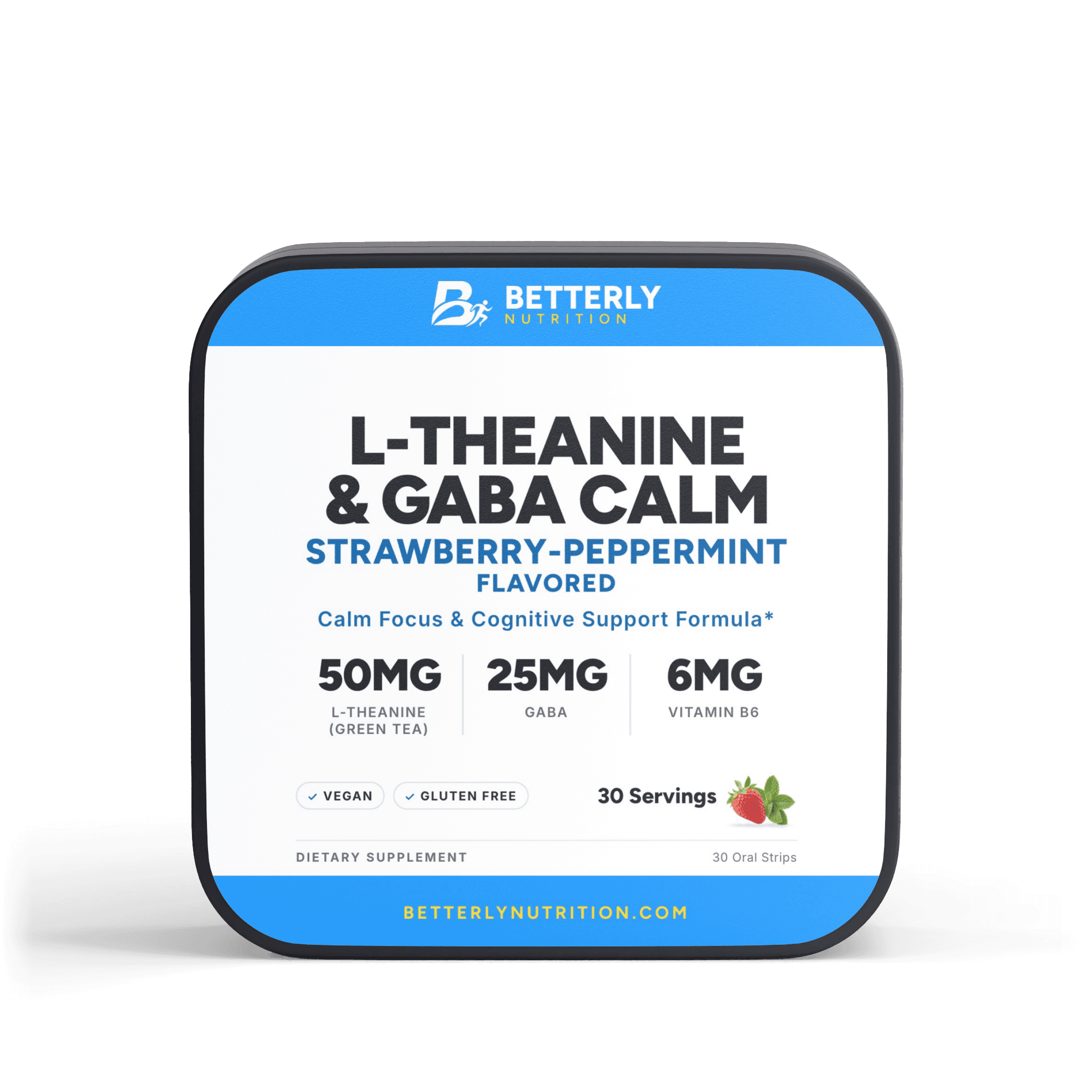
| L-Theanine & GABA Calm Strips (1 strip) | 50 mg L-theanine, 25 mg GABA, 6 mg vitamin B6 | 1 strip on the tongue | No lion's mane; labeled vegan, gluten free |
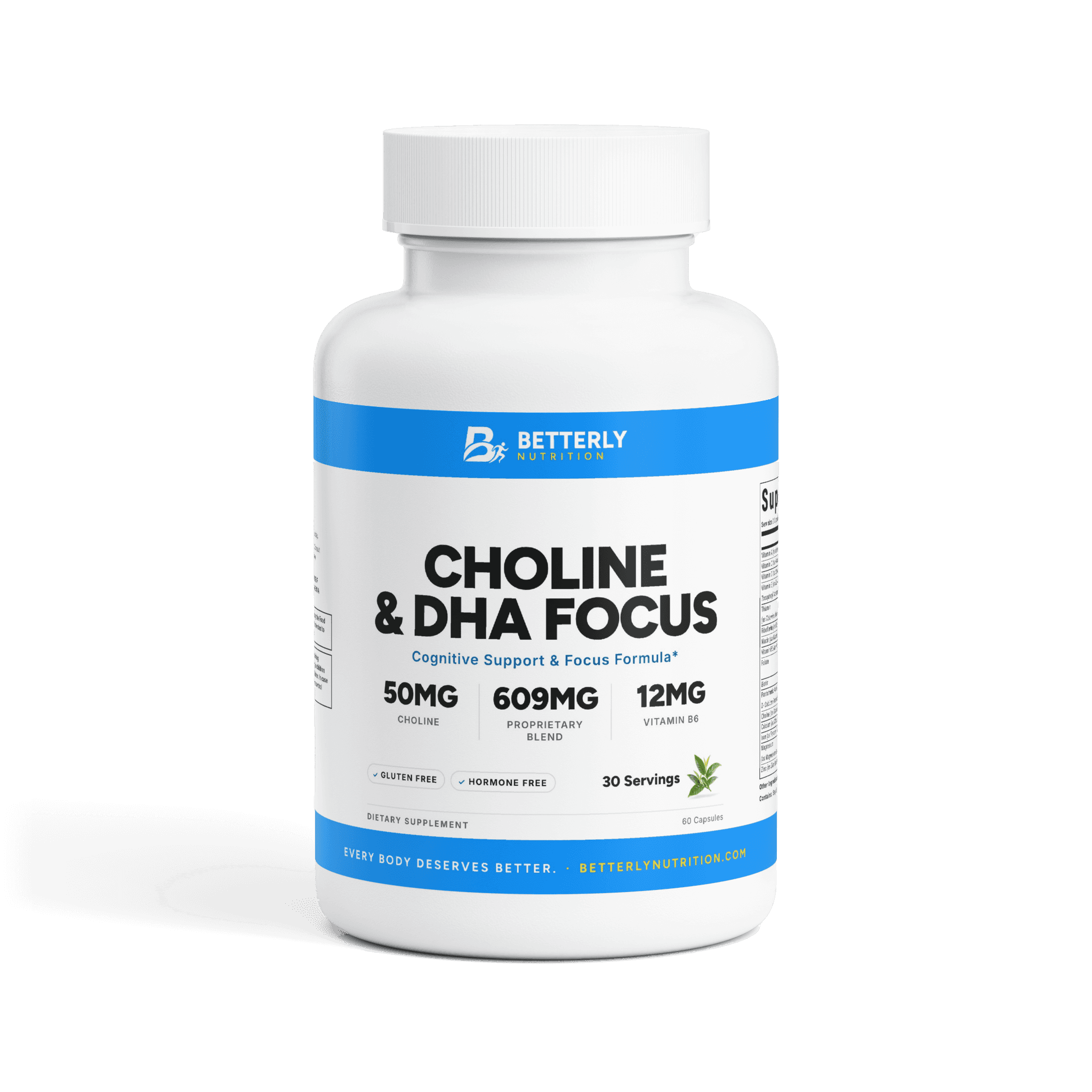
| Choline & DHA Focus Capsules (2 capsules) | 50 mg choline, 21 vitamins and minerals, a 609 mg blend | 2 capsules | 18-ingredient blend, no single amounts; contains soy and fish |
By printed weight, the Organic Lion's Mane Mushroom Capsules hold more than 30 times the lion's mane in one strip. The strip's case is convenience: nothing to swallow whole. It also shares its lion's mane with three other mushrooms, and its label doesn't say whether the 30 mg is powder or extract.
Neither of the other two contains lion's mane. The L-Theanine & GABA Calm Strips have no caffeine on their panel. The Choline & DHA Focus Capsules list DHA inside that 609 mg proprietary blend without its own amount, next to green tea extract, bacopa and huperzine A.
From our shop: Lion's Mane & Maitake Focus Strips — a 30-strip pack, one chocolate-flavored strip a day per the label, each listing 30 mg of lion's mane with maitake, cordyceps and shiitake.
How do you add lion's mane to a study routine, going by the label?
Take lion's mane exactly as its label says, one strip or two capsules a day, and keep your study plan as the main event.
- Pick one lion's mane product. Both labels give a single daily amount and print "Do not exceed recommended dose," so a strip plus capsules goes beyond what either describes.
- Follow the wording. The strip label says: "Place 1 oral strip on the tongue daily and allow it to dissolve." The capsule label says: "As a dietary supplement, adults take two (2) capsules daily or as directed by a healthcare professional."
- Choose a time you'll remember. Neither label names a time of day or mentions food, so the start of a study block in a normal week fits the directions.
- Leave the trial amounts to the trials. Neither label reaches the 2023 pilot's 1.8 g a day, and neither allows more than its stated amount.
From our shop: Organic Lion's Mane Mushroom Capsules — a 30-serving bottle whose Supplement Facts panel lists only lion's mane, 1,000 mg of organic fruiting body and mycelium powder per 2 capsules.
When don't you need lion's mane for studying?
You don't need lion's mane for studying if sleep, your study method or a supplement you already take is the real gap.
- You're running on short nights. Sleep has the stronger case for learning, and no strip makes up for it.
- You mostly reread your notes. Practice questions and spread-out sessions are the change the health-education review supports.
- A mushroom blend you take already lists lion's mane. A second one makes your total harder to track.
- You want to feel something within the hour. Neither the strip's nor the capsule's panel has a caffeine row, and the single-dose results were mixed.
Who should check with a healthcare provider first?
Check with a healthcare provider before using lion's mane if you're pregnant, nursing, under 18, managing a medical condition, taking prescription medicine or have surgery coming up.
All four labels in this guide carry the same caution: "Do not exceed recommended dose. Consult a physician if pregnant, nursing, under 18, or have a medical condition."
If you're in high school, talk with a parent and your doctor first.
If you take prescription medicine, bring the full label to your pharmacist, especially for the Choline & DHA Focus Capsules and their 18-ingredient blend. Those capsules also list 2.6 mg of iron per 2-capsule serving, and their label warns about accidental iron overdose in children under 6, so keep the bottle away from young children.
Skip lion's mane if mushrooms have ever given you a reaction, and read our guide to lion's mane side effects and who should skip it.
FAQ: lion's mane for studying
Can lion's mane help you learn a language?
Lion's mane hasn't been tested for language learning in any trial we found. The healthy-adult studies timed short tasks like word lists and reaction tests, not vocabulary built up over weeks. Spaced review and self-testing have the stronger track record for studying in general.
How long does lion's mane take to work for studying?
Nobody knows how long lion's mane takes to help with studying, because no trial we found has reported results from a study setting. The single-dose trials tested people 60 or 90 minutes later, with mixed results. After 28 days, the pilot reported no Stroop difference between the groups.
Can teenagers take lion's mane for school?
Teens should ask a parent and a doctor before taking lion's mane, since our labels say to consult a physician if you're under 18. The trials we read enrolled only adults, so there's no study data for high schoolers. A regular bedtime and practice questions spread across the week are better places to start.
Is lion's mane worth it for college students?
Lion's mane is worth it for college students only if you want to try it knowing the study evidence is thin. It won't replace sleep or practice testing, and it hasn't been shown to raise grades. If you try it, stick to one product and the label's daily amount, and store the strips somewhere cool and dry, as the pack directs.
Can lion's mane help you memorize for a test?
Lion's mane hasn't helped memorization in the trials we read. The closest thing to memorizing in them was a short word list, and lion's mane didn't come out ahead on it, either after one dose or after four weeks. A list learned in minutes is also nothing like a semester of notes. For the material you'll need on exam day, spaced self-testing has a much better record.
Sources
- The Acute and Chronic Effects of Lion's Mane Mushroom Supplementation on Cognitive Function, Stress and Mood in Young Adults: A Double-Blind, Parallel Groups, Pilot Study, Nutrients (2023), PubMed Central
- Acute effects of a standardised extract of Hericium erinaceus (Lion's Mane mushroom) on cognition and mood in healthy younger adults: a double-blind randomised placebo-controlled study, Frontiers in Nutrition (2025), PubMed Central
- How Sleep Works: Why Is Sleep Important?, National Heart, Lung, and Blood Institute, NIH
- Systematic review of distributed practice and retrieval practice in health professions education, Advances in Health Sciences Education (2023), PubMed Central
If this left you looking for somewhere to start, read lion's mane oral strips — its amounts per serving are listed on the page. For the practical questions this raises, how dosing, sourcing and subscriptions work is answered in one place.