On this page
- Key takeaways
- Can you take lion's mane and coffee together?
- Does lion's mane have caffeine?
- Does lion's mane interact with caffeine?
- Lion's mane vs coffee: what does each one actually do?
- Does lion's mane take the edge off coffee jitters?
- Can you put lion's mane in your coffee?
- How do you take lion's mane with your morning coffee?
- When don't you need lion's mane with your coffee?
- Who should check with a healthcare provider first?
- FAQ: lion's mane and coffee
- Sources
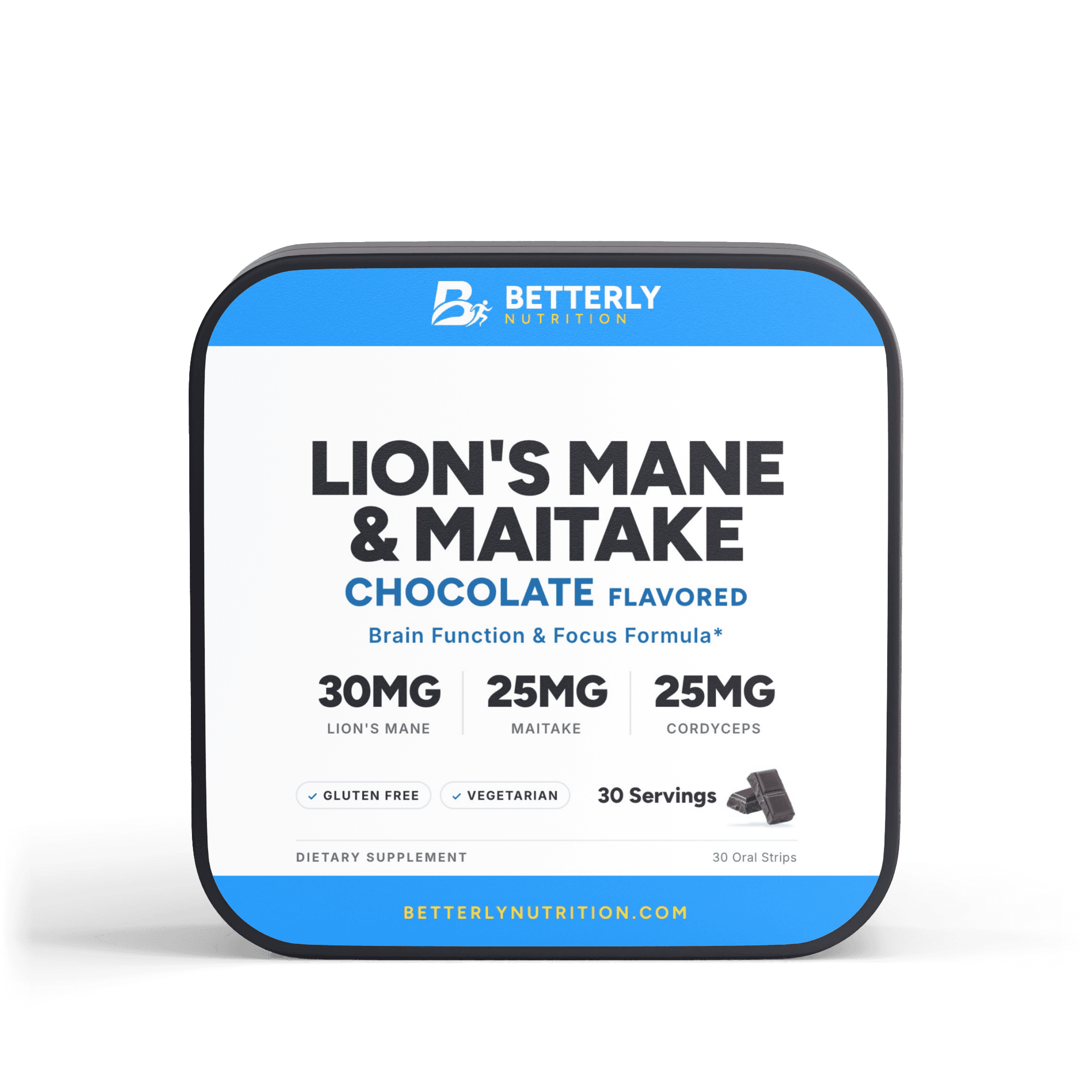
The short answer: Yes, most healthy adults can take lion's mane and coffee together, and we found no federal source describing an interaction. Lion's mane isn't a caffeine source, so the caffeine to count is in your cup. Our Lion's Mane & Maitake Focus Strips list 30 mg of lion's mane per 1 Oral Strip (260 mg) serving and have no caffeine row on their panel. Keep an eye on the FDA's 400 mg of caffeine a day for most adults.
Key takeaways
- Known scientifically as Hericium erinaceus, lion's mane is an edible mushroom rather than a caffeine source, and none of our six lion's mane Supplement Facts panels has a caffeine row.
- The LiverTox, FDA and MedlinePlus pages we checked describe no lion's mane and caffeine interaction, which reflects missing data rather than a safety promise.
- Your coffee is the caffeine to count in this pairing, so tally your cups against the FDA's figure of 400 mg a day for most adults.
- The promise of coffee "without the jitters" is usually tied to L-theanine, an amino acid from tea, not to lion's mane.
A quick disclosure: we sell lion's mane in six products, including the strip and capsules this guide focuses on, and we also sell a caffeine strip and an L-theanine strip, so we're not neutral here. Product numbers come from our labels, and caffeine and safety facts are credited to the federal page that states them.
Can you take lion's mane and coffee together?
Most healthy adults can take lion's mane and coffee together, since lion's mane adds no caffeine and neither LiverTox nor the FDA's caffeine guide warns against the pairing.
LiverTox, the National Library of Medicine's drug and supplement liver-safety database, lists no lion's mane trial built around coffee. The closest is a 2023 trial in 40 healthy adults given a single dose of lion's mane (1 g), guayusa (650 mg) or a placebo. Those were separate treatments, and the summary never describes anyone taking lion's mane and guayusa together. LiverTox adds that guayusa's caffeine may explain its effect on the thinking tests.
So treat them as two choices that share a morning: coffee has a daily caffeine ceiling, and lion's mane has a label amount.
Does lion's mane have caffeine?
No, lion's mane has no caffeine of its own. It's a fungus, and not one of Betterly's six lion's mane panels carries a caffeine row.
MedlinePlus counts more than 60 plants that contain caffeine naturally, from coffee beans and tea leaves to kola nuts and cacao pods. Lion's mane isn't a plant at all. According to LiverTox, it's a mushroom that typically grows on the trunks of dead hardwood trees.
This guide sticks to our strip and capsule. Here's what those two labels list:
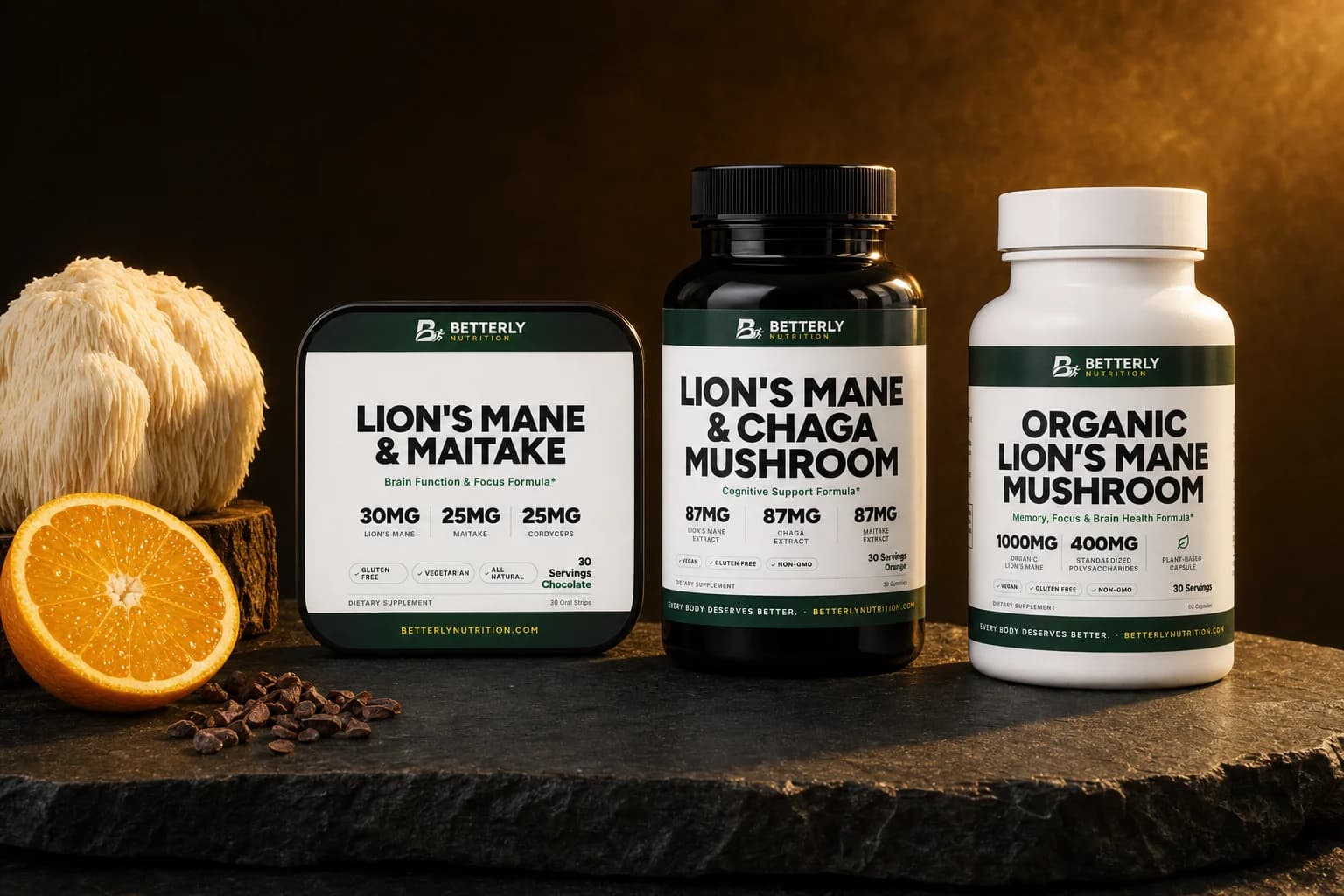
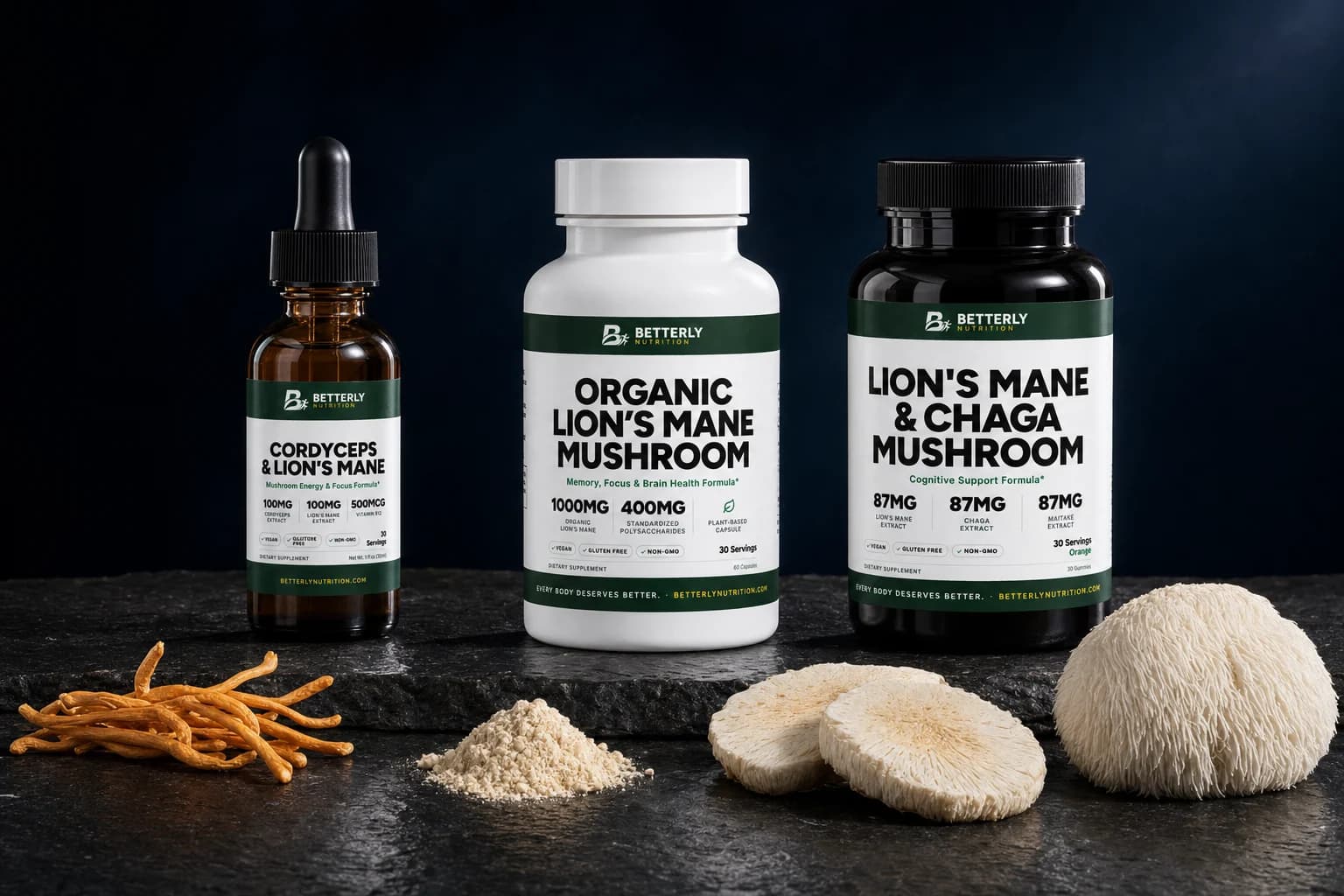
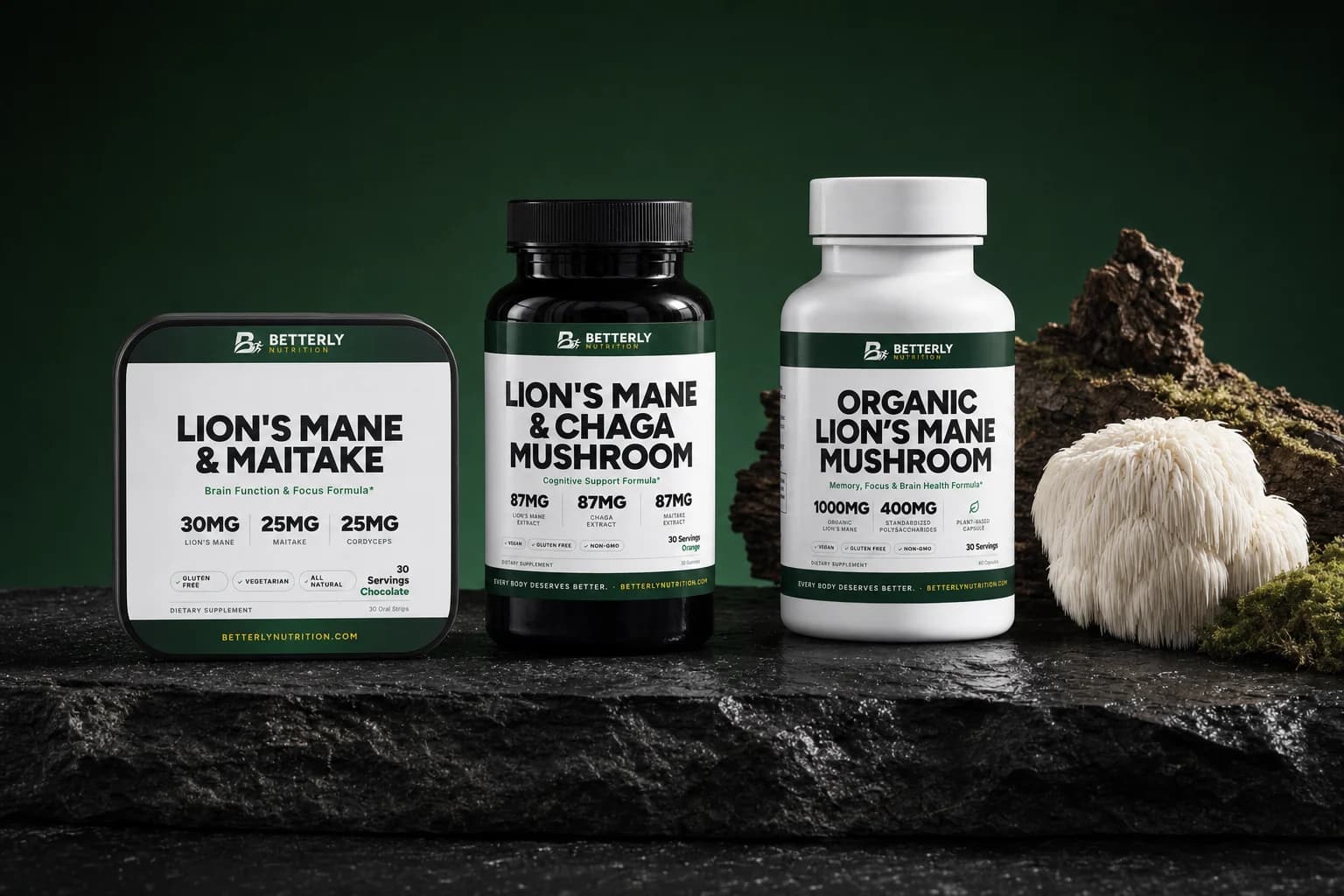
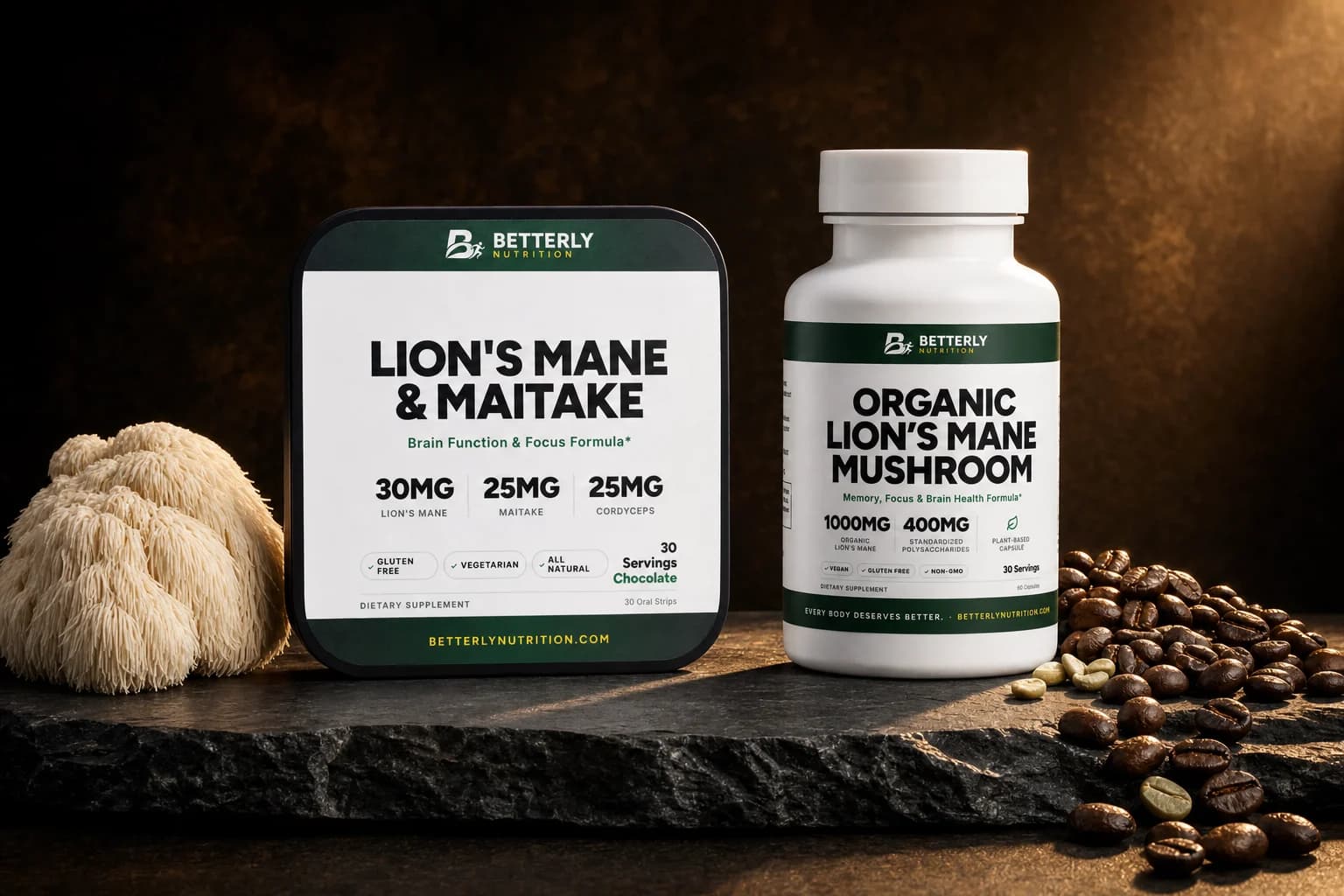
- The Lion's Mane & Maitake Focus Strips list 30 mg of lion's mane, 25 mg of maitake, 25 mg of cordyceps and 20 mg of shiitake per 1 Oral Strip (260 mg) serving.
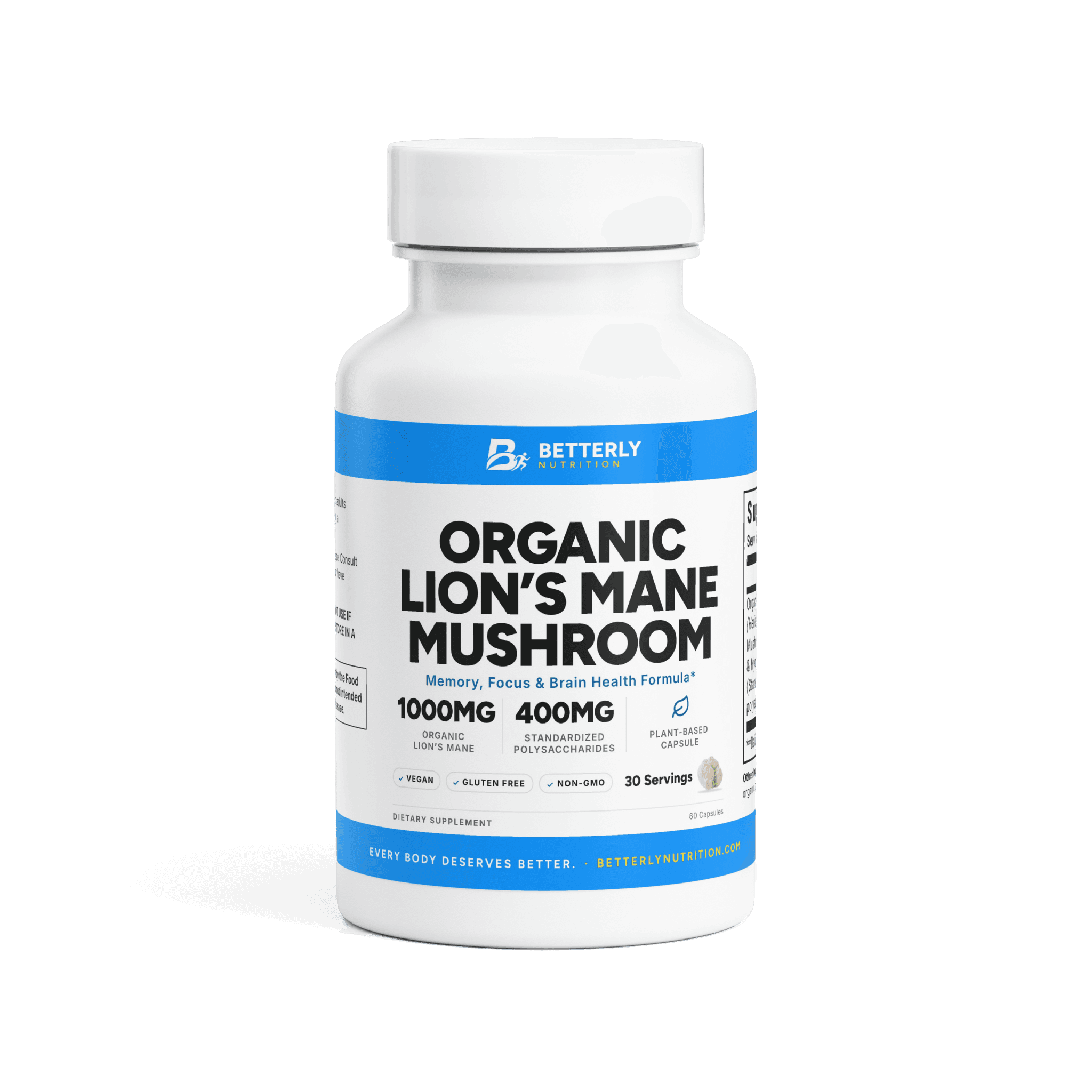
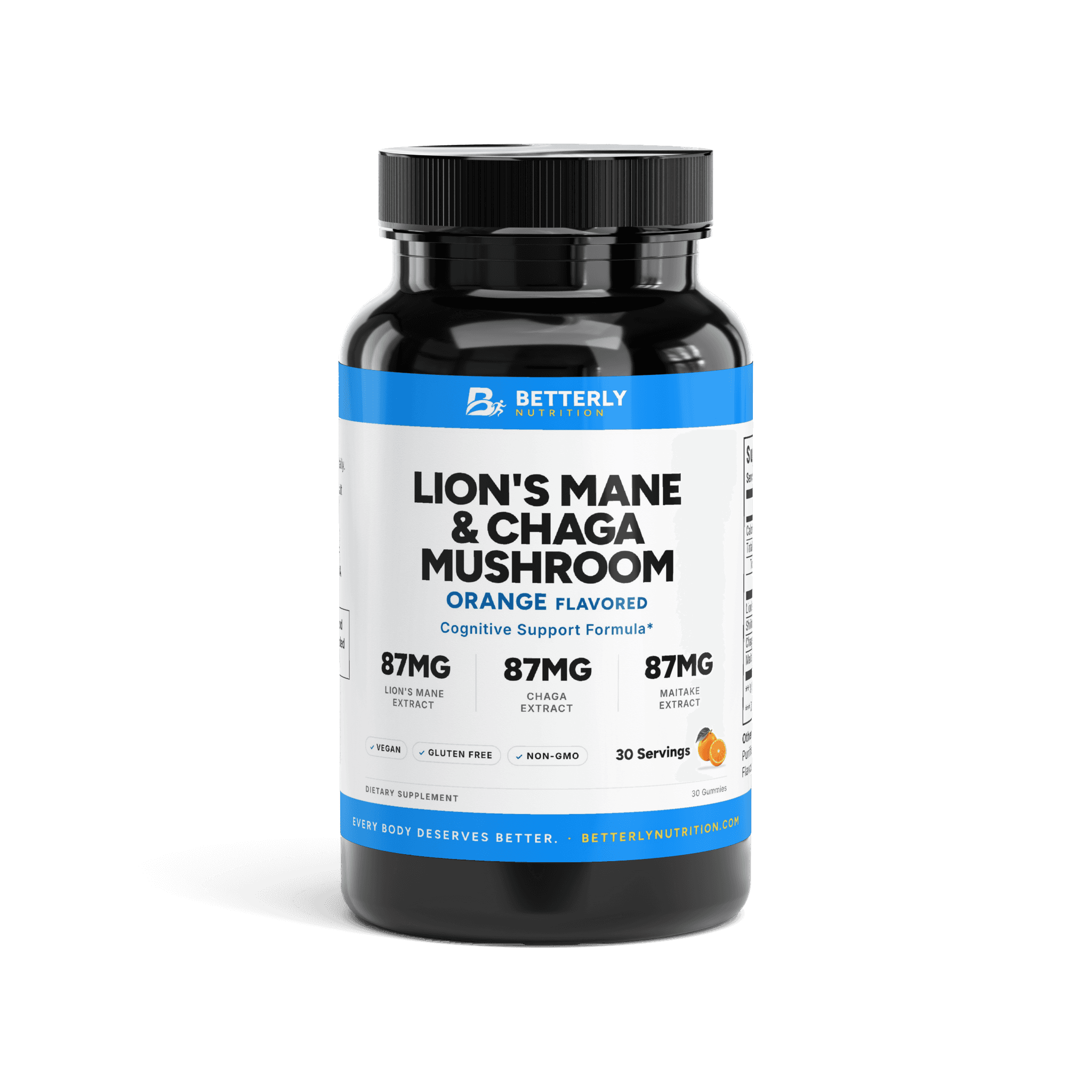
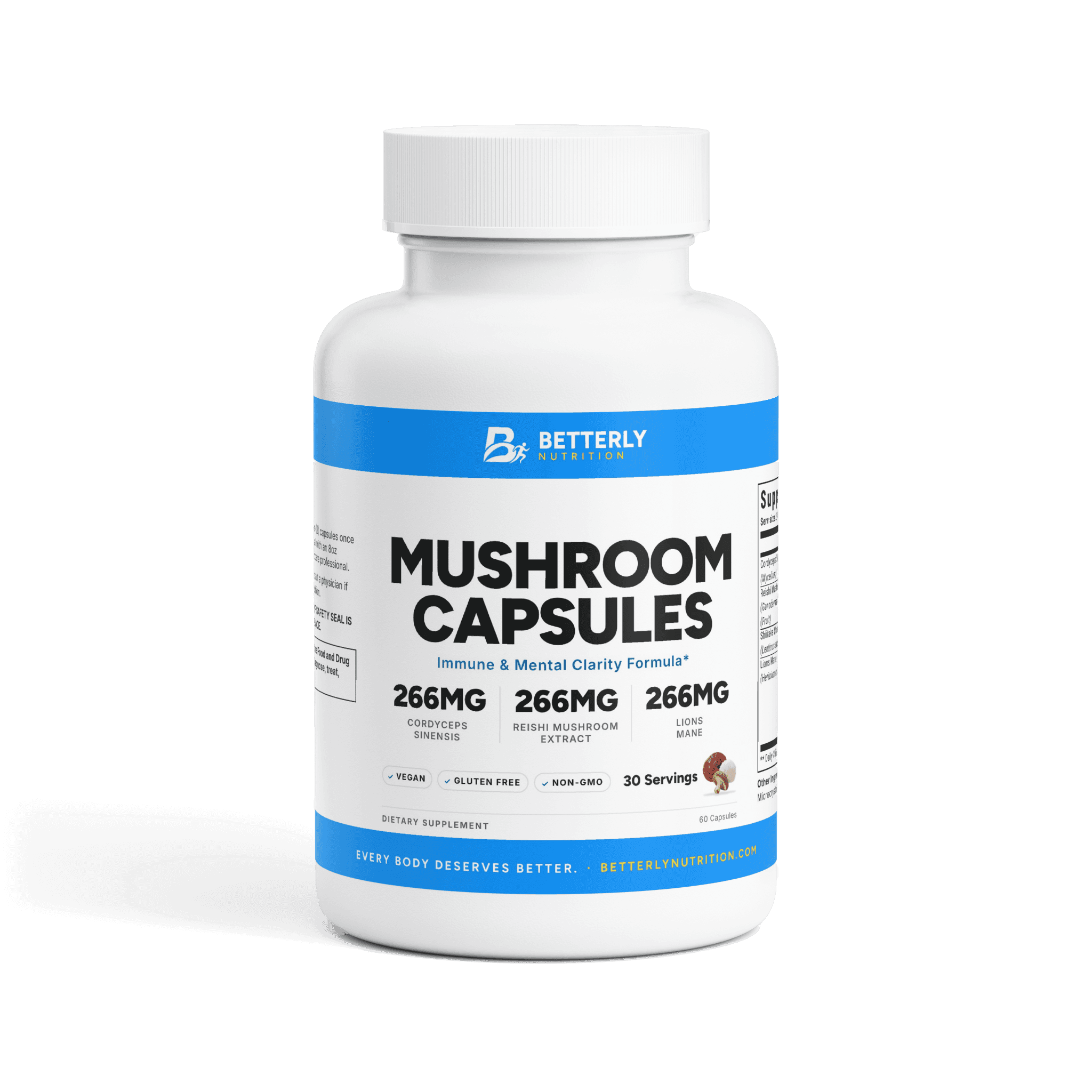
- The Organic Lion's Mane Mushroom Capsules list 1000 mg of organic lion's mane per 2-capsule serving, standardized to 40% polysaccharides (400 mg).
Neither panel has a caffeine row. One detail matters if you avoid caffeine strictly: the strip's other ingredients include a chocolate flavor, and the label doesn't say what it's made from. The FDA's caffeine guide explains that when a food contains an ingredient that naturally carries caffeine, like chocolate chips, caffeine won't appear in the ingredient list. We have no caffeine figure for that flavoring, so we won't call the strip zero.
Mushroom coffee is different: ground coffee blended with mushroom powder, so the coffee brings the caffeine. Our mushroom coffee vs mushroom supplements comparison weighs those blends.
Does lion's mane interact with caffeine?
We found no federal source describing a lion's mane and caffeine interaction. That's a gap in the evidence, not proof the pair can never interact.
The interactions federal sources do describe run through caffeine and your medicines. MedlinePlus flags stimulants and certain antibiotics, among others, and tells readers to ask a health care provider about caffeine interactions with any medicines and supplements they take. For you, that list would include lion's mane.
The NIH Office of Dietary Supplements (ODS) comes at it from the other direction. Its guide Dietary Supplements: What You Need to Know warns that supplements "can also interact with some medicines in ways that might cause problems."
So if you take a prescription, bring your pharmacist the whole morning list: coffee, lion's mane and anything else you swallow before noon.
Lion's mane vs coffee: what does each one actually do?
Coffee delivers caffeine that peaks in your blood within an hour, while lion's mane is a mushroom with no caffeine whose effects in people are far less established.
| Question | Coffee | Lion's mane supplement |
|---|---|---|
| Caffeine | 113 to 247 mg per 12 fl oz brewed (FDA) | No caffeine row on our panels |
| How it acts | Stimulates the central nervous system (MedlinePlus) | Brain effects seen in lab animals, little shown in humans (LiverTox) |
| Timing | Peaks in the blood within an hour; effects may last 4 to 6 hours (MedlinePlus) | Labels say daily, with no set time |
| Daily number to know | 400 mg of caffeine for most adults (FDA) | The label amount: 1 strip or 2 capsules |
Side by side, they aren't substitutes: coffee is the part you feel and the part with a ceiling, while lion's mane is the quiet part, with thin research behind it.
LiverTox notes that lion's mane is marketed for memory and thinking, though its brain effects in animals haven't been shown to any real extent in people. Our strip's label calls it a "Brain Function & Focus Formula," not an energy product, so it won't stand in for your coffee.
Does lion's mane take the edge off coffee jitters?
LiverTox's lion's mane summary says nothing about coffee jitters. That pitch usually belongs to L-theanine, an amino acid tea leaves contain naturally.
The FDA lists jitters among the signs that caffeine intake has gone too high, along with increased heart rate, upset stomach, nausea and headache. If they appear, it suggests talking with your health care professional about your caffeine.
Brand pages often say lion's mane smooths out coffee's rough edges without pointing to evidence. L-theanine has its own guide: how people pair L-theanine with their morning coffee.
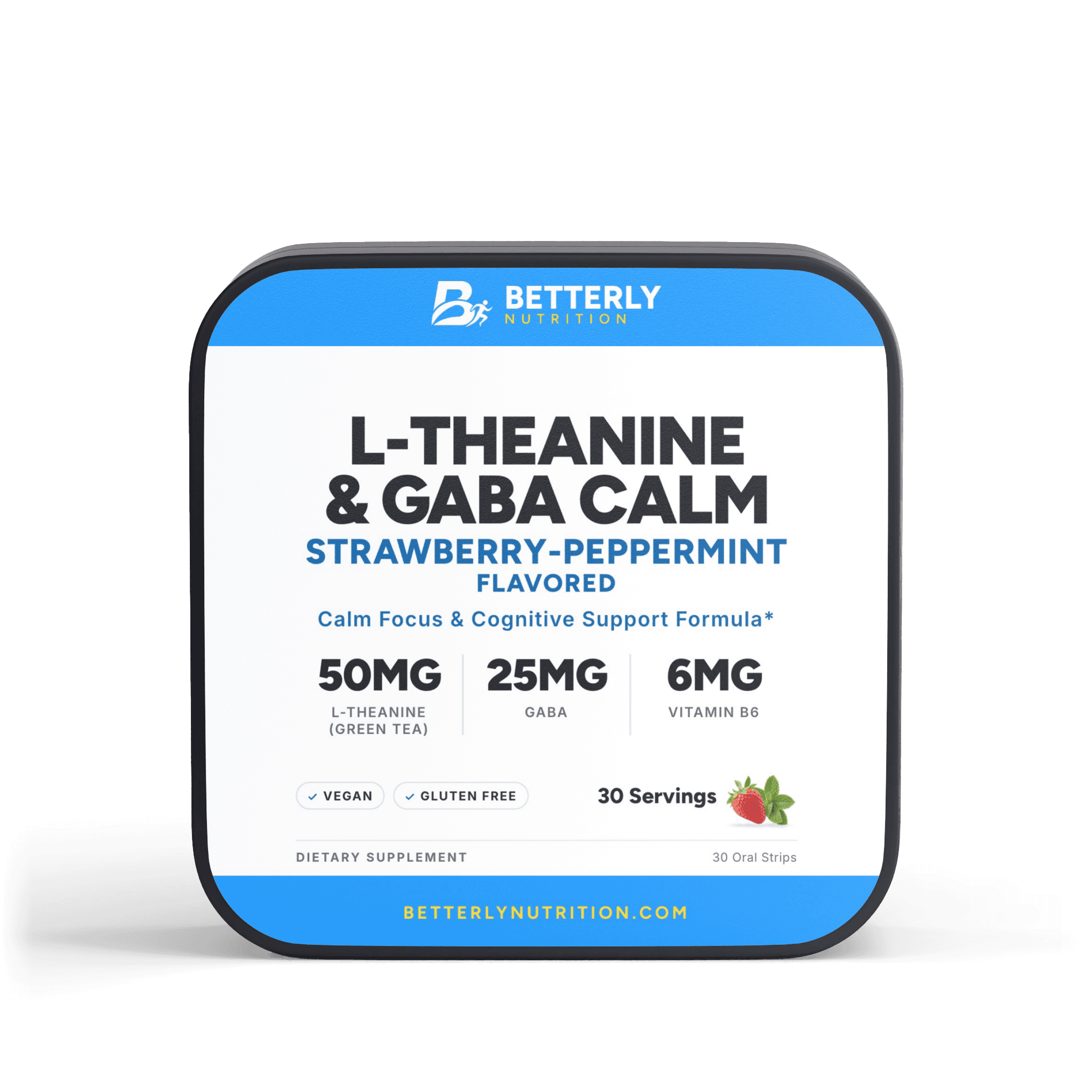
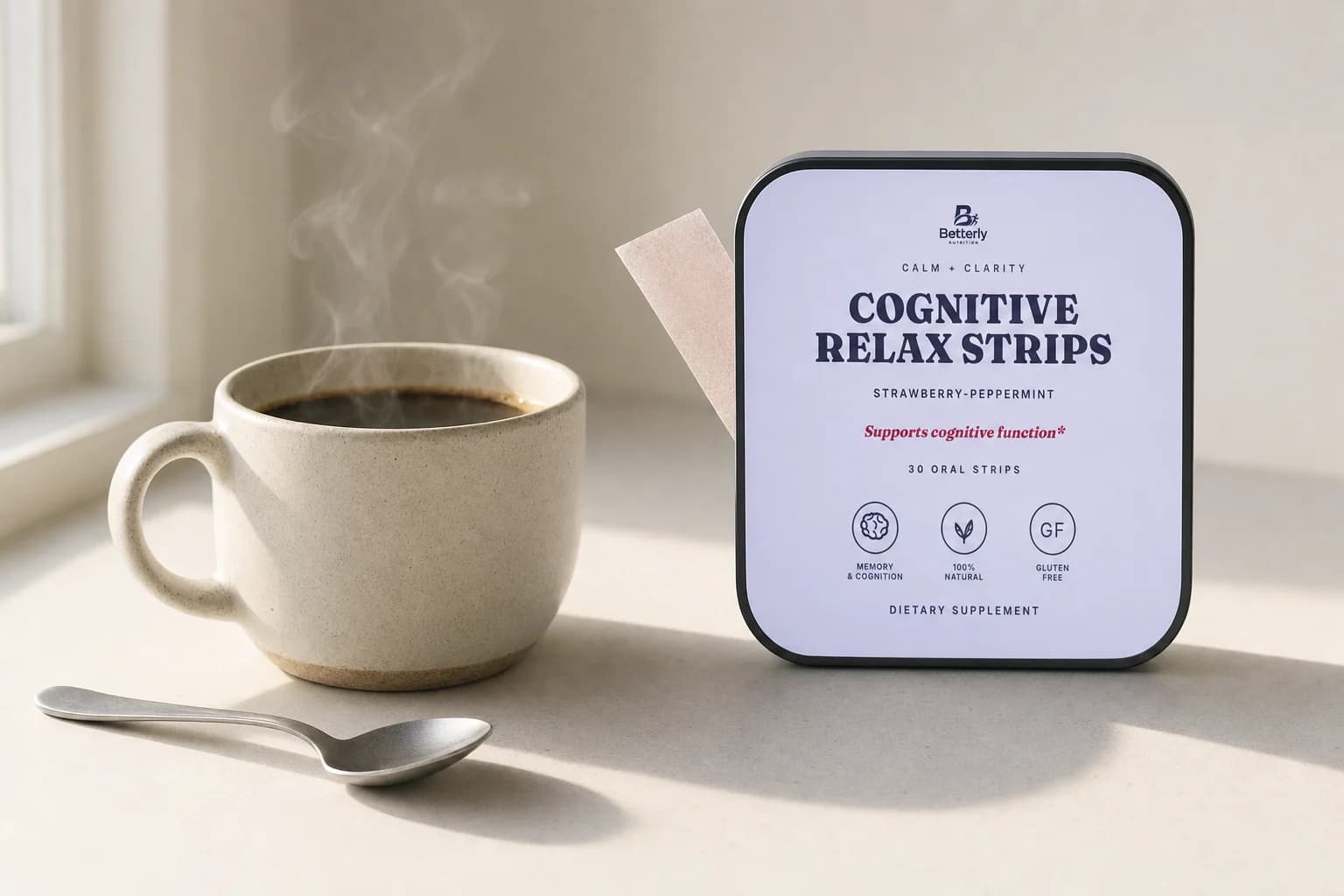
For label readers, the panel on our L-Theanine & GABA Calm Strips shows Green Tea (L-Theanine) at 50 mg, plus 25 mg of GABA and 6 mg of vitamin B6 per 1 Oral Strip (290 mg) serving. There's no caffeine row, but tea leaves are on MedlinePlus's list of natural caffeine sources and the panel gives no caffeine figure, so we won't call the strip caffeine-free or claim it smooths jitters. Less caffeine is still the direct fix.
Can you put lion's mane in your coffee?
Lion's mane can go in coffee as a powder, but Betterly doesn't sell a lion's mane powder, and our strip and capsules aren't meant to be mixed into a drink.
The strip's suggested use reads, "Place 1 oral strip on the tongue daily and allow it to dissolve." The capsule directions call for two capsules daily for adults, or as directed by a healthcare professional. Neither mentions opening a capsule or mixing anything into a drink, so we don't suggest it.
Put a strip on your tongue while the coffee brews, then drink your cup as usual.
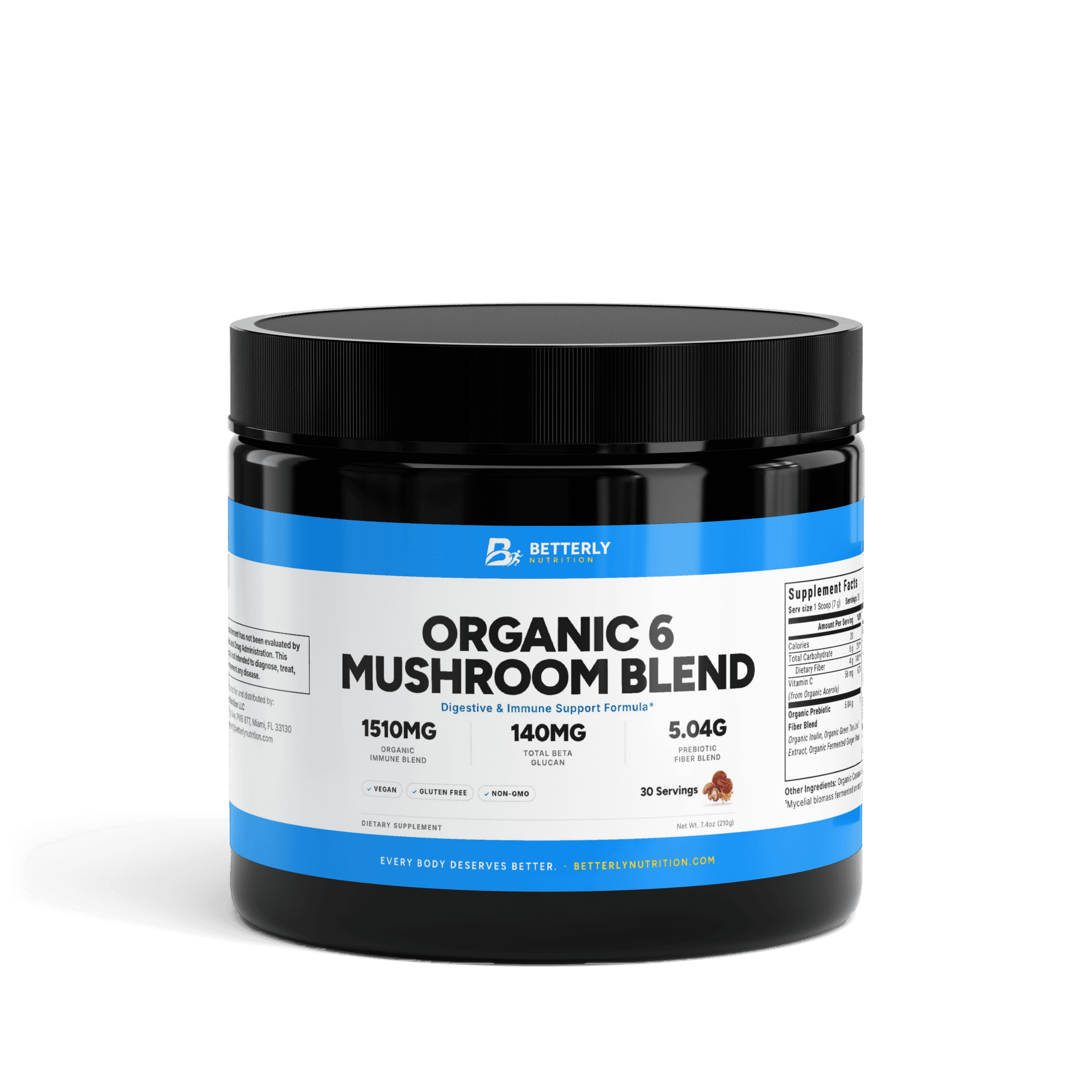
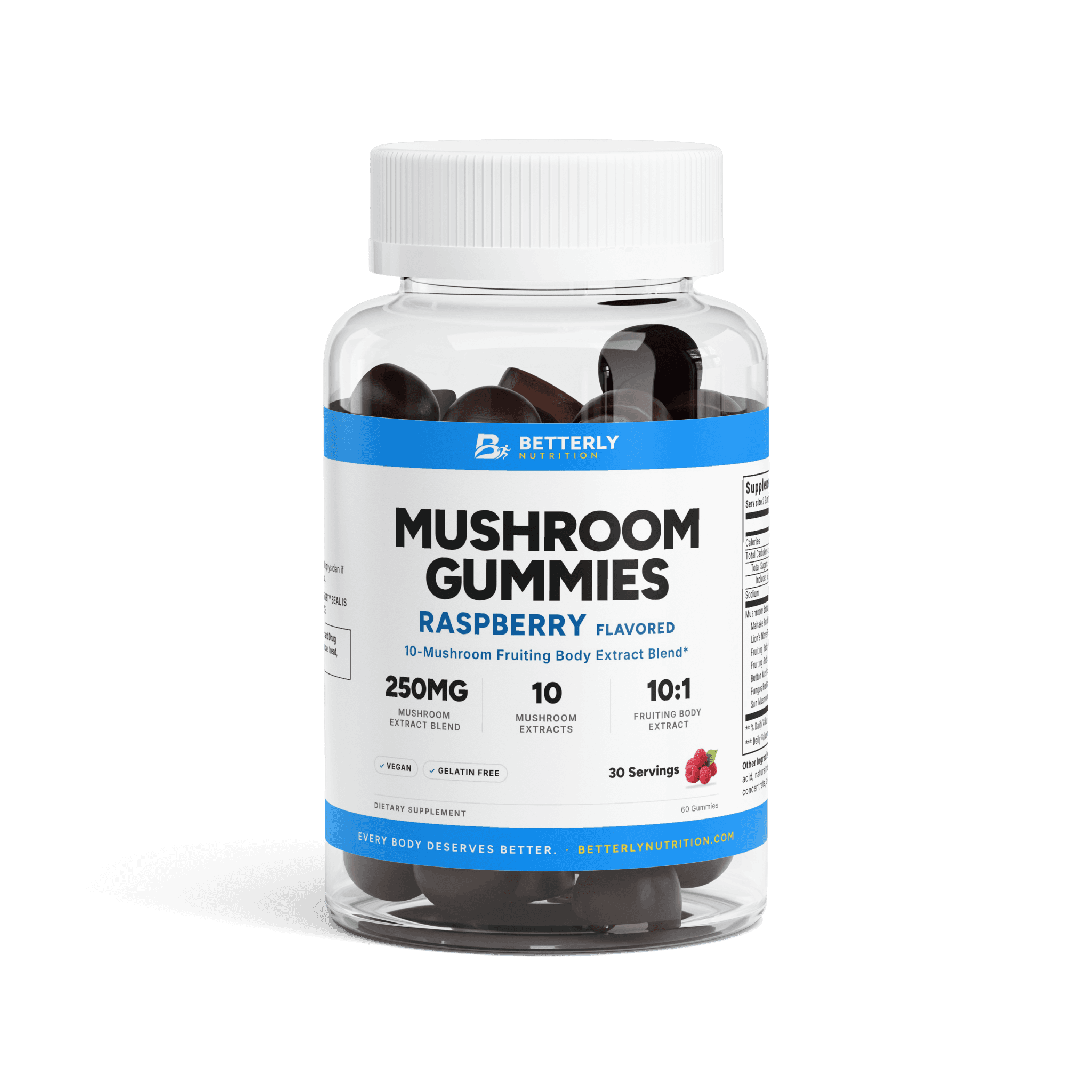
Our only mushroom powder, the Organic 6 Mushroom Blend Powder, doesn't list lion's mane. Its prebiotic blend also includes organic green tea leaf extract, with no caffeine figure on the panel. LiverTox and the FDA page don't address whether hot coffee changes lion's mane, so we won't guess. Our other lion's mane formats, gummies and drops among them, sit together in our mushroom supplement collection.
From our shop: Lion's Mane & Maitake Focus Strips — 30 mg of lion's mane with maitake, cordyceps and shiitake per 1 Oral Strip (260 mg) serving, chocolate flavored, 30 strips per pack, no caffeine row on the panel.
How do you take lion's mane with your morning coffee?
Follow the lion's mane label as written and keep your usual coffee beside it: one strip on the tongue daily, or two capsules daily. Then count your caffeine on its own.
- Pick one lion's mane product. Using both the strip and the capsules stacks two lion's mane sources, and each label says, "Do not exceed recommended dose."
- Keep to the label amount. That's one strip or two capsules a day, even on heavy coffee days.
- Choose a slot you'll repeat. Neither label names a time or meal. If you're torn, see whether lion's mane suits mornings or evenings.
- Tally the caffeine. The FDA says 400 mg is about two to three 12-ounce cups of coffee, so a three-cup habit can reach that line before any tea or soda.
- Add one change at a time. If lion's mane is new, keep your coffee routine steady, so you'll know which change to look at if something feels off.
Your coffee habit can pick the format for you:
| Your coffee habit | A lion's mane format that fits | What to watch |
|---|---|---|
| One mug at home, same time daily | 2 capsules alongside it | That's the full daily serving |
| Coffee on the commute | 1 strip that dissolves on the tongue | One strip a day, per the label |
| Three cups most days | Either format | Three 12-oz cups can reach 400 mg |
The takeaway: let where you drink your coffee choose the lion's mane format, and track the caffeine separately.
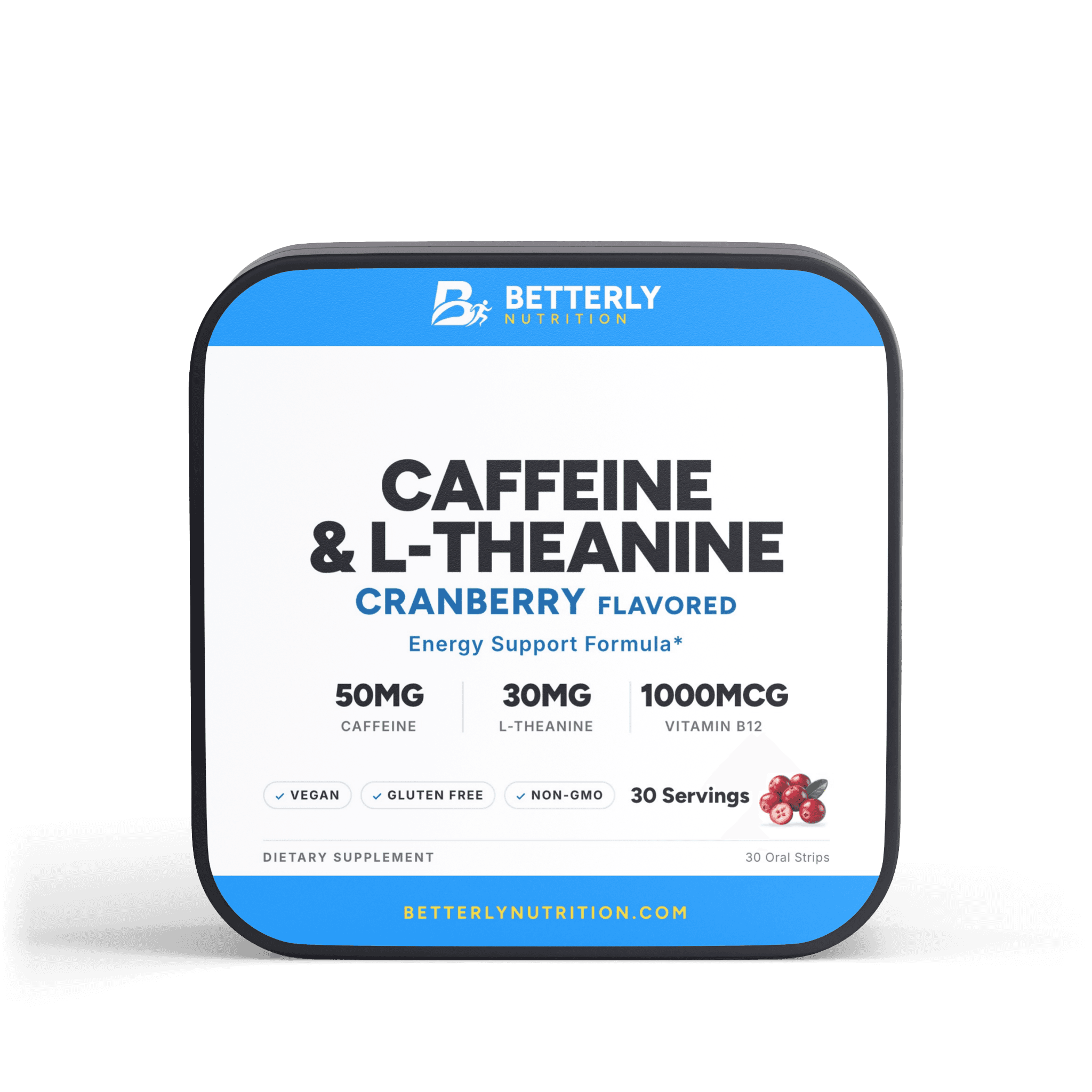
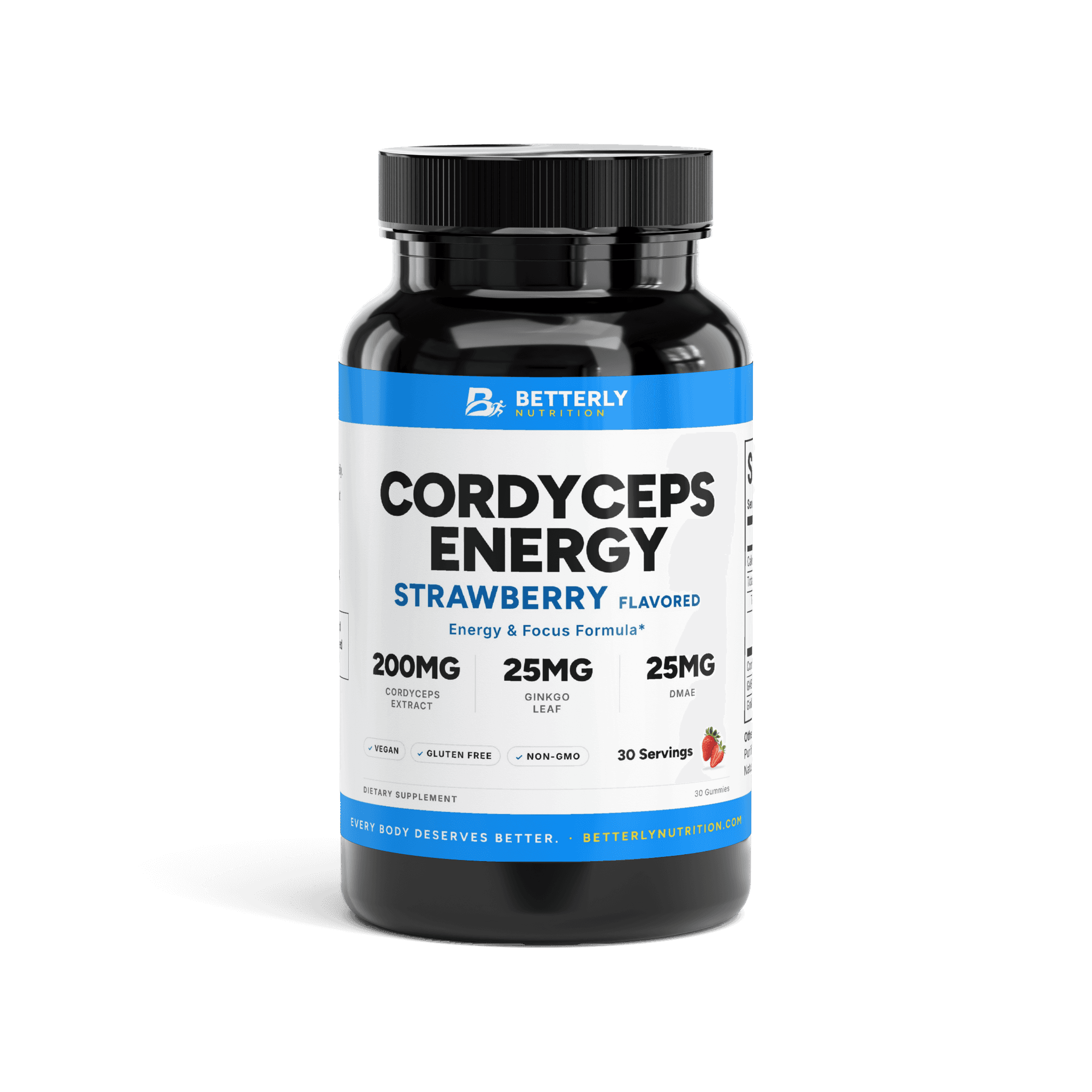
If you'd rather measure caffeine than estimate it from a mug, our Caffeine & L-Theanine Energy Strips carry 50 mg of caffeine per 1 Oral Strip (290mg) serving, alongside 30 mg of L-theanine and 1000 mcg of vitamin B12, one strip daily. The FDA says to consider all sources of caffeine, so use a strip in place of part of your coffee, not on top of a full pot.
From our shop: Organic Lion's Mane Mushroom Capsules — 1000 mg of organic lion's mane per 2-capsule serving, 60 capsules per bottle, labeled vegan, gluten free and non-GMO.
When don't you need lion's mane with your coffee?
You don't need lion's mane beside your coffee if you're after more energy, already take a blend that lists it, or are really trying to fix too much caffeine.
- You want a bigger morning lift. Neither the strip nor the capsule panel has a caffeine row, and neither label is written as an energy formula.
- Something you already take lists lion's mane. If your blend or mushroom coffee already has it, ours would be a second source, not a new ingredient.
- The jitters are the real problem. Cutting caffeine addresses that; lion's mane doesn't.
- You'd only use it on busy days. Both the strip and capsule directions say daily, which doesn't describe an as-needed pick-me-up.
There's also an honest limit on our strip. At 30 mg per 1 Oral Strip (260 mg) serving, it has the lowest lion's mane figure of any label we sell that prints one, far below the 1000 mg in a 2-capsule serving. How much lion's mane per day walks through those amounts side by side.
Who should check with a healthcare provider first?
Coffee and lion's mane are two things to clear with a healthcare provider if you're pregnant, nursing, under 18, on medication, facing surgery or living with a medical condition.
- Pregnant or nursing. The strip and capsule labels both name pregnancy and nursing. MedlinePlus adds that caffeine passes through the placenta and that a small amount reaches a breastfed baby.
- Under 18. Both labels ask for a physician first, and MedlinePlus puts children and teens below adults on caffeine.
- Taking medicines or other supplements. The FDA notes that some medications can make people more sensitive to caffeine's effects.
- Surgery booked. Add lion's mane to the supplement list your surgical team sees. The ODS guide cautions that some supplements can raise bleeding risk or, taken before an operation, shift how you respond to anesthesia.
- Sensitive to mushrooms. LiverTox describes at least one acute allergic-type reaction to oral lion's mane.
If jitters or an upset stomach show up, cut back and check in with a provider.
FAQ: lion's mane and coffee
Can you drink coffee right after taking lion's mane?
Yes, you can drink coffee right after taking lion's mane, going by our strip and capsule labels. Neither set of directions asks you to wait before eating or drinking, and the FDA and MedlinePlus caffeine pages don't call for a gap between caffeine and supplements. If you use the strip, let it finish dissolving on your tongue before your first sip, since that's what its directions describe.
Can you take lion's mane with decaf coffee?
Yes, lion's mane pairs with decaf the same way it pairs with regular coffee, since neither the strip nor the capsule panel has a caffeine row. Decaf isn't caffeine-free, though. The FDA says decaf typically has 2 to 15 mg of caffeine in an 8-ounce cup. That's small next to regular brewed coffee, but it still counts if you keep a close tally.
Is it OK to take lion's mane with coffee every day?
Yes, a daily lion's mane and coffee routine fits our strip and capsule labels, which say one strip or two capsules a day. The FDA says caffeine can be part of a healthy diet for most people, and its 400 mg figure is per day. LiverTox notes that in longer lion's mane trials, mild stomach complaints showed up usually in under 10% of people and generally didn't mean stopping. If yours linger, stop and ask a provider.
Should you take lion's mane and coffee on an empty stomach?
Lion's mane can go either way, since neither the strip nor the capsule label mentions food. Coffee is the part more likely to matter. MedlinePlus says caffeine increases the release of acid in your stomach, which sometimes leads to an upset stomach. If black coffee before breakfast already bothers you, try having both with a meal.
Does lion's mane make caffeine stronger?
No, lion's mane isn't shown to make caffeine stronger or weaker. LiverTox's summary of lion's mane research doesn't describe any change in how caffeine works. Some brand pages say to cut your coffee when adding lion's mane because the pair hits harder, without pointing to evidence. How caffeine feels still tracks the dose in your cup and your own sensitivity.
Sources
- U.S. Food and Drug Administration: Spilling the Beans: How Much Caffeine Is Too Much?
- MedlinePlus, National Library of Medicine: Caffeine
- LiverTox, NCBI Bookshelf (National Library of Medicine): Lion's Mane
- NIH Office of Dietary Supplements: Dietary Supplements: What You Need to Know
If this left you looking for somewhere to start, read lion's mane oral strips — its amounts per serving are listed on the page. For the practical questions this raises, how dosing, sourcing and subscriptions work is answered in one place.