On this page
- Why people add L-theanine to their coffee
- What research suggests about L-theanine and caffeine together
- The 2:1 ratio: what the studies actually used
- How to take L-theanine with coffee: a simple morning template
- What it actually feels like (honest expectations)
- Easy ways to add the calm half to your cup
- Common mistakes to avoid
- Who should check with a provider first
- FAQ: L-theanine and coffee
- A calm next step
If coffee gives you the alertness you want but more edge than you asked for, l-theanine and coffee might be the most useful pairing you haven't tried yet. The idea is simple: coffee brings the wakefulness, and L-theanine — a calming amino acid found naturally in tea leaves — is associated with smoothing some of the sharpness off. Here's what research actually suggests about the combination, how people typically time it, and — because we'd rather be honest than exciting — what it realistically feels like.
Why people add L-theanine to their coffee
Coffee works. That's why most of us drink it. But for plenty of people it overshoots the mark: the classic coffee jitters, a racing mind that hops between browser tabs instead of settling on one, and a slump by early afternoon. The standard advice — "just drink less coffee" — is technically sound and widely ignored.
Pairing L-theanine with coffee is the middle path. L-theanine is an amino acid that occurs naturally in tea, especially shade-grown green tea. On its own, it's associated with a calm, settled feeling that doesn't tip into drowsiness — a big part of why a strong cup of green tea tends to feel different from a strong cup of coffee, even when the caffeine is comparable.
Put another way: tea drinkers have been getting caffeine and theanine together for centuries, in the same cup, without thinking of it as a "stack." Adding L-theanine to your coffee just borrows that very old combination and applies it to the drink you actually reach for at 7 a.m.
Researchers often describe the state L-theanine is linked with as "relaxed alertness." In small studies it has been associated with alpha brain-wave activity — a pattern seen when you're awake but settled, like the minutes before you sink into focused work. Can you feel a brain-wave pattern? Debatable. But it's the working theory for why this pairing keeps showing up in focus research. (If this whole category is new to you, our nootropics explainer for beginners is a gentle on-ramp.)
What research suggests about L-theanine and caffeine together
This is one of the better-studied pairings in the focus world — which, in supplements, means a handful of small placebo-controlled studies rather than a mountain of evidence. With the scale set honestly, here's what those studies suggest:
- Attention. In small crossover studies, people taking L-theanine with caffeine completed attention-switching tasks faster and more accurately than with a placebo — and in some comparisons, better than with caffeine alone.
- Distraction. A few studies found the combination was associated with less susceptibility to distracting information during memory tasks. Less "wait, what was I doing?"
- Alertness. In some studies, people rated themselves more alert and less tired with the combination than with a placebo, though not every study found this. The one study we found that measured jitteriness saw no clear change when L-theanine was added.
What the research does not say matters just as much. These studies are small — often a few dozen people — and they usually measure effects over an hour or two, not weeks or months. Not every study finds a clear synergy; on some tasks the combination performs about the same as caffeine alone. Dose-response research is thin, and the researchers themselves regularly call for larger trials. So the fair summary is: encouraging, plausible, modest. Not a superpower.
The 2:1 ratio: what the studies actually used
Search this topic for five minutes and you'll run into the "2:1 rule" — twice as much L-theanine as caffeine. It isn't a law of nature. It's simply the rough l-theanine caffeine ratio several of the best-known studies used, such as 100 mg of L-theanine with 50 mg of caffeine, or 97 mg with 40 mg. Other studies used different amounts, such as 250 mg of L-theanine with 150 mg of caffeine.
Some context for translating that to your mug: MedlinePlus puts an 8-ounce cup of coffee at 95–200 mg of caffeine. A large mug, a strong pour-over, or anything from a coffee shop can go well past that. Canned energy drinks and pre-workout scoops vary a lot too; our guide to pre-workout vs energy drinks lines up how much caffeine each typically carries. For comparison, a cup of brewed green tea is often estimated to carry only a modest amount of theanine — one reason supplement amounts are higher than what tea alone provides.
So there's no exact recipe: a normal cup of coffee already carries more caffeine than several of those studies used, and the studies above used about 97 to 250 mg of L-theanine. Plenty of people start lower and simply notice what changes. You're adjusting a feeling, not hitting an exact number — consistency matters more than precision.
How to take L-theanine with coffee: a simple morning template
Timing is refreshingly forgiving. According to MedlinePlus, caffeine reaches its peak level in the blood within one hour, so taking L-theanine at the same time as your coffee is the simplest approach. Some people give the L-theanine a 15–30 minute head start. Either approach is reasonable; the difference is subtle.
A simple calm-focus routine to run for a week or two:
- Water and food first. Caffeine on an empty stomach is a rough ride for many people, theanine or not.
- Take your L-theanine with — or just before — your first cup. Keep the amount the same each day so you can actually judge what it's doing.
- Give the window one real task. Spend the first stretch after your cup on focused work, not an inbox.
- Hold the line on total caffeine. One or two cups. The pairing is not permission for a fourth cup.
- Keep it to the morning. Caffeine lingers in your system for hours, and no amount of L-theanine changes that. Protect your evening wind-down.
What it actually feels like (honest expectations)
Subtle. That's the honest word.
If the pairing suits you, expect subtraction rather than addition: the same alertness with, possibly, a little less static. A racing mind that races a little less. The urge to check your phone mid-sentence, slightly quieter. If you're hoping for a dramatic before-and-after, this isn't that — and anyone promising one is selling something.
It's also genuinely possible you'll notice very little, especially if you sleep well, keep caffeine moderate, and don't get much edge from coffee in the first place. If there's no edge, there's not much to soften.
The simplest way to find out where you land: keep everything else constant — same coffee, same time, same breakfast — then run one week with L-theanine and one week without, jotting a single line each day about how the morning felt. Your own two-week record beats any blog post, including this one.
Easy ways to add the calm half to your cup
Plain L-theanine powder or capsules work fine — no argument from us. A few options from our own shelf, each with an honest note attached:
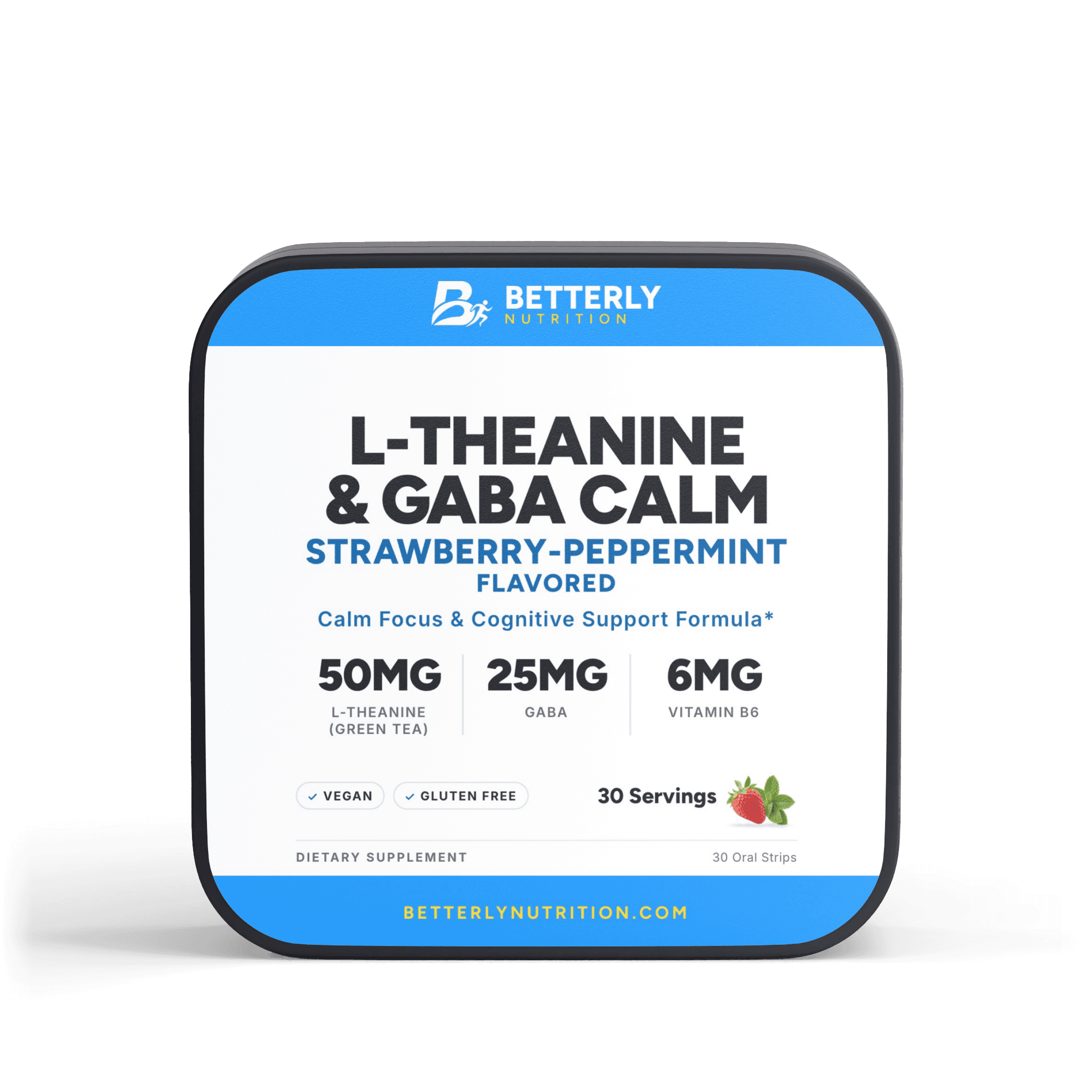
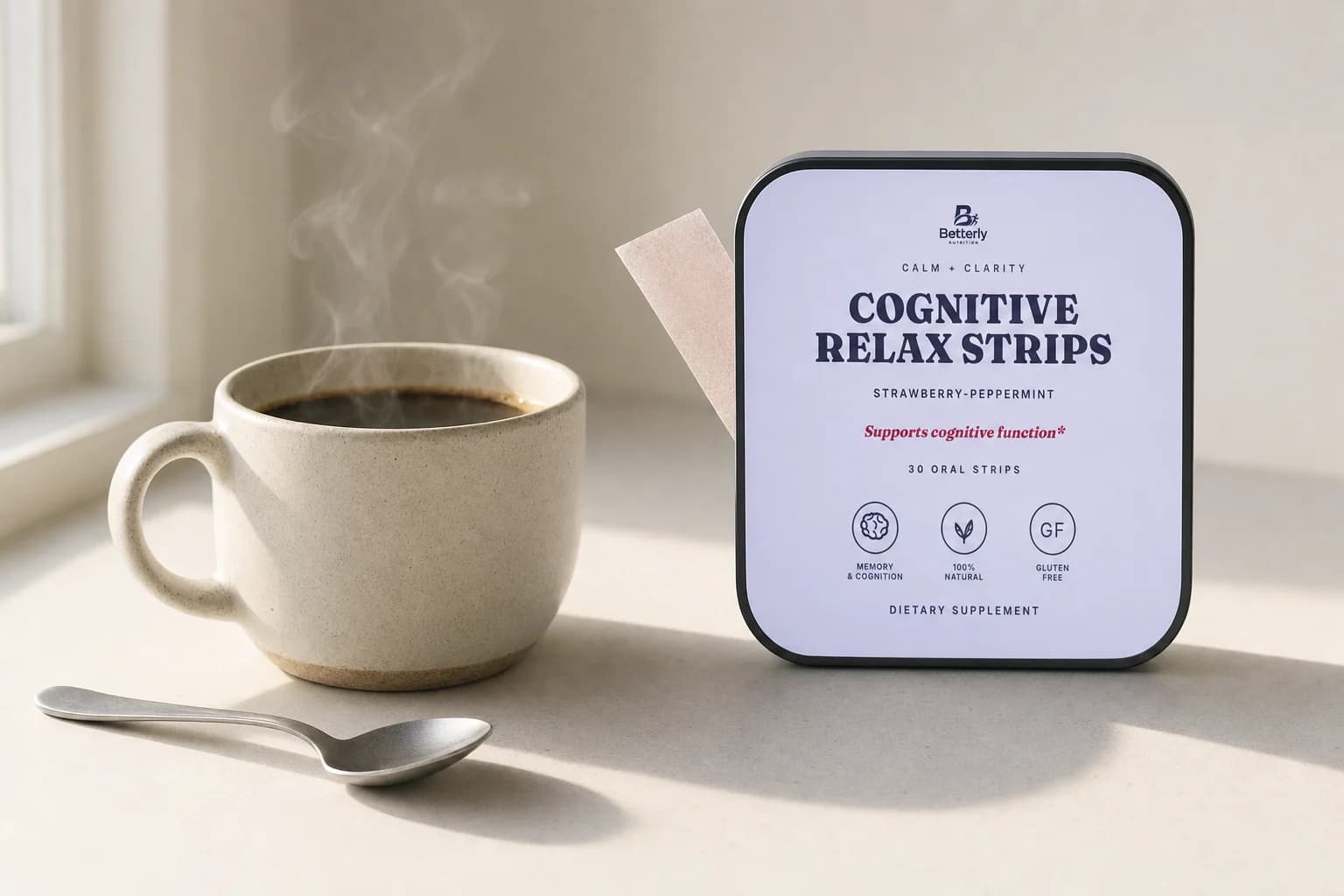
- Dissolvable strips. Our L-Theanine & GABA Calm Strips pair 50 mg of L-theanine with GABA in a dissolve-on-your-tongue strip, 30 to a pack. Worth saying plainly: 50 mg is a gentler amount than the 100–200 mg used in many studies, so think of the strips as an easy, low-dose entry point rather than a study replica. No water, no capsule, easy to keep next to the coffee maker.
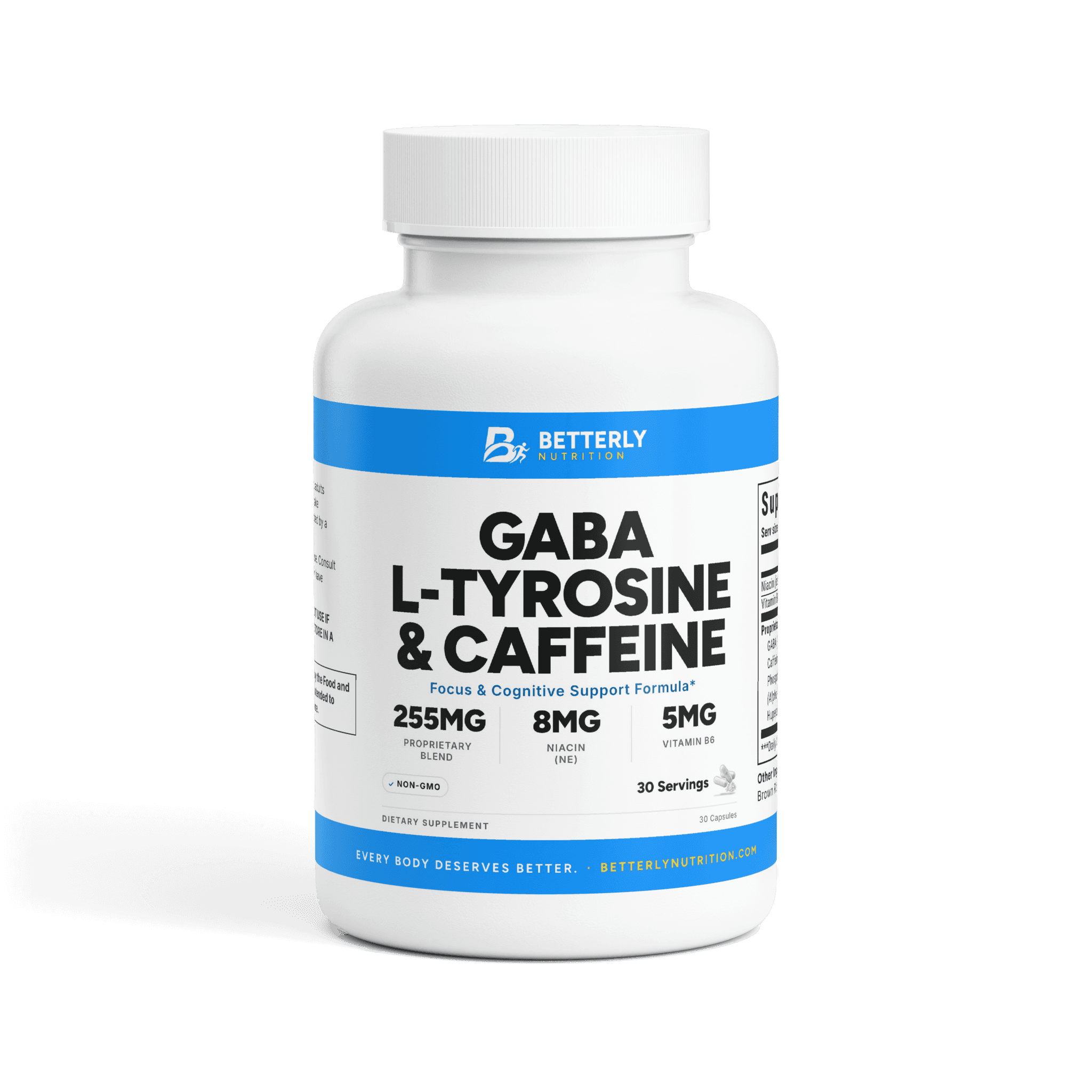
- The already-combined route. If you'd rather not assemble the pairing yourself, GABA, L-Tyrosine & Caffeine Capsules put GABA, L-tyrosine and caffeine in one capsule, alongside L-theanine, bacopa and Alpha GPC, inside a 255 mg proprietary blend per 1-capsule serving. There are 30 capsules per bottle, and the label's suggested use is one capsule daily. One note: it contains caffeine, but the label doesn't say how much, because the caffeine sits inside the proprietary blend. Count it toward your daily total. (Curious about the bacopa? We break down how to choose a bacopa supplement separately.)
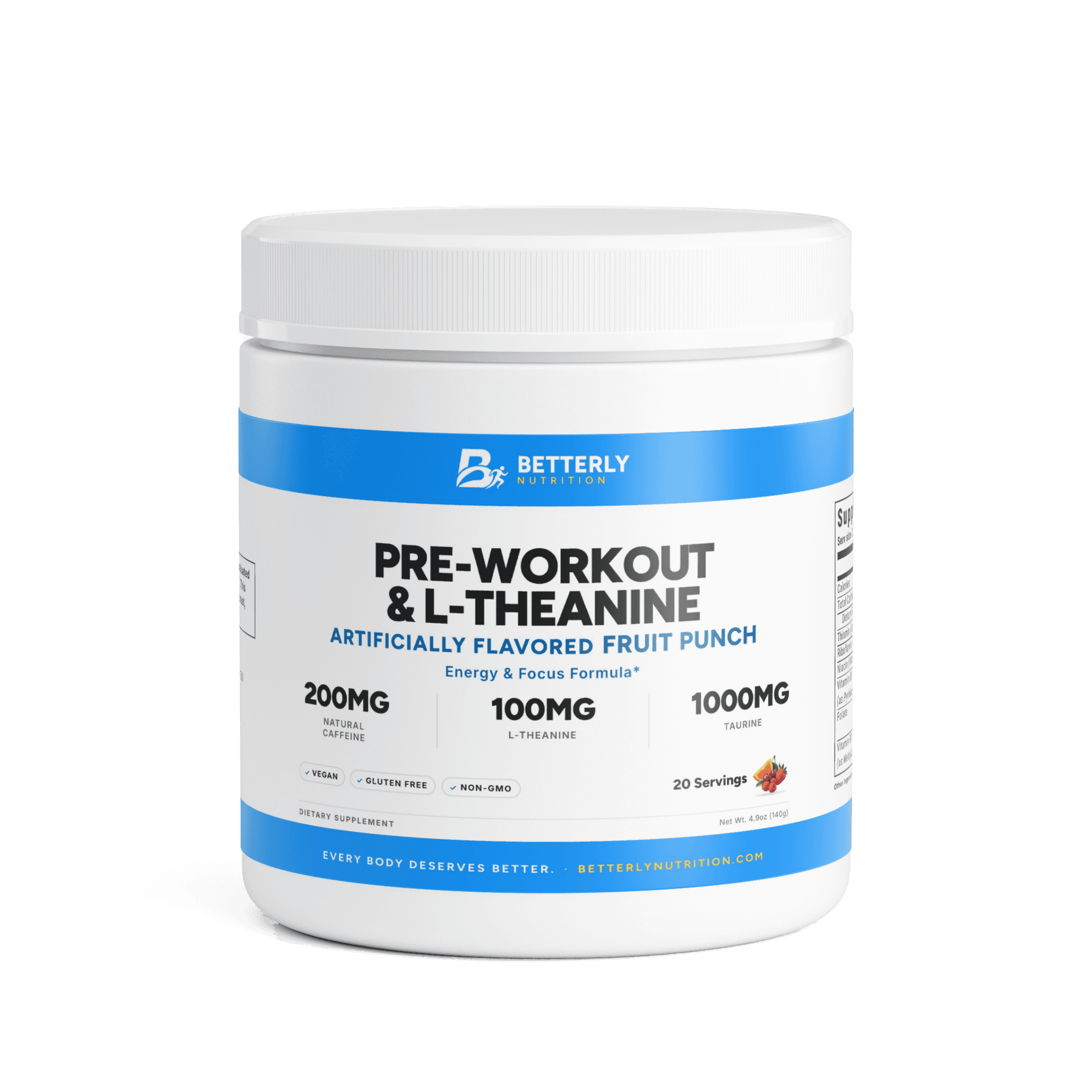
- Skip the coffee, drink it premixed. Our Pre-Workout Caffeine & L-Theanine Energy Powder (Fruit Punch) puts both halves in one glass: 200 mg of natural caffeine (from green tea) and 100 mg of L-theanine per 2-scoop (7 g) serving. The honest catch: that's the studies' ratio flipped, with twice as much caffeine as theanine, and a full serving carries about as much caffeine as one to two cups of brewed coffee. It replaces your coffee; it doesn't join it. The label's suggested use is 1 scoop in 6–10 fl oz of water, or 2 scoops with double the water, and its caution says not to exceed 5 scoops a day. Five scoops would be 500 mg of caffeine, more than the 400 mg a day the FDA cites as not generally associated with negative effects for most adults. One 2-scoop serving is already 200 mg, half of that amount, so count every scoop toward your day's caffeine, and check with a healthcare provider first if you're sensitive to caffeine.
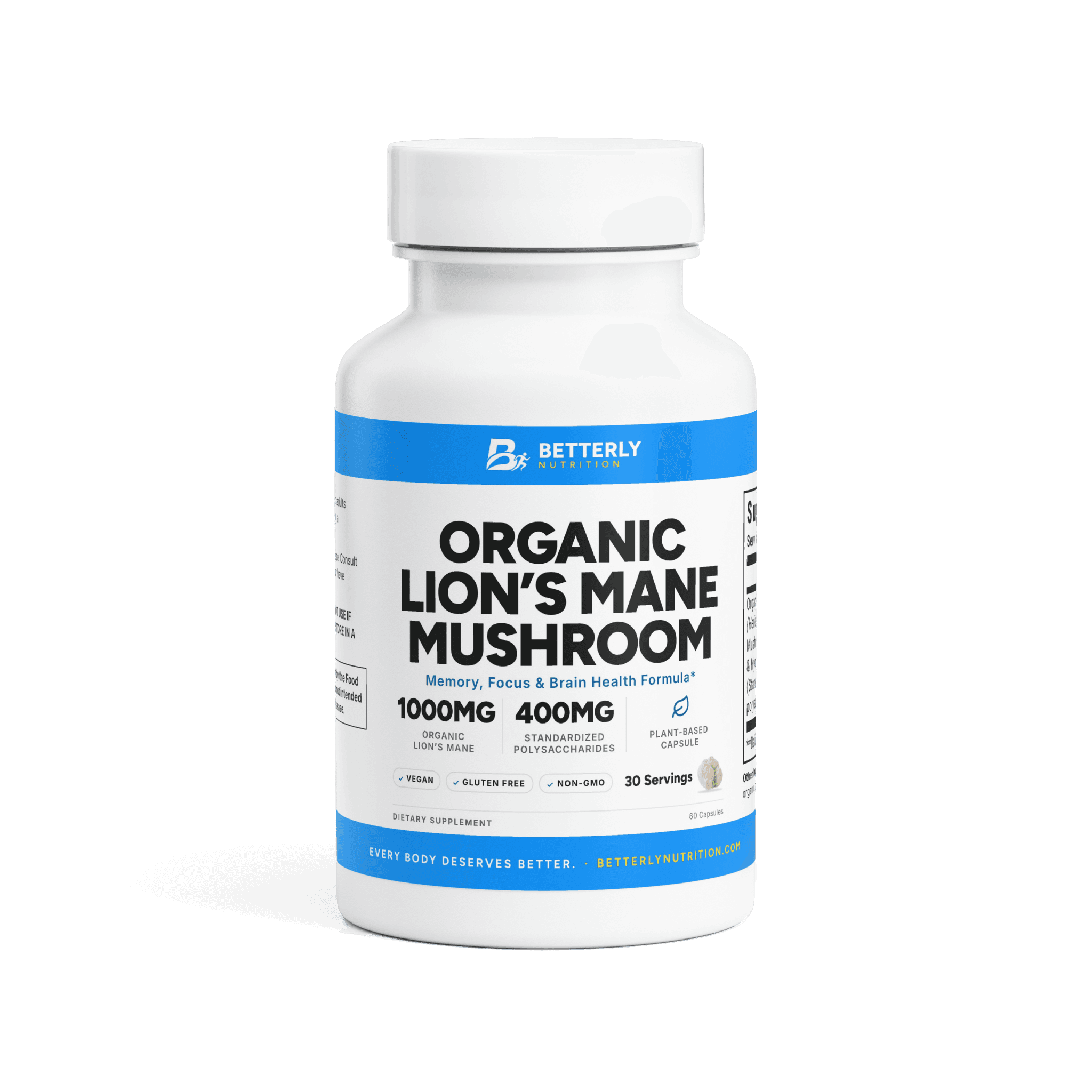
- Going caffeine-free entirely? That's a real path too, with options like our Organic Lion's Mane Mushroom Capsules; we walk through the whole landscape in our guide to caffeine-free focus supplements.
If you'd rather browse everything in one place, the Nootropics & Focus collection has the full lineup.
Common mistakes to avoid
- Using it to justify more coffee. L-theanine doesn't raise your caffeine ceiling. If three cups left you wired before, three cups plus theanine is still a lot of caffeine.
- Judging it after one morning. The effect is subtle and your days are noisy. Give it a fair two-week run before you decide.
- Taking it with a late-afternoon cup. The calm half won't rescue your night from the caffeine half. Trouble winding down is usually a caffeine-timing problem before it's anything else.
- Expecting sedation. At typical morning amounts, L-theanine is associated with settled, not sleepy. If you're looking for evening support, that's a different toolkit.
- Skipping the fundamentals. No pairing outruns short sleep, no breakfast, and zero movement. Our guide to natural ways to support focus covers the base layer that makes everything else work better.
- Building a stack before you have a baseline. One change at a time tells you what's doing what. If you're new to all of this, start with building a simple supplement routine and add slowly.
Who should check with a provider first
L-theanine has a reassuring track record in studies at typical amounts, and it has been part of tea for a very long time. Still, a quick conversation with a healthcare professional is worth it if you're pregnant or nursing, take prescription medication (especially stimulant or calming medications), are very sensitive to caffeine, or have been advised to limit caffeine for any reason. Supplements are support for a healthy routine — they're not medical advice, and neither is this article.
FAQ: L-theanine and coffee
Can I mix L-theanine powder directly into my coffee?
Yes — it dissolves readily and has a mild, faintly savory taste that mostly disappears under coffee. Capsules and strips just make the amount consistent without any measuring.
What's the best L-theanine to caffeine ratio?
There isn't a proven best L-theanine to caffeine ratio. Several of the best-known studies paired roughly twice as much L-theanine as caffeine, such as 100 mg of L-theanine with 50 mg of caffeine, though amounts varied from study to study. It's a research convention, not a magic number. Many people start lower and adjust based on how the morning actually feels.
Does L-theanine cancel out my caffeine?
Mostly no, in the small studies we found: people still rated themselves alert, or did better on attention tasks, with L-theanine added. One small study using low amounts did find the pair cancelled out caffeine's effects on attention and mood. Whether L-theanine softens the jittery side is less clear: the one study we found that measured jitteriness saw no significant difference. If a given amount leaves you feeling flat, use less.
How long does the calm-focus window last?
There's no well-measured answer for the pairing itself. According to MedlinePlus, caffeine reaches its peak level in the blood within one hour, and you may keep feeling its effects for four to six hours, which is why this pairing belongs in the morning.
Can I pair L-theanine with tea instead of coffee?
Tea already contains theanine — matcha the most, since it's shade-grown. You can add more, but many people find matcha alone smooth enough. It's the original version of this whole idea.
Is it OK to take L-theanine every day?
It's commonly used daily, and studies at typical amounts have generally reported it as well-tolerated. As with anything new, if you're managing a health condition or taking medication, run it by your provider first.
A calm next step
The l-theanine and coffee pairing won't transform your life, and we're not going to pretend otherwise. What it offers is smaller and more useful: the coffee you already love, with — for many people — a little less static. If you'd like an easy way to run the two-week experiment, a pack of L-Theanine & GABA Calm Strips next to the coffee maker is about as low-friction as it gets. Same cup, calmer morning — that's the whole pitch.
If this left you looking for somewhere to start, read l-theanine strips for your morning coffee — its amounts per serving are listed on the page. For the practical questions this raises, how dosing, sourcing and subscriptions work is answered in one place.