On this page
- Key takeaways
- GABA vs L-theanine: what's the difference?
- What is GABA, and does a GABA supplement work?
- What is L-theanine, and what do FDA food files say about each?
- GABA vs L-theanine for sleep or occasional stress: which fits when?
- Can you take GABA and L-theanine together?
- How do you read a GABA or L-theanine label?
- How do you take our GABA and L-theanine products?
- When don't you need GABA or L-theanine?
- Who should check with a healthcare provider first?
- FAQ: GABA and L-theanine
- Sources
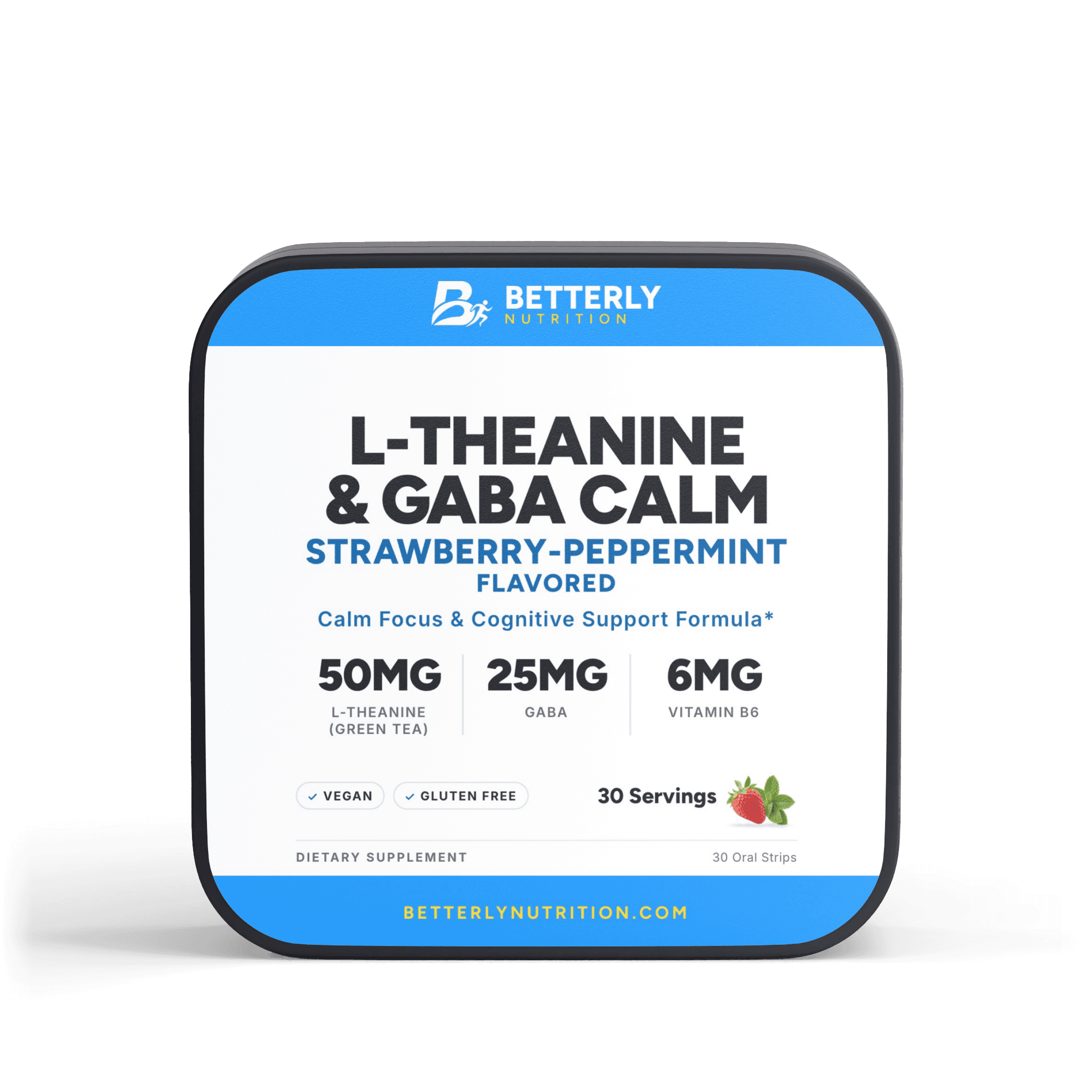
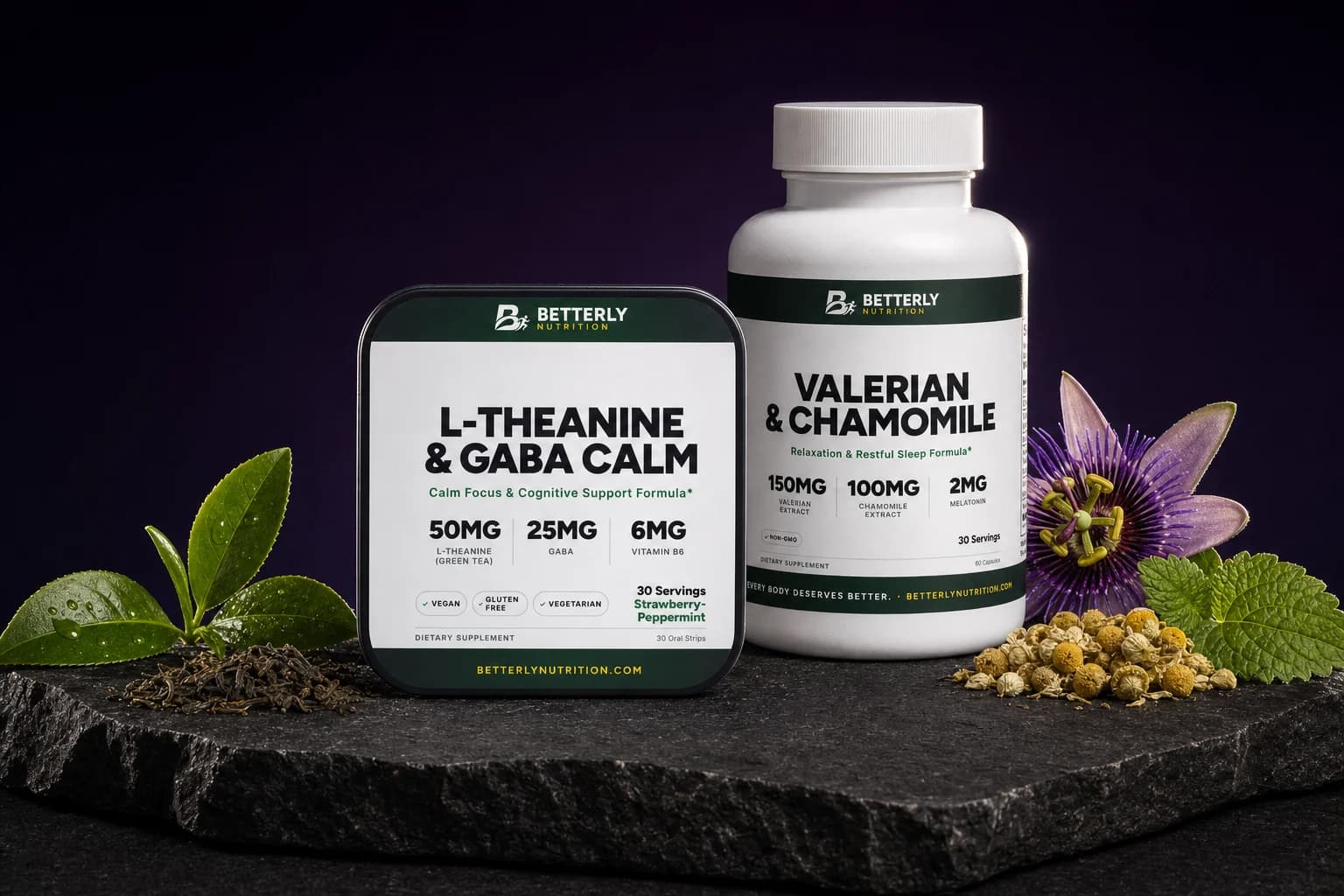
The short answer: GABA vs L-theanine is a match between a messenger your brain makes and an amino acid found naturally in tea leaves. GABA (gamma-aminobutyric acid) helps quiet nerve-cell activity, but whether GABA you swallow reaches your brain is still an open question. Many products pair the two, including our L-Theanine & GABA Calm Strips, which list 50 mg of L-theanine and 25 mg of GABA per 1-strip serving.
Key takeaways
- GABA is a chemical messenger your brain already makes, while L-theanine is an amino acid that occurs naturally in the leaves of the tea plant, Camellia sinensis.
- We found no federal source confirming that GABA taken by mouth reaches the brain, and none of our GABA labels claims that it does.
- The FDA raised no questions about a 2007 food-ingredient notice for L-theanine, while a 2015 GABA notice closed at the company's request.
- On our GABA and L-theanine labels, the melatonin, valerian or caffeine alongside them matters more to your timing.
Where we stand: 10 of our product lines list GABA, L-theanine or both, so we profit when you buy. Every product number here comes straight off a Supplement Facts panel.
GABA vs L-theanine: what's the difference?
GABA is a signaling chemical your nervous system produces on its own, while L-theanine is an amino acid you get from tea, foods it's been added to, or a supplement.
| Question | GABA | L-theanine |
|---|---|---|
| What it is | A messenger chemical in the brain | An amino acid found naturally in tea leaves |
| Does your body make it? | Yes | No |
| FDA food-ingredient file | 2015 notice closed at the company's request | 2007 notice drew a no-questions letter |
| Printed per serving on our labels | 25 mg to 100 mg | 25 mg to 100 mg |
| Where it shows up on our shelf | Evening capsules, focus capsules, a calm strip, an energy gummy | A calm strip, a relax gummy, a focus capsule (in a blend), caffeine strips and powders |
A GABA supplement adds more of something your body already makes, while L-theanine adds something it doesn't. So GABA's big question is delivery, and since both span 25 mg to 100 mg on our labels, milligrams won't settle the choice.
What is GABA, and does a GABA supplement work?
GABA, short for gamma-aminobutyric acid, is an inhibitory neurotransmitter, and whether a GABA supplement works hinges on a delivery question nobody has settled.
MedlinePlus Genetics, from the National Library of Medicine, says that "GABA normally helps slow down (inhibit) brain cell activity when necessary." The same page explains that your body makes an enzyme, GABA-transaminase, to break GABA down when it isn't needed.
Here's the catch. Your brain sits behind the blood-brain barrier, a lining of tightly packed cells that controls what passes from your blood into brain tissue. A GABA strip or capsule only matters to your brain if enough gets through.
We found no federal fact sheet confirming that oral GABA crosses that lining. So the honest answer to "does a GABA supplement work?" is that nobody can promise it does. None of our labels claims to raise brain GABA, and we'd be wary of one that did.
What is L-theanine, and what do FDA food files say about each?
L-theanine is an amino acid that occurs naturally in the tea plant, and the panel on our strip names that source: "Green Tea (L-Theanine)."
Neither compound has a federal supplement fact sheet, but both appear in the FDA's inventory of GRAS notices. GRAS stands for "generally recognized as safe," a pathway for ingredients added to ordinary foods. The two files read very differently:
- L-theanine. In GRAS Notice No. 209, a company proposed L-theanine as an ingredient in several food categories at up to 250 milligrams per serving. The FDA's 2007 letter says the agency has no questions.
- GABA. In GRAS Notice No. 595, a company proposed GABA for snack bars, yogurts, candies, chocolate and many drinks at 100 milligrams per serving. The FDA record shows the agency stopped evaluating the notice in 2015 at the company's request.
Neither record is an FDA approval or covers supplements, ours included, and a closed notice doesn't mean the FDA judged GABA unsafe. One federal paper trail simply exists for L-theanine in foods and sits empty for GABA.
GABA vs L-theanine for sleep or occasional stress: which fits when?
On our shelf, neither GABA nor L-theanine sets the clock by itself: melatonin, valerian or caffeine on the same panel decides when a product fits.
Winding down in the evening
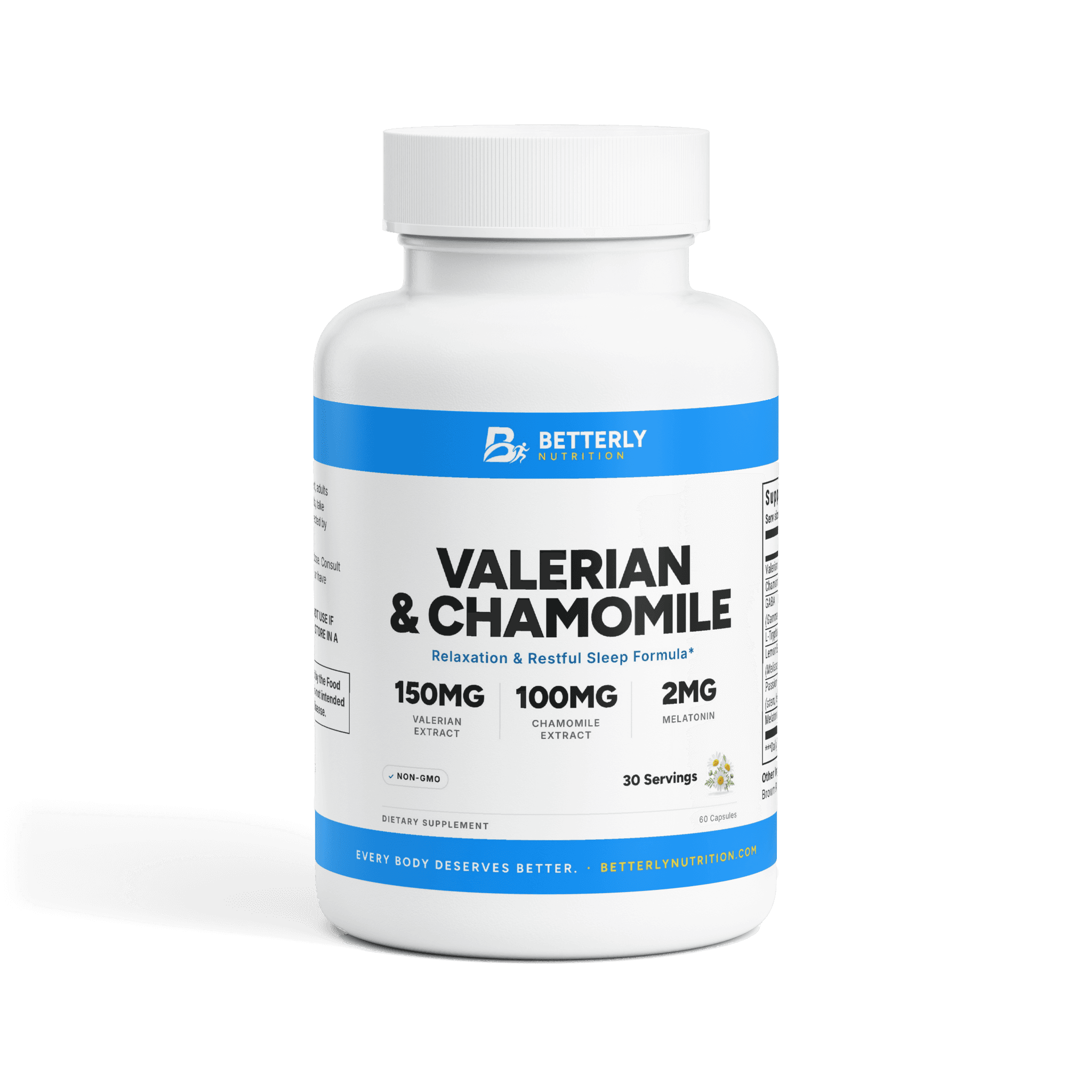
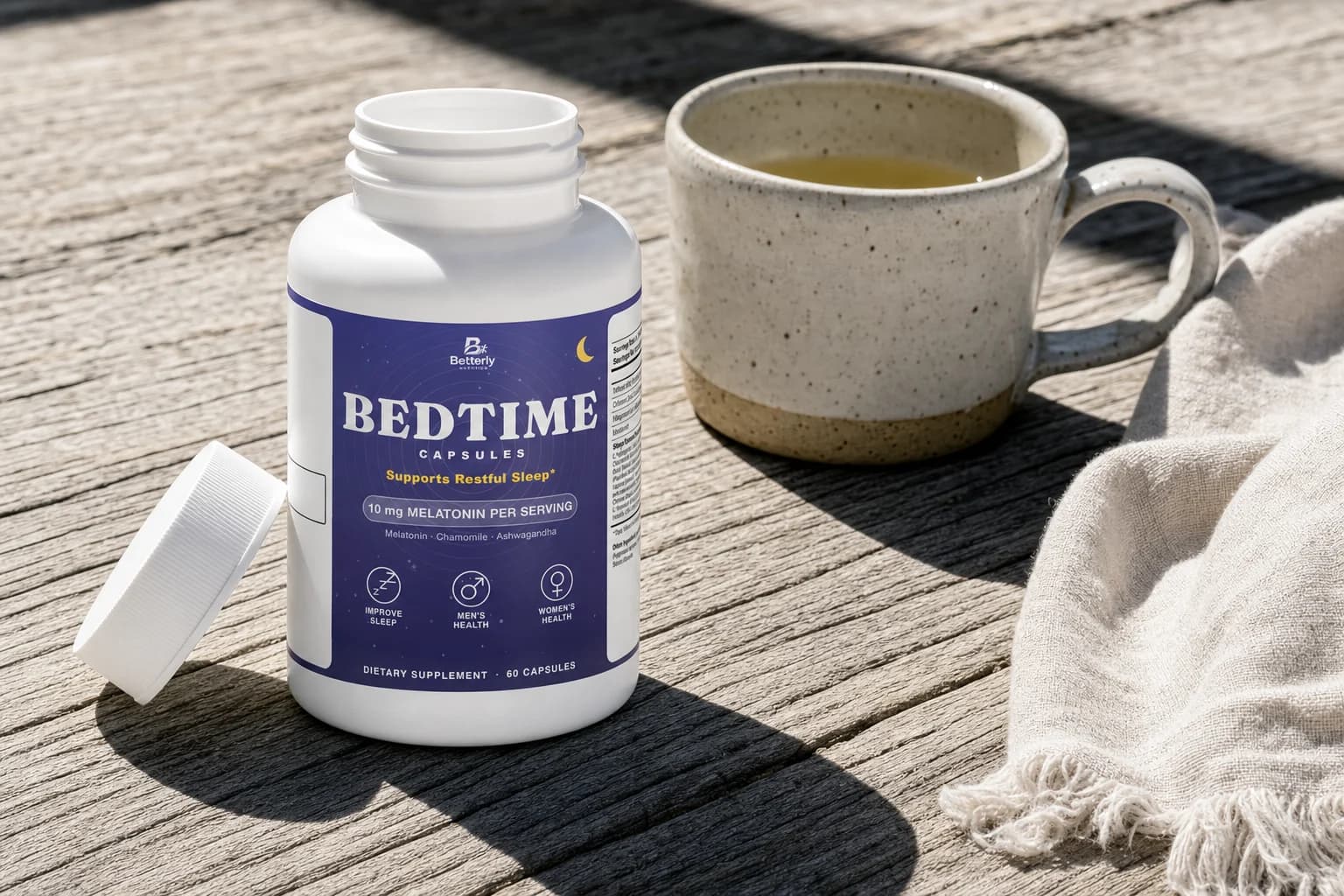
Our evening formula with a printed GABA amount is the Valerian & Chamomile Sleep Capsules. Per 2-capsule serving, its Supplement Facts show 100 mg of GABA, 150 mg of valerian extract, 2 mg of melatonin, and 100 mg each of chamomile extract, L-tryptophan, lemon balm extract and passion flower extract.
That capsule can't answer the GABA vs L-theanine for sleep question. With six other actives, you'd never know which one you noticed on a night of occasional sleeplessness.
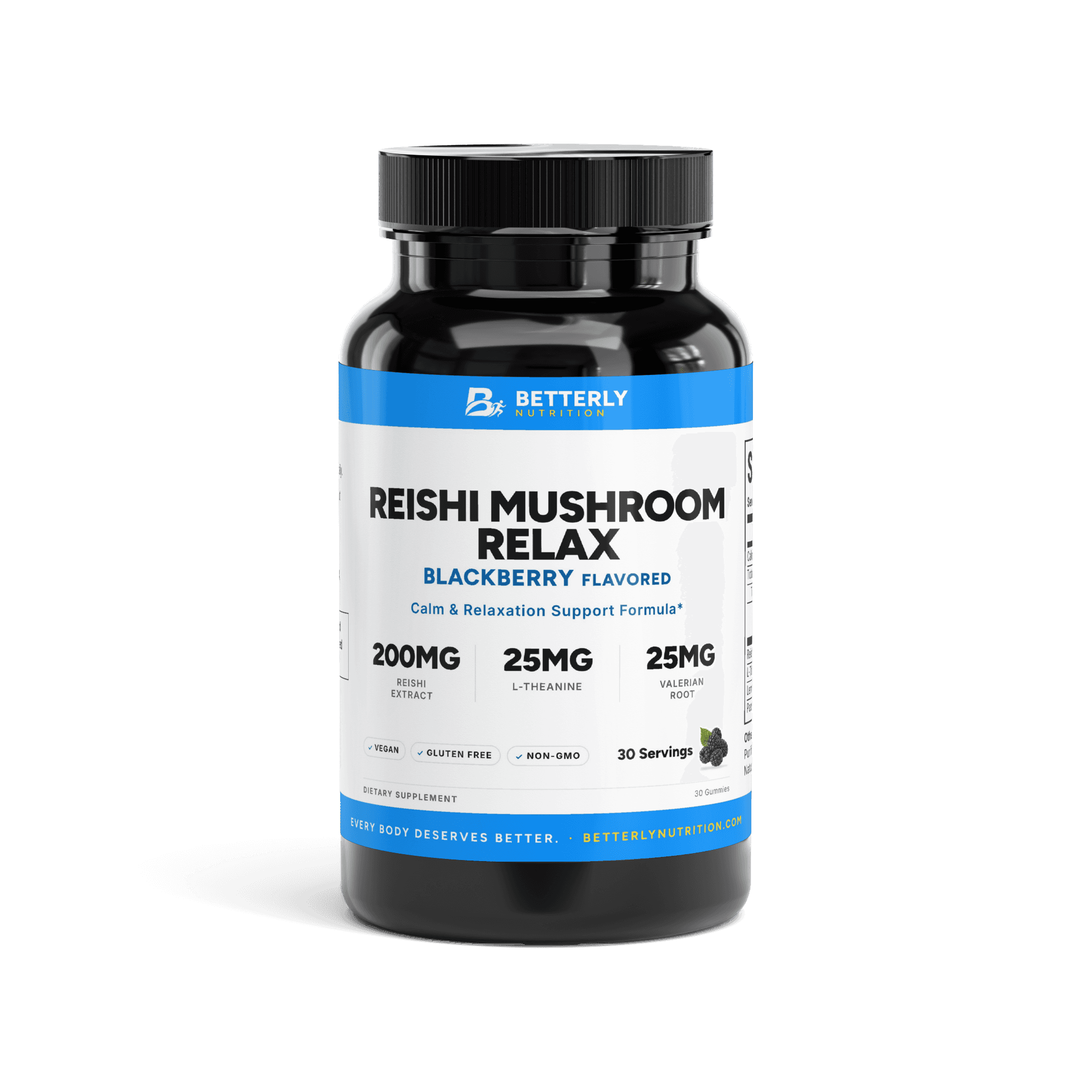
On the L-theanine side sit the Reishi Mushroom Relax Gummies. Each 1-gummy serving lists 25 mg of L-theanine, 200 mg of reishi extract, and 25 mg each of lemon balm, passion flower and valerian root, with no GABA or melatonin. If keeping melatonin out of your evening matters, see how sleep aids without melatonin compare.
Daytime calm and occasional stress
The Calm Strips' label gives no hour, just one strip daily. With no caffeine, melatonin or valerian on the panel, they fit a daytime routine as easily as an evening one, and they're our only product printing an amount for both compounds.
Two other daytime picks change the picture:
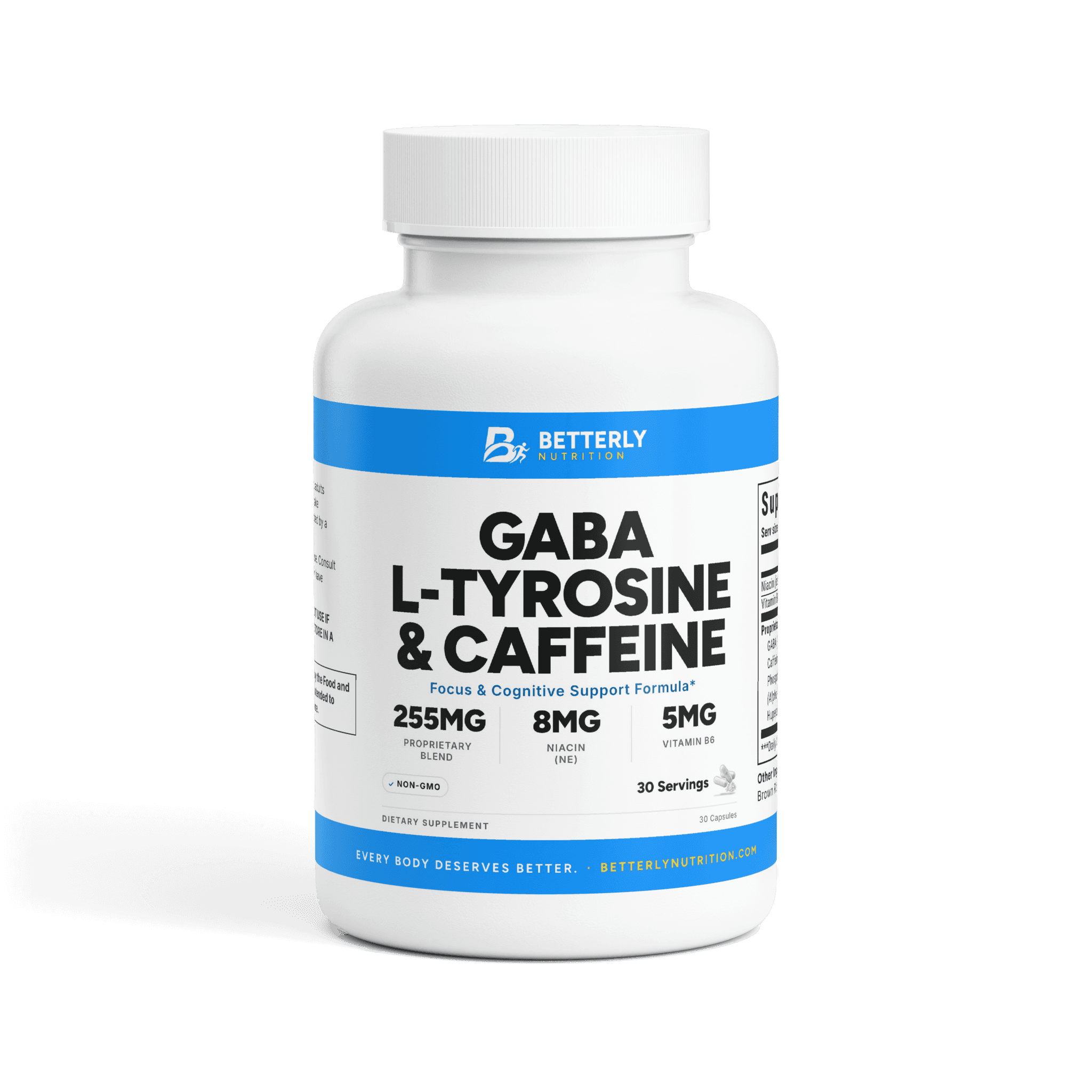
- Our GABA, L-Tyrosine & Caffeine Capsules hold both compounds inside a blend that also contains caffeine, so they belong in the first half of your day.
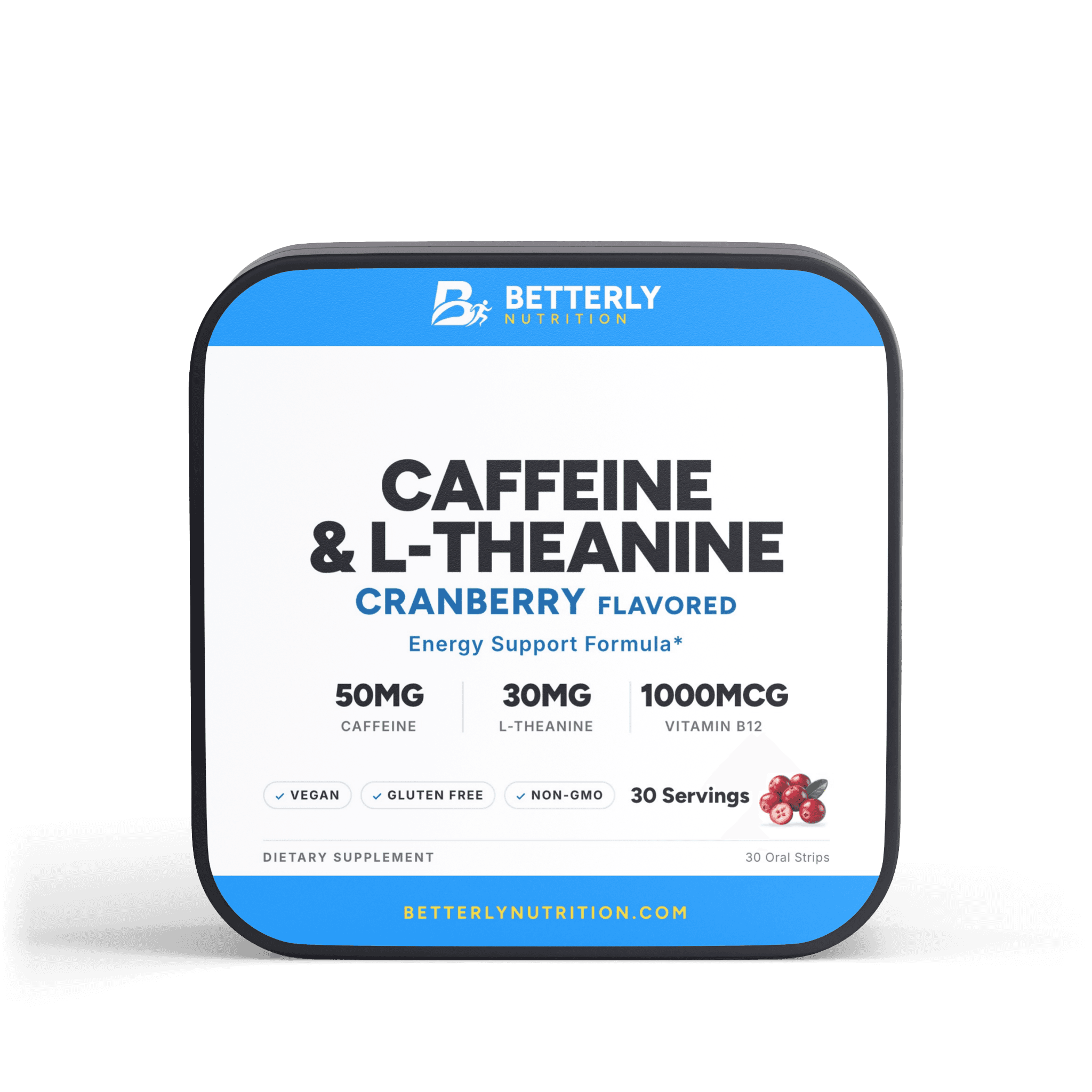
- Our Caffeine & L-Theanine Energy Strips pair 30 mg of L-theanine with 50 mg of caffeine per 1-strip serving, and list no GABA.
Weighing L-theanine vs GABA for occasional stress on a busy workday? Decide first whether you want caffeine in the mix. Our walkthrough on taking L-theanine alongside coffee covers that route, and the Nootropics & Focus collection holds every daytime option.
From our shop: L-Theanine & GABA Calm Strips — both compounds at printed amounts, 50 mg of L-theanine and 25 mg of GABA per 1-strip serving, with no caffeine or melatonin on the panel.
Can you take GABA and L-theanine together?
Yes, you can take GABA and L-theanine together as far as our labels go, since our Calm Strips combine them in a single 1-strip serving.
We found no federal guidance on the pair, for or against. The practical risk is stacking products whose other ingredients overlap, as these pairings from our shelf show:
- Calm Strips plus the evening capsules. That's 125 mg of GABA in a day, along with 2 mg of melatonin and 150 mg of valerian extract. Neither label mentions the other, so ask a healthcare provider first.
- Evening capsules plus reishi gummies. Both list valerian, lemon balm and passion flower. Pick one.
- Calm Strips plus the GABA, L-Tyrosine & Caffeine Capsules. Vitamin B6 adds up: 6 mg on the strip and 5 mg in the capsule, or 643% of the Daily Value between them, before any multivitamin.
- Any of these plus a separate melatonin product. The evening capsules already carry 2 mg.
How do you read a GABA or L-theanine label?
Read a GABA or L-theanine label by checking whether each amount is printed on its own line, then scanning the panel for melatonin, valerian, caffeine and vitamin B6.
| Product (serving) | GABA | L-theanine | Also on the panel |
|---|---|---|---|
| Calm Strips (1 strip) | 25 mg | 50 mg | 6 mg vitamin B6 |
| Valerian & Chamomile (2 capsules) | 100 mg | None | 2 mg melatonin, valerian |
| Reishi Relax (1 gummy) | None | 25 mg | Reishi, valerian root |
| GABA, L-Tyrosine & Caffeine (1 capsule) | In a blend | In a blend | Caffeine, amount not listed |
| Cordyceps Mushroom Energy Gummies (1 gummy) | 25 mg | None | 200 mg cordyceps extract |
The GABA or L-theanine number is rarely the most important line. Check these, in order:
- Printed amount or blend? Our GABA, L-Tyrosine & Caffeine Capsules hide eight ingredients, including GABA, L-theanine, caffeine and huperzine A, inside a 255 mg proprietary blend per 1-capsule serving.
- Per serving, not per unit. The evening capsules list 100 mg of GABA per 2-capsule serving, so each capsule holds half.
- The source line. Our strip names green tea as its L-theanine source. Our other L-theanine panels list it without a source, the same as every GABA panel.
- Passengers. Melatonin and valerian point toward evenings, caffeine toward mornings. The cordyceps gummy even puts GABA on an energy product.
- Vitamin B6. The strip's 6 mg equals 353% of the Daily Value, worth knowing before you add a B-complex.
How do you take our GABA and L-theanine products?
Take each product exactly as its label says: one Calm Strip dissolved on the tongue daily, two evening capsules daily with water, or one to two reishi gummies daily.
- L-Theanine & GABA Calm Strips. The label's suggested use is to place 1 oral strip on the tongue daily and allow it to dissolve.
- Valerian & Chamomile Sleep Capsules. Adults take two capsules daily with 6-8 oz (177-237ml) of water. The label names no hour, but with 2 mg of melatonin on the panel, evening is the logical slot.
- Reishi Mushroom Relax Gummies. The label allows one to two gummies daily. At the top of that range you'd take in 4 g of added sugars, since each gummy lists 2 g.
- GABA, L-Tyrosine & Caffeine Capsules. Adults take one capsule daily with 6-8 oz of water. The caffeine amount isn't printed, so keep it early and count it alongside your coffee.
All four labels say not to exceed the recommended dose, so never double up after a missed day.
From our shop: Valerian & Chamomile Sleep Capsules — 100 mg of GABA per 2-capsule serving alongside 150 mg of valerian extract and 2 mg of melatonin, for adults who'd rather take one evening formula than build a stack.
When don't you need GABA or L-theanine?
You don't need GABA or L-theanine if you already wind down without trouble, because neither one has a Daily Value and neither fills a gap in your diet.
On our panels, both carry a symbol instead of a %DV. Cases where we'd tell you to skip them, though we sell them:
- A daily cup of tea already suits you. Tea is where L-theanine occurs naturally, and a supplement mainly adds a printed number.
- You're hoping to top up your brain's GABA. No label can promise that, ours included.
- Late screens or an afternoon coffee are the real issue. Habits come first, and our overview of what helps with better sleep puts supplements in their place.
- You already take a melatonin product. Our evening GABA capsule would add 2 mg more.
Who should check with a healthcare provider first?
Talk with a healthcare provider before trying GABA or L-theanine if you're pregnant, nursing, under 18 or managing a medical condition, since every label in this guide names those groups.
Also ask first if any of these apply:
- You take prescription medicine of any kind, especially anything whose label warns about drowsiness.
- A procedure or surgery is on your calendar. List every supplement on your intake form.
- Caffeine tends to hit you hard. The GABA, L-Tyrosine & Caffeine Capsules don't print their caffeine amount.
- You're considering either valerian product. According to the National Center for Complementary and Integrative Health (NCCIH), valerian "should not be taken along with alcohol or sedatives," and little is known about its safety during pregnancy or breastfeeding. NCCIH adds that its long-term safety is unknown and that stopping suddenly after long use can bring withdrawal symptoms.
If anything unusual shows up after you start a product, stop it and show your provider the Supplement Facts panel.
FAQ: GABA and L-theanine
Is GABA the same thing as L-theanine?
No, GABA and L-theanine are different molecules. GABA is a neurotransmitter your brain makes to slow nerve-cell activity, and L-theanine is an amino acid found naturally in tea leaves. They're sold together so often that the names blur, which is why the panel on our L-Theanine & GABA Calm Strips gives each its own line: 50 mg of L-theanine and 25 mg of GABA per 1-strip serving.
Does GABA make you sleepy?
We can't promise that GABA makes you sleepy, and none of our GABA labels claims it does. GABA also sits in our caffeinated capsule and an energy gummy, so it isn't a bedtime-only ingredient. Our evening capsule is the one to know about: next to its GABA, it lists 2 mg of melatonin and 150 mg of valerian extract per 2-capsule serving.
What are the side effects of GABA supplements?
No federal fact sheet we could find covers GABA supplement side effects, so we can't give a reliable list for GABA alone. What's sold with it is another matter. Valerian, which our evening GABA capsule contains, has side effects that NCCIH names, including vivid dreams, excitability, headache and an upset stomach. If something feels off after starting any product, stop taking it and call your provider.
Can you take GABA and L-theanine every day?
You can take our GABA and L-theanine products daily as labeled, with a caveat for the two that contain valerian. None of our labels caps use at a set number of weeks. NCCIH says valerian has been used without apparent safety problems for up to 6 weeks, but its long-term safety is unknown. That covers our evening capsules and reishi gummies, so check with a healthcare provider before using either daily for longer.
Is GABA or L-theanine better?
Neither GABA nor L-theanine is better across the board. GABA's open question is whether a swallowed dose reaches the brain at all, while L-theanine has a clearer federal paper trail as a food ingredient. In practice, the rest of the panel matters more, since melatonin, valerian and caffeine decide when a product fits your day.
Sources
- ABAT gene (MedlinePlus Genetics, National Library of Medicine)
- GRAS Notice GRN No. 209: L-theanine (U.S. Food and Drug Administration)
- GRAS Notice GRN No. 595: gamma-aminobutyric acid (U.S. Food and Drug Administration)
- Valerian: Usefulness and Safety (National Center for Complementary and Integrative Health)
If this left you looking for somewhere to start, read GABA and L-theanine together in one strip — its amounts per serving are listed on the page. For the practical questions this raises, how dosing, sourcing and subscriptions work is answered in one place.