On this page
- Key takeaways
- What are L-theanine and magnesium, in plain terms?
- L-theanine vs magnesium glycinate: how do the two labels compare?
- Can you take L-theanine and magnesium together?
- How much magnesium is too much once you stack products?
- When should you take L-theanine and magnesium glycinate?
- Magnesium and L-theanine for sleep: what should you expect?
- When don't you need L-theanine or a magnesium supplement?
- Who should check with a healthcare provider first?
- FAQ: L-theanine and magnesium
- Sources
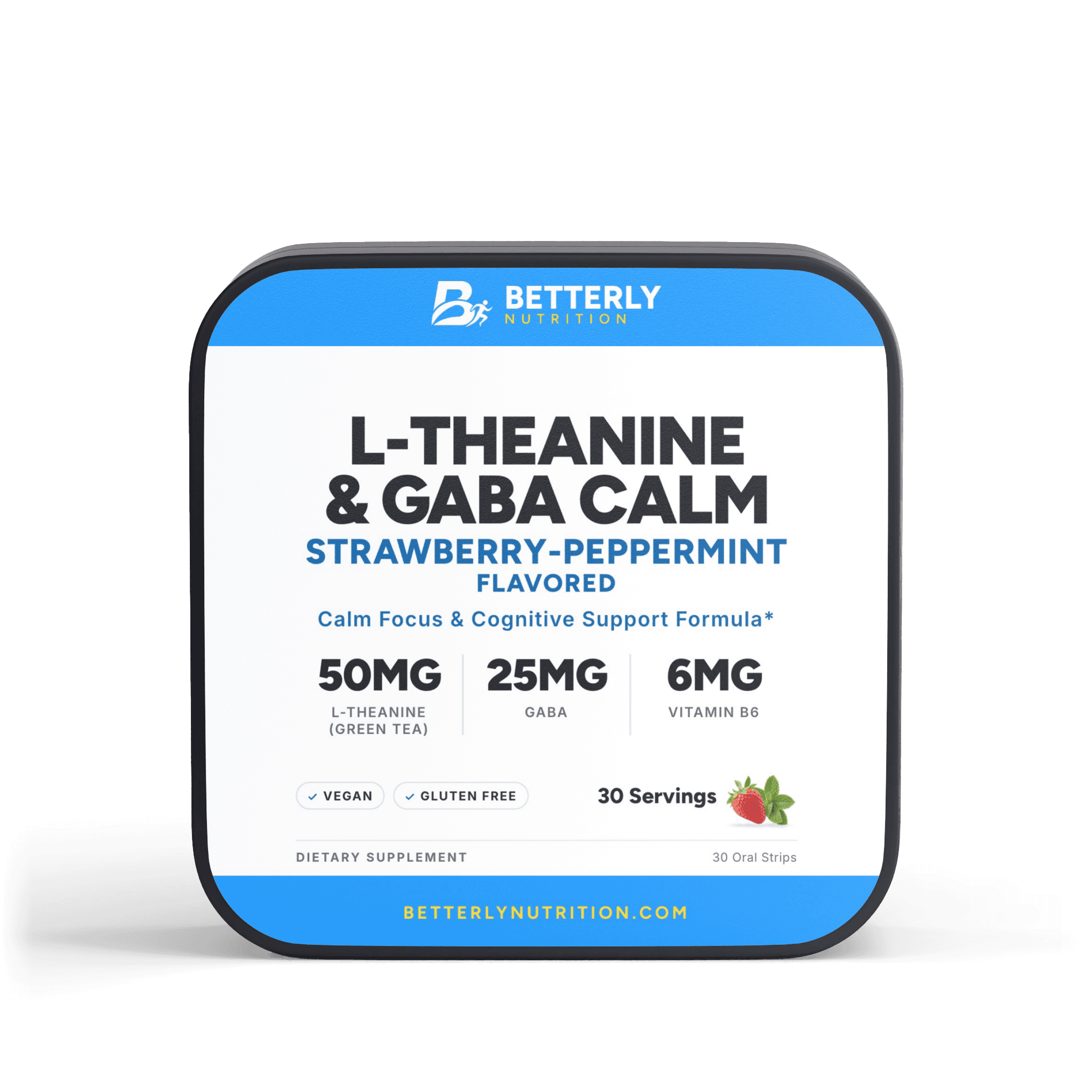
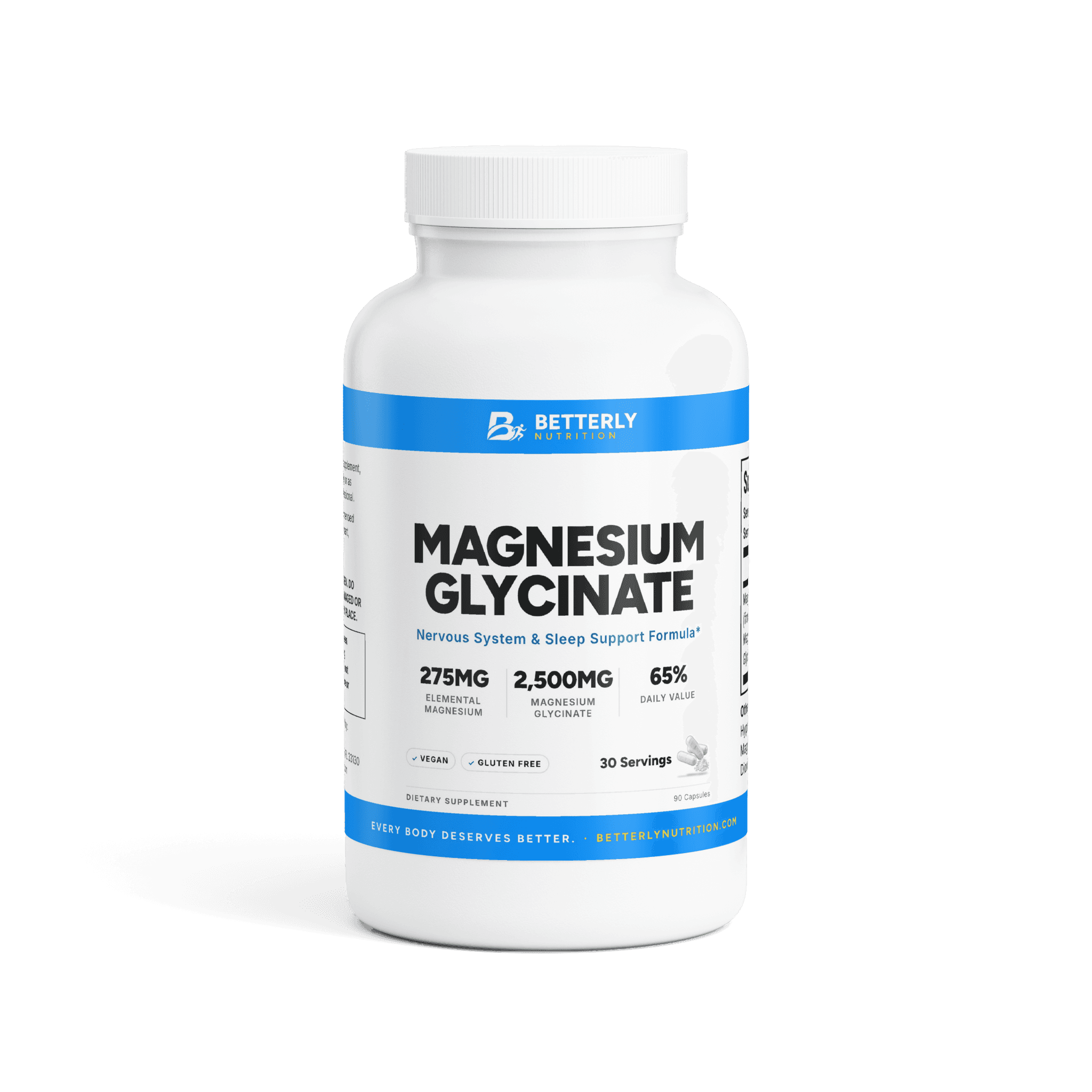
The short answer: Yes, L-theanine and magnesium can share one routine, and our two labels repeat no ingredient. Magnesium is the number to watch. Our Magnesium Glycinate Capsules give 275 mg per 3-capsule serving, and the NIH lists 350 mg a day as the adult limit for magnesium from supplements. That leaves 75 mg of room. One of our L-Theanine & GABA Calm Strips adds 50 mg of L-theanine and no magnesium.
Key takeaways
- L-theanine is an amino acid from tea leaves with no Daily Value, while magnesium is an essential mineral with a recommended intake and an upper limit.
- Betterly's Magnesium Glycinate Capsules list 275 mg of magnesium per 3-capsule serving, 75 mg under the 350 mg adult limit for supplemental magnesium.
- The L-Theanine & GABA Calm Strips list 50 mg of L-theanine, 25 mg of GABA and 6 mg of vitamin B6 per strip, and no magnesium.
- Adding both our multivitamin and our creatine mix to the capsules, or our tribulus formula alone, pushes daily magnesium past 350 mg, so add up every panel first.
Full disclosure: both products in this pairing are ours, and we earn money when you buy them. That's a reason to show the arithmetic instead of asking for trust, so every product amount below comes from a printed Supplement Facts panel.
What are L-theanine and magnesium, in plain terms?
L-theanine is an amino acid made in tea leaves, and magnesium is an essential mineral you need from food every day. They come from different nutrient families.
The NIH Office of Dietary Supplements (ODS) says on its magnesium fact sheet for consumers that the body uses magnesium for muscle and nerve function and for making protein, bone and DNA. ODS lists 400 to 420 mg a day for men and 310 to 320 mg for women, counting every source. Its food list includes legumes, nuts, seeds, whole grains and leafy greens such as spinach.
L-theanine is a different kind of ingredient. On our strip, the row reads "Green Tea (L-Theanine)," naming its source. Where a percentage would go, you'll see a dagger (†), and the footnote says "Daily Value (DV) not established." We found no federal upper limit for it either.
The strip also carries 25 mg of GABA, which is a separate compound. Our side-by-side of GABA and L-theanine explains how the two differ.
L-theanine vs magnesium glycinate: how do the two labels compare?
L-theanine and magnesium glycinate don't compete for one job. The strip gives 50 mg of an optional amino acid, and the capsules give 275 mg of a mineral with a recommended intake.
| L-Theanine & GABA Calm Strips | Magnesium Glycinate Capsules | |
|---|---|---|
| Serving | 1 oral strip (290 mg) | 3 capsules |
| Main amount | 50 mg L-theanine | 275 mg magnesium |
| Daily Value | Not established | 65% |
| Also listed | 25 mg GABA, 6 mg B6 | 2,500 mg magnesium glycinate |
| Adult limit | None we found | 350 mg from supplements |
| Directions | 1 strip daily | 3 capsules once daily |
Read down the columns and it's plain this isn't an either-or choice. Magnesium has a limit you could overshoot, so it sets the rules for the pair. L-theanine is the one you could skip without missing a nutrient.
The 2,500 mg figure is the weight of the whole magnesium glycinate compound, and 275 mg of it is the mineral itself. If the form is your real question, our comparison of magnesium glycinate and citrate goes through it.
Can you take L-theanine and magnesium together?
Yes, you can take L-theanine and magnesium together based on our two labels. Neither caution mentions the other, and the panels share no ingredient.
We looked for federal guidance on this exact pair and found none, for or against. So the case for combining them rests on label math, not on research into the two as a set.
The ODS guide Dietary Supplements: What You Need to Know says the chance of side effects rises with high doses, with swapping supplements in for prescribed medicines, and with juggling lots of different products. Two products is a small stack. The odds of overlap climb with a third and fourth, especially when they quietly repeat an ingredient.
What about the same time? Neither label says to space them apart, so taking both together fits the directions. Keeping the strip for the afternoon and the capsules for the evening fits both labels too.
How much magnesium is too much once you stack products?
For adults, ODS lists 350 mg a day as the upper limit for magnesium from supplements and medications. Our 3-capsule glycinate serving uses 275 mg of that.
That can look odd next to the 400 to 420 mg a day men are advised to get. ODS explains the gap: the recommended amounts count every source, while the limit counts only supplements and medications. Magnesium found naturally in food doesn't count toward the 350 mg, and ODS says it doesn't need to be limited.
Going over has a cost. ODS lists diarrhea, nausea and abdominal cramping from high intakes of supplements and medications.
Here's what happens when the capsules meet other products from our shelf that list magnesium, using each label's own serving.
| Added to 3 glycinate capsules | Its magnesium | Day's total | Vs 350 mg |
|---|---|---|---|
| 1 Calm Strip | 0 mg | 275 mg | 75 mg under |
| 1 scoop electrolyte powder | 20 mg | 295 mg | 55 mg under |
| 2 multivitamin capsules | 50 mg | 325 mg | 25 mg under |
| 1 scoop creatine powder | 60 mg | 335 mg | 15 mg under |
| Multivitamin plus creatine | 110 mg | 385 mg | 35 mg over |
| 3 tribulus capsules | 200 mg | 475 mg | 125 mg over |
The strip is the only add-on that costs nothing from the magnesium budget. One small magnesium source still fits. Two can spill over, and the tribulus formula alone does.
The 5g Creatine & Electrolyte Powder lists 60 mg per 1-scoop serving. The Electrolyte Hydration Powder (Lemonade) lists 20 mg per scoop. Its suggested use is 1 scoop, or 2 with double the water, which puts the day at 295 to 315 mg with the capsules. The label's cap is 5 scoops, and at that ceiling the mix adds 100 mg and takes the day to 375 mg, 25 mg over the 350 mg limit. So on a capsule day, stick to the suggested 1 or 2 scoops.
The last row is the one we'd steer you away from. Our Tribulus, Zinc & Magnesium Capsules list 200 mg of magnesium per 3-capsule serving, taken before bedtime. Add our glycinate and you're at 475 mg, so we don't suggest taking the two on the same day.
The other number to add up: vitamin B6
Each Calm Strip carries 6 mg of vitamin B6, 353% of the Daily Value, so check other products that carry B6 too.
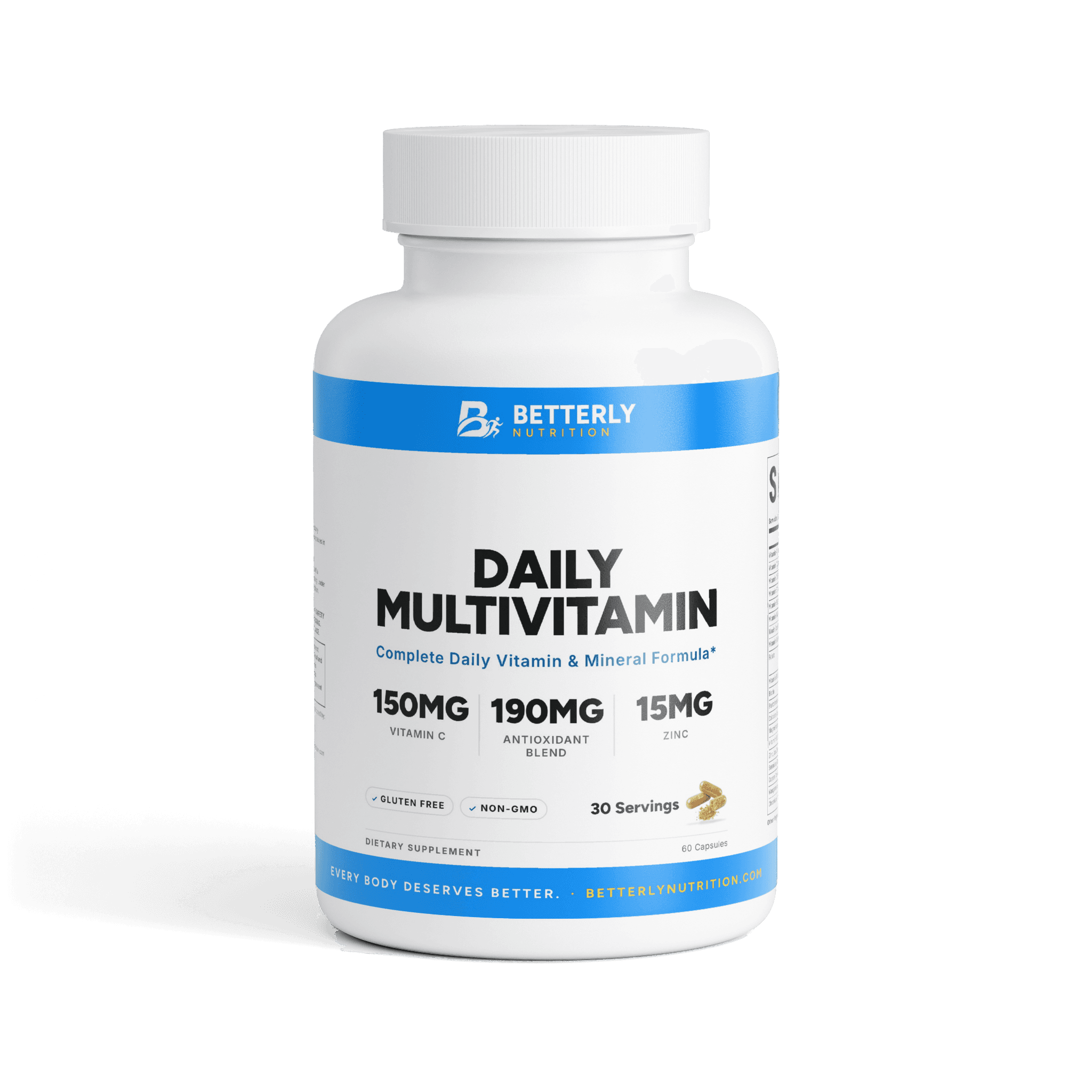
Our Daily Multivitamin Capsules list 7.5 mg of B6 per 2-capsule serving, so the pair gives you 13.5 mg a day. The ODS vitamin B6 fact sheet puts the U.S. adult upper limit at 100 mg a day from all sources, far above that. Europe is stricter, though. The same ODS page reports that the European Food Safety Authority's 2023 adult limit is 12 mg a day, so the strip plus the multivitamin would pass it. The glycinate capsules list no B6.
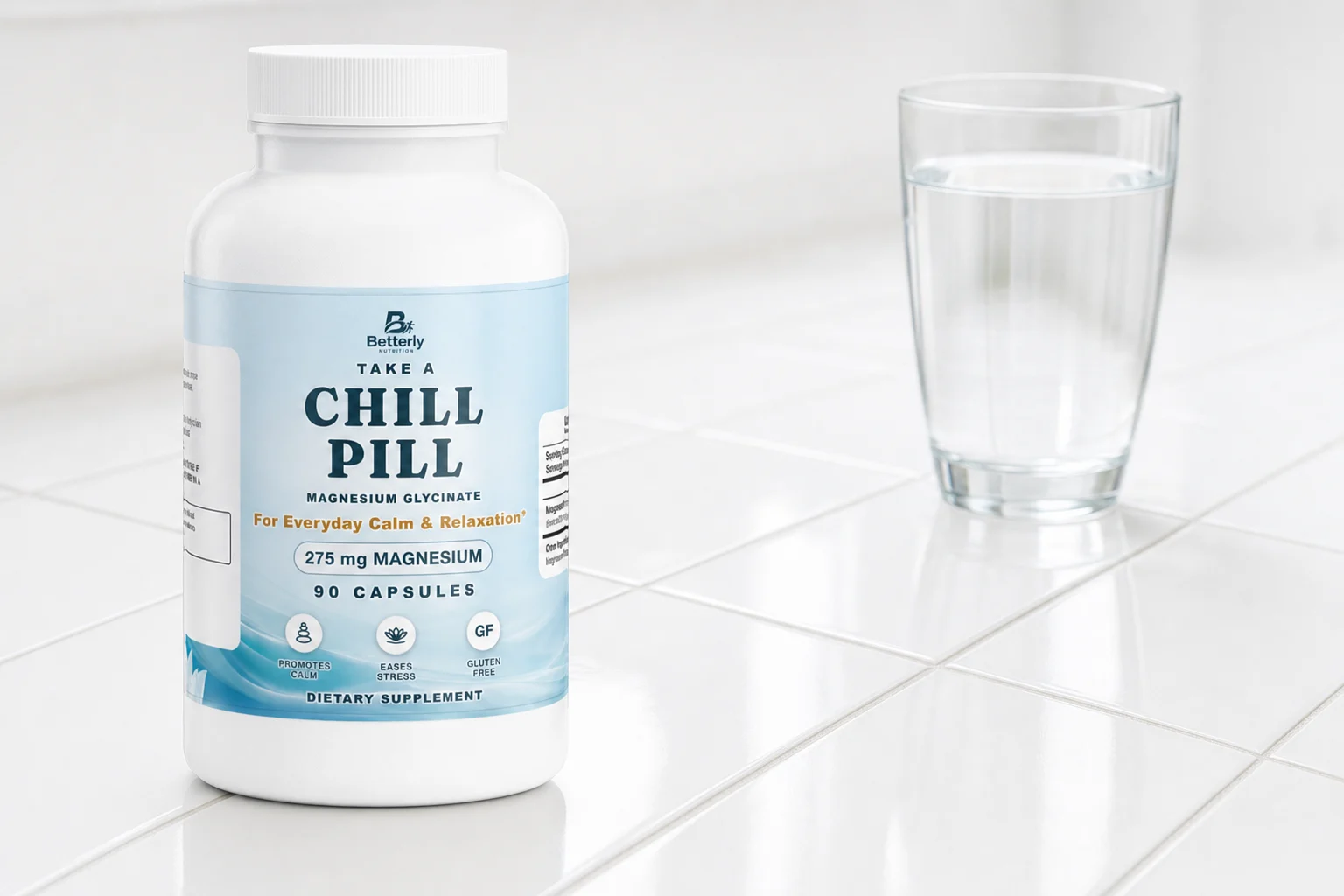
From our shop: Magnesium Glycinate Capsules — three capsules a day hold 275 mg of elemental magnesium, 65% of the Daily Value, with no vitamin B6 on the panel, 90 capsules to a bottle.
When should you take L-theanine and magnesium glycinate?
Take L-theanine and magnesium glycinate at whatever time suits you, once a day each. Neither label names an hour, and neither panel lists caffeine.
The capsule label says to "take three (3) capsules once daily or as directed by your healthcare professional." The strip label says to "place 1 oral strip on the tongue daily and allow it to dissolve."
The label wording hints at a fit. The capsules are a "Nervous System & Sleep Support Formula," which leans toward evening. The strip is a "Calm Focus & Cognitive Support Formula," which suits a workday as easily as a quiet night.
Here's one evening routine built only from those directions:
- After dinner, take the three capsules. That's the full once-daily serving. The label doesn't mention food, so tie it to a meal only if that helps you remember.
- Later, as the house quiets down, place one strip on your tongue. It dissolves on its own, so there's no glass of water to keep by the bed.
- Stop at one of each. A strip at lunch plus another at bedtime is two servings, and the label says one.
- Store both somewhere cool and dry. Both labels say so, which rules out a steamy bathroom shelf.
New to both? Start with one product and add the second once you know how the first sits with you.
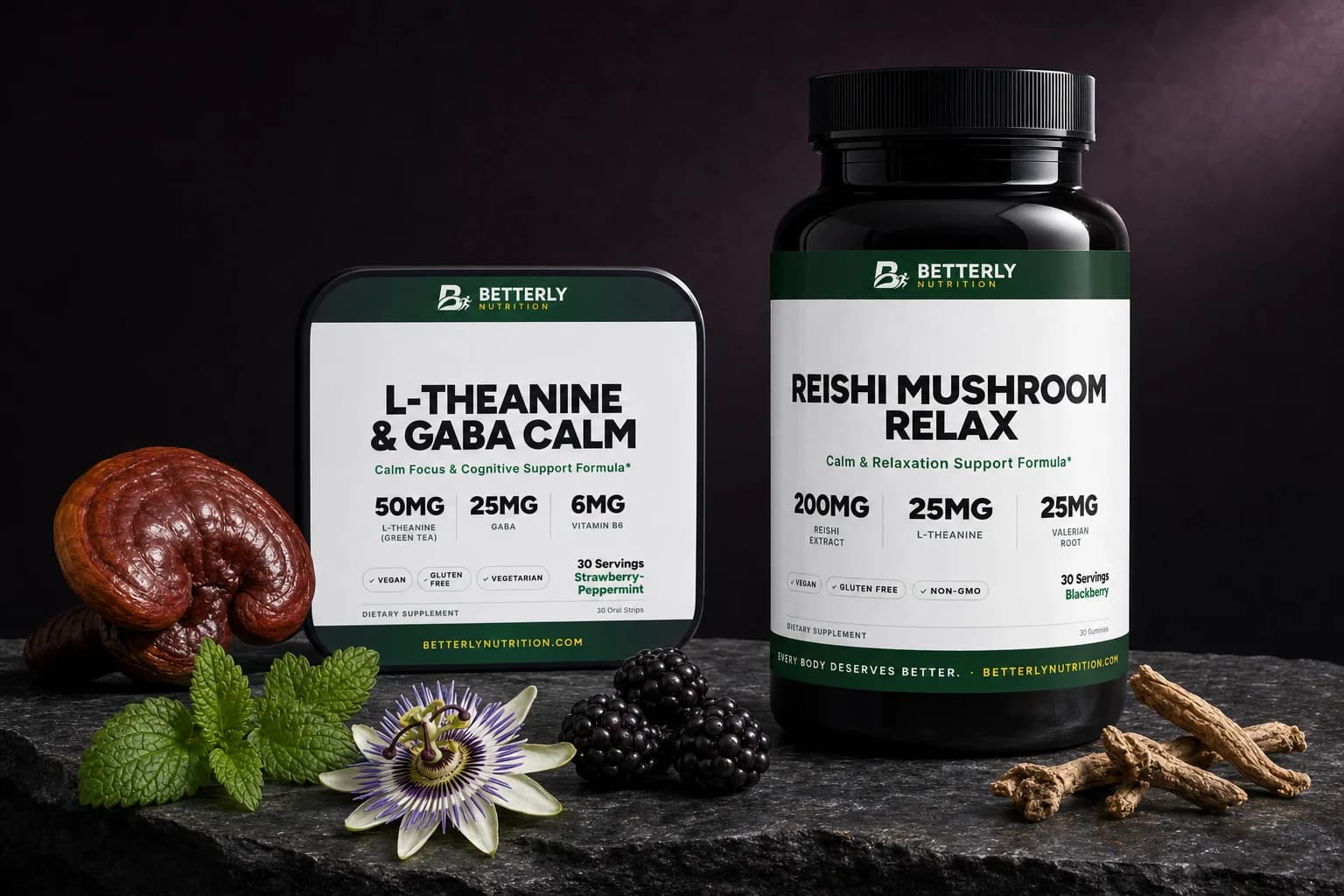
From our shop: L-Theanine & GABA Calm Strips — the panel lists no magnesium, so your 350 mg supplement budget stays untouched while each 1-strip serving adds 50 mg of L-theanine.
Magnesium and L-theanine for sleep: what should you expect?
Expect magnesium and L-theanine to support a routine, not sedate you. Our magnesium label speaks to nervous system and sleep support, while the strip's label speaks to calm focus rather than sleep.
We found no federal fact sheet that looks at this pair for sleep, and the ODS consumer page on magnesium doesn't discuss sleep. So we won't promise you'll fall asleep faster or sleep longer.
MedlinePlus, the National Library of Medicine's consumer health site, lists habits that help:
- Keep the same bedtime and wake-up time all week.
- Keep caffeine out of your afternoons and evenings.
- Leave alcohol out of the hours before bed.
- Make the bedroom cool, dark and quiet, with screens moved out.
The same page says adults need 7 to 9 hours a day. Supplements sit on top of those habits, not in place of them. If your last coffee lands at 4 p.m., moving it earlier costs nothing.
For the mental side of winding down, our routine for a mind that won't switch off at night starts with habits before any product. More evening options, with and without melatonin, sit in our Sleep & Stress Relief collection.
When don't you need L-theanine or a magnesium supplement?
You don't need L-theanine or a magnesium supplement if food already covers your magnesium and you wind down fine at night. L-theanine fills no nutritional gap at all.
Times we'd tell you to pass, even though we sell both:
- Your meals are rich in magnesium foods. ODS says many U.S. diets fall short on magnesium from food alone. If beans, nuts, seeds and leafy greens show up most days, you may not be in that group.
- You already take a magnesium product. Adding ours is the quickest route past 350 mg, as the table above shows.
- You want something that makes you drowsy. Neither label is written that way. If sleep stays hard, MedlinePlus says to see a health care provider about continued trouble sleeping.
Who should check with a healthcare provider first?
Anyone pregnant, nursing, younger than 18 or living with a medical condition should ask a healthcare provider before starting either supplement, because both labels single out those groups.
Each label's caution reads: "Consult a physician if pregnant, nursing, under 18, or have a medical condition." This is a stack for adults, not one to hand a teenager.
ODS also lists magnesium interactions worth raising with a pharmacist:
- Antibiotics. Some may not be absorbed well if taken too close to a magnesium supplement.
- Bisphosphonates, a type of bone medicine. These absorb poorly when taken too soon before or after products high in magnesium.
- Diuretics. Depending on the type, they can raise or lower how much magnesium leaves in urine.
- Long-term prescription stomach-acid medicines. ODS says these can lower blood magnesium over time.
Ask first, too, if surgery is on your calendar, since the ODS general guide says to tell your provider about every supplement before any procedure. ODS also notes that healthy kidneys clear extra magnesium, so any condition involving your kidneys belongs in that conversation. Bring the tin and the bottle so your provider can read both panels.
FAQ: L-theanine and magnesium
Is magnesium threonate better than glycinate to pair with L-theanine?
We can't say magnesium threonate is better than glycinate for this pairing, and we only sell glycinate. They're different carrier compounds for the same mineral. The ODS consumer page names aspartate, citrate, lactate and chloride as more easily absorbed forms and doesn't mention threonate or glycinate. Whichever you choose, find the magnesium line on the panel and count it toward the 350 mg supplement limit.
What side effects can L-theanine and magnesium glycinate cause?
The magnesium side effects ODS lists come from high intakes: diarrhea, nausea and abdominal cramping from supplements and medications. For L-theanine, we found no federal fact sheet with a side-effect list, so we can't give you a reliable one. If anything feels off after you start either product, stop taking it and show your healthcare provider both panels.
Can you take L-theanine and magnesium every night?
Yes, both can be nightly on our labels: the L-theanine strip says one daily and the magnesium capsules say three once daily, with no set number of weeks on either. We found no federal source that limits how long to take L-theanine. What matters over months is your magnesium total, so recheck it whenever you add a multivitamin, a drink mix or another product that lists magnesium.
Should you take magnesium glycinate and L-theanine with food?
You can take our L-theanine strip and magnesium capsules with or without food, because neither label mentions meals. The strip dissolves on the tongue without water. The choice worth thinking about is what else you take at that moment, since another magnesium product adds to your daily total.
Is there one product with both L-theanine and magnesium?
Our 10mg Melatonin Sleep Capsules list both, with no caffeine on the panel. Magnesium reads 13 mg per 2-capsule serving. L-theanine sits inside a 905 mg proprietary blend with no amount printed. The same panel carries 10 mg of melatonin, and the blend also names St. John's wort and 5-HTP. If you take any medicine, ask a healthcare provider before trying it.
Sources
- NIH Office of Dietary Supplements: Magnesium, Fact Sheet for Consumers
- NIH Office of Dietary Supplements: Vitamin B6, Fact Sheet for Consumers
- NIH Office of Dietary Supplements: Dietary Supplements: What You Need to Know
- MedlinePlus (U.S. National Library of Medicine): Healthy Sleep
If this left you looking for somewhere to start, read caffeine-free L-theanine strip to pair with magnesium — its amounts per serving are listed on the page. For the practical questions this raises, how dosing, sourcing and subscriptions work is answered in one place.