On this page
- Key takeaways
- Pre-workout vs energy drink: which one fits which job?
- How much caffeine is in pre-workout compared with an energy drink?
- Is pre-workout just caffeine?
- Why does beta-alanine make your skin tingle or itch?
- Is pre-workout or an energy drink healthier?
- Pre-workout vs coffee: is one cup enough before a workout?
- How much caffeine is too much in a day?
- How long before a workout should you take pre-workout?
- Who should check with a provider before using caffeine products?
- FAQ: pre-workout vs energy drinks
- Sources
The short answer: Caffeine powers both, so the pre-workout vs energy drink choice comes down to the job. Pre-workout adds training ingredients and is meant for shortly before a session. An energy drink is built for general alertness, and the FDA says a 16-ounce one can carry 54 to 328 mg of caffeine. Use one or the other, never both, and keep all your caffeine within the 400 mg a day the FDA cites for most adults.
A quick disclosure: we sell three of the five options compared below. Our numbers come off each Supplement Facts panel; the rest come from federal sources.
Key takeaways
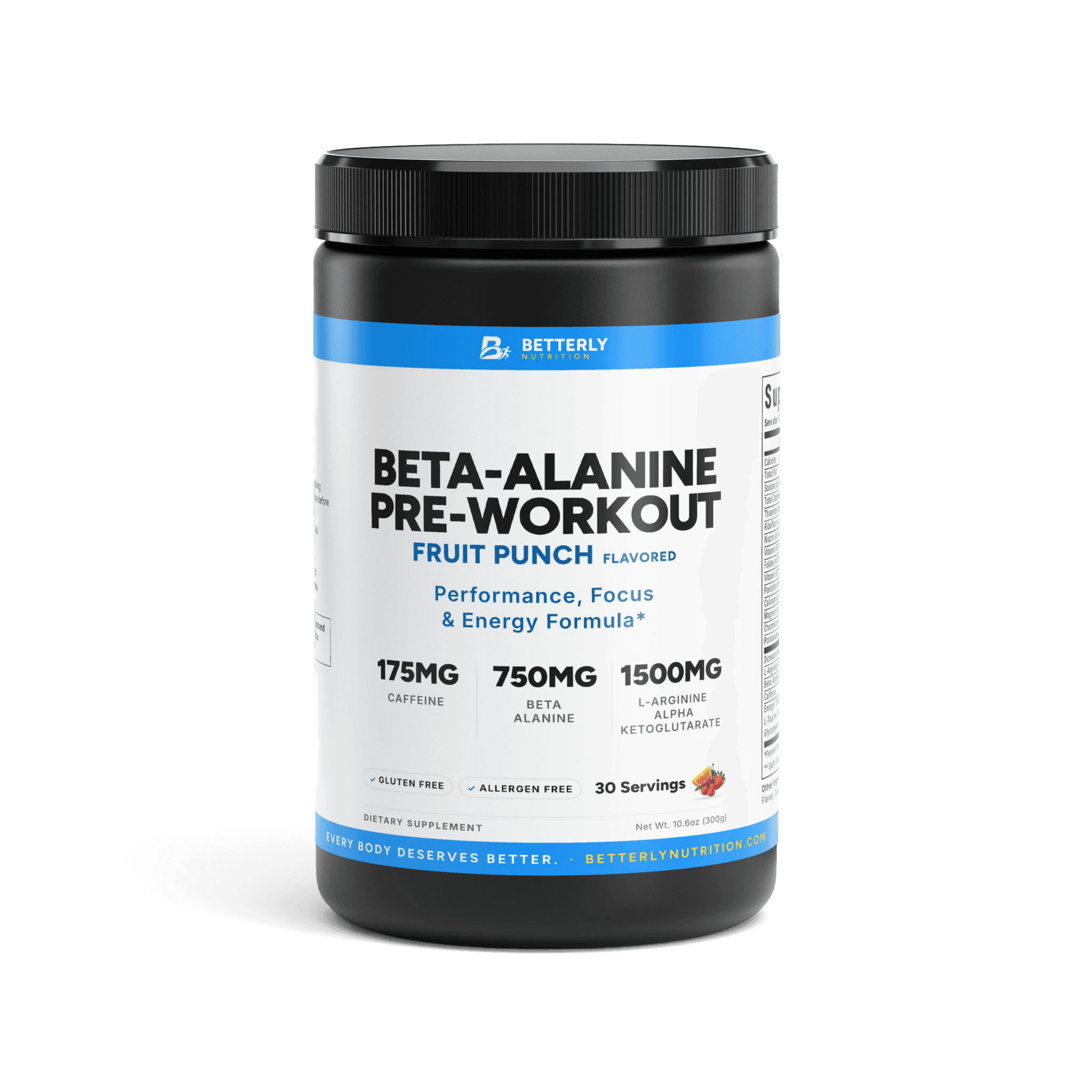
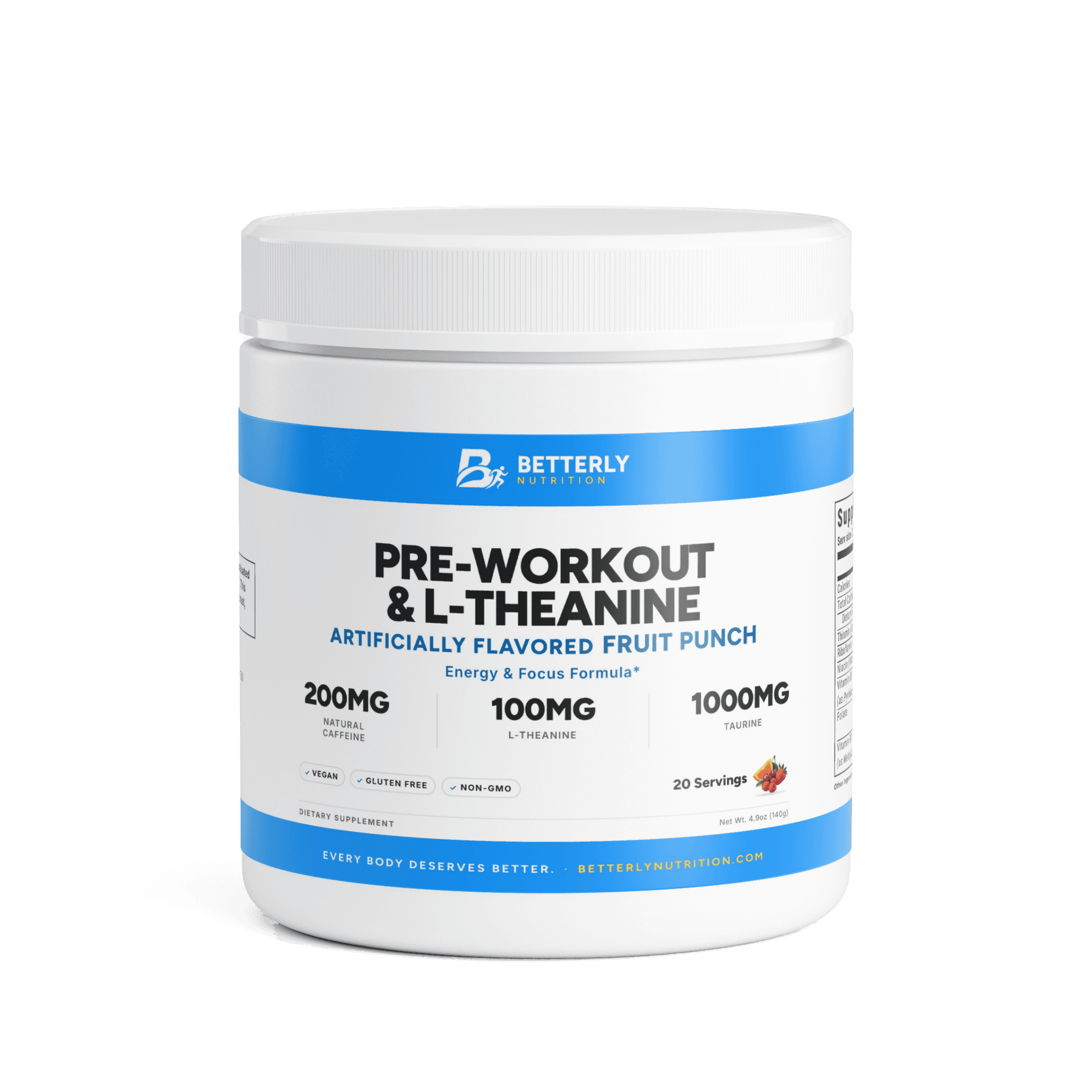
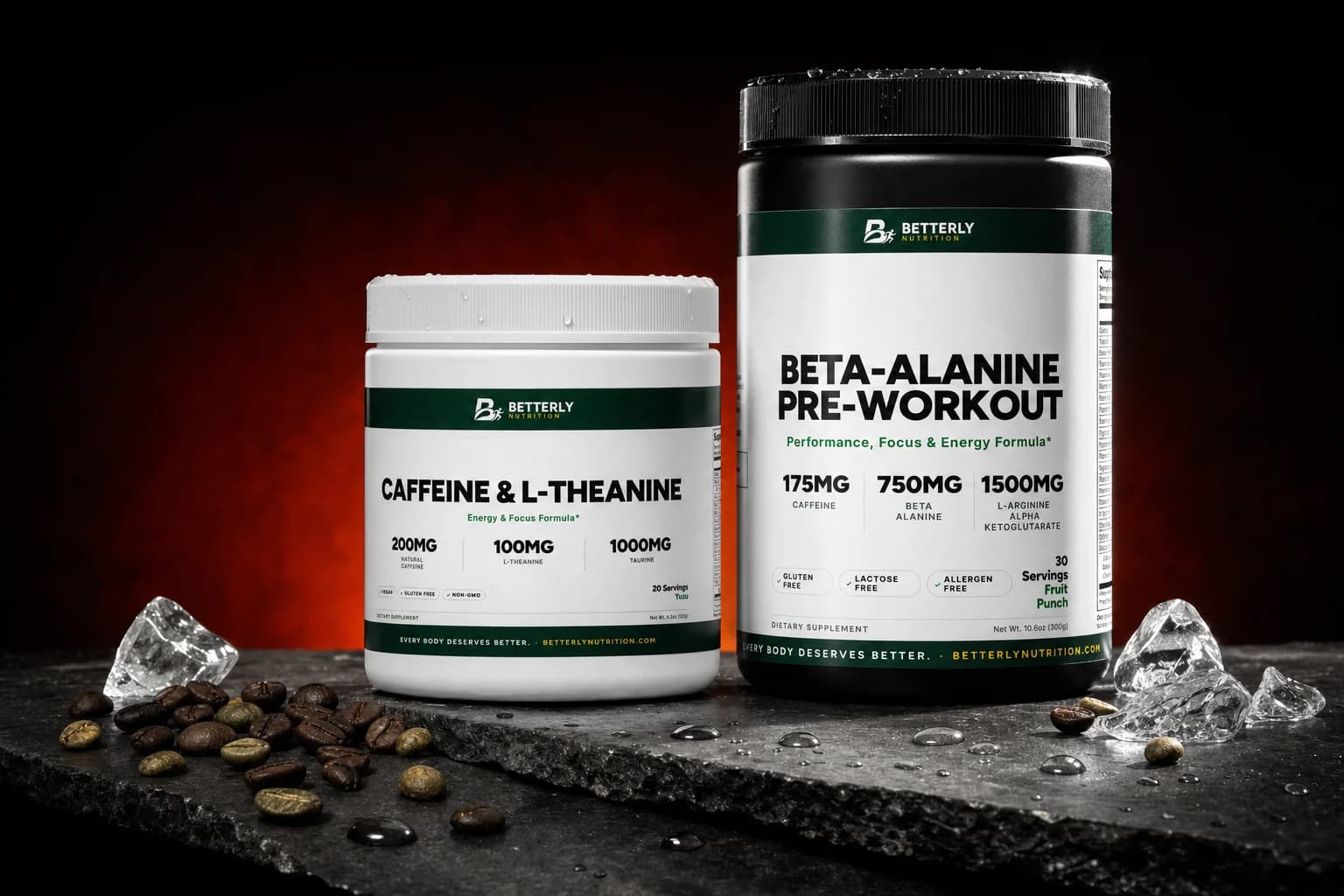
- Betterly's Beta-Alanine & Caffeine Pre-Workout Powder (Fruit Punch) has 175 mg of caffeine per 10 g (1 scoop) serving, and its Pre-Workout Caffeine & L-Theanine Energy Powder (Yuzu) has 200 mg per 2-scoop (6 g) serving.
- Pre-workout's extras are aimed at training, but the NIH says the evidence for citrulline and arginine is thin.
- The beta-alanine tingle isn't considered harmful, and the NIH links it to amounts of about 800 mg or more.
- Never take pre-workout and an energy drink together, and count coffee, tea and soda toward the 400 mg daily figure the FDA cites for most adults.
Pre-workout vs energy drink: which one fits which job?
Pre-workout fits a planned training session, and an energy drink, canned or powdered, fits general alertness during the day.
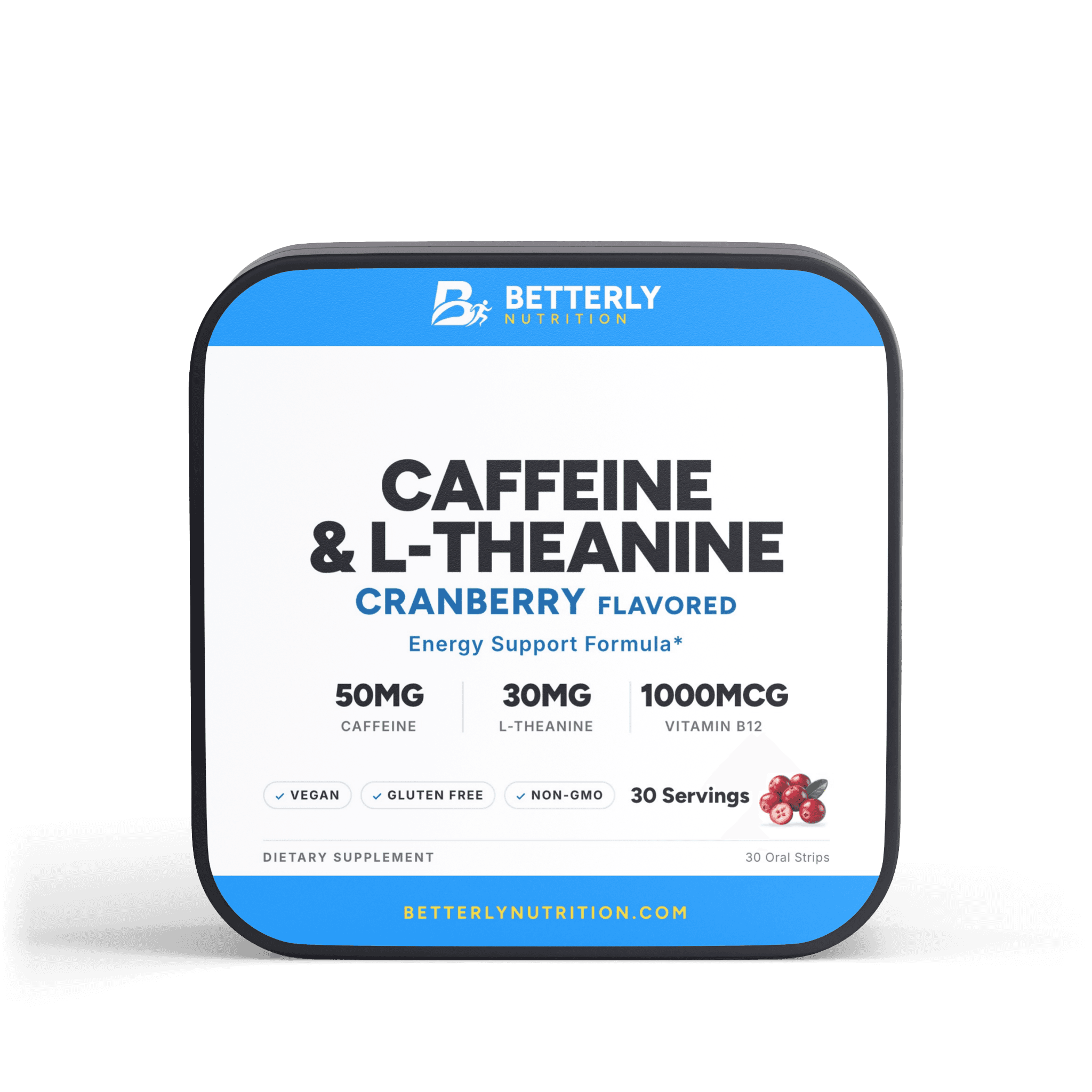
Here's how five options compare, including our Caffeine & L-Theanine Energy Strips.
| Option | Caffeine per serving | Other actives | Best job |
|---|---|---|---|
| Betterly pre-workout | 175 mg per 10 g (1 scoop) | Beta-alanine, dicreatine malate, arginine AKG, B vitamins, a blend | 30 minutes before training |
| Canned energy drink | 54 to 328 mg per 16 oz (FDA) | May add sugar, taurine, B vitamins | General alertness; check the mg |
| Betterly energy powder | 200 mg per 2 scoops (6 g) | L-theanine, taurine, B vitamins | Morning or early workday |
| Betterly energy strips | 50 mg per 1-strip serving | L-theanine, vitamin B12 | A small top-up on the go |
| Brewed coffee | About 85 to 100 mg per cup (NIH) | Nothing added | Your everyday baseline |
Between our pre-workout and energy powder, the caffeine gap is just 25 mg per serving, so choose by timing and extras, not milligrams.
For the gym, the National Center for Complementary and Integrative Health (NCCIH) says energy drinks have been found to improve endurance, with less evidence for any effect on strength or power.
How much caffeine is in pre-workout compared with an energy drink?
Pre-workout caffeine varies by brand, so check the milligrams on the panel: Betterly's Fruit Punch pre-workout lists 175 mg per 10 g (1 scoop) serving. By the FDA's figures, 16-ounce energy drinks run from well below that to nearly double it.
The FDA lists regular brewed coffee at 113 to 247 mg per 12 ounces, a bigger pour than the cup in our table.
According to the FDA, most U.S. energy drinks list their total caffeine on the label, including caffeine from guarana. If a product gives no caffeine number, you can't budget for it.
Is pre-workout just caffeine?
Pre-workout isn't just caffeine, but caffeine is its headline ingredient. Here are the other main actives in ours, per 10 g (1 scoop) serving, with the NIH's view. The panel also lists seven B vitamins and five minerals.
- Beta Alanine, 750 mg: your body uses it to make carnosine in muscle. The NIH fact sheet on performance supplements says some, but not all, studies have found small gains in swimming and team sports that need short bursts of high-intensity effort. Most of those studies used 1.6 to 6.4 g a day for 4 to 8 weeks.
- Dicreatine Malate, 1,500 mg: this is creatine bound to malic acid, a different form from the monohydrate in our beginner's guide to creatine.
- L-Arginine Alpha Ketoglutarate (arginine AKG), 1,500 mg: according to the NIH, arginine supplements seem to have "little to no effect" on strength training or aerobic exercise.
- Energy / Endurance / Focus Matrix, 550 mg: a proprietary blend of L-Taurine, Betaine Anhydrous, Waxy Maize, L-Citrulline Malate, Glycocyamine, Glucuronolactone and L-Tyrosine, with no amount given for each. On citrulline, the NIH adds that there isn't much evidence it helps performance.
Here's where our formula falls short. Our 750 mg of beta-alanine per serving sits well below the amounts in those studies, and the NIH notes that many multi-ingredient products haven't been adequately tested in combination. The blend's label name includes "Endurance," but we make no strength or endurance claim for it.
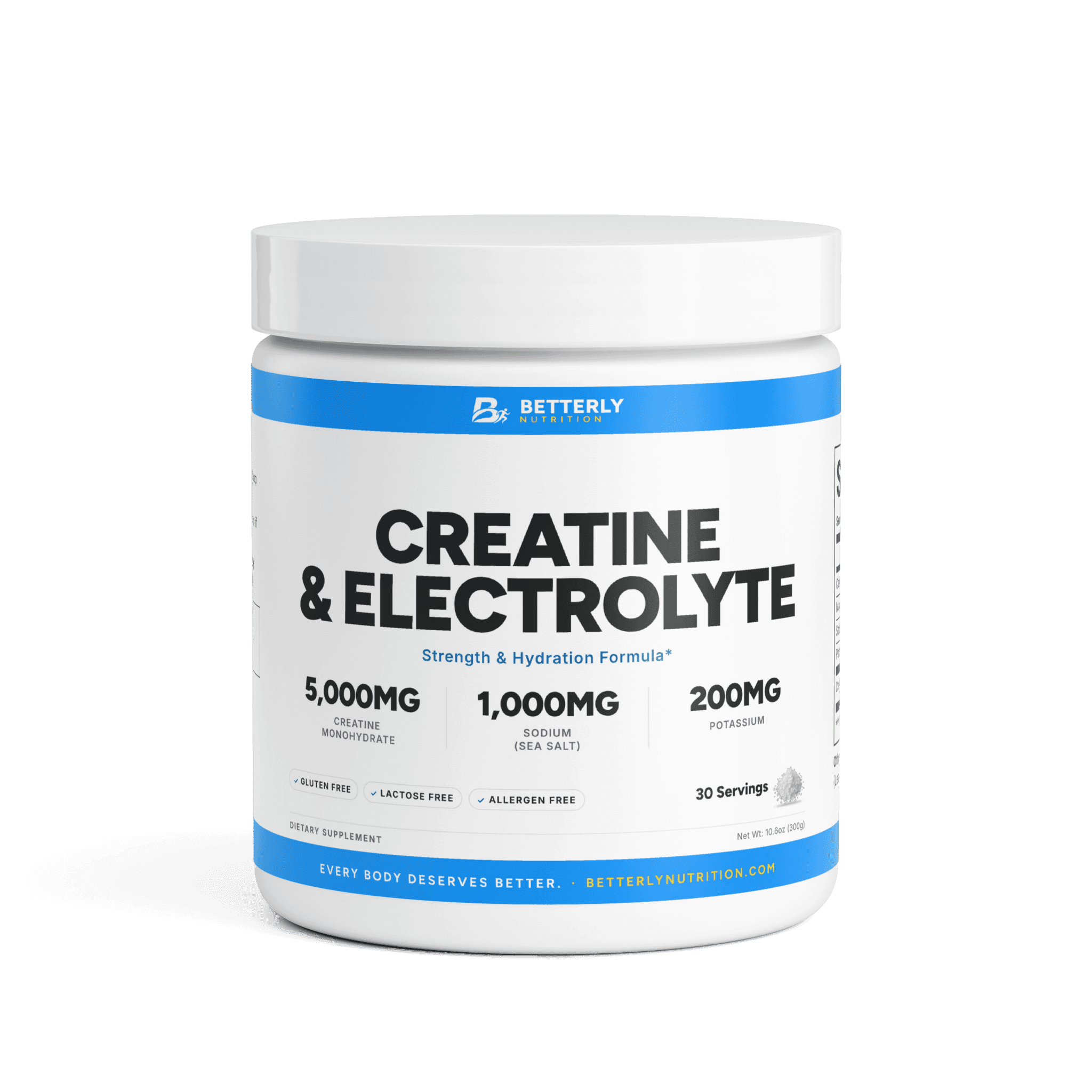
If creatine is what you're really after, the 5g Creatine & Electrolyte Powder has 5,000 mg of creatine monohydrate per 1-scoop (10 g) serving, with no caffeine in its ingredient list.
Why does beta-alanine make your skin tingle or itch?
Beta-alanine causes pre-workout's tingly, prickly sensation, and the NIH Office of Dietary Supplements says it isn't considered serious or harmful.
Its fact sheet describes a tingling, prickling or burning feeling at 800 mg or more. It shows up on the face, neck, backs of the hands and upper body, and it can last 60 to 90 minutes.
Our pre-workout has 750 mg per 10 g (1 scoop) serving, just under that mark. The label's daily maximum of 2 scoops is two servings, or 1,500 mg, so the tingle is more likely there. Start with the label's first step: "Assess tolerance by taking 1 scoop." Our energy powder and strips list no beta-alanine, if you'd rather skip the feeling.
From our shop: Beta-Alanine & Caffeine Pre-Workout Powder (Fruit Punch) — 175 mg of caffeine and 750 mg of beta-alanine per 10 g (1 scoop) serving, with 30 servings per tub.
Is pre-workout or an energy drink healthier?
Neither pre-workout nor an energy drink is a health food, so the better pick is the one that keeps your caffeine and added sugar in check.
Canned drinks are where sugar sneaks in. The NCCIH page on energy drinks says a single 16-ounce container may hold 54 to 62 g of added sugar, more than the recommended maximum for a whole day.
Our pre-workout's ingredient list includes dextrose, a sugar, and its panel shows 40 calories and 2 g of total carbohydrate per 10 g (1 scoop) serving.
Our caffeine and L-theanine energy drink powder has 20 calories and 4 g of total carbohydrates, including 2 g of fiber, per 2-scoop (6 g) serving, sweetened with sucralose. The label lists it as vegan, gluten free and non-GMO. Each serving also has 1,000 mg of taurine, 100 mg of L-theanine and seven B vitamins at 33% DV each.
The powder's caffeine comes from green tea, but the FDA says your body handles natural and added caffeine the same way.
Pre-workout vs coffee: is one cup enough before a workout?
A cup of coffee may be enough before a workout, but its 85 to 100 mg sits below the NIH's 210 to 420 mg exercise range for a 154-pound person.
Both figures are the NIH's, and its exercise range scales with body weight. Betterly's pre-workout has 175 mg of caffeine per 10 g (1 scoop) serving, about double that cup, plus beta-alanine and dicreatine malate, which coffee doesn't have.
If coffee is already your pre-workout, see our guide to pairing L-theanine with your morning coffee.
The NIH adds that caffeine is most likely to help endurance work and stop-and-go sports such as soccer and tennis, and that it "doesn't help with short, intense exercise like sprinting or weightlifting."
Many people can skip pre-workout and energy drinks, especially if:
- Your morning coffee already carries you through a workout a few hours later.
- You train late and would rather protect your sleep.
- Caffeine makes you shaky, even in small amounts.
- You're tired from short sleep, and more caffeine would only cover that up.
If that's you, our guide to caffeine-free energy options is a better next read.
How much caffeine is too much in a day?
For most adults, the FDA cites 400 mg of caffeine a day, about two to three 12-ounce cups of coffee, as an amount not generally linked to negative effects.
The NIH fact sheet says 400 to 500 mg a day seems safe for adults, and 500 mg or more can reduce performance and disturb sleep. Sensitivity varies, so check all your sources of caffeine, not just the one in your gym bag.
| If you combine | Total caffeine | Against 400 mg |
|---|---|---|
| 1 scoop pre-workout + 12 oz brewed coffee | 288 to 422 mg | Can go over |
| 2 scoops pre-workout (label maximum) | 350 mg | Little room left |
| 2 scoops energy powder + 12 oz green tea | 237 mg | Some room left |
| 1 scoop pre-workout + 16 oz energy drink | 229 to 503 mg | Don't pair these |
Each product alone, at its suggested use, sits under the line. Green tea adds little, since the FDA puts 12 ounces at 37 mg. Trouble starts with an added coffee or can.
You can have coffee and pre-workout on the same day if your total stays within the FDA's 400 mg figure for most adults. One scoop plus a 12-ounce brewed coffee comes to 288 to 422 mg.
The energy powder's caution says "Do not exceed 5 scoops daily." At 200 mg of caffeine per 2-scoop (6 g) serving, five scoops come to 500 mg, more than the FDA's daily figure.
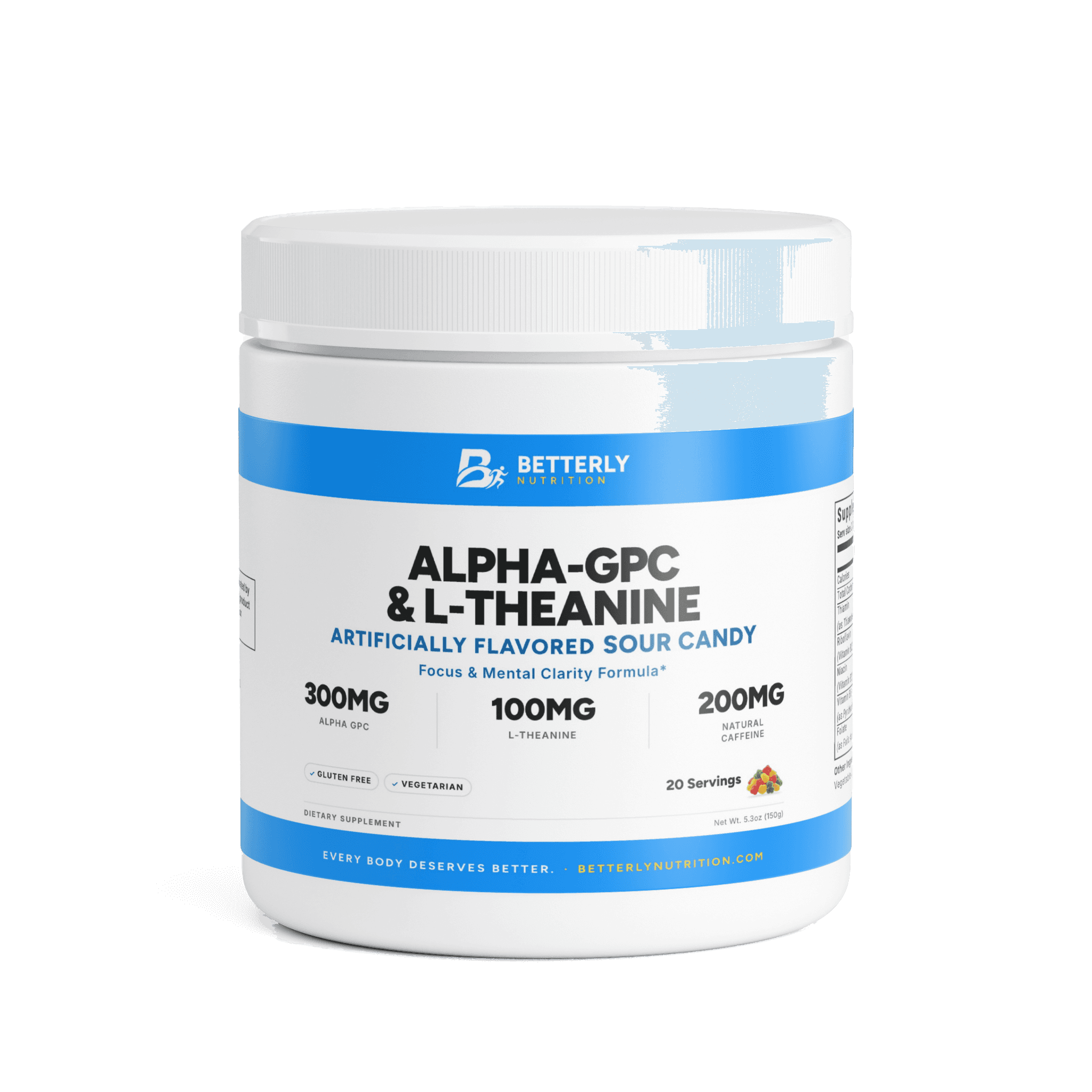
For a study block, there's the Alpha-GPC & L-Theanine Focus Powder (Sour Grape). It has 200 mg of caffeine, 300 mg of Alpha GPC and 100 mg of L-theanine per 2-scoop (7.5 g) serving, so it draws on the same budget. Its panel also lists 50 mg of Asian ginseng extract, so check with a provider first if you take any medication.
The FDA's page How Much Caffeine Is Too Much? lists signs of too much caffeine, including a racing heartbeat, jitters, trouble sleeping, an upset stomach and headache. If you notice them, stop and talk with a healthcare provider. And skip bulk pure caffeine powder: the agency says toxic effects can show up with rapid intake of about 1,200 mg, less than half a teaspoon.
How long before a workout should you take pre-workout?
Follow the label's timing: Betterly's pre-workout says 30 minutes before the workout, inside the 15 to 60 minutes that sports-medicine experts suggest, according to the NIH.
What each of our labels says:
- Pre-workout: the label's suggested use is 1 or 2 scoops in 6-8 ounces of cold beverage, 30 minutes before the workout, starting with 1 scoop. Don't exceed 2 scoops daily.
- Energy powder: the label's suggested use is 1 scoop with 6–10 fl oz of water, or 2 scoops with double the water.
- Energy strips: the label's suggested use is 1 oral strip a day, set on your tongue to dissolve.
Training in the evening? Think about bedtime before you scoop, since the FDA lists sleep disruption among the signs of too much caffeine. Our Performance Essentials collection also carries creatine and electrolyte powders with no caffeine on their panels.
From our shop: Pre-Workout Caffeine & L-Theanine Energy Powder (Yuzu) — 200 mg of caffeine from green tea and 100 mg of L-theanine per 2-scoop (6 g) serving, at 20 calories.
Who should check with a provider before using caffeine products?
Anyone who's pregnant or nursing, on any medication, or managing a medical condition should check with a healthcare provider before using pre-workout, energy powder or energy drinks.
Those groups come straight from our labels, and the FDA adds that some conditions and medications make people more sensitive to caffeine. Ask before surgery, too.
The pre-workout and strip labels flag anyone under 18. The NIH says teens should keep caffeine to no more than 100 mg a day, and that in most cases only adults should use performance supplements.
If you compete in a drug-tested sport, the NIH fact sheet names certification programs, such as NSF Certified for Sport, that check products for banned ingredients. Our products don't carry one, so choose a certified product if you're tested.
FAQ: pre-workout vs energy drinks
Can I drink an energy drink as a pre-workout?
Yes, an energy drink can work as a pre-workout if you know its caffeine amount and it fits your day. The catch is the range, since the FDA puts 16-ounce energy drinks at 54 to 328 mg of caffeine. Check the can for a milligram number, skip it if you've already had coffee, and never drink one on top of a pre-workout.
Can you take pre-workout without working out?
Pre-workout isn't made for that: our label's suggested use is 1 to 2 scoops, 30 minutes before the workout. For work or studying, a caffeine drink without the training ingredients makes more sense, such as our energy powder, which has 200 mg of caffeine per 2-scoop (6 g) serving. Either way, the caffeine counts toward the same daily total.
How long does pre-workout last?
Pre-workout's caffeine may be felt for several hours: the NIH Office of Dietary Supplements says moderate amounts of caffeine might increase energy and reduce fatigue over that span. The beta-alanine tingle is shorter and can last 60 to 90 minutes. Our label ties the pre-workout to 30 minutes before a workout, so a late session means late caffeine.
Is 175 mg of caffeine a lot?
Whether 175 mg of caffeine is a lot depends on the rest of your day. It's less than half of the 400 mg a day the FDA cites for most adults, though it can feel strong if you rarely have caffeine. One 12-ounce brewed coffee is in the same range, at 113 to 247 mg by the FDA's count. Our pre-workout label says to "Assess tolerance by taking 1 scoop."
Is it safe to take pre-workout every day?
Pre-workout's daily safety isn't settled: the NIH says it isn't known whether taking beta-alanine daily for more than several months is safe. With ours, follow the label: 1 to 2 scoops, 30 minutes before the workout, and no more than 2 scoops a day. Count its caffeine toward the FDA's daily figure for most adults, and check with a provider first if you take any medication.
Sources
- NIH Office of Dietary Supplements: Dietary Supplements for Exercise and Athletic Performance, Fact Sheet for Consumers
- U.S. Food and Drug Administration: Spilling the Beans: How Much Caffeine is Too Much?
- National Center for Complementary and Integrative Health: Energy Drinks
If this left you looking for somewhere to start, read caffeine and beta-alanine pre-workout powder — its amounts per serving are listed on the page. For the practical questions this raises, how dosing, sourcing and subscriptions work is answered in one place.