On this page
- Key takeaways
- What's the difference between pre-workout and creatine?
- Pre-workout vs creatine: which is better if you only pick one?
- Does pre-workout have creatine in it?
- Beta-alanine vs creatine: how do the two compare?
- Where does protein powder fit next to pre-workout and creatine?
- Can you take creatine and pre-workout at the same time?
- When can you skip pre-workout, creatine or both?
- Who should check with a healthcare provider first?
- FAQ: pre-workout and creatine
- Sources
The short answer: Pre-workout vs creatine isn't a straight swap, since the two run on very different timelines. Pre-workout is a caffeine-led drink for the session in front of you. Creatine is a daily habit that builds up in your muscles over weeks, and the NIH says sports-medicine experts agree it can help with intense efforts followed by short rests. If you lift and only want one, choose creatine.
Full disclosure: Betterly sells a pre-workout and two creatine powders, so we gain whichever way you go. That's also why we'll show you, label in hand, where our own pre-workout falls short on creatine.
Key takeaways
- Pre-workout is timed to a single workout, while creatine monohydrate is taken every day, including days you don't train.
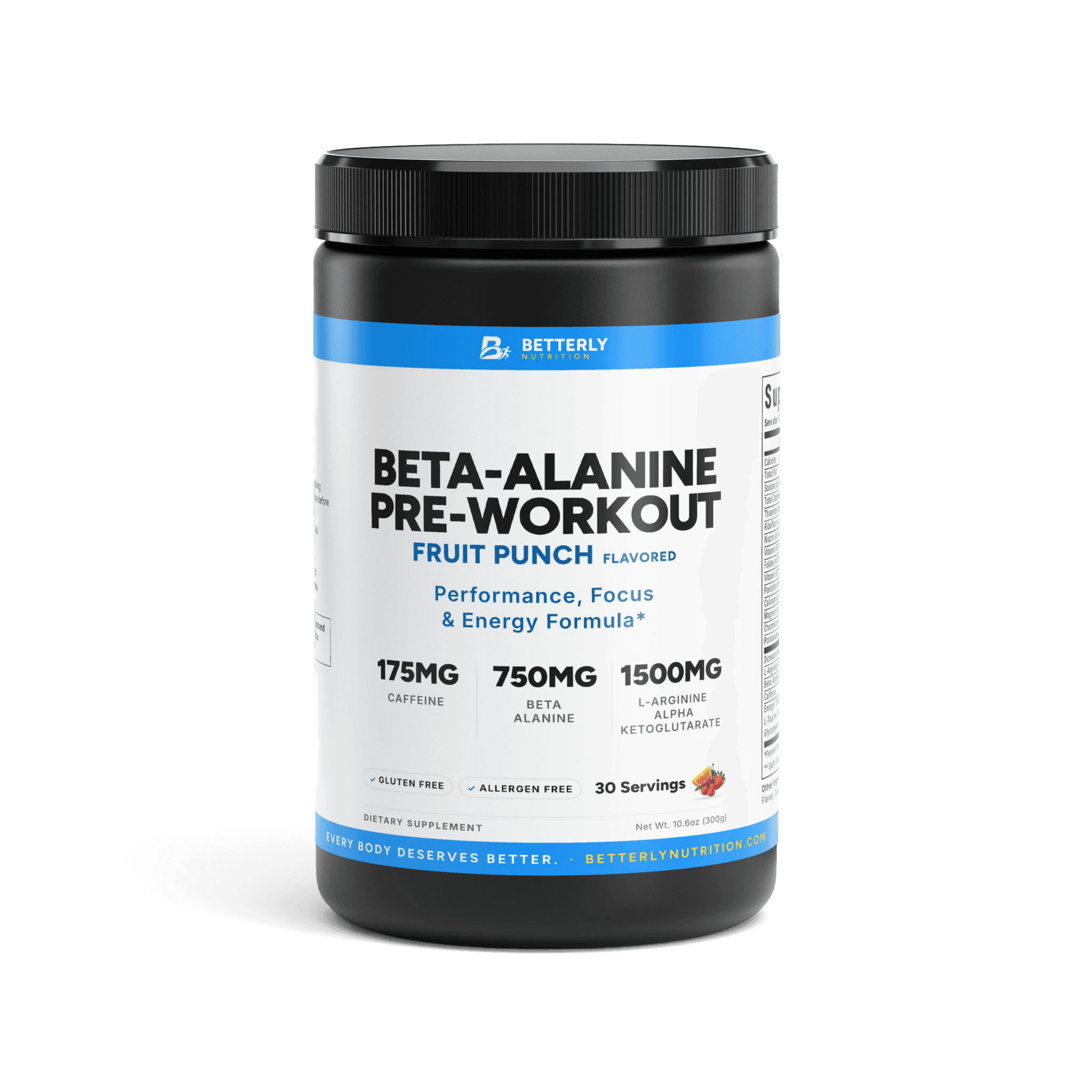
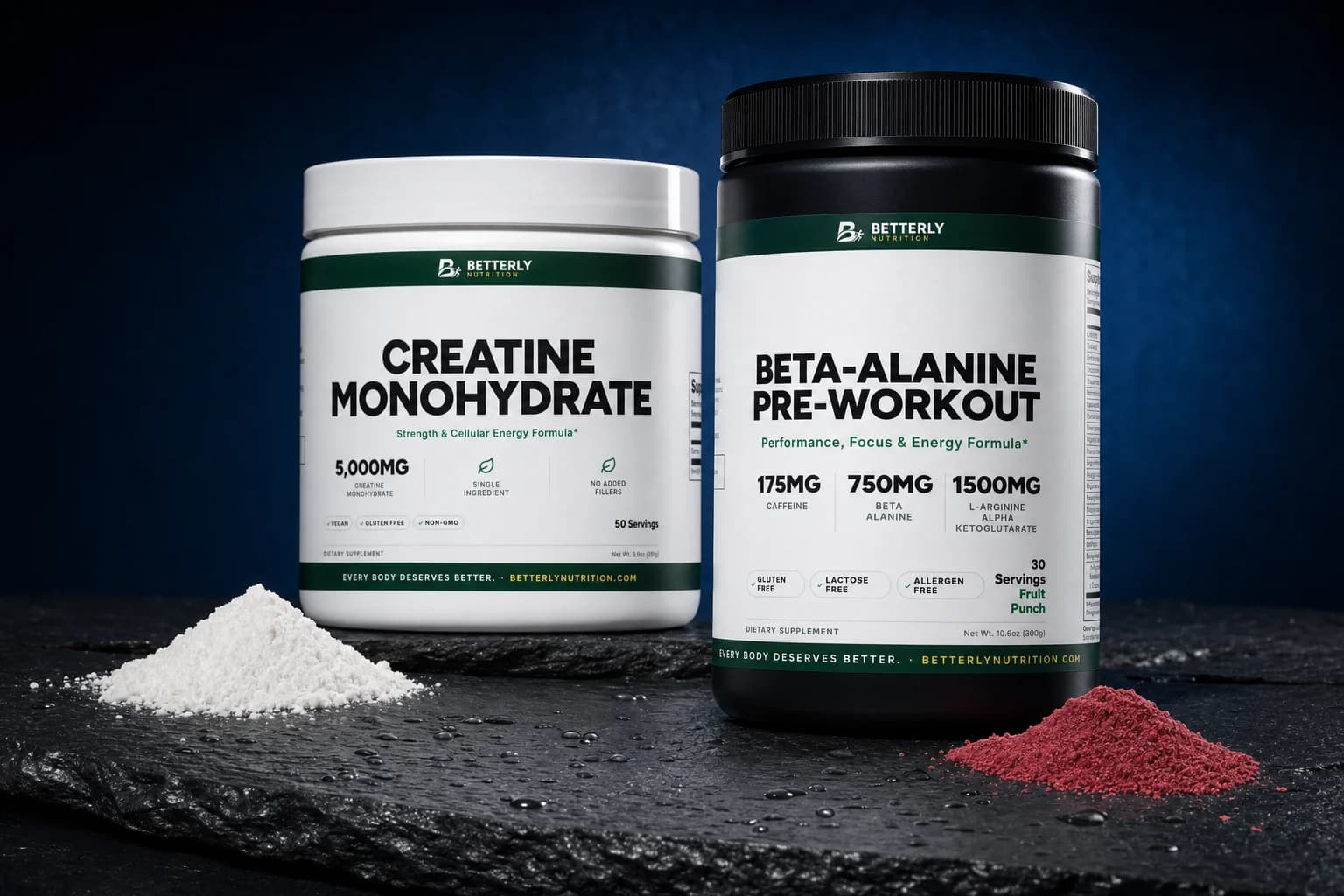
- Our Beta-Alanine & Caffeine Pre-Workout Powder (Fruit Punch) lists 1,500 mg of dicreatine malate per 10 g (1 Scoop) serving. That's below the 3 to 5 g of creatine a day that, according to the NIH, people in studies often took.
- Creatine and pre-workout can share a training day. Stick to 1 scoop of pre-workout, though, because 2 scoops add up to 40 mg of niacin, above the NIH's 35 mg upper limit for adults.
- The NIH counts weightlifting among the short, all-out efforts caffeine doesn't help, which is why creatine is the stronger single pick for most lifters.
What's the difference between pre-workout and creatine?
Pre-workout is a multi-ingredient powder you drink shortly before training, while creatine is a single compound your muscles store, taken daily whether you train or not.
| Question | Pre-workout | Creatine monohydrate |
|---|---|---|
| Main active in ours | Caffeine, 175 mg per scoop | Creatine, 5,000 mg per scoop |
| When you take it | 30 minutes before a workout | Once a day, any time |
| Rest days | Skip it | Keep taking it |
| Will you feel it? | Often, since caffeine is a stimulant | Not as a sensation |
| Time frame | Caffeine peaks within an hour | Weeks to months of steady use |
The time frame row matters most: pre-workout runs on one session's clock, and creatine only makes sense as a routine.
Caffeine works on your central nervous system. According to MedlinePlus, it hits its highest blood level within an hour, and you may still feel it 4 to 6 hours later. Our pre-workout carries 175 mg of it per 10 g (1 Scoop) serving.
Creatine keeps a slower calendar. The NIH Office of Dietary Supplements fact sheet on exercise supplements (ODS) explains that your muscles store creatine and draw on it for energy. ODS links its training benefit to weeks or months of use, not a single dose.
Pre-workout vs creatine: which is better if you only pick one?
Creatine is the better single pick for most people who lift, because the NIH's evidence for creatine lines up with lifting and its evidence for caffeine mostly doesn't.
ODS says creatine enhances performance in repeated hard bursts that each last up to roughly 2.5 minutes, such as sprints and weightlifting. ODS sees little value in it for distance runners, cyclists and swimmers.
Caffeine's record runs the other way. ODS puts sprinting and weightlifting on the list of efforts caffeine doesn't help. Its best odds, ODS says, are in distance running and in sports built on repeated bursts of hard effort.
A quick way to choose:
- You mostly lift or do short, hard intervals: start with creatine.
- You mostly run, ride or swim long distances: creatine has little NIH support there, and your usual coffee may be all the caffeine you want.
- You play a stop-start sport: ODS links both ingredients to intense, on-and-off effort, so your feelings about caffeine can decide it.
Does pre-workout have creatine in it?
Some pre-workouts list creatine and some don't, so check the panel: Betterly's pre-workout lists 1,500 mg of dicreatine malate per 10 g (1 Scoop) serving.
Here's why that row isn't your daily creatine.
- The amount is small. In the studies ODS describes, people often loaded with about 20 g daily for 5 to 7 days before dropping to 3 to 5 g a day. One scoop's 1,500 mg is half the low end of that range.
- Not all of it is creatine. Part of that 1,500 mg is malic acid, and the panel doesn't say how much of the row is creatine itself.
- It's a different form. ODS calls creatine monohydrate "the most widely used and studied form of creatine in supplements." We don't count dicreatine malate as its equal.
- Extra scoops aren't the fix. The label allows 2 scoops a day, which would mean 3,000 mg of dicreatine malate, but also 350 mg of caffeine and 40 mg of niacin.
The niacin matters most. The ODS fact sheet on niacin sets the upper limit for niacin from supplements at 35 mg a day for adults and 30 mg for teens 14 to 18. Two scoops go past it, so we recommend 1 scoop of pre-workout and a separate scoop of creatine.
Any brand's tub gets the same check: the creatine row, its form, and its own milligram amount outside any blend.
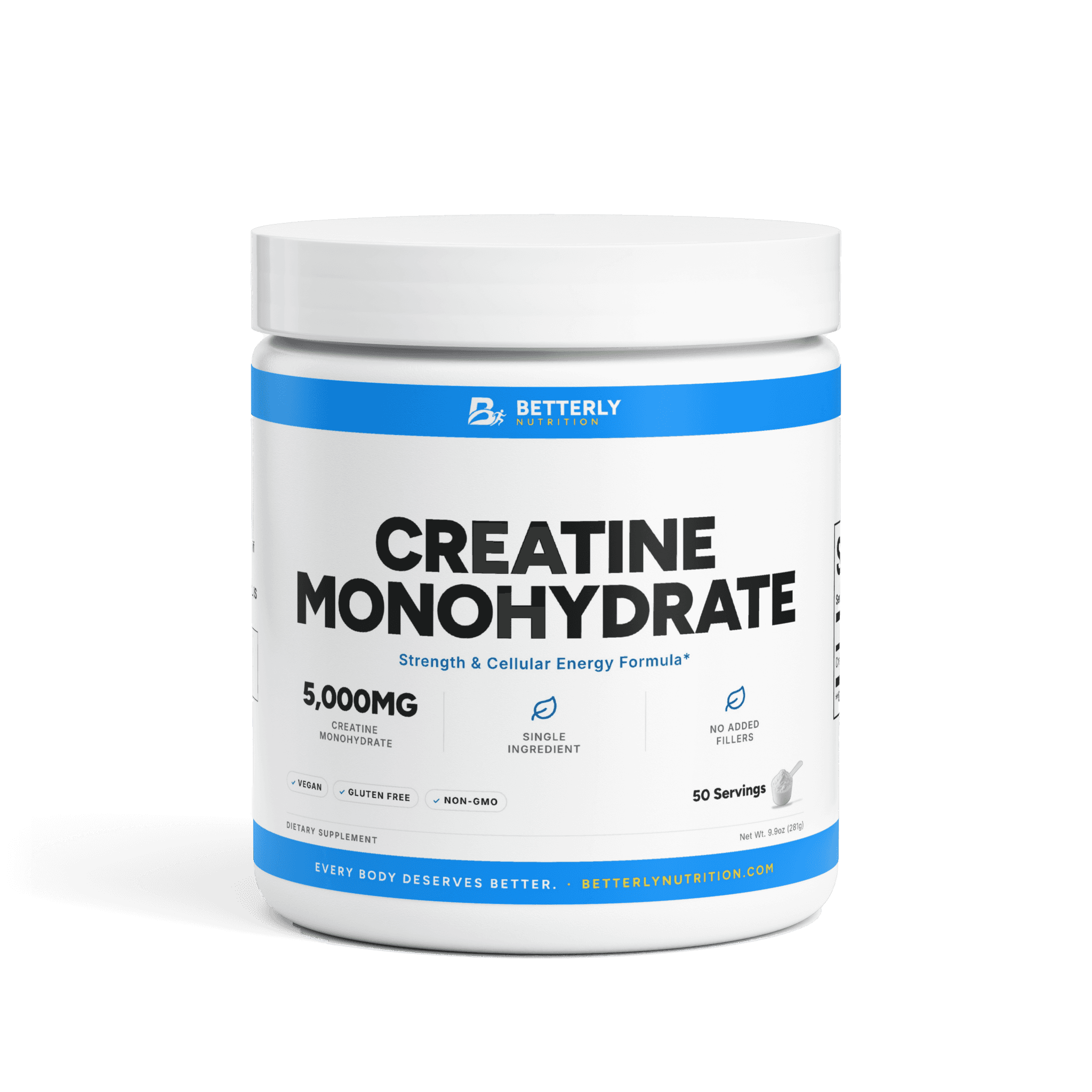
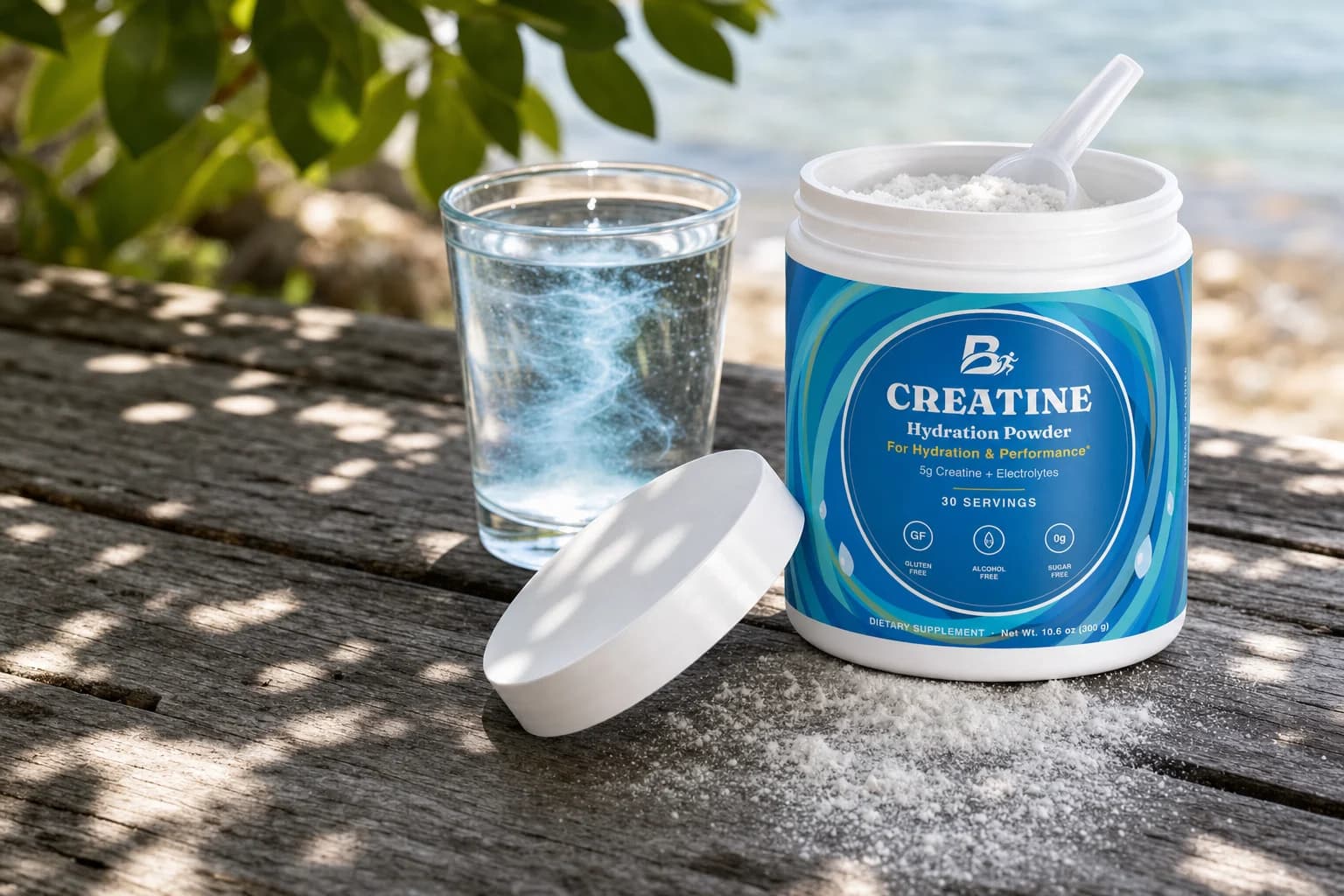
From our shop: Creatine Monohydrate Powder — its whole panel is one row, 5,000 mg of creatine monohydrate per 1 Scoop (5.6g) serving, so it brings no caffeine to your pre-workout day.
Beta-alanine vs creatine: how do the two compare?
Beta-alanine and creatine both work through steady use that raises a muscle store, carnosine for one and creatine for the other, but the NIH rates their evidence differently.
| Point | Beta-alanine | Creatine |
|---|---|---|
| What muscle does with it | Makes carnosine | Stores it for energy |
| Efforts ODS names | Swimming, team sports like hockey | Sprinting, weightlifting |
| Amounts in studies | 1.6 to 6.4 g a day for 4 to 8 weeks | About 20 g a day for 5 to 7 days, then 3 to 5 g |
| Expert view, per ODS | Experts disagree on its value | Experts agree it can help |
| In our products | 750 mg per pre-workout scoop | 5,000 mg per creatine scoop |
Creatine has broad expert agreement, and one scoop of ours lands inside the ODS daily amounts. Beta-alanine has less, and our 750 mg per scoop sits under the study amounts.
Our dicreatine malate sits below the ODS amounts too. Pre-workout is a caffeine product with extras, and we'd rather you buy it knowing that.
Where does protein powder fit next to pre-workout and creatine?
Protein powder is a handy way to top up protein, and the NIH says athletes can probably get enough protein from food alone.
ODS puts athletes' needs at about 0.5 to 0.9 g of protein per pound of body weight a day. For someone who weighs 150 pounds, it cites expert advice of roughly 20 g of high-quality protein at a time, spaced 3 to 5 hours apart. One of those servings can fall in the 2 hours after training.
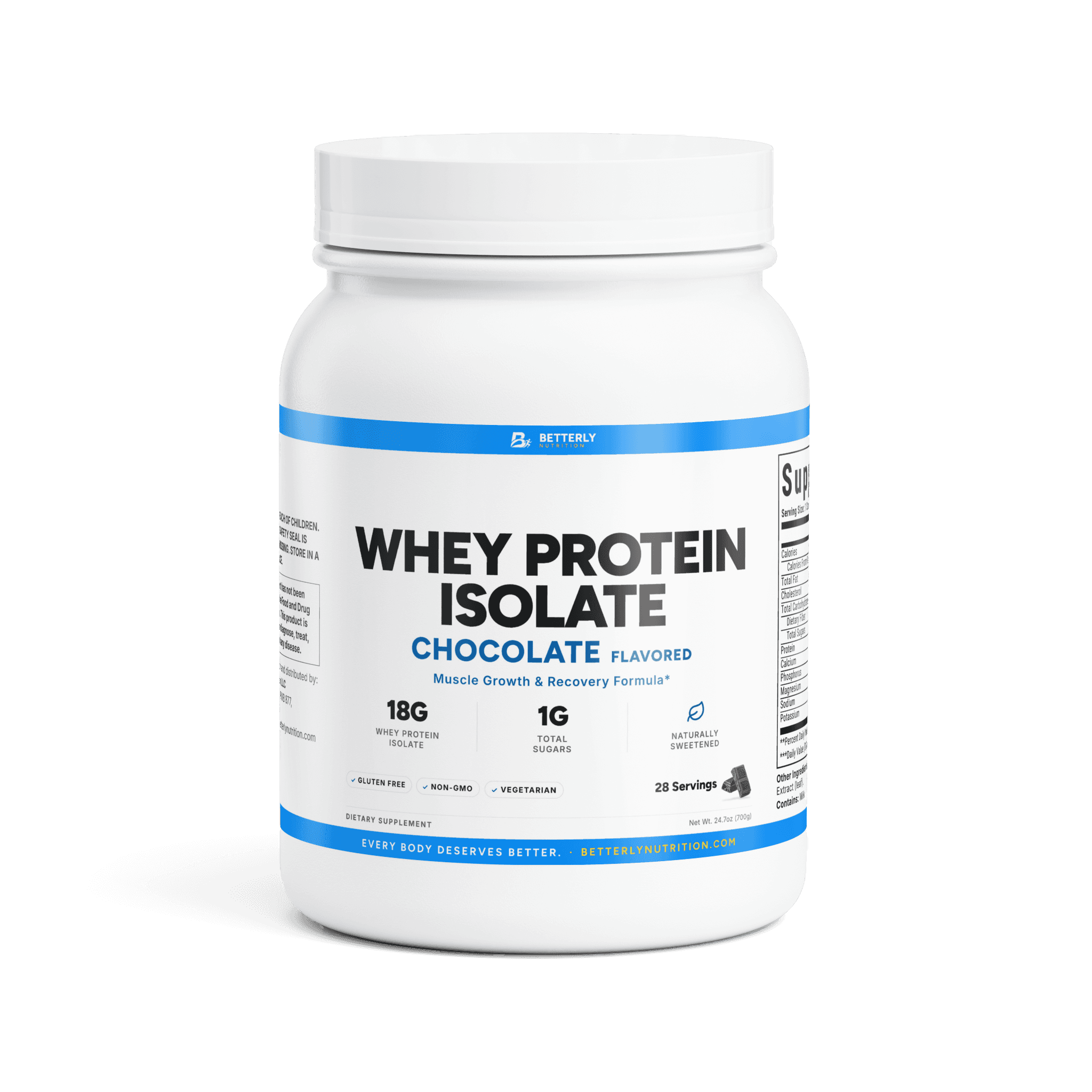
Our Whey Protein Isolate Powder (Vanilla) has 19 g of protein per 1 Scoop (24.4g) serving and contains milk. It's a backup for days when meals fall short.
If you're weighing pre-workout vs creatine vs protein powder on a tight budget, here's our order:
- Protein from food, every day, trained or not.
- Creatine, if you lift or do short, hard intervals.
- Pre-workout, only if you want caffeine timed to a session and coffee doesn't suit you.
For fluids and protein timing around training, see our simple post-workout recovery routine.
Can you take creatine and pre-workout at the same time?
Yes, creatine and pre-workout can share the same day or the same shaker, as long as you follow each label's directions and count your caffeine.
| When | What to take | Label directions and notes |
|---|---|---|
| A set time every day | 1 scoop creatine monohydrate (5,000 mg) | Mix with 8 oz (237 ml) of water or juice |
| 30 minutes before training | 1 scoop pre-workout (175 mg caffeine) | 6 to 8 oz of a cold drink; start with 1 scoop |
| Rest days | Creatine only | Pre-workout is labeled for before a workout |
| Late sessions | Creatine as usual | Weigh the caffeine against your bedtime |
Creatine keeps its slot every day, and pre-workout only shows up on days you train.
The pre-workout label asks you to test your tolerance with 1 scoop first. After that, it allows 1 to 2 scoops in 6 to 8 ounces of a cold drink, taken half an hour before training. We'd stay at 1, for the niacin reason above.
The creatine label begins with 5 days of loading at 4 scoops daily, then drops to 1 to 2 scoops a day. A single 5,000 mg scoop already hits 5 g, the upper end of the daily range ODS describes. A second would double that to 10,000 mg, so we'd stay at one. Our creatine guide for first-timers explains loading and the case for skipping it.
Yes, you can mix creatine with pre-workout in one shaker. Use 8 oz (237 ml) of liquid, the amount the creatine label names and the top of the pre-workout's 6 to 8 oz range. The catch is habit: if creatine only lives in your pre-workout shaker, it vanishes on rest days.
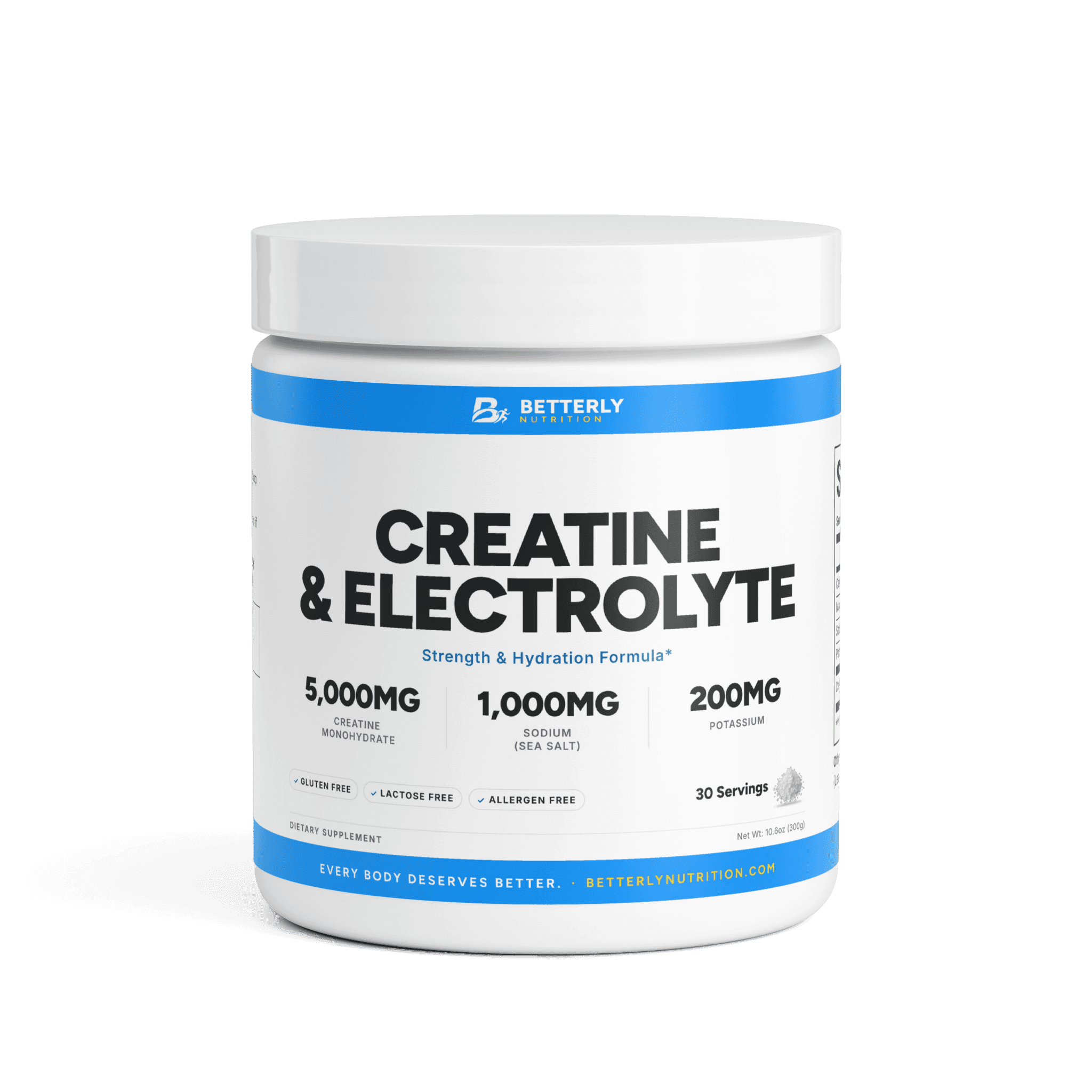
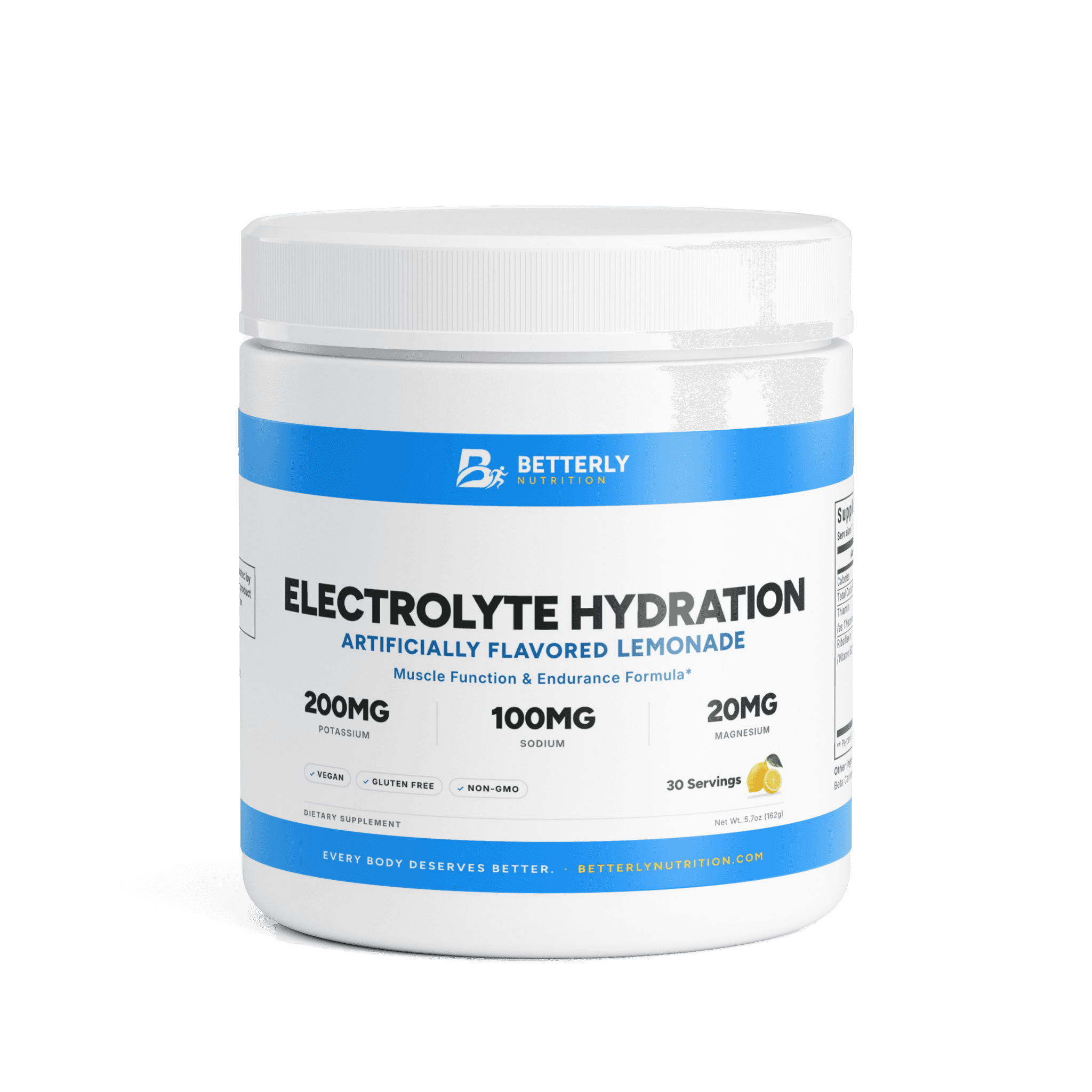
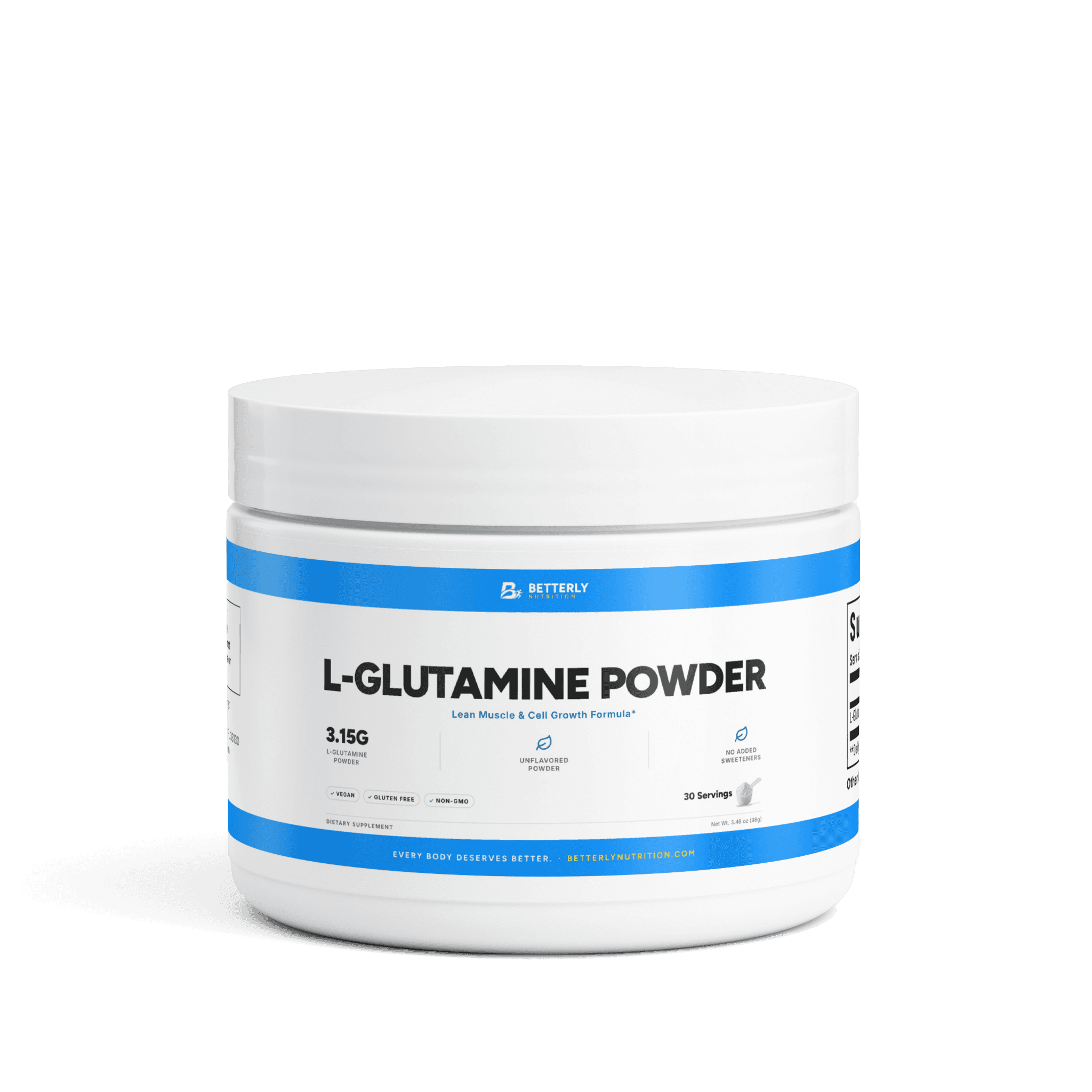
Prefer creatine with electrolytes? The 5g Creatine & Electrolyte Powder packs 1,000 mg of sodium alongside 5,000 mg of creatine (as creatine monohydrate) per 1 scoop (10 g) serving. The directions ask for one daily scoop in 6 to 8 oz of your chosen drink, with no loading step.
The FDA says most adults can have 400 mg a day without it generally being tied to negative effects. One scoop of our pre-workout takes 175 mg of that. ODS says 800 mg or more of beta-alanine can cause paresthesia, a pins-and-needles feeling it doesn't consider harmful. One scoop holds 750 mg, and two hold 1,500 mg. Our pre-workout matchup with energy drinks digs into the caffeine budget and that tingle.
From our shop: Beta-Alanine & Caffeine Pre-Workout Powder (Fruit Punch) — a training-day scoop with 175 mg of caffeine, 750 mg of beta-alanine and 1,500 mg of L-arginine alpha-ketoglutarate per 10 g (1 Scoop) serving.
When can you skip pre-workout, creatine or both?
You can skip pre-workout if caffeine already fits your day another way, and skip creatine if you mostly run, ride or swim long distances.
Pre-workout is the easier one to drop. If a coffee before the gym already works for you, the tub mostly adds beta-alanine, dicreatine malate and L-arginine alpha-ketoglutarate. ODS finds little evidence that arginine supplements help performance.
Creatine is harder to argue against if you lift, though it isn't free of trade-offs. Expect the scale to move a little: ODS says creatine's added water retention usually brings some weight gain. It also lists muscle stiffness, cramps and stomach upset as rare reactions.
Both can wait while the basics are shaky. ODS says performance supplements can't substitute for a healthy diet, and that you'll perform best when you eat well, drink enough fluids and train properly. When you're ready, the whole lineup is in our performance supplements collection.
Who should check with a healthcare provider first?
Loop in a healthcare provider before you pair creatine with pre-workout if you're pregnant, nursing, under 18, taking any medicine or living with a health condition.
This pairing stacks up fast. Follow the creatine label's loading phase and your first 5 days hold 4 scoops, or 20,000 mg of creatine monohydrate. A training day then adds a pre-workout scoop with 175 mg of caffeine and another 1,500 mg of dicreatine malate. Describe that whole stack to a provider before day one.
Our Creatine Monohydrate Powder, the pre-workout, the 5g Creatine & Electrolyte Powder and the Whey Protein Isolate Powder (Vanilla) all print one identical warning: "Do not exceed recommended dose. Consult a physician if pregnant, nursing, under 18, or have a medical condition." A single pre-workout scoop would put a teenager 75 mg past ODS's 100 mg daily caffeine limit for teens.
Take both Supplement Facts panels, or photos of them, to the appointment. ODS cautions that medicines, whether prescribed or over the counter, might interact with performance supplements. Our pre-workout panel names more than 20 ingredients, seven of them inside a 550 mg blend with no individual amounts.
FAQ: pre-workout and creatine
Is it safe to take creatine and pre-workout together?
Yes, taking creatine and pre-workout together can be fine if you're a healthy adult who follows both labels. ODS rates creatine as safe for healthy adults over weeks or months of use. It also notes that most ingredient combinations in performance supplements haven't been studied, and our pre-workout already combines several. Stick to 1 scoop of the pre-workout, since 2 scoops pass the adult niacin upper limit, and if you take a prescription, let your pharmacist see both panels first.
Should you still take creatine on days you skip pre-workout?
Yes, creatine belongs in your day whether or not a pre-workout does. The creatine label's directions are daily, with no mention of training days, and ODS describes creatine use across weeks or months rather than single sessions. Pre-workout's label ties it to training.
Can you take creatine at night and pre-workout in the morning?
Yes, creatine at night and pre-workout in the morning is a workable split. Our creatine monohydrate panel lists no caffeine, so an evening scoop adds no stimulant near bedtime. Keep the pre-workout's 175 mg of caffeine to earlier in the day, given the four to six hours MedlinePlus says caffeine can stay noticeable.
Can you take creatine and pre-workout on an empty stomach?
Yes, creatine and pre-workout can both go down on an empty stomach, since food doesn't come up on either of our labels. If caffeine on an empty stomach bothers you, a light snack first may feel better. Too much caffeine can upset your stomach, the FDA notes.
Is creatine a stimulant like pre-workout?
No, creatine isn't a stimulant, and that's the core difference from pre-workout. Creatine is stored in muscle as an energy supply, so you won't feel a scoop kick in the way caffeine does. The buzz people notice from pre-workout comes from its caffeine, which in ours is 175 mg per 10 g (1 Scoop) serving.
Sources
- NIH Office of Dietary Supplements: Dietary Supplements for Exercise and Athletic Performance, Fact Sheet for Consumers
- NIH Office of Dietary Supplements: Niacin, Fact Sheet for Consumers
- U.S. Food and Drug Administration: Spilling the Beans: How Much Caffeine is Too Much?
- MedlinePlus, National Library of Medicine: Caffeine
If this left you looking for somewhere to start, read pre-workout powder with beta-alanine and caffeine — its amounts per serving are listed on the page. For the practical questions this raises, how dosing, sourcing and subscriptions work is answered in one place.