On this page
- Key takeaways
- What does pre-workout do?
- Is pre-workout worth it for beginners?
- How much pre-workout should you take the first time?
- What will you notice from your first scoop?
- Pre-workout for beginners: what should the first week look like?
- Should you take pre-workout on rest days?
- When can a beginner skip pre-workout?
- Who should check with a healthcare provider first?
- FAQ: pre-workout for beginners
- Sources
The short answer: Pre-workout for beginners should start small and stay small. Our pre-workout label's first step is 1 scoop (10 g, with 175 mg of caffeine) stirred into 6 to 8 ounces of cold liquid, 30 minutes before training. Try it on a day with no other caffeine. Then keep it at 1 scoop, because 2 scoops push niacin past the NIH's adult upper limit. Plenty of beginners don't need pre-workout at all.
We sell the pre-workout this guide is built around, so we'll point out every spot where its label and our advice don't match.
Key takeaways
- One 10 g (1 Scoop) serving of Betterly's Beta-Alanine & Caffeine Pre-Workout Powder (Fruit Punch) carries 175 mg of caffeine, roughly two cups of coffee by the NIH Office of Dietary Supplements' estimate of 85 to 100 mg per cup.
- The label permits up to 2 scoops daily, yet 2 scoops hold 40 mg of niacin, over the NIH's 35 mg adult upper limit, so we recommend 1.
- Each scoop of ours holds 750 mg of beta-alanine, while the NIH Office of Dietary Supplements says 800 mg or more can cause a pins-and-needles tingle it doesn't regard as harmful.
- Betterly's pre-workout label ties every scoop to a workout, so the tub can stay closed on rest days.
What does pre-workout do?
Pre-workout is a flavored powder, usually led by caffeine, that you drink shortly before exercise so you feel more alert when your session starts.
Most of what you'll feel comes from the caffeine. MedlinePlus, the National Library of Medicine's health site, says caffeine occurs naturally in more than 60 plants, coffee beans and tea leaves among them, and works as a stimulant. The alert feeling from a scoop is that same compound in a measured amount.
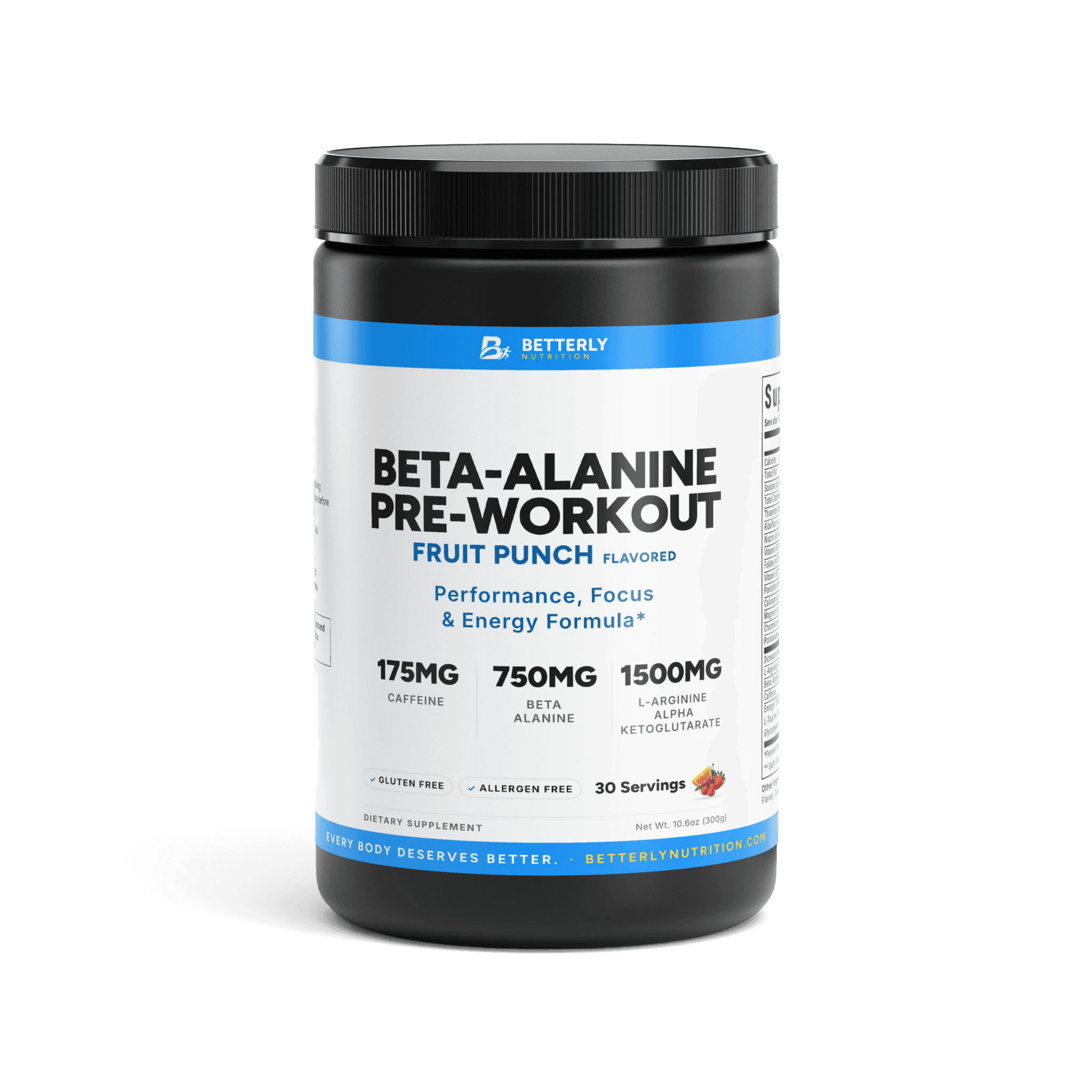
Past the caffeine, recipes vary by brand. Our fruit punch pre-workout adds beta-alanine, dicreatine malate, L-arginine alpha-ketoglutarate, seven B vitamins, five minerals and a 550 mg blend of seven more ingredients.
The NIH Office of Dietary Supplements (ODS) makes two points worth knowing. Ingredients may act differently in a mix than alone, and companies that sell performance supplements usually don't test their own products in people. That includes us: we haven't run a study on our formula.
Is pre-workout worth it for beginners?
Pre-workout is worth trying for a beginner only if caffeine already agrees with you and you want a measured dose before training. Otherwise, leave it on the shelf.
ODS puts the basics first: a good diet, enough fluids and proper training, with supplements as an optional extra on top. For a first-timer, regular meals and a program you stick with come before any tub.
If you mostly lift, ODS says caffeine doesn't help brief, all-out efforts such as sprinting or weightlifting. It's more likely to help longer efforts like distance running, plus sports with repeated hard bursts, such as soccer and tennis. A new lifter may still feel sharper after a scoop, even if the bar weighs the same.
One limit to know before buying: per scoop, our beta-alanine, dicreatine malate and L-arginine alpha-ketoglutarate each sit below the daily amounts ODS describes from studies. That's why this guide spends most of its time on caffeine. Our pre-workout and energy drink comparison walks through those rows one at a time.
How much pre-workout should you take the first time?
Take 1 scoop of pre-workout the first time, because Betterly's label says to assess tolerance with 1 scoop, which is 10 g and 175 mg of caffeine.
The label's suggested use, word for word: "Mix 1 or 2 scoops in 6-8 ounces (177-237ml) of cold beverage. Assess tolerance by taking 1 scoop. If well tolerated, take 1 to 2 scoops 30 minutes before the workout. Do not exceed 2 scoops daily."
Pick a training day when you haven't had coffee, tea, soda or an energy drink yet, so the only caffeine you're judging is the scoop.
Our label has no half-scoop step, so we won't invent one. If 175 mg is far more caffeine than you usually have in a day, talk with a provider first.
Our advice parts from the label at the second scoop. The label allows 2 scoops once you've handled one, but each scoop has 20 mg of niacin. The ODS niacin fact sheet lists 35 mg a day as the adult upper limit for niacin from supplements. Two scoops come to 40 mg, so we don't recommend the second one. If you're weighing a second scoop anyway, ask a healthcare provider first.
| Panel row | 1 scoop | 2 scoops | Reference point |
|---|---|---|---|
| Caffeine | 175 mg | 350 mg | FDA: 400 mg a day for most adults |
| Niacin | 20 mg | 40 mg | ODS: 35 mg upper limit for adults |
| Beta Alanine | 750 mg | 1,500 mg | ODS: can tingle at 800 mg or more |
One scoop stays under all three reference points. Two scoops pass the niacin limit, reach the beta-alanine amount ODS says can cause tingling, and leave only 50 mg of caffeine room for the rest of the day.
That caffeine line comes from the FDA, which calls 400 mg a day, for most adults, "an amount not generally associated with negative effects." One scoop leaves you 225 mg for everything else you drink.
What will you notice from your first scoop?
Expect to notice the caffeine first, possibly a prickly tingle from beta-alanine, and little else, since most of Betterly's pre-workout panel isn't something you'd feel.
Here's the panel, row by row, per 10 g (1 Scoop) serving:
| Panel row | Amount | What you may notice |
|---|---|---|
| Caffeine | 175 mg | Alertness, peaking within an hour |
| Beta Alanine | 750 mg | Possibly a tingle for 60 to 90 minutes |
| Niacin | 20 mg (125% DV) | Under the 30 mg flushing level ODS cites |
| Six other B vitamins | 100% to 250% DV | Nothing you'd feel |
| Dicreatine malate; arginine AKG | 1,500 mg each | Nothing you'd feel |
| Energy / Endurance / Focus Matrix | 550 mg | Unclear, with no single amounts |
Only two rows are likely to announce themselves: caffeine and beta-alanine.
Caffeine. MedlinePlus says the caffeine in your blood tops out within an hour, and its effects can last 4 to 6 hours, so a scoop may outlast your workout. It also notes that caffeine makes you urinate more and can upset your stomach by raising acid, so know where the restroom is.
Beta-alanine. Is the tingle a problem on day one? Not likely: your first scoop's 750 mg is a bit below the 800 mg amount ODS says can cause it, and ODS doesn't consider the feeling harmful even when it does show up.
B vitamins. B vitamins aren't stimulants, and ODS says most Americans already get enough niacin from meals. It adds that nicotinic acid at 30 mg or more from a supplement can leave skin red, itchy and burning. Our panel lists it as "Niacin (as Niacin)" without saying whether that's nicotinic acid or nicotinamide, so use the 30 mg flushing level as the one to watch. One scoop's 20 mg sits under it; two scoops' 40 mg sits over it.
The blend. The matrix lists L-Taurine, Betaine Anhydrous, Waxy Maize, L-Citrulline Malate, Glycocyamine, Glucuronolactone and L-Tyrosine sharing 550 mg, with no single amounts, so neither you nor we can tell how much of each is there.
One rule outranks the table. If a scoop leaves your heart racing or pounding, stop and talk with a clinician before trying again. The FDA names a faster heart rate, jitters, an upset stomach and headache as signs you've had too much caffeine, and our guide to pre-workout side effects covers them.
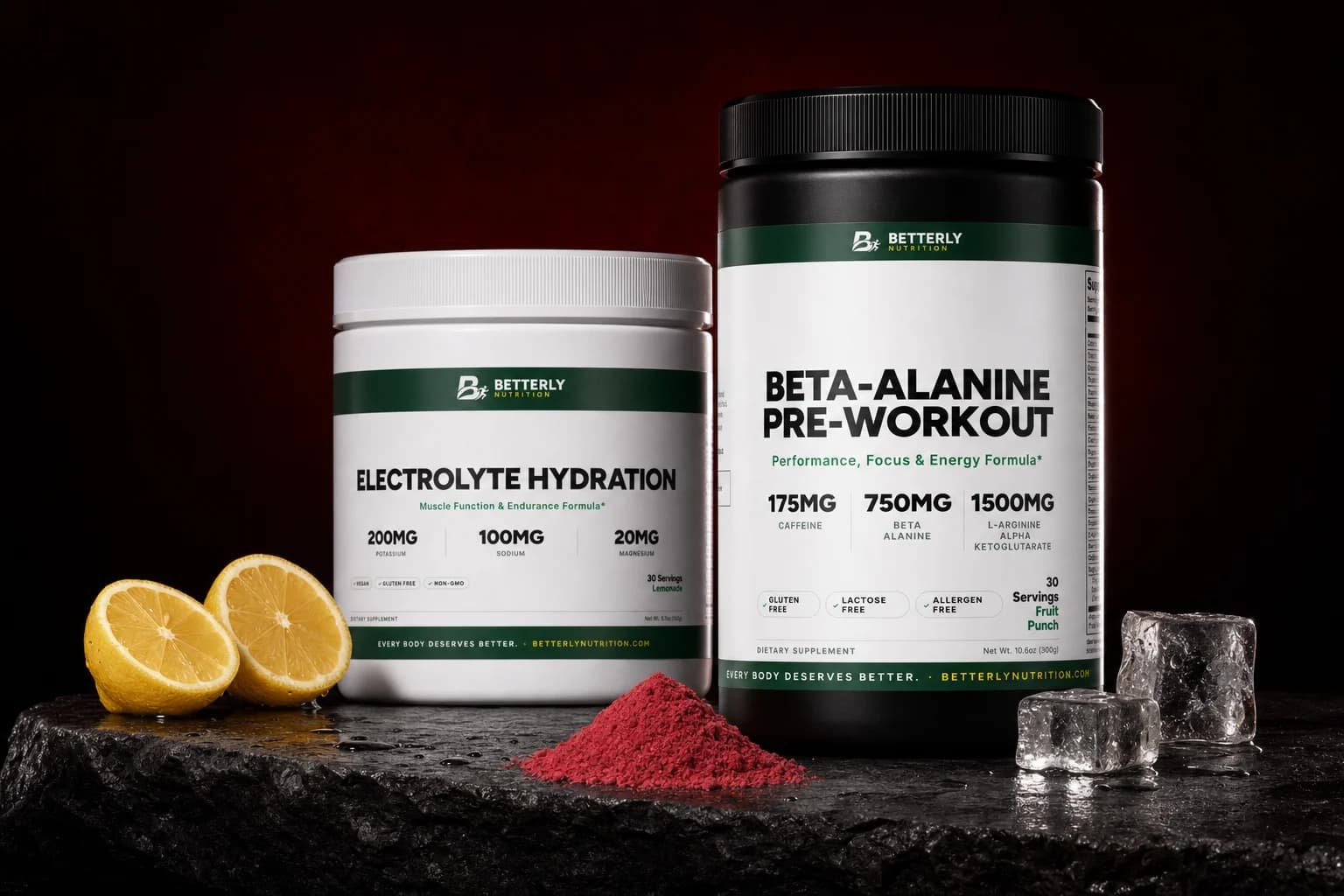
From our shop: Beta-Alanine & Caffeine Pre-Workout Powder (Fruit Punch) — 30 servings of fruit punch powder per tub, each 10 g (1 Scoop) serving listing 750 mg of beta-alanine, seven B vitamins and 175 mg of caffeine.
Pre-workout for beginners: what should the first week look like?
A sensible first week of pre-workout for beginners means 1 scoop on training days only, none on rest days, and an honest check at the end on whether it helped.
| Day | Pre-workout | Also keep in mind |
|---|---|---|
| Day 1, training | 1 scoop, 30 minutes before | No other caffeine beforehand |
| Day 2, rest | None | Meals and water as usual |
| Day 3, training | 1 scoop, if day 1 went well | Count coffee toward 400 mg |
| Day 4, rest | None | Daily creatine, if you use it |
| Day 5, training | 1 scoop | Finish early enough for bedtime |
| Days 6 and 7 | None | Decide whether to keep it |
The pattern holds all week: one scoop, only before training, and never a second one to chase a stronger feeling.
Three habits make the week more useful:
- After each dose, note the time you took it, how the session went and how you slept.
- If day 1 didn't sit well, stop there. That's what the label's tolerance step is for.
- At week's end, ask whether the scoop changed anything you care about or just added caffeine.
Should you take pre-workout on rest days?
No, you don't need pre-workout on rest days. Betterly's label times each scoop to 30 minutes before a workout, and a rest day has no workout to time it to.
Without training, a scoop is just a sweet caffeine drink. If you want caffeine on a day off, your usual coffee or tea does the job.
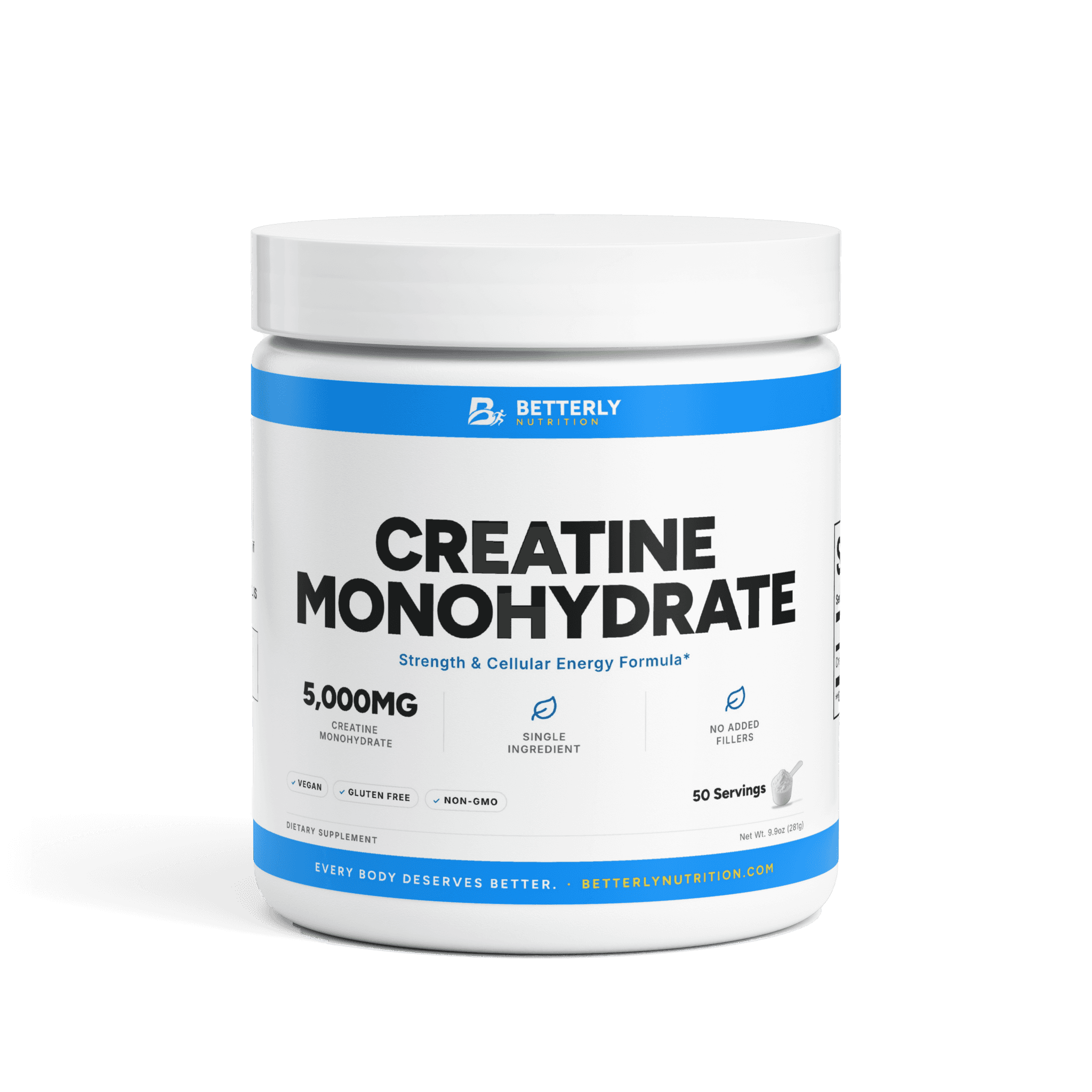
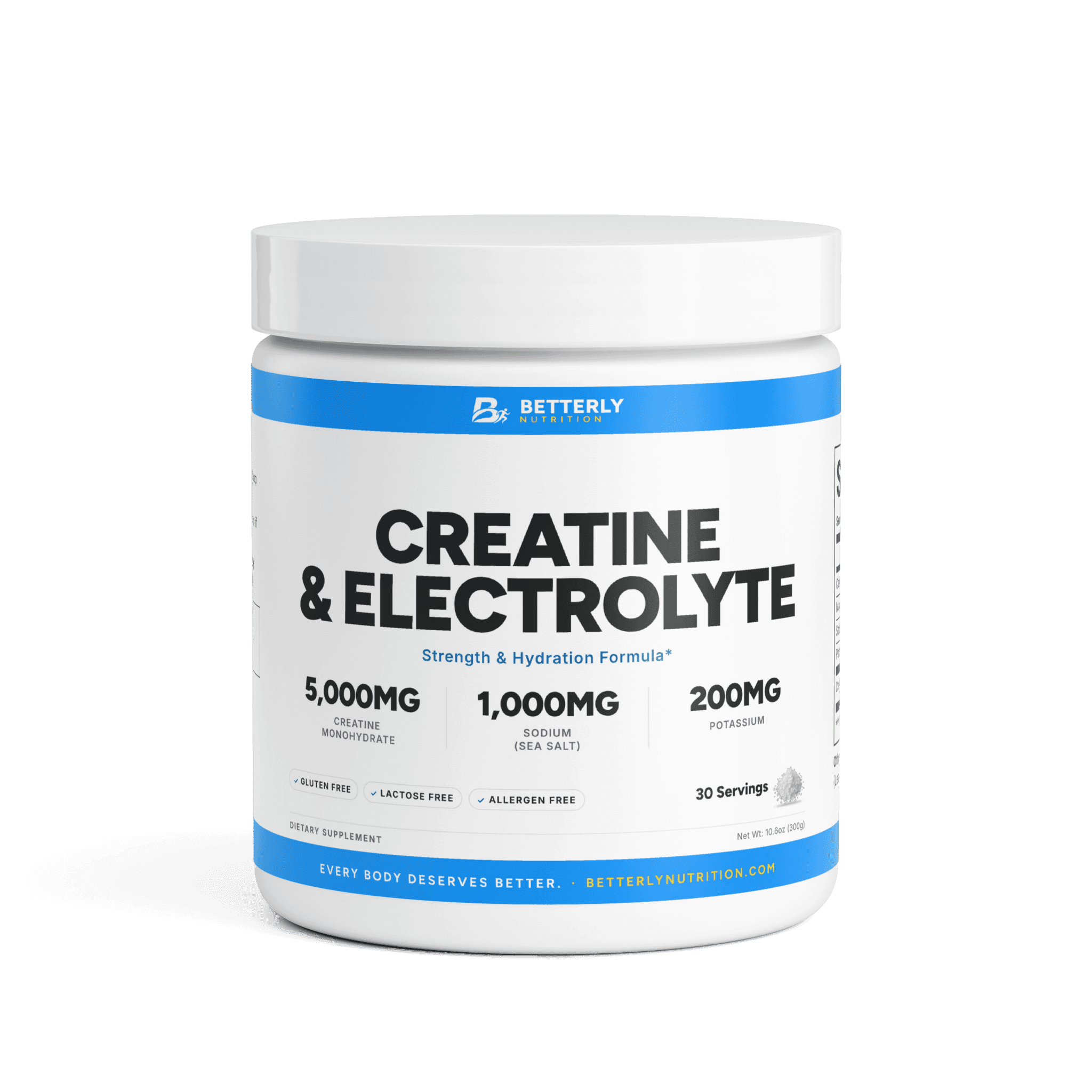
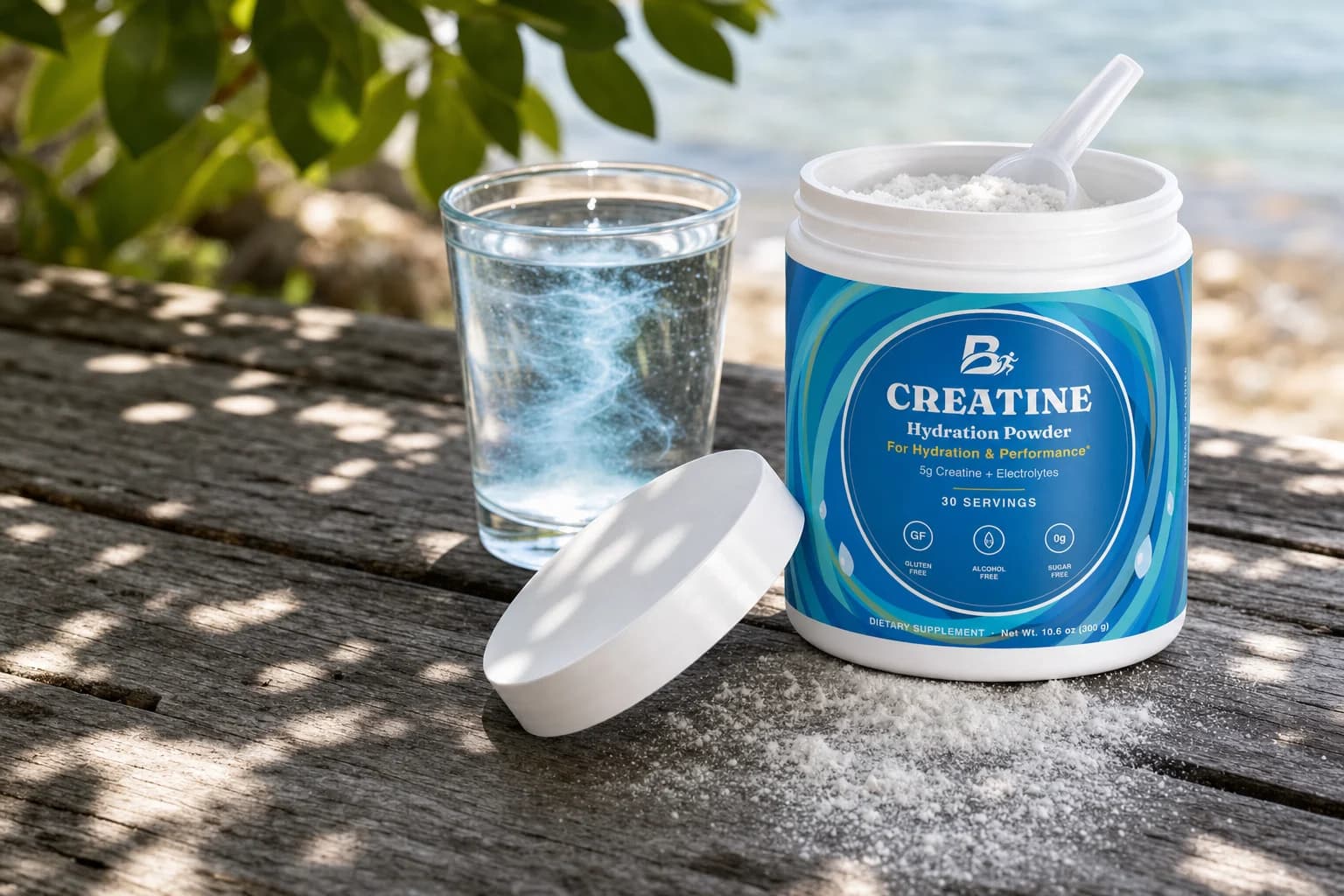
Rest days split daily products from training-day ones. The label on our Creatine Monohydrate Powder gives daily directions with no tie to training, at 5,000 mg of creatine monohydrate per 1 Scoop (5.6g) serving.
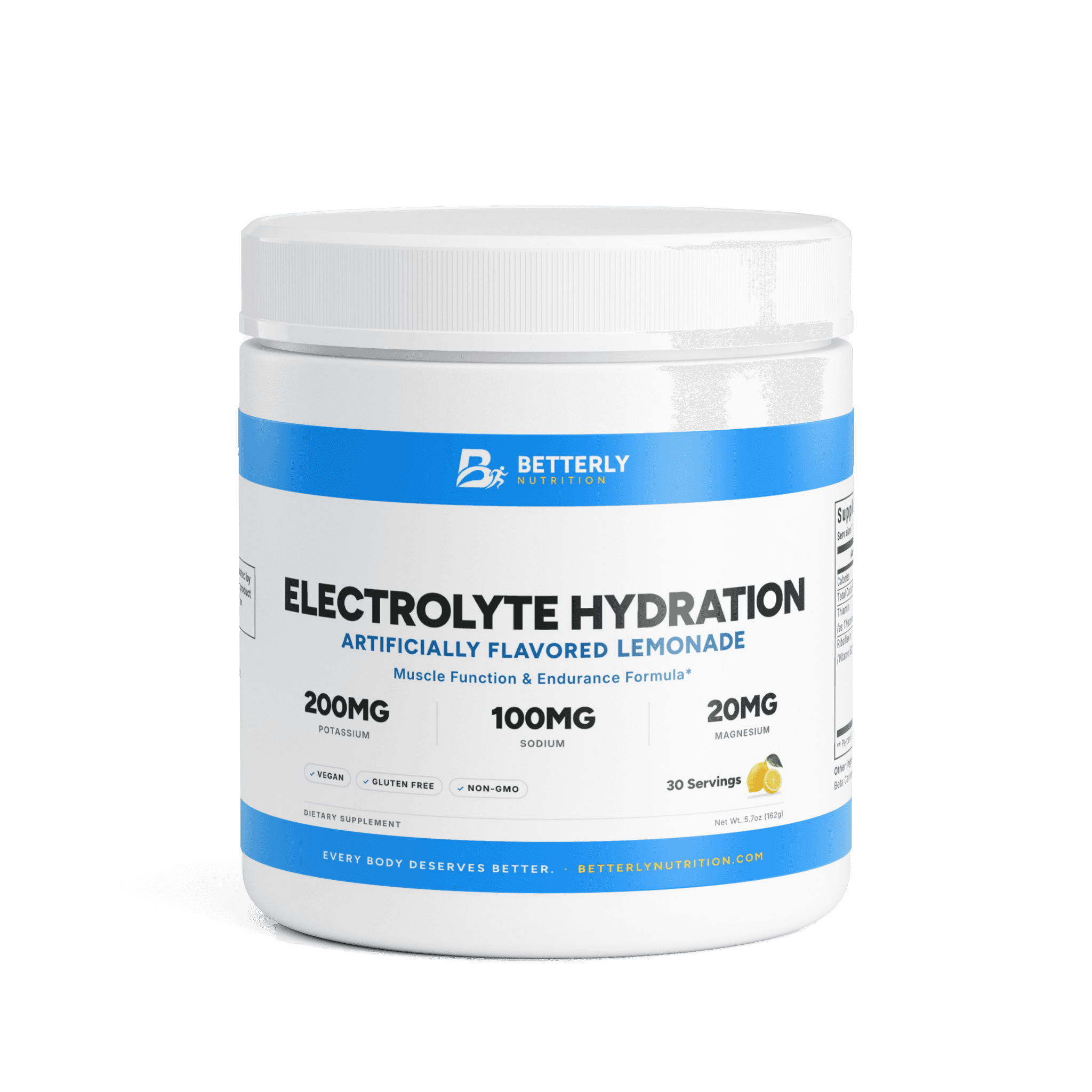
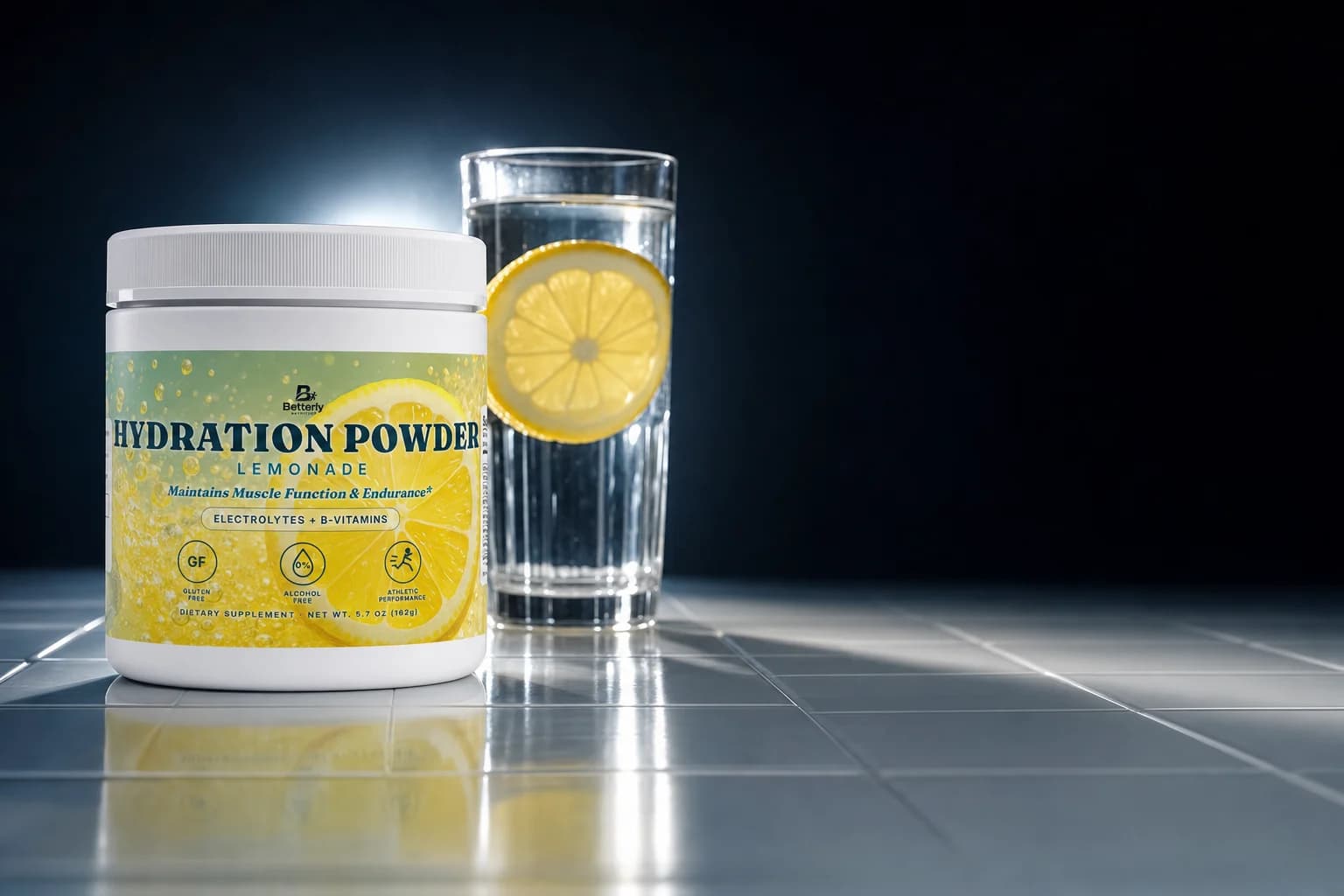
Our Electrolyte Hydration Powder (Lemonade) lists no caffeine, and its label says to mix 1 scoop with 14 to 20 fl oz of water. Each 1 Scoop (5.4g) serving also lists 5.20 mg NE of niacin, so one scoop of each product on a training day comes to about 25 mg, under the adult limit.
That label caps daily use at 5 scoops, though. On a pre-workout day, 2 hydration scoops plus 1 pre-workout scoop come to about 30 mg, the flushing level ODS cites, and 3 or more hydration scoops take you past 35 mg. Niacin from any multivitamin counts too.
From our shop: Electrolyte Hydration Powder (Lemonade) — 200 mg of potassium, 100 mg of sodium and 20 mg of magnesium per 1 Scoop (5.4g) serving, with no caffeine listed on its panel.
When can a beginner skip pre-workout?
You can skip pre-workout whenever caffeine doesn't suit your body, your schedule or your sport, and plenty of beginners fit at least one of those.
| If this is you | Pre-workout? | A better first move |
|---|---|---|
| New to training, rarely have caffeine | Not yet | Settle into a routine first |
| Pre-gym coffee already does the job | Not needed | Keep the coffee |
| You train within 6 hours of bed | Skip it | Train earlier or go without |
| You mostly want creatine | Not for that | A daily creatine scoop |
| You compete in a tested sport | Check first | Read your sport's rules |
The 6-hour row follows MedlinePlus's 4-to-6-hour window for caffeine's effects. If creatine is the real draw, our guide to choosing pre-workout, creatine or both helps you choose.
Competitive athletes have one more check. ODS notes that the National Collegiate Athletic Association and the International Olympic Committee limit how much caffeine athletes can take before competing. Our tub carries no banned-substance certification.
Our Performance Essentials collection shows the pre-workout beside creatine and electrolyte powders.
Who should check with a healthcare provider first?
Talk to a healthcare provider before your first scoop of pre-workout if you take any prescription or over-the-counter medicine, have a medical condition, are pregnant or nursing, or are under 18.
Our label's caution reads: "Do not exceed recommended dose. Consult a physician if pregnant, nursing, under 18, or have a medical condition." ODS adds that performance supplements are, in most cases, for adults only.
The FDA says people differ widely in caffeine sensitivity and clearance, partly because of body weight, medicines and health conditions. Scheduled surgery is another reason to ask first. Bring the whole panel, blend line included, so your provider can look up each ingredient.
FAQ: pre-workout for beginners
How many grams of pre-workout should a beginner take?
A beginner taking Betterly's pre-workout should start with 10 g, which is 1 scoop and the serving size printed on the panel. That scoop carries 175 mg of caffeine. Other brands use different scoop sizes and caffeine amounts, so read the serving size and caffeine line on any tub instead of going by grams alone.
Why can't I feel my pre-workout?
Not feeling a pre-workout can be normal, because the NIH Office of Dietary Supplements says people respond to caffeine differently and it doesn't help everyone's performance. Don't add a second scoop mid-workout, since that stacks caffeine and pushes niacin past the adult upper limit. If one scoop does nothing you care about, that's a fair reason to stop buying it.
Should you take pre-workout before cardio?
Yes, pre-workout can suit cardio, since the NIH Office of Dietary Supplements names distance running and other endurance activities as where caffeine is most likely to help. Take it the same way you would before lifting: 1 scoop, 30 minutes ahead, and not late in the day. Longer sessions usually mean more sweat, so drink water before and during. Our electrolytes primer covers when plain water is enough.
Is pre-workout different for women and men?
No, pre-workout doesn't come in a women's or men's version, and Betterly's label gives every adult the same directions. Body size matters more. The NIH Office of Dietary Supplements describes performance caffeine per kilogram of body weight, so a fixed 175 mg scoop is a larger share for a smaller person, which is one more reason to start with 1 scoop. Anyone pregnant, nursing or trying to conceive should ask a provider first.
Can pre-workout interact with medications?
Yes, pre-workout can interact with some medications, and caffeine is one ingredient where the NIH Office of Dietary Supplements gives a specific example. It says cimetidine (sold as Tagamet HB) can slow how fast your body clears caffeine and raise the chance of side effects. Our label names more than two dozen ingredients, so show it to your pharmacist first.
Sources
- NIH Office of Dietary Supplements: Dietary Supplements for Exercise and Athletic Performance, Fact Sheet for Consumers
- NIH Office of Dietary Supplements: Niacin, Fact Sheet for Consumers
- U.S. Food and Drug Administration: Spilling the Beans: How Much Caffeine is Too Much?
- MedlinePlus, National Library of Medicine: Caffeine
If this left you looking for somewhere to start, read pre-workout with 175 mg of caffeine per scoop — its amounts per serving are listed on the page. For the practical questions this raises, how dosing, sourcing and subscriptions work is answered in one place.