On this page
- Key takeaways
- What are common pre-workout side effects?
- Why does pre-workout turn your skin red, hot or itchy?
- What does a pre-workout crash feel like, and how do you avoid one?
- How late can you take pre-workout without losing sleep?
- Why does pre-workout upset your stomach or send you to the bathroom?
- What are the long-term side effects of pre-workout?
- How do you take pre-workout to keep side effects down?
- When don't you need pre-workout at all?
- Who should check with a healthcare provider first?
- FAQ: pre-workout side effects
- Sources
The short answer: Most pre-workout side effects come from two rows on the Supplement Facts panel. Caffeine is behind the jitters, the crash, a sour stomach and trouble falling asleep, while beta-alanine causes a prickly tingle the NIH doesn't consider harmful. Each 10 g (1 scoop) serving of ours has 175 mg of caffeine and 750 mg of beta-alanine. The fixes: one scoop, an early cut-off and enough liquid.
Key takeaways
- Caffeine sits behind most pre-workout complaints, from jitters to lost sleep, and one 10 g (1 scoop) serving of ours carries 175 mg.
- A pins-and-needles tingle usually means beta-alanine, while skin that turns red, hot and itchy points to niacin.
- Our label allows up to 2 scoops a day, but that doubles niacin to 40 mg, past the 35 mg a day the NIH lists as the adult upper limit for supplement niacin, so we recommend 1.
- The National Heart, Lung, and Blood Institute says caffeine can act for up to 8 hours, so plan your last scoop for 8 hours before bedtime.
We sell every product in this guide, a pre-workout plus two options with less caffeine or none listed, so we've matched each side effect to a row on our own panels, including two rows that don't flatter the pre-workout.
What are common pre-workout side effects?
Common pre-workout side effects include jitters, tingly or flushed skin, an upset stomach, extra bathroom trips, trouble falling asleep and a slump a few hours later.
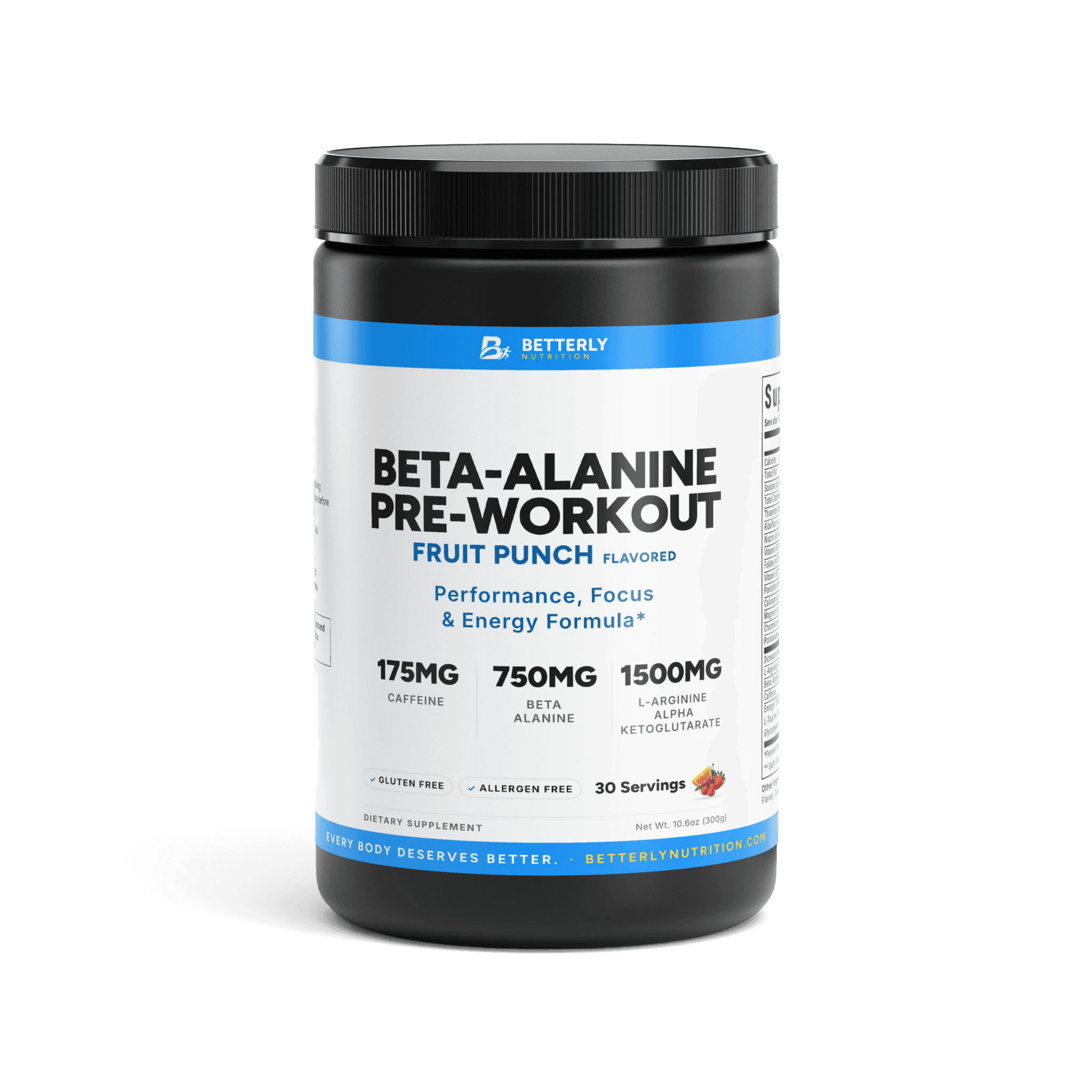
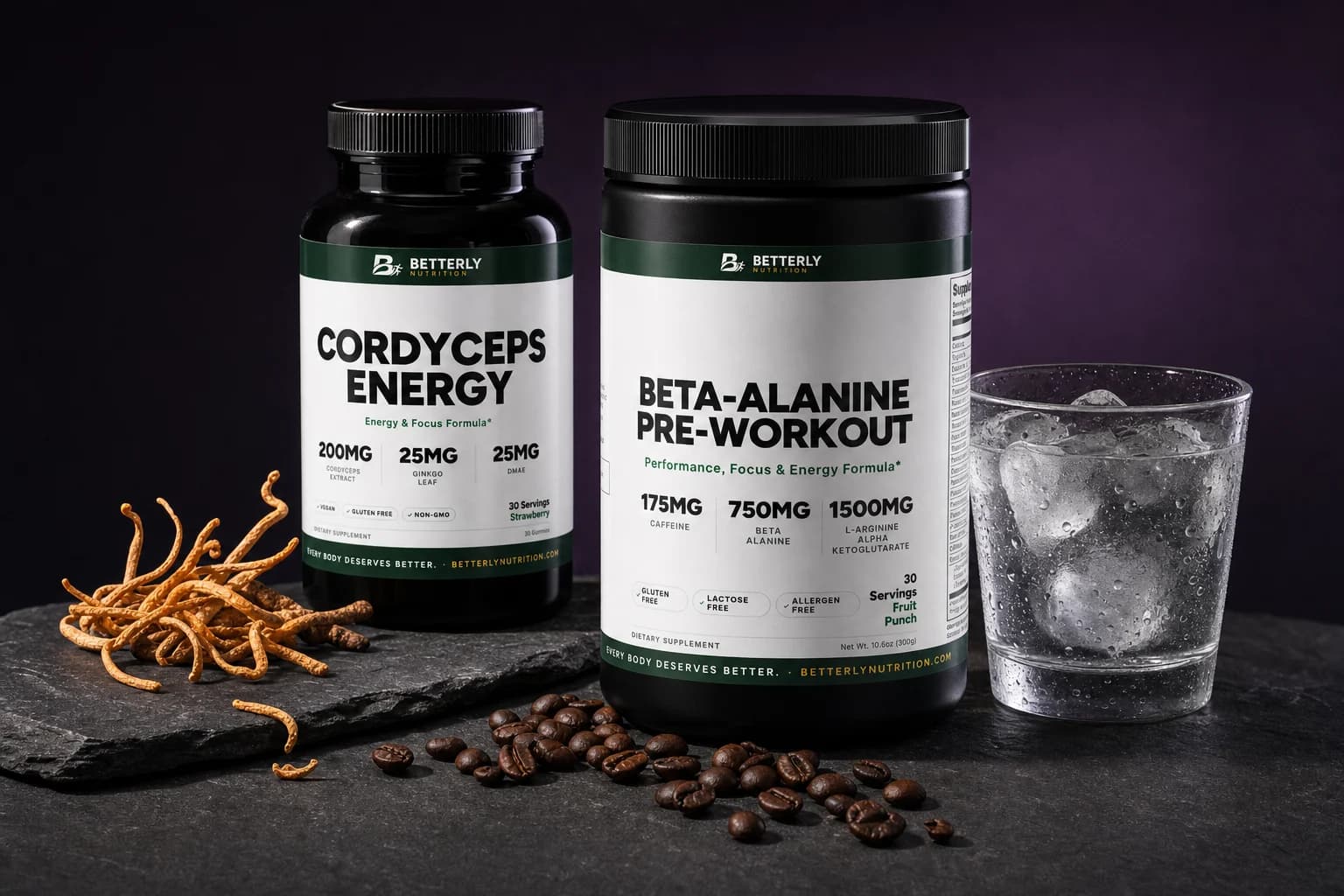
Each one maps to a row on our Beta-Alanine & Caffeine Pre-Workout Powder (Fruit Punch), per 10 g (1 scoop) serving.
| What you notice | Likely row on our panel | What to change |
|---|---|---|
| Shaky, wired, restless | Caffeine, 175 mg | Stay at 1 scoop; skip coffee beforehand |
| Pins-and-needles tingle | Beta Alanine, 750 mg | Usually nothing; never add a scoop |
| Red, hot, itchy skin | Niacin, 20 mg (125% DV) | Never 2 scoops; count other niacin |
| Upset stomach | Caffeine; citrulline in the blend | Mix in the full 6 to 8 oz |
| Peeing more | Caffeine | Sip water through the session |
| Trouble falling asleep | Caffeine | Last scoop 8 hours before bed |
| A slump hours later | Caffeine wearing off | 1 scoop, a real meal, enough sleep |
Caffeine appears in five of those seven rows, so the most useful change is the plainest: one scoop, with nothing else caffeinated on top.
MedlinePlus says too much caffeine can leave you restless and shaky, with headaches, dizziness or a racing heart. Our pre-workout vs energy drink comparison adds up a full day's caffeine, coffee and cans included.
A heartbeat that thumps or speeds up after a scoop is your signal to stop for the day and ask a healthcare provider before trying another.
Why does pre-workout turn your skin red, hot or itchy?
A red, hot or itchy flush after pre-workout points to niacin, which is vitamin B3, while a prickly tingle on its own usually comes from beta-alanine.
The NIH Office of Dietary Supplements (ODS) fact sheet on niacin says supplements with 30 mg or more of nicotinic acid, one of niacin's two main supplement forms, can turn the face, arms and chest red, with burning, tingling and itching. Headaches, rashes or dizziness can come with it.
Say the redness only shows up on days you took 2 scoops. Our panel prints "Niacin (as Niacin)" without naming the form, so we count all 40 mg in a double scoop as the kind that can flush. That total also tops the 35 mg a day ODS lists as the adult upper limit for supplement niacin, and it's the main reason we stop at 1 scoop.
A tingle with no flush is the beta-alanine story, told in full in our side-by-side of pre-workout and energy drinks. The ODS exercise and athletic performance fact sheet links that prickly feeling to 800 mg of beta-alanine and above and says it isn't considered a safety problem. Our scoop has 750 mg.
How do you tell which one you've got? Look in a mirror. ODS describes the beta-alanine effect as a feeling and mentions no color change, while its niacin description starts with skin turning red. A multivitamin or B-complex with niacin adds to the scoop's 20 mg.
Raised welts, swelling of the lips or face, or any trouble breathing is something else entirely. Stop and get emergency care.
What does a pre-workout crash feel like, and how do you avoid one?
A pre-workout crash is the tired, flat slump some people describe a few hours after a scoop. It isn't a medical term, and a few habits may make it smaller.
People who talk about a crash tend to mean heavy legs, a dull headache, a short fuse and fuzzy focus. Much of that overlaps with the caffeine withdrawal signs MedlinePlus lists: trouble concentrating, drowsiness, irritability, headaches and nausea.
Caffeine peaks in the bloodstream within an hour of drinking it, MedlinePlus says, and you may keep feeling it for 4 to 6 hours. So the lift from a 4 p.m. scoop may fade somewhere between 8 and 10 p.m.
That's also why pre-workout can leave you tired afterward: a hard session and a short night are still waiting once the caffeine fades. Sugar is an unlikely culprit with ours, since the panel lists just 2 g of total carbohydrate per scoop.
No formula can honestly promise a crash-free scoop. What may help: no second scoop, an early enough start that the fade lands while you're still up, food after training and a guarded bedtime. If the dip outweighs the lift, the fix is less caffeine, not more.
How late can you take pre-workout without losing sleep?
Take your last scoop of pre-workout 8 or more hours before bedtime, because the National Heart, Lung, and Blood Institute says caffeine can keep acting for up to 8 hours.
That NHLBI sleep-habits page flags even a late-afternoon coffee as enough to make falling asleep harder, and one scoop's 175 mg is well above the 85 to 100 mg ODS gives for a cup. We use the NHLBI's 8 hours over MedlinePlus's 4 to 6 for the extra margin.
The table also builds in the label's 30-minute lead time.
| Usual bedtime | Last scoop by | Latest workout start |
|---|---|---|
| 9:30 p.m. | 1:30 p.m. | 2:00 p.m. |
| 10:30 p.m. | 2:30 p.m. | 3:00 p.m. |
| 11:30 p.m. | 3:30 p.m. | 4:00 p.m. |
| 12:30 a.m. | 4:30 p.m. | 5:00 p.m. |
Unless you go to bed at 1:30 a.m. or later, a 6 p.m. session falls outside the window, so after-work lifters are usually better off without the stimulant scoop.
Why does pre-workout upset your stomach or send you to the bathroom?
Pre-workout can upset your stomach and send you to pee more because of caffeine, which MedlinePlus says raises stomach acid and acts as a diuretic.
A couple of other rows have been tied to stomach discomfort, too. On our panel, the blend's L-Citrulline Malate is one suspect: ODS notes some users report stomach discomfort with citrulline, and the blend hides its amount. ODS also lists GI distress as a rare reaction to creatine, and each scoop carries 1,500 mg of dicreatine malate.
Peeing more is caffeine's doing, but a sudden urge for a bowel movement is murkier: none of our sources pins it on one ingredient. What you control is the mix: the 6 to 8 ounces of cold beverage the label calls for, never dry. The label says nothing about food, so if an empty-stomach scoop sits badly, try a light snack first, or stop.
The other ingredients list dextrose, a sugar, and sucralose, a sweetener. If you avoid either, this tub isn't for you, and since the label never claims sugar-free, neither do we.
What are the long-term side effects of pre-workout?
The long-term side effects of pre-workout aren't well known, because the NIH Office of Dietary Supplements says most blends of these ingredients haven't been studied together.
Most brands skip human studies of their finished products, ODS adds, and so have we. What the sources do say:
- Whether daily beta-alanine is safe beyond several months is still an open question, per ODS.
- MedlinePlus counts dependency, needing more caffeine for the same effect, among the problems with too much of it. If one scoop stops doing much, take a break instead of adding a second; MedlinePlus says withdrawal symptoms usually ease after a couple of days.
- Taken daily, the label's 2-scoop maximum means 40 mg of niacin a day, above the adult upper limit.
- Our "Energy / Endurance / Focus Matrix" totals 550 mg across L-Taurine, Betaine Anhydrous, Waxy Maize, L-Citrulline Malate, Glycocyamine, Glucuronolactone and L-Tyrosine, with no individual amounts. For betaine, ODS says the research is too thin to call it safe for sure.
That blend is where our label falls short: with no per-ingredient amounts, no one can compare it with research doses. Our long-term rule: training days only, 1 scoop.
How do you take pre-workout to keep side effects down?
Take Betterly's pre-workout as one scoop in 6 to 8 ounces of a cold drink, 30 minutes before you train, and 8 or more hours before bed.
The label's suggested use: start with 1 scoop to check tolerance, then take 1 to 2 scoops in 6 to 8 ounces of cold beverage 30 minutes before the workout, never more than 2 scoops a day. How we'd apply it:
- Make the first scoop a test. Our guide to starting pre-workout walks through that first dose.
- Keep it at 1 scoop from then on. This is where we depart from the label, since a second scoop doubles niacin to 40 mg.
- Keep other caffeine out of the window, because coffee, soda and energy drinks all pile onto the 175 mg.
- Set a cut-off with the bedtime table above, and skip the scoop when a session starts late.
From our shop: Beta-Alanine & Caffeine Pre-Workout Powder (Fruit Punch) — 175 mg of caffeine, 750 mg of beta-alanine and 20 mg of niacin in each 10 g (1 scoop) serving, 30 servings to a tub.
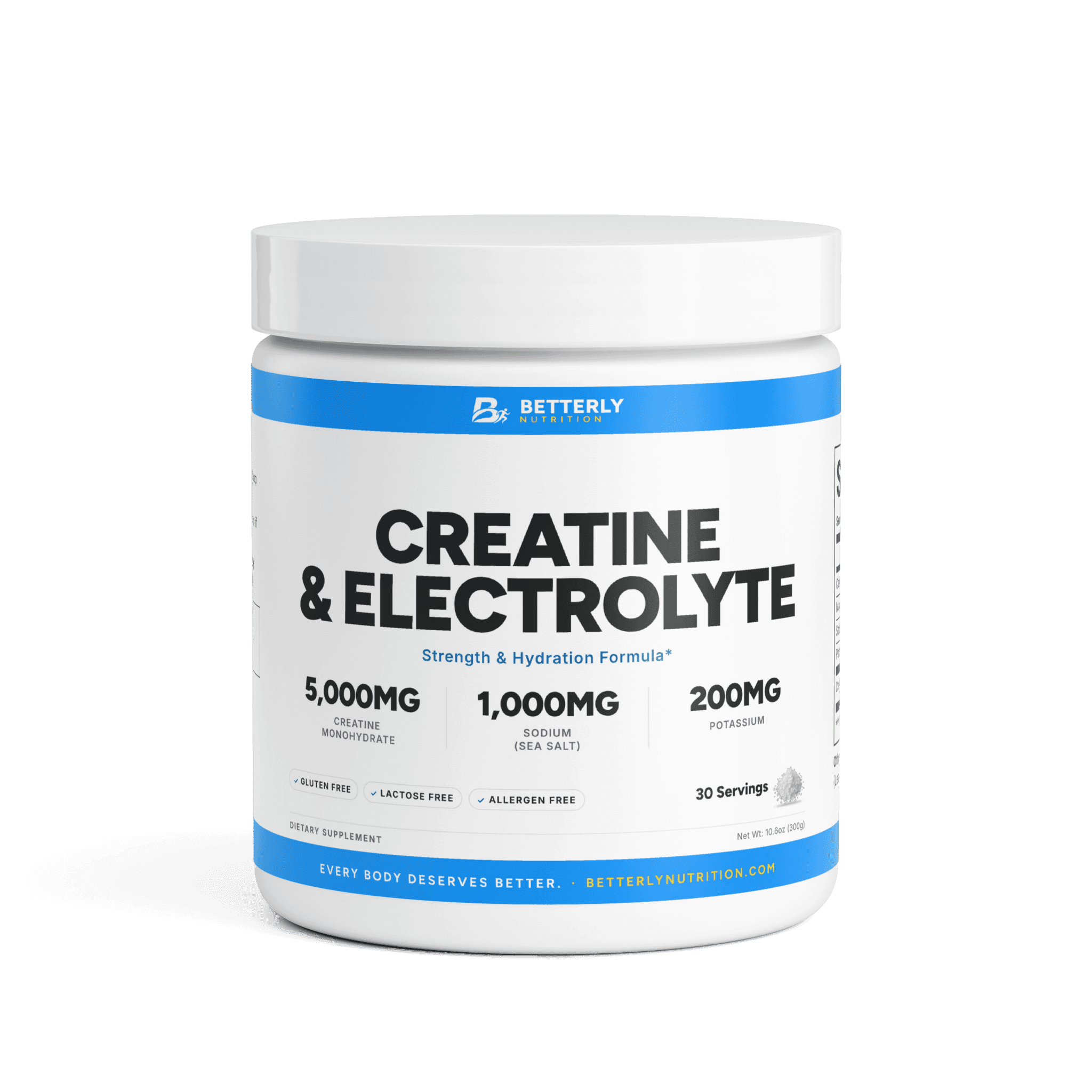
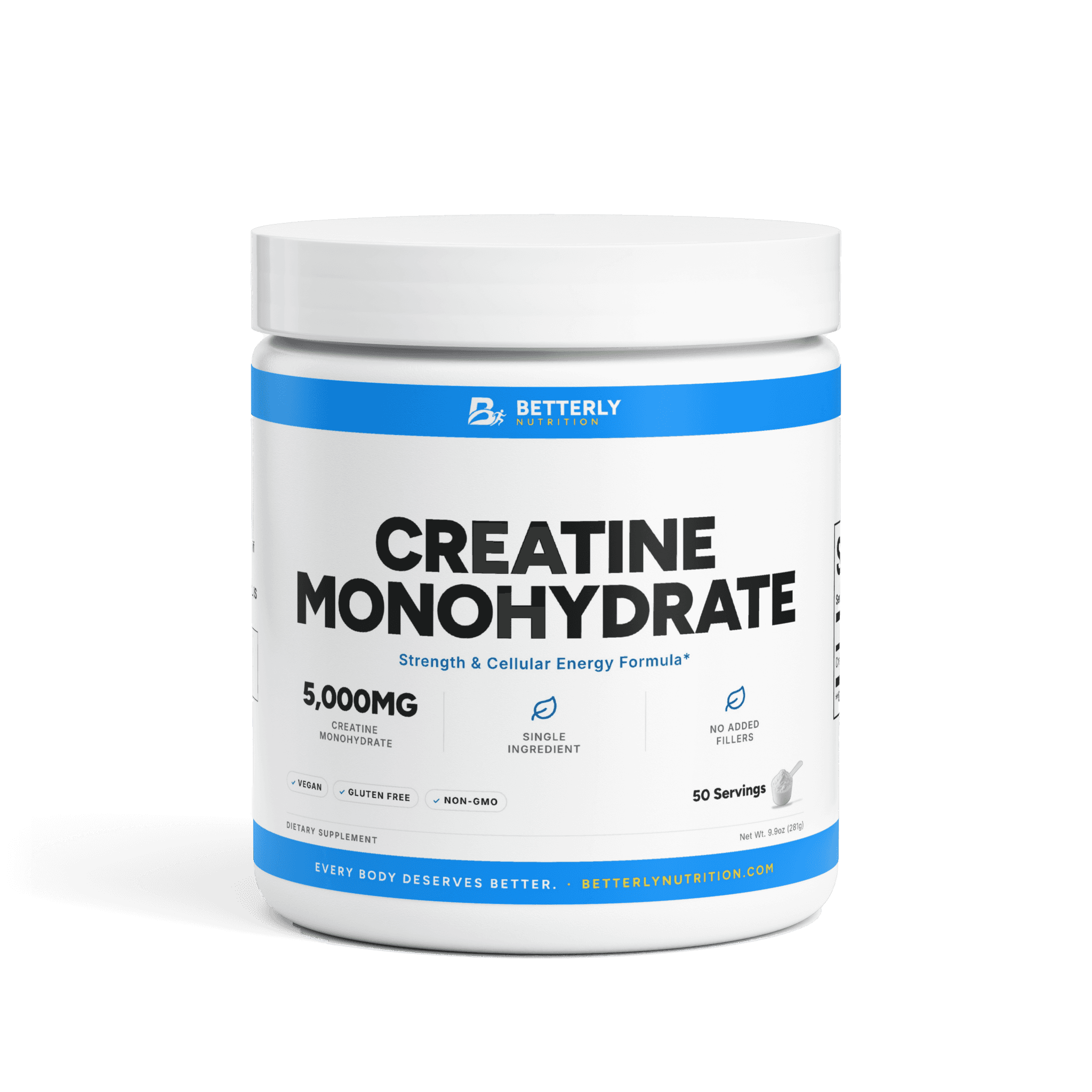
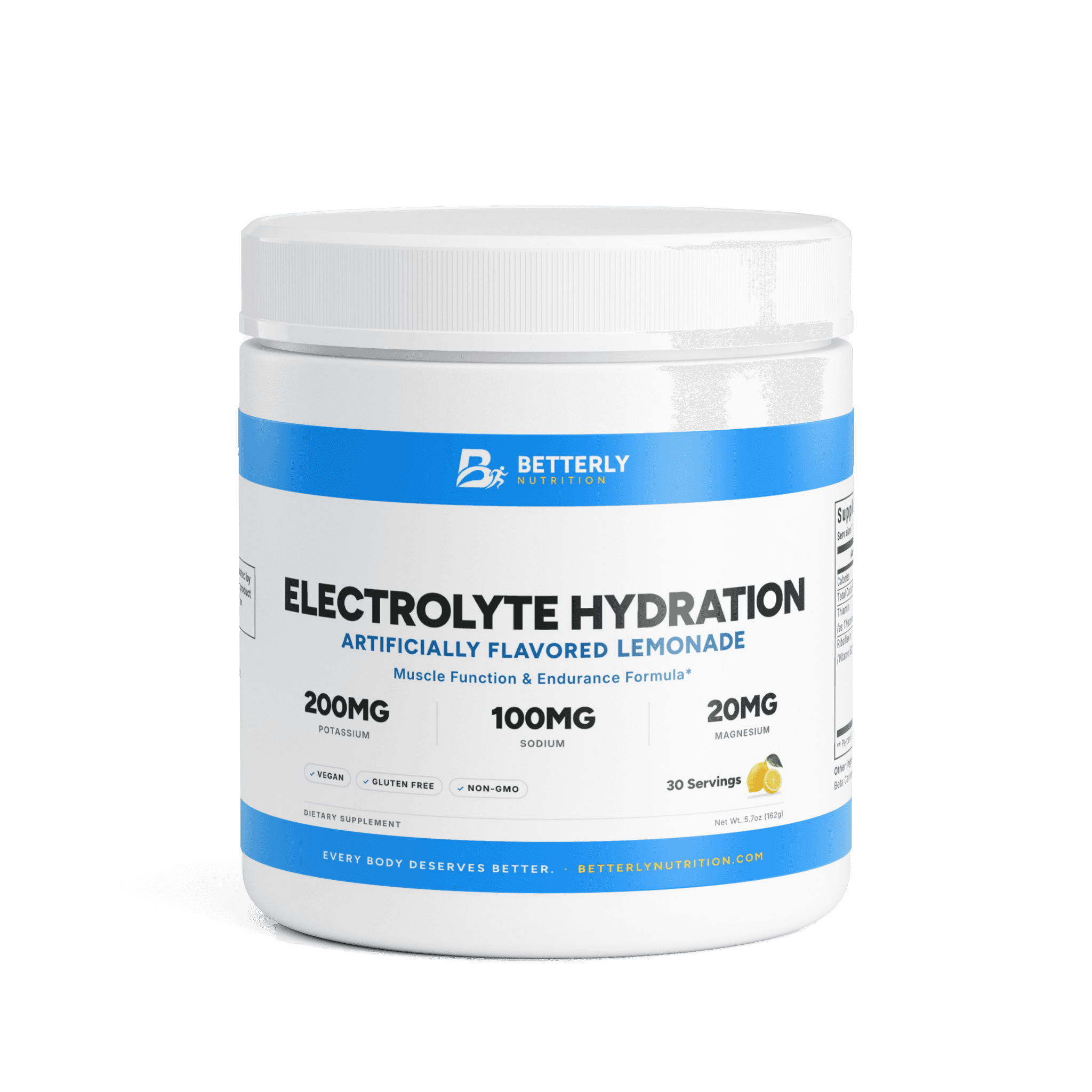
If you'd rather skip stimulants entirely, the creatine and electrolyte powders on our performance shelf list no caffeine.
When don't you need pre-workout at all?
You don't need pre-workout if a side effect keeps returning at 1 scoop, your training runs into the evening, or you're under 18.
The label offers nothing smaller than 1 scoop, so a flush, a sour stomach or a lost night that recurs at that dose means this product isn't a fit.
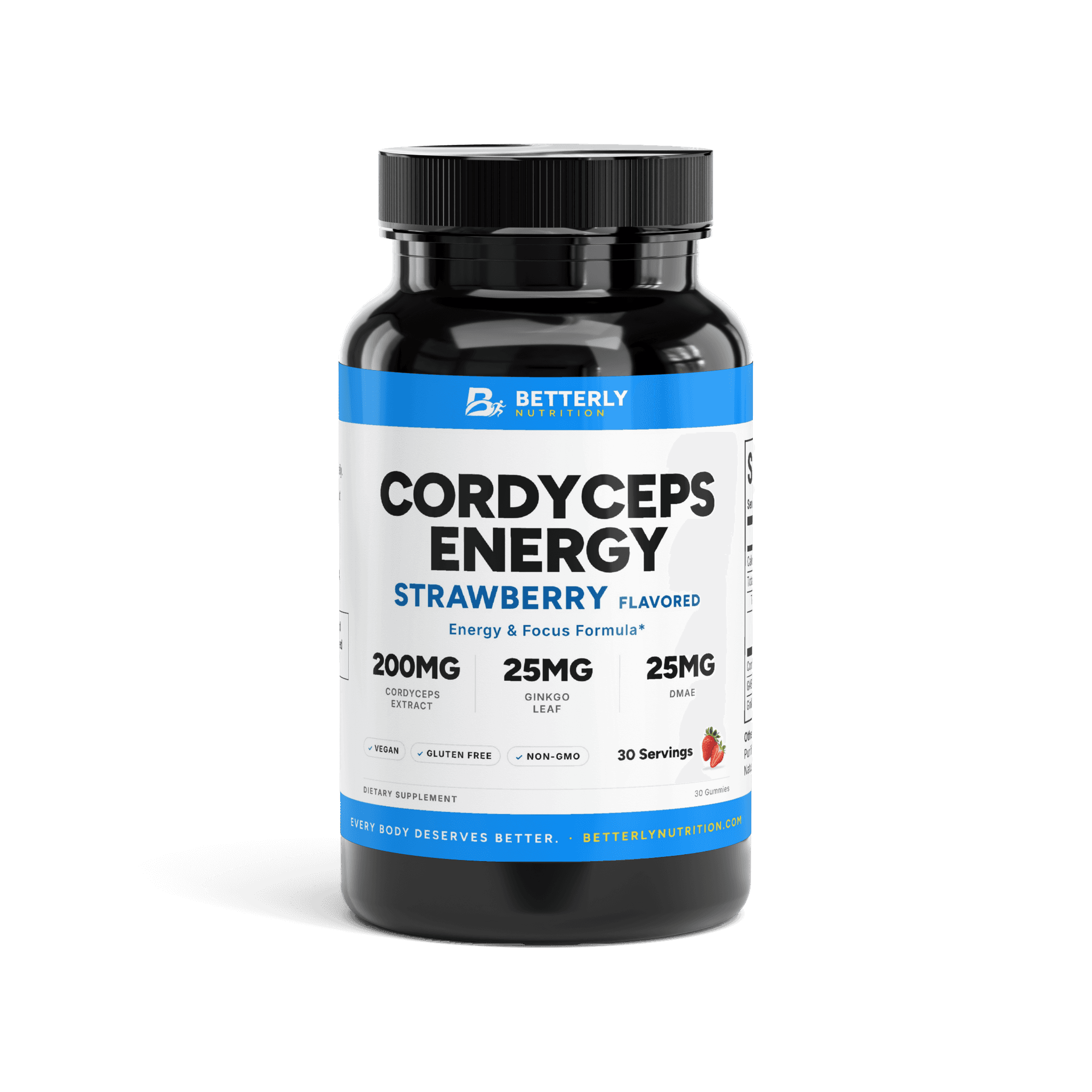
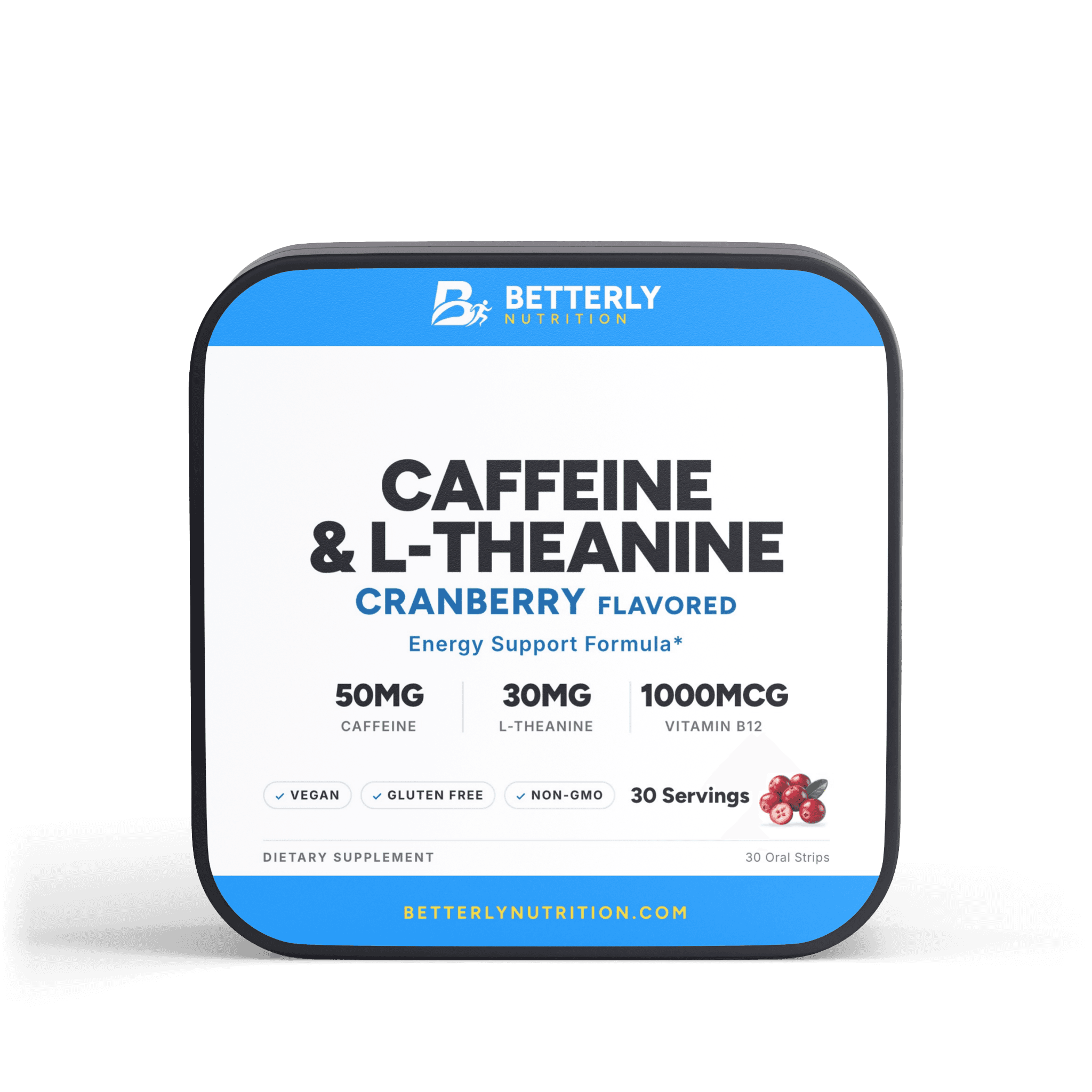
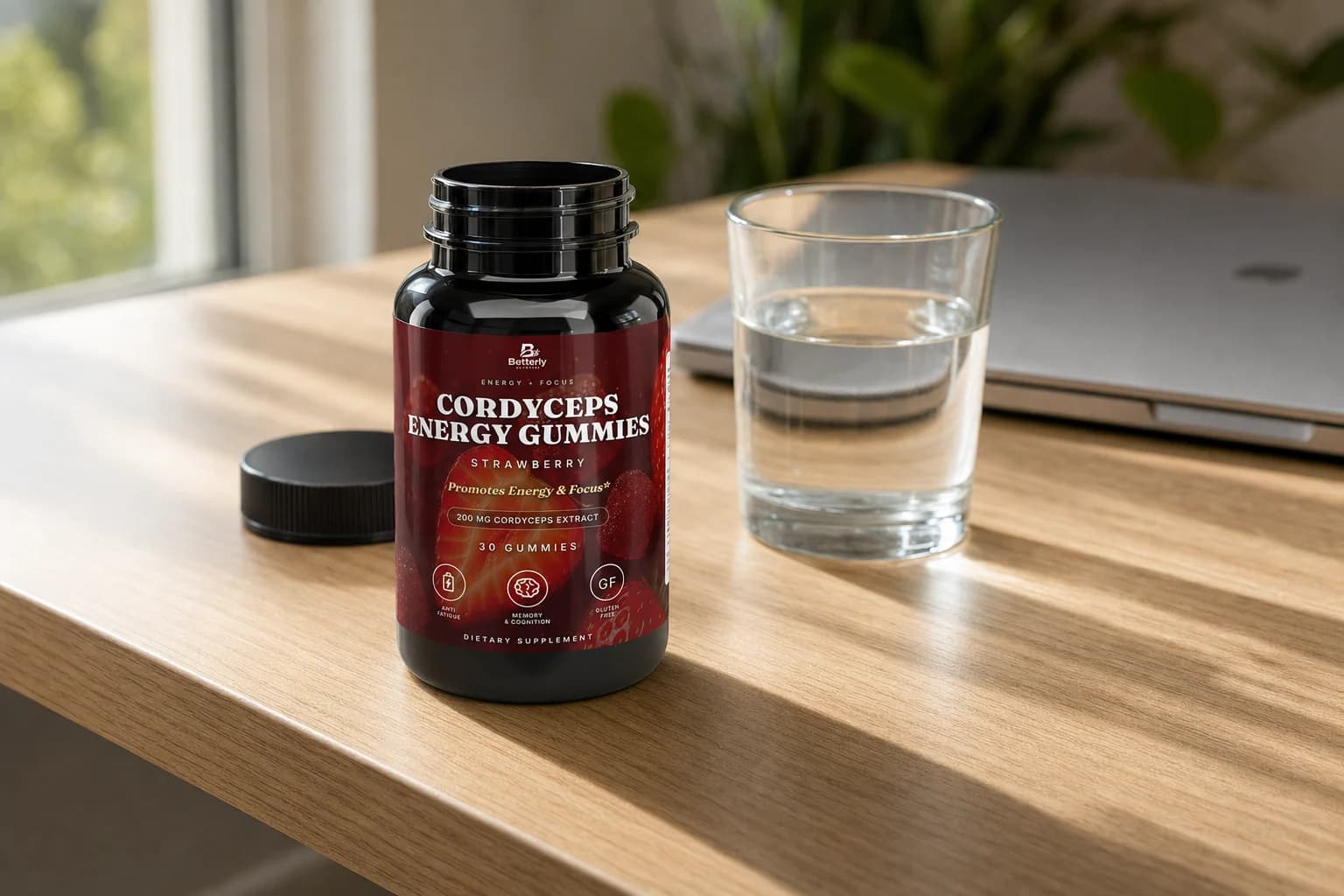
To step down instead, our Caffeine & L-Theanine Energy Strips carry 50 mg of caffeine per 1 oral strip serving, which beats guessing at a partial scoop. Our Cordyceps Mushroom Energy Gummies list no caffeine at all. Each 1-gummy serving has 200 mg of cordyceps extract, along with GABA, ginkgo leaf, L-glutamine and DMAE at 25 mg each, plus 2 g of added sugars.
| Option | Caffeine per serving | Label's suggested use |
|---|---|---|
| Pre-workout (Fruit Punch) | 175 mg per 10 g (1 scoop) | 1 to 2 scoops; we advise 1 |
| Energy strips | 50 mg per 1 oral strip | 1 strip a day |
| Cordyceps gummies | None listed | 1 to 2 gummies a day |
Moving down the table trims caffeine but drops the training ingredients, so neither of the other two is a pre-workout.
For more caffeine-free choices, see our honest look at caffeine-free energy supplements.
From our shop: Cordyceps Mushroom Energy Gummies — strawberry gummies with 200 mg of cordyceps extract and 25 mg of ginkgo leaf per 1-gummy serving, with caffeine absent from the panel.
Who should check with a healthcare provider first?
Ask a healthcare provider whether pre-workout suits you if you're pregnant or nursing, take any medication, manage a medical condition, or have surgery scheduled.
All three labels here print this caution: "Do not exceed recommended dose. Consult a physician if pregnant, nursing, under 18, or have a medical condition."
This pre-workout is for adults. ODS says performance supplements are generally for adults and advises teens to keep caffeine to 100 mg a day or less, well under one 175 mg scoop. It also warns these products might interact with prescription or over-the-counter medicines. Show your provider the full panel, blend and all, plus the gummies' panel if you're weighing them.
FAQ: pre-workout side effects
How long do pre-workout side effects last?
Most pre-workout side effects fade within hours. ODS says the beta-alanine tingle may stick around for 60 to 90 minutes. MedlinePlus puts caffeine's felt effects at 4 to 6 hours, and the NHLBI says they can stretch to 8, so sleep is the side effect with the longest reach. If a reaction lingers or feels severe, stop and see a healthcare provider.
Can pre-workout cause headaches?
Yes, pre-workout can cause headaches, and more than one row can play a part. MedlinePlus lists headaches both as a sign of too much caffeine and as a withdrawal symptom when regular caffeine stops. ODS adds headaches to the flushing effects of niacin supplements with 30 mg or more of nicotinic acid. One scoop of ours has 20 mg of niacin, so the second scoop is what crosses that line.
Why does pre-workout make you pee so much?
Pre-workout makes many people pee more because its caffeine is a diuretic. MedlinePlus explains that caffeine helps your body shed extra salt and water through urine. Keep sipping water while you train, and use the restroom before a long run or a class starts.
Does the pre-workout tingle mean it's working?
No, the pre-workout tingle doesn't show that a scoop is working. It's a side effect of beta-alanine, and ODS doesn't regard the feeling as dangerous. The performance findings ODS describes come from 1.6 to 6.4 g of beta-alanine a day over 4 to 8 weeks, well above the 750 mg in one of our scoops.
What should you do if you took too much pre-workout?
If you took more pre-workout than the label allows, stop for the day and skip any other caffeine. Watch for the too-much-caffeine effects MedlinePlus names, such as shakiness, dizziness or a fast heart rate. For advice, call your local poison control center. For trouble breathing or a heartbeat that won't settle, call 911.
Sources
- NIH Office of Dietary Supplements: Dietary Supplements for Exercise and Athletic Performance, Fact Sheet for Consumers
- NIH Office of Dietary Supplements: Niacin, Fact Sheet for Consumers
- MedlinePlus, National Library of Medicine: Caffeine
- National Heart, Lung, and Blood Institute: Sleep Deprivation and Deficiency: Healthy Sleep Habits
If this left you looking for somewhere to start, read fruit punch pre-workout with 750 mg beta-alanine — its amounts per serving are listed on the page. For the practical questions this raises, how dosing, sourcing and subscriptions work is answered in one place.