On this page
- Why go caffeine-free in the first place?
- First: the habits that outperform any capsule
- What to look for in focus supplements without caffeine
- The best caffeine-free focus supplements, explained
- How to choose what's right for you
- How to use focus supplements well
- Who should check with a healthcare provider first
- Key takeaways
- FAQ: caffeine-free focus supplements
- Sources
Plenty of people love what caffeine does for their focus and are less fond of everything that comes after — the jitters, the 2 p.m. slide, the extra cup that somehow does nothing. If that's you, this guide walks through the best caffeine-free focus supplements: what each one actually is, how strong the evidence really is, and how to fit them into a routine without expecting miracles. No stimulants, no hype — just the honest picture.
One thing worth saying up front: nothing on this list feels like caffeine. That's the point. Caffeine-free nootropics tend to work quietly and gradually, and the trade is a steadier kind of focus without the spike-and-crash cycle.
Why go caffeine-free in the first place?
Caffeine doesn't create energy — it hides tiredness. From the moment you wake, your brain steadily accumulates a molecule called adenosine, which builds what researchers call sleep pressure. Caffeine parks itself in adenosine's receptors so the "you're tired" signal can't get through. You feel alert because the message is blocked, not because anything got recharged.
Two problems follow. First, the adenosine doesn't go anywhere — it keeps building in the background, and when the caffeine wears off, hours of accumulated sleep pressure lands at once. That's the crash. Second, the same cup can gradually do less: MedlinePlus notes that too much caffeine can leave you needing more of it to get the same results. Plenty of daily coffee drinkers eventually find caffeine isn't lifting them above baseline anymore; it's just returning them to it.
Caffeine alternatives for focus take a different route. Instead of blocking a tiredness signal, the ingredients in this guide are associated with things like calm attention, normal memory function, and cellular energy production. None of that delivers a jolt — and none of it leaves a bill to pay at 2 p.m.
Non-stimulant focus support makes the most sense if:
- You're sensitive to caffeine. A racing heart and a wired-but-tired feeling aren't focus; they're noise.
- Your afternoon cup is costing you sleep. MedlinePlus notes you may keep feeling caffeine's effects for four to six hours, and a rough night makes tomorrow's focus worse — a loop worth breaking.
- Tolerance has crept up. If coffee mostly gets you back to "normal," a different approach may serve you better.
- You simply want fewer stimulants. Some people are cutting back on a provider's advice; others just prefer a quieter baseline.
First: the habits that outperform any capsule
We sell focus supplements, and we'll still tell you this plainly: no capsule outperforms sleep. Before you spend anything, give the basics an honest look.
- Protect your sleep. Focus is mostly a rested-brain feature. A consistent schedule does more than any ingredient below.
- Work in single-task blocks. Every tab-switch has a re-focusing cost. Twenty-five undistracted minutes beat two scattered hours.
- Move during the day. A short walk is one of the most reliable, fastest-acting focus tools there is.
- Get morning light. It anchors your internal clock, which pays off in daytime alertness.
- Put the phone in another room. Its mere presence pulls attention, even face-down.
We've written a full guide to this — natural ways to support focus — and it's genuinely the best place to start. Supplements are the supporting cast, never the lead.
What to look for in focus supplements without caffeine
A few honest shopping rules before the roundup:
- Confirm "caffeine-free" is actually true. Plenty of focus blends contain caffeine under other names — guarana, green tea extract, yerba mate. Read the ingredient list, not the front of the bag.
- Insist on printed doses. If a label hides amounts inside a "proprietary blend" with no numbers, you can't compare it to anything — including the research. Some Betterly formulas use a blend too, and those panels print the blend's total rather than each amount, so check the panel before you buy.
- Prefer fewer ingredients while you're learning. A single ingredient, or a small clearly-labeled blend, makes it possible to tell what's actually helping.
- Set a realistic timeline. Some ingredients here were studied over 8 to 12 weeks rather than days. Knowing which ones they are saves you from quitting a slow ingredient too early.
Full disclosure: our own GABA, L-Tyrosine & Caffeine Capsules pair bacopa and Alpha GPC with caffeine — deliberately, for people who want their stimulant with backup. It's a thoughtful formula, and it does not belong in this roundup. Nothing below lists caffeine on its panel.
The best caffeine-free focus supplements, explained
Lion's mane mushroom
Lion's mane is the most talked-about mushroom in the focus world, and the interesting part is why. It contains compounds called hericenones and erinacines, which have drawn scientific interest for a possible link to nerve growth factor — a protein involved in the growth and maintenance of nerve cells. That mechanism is genuinely intriguing.
The honest caveat: the human evidence so far is small, short, and mixed, and it doesn't all point the same way. If you try it, think of it as quiet background support, not a felt effect.
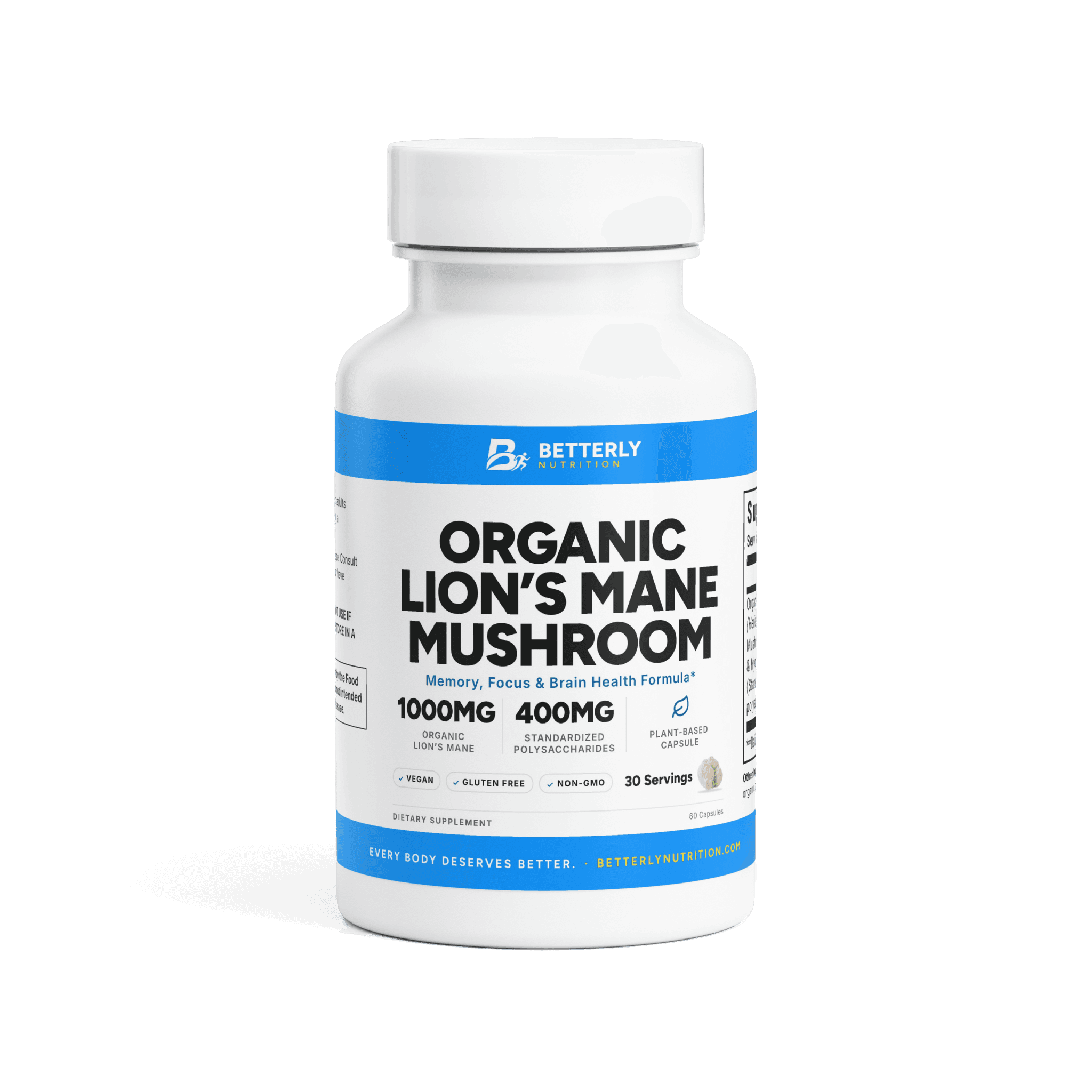
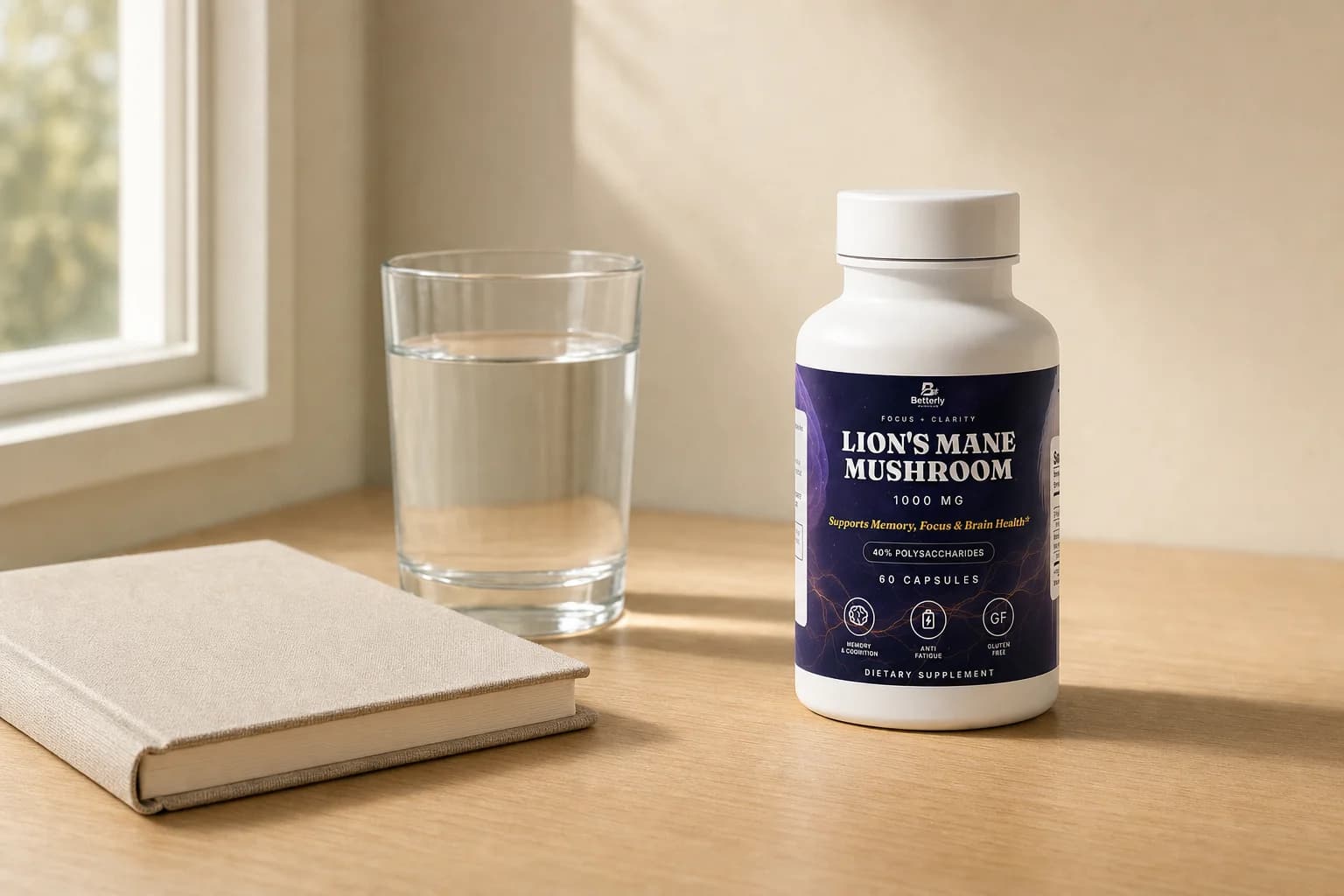
Our Organic Lion's Mane Mushroom Capsules deliver 1,000 mg of lion's mane — fruiting body and mycelium, standardized to 40% polysaccharides — per two-capsule serving, 60 vegan capsules, dose printed on the label.
L-theanine
L-theanine is an amino acid found naturally in tea leaves, and it's the gentlest option on this list. L-theanine for focus is associated with alpha brain-wave activity — the state people describe as calm, settled attention — and with relaxed alertness rather than sedation.
Worth knowing: much of the famous L-theanine research actually studied it paired with caffeine, where it appears to smooth caffeine's rougher edges. On its own, the evidence is thinner and the effect is modest — think "less mental static," not "sharpened blade." If you're keeping some coffee in your life, that pairing is a strategy of its own, and we've covered it in how to pair L-theanine with coffee for calm focus.
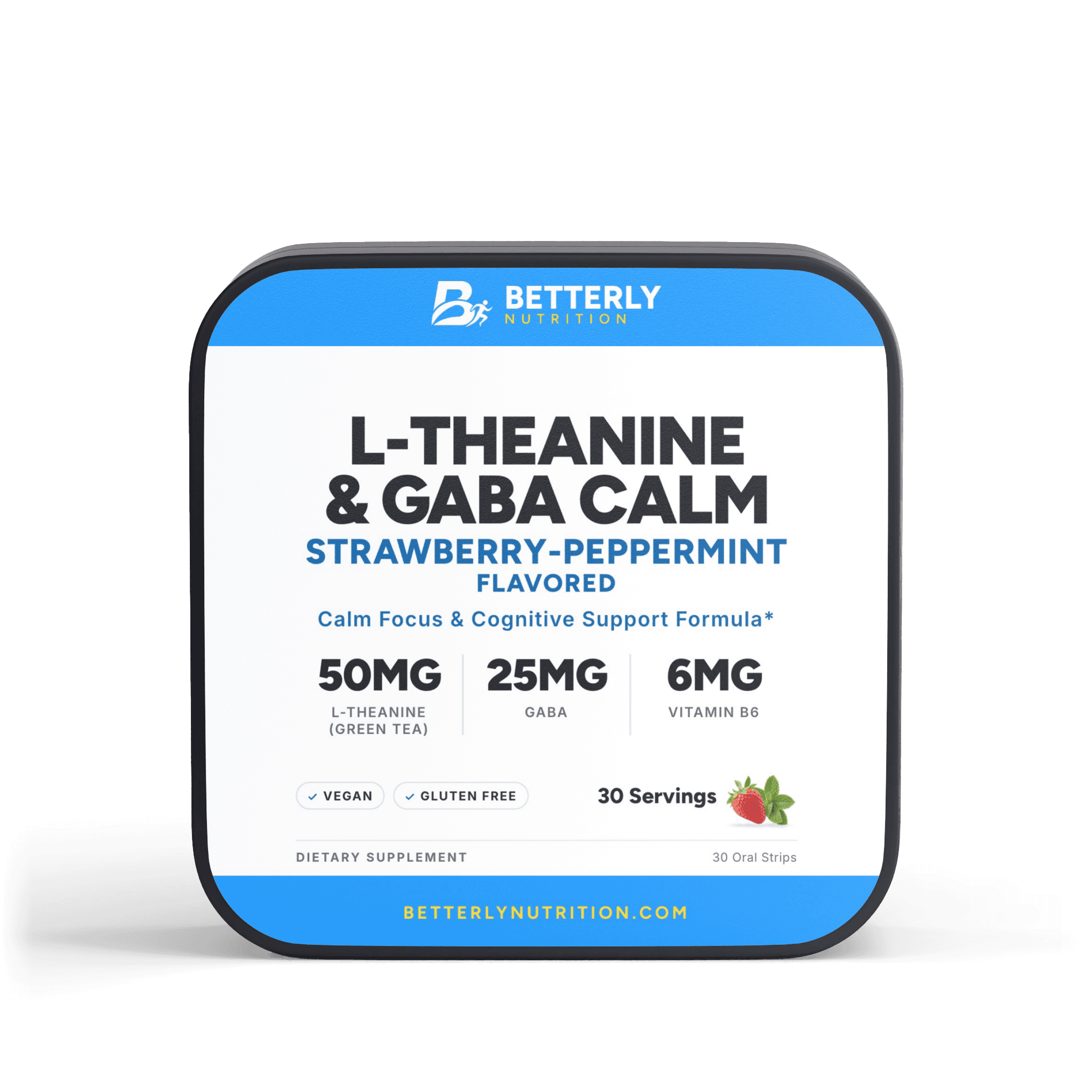
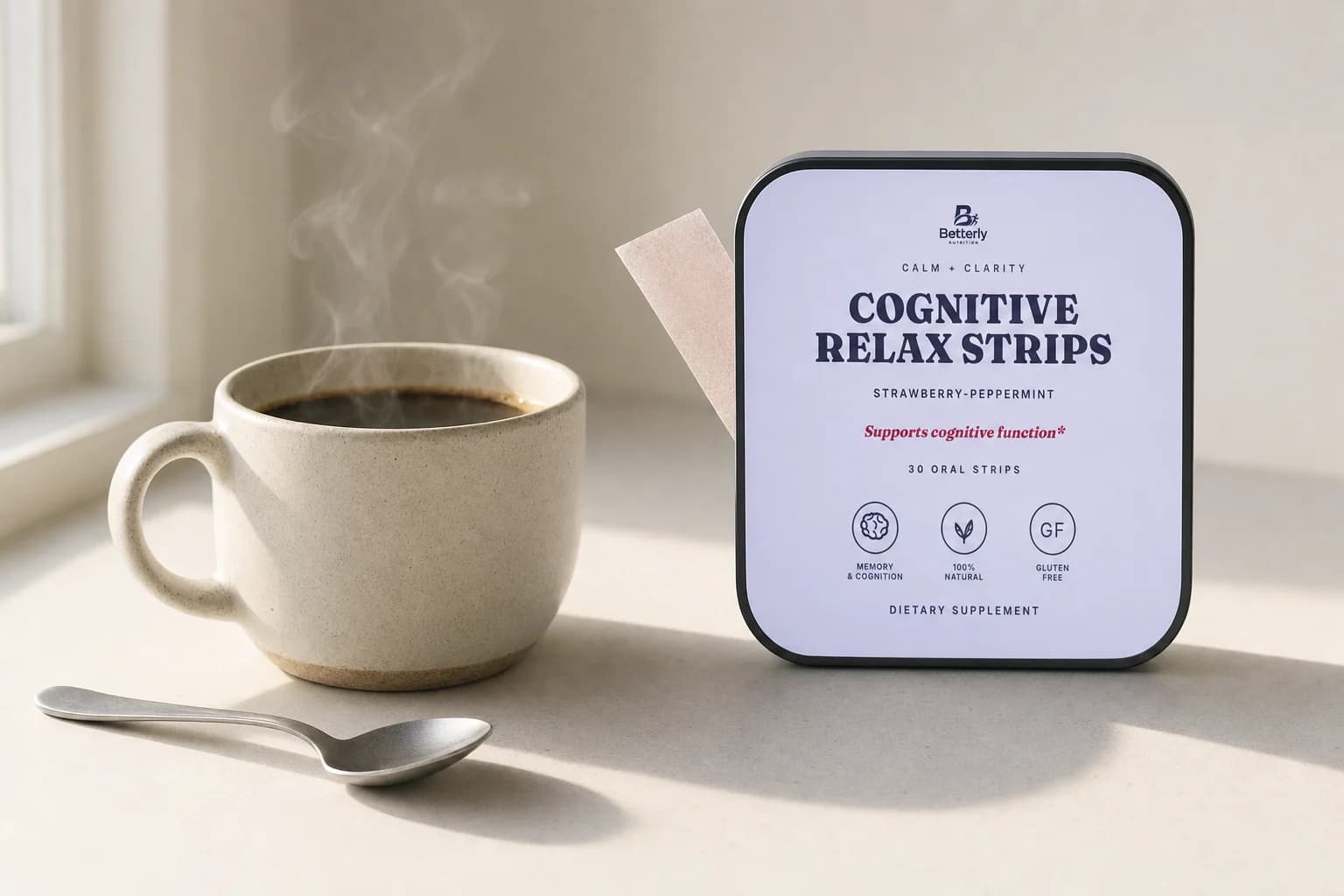
If you want a format with no caffeine on its panel, our L-Theanine & GABA Calm Strips combine 50 mg of green-tea-sourced L-theanine with 25 mg of GABA per 1-strip serving, 30 strips per pack, an easy option for a racing mind on a deadline afternoon.
Bacopa monnieri and gotu kola
Bacopa is the tortoise of this list. It's an herb with a long history in Ayurvedic tradition, and it's one of the more researched herbal nootropics, mostly in trials of a standardized extract that looked at learning and memory. Not every trial agrees, and where effects appeared, they took the full study length to show up.
Gotu kola, its frequent companion, has been explored in small studies for alertness and mood, though a pooled analysis of trials found no difference from placebo on memory and thinking measures. Traditional use runs centuries deep; modern evidence is still thin. Think of it as a supporting player.
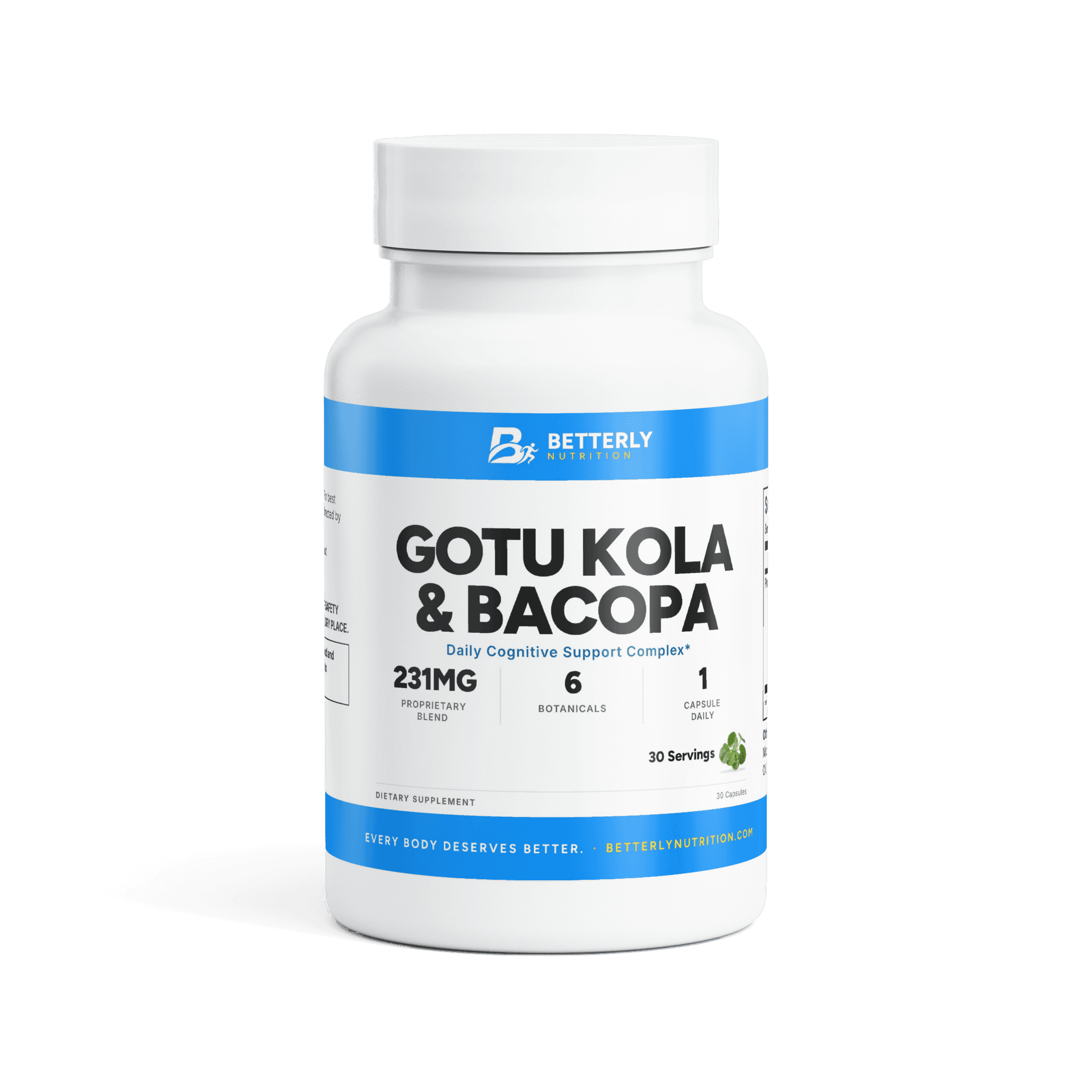
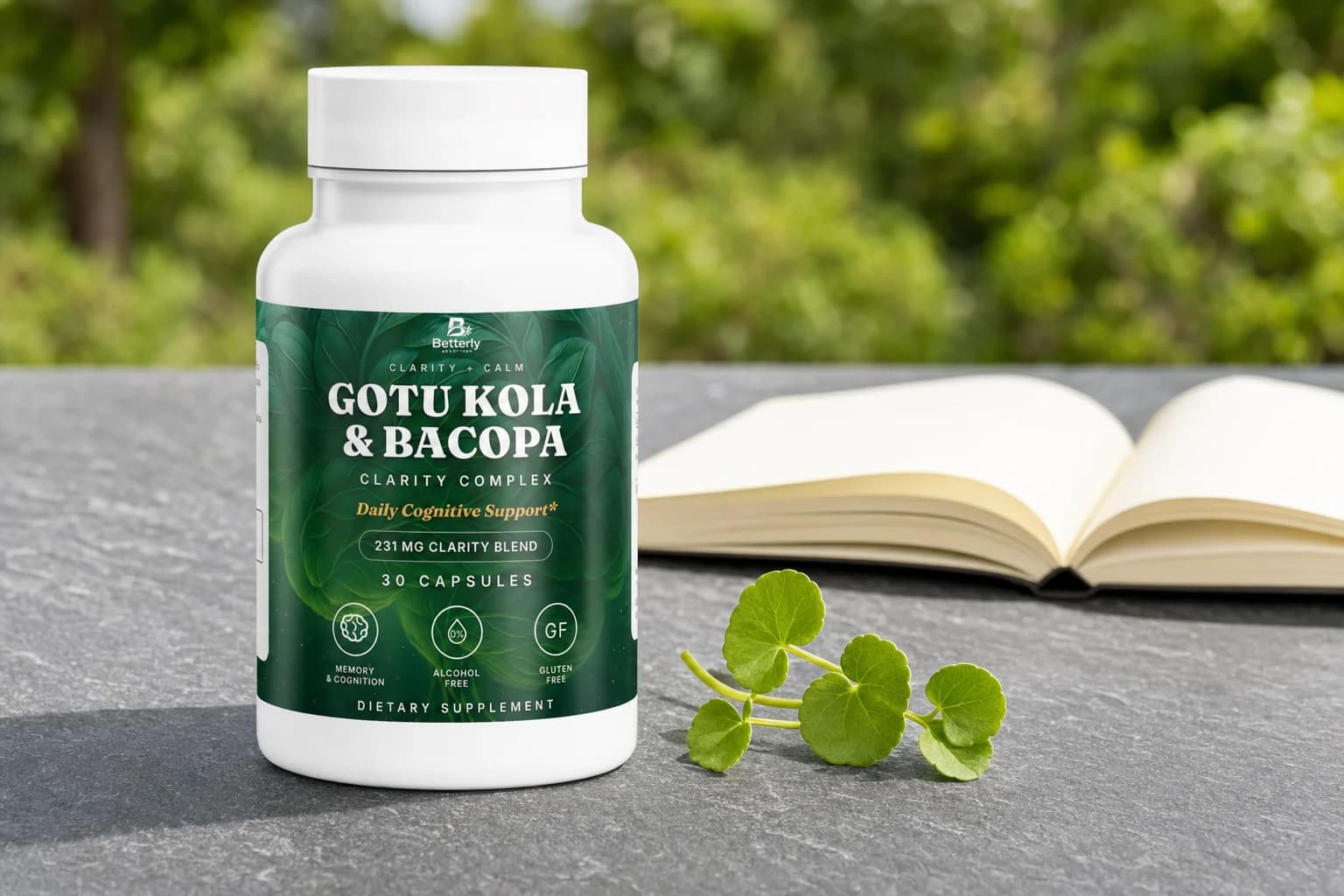
Our Gotu Kola & Bacopa Capsules bring both together in a 231 mg proprietary blend of six herbs per 1-capsule serving, 30 capsules per bottle. The panel prints the blend's total, not each herb's amount. The honest limit: its bacopa is a whole-herb powder, not a standardized extract, and it shares that 231 mg with five other herbs, so the panel doesn't show how much bacopa each capsule holds.
Mushroom blends
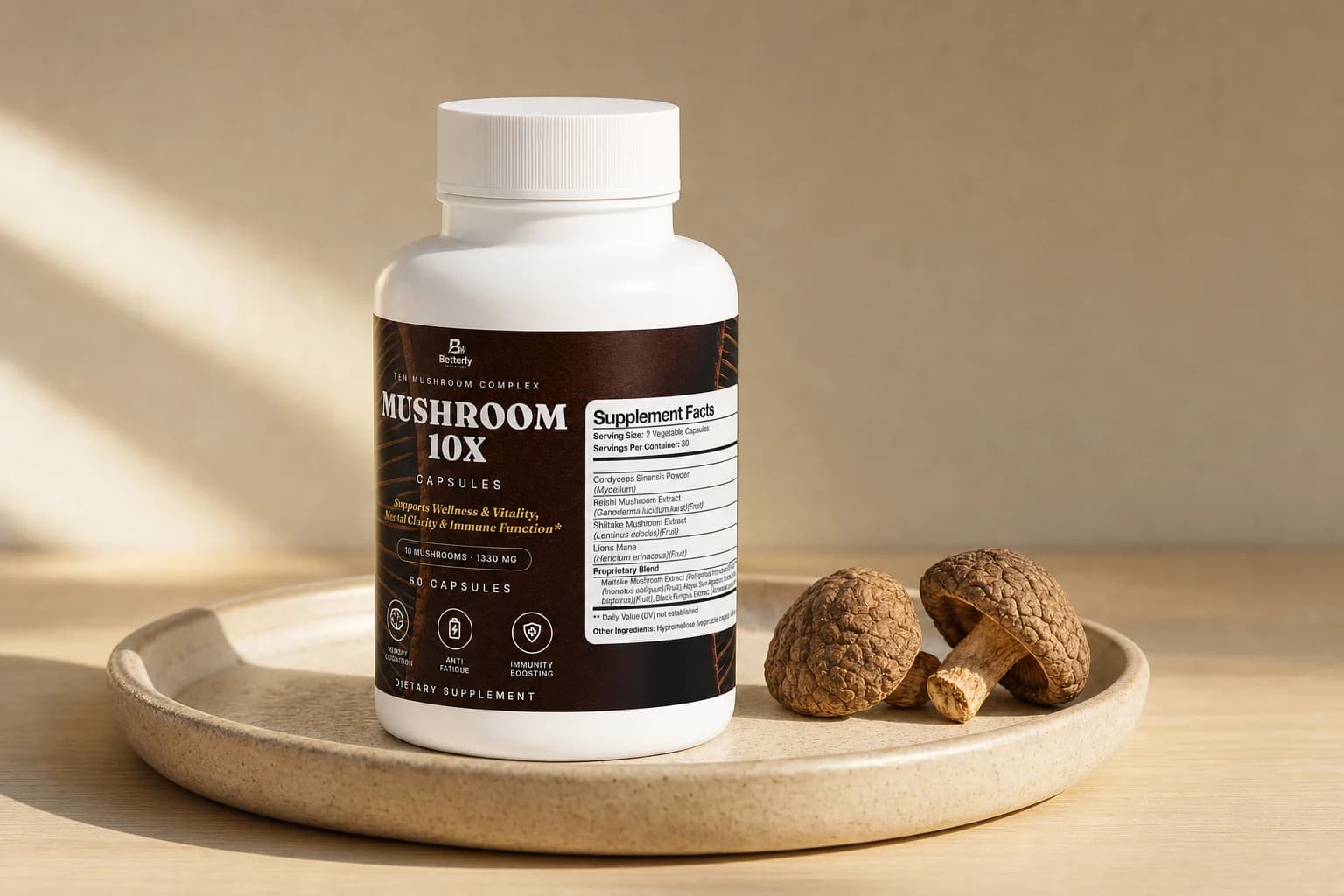
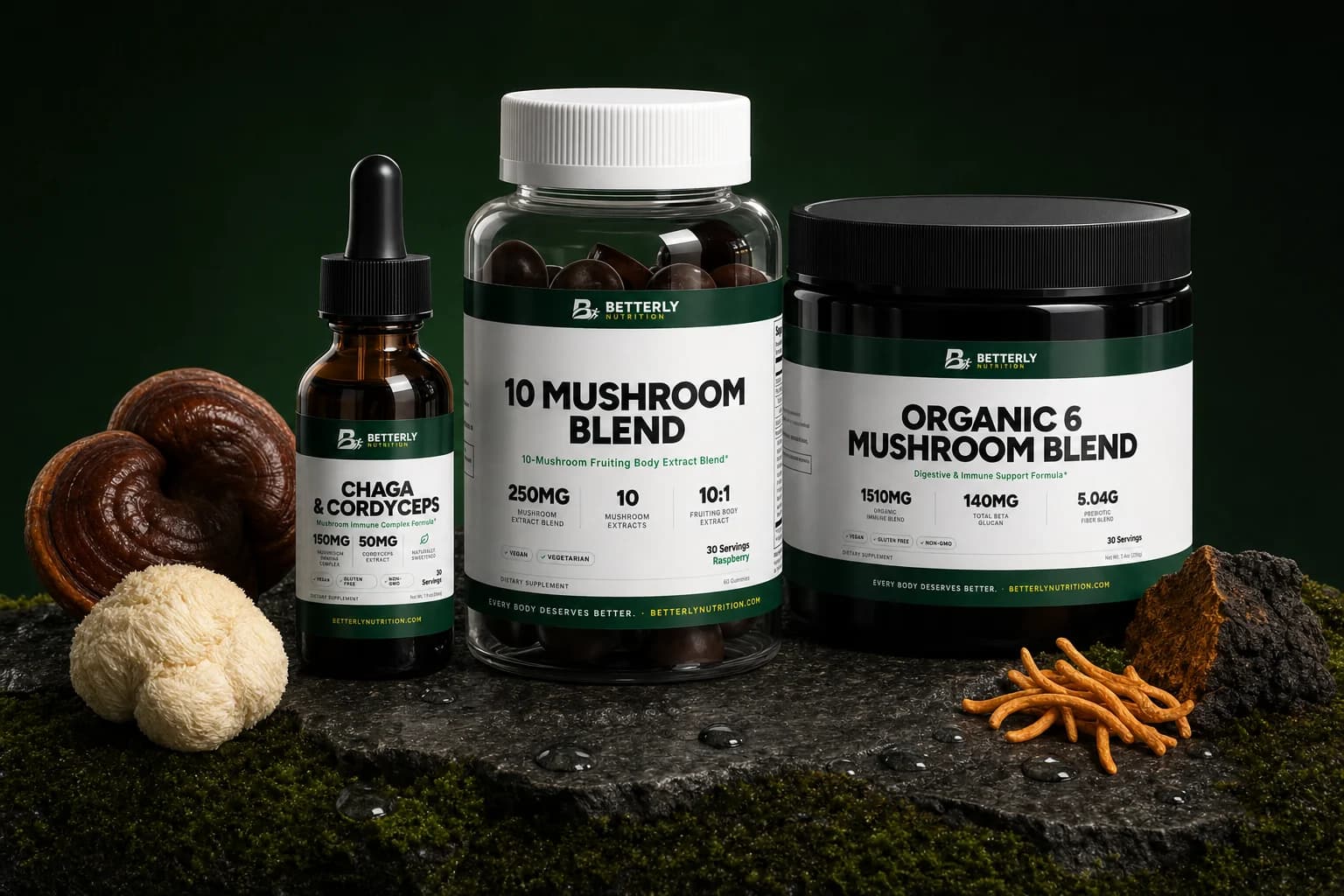
Some people would rather cover breadth than bet everything on one mushroom, and that's the honest case for a blend — a little of several traditional mushrooms in one capsule instead of a full amount of one. The trade-off is real, though: a 10-mushroom blend can't fit as much of any single mushroom as a dedicated capsule can. If you're weighing a single mushroom against variety, we've compared the two approaches head-to-head in Lion's Mane vs Mushroom Complex: which should you take?
NAD+
NAD+ is a coenzyme your cells use in the reactions that produce energy, and levels are understood to decline with age. The research here is young: human evidence for oral NAD+ itself is still limited, and effects on how people actually feel and perform day to day are inconsistent from study to study. It's a "cellular groundwork" idea rather than a direct focus ingredient — some people add it for everyday energy support and consider any extra clarity a bonus.
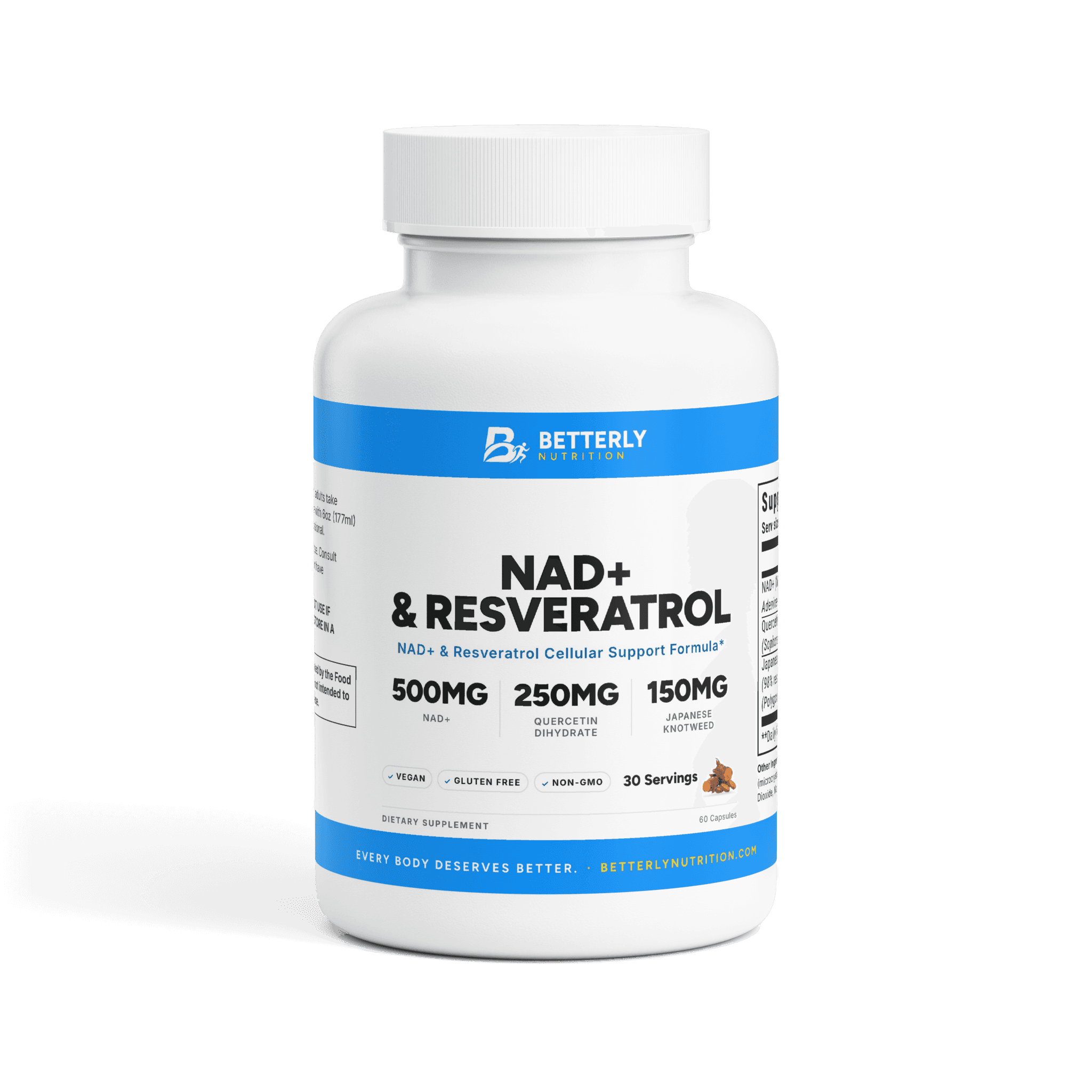
If the mechanism interests you, our explainer on NAD+ and cellular energy goes deeper. Our 500mg NAD+ & Resveratrol Capsules provide 500 mg of NAD+ per 2-capsule serving, with 30 servings (60 capsules) per bottle.
The sideways option: ashwagandha
Here's an unintuitive one: sometimes the obstacle to focus isn't too little stimulation — it's too much. Occasional stress and a racing mind are focus killers, and no amount of alertness fixes that. Ashwagandha is an adaptogenic herb, and the National Center for Complementary and Integrative Health (NCCIH) says some ashwagandha preparations may help with occasional stress, though many of the studies were small. For a stress-scattered brain, calm can do more for concentration than anything "energizing." Our full guide to ashwagandha's benefits and how to take it covers timing, forms, and what to realistically expect.
How to choose what's right for you
Match the tool to the actual problem:
- Wired, scattered, deadline brain? L-theanine is the gentlest option here.
- Playing the long game on memory and clarity? Bacopa with gotu kola, or lion's mane.
- Focus is fine, but energy flags? Consider the cellular-energy angle with NAD+, and read our guide to supporting all-day natural energy.
- Stress is the real thief? Start with ashwagandha, not a nootropic.
- New to all of this? Our nootropics explained for beginners guide sorts the categories before you spend a dollar.
Most of the focus picks above live in our Nootropics & Focus collection, so you can compare labels side by side.
How to use focus supplements well
- Change one thing at a time. Add a single supplement and hold the rest of your routine steady, so you can honestly tell what's helping.
- Give slow ingredients a fair trial. Bacopa and lion's mane were studied over two to three months. Quitting at day ten tells you nothing.
- Keep crude notes. One line a day — "focus felt easy / average / scattered" — beats memory. Effects here are subtle enough that you'll want receipts.
- Guard your sleep while you evaluate. A bad week of sleep will swamp any supplement's contribution and confuse your results.
- Loop in your provider. If you're under 18, pregnant or nursing, take any prescription medication, have surgery scheduled, or are managing a medical condition, check with a healthcare professional before starting anything new. Herbs in particular can interact with medications.
Who should check with a healthcare provider first
Every Betterly label linked in this guide carries the same caution: don't exceed the recommended dose, and consult a physician if you're pregnant, nursing, under 18, or have a medical condition. NCCIH adds that ashwagandha should be avoided during pregnancy and while breastfeeding, isn't recommended for people who are about to have surgery, and might interact with some medications. So if you take any prescription medication or have surgery scheduled, check with a healthcare professional before starting any of these as well.
Key takeaways
- Caffeine borrows alertness; it doesn't create it. The crash and the creeping tolerance are the repayment terms.
- Habits carry the load. Sleep, single-tasking, movement, and morning light outperform every capsule on this page.
- L-theanine is the gentlest option here, associated with calm, settled attention rather than a jolt.
- Bacopa and lion's mane are long-game ingredients, studied over weeks rather than days, and the evidence is promising but not uniform.
- NAD+ is a cellular-energy play with young research; ashwagandha may help when occasional stress, not low energy, is what's scattering you.
- Expect subtle. The best caffeine-free focus supplements support a well-run brain; they don't override a tired one.
FAQ: caffeine-free focus supplements
Do caffeine-free focus supplements actually work?
Modestly at best, and that's the honest answer. The evidence for these ingredients is mixed and mostly early: L-theanine is associated with calm attention, bacopa has been explored for memory though not every trial agrees, and lion's mane is an intriguing but early picture. None of them replicates a stimulant, and none outperforms good sleep.
What works most like caffeine, without the caffeine?
Nothing here mimics caffeine — that's precisely the trade you're making. L-theanine is the closest match in spirit, but it's associated with calm, settled attention rather than energy. If you want a felt push, the realistic option is keeping a smaller amount of caffeine and pairing it with L-theanine to smooth it out.
How long were these ingredients studied?
It depends on the ingredient, and none of them promises a felt result. Bacopa, gotu kola and lion's mane were generally studied over 8 to 12 weeks, while much of the L-theanine research paired it with caffeine rather than testing it alone. Give any new supplement a consistent trial, changing one thing at a time, before you judge it.
Can I take these alongside my morning coffee?
Generally, yes — caffeine-free doesn't mean anti-caffeine, and many people keep one morning cup while using bacopa or lion's mane in the background. The classic move is adding L-theanine to that cup for a calmer ride. If you take medications, check with your provider about the herbs specifically.
Are these ingredients well tolerated?
At common amounts, the ingredients in this guide are generally well tolerated, and our panels list every ingredient, with blends showing their total amount. That said, "natural" isn't a free pass: herbs can interact with medications, and being under 18, pregnant or nursing, having surgery scheduled, or managing a medical condition are all reasons to talk with a healthcare professional first.
Sources
- Caffeine, MedlinePlus, U.S. National Library of Medicine
- Ashwagandha: Usefulness and Safety, National Center for Complementary and Integrative Health (NCCIH)
If this left you looking for somewhere to start, read caffeine-free lion's mane capsules for focus — its amounts per serving are listed on the page. For the practical questions this raises, how dosing, sourcing and subscriptions work is answered in one place.