On this page
- Key takeaways
- What are beta-glucans in mushroom supplements?
- Beta-glucans vs polysaccharides: why isn't it the same number?
- What makes a beta-glucan claim on a label worth trusting?
- Do all mushrooms have beta-glucan?
- Which mushrooms have the most beta-glucan?
- How much beta-glucan do these four mushroom labels list?
- How do you take a beta-glucan mushroom powder, per the label?
- When don't you need a beta-glucan mushroom supplement?
- Who should check with a healthcare provider first?
- FAQ: beta-glucan mushroom supplements
- Sources
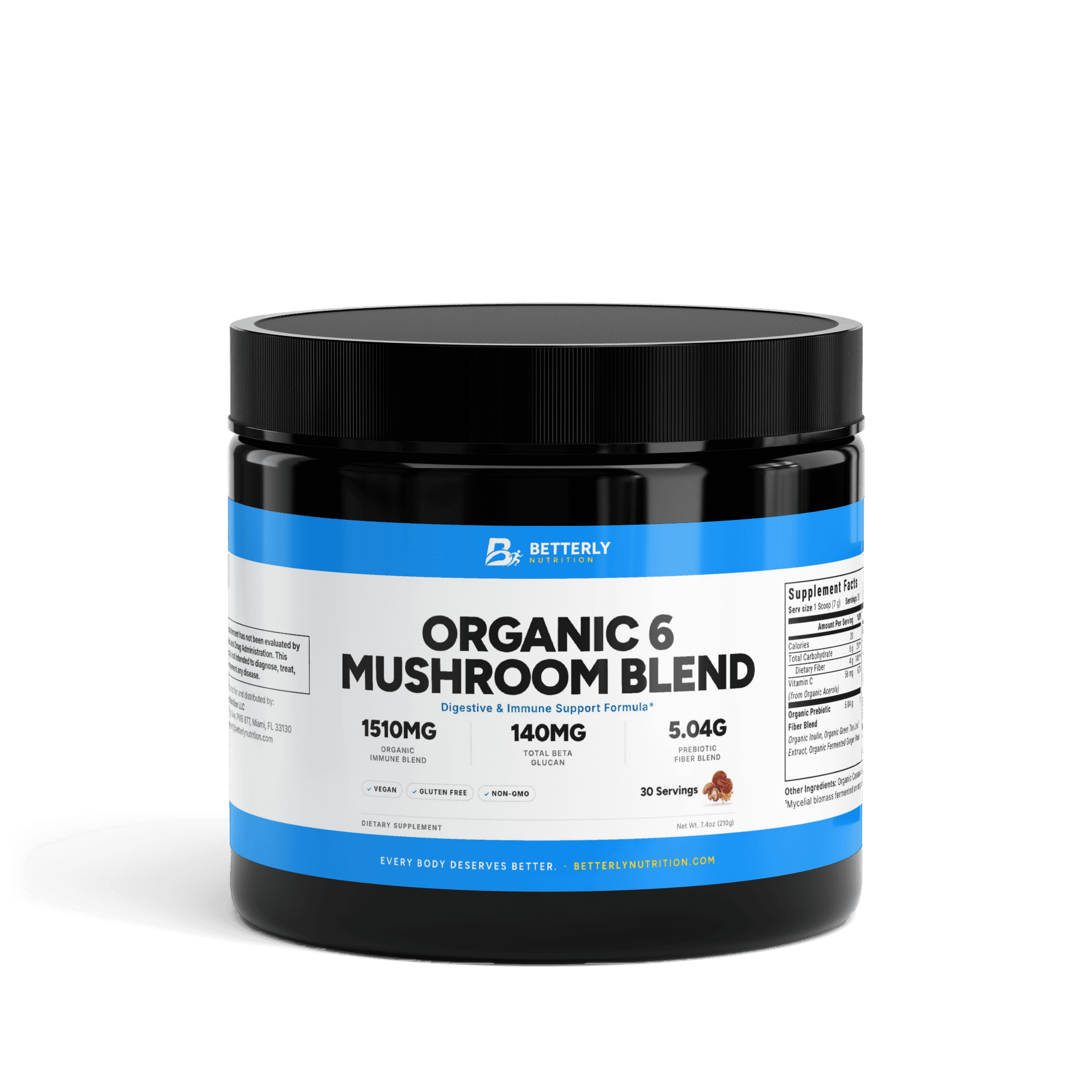
The short answer: Beta glucan mushroom supplements can only be compared when a label prints beta-glucan in milligrams per serving. Some labels print "polysaccharides" instead, which is a wider count and a different measurement. Our Organic 6 Mushroom Blend Powder lists 140 mg of total beta glucan per 1-scoop (7 g) serving. Two of our capsule labels list 400 mg of polysaccharides per 2-capsule serving instead, with no beta-glucan figure.
Key takeaways
- Beta-glucans are one kind of polysaccharide, so a "40% polysaccharides" line on a mushroom label can't be read as a beta-glucan figure.
- The NIH Office of Dietary Supplements lists fungi, yeasts, bacteria, oats and barley as beta-glucan sources. How much a given mushroom holds varies, and its label may not say.
- FDA labeling rules let a maker list a constituent like beta-glucan under its ingredient but don't require it, so a label with no beta-glucan number tells you nothing about the amount either way.
- Beta-glucan has no Daily Value, so compare milligrams only between labels that measure the same thing.
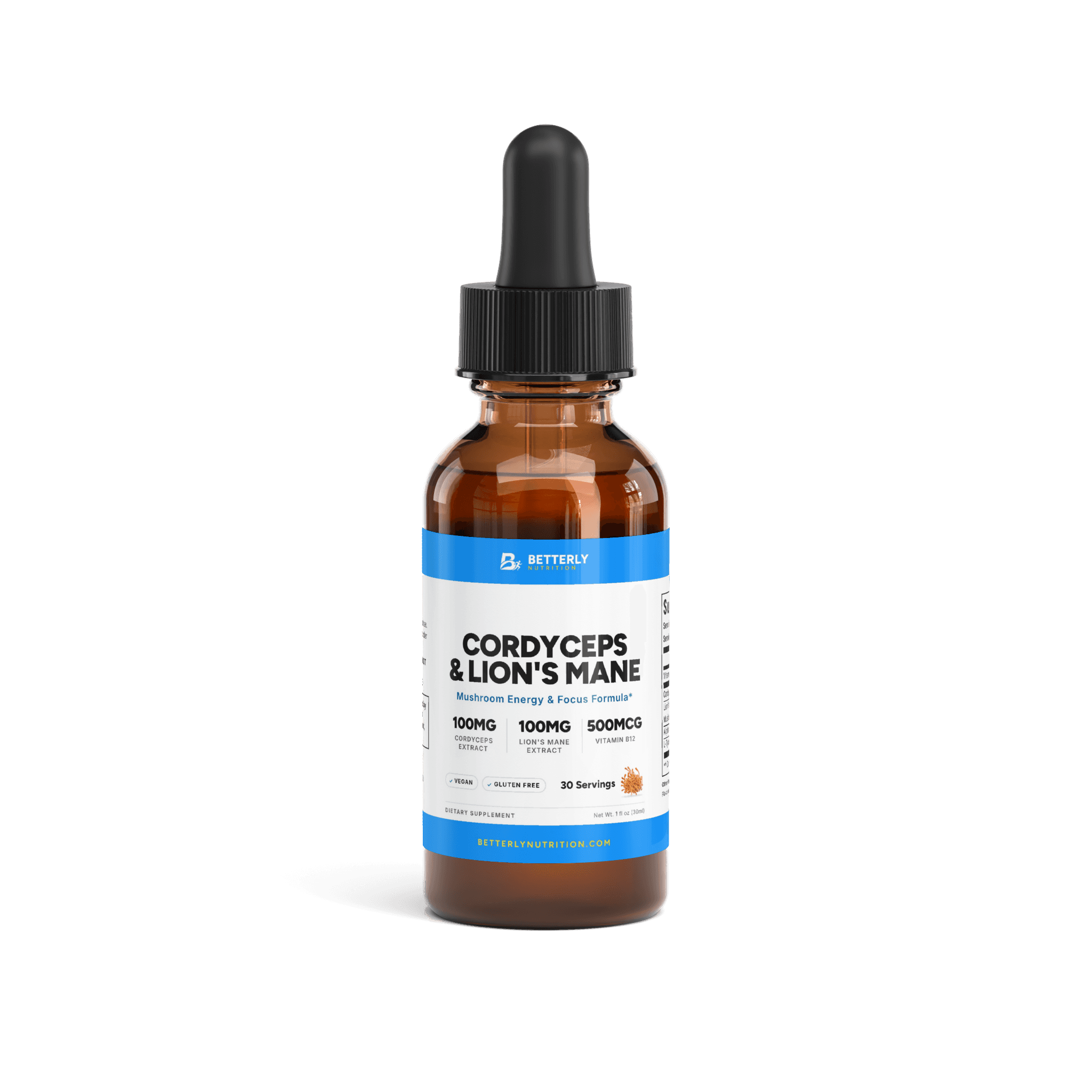
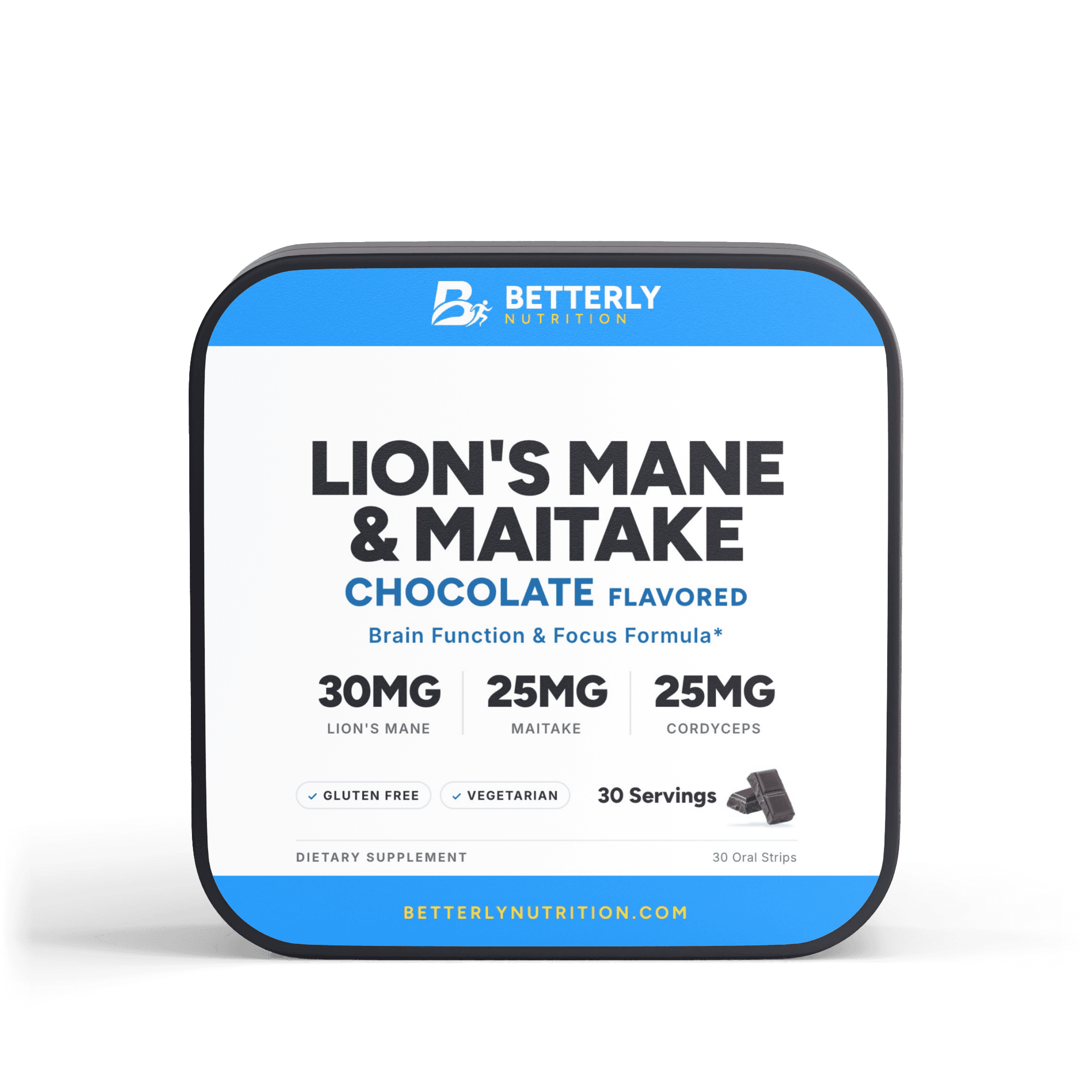
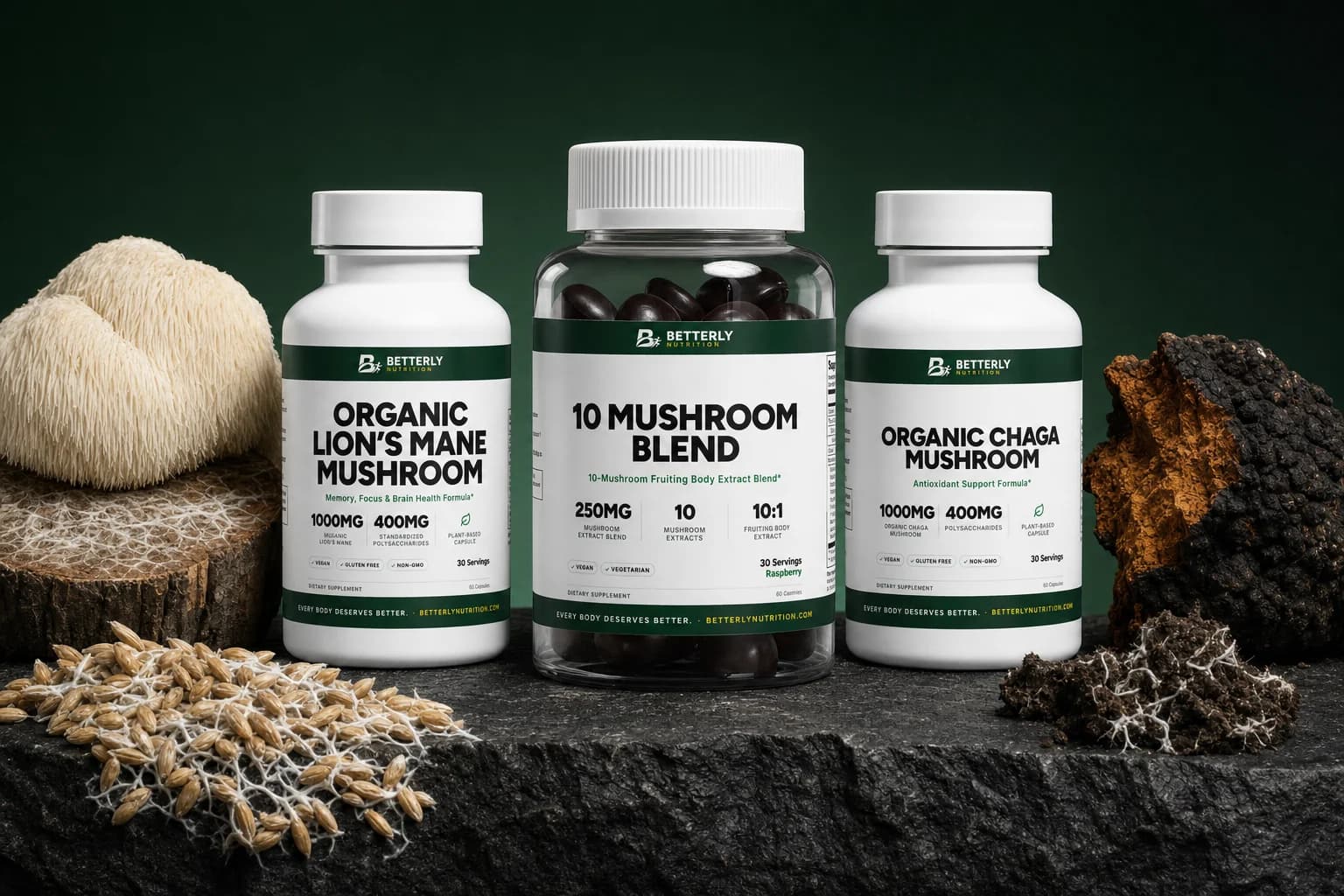
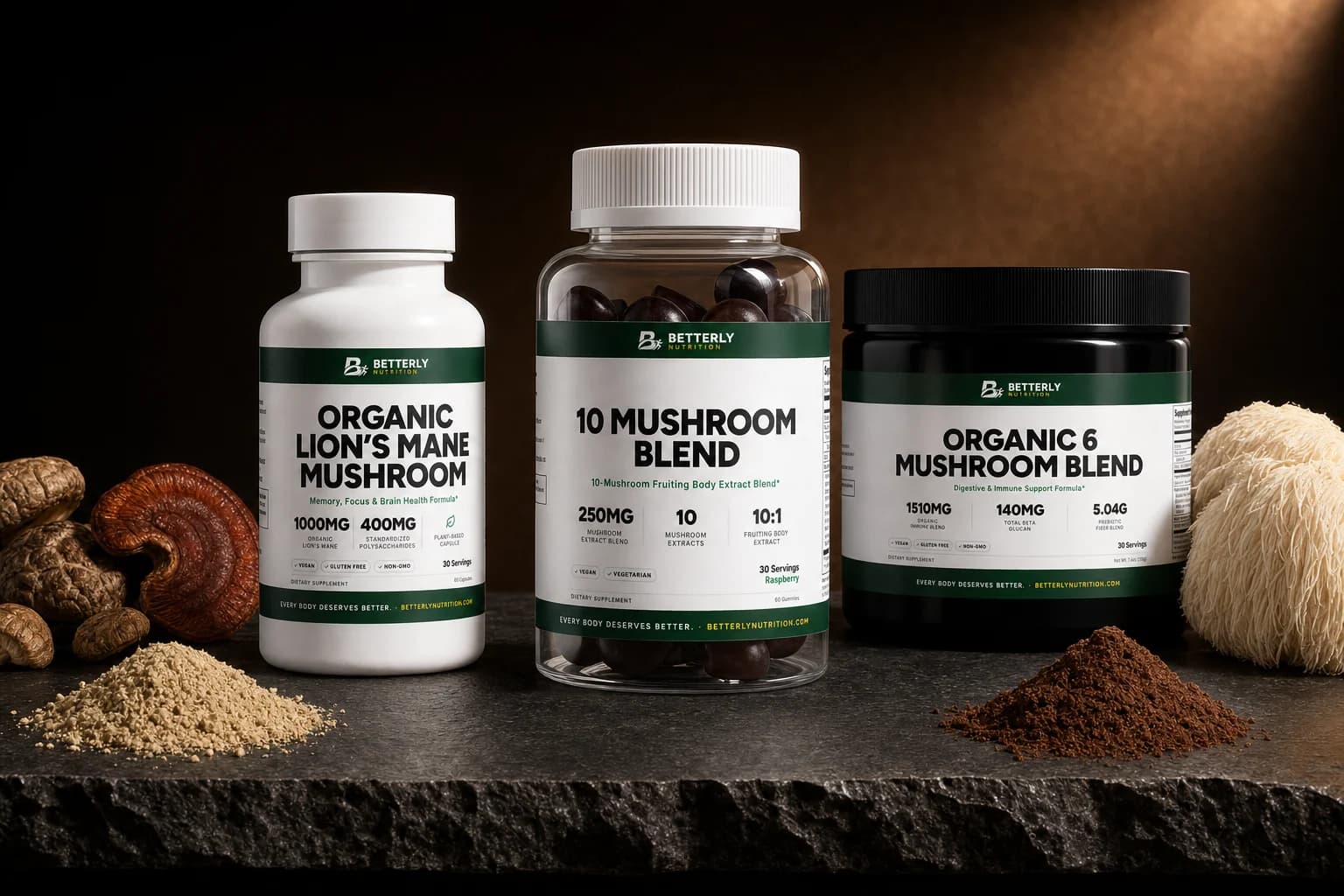
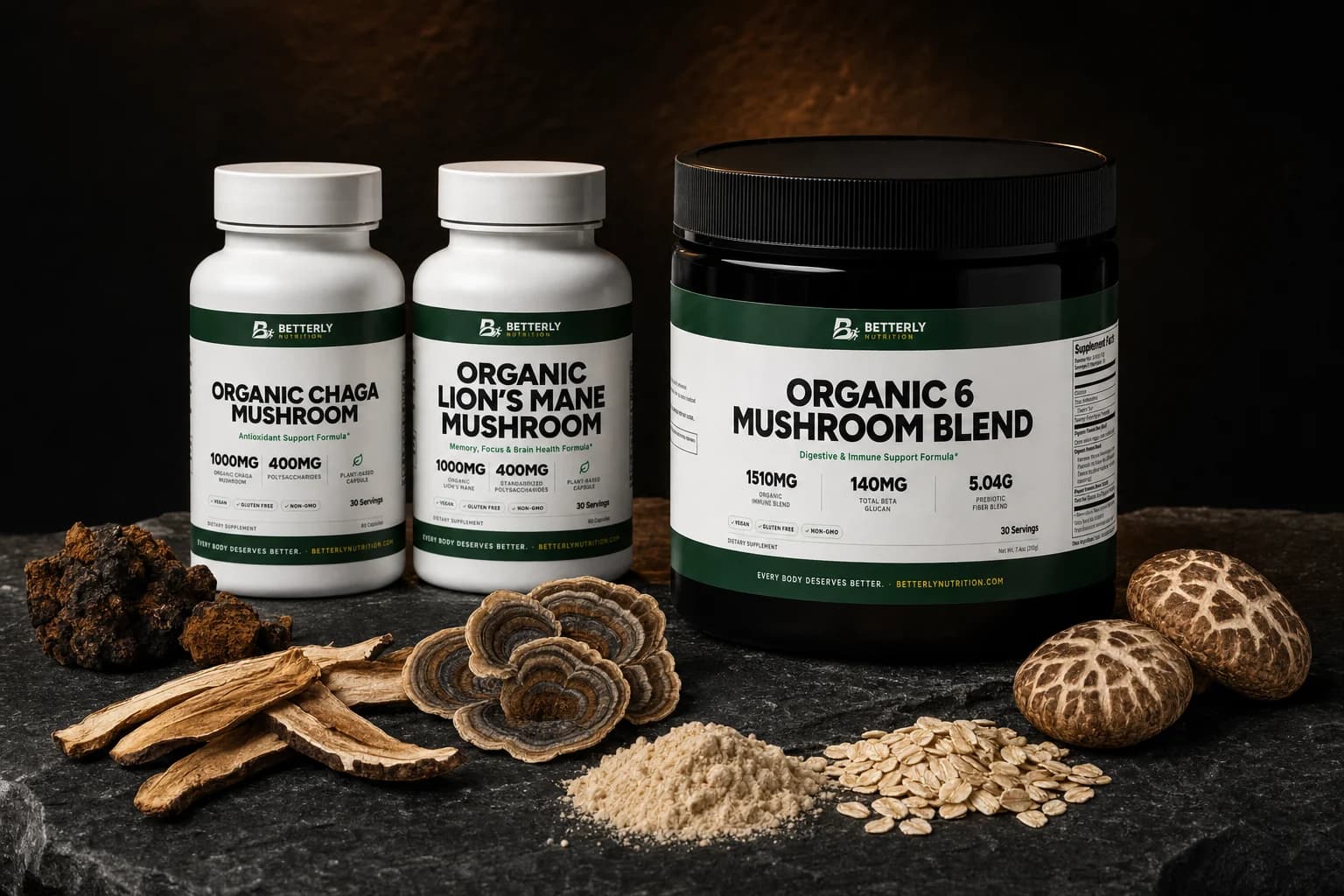
We sell all four mushroom products whose panels appear below, and only one prints a beta-glucan line, so this guide is partly a tour of our own gaps. Every amount here, the 140 mg included, is the maker's printed figure; we measured none of it.
What are beta-glucans in mushroom supplements?
Beta-glucans are long chains of glucose that help build a mushroom's cell wall, and they're the compound mushroom shoppers are most often told to check for.
The NIH Office of Dietary Supplements (ODS) describes beta-glucans as soluble dietary fibers. In one of its consumer fact sheets, ODS lists where they occur: bacteria, yeasts, fungi, oats and barley. Mushrooms are fungi, so they're on that list.
Starch is a glucose chain too. What separates the two is the bond between links: starch uses an alpha bond your digestive enzymes break easily, while beta-glucans use beta bonds, which is why they count as fiber. Same building block, different bond, and that's why one lab number can't stand in for the other.
Beta-glucans vs polysaccharides: why isn't it the same number?
A polysaccharide is any long chain of sugar units, and beta-glucans are just one type, so a polysaccharide figure always covers more than beta-glucan alone.
Picture polysaccharides as a pantry shelf and beta-glucans as one jar on it. Starch sits on that shelf, and so does chitin, the stiff fiber that also helps build fungal cell walls.
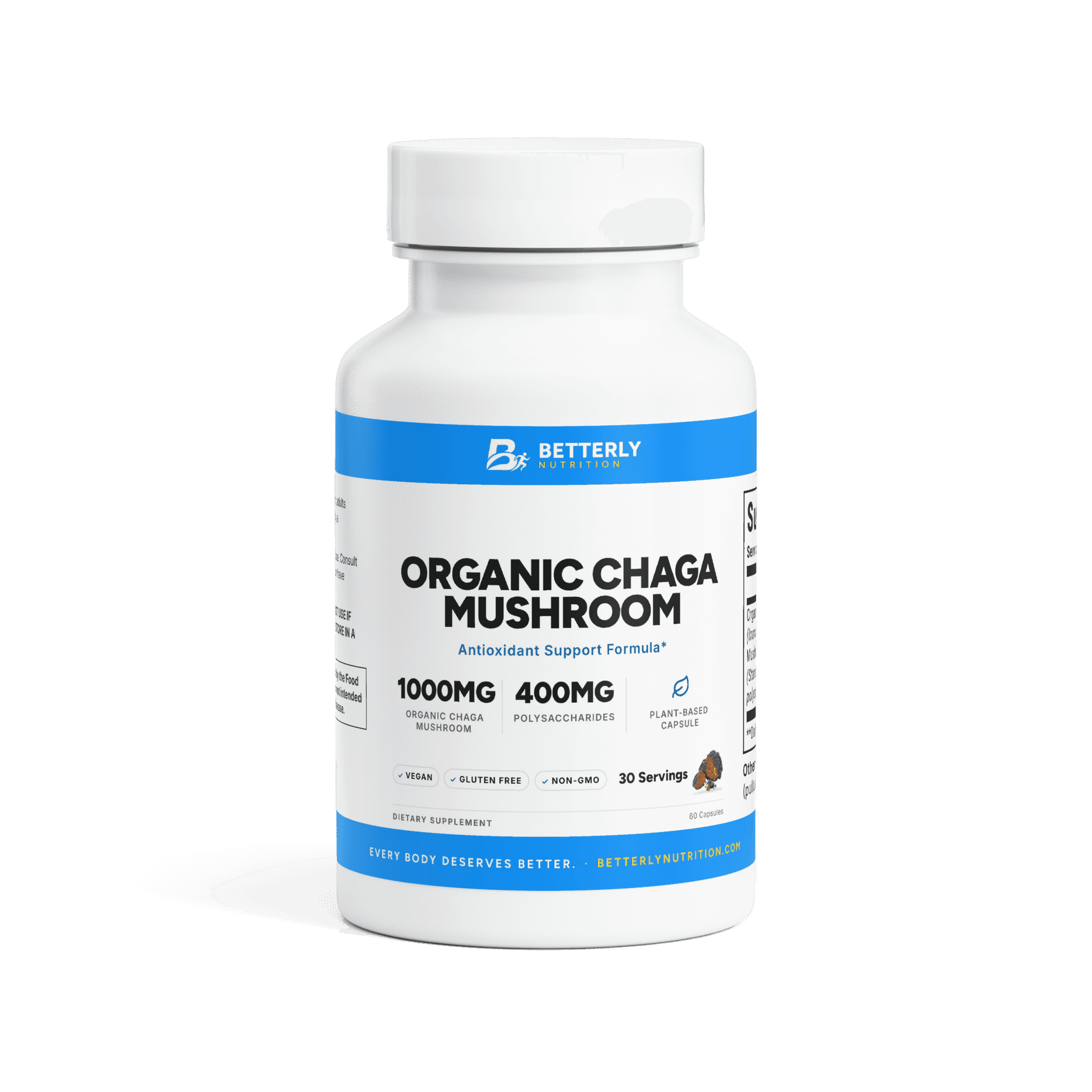
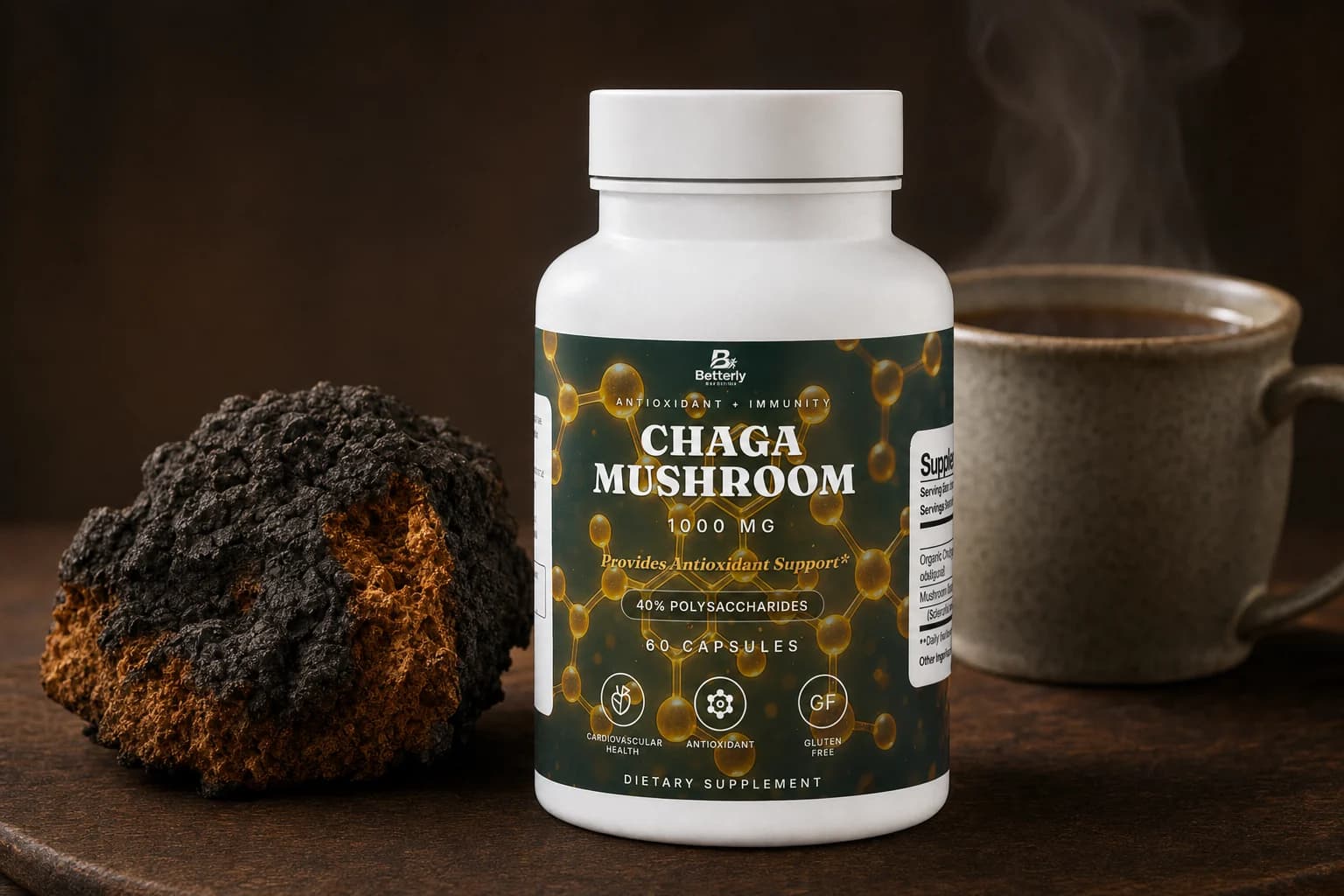
Our Organic Chaga Mushroom Capsules show how this reads in practice. The panel lists 1,000 mg of organic chaga mycelium powder per 2-capsule serving, "Standardized to 40% polysaccharides [400mg]." Nothing on that panel splits the 400 mg into beta-glucan and everything else, and no conversion factor could fill in the missing share.
ODS covers standardization in a consumer sheet on botanicals. The maker picks a chemical to track, which ODS calls a marker, and tunes production until it comes out about the same in every batch. In the best case, the tracked chemical is also what produces the botanical's effect. ODS adds that for most botanicals, nobody yet knows which constituents do that.
So "40% polysaccharides" tells you what level the maker aims to repeat in each batch. It isn't a beta-glucan dose.
Lion's mane beta-glucans vs polysaccharides
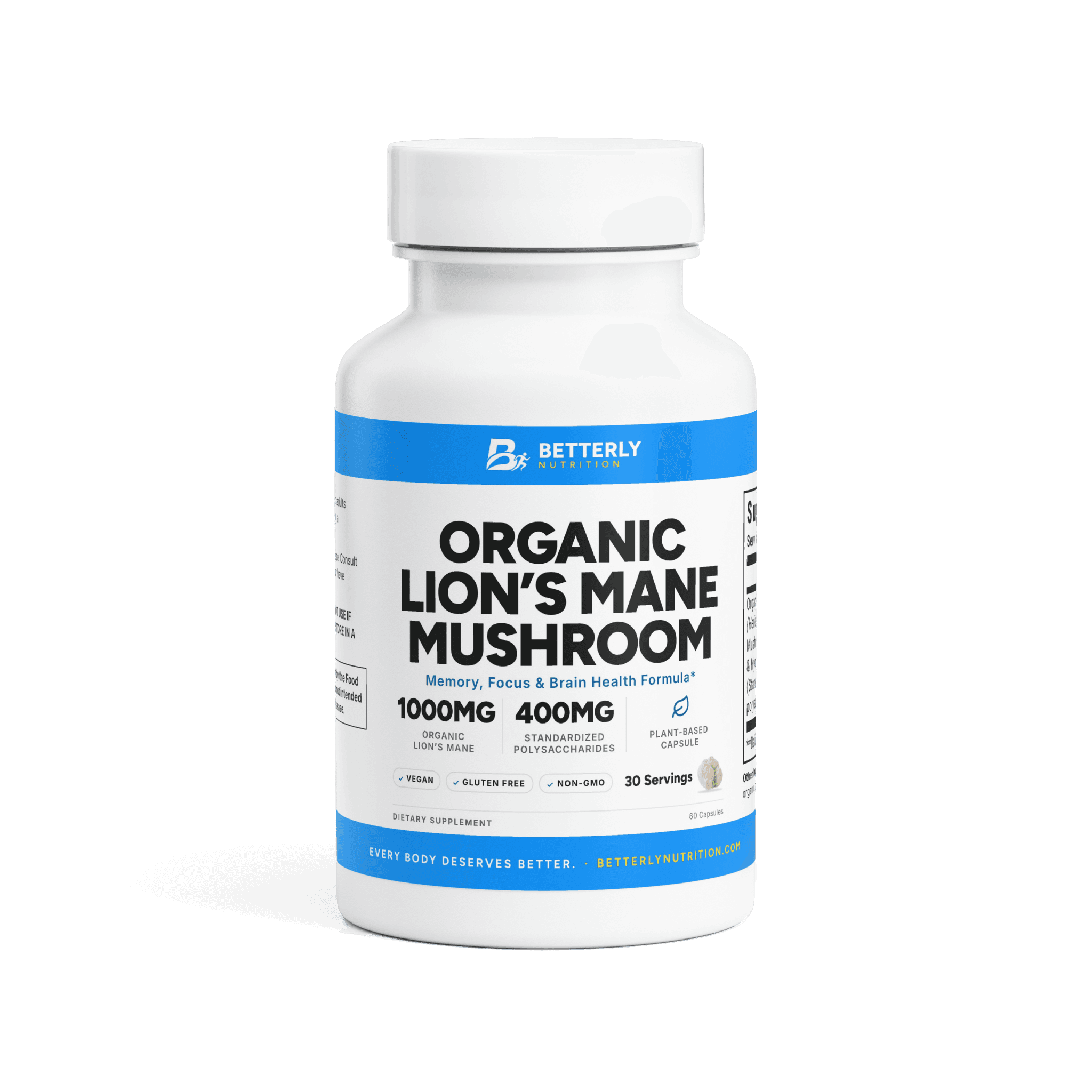
Lion's mane follows the same pattern on our shelf: the Organic Lion's Mane Mushroom Capsules print polysaccharides only, 400 mg (40%) of the 1,000 mg in each 2-capsule serving.
Its row names fruiting body and mycelium powder, where the chaga names mycelium alone. The two compare with each other on polysaccharides, but not with any bottle's beta-glucan line.
What makes a beta-glucan claim on a label worth trusting?
A beta-glucan claim earns trust when it gives milligrams per serving, names its source ingredient, and comes from a brand willing to say how it was measured.
The FDA's Dietary Supplement Labeling Guide shows a beta-glucan line is optional. A maker "may" list the constituents of a dietary ingredient, indented beneath it with their amounts by weight per serving.
So a missing beta-glucan line doesn't prove a product is low in beta-glucans, and a printed one isn't a seal of quality. Here's how the common phrasings stack up:
| What the label says | What it counts | What it leaves open |
|---|---|---|
| "Standardized to 40% polysaccharides" | Sugar chains the maker's test picks up | How much is beta-glucan |
| "Total Beta Glucan 140 mg" | Beta-glucans per serving, by the maker's test | The test used, and each source's share |
| "Rich in beta-glucans," no number | Nothing you can check | Any amount at all |
| An extract weight alone | How much extract is in a serving | Any compound inside it |
Only the second row gives you an amount you can hold against another label. Even then, the comparison is fair only when both brands measured the same way.
The method matters because starch and beta-glucans are both glucose, so a test that simply counts glucose chains will count both. When the figure is part of why you're buying, the brand should be able to answer these:
- How many milligrams per serving, not just a percentage?
- Which ingredient on the panel is the figure measured in?
- What test produced it, and does that test exclude starch?
We can answer the first two for our own powder: 140 mg, measured in its Organic Immune Blend. We can't answer the third, because the label doesn't name a method.
From our shop: Organic Chaga Mushroom Capsules — one species, one active row: 1,000 mg of organic chaga mycelium powder per 2-capsule serving, with its 400 mg polysaccharide marker printed on the panel.
Do all mushrooms have beta-glucan?
Yes, mushrooms contain beta-glucan because it's part of the fungal cell wall, and ODS lists fungi as a source, but amount and type differ by species.
That includes the everyday kinds you'd slice into a salad. What differs is how much, and whether anyone measured it.
Oats and barley sit on that same ODS list, which is worth remembering with mycelium grown on grain. Our powder's footnote reads "Mycelial biomass fermented on organic oats," and the panel prints one beta-glucan total for the whole blend. The label leaves open how that 140 mg divides between fungus and oat.
Our guide to mushrooms and gut health runs the full fiber math on this scoop.
Which mushrooms have the most beta-glucan?
No mushroom species holds a fixed top spot for beta-glucan, because measured amounts shift with the part used, how the mushroom was grown and which test was run.
Charts online often crown a tough, wood-growing species such as reishi or turkey tail. Those charts can mix numbers that were never measured the same way, so read any ranking as rough.
A species ranking also can't tell you what's in a particular jar. Two products made from the same mushroom can differ a lot depending on:
- whether they use the fruiting body, the mycelium or both
- what the mycelium grew on
- whether the material was extracted or simply dried and ground
- how much carrier or filler shares the serving
Our fruiting body vs mycelium explainer covers the first two. A product's own panel is a better guide than its species' reputation.
Our powder does hold reishi and turkey tail among its six species. But its label gives one beta-glucan total for all six, so we won't claim any one species supplies most of it.
How much beta-glucan do these four mushroom labels list?
Of the four labels here, only the Organic 6 Mushroom Blend Powder prints a beta-glucan amount: 140 mg per 1-scoop (7 g) serving, from a 1,510 mg mycelial blend.
| Our label (serving) | Mushroom on the panel | Marker printed | Beta-glucan line |
|---|---|---|---|
| 6 Mushroom powder (1 scoop, 7 g) | 1,510 mg, 6 species of mycelium | Total beta glucan | 140 mg |
| Chaga capsules (2 capsules) | 1,000 mg chaga mycelium | 40% polysaccharides (400 mg) | None |
| Lion's mane capsules (2 capsules) | 1,000 mg fruiting body + mycelium | 40% polysaccharides (400 mg) | None |
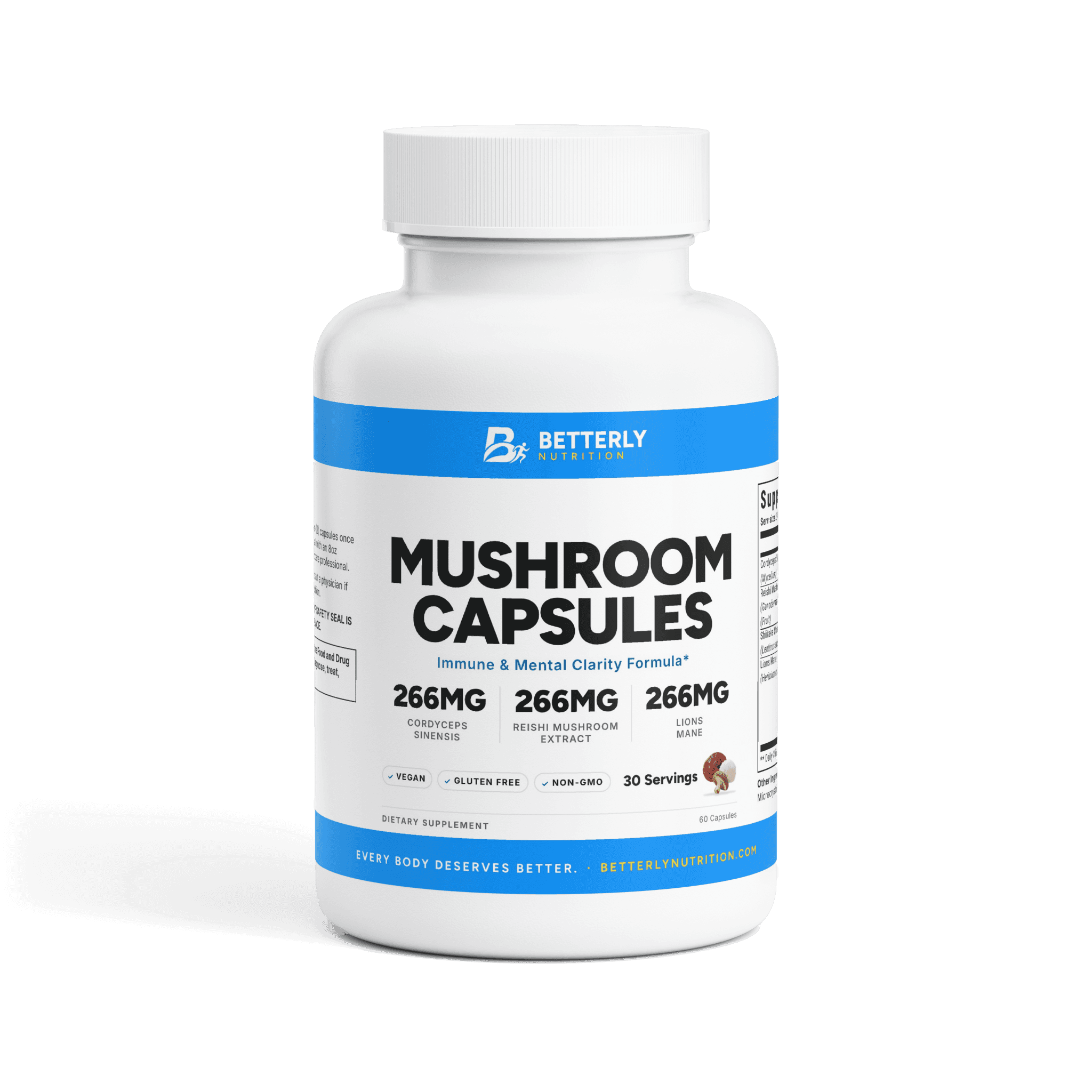
| Mushroom Capsules (2 capsules) | 1,330 mg over 10 species (our sum) | None | None |
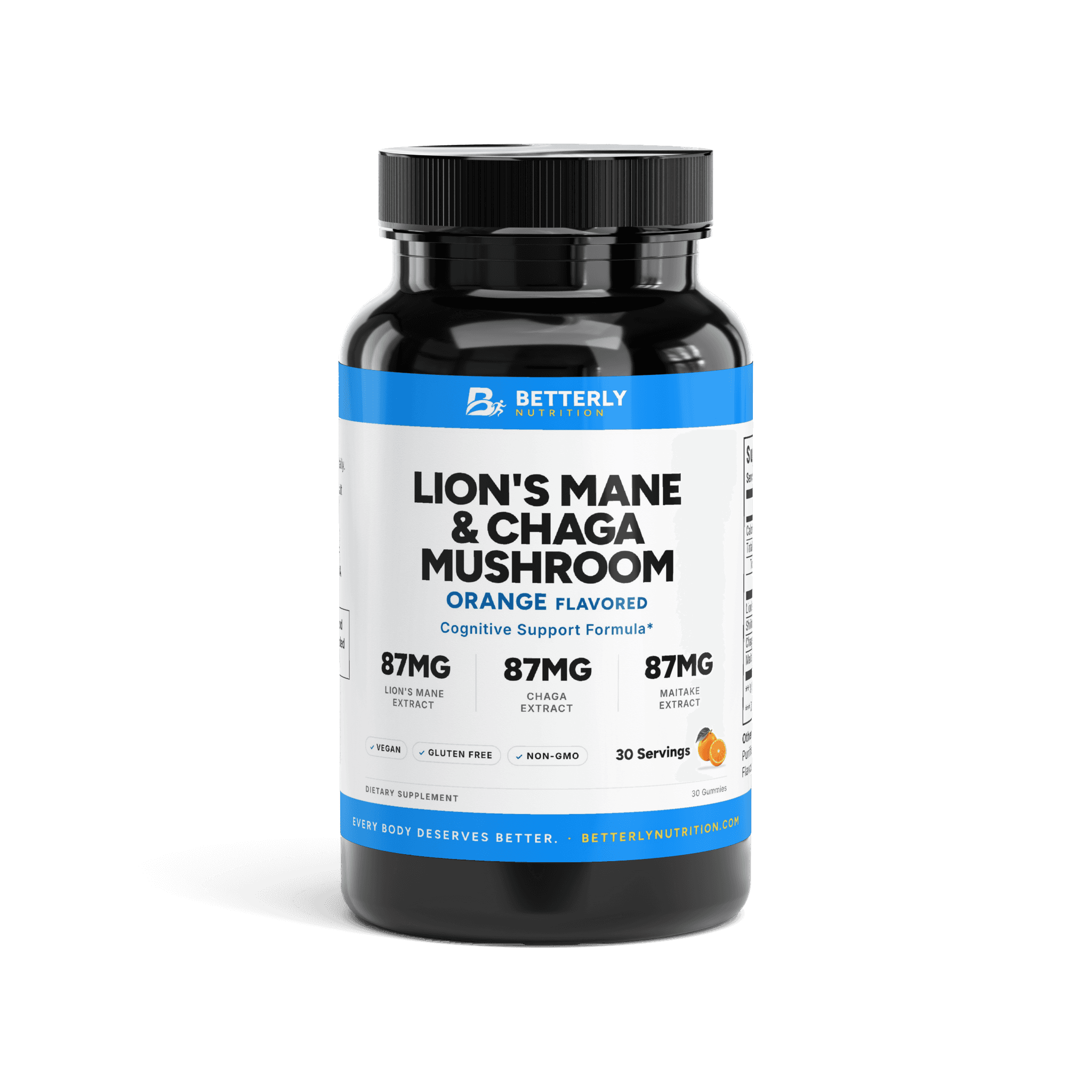
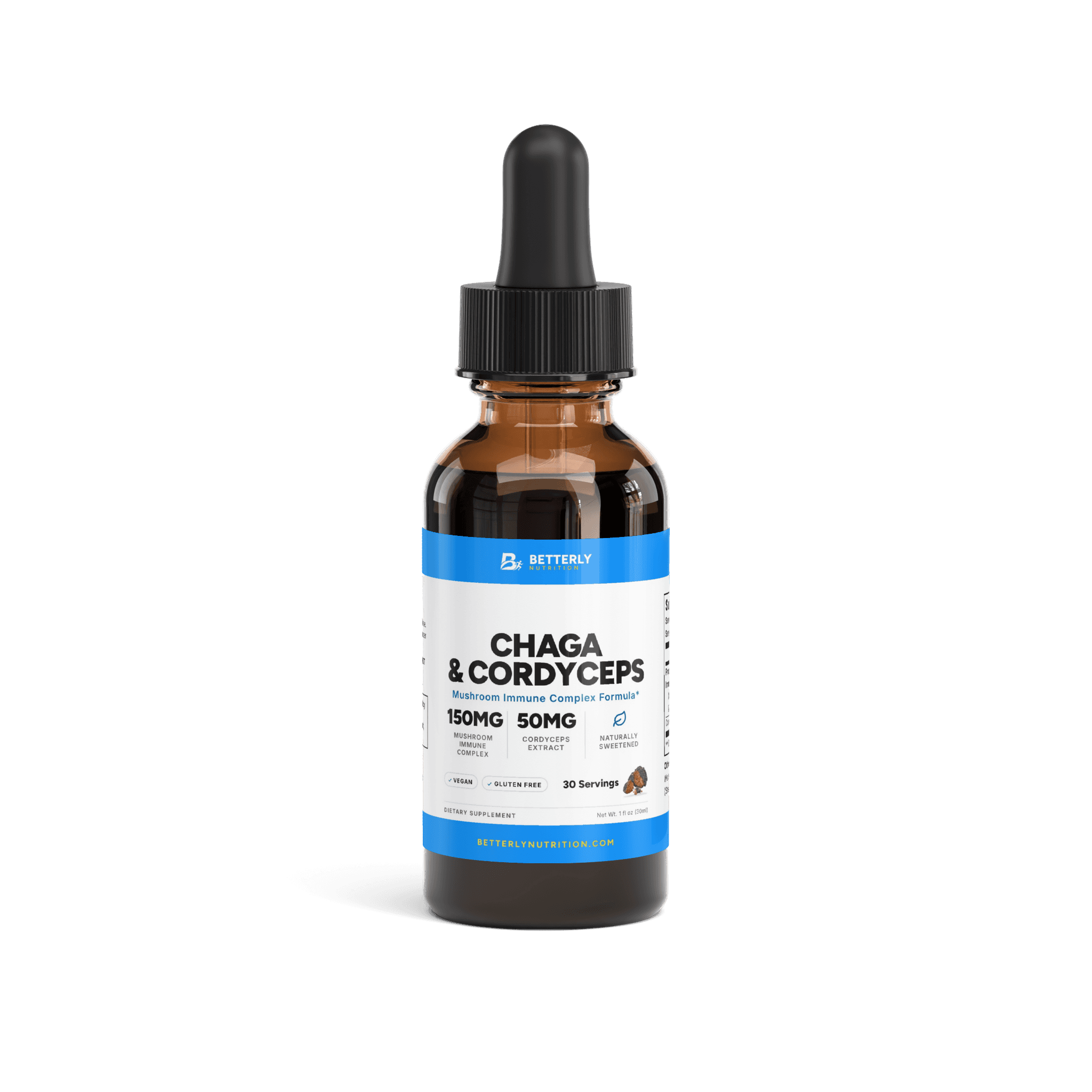
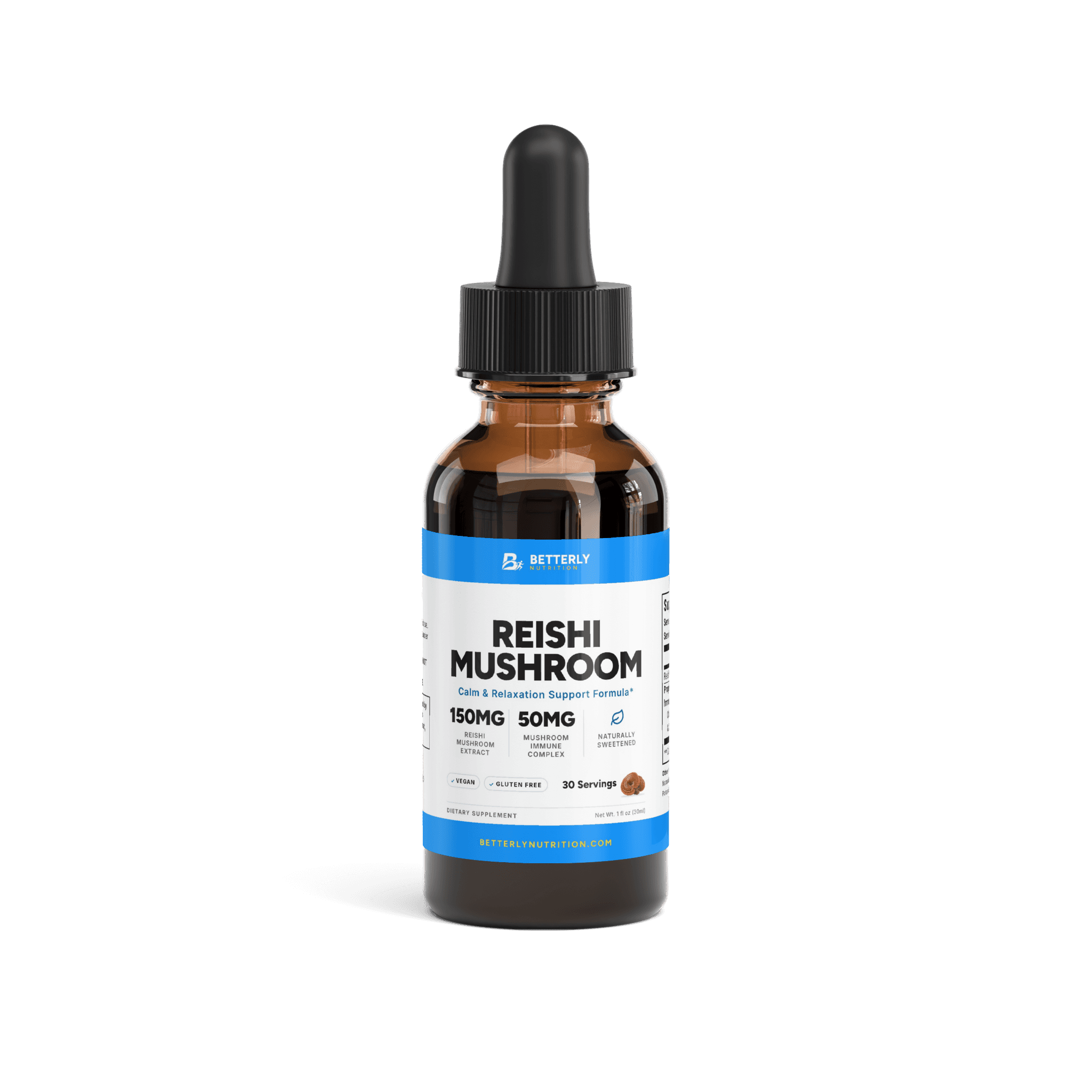
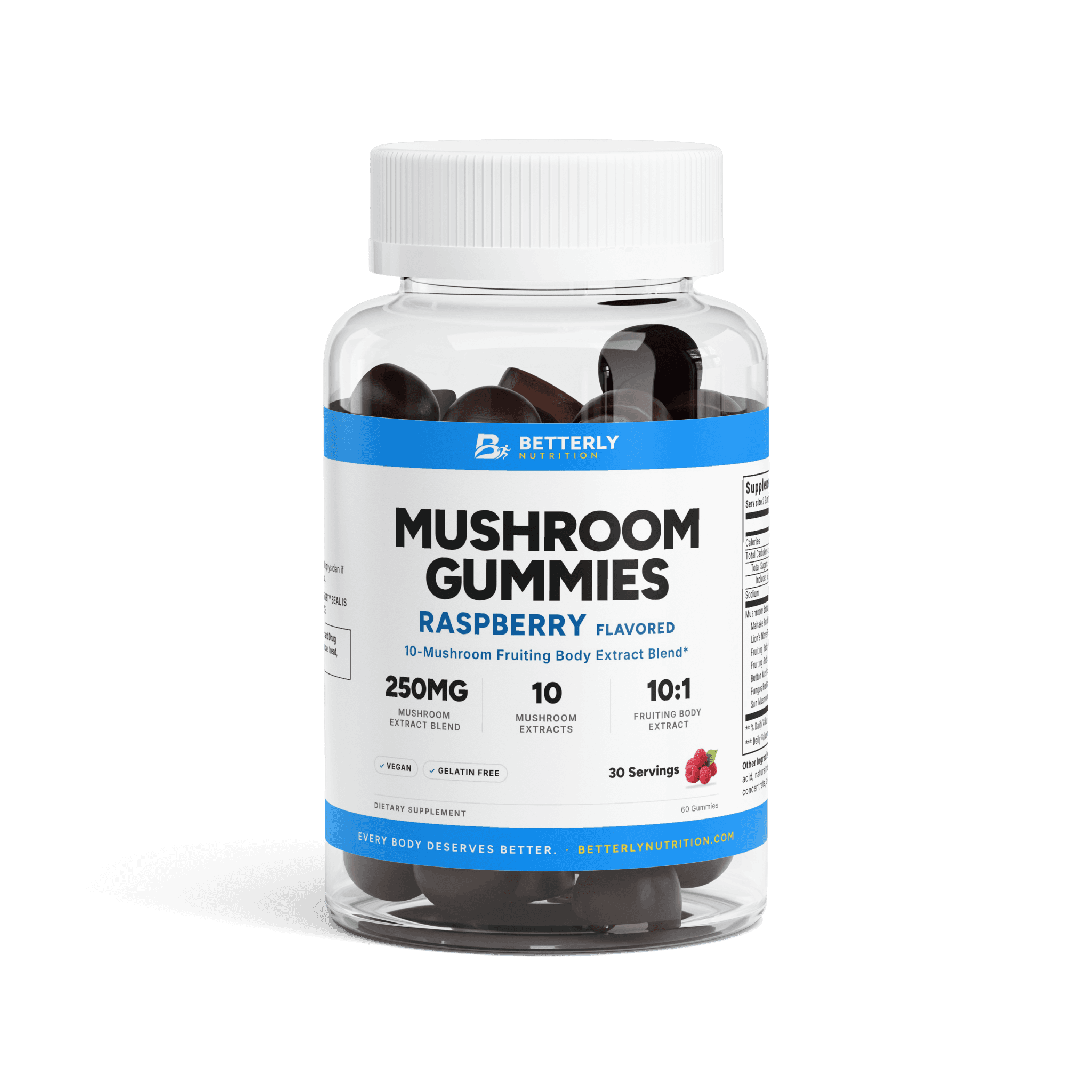
Read down the last column and you get exactly one number. The Mushroom Capsules give weights only. Lion's mane, shiitake, reishi and cordyceps each carry 266 mg on their own lines, and the other six species are pooled in a proprietary blend that also weighs 266 mg. The rest of our mushroom supplements collection, drops, gummies and strips included, prints neither a beta-glucan nor a polysaccharide figure.
For scale, 140 mg is 2% of the 7 g scoop by weight, and a 30-serving tub holds 4,200 mg of beta-glucan in total.
The powder's other ingredients list organic cassava maltodextrin, a carbohydrate made from starch. A loose "polysaccharides" claim covering a whole scoop could sweep that into its total, so it helps that this label pins its beta-glucan line to the Organic Immune Blend.
The dagger beside the 140 mg points to "Daily Value Not Established," the footnote FDA's guide assigns to any ingredient without one. There's no official target, so nothing on the panel says whether 140 mg is a lot or a little.
From our shop: Organic 6 Mushroom Blend Powder — the only mushroom label we sell with a beta-glucan line: 140 mg of total beta glucan per 1-scoop (7 g) serving, alongside a 5.04 g prebiotic fiber blend.
How do you take a beta-glucan mushroom powder, per the label?
The Organic 6 Mushroom Blend Powder's label says to take one scoop daily, mixed into food or drinks, or as directed by a health professional.
- Timing: the directions say "daily" and stop there. Stirring the scoop into the same breakfast or drink each day makes it easier to remember.
- Amount: one scoop is the whole serving. The caution reads "Do not exceed recommended dose," and a beta-glucan number is never a reason to add a second scoop.
- Fiber: each scoop brings 4 g of dietary fiber (14% DV). ODS notes that beta-glucans can cause flatulence, so a bit of gas is a known possibility.
- Green tea: the prebiotic fiber blend includes organic green tea leaf extract, and the panel doesn't state a caffeine amount. If you keep caffeine to mornings, factor that in.
The chaga and lion's mane labels say adults take two capsules daily. The Mushroom Capsules say two capsules once a day, 20-30 minutes before a meal with an 8 oz (237 ml) glass of water.
When don't you need a beta-glucan mushroom supplement?
You may not need a beta-glucan mushroom supplement if mushrooms already show up in your meals, or if the only draw is a beta-glucan number.
- Mushrooms are already a regular part of your cooking, and you aren't chasing a particular figure.
- You're hoping for something you can feel. Nothing in this guide's sources links a set amount of mushroom beta-glucan to a result you'd notice, and we won't promise one.
- You want the biggest number on the shelf. None of our labels is built around a high beta-glucan figure, and we'd rather say so than dress up 140 mg.
- You already take a mushroom blend. A second blend mostly repeats species, and our capsule blend and powder share five.
Who should check with a healthcare provider first?
Talk with your doctor or pharmacist first about a beta-glucan mushroom supplement if you're pregnant, nursing, under 18, on prescription medication, facing surgery or managing a medical condition.
All four labels carry the same caution: "Do not exceed recommended dose. Consult a physician if pregnant, nursing, under 18, or have a medical condition."
The National Center for Complementary and Integrative Health (NCCIH) covers the medicine question on its page about using dietary supplements wisely. Its warning: some supplements can cause harm for people on certain prescription or over-the-counter drugs. Some can also affect bleeding or anesthesia, so NCCIH asks you to tell your providers well before any operation.
Bring the tub itself to that conversation: the powder names six mushrooms plus acerola, green tea leaf and ginger root.
FAQ: beta-glucan mushroom supplements
Is mushroom beta-glucan the same as oat beta-glucan?
No, mushroom beta-glucan and oat beta-glucan share a name and a glucose building block, but their chains are joined and branched differently. That difference is why a beta-glucan figure from an oat product and one from a mushroom product don't describe the same material. For how both can land in one grain-grown scoop, see the section above on whether all mushrooms have beta-glucan.
Do button mushrooms have beta-glucan?
Yes, white button mushrooms (Agaricus bisporus) contain beta-glucan, since it's part of the cell wall fungi build, though we couldn't find an official figure for how much. Our Mushroom Capsules include white button mushroom extract inside a proprietary blend listed at 266 mg per 2-capsule serving. FDA rules have a blend list its total weight and its ingredients in descending order by weight, so the button mushroom's share isn't printed.
Is beta-glucan a prebiotic?
Beta-glucans count as soluble dietary fiber, according to ODS, but whether mushroom beta-glucan acts as a prebiotic in people isn't settled by any source cited here. In our Organic 6 Mushroom Blend Powder, the 140 mg beta-glucan line is small next to the 5.04 g prebiotic fiber blend, which lists organic inulin first.
Are beta-glucan mushroom supplements safe to take every day?
Beta-glucans themselves seem to be safe at up to 10 g a day for 12 weeks, according to ODS, and the side effect it names is flatulence. That covers beta-glucans, not every ingredient in a mushroom product, so follow each label; ours calls for one scoop daily. If you're pregnant, nursing, under 18, on medication or managing a medical condition, ask your doctor first.
Does a mushroom extract have more beta-glucan than a powder?
Not necessarily, because "extract" on a mushroom label describes how the material was processed, not how much beta-glucan ended up in it. Among our own labels, the one beta-glucan figure sits on a powder of fermented mycelium, not an extract. Our comparison of mushroom extract and powder explains what ratios like 10:1 do and don't mean.
Sources
- Dietary Supplements for Weight Loss: Fact Sheet for Consumers, NIH Office of Dietary Supplements
- Botanical Dietary Supplements: Background Information, NIH Office of Dietary Supplements
- Dietary Supplement Labeling Guide: Chapter IV. Nutrition Labeling, U.S. Food and Drug Administration
- Using Dietary Supplements Wisely, National Center for Complementary and Integrative Health
If this left you looking for somewhere to start, read mushroom powder that prints its beta-glucan per scoop — its amounts per serving are listed on the page. For the practical questions this raises, how dosing, sourcing and subscriptions work is answered in one place.