On this page
- Key takeaways
- Are mushrooms good for gut health?
- Are mushrooms prebiotic or probiotic?
- Which mushrooms are best for gut health?
- Is mushroom powder good for gut health? Our scoop, by the numbers
- Powder, capsules or a probiotic: which fits your gut goal?
- Can mushrooms or mushroom powder upset your stomach?
- How should you take mushroom powder for your gut?
- Do you need a mushroom supplement if you already eat mushrooms?
- Who should check with a healthcare provider first?
- FAQ: mushrooms and gut health
- Sources
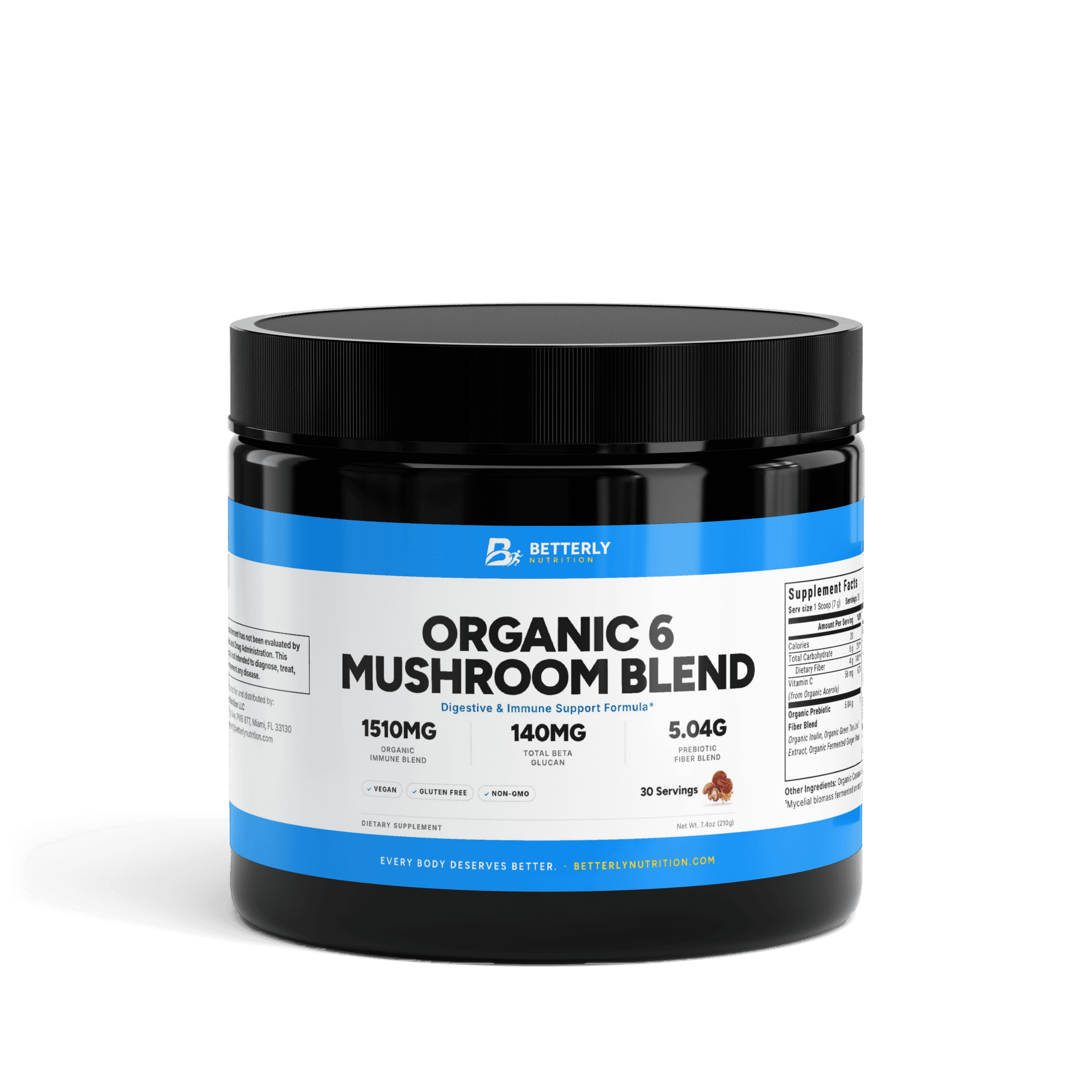
The short answer: Mushrooms for gut health work as a fiber source, not a probiotic. Their cell walls hold beta-glucans, soluble fibers that reach your large intestine largely undigested, where bacteria break them down. Check where a supplement's fiber comes from. Our Organic 6 Mushroom Blend Powder lists 4 g of dietary fiber per 1-scoop (7 g) serving but only 140 mg of total beta glucan, so most of that fiber comes from its inulin-led blend.
Key takeaways
- Mushrooms aren't probiotics, because they don't deliver the live bacteria or yeasts probiotic products are built on, but their beta-glucan fibers can feed microbes already in your gut.
- Mushroom beta-glucans are soluble fibers that reach your large intestine largely undigested, where bacteria break them down and make gas along the way.
- In our Organic 6 Mushroom Blend Powder, 140 mg of total beta glucan per 1-scoop (7 g) serving equals 3.5% of the scoop's 4 g of fiber.
- We found no federal source that ranks mushroom species for gut health, so compare fiber grams on the label rather than hunting for a "gut" species.
A disclosure first: we sell all three products this guide compares. Every product figure below comes from their Supplement Facts panels (the sums and percentages are our own math), including the one that makes our own powder look less mushroom-driven than its name suggests.
Are mushrooms good for gut health?
Mushrooms play the same gut role as other fiber-rich foods: their cell walls hold fibers you can't digest, and bacteria in your large intestine feed on many of them.
Two carbohydrates do most of the structural work in a fungal cell wall. Beta-glucans are glucose chains joined by links your digestive enzymes can't cut. Chitin, the other, is the tough fiber that also stiffens insect shells. It's much harder to break down, so the fermentation story in this guide is about beta-glucans.
MedlinePlus, the National Library of Medicine's consumer health site, covers the gas part. Its page on gas traces it to swallowed air and to "the breakdown of undigested food by bacteria in the large intestine." Beta-glucans land in that undigested pile, so your bacteria eat and you may notice some gas.
That process isn't special to mushrooms; beans, oats and most vegetables do the same. And no federal page we read connects mushroom supplements to a particular gut result in people. So count mushrooms as one more good fiber source, not a magic one.
Are mushrooms prebiotic or probiotic?
Mushrooms aren't probiotics, because they don't deliver the live bacteria or yeasts that probiotic products are built on; their indigestible fibers put them closer to the prebiotic side.
The National Center for Complementary and Integrative Health (NCCIH) draws the line on its probiotics usefulness and safety page. It describes prebiotics as "nondigestible food components that selectively stimulate the growth or activity of desirable microorganisms."
Notice the word selectively. Plenty of fibers get fermented once they reach your colon; a prebiotic is one that favors the helpful microbes. Whether mushroom fibers clear that bar in people is still an open question, and none of the federal pages we read calls mushrooms prebiotics. Fiber that gut bacteria can ferment is the claim we'd stand behind.
If live cultures are what you're after, you'd need a fermented food with live cultures or a probiotic supplement. Our guide to choosing a probiotic by strain and CFU count covers that label.
Which mushrooms are best for gut health?
We found no federal source that ranks mushroom species for gut health, so the best mushroom for your gut is simply the one you'll eat or take consistently.
Shiitake, maitake, oyster, white button and portobello share the same building blocks in their cell walls. The amounts vary by species, growing method and which part of the fungus you eat, and few labels print them.
Turkey tail and reishi grow as tough shelves on wood, so you'll meet them in powders rather than on a dinner plate.
Here's what's inside our two mushroom blends:
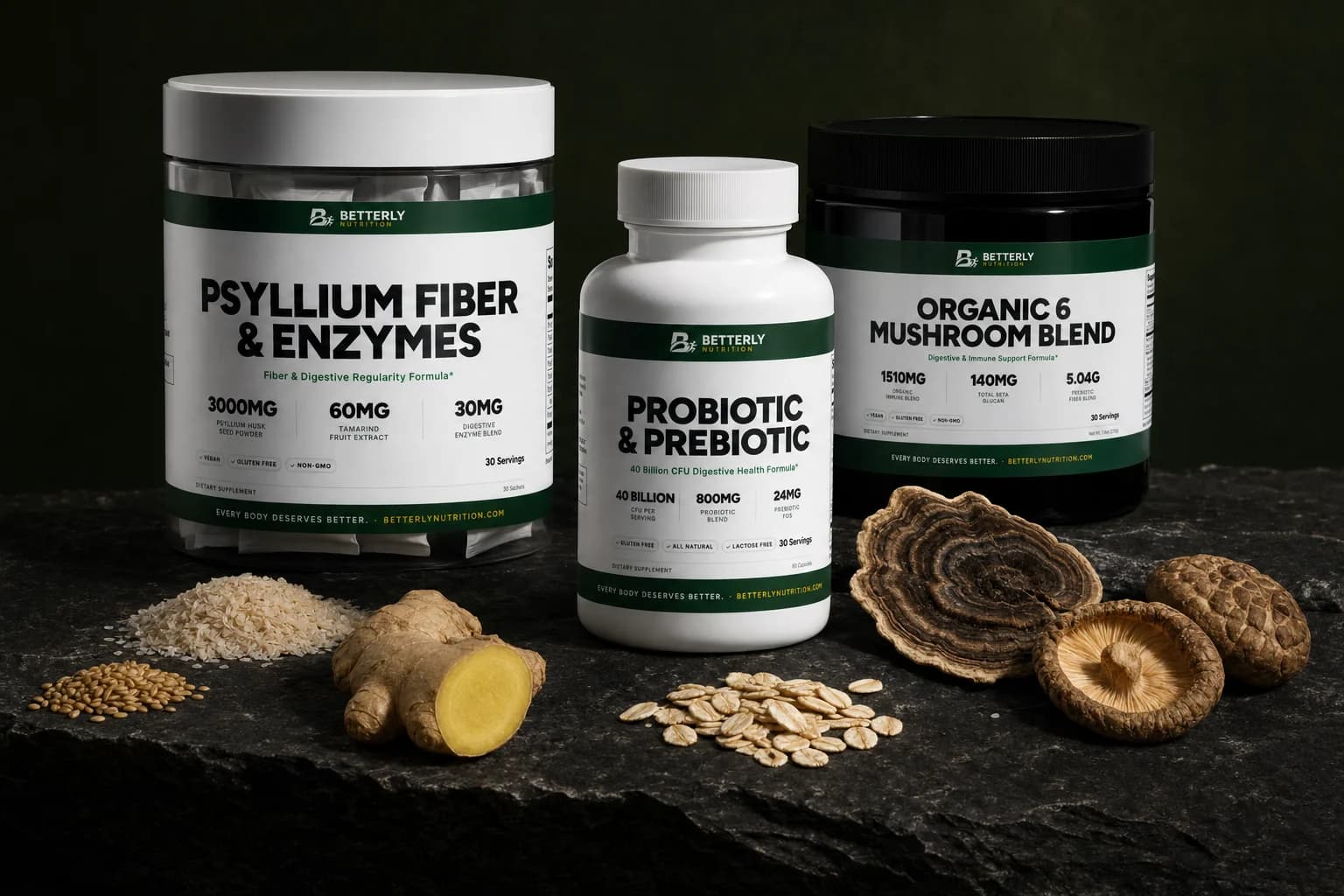
- The Organic 6 Mushroom Blend Powder lists cordyceps (Cordyceps militaris), reishi, royal sun agaricus (printed as himematsutake), shiitake, maitake and turkey tail, all as mycelium fermented on organic oats.
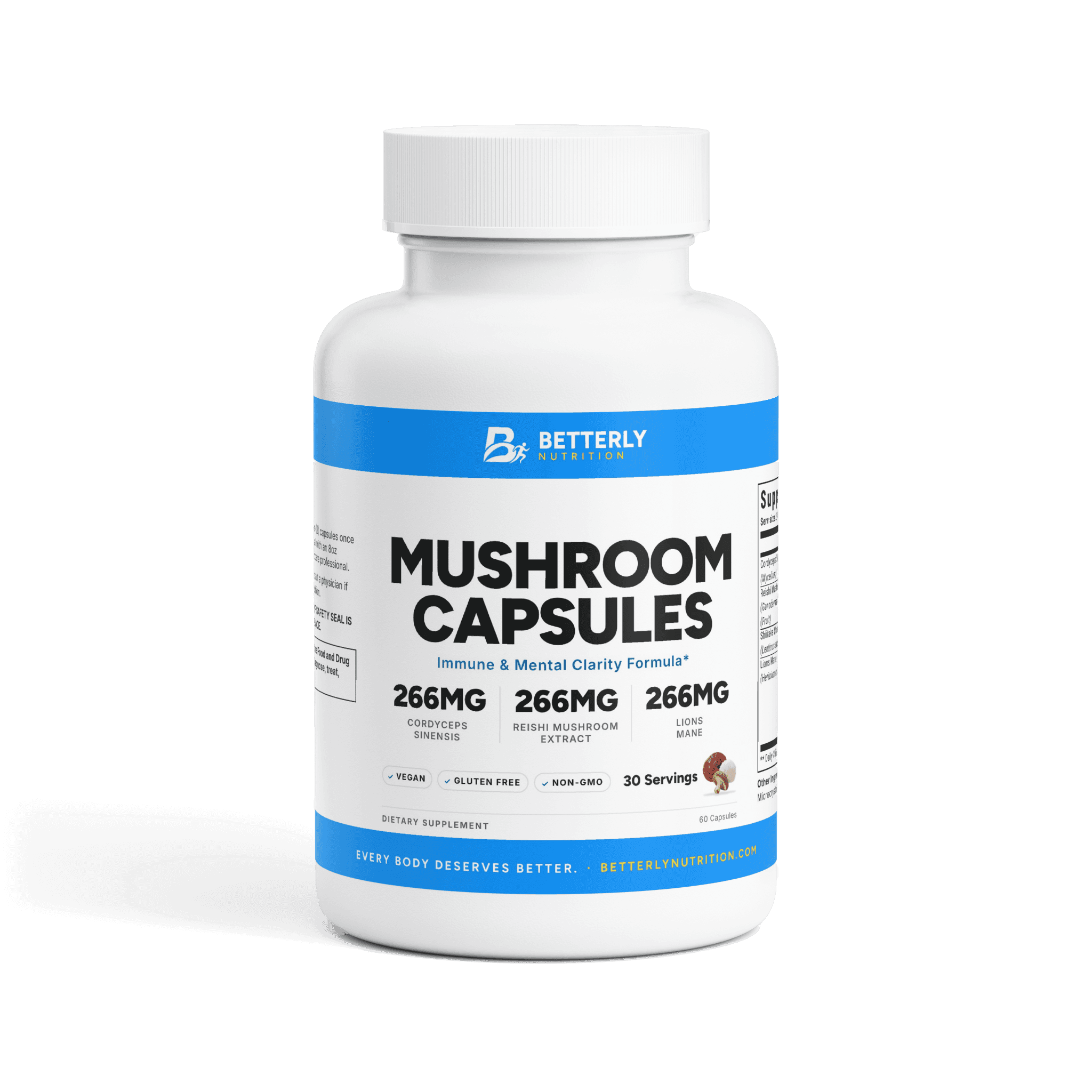
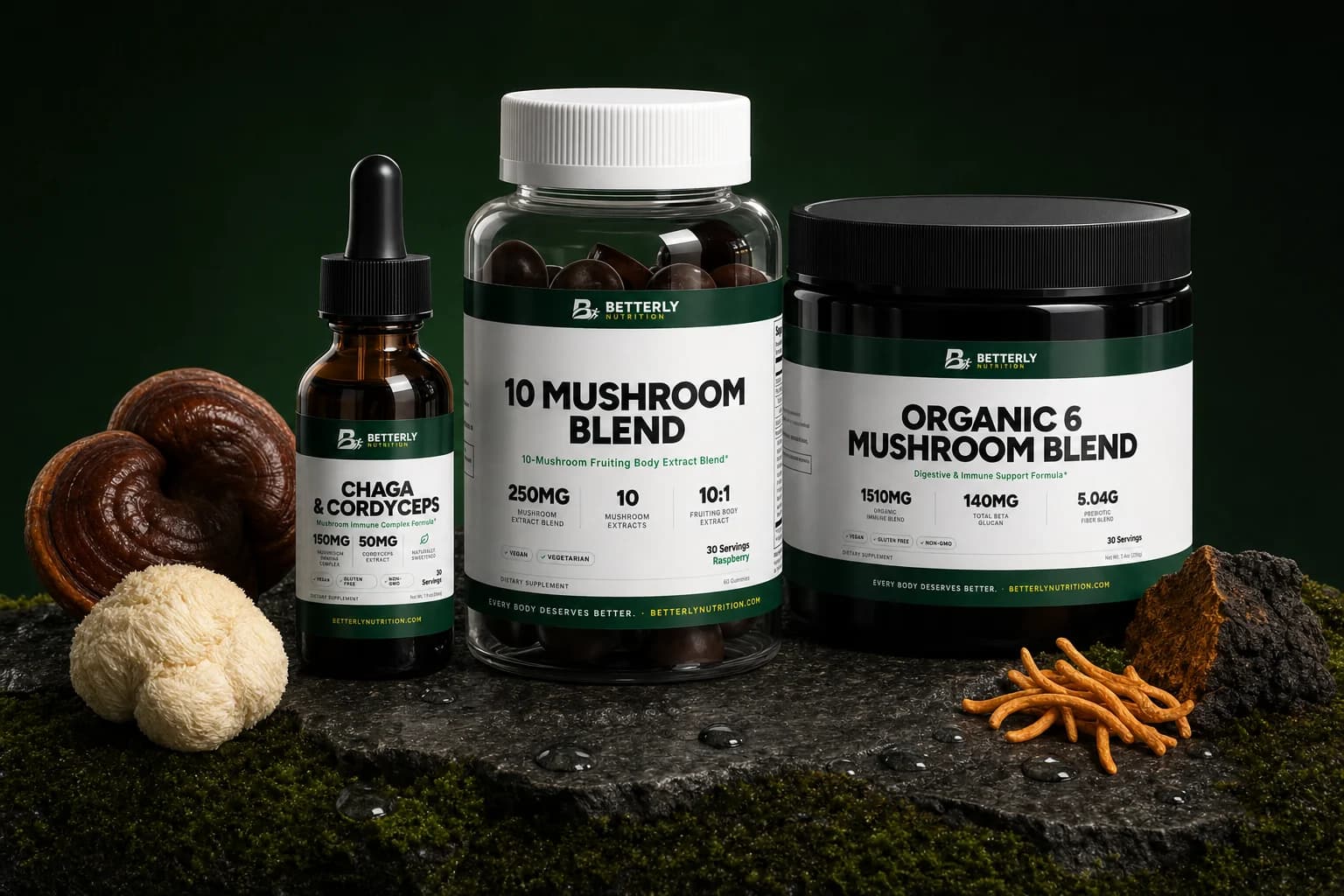
- The Mushroom Capsules split their species differently: four named rows of 266 mg each (cordyceps, reishi, shiitake, lion's mane) per 2-capsule serving, then one 266 mg proprietary blend covering maitake, turkey tail, chaga, royal sun agaricus, white button and black fungus.
Five of the powder's six species also appear in the capsules. Both list a cordyceps, but not the same one: Cordyceps militaris in the powder and Cordyceps sinensis in the capsules. Our side-by-side of mushroom gummies, drops, powder and capsules compares every format we sell by milligrams.
Is mushroom powder good for gut health? Our scoop, by the numbers
Our Organic 6 Mushroom Blend Powder gives your gut 4 g of dietary fiber per 1-scoop (7 g) serving, but the mushrooms can supply at most about 38% of it.
The panel's four key lines:
- Dietary Fiber: 4 g, listed as 14% of the Daily Value.
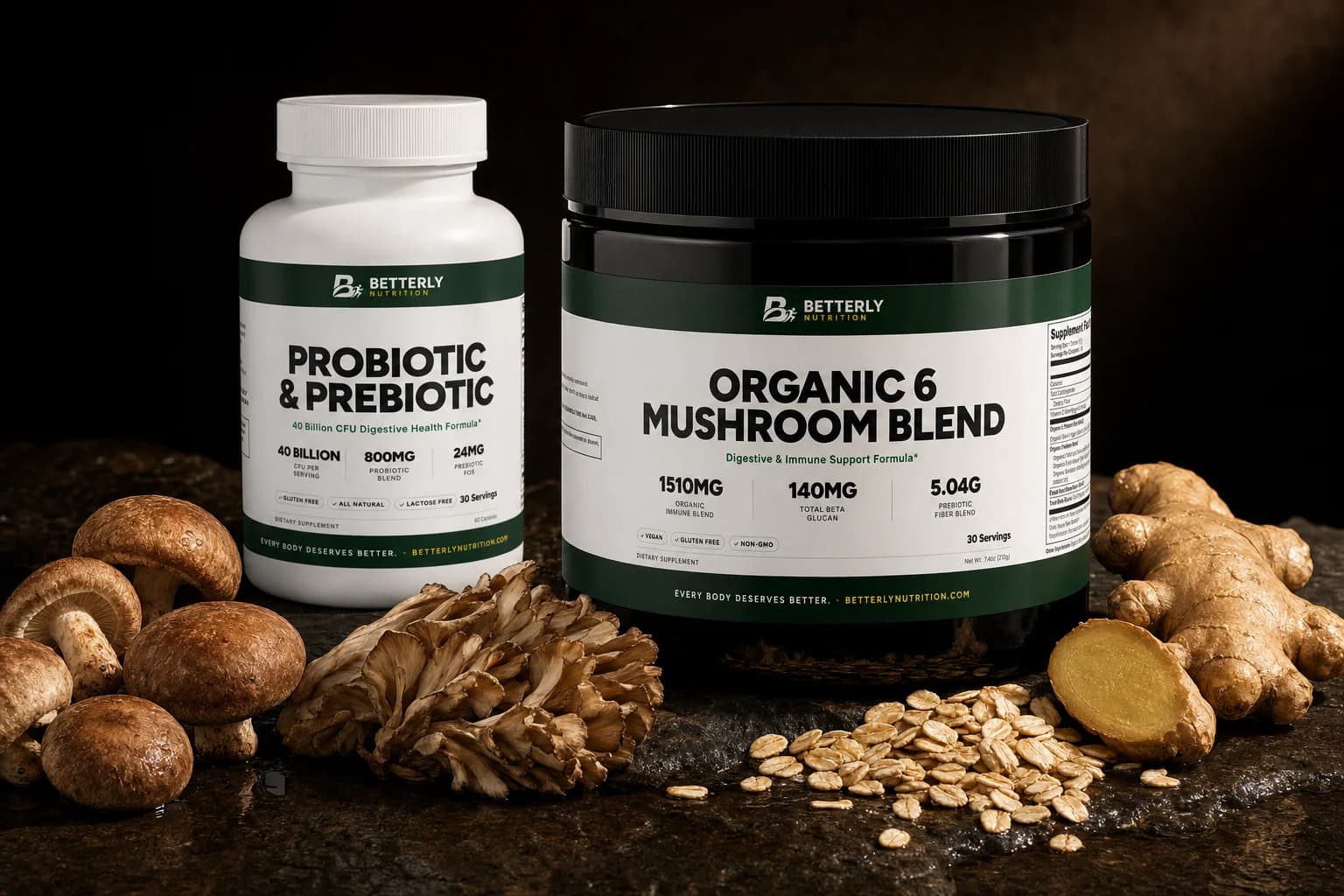
- Organic Prebiotic Fiber Blend: 5.04 g of organic inulin, organic green tea leaf extract and organic fermented ginger root, with no split between them.
- Organic Immune Blend: 1,510 mg of the six-mushroom mycelial fermented blend.
- Total Beta Glucan (from Organic Immune Blend): 140 mg.
Start with the ceiling. Suppose every milligram of the 1,510 mg mushroom blend were fiber, which it almost certainly isn't. That's still only 1.51 g. The remaining 2.49 g of the 4 g, about 62%, has to come from something else, and the only panel line that calls itself fiber is the prebiotic blend with inulin listed first.
The beta-glucan row is smaller still. At 140 mg, it's 3.5% of the scoop's fiber and about 9% of the mushroom blend's weight.
One more wrinkle. In a consumer fact sheet that profiles beta-glucans among other supplement ingredients, the NIH Office of Dietary Supplements (ODS) describes them as soluble dietary fibers found in bacteria, yeasts, fungi, oats and barley. Our label's footnote says the mycelium was grown on organic oats, so the panel can't tell you how much of that 140 mg is fungal and how much came from the grain. Our explainer on fruiting body vs mycelium digs into grain-grown mycelium.
Put plainly, this is a fiber supplement with mushrooms in it. That's not a knock, because grams of fermentable fiber are what gut bacteria can use, and a scoop delivers them. Just don't give the mushrooms credit for work the inulin is doing.
Powder, capsules or a probiotic: which fits your gut goal?
If fiber for your gut bacteria is the goal, the Organic 6 Mushroom Blend Powder is the only one of these three products that lists fiber in grams.
| Product (serving) | Mushroom | Prebiotic/fiber line | Live cultures |
|---|---|---|---|
| 6 Mushroom powder (1 scoop) | 1,510 mg, 6 species | 4 g fiber | None |
| Mushroom Capsules (2) | 1,330 mg, 10 species | None listed | None |
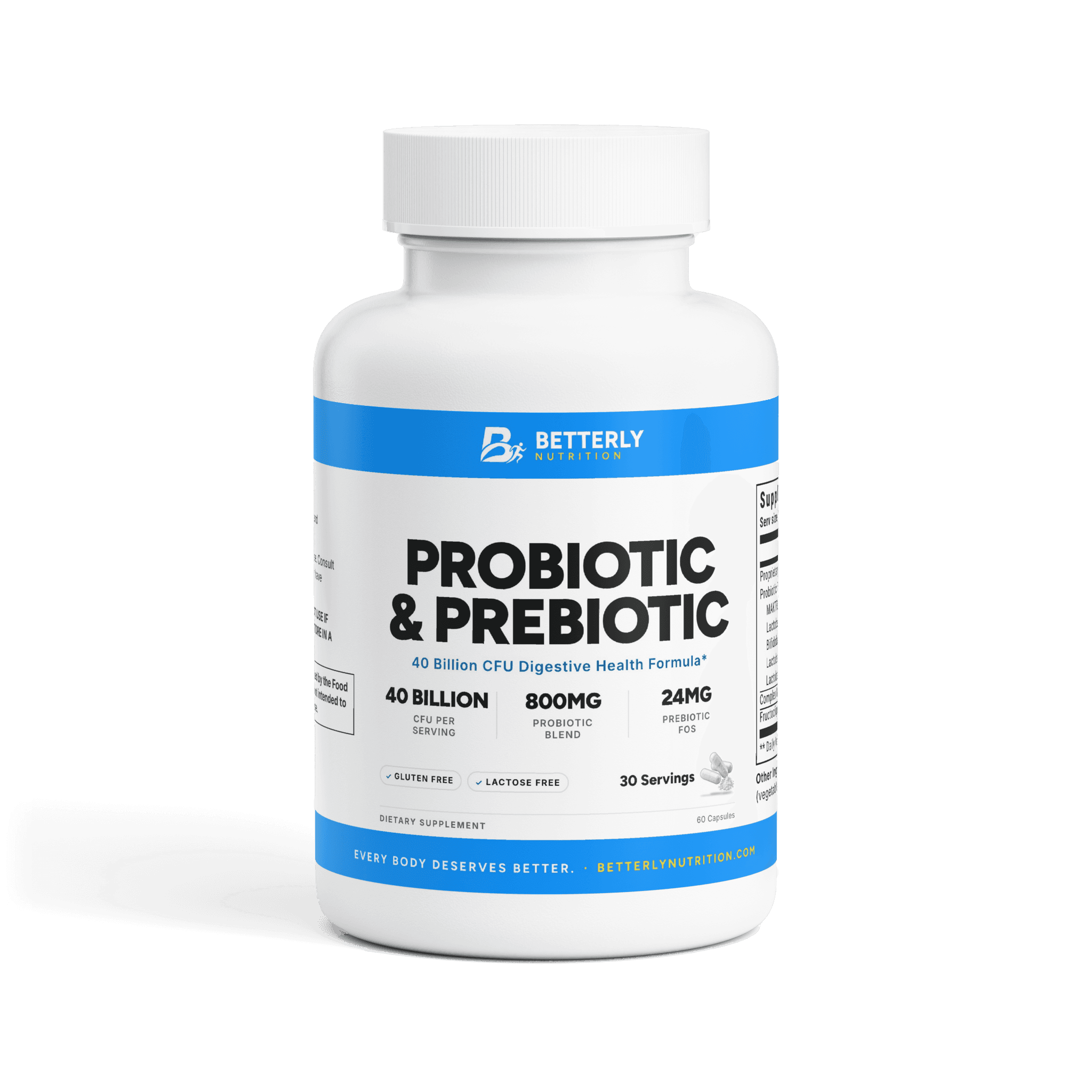
| Probiotic & Prebiotic (2) | None | 24 mg FOS | 800 mg, 4 strains |
The 1,330 mg is our sum of the capsule label's five 266 mg rows. Read across and each product does one job. The powder is the fiber pick. The ten-mushroom capsules carry more species but print no fiber line, and their label calls them an "Immune & Mental Clarity Formula," so they're a mushroom product rather than a gut product.
The Probiotic & Prebiotic Capsules are the only one with live cultures: four named strains in an 800 mg blend, which the front label counts as 40 Billion CFU per serving. Their prebiotic side is 24 mg of fructooligosaccharide (FOS), measured in milligrams where the powder's fiber comes in grams. The panel also lists 60 mg of complex marine polysaccharide but doesn't call it a prebiotic.
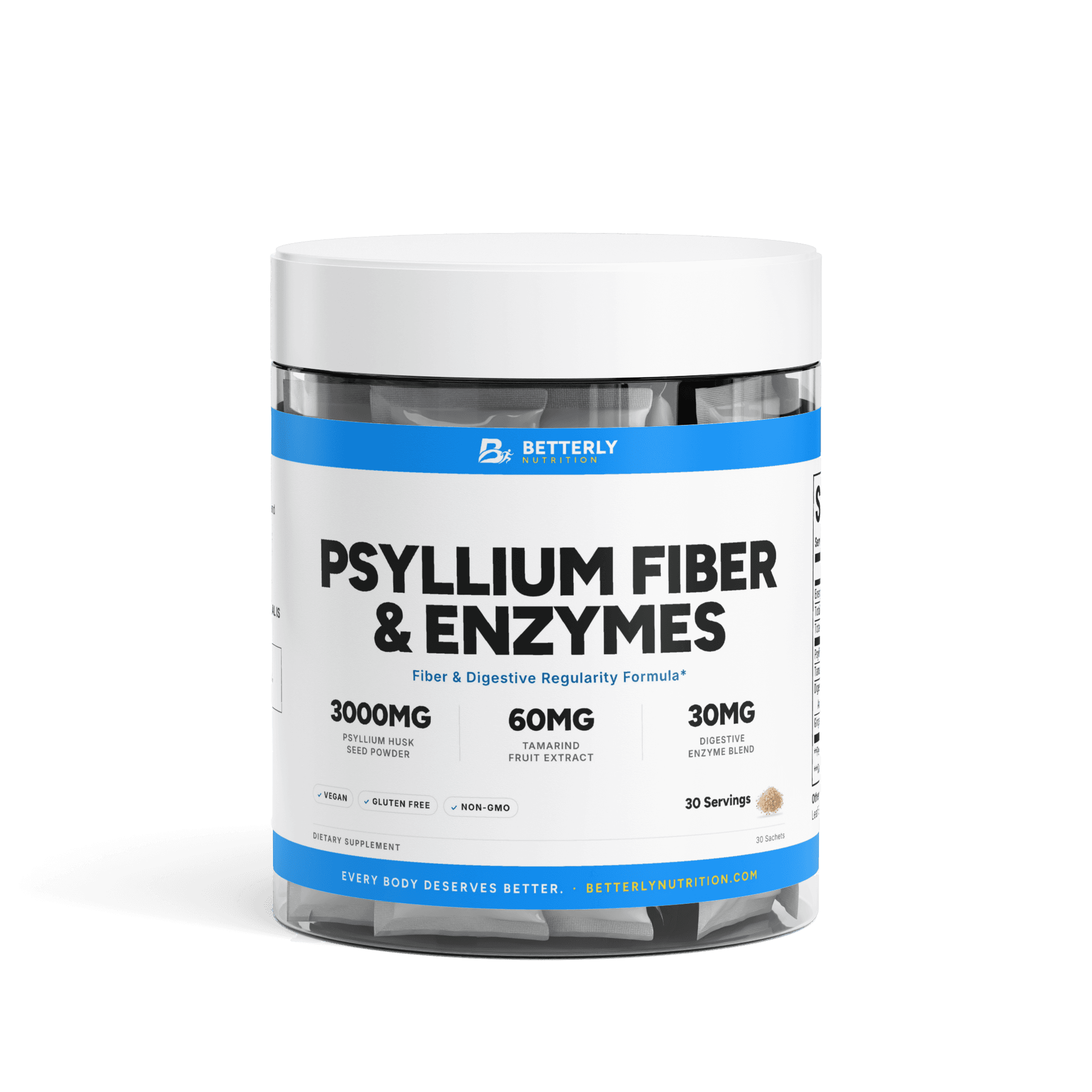
Our gut health and digestion collection also carries psyllium fiber, digestive enzymes and other probiotic formats.
From our shop: Organic 6 Mushroom Blend Powder — a 5.04 g inulin-led fiber blend and 1,510 mg of six mycelial mushrooms in each 1-scoop (7 g) serving, with 30 servings to a tub.
Can mushrooms or mushroom powder upset your stomach?
Mushrooms and mushroom powders can cause gas, because the fermentation that feeds your gut bacteria also produces it, and a fiber-heavy scoop adds to the load.
The same ODS fact sheet says beta-glucans can cause flatulence, and that they seem to be safe at up to 10 g a day for 12 weeks. For scale, the 140 mg in one scoop is 1.4% of that 10 g figure.
The bigger variable in this scoop is the inulin, which your gut bacteria ferment too. Our comparison of psyllium, inulin and other fiber supplements explains how they differ on gas. If inulin has bothered you before, expect this blend to feel familiar.
Pace matters as much as type. The MedlinePlus fiber article warns that eating a large amount of fiber in a short period can cause gas, bloating and abdominal cramps.
So are mushrooms bad for your gut? Not by default. Two real exceptions: skip mushrooms if you've ever reacted to eating them, and stick to store-bought mushrooms unless an expert has identified what you picked.
How should you take mushroom powder for your gut?
The Organic 6 Mushroom Blend Powder label's suggested use is one scoop daily, mixed into food or drinks, or as directed by a health professional.
The label names no time of day, so pair the scoop with something you already make daily, like a smoothie or oatmeal.
A few habits make the extra fiber easier on you:
- Keep it to one scoop. Every label in this guide says "Do not exceed recommended dose."
- Drink alongside it. MedlinePlus says water helps fiber pass through the digestive system.
- Build the rest of your fiber slowly. MedlinePlus advises adding fiber gradually over a few weeks, so grow your plate over time rather than starting several fiber products at once.
- Let food do most of the work. MedlinePlus puts the recommendation for older children, teens and adults at 21 to 38 grams of fiber a day, so a 4 g scoop covers a slice of it.
The other two labels have their own directions. The Mushroom Capsules say two capsules once a day, and for best results "20-30 min before a meal with an 8oz (237ml) glass of water." The Probiotic & Prebiotic Capsules say two capsules once daily and, for best results, one during the day and one in the evening.
Don't stack both mushroom products expecting more for your gut. Five species overlap, and the capsules add no fiber line to the powder's 4 g.
From our shop: Probiotic & Prebiotic Capsules — the live-culture side of a gut routine, with four named strains in an 800 mg blend plus 24 mg of FOS per 2-capsule serving.
Do you need a mushroom supplement if you already eat mushrooms?
You don't need a mushroom supplement for your gut if you already eat mushrooms and other fiber-rich plants most days and your digestion feels comfortable.
A scoop also isn't the right buy when:
- You want live cultures. No mushroom supplies them, so a probiotic food or capsule is the better tool.
- Inulin doesn't agree with you. Our powder's fiber blend lists it first.
- You were hoping for lion's mane or chaga. Neither is in the powder, though both are in the Mushroom Capsules.
- You want mushrooms without the fiber. The capsules skip the scoop entirely.
A varied plate with beans, oats, fruit, vegetables and a few mushrooms each week covers the same ground, and brings plenty a 7 g scoop can't.
Who should check with a healthcare provider first?
Check with a healthcare provider before starting a mushroom powder or probiotic if you're pregnant or nursing, under 18, taking prescription medication, facing surgery or managing a medical condition.
The caution printed on all three labels is word-for-word identical: "Do not exceed recommended dose. Consult a physician if pregnant, nursing, under 18, or have a medical condition."
For the probiotic, NCCIH notes that probiotics carry more risk for people who are seriously ill or whose immune systems are weakened.
Three notes on the powder's ingredients are worth raising at that visit:
- Green tea leaf extract sits in the fiber blend with no caffeine figure beside it, so mention it if you watch caffeine.
- The mycelium was grown on organic oats. The label says gluten free, but if you avoid oats themselves, that footnote matters.
- Ginger root and acerola cherry are in the scoop too, so skip it if either has given you trouble.
FAQ: mushrooms and gut health
Is turkey tail good for your gut?
Turkey tail (Trametes versicolor) can add fermentable fiber like any mushroom, but we found no federal source tying turkey tail supplements to a specific gut benefit. Like other fungi, it carries beta-glucans in its cell walls. In our Organic 6 Mushroom Blend Powder, turkey tail sits inside the 1,510 mg blend, and the label doesn't show each species' share.
Do mushroom gummies help digestion?
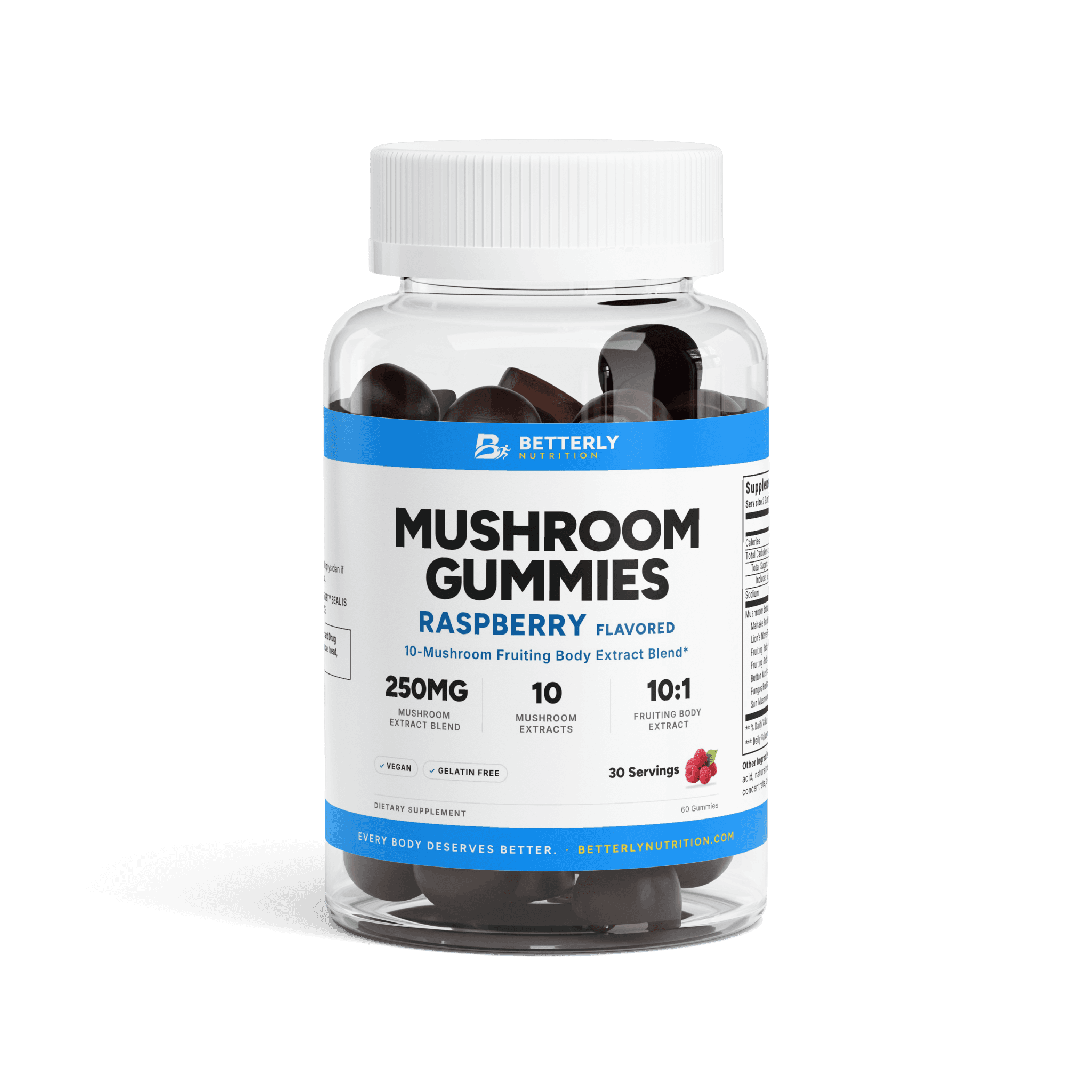
Not as a fiber source: our Mushroom Gummies print no dietary fiber row. They list 5 g of total carbohydrate per 2-gummy serving, all 5 g of it sugars. Their 250 mg mushroom extract blend is there for the mushrooms, not to feed gut bacteria.
Is there a timeline for mushroom powder and gut health?
No, there's no honest timeline for mushroom powder and gut health, and our label doesn't promise one. What you can track is how the extra fiber sits with you. Take one scoop daily as the label directs, avoid changing several things at once, and if gas or discomfort doesn't settle, stop and talk with a healthcare provider.
Can mushroom powder interact with medications?
Our mushroom powder label lists no drug interactions, but a missing warning isn't proof there are none. Each scoop holds six mushrooms, green tea leaf extract, ginger root and acerola, and every one is worth mentioning to your pharmacist or prescriber. Bring a photo of the Supplement Facts panel, and ask before starting if you take any prescription medication.
Can you eat mushrooms every day for gut health?
Store-bought mushrooms are an everyday food for most people, and their fiber counts toward your daily total like a vegetable's would. We found no federal limit on culinary mushrooms. Rotate them with beans, oats, fruit and other vegetables, since a varied plate brings a wider mix of fibers. If you've ever reacted to mushrooms, skip them.
Sources
- Gas, MedlinePlus
- Probiotics: Usefulness and Safety, NCCIH
- Dietary Supplements for Weight Loss: Fact Sheet for Consumers, NIH Office of Dietary Supplements
- Fiber, MedlinePlus Medical Encyclopedia
If this left you looking for somewhere to start, read mushroom powder with a prebiotic fiber blend — its amounts per serving are listed on the page. For the practical questions this raises, how dosing, sourcing and subscriptions work is answered in one place.