On this page
- Key takeaways
- Can you put mushroom powder in coffee?
- What goes into your mug with one scoop?
- How do you get a smooth cup instead of clumps?
- Does mushroom powder in coffee break a fast?
- Will mushroom powder change your coffee's taste or caffeine?
- How do you use mushroom powder in smoothies, oats and other foods?
- How do you take mushroom powder, and how much?
- Who can skip the mushroom scoop?
- Who should check with a healthcare provider first?
- FAQ: mushroom powder in coffee
- Sources
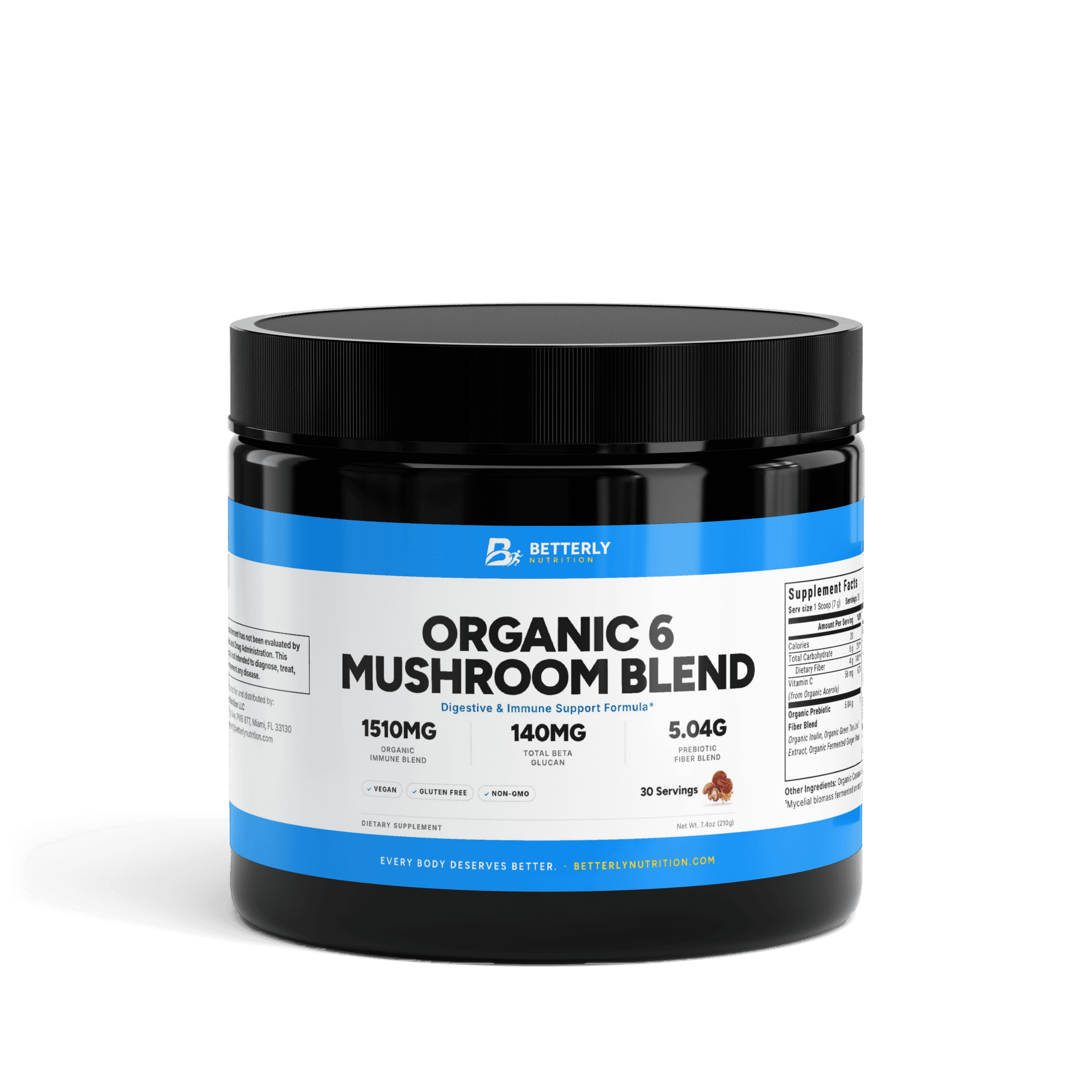
The short answer: You can use mushroom powder in coffee, hot or iced: the label on our Organic 6 Mushroom Blend Powder says to take one scoop daily "mixed into food or drinks." Whisk it in a little at a time instead of dumping it. Each 1 Scoop (7 g) serving adds 20 calories, 6 g of carbohydrate and 4 g of fiber, so the cup no longer fits a strict zero-calorie fast.
Key takeaways
- Our six-mushroom powder can go into hot coffee, iced coffee, a smoothie or oatmeal, because its label allows any food or drink.
- By weight, about 72% of each 7 g scoop is a prebiotic fiber blend and about 22% is the 1,510 mg mushroom blend.
- With 20 calories and 6 g of carbohydrate per scoop, 4 g of it fiber, a coffee with the powder stirred in isn't a zero-calorie drink.
- The fiber blend lists green tea leaf extract but no caffeine amount, so your caffeine count starts with the coffee.
Everything this guide names or links, from the powder and creamer to the capsules and the gut-health collection, is ours to sell. So check our work: each product figure is copied per serving from its Supplement Facts panel, and where a panel leaves an amount out, we say so instead of guessing.
Can you put mushroom powder in coffee?
Yes, you can put Organic 6 Mushroom Blend Powder in coffee, hot or iced, since its label's suggested use is one scoop daily "mixed into food or drinks."
What about heat? You'll see claims online both that hot water draws more out of a mushroom powder and that it spoils one. We found no federal source testing either at coffee temperature, and our label doesn't ask for a cool drink.
The one heat fact we can cite concerns the acerola. The NIH Office of Dietary Supplements' vitamin C fact sheet says cooking can reduce the vitamin C in food. A fresh mug is hot too, so that may apply there, though we have no measurement for this powder. Iced coffee sidesteps it.
A scoop in your own brew also differs from a pre-mixed mushroom coffee: you choose the roast, the cup size and the decaf days. Our look at mushroom coffee versus mushroom supplements weighs the two.
What goes into your mug with one scoop?
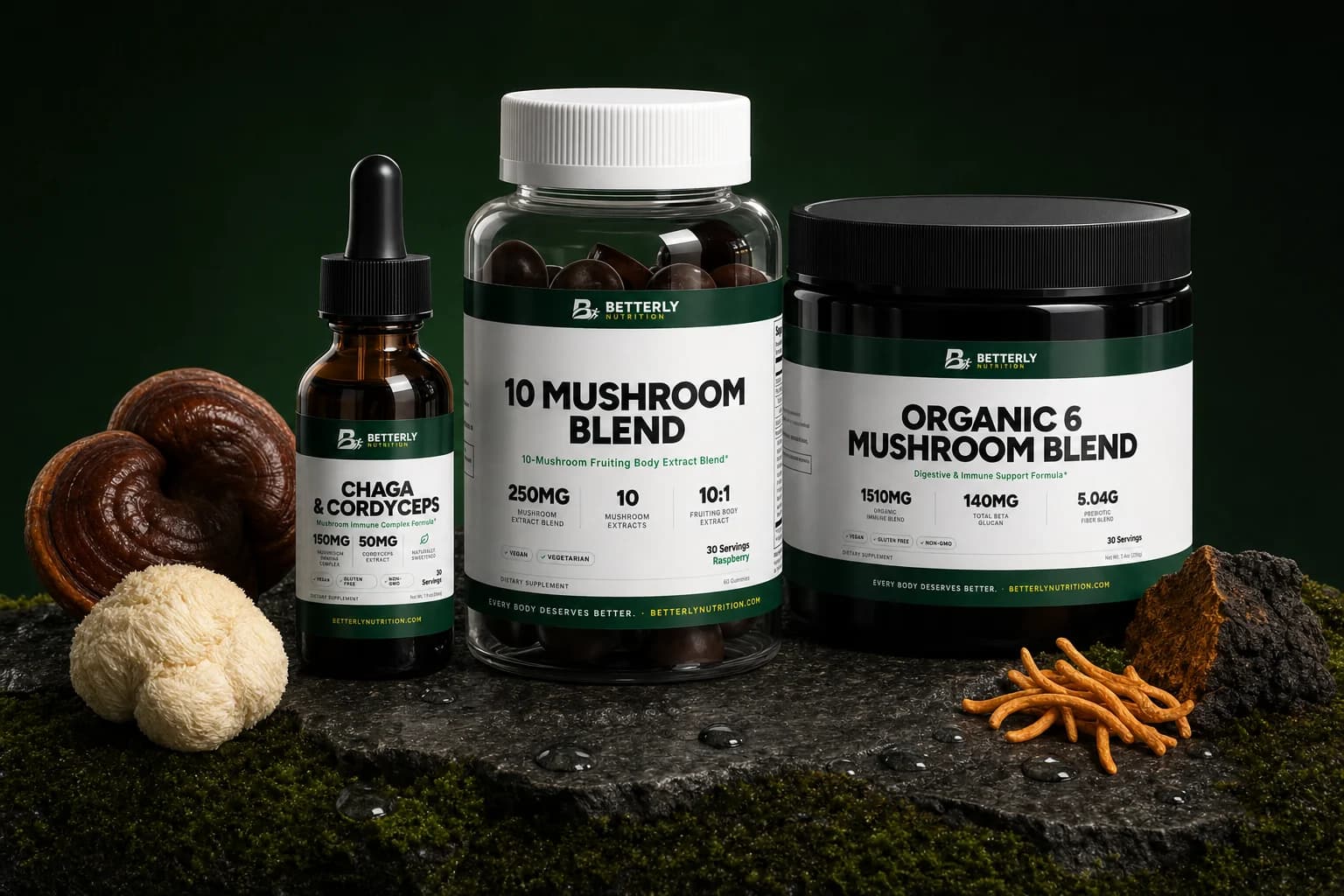
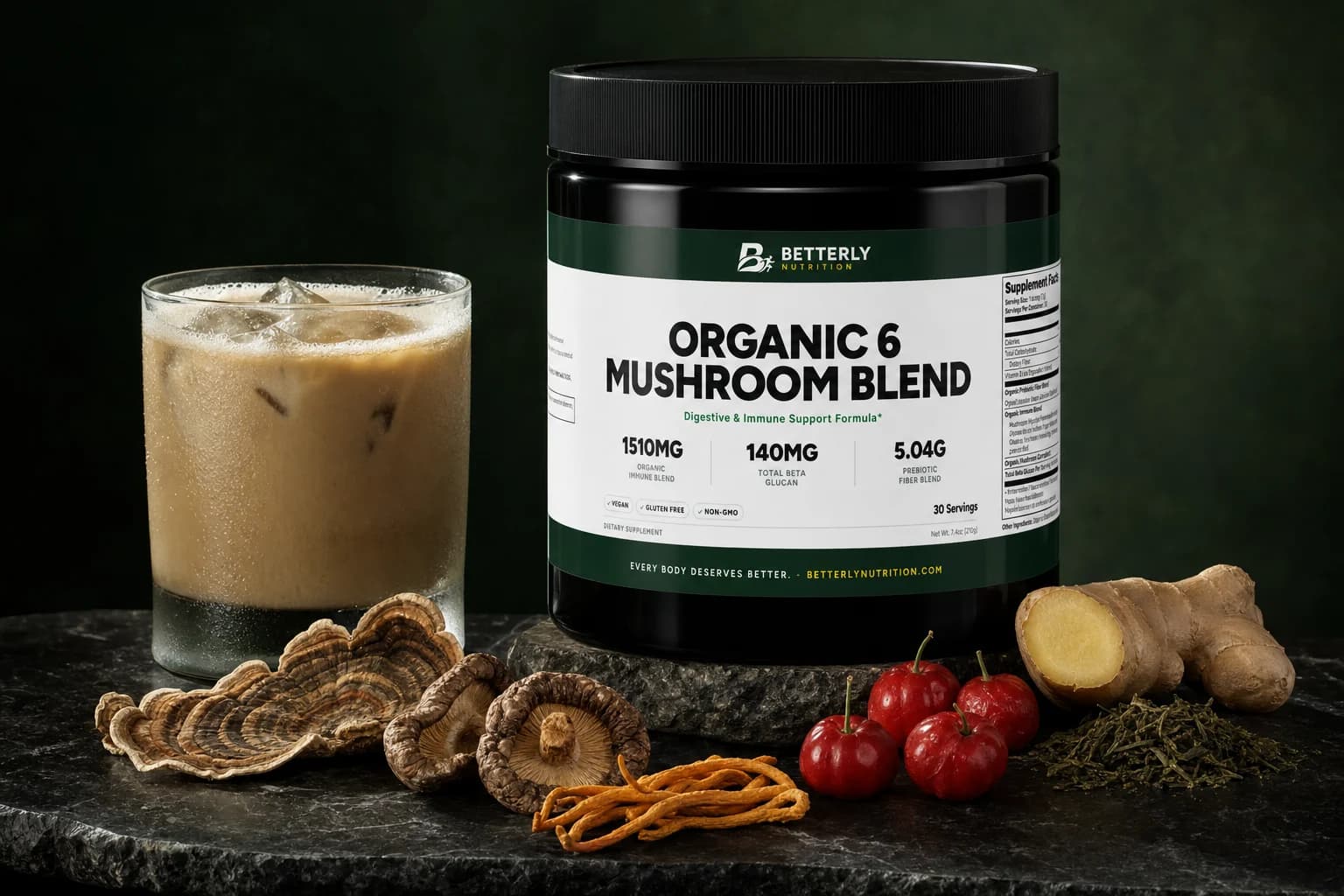
One 7 g scoop of Organic 6 Mushroom Blend Powder is mostly fiber: its panel lists a 5.04 g prebiotic fiber blend next to a 1,510 mg mushroom blend.
Here's how a 1 Scoop (7 g) serving divides:
| Panel line | Per 1 Scoop (7 g) | Share of the scoop |
|---|---|---|
| Organic Prebiotic Fiber Blend | 5.04 g | About 72% |
| Organic Immune Blend (six mushrooms) | 1,510 mg | About 22% |
| Organic Acerola Cherry Extract | 248 mg | About 3.5% |
| Organic cassava maltodextrin | Not listed | The small remainder |
The percentages are our own division, not the label's. A scoop holds roughly three parts fiber blend to one part mushroom, which is worth knowing when a mushroom is the reason you're buying.
- The fiber blend lists organic inulin, organic green tea leaf extract and organic fermented ginger root, without saying how much of each. The Dietary Fiber row reads 4 g (14% DV).
- The six mushrooms are cordyceps (Cordyceps militaris), reishi (Ganoderma lucidum), royal sun agaricus (Agaricus blazei, listed as himematsutake), shiitake, maitake and turkey tail. A footnote calls the blend mycelial biomass fermented on organic oats, meaning the fungus's root-like threads were grown on grain. Our guide to fruiting body vs mycelium explains that wording.
- A separate line lists 140 mg of total beta glucan from the mushroom blend.
- The acerola brings 56 mg of vitamin C (62% DV), far below the 2,000 mg adult upper limit from all sources on the same ODS fact sheet.
Our format-by-format mushroom comparison puts this scoop beside our gummies, drops, strips and capsules, milligram for milligram.
How do you get a smooth cup instead of clumps?
Mushroom powder blends most evenly into coffee in two or three small sprinkles, with a whisk or frother working between each, rather than as one tipped-in heap.
Pick the route that fits the coffee you already make:
- Black coffee: add about a third of the scoop at a time, whisking with a small whisk or a fork between additions.
- Mocha-style: stir the scoop into a spoonful of unsweetened cocoa in the dry mug, then whisk in the coffee slowly. The cocoa keeps the mushroom powder spread out, and since the FDA names chocolate as a caffeine source, count it too.
- Latte: froth the scoop into warm dairy or plant milk, then add the coffee.
- Iced coffee or cold brew: shake it in a lidded jar or blend it. No heat means no vitamin C question, either.
A fine, earthy silt may still settle, since the label describes mycelial biomass rather than an extract. Swirl the mug before your last sips so the blend doesn't end up in the sink.
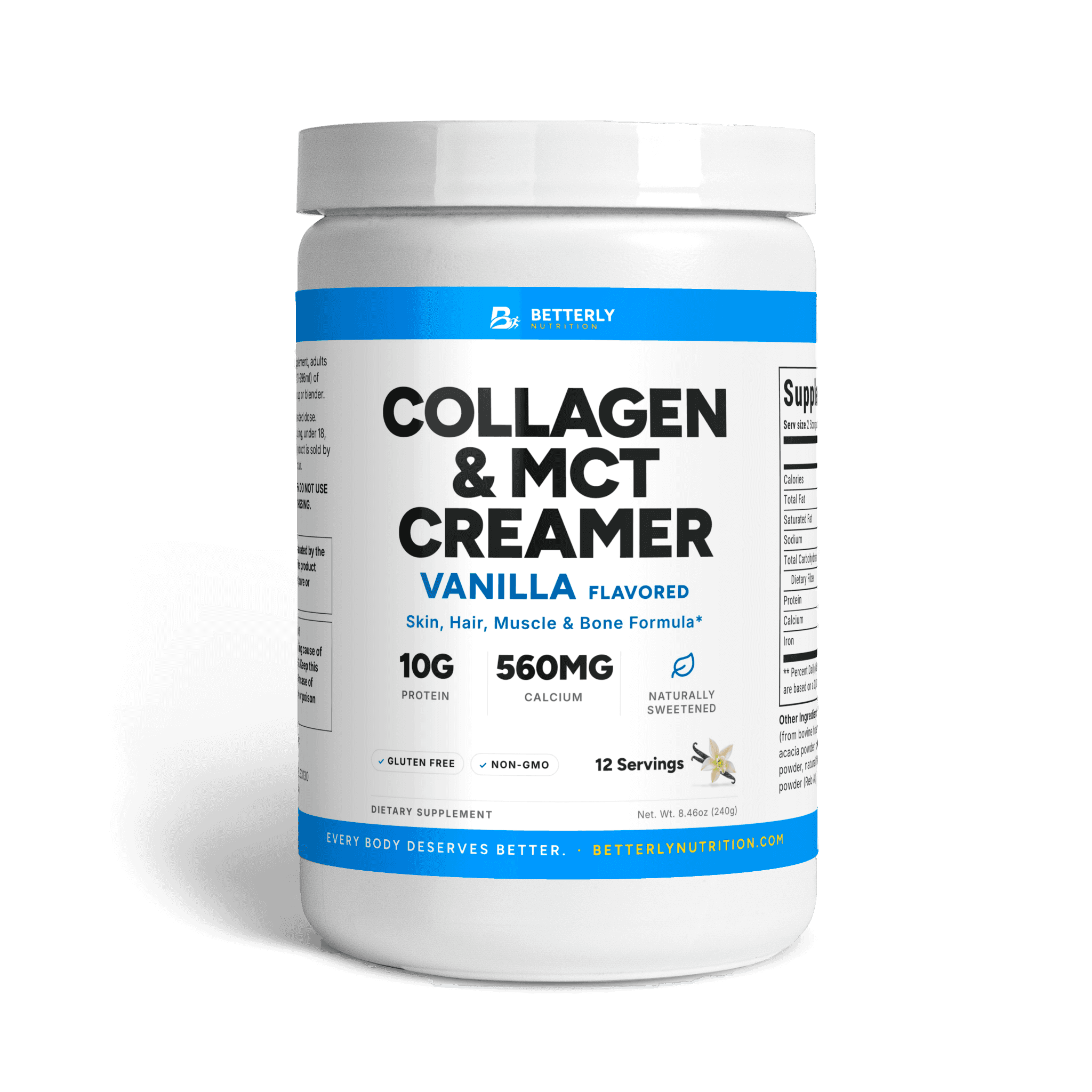
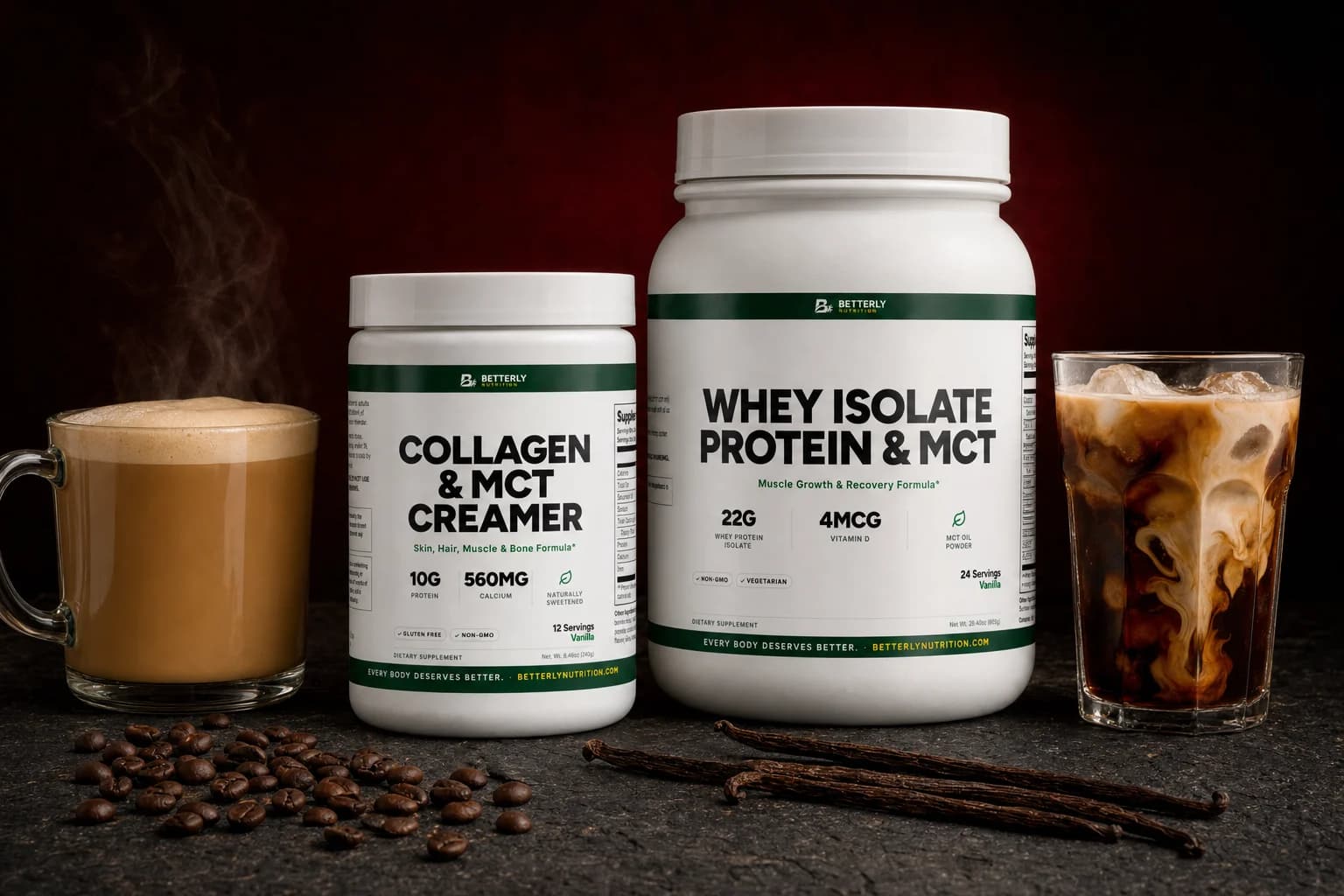
For a creamier cup, our Collagen Peptides & MCT Creamer (Vanilla) is labeled for 2 Scoops (20 g) in 8-10 oz of "their favorite beverage." One honest mismatch: the mushroom powder is labeled vegan, but the creamer's collagen comes from bovine hide. Our guide to stirring protein powder into coffee covers whey, which behaves differently in heat.
From our shop: Organic 6 Mushroom Blend Powder — a 1,510 mg six-mushroom mycelial blend with 140 mg of total beta glucan per 1 Scoop (7 g) serving, labeled vegan, gluten free and non-GMO.
Does mushroom powder in coffee break a fast?
Yes, mushroom powder in coffee breaks a strict fast, because each 1 Scoop (7 g) serving of our blend lists 20 calories and 6 g of total carbohydrate.
The panel counts 4 g of that 6 g as dietary fiber, with inulin named first in the fiber blend, and prints no sugars row. The only other ingredient is organic cassava maltodextrin, a starch-based carbohydrate. A zero-calorie fast ends at the first sip. If your plan tracks carbohydrate instead, whether fiber counts is its call, not the label's.
A creamer raises the count. With 2 Scoops (20 g) of our vanilla creamer in the same mug, our sums of the two panels come to 90 calories, 9 g of carbohydrate, 5 g of fiber, 2 g of fat and 10 g of protein, before any milk.
There's a second reason to keep this scoop out of a fasted coffee. The NIH Office of Dietary Supplements' immune function fact sheet says some green tea extracts might damage the liver, especially on an empty stomach, which is where a pre-breakfast coffee lands.
Our label doesn't give the extract's share of the 5.04 g blend, so we can't say whether that caution applies. A mug taken with a meal keeps it simple, and the label's "food or drinks" wording allows it.
Will mushroom powder change your coffee's taste or caffeine?
Organic 6 Mushroom Blend Powder lists no flavoring or sweetener, and its panel prints no caffeine amount, even though its fiber blend includes green tea leaf extract.
We can't predict how a scoop will taste in your cup. Nothing was added to cover the mycelium, ginger, green tea and acerola, so if that earthy edge bothers you, the mocha or latte routes give it cover.
Caffeine is murkier. The ODS immune function fact sheet notes that tea contains caffeine, but our panel gives no figure for the extract, so we won't call the scoop caffeinated or caffeine-free.
Anchor on the coffee instead. Two to three 12-fluid-ounce cups come to roughly 400 mg, the daily amount the FDA's consumer update Spilling the Beans: How Much Caffeine is Too Much? says isn't generally associated with negative effects for most adults. That's a reference point, not a goal. The same page says decaf typically has 2 to 15 mg per 8-fluid-ounce cup, so a decaf mushroom latte is low in caffeine, not free of it.
How do you use mushroom powder in smoothies, oats and other foods?
Organic 6 Mushroom Blend Powder can go into any food or drink, according to its label, so smoothies, oatmeal and yogurt work as well as coffee does.
| Base | How to add the scoop | Good to know |
|---|---|---|
| Hot coffee | Sprinkle and whisk | Swirl before the last sips |
| Iced coffee or cold brew | Shake or blend with the coffee | No heat to think about |
| Smoothie | Add with the liquid, then blend | The blender does the mixing |
| Oatmeal or yogurt | Stir in after cooking | Pairs the scoop with food |
| Tea or hot water | Sprinkle and whisk | Green tea doubles the tea |
Cold bases are the least fussy, and a food base is the only one that guarantees your scoop arrives with a meal. Whichever you pick replaces that day's coffee scoop rather than adding a second.
How do you take mushroom powder, and how much?
The label's suggested use for Organic 6 Mushroom Blend Powder is one scoop daily, mixed into food or drinks, and it doesn't name a time of day.
- Measure one scoop, or weigh 7 g on a kitchen scale, the weight the panel gives for one scoop.
- Mix it into one drink or meal, using a route above. The label's caution reads "Do not exceed recommended dose," so a second coffee stays plain.
- Store the tub in a cool, dry place, out of children's reach, as the label directs.
If 4 g of extra fiber is new to your routine, MedlinePlus says on its fiber page that adding fiber slowly, instead of all at one time, can help reduce gas. It also says water helps fiber pass through the digestive system, so keep a glass of water near the mug.
From our shop: Collagen Peptides & MCT Creamer (Vanilla) — 70 calories, 10 g of protein and 560 mg of calcium (43% DV) per 2 Scoops (20 g) serving, in a vanilla creamer sweetened with stevia extract.
Who can skip the mushroom scoop?
Organic 6 Mushroom Blend Powder is easy to skip if your coffee stays black through a fast, your fiber's already covered, or you want lion's mane or chaga.
- Your coffee has to stay black. Each scoop puts 20 calories and 6 g of carbohydrate in the mug, plus the green tea empty-stomach question.
- Your fiber is already in range. MedlinePlus recommends 21 to 38 grams a day for older children, adolescents and adults. If you already get there, compare our Gut Health & Digestion collection before stacking two fiber products.
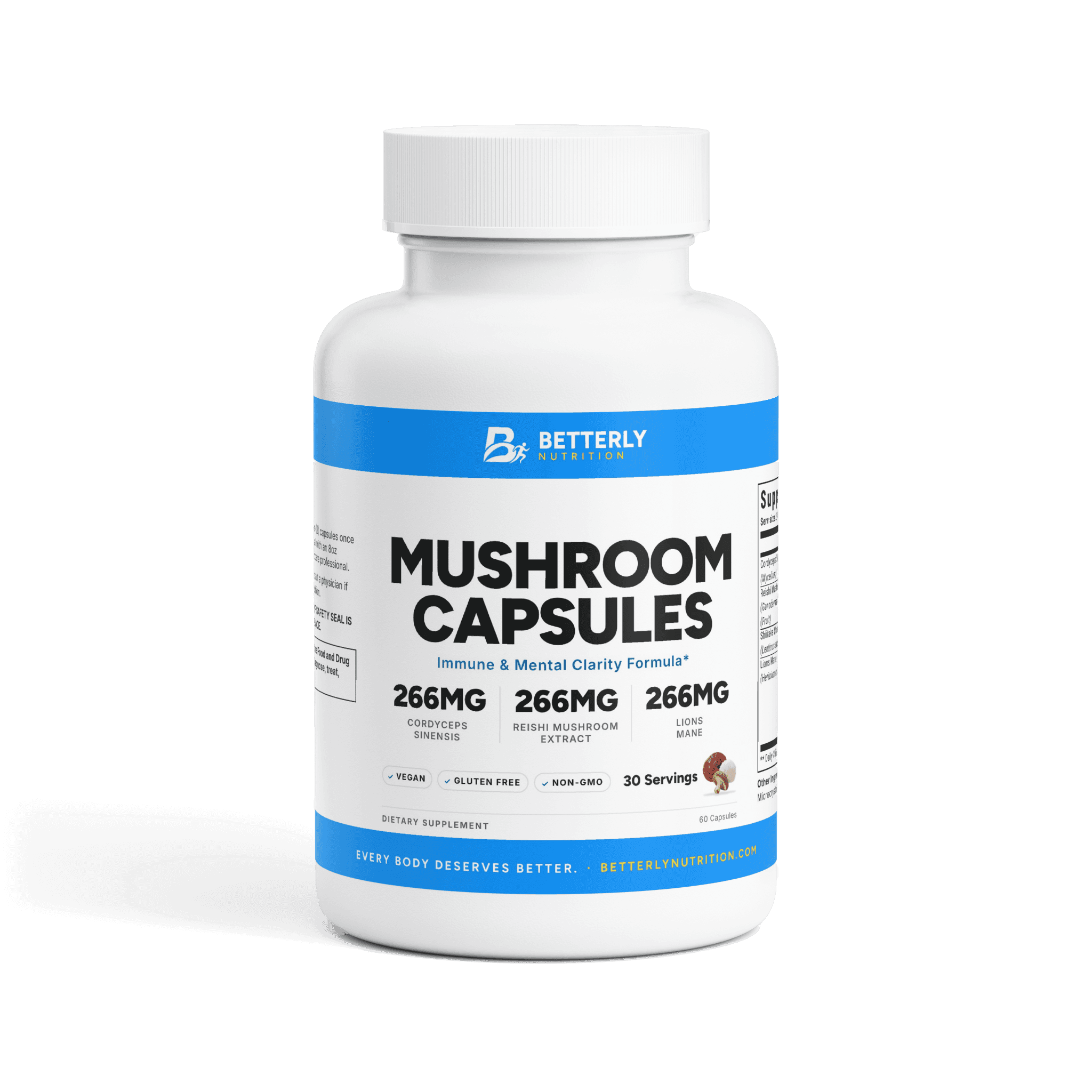
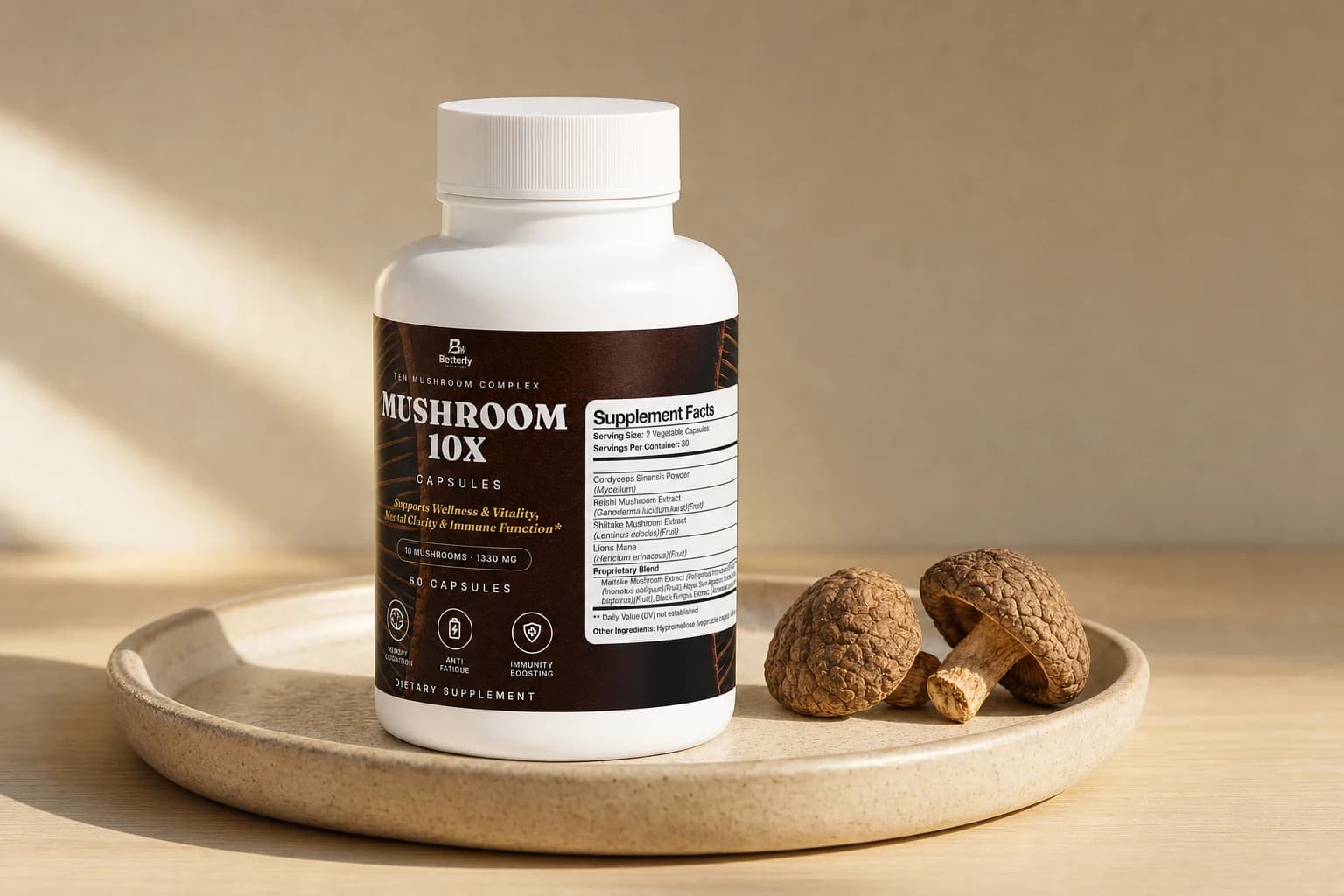
- You want lion's mane or chaga. Neither is on this panel. Our Mushroom Capsules list lion's mane at 266 mg per 2-capsule serving and chaga inside a 266 mg proprietary blend. They share five of this powder's six species, so treat them as a swap, not an add-on.
- You drink decaf to keep caffeine as low as you can. The green tea leaf extract comes with no caffeine figure, so the scoop can't promise to leave a decaf cup where it started.
Torn between a single mushroom and a mix? Our look at lion's mane on its own against a multi-mushroom formula takes that head-on.
Who should check with a healthcare provider first?
Ask a healthcare provider before starting Organic 6 Mushroom Blend Powder if you're pregnant or nursing, under 18, on prescription medicine, scheduled for surgery, or have a medical condition.
The label on the tub says: "Consult a physician if pregnant, nursing, under 18, or have a medical condition." We add prescriptions and surgery because the blend names eleven ingredients, and your care team can only weigh the ones they know about. Bring a photo of the panel, and raise:
- The green tea leaf extract, its unlisted amount, and the ODS empty-stomach caution.
- Your coffee. The FDA recommends that anyone pregnant, trying to become pregnant or breastfeeding, or concerned about a condition or medication, talk with a health care provider about caffeine.
- Any past reaction to eating mushrooms, ginger or oats, since the mycelium was grown on oats.
If you add our creamer, keep that tub out of reach too. Its label warns: "Accidental overdose of iron-containing products is a leading cause of fatal poisoning in children under 6."
FAQ: mushroom powder in coffee
Can you put mushroom powder in tea or plain hot water?
Yes, though our mushroom powder already has some tea in it: the fiber blend lists organic green tea leaf extract. A scoop in green or black tea stacks a second tea source on top, and the panel gives no caffeine figure for the first. Plain hot water or an herbal tea keeps the drink to the scoop alone, still at one scoop a day.
Is mushroom powder in coffee good for you?
Mushroom powder in coffee can fit a balanced routine, and the fairest test is what the panel lists. A scoop of ours adds 4 g of dietary fiber, 56 mg of vitamin C (62% DV) and 140 mg of total beta glucan. The NIH Office of Dietary Supplements says vitamin C helps the immune system work properly. None of the federal pages cited here sets a benefit for the six mushrooms themselves.
Can you take mushroom powder every day?
Yes, our mushroom powder label is written for daily use: one scoop a day in food or a drink, and "Do not exceed recommended dose." On a three-coffee morning, the scoop still goes in only one mug. MedlinePlus notes that a lot of fiber in a short time can bring gas, bloating and cramps. Mention any of those to a healthcare provider, and let the tub wait until you've talked.
How long does a tub of mushroom powder last?
A tub of Organic 6 Mushroom Blend Powder holds 30 servings, so it lasts 30 days at the label's one scoop a day. That's a supply figure, not a results window; nothing on the label ties the powder to a time frame. Keep the scoop dry between uses, since a drip of coffee in the tub can set loose powder into hard lumps.
Is mushroom powder in coffee okay during pregnancy?
Ask your healthcare provider before using mushroom powder in coffee while pregnant or nursing. Our label tells anyone pregnant or nursing to consult a physician first, and the FDA recommends that people who are pregnant or breastfeeding talk with a provider about caffeine. The powder and the coffee are separate questions, so bring up both at one visit.
Sources
- Vitamin C: Fact Sheet for Consumers, NIH Office of Dietary Supplements
- Dietary Supplements for Immune Function: Fact Sheet for Consumers, NIH Office of Dietary Supplements
- Spilling the Beans: How Much Caffeine is Too Much?, U.S. Food and Drug Administration
- Fiber, MedlinePlus Medical Encyclopedia
If this left you looking for somewhere to start, read six mushroom blend powder for coffee and smoothies — its amounts per serving are listed on the page. For the practical questions this raises, how dosing, sourcing and subscriptions work is answered in one place.