On this page
- Key takeaways
- What's the difference between gotu kola and bacopa?
- Gotu kola vs bacopa: why are both sold as brahmi?
- How can you tell which brahmi is in a bottle?
- Why do supplement formulas pair gotu kola with bacopa?
- What's in our Gotu Kola & Bacopa Capsules, and what's missing?
- Where does ashwagandha fit with gotu kola and bacopa?
- How do you take a gotu kola and bacopa supplement?
- When don't you need gotu kola or bacopa?
- Who should check with a healthcare provider first?
- FAQ: gotu kola vs bacopa
- Sources
The short answer: In gotu kola vs bacopa, you're comparing Centella asiatica with Bacopa monnieri, two separate species of creeping herb. NIH's LiverTox database lists brahmi as another name for each, which is where the confusion starts. LiverTox rates gotu kola a probable rare cause of liver injury and hasn't linked bacopa to any. Look for the Latin name on the panel before you buy.
Key takeaways
- Gotu kola (Centella asiatica) and bacopa (Bacopa monnieri) are separate species, even though shops sell both as brahmi.
- NIH's LiverTox database lists "brahmi" and "Indian pennywort" as names for both plants, so a common name alone can't settle which herb you're buying.
- LiverTox links gotu kola to rare cases of liver injury and hasn't linked bacopa to any, which is the clearest safety difference between them.
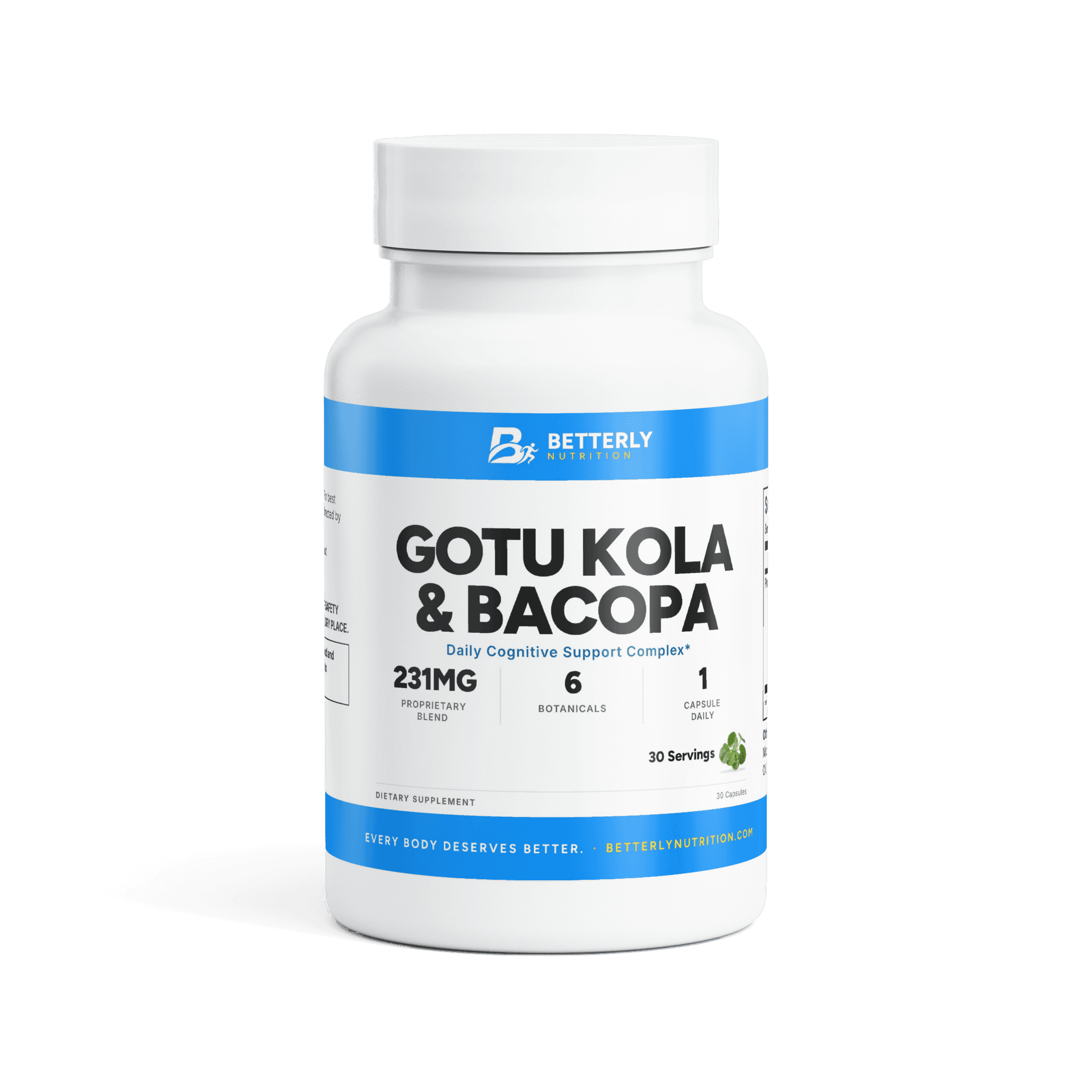
- Our Gotu Kola & Bacopa Capsules pack six botanicals into one 231 mg blend in each 1-capsule serving, name gotu kola first, and give neither herb its own amount.
Full disclosure: Betterly sells a capsule that holds both herbs, and bacopa shows up on three more of our labels. We use those real Supplement Facts panels below, including where our own capsule comes up short.
What's the difference between gotu kola and bacopa?
Gotu kola and bacopa differ in species, key compounds, typical amounts and liver record, though both are creeping plants with centuries of use in Ayurveda.
LiverTox, an NIH database that tracks liver effects of medicines and supplements, has a page on each. Its gotu kola entry describes a plant of tropical swampy ground that people also eat in salads. Its bacopa entry describes a creeping plant native to the Indian subcontinent.
| At a glance | Gotu kola | Bacopa |
|---|---|---|
| Latin name | Centella asiatica | Bacopa monnieri |
| Other names in LiverTox | Asian or Indian pennywort, tiger grass, brahmi | Water hyssop, Indian pennywort, brahmi |
| Part used, per LiverTox | Fresh or dried leaves | Fresh or dried leaves |
| Compounds LiverTox names | Asiaticoside, madecassoside and related triterpenoids | Saponins called bacosides |
| Typical daily amount, per LiverTox | 60-120 mg purified extract, or 600-1,800 mg dried leaf | 300-600 mg extract |
| Liver record in LiverTox | Rare cases reported | None linked |
Two rows matter most when you're holding a bottle. The Latin name tells you which plant you've got, and the liver row is the main safety difference LiverTox draws between them. The amounts row describes common use, not advice.
Gotu kola vs bacopa: why are both sold as brahmi?
Gotu kola and bacopa are both sold as brahmi because the name is used for each plant, and NIH's LiverTox database lists it among the other names for both.
Among bacopa's other names, LiverTox lists "Brahmi (a name also used for Gotu kola)." The gotu kola entry returns the favor and lists Brahmi among gotu kola's names.
Brahmi isn't the only overlap. LiverTox gives Indian pennywort as a name for both plants, too.
That matters because the herbs aren't swaps. Their compounds, typical amounts and liver records all differ, so buying the wrong one means reading up on a plant you aren't taking.
Our bacopa monnieri guide covers bacopa's research and forms, so this page stays with the comparison.
How can you tell which brahmi is in a bottle?
You can tell which brahmi is in a bottle from the Latin name printed beside it: Centella asiatica means gotu kola, and Bacopa monnieri means bacopa.
US labeling rules help, up to a point. The FDA's ingredient-naming regulation, 21 CFR 101.4, says a botanical's common name on a supplement should match the standardized names in a trade reference called Herbs of Commerce. The plant part has to follow in English, such as leaves or root. The Latin name goes in parentheses as well, unless that reference already covers the common name the label uses.
So a Latin name isn't guaranteed. Here's a quick decoder:
- Gotu kola, Centella, Asian pennywort or tiger grass: gotu kola.
- Bacopa or water hyssop: bacopa, ideally with monnieri spelled out.
- Brahmi followed by Bacopa monnieri: bacopa.
- Brahmi or Indian pennywort with no Latin name: could be either, so ask the seller which species it is before you buy.
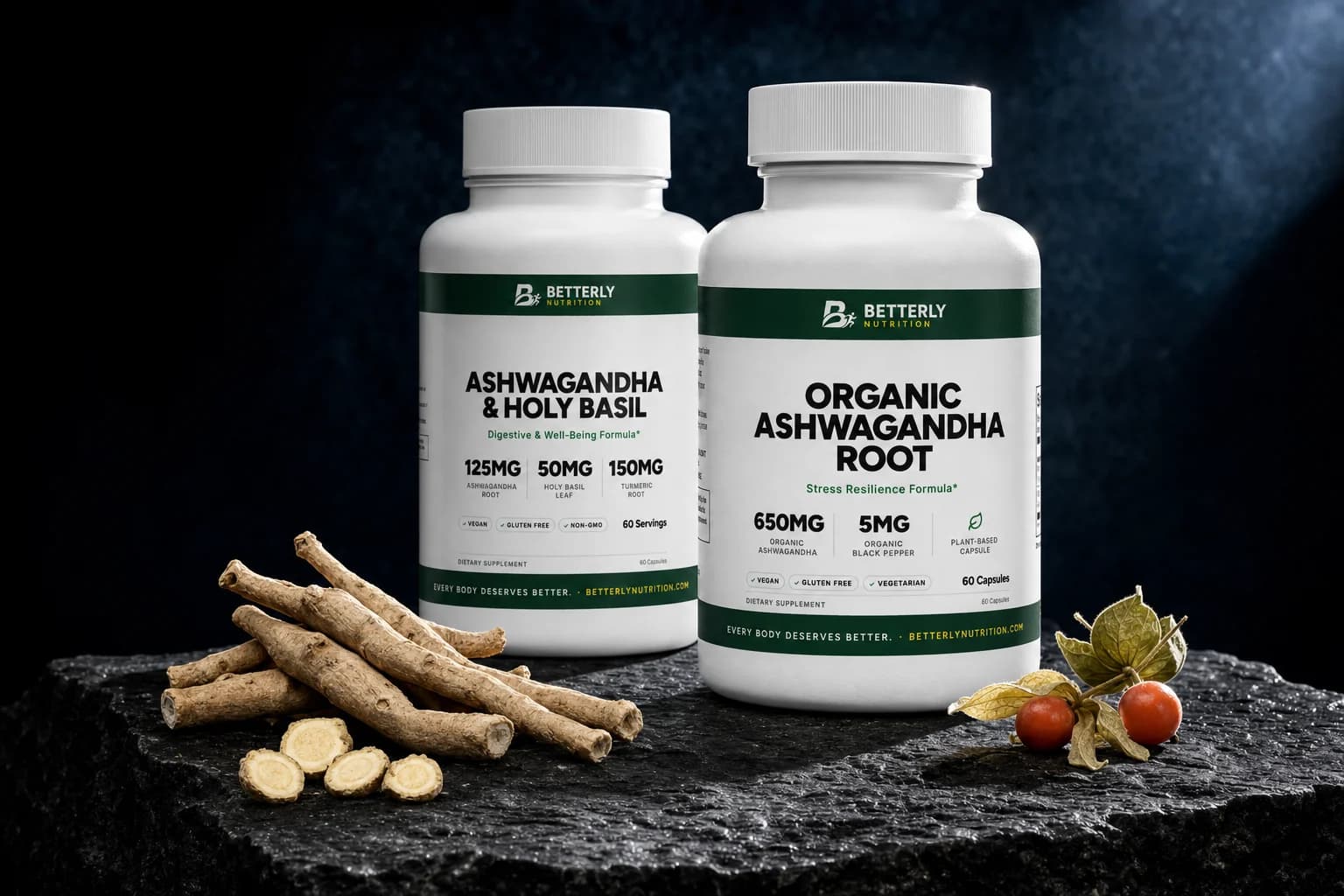
Our Ashwagandha & Holy Basil Ayurvedic Capsules show the version you want to see. The panel says "Brahmi Leaves (20% extract)" and then adds (Bacopa monnieri), so there's no guessing. It doesn't say what the 20% measures, though.
Why do supplement formulas pair gotu kola with bacopa?
Gotu kola and bacopa are likely paired because both go by brahmi and both are promoted for memory and thinking. No federal source we read shows they work better together.
LiverTox notes that gotu kola is claimed to support memory and thinking, then states that none of its claimed properties have been proven in controlled human trials. For bacopa, it notes wide use today for memory and mental focus. That shared reputation is the honest case for pairing them, and it's a modest one.
You'll see some sellers call the pair synergistic. We haven't found a test of the two together, so we don't use that word for our capsule or anyone else's.
One capsule is simpler than two bottles, but six botanicals sharing one small capsule means a small slice each, as the next section shows.
For other options, our comparison of caffeine-free focus supplements covers L-theanine, lion's mane and more.
What's in our Gotu Kola & Bacopa Capsules, and what's missing?
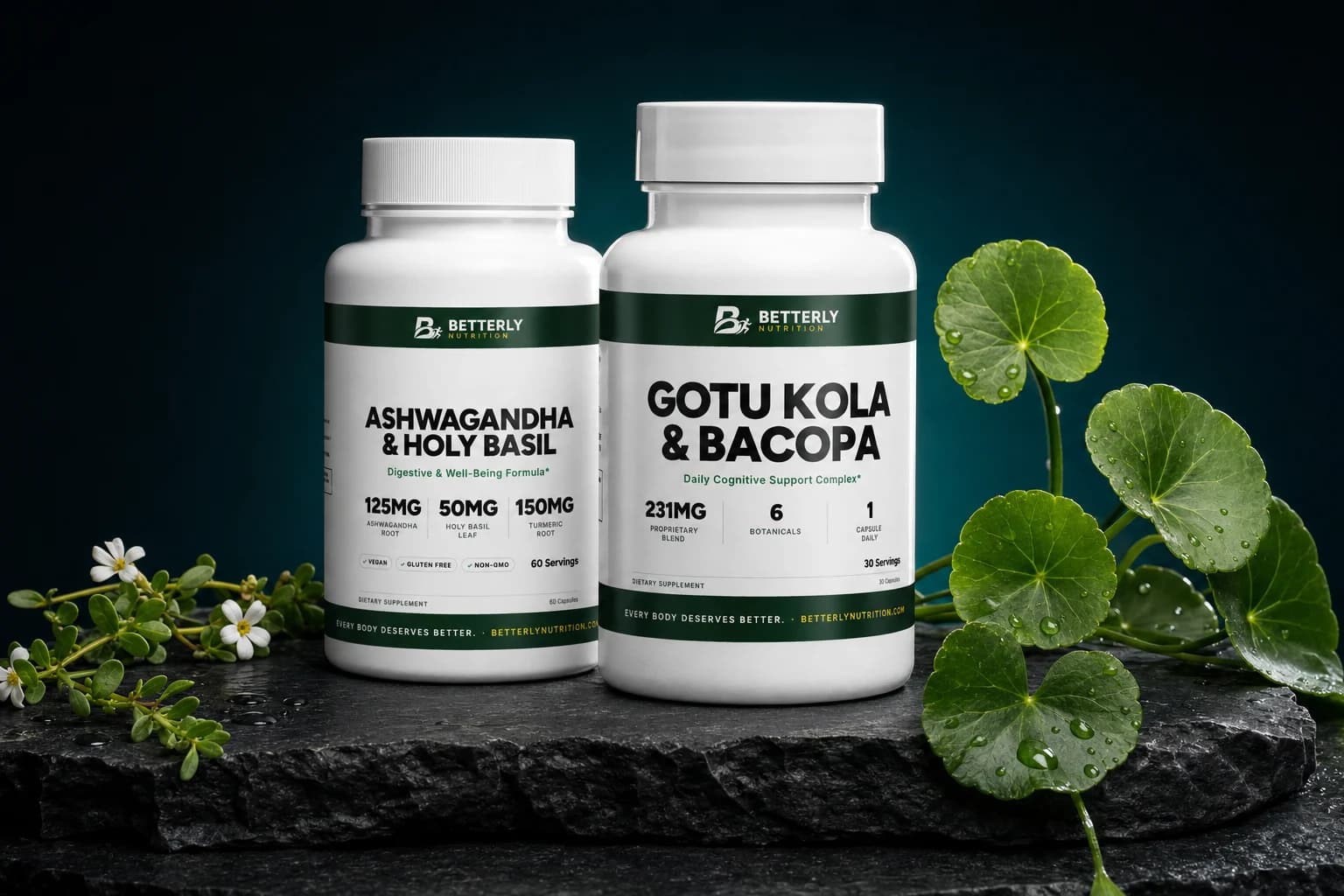
Our Gotu Kola & Bacopa Capsules contain a six-botanical proprietary blend totaling 231 mg per 1-capsule serving, and the panel gives no separate amount for gotu kola or bacopa.
Here's the blend, in the order the label prints it:
- Gotu kola powder (Centella asiatica) (whole herb)
- Astragalus extract (root)
- Bacopa monnieri powder (whole herb)
- Cistanche extract (Cistanche deserticola) (stem)
- Maritime pine bark extract (Pinus pinaster) (std. to 65% proanthocyanidins)
- Panax ginseng powder (root)
Since 21 CFR 101.36 makes a blend list its parts heaviest first, bacopa in third place can't be more than a third of 231 mg, or 77 mg. LiverTox puts typical bacopa use at 300 to 600 mg of extract, the equivalent of 5 to 10 grams of dried herb. So our bacopa powder can't reach even 2% of that dried-herb low end.
Gotu kola fares no better. The whole 231 mg blend weighs less than the 600 mg low end LiverTox gives for gotu kola leaf powders alone. Our guide to reading a proprietary blend walks through the ordering method in full.
So here's the honest limit: this is a small, mixed-herb capsule, not a full serving of either herb as LiverTox describes typical use. Please don't take extra capsules to close the gap. The label says one capsule daily and warns, "Do not exceed recommended dose." If you'd like a figure to hold up against published ranges, a single-herb product that prints its milligrams will serve you better.
The shell is gelatin, and no vegan or gluten-free claim appears on the label. It sits with ashwagandha and other herbal formulas in our adaptogens collection.
From our shop: Gotu Kola & Bacopa Capsules — the only Betterly panel that names Centella asiatica, listed first in a 231 mg blend per capsule alongside Bacopa monnieri and four other botanicals.
Where does ashwagandha fit with gotu kola and bacopa?
Ashwagandha, gotu kola and bacopa are three separate herbs from Ayurveda, and none of our labels holds all three in one serving, so ashwagandha means a second product.
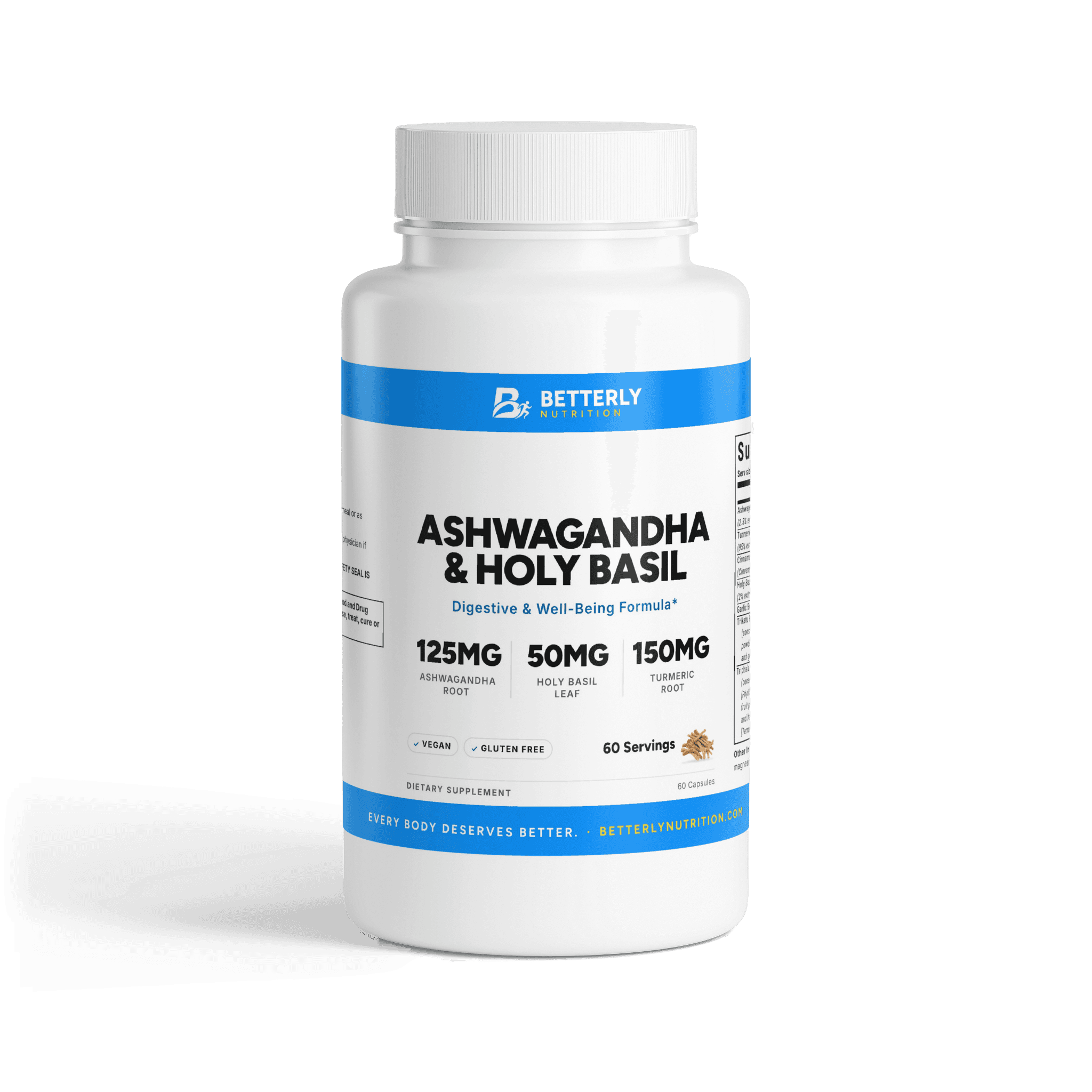
The nearest match is our Ashwagandha & Holy Basil capsule. Per 1-capsule serving, its panel lists 125 mg of ashwagandha root (2.5% extract) and 75 mg of brahmi leaves (20% extract) (Bacopa monnieri), among 17 ingredient lines. It has no gotu kola.
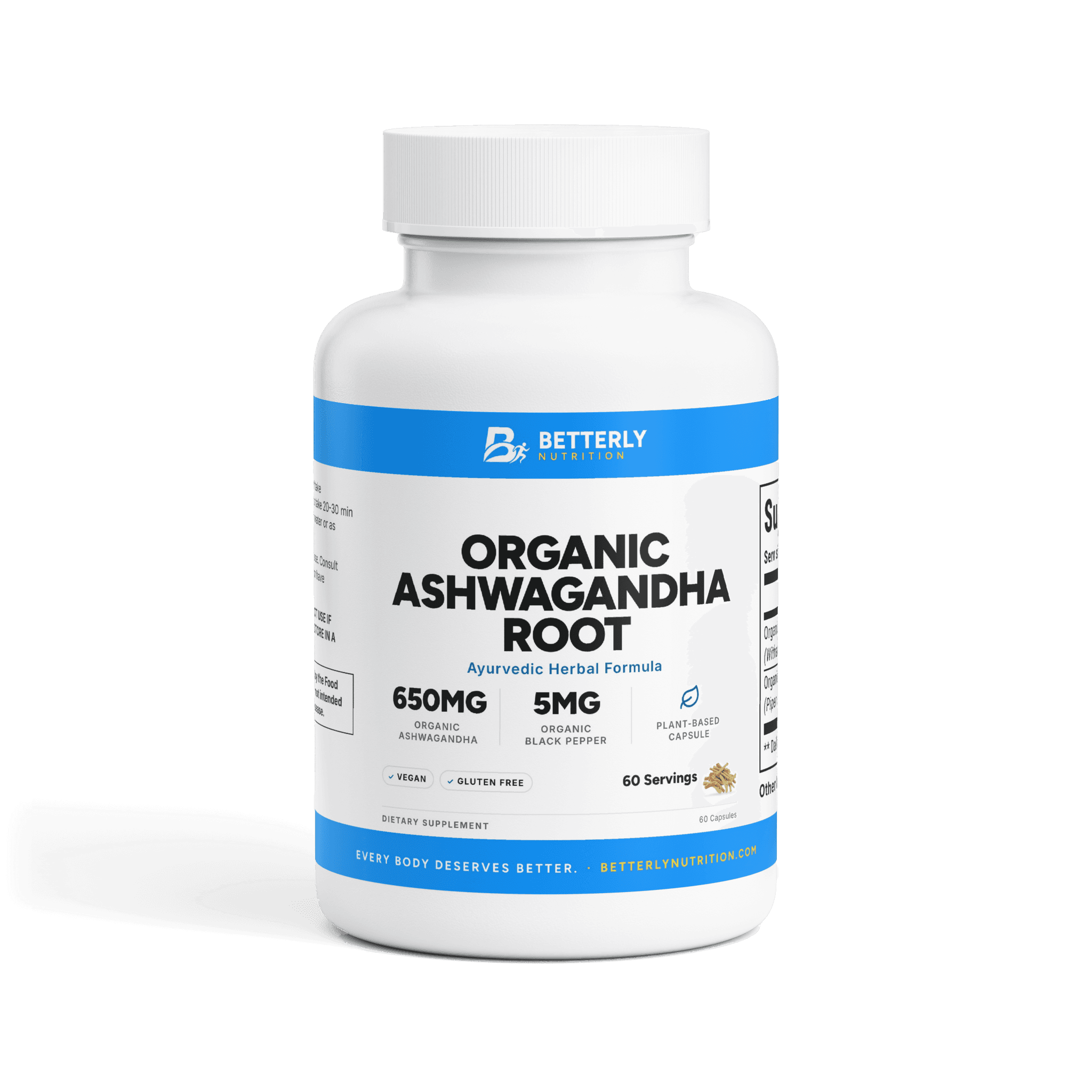
Taking it with our Gotu Kola & Bacopa capsule doubles up on bacopa, so we don't suggest that pair. If you want ashwagandha beside the gotu kola capsule, pick a label with no bacopa, such as our Organic Ashwagandha Root Capsules. Per 1-capsule serving, that panel lists 650 mg of organic ashwagandha root and 5 mg of organic black pepper, and its suggested use is one capsule twice a day.
Bacopa also turns up in the blends of our Choline & DHA Focus Capsules and GABA, L-Tyrosine & Caffeine Capsules. Here's how the four labels print it:
| Our label (serving) | How bacopa is printed | Its own amount? |
|---|---|---|
| Gotu Kola & Bacopa (1 capsule) | Bacopa monnieri Powder (whole herb) | No: 3rd of 6 in a 231 mg blend |
| Ashwagandha & Holy Basil (1 capsule) | Brahmi Leaves (20% extract) (Bacopa monnieri) | Yes, 75 mg |
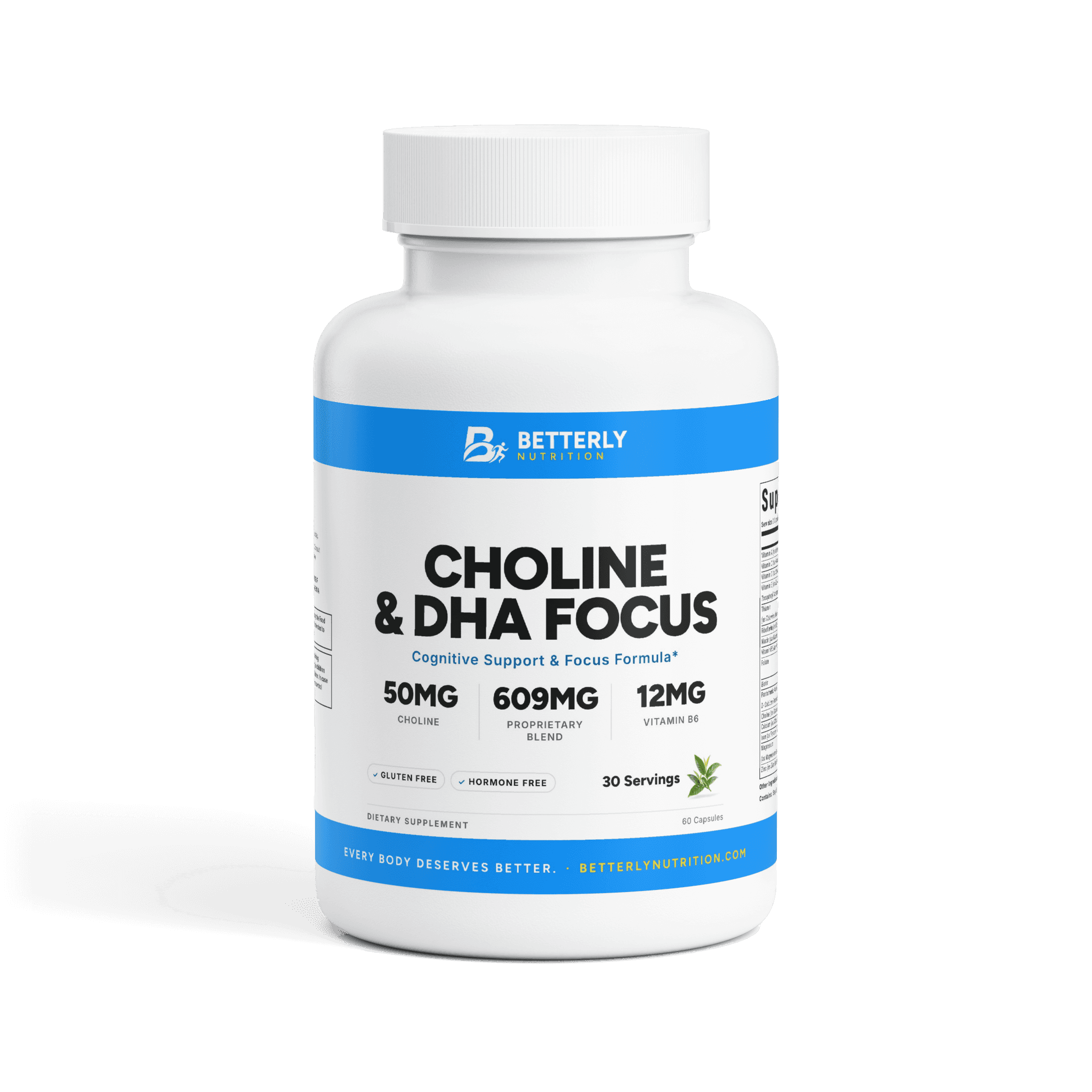
| Choline & DHA Focus (2 capsules) | Bacopa Extract (Bacopa monnieri) (whole herb) | No: 5th of 18 in a 609 mg blend |
| GABA, L-Tyrosine & Caffeine (1 capsule) | Bacopa monnieri Extract (whole herb) | No: 4th of 8 in a 255 mg blend |
The takeaway: only one of these four panels gives bacopa its own amount, and only one contains gotu kola at all. The GABA, L-Tyrosine & Caffeine blend also lists caffeine without an amount, so skip it if you're avoiding caffeine. Before combining any two of these, show both panels to a pharmacist or healthcare provider.
For ashwagandha's own cautions, see our guide on who should not take ashwagandha.
From our shop: Organic Ashwagandha Root Capsules — 650 mg of organic ashwagandha root per 1-capsule serving in a pullulan capsule, with no bacopa on the panel to double up on.
How do you take a gotu kola and bacopa supplement?
Take a gotu kola and bacopa supplement exactly as its label directs; ours says adults take one capsule daily, ideally with 6-8 oz of water.
Our label reads: "Adults take one (1) capsule daily. For best results, take with 6-8 oz (177-237ml) of water or as directed by healthcare professional." It names no time of day or meal. At one capsule a day, the 30-capsule bottle lasts 30 days.
The other bacopa labels in the table each set their own directions:
- Ashwagandha & Holy Basil: 1 capsule daily, preferably with a meal.
- Choline & DHA Focus: two capsules once a day.
- GABA, L-Tyrosine & Caffeine: one capsule daily for adults, with 6-8 oz of water.
Introduce products one by one, since that's the only way to know which one a change came from, and keep to a single bacopa source. If you miss a day, take your usual capsule the next day rather than doubling up.
When don't you need gotu kola or bacopa?
Gotu kola and bacopa aren't nutrients your body needs: neither has a Daily Value, and LiverTox says gotu kola's claimed properties haven't been proven in controlled human trials.
It's reasonable to skip both, or hold off, in these cases:
- You can't confirm which plant a "brahmi" product contains.
- You already take something with bacopa in it. Check every panel you own first.
- You want an exact amount of either herb. Our blend doesn't print one.
- You avoid gelatin. Our capsule's shell is made from it.
- You want caffeine. Our capsule lists none, so it won't stand in for your coffee.
Who should check with a healthcare provider first?
A healthcare provider should hear about gotu kola or bacopa before you start if you're pregnant or nursing, under 18, on any medicine, or have a medical condition.
All four of our bacopa labels print the identical caution: "Consult a physician if pregnant, nursing, under 18, or have a medical condition." Medicine isn't on that list, but it belongs there. A few more points:
- Liver history. LiverTox rates gotu kola a "probable rare cause" of liver injury. People in the reported cases recovered after stopping, and contaminants in those products weren't ruled out. If you've had liver concerns, ask before trying gotu kola.
- Common complaints. LiverTox describes mostly mild, short-lived side effects for both herbs, including nausea, diarrhea, headache and dizziness.
- The rest of the blend. Our capsule also contains Panax ginseng, astragalus, cistanche and pine bark extract. Show your provider the full panel, not just the name on the front.
- Surgery. Planning a procedure? Give the surgical team a written list of your supplements, this one included.
Our guide to gotu kola side effects goes deeper on its safety record. If something doesn't sit right once you've started, stop and check in with a provider.
FAQ: gotu kola vs bacopa
Does gotu kola have caffeine?
Gotu kola isn't a known source of caffeine, despite its name. It's Centella asiatica, a leafy, creeping herb, not the kola nut used in colas, which comes from a different plant. Caffeine isn't among the compounds LiverTox lists for gotu kola, and our Gotu Kola & Bacopa panel lists none. Some bacopa blends do contain caffeine, though, including one of ours, so read the whole panel.
Is gotu kola the same as Centella asiatica?
Yes, gotu kola is the common name for Centella asiatica. LiverTox also lists Asian pennywort, spadeleaf, coinwort, tiger grass and brahmi as names for the same plant. A US supplement label usually shows the common name, the plant part and often the Latin name, as ours does: "Gotu Kola Powder (Centella asiatica) (whole herb)."
Is gotu kola or bacopa better for focus?
Neither gotu kola nor bacopa has a proven edge, and no federal page we read compares the two directly. LiverTox says gotu kola's claimed properties haven't been proven in controlled human trials, and it says bacopa hasn't been shown effective for any medical use in such trials either. So choose on what you can check: the species on the label, a printed amount, and cautions that fit you.
Is it safe to take gotu kola and bacopa together?
Gotu kola and bacopa turn up together in blends like ours, but no federal source we read reports a study of the pair. LiverTox describes mostly mild side effects for each herb and rates gotu kola a probable rare cause of liver injury. Stay within one label's suggested use, skip a second bacopa product, and ask a healthcare provider first if you're pregnant, nursing, under 18, taking medicine or have a medical condition.
Are gotu kola and bacopa capsules vegetarian?
Our Gotu Kola & Bacopa Capsules aren't vegetarian, because "Gelatin (capsule)" leads its Other Ingredients line. If you avoid animal products and want bacopa, our Ashwagandha & Holy Basil Ayurvedic Capsules carry a vegan claim and list hydroxypropyl methylcellulose rather than gelatin, though they have no gotu kola. Check the Other Ingredients line on any brand.
Sources
- Centella asiatica, LiverTox (NCBI Bookshelf), National Institutes of Health
- Bacopa monnieri, LiverTox (NCBI Bookshelf), National Institutes of Health
- 21 CFR 101.4, Food; designation of ingredients (eCFR), FDA regulation
- 21 CFR 101.36, Nutrition labeling of dietary supplements (eCFR), FDA regulation
If this left you looking for somewhere to start, read gotu kola and bacopa in one capsule — its amounts per serving are listed on the page. For the practical questions this raises, how dosing, sourcing and subscriptions work is answered in one place.