On this page
- Key takeaways
- What are gotu kola's benefits, and how much is proven?
- Why do gotu kola creams and capsules get lumped together?
- What are the gotu kola benefits for skin?
- What are centellosides, and why don't capsule labels list them?
- Does gotu kola do anything for the brain?
- Is gotu kola tea different from a gotu kola capsule?
- How much gotu kola is in our capsule, and how do you take it?
- When don't you need a gotu kola supplement?
- Who should check with a healthcare provider before taking gotu kola?
- FAQ: gotu kola benefits
- Sources
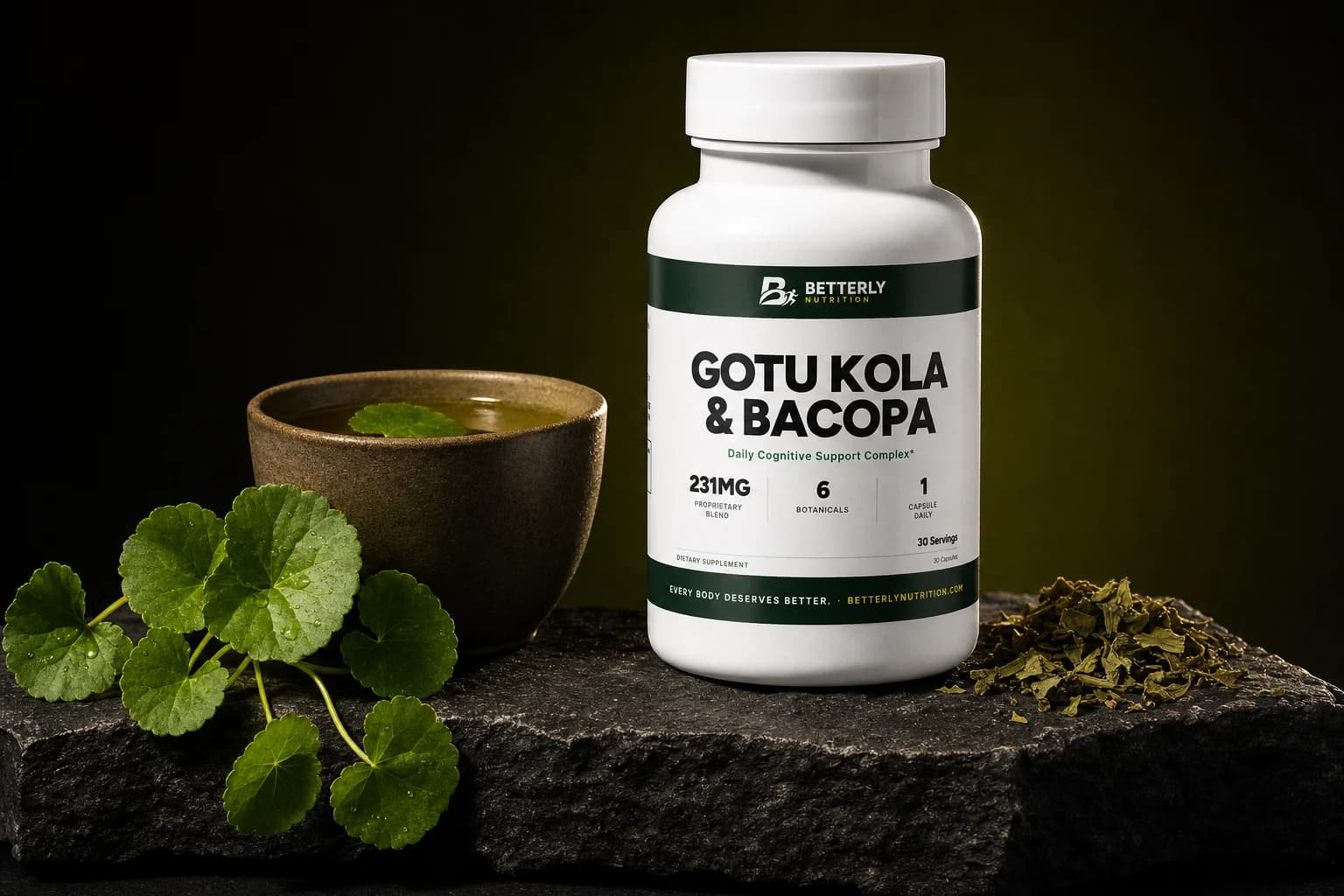
The short answer: Gotu kola benefits remain unproven in controlled human trials, NIH's LiverTox database says, and that includes the memory and long-life claims. Many of the skin claims you'll see belong to centella (cica) creams, which are cosmetics sold for how skin looks and feels. Capsules and tea are swallowed and follow different rules. Our capsule holds gotu kola inside a 231 mg six-botanical blend per 1-capsule serving.
Key takeaways
- Gotu kola is Centella asiatica, a leafy plant eaten as a vegetable and used for centuries in Ayurvedic and Chinese traditions.
- Under US law, a cream meant to change how skin looks is a cosmetic and a capsule is a dietary supplement, so a claim made for one doesn't carry over to the other.
- The compounds most often credited, asiaticoside and madecassoside, appear on some skin-care ingredient lists, but a supplement label needn't state them, and ours doesn't.
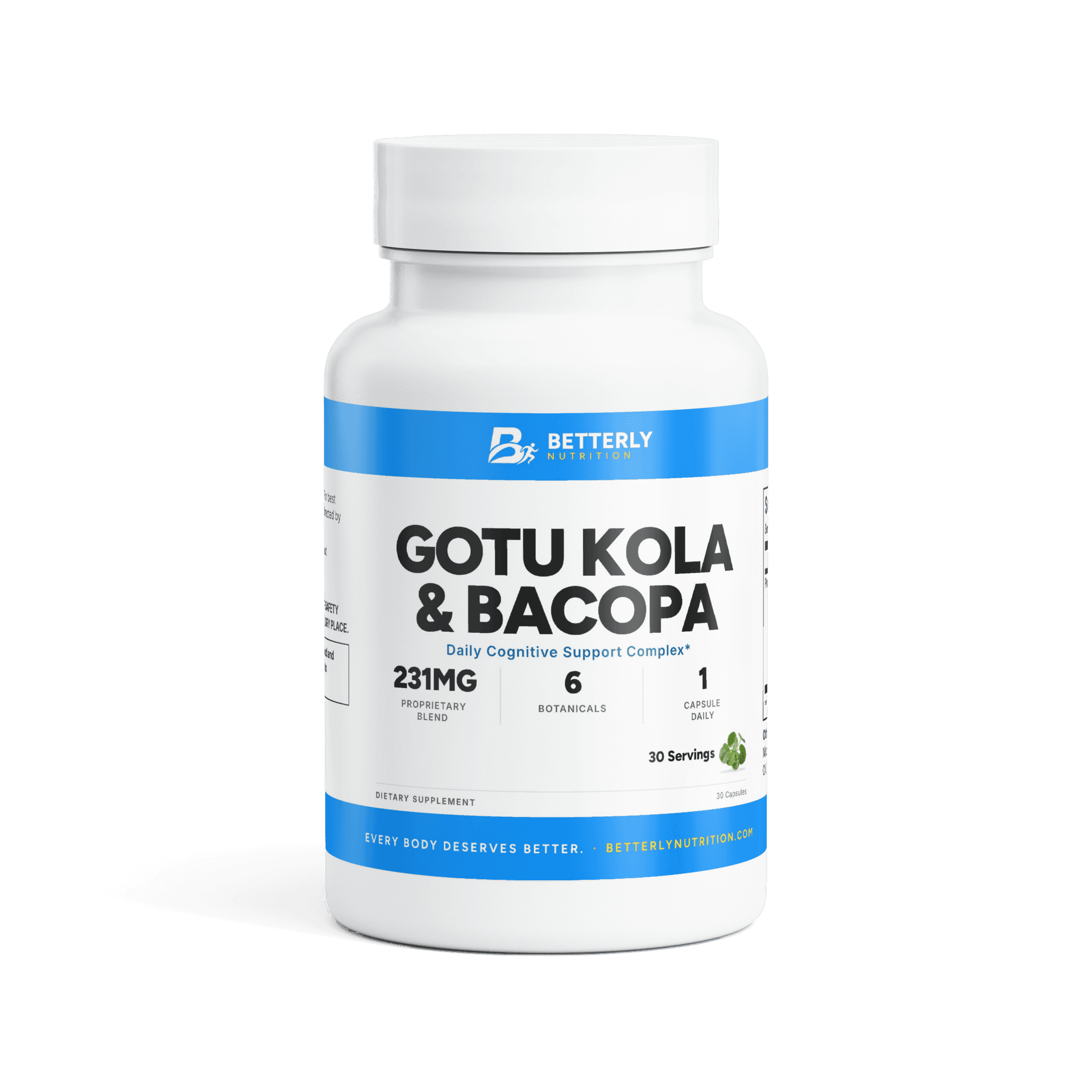
- Our Gotu Kola & Bacopa Capsules name gotu kola powder first in a six-botanical, 231 mg blend per 1-capsule serving, which sits below the 600 mg starting point LiverTox cites for dried-leaf products.
We sell a gotu kola capsule, not a gotu kola cream, so we have a stake in only one half of this comparison. Every figure for our capsule comes straight off its Supplement Facts panel, and we'll point out where that panel leaves gaps.
What are gotu kola's benefits, and how much is proven?
Gotu kola's benefits come mostly from tradition, as a food plant and an herb of Ayurvedic and Chinese medicine, not from controlled trials in people.
The LiverTox entry for Centella asiatica describes a creeping herb native to swampy tropical areas of Southeast Asia and Australia, and one that's eaten as a vegetable. It says the herb has been used for centuries in Ayurvedic and Chinese medicine. Separately, it notes the plant is purported to support memory and long life.
That's the honest ceiling for any benefits list, ours included: tradition and reputation, not trial results. Here's what you can rely on:
- It's also known as Asian pennywort, tiger grass or brahmi, and in beauty aisles as cica.
- Researchers focus on a group of triterpenes called centellosides.
- LiverTox lists capsules, tablets, powders, solutions and skin creams, and those forms answer to different rules.
The brahmi name causes real mix-ups, because bacopa goes by it too. Our guide to gotu kola vs bacopa sorts out the two plants.
Why do gotu kola creams and capsules get lumped together?
Gotu kola creams and capsules share one plant name, but US law files a skin cream and a swallowed supplement under different product types with different rules.
The FDA's page Is It a Cosmetic, a Drug, or Both? makes intended use the deciding factor, and a product's claims are one of the main ways that use is shown. A cica cream sold to make skin look smoother or more even is a cosmetic. A cream "intended to affect the structure or any function of the body" counts as a drug under the same law, and some products are both.
A capsule sits in a third bucket. The NIH Office of Dietary Supplements' botanical supplements background fact sheet says a dietary supplement is meant to be taken by mouth, as a pill, capsule, tablet or liquid, and is labeled as a supplement.
| Centella cream or serum | Gotu kola capsule | Gotu kola tea | |
|---|---|---|---|
| How you use it | Applied to skin | Swallowed | Brewed and sipped |
| US product type | Cosmetic | Dietary supplement | Food, or a supplement if labeled as one |
| What the label lists | Ingredients, largest first above 1% | Supplement Facts per serving | Varies by product |
| What claims can cover | How skin looks | Normal body structure or function | Depends on the label |
Read the last row twice. A cream's promises are about appearance, and none of them transfers to a capsule just because the plant is the same.
What are the gotu kola benefits for skin?
Most gotu kola benefits for skin are claims made for centella creams, serums and toners, and a cosmetic's claims are limited to how skin looks and feels.
In skin care, the plant usually goes by cica. For detail, the ingredient list beats the front of the jar. Look for names like these:
- Centella Asiatica Extract or Centella Asiatica Leaf Extract (the plant itself)
- Madecassoside or Asiaticoside (single compounds added on their own)
- Asiatic Acid or Madecassic Acid (related compounds, listed less often)
Position matters less than you'd think. The FDA's Cosmetics Labeling Guide says ingredients are listed in descending order of predominance, but anything at 1% or less may be listed in any order after the rest. A centella name near the end may sit at 1% or less, and its exact spot there tells you little.
If you'd rather swallow something as part of a skin routine, pick a product that prints its main ingredient in grams, then read up on that ingredient. Our capsule doesn't print one for gotu kola.
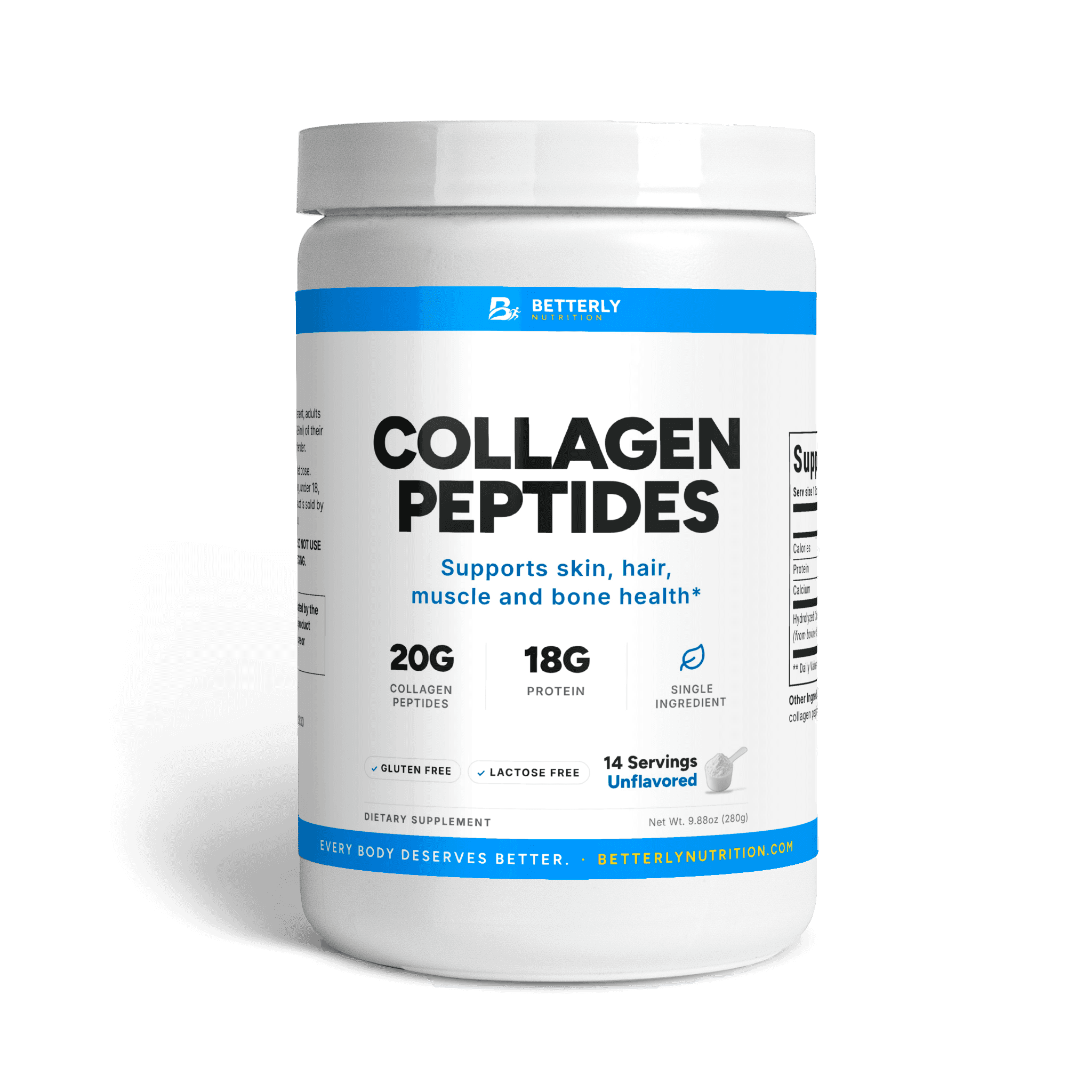
From our shop: Collagen Peptides Powder (Unflavored) — each 1-scoop (20 g) serving is 20 g of hydrolyzed collagen peptides, made from bovine hide, to mix into 8-10 oz of a drink.
What are centellosides, and why don't capsule labels list them?
Centellosides are the triterpene compounds in gotu kola that researchers focus on, mainly asiaticoside and madecassoside, and a US supplement label isn't required to state how much it holds.
LiverTox says centella extracts contain more than 100 constituents, and the active ones are "thought to be" asiaticoside, centelloside and madecassoside, plus their sugar-free forms, asiatic acid and madecassic acid. Notice that hedge: even the key compounds aren't settled.
The ODS fact sheet explains standardization: a maker measures a marker compound and adjusts each batch to keep it steady. US law doesn't require it or even define the term. On a gotu kola capsule, that leaves two common label styles. An extract with a percentage names a marker, such as total triterpenes, at a stated level, which tells you what was measured, not what it does. A plain powder is dried leaf or whole herb, with whatever the plant happened to contain.
Ours is the plain-powder kind. The panel reads "Gotu Kola Powder (Centella asiatica) (whole herb)" with no percentage. The only ingredient the panel lists as standardized is the maritime pine bark extract (std. to 65% proanthocyanidins), and pine bark is a different plant altogether.
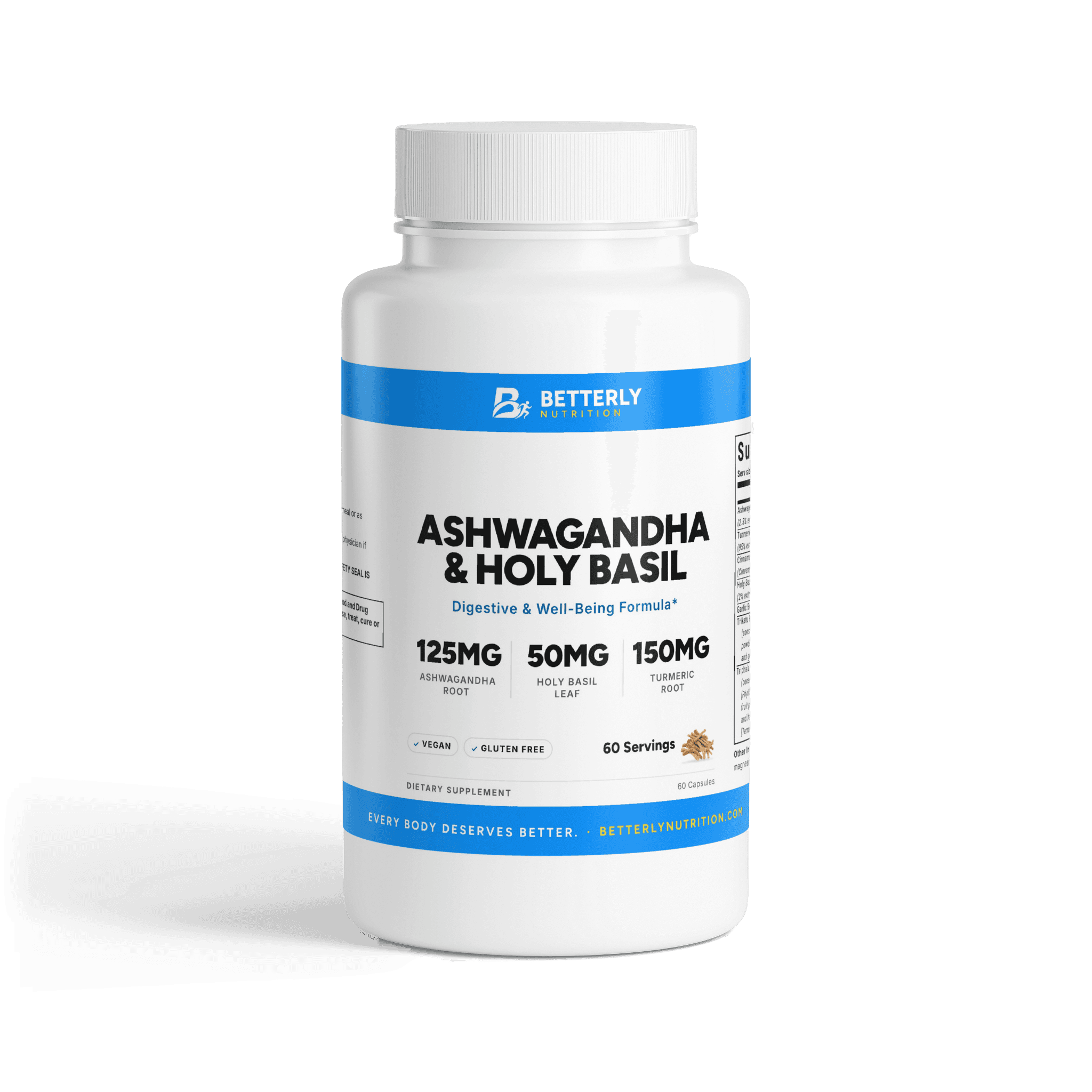
For contrast, our Ashwagandha & Holy Basil Ayurvedic Capsules use the percentage style on several lines, such as 125 mg of ashwagandha root (2.5% extract) per 1-capsule serving, though the panel doesn't name each marker. It holds no gotu kola.
Does gotu kola do anything for the brain?
Gotu kola is purported to support memory and cognitive function, NIH's LiverTox notes, but no prospective, controlled trial in people has proven it.
That reputation helps explain why gotu kola often shares a bottle with bacopa, and why our capsule's front label reads "Daily Cognitive Support Complex." So judge ours as a small focus-style blend, not a skin supplement. For bacopa by itself, see our bacopa monnieri guide.
Here's a fair test for any brain claim: does it name a set amount of a described extract, tested against a placebo? Our panel prints no amount for any of its six botanicals. Bacopa sits third, so it's at most 77 mg of plain whole-herb powder per capsule, far below the standardized extract amounts in the bacopa studies that guide describes.
The gotu kola can't be matched to a trial either, so we won't borrow any study's results for this capsule.
Is gotu kola tea different from a gotu kola capsule?
Gotu kola tea and gotu kola capsules differ in strength and in what you can measure: a capsule has a fixed fill weight, while a cup depends on your brewing.
According to the ODS fact sheet, teas, tinctures and extracts run at very different strengths, so one amount of plant can fill a whole cup, a few teaspoons or far less. Leaf amount, steeping time and fresh versus dried leaf all change your cup.
Tea sits closer to the way gotu kola is eaten as food, yet the federal sources we checked describe no benefit specific to the tea.
How much gotu kola is in our capsule, and how do you take it?
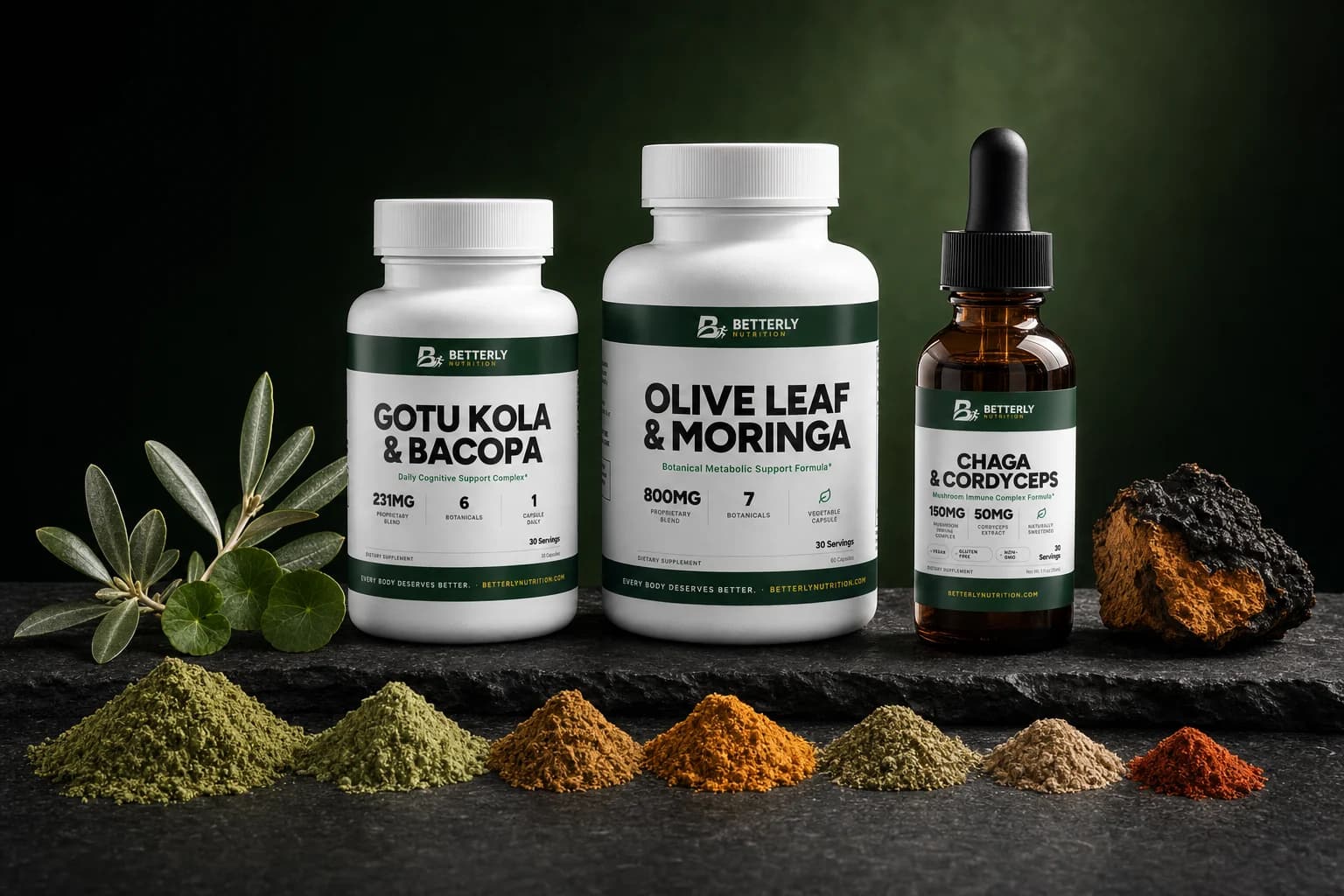
Our Gotu Kola & Bacopa Capsules hold a 231 mg proprietary blend of six botanicals per 1-capsule serving, and the label suggests one capsule a day for adults.
In label order, the blend holds gotu kola powder (whole herb), astragalus root extract, Bacopa monnieri powder (whole herb), cistanche stem extract, maritime pine bark extract and Panax ginseng root powder. No single botanical gets its own amount.
Blends list their parts by weight, heaviest first, as our guide to how a proprietary blend label works explains. That puts gotu kola's share at no less than a sixth of the blend, about 38.5 mg, and somewhere under 231 mg.
LiverTox gives typical oral use as 60 to 120 mg a day of purified extracts, or 600 to 1,800 mg of dried-leaf capsules or powders. Ours is a whole-herb powder, so the leaf range is the fair yardstick. If every milligram of our blend were gotu kola, one capsule would still hold under 40% of that 600 mg low end.
That's our honest limit: by LiverTox's yardstick, this is a small, traditional-style formula rather than a full gotu kola serving. The ODS fact sheet also cites astragalus, our second ingredient, as a botanical little studied for its value. We shelve the capsule in our adaptogens collection, not with hair, skin and nails.
How to take it, per the label:
- One capsule a day. "Adults take one (1) capsule daily."
- Wash it down with water. The label suggests 6-8 oz (177-237ml) "for best results," or following a healthcare professional's directions.
- Keep any cica cream separate. Follow the cream's own label; it doesn't change how many capsules you take.
The capsule itself is made of gelatin, which rules it out if you avoid animal products.
From our shop: Gotu Kola & Bacopa Capsules — gotu kola powder heads a six-botanical, 231 mg blend per 1-capsule serving, with 30 capsules in each bottle.
When don't you need a gotu kola supplement?
You don't need a gotu kola supplement if your interest is cosmetic, because most skin claims you'll read about were made for cica creams, not capsules.
If cica caught your eye in a skin-care aisle, the cream is the product built and labeled for that goal, and a capsule doesn't carry its appearance claims. If a centella serum already has a spot on your shelf, keep it; our capsule's label makes no skin claim at all.
Tea is the other case. If you already brew gotu kola most days, you're taking in the plant much the way it's eaten as food, and a capsule only stacks a second source of the same herb.
Who should check with a healthcare provider before taking gotu kola?
Check with a healthcare provider before taking gotu kola if you're pregnant, nursing, under 18, take any medicine, manage a medical condition or are scheduled for surgery.
Our label's caution reads: "Do not exceed recommended dose. Consult a physician if pregnant, nursing, under 18, or have a medical condition." It doesn't name prescription or over-the-counter medicines, so raise those yourself.
Creams deserve their own caution. LiverTox notes rare allergic reactions to gotu kola, reported mostly with use on the skin. Try a new cica product on a small patch first, and stop if your skin reacts.
Give your provider the whole picture: the tea you brew, the capsule and any centella cream, since each is a way the same plant reaches you.
Length of use is an open question. LiverTox's reference list summarizes a 2010 review that said gotu kola shouldn't be used for more than 6 weeks. That's one review's view, not a federal limit, and our label sets no time frame, so ask your provider.
On liver safety, LiverTox scores gotu kola as a rare but probable cause of injury, a record our gotu kola safety guide covers in detail.
FAQ: gotu kola benefits
Is gotu kola good for women?
Gotu kola has no benefit specific to women, or to men, in any federal source we read. Much of the interest comes from skin care, where centella creams are sold as cosmetics. Our label gives the same serving to every adult: one capsule daily. If you're pregnant or nursing, it asks you to consult a physician first, and that's worth doing before gotu kola tea too.
Is cica the same as gotu kola?
Yes, cica is the skin-care nickname for Centella asiatica, the same plant sold as gotu kola in supplements. On a cream's ingredient list you'll usually find it as Centella Asiatica Extract or Centella Asiatica Leaf Extract, sometimes with madecassoside or asiaticoside named on their own. A cica cream and a gotu kola capsule share a plant, but not a form, an amount or a claim.
Can you use a centella cream and take gotu kola capsules together?
No federal source we found has looked at using a centella cream and gotu kola capsules together, so follow each product's directions and tell your healthcare provider you use both. The cream stays on your skin and the capsule is swallowed, so each label covers only its own product. Stop the cream if your skin reacts. Mention any gotu kola tea too, especially if you're pregnant, nursing, under 18, on any medicine or managing a health condition.
Is gotu kola good for hair?
Gotu kola has no hair benefit described in the federal sources we read, whether it's swallowed or applied to the scalp. You'll find hair claims online, none that we could match to a federal health source, so we don't make one. For hair, pick a product that prints each ingredient's amount.
Can you take gotu kola every day?
Yes, our Gotu Kola & Bacopa label is written for daily use: adults take one capsule daily, and its caution says not to go over that. It sets no time limit, though, and a 2010 review summarized by LiverTox advised against use beyond 6 weeks. Ask a healthcare provider how long daily use makes sense for you.
Sources
- Centella asiatica, LiverTox (NCBI Bookshelf), National Institutes of Health
- Botanical Dietary Supplements: Background Information, Fact Sheet for Consumers, NIH Office of Dietary Supplements
- Is It a Cosmetic, a Drug, or Both? (Or Is It Soap?), U.S. Food and Drug Administration
- Cosmetics Labeling Guide, U.S. Food and Drug Administration
If this left you looking for somewhere to start, read gotu kola capsules with bacopa — its amounts per serving are listed on the page. For the practical questions this raises, how dosing, sourcing and subscriptions work is answered in one place.