On this page
- Key takeaways
- Lion's mane gummies vs capsules: what actually changes between them?
- How many lion's mane gummies would it take to match two capsules?
- Do lion's mane gummies absorb faster than capsules?
- How much sugar do lion's mane gummies add?
- How do lion's mane drops, powder and strips compare with capsules?
- When is a lion's mane gummy the better choice?
- How do you take each lion's mane format, per the label?
- When is switching lion's mane formats not worth it?
- Who should check with a healthcare provider first?
- FAQ: lion's mane gummies vs capsules
- Sources
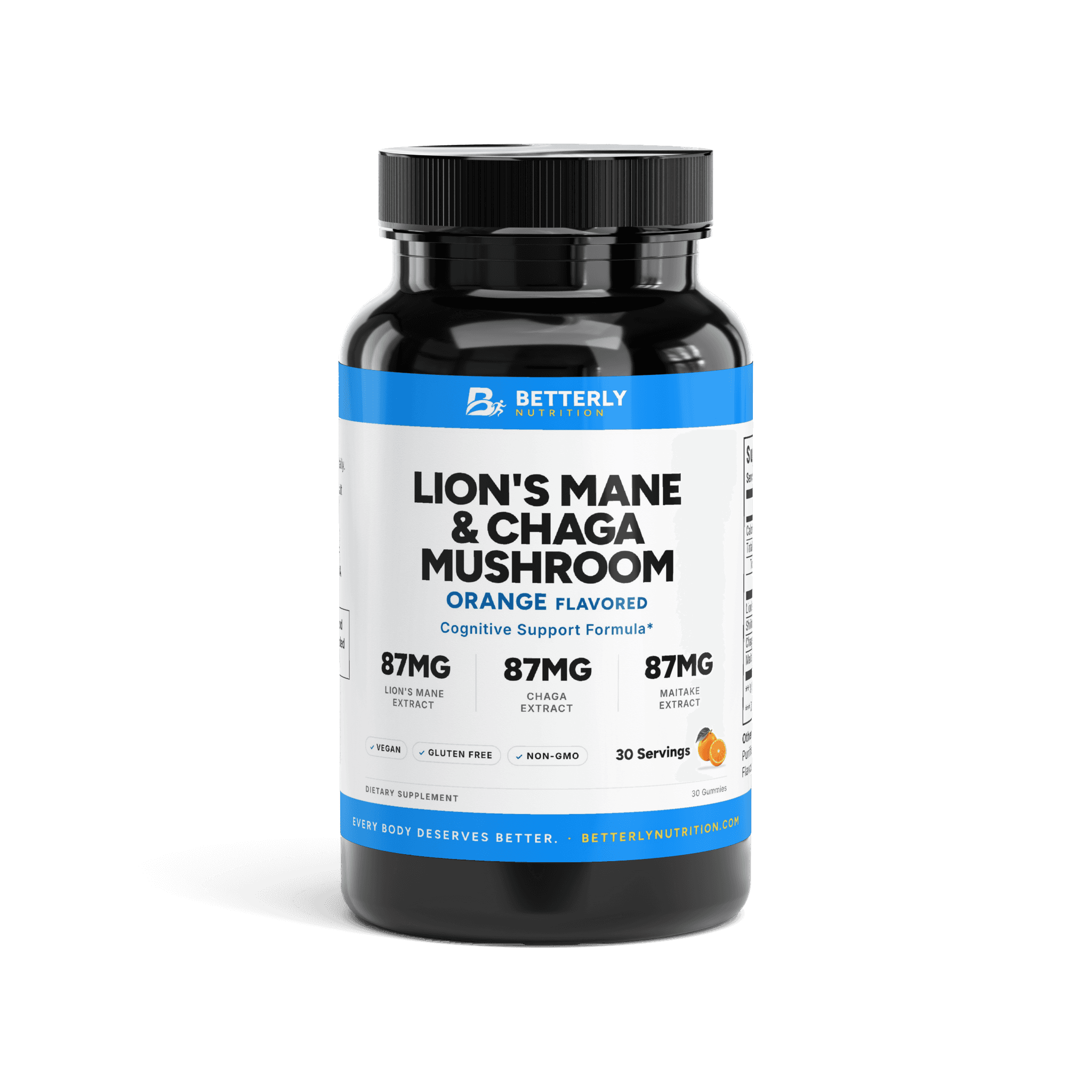
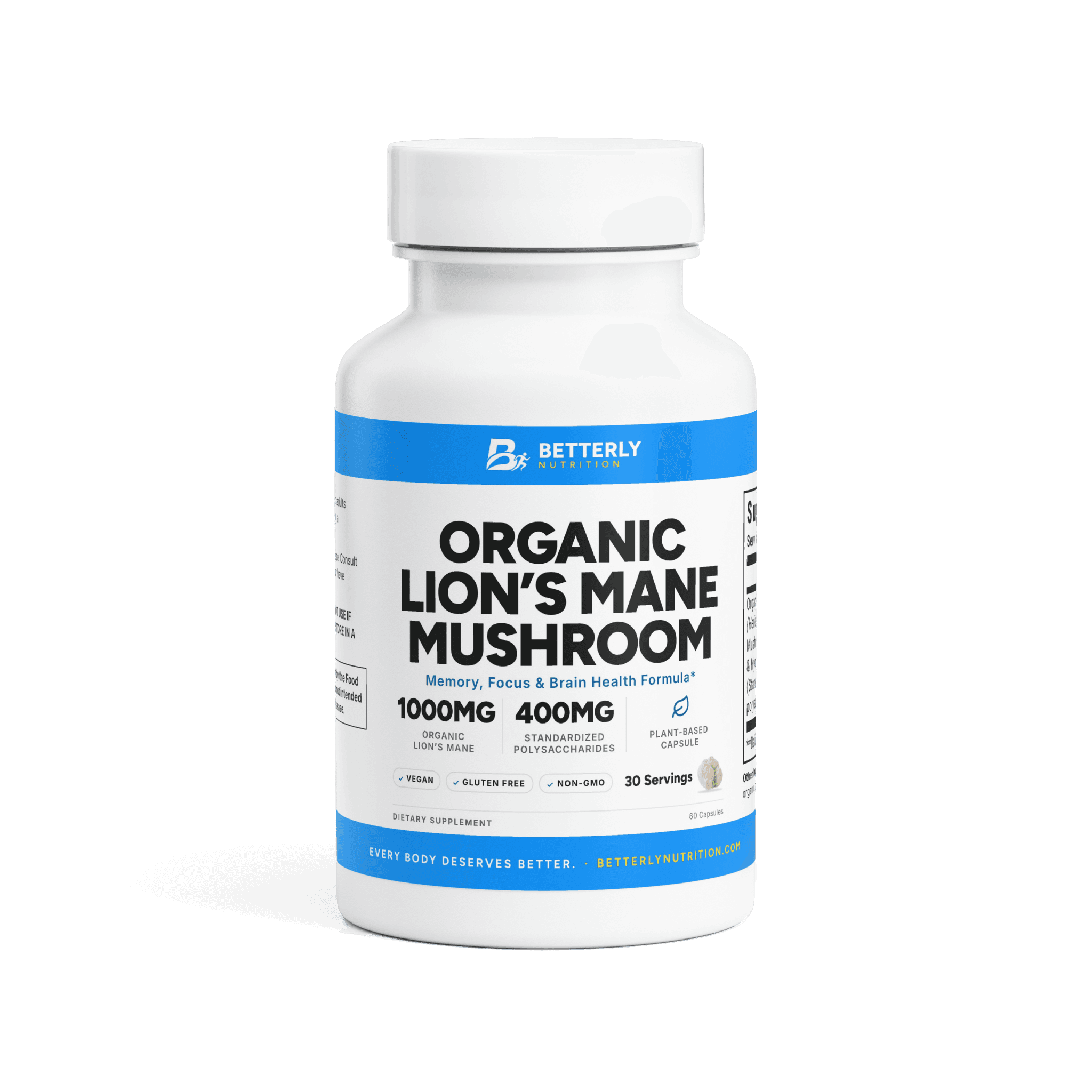
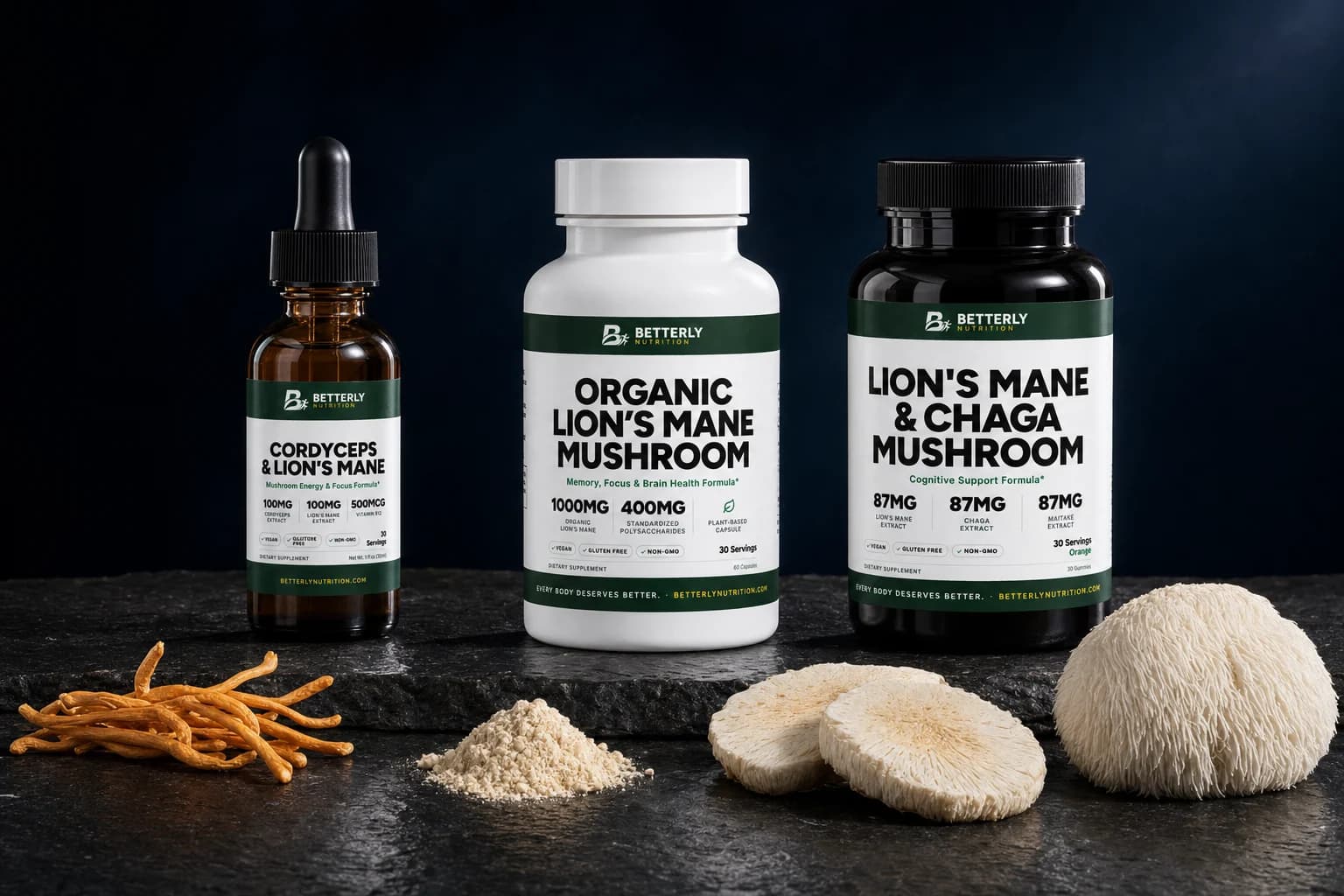
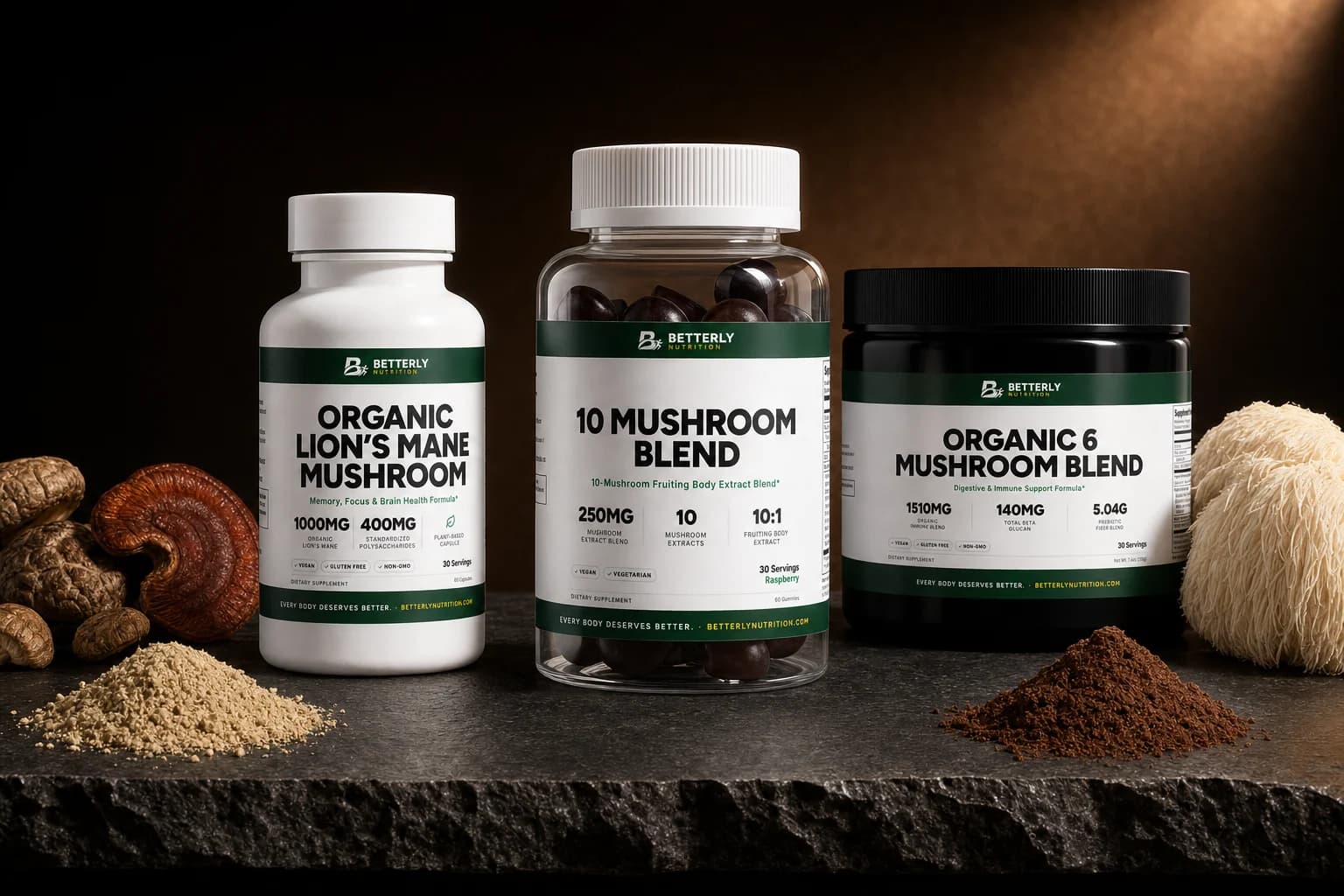
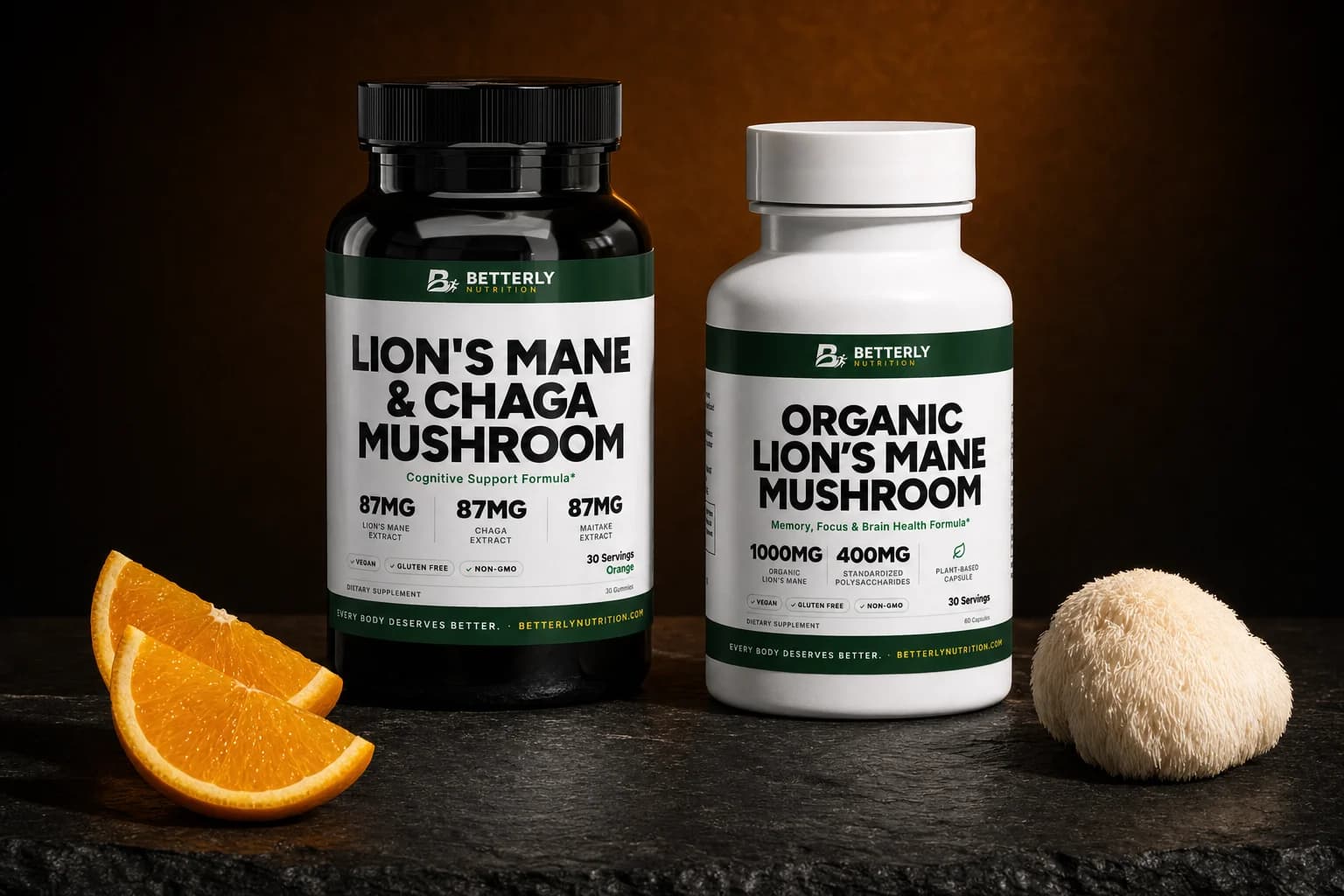
The short answer: Lion's mane gummies vs capsules is mostly a trade between milligrams and sugar. Our Organic Lion's Mane Mushroom Capsules list 1,000 mg of lion's mane powder per 2-capsule serving, with no sweetener in the ingredients. Our Lion's Mane & Chaga Mushroom Gummies list 87 mg of lion's mane extract per gummy, next to three other mushrooms and 2 g of added sugars. Neither label says one absorbs faster.
Key takeaways
- At the top of their label's range, two Lion's Mane & Chaga gummies supply 174 mg of lion's mane extract and 4 g of added sugars, while two capsules supply 1,000 mg of lion's mane powder.
- Lion's mane extract and powder are different materials, and neither of our labels prints an extract ratio, so the two numbers don't convert.
- We found no federal source showing that any lion's mane format absorbs faster than another.
- A gummy still makes sense if a chewable is the only format you'll take as directed and a few grams of added sugar fits your day.
Full disclosure: every lion's mane product compared here is one we sell. That's what lets us lay their real Supplement Facts panels next to each other, and it's also a good reason to check our numbers against each product page.
Lion's mane gummies vs capsules: what actually changes between them?
The biggest changes between our lion's mane gummies and capsules are the amount per serving, the form of lion's mane, the other mushrooms riding along, and the sugar.
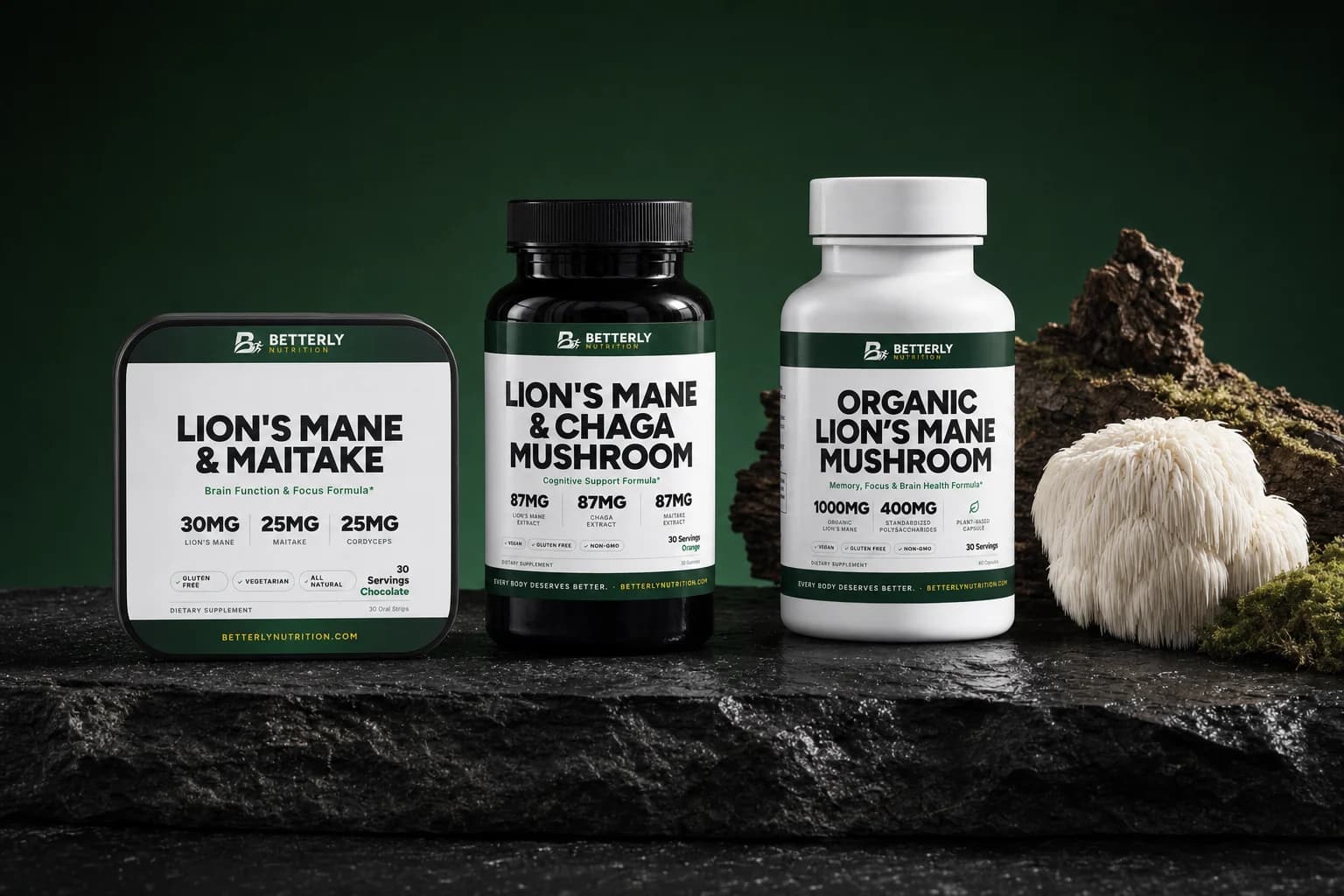
We've added the Cordyceps & Lion's Mane Energy Drops and the Lion's Mane & Maitake Focus Strips too, because tinctures and sugar-free options come up in the same searches.
| Our product (serving) | Lion's mane | Also in each serving | Sweetened with |
|---|---|---|---|
| Capsules (2) | 1,000 mg powder | Nothing else listed | Nothing listed |
| Gummies (1) | 87 mg extract | Shiitake, chaga, maitake, 87 mg each | Organic cane sugar, tapioca syrup |
| Drops (1 ml) | 100 mg extract | Cordyceps, B12, Alpha GPC, L-Tyrosine | Stevia |
| Strips (1) | 30 mg | Maitake, cordyceps, shiitake | Monk fruit extract, steviol glycosides |
The capsule is the only one that's lion's mane and nothing else, and it prints the largest number. The gummy is the only one with sugar on its panel.
One gummy detail only shows up on the back. The front of the bottle shows three 87 mg figures, for lion's mane, chaga and maitake, but the panel lists a fourth: 87 mg of shiitake extract. So each gummy holds 348 mg of mushroom extract, and lion's mane is a quarter of it.
For the gummy question across every mushroom species, see whether mushroom gummies work at all. This guide stays with lion's mane.
How many lion's mane gummies would it take to match two capsules?
No number of Lion's Mane & Chaga gummies matches two capsules within the label, because the gummy label stops at two a day and the milligrams measure different material.
Here's the raw arithmetic anyway. It would take 12 gummies to pass the capsule's printed 1,000 mg, since 11 reach only 957 mg. Those 12 gummies would also bring 24 g of added sugars, 48% of the Daily Value. Please don't try it: the gummy label says one to two daily and "Do not exceed recommended dose."
The two numbers also weigh different material. The capsule panel calls its 1,000 mg fruiting body and mycelium powder: dried mushroom, ground up. The gummy row reads "Lion's Mane Extract," so each 87 mg is a portion of the mushroom's compounds, separated from the rest. The gummy label doesn't say how much raw mushroom went into that 87 mg, so the gap can't honestly become a "times stronger" claim.
For the ranges people actually take, see our daily lion's mane amounts guide.
Which lion's mane format prints a polysaccharide figure?
Of our four lion's mane formats, only the capsule does. Its panel says the powder is standardized to 40% polysaccharides, large carbohydrate molecules found in mushrooms, and prints that as 400 mg per 2-capsule serving. The gummy, drops and strips list lion's mane by weight alone. Our mushroom extract vs powder guide covers what a standardized figure can and can't tell you.
Do lion's mane gummies absorb faster than capsules?
We found no federal source showing that lion's mane gummies absorb faster or better than capsules, and neither of our labels claims it, so we don't either.
Brand blogs often argue that chewing starts digestion, so a gummy must reach your system sooner. Chewing does break a gummy apart, but that isn't a measurement of how much lion's mane your body takes in.
Another claim in the same searches is that capsules are always cleaner. Our gummy lists eight other ingredients, against the capsule's shell and pea starch, and that longer list isn't a warning sign on its own. A chewable needs sweetener, flavor and a gelling agent to hold its shape.
How much sugar do lion's mane gummies add?
Our Lion's Mane & Chaga gummies add 2 g of added sugars per gummy, or 4 g at the label's top amount of two gummies a day.
The panel prints each gummy's 2 g as 4% DV, based on the 50 g Daily Value the FDA gives in its guide to added sugars on the Nutrition Facts label. That guide calls 5% DV or less a low source, and the label's serving is one gummy, so one gummy counts as low.
Two gummies make 4 g for the day, or 8% of that 50 g. If you keep added sugar tight, that's a fair reason to look at another format.
Are there sugar-free lion's mane gummies?
We don't sell a sugar-free lion's mane gummy. Our Lion's Mane & Chaga gummy lists 2 g of added sugars, while our capsules, drops and strips show no sugar row at all.
Each swap moves the lion's mane number, too. The capsules list no sweetener and print 1,000 mg of powder per 2-capsule serving. The drops use stevia and give 100 mg of extract per 1 ml. The strips use monk fruit extract and steviol glycosides and print 30 mg, the only figure below the gummy's 87 mg.
How do lion's mane drops, powder and strips compare with capsules?
Lion's mane drops, powder and strips mostly serve people who'd rather not swallow capsules, and each changes how much lion's mane you get per serving.
Lion's mane tincture vs capsules
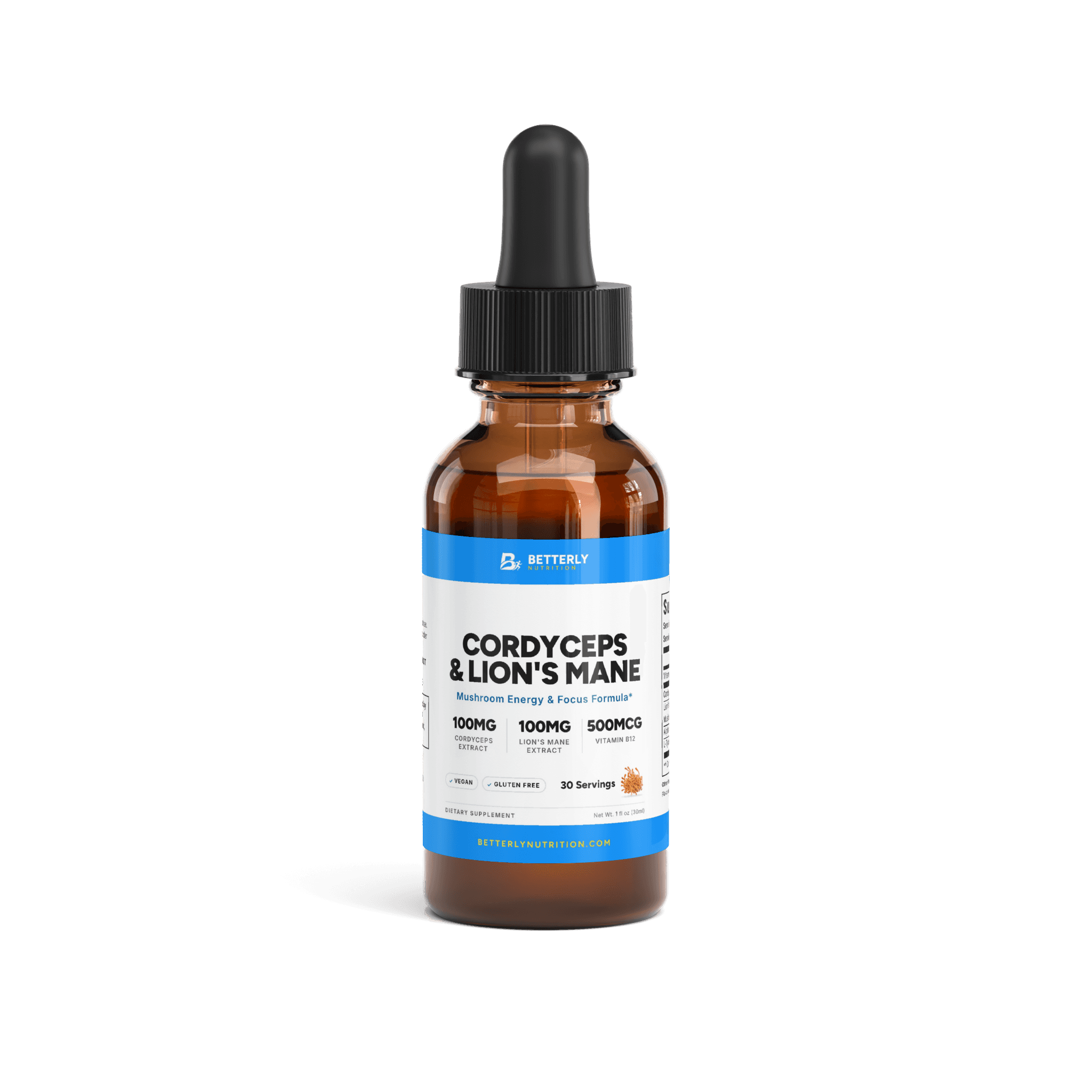
Our closest thing to a lion's mane tincture, the Cordyceps & Lion's Mane Energy Drops, lists 100 mg of lion's mane extract per 1 ml serving. Two of our capsules list 1,000 mg of powder.
That's the gummy puzzle again: extract against ground mushroom, with no ratio on the drops label to link them. The bigger change is the company. Each 1 ml also holds 100 mg of cordyceps extract, 500 mcg of vitamin B12, and 25 mg each of Alpha GPC and L-Tyrosine, so switching from capsules adds four actives to your day.
Lion's mane powder vs capsules
Our Organic Lion's Mane Mushroom Capsules are lion's mane powder inside a pullulan shell, and organic pea starch is the only other ingredient on the label.
The shell is pullulan and water, which the label marks as a plant-based capsule. The pea starch has no amount or stated purpose on the panel. So next to a loose powder, a capsule adds a shell and some starch, and spares you the taste and the stirring. The label says to take two capsules and says nothing about emptying them into food.
Lion's mane gummies vs powder
In our lineup, lion's mane gummies vs powder means 87 mg of lion's mane extract with 2 g of added sugars per gummy, against capsule powder with no sweetener listed.
We don't carry a loose lion's mane powder, so the capsule's 1,000 mg of fruiting body and mycelium powder stands in for it. The gummy gives that up for a chew, a sugar row and three more mushroom extracts.
Where the strip fits
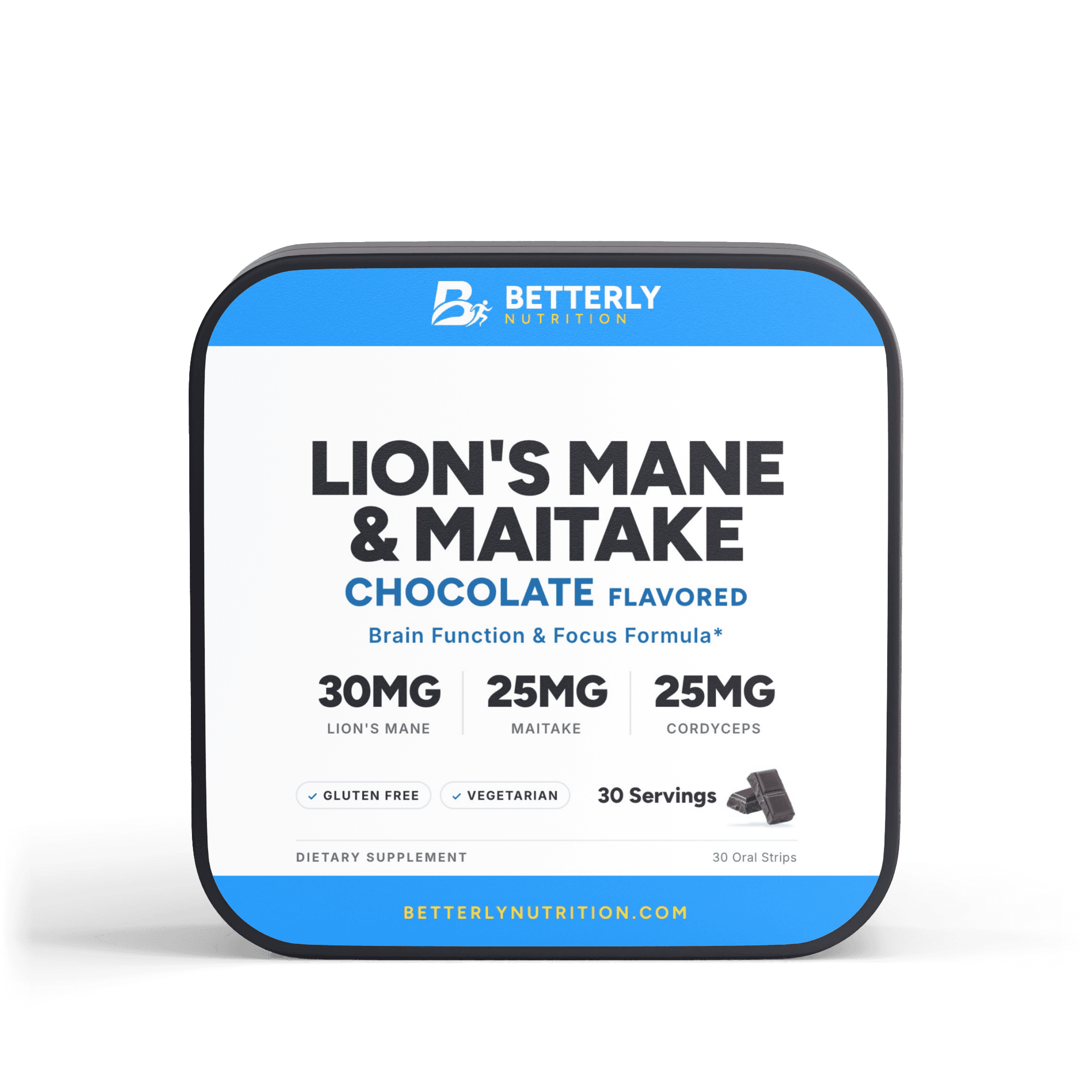
The Lion's Mane & Maitake Focus Strips carry 30 mg of lion's mane per strip, the smallest printed amount we sell, plus maitake, cordyceps and shiitake. The label doesn't say whether the lion's mane is extract or powder. It suits someone who values a no-water habit over a big number.
When is a lion's mane gummy the better choice?
A lion's mane gummy is the better choice when a chewable is the one format you'll actually take as directed, and 2 g of added sugar per gummy suits you.
Pill fatigue is real if your morning already includes a multivitamin, a fish oil and a probiotic. An extra pair of capsules is easy to skip, and the format you'll stick with is the only one worth paying for. The gummy also fits if you want lion's mane, chaga, maitake and shiitake together.
| If this sounds like you | Look at | What you trade away |
|---|---|---|
| You already swallow several pills a day | Gummies | 2 g added sugars each |
| You want lion's mane alone, in the biggest amount | Capsules | Two capsules to swallow |
| You like a dropper and want B12 alongside | Drops | Four other actives share it |
| You want no water and no sugar row | Strips | Only 30 mg of lion's mane |
If swallowing capsules is easy for you, the capsule gives up the least. If it isn't, you're choosing between the gummy's sugar and the strip's small amount. All four formats are listed together on our mushroom supplements page.
From our shop: Lion's Mane & Chaga Mushroom Gummies — a chewable for people who'd rather not swallow pills, with 87 mg of lion's mane extract and 2 g of added sugars per 1-gummy serving.
How do you take each lion's mane format, per the label?
Follow each lion's mane label as printed: the capsules call for two a day, the gummies one or two, the drops 1 ml, and the strips one.
- Capsules: "adults take two (2) capsules daily or as directed by a healthcare professional."
- Gummies: "Take one (1) to two (2) gummies daily."
- Drops: "Shake well. Take 1 ml (30 drops) daily."
- Strips: "Place 1 oral strip on the tongue daily and allow it to dissolve."
None of the four names a mealtime or an hour, so tie yours to something you already do every day.
From our shop: Organic Lion's Mane Mushroom Capsules — lion's mane with no other mushroom on the panel, at 1,000 mg of powder and 400 mg of polysaccharides per 2-capsule serving.
When is switching lion's mane formats not worth it?
Switching lion's mane formats isn't worth it when two capsules a day already suit you, or when the new format's extras aren't ones you want.
If the capsules go down easily, a gummy mostly adds things: 2 g of added sugars each and three other mushroom extracts, while the lion's mane figure drops to a number that doesn't convert back to your old one. That trade pays off only when chewing is what keeps you consistent.
The drops make sense if you want cordyceps, Alpha GPC, L-Tyrosine and B12 in the same dropper as your lion's mane. If you're after lion's mane on its own, they take you further from that, not closer.
Who should check with a healthcare provider first?
Talk to a provider before any lion's mane format if you're pregnant or nursing, under 18, taking medication, scheduled for surgery or living with a health condition.
All four of our lion's mane labels print the same caution: "Do not exceed recommended dose. Consult a physician if pregnant, nursing, under 18, or have a medical condition."
NCCIH's page on using dietary supplements wisely says some supplements can cause problems alongside certain prescription or over-the-counter medicines. Before surgery, it advises talking with your providers "as far in advance of the operation as possible."
Gummies need one extra habit at home: our labels say "KEEP OUT OF REACH OF CHILDREN," and an orange gummy looks like candy to a child. Anyone who's had a reaction to mushrooms as food should ask a provider before trying lion's mane in any form.
FAQ: lion's mane gummies vs capsules
Are lion's mane gummies worth it?
Lion's mane gummies are worth it if a chewable is the format you'll take every day and the sugar fits your diet. Our Lion's Mane & Chaga Mushroom Gummies give 87 mg of lion's mane extract per gummy, with 2 g of added sugars and three other mushroom extracts. If pills are easy for you and you want lion's mane alone, our capsules are the better match.
Are lion's mane gummies vegan?
Yes, our Lion's Mane & Chaga Mushroom Gummies are labeled vegan, along with gluten free and non-GMO. Gelatin isn't in their ingredient list; citrus pectin, a fiber from fruit, gives each gummy its set. Our lion's mane capsules and drops carry the same vegan claim. The Lion's Mane & Maitake Focus Strips are the exception: their label claims vegetarian rather than vegan.
Do lion's mane gummies need to be refrigerated?
No, our Lion's Mane & Chaga Mushroom Gummies don't call for a fridge. The storage line on the bottle says to keep them somewhere cool and dry, with no mention of refrigeration. Our lion's mane capsules, drops and strips print the same storage line, so none of the four asks for cold storage. The gummy, capsule and drop labels also warn against using a bottle whose safety seal is damaged or missing, so check the seal on a new bottle.
Can you take lion's mane gummies and capsules together?
We don't suggest taking our lion's mane gummies and capsules together. Each label says "Do not exceed recommended dose," and neither one is written with the other in mind. Two of each would put 1,000 mg of powder and 174 mg of extract into one day, two materials that don't add up to a single total. If one format doesn't suit you, switch rather than stack. Stay within one label's suggested use, and ask your provider if you're considering combining formats.
Can you take lion's mane with other vitamins?
None of our lion's mane labels gives directions about pairing it with other vitamins, so check for overlap yourself. The Cordyceps & Lion's Mane Energy Drops carry 500 mcg of vitamin B12 per 1 ml, and the NIH Office of Dietary Supplements' vitamin B12 fact sheet lists multivitamin/mineral and B-complex supplements among the products that contain B12. If you take prescription or over-the-counter medicines, run your full supplement list past your pharmacist first.
Sources
- Added Sugars on the Nutrition Facts Label, U.S. Food and Drug Administration
- Using Dietary Supplements Wisely, National Center for Complementary and Integrative Health
- Vitamin B12: Fact Sheet for Consumers, NIH Office of Dietary Supplements
If this left you looking for somewhere to start, read lion's mane gummies — its amounts per serving are listed on the page. For the practical questions this raises, how dosing, sourcing and subscriptions work is answered in one place.