On this page
- Key takeaways
- Which should you pick, lion's mane or ashwagandha?
- What exactly are lion's mane and ashwagandha?
- Is lion's mane or ashwagandha better for focus?
- Is ashwagandha or lion's mane better for occasional stress and sleep?
- Should you take lion's mane and ashwagandha in the morning or at night?
- Can you take lion's mane and ashwagandha together?
- When is neither lion's mane nor ashwagandha worth adding?
- Who should ask a provider before lion's mane or ashwagandha?
- FAQ: lion's mane vs ashwagandha
- Sources
The short answer: Lion's mane vs ashwagandha is a choice between two different jobs. Lion's mane (Hericium erinaceus) is an edible mushroom sold for focus, with a few small, mixed human trials. Ashwagandha (Withania somnifera) is a shrub root with more trials behind it for occasional stress and sleep, and more cautions. None of the NIH sources we checked flags the pair, but no study has tested them together, so add one at a time.
Key takeaways
- In healthy adults, lion's mane studies mostly ran thinking tests, with results LiverTox describes as mixed, minor or no better than placebo.
- Ashwagandha trials mostly used stress and sleep questionnaires, and they tested different extracts at different doses.
- NCCIH advises against ashwagandha during pregnancy, while breastfeeding and before surgery.
- Our ashwagandha label splits the day's two capsules between two meals rather than one bedtime dose.
Betterly makes money from both herbs: lion's mane appears in six of our formulas and ashwagandha in several others, though no product of ours combines the two. When we give a milligram figure for a Betterly product, it's the exact number on that product's label, not a rounded one.
Which should you pick, lion's mane or ashwagandha?
Pick lion's mane for an everyday focus habit with modest evidence, ashwagandha for demanding weeks and evening wind-down, and neither if you want a caffeine-style kick.
| If your main goal is | Start with | The reason |
|---|---|---|
| Staying on task through a normal workday | Lion's mane | It's sold for focus, though human results are mixed |
| Getting through a high-pressure stretch | Ashwagandha | Most of its trials scored perceived stress |
| Settling down in the evening | Ashwagandha | ODS describes a few sleep trials with a small effect |
| A caffeine-style kick | Neither | No caffeine on any of these three panels |
| Focus plus a steadier week | Both, one at a time | Nobody has studied the pair |
| Pregnant, nursing or facing surgery | A provider visit first | NCCIH advises against ashwagandha in all three |
Use the table to sort, not to rank: researchers measured different things for each ingredient, so no trial pits them against each other.
What exactly are lion's mane and ashwagandha?
Lion's mane is a food mushroom with long, hanging white spines, and ashwagandha is an Ayurvedic shrub whose root goes into most supplements.
LiverTox, an NIH database on how drugs and supplements affect the liver, says lion's mane grows on dead hardwood trunks and has long been eaten as food and used in traditional Chinese medicine. It contains hericenones, erinacines and beta-polysaccharides. LiverTox says nobody knows which compound drives the claimed effects, and most of those effects have turned up in lab dishes and animals, not people.
The ashwagandha fact sheet from the NIH Office of Dietary Supplements (ODS) says most bottles contain root extract, a few blend root with leaf, and the two parts don't share the same chemistry. Much of the herb's proposed activity is credited to compounds called withanolides, though ODS adds that other components may matter too.
Is lion's mane or ashwagandha better for focus?
Neither lion's mane nor ashwagandha has strong focus evidence: LiverTox describes small lion's mane trials with mixed results, and two ashwagandha stress trials reported focus gains on the side.
LiverTox summarizes the lion's mane trials. A 28-day trial of 41 healthy adults compared 1.8 g a day with a placebo: test speed improved after the first dose, but most thinking tests didn't change and a few improved on placebo too. A 4-week trial of 24 college-age adults found 10 g a day no different from placebo. A single-dose study of 40 healthy adults, which included a placebo group, found minor gains within an hour of taking 1 g. Our guide to what lion's mane does covers more.
ODS describes two ashwagandha stress trials that noticed focus changes too. In one, 130 healthy adults with self-reported stress took a root extract or a placebo for 90 days, and the ashwagandha group reported better well-being, memory and focus. In the other, a 60-day trial of 54 people with mild to moderate stress, researchers noted better multitasking and concentration in the group taking ashwagandha.
Both trials were built around stress, so hold the focus results loosely. The National Center for Complementary and Integrative Health (NCCIH) is more cautious: its ashwagandha safety and usefulness page finds too little evidence to judge the herb for cognitive function.
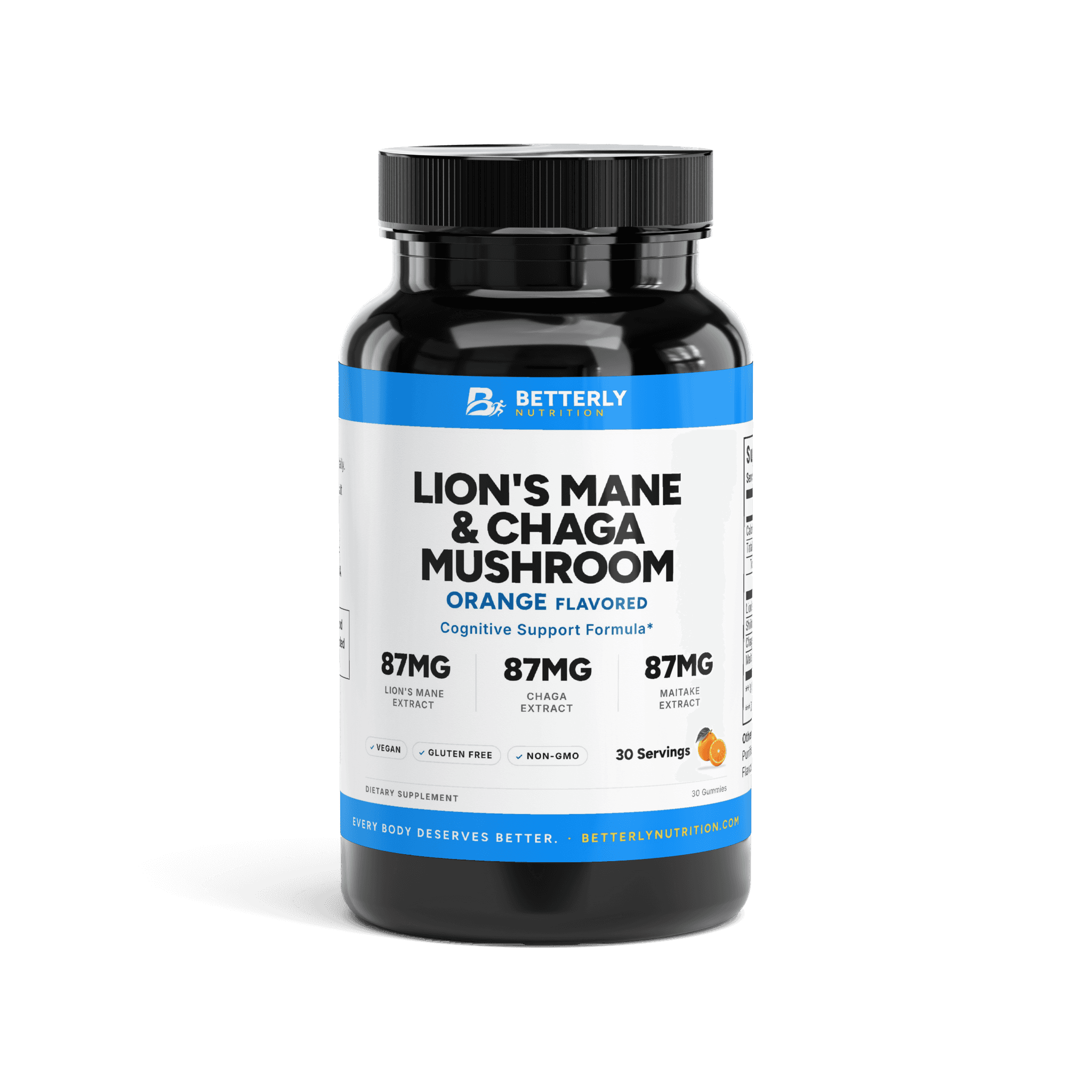
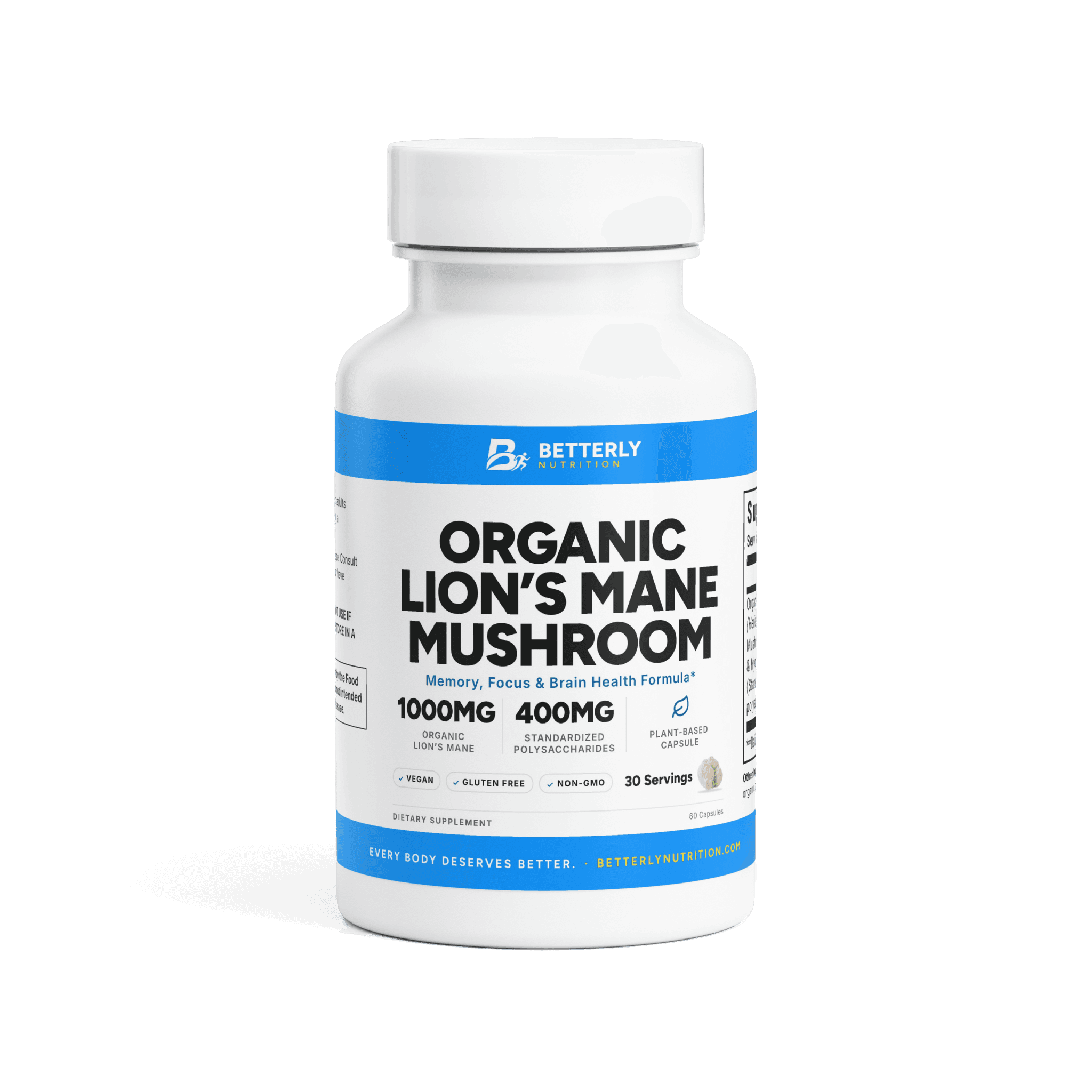
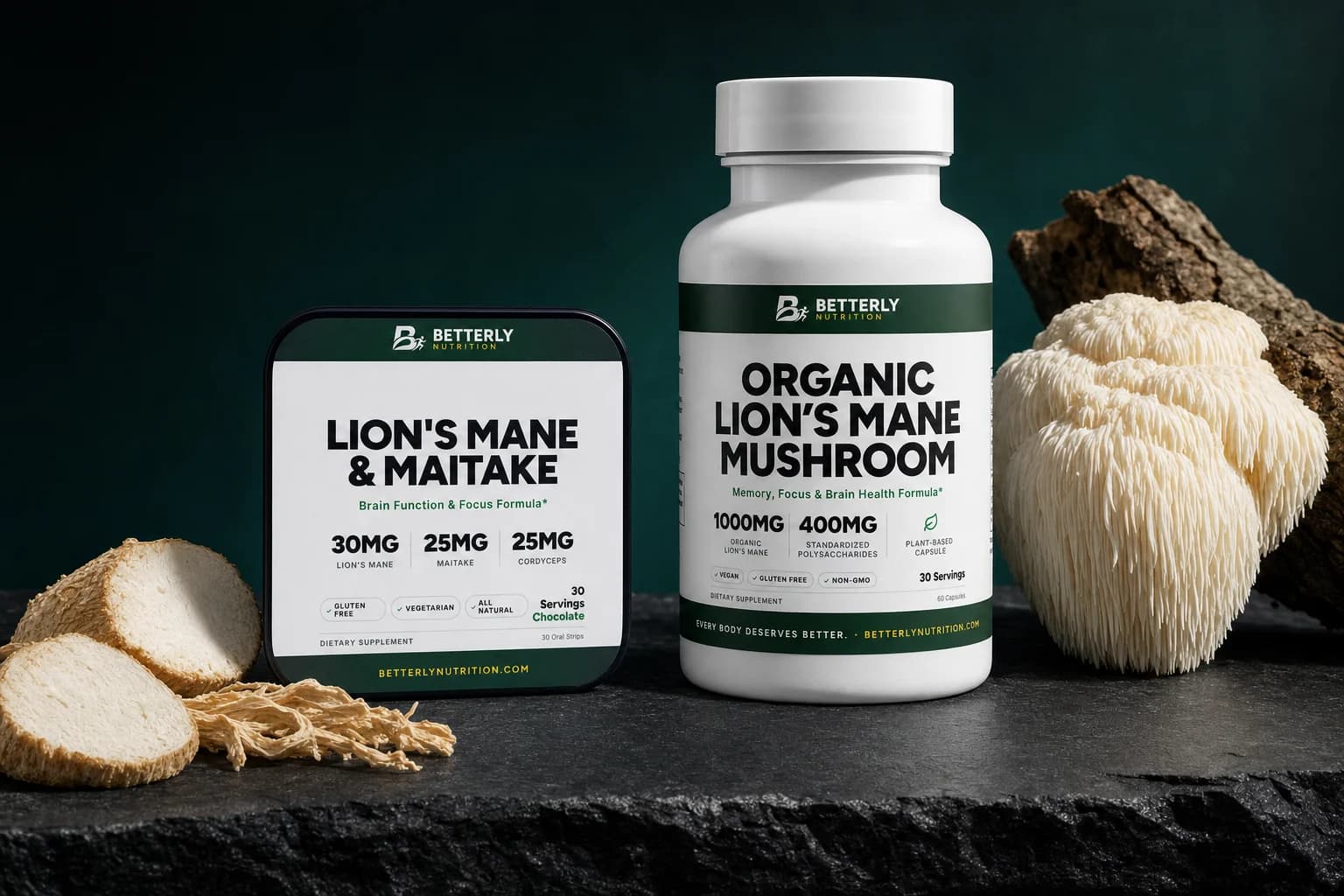
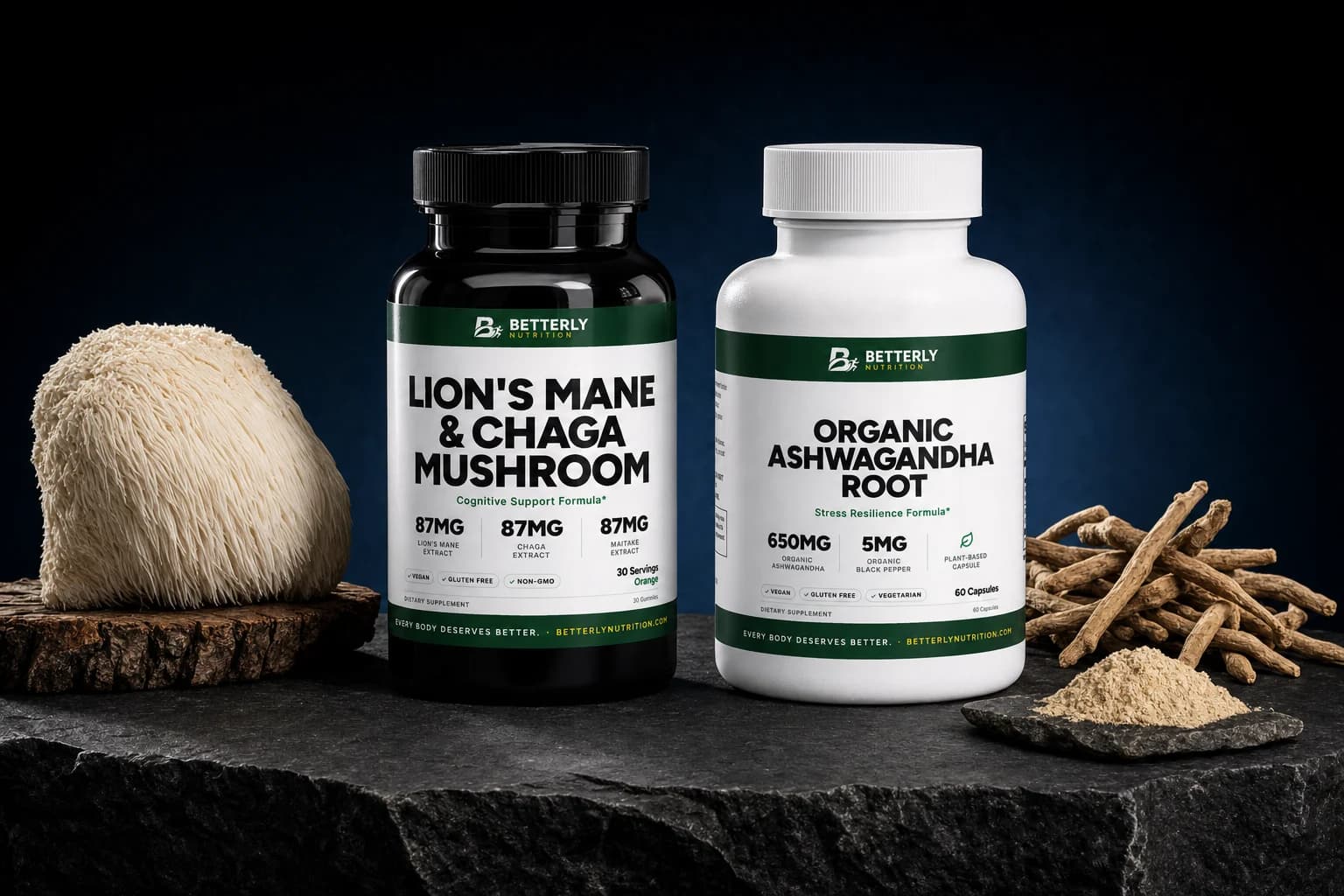
If your attention mostly wobbles on high-pressure days, ashwagandha's research sits nearer your situation. For a daily focus habit, lion's mane fits. Organic Lion's Mane Mushroom Capsules hold 1,000 mg of organic lion's mane in each 2-capsule serving, which the panel calls fruiting body and mycelium powder with 40% polysaccharides (400 mg). Lion's Mane & Chaga Mushroom Gummies list 87 mg of lion's mane extract per 1-gummy serving, beside 87 mg each of chaga, shiitake and maitake.
Extract and powder weights don't compare directly, so 87 mg beside 1,000 mg doesn't show which is stronger. Our strips, drops and blends with lion's mane are in the mushroom supplements collection.
From our shop: Lion's Mane & Chaga Mushroom Gummies — an orange-flavored chew for anyone who finds capsules a chore, with 87 mg of lion's mane extract plus chaga, shiitake and maitake per 1-gummy serving.
Is ashwagandha or lion's mane better for occasional stress and sleep?
Ashwagandha has the stronger record here: ODS describes several stress and sleep trials, while lion's mane has one small stress finding and a sleep result that matched placebo.
According to ODS, several clinical trials suggest ashwagandha extracts may ease perceived stress, and a few point the same way for sleep. For 6 weeks, 150 adults who reported sleep trouble took a root-and-leaf extract or a placebo. Both groups rated their sleep better by the end, but the gain was 72% with ashwagandha and 29% with placebo. ODS adds that the trials used various preparations and doses, so no one product or amount stands out.
In the 41-adult lion's mane trial, LiverTox notes lower stress after 28 days, though most other measures didn't budge. In a 4-week study, 30 women ate cookies made with 2 g of lion's mane or placebo cookies daily, and sleep scores ended up no different between groups.
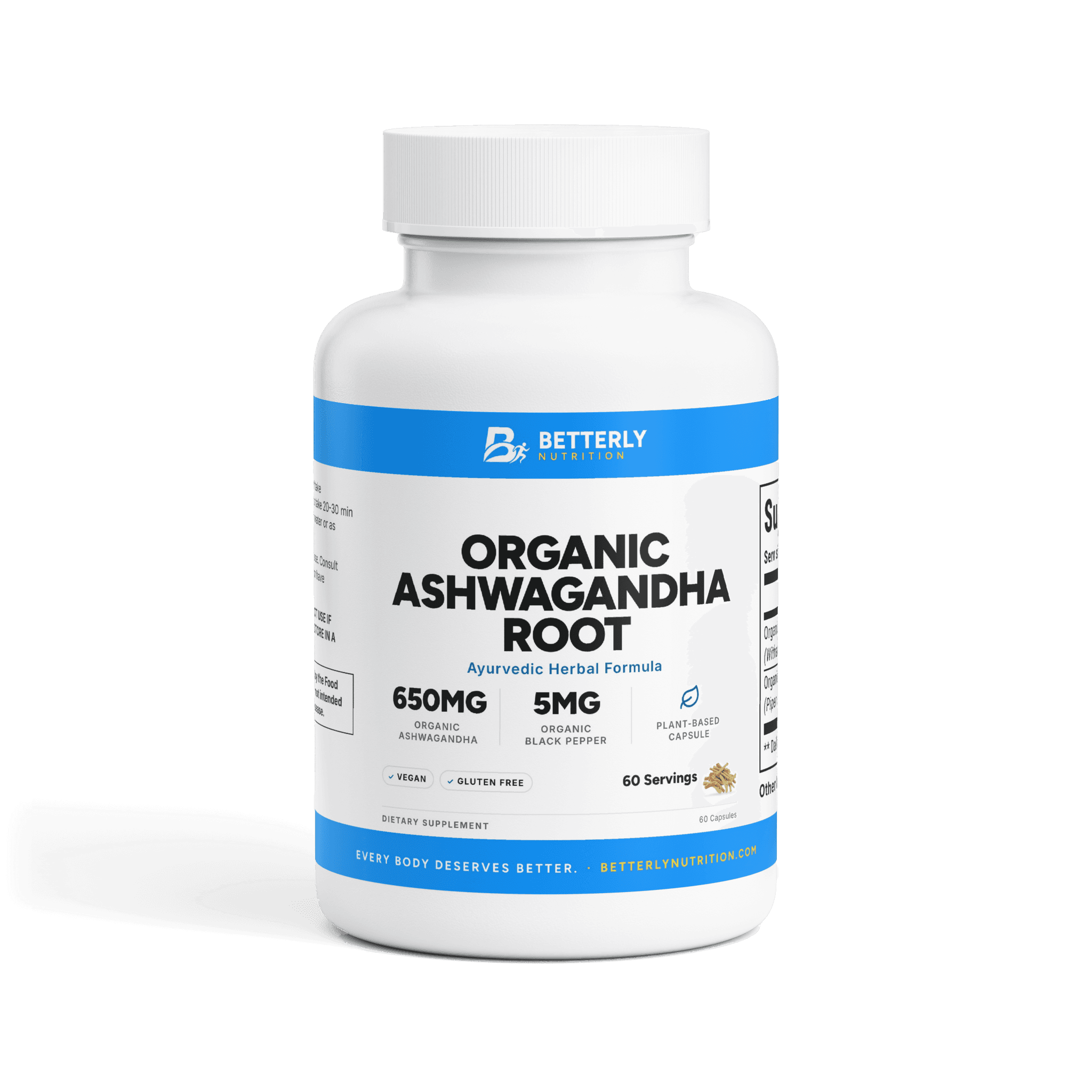
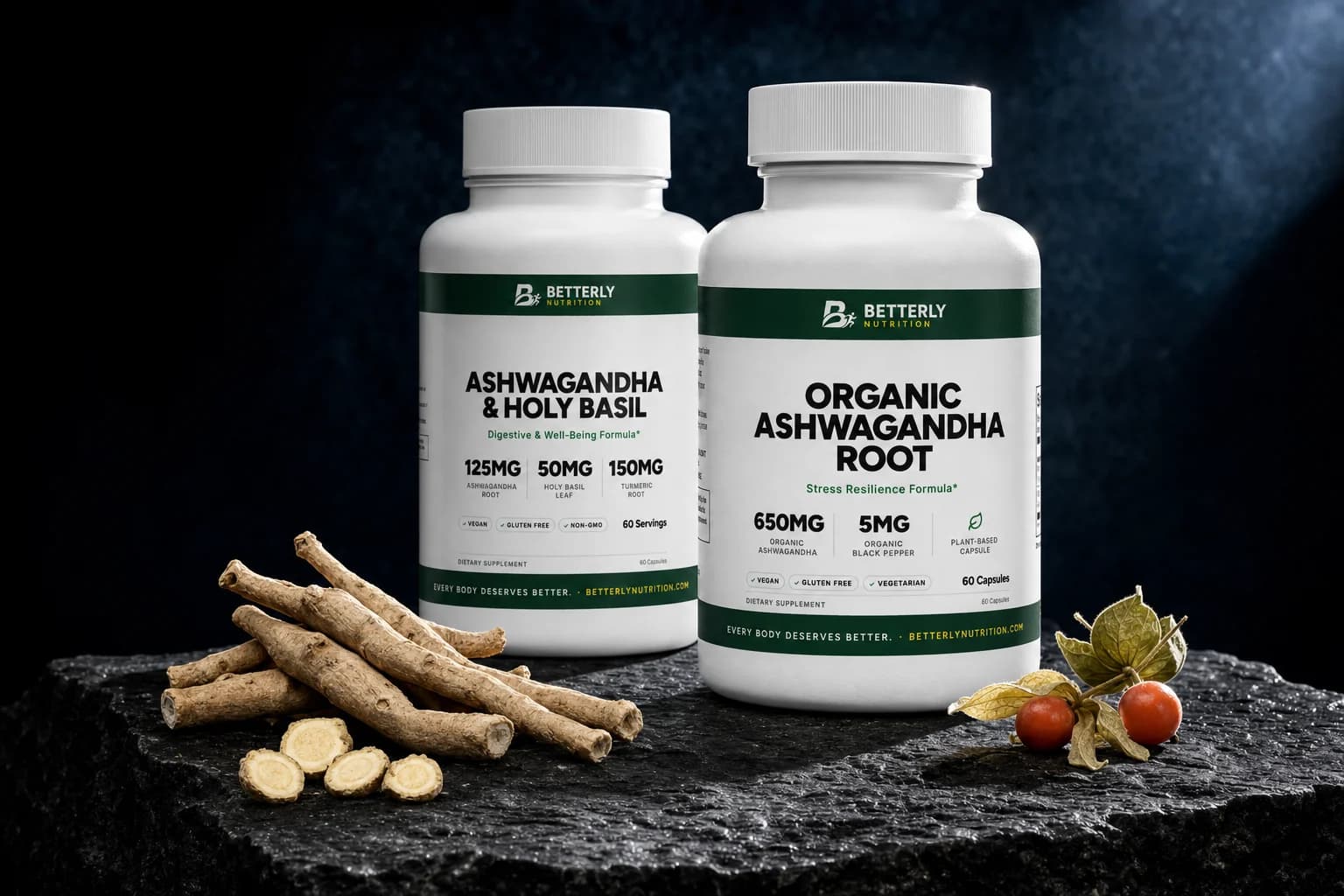
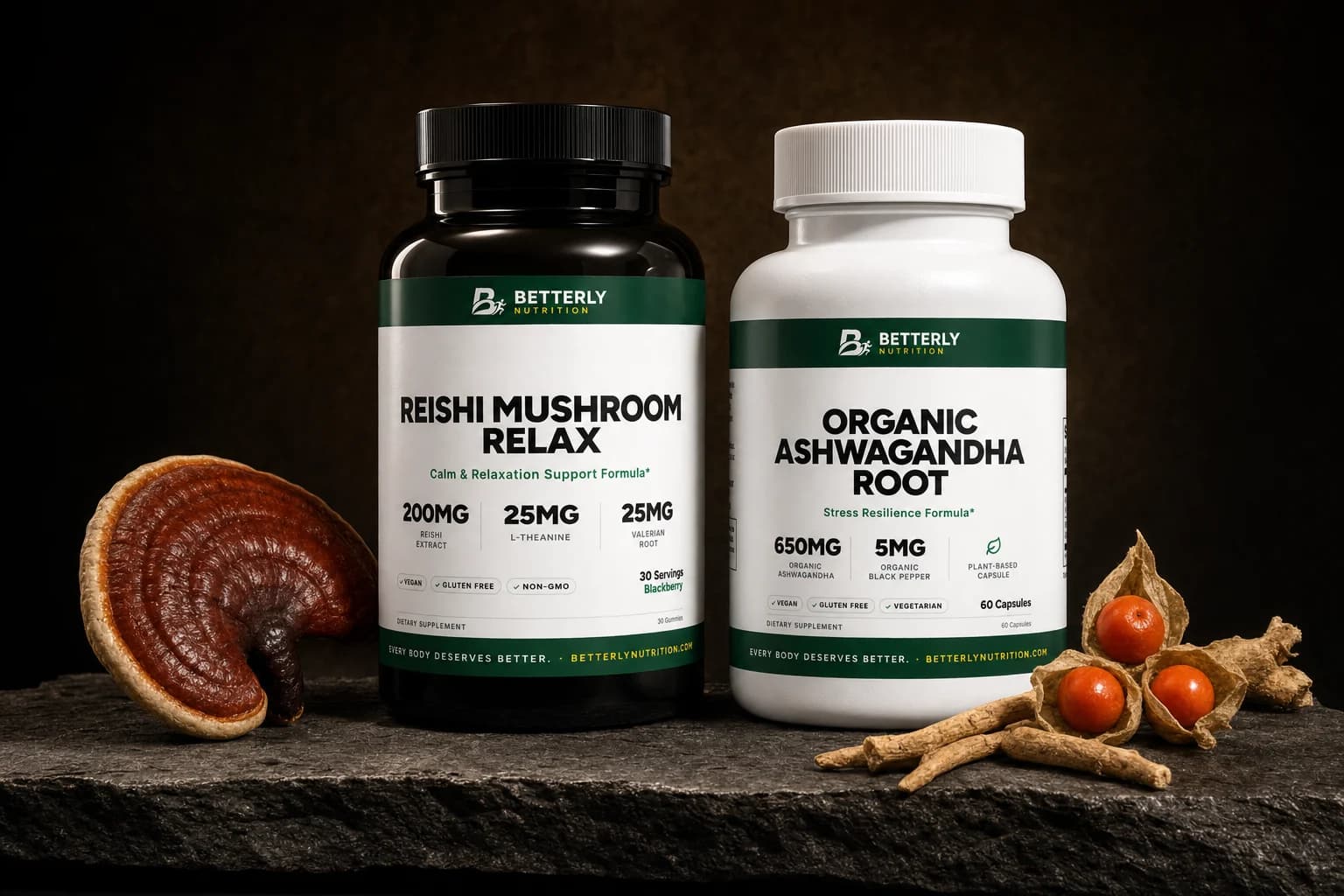
How close is our ashwagandha to those trial products? Not very. ODS describes the 54-person trial's tablet as 500 mg of root extract with 2.5% withanolides, plus 5 mg of piperine. Our Organic Ashwagandha Root Capsules print 650 mg of organic ashwagandha root per 1-capsule serving, with 5 mg of organic black pepper.
Only the 5 mg figure lines up, and even that differs: ours is organic black pepper fruit, as the panel lists it, not a piperine extract. That tablet also held a root extract with a stated withanolide level, while our 650 mg is listed simply as root, with no withanolide number.
Should you take lion's mane and ashwagandha in the morning or at night?
Our ashwagandha label splits the herb into two doses before meals, while our lion's mane labels only say daily, so the pair can span both morning and evening.
The popular split, lion's mane with breakfast and ashwagandha at bedtime, doesn't match our ashwagandha directions. Those ask for a capsule 20 to 30 minutes ahead of two meals a day, each with 8 oz (237 ml) of water. Here's a day that follows our labels, two ways:
| When | Gummy route | Capsule route |
|---|---|---|
| 20 to 30 min before breakfast | 1 ashwagandha capsule, 8 oz water | 1 ashwagandha capsule, 8 oz water |
| Any time that suits you | 1 or 2 lion's mane gummies | 2 lion's mane capsules |
| 20 to 30 min before dinner | 1 ashwagandha capsule, 8 oz water | 1 ashwagandha capsule, 8 oz water |
| Pieces a day | 3 or 4 | 4 |
| Daily totals | 1,300 mg ashwagandha root; 87 or 174 mg lion's mane extract; 2 or 4 g added sugars | 1,300 mg ashwagandha root; 1,000 mg lion's mane; no sugar rows on either panel |
The capsule route carries far more lion's mane by weight, with no sugar line to track. The gummy route trades two lion's mane capsules for one or two chews and brings three other mushrooms along.
Neither lion's mane label names a time or mentions food, so taking it at breakfast is your habit, not a direction. Our guide to timing a lion's mane dose weighs both options.
Want ashwagandha only at night? That departs from our label, so ask a provider first. And since drowsiness is among the side effects NCCIH names, see how your first doses land before driving.
From our shop: Organic Ashwagandha Root Capsules — 650 mg of organic ashwagandha root plus 5 mg of organic black pepper in each 1-capsule serving, with 60 capsules to a bottle, a month at the label's twice-daily use.
Can you take lion's mane and ashwagandha together?
Lion's mane and ashwagandha can share a routine, but that rests on an absence of warnings rather than on any study of the two together.
The overlap is your gut. LiverTox says longer lion's mane trials saw mild stomach complaints such as nausea or diarrhea, usually in fewer than 1 in 10 participants. Ashwagandha's usual complaints, per ODS, land in the same place: stomach upset, loose stools and nausea, plus drowsiness, and they're typically mild. Start both on the same day, and an unsettled stomach leaves you with two suspects.
So stagger them. Take the one tied to your main goal by itself, at the label amount, until your stomach has settled into it. If trouble starts only after the second one arrives, that one is the likely cause: stop it and tell your provider.
When is neither lion's mane nor ashwagandha worth adding?
Skip a new lion's mane or ashwagandha bottle if a product already in your routine supplies it, or if what you want is a caffeine-style kick.
Lion's mane turns up across our range in very different amounts:
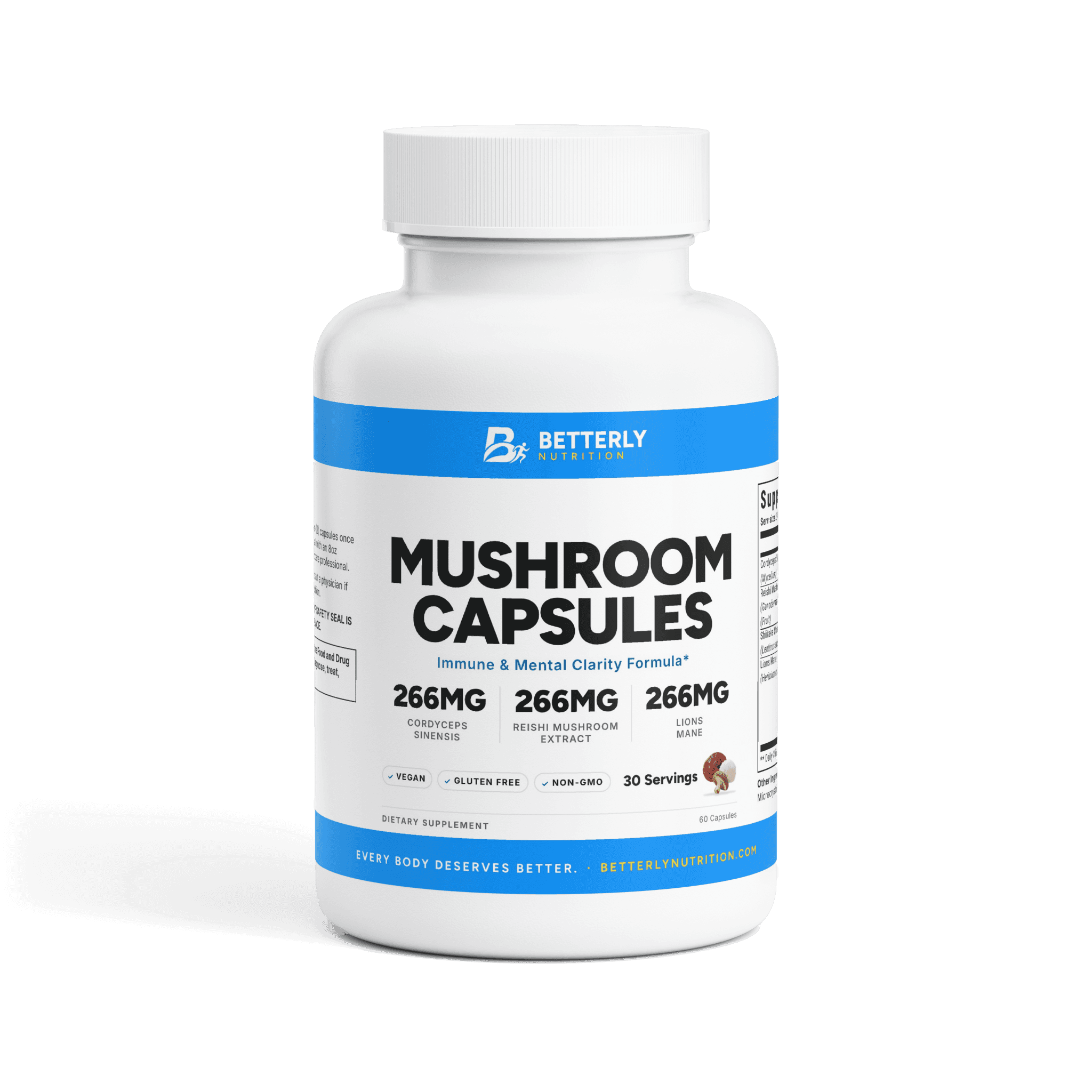
- Mushroom Capsules: 266 mg of lion's mane per 2-capsule serving, one of ten mushrooms on the panel.
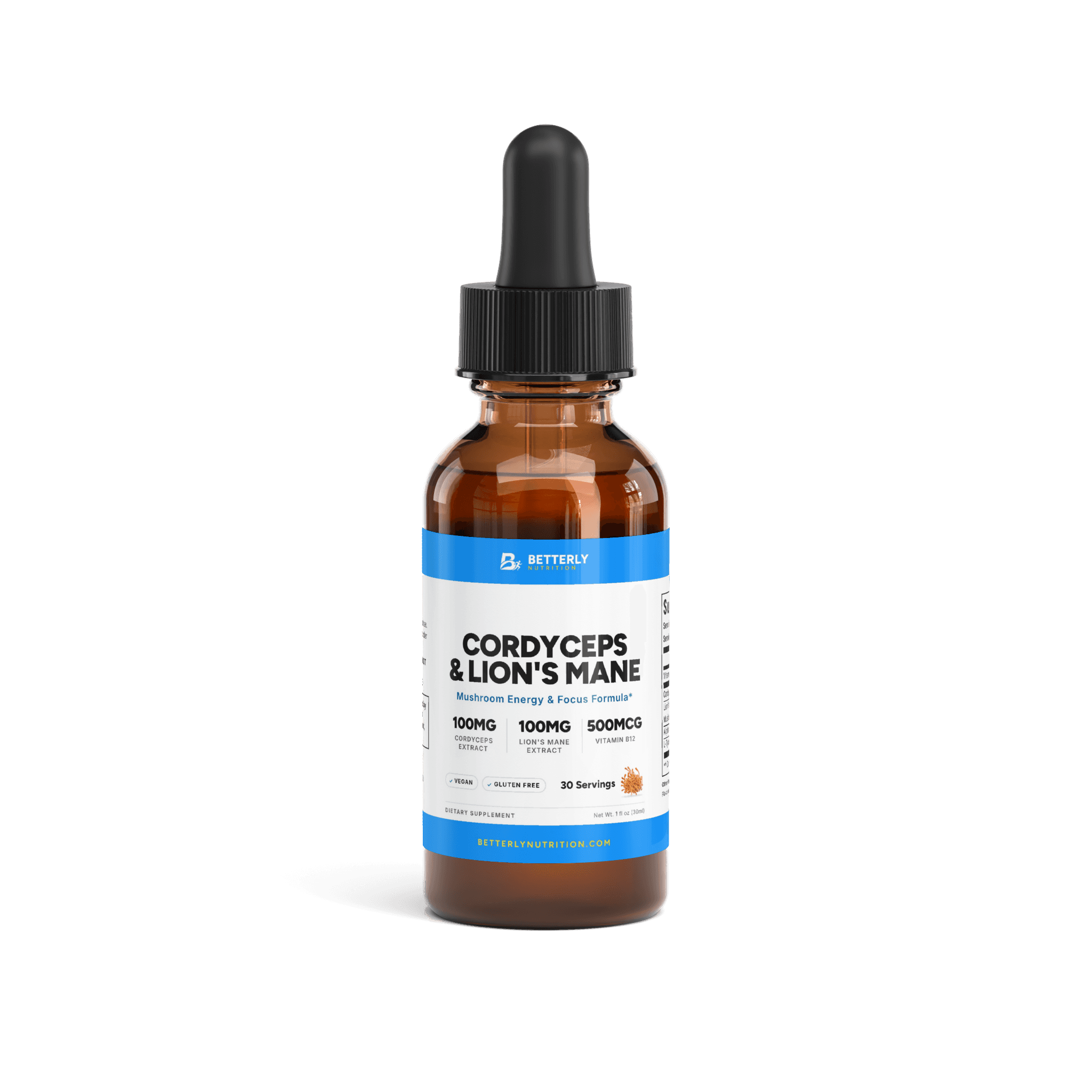
- Cordyceps & Lion's Mane Energy Drops: 100 mg of lion's mane mushroom extract per 1 ml (30-drop) serving.
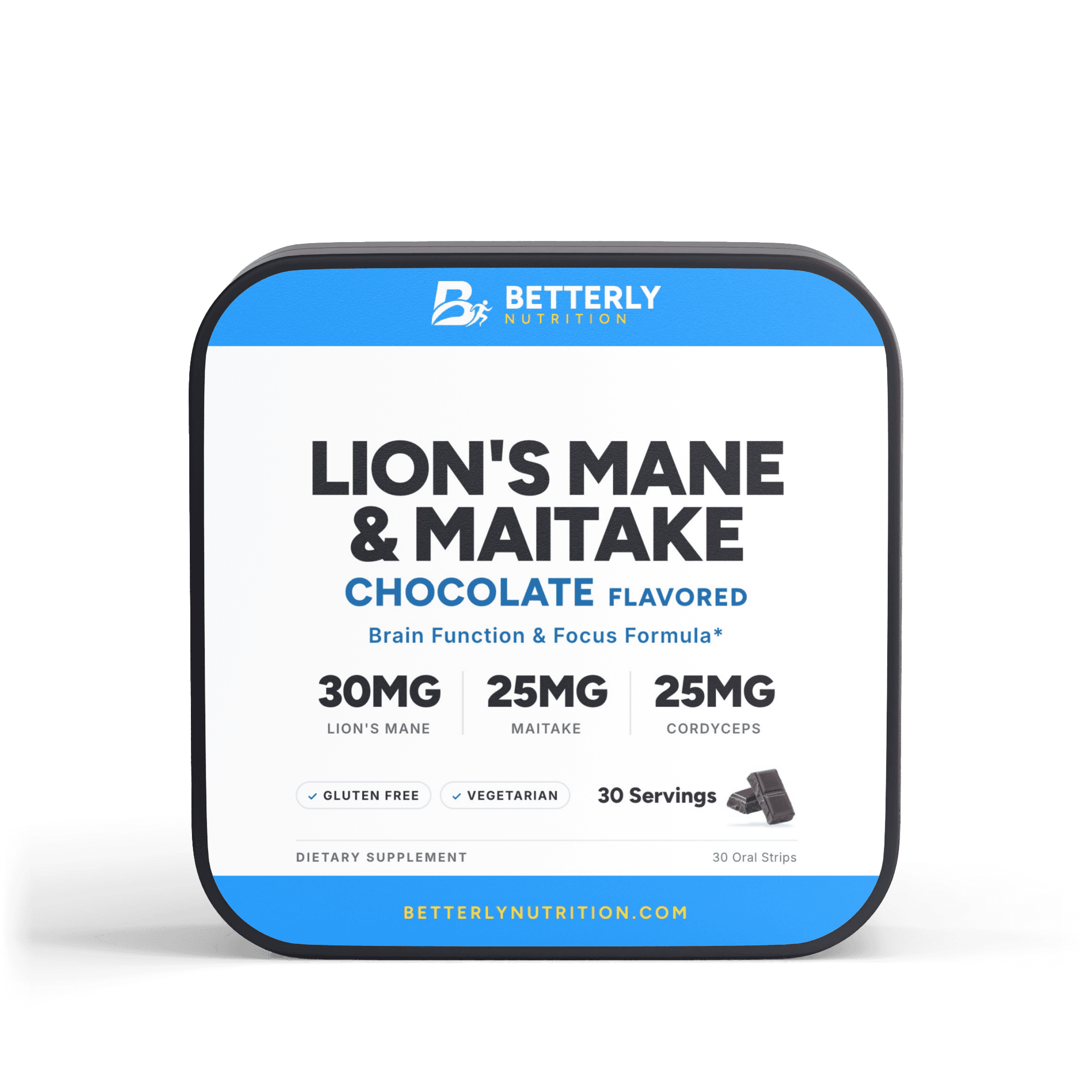
- Lion's Mane & Maitake Focus Strips: 30 mg of lion's mane per 1-strip serving.
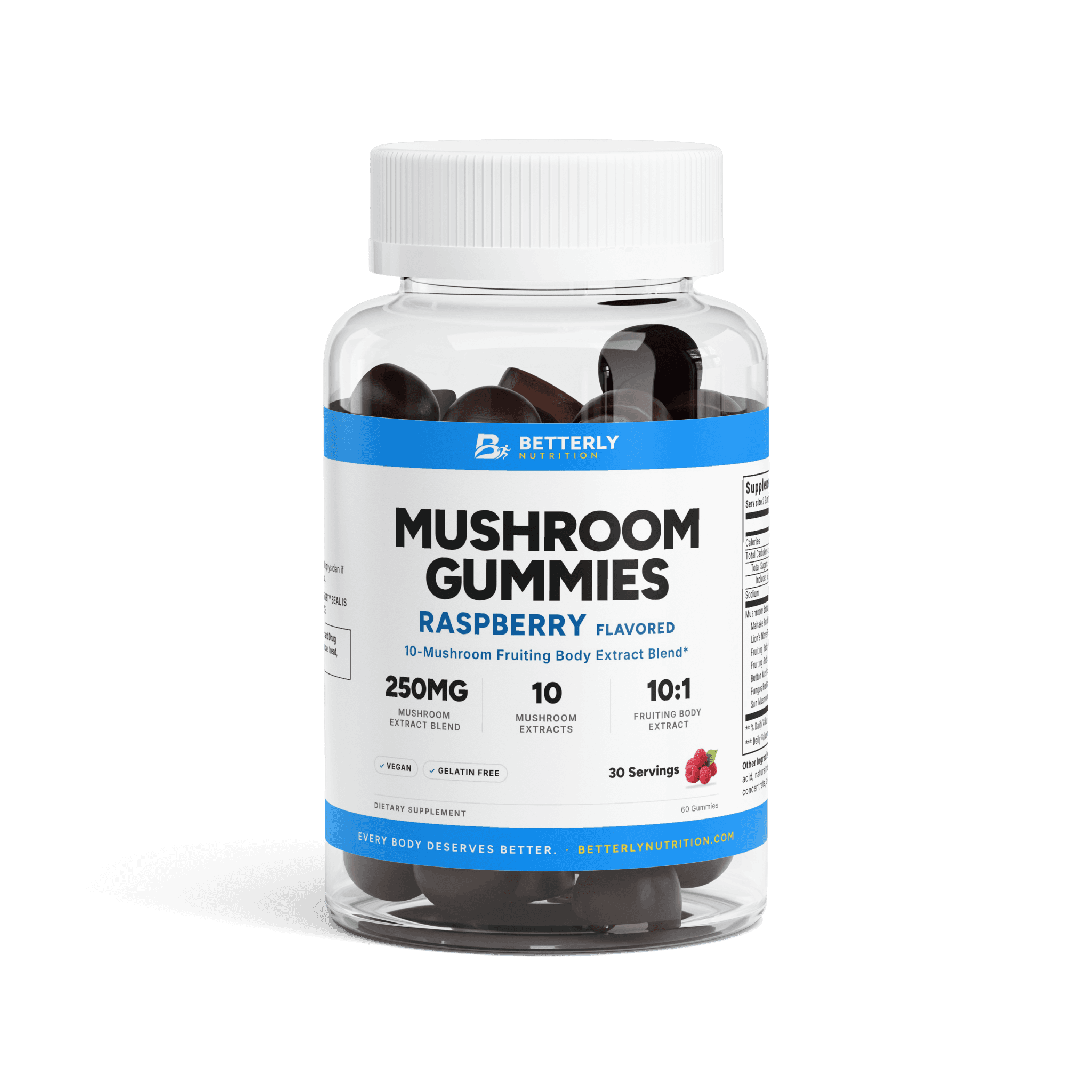
- Mushroom Gummies: lion's mane is one of ten extracts in a 250 mg blend per 2-gummy serving, with no separate amount.
Already taking one? A dedicated lion's mane bottle would stack a second source on top.
Ashwagandha overlaps too. Each 2-capsule serving of our Ashwagandha, Maca & Ginseng Capsules holds 600 mg of KSM-66® ashwagandha extract, so adding the root capsule would put the herb on two labels whose directions each assume it's the only one.
And neither ingredient is a stimulant. If a short night or a skipped lunch explains the fog, no capsule stands in for sleep or a proper meal.
Who should ask a provider before lion's mane or ashwagandha?
Pregnancy, nursing, being under 18, prescription medicine, an upcoming surgery or a medical condition are all reasons to get a healthcare provider's view before lion's mane or ashwagandha.
The caution printed on all three of our labels covers four groups: people who are pregnant, nursing, under 18 or have a medical condition. It also says "Do not exceed recommended dose." The list below adds NCCIH, ODS and LiverTox points our bottles don't print, surgery and medicines included:
- Expecting or breastfeeding: NCCIH puts ashwagandha off-limits during pregnancy and while nursing.
- An operation on the calendar: NCCIH advises against ashwagandha ahead of surgery, so mention it at your pre-op visit.
- A thyroid or immune system your doctor is monitoring: NCCIH steers this group away from ashwagandha too.
- Any daily prescription: sedatives and thyroid hormone are two drug types NCCIH names as possible ashwagandha interactions.
- A liver your doctor watches: NCCIH and ODS both describe rare liver injury reports with ashwagandha, while LiverTox rates lion's mane an unlikely cause.
- Prostate concerns a doctor has called hormone-sensitive: ODS reports that some experts tell these men to skip ashwagandha.
- Past reactions to mushrooms: LiverTox knows of at least one acute allergic response to oral lion's mane.
- Tension or restless nights that keep coming back week after week: a provider visit comes before any bottle.
Each ashwagandha group gets a fuller explanation in our ashwagandha safety guide.
FAQ: lion's mane vs ashwagandha
What are the benefits of taking lion's mane and ashwagandha together?
No study has measured a combined benefit of lion's mane and ashwagandha, so the pair's case is two separate records side by side. ODS describes several ashwagandha trials that scored perceived stress and sleep. LiverTox describes a few small lion's mane trials of thinking tests with mixed results. Taking both covers two goals at once, with two sets of cautions to follow.
Are lion's mane and ashwagandha gummies worth buying?
It depends on one number: the ashwagandha milligrams a lion's mane and ashwagandha gummy prints per full serving. Betterly doesn't make a combo chew. For scale, our Lion's Mane & Chaga gummy fits four mushroom extracts at 87 mg each into a single gummy, plus 2 g of added sugars. In the 2021 review of seven trials ODS summarizes, the extract doses ran from 240 to 1,250 mg a day. Hold a combo's printed serving up against that range.
What are the side effects of lion's mane and ashwagandha?
Side effects reported for lion's mane and ashwagandha are usually mild and mostly stomach-related. LiverTox says lion's mane trials logged few adverse events, with gut complaints usually below 10% of participants on longer use, plus a documented allergic case. For ashwagandha, NCCIH mentions drowsiness and digestive upsets such as diarrhea and vomiting, plus rare liver injury cases. If something feels wrong, pause it and call your provider.
Can you take lion's mane and ashwagandha with coffee?
No NIH page we checked raises coffee as a concern with lion's mane or ashwagandha, though none describes a study of coffee with either. Our three panels here show no caffeine row, so your cup is the only source. Taking the ashwagandha capsule 20 to 30 minutes before breakfast, then coffee with the meal, fits our label.
How long can you take lion's mane and ashwagandha?
Lion's mane and ashwagandha have been studied over very different stretches: LiverTox lists a lion's mane trial that ran 48 weeks, while ODS says ashwagandha's tolerance data stop at about 3 months. That lion's mane trial was small, and its only noted side effects were stomach complaints in 8% of participants. Hoping to stay on ashwagandha past 3 months? Raise that with your provider rather than simply reordering.
Sources
- Lion's Mane (LiverTox, National Institutes of Health)
- Ashwagandha: Fact Sheet for Health Professionals (NIH Office of Dietary Supplements)
- Ashwagandha: Usefulness and Safety (NCCIH)
If this left you looking for somewhere to start, read lion's mane gummies with 87 mg of lion's mane extract — its amounts per serving are listed on the page. For the practical questions this raises, how dosing, sourcing and subscriptions work is answered in one place.