On this page
- Key takeaways
- Why do people pair these two mushrooms?
- Chaga vs lion's mane: how are the two different?
- What are the benefits of lion's mane and chaga together?
- What's inside a lion's mane and chaga supplement?
- Gummy or two capsule bottles: which route fits you?
- How do you take these two mushrooms, going by the labels?
- Lion's mane and chaga side effects: what should you watch for?
- When don't you need a mushroom pair at all?
- Who should check with a healthcare provider first?
- FAQ: lion's mane and chaga
- Sources
The short answer: Lion's mane and chaga are two different fungi that get paired because brands sell lion's mane for focus and chaga for antioxidant support. We couldn't find a single study that tested them together, so any talk of synergy is unproven. Our Lion's Mane & Chaga Mushroom Gummies print 87 mg of each per 1-gummy serving, plus 87 mg apiece of shiitake and maitake.
Key takeaways
- Lion's mane (Hericium erinaceus) is a shaggy white mushroom eaten as food, while chaga (Inonotus obliquus) is a black growth on birch traditionally brewed as tea.
- No trial we found has tested these two mushrooms as a pair, so a combo product gives you two ingredients in one habit, not a proven upgrade.
- One of our Lion's Mane & Chaga gummies lists 348 mg of mushroom extract in total, while our two single-mushroom capsules list 1,000 mg each per 2-capsule serving.
- Oxalic acid is the main organic acid in chaga, and a published hospital case involved 10 to 15 g of chaga powder a day, so keep to one chaga product at a time.
Full disclosure: Betterly sells the gummy and every capsule here, so we profit whichever route you pick. Every product amount below is copied from our printed Supplement Facts panels, even where it makes our gummy look modest.
Why do people pair these two mushrooms?
People pair chaga and lion's mane because each is sold for a different goal, focus for lion's mane and antioxidant support for chaga, and one product covers both.
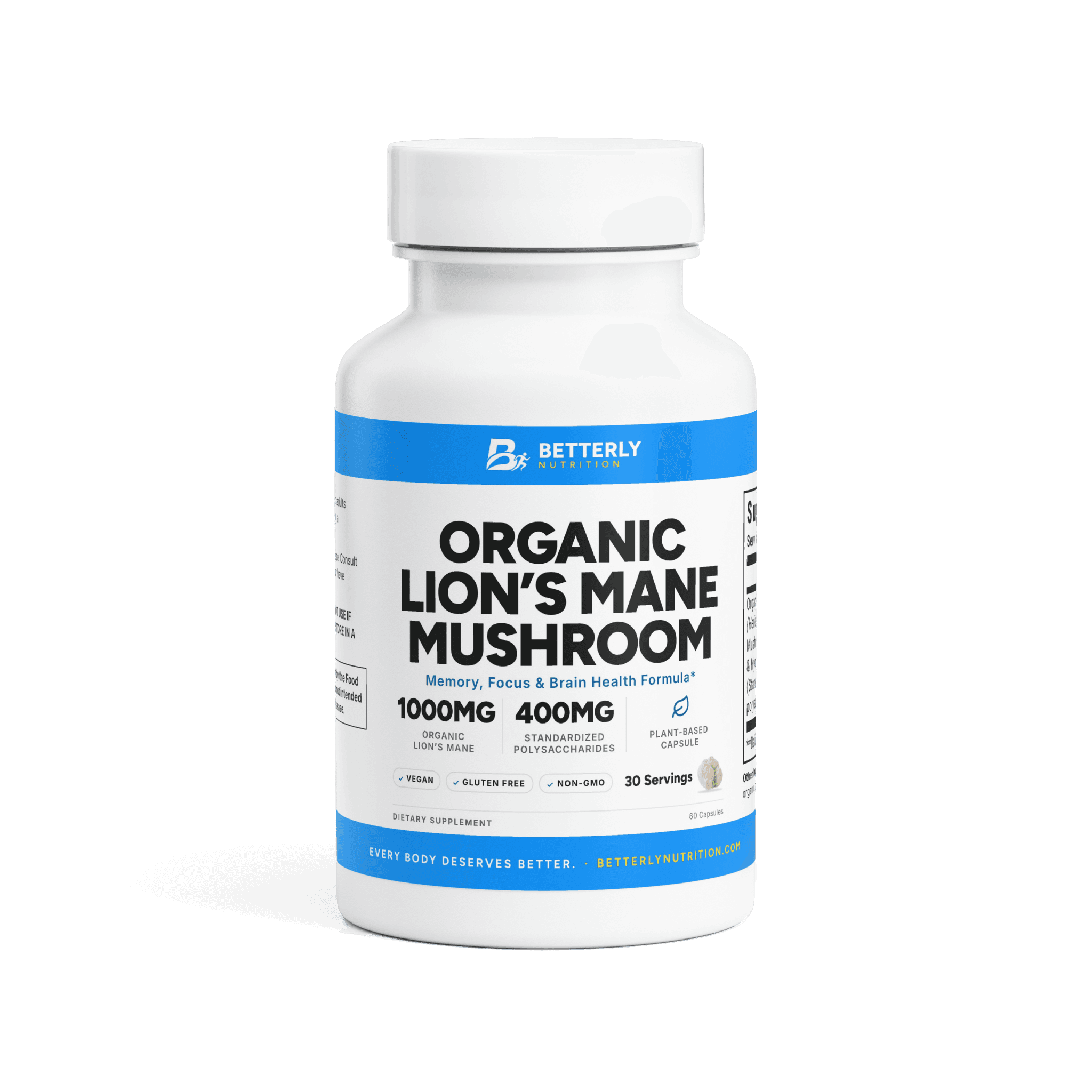
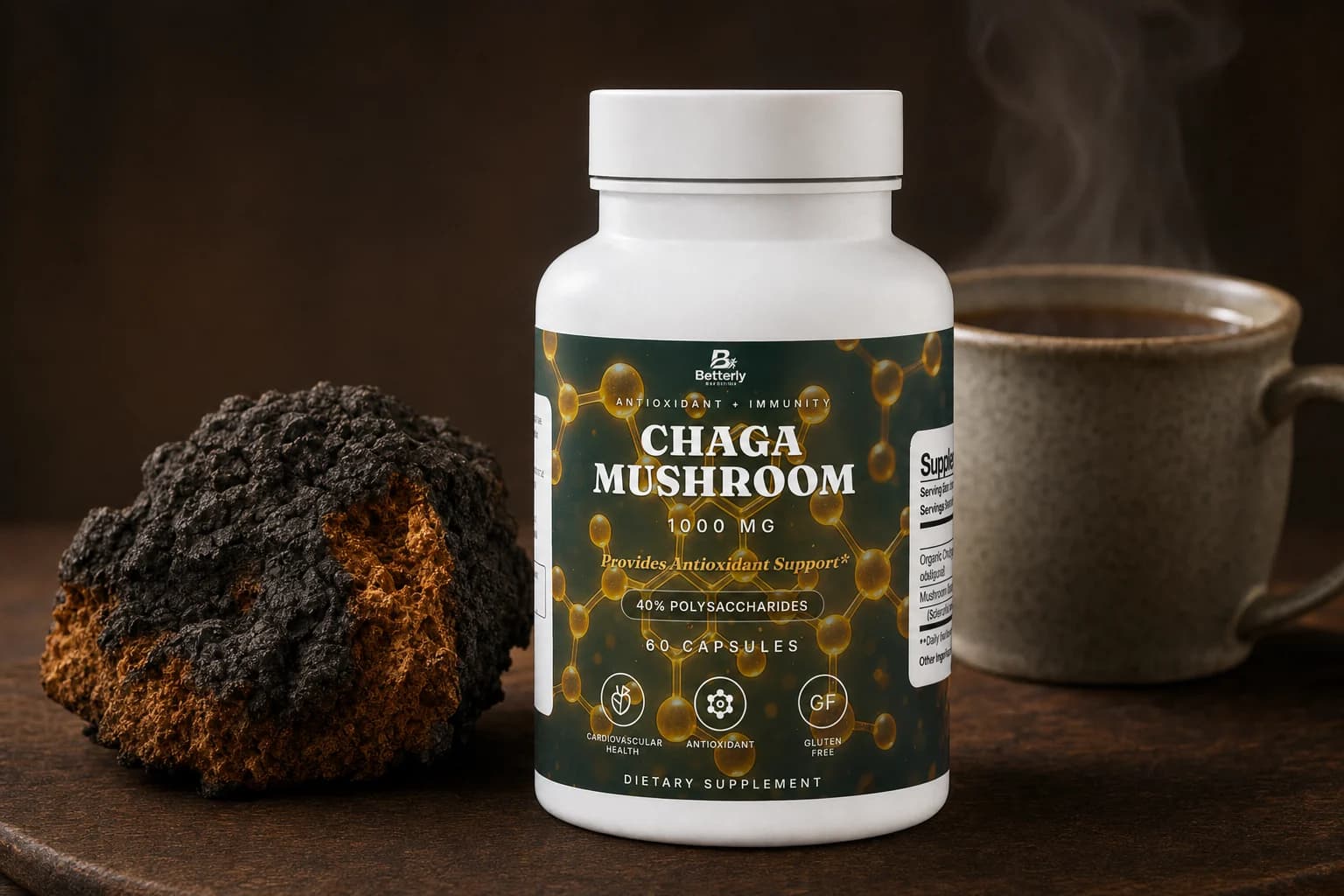
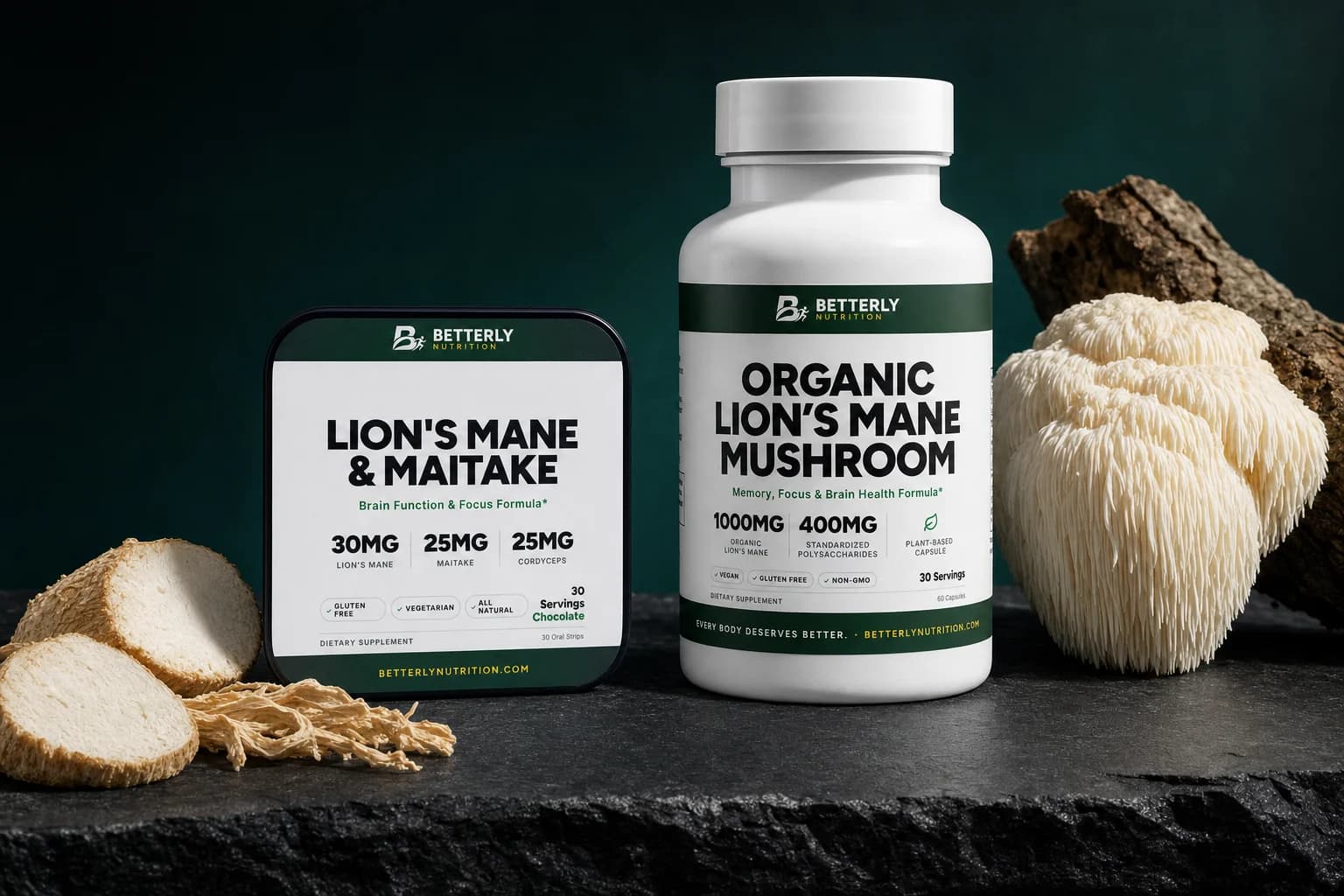
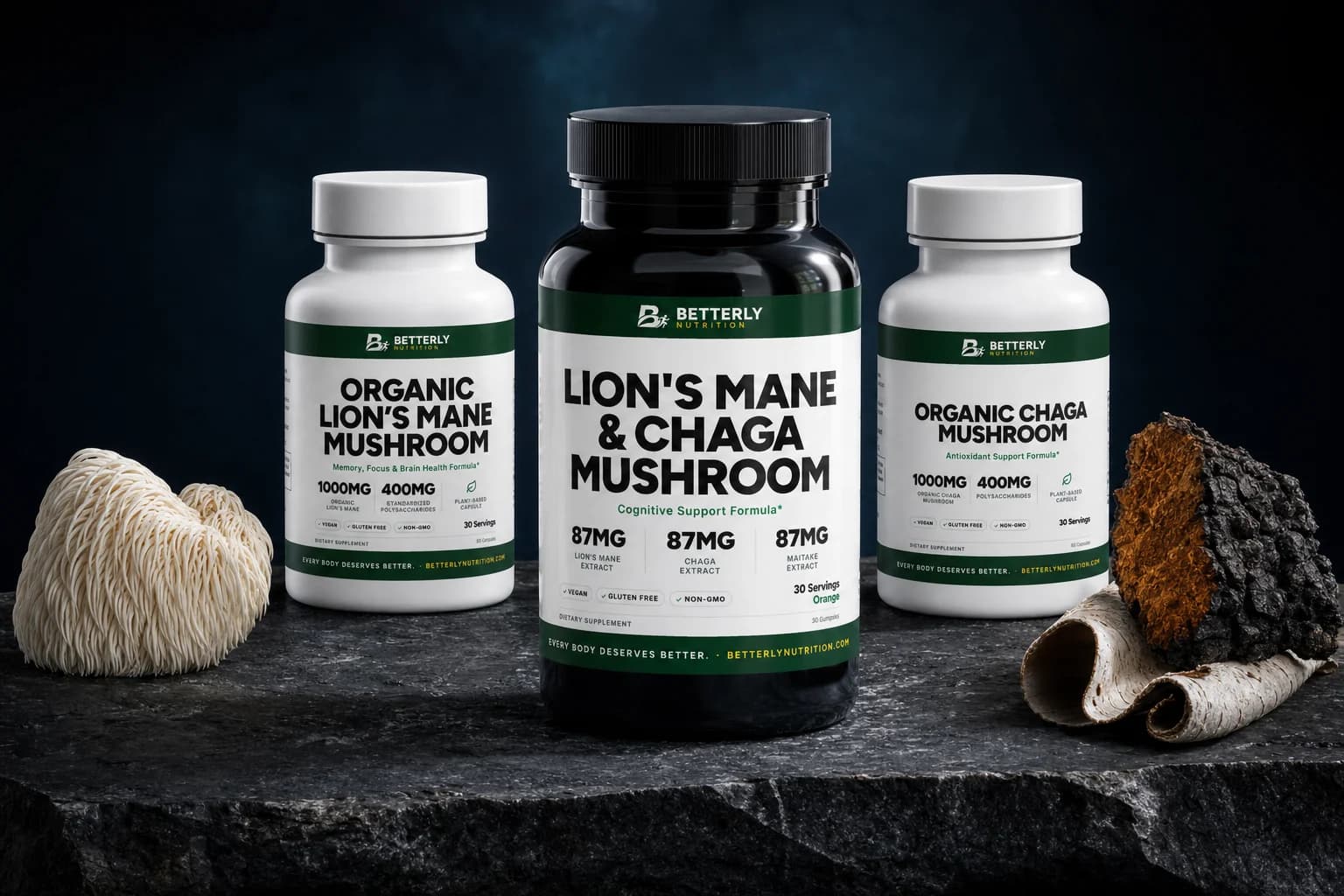
Our own labels show the split. Our Organic Lion's Mane Mushroom Capsules are labeled for memory and focus. Our Organic Chaga Mushroom Capsules read "Antioxidant Support Formula," and the combined gummy calls itself a "Cognitive Support Formula." The chaga capsules also sit on our immune-support shelf, but that's where we stock them, not a claim printed on the label.
So the pairing is about coverage: one chewable that nods to both goals. That's a fair convenience argument, as long as nobody dresses it up as biology. Browse our mushroom supplements and you'll see how often formulas mix species.
Chaga vs lion's mane: how are the two different?
Chaga vs lion's mane is a contrast in almost everything: lion's mane is an edible mushroom from dead hardwood, while chaga is a hard, black mass that grows on birch.
According to LiverTox, the NIH's database on liver safety, lion's mane typically sprouts from dead hardwood trunks. Its long, white, dangling spines are where the name comes from. People have eaten it as food and used it in traditional Chinese medicine.
Chaga looks nothing like that: charcoal-black and cracked outside, rusty brown inside, and grated into tea in cold northern regions for generations. Our deep dive on chaga tea, capsules and powder covers its forms.
| Lion's mane | Chaga | |
|---|---|---|
| Scientific name | Hericium erinaceus | Inonotus obliquus |
| What it looks like | White, shaggy spines | Black, cracked crust |
| Where it grows | Dead hardwood | Birch trees |
| Traditional use | Food and tonic | Simmered tea |
| Our label's aim | Memory and focus | Antioxidant support |
| Our capsule holds | Fruiting body and mycelium powder | Mycelium powder |
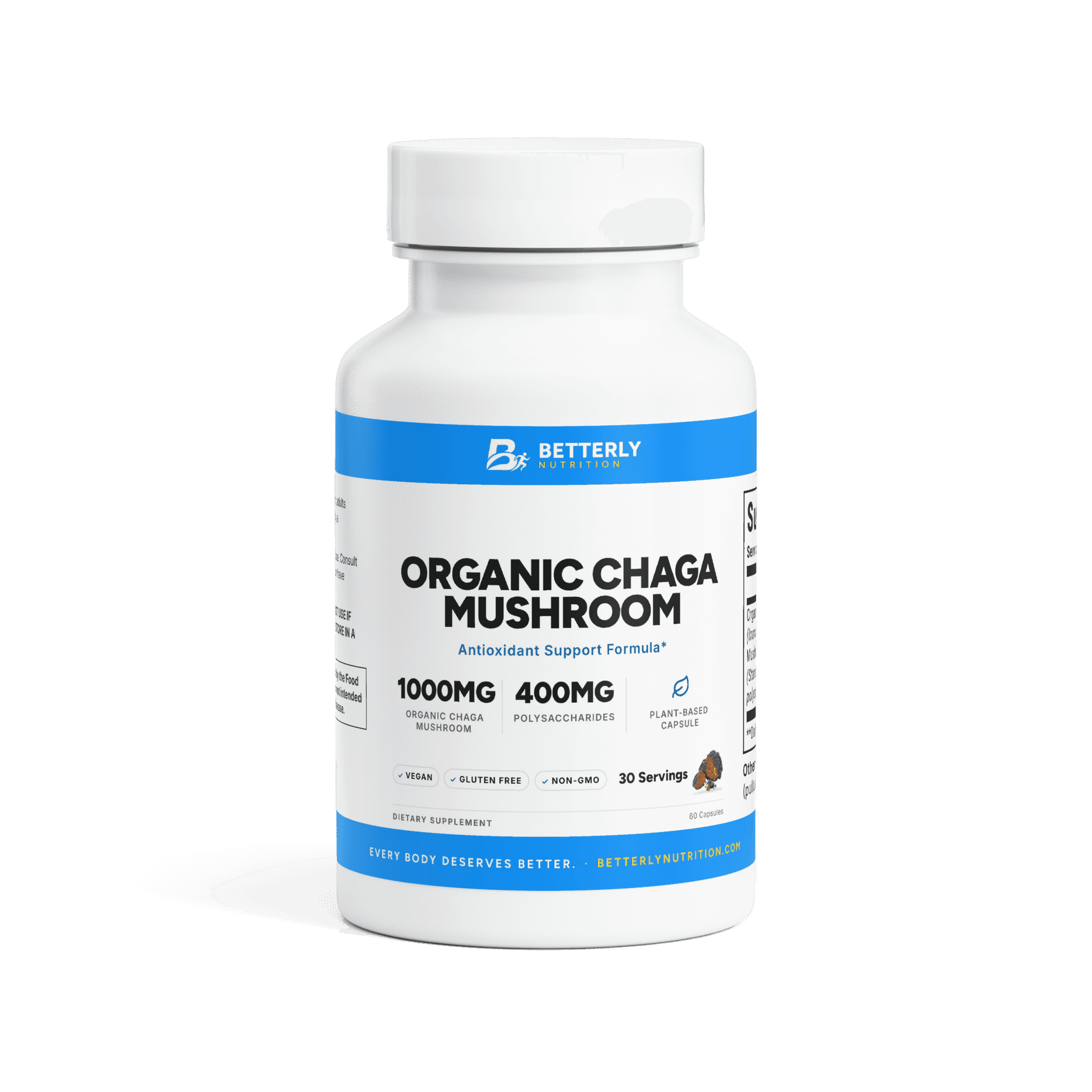
The bottom row is easy to miss. Our chaga capsules don't hold the black birch growth from the photos. Their panel lists chaga mycelium powder, the thread-like network the fungus grows from.
What are the benefits of lion's mane and chaga together?
The benefits of lion's mane and chaga together are unproven: lion's mane has lab and animal findings, chaga mostly test-tube ones, and we found no combined human trial.
Start with lion's mane. LiverTox says most of the effects claimed for it were seen in cell cultures or animals, not in people. Among the small human trials it lists, one gave 41 healthy young adults 1.8 g a day for 28 days. One speed measure improved after the first dose, but most of their thinking tests didn't change. In another, 24 college-age adults took 10 g a day for 4 weeks and showed no difference in cognition compared with placebo.
Chaga's evidence is thinner still. A 2015 lab study in the Journal of Ethnopharmacology, indexed on PubMed, measured high antioxidant activity in chaga extracts from Finland, Russia and Thailand. That was in test tubes, which speaks to chemistry, not to your body. We found no chaga page at the National Center for Complementary and Integrative Health (NCCIH), and no LiverTox entry either.
Then there's synergy. You'll read that the two "amplify" each other, but we found no trial behind that idea. The honest pitch is smaller: two goals, one habit. There's a trade-off, too. Start both at once, and you can't tell which one you're responding to. For more on the human research, see what lion's mane does, study by study.
What's inside a lion's mane and chaga supplement?
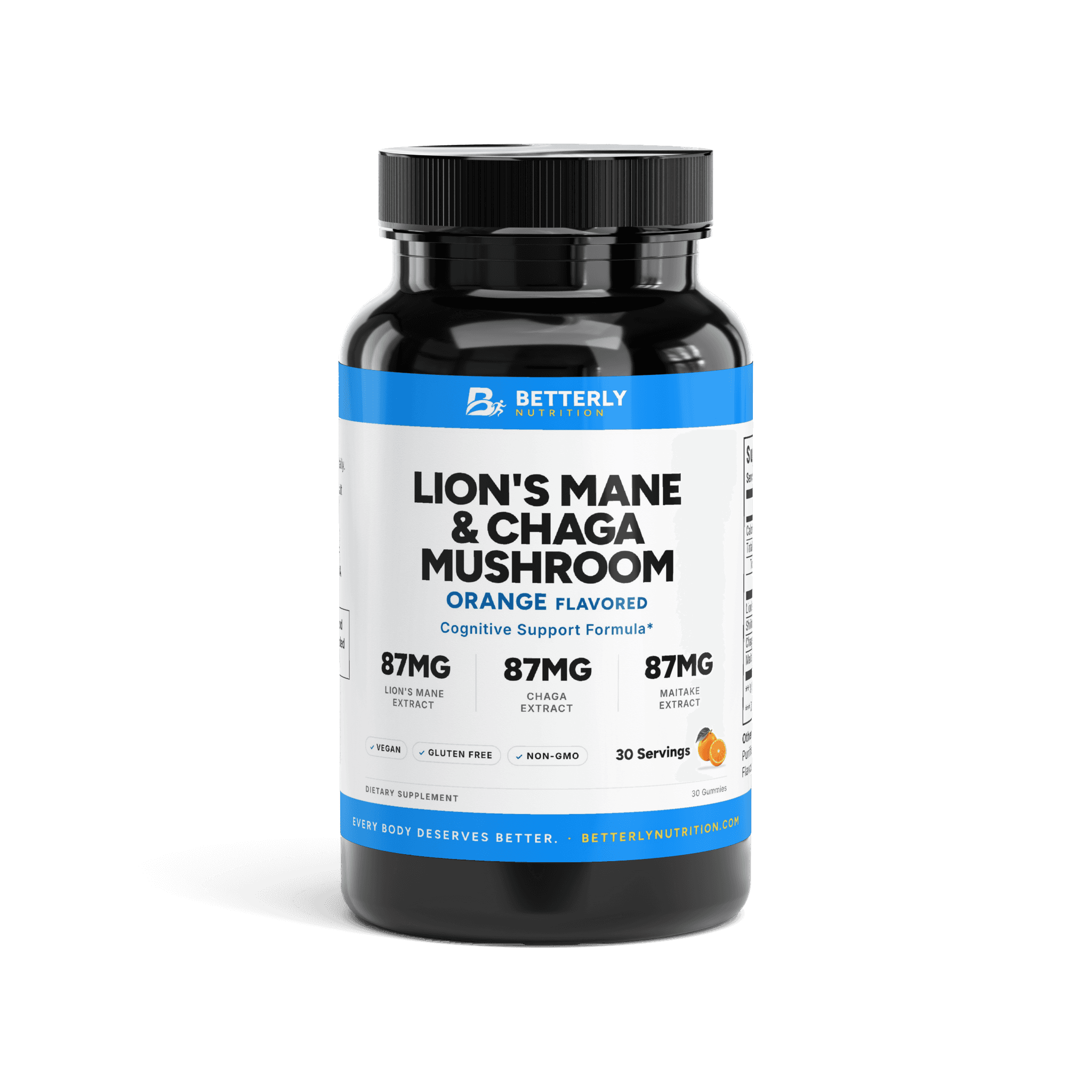
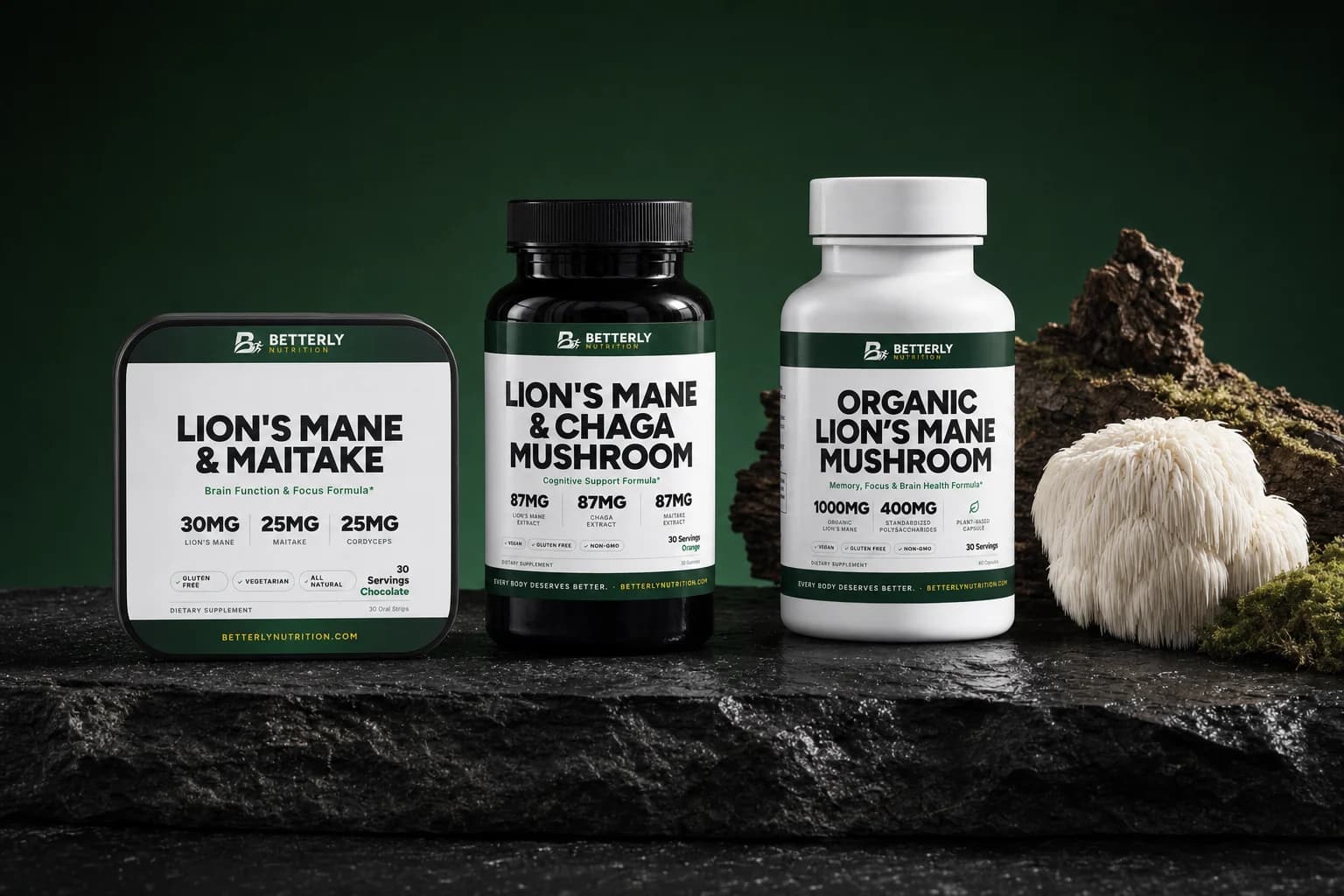
Our Lion's Mane & Chaga Mushroom Gummies list four mushroom extracts per 1-gummy serving: 87 mg apiece of lion's mane, chaga, shiitake and maitake, or 348 mg in total.
The name mentions two mushrooms, but the panel lists four. The front shows 87 mg tiles for lion's mane, chaga and maitake, while shiitake appears only on the Supplement Facts panel. That's a good reason to read the back of any mushroom combo before you buy.
Each gummy also has 10 calories, 3 g of carbohydrate and 2 g of added sugars, which is 4% of the Daily Value. Organic cane sugar and tapioca syrup lead the other ingredients. It's orange-flavored, with vegan, gluten free and non-GMO printed on the label.
The panel also leaves gaps. It doesn't say whether each extract comes from the fruiting body or the mycelium, and it prints no extract ratio, scientific names or polysaccharide figure. Our single-mushroom capsules answer more of those questions.
Gummy or two capsule bottles: which route fits you?
Our capsule bottles list 1,000 mg of lion's mane and 1,000 mg of chaga per 2-capsule serving, while the gummy trades milligrams for one chewable with shiitake and maitake.
Here's each route per day, at each label's serving, with our Mushroom Gummies added for comparison.
| Route, per day | Lion's mane | Chaga | Also in the serving |
|---|---|---|---|
| 1 Lion's Mane & Chaga gummy | 87 mg extract | 87 mg extract | 87 mg each shiitake and maitake, 2 g added sugars |
| 2 Lion's Mane & Chaga gummies | 174 mg extract | 174 mg extract | 174 mg each shiitake and maitake, 4 g added sugars |
| Both capsule bottles, 2 + 2 | 1,000 mg powder | 1,000 mg mycelium powder | 400 mg polysaccharides in each serving |
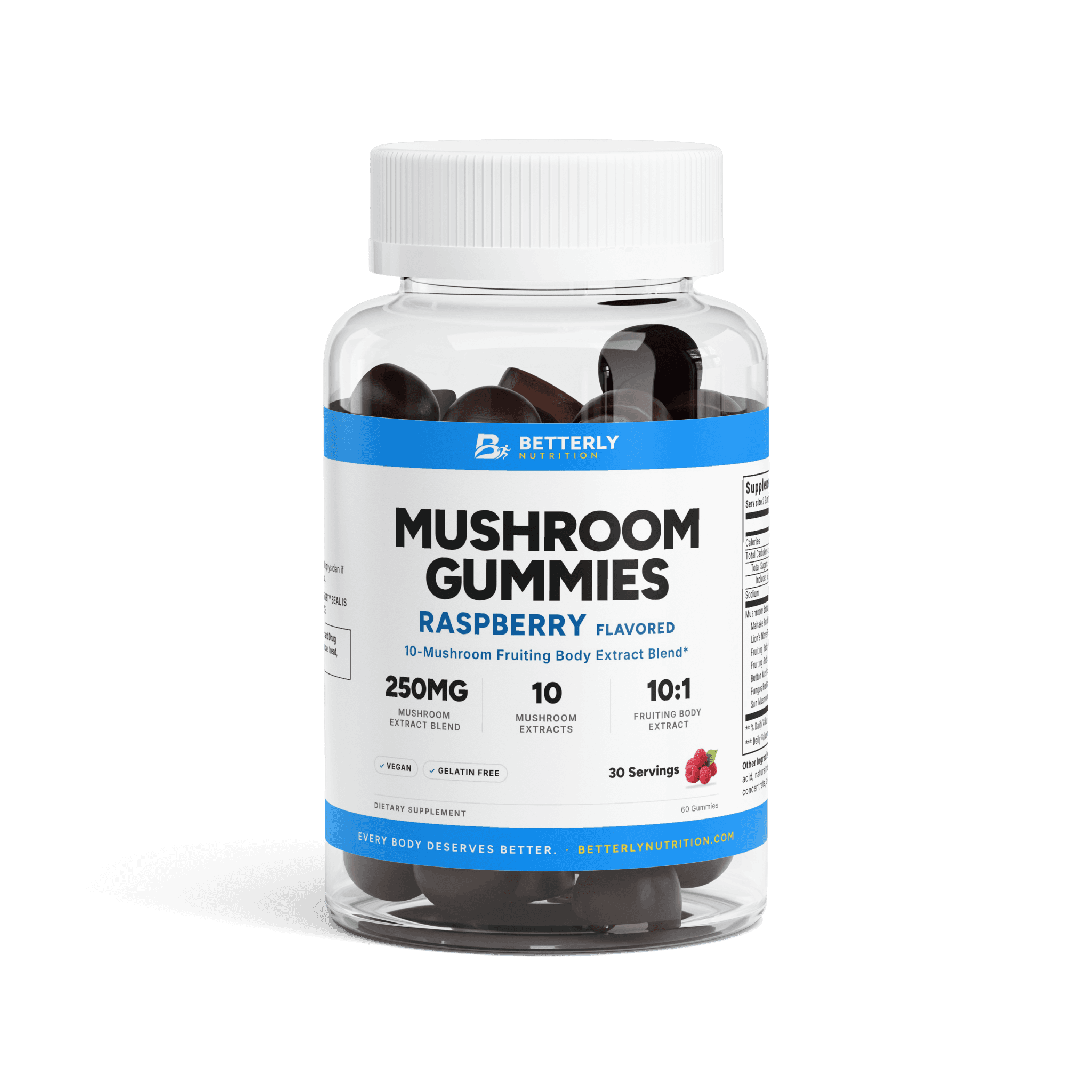
| Mushroom Gummies, 2 gummies | Part of a 250 mg blend | Part of a 250 mg blend | Eight more species, 5 g added sugars |
The two-bottle route lists more than five times as much of each mushroom as two gummies do. Read that gap with care: the gummy lists extracts, the capsules list powder, and an extract can be more concentrated than the same weight of powder. With no ratio printed, there's no clean conversion.
For scale, the lion's mane trials LiverTox summarizes used about 1 g to 10 g a day. The lion's mane capsule serving sits near the low end, and the gummy well below it. Those ranges apply to lion's mane only; none of our sources gives a trial range for chaga. That's context, not a reason to exceed any label.
- Pick the gummy if you'd rather chew than swallow and don't mind 2 g of added sugar each.
- Pick the two bottles if you want each mushroom on its own label, or want to start one a couple of weeks before the other, so you know which one any change came from.
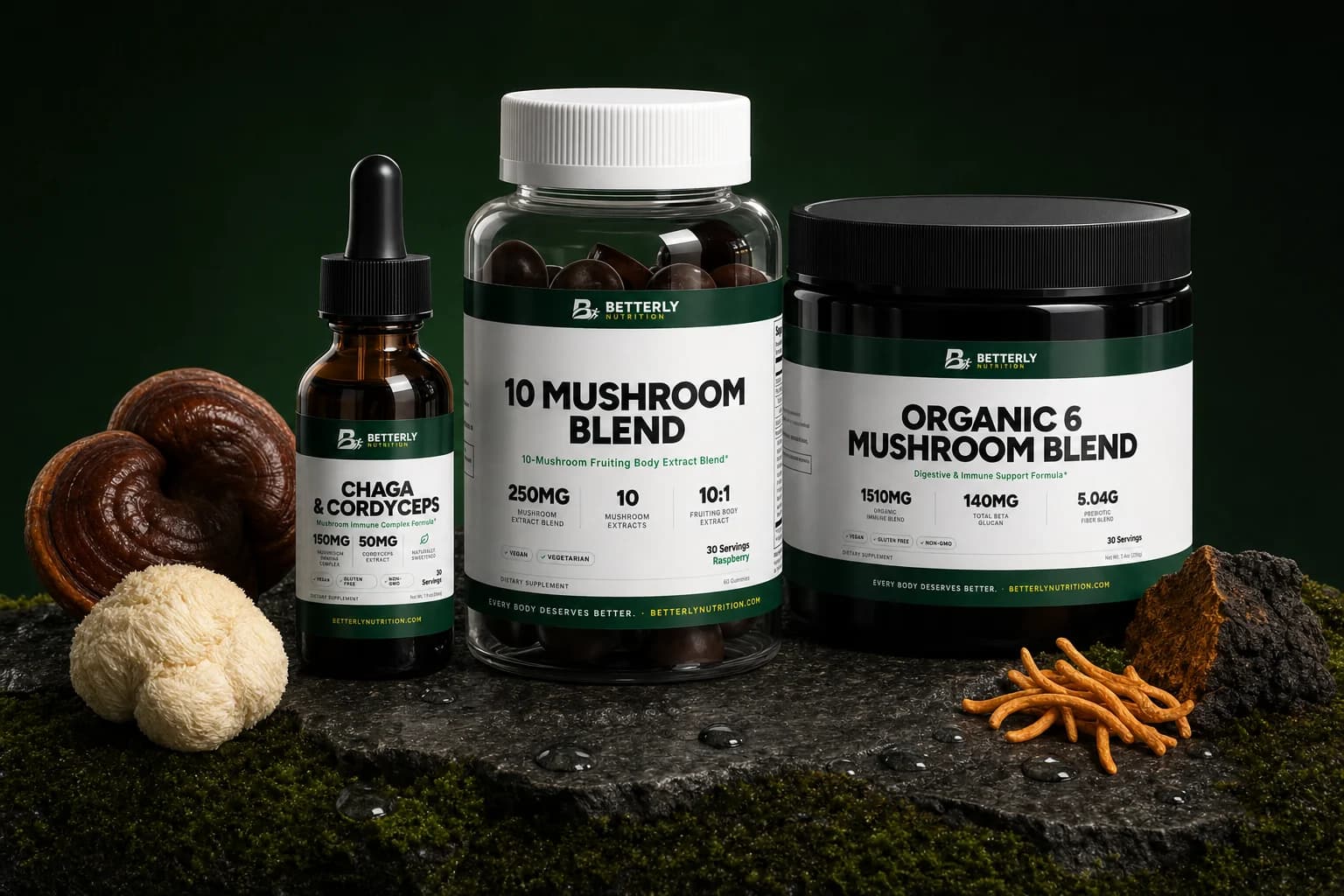
- Pick neither if you already take the ten-mushroom gummies, whose 250 mg blend includes both species.
From our shop: Lion's Mane & Chaga Mushroom Gummies — both mushrooms from this guide in one orange gummy, at 87 mg of each extract per 1-gummy serving, alongside shiitake and maitake.
How do you take these two mushrooms, going by the labels?
The Lion's Mane & Chaga gummy label suggests one to two gummies daily, and each single-mushroom capsule label says two capsules daily for adults; none names a time of day.
- Gummy route: the label says "Take one (1) to two (2) gummies daily." At one a day, the 30-gummy bottle covers a month. At two a day, it's empty in 15 days.
- Capsule route: each bottle says "adults take two (2) capsules daily or as directed by a healthcare professional." Using both bottles means four capsules a day, and each 60-capsule bottle lasts 30 days.
- Timing: none of these panels lists caffeine, so morning or evening both fit the labels.
Don't layer the routes. The gummy plus the chaga capsules puts chaga from two sources into one day, and adding a ten-mushroom blend makes it three. "Do not exceed recommended dose" appears on each of these labels, too.
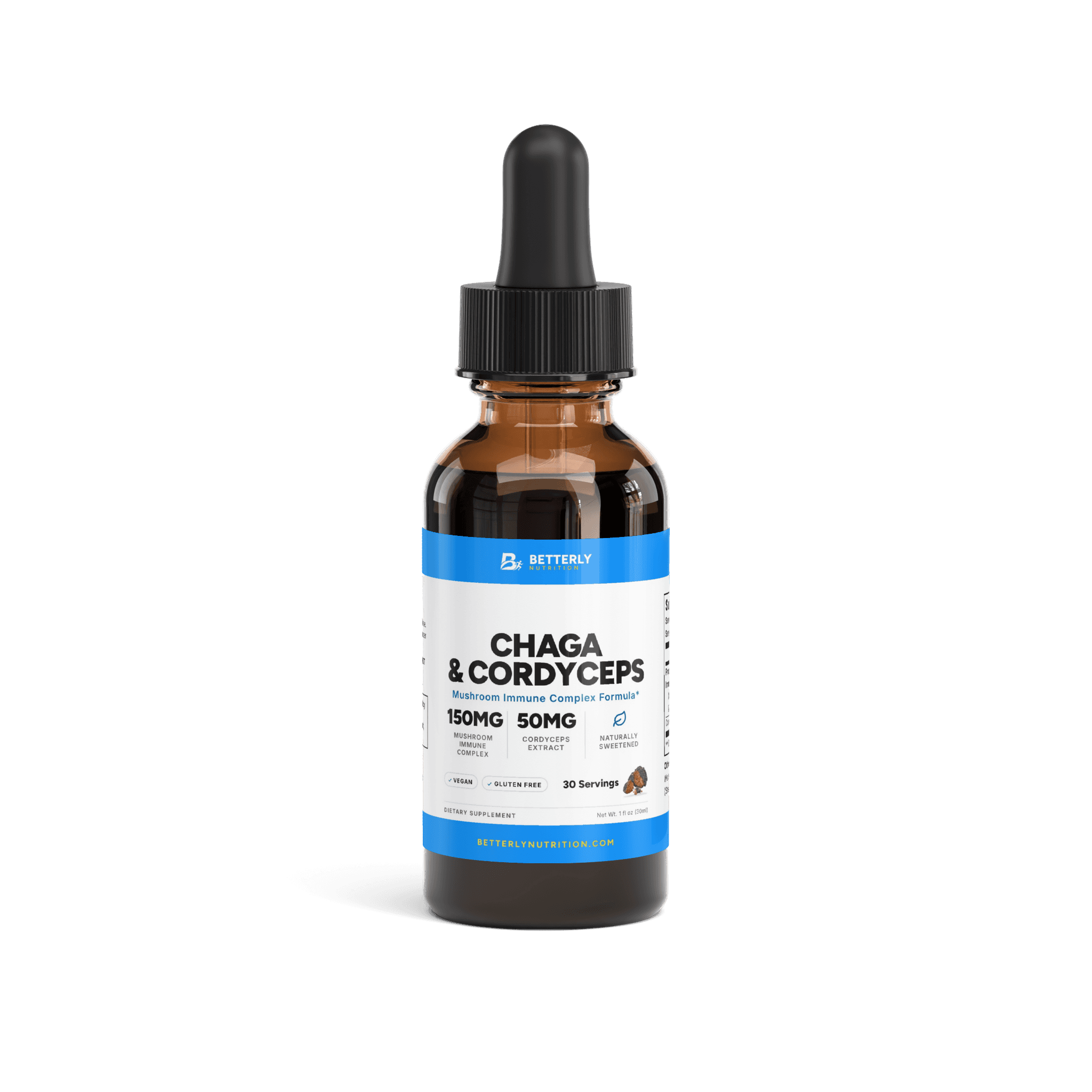
From our shop: Organic Chaga Mushroom Capsules — the chaga half of the two-bottle route: one species only, with organic chaga mycelium printed at 1,000 mg in every 2-capsule serving.
Lion's mane and chaga side effects: what should you watch for?
Lion's mane side effects in trials were mostly mild stomach complaints, while chaga's main concern is oxalate, which has been linked to kidney harm at very large daily amounts.
LiverTox reports that longer lion's mane trials turned up abdominal discomfort, nausea or diarrhea, usually in fewer than 10% of people, and generally not bad enough to stop. It also describes at least one allergic-type reaction and rates lion's mane an unlikely cause of liver injury. We cover who should skip lion's mane, and why in a separate guide.
Chaga is a different story. The 2015 analysis found oxalic acid was the main organic acid in chaga, with the highest amount in a water extract from Russia. That matters because oxalate can form crystals in the kidneys when intake is very high.
A 2022 case report in the journal Medicine, free on PubMed Central, describes a 69-year-old man who took 10 to 15 g of chaga powder a day for 3 months, plus 500 mg of vitamin C. His kidney function fell sharply enough that he needed dialysis, and a biopsy found calcium oxalate crystals. His kidneys recovered about a month after treatment began.
Set that beside our labels. The low end, 10 g, is 10,000 mg: ten servings of our chaga capsules, or more than 50 times the chaga in two gummies. Our panels don't list oxalate, though, and we found no published safe daily amount for chaga, so we won't call any serving risk-free. Keep to one chaga source at a time, at label amounts.
When don't you need a mushroom pair at all?
You don't need a chaga and lion's mane product if a mushroom blend you take already lists both, you're cutting added sugar, or you want to test one mushroom alone.
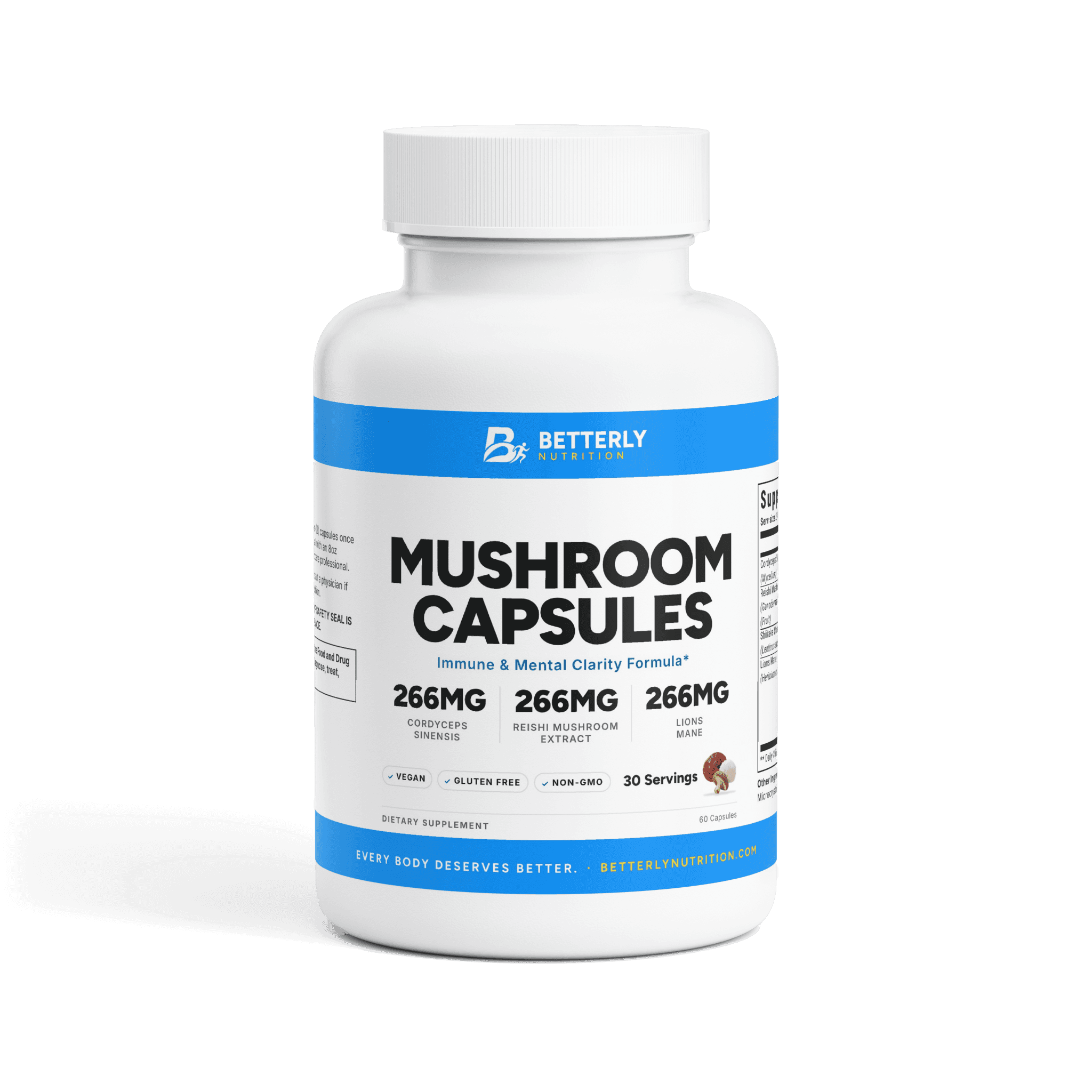
- Your cabinet already holds a blend. Our ten-mushroom gummies and Mushroom Capsules both list the two species, so a combo gummy on top mostly repeats them.
- You're watching added sugar. Each gummy adds 2 g, and neither capsule panel has a sugar line.
- You want to know whether one mushroom does anything for you. A single-mushroom capsule, taken alone, answers that more clearly.
Who should check with a healthcare provider first?
Ask a healthcare provider before starting lion's mane or chaga if you're pregnant or breastfeeding, younger than 18, taking any medication, scheduled for surgery or living with a medical condition.
Each bottle mentioned here repeats one line: "Consult a physician if pregnant, nursing, under 18, or have a medical condition." A federal guide to using supplements wisely, from NCCIH, cautions that certain supplements may add to bleeding risk or alter how anesthesia affects you. Tell your surgical team what you take. The same page says many supplements were never studied in pregnancy, while breastfeeding or in children.
Two more groups should ask first. If you've had kidney problems, clear chaga with a provider because of its oxalate. If mushrooms on your plate have ever caused a reaction, pass on these products; LiverTox records an allergic-type reaction to lion's mane taken by mouth.
FAQ: lion's mane and chaga
Can you take chaga and lion's mane together every day?
Yes, all three of our labels are written for daily use: one to two gummies, or two capsules from each bottle. Daily use makes the chaga point matter more, though. Stick to one chaga source, stay within the label amount, and ask a provider first if you've had kidney problems. If your stomach objects, stop and check in.
Can you take lion's mane and chaga with coffee?
Yes, nothing on our labels says otherwise. Neither the combo gummy nor our two single-mushroom capsules list caffeine, and none of the three labels mentions coffee. So any caffeine in your morning comes from the cup, not from these products, and adding a gummy won't change how much you're drinking.
Is a home-brewed mushroom tea the same as a supplement?
No, a home-brewed lion's mane or chaga tea isn't a measured dose, because each cup depends on how much material you use and how long it steeps. A gummy or capsule prints milligrams per serving instead. If you brew chaga at home, remember the 2015 analysis found its highest oxalic acid level in a water extract, so moderate amounts matter for tea and loose powder too.
Can you add reishi or cordyceps to this pair?
You can, but every mushroom you add makes it harder to tell which one is doing what. Our Mushroom Gummies already hold reishi, cordyceps, lion's mane and chaga inside a single 250 mg blend per 2-gummy serving, without saying how much of each. If you'd rather pair lion's mane with reishi on purpose, our reishi and lion's mane routine splits them by time of day.
Does lion's mane or chaga interact with medications?
Ask your pharmacist or doctor before you start. NCCIH warns that some supplements can cause problems alongside prescription or over-the-counter medicines, so bring the bottle. We found no federal source naming a specific interaction for lion's mane or chaga, but that isn't proof there are none: LiverTox's lion's mane entry doesn't list one, and chaga has no LiverTox entry. The safety section of our chaga guide covers the medication questions to raise, including blood-thinning medicines and medicines that affect blood sugar.
Sources
- Lion's Mane (LiverTox), NIH
- Chemical characterization and biological activity of Chaga (Inonotus obliquus), a medicinal "mushroom", Journal of Ethnopharmacology, 2015, via PubMed
- Kwon et al. (2022), case report on daily chaga powder and kidney function, Medicine, via PubMed Central
- Using Dietary Supplements Wisely, NCCIH
If this left you looking for somewhere to start, read lion's mane and chaga mushroom gummies — its amounts per serving are listed on the page. For the practical questions this raises, how dosing, sourcing and subscriptions work is answered in one place.