On this page
- Key takeaways
- Cordyceps vs caffeine: what's the actual difference?
- Does cordyceps have caffeine?
- Does cordyceps give you energy like caffeine does?
- Cordyceps vs coffee: can a mushroom replace your morning cup?
- Can you take cordyceps and caffeine together?
- When is a 50 mg caffeine strip the better choice?
- How do you take each one, going by the label?
- When don't you need cordyceps or caffeine?
- Who should check with a healthcare provider first?
- FAQ: cordyceps vs caffeine
- Sources
The short answer: In cordyceps vs caffeine, only caffeine is a stimulant. Cordyceps is a fungus with no caffeine in it, and our Cordyceps Mushroom Energy Gummies list none on the panel. Per MedlinePlus, caffeine peaks in the bloodstream inside an hour. In the two cordyceps-only exercise-performance trials NIH's LiverTox summarizes, results after 5 and 12 weeks were similar to placebo. For alertness today, a measured caffeine dose is the honest pick.
Betterly earns money whichever way you go here. We stock cordyceps without caffeine and caffeine without cordyceps, so neither answer costs us a sale. We'll show you our labels and say plainly where each falls short.
Key takeaways
- Cordyceps itself isn't a caffeine source, and our Cordyceps Mushroom Energy Gummies and Cordyceps & Lion's Mane Energy Drops list none, though our Organic 6 Mushroom Blend Powder lists green tea leaf extract, a caffeine source.
- Caffeine is a central nervous system stimulant on a known clock: MedlinePlus puts its blood peak inside the first hour, with effects that may linger four to six hours.
- NIH's LiverTox database says none of the benefits promoted for cordyceps have been shown convincingly in human trials, including two exercise-performance trials that ran 5 and 12 weeks.
- Pairing a cordyceps gummy with coffee leaves your caffeine math unchanged, so only the coffee, strip or powder counts toward it.
- For a small, exact lift, a 50 mg caffeine strip is often the better tool, as long as your day stays under the FDA's 400 mg reference for most adults.
Cordyceps vs caffeine: what's the actual difference?
Cordyceps is a fungus sold for stamina and exercise, while caffeine is a plant compound that directly stimulates your central nervous system.
The NIH's LiverTox entry on cordyceps describes it as a group of fungi that infect insect larvae, chiefly Ophiocordyceps sinensis (once called Cordyceps sinensis) and Cordyceps militaris. Most supplements now use Cs-4, a strain grown in labs.
Caffeine is a bitter substance found naturally in more than 60 plants, MedlinePlus explains, including coffee beans, tea leaves, kola nuts and cacao pods.
| Cordyceps | Caffeine | |
|---|---|---|
| What it is | A fungus | A plant compound |
| Stimulant? | No | Yes |
| How fast it acts | No single-dose effect shown | Peaks in blood within 1 hour |
| What studies measured | Exercise over 5 to 12 weeks | Alertness, fatigue, endurance |
| Our amounts per serving | 200 mg (gummy), 100 mg (drops) | 50 mg (strip), 200 mg (2 scoops) |
| Daily number to watch | 2 gummies (label maximum) | 400 mg (FDA, most adults) |
Caffeine peaks within the hour in amounts you can count, while cordyceps has no convincingly shown benefit in people, fast or slow.
Does cordyceps have caffeine?
No, cordyceps itself has no caffeine, and neither our cordyceps gummies nor our Cordyceps & Lion's Mane Energy Drops list caffeine or a caffeine-bearing plant.
LiverTox's list of what cordyceps extracts contain runs from proteins and polysaccharides to sterols, nucleosides and cordycepin. Caffeine isn't on it.
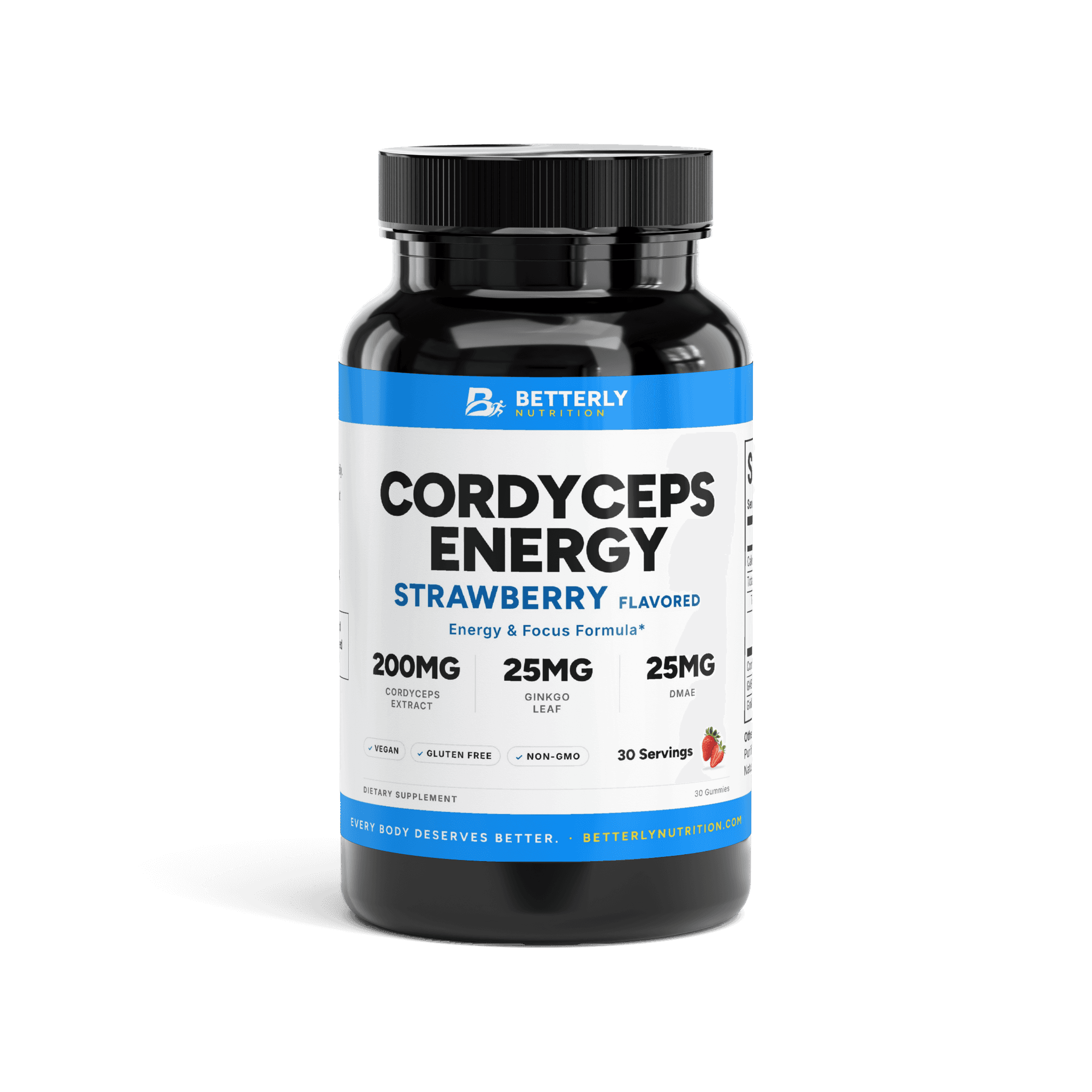
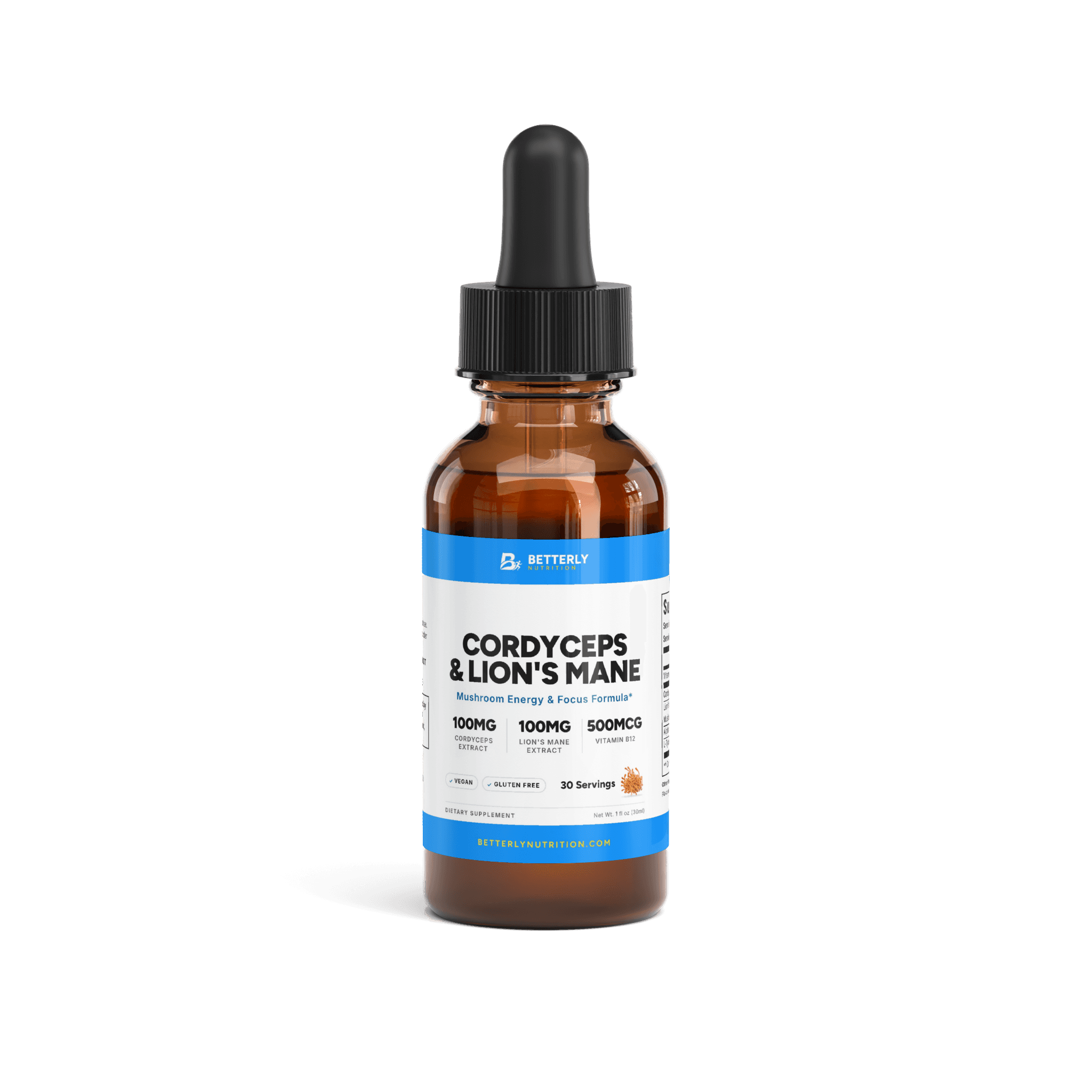
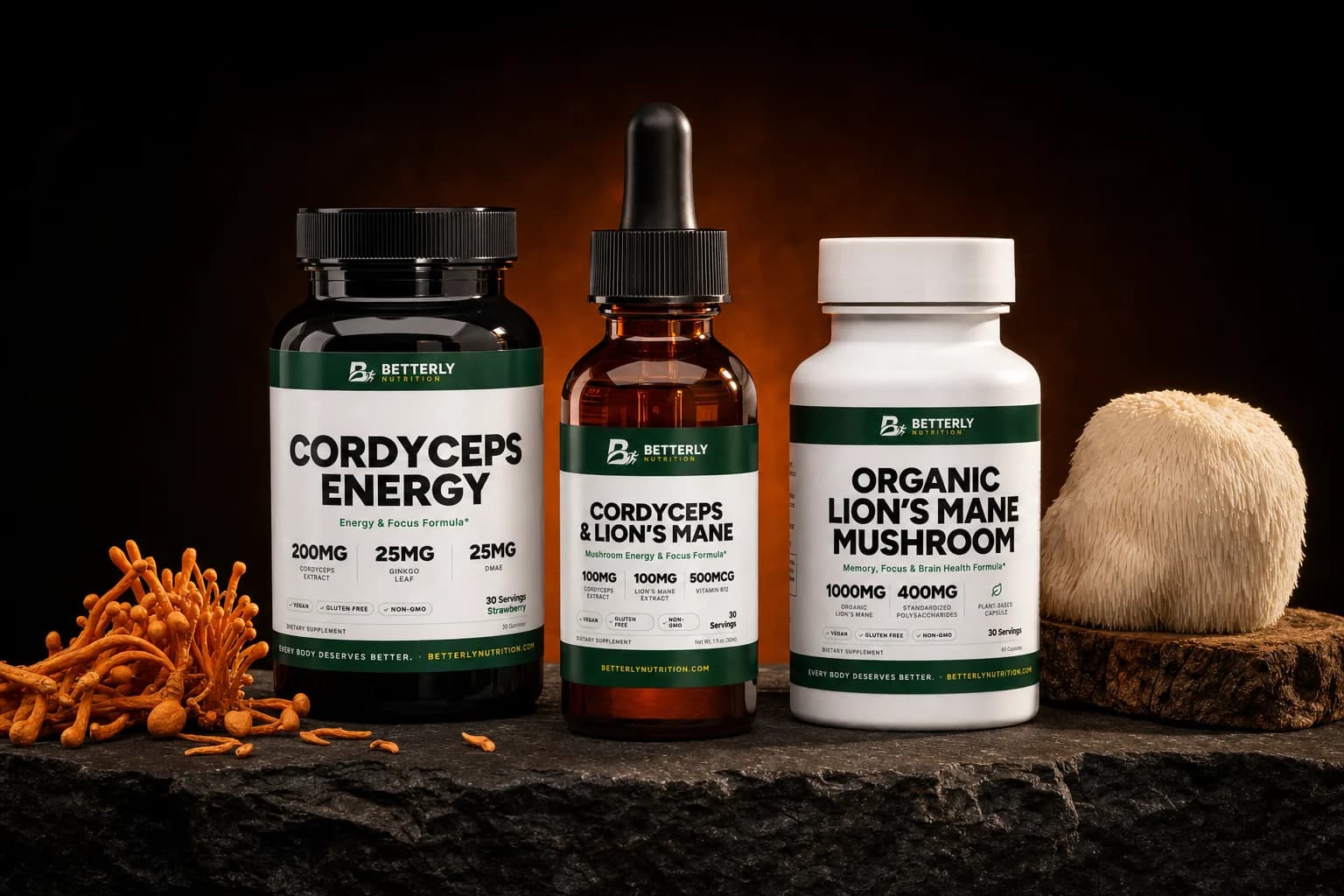
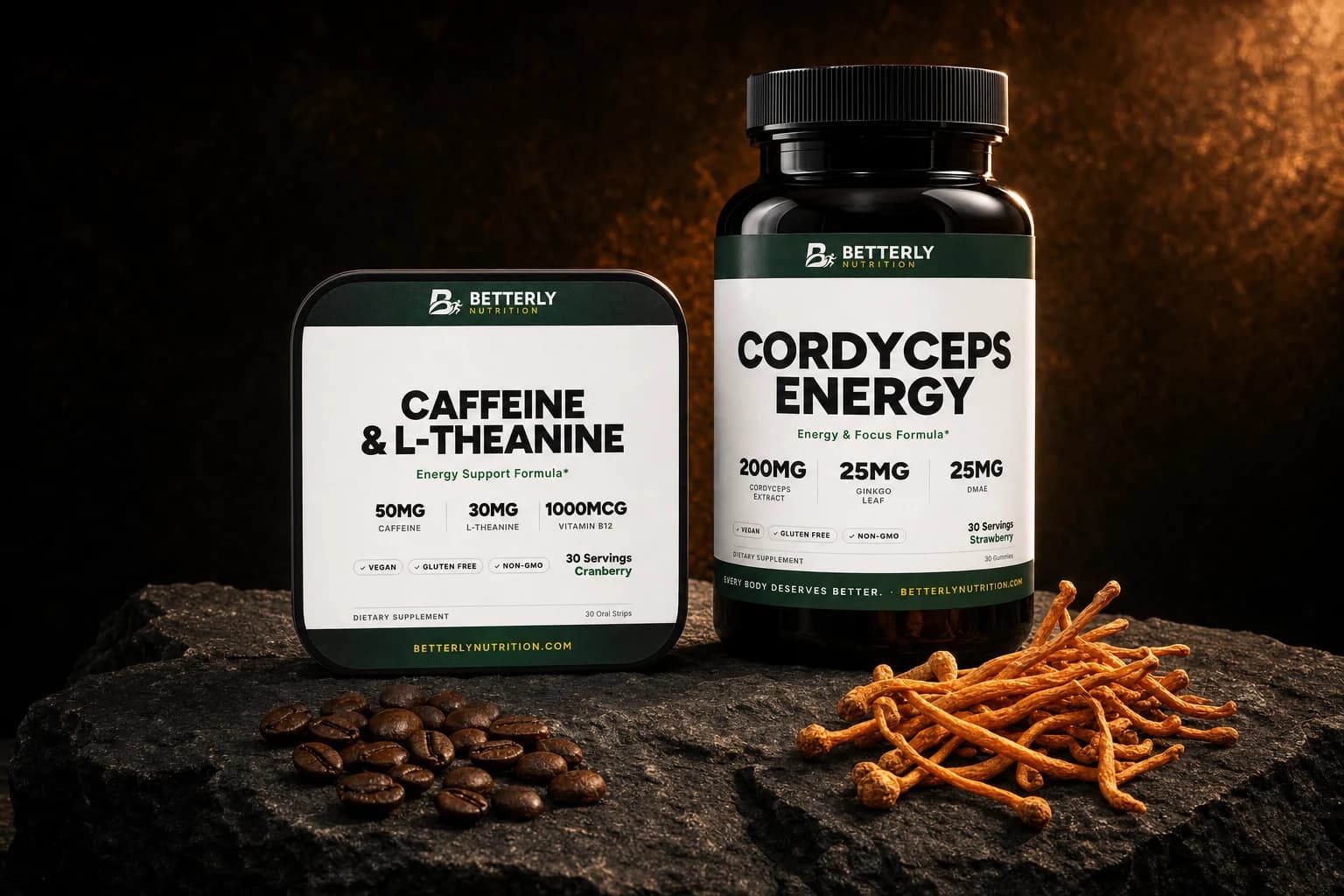
Our labels match that. The gummy's panel lists cordyceps extract, GABA, ginkgo leaf, L-glutamine and DMAE, with no coffee or tea among its other ingredients. The Cordyceps & Lion's Mane Energy Drops list both mushroom extracts, vitamin B12, Alpha GPC and L-Tyrosine in a stevia-sweetened glycerin base.
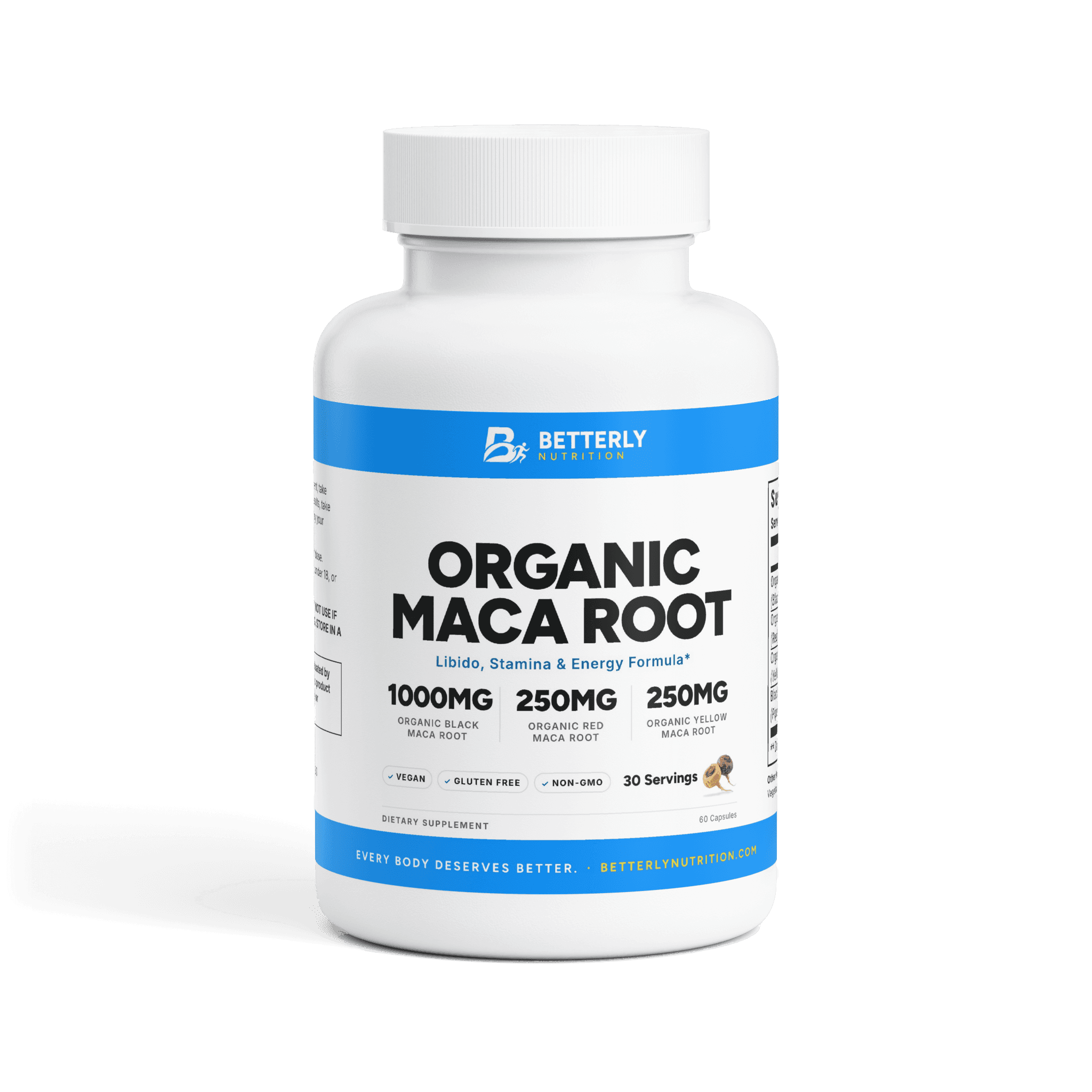
The exception on our shelf is the Organic 6 Mushroom Blend Powder. Per 1 Scoop (7 g) serving, its 5.04 g Organic Prebiotic Fiber Blend includes organic green tea leaf extract. Tea is a natural caffeine source, and this panel has no caffeine row, so treat that scoop as an unknown amount, not zero.
Some cordyceps products, including that blend of ours, pair the mushroom with a caffeine-bearing plant. On any label, look for:
- A "Caffeine" row on the Supplement Facts panel, with milligrams beside it.
- Coffee, tea (green tea extract counts), kola nut or cacao listed anywhere on the label, even without a caffeine row.
- "Coffee" or "latte" in the product name.
Does cordyceps give you energy like caffeine does?
No, cordyceps hasn't been shown to work like caffeine, and LiverTox says none of its promoted benefits have been demonstrated convincingly in human trials.
Cordyceps products are promoted for energy and athletic performance, LiverTox notes. Yet in the two cordyceps-only trials that measured exercise performance, endurance and oxygen uptake after 5 and 12 weeks of daily use ended similar to placebo. Neither trial measured alertness after a single dose. Our cordyceps timing guide has the trial details.
Caffeine's record reads differently. The NIH Office of Dietary Supplements (ODS), in its consumer sheet on performance supplements, says moderate amounts of caffeine might raise your energy levels and reduce fatigue for several hours.
Milligrams don't compare the same way, either. Caffeine is one compound, so 50 mg is 50 mg from any source. Our gummy's 200 mg is different: the panel doesn't say which species or how strong the extract is, so it won't match another brand's number.
Cordyceps vs coffee: can a mushroom replace your morning cup?
A cordyceps supplement can't stand in for the caffeine in coffee, since cordyceps isn't a stimulant; trading your cup for a cordyceps gummy means cutting caffeine.
Cutting it all at once has a known cost. MedlinePlus warns that a sudden stop can bring on withdrawal, naming headaches, drowsiness, irritability, nausea and trouble concentrating, and gives those a couple of days to pass.
That would come from the missing caffeine, not the cordyceps, and a mug may hold more than you'd guess: the FDA's caffeine guide puts 12 ounces of brewed coffee at 113 to 247 mg.
To try cordyceps and drink less coffee, don't start both in the same week. Otherwise a day-two headache gets blamed on the gummy, or a good week gets credited to it.
Can you take cordyceps and caffeine together?
No federal source we checked warns against pairing cordyceps with caffeine, though none of them covers the combination, and our cordyceps gummy lists no caffeine to count.
The ODS exercise sheet explains why that silence proves little: it says most ingredient mixes haven't been tested together, so nobody knows how safe they are.
Here's how a few mornings add up, using the FDA's coffee range and our labels:
| Morning routine | Caffeine | Cordyceps extract |
|---|---|---|
| 1 gummy + 12 oz brewed coffee | 113 to 247 mg | 200 mg |
| 1 ml Energy Drops + 12 oz brewed coffee | 113 to 247 mg | 100 mg |
| 1 gummy + 1 energy strip | 50 mg | 200 mg |
| 1 scoop energy powder + 12 oz brewed coffee | 213 to 347 mg | None |
The cordyceps column never moves the caffeine column. We listed 1 scoop of powder (100 mg of caffeine), not the 2-scoop serving, on purpose. The full 2-scoop serving plus a strong 12 oz brew reaches 447 mg before lunch. That tops the FDA's 400 mg daily line for most adults, so on a 2-scoop day, skip the coffee.
A gummy with your morning coffee is the simplest pairing. Remember its GABA, ginkgo leaf and DMAE go down with the coffee too, a combination no source we cite has looked at.
When is a 50 mg caffeine strip the better choice?
A 50 mg caffeine strip is the better choice when you want to feel more alert soon, in an amount you can count exactly.
We sell cordyceps, yet we'd point you to caffeine here:
- A late-morning or early-afternoon stretch of work or study, when you want a nudge smaller than a full mug.
- A travel day with no way to brew anything, since the strip dissolves on your tongue.
- You tried cordyceps for a while, noticed nothing, and what you really wanted was alertness.
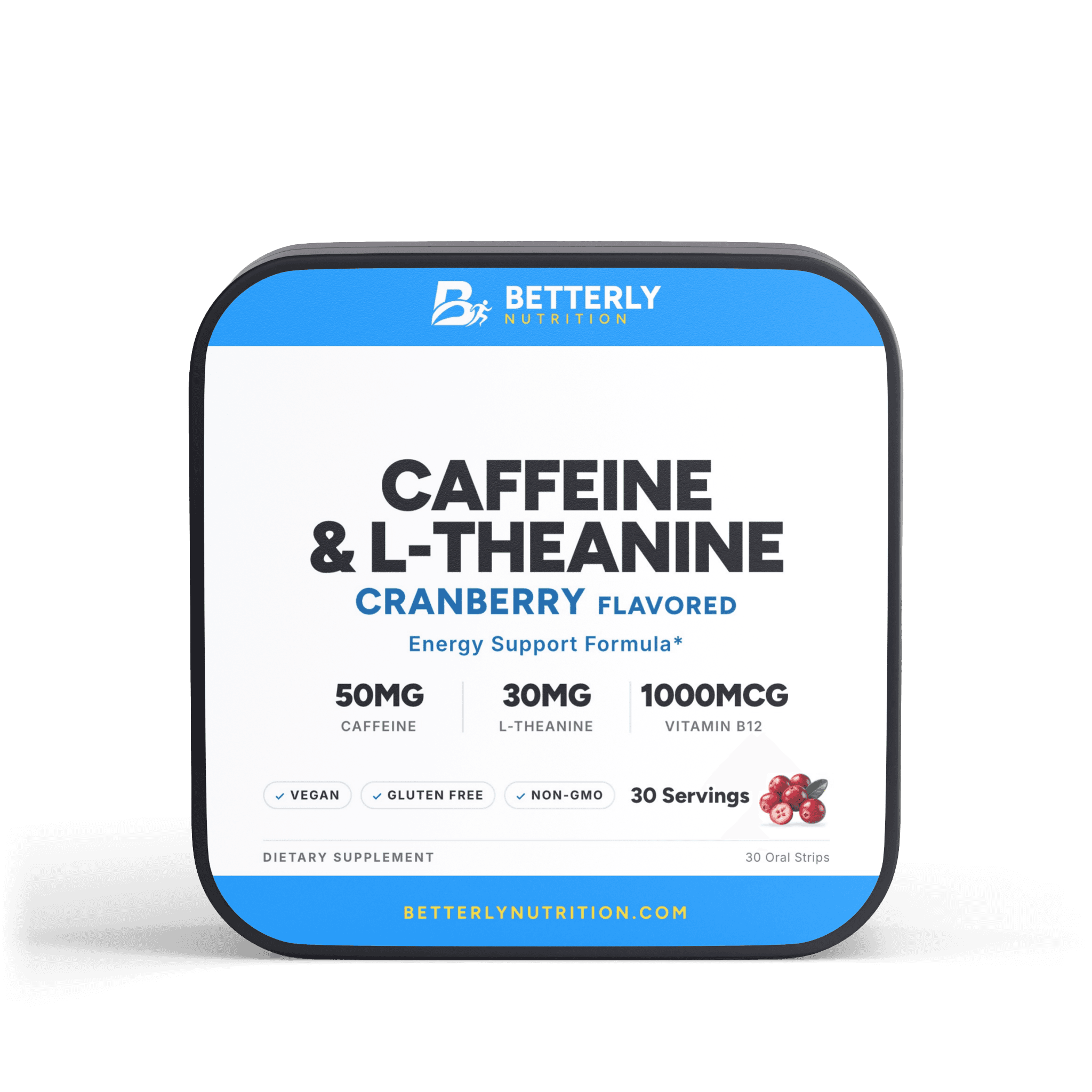
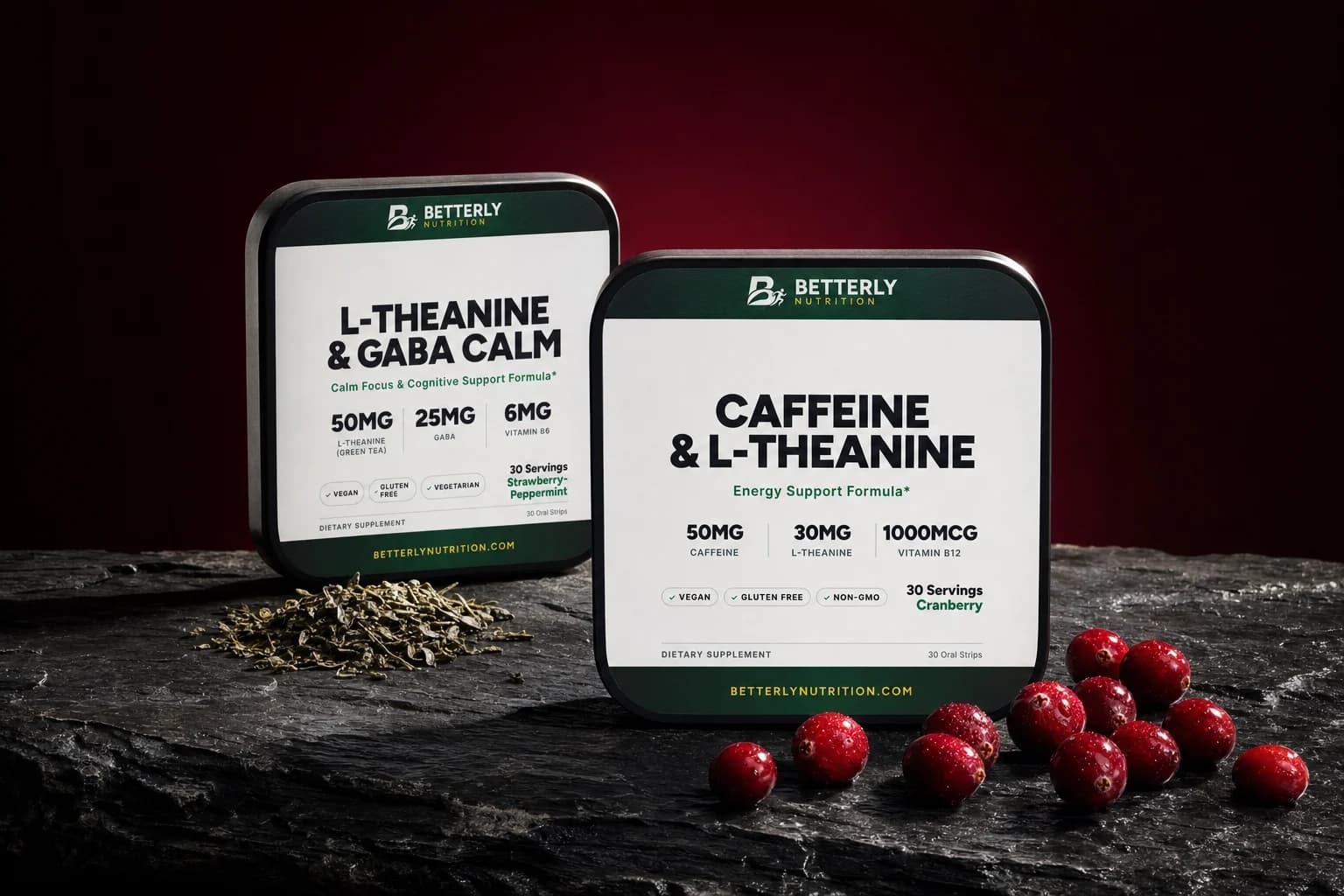
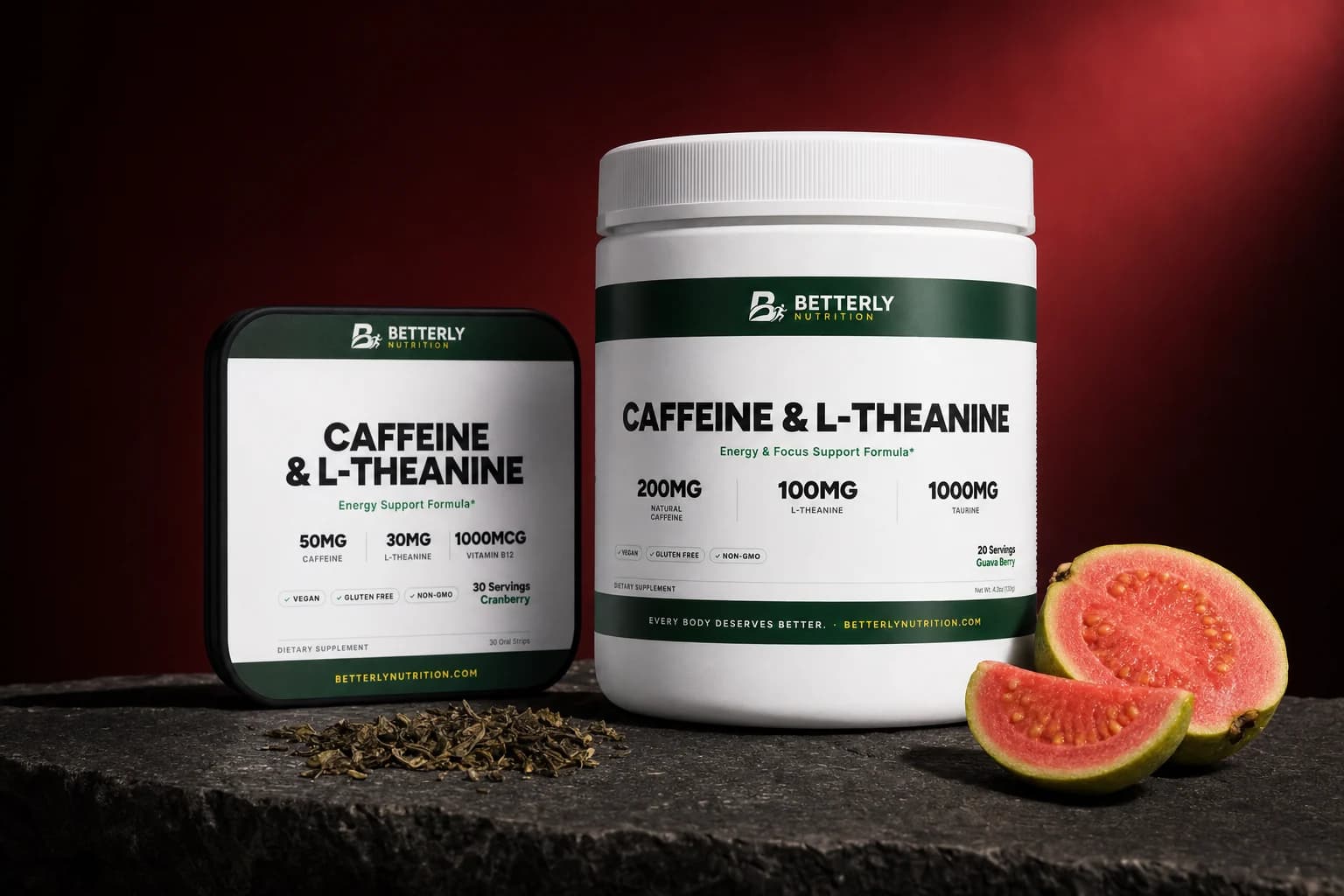
The panel on our Caffeine & L-Theanine Energy Strips is short. Per 1 Oral Strip (290mg) serving, it lists caffeine (50 mg), vitamin B12 (1000 mcg) and L-theanine (30 mg). Set against the FDA's 113 to 247 mg for 12 ounces of brewed coffee, one strip is less than half of even the low end. The label's direction is one strip a day.
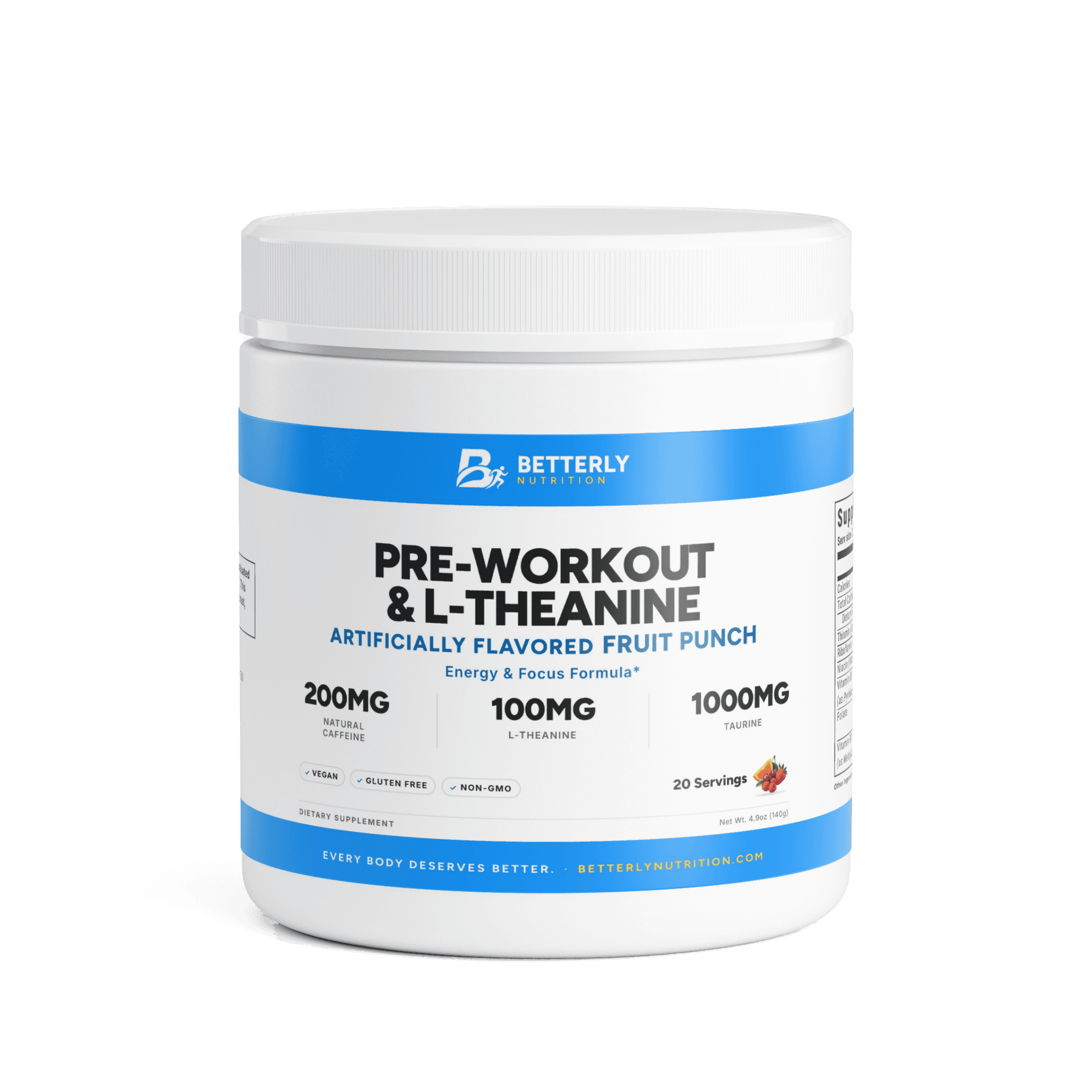
Need more in one serving? Our Pre-Workout Caffeine & L-Theanine Energy Powder (Yuzu) draws its caffeine from green tea: the 2-scoop (6 g) serving holds 200 mg, alongside 1000 mg of taurine and 100 mg of L-theanine.
That tub's printed ceiling is where we part ways with the label. "Do not exceed 5 scoops daily," the caution reads, yet five scoops hold 500 mg of caffeine, which outruns the FDA's 400 mg reference for a whole day. We don't suggest going beyond the 2-scoop serving, and if you're tempted to, ask a healthcare provider first.
From our shop: Caffeine & L-Theanine Energy Strips — a fixed 50 mg of caffeine per 1-strip serving that's easy to add to your daily tally, with 30 strips in each pack.
How do you take each one, going by the label?
Each of these four labels sets a daily amount or a serving, and none names a clock time.
- Cordyceps gummies: "Take one (1) to two (2) gummies daily." The bottle holds 30 gummies.
- Energy Drops: "Shake well. Take 1 ml (30 drops) daily."
- Energy strips: "Place 1 oral strip on the tongue daily and allow it to dissolve."
- Energy powder: "Mix 1 scoop with 6–10 fl oz (177–296 mL) of water, or to taste. Use 2 scoops with double the water."
For the two caffeine products, the clock that matters is your bedtime. Trouble sleeping is on the FDA's list of too-much-caffeine signs, and MedlinePlus gives caffeine's effects a four-to-six-hour tail, so count back from lights-out before you take your strip or your last scoop. Our caffeine strip explainer says more about how long one lasts.
For cordyceps, choose a slot you'll keep, since the label only says "daily." Every product in that list lives in our energy collection.
From our shop: Cordyceps Mushroom Energy Gummies — 200 mg of cordyceps extract in each 1-gummy serving and no caffeine on the panel, so it can sit beside your coffee without changing your count.
When don't you need cordyceps or caffeine?
You may not need either one if short sleep is behind your tiredness or your coffee already does the job.
- Your usual coffee already works, so a strip on top only stacks caffeine.
- You're counting on cordyceps to feel like a stimulant. It isn't one.
- Added sugar is on your watch list. Of the products in this guide, only the gummy's panel shows sugar: 2 g added per gummy.
- Stimulants aren't for you at all. Compare stimulant-free picks in our caffeine-free energy guide, and still check each panel for tea or coffee extracts.
- You feel worn out most days for no clear reason. Talk with your healthcare provider before buying anything.
Who should check with a healthcare provider first?
Pregnancy, breastfeeding, any medication, a medical condition you manage, being under 18 or a scheduled surgery are all reasons to ask a healthcare provider before cordyceps or caffeine products.
The gummy, drop and strip labels each say, "Do not exceed recommended dose. Consult a physician if pregnant, nursing, under 18, or have a medical condition." The powder's caution swaps under-18 for anyone taking medication. This guide is written for adults.
MedlinePlus flags two caffeine concerns worth raising: it passes to a baby during pregnancy and in breast milk, and people on certain medicines or supplements, such as stimulants and some antibiotics, should ask about limiting it. Too much caffeine can show up, per the FDA, as jitters, a faster heartbeat, headache, nausea, an upset stomach or poor sleep. Notice one after a strip, a scoop or an extra cup? Stop the caffeine and call your provider.
On cordyceps, LiverTox describes the reported side effects as minimal or mild, such as abdominal discomfort, diarrhea, dry mouth, nausea, poor appetite and rash. When you talk to your provider, name the extras too: the gummy's ginkgo leaf and DMAE, or the drops' Alpha GPC and L-Tyrosine, plus vitamin B12 at 500 mcg per 1 ml serving.
FAQ: cordyceps vs caffeine
What do cordyceps gummies do?
Cordyceps gummies deliver a set amount of cordyceps extract in a chewable form, and the rest of the panel decides what else you're getting. Per 1-gummy serving, Betterly's gummy lists 200 mg of cordyceps extract plus 25 mg each of ginkgo leaf, GABA, DMAE and L-glutamine. It contains no caffeine. LiverTox says cordyceps benefits haven't been convincingly shown in people, so we don't promise a feeling you'll notice.
Is cordyceps a stimulant?
No, cordyceps isn't a stimulant the way caffeine is. MedlinePlus describes caffeine as a central nervous system stimulant, which is how coffee wakes you up. Cordyceps is a fungus sold for stamina, and the trials LiverTox summarizes measured things like oxygen uptake over weeks, not alertness after a dose. If a mushroom blend also lists green tea, coffee or kola nut, its caffeine comes from that plant.
Is cordyceps or caffeine better before a workout?
Caffeine has the stronger case before a workout. The ODS says sports-medicine experts agree caffeine can help you keep the same intensity for longer and feel less fatigued. The two cordyceps-only trials in LiverTox that measured exercise performance ended close to placebo. The ODS performance range for caffeine, 2 to 6 mg per kilogram of body weight, sits well above one 50 mg strip, so a strip is a small nudge rather than a performance dose. The strip's label is one a day, and the top of that range can pass the FDA's 400 mg daily figure, so don't stack strips or scoops to reach it; ask a healthcare provider first.
How long does caffeine last compared with cordyceps?
Caffeine has a measurable clock and cordyceps doesn't. MedlinePlus puts caffeine's blood peak within an hour and says the effects can stretch four to six hours, so a 3 p.m. strip can still be working into the evening. Cordyceps has no matching figure, because no source we found describes a felt effect from one dose. Its label says only "daily."
Is it safe to take cordyceps with coffee every day?
No federal source we checked covers taking cordyceps with coffee every day, so nobody can call that routine proven safe. What the sources do say is narrower: LiverTox describes reported cordyceps side effects as minimal or mild, and the FDA draws its line for most healthy adults at 400 mg of caffeine daily. Keep the gummy at one or two a day, per its label, count every cup toward that 400 mg, and check with a provider beforehand if you're pregnant or take medication.
Sources
- LiverTox, National Institutes of Health: Cordyceps
- MedlinePlus: Caffeine
- U.S. Food and Drug Administration: Spilling the Beans: How Much Caffeine is Too Much?
- NIH Office of Dietary Supplements: Dietary Supplements for Exercise and Athletic Performance, Fact Sheet for Consumers
If this left you looking for somewhere to start, read caffeine-free cordyceps gummies — its amounts per serving are listed on the page. For the practical questions this raises, how dosing, sourcing and subscriptions work is answered in one place.