On this page
- Key takeaways
- What cordyceps side effects does NIH's LiverTox list?
- Is cordyceps safe? What the blood-work trials show
- Do cordyceps gummies have side effects beyond the mushroom?
- Does cordyceps interact with any medications?
- Is cordyceps psychedelic, or can it make you high?
- Cordyceps gummies or drops: which has fewer extra ingredients?
- How should you take cordyceps to keep side effects in check?
- When is a cordyceps supplement not worth it?
- Who should not take cordyceps, or ask a provider first?
- FAQ: cordyceps side effects
- Sources
The short answer: NIH's LiverTox database lists stomach discomfort, diarrhea, dry mouth, nausea, poor appetite and rash as cordyceps side effects, and trials describe them as uncommon and minimal. With a gummy, the rest of the formula can matter more: ours adds ginkgo leaf, DMAE, GABA and 2 g of added sugar. On medication, managing a medical condition, pregnant, nursing or under 18? Clear it with a healthcare provider first.
Key takeaways
- LiverTox rates cordyceps extracts as well tolerated, reporting minimal or mild side effects and no published cases of acute liver injury.
- Each of our cordyceps gummies lists 25 mg of ginkgo leaf, and NCCIH says ginkgo may raise bleeding risk in people taking anticoagulant (blood-thinning) medicines.
- Our cordyceps gummy also lists 25 mg of DMAE, which has thin safety data, and a toxicology review prepared for NIH lists pregnancy and breastfeeding as times not to use it.
- Cordyceps isn't psychedelic, and psilocybin isn't among the compounds LiverTox lists for it.
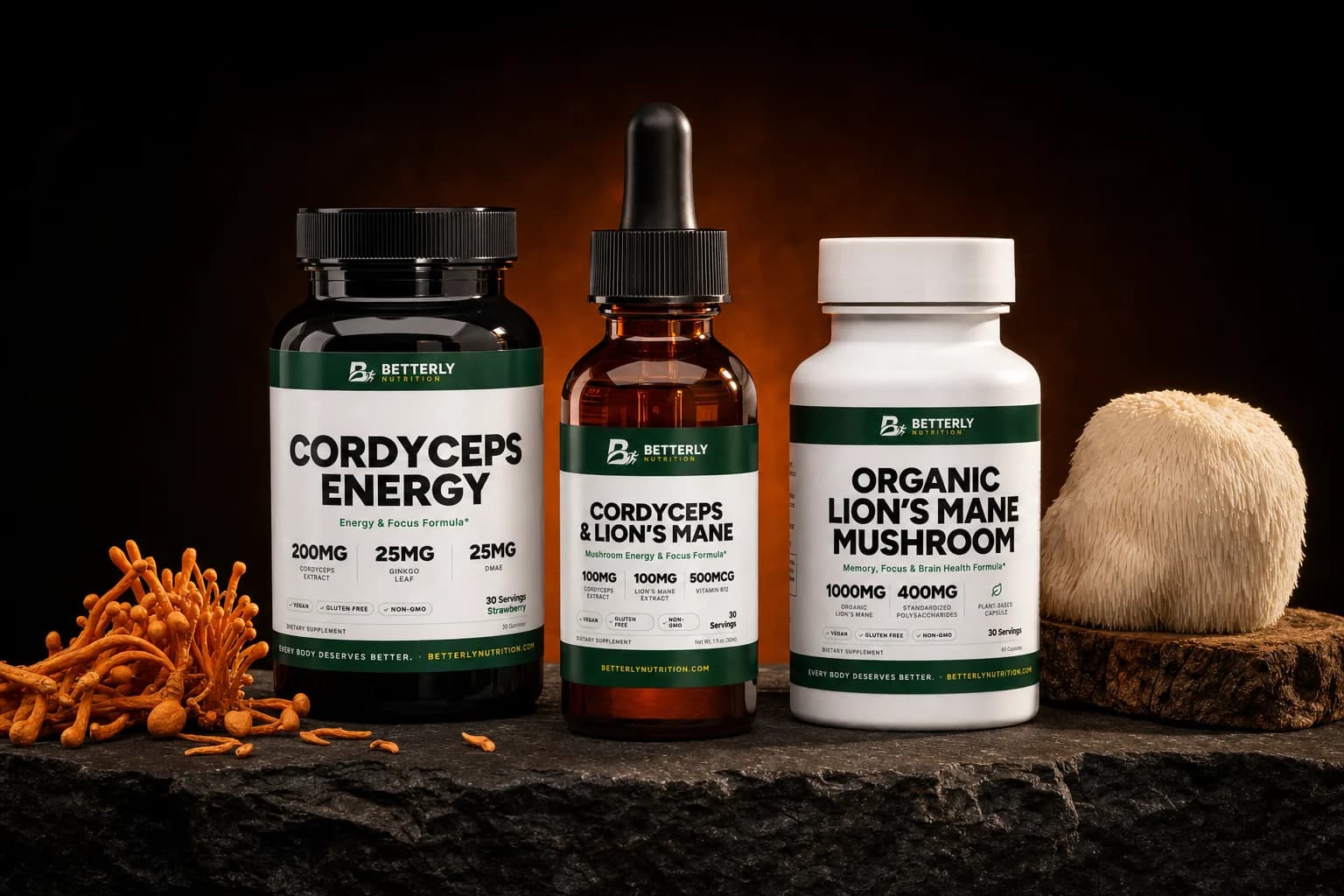
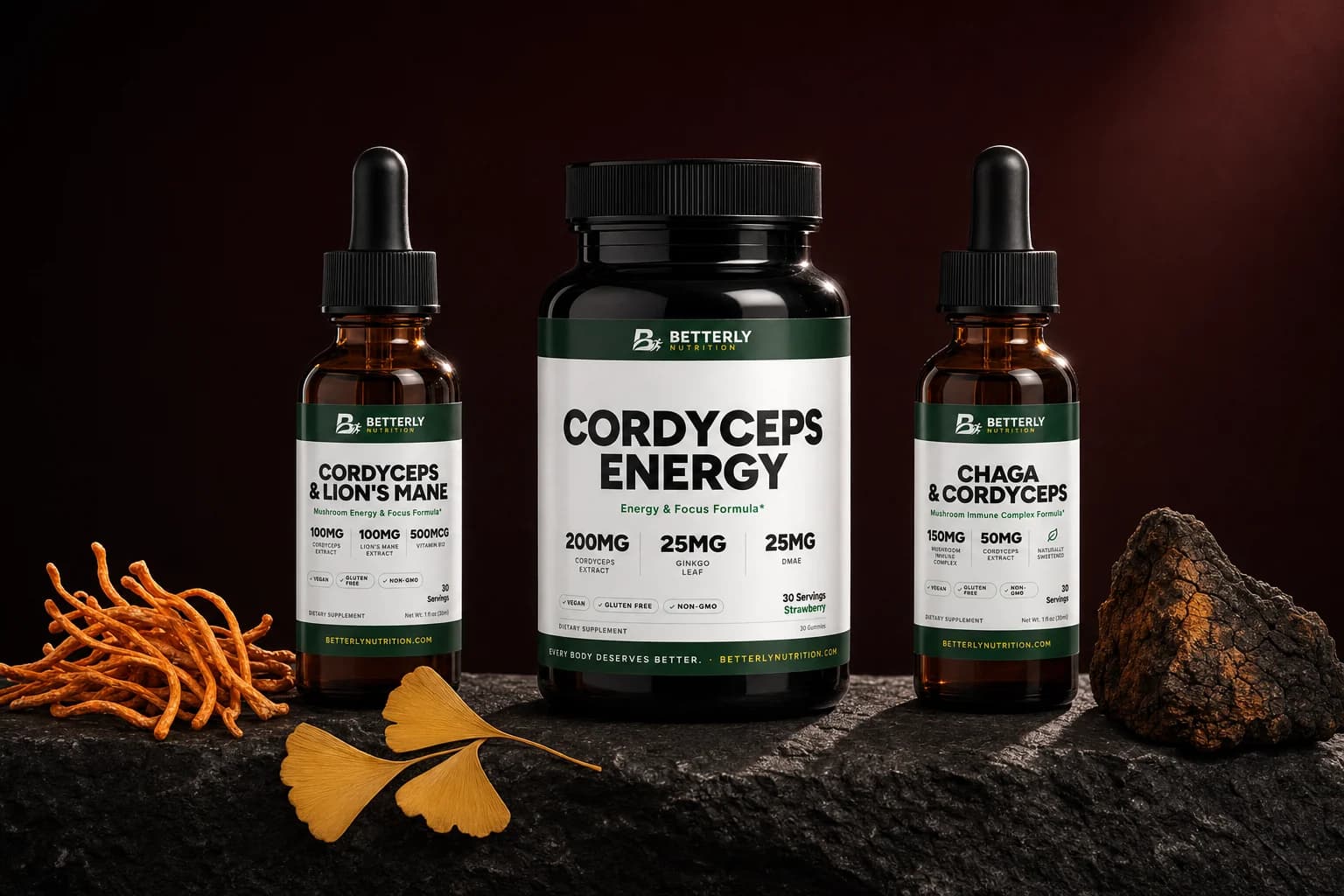
We sell three products built around cordyceps (a strawberry gummy and two dropper bottles), and it shows up in several of our blends, so we aren't neutral. This guide reads our own panels line by line, including the lines that argue for a different bottle, or none.
What cordyceps side effects does NIH's LiverTox list?
The cordyceps side effects LiverTox lists are abdominal discomfort, diarrhea, dry mouth, nausea, poor appetite and rash, and it calls them minimal or mild.
LiverTox, the NIH's reference on how drugs, herbs and supplements affect the liver, last updated its cordyceps entry in July 2026. Across short and long trials of different cordyceps preparations, it says, side effects were "described as uncommon and minimal."
Most of those trials enrolled a few dozen people for weeks, so that phrase describes what small groups noticed, not how your stomach will respond.
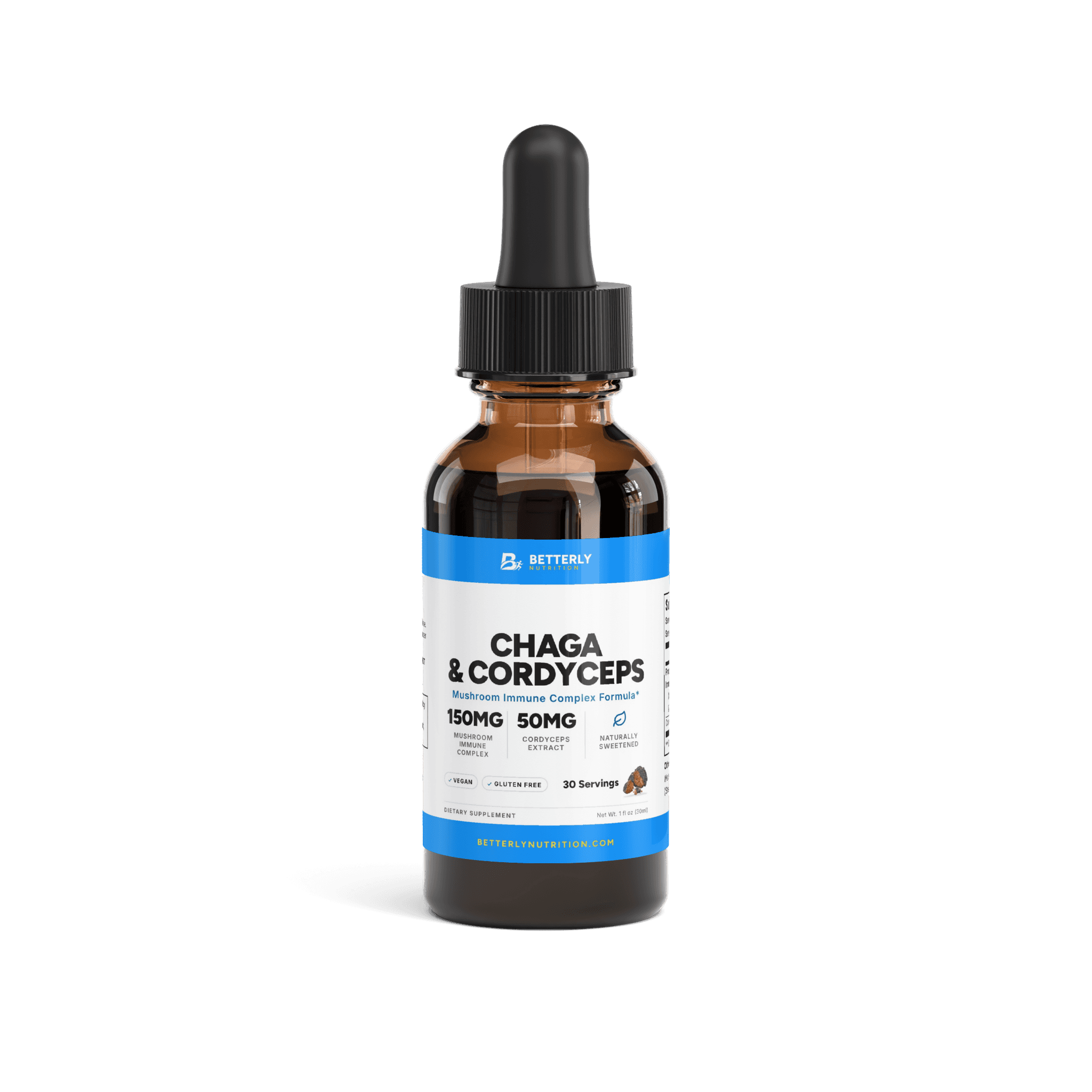
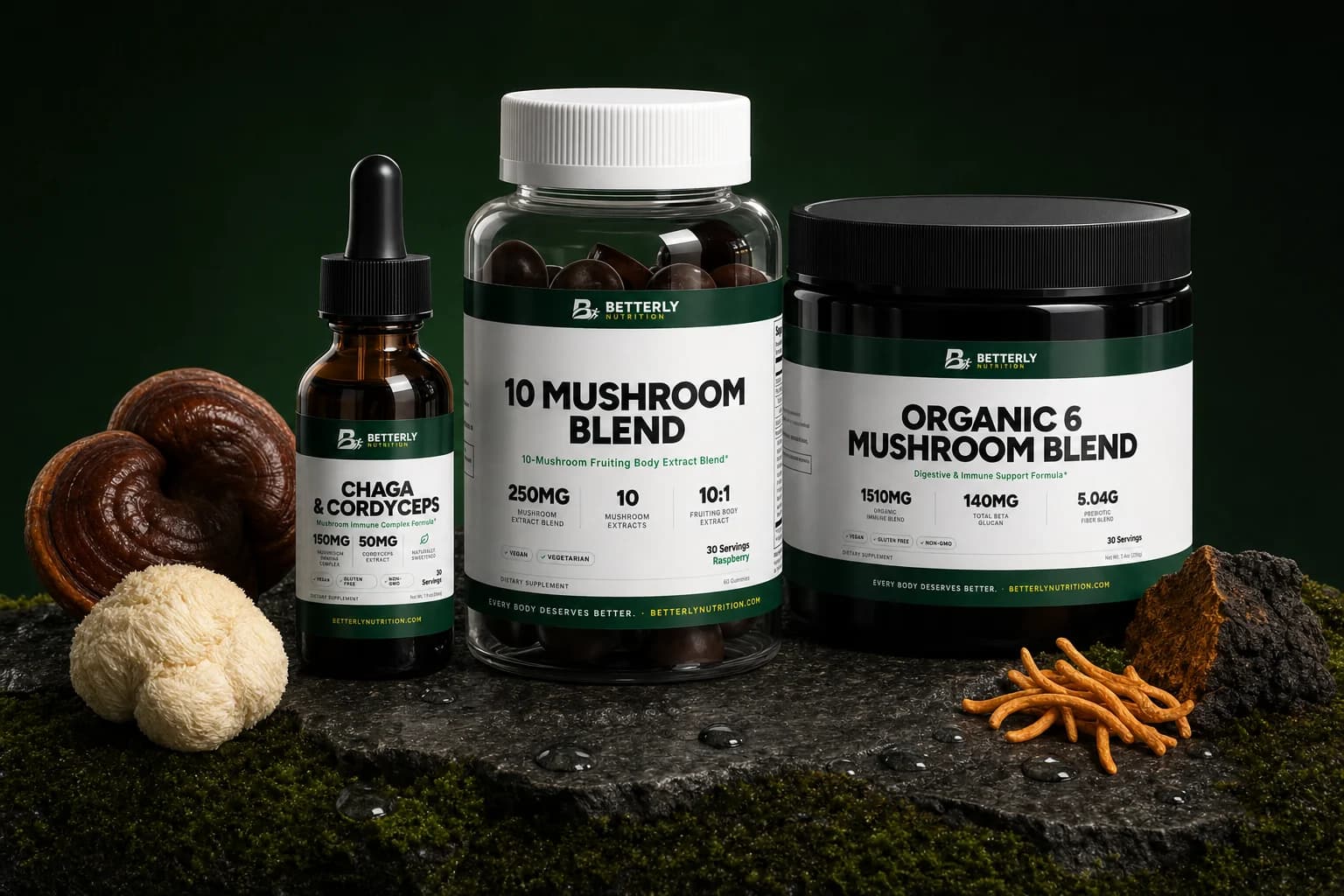
A rash can point to an allergy. If eating mushrooms has ever caused you a reaction, be careful with any cordyceps product, especially our Chaga & Cordyceps Mushroom Drops, which pair 50 mg of cordyceps extract with a 150 mg blend of chaga, reishi, maitake, shiitake and turkey tail per 1 ml serving.
"Cordyceps" also isn't one thing. LiverTox counts more than 260 species and says most supplements come from a laboratory-grown strain known as Cs-4. Our gummy lists "Cordyceps Extract" and both drops list "Cordyceps Mushroom Extract," and none of the three names a species, so no trial matches them exactly.
Is cordyceps safe? What the blood-work trials show
Cordyceps was well tolerated in the trials LiverTox summarizes, which ran from about 5 to 14 weeks. None of them followed people for years.
A few of those trials checked blood work. In a 3-month trial of 49 healthy adults that tested 1.05 g of a Cordyceps cicadae extract daily, liver enzymes, a kidney marker, cholesterol and blood counts held steady, and no adverse events were reported. In another trial of 79 adults, about half took 1.68 g of a cordyceps mycelium extract daily for 8 weeks and the rest took a placebo, with no serious adverse events and no one quitting over side effects.
Those amounts sit well above our gummy's 200 mg per 1-gummy serving, or 400 mg at the two-gummy maximum, though a gram of one extract isn't a gram of another.
What else you take matters too. The NIH Office of Dietary Supplements (ODS) says in Dietary Supplements: What You Need to Know that big doses, swapping supplements for prescribed medicines and taking many products all make side effects more likely.
For daily use and time of day, our guide to when to take cordyceps goes further.
Do cordyceps gummies have side effects beyond the mushroom?
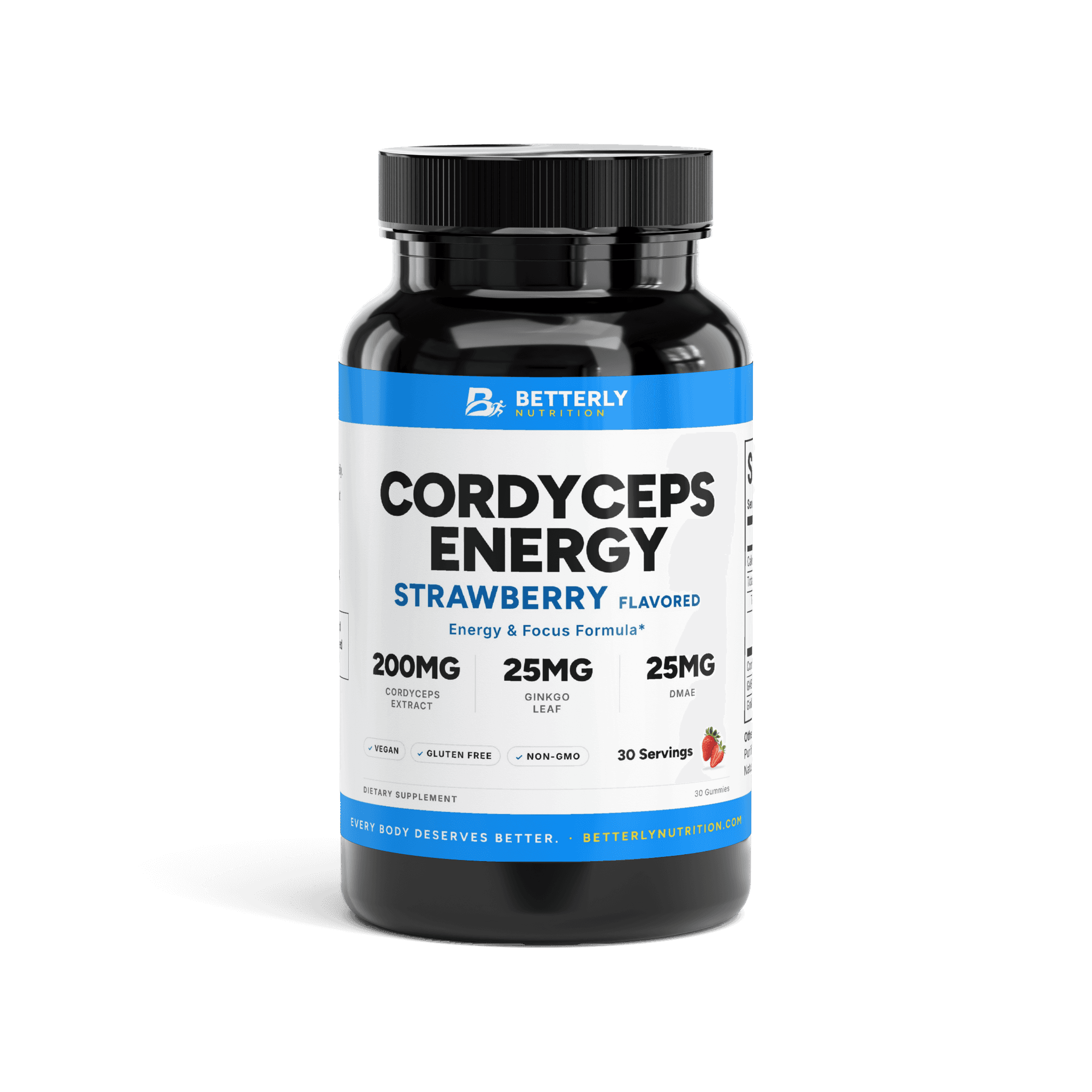
Yes, cordyceps gummies can carry cautions from their other ingredients: our gummy adds 25 mg each of ginkgo leaf, DMAE, GABA and L-glutamine, plus 2 g of added sugar.
Here's the panel of our Cordyceps Mushroom Energy Gummies, line by line.
| Ingredient | Per 1-gummy serving | What our sources say |
|---|---|---|
| Cordyceps extract | 200 mg | Mild, uncommon side effects (LiverTox) |
| Ginkgo leaf | 25 mg | Dizziness, stomach upset, headache; bleeding caution (NCCIH) |
| DMAE | 25 mg | Thin data; not for pregnancy or nursing (review prepared for NIH) |
| GABA | 25 mg | No federal fact sheet we could find |
| L-glutamine | 25 mg | No source we used flags this amount |
| Added sugars | 2 g (4% DV) | Counts toward your daily added sugar |
The mushroom is the best-documented line on its own gummy. Ginkgo and DMAE are the two to name to a healthcare provider.
Ginkgo leaf: the bleeding caution
According to NCCIH's page Ginkgo: Usefulness and Safety, ginkgo leaf extracts are likely safe for most adults in moderate amounts. Its most common side effects are dizziness, gastrointestinal symptoms and headache.
The caution that matters most is bleeding. NCCIH warns that ginkgo might make bleeding more likely for anyone on anticoagulant medicines, and that it may not be safe in pregnancy. Our label lists "Ginkgo Leaf" without saying whether it's an extract, and two gummies bring 50 mg. Our guide on who should skip ginkgo goes further.
DMAE: the least-studied line
DMAE, short for dimethylaminoethanol, has the thinnest safety record here. A 2002 review of the DMAE toxicology literature, prepared for the National Institute of Environmental Health Sciences, part of NIH, called DMAE's toxicology data inadequate. It said studies of supplement use, including by pregnant women and children, were limited.
That review lists pregnancy and breastfeeding among the times DMAE supplements shouldn't be used, along with certain neurological and mental health conditions. It also summarizes human reports from 1959. At 20 mg a day, people showed a gradual rise in muscle tone, and the review flagged a possible added risk at that level for people with certain neurological conditions. Larger doses brought trouble sleeping, muscle tenseness and twitching.
One gummy's 25 mg of DMAE is already above the 20 mg a day in those old reports, and two gummies double it. The reports used DMAE tartrate, a salt form, while our label just says DMAE, so the match isn't exact. Still, it's why we'd stay at one gummy and ask a healthcare provider first.
GABA, L-glutamine and the sugar line
GABA (gamma-aminobutyric acid) is a compound your body already makes, and we found no federal fact sheet on GABA supplements. Our comparison of GABA and L-theanine explains why swallowing it raises open questions. None of our sources flags the 25 mg of L-glutamine.
The sugar is easier to count. The first two other ingredients are organic cane sugar and tapioca syrup, and two gummies bring 4 g of added sugars, or 8% DV.
Does cordyceps interact with any medications?
No federal source we opened lists a drug interaction for cordyceps itself, but our gummy's ginkgo and DMAE each carry a documented medication caution.
LiverTox is a liver-safety reference that doesn't catalogue interactions, so its silence doesn't mean there are none. Cordyceps interaction lists circulate online, but none we checked led back to a federal page. The gummy's other ingredients are a different story:
- Ginkgo: NCCIH flags a possible bleeding risk alongside anticoagulant (blood-thinning) drugs and says ginkgo may interact with other medicines too.
- DMAE: the 2002 review notes that DMAE counteracts the sedating effects of barbiturates, a class of medicines.
Before your first gummy, ask your pharmacist two things: does anything I take affect blood clotting, and is any of it a barbiturate?
Is cordyceps psychedelic, or can it make you high?
No, cordyceps isn't psychedelic, and psilocybin, the compound behind "magic mushrooms," isn't among the compounds LiverTox lists for it.
The fungus gets its spooky reputation outdoors. In the wild it grows inside insect larvae, hence two other names LiverTox records: caterpillar fungus and zombie fungus. Those describe the insect's fate, not anything a gummy does to your mind.
The extract's chemistry is ordinary for a mushroom: proteins, amino acids, sugars, polysaccharides, sterols, vitamins, minerals and nucleosides such as cordycepin. Nothing on LiverTox's side-effect list touches how you see or hear things, and psilocybin isn't printed on any of our three panels.
Cordyceps gummies or drops: which has fewer extra ingredients?
Of the three cordyceps products this guide covers, the Chaga & Cordyceps drops list no actives beyond mushrooms, while the gummy lists the most, plus the only added sugar.
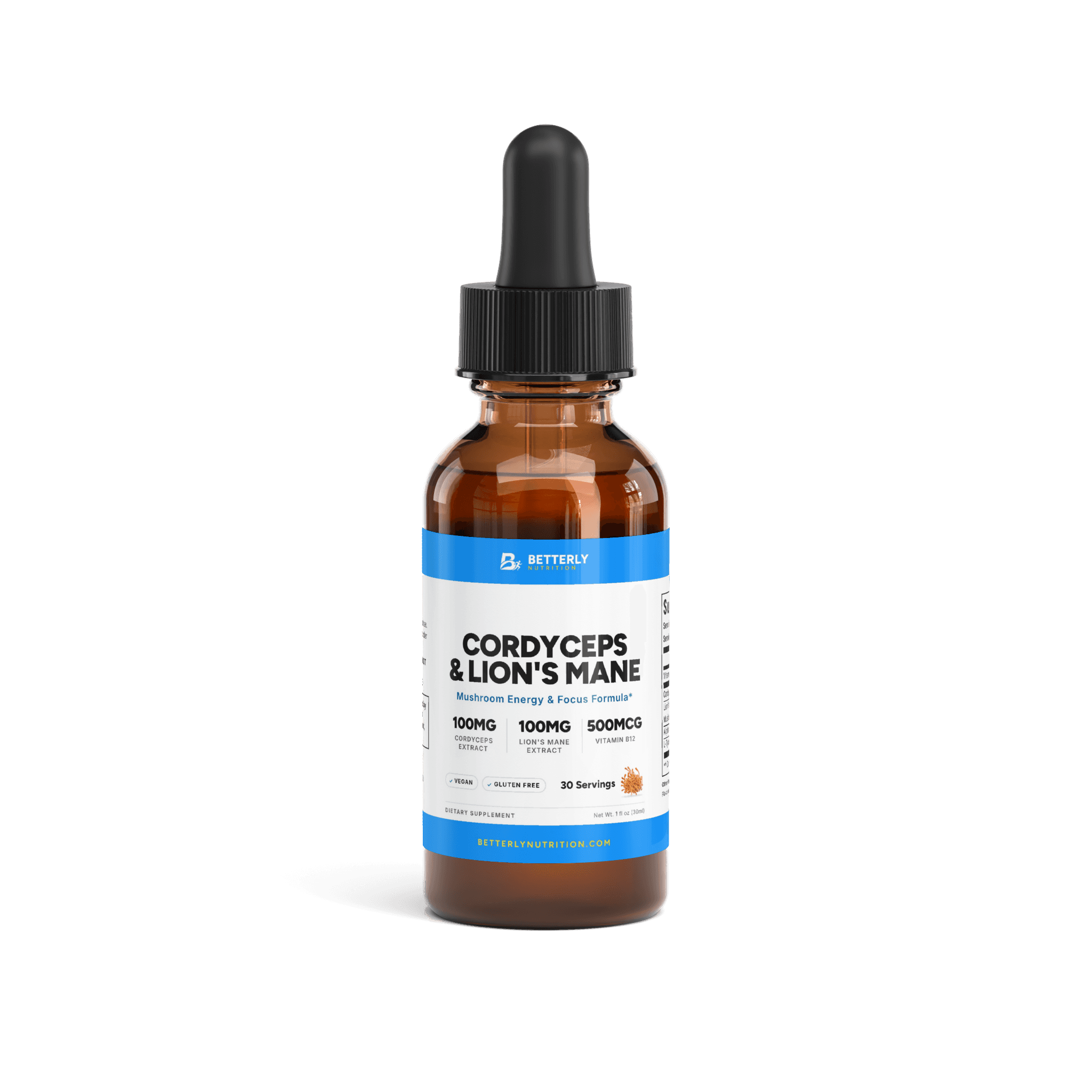
Our Cordyceps & Lion's Mane Energy Drops sit in between: no ginkgo or DMAE, but vitamin B12 and two other actives.
| Product (serving) | Cordyceps | Other actives on the panel | Sweetened with |
|---|---|---|---|
| Energy gummies (1 gummy) | 200 mg extract | Ginkgo, DMAE, GABA, L-glutamine, 25 mg each | Cane sugar, tapioca syrup |
| Lion's Mane drops (1 ml) | 100 mg extract | Lion's mane 100 mg, B12 500 mcg, Alpha GPC and L-Tyrosine 25 mg each | Stevia |
| Chaga drops (1 ml) | 50 mg extract | 150 mg blend of five mushrooms | Stevia |
Fewer actives means fewer lines to check, not a guaranteed gentler product. The chaga drops trade the gummy's extras for five more mushrooms, which matters if mushrooms have disagreed with you. Both drops are glycerin-and-water liquids with no sugar line, and all three labels claim vegan and gluten free. Our mushroom format comparison covers capsules, powders and strips too.
From our shop: Cordyceps & Lion's Mane Energy Drops — a stevia-sweetened dropper that lists 100 mg of cordyceps extract per 1 ml serving and leaves out the gummy's ginkgo, DMAE and sugar.
How should you take cordyceps to keep side effects in check?
Take cordyceps by the label, which means up to two gummies a day or a single 1 ml dropper, and keep to one cordyceps product at a time.
- Gummies: the label reads "Take one (1) to two (2) gummies daily." Starting at one stays inside that range and keeps ginkgo and DMAE at 25 mg each.
- Drops: both read "Shake well. Take 1 ml (30 drops) daily."
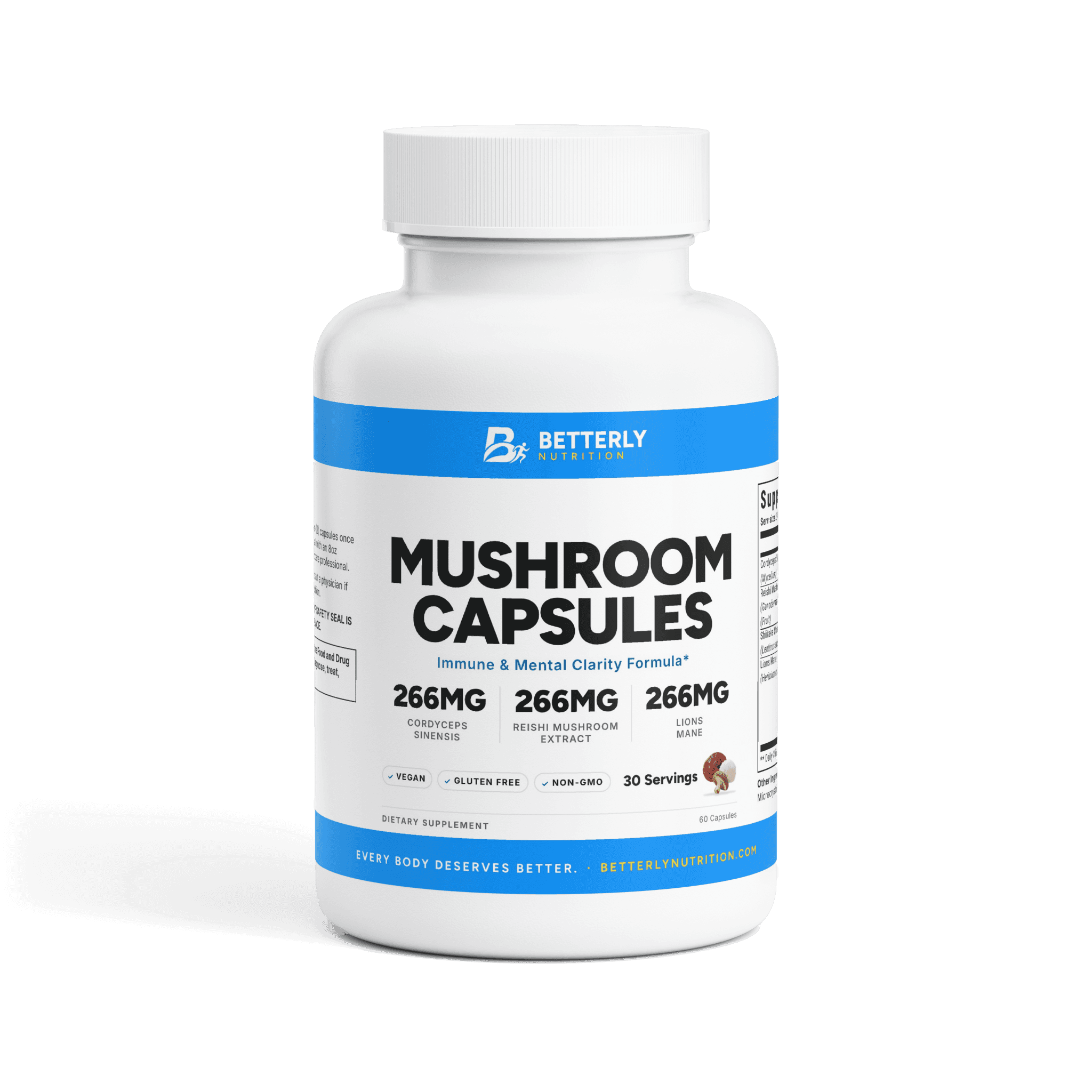
- Don't stack: gummies plus the lion's mane drops put between 300 mg and 500 mg of cordyceps extract into one day. Our Mushroom Capsules carry another 266 mg of cordyceps powder per 2-capsule serving, and counting blends, cordyceps appears on nine of our labels.
- Stay under the ceiling: the caution on all three bottles begins "Do not exceed recommended dose."
At two gummies a day, the 30-gummy bottle lasts 15 days. None of the three labels names a meal or an hour.
If something feels off, stop and tell your healthcare provider. ODS notes that a bad reaction can also be reported to the FDA (800-FDA-1088 or its online form) and to the company listed on the label, which here is us.
From our shop: Cordyceps Mushroom Energy Gummies — each strawberry gummy lists 200 mg of cordyceps extract with 25 mg apiece of ginkgo leaf, DMAE, GABA and L-glutamine, and 2 g of added sugar.
When is a cordyceps supplement not worth it?
A cordyceps supplement isn't worth it if you're hoping to feel a lift fast, you're trimming added sugar, or you're tired most days and don't know why.
- You want to feel something fast. LiverTox concludes that the benefits promoted for cordyceps haven't been demonstrated convincingly in people, and neither our gummy nor our drops list caffeine.
- You're cutting sugar. The drops show no sugar line; each gummy lists 2 g.
- You're tired most days for no clear reason. Talk to your provider before buying anything.
Our Energy Support collection keeps these products next to options without mushrooms.
Who should not take cordyceps, or ask a provider first?
Anyone taking medication, facing surgery, managing a medical condition, pregnant, nursing or under 18 should skip cordyceps or clear it with a provider first.
All three of our cordyceps labels print the same caution: "Do not exceed recommended dose. Consult a physician if pregnant, nursing, under 18, or have a medical condition."
- Pregnant or nursing: ODS notes that many supplements haven't been well tested in this group. Given the ginkgo and DMAE, skip the gummy unless your provider says otherwise.
- Under 18: the label asks for a physician first, and gummies belong out of children's reach.
- On any prescription: especially an anticoagulant, given the gummy's ginkgo.
- Surgery on the calendar: tell the surgical team about every supplement, since ODS says some affect bleeding or anesthesia.
- Managing a medical condition: bring the panel, not just the name.
- Reacted to mushrooms before: skip cordyceps products until an allergist weighs in.
FAQ: cordyceps side effects
Are Cordyceps militaris side effects different from sinensis?
No federal source we found separates them. LiverTox covers Ophiocordyceps sinensis and Cordyceps militaris in one entry, with one side-effect list. In one trial it summarizes, 11 of 22 runners took 1,800 mg of a C. militaris extract daily through pre-season training, and blood counts and liver and kidney markers didn't change in either group. Our gummy and drops don't name a species, but our Mushroom Capsules list Cordyceps sinensis mycelium, and the Organic 6 Mushroom Blend Powder lists Cordyceps militaris.
Can cordyceps gummies cause headaches or dizziness?
Headache and dizziness aren't on LiverTox's list for cordyceps, but NCCIH names them among ginkgo's most common side effects, and each of our gummies has 25 mg of ginkgo leaf. So if a headache shows up after a cordyceps gummy, the ginkgo is one possible cause. Our cordyceps drops contain no ginkgo. Either way, stop the gummy and tell your provider.
Is cordyceps safe while pregnant or breastfeeding?
No source we found shows cordyceps is safe during pregnancy or breastfeeding, and all three of our labels send you to a physician first. Our gummy is a firmer no without your provider's approval. NCCIH says ginkgo may be unsafe during pregnancy, and little is known about it while breastfeeding. The DMAE review prepared for NIH lists pregnancy and breastfeeding as times DMAE supplements shouldn't be used.
Is cordyceps bad for your liver?
LiverTox has no published reports of liver enzyme rises or acute liver injury from cordyceps. It notes a single 2023 case report of an uncommon, slow-developing liver problem in an 81-year-old woman who'd used cordyceps for five years; she improved after stopping. LiverTox calls that link uncertain and rates cordyceps an unlikely cause. If a doctor already monitors your liver, ask them first.
How long do cordyceps side effects last?
No source we found gives a time frame for cordyceps side effects, and we won't guess one. The complaints LiverTox lists are mild, so stop the product and see whether things settle. If they don't, or they get worse, call your healthcare provider and bring the bottle.
Sources
- Cordyceps, LiverTox, National Institutes of Health
- Ginkgo: Usefulness and Safety, National Center for Complementary and Integrative Health
- Dimethylethanolamine (DMAE): Review of Toxicological Literature (Update), 2002, National Toxicology Program, NIH
- Dietary Supplements: What You Need to Know, NIH Office of Dietary Supplements
If this left you looking for somewhere to start, read vegan cordyceps energy gummies — its amounts per serving are listed on the page. For the practical questions this raises, how dosing, sourcing and subscriptions work is answered in one place.