On this page
- Key takeaways
- Do caffeine strips actually work?
- How do caffeine strips work once they're on your tongue?
- Is sublingual caffeine faster than caffeine you drink?
- How much caffeine is in a caffeine strip next to a drink?
- How long do caffeine strips last?
- When does a caffeine strip make more sense than a drink?
- How do you take a caffeine strip, per the label?
- When don't you need a caffeine strip?
- Who should check with a provider before using caffeine strips?
- FAQ: caffeine strips
- Sources
The short answer: Do caffeine strips work? Yes, in the plain sense: a strip delivers a measured dose of caffeine, and caffeine is the ingredient doing the work. Our Caffeine & L-Theanine Energy Strips list 50 mg per strip, roughly half an ordinary cup of coffee. What we can't back up is the pitch, common on other strip brands' pages, that a strip skips your stomach and hits instantly. We found no federal source showing a strip acts faster than a drink.
Key takeaways
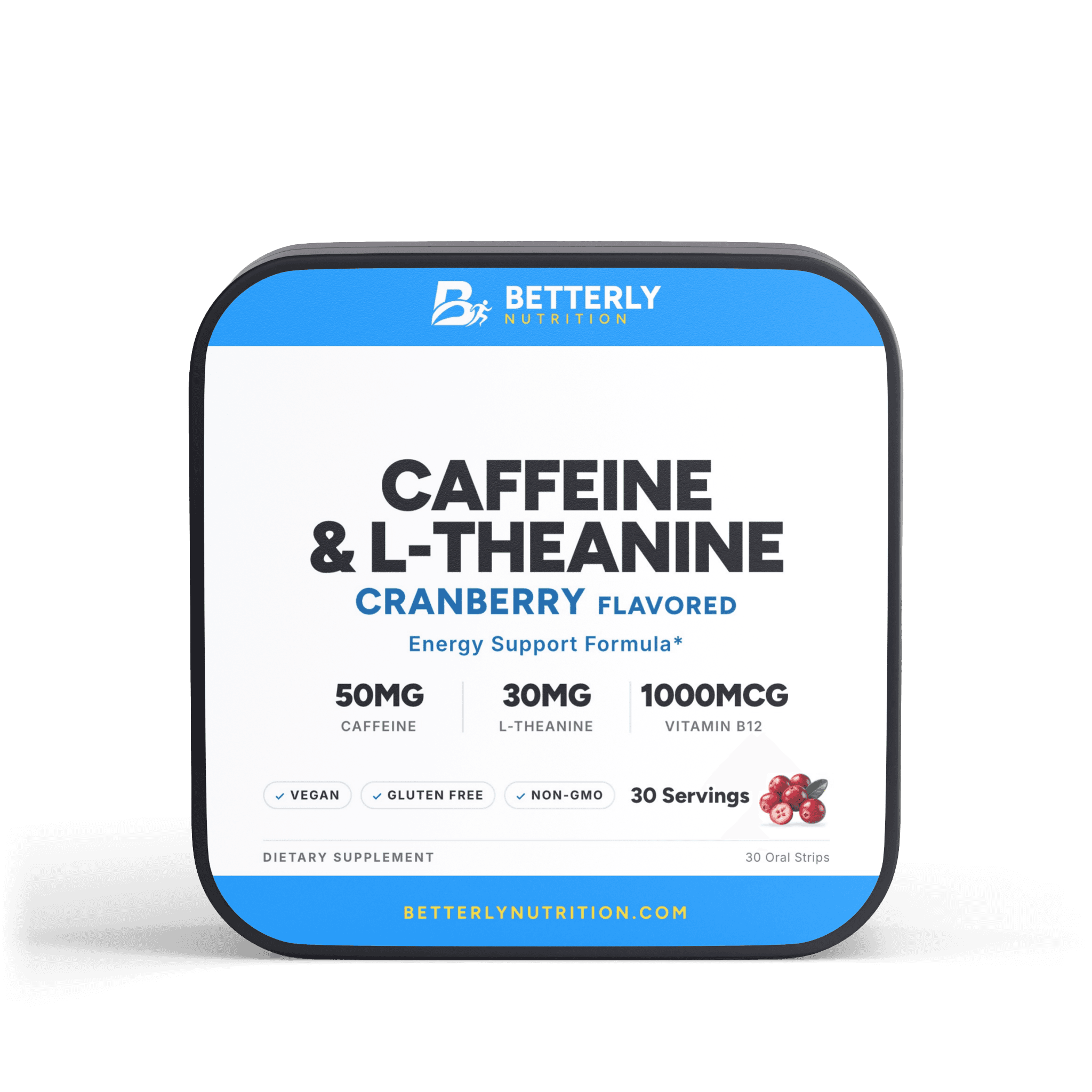
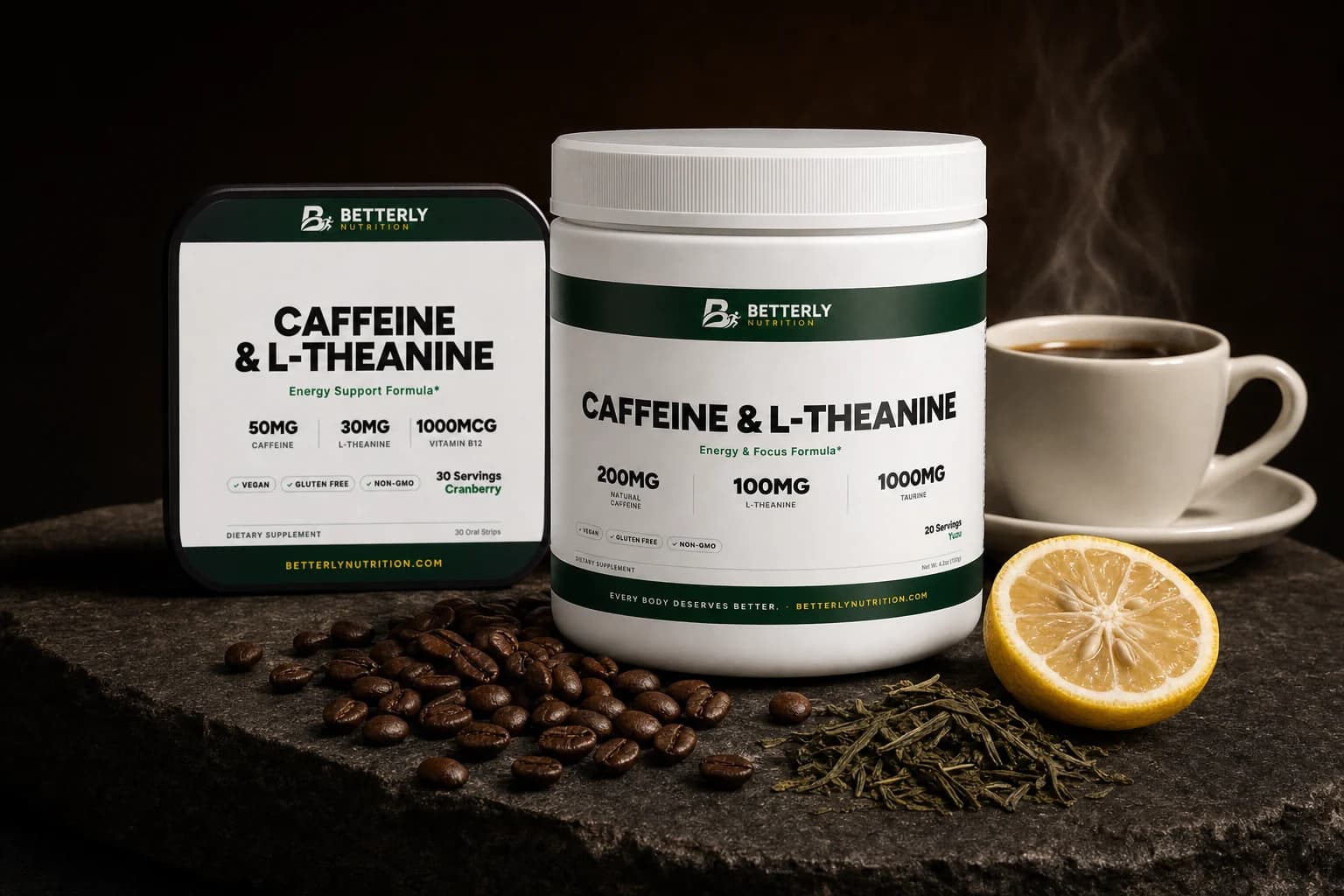
- Per 1-strip (290 mg) serving, Betterly's Caffeine & L-Theanine Energy Strips list 1000 mcg of vitamin B12, 50 mg of caffeine and 30 mg of L-theanine.
- Betterly's strip works through the same stimulant as coffee, in a smaller, fixed 50 mg amount you can count exactly.
- Per MedlinePlus, caffeine hits its peak blood level within one hour, and you may feel it for four to six hours; we found no strip-specific figure that beats that.
- The strip label says one strip a day, so it's a single measured top-up, not something to keep reaching for.
We sell the strip at the center of this article, which is a good reason to check our math instead of trusting our enthusiasm. Product milligrams below are copied off our own Supplement Facts panels, and anything about how caffeine behaves in your body is credited to the federal page that says it.
Do caffeine strips actually work?
Caffeine strips work as a way to take caffeine: each strip dissolves on your tongue and delivers a labeled dose, which for Betterly's strip is 50 mg.
It's the same stimulant you'd get from coffee or tea. According to MedlinePlus, caffeine acts on your central nervous system, and that stimulation is what can leave you feeling more awake. A strip doesn't change what caffeine is. It changes how you carry it and how much arrives at once. Energy strips work the same way: our strip's front label says "Energy Support Formula," and caffeine is the ingredient behind that wording.
Dose is where experiences differ most. If you rarely have caffeine, 50 mg can feel like a clear nudge. If you drink several mugs a day, a strip may barely register. MedlinePlus lists dependency, needing more caffeine for the same result, among the effects of too much of it. The NIH Office of Dietary Supplements also notes that people have different responses to caffeine.
How do caffeine strips work once they're on your tongue?
A caffeine strip is a thin, flavored film that softens and dissolves on your tongue, releasing the caffeine and everything else it was made with.
The ingredient list on our Caffeine & L-Theanine Energy Strips shows how the film is built. Pullulan, a carbohydrate that forms the film itself, is listed first, ahead of the L-theanine and caffeine. The rest is mannitol, cellulose, pectin, lecithin and malic acid, plus cranberry flavor and the sweeteners erythritol and steviol glycosides. The whole strip weighs 290 mg.
The label's suggested use is "Place 1 oral strip on the tongue daily and allow it to dissolve." Notice the wording: on the tongue, not under it. That matters in the next section, because "sublingual" means under the tongue. The pack lists the strips as vegan, gluten free and non-GMO, with 30 strips inside.
What do energy strips do besides deliver caffeine?
Beyond its 50 mg of caffeine, Betterly's energy strip adds 30 mg of L-theanine and 1000 mcg of vitamin B12, and neither adds to the caffeine you're getting.
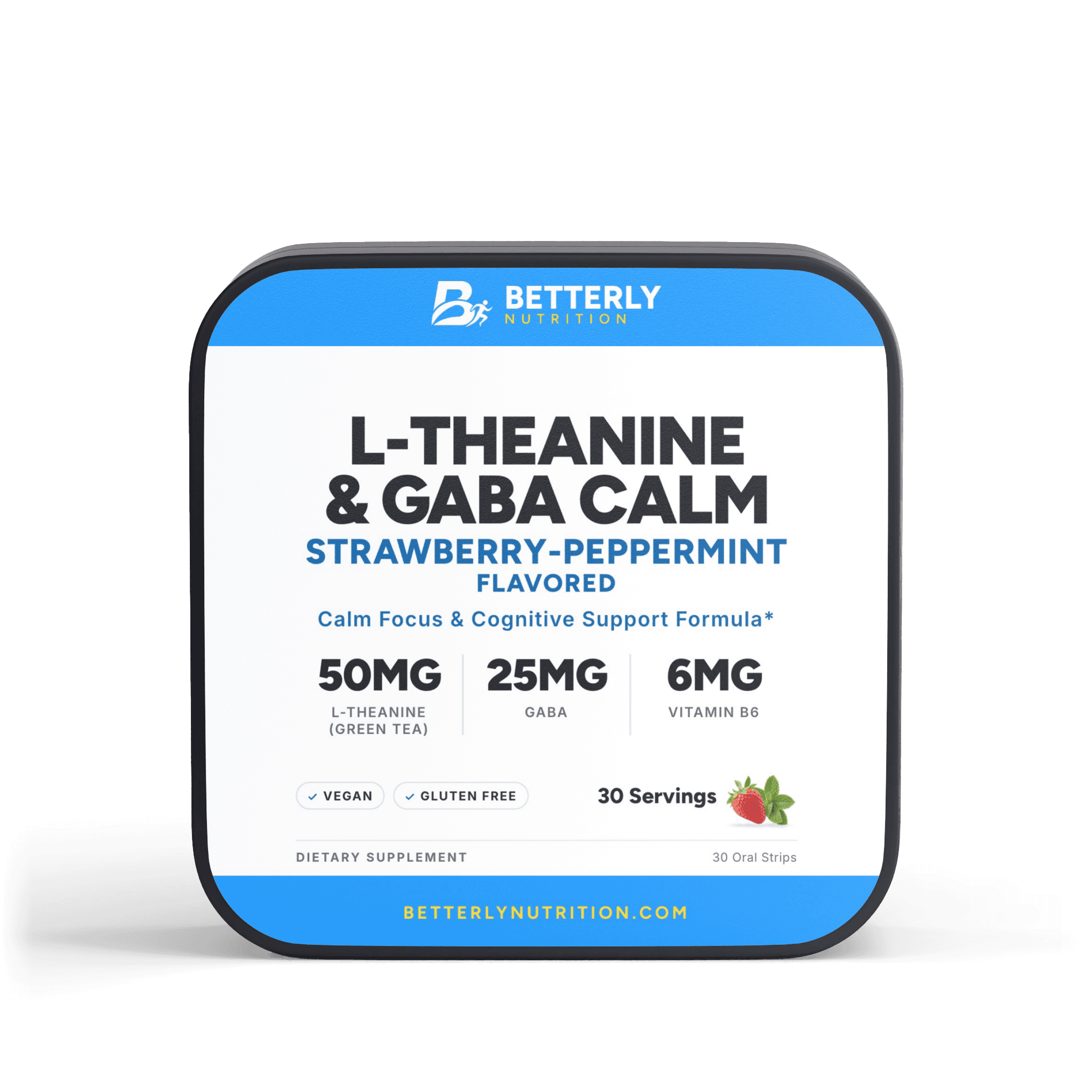
Most people know L-theanine from tea, but this strip's panel lists it by name with no plant source attached. The label makes no separate promise for it, and at 30 mg it's the lightest of the three L-theanine amounts in this guide. The L-Theanine & GABA Calm Strips, which list no caffeine on their panel, carry 50 mg of L-theanine per 1-strip (290 mg) serving.
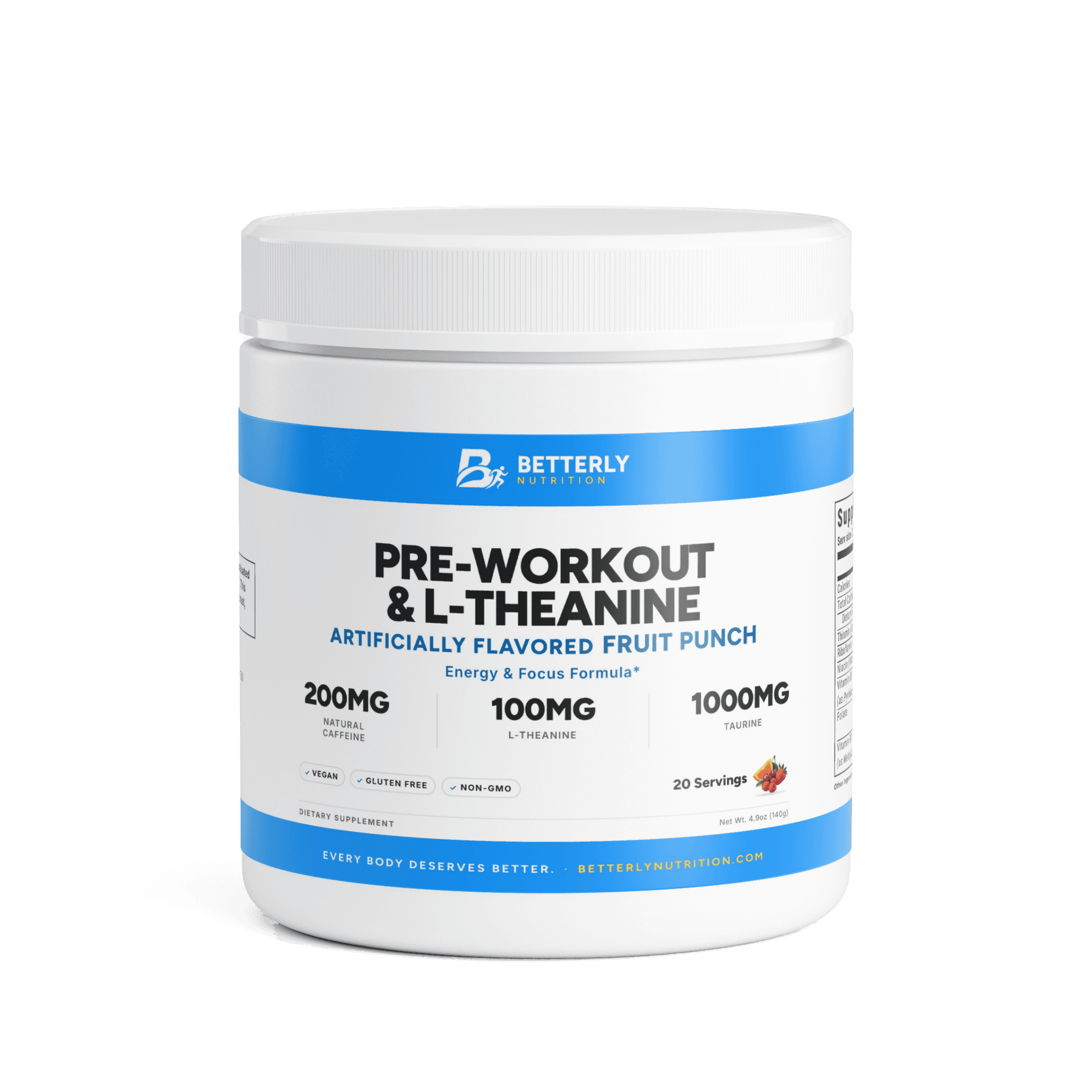
The Pre-Workout Caffeine & L-Theanine Energy Powder (Yuzu) goes higher still, at 100 mg of L-theanine per 2-scoop (6 g) serving. If the caffeine-plus-theanine pairing is what caught your eye, read how people combine L-theanine and caffeine.
As for the 1000 mcg of B12, the NIH Office of Dietary Supplements says adults need 2.4 mcg a day and that extra B12 doesn't bring energy benefits to people already getting enough, which we unpack in does B12 give you energy?
Is sublingual caffeine faster than caffeine you drink?
Sublingual caffeine isn't proven to beat a drink: we found no federal health source that measured caffeine strips' speed, so we make no faster-than-coffee claim.
Plenty of strip brands say sublingual caffeine skips your stomach and kicks in within minutes. We looked for a government health page to support that and came up empty.
MedlinePlus puts caffeine's peak level in your blood within one hour of eating or drinking it. We found no strip figure to set against it.
The closest federal statement we found is about the B12 in this same strip. The NIH vitamin B12 fact sheet for consumers mentions a form "dissolved under your tongue," called sublingual B12, then says research hasn't shown any form of supplemental B12 to be better than the others. That's one nutrient, not caffeine. Still, dissolving in your mouth and working better aren't the same thing.
Our label also says to place the strip on the tongue, not under it, so we don't call it sublingual.
How much caffeine is in a caffeine strip next to a drink?
Each brand's label sets the amount, and Betterly's caffeine strip holds 50 mg, about half the 85 to 100 mg the NIH gives for a cup of coffee.
| Source | Caffeine | Where the number comes from |
|---|---|---|
| 1 energy strip | 50 mg | Our label, per 1-strip serving |
| A cup of coffee | About 85 to 100 mg | NIH Office of Dietary Supplements |
| 8-ounce cup of coffee | 95 to 200 mg | MedlinePlus |
| 12-ounce green tea | 37 mg | FDA |
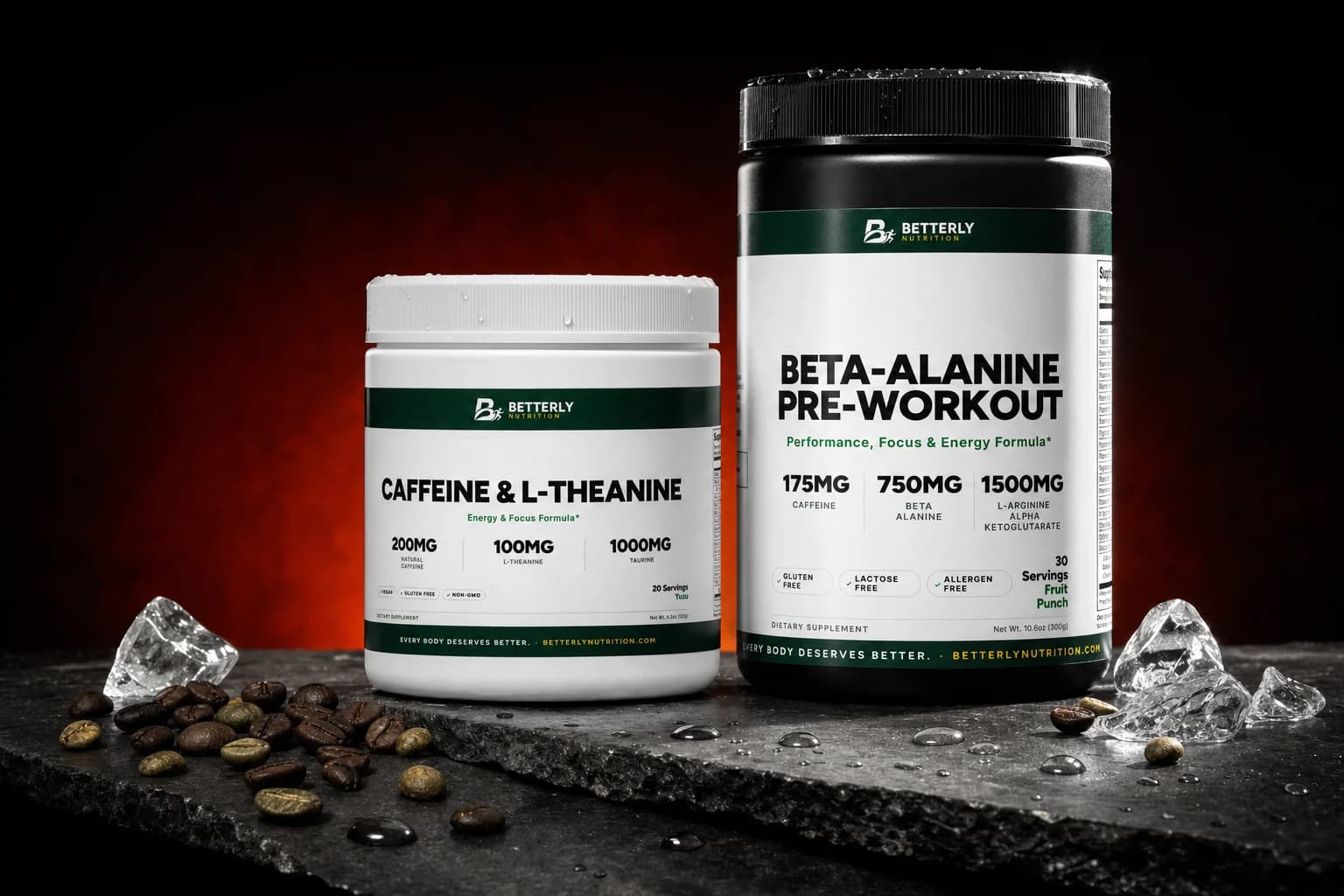
| Energy powder, 2 scoops (6 g) | 200 mg | Our label |
| 1 Calm Strip | None listed | Our label |
A strip lands between a big mug of green tea and a cup of coffee. That's the dose context most "instant energy" pages skip: you're getting a small, fixed amount, not a concentrated jolt.
The fixed amount is the strip's real strength. The FDA's caffeine guide puts a 12-ounce regular brewed coffee anywhere from 113 to 247 mg, so every mug is an estimate. A strip is 50 mg every time. Whether that's small or large for you is the subject of is 50 mg of caffeine a lot?
From our shop: Caffeine & L-Theanine Energy Strips — 30 dissolvable strips per pack at 50 mg of caffeine apiece, with vegan, gluten free and non-GMO on the label.
How long do caffeine strips last?
Caffeine strips last about as long as caffeine from any source: MedlinePlus says you may feel its effects for four to six hours, and we know of no strip-specific figure.
The NIH Office of Dietary Supplements is looser, saying moderate amounts of caffeine might raise energy and reduce fatigue "for several hours." The FDA notes wide variation in how fast people clear caffeine from their bodies.
What a strip changes is how well you can plan around that span. A mug's caffeine is an estimate, but the strip's 50 mg is printed on the panel, so you always know exactly what you've added to the day. If you're wondering how late is too late, our FAQ below takes that one on.
When does a caffeine strip make more sense than a drink?
A caffeine strip makes more sense than a drink when you want a small, exact dose with no water, no mixing and nothing to carry but a flat pack.
| Your situation | Better fit | Why |
|---|---|---|
| No water or cup nearby | Energy strip | It dissolves on your tongue |
| You want a small top-up | Energy strip | 50 mg, the same every time |
| You want a bigger morning dose | Energy powder | 200 mg per 2-scoop serving |
| You've hit your caffeine for the day | Calm Strips, or nothing | No caffeine on the panel |
| You simply enjoy your coffee | Coffee | A strip adds nothing you need |
The strip wins on convenience and precision, not strength: think of a flight or a hike where brewing isn't an option. If you want more caffeine in one go, a drink does that better. Our Energy Support collection holds both kinds, plus picks with no caffeine.
For a bigger single dose, the Yuzu energy powder mixes into water and carries 200 mg of natural caffeine from green tea in each 2-scoop (6 g) serving. One flag: its caution reads "Do not exceed 5 scoops daily." At 100 mg a scoop, that's 500 mg, more than the FDA's 400 mg daily figure for most adults. We don't recommend using it at that amount.
For the gym, our pre-workout and energy drink comparison puts the strip next to four other options.
How do you take a caffeine strip, per the label?
Take Betterly's caffeine strip by placing one on your tongue and letting it dissolve, once a day, exactly as the label's suggested use says.
- Add up your day first. Coffee, tea, soda and chocolate all count.
- Place one strip on your tongue. Let it dissolve fully. You don't need water.
- Stop at one. The label says 1 strip daily and "Do not exceed recommended dose," so a second strip is outside the directions.
One strip is 50 mg of the 400 mg a day the FDA cites for most adults, so it spends an eighth of that allowance before you've poured anything.
Two 12-ounce brewed coffees plus a strip come to 276 to 544 mg using the FDA's coffee range. That can go over the line, so on a heavy-coffee day a strip is often one caffeine source too many.
When don't you need a caffeine strip?
You don't need a caffeine strip if coffee or tea already covers you, if short sleep is the real problem, or if caffeine leaves you shaky even in small amounts.
- Your usual coffee already gets you where you want to be, and it's always within reach.
- You're hoping it will stand in for sleep. Caffeine can help you feel more awake, but it doesn't give back the hours you missed.
- You've already had most of your caffeine for the day.
- Even a small amount of caffeine tends to leave you jittery.
- You want no stimulant at all.
That last group has other paths. The Calm Strips use the same format with no caffeine on the panel, and our roundup of energy options that skip caffeine entirely covers more.
From our shop: L-Theanine & GABA Calm Strips — the same dissolve-on-your-tongue format with no caffeine listed on the panel, which gives vitamin B6 (6 mg), GABA (25 mg) and L-theanine from green tea (50 mg) per 1-strip serving.
Who should check with a provider before using caffeine strips?
Check with a healthcare provider before using caffeine strips if you're pregnant or nursing, under 18, taking any medication, managing a medical condition, or have surgery scheduled.
Our strip label itself names pregnancy, nursing, being under 18 and having a medical condition. MedlinePlus explains the first two: caffeine passes to your baby during pregnancy, and a small amount reaches your baby while breastfeeding.
MedlinePlus also says some medicines and supplements, including stimulants and certain antibiotics, can interact with caffeine. The FDA adds that certain conditions and medications can make people more sensitive to it.
For teens, the NIH Office of Dietary Supplements says caffeine should stay at no more than 100 mg a day, and the FDA notes that medical experts advise against energy drinks for children and teens.
The FDA lists increased heart rate, jitters, upset stomach, nausea and headache among the effects of too much caffeine. If any of those show up, stop using caffeine products and check in with a healthcare provider.
FAQ: caffeine strips
Can you use a caffeine strip every day?
Yes, our caffeine strip is written for once-a-day use: the label's suggested use is 1 strip on the tongue daily. That means 50 mg of caffeine lands on every day you take one, so it belongs in your running count next to coffee, tea, soda and chocolate. With 30 strips in a pack, that's 30 days of use at the label's pace. If you're pregnant, nursing, under 18 or taking medication, talk to a provider before making it a habit.
Can you take two caffeine strips at once?
No, not with our strips: the label says to place 1 oral strip on the tongue daily and not to exceed the recommended dose. If 50 mg isn't enough for you, a strip may simply be the wrong format. A 2-scoop serving of our energy powder lists 200 mg of caffeine, and that still counts toward the same daily total.
Can you drink coffee after a caffeine strip?
Yes, you can have coffee on a caffeine-strip day, as long as your whole day stays inside the FDA's 400 mg figure for most adults. Caffeine from a strip and from a mug simply add together. Using the FDA's range of 113 to 247 mg for a 12-ounce brewed coffee, one strip plus one coffee comes to 163 to 297 mg.
Can teenagers use caffeine strips?
Teenagers shouldn't use our caffeine strips without a physician's okay, because the label tells anyone under 18 to consult one first. The NIH Office of Dietary Supplements puts the teen ceiling at 100 mg of caffeine a day. One strip's 50 mg is half of that ceiling before any soda, tea or chocolate enters the picture.
How late in the day can you take a caffeine strip?
A caffeine strip is best kept to the first half of your day, because MedlinePlus says caffeine's effects can last four to six hours. Our label names no time of day, so this is about protecting your sleep rather than a rule printed on the pack. If an afternoon coffee keeps you up at night, an afternoon strip deserves the same caution.
Sources
- MedlinePlus: Caffeine
- U.S. Food and Drug Administration: Spilling the Beans: How Much Caffeine is Too Much?
- NIH Office of Dietary Supplements: Dietary Supplements for Exercise and Athletic Performance, Fact Sheet for Consumers
- NIH Office of Dietary Supplements: Vitamin B12, Fact Sheet for Consumers
If this left you looking for somewhere to start, read caffeine strips with 50 mg per strip — its amounts per serving are listed on the page. For the practical questions this raises, how dosing, sourcing and subscriptions work is answered in one place.