On this page
- Key takeaways
- Does B12 give you energy, or is that just marketing?
- Is B12 a stimulant like caffeine?
- Does B12 give you energy right away?
- Why is there so much B12 in energy drinks and strips?
- How much B12 and caffeine are in Betterly's energy labels?
- Who is more likely to run low on B12?
- How do you take B12 and caffeine together, per the label?
- When can you skip a B12-heavy product?
- Who should check with a healthcare provider first?
- FAQ: B12 and energy
- Sources
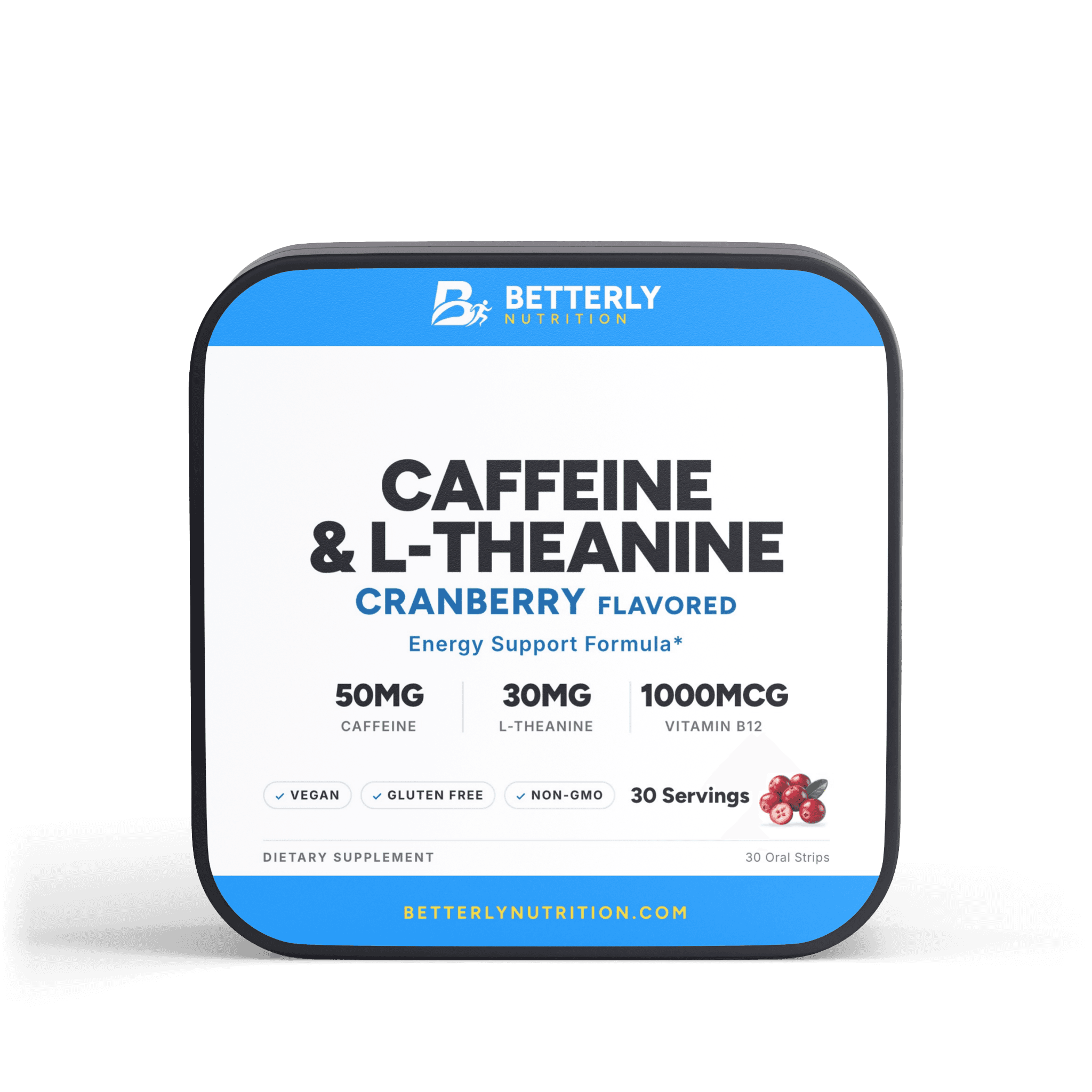
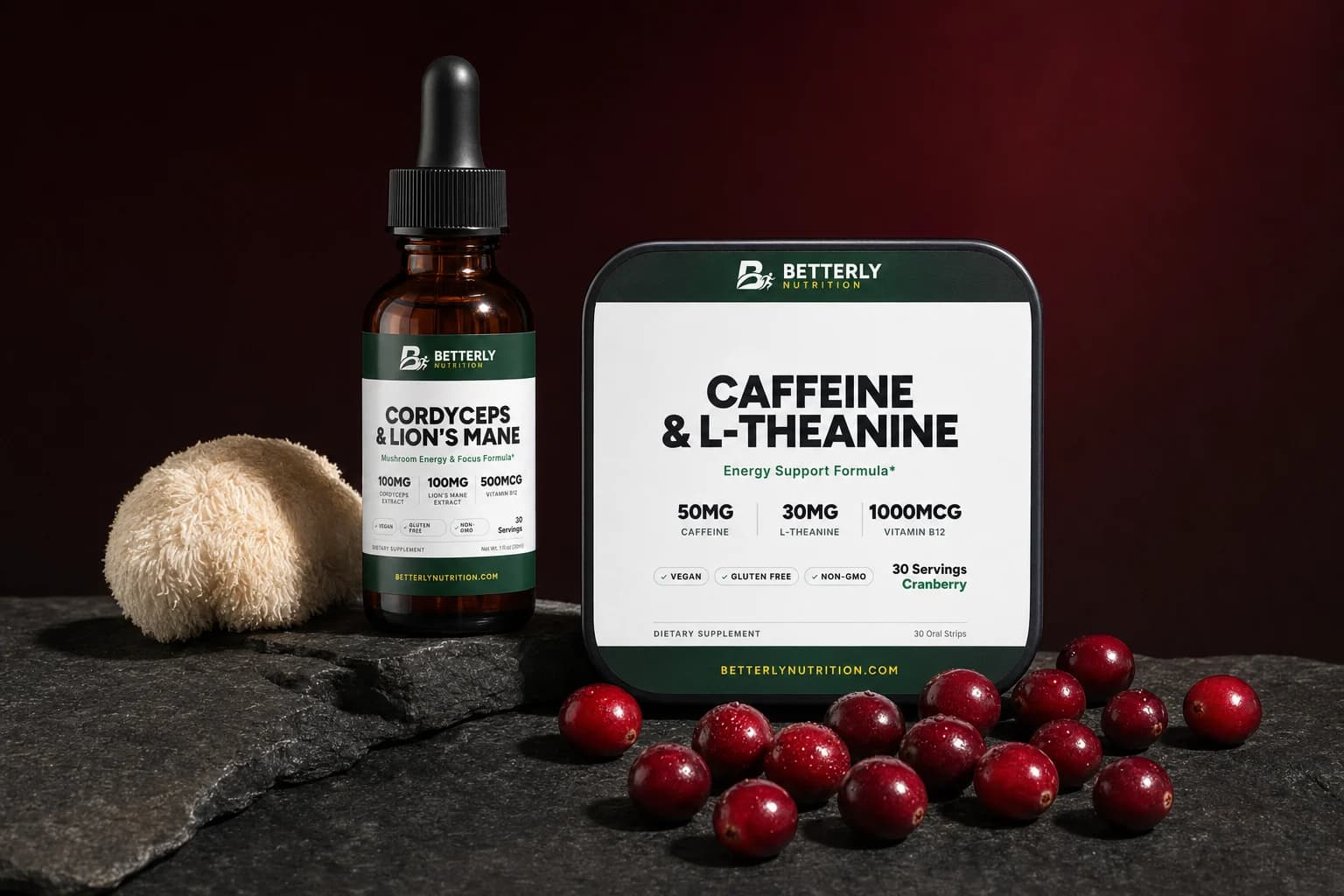
The short answer: Does B12 give you energy? Not the way caffeine does. Vitamin B12 isn't a stimulant, and the NIH Office of Dietary Supplements says B12 adds no energy for people whose diet already covers it, which describes most people in the U.S. Our Caffeine & L-Theanine Energy Strips print 1000 mcg of B12 on the front, but the part you'd notice is the 50 mg of caffeine.
Key takeaways
- Vitamin B12 helps keep your blood and nerve cells healthy, but it doesn't wake you up the way a stimulant does.
- Adults need 2.4 mcg of vitamin B12 a day, according to the NIH, and most people in the United States get that much from food.
- Each 1 oral strip (290 mg) serving of Betterly's Caffeine & L-Theanine Energy Strips pairs 50 mg of caffeine, the stimulant, with 1000 mcg of vitamin B12.
- Many older adults, people who eat few or no animal foods, and people who've had certain stomach surgeries are more likely to run low on B12.
- If you think your B12 intake might be low, a clinician can test your level instead of you guessing.
A quick note: we sell the strip at the center of this guide, and its front label gives "1000MCG Vitamin B12" the same billing as the caffeine. So this is a brand explaining why its own biggest number isn't the one doing the work. Every number below comes from our panels or a named federal page.
Does B12 give you energy, or is that just marketing?
Vitamin B12 supports energy only in a background sense: your body needs it to run normally, but taking more than you need won't make you feel more awake.
According to the NIH Office of Dietary Supplements (ODS), B12 helps keep your body's blood and nerve cells healthy and helps make DNA. Its chemical name is cobalamin, which is why labels say things like methylcobalamin.
MedlinePlus, in its guide to vitamin B tests, says the B vitamins help maintain normal metabolism, the process your body uses to make energy from food. The same page even says B12 "gives your body energy." In that metabolic sense, the "energy vitamin" nickname is fair.
Food supplies the calories, and B vitamins help your body use them. More helpers don't make more fuel.
ODS draws the line clearly. Makers often sell B12 for energy, it notes, yet B12 brings no energy benefit to someone whose diet already supplies enough. The same fact sheet counts most Americans in that group.
Is B12 a stimulant like caffeine?
No, vitamin B12 is not a stimulant. Caffeine is, and that difference explains why a B12 capsule on its own won't feel like a cup of coffee.
MedlinePlus's caffeine page files caffeine under central nervous system stimulants, the kind of ingredient that can leave you more alert. The ODS description of B12 has nothing like that. B12 does slow, ongoing work: blood cells, nerve cells, DNA.
One way to picture it: caffeine is a light switch, and B12 is part of the wiring. You notice the switch. You only notice the wiring when something's wrong with it.
So "does B12 give you energy like caffeine" is really a question about two different jobs. When a product holding both leaves you feeling more alert, caffeine is the ingredient with a federal page describing that effect.
Does B12 give you energy right away?
No, vitamin B12 doesn't give you energy right away. It isn't fast-acting, and your body already keeps a large reserve.
ODS says your body stores 1,000 to 2,000 times as much B12 as you'd typically eat in a day. For most people, one more strip adds to a reserve that's already large.
That reserve is also why, per ODS, the effects of running low on B12 can take several years to appear.
Caffeine keeps a much shorter clock. MedlinePlus puts caffeine at its peak in the blood inside an hour, with effects that can hang around for four to six hours. If an energy product seems to work fast, caffeine is the likelier reason. B12 doesn't work on that timetable.
What about B12 shots? ODS calls the shot a prescription form, usually given when someone's level is low, so it's a clinician's call, not an energy shortcut.
Strip speed versus coffee is its own question, covered in how caffeine strips work.
Why is there so much B12 in energy drinks and strips?
Energy products carry big B12 doses because B12 has an energy reputation, large amounts are considered safe, and a four-digit number looks generous on a label.
The NCCIH page on energy drinks lists B vitamins among the extras, next to guarana, taurine, sugars and ginseng, and calls caffeine a major ingredient.
Three things explain the huge B12 figures:
- The reputation. ODS notes that makers often promote B12 for energy, athletic performance and endurance.
- The safety margin. ODS says doses much higher than the recommended amount, such as 500 mcg or 1,000 mcg, are considered safe.
- The label appeal. A big mcg number reads like value. We know, because ours sits on the front of our pack.
The safety point cuts both ways, because ODS also says your body absorbs only a small percentage of those large doses. So 1000 mcg isn't a risk by the fact sheet's account, and it isn't a stimulant either.
How much B12 and caffeine are in Betterly's energy labels?
Betterly's energy labels show B12 amounts don't track caffeine: our highest-caffeine powder lists the least B12 of the four, and the drops pair 500 mcg of B12 with no caffeine.
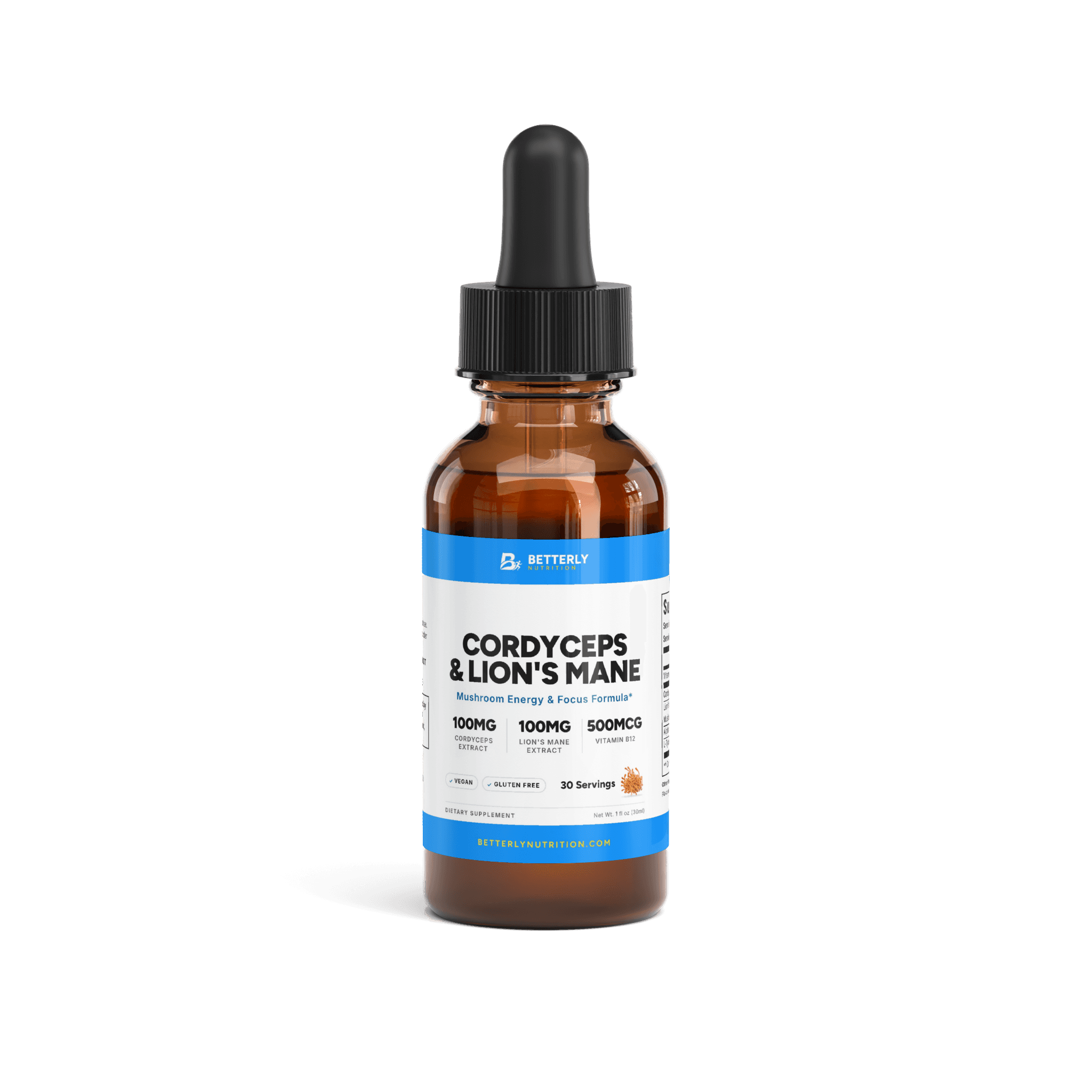
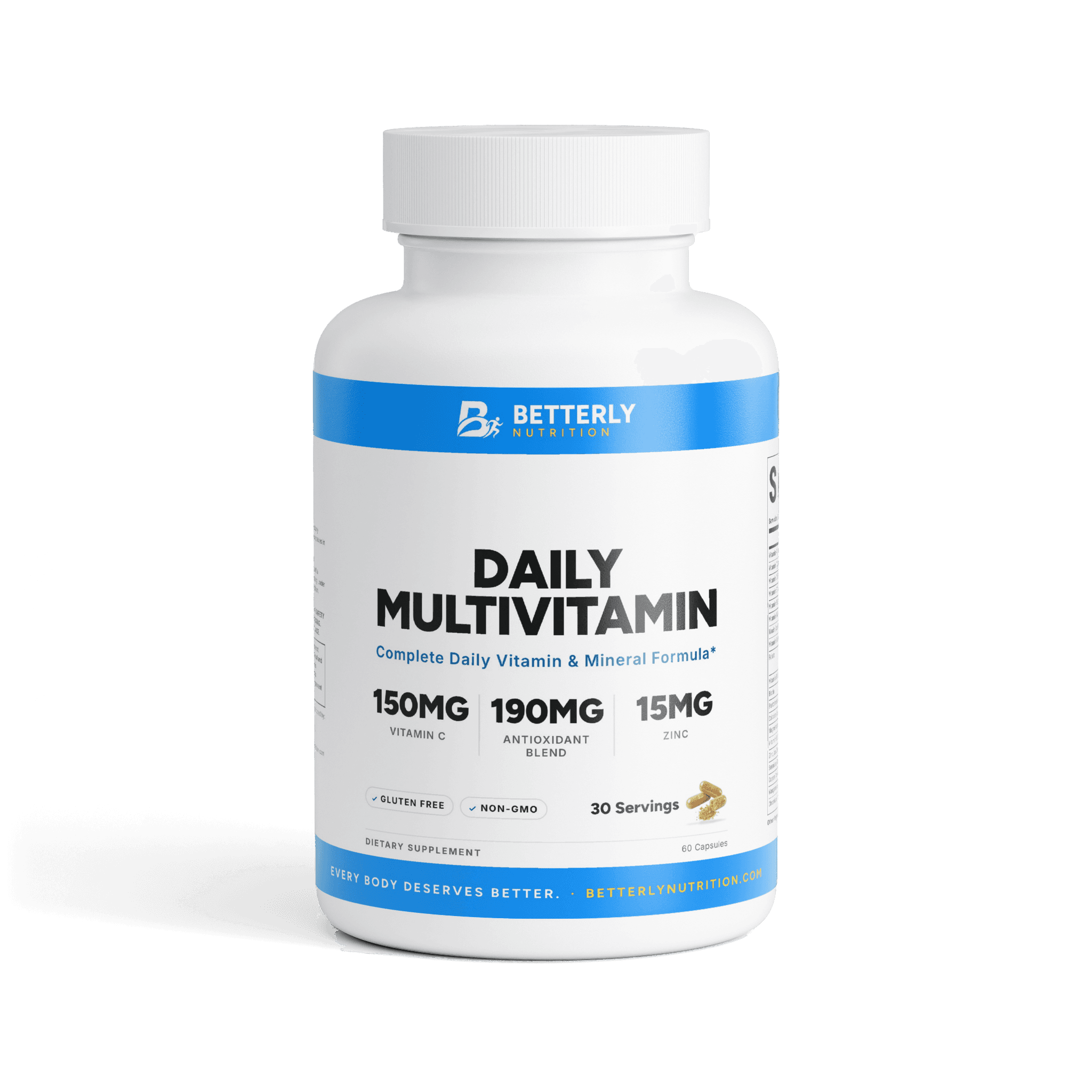
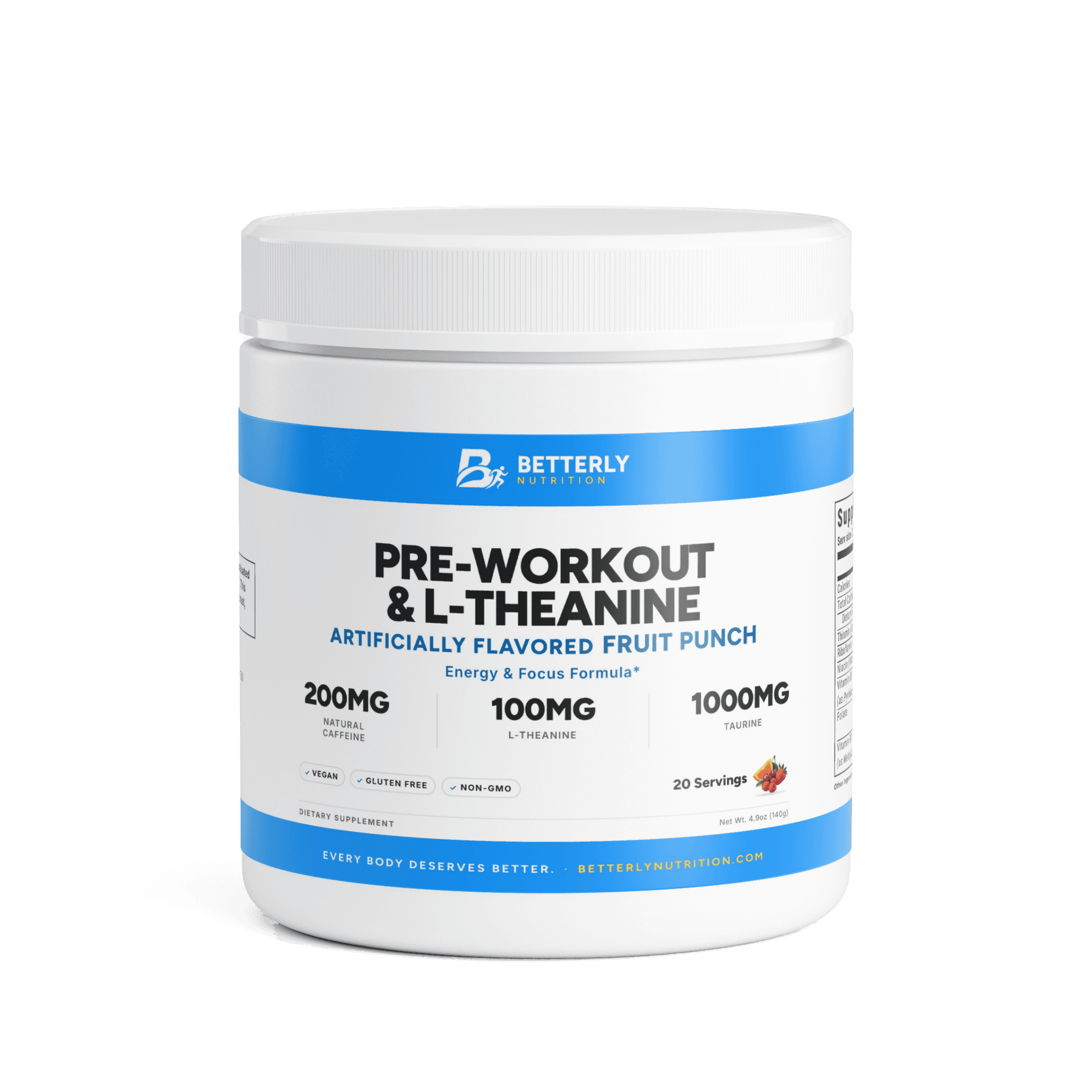
The table sets the strip beside the Cordyceps & Lion's Mane Energy Drops, the Daily Multivitamin Capsules and the Pre-Workout Caffeine & L-Theanine Energy Powder (Yuzu), with amounts from each panel. The last column compares each B12 amount with the 2.4 mcg a day ODS lists for adults.
| Product, per serving | Vitamin B12 | Caffeine | B12 vs. 2.4 mcg |
|---|---|---|---|
| Energy Strips, 1 strip (290 mg) | 1000 mcg | 50 mg | Over 400 times |
| Energy Drops, 1 ml (30 drops) | 500 mcg | None listed | Over 200 times |
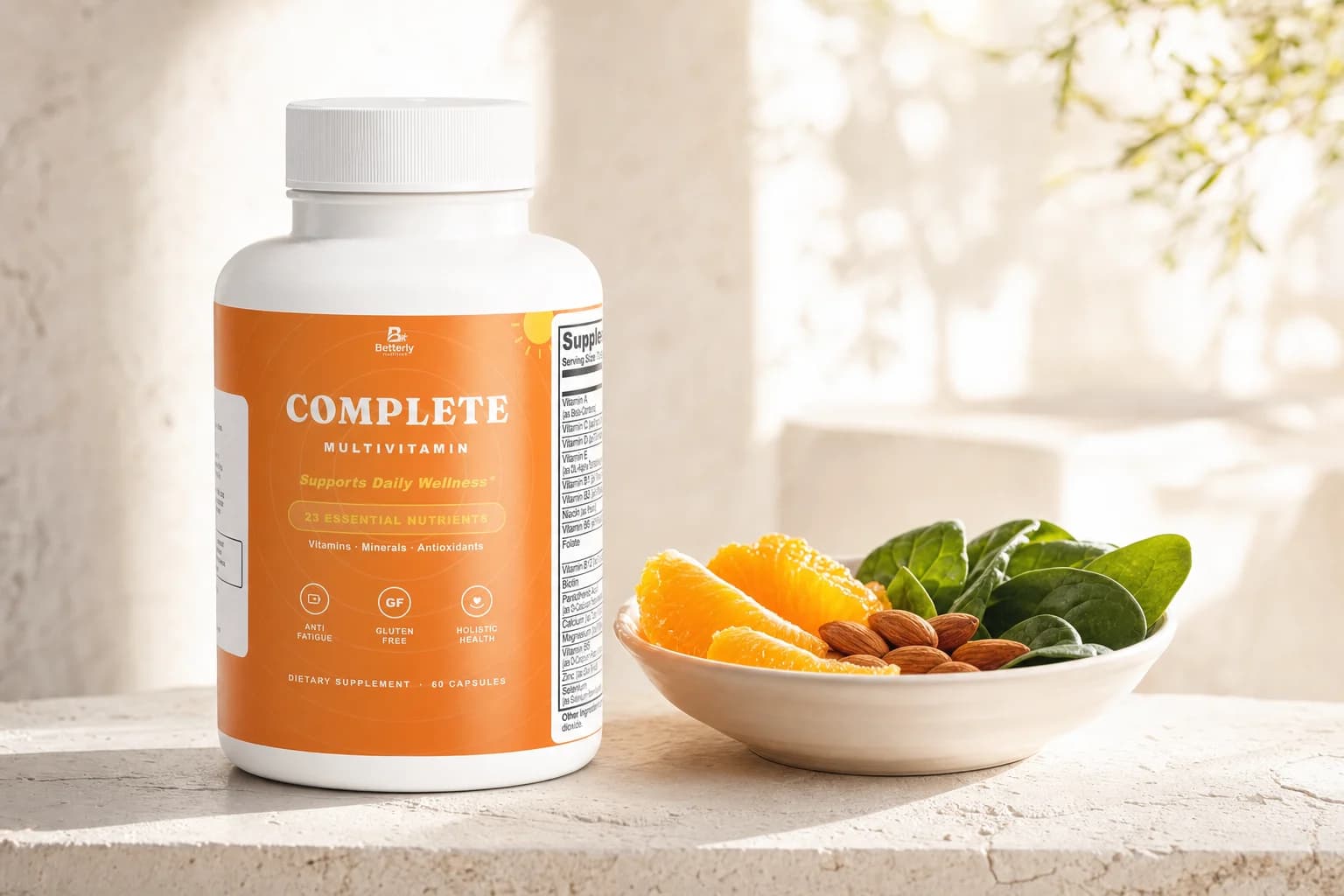
| Daily Multivitamin, 2 capsules | 27 mcg | None listed | About 11 times |
| Energy Powder (Yuzu), 2 scoops (6 g) | 0.80 mcg | 200 mg | About one third |
The two middle columns don't line up. The powder lists four times the strip's caffeine with a third of an adult's daily B12, while the drops list 625 times the powder's B12 and no caffeine. If B12 drove the lift, the drops would outrank the powder. The caffeine column is the one to read.
Two footnotes. The multivitamin's antioxidant blend includes green tea extract, but its panel prints no caffeine amount. And the powder's caution reads "Do not exceed 5 scoops daily." Five scoops would be 500 mg of caffeine, above the 400 mg a day MedlinePlus calls not harmful for most people, so we don't recommend going near that cap.
Our energy shelf holds the strips, drops and powder, plus picks with no caffeine on the panel.
From our shop: Caffeine & L-Theanine Energy Strips — each cranberry-flavored strip lists 1000 mcg of vitamin B12 as methylcobalamin beside 50 mg of caffeine and 30 mg of L-theanine, 30 strips to a pack.
Who is more likely to run low on B12?
Per ODS, people more likely to run low on vitamin B12 include many older adults, people who eat little or no animal food, and people who've had certain stomach surgeries.
Absorption explains most of the list, and ODS describes it in two steps. Stomach acid first frees B12 from the protein it's attached to in food. The freed B12 then joins a stomach protein called intrinsic factor, and your body absorbs the two together. Supplement B12 isn't attached to protein, so it skips step one but still needs intrinsic factor.
ODS names these groups:
- Older adults. Many don't make enough stomach acid to absorb the B12 in food, and ODS says people over 50 should get most of theirs from fortified foods or supplements.
- Vegetarians and vegans. Only animal foods contain B12 naturally, so a plant-based diet gets it only from fortified foods or supplements.
- People who've had some types of stomach or intestinal surgery.
- People with certain digestive conditions that affect absorption.
- People taking certain medicines, including stomach-acid reducers, which ODS says can interfere with absorbing B12 from food.
Food sources include fish, meat, poultry, eggs and dairy, plus fortified cereals and nutritional yeasts, per ODS.
If you fit one of these groups, ODS says your doctor can test your B12 level. That's a better first step than buying the biggest mcg number on the shelf.
How do you take B12 and caffeine together, per the label?
You take the B12 and caffeine in Betterly's energy strip together: the label's suggested use is to place 1 oral strip on the tongue daily and allow it to dissolve.
- Add up your caffeine first. Coffee, tea, soda and chocolate all count. MedlinePlus says up to 400 mg a day isn't harmful for most people, and one strip uses 50 mg.
- Set one strip on your tongue and wait until it's fully gone.
- Stop there. The caution reads "Do not exceed recommended dose."
- Time it around the caffeine, not the B12. Caffeine can keep working for four to six hours, per MedlinePlus, so a morning strip is kinder to your sleep. The label names no time of day.
Is pairing B12 with caffeine a problem? Neither the ODS B12 fact sheet nor the MedlinePlus caffeine page flags the pair. Both point to medicines as the interactions to ask about.
| If you want | Check this line | What it tells you |
|---|---|---|
| A stimulant you can count | Caffeine, in mg | Your stimulant dose |
| B12 on a plant-based diet | Vitamin B12, in mcg | Whether B12 is covered |
| No stimulant at all | Caffeine: none listed, and no green tea, coffee or guarana in the ingredients | Likely little or nothing to count toward 400 mg |
| To know if you're low | No line can say | Ask your clinician for a test |
A Supplement Facts panel answers dose questions well, but no label can tell you whether your own B12 is low.
When can you skip a B12-heavy product?
You can likely skip a B12-heavy product if you regularly eat animal or fortified foods, since ODS says most people in the U.S. already get enough B12 from food.
A few signs it isn't for you:
- You eat fish, meat, eggs or dairy most days, or you have fortified cereal.
- Your multivitamin already lists B12 in mcg.
- You want a lift you can feel. That's a caffeine question, and a B12 product without caffeine won't answer it.
- Even a little caffeine leaves you jittery. Our roundup of energy options that skip caffeine is a better start.
- You've felt run-down for a long stretch. That's a conversation for a clinician, who can decide which tests make sense.
For most people, day-to-day energy starts with sleep, regular meals and movement, which our guide to everyday habits that support steady energy walks through.
If covering B12 is your goal and a caffeine hit isn't, a multivitamin that lists B12 may suit you better.
From our shop: Daily Multivitamin Capsules — lists 27 mcg of vitamin B12 (1125% DV) per 2-capsule serving plus B1, B2, B6, niacin, folate and biotin, and no caffeine amount, though its blend includes green tea extract.
Who should check with a healthcare provider first?
Check with a healthcare provider before using a B12 and caffeine product if you're pregnant or breastfeeding, under 18, on any medication, managing a medical condition, or facing surgery.
The strip's caution line names pregnancy, nursing, being under 18 and having a medical condition. The reasons behind the list:
- Medicines. MedlinePlus names stimulants and certain antibiotics among the medicines to ask about before adding caffeine. ODS warns that B12 supplements can interact or interfere with some medicines.
- Pregnancy and breastfeeding. MedlinePlus explains that caffeine crosses the placenta, and that some caffeine passes along to a breastfed baby.
- Teens. MedlinePlus says young people should get less caffeine than adults, since children can be especially sensitive to it.
- Upcoming surgery. Share every supplement you take with your care team.
MedlinePlus lists restlessness, shakiness, headaches, dizziness and a fast heart rate among the effects of too much caffeine. Feeling any of those after a strip is your cue to put the pack away and talk it over with a provider.
FAQ: B12 and energy
Is B12 in energy drinks good for you?
Vitamin B12 in an energy drink is unlikely to harm you, but it isn't what makes the drink energizing. ODS says B12 hasn't been shown to cause harm, even at high doses, and extra B12 adds no energy if your diet already covers it. When you size up an energy drink, the caffeine and sugar lines tell you more than the B12 line.
Does B12 make you sleepy or keep you awake at night?
Vitamin B12 isn't linked to either effect on the ODS fact sheet or the MedlinePlus pages we used for this guide. If an energy product with B12 keeps you up, look at its caffeine first. MedlinePlus gives caffeine a four-to-six-hour window, so a late-day strip or drink may still be at work near bedtime. Earlier in the day is the safer habit.
Can you take too much B12?
ODS says vitamin B12 has not been shown to cause harm, even at high doses, and it calls supplement amounts like 500 mcg or 1,000 mcg safe. That still isn't a reason to go past a label. Our strip's directions are 1 strip a day, and the drops' are 1 ml a day. More B12 on top of an adequate intake adds no lift, so doubling up gains you nothing.
Is methylcobalamin better than cyanocobalamin?
No form of vitamin B12 has been shown to work better than the others, according to ODS. Our strips list B12 as methylcobalamin, our multivitamin lists cyanocobalamin, and the drops' panel names no form. ODS says cyanocobalamin is the usual form in supplements, with methylcobalamin, adenosylcobalamin and hydroxycobalamin as other common ones. When comparing labels, check the mcg amount and serving size first.
How can you tell if your B12 is low?
You can't reliably tell on your own, but a clinician can. ODS says your doctor can test your vitamin B12 level. MedlinePlus explains that B vitamin levels can be checked in a blood or urine sample, and that B12 is often measured together with folate. If you're over 50, eat few animal foods, or take a medicine that affects B12 absorption, it's a fair thing to ask about.
Sources
- NIH Office of Dietary Supplements: Vitamin B12, Fact Sheet for Consumers
- MedlinePlus: Caffeine
- MedlinePlus: Vitamin B Test
- National Center for Complementary and Integrative Health: Energy Drinks
If this left you looking for somewhere to start, read caffeine strips with vitamin B12 — its amounts per serving are listed on the page. For the practical questions this raises, how dosing, sourcing and subscriptions work is answered in one place.