On this page
- Key takeaways
- Is 50 mg of caffeine a lot for an adult?
- What is 50 mg of caffeine equivalent to?
- How many cups of coffee is 50 mg of caffeine?
- Is 50 mg of caffeine a lot before bed?
- Are caffeine strips safe?
- Can you use a 50 mg strip on a day with coffee?
- What does the strip label allow in a day?
- When is 50 mg more caffeine than you need?
- Who should check with a healthcare provider first?
- FAQ: 50 mg of caffeine
- Sources
The short answer: Is 50 mg of caffeine a lot? For most healthy adults, no. It's one-eighth of the 400 mg a day the FDA cites as not generally linked to negative effects, and a little more than MedlinePlus lists for a 12-ounce can of cola. Fifty milligrams can still feel like plenty if you're sensitive to caffeine, if you take it in the late afternoon, or if it lands on top of three coffees.
Key takeaways
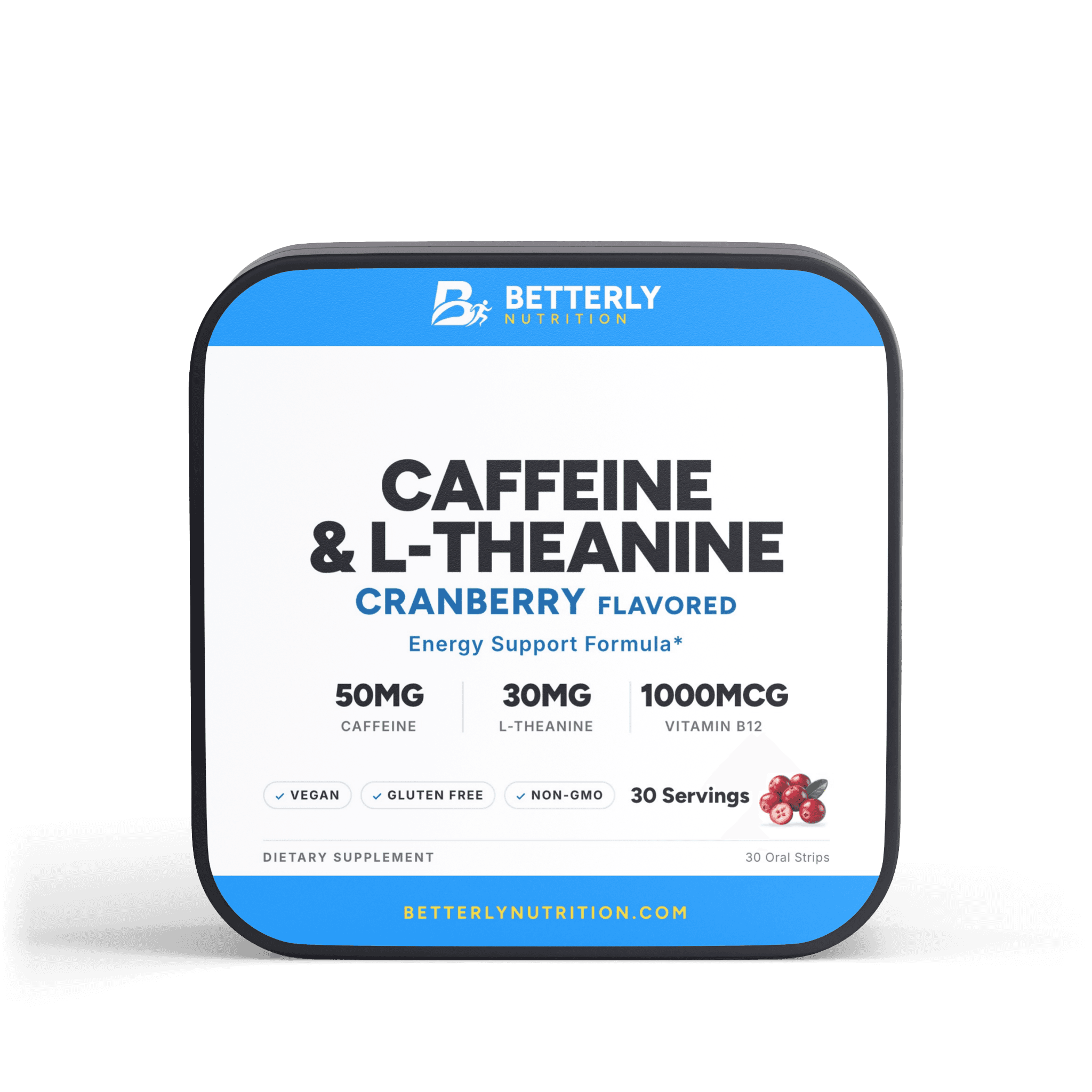
- Betterly's Caffeine & L-Theanine Energy Strips list 50 mg of caffeine per 1 Oral Strip (290mg) serving, and the label's suggested use is one strip a day.
- By MedlinePlus figures, 50 mg of caffeine is a bit more than a 1-ounce espresso shot and about half to two-thirds of a 6-ounce cup of brewed coffee.
- Caffeine can keep working for up to 8 hours, per the NHLBI, so even 50 mg can get in the way of sleep when you take it late in the day.
- A strip's 50 mg adds to your coffee, tea and soda, and the FDA's 400 mg daily figure works out to roughly two or three 12-ounce coffees.
We sell the Caffeine & L-Theanine Energy Strips, so it would suit us if the answer were "that's nothing." Read this as a seller's take, checked against the federal pages we link.
Is 50 mg of caffeine a lot for an adult?
For most healthy adults, 50 mg of caffeine is a modest amount, one-eighth of the 400 mg a day the FDA cites as not generally associated with negative effects.
The FDA's page on how much caffeine is too much gives that 400 mg as a daily figure. It's a running total for your whole day, so one dose only tells part of the story.
The MedlinePlus encyclopedia entry on caffeine in the diet calls about 400 mg a day, roughly four 8-ounce cups of brewed or drip coffee, an average or moderate amount for most people.
That entry also says there's no nutritional need for caffeine. Fifty milligrams doesn't fill a gap in your diet. It's an extra you choose, so the real question is what it's being added to.
What is 50 mg of caffeine equivalent to?
50 mg of caffeine is about the same as one 12-ounce cola, a 1-ounce espresso shot plus a little extra, or roughly 70% of a 12-ounce black tea.
Here's 50 mg against common foods and drinks, using federal figures.
| Food or drink | Caffeine | Amount for about 50 mg | Source |
|---|---|---|---|
| Espresso, 1 oz | 40 mg | One shot and a quarter | MedlinePlus |
| Brewed coffee, 6 oz | 75 to 100 mg | Half to two-thirds of a cup | MedlinePlus |
| Brewed coffee, 12 oz | 113 to 247 mg | A fifth to under half | FDA |
| Black tea, 12 oz | 71 mg | About 70% | FDA |
| Green tea, 12 oz | 37 mg | About one and a third | FDA |
| Cola, 12 oz | 35 to 45 mg | A little over one can | MedlinePlus |
| Dark chocolate, 1 oz | 10 mg | About 5 oz | MedlinePlus |
| Betterly energy strip | 50 mg | One strip | Our label |
Scan the third column and 50 mg matches a can of cola or a short espresso. Every full mug of brewed coffee on the list carries more.
MedlinePlus's diet page puts caffeinated candies and gum at 40 to 100 mg per serving, so 50 mg sits near the low end. Energy drinks usually run higher: the FDA says they generally carry 54 to 328 mg per 16 fluid ounces.
How many cups of coffee is 50 mg of caffeine?
50 mg of caffeine equals about a quarter to a half of an 8-ounce cup of coffee, based on MedlinePlus's range of 95 to 200 mg per cup.
The tricky word is "cup." Nutrition charts use 6-ounce and 8-ounce cups, the FDA uses 12 fluid ounces, and your own mug may hold more than any of them. Fill it once from a measuring cup and you'll know which row describes your morning.
The FDA's range for a 12-ounce regular brewed coffee also runs wide, from 113 to 247 mg, so two same-size mugs can differ by more than 130 mg.
Set 50 mg against coffee and it's less than any regular brewed cup that MedlinePlus or the FDA lists. Swapping your coffee for a strip means choosing less caffeine, not the same amount in a new format.
Is 50 mg of caffeine a lot before bed?
50 mg of caffeine can still matter before bed, because the NHLBI puts caffeine's effects at up to 8 hours.
The NHLBI's page on healthy sleep habits groups caffeine with nicotine as stimulants that can interfere with sleep. It notes that a late-afternoon cup of coffee can make it hard to fall asleep at night. The page gives no shorter window for smaller doses, so we plan around the full 8 hours.
Count back 8 hours from your usual bedtime and make that your last call for caffeine, strip included. Asleep by 10:30 p.m.? Your last caffeine lands by 2:30 p.m.
Work nights? The NHLBI's advice for shift workers is to save caffeine for early in the shift. That puts a strip near the start of yours, never close to the end.
Are caffeine strips safe?
Caffeine strips carry the same stimulant as coffee, so their safety comes down to dose and user, and one 50 mg strip sits far below the FDA's 400 mg figure.
Whether energy strips are bad for you day to day turns on a few habits.
The first is forgetting to count it. A strip takes seconds and doesn't feel like "having a coffee," so it's easy to leave out of your running total. The FDA sees no difference, for your body or for safety, between caffeine that's naturally in coffee or tea and caffeine that's added to a product. Fifty milligrams from a strip counts exactly like 50 mg from a mug.
Children are another. A small, flavored film can look like candy. Our pack says "KEEP OUT OF REACH OF CHILDREN," and the FDA's page passes along medical experts' advice that kids and teens skip energy drinks.
With strips from other brands, look for a milligram figure on the pack. The FDA advises care the first time you try a product with added caffeine when the amount isn't declared. For how strips dissolve and how long they last, see our look at whether caffeine strips work.
Can you use a 50 mg strip on a day with coffee?
A 50 mg strip can share a day with coffee as long as everything together, strip included, stays under the 400 mg a day the FDA cites.
The FDA translates 400 mg into two or three 12-ounce mugs of coffee, so a third mug already fills the day. Here's one strip added to a few typical days, using the FDA's per-drink figures.
| Your day before the strip | Caffeine so far | With one strip added |
|---|---|---|
| One 12-oz black tea | 71 mg | 121 mg |
| Two 12-oz sodas | 46 to 166 mg | 96 to 216 mg |
| One 16-oz energy drink | 54 to 328 mg | 104 to 378 mg |
| Three 12-oz brewed coffees | 339 to 741 mg | Skip the strip |
Tea and soda days leave plenty of room. Watch the energy drink row: at the FDA's high end, one can plus one strip comes close to 400 mg. Three brewed coffees can pass 400 mg before a strip is even in the picture.
Caffeine also hides in places like protein bars, ice cream, chewing gum and over-the-counter medicines, according to the FDA. For pre-workout and energy powder combinations, our pre-workout and energy drink comparison has a fuller daily-limit table.
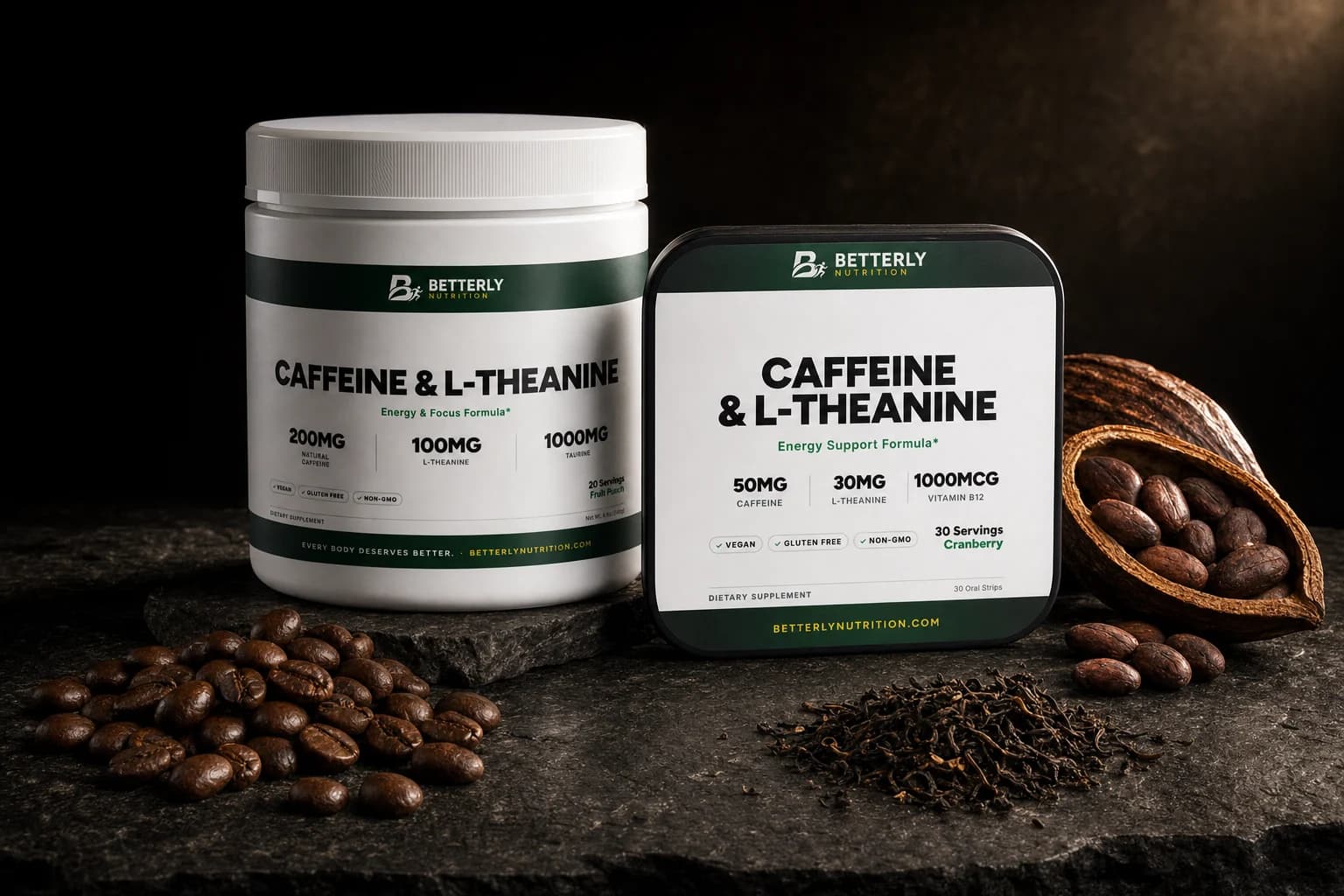
From our shop: Caffeine & L-Theanine Energy Strips — one strip a day per the label, each 1 Oral Strip (290mg) serving dissolving on your tongue with 50 mg of caffeine, less than any regular brewed cup.
What does the strip label allow in a day?
Betterly's strip label allows one Caffeine & L-Theanine Energy Strip a day, so the strip's share of your caffeine tops out at 50 mg.
The label's suggested use is to place 1 oral strip on the tongue daily and allow it to dissolve, and its caution line opens with "Do not exceed recommended dose." The caffeine isn't alone on the panel: that 1 Oral Strip (290mg) serving also carries 30 mg of L-theanine and 1000 mcg of vitamin B12 as methylcobalamin.
If one strip barely registers, look at your daily total before anything else. Regular, heavy caffeine use can mean you need more of it to get the same results, a pattern MedlinePlus calls dependency. So tally a typical day against the FDA's 400 mg. If you're already close, a stronger dose would only push you nearer the line.
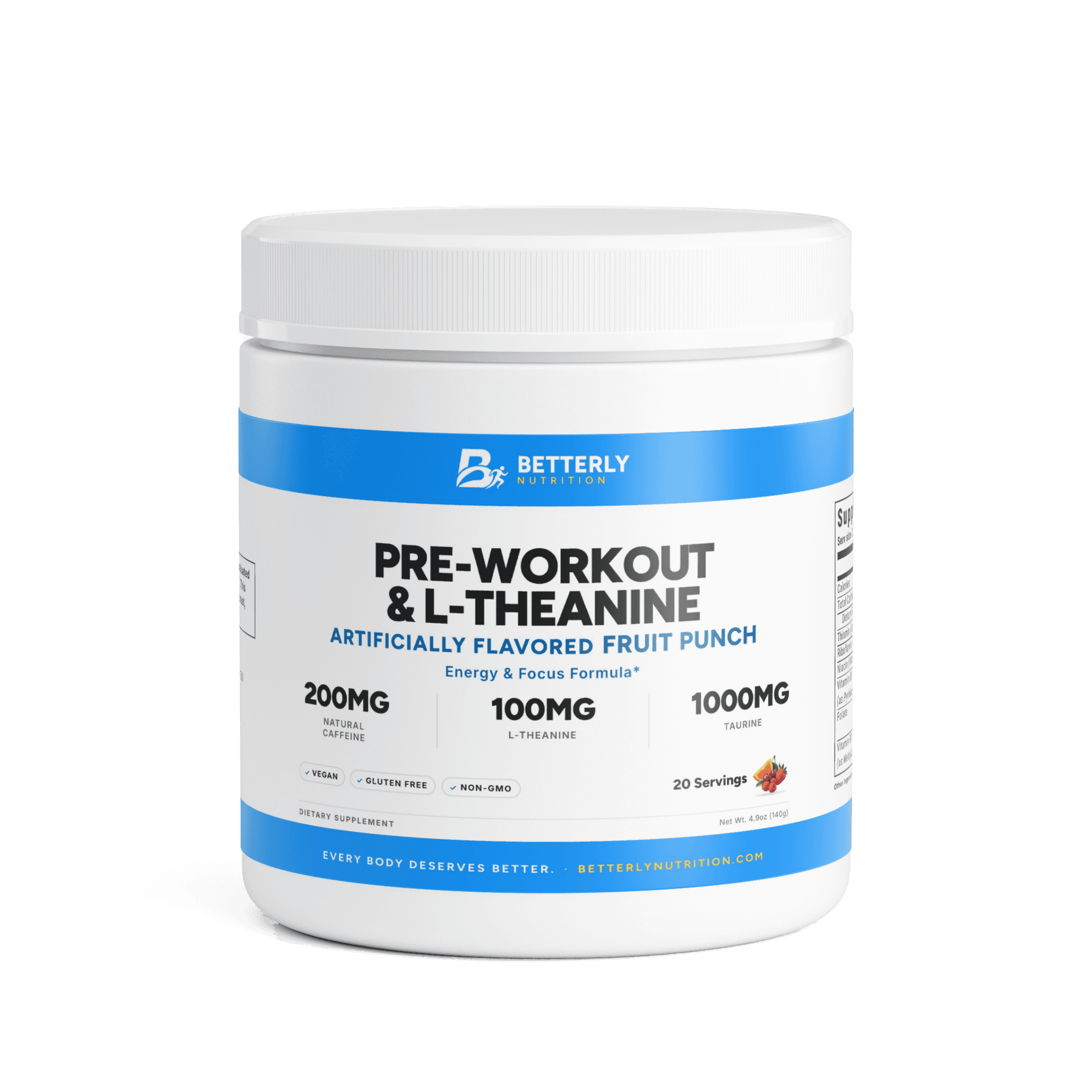
If your total sits well below 400 mg and you want a larger single serving, our Pre-Workout Caffeine & L-Theanine Energy Powder (Fruit Punch) is built around one. The label's directions begin at 1 scoop in 6 to 10 fl oz of water, with 2 scoops taking double the water. Each 2 Scoops (7g) serving lists 200 mg of natural caffeine from green tea, so one scoop is 100 mg, and every scoop counts toward the same 400 mg.
The powder's caution line reads "Do not exceed 5 scoops daily." Run that through the day budget: 5 scoops is 500 mg, ten strips' worth of caffeine and 100 mg past the FDA's 400 mg figure for most adults, before a single coffee. That's more caffeine than we'd ever suggest in a day. If a day's plans would take you past 400 mg, talk with a healthcare provider first. Whether energy powders are bad for you gets its own guide.
When is 50 mg more caffeine than you need?
50 mg of caffeine is more than you need when your usual coffee already does the job, bedtime is under 8 hours away, or small doses leave you jittery.
If one morning mug gets you where you want to be, a strip on top doesn't do a new job. It just adds 50 mg to the count.
And if even small amounts leave you jittery or restless, 50 mg may simply be a lot for you. Formulas with no caffeine on the panel are the other road. Our roundup of energy picks without caffeine walks through several, and our energy shelf mixes caffeinated and caffeine-free options.
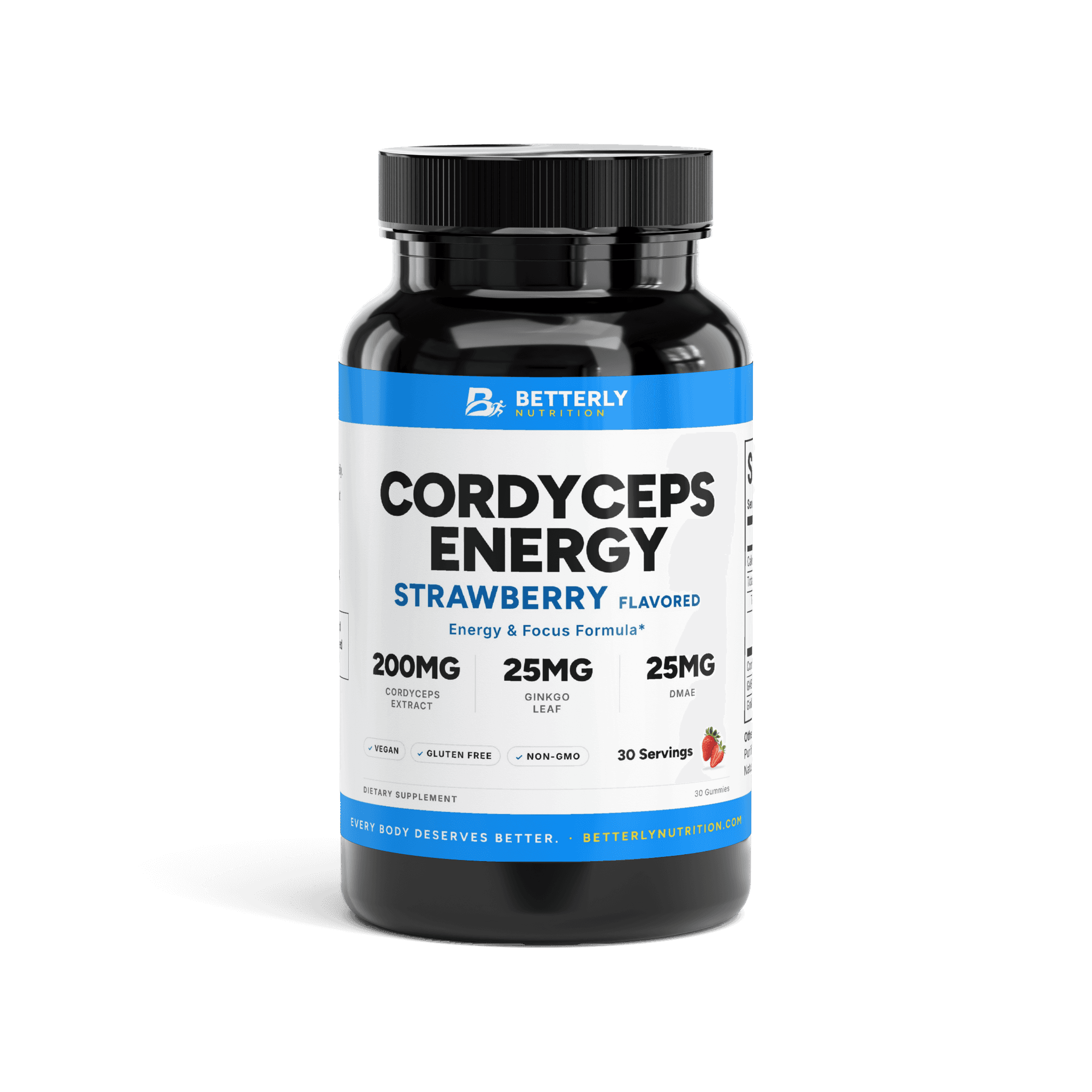
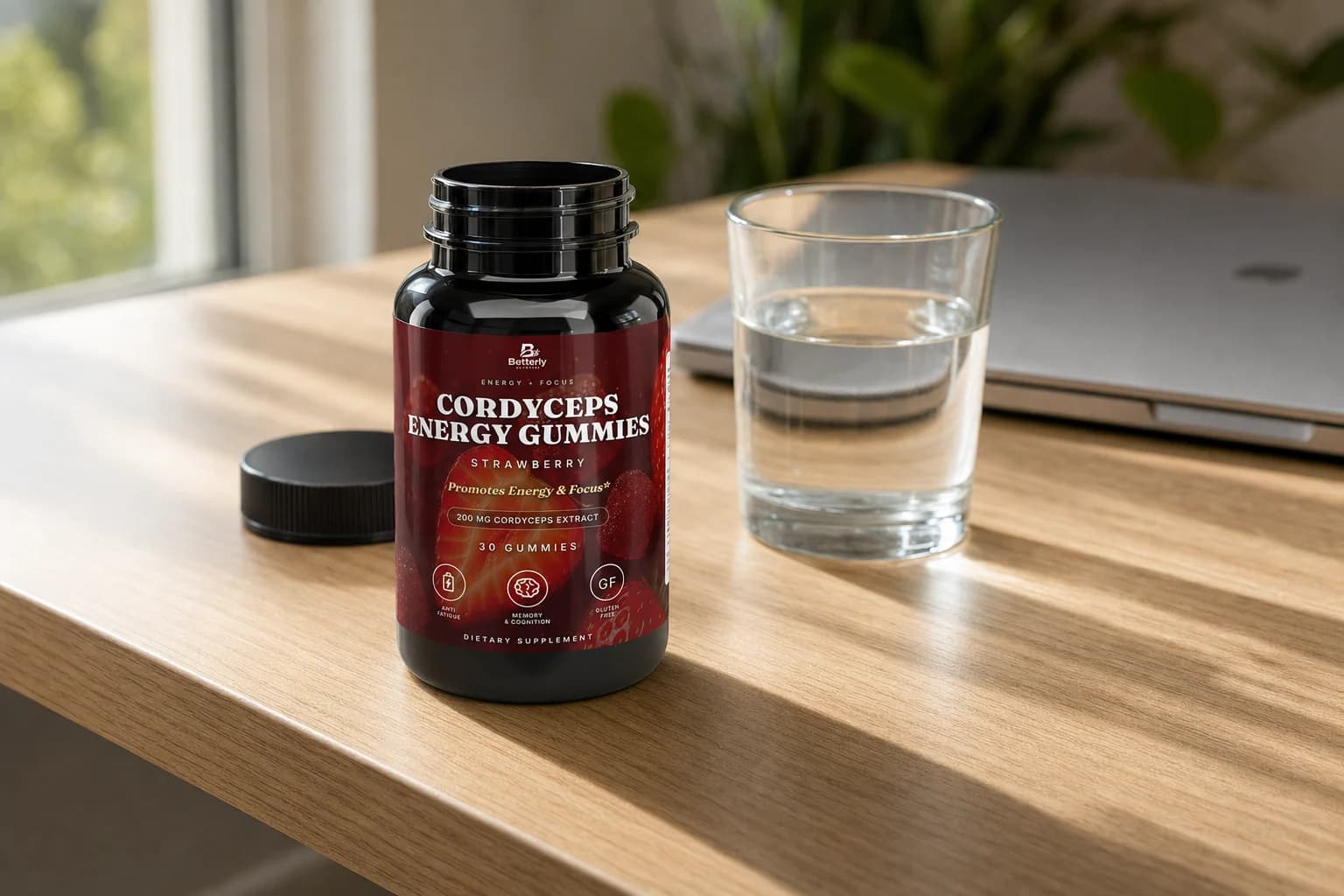
One caffeine-free pick is our Cordyceps Mushroom Energy Gummies. Its panel has no caffeine row. The headline ingredient is 200 mg of cordyceps extract per 1 Gummy serving. Four more, GABA, ginkgo leaf, L-glutamine and DMAE, come in at 25 mg each, and there are 2 g of added sugars. The label's suggested use is 1 to 2 gummies daily. Just don't expect a coffee-style lift from them.
From our shop: Cordyceps Mushroom Energy Gummies — a strawberry gummy taken 1 to 2 a day per the label, with no caffeine row on its panel, for anyone who finds even small caffeine doses too much.
Who should check with a healthcare provider first?
Even at 50 mg, a caffeine strip needs a provider's okay first if you're expecting or breastfeeding, younger than 18, taking medicine, managing a medical condition or due for surgery.
A small dose isn't small for everyone. The FDA's page says sensitivity to caffeine differs a lot from one person to the next, and so does the speed at which the body clears it. Certain conditions and some medicines can raise sensitivity, too, the page notes. A provider who knows your health can judge whether 50 mg fits you.
For anyone under 18, our energy strips' label asks for a physician's input first: its caution line reads, "Consult a physician if pregnant, nursing, under 18, or have a medical condition." The Cordyceps Mushroom Energy Gummies carry the identical sentence, and the energy powder's version names taking medication in place of being under 18. For pregnancy and breastfeeding, the FDA's advice is to ask your provider whether to cut back.
MedlinePlus suggests checking with your provider about possible interactions between caffeine and any medicines or supplements you take. Bring the strip's panel along so they see every amount.
FAQ: 50 mg of caffeine
Can 50 mg of caffeine make you jittery?
Yes, 50 mg of caffeine can make some people jittery. The FDA names jitters among the effects of too much caffeine, and "too much" is personal: its page says the amount varies with body weight, medications, certain medical conditions and individual sensitivity. If one strip leaves you shaky, 50 mg is more than your body wants. Stop the strip, and, as the FDA advises, talk with a healthcare provider about your caffeine.
How long does 50 mg of caffeine stay in your system?
No one can give you an exact clock for 50 mg of caffeine, since the FDA says people get rid of caffeine at very different speeds. Feeling it and clearing it are also different things. MedlinePlus says you may feel caffeine for four to six hours, and the NHLBI says its effects can last up to 8. Clearing is harder to pin down: the MedlinePlus encyclopedia says only that caffeine leaves in the urine many hours after you have it.
Is 54 mg of caffeine a lot?
No, 54 mg of caffeine isn't a lot for most healthy adults, and it's only 4 mg more than one of our strips. It matches the low end of the FDA's range for energy drinks, which generally carry 54 to 328 mg per 16 fluid ounces. Measured against the FDA's 400 mg a day, 54 mg uses under 14% of it.
How much decaf coffee equals 50 mg of caffeine?
Decaf coffee would take roughly 3 to 25 cups to reach 50 mg of caffeine, because the FDA says an 8-ounce cup typically has 2 to 15 mg. Decaffeinated doesn't mean caffeine-free, and the FDA says people who react strongly to caffeine may want to avoid decaf too.
Can you take a caffeine strip on an empty stomach?
Yes, you can take Betterly's caffeine strip without food, since its label says nothing about meals, but caffeine doesn't sit well on every empty stomach. MedlinePlus explains that caffeine raises your stomach's acid output, and some people feel that as an upset stomach or heartburn. If coffee before breakfast bothers you, a strip might too. Taking it after a meal is an easy test.
Sources
- U.S. Food and Drug Administration: Spilling the Beans: How Much Caffeine is Too Much?
- MedlinePlus: Caffeine
- MedlinePlus Medical Encyclopedia: Caffeine in the diet
- National Heart, Lung, and Blood Institute: Sleep Deprivation and Deficiency: Healthy Sleep Habits
If this left you looking for somewhere to start, read 50 mg caffeine energy strips — its amounts per serving are listed on the page. For the practical questions this raises, how dosing, sourcing and subscriptions work is answered in one place.