On this page
- Key takeaways
- What's the best time to take reishi tincture, and does food matter?
- Can you split one dropper into a morning and evening dose?
- How to take reishi drops: straight, under the tongue or in a drink?
- Are our reishi drops a true tincture, and what's in a dropper?
- Which of our other dropper bottles double up on reishi?
- When would a reishi dropper not suit you?
- Who should check with a healthcare provider before using reishi drops?
- FAQ: how to take reishi tincture
- Sources
The short answer: A full dropper of our reishi drops is 1 ml, or 30 drops, and it carries 150 mg of reishi extract, with glycerin and purified water as the base. With that in hand, how to take reishi tincture is mostly dropper handling: shake the bottle, draw one full dropper and take it once a day, straight or in a small drink. Our label sets no hour, no meal and no under-the-tongue hold.
Key takeaways
- The suggested use on Betterly's Reishi Mushroom Calm Drops is one 1 ml dropper (30 drops) daily, and that serving lists 150 mg of reishi extract alongside a 50 mg mushroom complex that includes reishi again.
- The reishi drops label doesn't name an hour or a meal, so a breakfast dropper and an after-dinner dropper follow it equally well.
- Our label doesn't mention an under-the-tongue hold, and none of the federal pages we checked shows it makes a difference for mushroom drops.
- By the NIH's definition, a tincture is made with alcohol and water, and our reishi drops' ingredient list names glycerin and purified water, with no alcohol listed.
- Our Chaga & Cordyceps Mushroom Drops list a complex with the same name and the same five mushrooms as the reishi drops, so taking both puts reishi in your day from two bottles.
Betterly sells these reishi drops, so read this as a seller's guide. Each product figure on this page comes straight from one of our own Supplement Facts panels, and we point out what those panels leave off, such as a species name or an extraction method.
What's the best time to take reishi tincture, and does food matter?
Our Reishi Mushroom Calm Drops label names no hour and no meal, so the best time to take reishi tincture is one fixed daily slot you won't skip.
The directions are a single line: "Shake well. Take 1 ml (30 drops) daily." The front descriptor, "Calm & Relaxation Support Formula," says what the formula aims to support, not when to take it. If evenings win for you, our bedtime reishi guide covers building a wind-down around it.
Food is open too: no federal page we read links reishi drops to a full or empty stomach, so tying the dropper to a meal is just a memory aid.
Here's how the usual slots line up against our label:
| Slot | Within the label? | The upside | The catch |
|---|---|---|---|
| Breakfast | Yes | Ties to a habit you already keep | Grabbing a lookalike dropper bottle |
| A daily meal | Yes | The meal is the reminder | Days you skip that meal |
| After dinner | Yes | Suits the "Calm & Relaxation" wording | Evenings that run late |
| Beside your bed | Yes | The bottle stays in sight | The label says keep it from children |
| Split across the day | Not described | Nothing on the label | Only one 1 ml serving is listed |
Four of five rows get a yes, and every reason comes from your routine, not the directions. Deciding when to take reishi really means picking the slot that survives your busiest week.
Can you split one dropper into a morning and evening dose?
Our reishi drops label describes one 1 ml serving a day and never mentions splitting it, so keep the dropper whole unless a provider sets a different schedule.
Other reishi tinctures print twice-a-day schedules or a range of droppers. Those don't carry over to our bottle, and a line on the NIH Office of Dietary Supplements (ODS) botanical background page gives the reason: "Teas, tinctures, and extracts have different strengths from one another."
That page also tells you to follow the maker's directions and not go past the recommended dose unless your health care provider says to. ODS's consumer guide, Dietary Supplements: What You Need to Know, calls a label's serving size the manufacturer's suggestion, one a provider may change for you. So a half-and-half schedule is your provider's call, not an improvisation.
Our guide to how much reishi per day adds up the totals across our reishi labels.
How to take reishi drops: straight, under the tongue or in a drink?
Reishi Mushroom Calm Drops ask for one full 1 ml dropper daily, and the label doesn't choose a route, so straight, under the tongue or in a drink all qualify.
Filling the dropper
On a new bottle, check the seal first, since the label rules out using one whose safety seal is damaged or missing. "Shake well" opens the directions, so shake before each serving.
With the tip below the liquid, squeeze the bulb and let go. The panel's serving size reads "1 ml / 1 dropper (30 drops)," so one full draw is the whole day's amount. If an air pocket leaves the dropper short, empty it back into the bottle and draw again, or count out 30 drops.
Under your tongue, or swallowed?
You'll see a hold-under-the-tongue step on some reishi tincture labels, often next to a promise that drops "bypass digestion." Our label has no such step, and no federal source we found supports that claim for mushroom drops. Hold the liquid there for a moment or swallow straight away. Both meet the label's one instruction of 1 ml a day, and our head-to-head of mushroom formats takes on the drops-absorb-better idea directly.
Either way, keep the dropper tip off your tongue and lips. Whatever it touches rides back into a bottle you'll dip into 29 more times.
Straight, in water, or in coffee?
Straight from the dropper is the surest way to get the whole 1 ml. Reishi has a reputation for bitterness, and though the ingredient list adds natural flavoring and stevia, taste is personal.
In water or juice, the glycerin and water base blends in. Use a short pour you'll finish, since a dropper in a big water bottle you half finish is half a serving.
Nothing on the label rules out coffee or tea, but it's also silent on heat, and no federal source we read mentions heat and reishi extract. A room-temperature drink sidesteps the question.
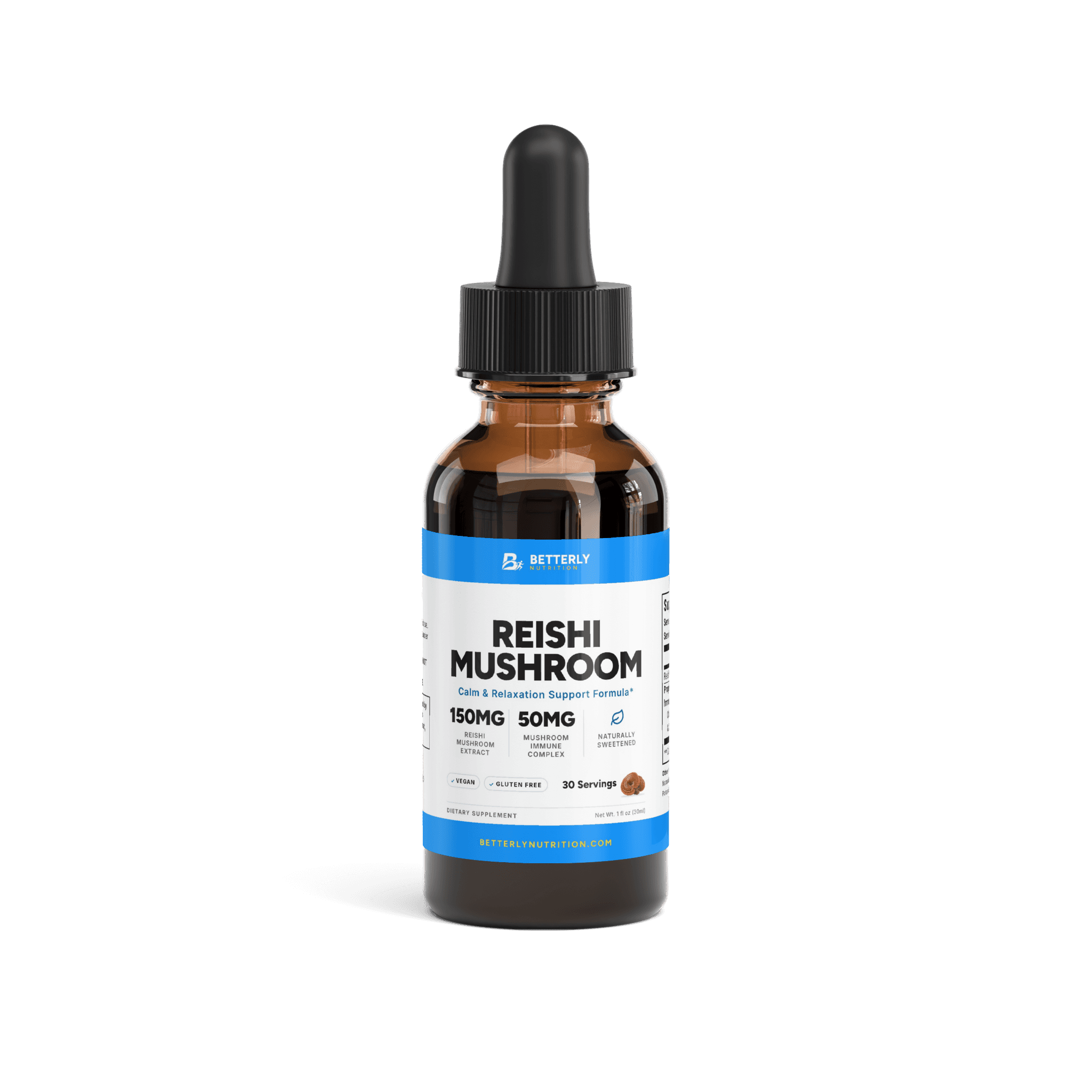
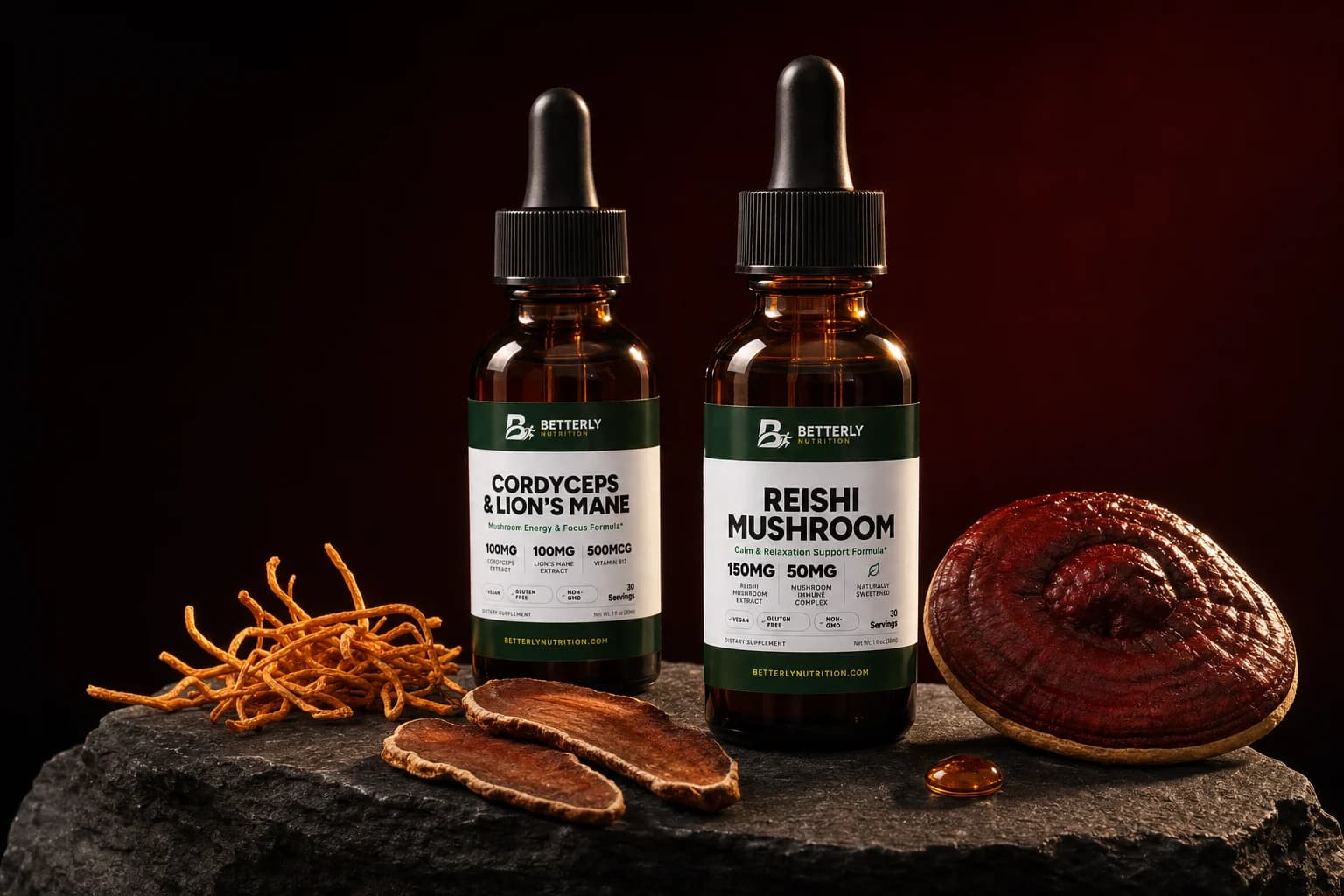
From our shop: Reishi Mushroom Calm Drops — a 1 fl oz glycerin-based dropper bottle with 30 servings, each 1 ml listing 150 mg of reishi extract and a 50 mg mushroom complex, labeled vegan and gluten free.
Are our reishi drops a true tincture, and what's in a dropper?
Not strictly: by ODS's definition a tincture uses alcohol and water, and our Reishi Mushroom Calm Drops are built on glycerin and purified water, with no alcohol listed.
Shoppers call almost any dropper bottle a tincture, but these are glycerin-based drops. Which base suits you is covered in our comparison of glycerin vs alcohol tinctures.
Per 1 ml serving, the panel lists two rows. The first is 150 mg of reishi mushroom extract. The second is a 50 mg "Proprietary Mushroom Immune Complex" of chaga, reishi, maitake, shiitake and turkey tail, with one total and no split. So reishi shows up twice: once with its own number, and once as an unstated share of the complex. Neither row has a Daily Value, and the footnote says one hasn't been established.
After the mushrooms, the ingredient list reads glycerin, purified water, natural flavoring, stevia, potassium sorbate and nisin. The front claims are vegan and gluten free.
You'll also see reishi tinctures sold as "dual extract" or "double extraction." Our label prints no extraction method, no strength ratio and no mushroom part, such as fruiting body or mycelium, so we claim none of them. ODS notes that tinctures come in strengths written as botanical-to-extract ratios, so a missing ratio is worth noticing on any bottle.
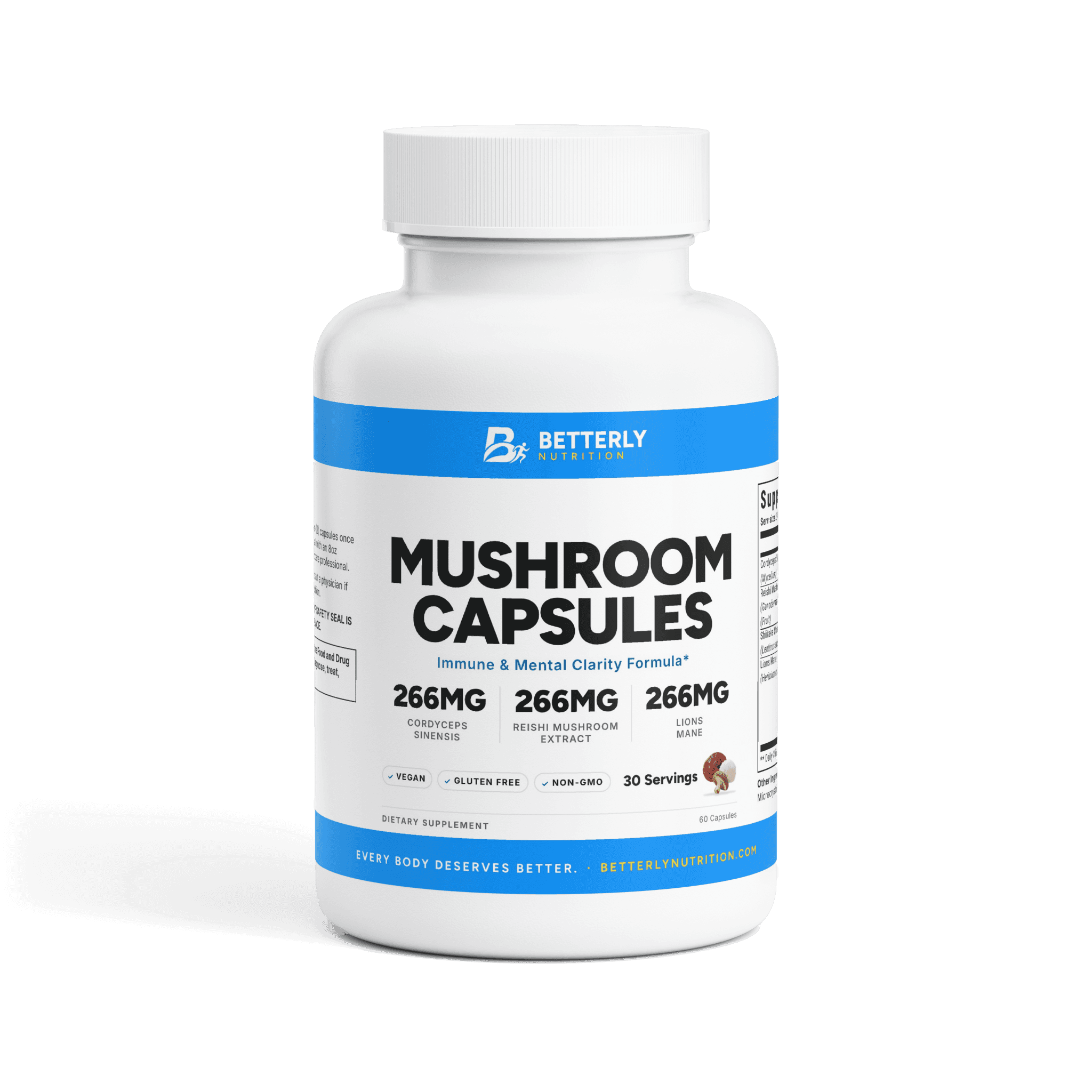
The species is missing too. Reishi is also sold as lingzhi, and its scientific name is Ganoderma lucidum, but our drops panel prints only "Reishi Mushroom Extract." Our Mushroom Capsules panel, by contrast, spells out Ganoderma lucidum and names the fruit as the part used.
The National Center for Complementary and Integrative Health (NCCIH) adds a blunter caution on its Using Dietary Supplements Wisely page: "What's on the label may not be what's in the product." A panel is where you start, not a guarantee.
Which of our other dropper bottles double up on reishi?
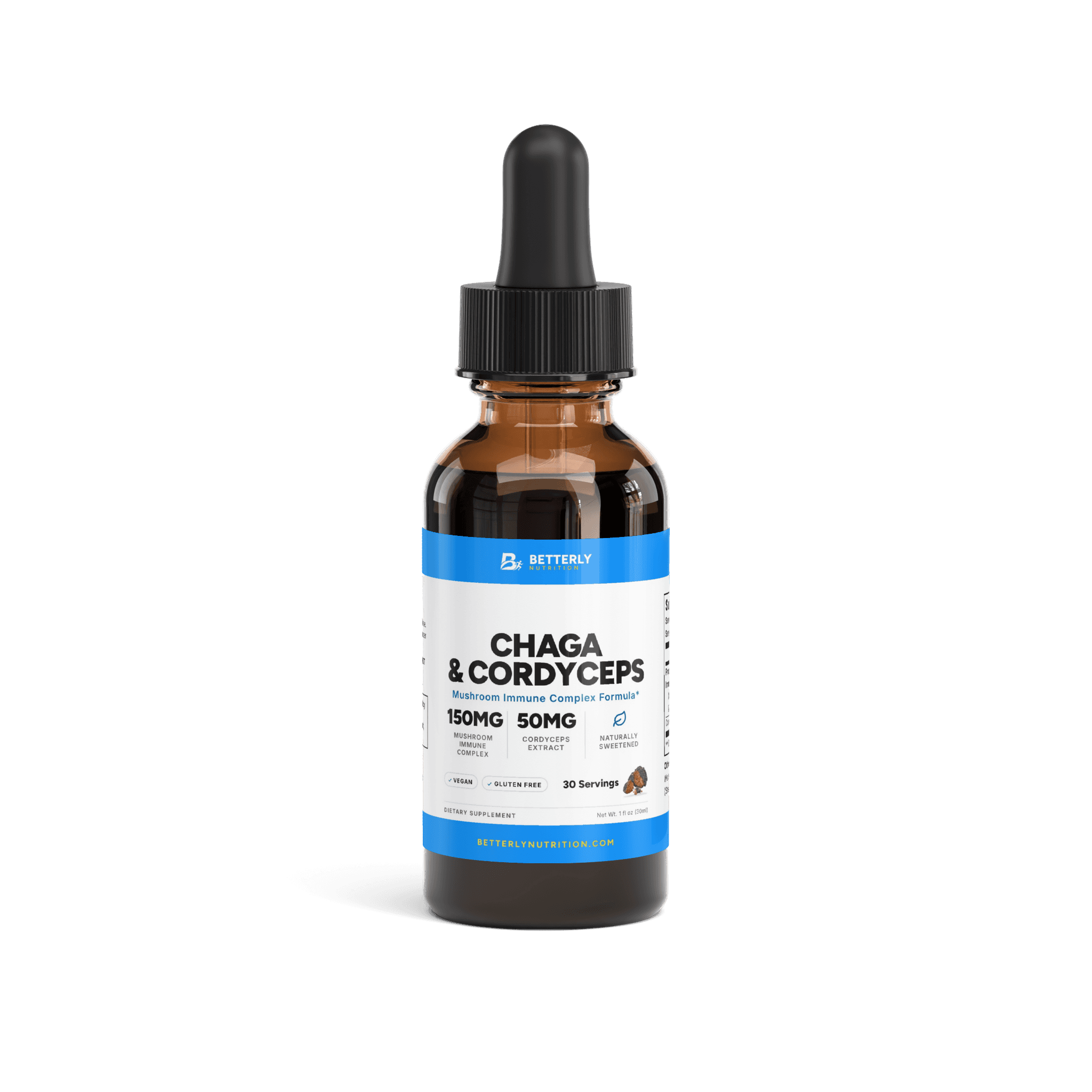
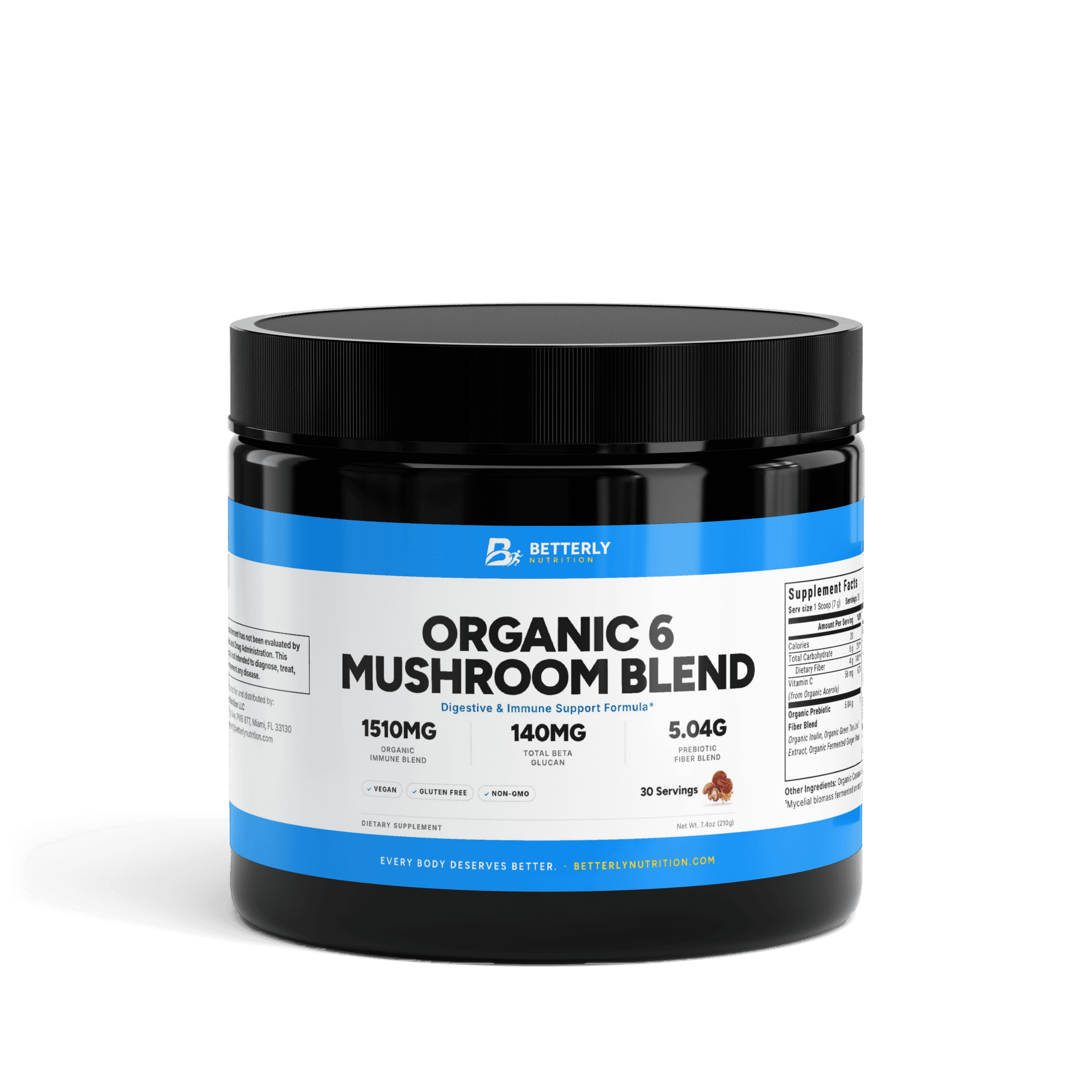
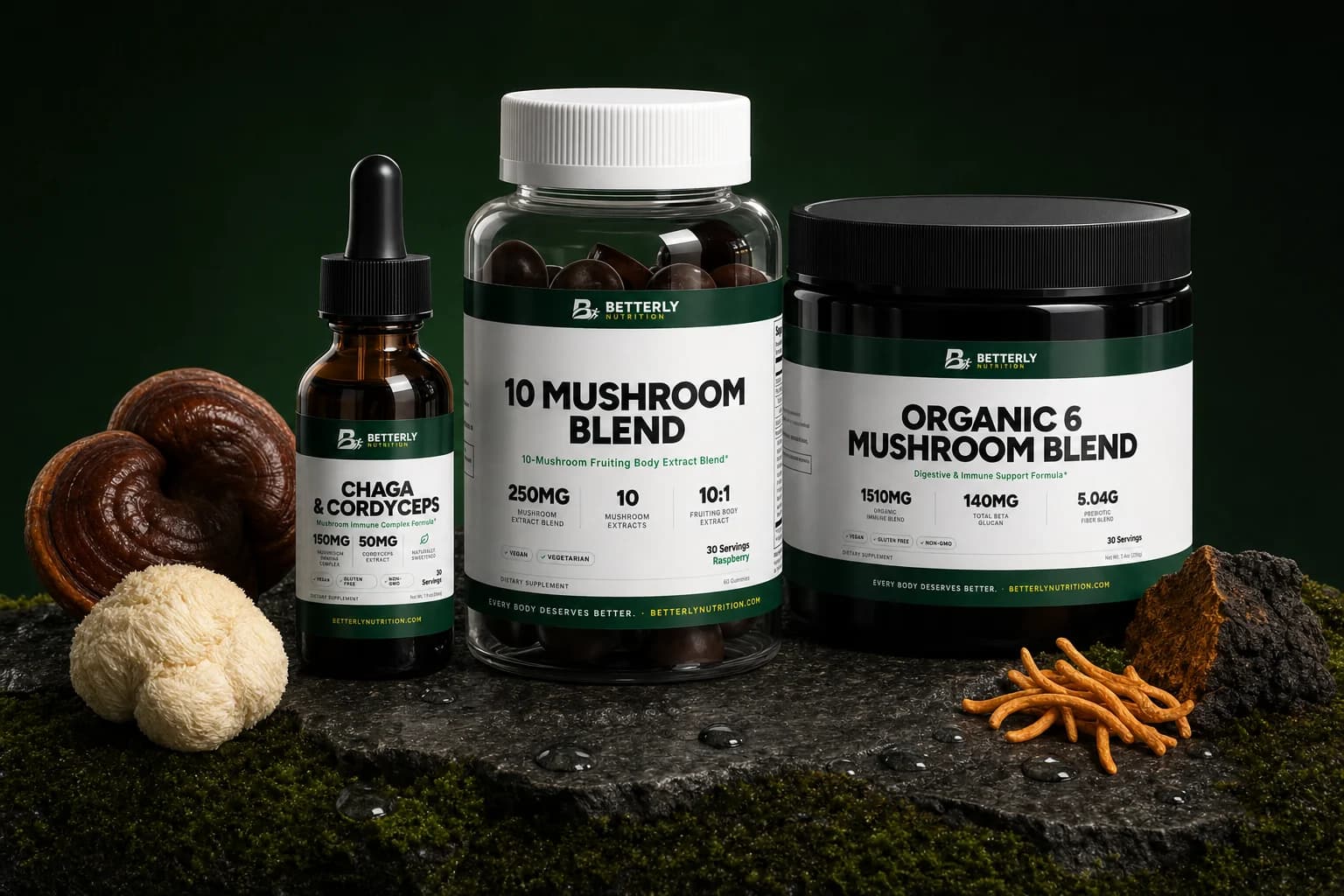
The Chaga & Cordyceps Mushroom Drops overlap with our reishi drops, and the Cordyceps & Lion's Mane Energy Drops don't. The chaga and reishi bottles both list a proprietary complex with the same name and the same five mushrooms.
Here's how our three dropper bottles compare, per 1 ml serving:
| Bottle | Mushroom rows | Other rows | Reishi on the panel |
|---|---|---|---|
| Reishi Calm Drops | 150 mg reishi extract; 50 mg complex | None | Own row and part of the complex |
| Chaga & Cordyceps Drops | 150 mg complex; 50 mg cordyceps extract | None | Inside the complex, no amount |
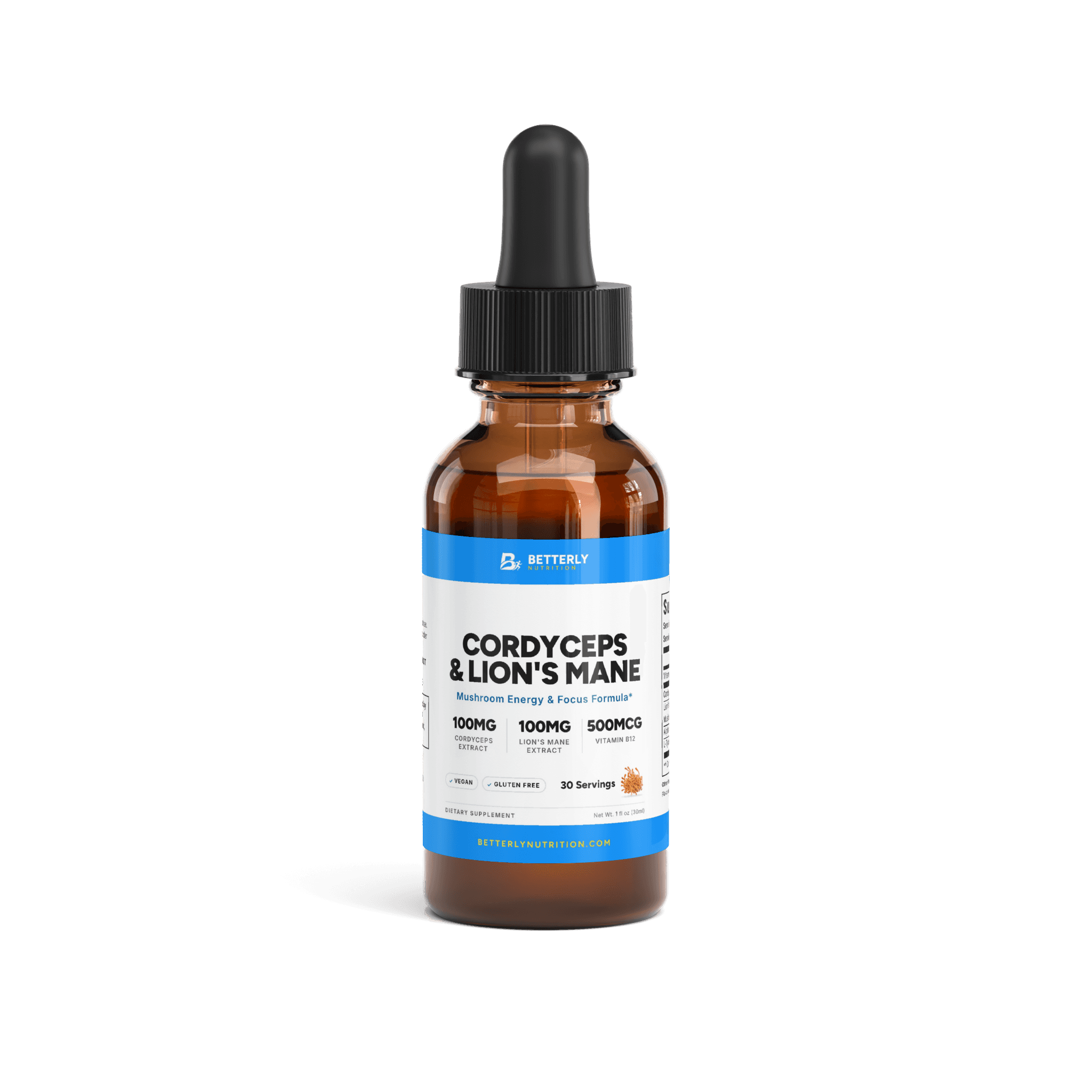
| Cordyceps & Lion's Mane Drops | 100 mg cordyceps; 100 mg lion's mane | 500 mcg B12; 25 mg alpha GPC; 25 mg L-tyrosine | None |
All three share one base and one direction: "Shake well. Take 1 ml (30 drops) daily." If you'd like two droppers in your day, the energy drops are the pairing that adds no reishi. Pairing the reishi drops with the chaga bottle means taking the same named complex twice, 50 mg from one and 150 mg from the other, with reishi's share of each unstated.
Running two bottles? Give each its own slot. The energy bottle's front label calls it a "Mushroom Energy & Focus Formula," which we read as a daytime fit, though its directions name no hour.
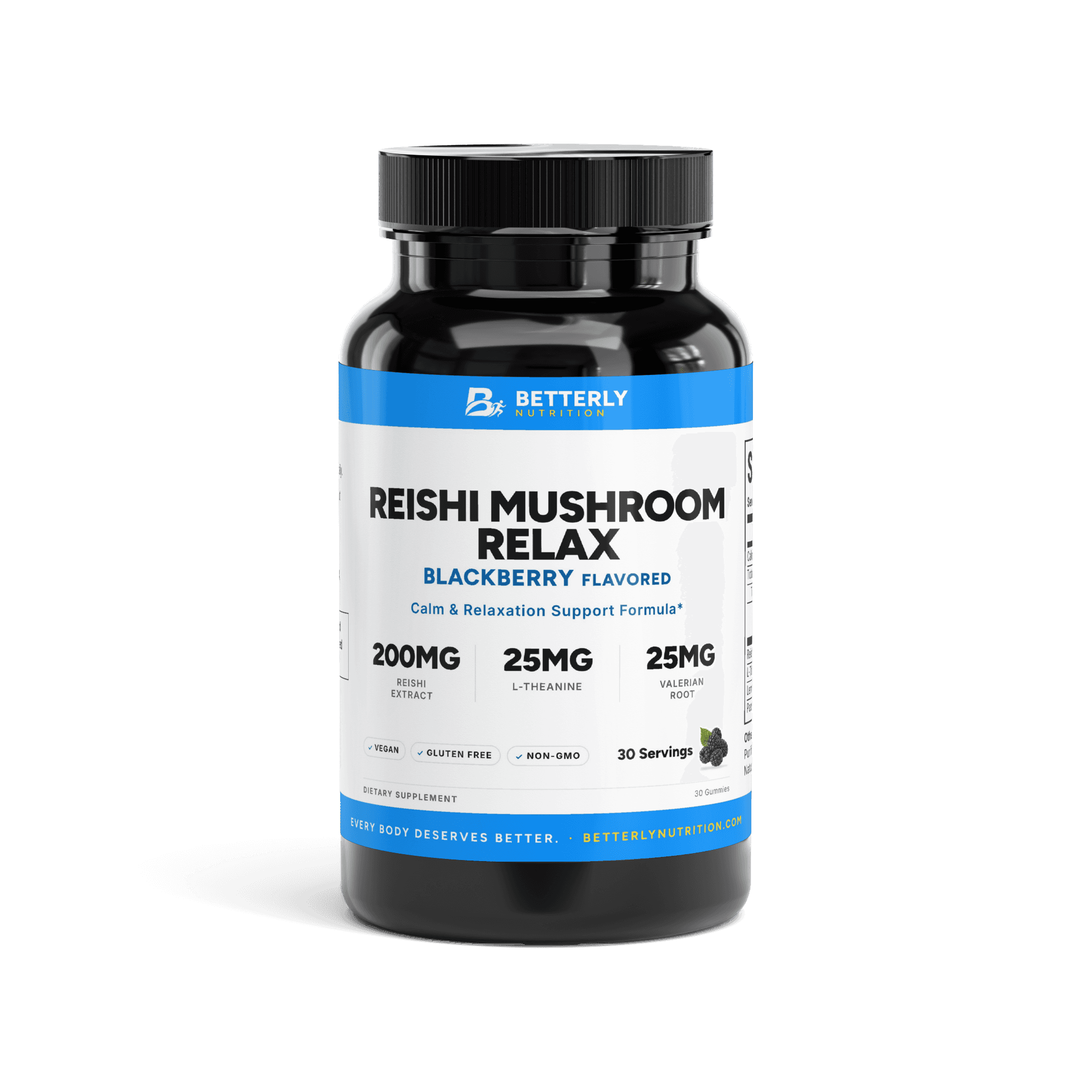
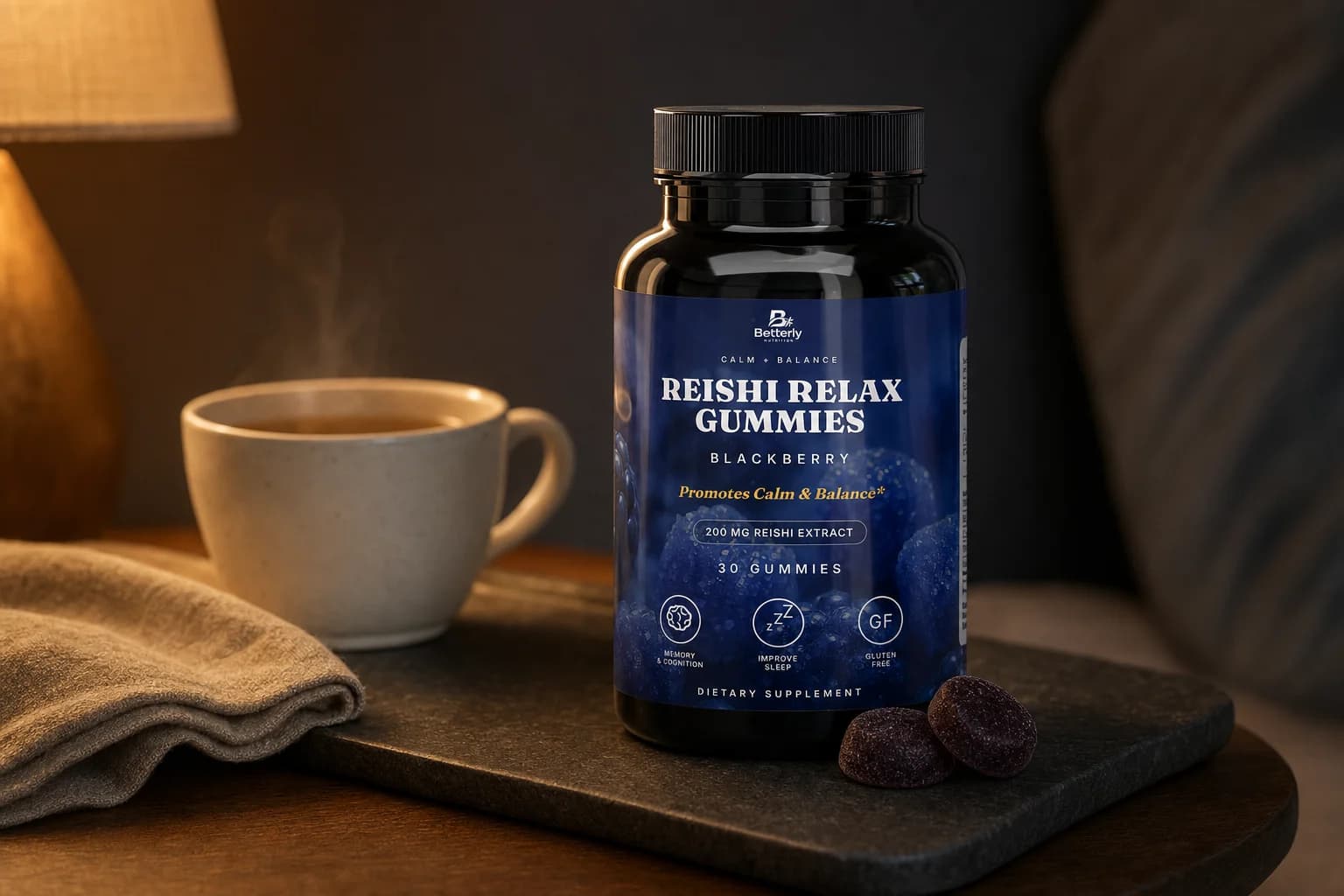
The dropper isn't our only reishi format, either. The Reishi Mushroom Relax Gummies carry 200 mg of reishi extract in each 1-gummy serving, with one to two gummies daily as the suggested use. Our mushroom shop lists all three droppers next to the gummies, capsules and powder.
From our shop: Cordyceps & Lion's Mane Energy Drops — a reishi-free dropper listing 100 mg of cordyceps extract, 100 mg of lion's mane extract and 500 mcg of vitamin B12 in each 1 ml serving, with the same shake-and-take directions as the reishi drops.
When would a reishi dropper not suit you?
Skip the reishi dropper if you already take our Relax Gummies, dislike measuring, want no stevia or flavoring, or need a species name on the label.
- The Relax Gummies are already in your routine, so the drops would be a second reishi product, not a first.
- Measuring feels like a chore. A gummy or capsule comes pre-portioned; a dropper sometimes means counting to 30.
- You'd rather skip sweeteners and flavorings. The drops list natural flavoring and stevia. Beside their mushrooms, the Mushroom Capsules list only hypromellose, microcrystalline cellulose and magnesium stearate.
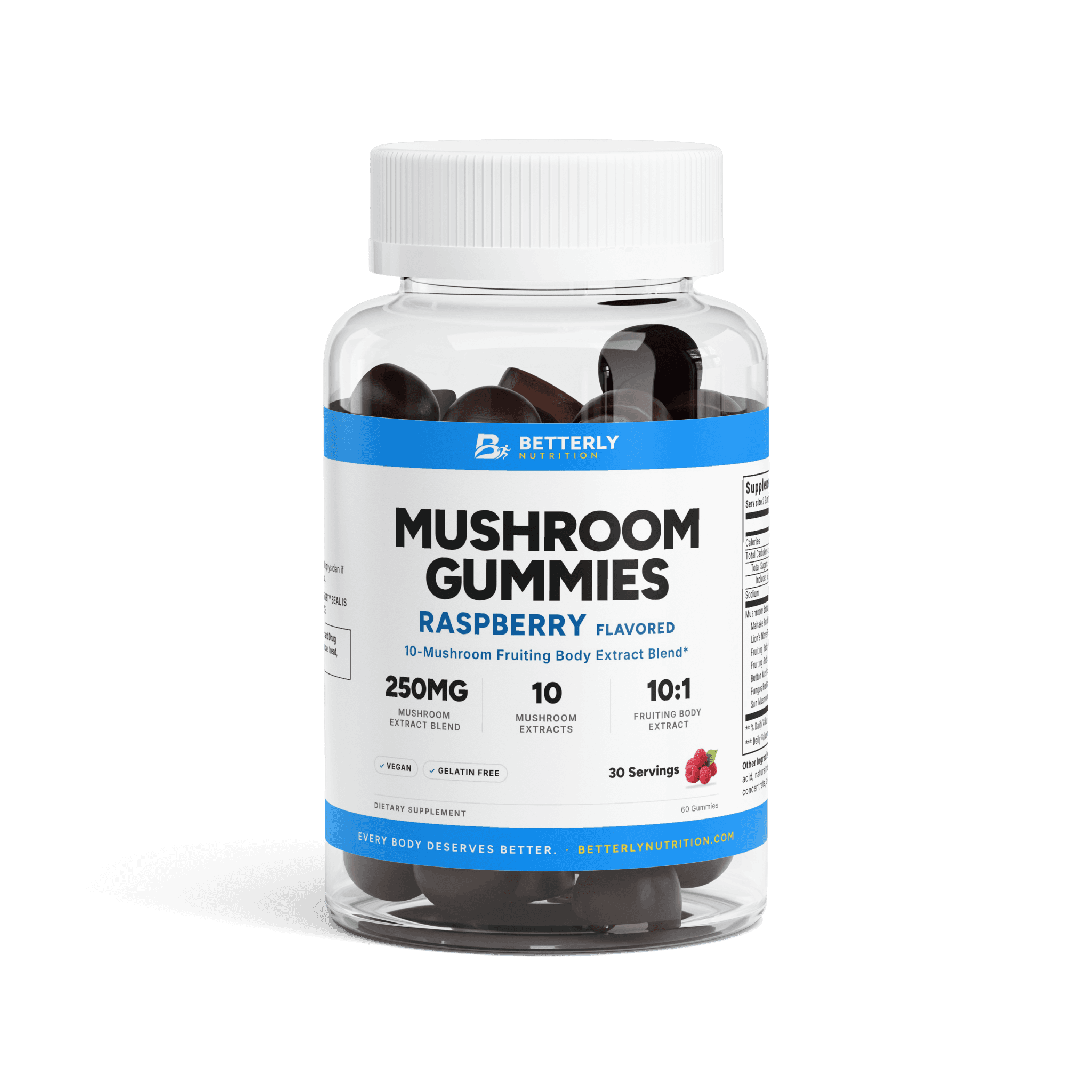
- You want the species printed. Our drops stop at "Reishi Mushroom Extract." The capsules name Ganoderma lucidum, while the Mushroom Gummies name the fruiting body and a 10:1 ratio for reishi but give no Latin name.
Our front label names a calm-and-relaxation aim, but nothing on the bottle sets a timeline, and we won't supply one.
Who should check with a healthcare provider before using reishi drops?
Check with a healthcare provider before using reishi drops if you take any prescription, have a medical condition or an operation coming up, or you're under 18, expecting or nursing.
The caution printed on the reishi drops reads: "Do not exceed recommended dose. Consult a physician if pregnant, nursing, under 18, or have a medical condition." The panel also tells you, in capitals, to keep it out of reach of children.
MedlinePlus, the National Library of Medicine's consumer site, warns on its herbal medicine page that certain herbs can interact with medicines, whether prescribed or bought off the shelf, and it wants your provider to know about every herbal product you use. Read out both panel rows when you do, since "mushroom drops" alone doesn't name the five species inside.
Before an operation, NCCIH wants your care team to hear about every supplement you take as far in advance as possible, since some can raise bleeding risk or affect anesthesia.
A past bad reaction to mushrooms is reason enough to pass on these drops. For what to watch once you've started, see our rundown of reported reishi side effects.
FAQ: how to take reishi tincture
How long does a 1 fl oz bottle of reishi drops last?
One 1 fl oz bottle of Reishi Mushroom Calm Drops covers a month of daily use, because the panel counts 30 servings of 1 ml. A bottle that runs dry early points to droppers drawn heavier than 1 ml, which also takes you past the label's serving. Counting out 30 drops for a few days recalibrates your squeeze.
Is it OK to take two droppers of reishi tincture?
No, not with our reishi drops. The label's suggested use is 1 ml (30 drops) daily, and the caution begins "Do not exceed recommended dose." Two droppers would double both the 150 mg of reishi extract and the 50 mg mushroom complex. If you think one serving isn't right for you, raise it with a healthcare provider before changing anything.
Should reishi drops go in the fridge once opened?
No, our reishi drops label never mentions the fridge. Its only storage request is "a cool, dry place." A bedside drawer or a closed kitchen cupboard fits that, and a shelf over a radiator or heating vent doesn't. The label gives no use-within window after opening, so check for a printed date and replace the drops after it.
Can you use reishi drops and reishi gummies together?
You can, but you'd be stacking reishi from two products. One dropper of our Reishi Mushroom Calm Drops holds 150 mg of reishi extract, and one Reishi Mushroom Relax gummy holds 200 mg plus four other 25 mg panel rows, valerian root among them. The two labels don't refer to each other, and each warns against exceeding its own dose. We'd choose one, and get a provider's view before pairing them.
Can teenagers or kids take reishi drops?
Only if a physician says yes. The reishi drops label tells anyone under 18 to consult a physician first, and its directions give a single 1 ml serving with no smaller amount for younger users, so there's nothing on the bottle to scale down. ODS also advises care before giving a child supplements unless a provider recommends them. Store the bottle out of kids' reach, as the label asks.
Sources
- Dietary Supplements: What You Need to Know, NIH Office of Dietary Supplements
- Botanical Dietary Supplements: Background Information, NIH Office of Dietary Supplements
- Using Dietary Supplements Wisely, NCCIH
- Herbal Medicine, MedlinePlus
If this left you looking for somewhere to start, read reishi mushroom drops, one 1 ml dropper daily — its amounts per serving are listed on the page. For the practical questions this raises, how dosing, sourcing and subscriptions work is answered in one place.