On this page
- Key takeaways
- What does reishi do for the body, according to the evidence?
- Why was reishi prized as a tonic in China?
- Which reishi compounds matter, beta-glucans or triterpenes?
- What have reishi studies in healthy adults measured?
- Is reishi an adaptogen?
- What do reishi drops and gummies give you per serving?
- How do you take reishi, going by the label?
- When is reishi not worth adding?
- Who should check with a healthcare provider first?
- FAQ: what reishi does
- Sources
The short answer: Reishi (Ganoderma lucidum) mostly acts on immune cells and antioxidant activity in lab and animal studies. So what does reishi do for the body of a healthy person? Far less has been measured. The best human result is a 12-week trial where 200 mg a day of a purified reishi beta-glucan raised several immune-cell counts compared with placebo. Two trials of broader reishi preparations found no change in the blood markers they tracked.
Key takeaways
- Reishi's signature compounds are beta-glucans, glucose chains from its cell walls, and triterpenes, which give it a bitter taste.
- Lingzhi, reishi's Chinese name, has been recognized as a medicinal mushroom for more than 2,000 years, mostly as a tonic.
- The healthy-adult reishi trials we found measured blood work, not how anyone felt.
- LiverTox, an NIH database, reports that reishi's claimed benefits haven't been demonstrated in human trials of adequate size and design.
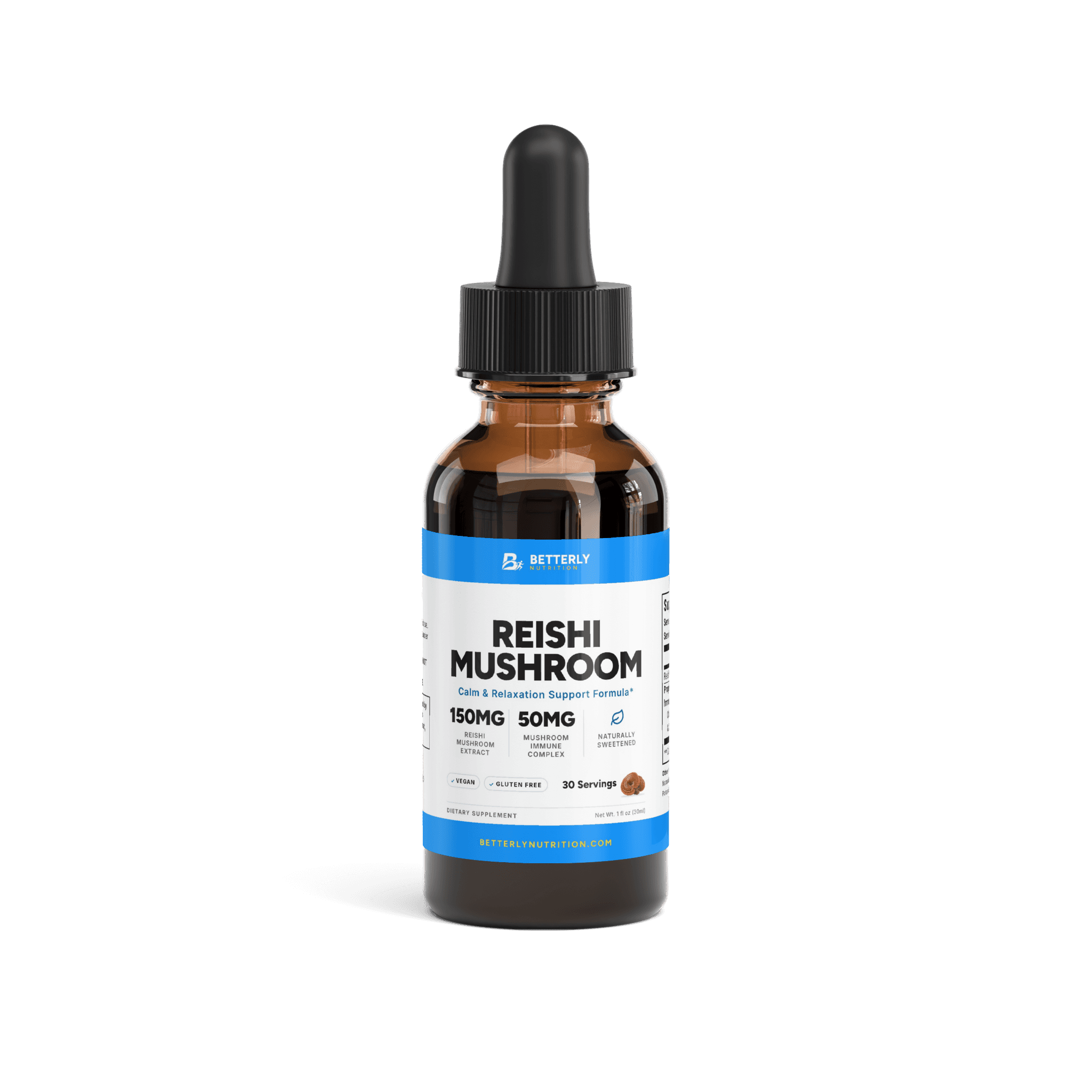
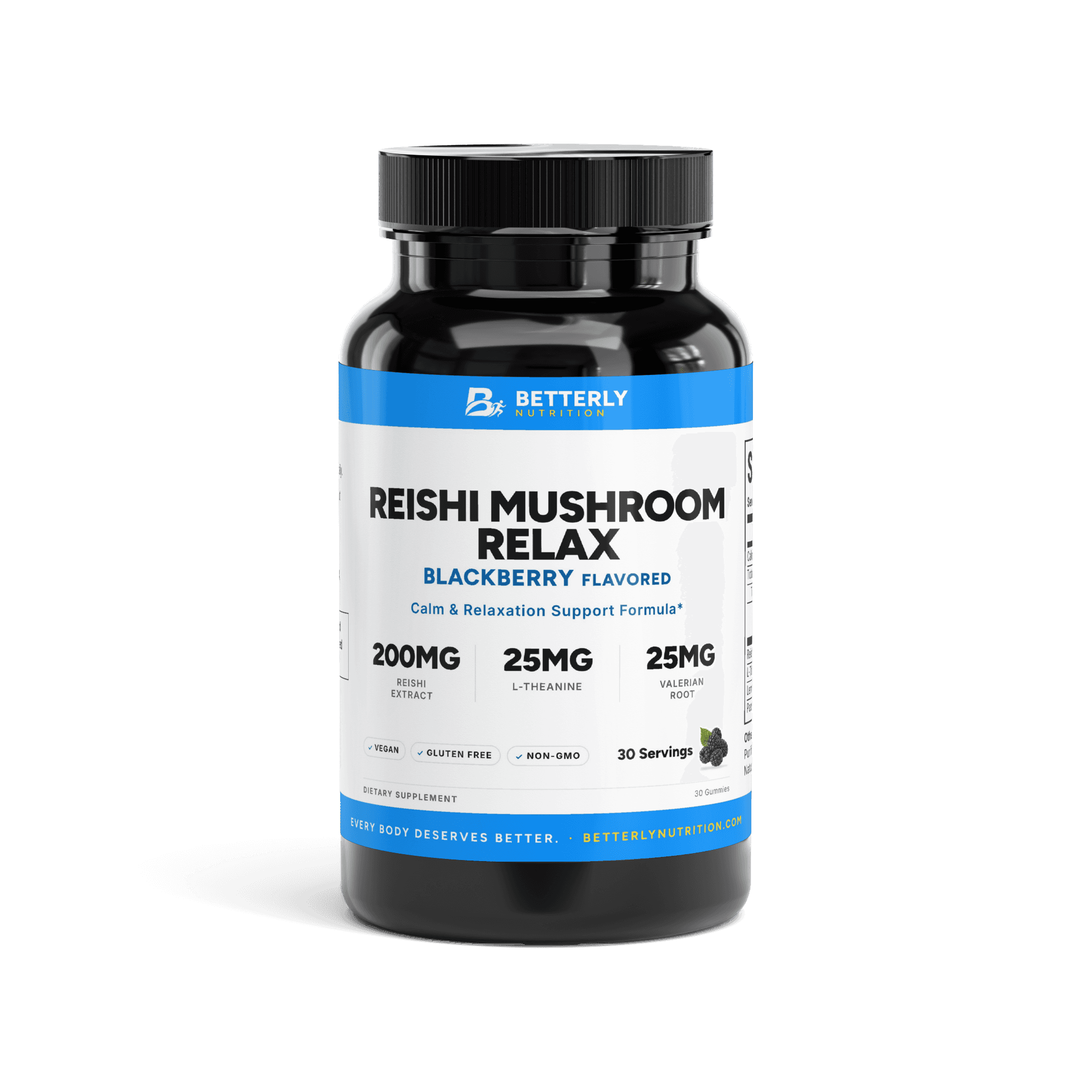
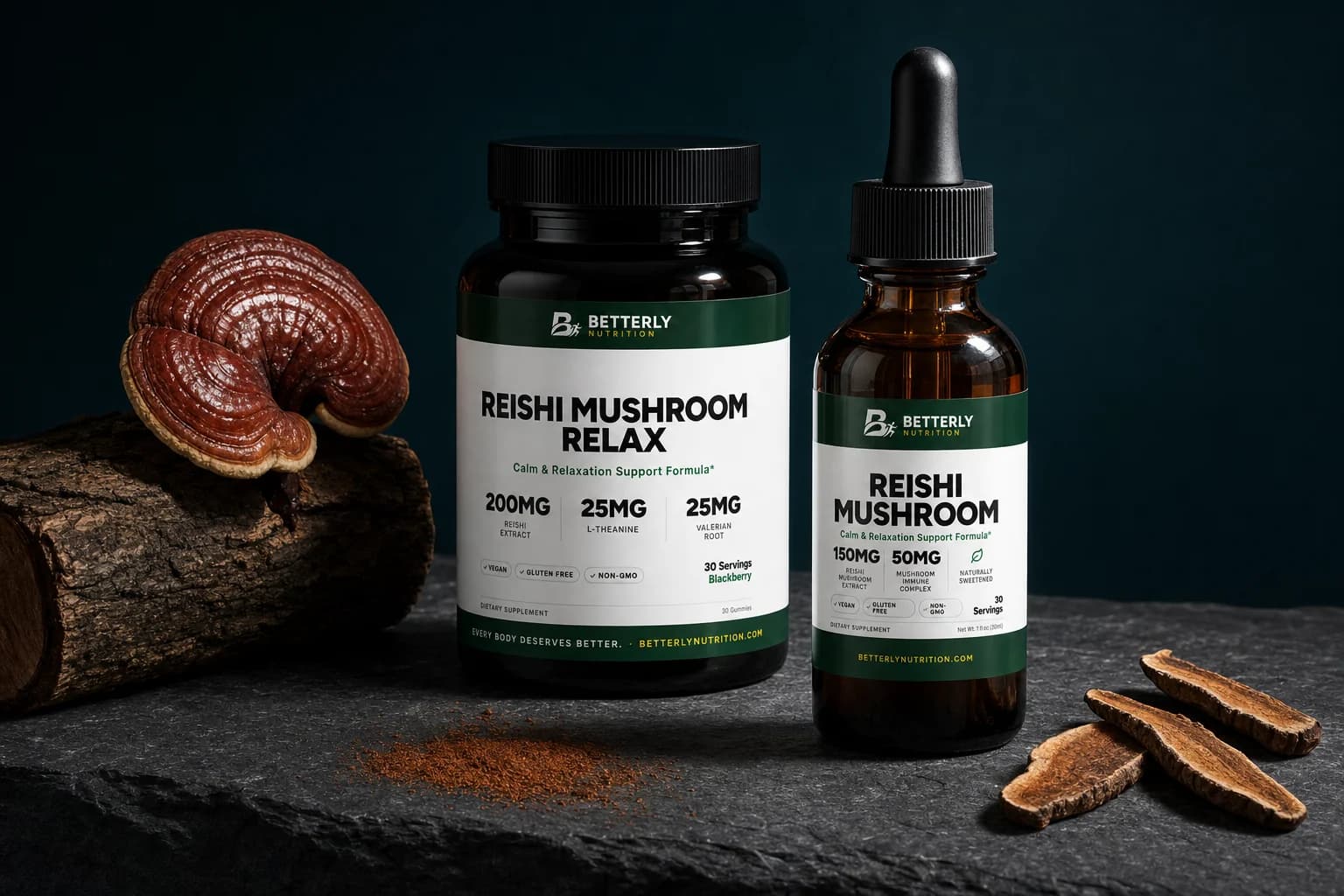
- Betterly's Reishi Mushroom Calm Drops list 150 mg of reishi extract per 1 ml serving, and our Reishi Mushroom Relax Gummies hold 200 mg in each 1-gummy serving.
Reishi appears on six of our Supplement Facts panels, so a glowing answer would suit us. This one isn't, and every product number below is copied off our own labels.
What does reishi do for the body, according to the evidence?
Most of what reishi is said to do for the body comes from lab dishes and animals. In healthy people, research has measured only a few blood markers, with mixed results.
The NIH's LiverTox database, which tracks liver safety, notes that reishi sold in Western countries often turns up in supplements "purported to improve energy, vitality, and mental concentration." Here's how the reishi mushroom benefits you'll see advertised sort out against the sources below:
| Claim you'll see | Where it comes from | What the evidence allows |
|---|---|---|
| Immune support | Two small trials, plus lab work | Counts rose with a purified beta-glucan; a general extract showed no change |
| Antioxidant | Lab tests, two small human studies | Higher 90 minutes after one dose; no change after 28 days |
| Calm or "adaptogen" | Tradition | No healthy-adult trial here measured stress |
| Energy and vitality | Tradition and marketing | No healthy-adult trial here measured it |
| Long life | Tradition | Not tested in the trials here |
The bigger the promise, the further it sits from human data. For reishi and sleep, see our guide to reishi for sleep and relaxation.
Which reishi benefits are still lab-only?
Most reishi benefit claims rest on cell and animal work. In normal mice, a polysaccharide-rich reishi extract made certain immune cells more active.
Dishes can mislead, too. Hot-water reishi extracts protected human white blood cell DNA in a dish only at very low concentrations, and damaged it at higher ones. The review describing that work adds that human studies have mostly been small and haven't always matched what the lab found.
Why was reishi prized as a tonic in China?
Reishi, called lingzhi in China, has been recognized there as a medicinal mushroom for more than 2,000 years, prized as a tonic for vitality and long life.
A chapter in Herbal Medicine: Biomolecular and Clinical Aspects, hosted on the NIH's NCBI Bookshelf, traces lingzhi to the Shen Nong Ben Cao Jing, a Chinese herbal classic from the Eastern Han dynasty (25 to 220 AD). Later works, including the Ben Cao Gang Mu of 1590, credited it with strengthening the body and raising vital energy.
LiverTox puts the tradition plainly: improving health and restoring vitality. A tonic was a general remedy, not a fix for one complaint.
The chapter's authors add an honest twist. Wild lingzhi was so rare that only the nobility could afford it, and they suggest its do-everything reputation may owe more to that rarity than to its actual effects.
Which reishi compounds matter, beta-glucans or triterpenes?
Reishi extract benefits are usually credited to beta-glucans or triterpenes, but LiverTox says nobody yet knows which compounds drive reishi's purported effects.
- Beta-glucans are glucose chains built into the cell walls of most fungi and plants, yeast and grains included. The dried mushroom is about 59% crude fiber, and chitin, which your body barely digests, makes it tough.
- Triterpenes make reishi bitter. More than 100 have been identified in reishi, over 50 found nowhere else, and their levels differ between parts of the mushroom and its growth stages.
Extraction decides what ends up in the bottle. According to the NCBI chapter, polysaccharides usually come out with hot water, while triterpenes need solvents such as ethanol. None of our reishi labels names an extraction solvent, and the powder's reishi is oat-fermented mycelium, not an extract.
Products vary, too. In 11 lingzhi products bought in Hong Kong shops, triterpenes ran from undetectable to 7.8%, and polysaccharides from 1.1% to 5.8%. None of our reishi panels prints a triterpene figure.
What have reishi studies in healthy adults measured?
The reishi studies in healthy adults we found measured blood markers, not feelings, and the results split: one trial found changes and two found none.
| Trial | Daily amount | Length | What the blood work showed |
|---|---|---|---|
| 157 adults aged 18 to 55 (2023) | 200 mg purified reishi beta-glucan | 12 weeks | More T cells and natural killer cells, higher IgA |
| 18 adults (2004) | 1.44 g lingzhi | 28 days | No significant change in antioxidant, vitamin or lipid markers |
| 16 volunteers (2007) | 2 g extract, twice a day | 10 days | No significant change in lymphocyte subsets |
The positive trial used the smallest amount, but not ordinary reishi: a purified extract that tested at about 75% beta-glucan. The other two rows, both from LiverTox's summaries, used lingzhi or a general reishi extract.
The NCBI chapter adds a single-dose test: blood antioxidant power was higher 90 minutes after reishi extract, in a chart comparing 1.1 g and 3.3 g with placebo. Four weeks of daily lingzhi in the 2004 trial, from the same group, showed no significant antioxidant change.
LiverTox's only wellbeing or fatigue scores for reishi come from people under medical care, not healthy adults, so they can't show what reishi does in a healthy body.
Does reishi support normal immune function?
Reishi is sold to support normal immune function; the strongest human data is a 2023 trial where a purified reishi beta-glucan raised immune-cell counts in healthy adults.
In the full paper on PubMed Central, volunteers took one 200 mg capsule daily, before or with breakfast, for 84 days; the placebo was dextrose, a sugar. The reishi group ended with more T cells and natural killer (NK) cells, both types of white blood cells, plus more IgA, an antibody. Liver and kidney markers didn't change.
Two caveats matter. SBG Biomedical Research funded the study, and the capsules held a commercial ingredient made by Super Beta Glucan Inc. And a higher lab count isn't a benefit you'd notice; the trial tracked only blood work.
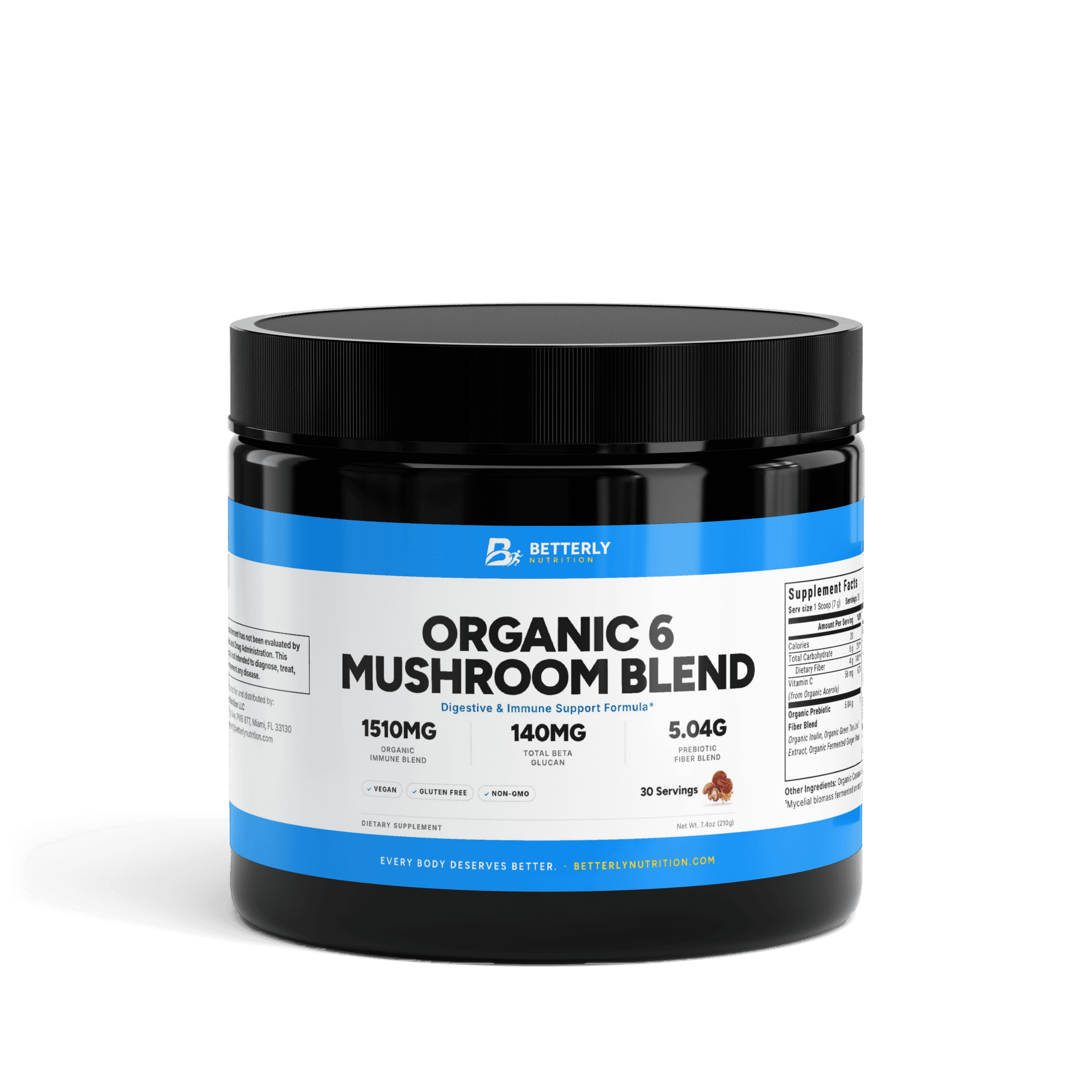
None of our labels lists the trial's ingredient. Our only beta-glucan number sits on the Organic 6 Mushroom Blend Powder: 140 mg per 1-scoop (7 g) serving, counted across a six-mushroom mycelium blend fermented on oats. That can't be compared with the trial's capsule.
Is reishi an adaptogen?
Reishi is often sold as an adaptogen, but none of the healthy-adult reishi trials we found tested the stress-coping effect that the word describes.
The NIH Office of Dietary Supplements calls the word "loosely defined" in its health-professional page on ashwagandha. Its description boils down to a three-part test: a stressor, whether biological, physical or chemical; help resisting it, adapting or bouncing back; and help that isn't tied to one kind of stress.
Reishi's human data stalls at the first step. The healthy-adult trials drew blood from people going about ordinary lives, and none added a stressor to see how volunteers coped. Reishi's tonic tradition fits the spirit of the word; the trials just haven't tested it.
Our reishi drops and gummies skip "adaptogen" and say "Calm & Relaxation Support Formula." If you're weighing reishi against ashwagandha, our reishi vs ashwagandha comparison sets the two side by side.
What do reishi drops and gummies give you per serving?
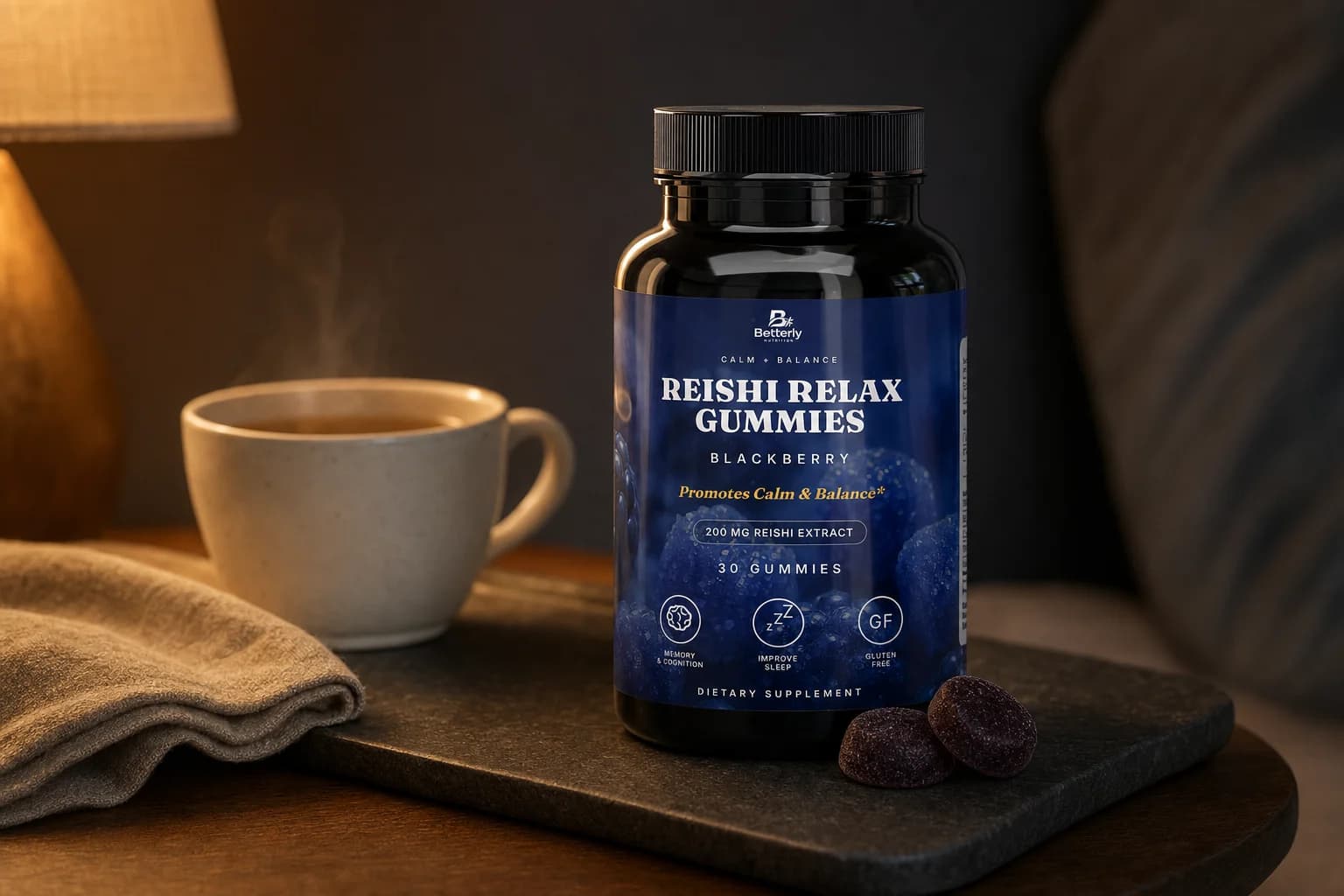
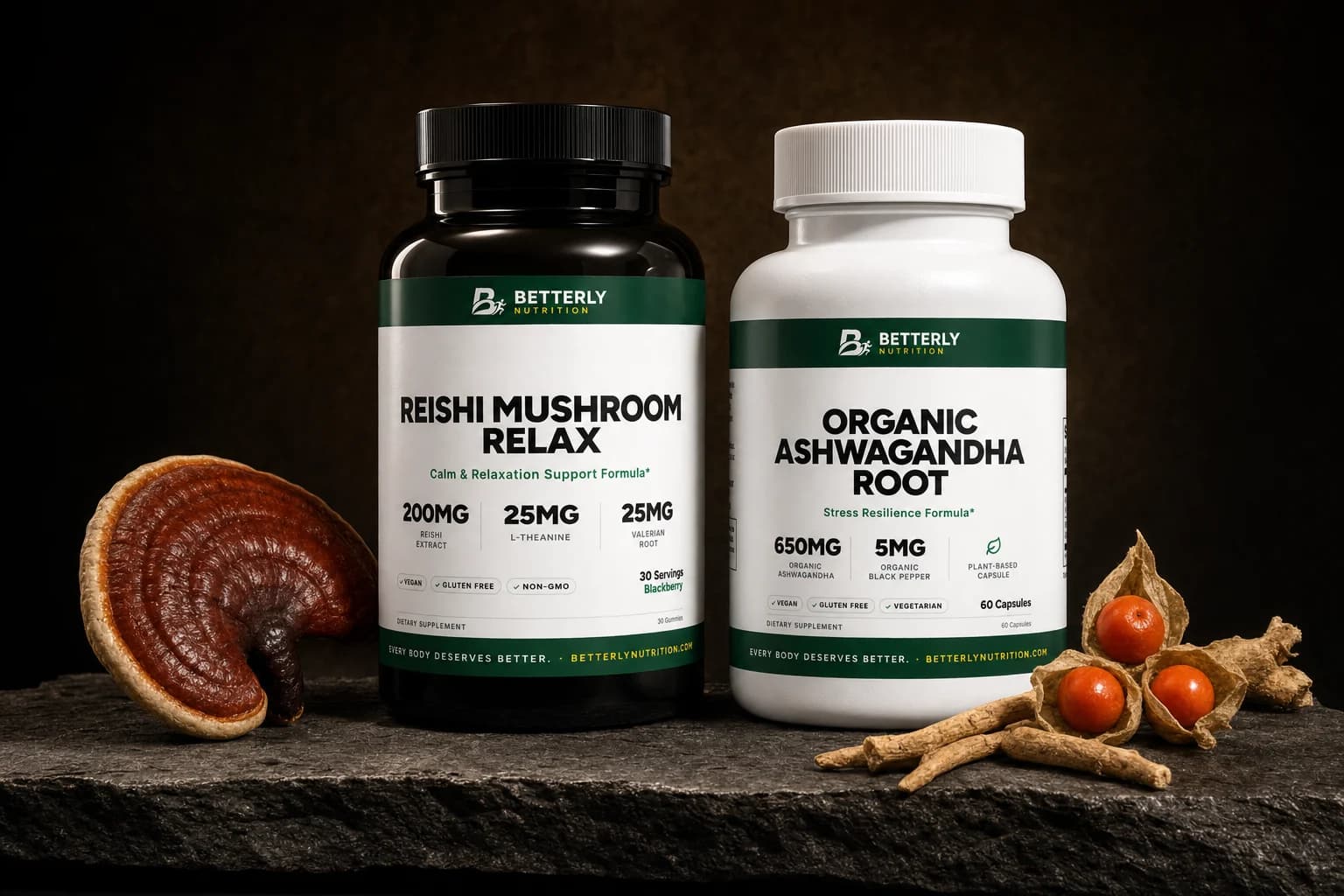
Betterly's Reishi Mushroom Calm Drops give 150 mg of reishi extract per 1 ml serving, and Reishi Mushroom Relax Gummies give 200 mg per 1-gummy serving.
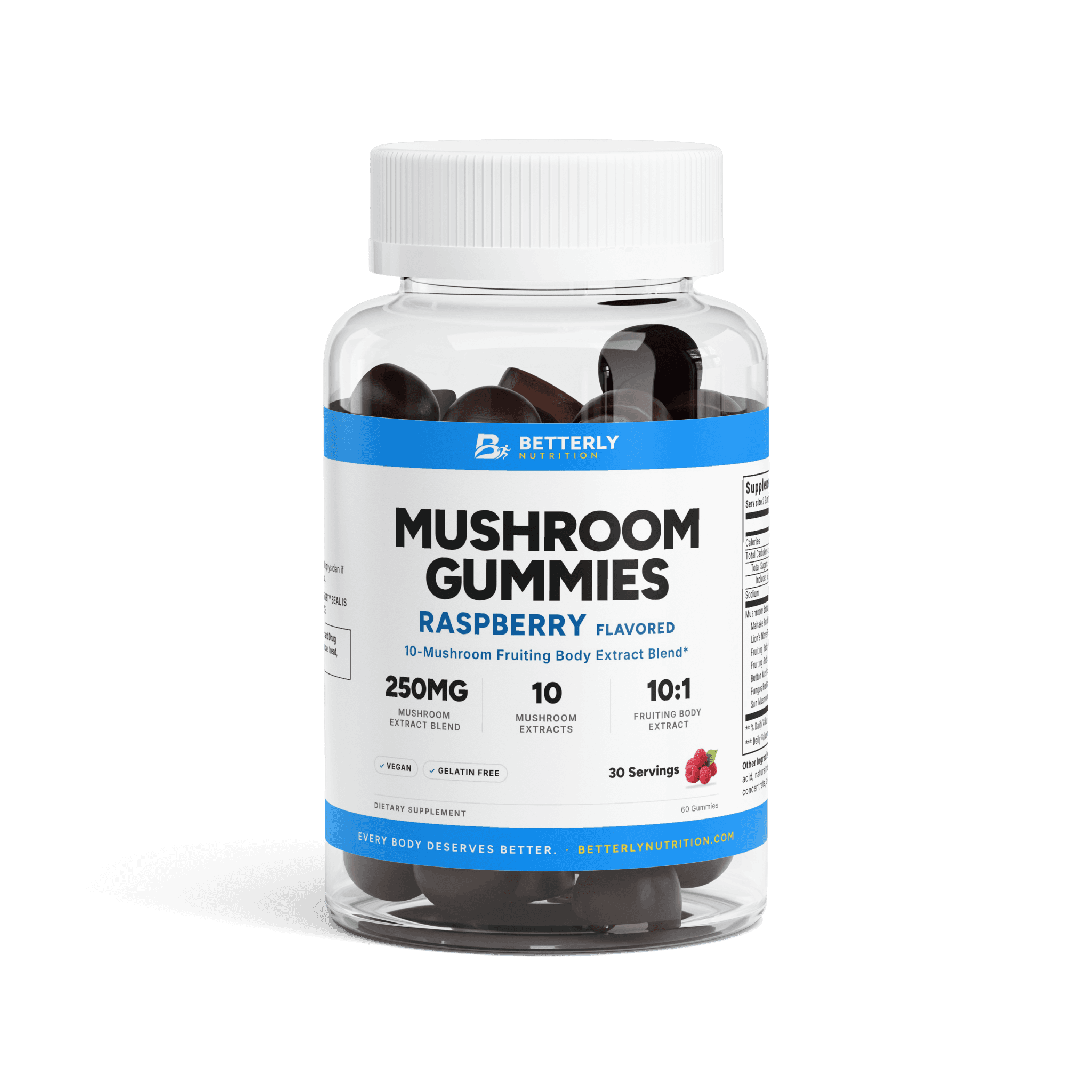
Here's what each reishi panel in this guide can and can't tell you, including our Mushroom Gummies:
| Product (serving) | Reishi on the panel | Beta-glucan or triterpenes | Also listed |
|---|---|---|---|
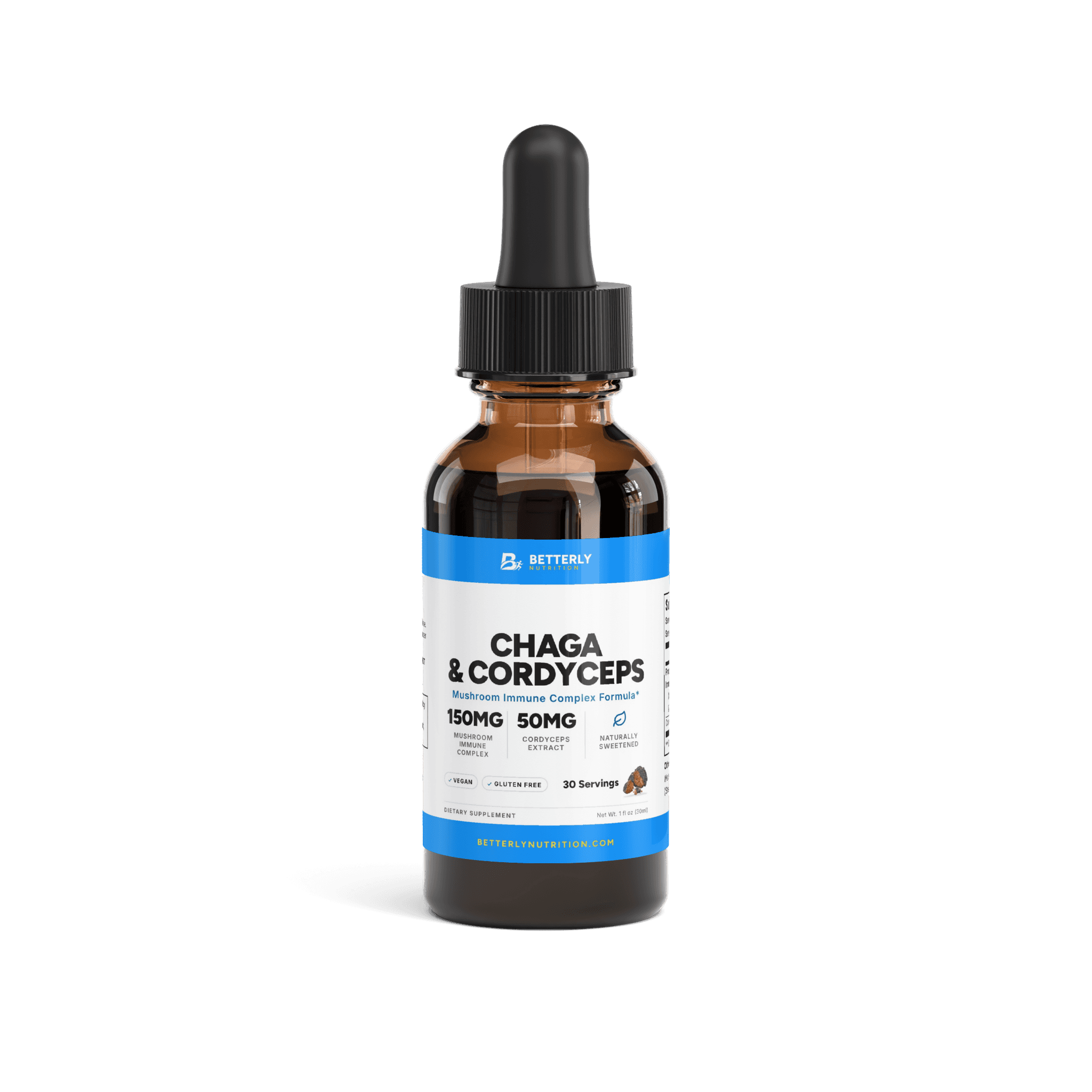
| Calm Drops (1 ml) | 150 mg extract, plus a share of a 50 mg complex | Not stated | Chaga, maitake, shiitake, turkey tail |
| Relax Gummies (1 gummy) | 200 mg extract | Not stated | 25 mg each of 4 extras; 2 g added sugars |
| Mushroom Gummies (2 gummies) | Fruiting body 10:1 extract in a 250 mg blend | Not stated | 9 other mushrooms; 5 g added sugars |
| 6 Mushroom Blend Powder (1 scoop, 7 g) | Mycelium in a 1,510 mg blend | 140 mg total beta-glucan, whole blend | 5.04 g prebiotic fiber blend |
Every panel shows a reishi or blend weight, and none shows triterpenes.
The drops carry the least else: glycerin, water, flavoring, stevia and two preservatives, on a label marked vegan and gluten free. The Relax Gummies' four extras are L-theanine, lemon balm, passion flower and valerian root. All four products sit in our mushroom supplement collection.
From our shop: Reishi Mushroom Calm Drops — the closest we sell to reishi on its own: each 1 ml dropper lists 150 mg of reishi mushroom extract, and its 50 mg five-mushroom complex adds a little more reishi.
How do you take reishi, going by the label?
Take reishi exactly as its label says: the Calm Drops call for 1 ml (30 drops) a day, and the Relax Gummies for one or two gummies daily.
- Drops: the label reads "Shake well. Take 1 ml (30 drops) daily." Each 1 fl oz (30 ml) bottle lasts 30 days at that rate.
- Relax Gummies: the label reads "Take one (1) to two (2) gummies daily." One a day keeps added sugars at 2 g.
- Blends: the Mushroom Gummies say "2 gummies daily or as directed by a healthcare professional," and the powder calls for a single scoop a day in food or a drink.
- One reishi product at a time: all four contain reishi, so pairing two stacks it.
Never take more than the label allows, and skip any catch-up dose after a missed day.
From our shop: Reishi Mushroom Relax Gummies — a blackberry gummy with 200 mg of reishi extract per 1-gummy serving, joined by L-theanine, lemon balm, passion flower and valerian root at 25 mg apiece.
When is reishi not worth adding?
Reishi isn't worth adding if you want a benefit you can feel, or if a mushroom blend you already take lists reishi.
- You want a felt effect. The healthy-adult data is blood work.
- You already take a blend. Both blends in this guide list reishi, so a reishi product on top doubles up.
- You're cutting added sugar. Two Relax Gummies add 4 g a day, and a serving of the blend gummies adds 5 g.
Who should check with a healthcare provider first?
Talk to a healthcare provider before starting reishi if you're under 18, pregnant or nursing, on any prescription, facing surgery soon or living with a medical condition.
All four labels here print the same caution: "Do not exceed recommended dose. Consult a physician if pregnant, nursing, under 18, or have a medical condition."
LiverTox grades reishi D, its category for a possible but rare cause of liver injury, based on a handful of case reports, many poorly documented. Symptoms in those reports ran from tiredness and nausea to dark urine and a yellow tint to the skin or the whites of the eyes. If anything like that appears, stop and call your provider. Our reishi safety guide has the details.
The Relax Gummies' valerian root and passion flower have cautions of their own, which our reishi dosage guide sums up from NCCIH. Mention them to your pharmacist, and skip reishi if mushrooms have ever given you a reaction.
FAQ: what reishi does
Does reishi give you energy?
Reishi isn't a stimulant, and none of our six reishi panels prints a caffeine amount, though the Organic 6 Mushroom Blend Powder's fiber blend includes green tea leaf extract, which can naturally contain some caffeine. LiverTox notes that Western reishi products are often promoted for energy and vitality, but none of the healthy-adult trials it summarizes measured energy. Our reishi drops and gummies are labeled for calm and relaxation instead.
What are reishi drops good for?
Reishi drops are mainly a measured, easy way to take reishi extract; no study we found tested drops as a format. Our Calm Drops list 150 mg of reishi mushroom extract per 1 ml serving, and the label calls them a calm and relaxation support formula. What reishi itself does in healthy people rests on a few small blood-marker trials.
Is Ganoderma the same thing as reishi?
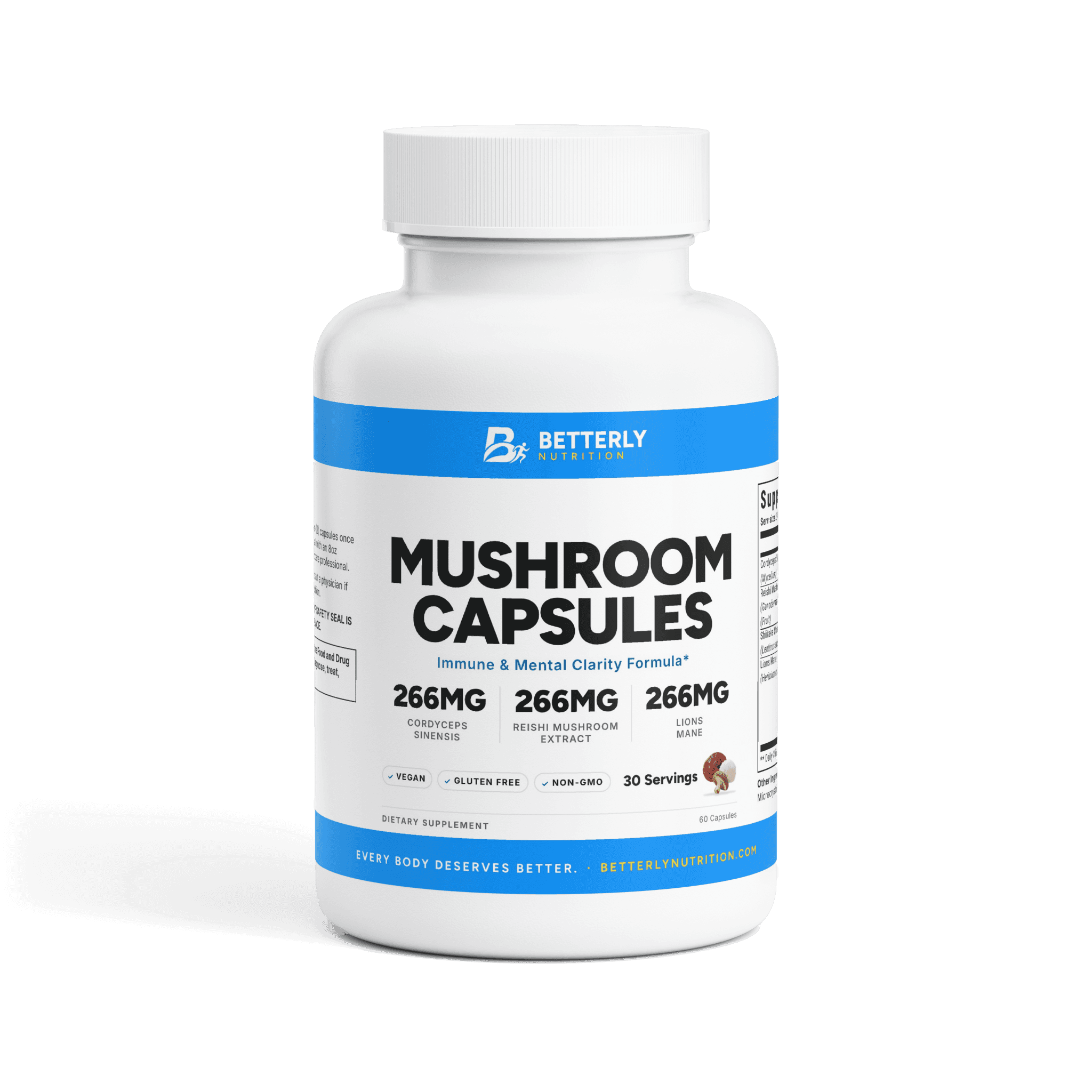
Mostly, yes: reishi is the Japanese name and lingzhi the Chinese name for Ganoderma mushrooms, usually Ganoderma lucidum, according to LiverTox. The genus is huge, though; the NCBI chapter counts 219 species assigned to it. A species name on the panel helps, and most of ours skip it: our drops and gummies list reishi without a Latin name, while our Organic 6 Mushroom Blend Powder and Mushroom Capsules print Ganoderma lucidum.
When should you take reishi?
Our reishi drops and gummies don't set a time. The Calm Drops say 1 ml daily and the Relax Gummies say one or two gummies daily, with nothing about meals or bedtime. The Mushroom Capsules are the exception: two capsules once a day, 20 to 30 minutes before a meal with an 8 oz glass of water. None of these labels says how long to keep going, so if you plan on months, bring it up at your next checkup.
Does reishi work differently for women and men?
No reishi study we read reported separate results for women and men. The 2023 immune trial enrolled both, with men just over half of each group, and reported everyone together. Our reishi labels give every adult the same directions, and the caution tells anyone pregnant or nursing to check with a physician.
Sources
- Lingzhi, Reishi, LiverTox, National Institutes of Health (NIDDK), hosted by the National Library of Medicine
- Ganoderma lucidum (Lingzhi or Reishi): A Medicinal Mushroom, Herbal Medicine, 2nd edition, NCBI Bookshelf
- Evaluation of Immune Modulation by β-1,3; 1,6 D-Glucan Derived from Ganoderma lucidum in Healthy Adult Volunteers, Foods (2023), PubMed Central
- Ashwagandha, Health Professional Fact Sheet, NIH Office of Dietary Supplements
If this left you looking for somewhere to start, read reishi drops with 150 mg of extract — its amounts per serving are listed on the page. For the practical questions this raises, how dosing, sourcing and subscriptions work is answered in one place.