On this page
- Key takeaways
- Black vs red maca: what's actually different?
- Black maca vs regular maca: what does "regular" mean?
- Red vs black maca for women and men: does color change who it suits?
- Why does the milligram count matter more than the color?
- How much maca is in a tri-color capsule compared with a blend?
- What should a maca label tell you before you buy?
- How do you take tri-color maca capsules?
- When don't you need a maca supplement?
- Who should check with a healthcare provider before taking maca?
- FAQ: black, red and yellow maca
- Sources
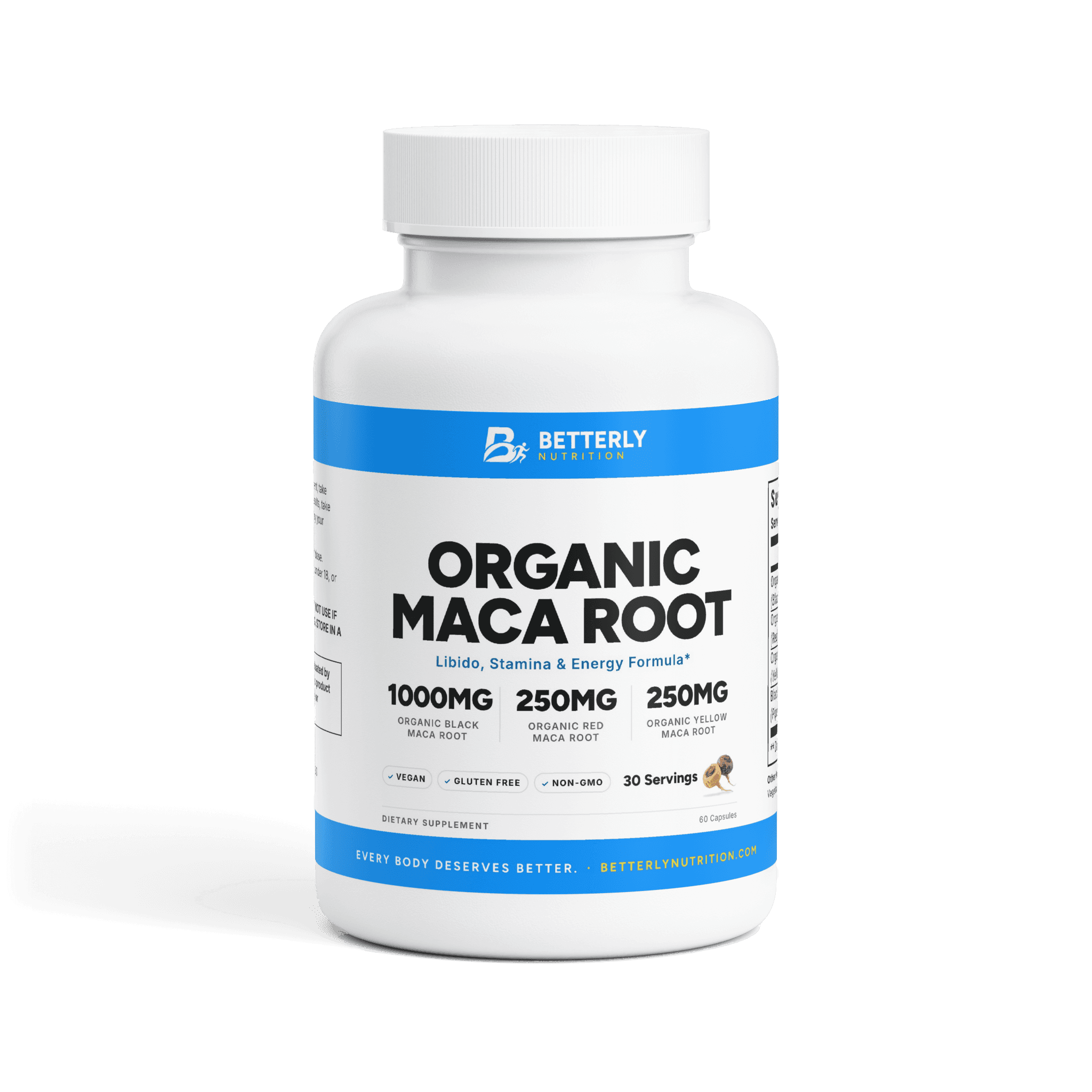
The short answer: Black vs red maca comes down to root color, not species: both are Lepidium meyenii, as is yellow maca. Each color is grown as its own type, yet no federal fact sheet ties a color to a particular use, and the NIH's Herbs at a Glance series has no maca page. Compare amounts instead: our tri-color panel lists 1,000 mg black, 250 mg red and 250 mg yellow maca root per 2-capsule serving.
Maca shows up on several of our labels: the tri-color bottle and a few blends. We earn money on any of them, so this guide lines up the tri-color bottle with the three blends that print a maca amount of their own.
Key takeaways
- Black, red and yellow maca are color types of one species, and Betterly's Organic Maca Root Capsules name all three on their Supplement Facts panel.
- Our tri-color panel lists 1,500 mg of maca root per 2-capsule serving, and two-thirds of it is black maca.
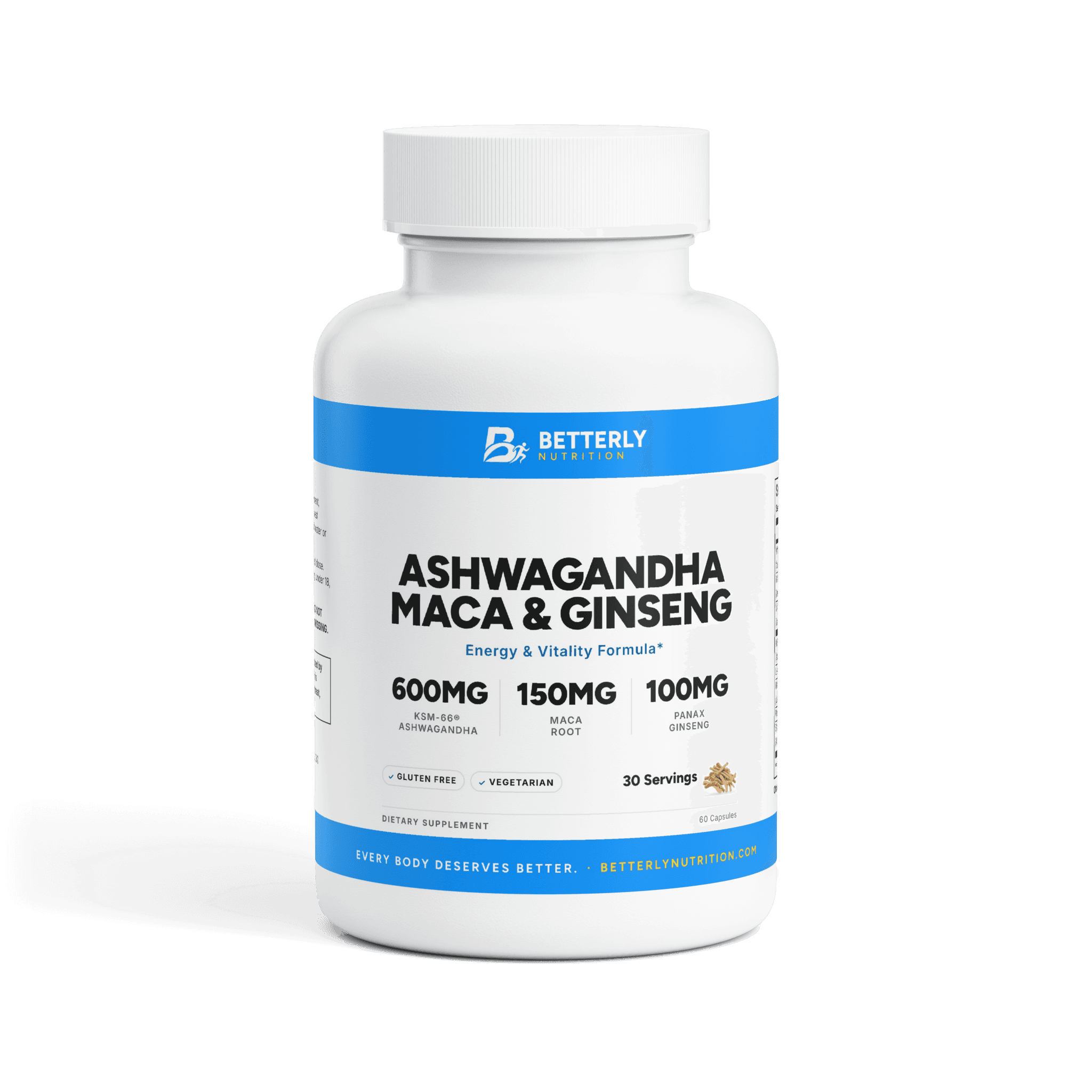
- Blends often list maca with no color at all, and our Ashwagandha, Maca & Ginseng Capsules carry 150 mg of maca root powder per 2-capsule serving.
- A maca label shows color and milligrams, not outcomes, so the amount per serving is the fairest way to compare two bottles.
- Pick one product, take it as its label directs, and keep the amount steady, whichever color it contains.
Black vs red maca: what's actually different?
Black maca and red maca are the same species, a root crop from the high Andes of Peru and Bolivia, grown as separate color types. The names describe the root's skin color.
Maca belongs to the mustard family, the same family as radish and turnip. The harvested part is a fleshy, bulb-shaped root, usually dried and ground. Roots run from cream and gold through red and purple to black. Seed from one color grows roots of that same color, so each is kept as a distinct type, and the shades come from differing levels of anthocyanins, a group of plant pigments.
Our own panel shows the shared identity. Each of the three maca rows on the label of our tri-color maca root capsules carries the same botanical name, Lepidium meyenii. Only the word in brackets changes: Black, Red or Yellow.
Maca brands publish long lists of color-specific strengths, and we don't repeat them here. The natural place to check them would be Herbs at a Glance, the National Center for Complementary and Integrative Health's plain-language series on more than 50 herbs. It has no maca page.
| Point | Black maca | Red maca | Yellow maca |
|---|---|---|---|
| Root skin color | Black | Red to purple | Cream to gold |
| Per 2-capsule serving | 1,000 mg | 250 mg | 250 mg |
| Share of our 1,500 mg | 67% | 17% | 17% |
Read across the bottom two rows and the split is plain: black makes up two-thirds of our serving, and red and yellow share the last third equally.
Maca sits in our adaptogen collection, and our plain-English adaptogens primer explains what that label means for the whole group.
Black maca vs regular maca: what does "regular" mean?
"Regular" maca isn't an official category; in shop listings it usually means yellow maca, or maca sold with no color named at all.
Our blends list maca without a color. The Ashwagandha, Maca & Ginseng Capsules panel says "Maca Root Powder." The Tongkat Ali, Maca & Ginseng Capsules panel says "Maca." The Horny Goat Weed & Maca Capsules panel says "Maca Powder." You can't tell from any of them whether the root was black, red or yellow.
Yellow maca is the cream-to-gold root of that same plant, and our panel gives it 250 mg per 2-capsule serving, matching red. So red maca vs yellow maca is an even split on our label. Black maca vs yellow maca isn't: black gets 4 times as much, but that's a formula choice, not a sign that the darker root does more.
If a seller says one color outperforms another, ask for the source, and for the milligrams of each color.
Red vs black maca for women and men: does color change who it suits?
Maca color doesn't come with gender-specific directions: our tri-color label gives every adult the same serving, and brand pages that split colors by gender rarely say why.
The pitch shows up on plenty of maca sellers' pages: red for women, black for men. Nothing on our Supplement Facts panel or in its directions draws that line, and without a stated basis for it, we'd rather not steer you by gender.
What does differ from person to person is the safety note. Our label names four groups who should consult a physician first: anyone pregnant, nursing, under 18 or living with a medical condition. That applies to women and men alike, before any color choice.
Our guide to maca root for women and men covers the bigger picture.
Why does the milligram count matter more than the color?
Milligrams matter more than maca color because a label prints the amount per serving, which you can compare, but it doesn't tell you what a color does.
The NIH Office of Dietary Supplements (ODS) explains the deeper problem in its fact sheet on botanical supplement basics. It says the compounds behind the effects of most botanicals aren't known. Standardizing isn't a legal requirement for supplements in the U.S. either, and the ODS notes the word has no legal definition here.
So a color word can't promise a set amount of any compound. A milligram figure at least tells you how much root you're getting.
Beyond its three maca rows, our tri-color panel lists 5 mg of black pepper (Piper nigrum) fruit per 2-capsule serving, with no statement about what it's there for.
Our label never says why it uses a 1,000:250:250 split (4:1:1), and a reason we made up wouldn't help you. If you'd rather have one color at a high amount, a single-color product will suit you better than ours.
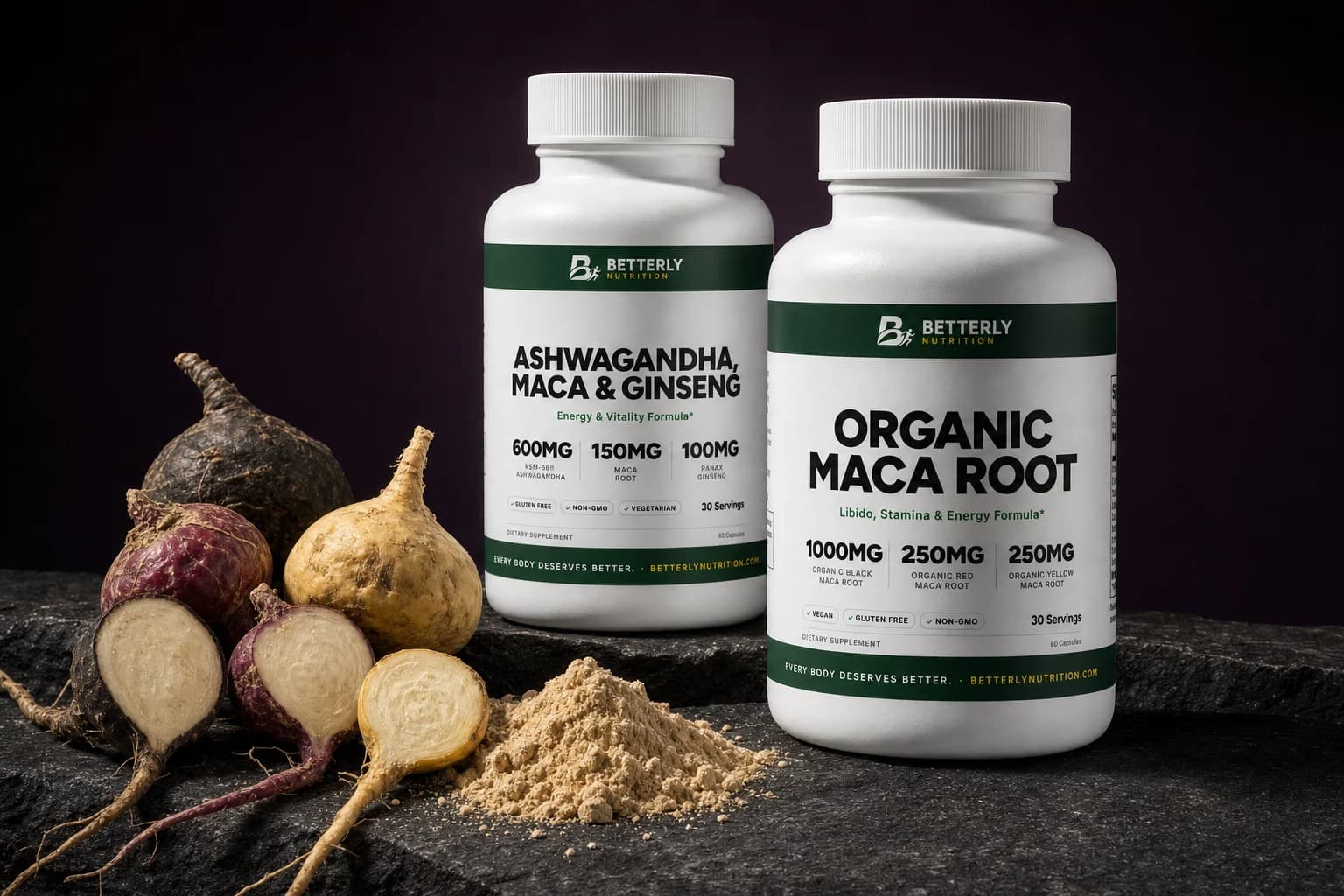
From our shop: Organic Maca Root Capsules — 1,000 mg of black, 250 mg of red and 250 mg of yellow maca root per 2-capsule serving, with vegan, gluten free and non-GMO printed on the label.
How much maca is in a tri-color capsule compared with a blend?
Our tri-color maca capsules hold 1,500 mg of maca per 2-capsule serving, against 62.5 mg to 250 mg in the three blends that give maca its own line.
| Product | Maca per serving | Color named? | Serving |
|---|---|---|---|
| Organic Maca Root Capsules | 1,500 mg | Yes, all three | 2 vegetable capsules |
| Tongkat Ali, Maca & Ginseng Capsules | 250 mg | No | 2 tablets |
| Ashwagandha, Maca & Ginseng Capsules | 150 mg | No | 2 vegetable capsules |
| Horny Goat Weed & Maca Capsules | 62.5 mg | No | 2 gelatin capsules |
The tri-color bottle has 6 times the maca of the tongkat ali blend, 10 times the ashwagandha blend's and 24 times the horny goat weed blend's. In each of these blends, maca plays a supporting role, so judging those bottles by maca color makes little sense.
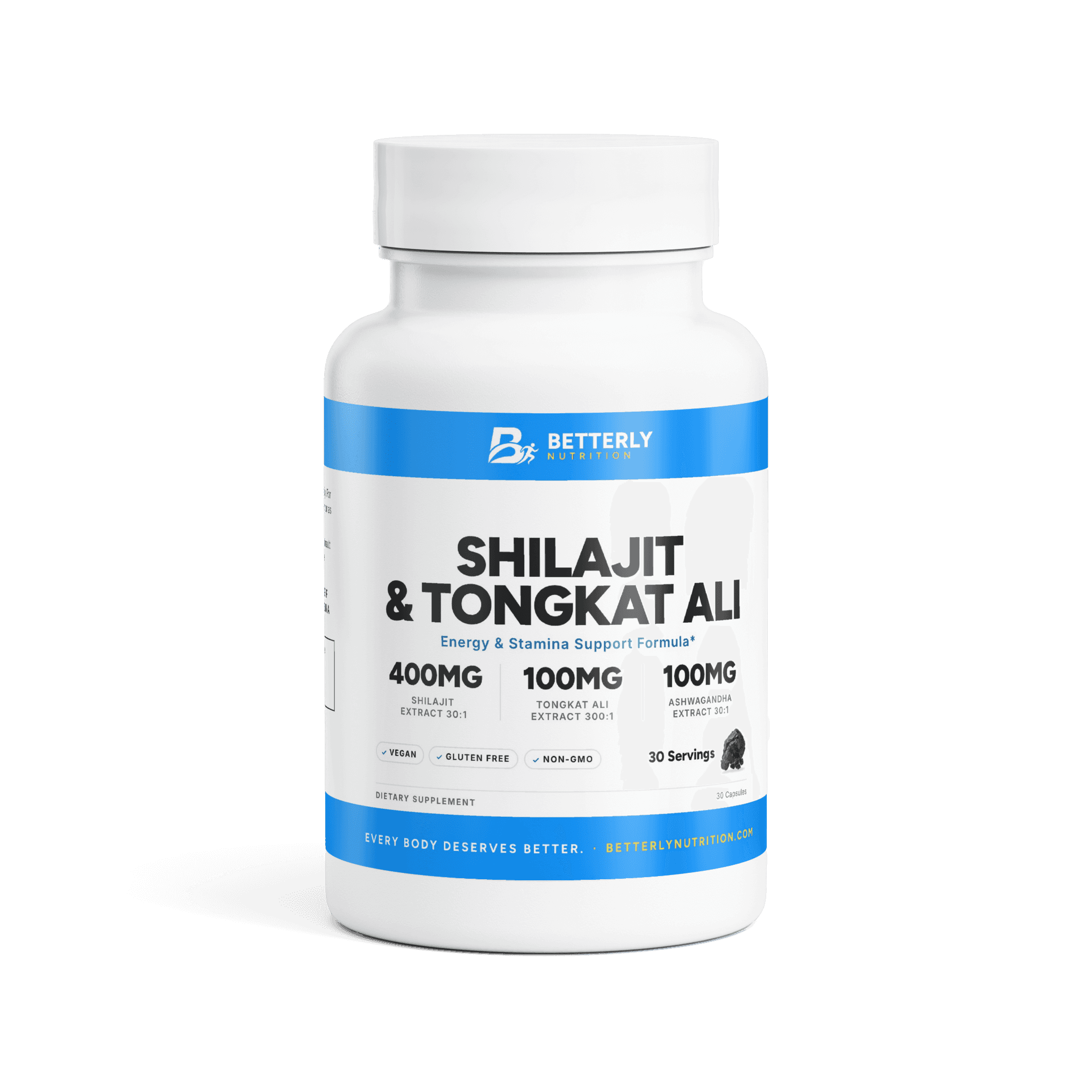
Two notes on the tongkat ali blend. Despite its name, its panel lists a 2-tablet serving, and its allergen line lists shellfish (oyster).
That serving also has 50 mg of zinc (455% DV). The NIH ODS zinc fact sheet puts the adult upper limit at 40 mg a day from every source, including foods, beverages, supplements and medications. Taken as its label directs, that product goes over the limit, so we don't recommend it at that dose. Talk with a healthcare provider before taking it.
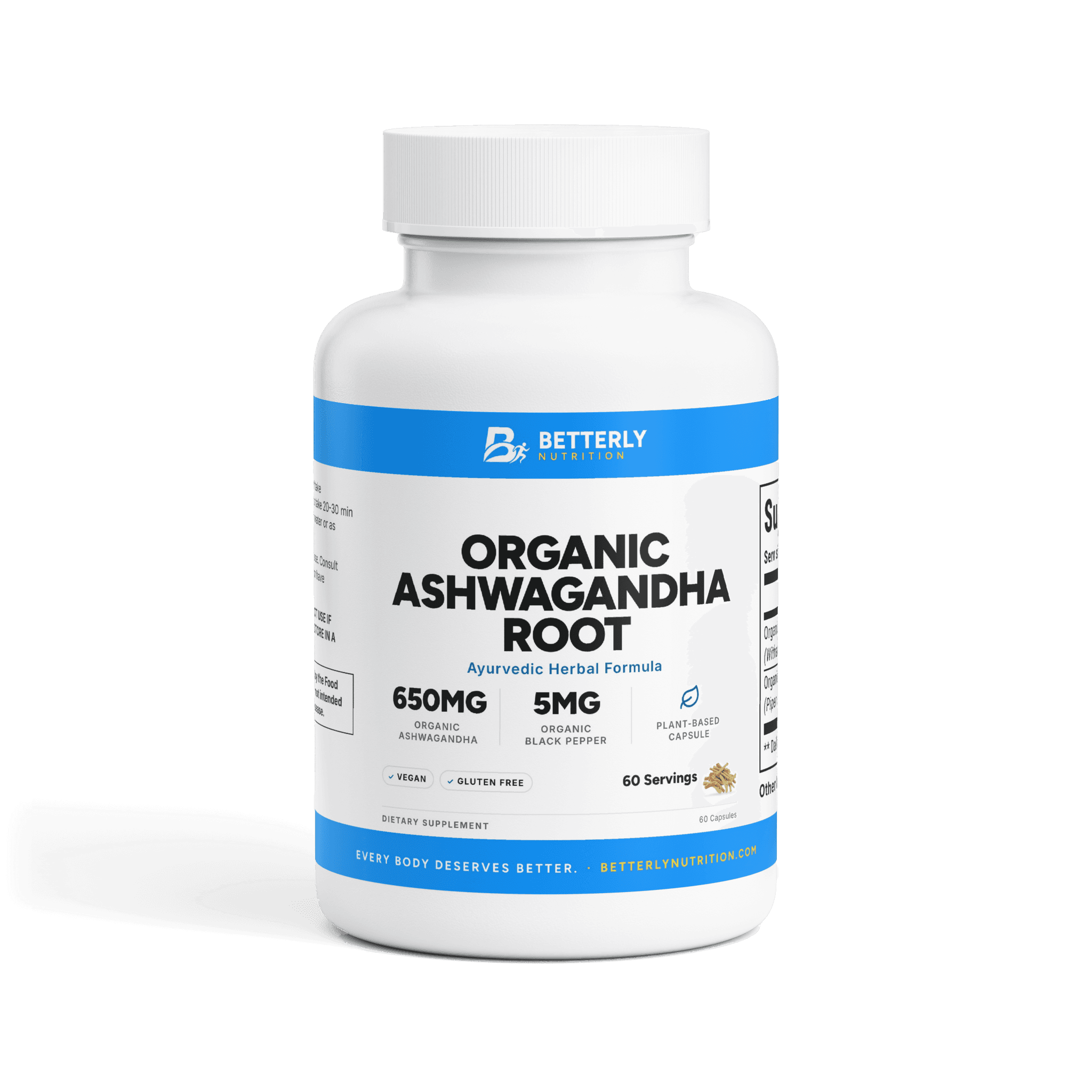
The ashwagandha blend has a different star. Its largest row is 600 mg of KSM-66® Ashwagandha Extract, standardized to 5% withanolides, and the panel lists 300 mg of L-arginine before its 150 mg of maca. If ashwagandha is what draws you to that bottle, start with our guide to taking ashwagandha.
The horny goat weed blend pairs its 62.5 mg of maca with 1,000 mg of epimedium extract.
What should a maca label tell you before you buy?
A maca label should show the milligrams per serving, the serving size, whether it's root or extract, and the color if the price depends on it.
A six-step check for any brand's bottle, ours included:
- Read the maca row's full name. "Organic Maca Root (Black)" tells you the color, while "Maca Powder" doesn't.
- Read the milligrams and the serving size together. A label listing 1,500 mg per 2 capsules puts 750 mg in each capsule, while 1,500 mg per 6 capsules means 250 mg in each. Compare per serving, then check how many capsules that serving takes.
- Look for a ratio. Extracts on our panels show one, like "Longjack Root Extract 100:1" on the horny goat weed label. Our tri-color maca rows list root with no ratio, so there's no concentration to factor in.
- Watch for a proprietary blend. If maca sits inside a blend with only a total listed, you can't see its share. Our Tribulus & Ginseng Women's Libido Capsules list maca inside an 802 mg blend per 2-capsule serving, so they're left out of the table above.
- Check the capsule and the Contains line. Our tri-color capsules use hypromellose, which the label calls a vegetable capsule, while the horny goat weed blend uses gelatin.
- Read the directions and the caution, then follow them.
Even a clear panel isn't proof of quality. The ODS botanical fact sheet notes that judging quality from a label is difficult.
How do you take tri-color maca capsules?
Take tri-color maca the way the label says: Betterly's Organic Maca Root Capsules call for two capsules once a day, taken 20 to 30 minutes ahead of a meal.
The label doesn't split the serving across the day, and its caution reads "Do not exceed recommended dose." If you have a reason to change anything, the directions defer to your healthcare professional.
From the panel and label:
- Each bottle holds 60 capsules, which is 30 servings at the suggested use.
- The panel lists no caffeine, so it won't add to your daily caffeine total.
- If a blend you take also lists maca, add the two amounts together first. The tri-color directions don't account for maca from other products.
The ashwagandha, maca and ginseng blend has slightly different directions. Adults take two capsules daily, with 6 to 8 oz of water, and that label doesn't mention meals.
From our shop: Ashwagandha, Maca & Ginseng Capsules — 600 mg of KSM-66® ashwagandha, 150 mg of maca root and 100 mg of Panax ginseng per 2-capsule serving, for anyone who wants maca as one part of a blend.
When don't you need a maca supplement?
Skip a maca supplement if you want it for a color-specific promise, since a label shows color and milligrams, not results, or if a blend already covers your maca.
Hold off in these cases:
- You picked a color because a seller tied it to one specific result. Nothing on the panel supports that link.
- You already take a blend that lists maca and you're happy with it. Adding a single-ingredient bottle means tracking two amounts.
- You're hoping for a caffeine-style lift. The tri-color panel lists no caffeine at all.
That empty caffeine line puts maca in the same camp as several other bottles. Our guide to caffeine-free energy supplements walks through cordyceps, shilajit, NAD+ and beetroot.
Who should check with a healthcare provider before taking maca?
Check with a healthcare provider before taking maca if you're pregnant, nursing, under 18 or have a medical condition, the four groups our tri-color label names.
Add anyone taking a prescription medication or facing surgery. The ODS botanical fact sheet warns that a natural label doesn't guarantee safety, since how safe a botanical is hinges on what's in it, how it's made and the amount you take.
Blends add questions of their own. The ODS ashwagandha fact sheet for health professionals reports that people have generally tolerated ashwagandha for up to about 3 months, and that nobody yet knows how safe it is over the long term. It also notes "a few reports of more serious side effects, including adverse effects on liver function," plus a possible effect on thyroid function and possible interactions with some medications. Some experts, it adds, advise against ashwagandha during pregnancy.
The tongkat ali blend's zinc and shellfish notes apply here too.
FAQ: black, red and yellow maca
Is black maca stronger than red or yellow maca?
No, a label can't show that black maca is stronger than red or yellow maca. It shows how much of each color a serving holds, and that's what you can compare. Our tri-color capsules give black the largest share, 1,000 mg of the 1,500 mg per 2-capsule serving. That's a formula choice, not evidence that black maca does more.
Is tri-color maca better than a single color?
Tri-color maca isn't better or worse than a single color; it's a way to get all three without picking. The trade-off is the split. Our tri-color panel gives red and yellow 250 mg each per 2-capsule serving, so if you want one color at a high amount, a single-color product is the better fit.
Can you take maca with ashwagandha?
Yes, you can pair maca with ashwagandha, but ask a healthcare provider first if you take any prescription. The NIH ODS says ashwagandha might affect thyroid function and interact with some medications. Both sit in one bottle in our Ashwagandha, Maca & Ginseng Capsules, at 150 mg of maca root and 600 mg of KSM-66® ashwagandha per 2-capsule serving.
What time of day should you take maca capsules?
Maca capsules should be taken as their label directs, and ours call for two capsules once a day, 20 to 30 minutes before a meal. The directions don't pick a time of day, so tie your serving to a meal you eat reliably. Our guide to when to take maca root goes further into timing.
Can you take two maca products at the same time?
Taking two maca products together means adding their amounts, and neither label's directions account for the other. We couldn't find a federal upper limit for maca, which calls for caution, not a green light. Ask a healthcare provider before combining, and skip any pairing that pushes another ingredient, like zinc, past its NIH upper limit.
Sources
- National Center for Complementary and Integrative Health: Herbs at a Glance
- NIH Office of Dietary Supplements: Botanical Dietary Supplements: Background Information, Fact Sheet for Consumers
- NIH Office of Dietary Supplements: Zinc: Fact Sheet for Consumers
- NIH Office of Dietary Supplements: Ashwagandha: Fact Sheet for Health Professionals
If this left you looking for somewhere to start, read black, red and yellow maca root capsules — its amounts per serving are listed on the page. For the practical questions this raises, how dosing, sourcing and subscriptions work is answered in one place.