On this page
- Key takeaways
- Does ashwagandha give you energy like caffeine does?
- Does ashwagandha make you tired or energized?
- What have studies found about ashwagandha and everyday energy?
- Why do energy formulas pair ashwagandha with maca, ginseng and B12?
- Is the B12 row doing the energy work in this blend?
- How do you take an ashwagandha energy blend, per the label?
- When don't you need ashwagandha for energy?
- Who should check with a healthcare provider first?
- FAQ: ashwagandha and energy
- Sources
The short answer: Ashwagandha won't give you energy the way coffee does. The root (Withania somnifera) has no caffeine, and the NIH Office of Dietary Supplements lists drowsiness among its common, usually mild side effects. So does ashwagandha give you energy at all? In one small trial, students taking it described calmer days and better energy. Blends sold for energy add other ingredients, like vitamin B12, which only makes a difference if you're running low.
Key takeaways
- Ashwagandha isn't a stimulant and contains no caffeine, so it won't give you the fast lift of coffee or an energy drink.
- The NIH Office of Dietary Supplements counts drowsiness as a common, usually mild ashwagandha side effect.
- In one small trial the NIH summarizes, students taking ashwagandha described calmer days and better energy, but those were impressions, not measurements.
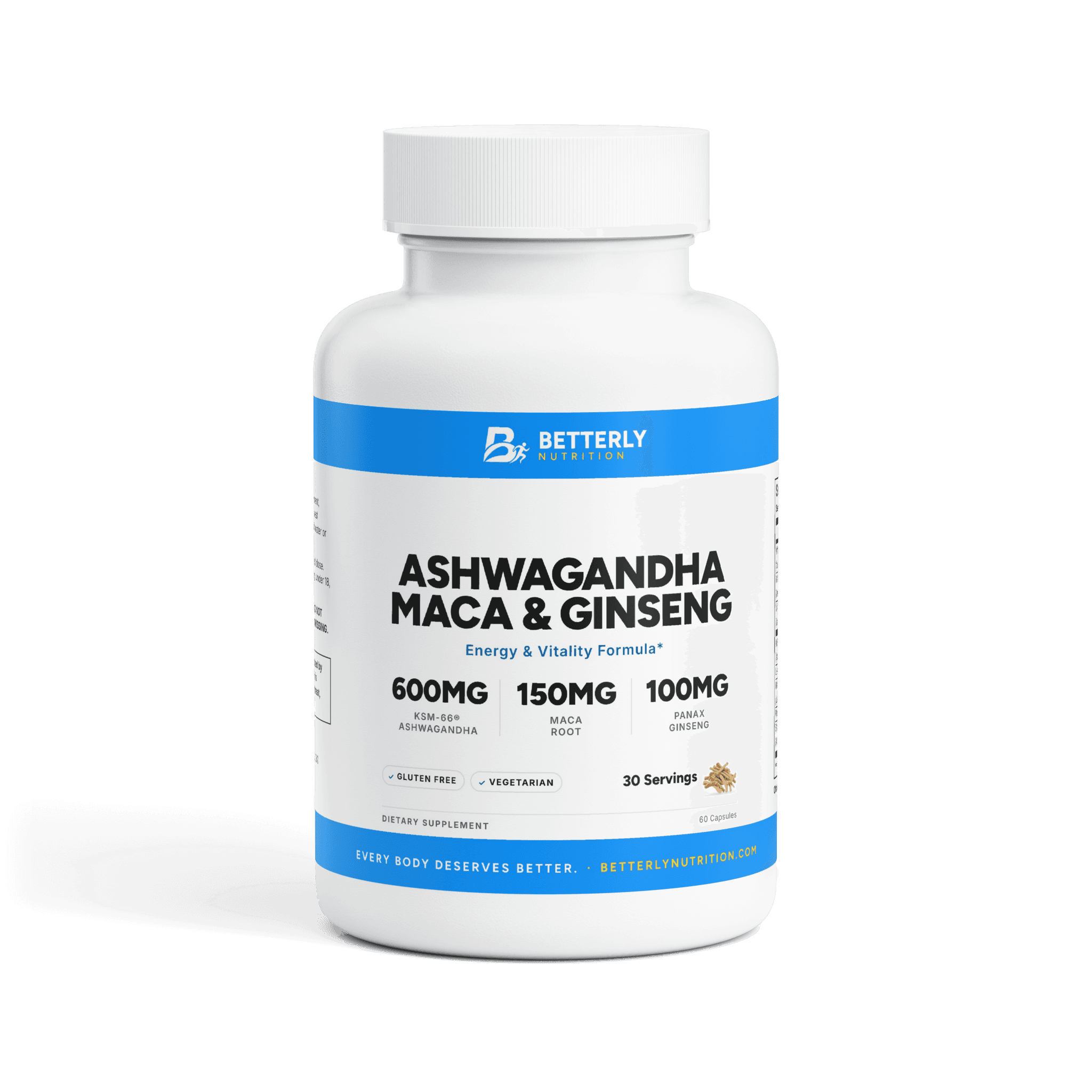
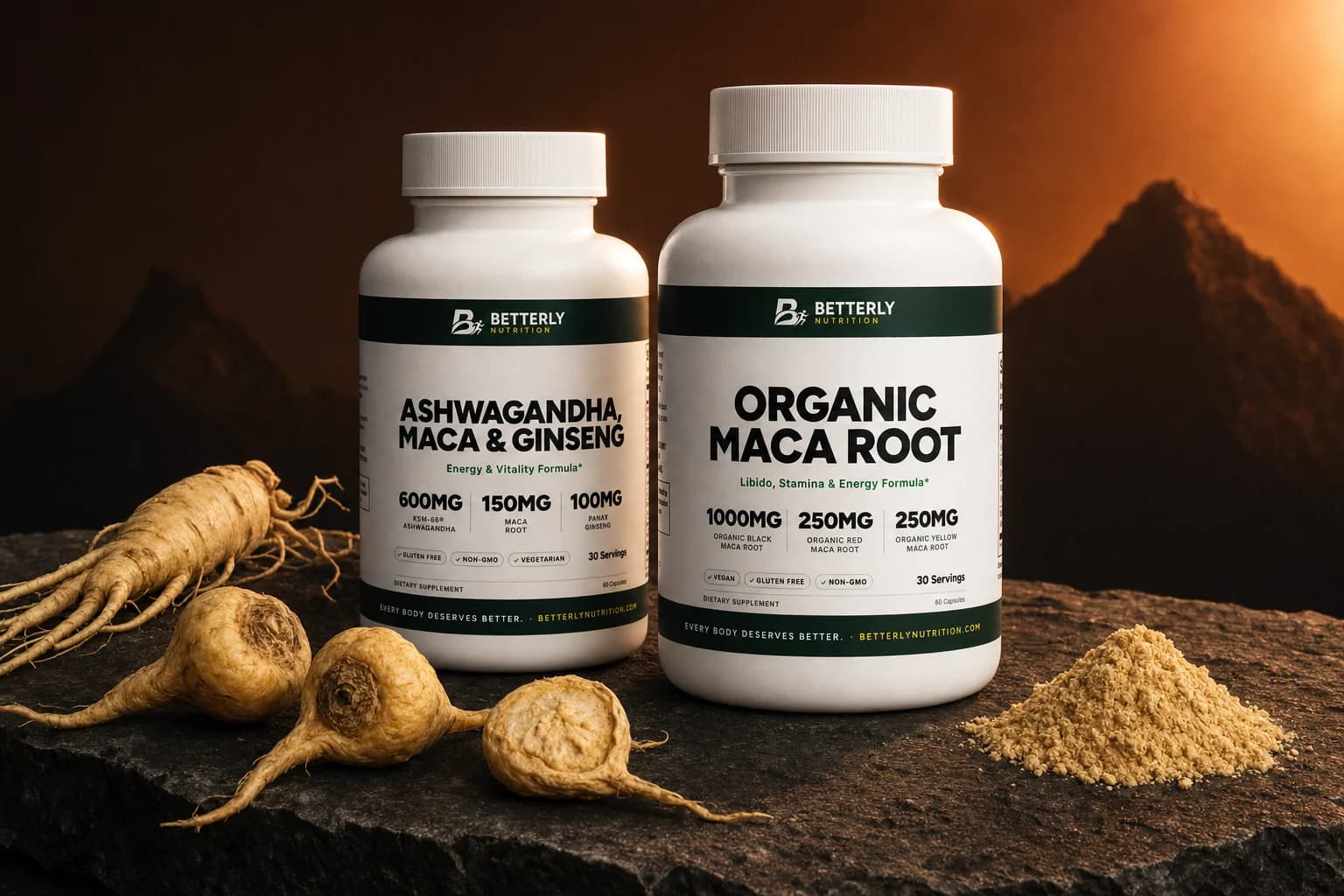
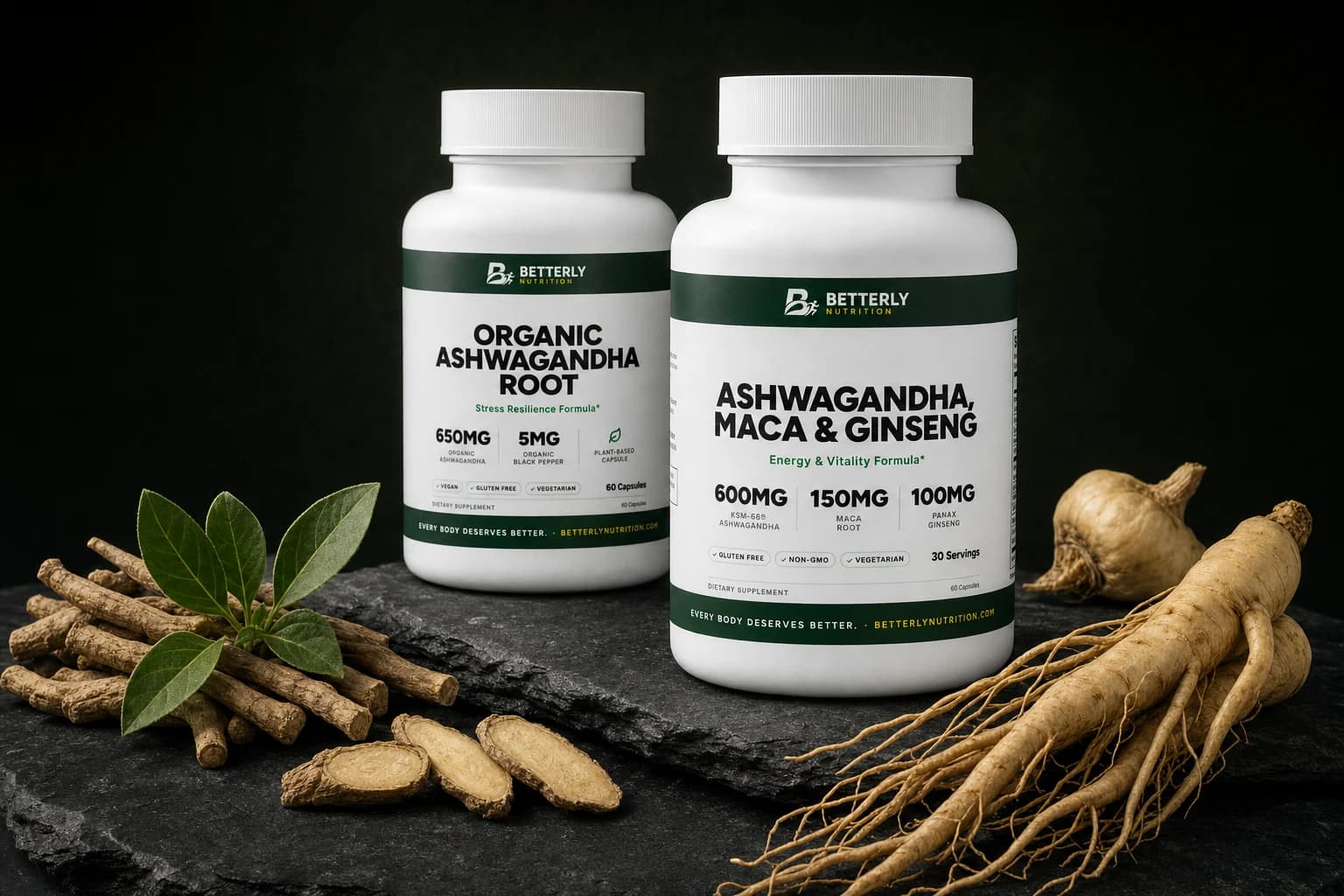
- Each 2-capsule serving of Betterly's Ashwagandha, Maca & Ginseng Capsules carries 600 mg of KSM-66® ashwagandha extract, 100 mg of Panax ginseng and 150 mg of maca root, and the panel shows no caffeine.
- The NIH says vitamin B12 doesn't add energy for people who already get enough of it from food.
We sell ashwagandha on its own and in a blend labeled for energy, so we're not a neutral party on this question. Every product number below comes from a Supplement Facts panel, and every research point comes from a federal health page we name and link.
Does ashwagandha give you energy like caffeine does?
No. Ashwagandha gives you no caffeine-style jolt, because the root isn't a stimulant and contains no caffeine at all.
Is it a sedative, then? Not quite. The NIH Office of Dietary Supplements (ODS) says India's Ayurvedic and Unani traditions use the root as an adaptogen, a term its ashwagandha fact sheet calls "loosely defined." Roughly, it means something thought to make you more resilient to stressors in a broad way.
The National Center for Complementary and Integrative Health (NCCIH) is blunt about physical energy. Its ashwagandha page lists athletic performance among the uses where there isn't enough evidence to say whether the herb helps.
For other caffeine-free ingredients sold for energy, our roundup of caffeine-free energy supplements covers cordyceps, shilajit, beetroot and more.
The energy idea comes mostly from a few small studies and from formulas like our Ashwagandha, Maca & Ginseng Capsules, whose panel we read below.
Does ashwagandha make you tired or energized?
Ashwagandha is more likely to leave you a little drowsy than buzzing, since both NIH ashwagandha pages we read list drowsiness as a side effect and neither lists jitters.
The hint is in the name: ODS says somnifera comes from the Latin for sleep-inducing. The fact sheet groups drowsiness with stomach upset, loose stools and nausea as common, usually mild side effects, and NCCIH lists it too.
Much of the human research on ashwagandha is about sleep. ODS summarizes a pooled analysis of five trials where the extract had a small but significant effect on sleep versus placebo, most clearly at 600 mg a day.
That leaves our own energy blend in an awkward spot. Its panel lists 600 mg of KSM-66® extract per 2-capsule serving, the exact daily amount where that sleep effect stood out. The two energy trials below used 700 mg and 400 mg a day of other extracts, so 600 mg sits between them and can't tell you which way you'll tip.
Will you feel tired or energized? Nobody can say in advance. Drowsiness is possible, not certain, and ODS describes ashwagandha as well tolerated in trials of up to about 3 months.
What have studies found about ashwagandha and everyday energy?
The ODS fact sheet describes two ashwagandha trials that looked at energy directly: a small one where students described better energy, and a 12-week trial in adults with low energy.
The first was a 30-day trial with 60 college students taking a root extract (two 350 mg capsules a day, 700 mg in all) or a placebo. In daily check-ins and focus groups, the ashwagandha group described more well-being, including a sense of calm, improved energy levels, clearer thinking and better sleep quality. Their stress sounded about the same as the placebo group's, but they were more likely to call it manageable.
That's a real finding, but it came from interviews, not measurements.
The second trial followed 120 middle-aged adults who were experiencing low energy. For 12 weeks they took a different branded root extract, 200 mg twice a day (400 mg in all), or a placebo. ODS reports that the extract didn't lower perceived stress compared with placebo, but it did reduce tiredness.
ODS also summarizes a 2021 review of seven stress trials, 491 adults in all, where ashwagandha was linked with less tiredness as well as lower stress. Those trials enrolled people under high stress, so the result may not carry over to an ordinary slow afternoon.
Taken together, any energy effect from ashwagandha looks indirect and modest: closer to feeling less drained than to feeling revved up.
ODS adds that most ashwagandha trials were small and short and used many different extracts and doses, so a result for one extract says little about another product, ours included.
Why do energy formulas pair ashwagandha with maca, ginseng and B12?
Energy blends pair ashwagandha with maca, ginseng and B vitamins because ashwagandha on its own isn't a lift, so the other ingredients carry the energy side of the pitch.
Our blend's front label reads "Energy & Vitality Formula," which names a goal, not a measured effect. Here's what the panel holds.
| Ingredient | Per 2-capsule serving | What an NIH page says | Energy takeaway |
|---|---|---|---|
| KSM-66® ashwagandha extract | 600 mg | Drowsiness is a common side effect (ODS) | Not a stimulant |
| Panax ginseng powder | 100 mg | Trouble sleeping tops its side-effect list (NCCIH) | Possible small effect on general tiredness (NCCIH); no amount given |
| Maca root powder | 150 mg | Not covered by the pages we cite | Light next to our maca capsule |
| Vitamin B12 (methylcobalamin) | 25 mcg (1042% DV) | No extra energy if your diet covers it (ODS) | Matters mainly if you're low |
| Caffeine | None listed | Not applicable | No jolt to expect |
Reading across the rows, nothing in this blend is a stimulant, and the most any NIH page we read offers is a possible small effect on general tiredness from ginseng. The honest case for the blend is convenience: 600 mg of KSM-66® extract plus B vitamins in two capsules.
The ginseng row deserves a closer look. NCCIH's Asian ginseng page says ginseng alone may have a small effect on general tiredness, but it names no amount. Our blend holds 100 mg per 2-capsule serving, so we can't say whether that amount matters.
The same page lists trouble sleeping as ginseng's most common side effect. So this blend pairs one root tied to drowsiness with one tied to trouble sleeping, and we can't tell you which wins at these amounts.
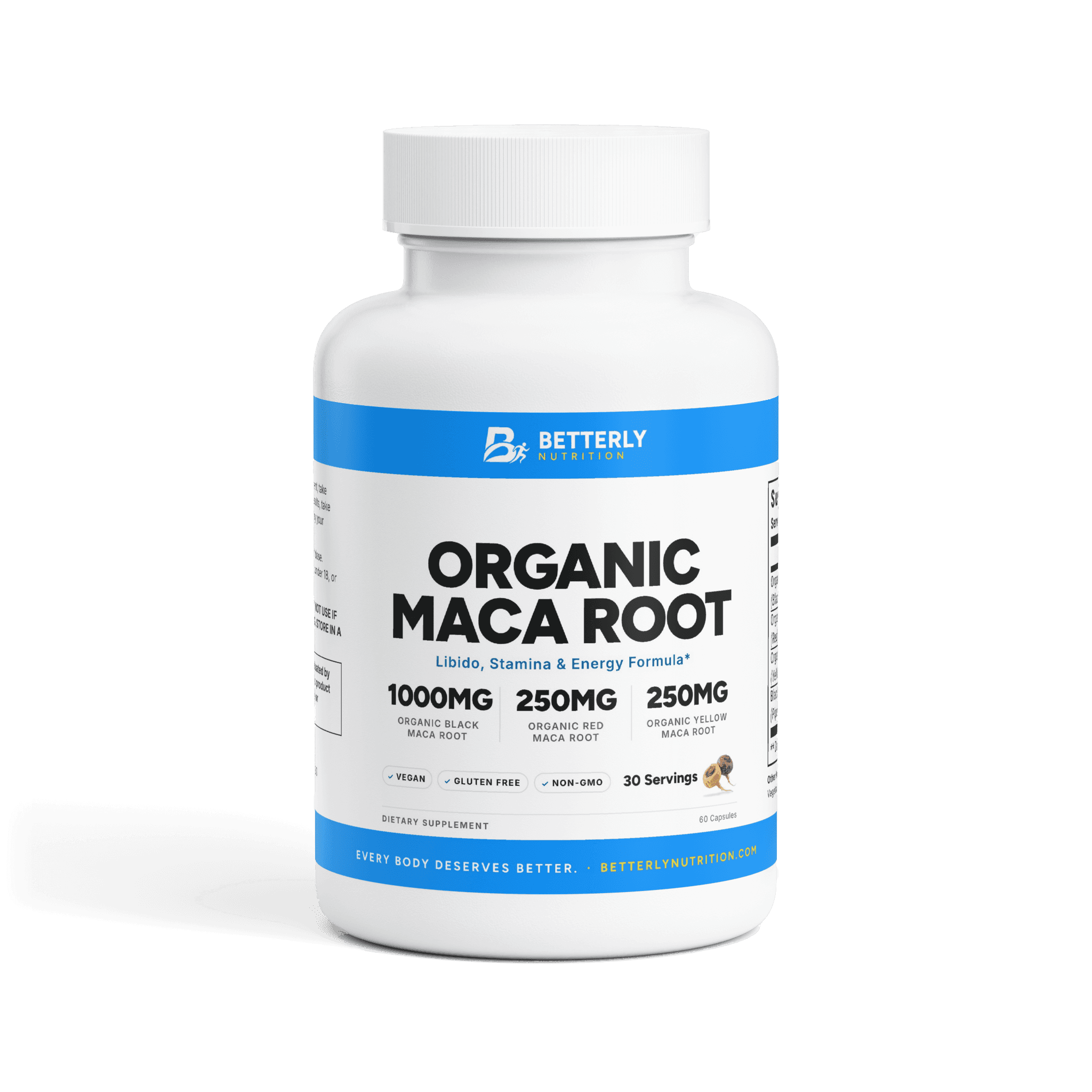
The maca row is small by our own standards. Our Organic Maca Root Capsules list 1,500 mg of maca per 2-capsule serving: 1,000 mg black, 250 mg red and 250 mg yellow. Our look at maca root benefits for women and men sets those amounts next to the research.
The remaining rows are L-arginine at 300 mg, shatavari root powder at 50 mg, vitamin D3 at 20 mcg (100% DV) and vitamin B6 at 2.5 mg (147% DV). We make no energy claim for any of them. Other herbal formulas sit together in our adaptogens collection.
How to read any ashwagandha "energy" label
- Look for a caffeine row, or for ingredients that carry caffeine, like green tea or guarana. If there's none, don't expect a jolt.
- Check whether the ashwagandha is an extract with a withanolide percentage or plain root powder. ODS says withanolides are believed to account for many of the root's proposed effects.
- Find a milligram amount for each herb. A proprietary blend total hides each herb's share.
From our shop: Ashwagandha, Maca & Ginseng Capsules — 600 mg of KSM-66® ashwagandha extract (5% withanolides) and 25 mcg of vitamin B12 per 2-capsule serving, labeled gluten free and vegetarian, with no caffeine anywhere on the panel.
Is the B12 row doing the energy work in this blend?
Our blend's vitamin B12 row is unlikely to change your energy unless you're short on B12, since ODS says extra B12 adds none when food already covers you.
Each 2-capsule serving lists 25 mcg of B12 as methylcobalamin, or 1042% of the Daily Value. That percentage looks impressive, but the ODS vitamin B12 fact sheet is plain that a supplement doesn't bring energy benefits to people whose diets already supply enough.
ODS points to people over 50, vegetarians and vegans as more likely to fall short, and a doctor can test your level if you're unsure. For the vitamin on its own, see our guide to whether B12 gives you energy.
How do you take an ashwagandha energy blend, per the label?
Two capsules a day is the direction on our Ashwagandha, Maca & Ginseng Capsules label, taken with 6 to 8 oz (177 to 237 ml) of water.
That's one serving, and each bottle holds 30. The label also says "Do not exceed recommended dose," so two capsules is the daily ceiling.
What about taking ashwagandha in the morning for energy? Neither the blend's label nor the Organic Ashwagandha Root Capsules label names a time of day, and with no caffeine in the blend, breakfast won't turn it into a wake-up drink. Our guide to ashwagandha benefits and timing covers the morning-versus-evening question.
Because drowsiness is a listed side effect, save your first few servings for a quiet day, and skip driving until you know how ashwagandha sits with you.
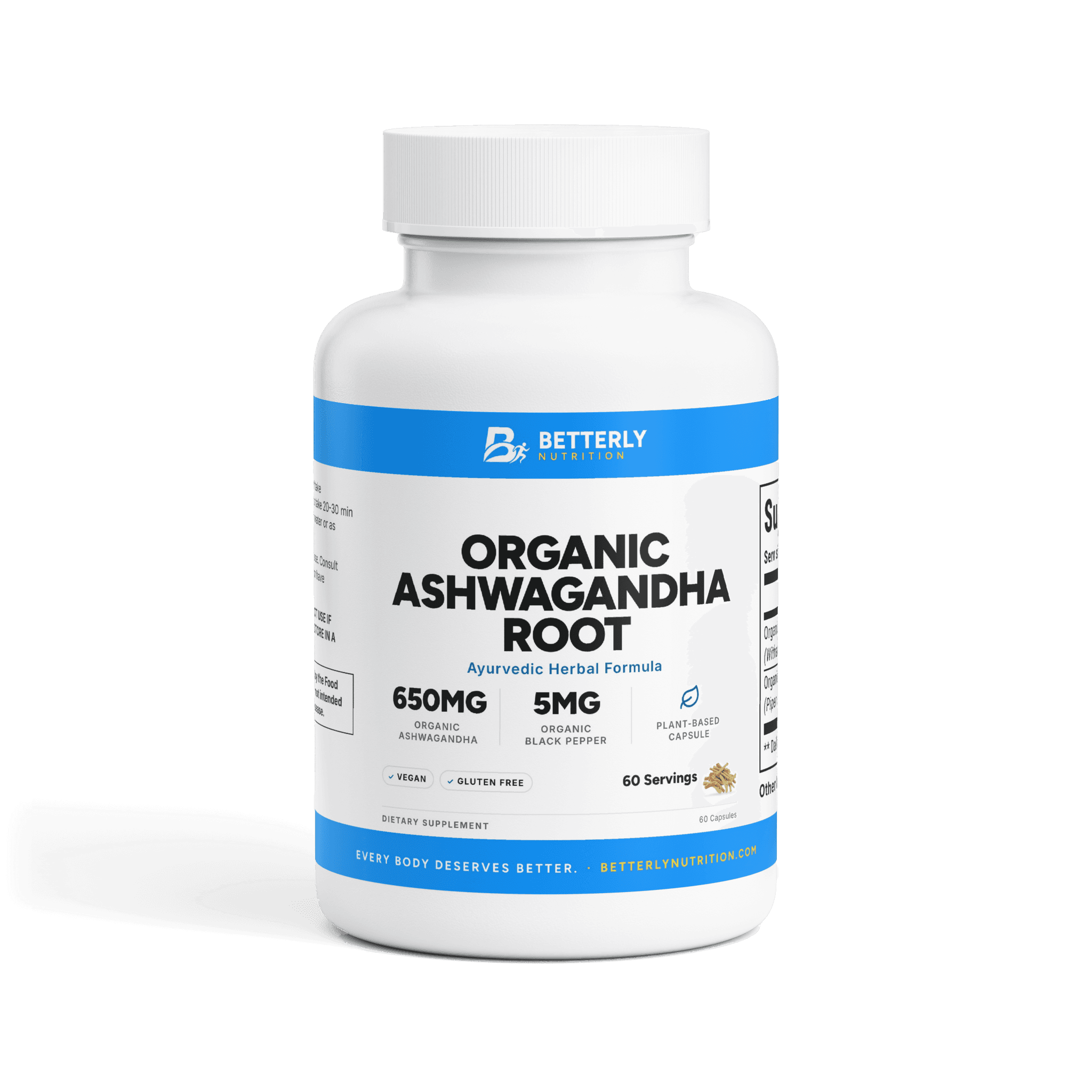
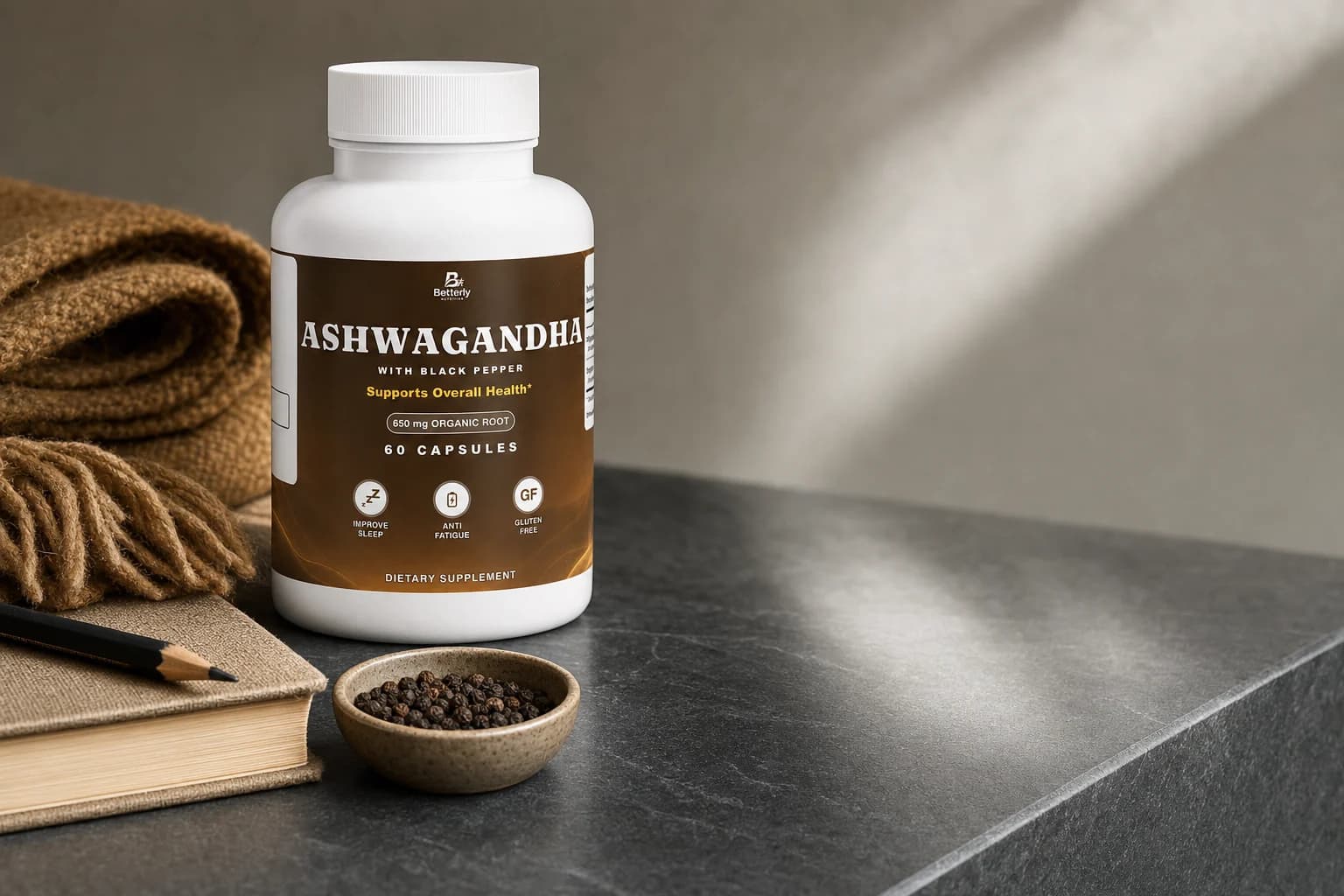
Before adding the blend, check what else you take that holds ashwagandha. Our Organic Ashwagandha Root Capsules are the obvious overlap, with 650 mg of root in each capsule.
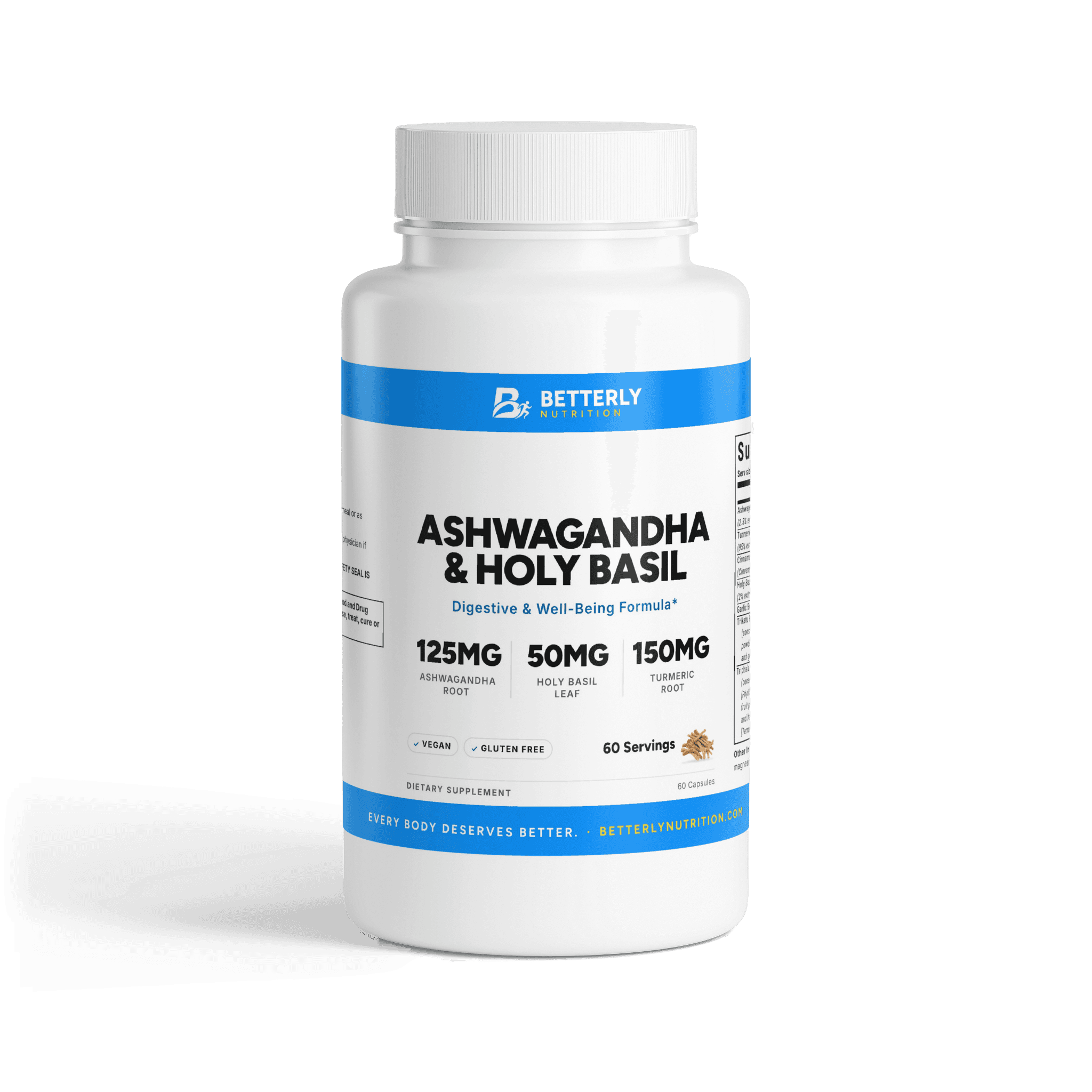
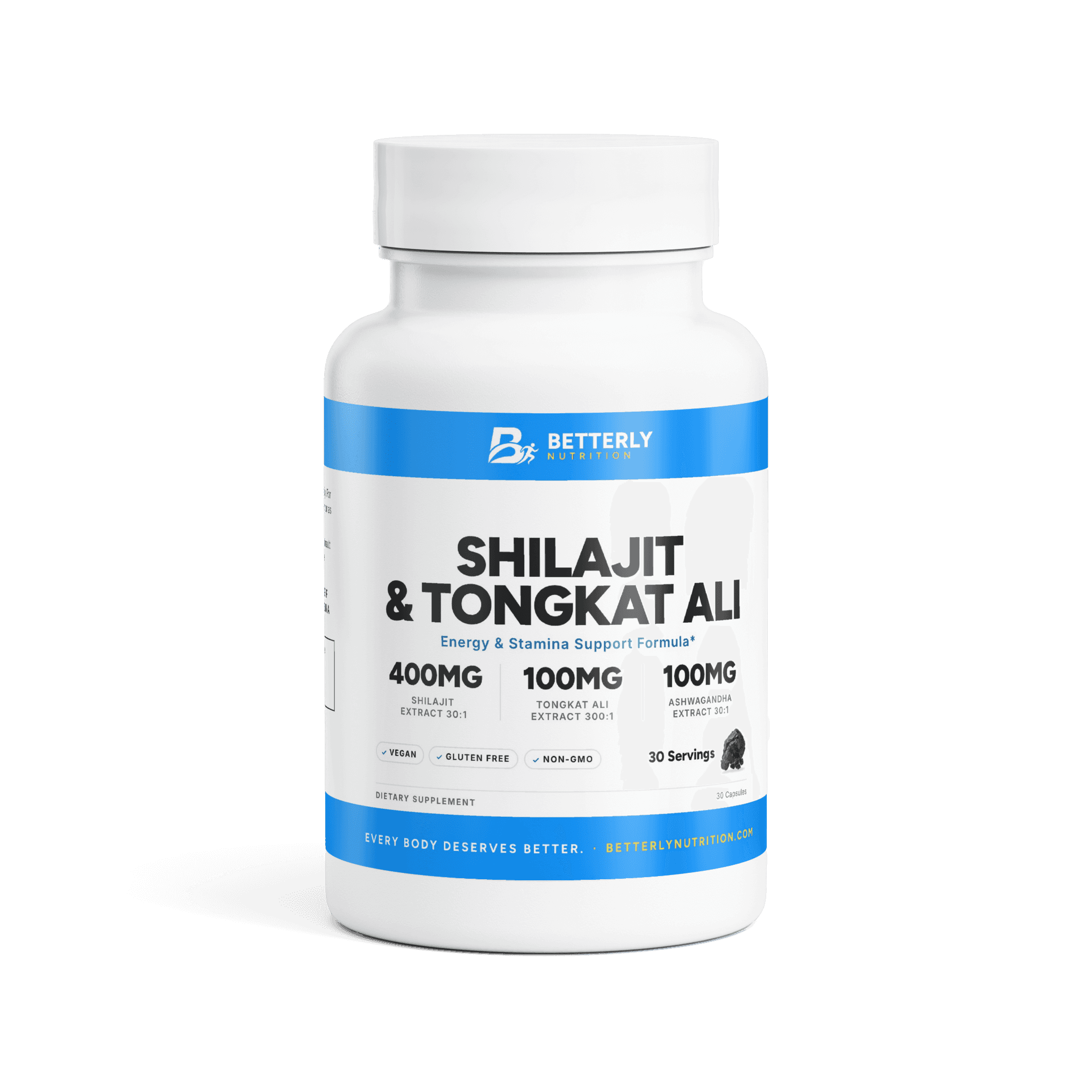
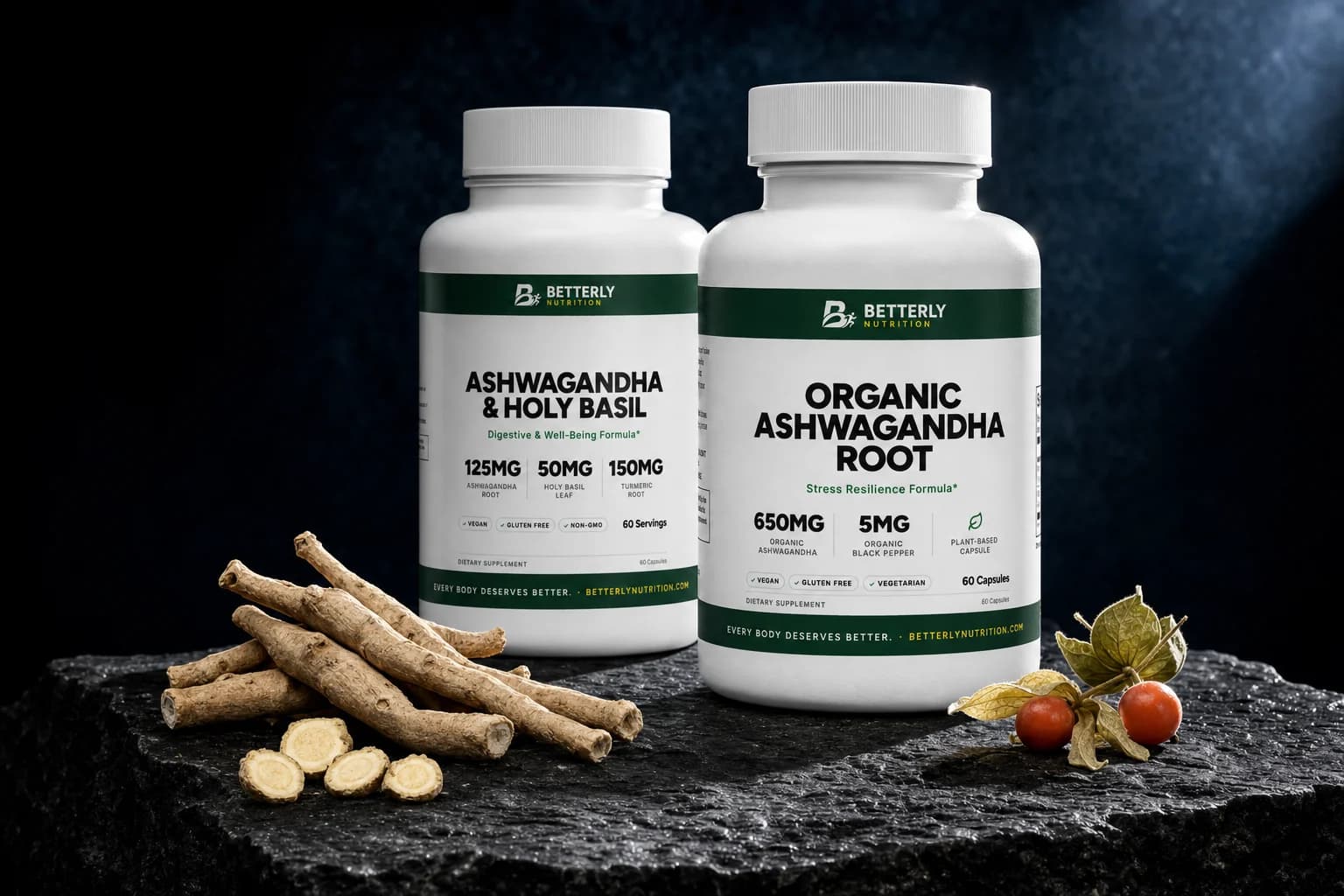
Two more products in the cards under this guide carry it as well. Ashwagandha & Holy Basil Ayurvedic Capsules show 125 mg of ashwagandha root (2.5% extract) per 1-capsule serving. Shilajit & Tongkat Ali Capsules show 100 mg of a 30:1 ashwagandha root extract per 1-capsule serving.
It also sits inside our melatonin sleep capsule, a greens powder and a women's blend. None of these labels suggests pairing it with another, so read every panel before you combine any two.
From our shop: Organic Ashwagandha Root Capsules — ashwagandha without maca, ginseng or added vitamins: a single-capsule serving holds 650 mg organic ashwagandha root with 5 mg organic black pepper, and the label directs two servings a day.
When don't you need ashwagandha for energy?
You probably don't need ashwagandha for energy if you want a lift within the hour, your diet already covers B12, or short sleep is the real problem.
If you want to feel different by lunchtime, coffee or tea does that job, and this blend doesn't try to. If you eat meat, fish, eggs or dairy most days and you're under 50, your B12 is probably covered, so the vitamin rows add little.
Sleep is the other honest check. No root or vitamin repays a run of short nights, so sort out bedtime first.
Ashwagandha that's already part of your day is a reason to pass, too, for the stacking reasons above. If you've felt drained for weeks without a clear cause, see a healthcare provider before you shop.
Who should check with a healthcare provider first?
Talk to a healthcare provider before starting ashwagandha if you're pregnant or nursing, under 18, scheduled for surgery, on any prescription medicine, or living with a medical condition.
An energy blend puts two roots in one capsule, so their cautions add up. NCCIH says ashwagandha should be avoided during pregnancy and not used while breastfeeding. Its ginseng page notes that some experts recommend against Asian ginseng for pregnant or breastfeeding women too, and our blend holds both.
Drowsiness needs more thought if you already take something that makes you sleepy. A sedative plus a root that can cause drowsiness is a pairing to run past a pharmacist before your first capsule, especially if you drive for work.
Medicines are the third check. NCCIH's interaction list for ashwagandha covers thyroid hormone, drugs that dampen the immune system and sedatives, among others. The ginseng page says that herb might interact with certain medications as well.
NCCIH's ashwagandha page also says it isn't recommended for anyone with a thyroid or autoimmune condition, or for anyone with surgery coming up. It also mentions rare cases linking ashwagandha supplements to liver injury, and puts the possible safe window at up to 3 months.
The caution on our blend's label adds anyone under 18 and anyone with a medical condition. Our guide to who should not take ashwagandha covers each group in more depth.
FAQ: ashwagandha and energy
Does ashwagandha make you tired the next day?
Ashwagandha can make some people drowsy, and NIH pages list drowsiness as a possible side effect without saying when it tends to show up. Timing is left open on our blend and on our Organic Ashwagandha Root Capsules, since neither set of directions mentions morning or night. If you wake up groggy after a serving, hold off on driving until it clears, and mention it to your healthcare provider.
Does ashwagandha have caffeine?
No, ashwagandha root contains no caffeine. It comes from an evergreen shrub, not a coffee, tea or guarana plant, and our blend's panel lists none. If an ashwagandha product sold for energy makes you feel buzzy, check its panel for caffeine, green tea or guarana, since the root itself is an unlikely cause.
Can ashwagandha keep you awake at night?
Ashwagandha isn't known for keeping people up, since NIH pages list drowsiness, not wakefulness, among its side effects. Ginseng is different: NCCIH names trouble sleeping as its most common side effect, and our blend holds 100 mg of Panax ginseng per 2-capsule serving. If a blend seems to keep you awake, check its ginseng and caffeine, and talk with your provider.
Is ashwagandha good for energy during workouts?
The evidence doesn't back ashwagandha as a workout energy aid. NCCIH says there isn't enough evidence to judge it for athletic performance, and that most research shows Asian ginseng doesn't improve performance either. Neither herb in our blend is a stimulant, so for pre-training energy, compare products made for that job.
Sources
- Ashwagandha: Fact Sheet for Health Professionals, NIH Office of Dietary Supplements
- Ashwagandha: Usefulness and Safety, National Center for Complementary and Integrative Health
- Asian Ginseng: Usefulness and Safety, National Center for Complementary and Integrative Health
- Vitamin B12: Fact Sheet for Consumers, NIH Office of Dietary Supplements
If this left you looking for somewhere to start, read ashwagandha, maca and ginseng energy capsules — its amounts per serving are listed on the page. For the practical questions this raises, how dosing, sourcing and subscriptions work is answered in one place.