On this page
- Key takeaways
- When should you take ginseng during the day?
- Should you take ginseng in the morning or at night?
- When should you take ginkgo biloba, and does it change the plan?
- Is ginseng a stimulant, and can you take it with coffee?
- How do you take Ginkgo Biloba & Ginseng Capsules through the day?
- How long does ginkgo biloba take to work?
- Who can skip a twice-a-day ginseng routine?
- Who should run a ginseng schedule past a provider first?
- FAQ: Ginseng and ginkgo timing
- Sources
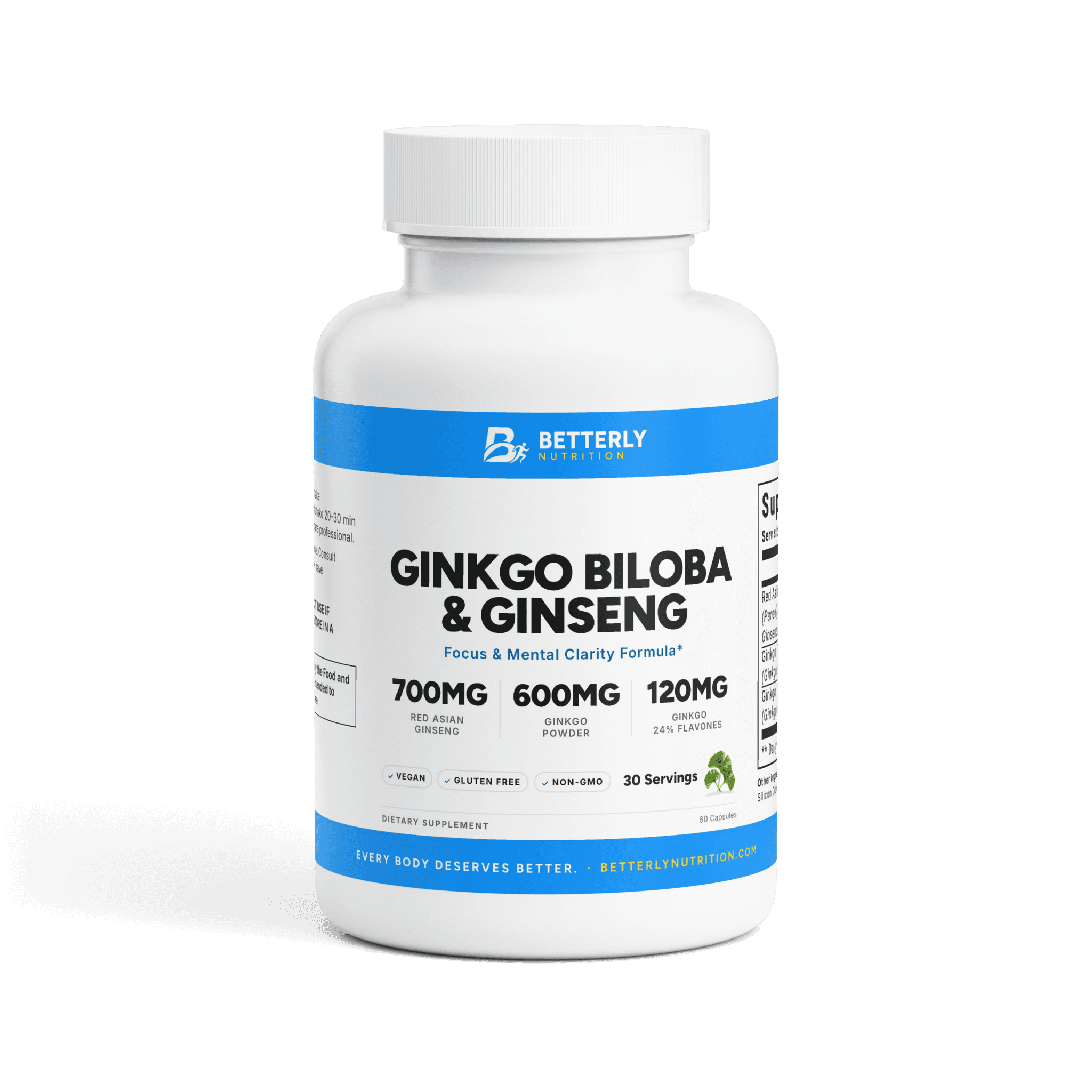
The short answer: When to take ginseng comes down to two slots in your day, each one ahead of a meal and both well clear of bedtime. Our Ginkgo Biloba & Ginseng Capsules are labeled for 2 capsules twice a day, 20 to 30 minutes before a meal. We pick breakfast and lunch for those slots, because NCCIH reports trouble sleeping more often than any other Asian ginseng side effect.
Key takeaways
- Betterly's Ginkgo Biloba & Ginseng Capsules label directs 2 capsules twice a day, each serving 20 to 30 minutes before a meal, for 4 capsules in total.
- NCCIH calls trouble sleeping Asian ginseng's most common side effect, which gives you a sourced reason to skip late-evening servings.
- Our ginseng capsule lists no caffeine, yet the NIH Office of Dietary Supplements names stimulants among the things ginseng might interact with.
- No federal source we found gives a set number of weeks for ginseng or ginkgo to "start working," so be wary of pages that promise one.
A note on bias: the capsule at the center of this page is ours to sell, and so are several other blends with ginseng on the panel. Throughout, we separate what the bottle prints from what we suggest, so you can weigh our judgment calls on their own.
When should you take ginseng during the day?
Betterly's Ginkgo Biloba & Ginseng Capsules label says 2 capsules twice a day, 20 to 30 minutes before a meal. We suggest finishing both servings by mid-afternoon.
A twice-a-day label needs two anchors, and each pair is timed off the food that follows it. Meals that land at about the same hour every day make the routine easy to keep. The mid-afternoon cutoff is our addition, drawn from the federal sleep note in the next section.
Other ginseng products, tablets and teas included, carry their own directions, so this schedule fits our capsule alone.
Should you take ginseng in the morning or at night?
Ginseng suits morning and midday better than night, because NCCIH identifies trouble sleeping as the most common side effect of Asian ginseng.
The National Center for Complementary and Integrative Health (NCCIH) makes that call on its Asian ginseng page, which adds that taking it by mouth for up to 6 months at recommended amounts seems safe for most people. The NIH Office of Dietary Supplements (ODS) lists trouble sleeping too, in its consumer fact sheet on immune-function supplements.
Neither agency names an hour for ginseng. Still, when a supplement's most common complaint is poor sleep, spacing both servings well before bed is the cautious reading of a twice-a-day label.
A pair before dinner still fits the label's wording, and some days offer no other meal. Think of it as a fallback. The earlier that dinner, the more hours separate the capsules from lights-out, and if your sleep starts slipping, that evening pair is the first thing to raise with your provider.
| Your eating pattern | Serving 1 | Serving 2 |
|---|---|---|
| Breakfast and lunch on a normal clock | 20-30 min ahead of breakfast | 20-30 min ahead of lunch |
| First food at noon | 20-30 min ahead of lunch | 20-30 min ahead of an early dinner |
| Night shift, daytime sleep | Ahead of your first meal on shift | Ahead of a mid-shift meal, hours before sleep |
| Late brunch weekends | 20-30 min ahead of brunch | Ahead of a meal by mid-afternoon |
Three rows keep serving 2 hours clear of sleep, whether you count by the clock or by the shift. The noon-start row is the honest exception, since serving 2 has to wait for dinner, so that's where an early meal and a close eye on sleep matter most.
When should you take ginkgo biloba, and does it change the plan?
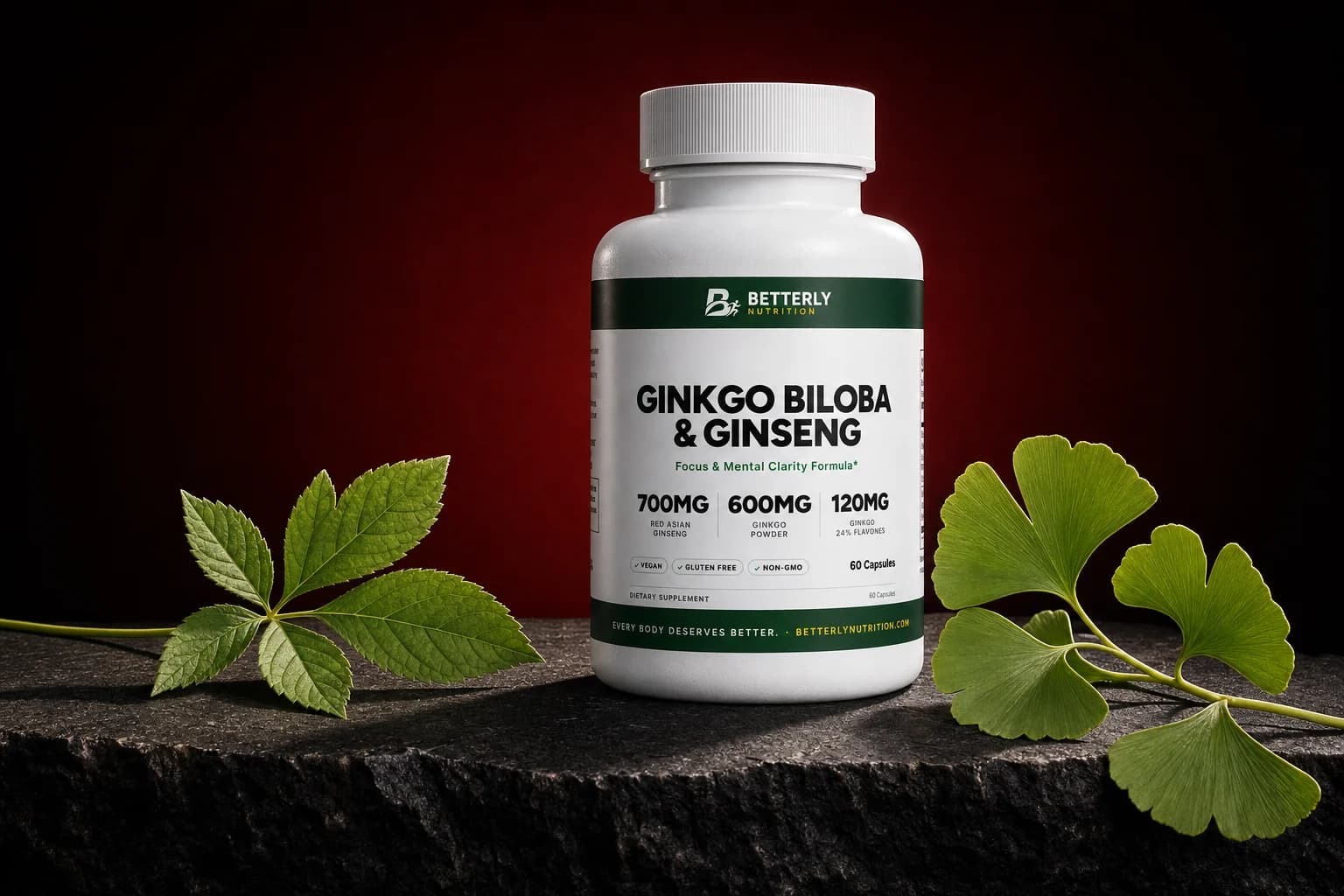
Ginkgo biloba in our capsule shares every serving with the ginseng, so it follows the same schedule: 2 capsules, twice a day, 20 to 30 minutes before a meal.
The ginkgo comes as two leaf ingredients per 2-capsule serving: 600 mg of ginkgo powder and, as the label lists it, 120 mg of ginkgo standardized to 24% flavones, a group of plant compounds.
NCCIH's ginkgo fact page doesn't link ginkgo to any time of day, and its most common side effects (dizziness, digestive symptoms and headache) don't include sleep. So for ginkgo alone, we found no reason to prefer morning over night. In a combination capsule, the ginseng's sleep note decides the schedule for both herbs.
Still deciding whether you want both herbs at all? Our ginkgo biloba vs ginseng breakdown covers that choice.
Is ginseng a stimulant, and can you take it with coffee?
Nothing on our Ginkgo Biloba & Ginseng panel supplies caffeine, though ODS lists stimulants among the things ginseng might interact with, so mention your coffee habit to your provider.
Lined up source by source, the two look like this. The FDA's Spilling the Beans: How Much Caffeine Is Too Much? puts the yardstick for most adults at 400 mg of caffeine daily, a level it doesn't generally tie to negative effects. For ginseng, ODS draws the high-dose line at more than 2.5 g daily.
Sleep shows up on both lists. Too much caffeine can disrupt it, the FDA notes, and ODS names trouble sleeping among ginseng's possible side effects, adding that high doses might also bring a rapid heartbeat and nervousness.
Your coffee habit doesn't reset the capsule clock. The label mentions no drinks at all, only the 20-to-30-minute gap before a meal, so the pair still goes down ahead of whatever you eat first. Feel jittery or notice a racing heart? Stop and check with a provider.
The reverse setup exists, too. Our Alpha-GPC & L-Theanine Focus Powder (Sour Grape) lists 200 mg of natural caffeine from green tea per 2-scoop (7.5 g) serving, four times its 50 mg of Asian ginseng extract. That drink runs on caffeine's clock, so give it a large coffee's cutoff.
One more figure from that tub: the caution line stops at 5 scoops a day, or 500 mg of caffeine, which is more than the FDA's 400 mg yardstick. Our advice: stick to one 2-scoop serving (200 mg of caffeine) a day, and count your coffee toward the FDA's 400 mg.
How do you take Ginkgo Biloba & Ginseng Capsules through the day?
Take 2 Ginkgo Biloba & Ginseng Capsules 20 to 30 minutes before one meal, 2 more before a second meal, and stop there for the day.
A workday on the label's schedule might run like this:
- 7:00 a.m. Two capsules.
- 7:25 a.m. Breakfast, 25 minutes later.
- 12:00 p.m. Two more capsules.
- 12:25 p.m. Lunch. You've reached the label's full day of 4 capsules.
- Evening. Nothing more. Dinner and bedtime stay ginseng-free.
Across the day, that's 1,400 mg of red Asian ginseng extract plus 1,440 mg of ginkgo leaf: 1,200 mg of powder and 240 mg of the flavones-standardized ingredient. Because the caution line says "Do not exceed recommended dose," a long day or a late dinner never earns a third pair.
The bottle's 60 capsules, 30 servings of 2, last 15 days at this pace.
From our shop: Ginkgo Biloba & Ginseng Capsules — each 2-capsule serving lists 700 mg of red Asian ginseng extract (7% ginsenosides), 600 mg of ginkgo powder and 120 mg of 24% flavones ginkgo, taken twice a day, 20 to 30 minutes before a meal.
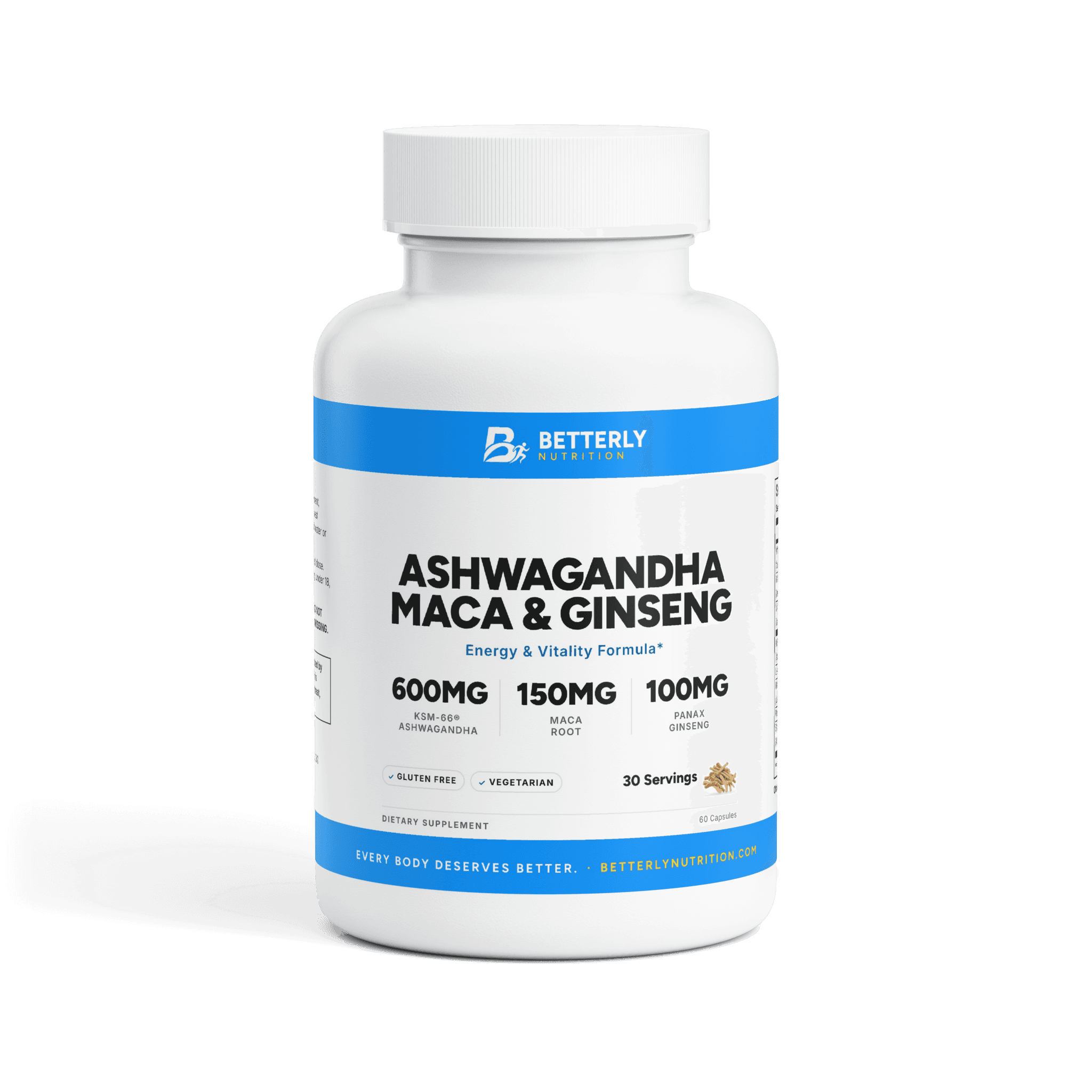
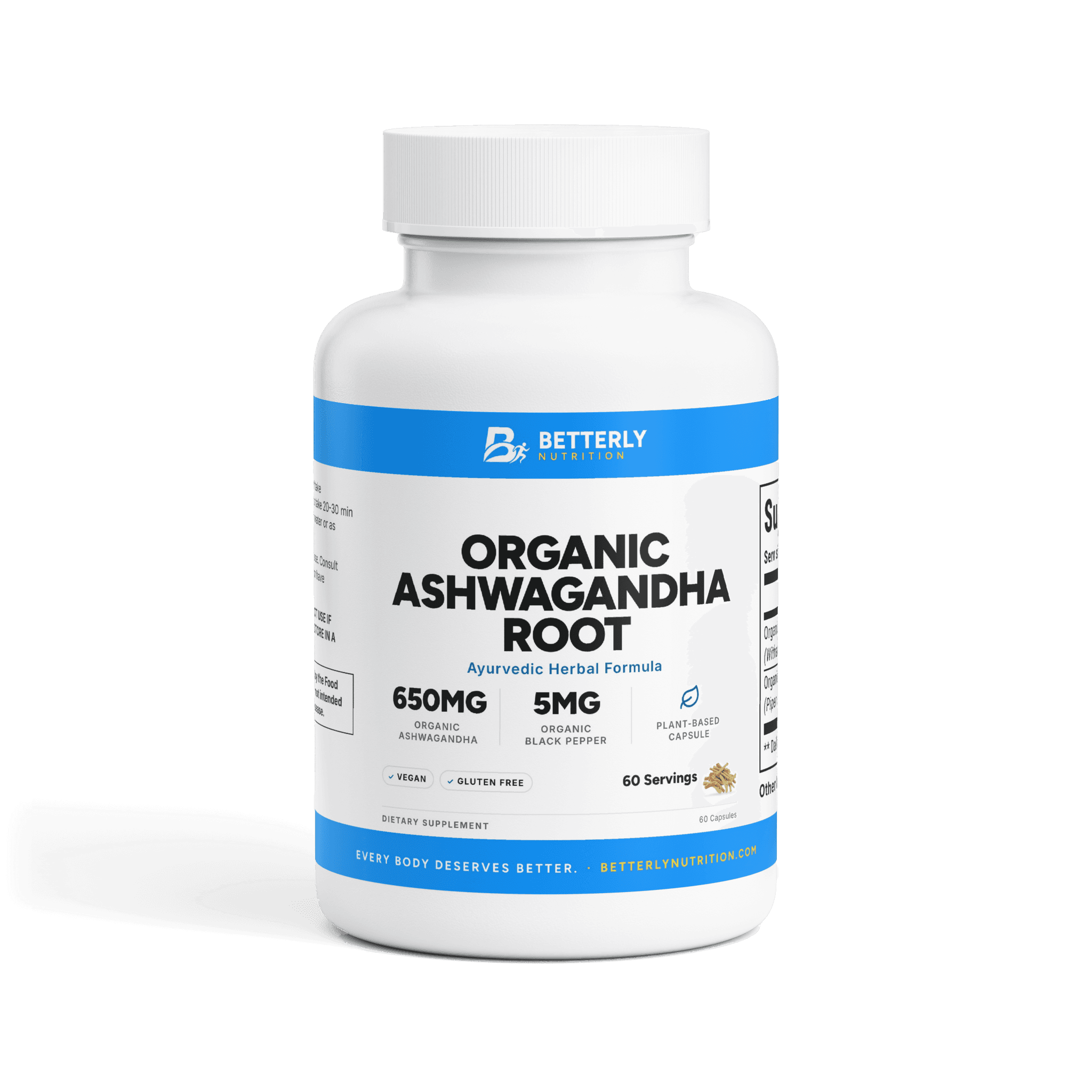
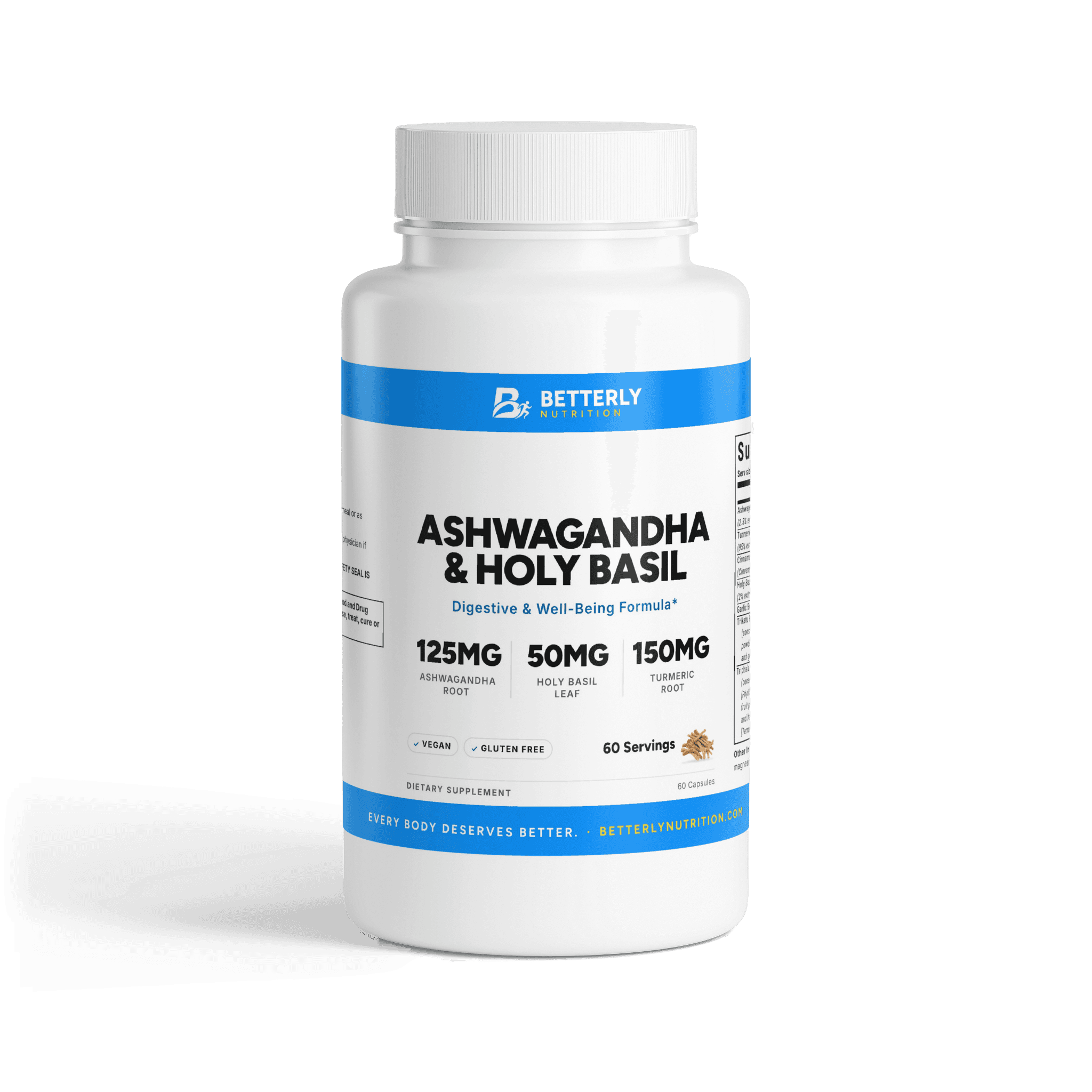
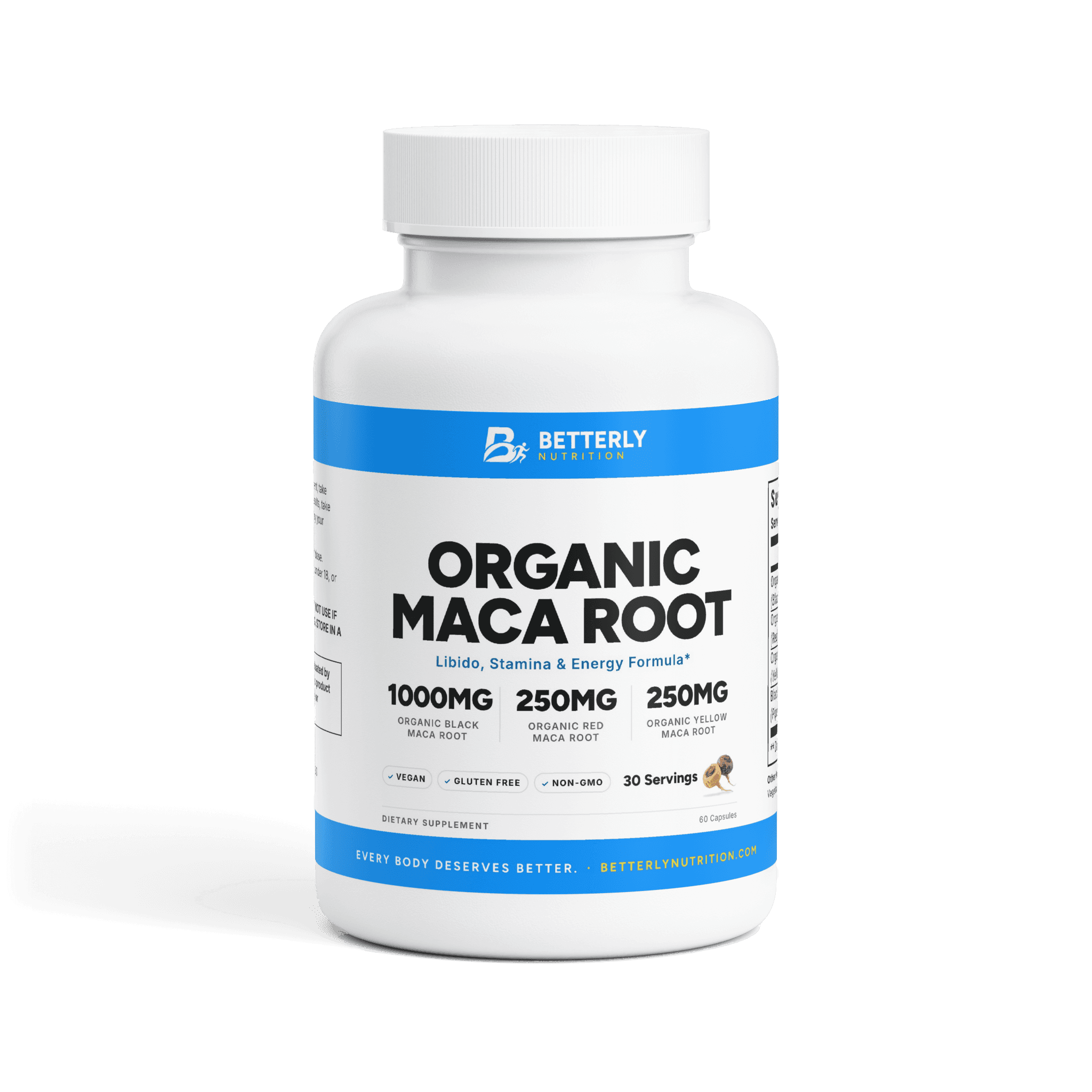
Our Ashwagandha, Maca & Ginseng Capsules read differently: adults take 2 capsules daily with 6 to 8 oz of water, and the label names no meal or hour. Ashwagandha leads that formula, and how to take ashwagandha has a guide of its own.
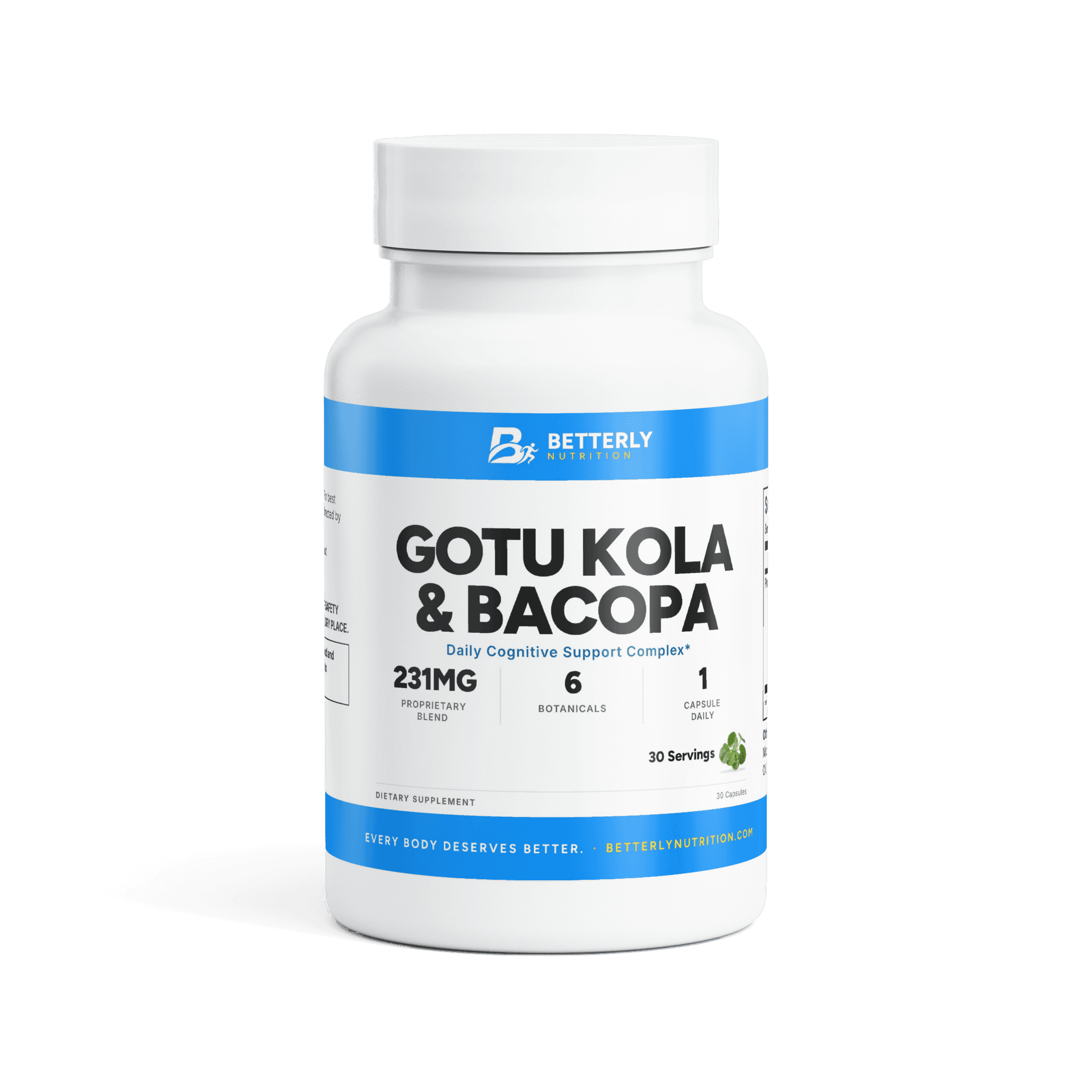
The one-a-day Gotu Kola & Bacopa Capsules also go down with water, no meal named. Their Panax ginseng root powder is one of six botanicals sharing a 231 mg proprietary blend, and its share of that total isn't printed.
| Betterly label | Ginseng per serving | Directions | What sets the timing |
|---|---|---|---|
| Ginkgo Biloba & Ginseng Capsules | 700 mg extract, stem and leaf | 2 capsules twice a day | 20-30 min before a meal |
| Ashwagandha, Maca & Ginseng Capsules | 100 mg root powder | 2 capsules daily | Water; no meal named |
| Gotu Kola & Bacopa Capsules | Root powder in a 231 mg blend | 1 capsule daily | Water; no meal named |
| Alpha-GPC & L-Theanine Focus Powder (Sour Grape) | 50 mg extract | 2 scoops in 16 fl oz of water | 200 mg of caffeine |
The lesson: "ginseng" on the front says little about timing. Only the ginkgo capsule ties it to meals, and caffeine rules the focus powder. Each formula on our adaptogen shelf prints its own directions, so don't stack them without a provider's okay.
From our shop: Ashwagandha, Maca & Ginseng Capsules — one 2-capsule serving a day with 6 to 8 oz of water and no meal to schedule, carrying 600 mg of KSM-66® ashwagandha extract, 300 mg of L-arginine, 150 mg of maca root and 100 mg of Panax ginseng root powder.
How long does ginkgo biloba take to work?
No federal source we found gives a timeline for ginkgo biloba or ginseng to work, and in healthy people, NCCIH can't say whether ginkgo has any effect on thinking.
Pages that rank for this question often quote a fixed number of weeks. We couldn't trace those figures to NCCIH or ODS, so we won't repeat one. What NCCIH says:
- Ginkgo leaf extracts have a safety record in studies of up to 6 years. That's a safety note, not a promise of results.
- Its summary of Asian ginseng research describes mostly small, brief trials: under 200 participants and under 3 months long.
- For ginseng, NCCIH's safety comment stops at 6 months, and longer use stays an open question.
So how long should you try it? Agree on a trial length with your provider inside that 6-month window, keep the same two meal slots, and jot a nightly note about your sleep. If nothing seems different, don't raise the amount.
Who can skip a twice-a-day ginseng routine?
You can skip a twice-a-day ginseng routine if dinner is your only steady meal, your days rarely include two sit-down meals, or you're hoping for an afternoon pick-me-up.
- Dinner is your one dependable meal. A two-meal label needs two meals, and the one slot you have is the one we'd keep ginseng away from.
- You eat on the fly. If most days bring snacks rather than two real meals, the before-a-meal instruction has nothing to attach to, and a once-a-day blend taken with water asks less of your calendar.
- You want help with a 3 p.m. slump. A serving that late cuts against our own bedtime reasoning, and NCCIH describes only a possible slight effect on general tiredness, with no time frame.
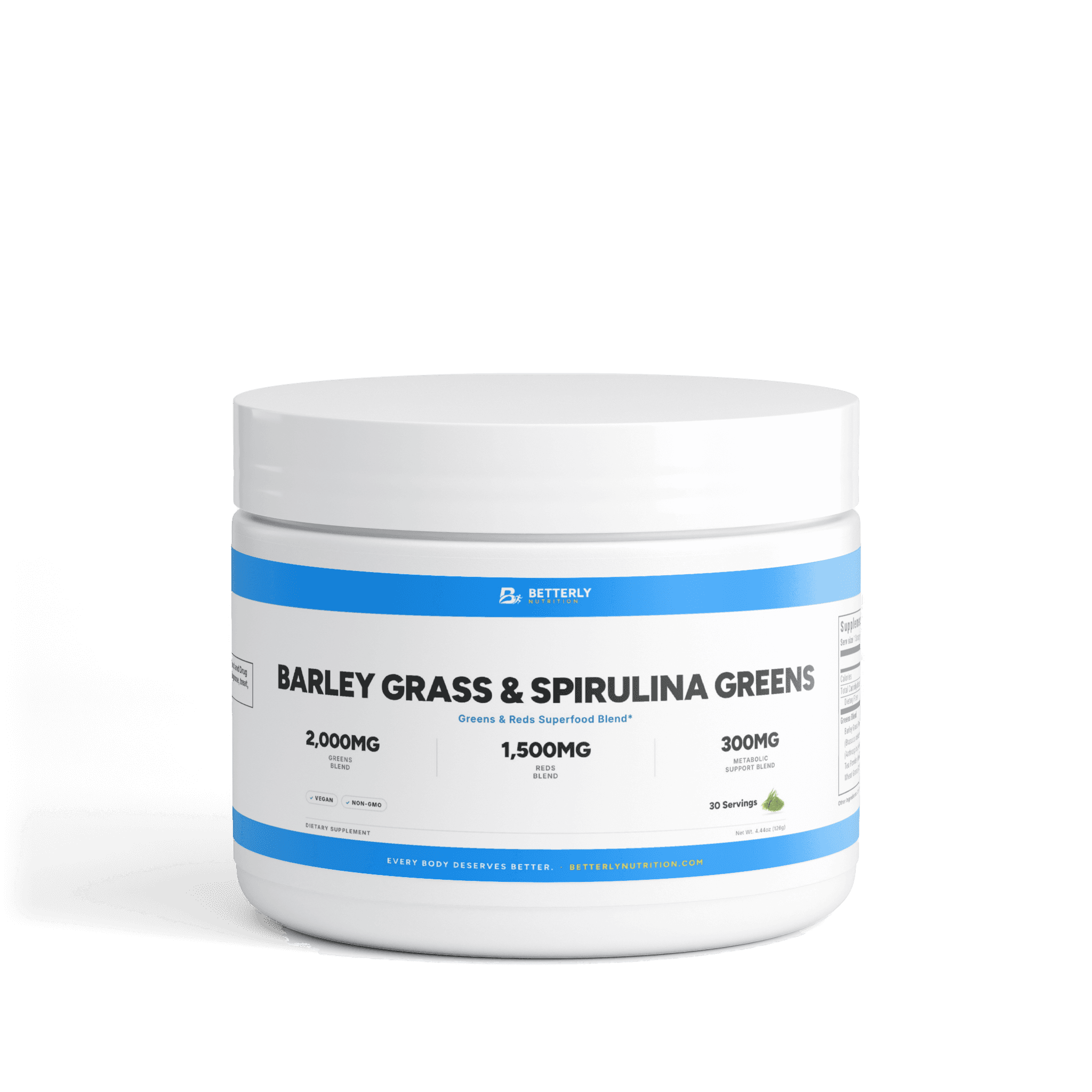
- Another product already puts ginseng in your day. Our Barley Grass & Spirulina Greens Powder tucks Panax ginseng root inside a 300 mg blend per 1-scoop (4.2 g) serving, while each flavor of our focus powder gives Asian ginseng its own 50 mg row. Check those panels before adding a pre-meal capsule.
For skip reasons unrelated to timing, such as training goals, see our Korean red ginseng vs Panax ginseng guide.
Who should run a ginseng schedule past a provider first?
A ginseng schedule needs a healthcare provider's sign-off first for anyone pregnant or breastfeeding, anyone under 18, anyone on medicine or facing a procedure, and anyone with a medical condition.
Why each group matters:
- Expecting or breastfeeding: NCCIH flags possible pregnancy risks for both herbs and mentions expert advice to avoid ginseng while nursing.
- Younger than 18: our label lists this group for a physician's input.
- On any medicine: each herb carries an interaction note on its NCCIH page.
- A procedure on the calendar: both herbs carry NCCIH cautions tied to clotting or bleeding, so your care team should know the capsule is in your day.
- Living with a medical condition: take the bottle to your next appointment.
Ginkgo's cautions get fuller treatment in who should not take ginkgo biloba.
FAQ: Ginseng and ginkgo timing
Can you take all 4 ginseng capsules at once?
No, Betterly's Ginkgo Biloba & Ginseng label doesn't put all 4 ginseng capsules in one dose: it reads "two (2) capsules twice a day." A single 4-capsule dose would place twice the label's per-meal amount, 1,400 mg of ginseng extract, in front of one meal. If fitting in a second pre-meal slot is the real problem, a once-a-day blend taken with water may be the easier product for you.
How far apart should the two ginseng servings be?
Our ginseng label names no minimum gap between the two servings; each one simply goes 20 to 30 minutes before a meal. So the spacing is whatever separates your two meals, about 5 hours on a breakfast-at-7, lunch-at-noon day. A late breakfast and an early lunch still follow the letter of the label, but they bunch 4 capsules into a short stretch. If you'd like a firm minimum, ask your pharmacist.
Should you take ginseng before a workout?
No, our ginseng label sets no pre-workout slot, because it keys every serving to a meal and never mentions exercise. So let your meals, not your training, set the clock. A morning session that pushes breakfast later pushes the first pair later too. An evening workout doesn't open a new slot either, since both of the day's pairs should be behind you by then.
What if you miss a serving of ginseng?
Skip a missed ginseng serving rather than making it up later, since our label has no catch-up rule. Missed the breakfast pair? Lunch still carries one serving, and a second fits only if another meal comes by mid-afternoon. Missed the lunch pair? Let it go, because carrying it to dinner nudges ginseng toward bedtime. Either way, one meal never gets more than the label's 2 capsules.
Can you take ginseng with your morning medicines?
Only after a pharmacist has checked, because a breakfast pair of ginseng can land right beside your morning pills. NCCIH notes possible interactions between Asian ginseng and certain medications, yet neither that page nor our label sets a spacing, so we won't guess one. Bring the Supplement Facts panel along: the ginkgo in the same capsule has interaction and bleeding cautions of its own.
Sources
- National Center for Complementary and Integrative Health: Asian Ginseng: Usefulness and Safety
- National Center for Complementary and Integrative Health: Ginkgo: Usefulness and Safety
- NIH Office of Dietary Supplements: Dietary Supplements for Immune Function: Fact Sheet for Consumers
- U.S. Food and Drug Administration: Spilling the Beans: How Much Caffeine Is Too Much?
If this left you looking for somewhere to start, read ginkgo and ginseng capsules taken twice a day before meals — its amounts per serving are listed on the page. For the practical questions this raises, how dosing, sourcing and subscriptions work is answered in one place.