On this page
- Key takeaways
- Ginkgo biloba vs ginseng: what's the difference?
- Which is better for focus and memory, ginkgo or ginseng?
- Why are ginkgo and ginseng sold together so often?
- Can you take ginkgo biloba and ginseng together?
- What's inside Betterly's ginkgo and ginseng capsule?
- Ginkgo biloba vs ginseng vs ashwagandha: how do they compare?
- How do you take a ginkgo and ginseng supplement?
- When don't you need a ginkgo and ginseng combo?
- Who should check with a provider before taking ginkgo or ginseng?
- FAQ: Ginkgo biloba and ginseng
- Sources
The short answer: Ginkgo biloba vs ginseng comes down to a leaf versus a root. Ginkgo supplements use the fan-shaped leaves of an ancient tree, while Panax ginseng is an herb whose root is the part used most. NIH research summaries find neither herb's evidence convincing in healthy adults. NCCIH notes that where ginseng seemed to help memory, ginkgo was part of the mix, but it doesn't describe those formulas, so we can't say ours matches.
We sell the "both" option, Ginkgo Biloba & Ginseng Capsules, so this page has a built-in pull toward pairing the herbs. To push back on that, we flag each spot where our formula differs from what NCCIH describes, starting with ginseng drawn from stem and leaf instead of the root.
Key takeaways
- Ginkgo and Panax ginseng are unrelated plants marketed for different jobs, ginkgo mostly for focus and memory and ginseng mostly for mental energy.
- NCCIH calls ginkgo's effect on thinking in healthy people uncertain, and only small studies suggest Asian ginseng may help attention in middle-aged adults.
- Both herbs carry a bleeding or clotting caution, so a product with both doubles up on it before surgery or next to blood-thinning medicine.
- At the label's suggested use of 2 capsules twice a day, a 60-capsule bottle of Betterly's Ginkgo Biloba & Ginseng Capsules lasts 15 days.
Ginkgo biloba vs ginseng: what's the difference?
Ginkgo biloba and Panax ginseng differ in the plant part used, the compound a label measures and the side effects NCCIH lists, though they share one safety flag.
According to the National Center for Complementary and Integrative Health (NCCIH), ginkgo is so old that people call it a living fossil, the last surviving species of a primitive plant family. Today the leaf is the form people use most, usually as an extract.
NCCIH's page on Asian ginseng says Panax ginseng grows natively across Korea, northeastern China and Siberia's far east. Traditional Chinese medicine has used it as a calming agent and as an adaptogen, meaning an herb thought to help the body resist physical and mental stress.
| Ginkgo biloba | Panax ginseng | |
|---|---|---|
| Plant | Ancient tree | Herb in the Panax genus |
| Part used most | Leaf, often as an extract | Root |
| Marker on our label | 24% flavones | 7% ginsenosides |
| Usually sold for | Focus and memory | Mental energy, everyday stress |
| NCCIH on healthy adults | Effect on thinking uncertain | Small studies, midlife only |
| Most common side effects | Dizziness, digestive upset, headache | Trouble sleeping |
| Shared caution | Bleeding risk with blood thinners | May interfere with clotting |
The verdict from that table: these herbs are sold for different jobs, neither has strong proof behind it in healthy adults, and they share one safety flag.
Which is better for focus and memory, ginkgo or ginseng?
Neither ginkgo nor ginseng has clearly won on focus or memory, because NCCIH describes the research on each as weak or narrow for healthy adults.
Ginkgo has the bigger research file and the more disappointing results. NCCIH notes that ginkgo products have been marketed for "brain health," yet it's uncertain whether they change mental performance in healthy people. Much of that research is low quality.
NCCIH describes three large ginkgo studies, all in older adults. One of them, the Ginkgo Evaluation of Memory (GEM) study, was co-funded by NCCIH. More than 3,000 adults aged 75 and older took ginkgo or a placebo for a median of 6 years, and ginkgo did no better than the placebo for memory in older adults.
Ginseng's file is thinner but more specific. NCCIH says a small amount of research suggests Asian ginseng may help attention, abstract thinking and reaction time in middle-aged adults, but not in young adults. Most ginseng trials have enrolled fewer than 200 people and lasted under 3 months.
On evidence alone, ginseng offers a faint hint for attention in midlife, while ginkgo's large trial in older adults found no memory edge over placebo. Neither is a strong reason to pick one herb, so keep your expectations modest if you try either.
Why are ginkgo and ginseng sold together so often?
NCCIH doesn't explain why ginkgo and ginseng are combined, though it notes that any memory benefit seen with Asian ginseng has seemed to depend on adding ginkgo.
That comes from a single line on NCCIH's ginseng page: "Any benefit from Asian ginseng on memory has appeared to depend on the addition of ginkgo." The page doesn't give the amounts, the extracts or the part of the ginseng plant behind that finding.
That gap matters for us. NCCIH says the root is the ginseng part used most for health purposes, while the ginseng in our capsule is an extract of stem and leaf. So we can't hold up that line as support for our formula, or for any combo whose research you can't see.
Why the pairing sells is our own read, not a finding. Ginkgo is usually bought with concentration in mind and ginseng with mental energy, so one capsule can speak to both hopes.
If herbs like these are new to you, our plain-English primer on nootropics sorts them from the amino acids and mushrooms sold for similar reasons.
Can you take ginkgo biloba and ginseng together?
Many capsules combine ginkgo biloba and ginseng, but NCCIH's safety notes cover each herb alone, and together they stack a bleeding and clotting caution.
Taken separately, ginkgo leaf extract is likely safe for most adults in moderate amounts, NCCIH says. Asian ginseng appears safe for most people in recommended amounts when taken by mouth for 6 months or less, though its long-term safety has been questioned.
The overlap is what matters. NCCIH warns that ginkgo may make bleeding more likely for anyone on anticoagulant (blood-thinning) drugs, and that Asian ginseng may interfere with blood clotting. If you take those medicines or have a procedure coming up, ask first.
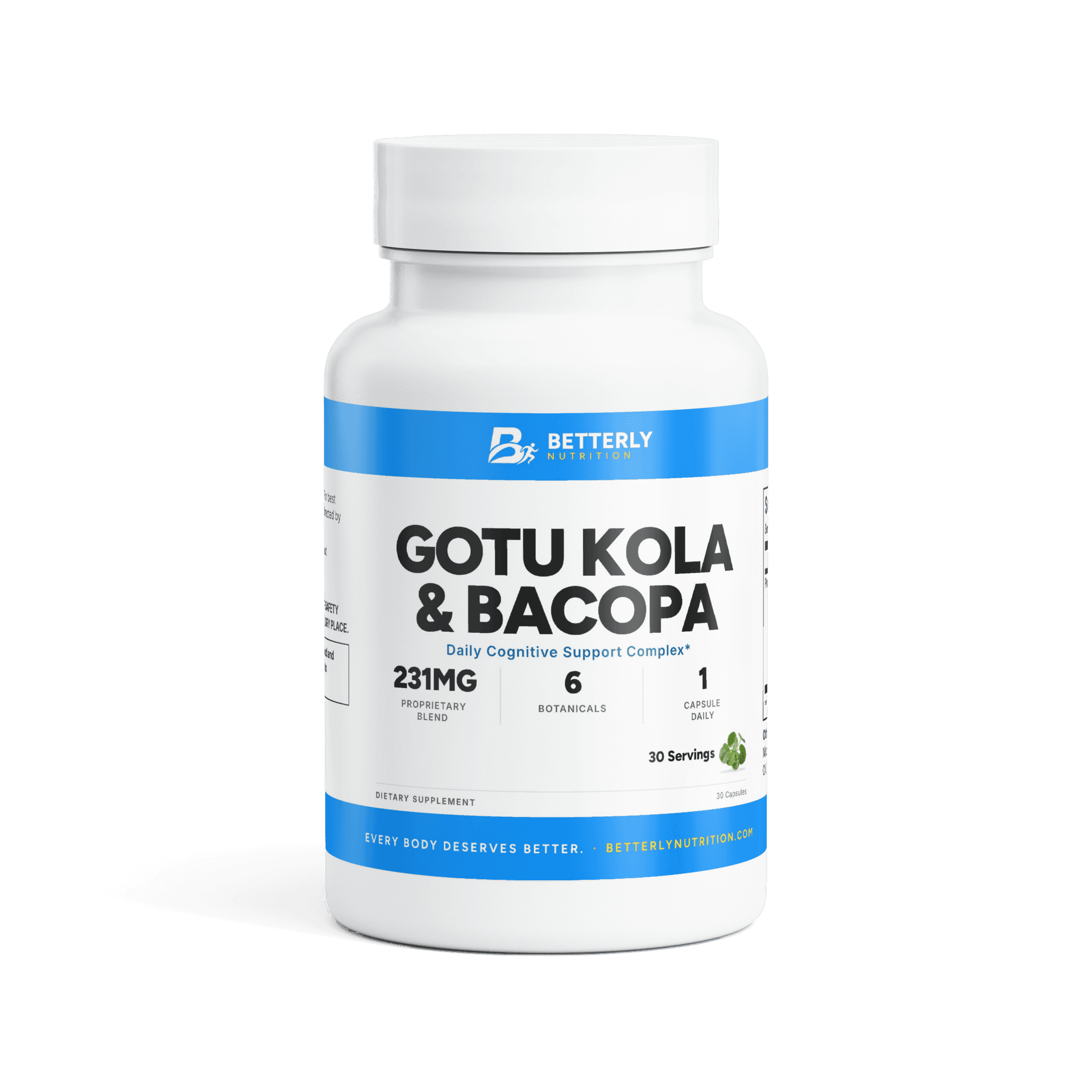
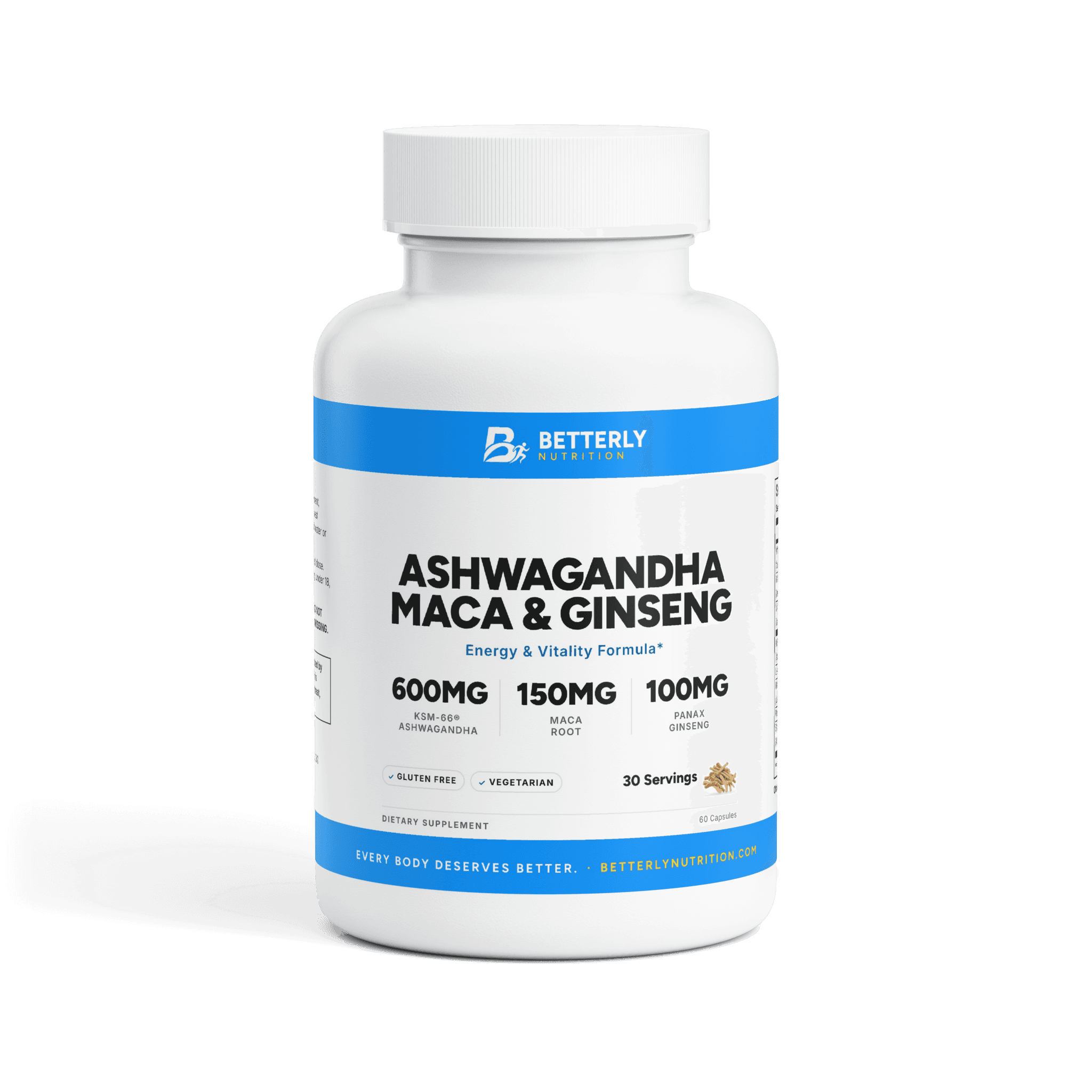
Count your sources as well. Our Gotu Kola & Bacopa Capsules list Panax ginseng root powder inside a 231 mg proprietary blend, with no separate amount shown. Our Ashwagandha, Maca & Ginseng Capsules show 100 mg of Panax ginseng root powder in each 2-capsule serving. A few other products of ours list ginkgo leaf or ginseng too, including an energy gummy, a focus powder and two greens powders, so read every panel you take before adding this capsule.
Our guide to who should skip ginkgo goes deeper on safety.
What's inside Betterly's ginkgo and ginseng capsule?
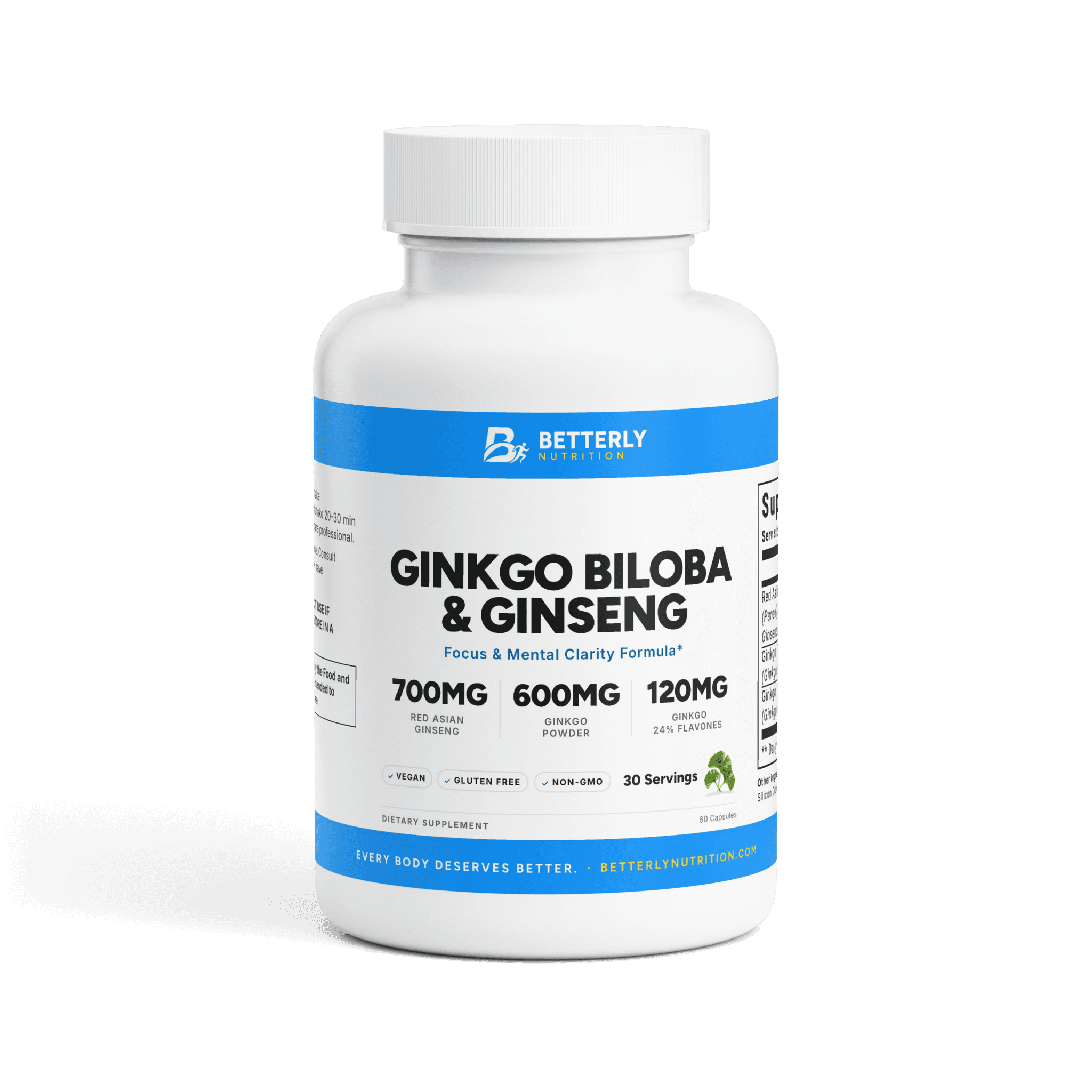
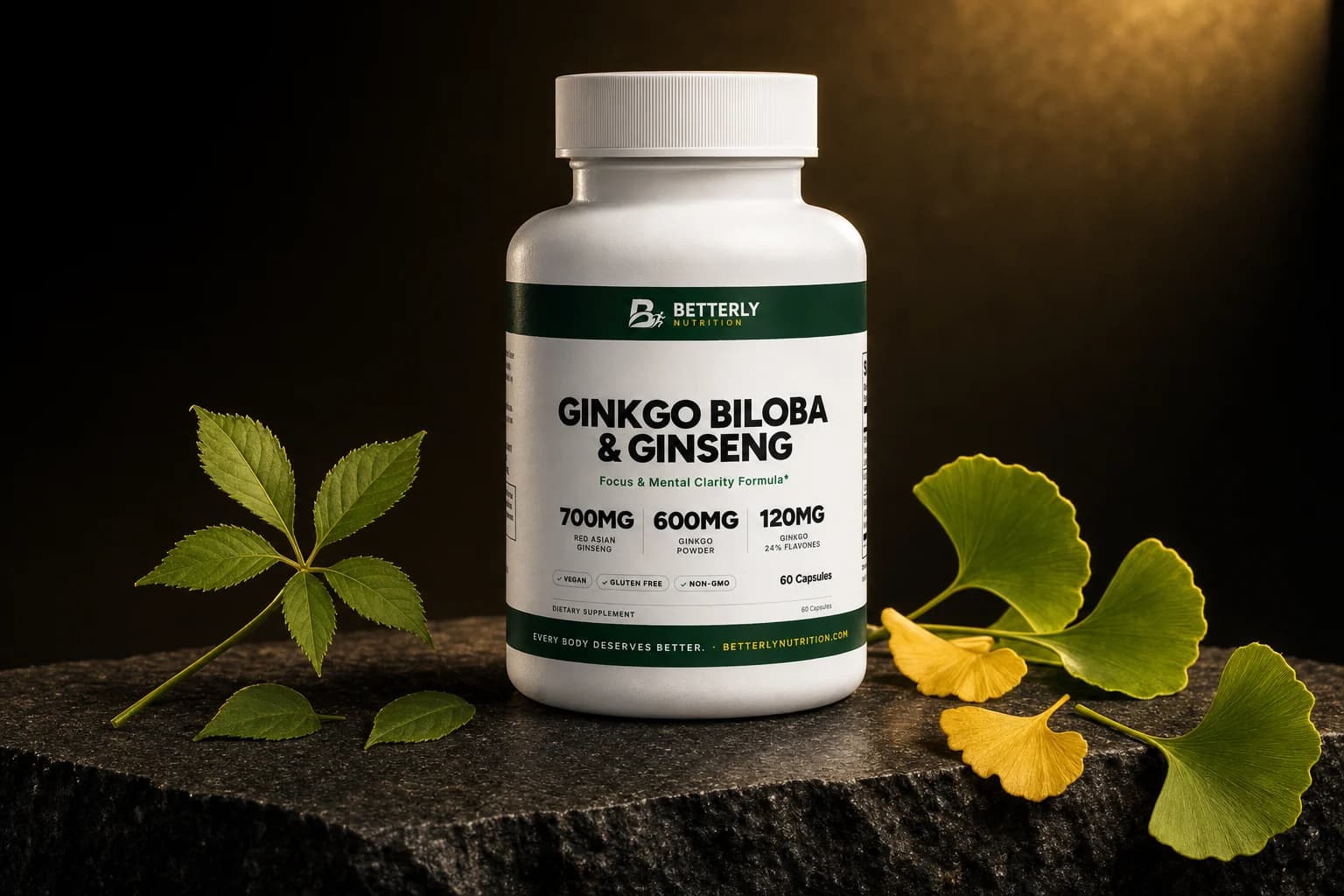
Betterly's Ginkgo Biloba & Ginseng Capsules list three rows per 2-capsule serving: 700 mg of ginseng extract, then 600 mg and 120 mg of two different ginkgo leaf ingredients.
- Red Asian Ginseng Extract (Panax), 700 mg. It's standardized to 7% ginsenosides, which NCCIH names as the ginseng compounds thought to be most important. The plant parts in parentheses are stem and leaf.
- Ginkgo Powder (leaf), 600 mg. This is ground ginkgo leaf, with no marker percentage listed.
- Ginkgo (24% Flavones) (leaf), 120 mg. Flavones should make up about 24% of this row's weight, roughly 29 mg.
"Standardized" sounds reassuring, but it's a narrow promise. The NIH Office of Dietary Supplements (ODS) explains why in its botanical background fact sheet: makers measure chosen marker chemicals to keep batches alike. ODS adds that no U.S. law makes standardization mandatory, the term has no legal definition, and the word by itself doesn't necessarily mean high quality.
The rest of the panel is a hypromellose (vegetable) capsule and silicon dioxide. The label's printed claims are vegan, gluten free and non-GMO, and the panel has no caffeine row.
From our shop: Ginkgo Biloba & Ginseng Capsules — a vegan capsule pairing 700 mg of stem-and-leaf ginseng extract (7% ginsenosides) with two ginkgo leaf rows, 600 mg of powder and 120 mg at 24% flavones, per 2-capsule serving.
Ginkgo biloba vs ginseng vs ashwagandha: how do they compare?
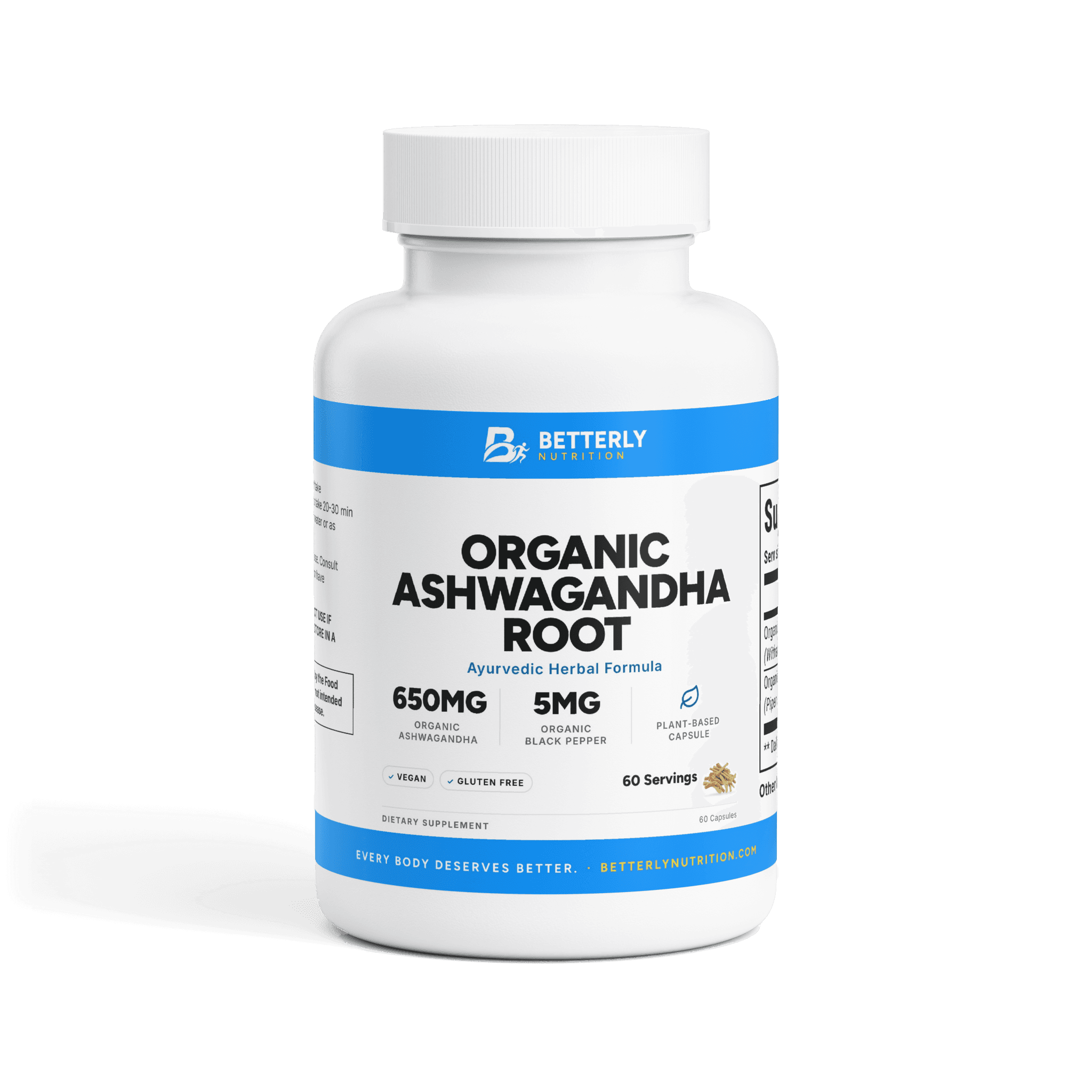
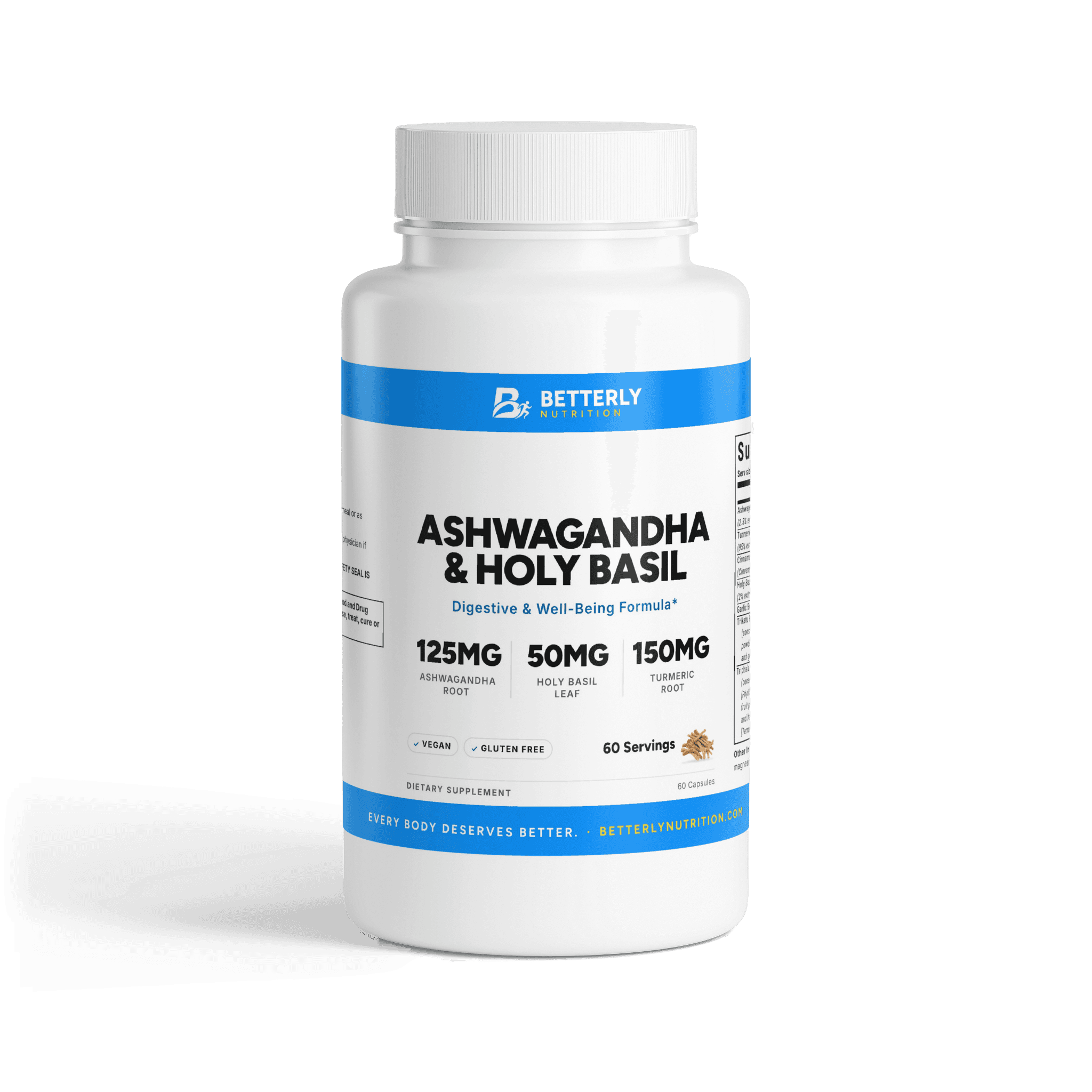
Ashwagandha is a third plant, Withania somnifera, whose root is used as an adaptogen, and despite the nickname "Indian ginseng," it isn't in the ginseng family.
That family detail comes from the ODS ashwagandha fact sheet, which traces the root's use to India's Ayurvedic tradition. Ashwagandha is usually sold for occasional stress rather than focus, and our look at whether ashwagandha gives you energy explains why it isn't a pick-me-up.
| If you want | Our label to read | Per label serving | Daily use on label |
|---|---|---|---|
| Ginkgo and ginseng together | Ginkgo Biloba & Ginseng | 2 capsules: 700 mg ginseng extract; 600 mg + 120 mg ginkgo | 4 capsules |
| Ashwagandha first, some ginseng | Ashwagandha, Maca & Ginseng | 2 capsules: 600 mg KSM-66® ashwagandha; 100 mg ginseng root powder | 2 capsules |
| A small herb blend, no ginkgo | Gotu Kola & Bacopa | 1 capsule: 231 mg blend of 6 herbs | 1 capsule |
The takeaway: only one of the three is built around ginkgo, while ginseng appears in all of them at very different strengths. Choose by the lead ingredient you want, then check whether anything else you take repeats it.
The ashwagandha blend also lists L-arginine, maca, shatavari and three vitamins. The Gotu Kola & Bacopa panel prints only its blend's total, and its gelatin capsule makes it a poor fit for vegetarians.
You can compare every formula in our adaptogen collection side by side.
From our shop: Gotu Kola & Bacopa Capsules — one capsule a day holding a 231 mg blend of six herbs, including bacopa, gotu kola and Panax ginseng root, with no ginkgo.
How do you take a ginkgo and ginseng supplement?
Take a ginkgo and ginseng supplement exactly as its label directs, and ours asks for 2 capsules twice a day, each serving taken 20 to 30 minutes before you eat.
- Count the daily total. Two servings a day is 4 capsules: 1,400 mg of ginseng extract, 1,200 mg of ginkgo powder and 240 mg of the 24% flavones ginkgo.
- Plan the bottle. The panel lists 30 servings of 2 capsules, so one 60-capsule bottle covers 15 days, not a month.
- Put each serving before a meal. The label doesn't name which meals, and our separate guide to picking a time of day for ginseng takes that up.
- Don't go over the label. The caution line on our bottle says "Do not exceed recommended dose."
- Stick to the leaf. NCCIH warns that fresh ginkgo seeds are toxic when eaten, and serious side effects have followed roasted seeds or the crude plant.
When don't you need a ginkgo and ginseng combo?
You don't need a ginkgo and ginseng combo if you want only one of the herbs, already take either in another product, or are really comparing types of ginseng.
- You want ginseng without ginkgo. Each 2-capsule serving of ours carries 720 mg of ginkgo leaf across two rows, so if ginkgo's bleeding caution rules it out for you, look for a ginseng label with no ginkgo row.
- You'd rather try ginkgo by itself. We don't sell a ginkgo-only capsule, and a combo makes it harder to tell which herb is behind any change you notice.
- Something you already take lists ginkgo leaf or ginseng. A second source raises your total, and with ginkgo it adds to the bleeding caution.
- Your real question is which ginseng to buy. Red, white, American and Siberian ginseng are sorted out in our guide to Korean red ginseng vs Panax ginseng.
If neither herb appeals, our roundup of caffeine-free focus supplements weighs L-theanine, bacopa, lion's mane and other options.
Who should check with a provider before taking ginkgo or ginseng?
Ginkgo and ginseng call for a provider's input first if you're under 18, pregnant or nursing, on prescription or over-the-counter medicine, planning surgery, or managing a medical condition.
Our label's caution names several of these groups, and NCCIH fills in the reasons:
- Pregnant or nursing: NCCIH says ginkgo may be unsafe during pregnancy, especially close to delivery. Some studies suggest Asian ginseng taken by mouth may be unsafe in pregnancy, and some experts advise against ginseng during pregnancy and breastfeeding. Little is known about either herb while nursing.
- Under 18: you're on our label's consult-a-physician list, and NCCIH mentions that the same experts advise against ginseng for children.
- Taking medicine: ginkgo may raise bleeding risk alongside blood thinners, and both herbs might interact with other drugs.
- Surgery ahead: bring this capsule up at your pre-op appointment, because of the bleeding and clotting cautions covered above.
- Managing a medical condition: your provider can weigh both herbs against your history.
FAQ: Ginkgo biloba and ginseng
Is ginkgo biloba a type of ginseng?
No, ginkgo biloba isn't a type of ginseng. Ginkgo is a tree, and supplements use its leaf. True ginseng belongs to the Panax genus, and Panax ginseng is best known for its root. The two share a shelf and a first letter, not a family.
What are ginkgo and ginseng taken for?
People mostly take ginkgo and ginseng hoping to support focus, memory and mental energy, and ginseng is also sold as an adaptogen for everyday stress. NCCIH hasn't found firm support for those uses. It says ginkgo hasn't proven effective for anything it's been studied for, and that most ginseng trials have been small and short. Read the marketing for either herb with that in mind.
Is ginkgo or ginseng better for studying?
Neither ginkgo nor ginseng has a good case as a study aid. NCCIH says it's uncertain whether ginkgo changes mental performance in healthy people, and the small body of ginseng research on attention saw possible effects in middle-aged adults but not young adults. If you're a student under 18, our label asks you to check with a physician before taking it.
Should you take ginkgo and ginseng on an empty stomach?
Our Ginkgo Biloba & Ginseng label never mentions an empty stomach; it says to take each serving 20 to 30 minutes before a meal. So the directions put each serving shortly ahead of food rather than with it. NCCIH lists digestive upset among ginkgo's common side effects, so if your stomach objects, ask your provider instead of changing the directions on your own.
What are the side effects of ginkgo and ginseng?
NCCIH lists dizziness, digestive upset and headache as ginkgo's most common side effects. For Asian ginseng, trouble sleeping is the most common, and uncommon reports include liver damage, severe rash and severe allergic reactions. Both herbs carry a bleeding or clotting caution. Stop and talk with a healthcare provider if you notice anything unexpected after you start.
Sources
- National Center for Complementary and Integrative Health: Ginkgo: Usefulness and Safety
- National Center for Complementary and Integrative Health: Asian Ginseng: Usefulness and Safety
- NIH Office of Dietary Supplements: Botanical Dietary Supplements: Background Information for Consumers
- NIH Office of Dietary Supplements: Ashwagandha: Fact Sheet for Health Professionals
If this left you looking for somewhere to start, read ginkgo biloba and ginseng capsules — its amounts per serving are listed on the page. For the practical questions this raises, how dosing, sourcing and subscriptions work is answered in one place.