On this page
- Key takeaways
- Shilajit vs sea moss: what's the actual difference?
- Which has more minerals, shilajit or sea moss?
- Why is iodine the number to watch with sea moss?
- Can you take shilajit and sea moss together?
- What about shilajit, ashwagandha and sea moss together?
- Shilajit vs sea moss: which is better for what you want?
- How should you take shilajit and sea moss capsules?
- Who can skip a shilajit and sea moss capsule?
- Who should check with a healthcare provider first?
- FAQ: shilajit vs sea moss
- Sources
The short answer: Shilajit vs sea moss comes down to what each label can tell you. Sea moss is a seaweed, so its number to watch is iodine, which has a 1,100 mcg daily upper limit for adults. Shilajit is made mostly of humic substances such as fulvic acid and has no daily target at all. Neither of our labels prints a mineral amount, and our shilajit capsule already includes 100 mg of sea moss extract per 1-capsule serving.
Key takeaways
- Shilajit is a tar-like resin from mountain rock with roots in Ayurveda, while sea moss is a red seaweed from rocky Atlantic coasts.
- Counts like "85 minerals" and "92 minerals" are usually presented as the number of elements detected, which says nothing about how much of each is in a serving.
- Iodine is the number to watch with sea moss, since the adult upper limit is 1,100 mcg a day from all sources, but whole-seaweed labels, ours included, often don't print an iodine figure.
- Our shilajit capsule holds ashwagandha and sea moss beside the shilajit, so two of its four rows matter if you're managing a thyroid condition.
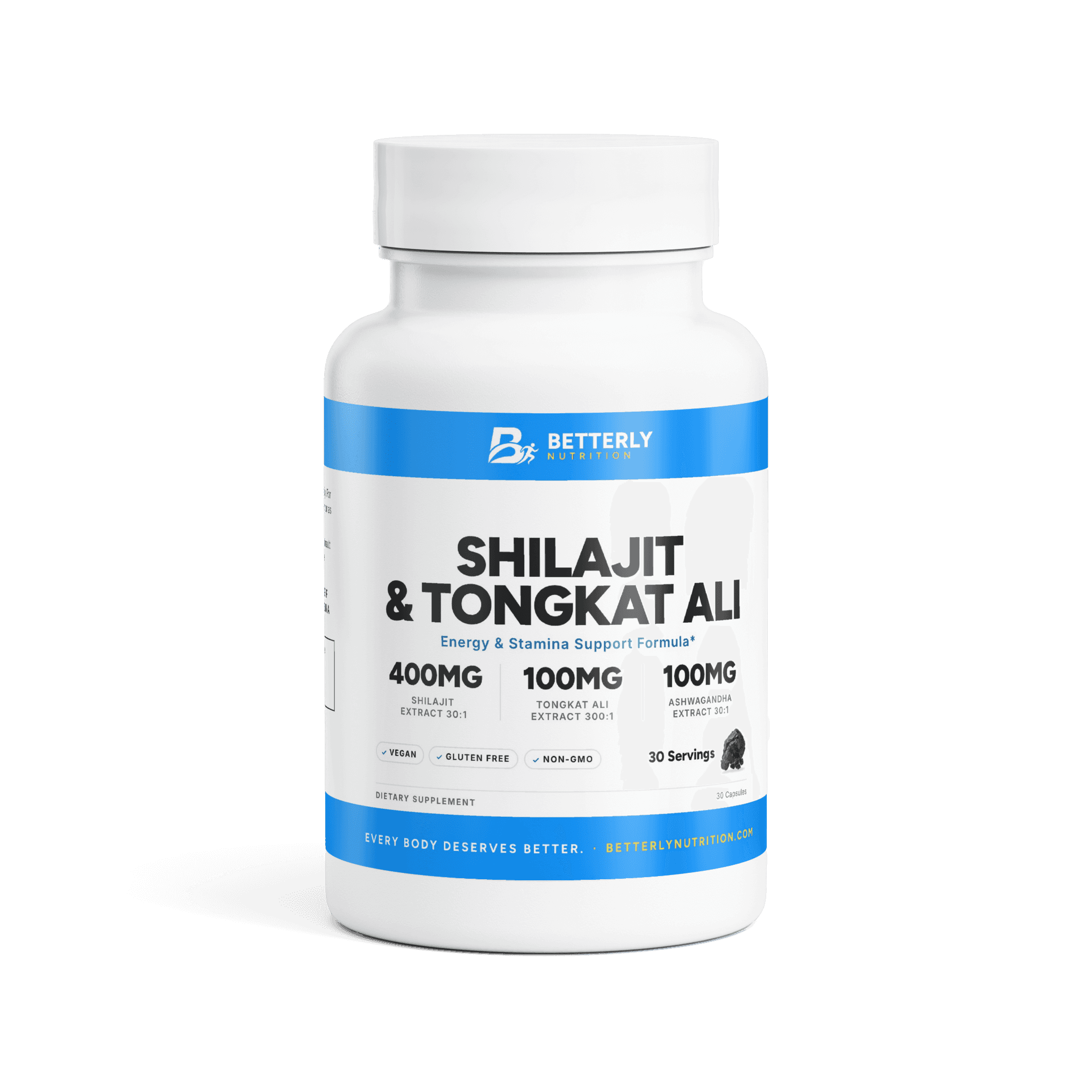
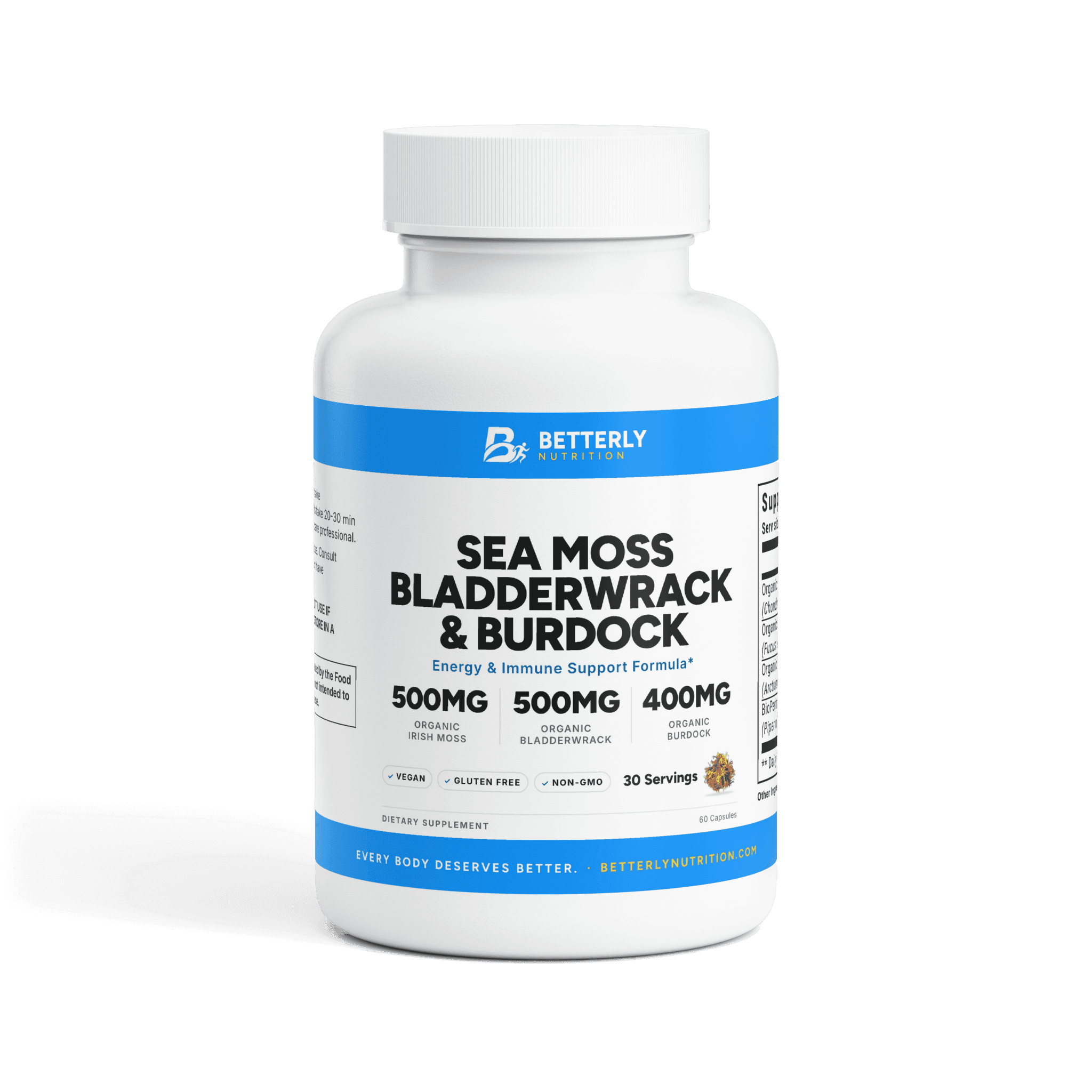
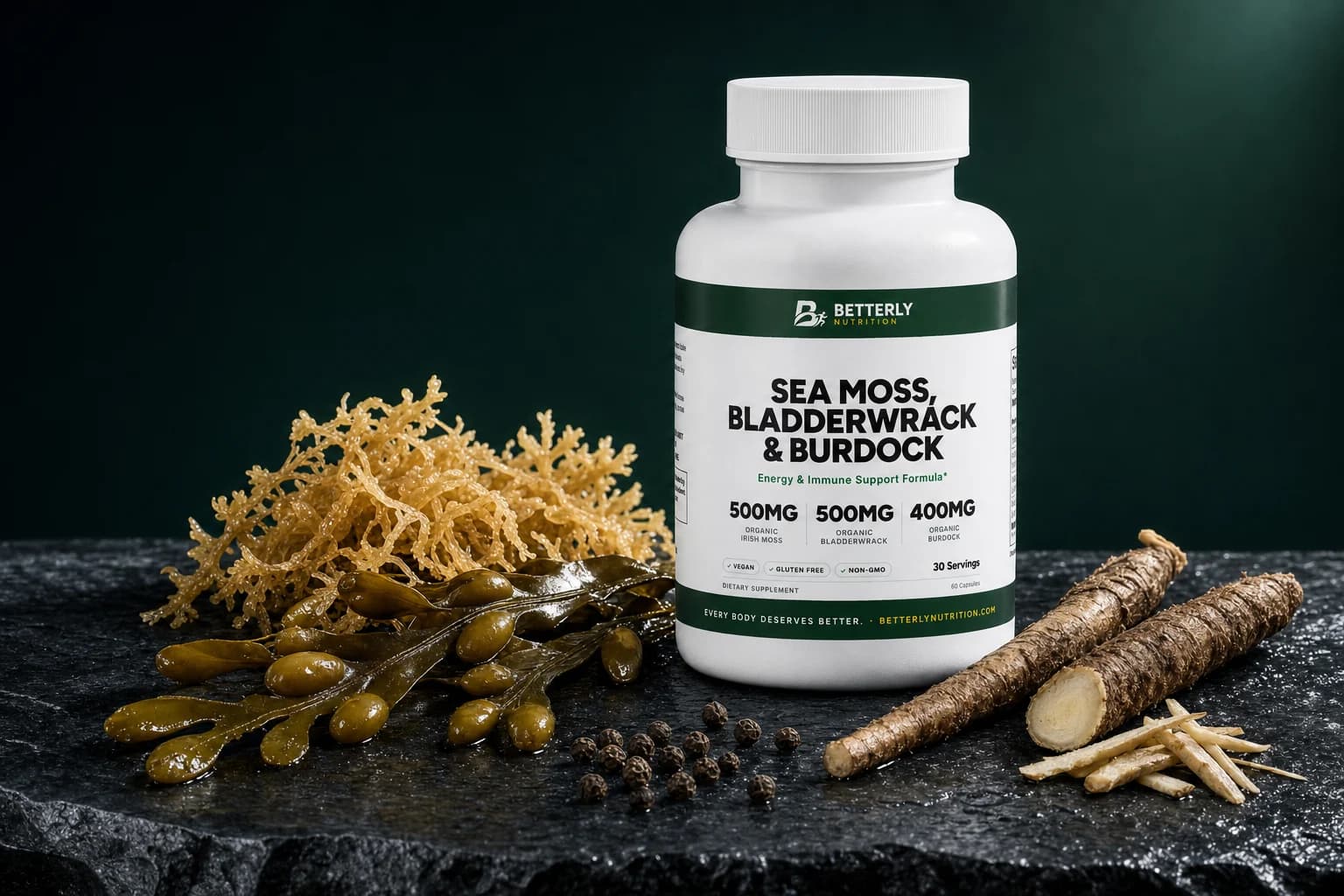
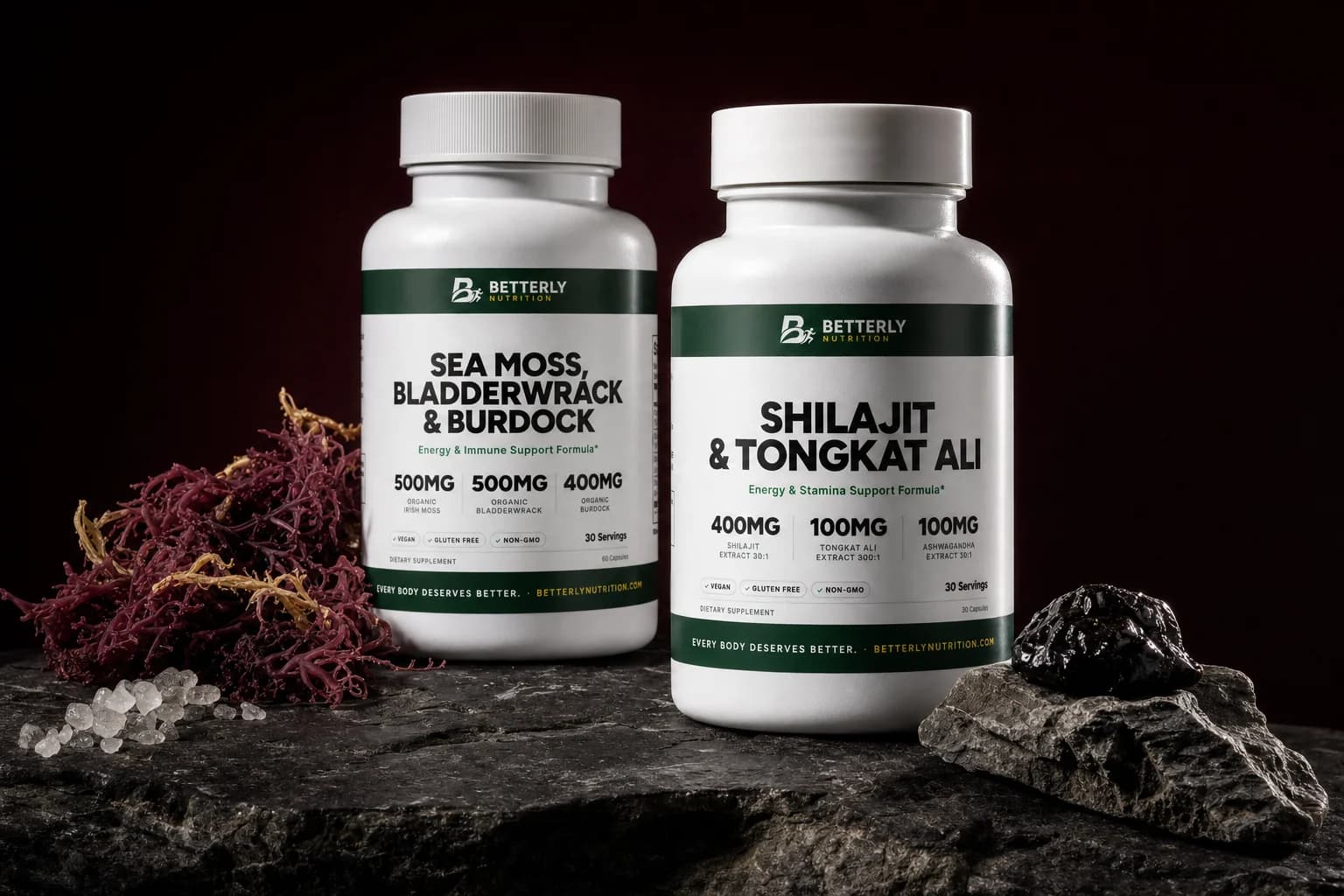
We sell both sides of this comparison: Shilajit & Tongkat Ali Capsules, which combine the two, and the shilajit-free Sea Moss, Bladderwrack & Burdock Capsules, which pair two seaweeds with burdock root. Every milligram below is copied from their printed panels, gaps included.
Shilajit vs sea moss: what's the actual difference?
Shilajit is a dark, sticky resin that seeps out of high mountain rock, while sea moss is a red seaweed gathered from rocky Atlantic shorelines.
Shilajit forms slowly as plant matter breaks down inside rock, and it's mostly humic substances, with fulvic acid the best known. Our panel lists it as Shilajit Extract 30:1 (Asphaltum). Its reputation comes mainly from Ayurveda, India's traditional medical system.
Sea moss, also called Irish moss, is a small, frilly seaweed whose gel, carrageenan, still thickens foods today. Its nutritional draw is simple: seaweed takes up iodine from seawater.
| At a glance | Shilajit | Sea moss |
|---|---|---|
| What it is | Resin from mountain rock | Red seaweed (Chondrus crispus) |
| Best known for | Fulvic acid, Ayurvedic use | Iodine, its thickening gel |
| Usual forms | Resin, powder, capsules | Gel, dried, capsules, gummies |
| Our shilajit capsule, per 1-capsule serving | 400 mg extract 30:1 | 100 mg extract 20:1 |
| Our sea moss capsule, per 2-capsule serving | None | 500 mg whole Irish moss |
| Mineral amounts printed | None | None |
Ads file both under "minerals," but only sea moss comes with a specific mineral, iodine, that gives you a reason to count.
Both bottles also print Energy on the front, but neither panel lists a nutrient amount, iodine included, to put a number behind that word. The NIH Office of Dietary Supplements (ODS) iodine fact sheet notes the body needs iodine to make thyroid hormones, and seaweed is generally rich in it, but our label doesn't say how much iodine a serving holds. For shilajit, our search turned up no federal fact sheet to cite, so its case rests mainly on tradition.
Which has more minerals, shilajit or sea moss?
You can't tell which has more minerals from our labels, because both panels list shilajit and sea moss by weight in milligrams, not mineral by mineral.
The "85" and "92" figures in ads are generally framed as a tally of elements found in the raw material. A tally isn't a dose: an element can be present at a trace too small to matter, and amounts shift with where the raw material was collected. Our sea moss vs multivitamin comparison picks apart the seaweed version, and the shilajit number shares its weakness.
A mineral you can count gets its own row on a Supplement Facts panel, with an amount in mg or mcg and usually a % Daily Value. Every active row on both of our panels shows "**" there instead, meaning no Daily Value has been set. That's normal for herbs and extracts.
Whole seaweed rarely carries an iodine figure either, a gap our guide to sea moss, bladderwrack and burdock benefits walks through.
What about the claim that shilajit's fulvic acid ferries sea moss minerals into your cells? Neither of our labels makes it, and we found no federal source behind it.
The 30:1 and 20:1 on our shilajit label don't settle the mineral question either. ODS describes botanical-to-extract ratios in the tincture section of its botanical supplements background sheet, as the weight of the dried plant against the finished product. Shilajit isn't a harvested plant, and neither ratio says whether iodine or any other mineral made it through extraction.
Why is iodine the number to watch with sea moss?
Iodine is the number to watch with sea moss because seaweed is generally rich in it, and ODS lists the adult upper limit as 1,100 mcg a day.
Take both of our bottles and you'd have three seaweed lines: 100 mg of sea moss extract per 1-capsule serving of the shilajit formula, plus 500 mg of Irish moss and 500 mg of bladderwrack per 2-capsule serving of the sea moss capsules. None of the three prints an iodine figure, so the labels can't show where the pair lands against that limit.
ODS explains that getting too much iodine can cause some of the same symptoms as getting too little.
Can you take shilajit and sea moss together?
Shilajit and sea moss are often combined, and our Shilajit & Tongkat Ali Capsules hold 400 mg shilajit extract and 100 mg sea moss extract per 1-capsule serving.
Here are the two panels, row for row:
| Per serving | Shilajit & Tongkat Ali | Sea Moss, Bladderwrack & Burdock |
|---|---|---|
| Serving size | 1 capsule | 2 capsules |
| Shilajit | 400 mg extract 30:1 | None |
| Seaweed | 100 mg sea moss extract 20:1 | 500 mg Irish moss, 500 mg bladderwrack |
| Other actives | 100 mg each of ashwagandha and tongkat ali extracts | 400 mg burdock root, 5 mg BioPerine® |
| Iodine listed | No | No |
Side by side, the two panels overlap only on seaweed. Everything else differs, from the serving size to the other actives.
Neither label addresses being taken with the other, so bring the two panels to your provider or pharmacist first, especially if you're managing a thyroid condition or already take iodine.
From our shop: Shilajit & Tongkat Ali Capsules — 400 mg shilajit extract 30:1, with 100 mg apiece of ashwagandha, sea moss and tongkat ali extracts, per 1-capsule serving.
What about shilajit, ashwagandha and sea moss together?
Our Shilajit & Tongkat Ali formula puts shilajit, ashwagandha and sea moss in one capsule, pairing an iodine-bearing seaweed with an herb ODS says might affect thyroid function.
ODS's ashwagandha sheet for health professionals adds that the herb might interact with some medications. It appears well tolerated for up to about 3 months, and its common side effects, such as loose stools or nausea, are usually mild. Past that, its long-term safety hasn't been established, and ODS flags a few more serious reports, including "adverse effects on liver function."
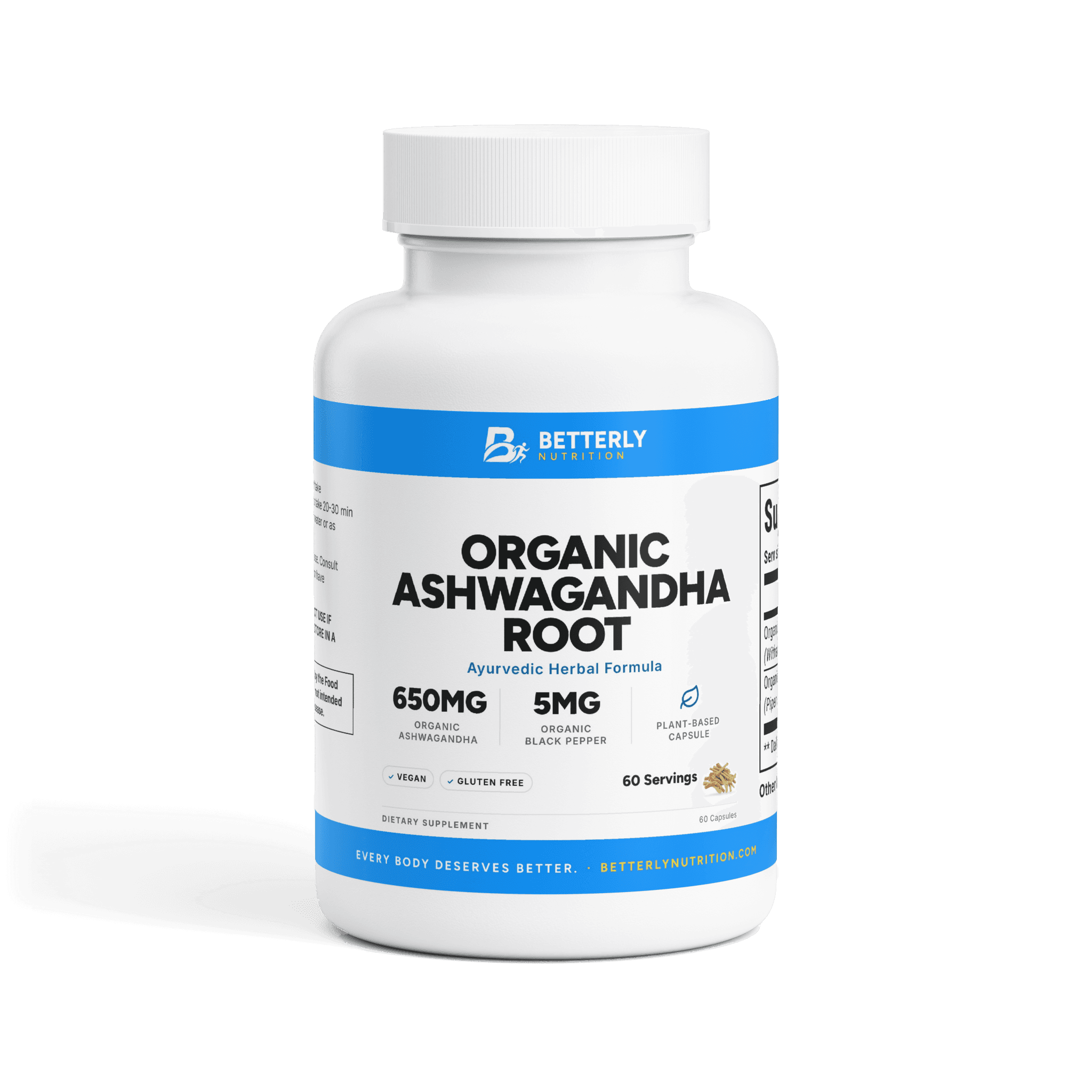
Doubling up is the other trap. Our Organic Ashwagandha Root Capsules list 650 mg of organic ashwagandha root per 1-capsule serving, taken twice a day. That's listed as plain root, not as an extract like the formula's 30:1 root extract, so the milligrams from two bottles don't add up neatly.
Tongkat ali (Eurycoma longifolia), at 100 mg of root extract 300:1 per 1-capsule serving in the same formula, has no ODS or NCCIH fact sheet that we found. Our guide to taking shilajit and tongkat ali together covers that pairing.
Shilajit vs sea moss: which is better for what you want?
Shilajit and sea moss don't compete for the same job, so the better pick depends on whether you want a seaweed, a mountain resin or one capsule with both.
| Your priority | Our closer match | Label reason |
|---|---|---|
| Seaweed without shilajit | Sea Moss, Bladderwrack & Burdock | Two seaweeds plus burdock root, no shilajit |
| Shilajit without measuring resin | Shilajit & Tongkat Ali | A fixed 400 mg per 1-capsule serving |
| Shilajit, ashwagandha and sea moss in one step | Shilajit & Tongkat Ali | All three share one capsule, with tongkat ali |
| A set amount of a mineral | Neither | No mineral listed in mg or mcg |
| Managing a thyroid condition or taking iodine | Your provider first | Both products contain seaweed |
Put simply, choose by ingredient, not mineral count. Neither product states a mineral amount, so if you need one, pick a panel that prints it.
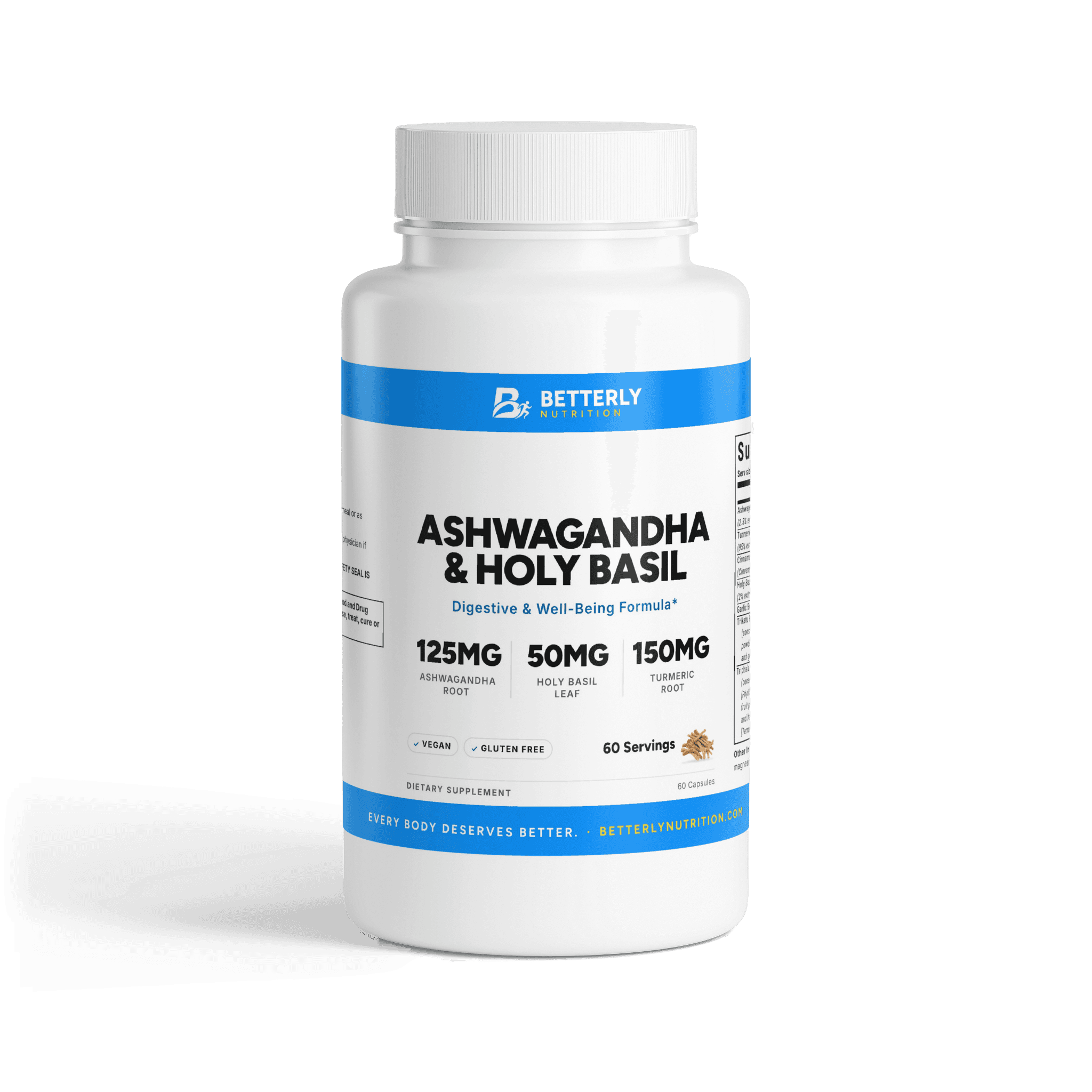
For more resin-and-root options, our adaptogen collection lists the shilajit formula beside ashwagandha, maca and holy basil blends.
From our shop: Sea Moss, Bladderwrack & Burdock Capsules — two seaweeds at 500 mg each (organic Irish moss and organic bladderwrack) plus 400 mg organic burdock root in every 2-capsule serving, with no shilajit.
How should you take shilajit and sea moss capsules?
Our Shilajit & Tongkat Ali label calls for one capsule a day with water, and our sea moss label for two capsules once daily, 20-30 minutes before a meal.
- Shilajit & Tongkat Ali Capsules: "Adults take one (1) capsule daily. For best results, take with 6-8 oz (177-237ml) of water or as directed by healthcare professional." No time of day is given.
- Sea Moss, Bladderwrack & Burdock Capsules: a 2-capsule serving once daily, with the label adding "For best results take 20-30 min before a meal or as directed by your healthcare professional."
- Organic Ashwagandha Root Capsules: a single capsule, twice daily, 20-30 minutes ahead of a meal alongside an 8 oz glass of water.
"Do not exceed recommended dose" appears on every one of these panels, so a forgotten capsule isn't made up with two tomorrow.
Prefer resin? Follow that jar's directions, since resin is portioned by eye. Our plain-English shilajit guide compares resin, powder and capsules.
Who can skip a shilajit and sea moss capsule?
You can likely skip a shilajit and sea moss capsule if you want just one of its four ingredients, already take ashwagandha, or want a stated fulvic acid figure.
- If sea moss is your real interest, the combined capsule is mostly something else. Its four actives total 700 mg per 1-capsule serving, and 400 mg of that is shilajit. Our standalone sea moss bottle skips the resin and both root extracts.
- If you already take ashwagandha or shilajit elsewhere, you'd be repeating yourself. Besides the root capsules above, our Ashwagandha & Holy Basil Ayurvedic Capsules carry 25 mg of shilajit alongside 125 mg of ashwagandha root (2.5% extract) per 1-capsule serving.
- If fulvic acid is why you're buying, our label won't help. Some shilajit labels print a fulvic acid percentage and ours doesn't, so a label that states one will tell you more about that compound.
Shilajit also has no recommended intake, so leaving it out doesn't open a nutrient gap.
Who should check with a healthcare provider first?
Talk to a healthcare provider before you start shilajit or sea moss if you're pregnant or breastfeeding, under 18, on any prescription, or managing a medical condition.
Each of our two labels prints an identical caution: "Consult a physician if pregnant, nursing, under 18, or have a medical condition." Beyond that:
- Managing a thyroid condition or already taking iodine: both products contain seaweed, and the shilajit formula adds ashwagandha, which ODS says might affect thyroid function.
- Taking any medication: ODS notes that iodine supplements and ashwagandha may each interact with some medicines. Show your pharmacist both panels.
- Pregnant, breastfeeding or planning a pregnancy: ODS says ashwagandha, one of the shilajit formula's four actives, might not be safe during pregnancy or while breastfeeding, so we don't suggest that formula at either stage. Our three-ingredient sea moss guide explains why we don't suggest our sea moss capsules while breastfeeding. For iodine, ODS notes that the American Thyroid Association recommends a daily 150 mcg iodine supplement as potassium iodide at this stage. Our seaweed labels don't print iodine in micrograms.
- Scheduled for surgery: list both bottles, along with anything else you take, for your surgeon and anesthesia team.
- Buying shilajit anywhere: the NCCIH overview of Ayurvedic medicine warns that some Ayurvedic preparations may contain lead, mercury or arsenic at harmful levels. Supplement Facts panels, ours included, don't list metals.
FAQ: shilajit vs sea moss
Does shilajit contain iodine?
Shilajit isn't sold as an iodine source, and the panel on our Shilajit & Tongkat Ali Capsules doesn't list iodine at all. We couldn't find federal data measuring iodine in shilajit, so don't count on it for iodine or assume it has none. That capsule does include 100 mg of sea moss extract per serving, though, so think of it as a product that contains seaweed.
Is shilajit resin better than sea moss gel?
Neither shilajit resin nor sea moss gel is better, because they're different substances sold in similar hands-on formats. Resin is scooped by eye and dissolved in liquid, while gel is soaked, blended and kept cold. Whichever you choose, check whether the jar states an amount of what you're buying it for, such as fulvic acid or iodine. Our capsules don't print either figure, so hold them to the same test.
Is it safe to take shilajit and sea moss every day?
Our two labels each describe one serving a day, but we found no federal fact sheet on how safe shilajit or sea moss is over the long term. For the ashwagandha inside our shilajit formula, ODS says it appears well tolerated for up to about 3 months, while longer use hasn't been shown safe. So the directions describe daily use without showing it's safe for months on end. If you plan to keep going longer, or a label caution applies to you, talk it through with your provider.
Can you take shilajit and sea moss at the same time of day?
Our shilajit and sea moss labels don't clash on timing, because only one of them names a time. The Sea Moss, Bladderwrack & Burdock label says two capsules 20-30 minutes before a meal, while the Shilajit & Tongkat Ali label asks only for one capsule with 6-8 oz of water. Neither label mentions pairing with the other, so that part is a question for your provider.
How long does a bottle of each last?
Each of our two bottles covers 30 days when you follow its directions. Shilajit & Tongkat Ali Capsules hold 30 capsules taken one a day, and Sea Moss, Bladderwrack & Burdock Capsules hold 60 capsules taken two a day. Neither label mentions breaks or cycling, so ask your provider how long to continue.
Sources
- Iodine: Fact Sheet for Consumers (NIH Office of Dietary Supplements)
- Ashwagandha: Fact Sheet for Health Professionals (NIH Office of Dietary Supplements)
- Botanical Dietary Supplements: Background Information (NIH Office of Dietary Supplements)
- Ayurvedic Medicine: In Depth (NCCIH)
If this left you looking for somewhere to start, read shilajit and sea moss in one capsule — its amounts per serving are listed on the page. For the practical questions this raises, how dosing, sourcing and subscriptions work is answered in one place.