On this page
- What is shilajit, exactly?
- Fulvic acid and trace minerals: what's actually inside
- Shilajit benefits: what research actually suggests
- Shilajit resin vs powder vs capsules: choosing a form
- How to take shilajit: dose, timing, and what to expect
- Why shilajit is so often paired with adaptogens
- Safety notes: who should check with a provider first
- Key takeaways
- FAQ: shilajit
- Sources
Shilajit is having a moment — and, as usual when a supplement trends, the marketing has sprinted well ahead of the research. This guide is a plain-English look at shilajit benefits: what this strange mountain substance actually is, what fulvic acid does, what small studies genuinely suggest, and how to choose between resin, powder, and capsules without paying extra for mystique.
One honest note before we start: shilajit's research base is real but young. Most studies are small and short, and their findings need replication. We'll flag that as we go, because you deserve to know what's promising versus what's established — and in the supplement world, very little is firmly established.
What is shilajit, exactly?
Shilajit is a dark, tar-like substance that slowly seeps out of rock faces in high mountain ranges — most famously the Himalayas, but also the Altai, Caucasus, and Andes. It forms over a very long time: plant matter gets trapped in rock, and centuries of microbial activity and pressure gradually break it down into a sticky, mineral-dense material.
In Ayurvedic tradition, shilajit has been used for centuries as a rasayana — loosely, a rejuvenator. One traditional Sanskrit description translates roughly to "conqueror of mountains, destroyer of weakness," which tells you two things at once: people have prized this substance for a very long time, and the hype problem is not new.
Modern supplement makers collect the raw material, purify it (important — more on that in the safety section), and sell it as a soft resin, a dried powder, or a measured extract in capsules.
Fulvic acid and trace minerals: what's actually inside
Ask what shilajit is made of and the first answer is fulvic acid — the compound most products are standardized around and usually the most abundant active component.
Fulvic acid forms as organic matter breaks down over long stretches of time. Researchers are interested in it partly as a kind of shuttle: it binds minerals and other molecules readily, and early research suggests it may help carry them to where cells can use them. It's also being studied for its role in supporting mitochondrial function — the machinery your cells use to turn food into usable energy.
Alongside fulvic acid, shilajit contains:
- Humic substances — related compounds from the same slow breakdown process, which give shilajit its color and texture.
- Dibenzo-alpha-pyrones — a mouthful of a molecule family studied for its role in cellular energy production.
- Trace minerals — dozens of them in ionic form, including iron, zinc, and magnesium. Exactly which minerals, and how much of each, depends on the mountain range it came from.
That last point matters more than the marketing lets on: shilajit is a natural substance, not a formula, so two jars from two sources can differ meaningfully. It's a good argument for choosing a product that states its extract amount plainly instead of leaning on mystique.
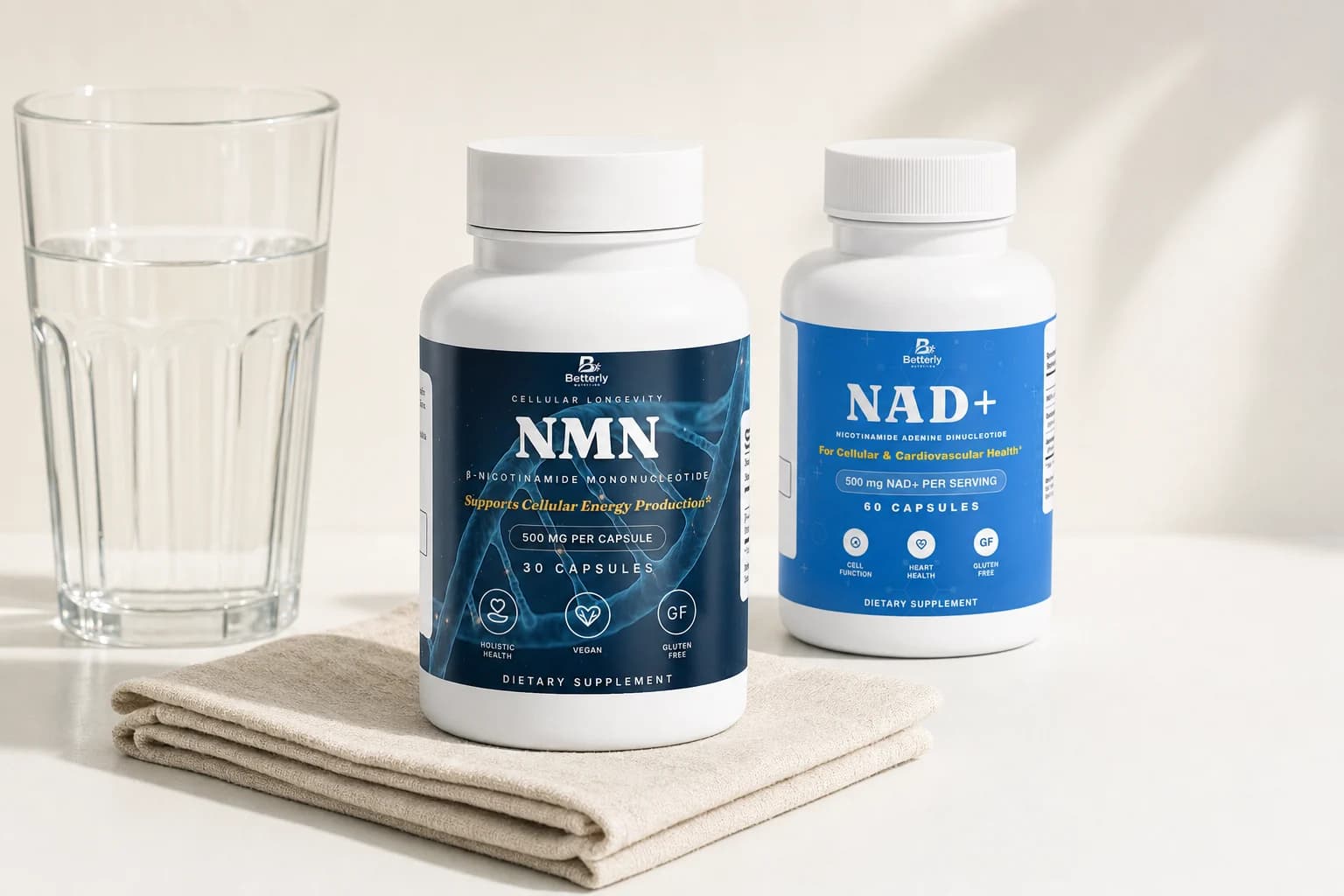
If the cellular-energy side of this topic pulls you in, it's the same territory NAD+ research lives in — our guide to NMN vs NAD+ goes deeper down that particular rabbit hole.
Shilajit benefits: what research actually suggests
Here's the honest picture, hedged where hedging is due.
Everyday energy
This is shilajit's headline use, and there's a plausible mechanism behind it: fulvic acid and dibenzo-alpha-pyrones have been studied for how they support mitochondrial function. Human evidence on everyday energy is thin so far. Worth watching, not yet shown.
If your energy dips have obvious culprits — short nights, skipped meals, caffeine too late in the day — start there. Our guide to supporting all-day natural energy covers the foundations no capsule replaces.
Stamina and vitality
One placebo-controlled study followed healthy men aged 45 to 55 who took 250 mg of purified shilajit twice a day for 90 days; it was associated with supporting healthy testosterone levels already within the normal range. It's one modest study and its results need replication — but it's a big part of why shilajit shows up in so many men's vitality formulas.
For women, direct research is thinner. Shilajit is not a men-only supplement — at its core it's a mineral-rich substance, not a hormone — but most of the vitality research so far has simply been done in men. Worth knowing before you buy.
Exercise performance and strength
One placebo-controlled trial gave 63 recreationally active young men a purified shilajit extract or a placebo for 8 weeks. In the stronger half of the group, 500 mg a day meant less strength lost during a tiring leg-exercise test. Among men who started with higher levels of hydroxyproline, a collagen-breakdown marker, the 500 mg group ended with lower levels than the placebo group. The 250 mg dose did no better than placebo. One study, early days: interesting rather than settled.
What shilajit won't do
Shilajit will not transform you in a weekend. It won't replace sleep, food, or training, and a brand promising rapid, dramatic change is selling you the legend, not the substance. The fair framing is a possible gentle support for stamina and vitality, still being researched, on top of habits that already work.
Shilajit resin vs powder vs capsules: choosing a form
This is where most buyers get stuck, and where most brand content gets conveniently one-sided. Here's the even-handed version.
Resin is the closest thing to the raw, purified material — a sticky, tar-like paste in a small jar. You scoop out a rice-to-pea-sized portion and dissolve it in warm water. Fans love that it's minimally processed, and a good resin is a perfectly legitimate choice. The honest downsides: every dose is eyeballed rather than measured, the taste is intensely bitter and mineral, and the jar-and-spoon ritual is one more thing to do at 7 a.m.
Powder is dried, ground shilajit that mixes into drinks. Convenient in theory, but quality varies, so look for a powder that states its extract amount and standardization on the label.
Capsules trade the ritual for consistency: a pre-measured amount of extract, identical every day, with no taste and nothing to scrape or stir. Purists find capsules less romantic. Your body does not care about romance.
There's no wrong answer, and resin isn't a scam. But the form you'll actually take daily beats the "strongest" form that ends up abandoned in a drawer — and consistency is the whole game with a supplement you take daily.
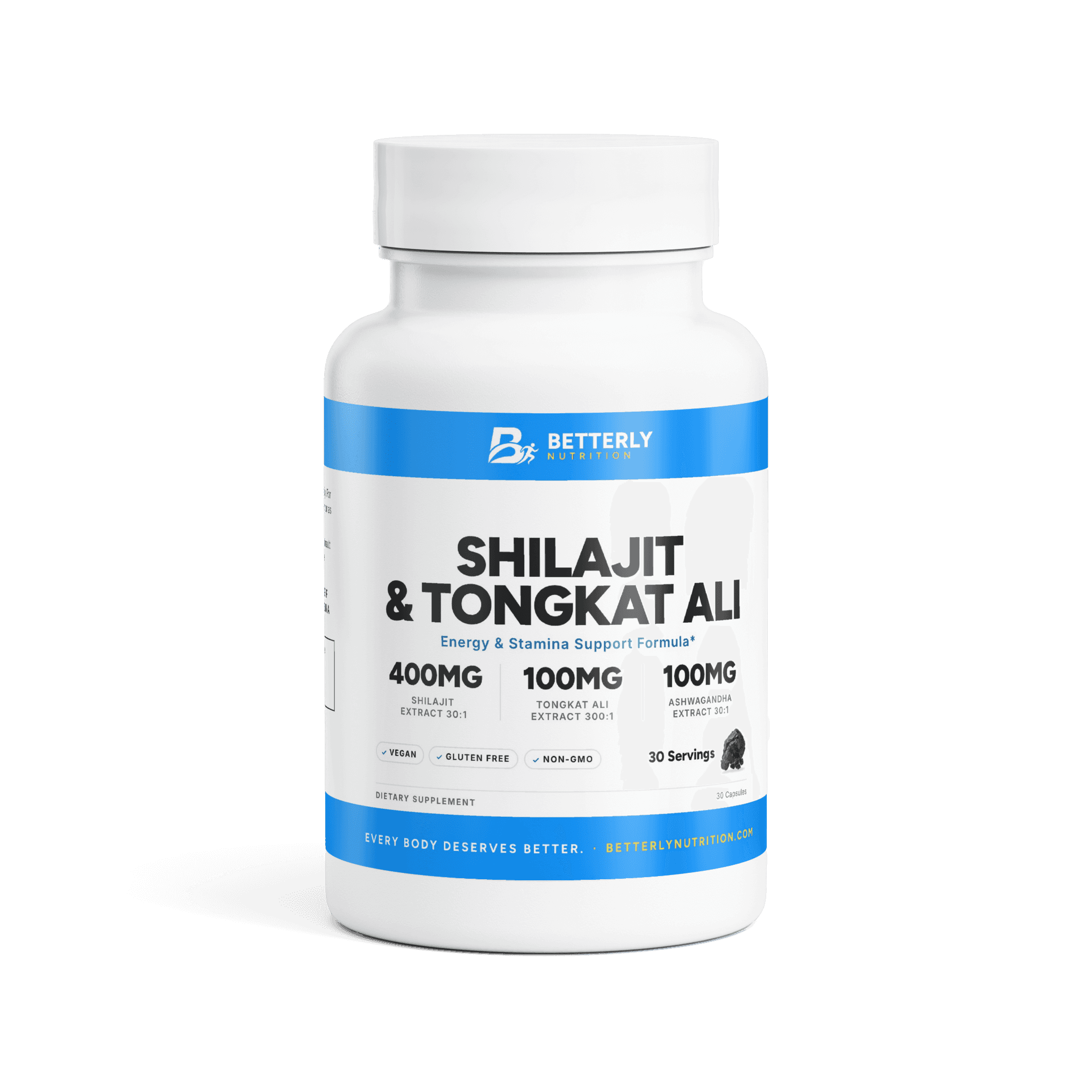
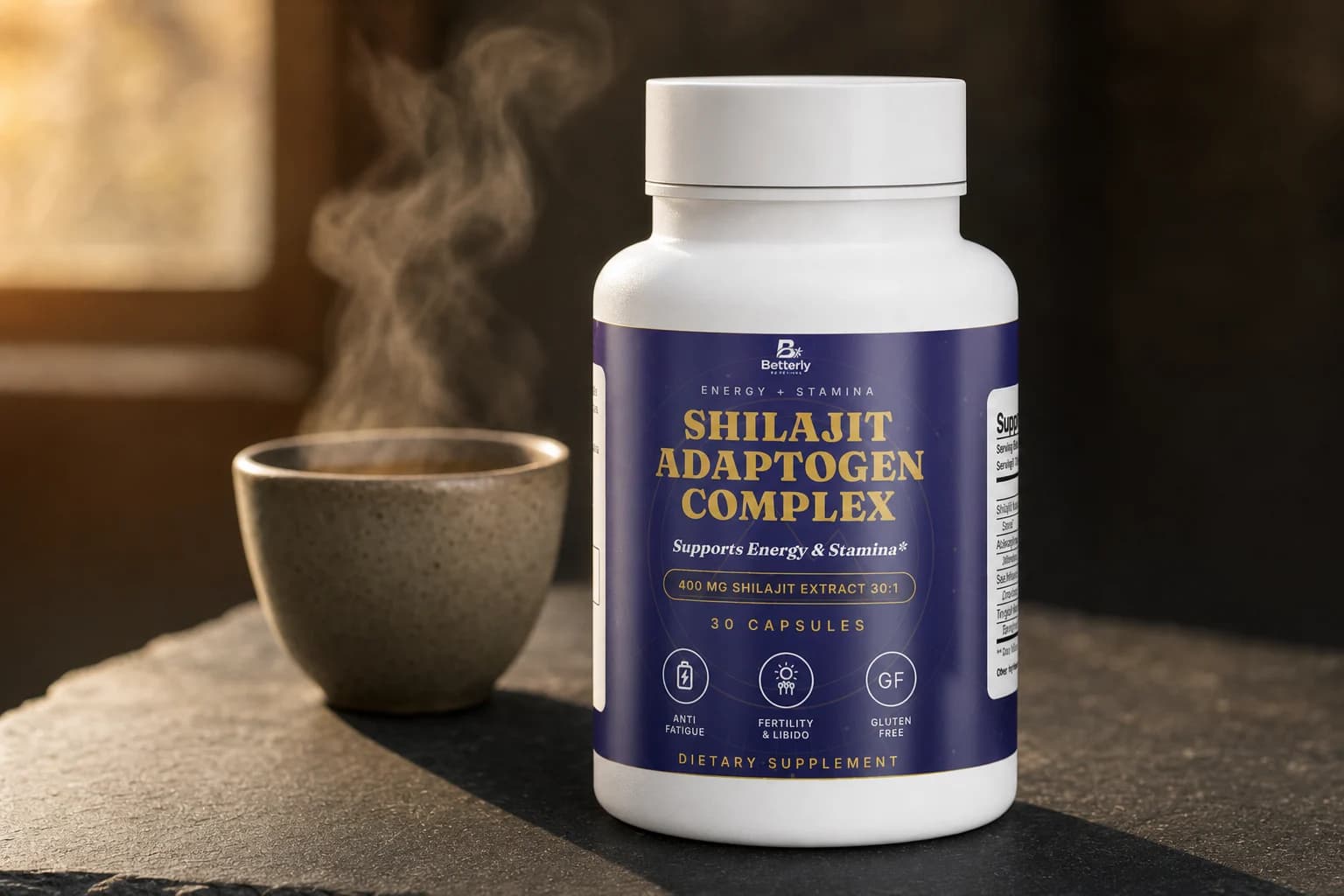
That thinking is exactly why our Shilajit & Tongkat Ali Capsules are capsules: 400 mg of shilajit extract per 1 capsule serving, alongside 100 mg each of ashwagandha, sea moss and tongkat ali extracts, with every amount printed on the label. No mystique required.
How to take shilajit: dose, timing, and what to expect
Dosage. Shilajit dosage in research commonly falls in the range of a few hundred milligrams of extract daily. Follow your product's label rather than improvising — with resin especially, more is not better.
Timing. Most people take shilajit in the morning, and some traditions suggest keeping it a little distance from coffee and tea. There's no strong evidence that a perfect window exists, though. The time you'll reliably remember is the right time.
What to expect. Nothing dramatic, and no set timeline. The human studies linked here ran for 8 weeks and 90 days, which is how long researchers watched, not a promise of when you'll notice anything. A one-line note on your phone ("energy this week: flat / fine / good") beats trying to remember how you felt twenty days ago.
One change at a time. If you start shilajit the same week as three other supplements, you'll never know what did what. Our guide to building a simple supplement routine walks through the one-at-a-time approach.
Why shilajit is so often paired with adaptogens
Browse the energy aisle and you'll notice shilajit rarely travels alone — and there's a logic to it. Shilajit brings the mineral and cellular-energy side of the story. Adaptogens — herbs studied for how they help the body handle occasional stress — bring the steadiness side. Together they aim at the two most common reasons people feel run down: tired cells and a taxed stress response. Our Adaptogens 101 guide covers the category in plain language.
A few pairings you'll see, including in formulas we sell:
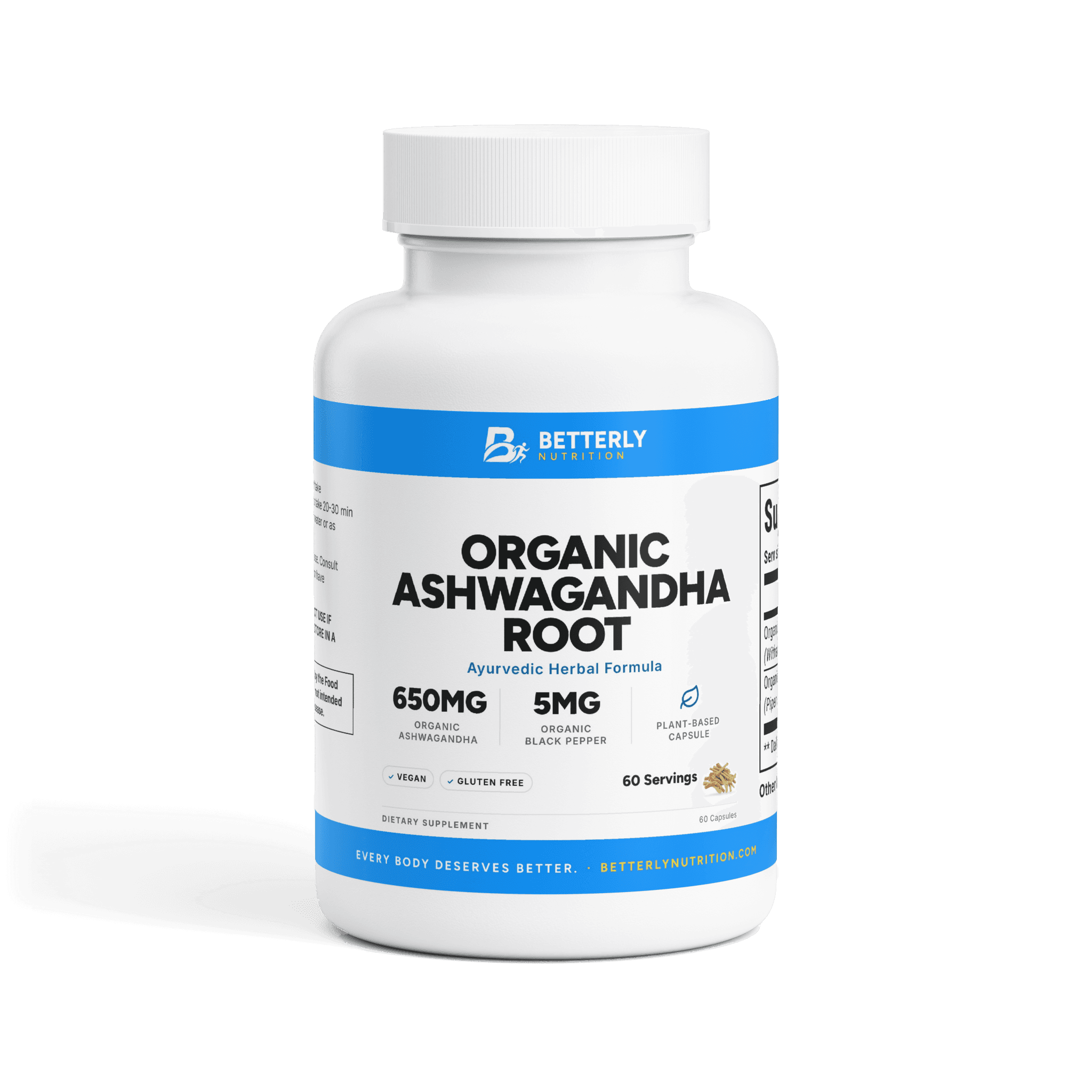
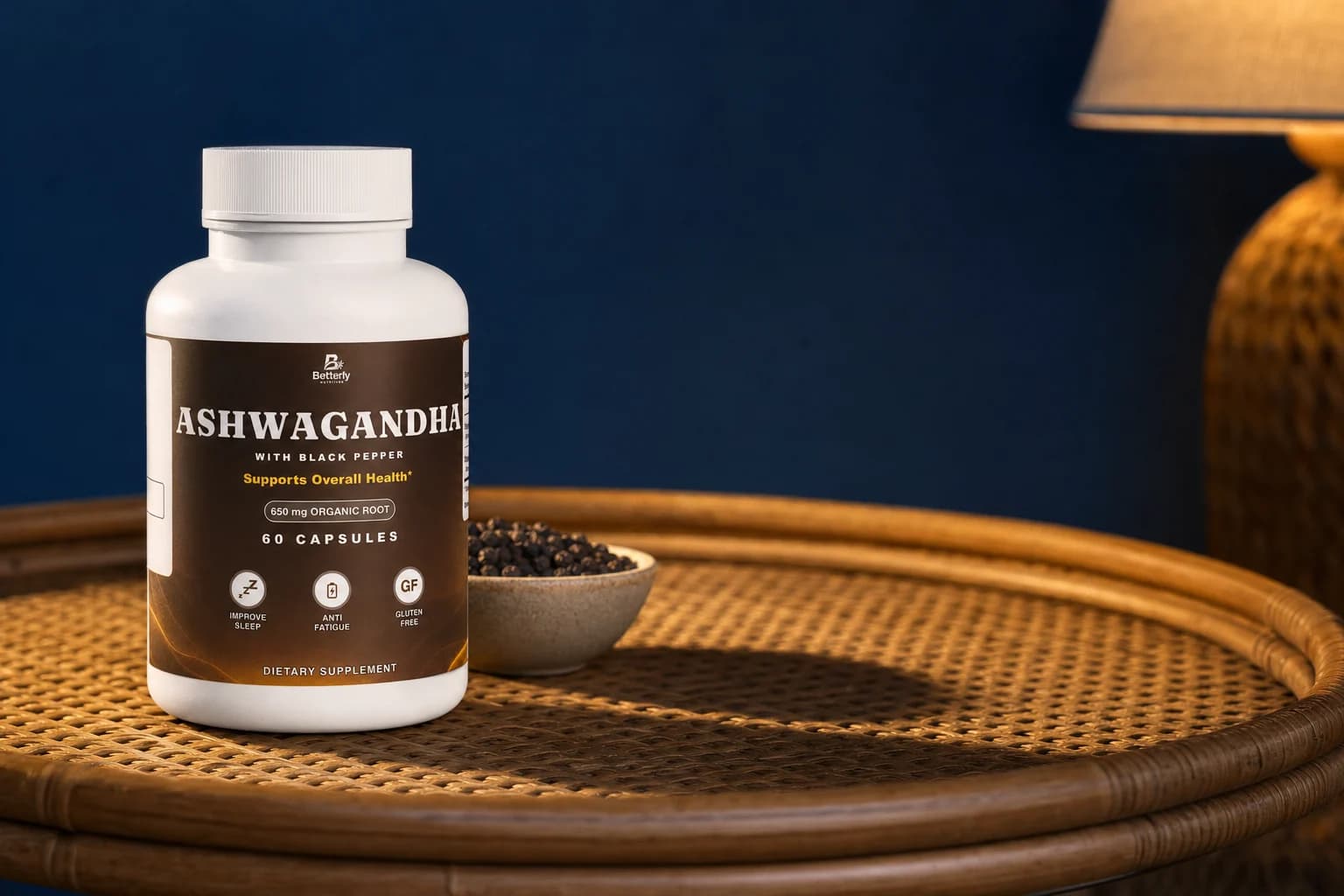
- Ashwagandha is the classic partner — an herb with a long traditional track record for supporting everyday calm. Our ashwagandha guide covers it in depth, and there's Organic Ashwagandha Root Capsules if you'd rather run it solo.
- Tongkat ali appears alongside shilajit in many vitality formulas; the two are aimed at the same stamina-and-drive territory. Both sit next to ashwagandha and sea moss in our Shilajit & Tongkat Ali Capsules, so one capsule covers the stack.
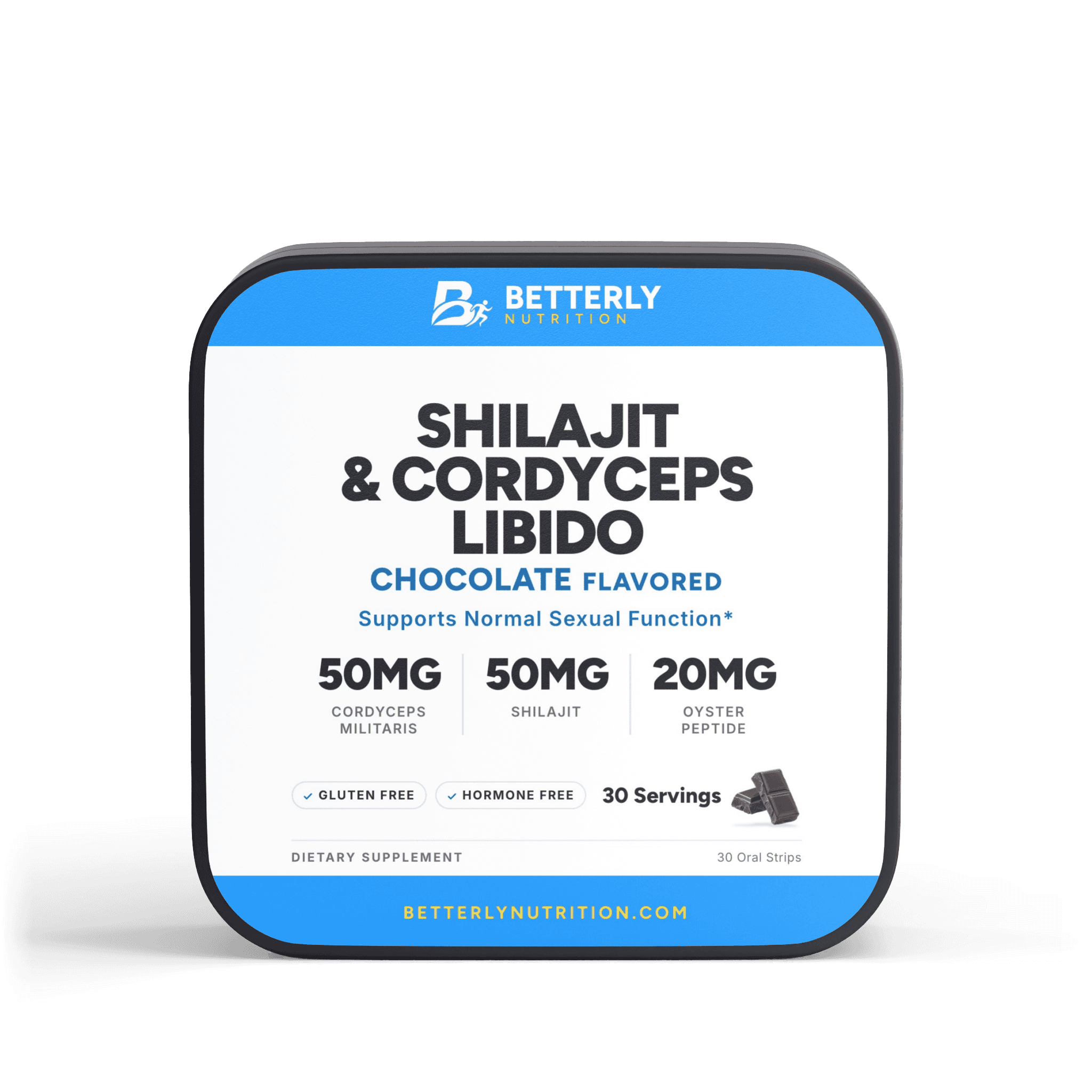
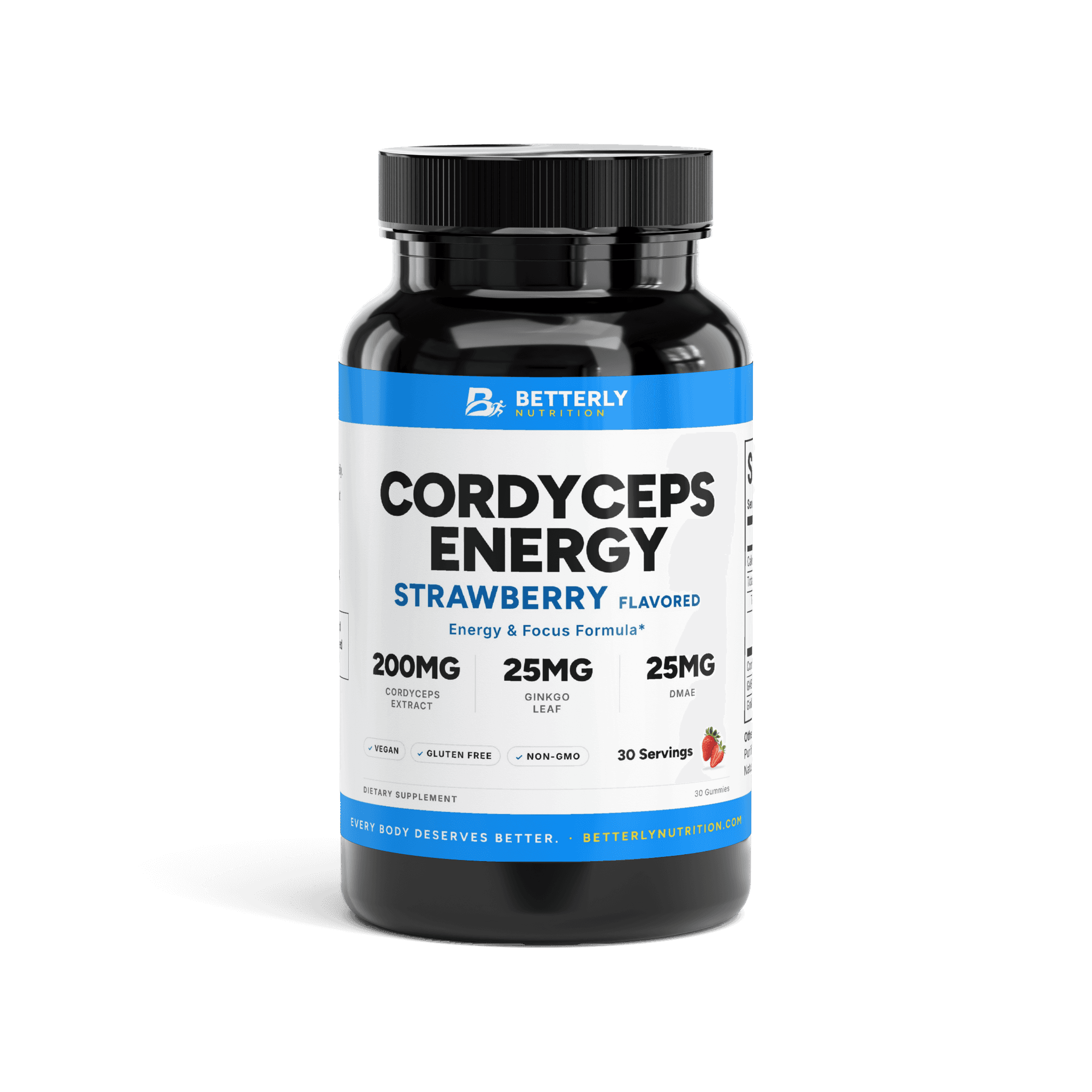
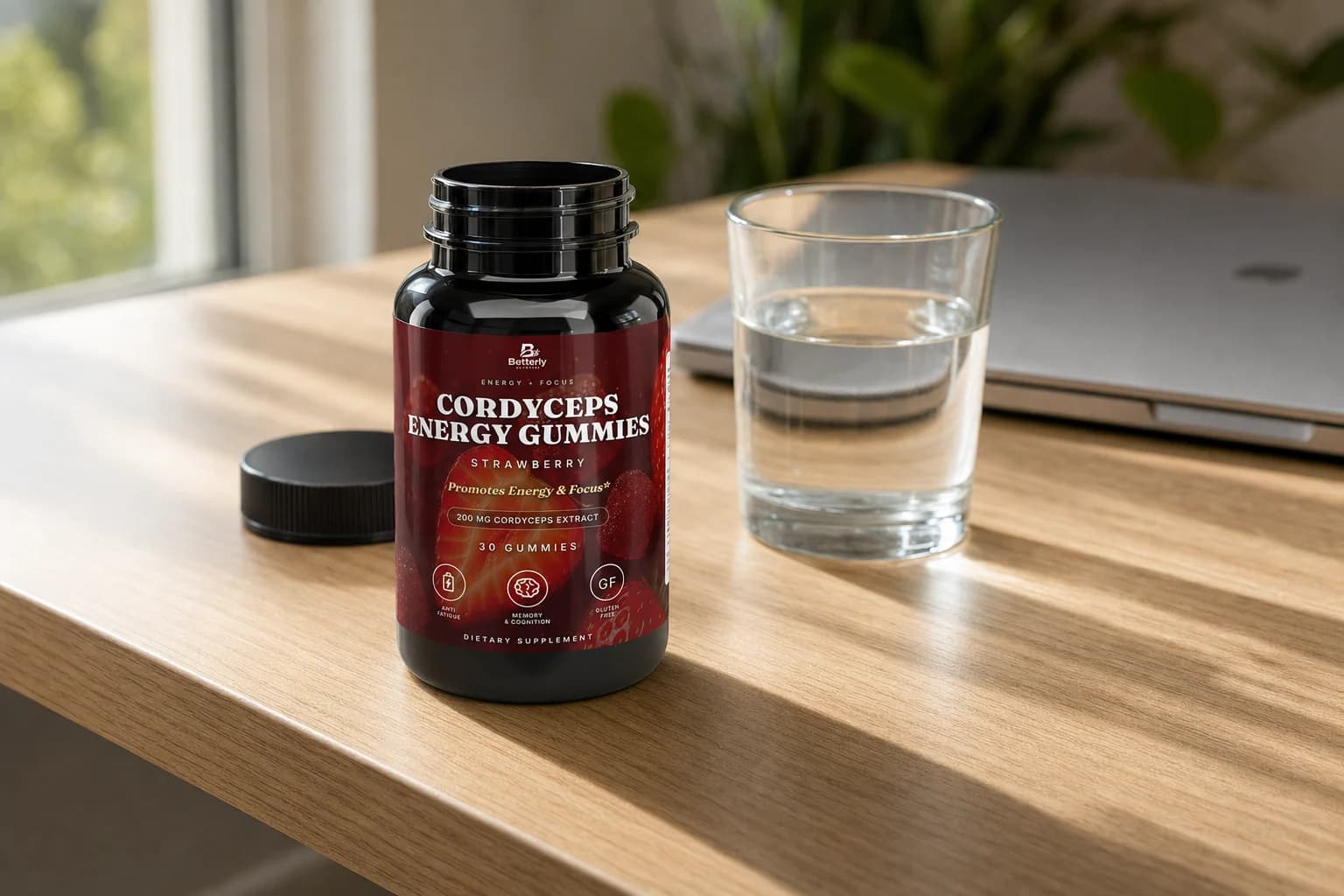
- Cordyceps, a mushroom traditionally associated with stamina, is another natural neighbor. Our Cordyceps Mushroom Energy Gummies carry 200 mg of cordyceps extract per 1 gummy serving with no caffeine at all — they feature in our honest guide to caffeine-free energy supplements. And if the stamina-and-vitality angle is what brought you here, our Shilajit & Cordyceps Libido Strips carry 50 mg of cordyceps (Cordyceps militaris) and 50 mg of shilajit per 1 oral strip serving, 30 strips to a pack. They also contain oyster peptide, a shellfish ingredient, so skip them if you avoid shellfish.
If you'd rather browse everything in one place, the full Energy Support collection is the shortest path.
Safety notes: who should check with a provider first
A few plain-English cautions are worth your time:
- Never eat raw shilajit. Straight-from-the-rock material can carry contaminants like heavy metals. Buy purified products from brands that state exactly what's inside.
- Skip it if you're pregnant or nursing. There simply isn't enough research to say it's a good idea.
- Mind the iron. Shilajit naturally contains iron. If you've been told to watch your iron levels, check with a provider before adding it.
- On medication, or managing an ongoing health concern? Provider first. It's a boring rule that exists for good reasons.
- Under 18? Our shilajit labels say to check with a physician first.
- About the ashwagandha in our capsules. According to the NIH Office of Dietary Supplements, ashwagandha might affect thyroid function and interact with some medications, and there are a few reports of adverse effects on liver function. So ask your provider first if you take any medication or have been told to watch your thyroid or liver.
- If something doesn't agree with you, stop taking it and check with your provider.
Key takeaways
- Shilajit is a mineral-rich mountain substance with centuries of traditional use; fulvic acid is its signature compound, alongside trace minerals and energy-related molecules.
- The research is promising but early. Small studies suggest shilajit benefits may include support for stamina and vitality — hedge accordingly.
- Form is a lifestyle choice, not a potency contest. Resin is traditional and intense; powder is variable; capsules are consistent and easy. The form you take daily wins.
- Follow the label. The label's suggested use for our Shilajit & Tongkat Ali Capsules is one capsule daily with 6-8 oz of water; take it at a time you'll remember, and add one new supplement at a time.
- Buy purified, clearly labeled products — and loop in a provider if you're pregnant, on medication, or watching your iron.
FAQ: shilajit
Is shilajit good for women?
Shilajit isn't a men-only supplement — it's a mineral-rich substance, not a hormone. That said, most vitality research so far has been done in men, so women have less direct evidence to go on. If you're pregnant or nursing, skip it.
Can I take shilajit with coffee?
Some traditions suggest keeping shilajit apart from coffee and tea, on the theory that caffeine-heavy drinks aren't the ideal vehicle for its minerals. The evidence here is thin either way. Taking it with plain water a little before your coffee is a simple, no-fuss default.
How long does shilajit take to work?
There's no reliable timeline for shilajit, and nobody can promise you'll notice a difference. The two human studies linked in this guide ran for 8 weeks and 90 days, which tells you how long researchers watched, not when you'd feel anything. Follow your label's suggested use, keep a simple note of how you feel, and ask your healthcare provider whether it's worth continuing.
Should I take shilajit in the morning or at night?
Morning is the common choice, since energy support is the usual goal. But no study shows a magic window — consistency matters far more than clock time. Pick a moment you'll never forget, such as right after brushing your teeth, and keep it.
Is resin stronger than capsules?
Resin is the least processed form and often concentrated in fulvic acid, but "stronger" only matters if you take it every day. A clearly labeled capsule with a stated extract amount, taken consistently, is a better bet than a potent jar you quietly stop opening.
What does fulvic acid actually do?
Fulvic acid is shilajit's signature compound. Early research suggests it binds minerals and may help shuttle them where cells can use them, and it's being studied for supporting mitochondrial function — the cellular machinery behind everyday energy. Like most of shilajit's story: plausible, interesting, and still being worked out.
Sources
- Clinical evaluation of purified Shilajit on testosterone levels in healthy volunteers (Andrologia, 2016)
- The effects of Shilajit supplementation on fatigue-induced decreases in muscular strength and serum hydroxyproline levels (J Int Soc Sports Nutr, 2019)
- NIH Office of Dietary Supplements: Ashwagandha fact sheet for health professionals
If this left you looking for somewhere to start, read shilajit capsules with ashwagandha and tongkat ali — its amounts per serving are listed on the page. For the practical questions this raises, how dosing, sourcing and subscriptions work is answered in one place.