On this page
- Key takeaways
- Moringa vs spirulina: which is better for your goal?
- What's the difference between moringa and spirulina?
- How much protein does a moringa or spirulina serving add?
- Moringa vs spirulina benefits: which has more iron and calcium?
- How much moringa or spirulina is in a capsule or scoop?
- Moringa or spirulina powder: how do taste and forms differ?
- How do you take moringa capsules or a spirulina greens powder?
- Is moringa or spirulina worth it if you already eat greens?
- Who should check with a healthcare provider first?
- FAQ: moringa and spirulina
- Sources
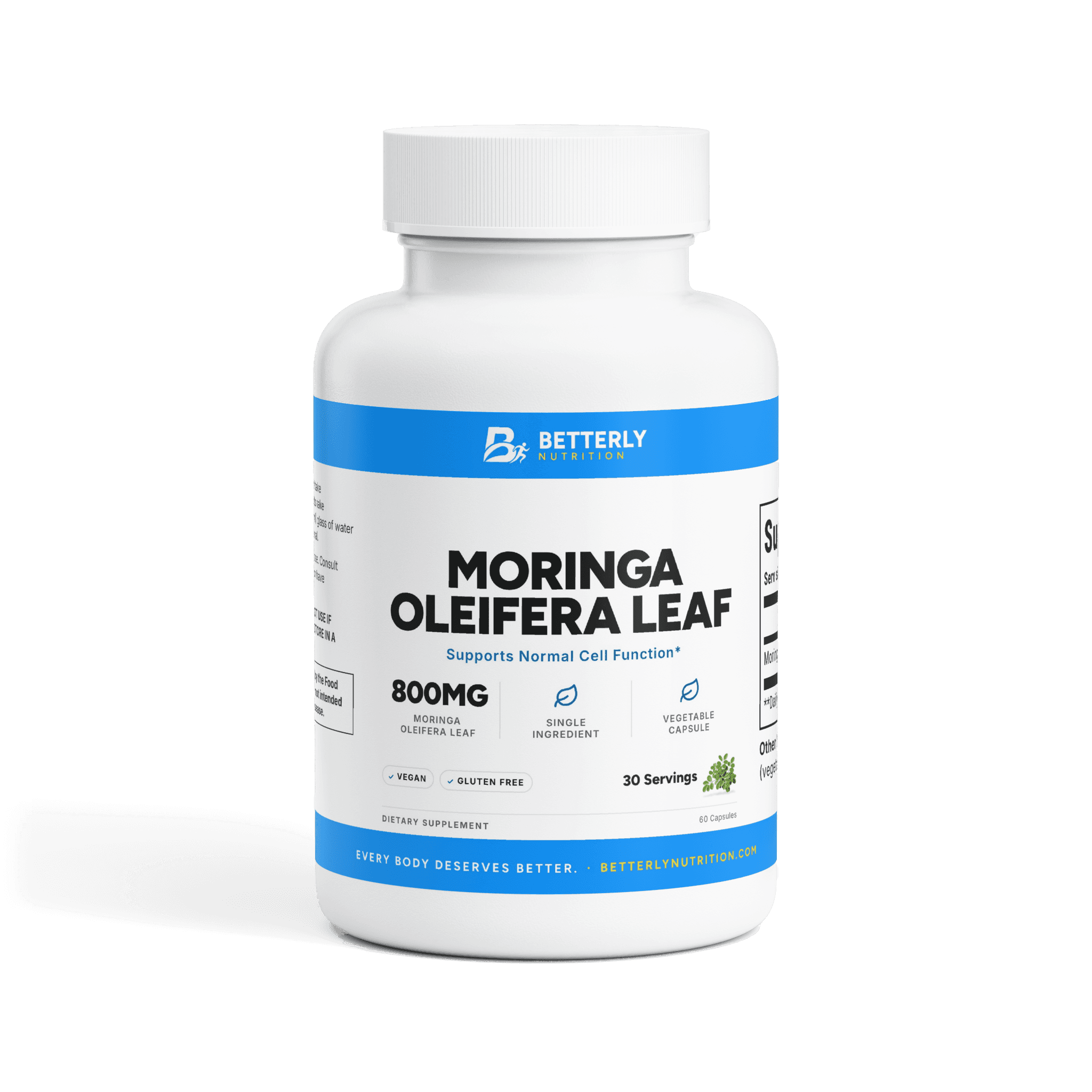
The short answer: Spirulina is far denser in protein: USDA's tables give the dried powder 57.5 g per 100 g, against 9.4 g for water-heavy fresh moringa leaves. On the moringa vs spirulina scorecard, spirulina also wins on iron, while moringa's leaf wins on calcium and vitamin A. At supplement sizes, the moringa in our Moringa Oleifera Leaf Capsules (800 mg per 2-capsule serving) and the spirulina in a greens scoop each add under 1 g of protein.
Key takeaways
- Moringa (Moringa oleifera) is the leaf of a tropical tree, while spirulina (Arthrospira platensis) is a cyanobacterium grown in water and dried into a dark powder.
- USDA's moringa entry covers fresh leaves that are mostly water; with the water subtracted, our arithmetic puts the leaf at about 44% protein, against about 60% for dried spirulina.
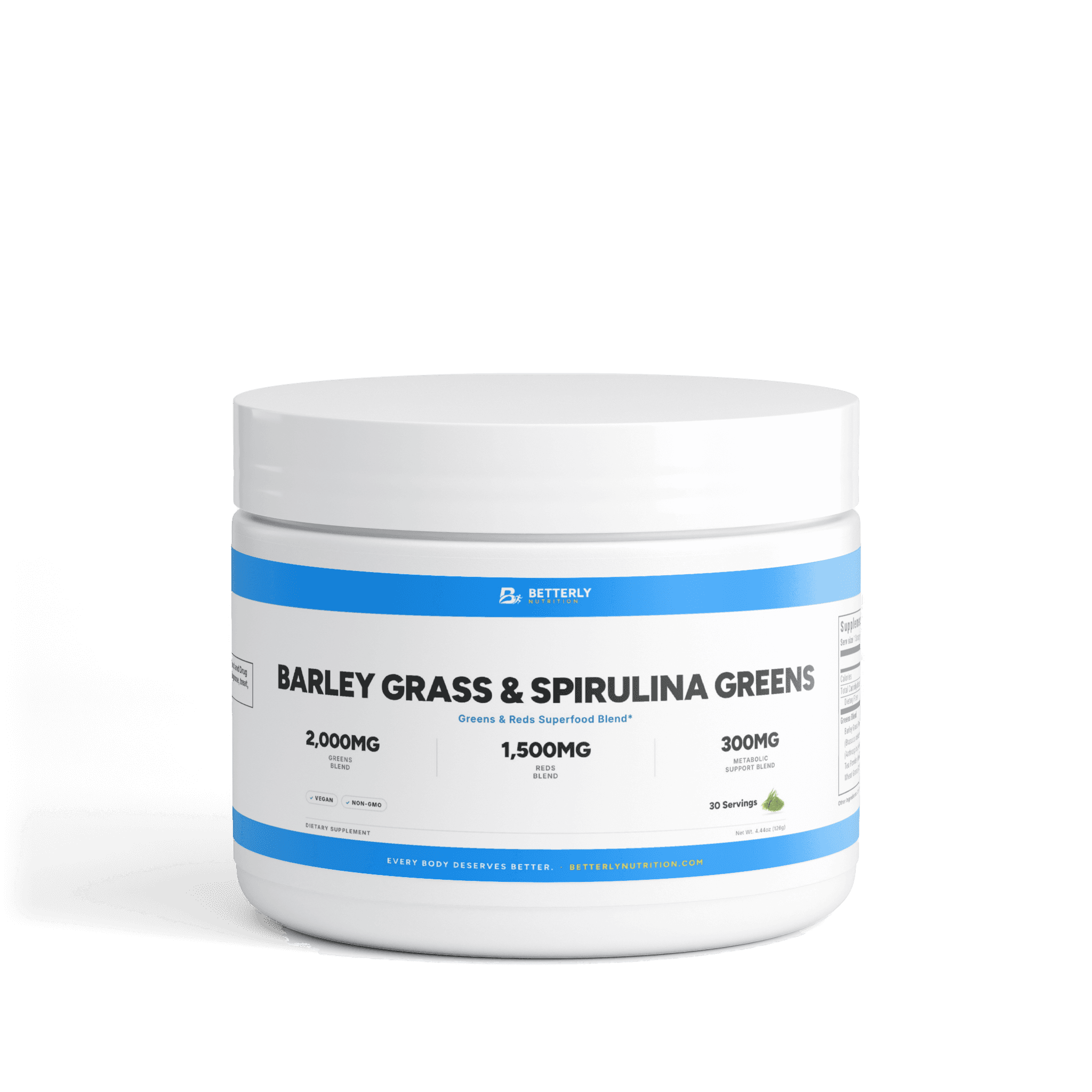
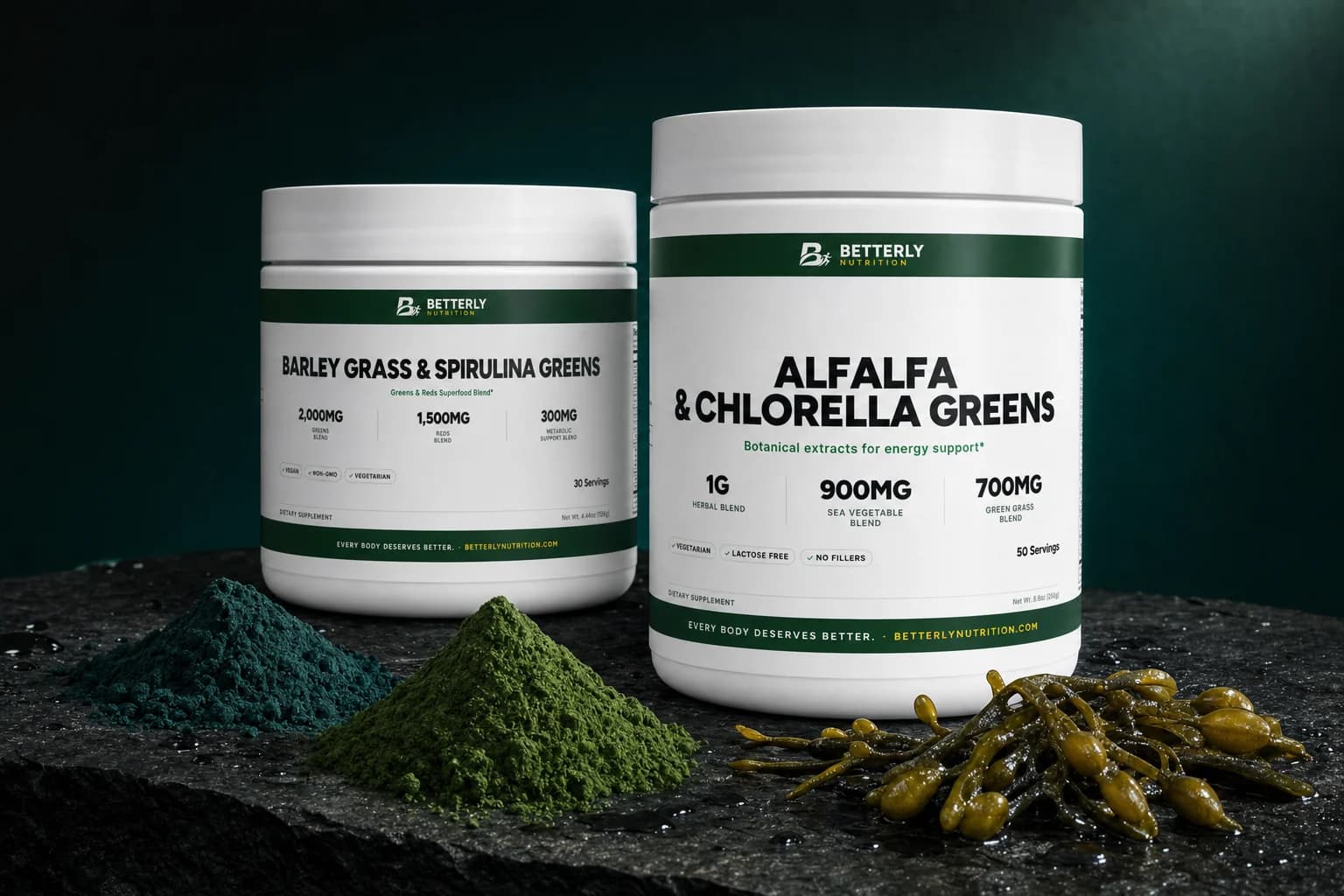
- Our Barley Grass & Spirulina Greens Powder lists spirulina third of six ingredients in a 2,000 mg Greens Blend, which caps it at about 667 mg per 1-scoop (4.2 g) serving.
- Even at that ceiling, the spirulina carries roughly 0.4 g of protein and 0.2 mg of iron by USDA's figures, so at these serving sizes neither green adds meaningful protein or iron.
A heads-up before the numbers: Betterly sells the moringa capsule and both spirulina-containing powders in this guide. The capsule prints its moringa in milligrams. Neither powder prints its spirulina, which is the weak spot in our own labels, and this guide says so wherever it matters.
Moringa vs spirulina: which is better for your goal?
Spirulina suits you if protein per gram matters most, while moringa suits you if you'd rather have a single leaf that's richer in calcium and vitamin A.
| Your priority | Pick | The deciding number |
|---|---|---|
| Most protein per gram | Spirulina | 57.5 g per 100 g, dried (USDA) |
| More calcium and vitamin A | Moringa | 185 mg and 378 mcg RAE per 100 g, fresh |
| A printed dose of one green | Moringa capsule | 800 mg of leaf per 2 capsules |
| Algae plus other greens in a drink | A spirulina blend | No spirulina mg on our labels |
| Protein grams you can count | Neither | Under 1 g from the green per serving |
So each green wins something per 100 g, and neither wins much per serving.
What's the difference between moringa and spirulina?
Moringa is the leaf of Moringa oleifera, a tree native to the Indian subcontinent, while spirulina is a cyanobacterium, a sun-powered microbe that typically grows in warm, alkaline lakes.
NIH's LiverTox database describes moringa as a tree grown in tropical and subtropical climates worldwide and "widely cultivated as a protein- and vitamin-rich food source." USDA files the fresh leaf under "drumstick leaves," a nod to the tree's long, thin pods.
Spirulina isn't a plant at all. LiverTox's spirulina entry places it in the phylum Cyanobacteria, bacteria whose cells have no nucleus. It carries a blue-green pigment called phycocyanin, which LiverTox says can make up to 20% of spirulina's dry weight.
How much protein does a moringa or spirulina serving add?
Spirulina has far more protein per 100 g than moringa leaf, but at capsule and scoop amounts, the moringa or spirulina in a serving adds well under 1 g.
According to USDA's FoodData Central, dried spirulina holds 57.5 g of protein per 100 g. LiverTox puts it at 65% to 70%, so sources don't agree on the exact share.
USDA lists fresh drumstick leaves at 9.4 g of protein per 100 g, but 78.7 g of that 100 g is water. Subtract the water and 21.3 g of leaf solids are left, holding all 9.4 g of protein.
That's about 44% protein by dry weight, our arithmetic rather than a USDA figure for moringa powder. Dried spirulina, with its 4.68 g of water set aside, comes to about 60%, so spirulina still leads, just by far less than 57.5 against 9.4 suggests.
| Per 100 g (USDA) | Dried spirulina | Fresh moringa leaves |
|---|---|---|
| Water | 4.68 g | 78.7 g |
| Protein | 57.5 g | 9.4 g |
| Iron | 28.5 mg | 4.0 mg |
| Calcium | 120 mg | 185 mg |
| Vitamin A (RAE) | 29 mcg | 378 mcg |
So spirulina leads on protein and iron, partly because it's dried, while moringa leads on calcium and vitamin A despite being mostly water.
Now the capsule. Our moringa panel lists 800 mg of moringa leaf per 2-capsule serving and no protein line. If that leaf matched the fresh leaf's 44%, which no panel confirms, the serving would carry about 0.35 g of protein.
The spirulina in our greens scoop tops out near 667 mg, a ceiling our guide on whether greens powders work derives from the blend's ingredient order. At USDA's ratio, that's about 0.4 g of protein. At these amounts, neither green belongs in your protein math.
Moringa vs spirulina benefits: which has more iron and calcium?
Dried spirulina carries more iron per 100 g, while fresh moringa leaves carry more calcium and vitamin A, but a supplement serving of either supplies little of each.
Calcium is the surprise: fresh leaves out-score dried spirulina, 185 mg to 120 mg. (RAE, or retinol activity equivalents, converts beta-carotene and other forms into one vitamin A figure, which is why dried spirulina's 342 mcg of beta-carotene per 100 g counts as only 29 mcg RAE.)
For iron, USDA's ratio gives 667 mg of spirulina roughly 0.2 mg. Women 19 to 50 need 18 mg a day, one of the NIH figures in our guide to how much iron you need per day, so that's about 1%.
Both greens supply only nonheme iron, the non-animal form found in plant foods, which, as that guide notes, the body absorbs less easily.
Our moringa panel lists no iron, calcium or vitamin A, only 800 mg of leaf. Run the fresh leaf's dry-weight ratios on 800 mg and you get about 0.15 mg of iron and 7 mg of calcium, rough sketches that no label confirms. If iron is your target, choose a label that prints it in mg with a % Daily Value.
What about the longer benefit lists you'll see online? LiverTox reports that analyses of moringa extracts find polyphenols, phenolic acids and flavonoids, with kaempferol and myricetin among the candidate active compounds. It also says none of the activities claimed for moringa has been convincingly shown in human clinical studies.
For spirulina, LiverTox names phycocyanin and beta-carotene among its components and says studies in humans have been limited. Read those compound names as a description of each ingredient, not a promised result.
How much moringa or spirulina is in a capsule or scoop?
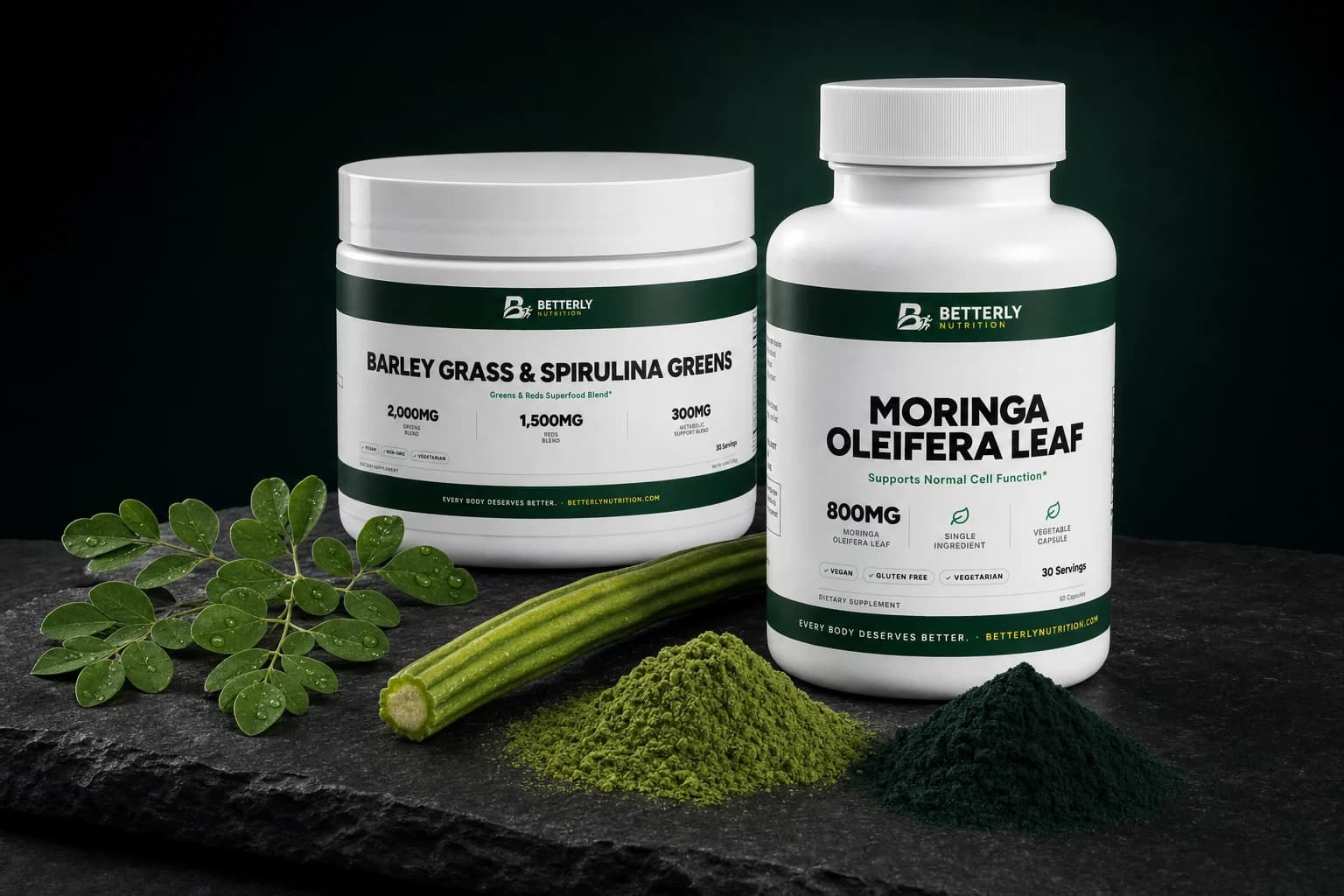
Betterly's moringa capsule holds 800 mg of leaf per 2-capsule serving, while the Barley Grass & Spirulina Greens Powder leaves its spirulina unlisted, capped near 667 mg.
| Product | Serving | Moringa or spirulina | What the panel shows |
|---|---|---|---|
| Moringa Oleifera Leaf Capsules | 2 capsules | 800 mg moringa leaf | Sole active ingredient |
| Barley Grass & Spirulina Greens Powder | 1 scoop (4.2 g) | Spirulina, about 667 mg at most | 3rd of 6 in a 2,000 mg blend |
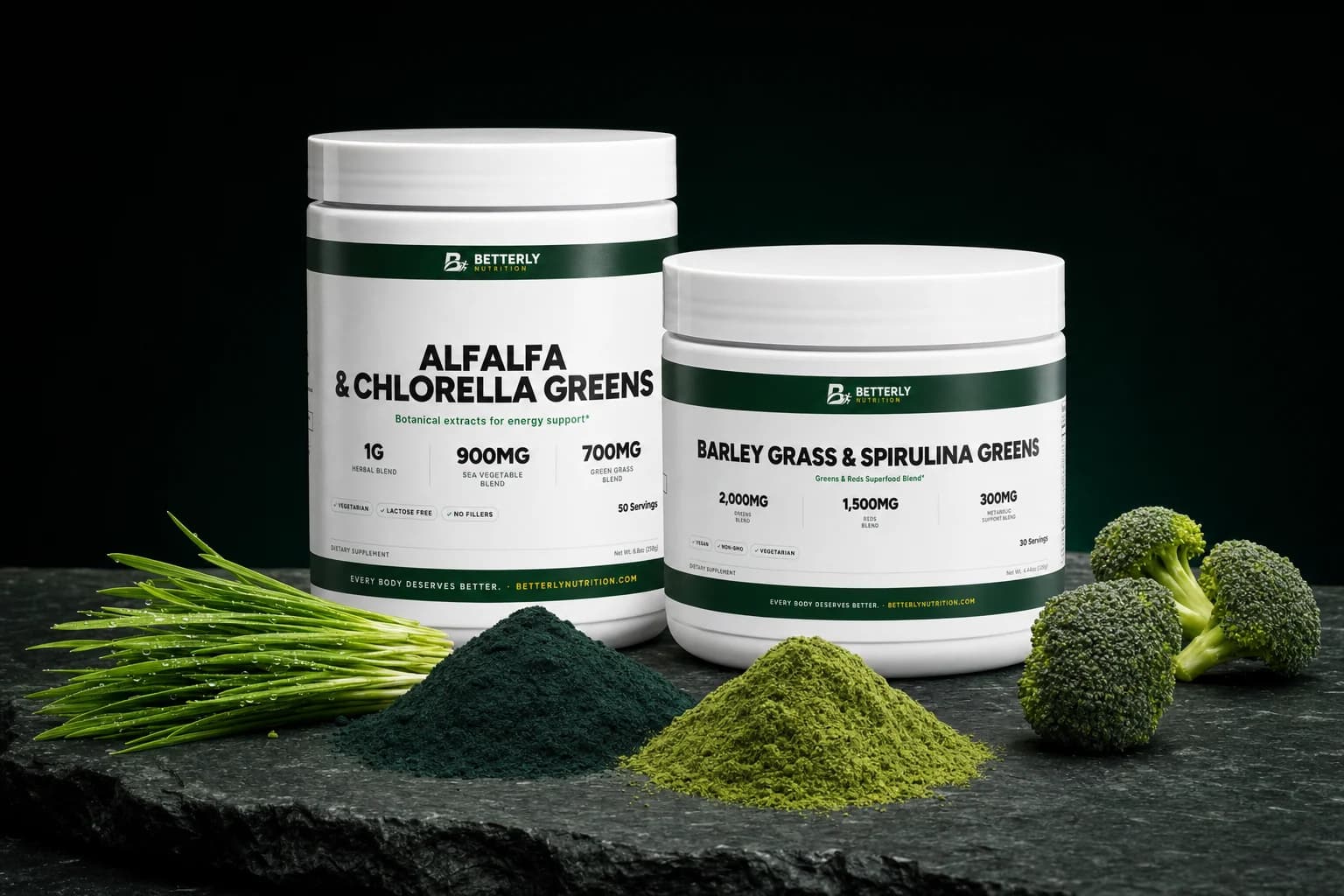
| Alfalfa & Chlorella Greens Powder | 2 tsp (about 5 g) | Spirulina, no amount given | 1st of 3 in a 900 mg blend |
Only the moringa capsule tells you exactly how much of its green you're getting. The 667 mg is a ceiling, not a dose, and the true amount could be much lower.
In the Alfalfa & Chlorella Greens Powder, spirulina heads a 900 mg Sea Vegetable Blend it shares with chlorella and sea whistle, a brown seaweed. It prints no amount for any of the three.
Is 800 mg a lot of moringa? LiverTox says moringa supplements typically come in strengths of 100 mg to 1 g, with suggested daily amounts from 500 mg to 5 or 6 g. Our 800 mg daily serving sits near the low end, and that range describes products on the market, not a target.
From our shop: Moringa Oleifera Leaf Capsules — a single-ingredient leaf capsule at 800 mg per 2-capsule serving, 30 servings a bottle, labeled vegan and gluten free.
Moringa or spirulina powder: how do taste and forms differ?
Moringa and spirulina both come as loose powders, capsules and tablets, but spirulina's dark blue-green color tints anything you stir it into.
How either one tastes to you is hard to predict, so we won't promise you'll enjoy it. Our single-ingredient moringa comes only as a capsule, which takes flavor off the table.
Both of our spirulina options are powders you mix into a drink, and each puts spirulina in a crowd. The Barley Grass & Spirulina Greens Powder adds a 1,500 mg Reds Blend of beet root, hibiscus and fruit powders, and lists citric acid and stevia leaf extract as its other ingredients.
Pick by habit: if a smoothie already happens most mornings, a powder can ride along. If not, a capsule is easier to keep up.
How do you take moringa capsules or a spirulina greens powder?
Follow each label: the Moringa Oleifera Leaf Capsules directions call for 2 capsules once daily, taken 20-30 minutes ahead of a meal.
- Moringa Oleifera Leaf Capsules: 2 capsules once daily with an 8 oz (237 ml) glass of water, 20-30 minutes before a meal, unless your healthcare professional directs otherwise.
- Barley Grass & Spirulina Greens Powder: 1 scoop stirred into 6-8 oz (177-237 ml) of cold water or a favorite beverage once a day, then drunk within 10 minutes of mixing.
- Alfalfa & Chlorella Greens Powder: 2 teaspoons mixed into 8 oz (237 ml) of apple juice or any favorite liquid. Its caution says the product is sold by weight rather than volume and may settle.
Only the moringa label ties its dose to a meal. The powders name an amount and a liquid but no time of day, so choose a slot you'll remember and keep to the label's serving.
From our shop: Barley Grass & Spirulina Greens Powder — for a mixed drink rather than a single green, with spirulina among six ingredients in a 2,000 mg Greens Blend per 1-scoop (4.2 g) serving.
Is moringa or spirulina worth it if you already eat greens?
Moringa or spirulina adds little when your plate already carries vegetables most days, since a capsule or scoop holds under a gram of either green.
Other cases where you can leave both on the shelf:
- Your goal is protein or iron. The green in a serving adds a fraction of a gram of protein, and none of these three panels lists iron.
- A greens powder already sits in your cupboard. A second one mostly buys the same grasses again.
- A big promise is what sold you. Neither LiverTox entry backs one.
If one of them still fits your week, every product in our Greens & Superfoods collection shows its full Supplement Facts panel, so you can check this guide's numbers yourself.
Who should check with a healthcare provider first?
Check with a doctor before starting moringa or spirulina if you're pregnant, nursing or under 18, use any prescription, have a medical condition or are scheduled for surgery.
Our three labels carry the same caution, which names pregnancy, nursing, being under 18 and having a medical condition. Beyond that, a few points are specific to this pair:
- Liver reports: LiverTox scores both moringa and spirulina as possible rare causes of liver injury, from one published moringa case and a few spirulina reports. If you've had liver concerns flagged before, ask first. Our moringa safety guide covers the moringa report.
- Contamination: LiverTox notes spirulina can pick up microcystins, harmful compounds made by other blue-green algae in open lakes.
- Everything else in the powders: getting spirulina by way of a powder brings along the rest of that panel, including herbs such as ashwagandha (Barley Grass & Spirulina) and ginkgo (Alfalfa & Chlorella). Show your provider every line of the panel.
- Gluten: of the three, only the moringa capsule carries a gluten-free claim, and wheat grass sits in both powders.
- A second moringa product: our Olive Leaf, Moringa & Holy Basil Capsules also contain moringa leaf extract, so ask before pairing them with the leaf capsule.
FAQ: moringa and spirulina
Can you take moringa and spirulina together?
Yes, moringa and spirulina can share a routine without doubling up on our labels. The Moringa Oleifera Leaf Capsules hold only moringa leaf, and neither greens powder lists moringa, so the capsule plus one spirulina powder repeats nothing. Two powders together are different: both list spirulina, barley grass, wheat grass, alfalfa, broccoli, green tea, ginger, beet and stevia extract. Follow each label's suggested use, and check with your provider before combining them if you're on medication.
Which has more antioxidants, moringa or spirulina?
No federal source we read ranks moringa and spirulina head to head on antioxidants. LiverTox lists polyphenols and flavonoids in moringa extracts and names phycocyanin and beta-carotene in spirulina. None of the three Betterly panels in this guide prints an antioxidant total.
Is spirulina safe to take every day?
Spirulina has a good safety record in NIH's LiverTox database, which says studies have found it safe without significant adverse events. LiverTox calls liver injury from spirulina very rare, if it happens at all, and suggests contamination by other blue-green algae as one possible explanation for the reports. Our Barley Grass & Spirulina label is written for one scoop once a day. If you're pregnant, nursing or on medication, talk with a provider before starting.
Are moringa and spirulina supplements vegan?
Moringa and spirulina are both non-animal ingredients, but check each label's claims rather than assuming. Our Moringa Oleifera Leaf Capsules are labeled vegan and gluten free, and the Barley Grass & Spirulina Greens Powder carries vegan and non-GMO claims. The Alfalfa & Chlorella Greens Powder is labeled vegetarian, not vegan, and two ingredients in its herbal blend, bee pollen and royal jelly, come from bees.
Can you get moringa or spirulina from food instead?
Yes, both have a long history as food. LiverTox describes moringa's leaves, seeds and flowers as food sources and says people in Mexico and Central America ate spirulina for centuries. USDA weighs a cup of chopped fresh moringa leaves at 21 g, with about 2 g of protein and 39 mg of calcium. Take out the water and that cup still holds about 4.5 g of leaf solids, more than five times the 800 mg in two capsules.
Sources
- U.S. Department of Agriculture, FoodData Central: Seaweed, spirulina, dried (SR Legacy, FDC ID 170495)
- U.S. Department of Agriculture, FoodData Central: Drumstick leaves, raw (SR Legacy, FDC ID 168416)
- National Library of Medicine, LiverTox: Moringa
- National Library of Medicine, LiverTox: Spirulina
If this left you looking for somewhere to start, read 800 mg moringa leaf capsules — its amounts per serving are listed on the page. For the practical questions this raises, how dosing, sourcing and subscriptions work is answered in one place.