On this page
- Key takeaways
- Do greens powders work? Three jobs, three different verdicts
- Can greens powder replace vegetables?
- Does greens powder have fiber?
- Why can't a blend label tell you whether a greens powder works?
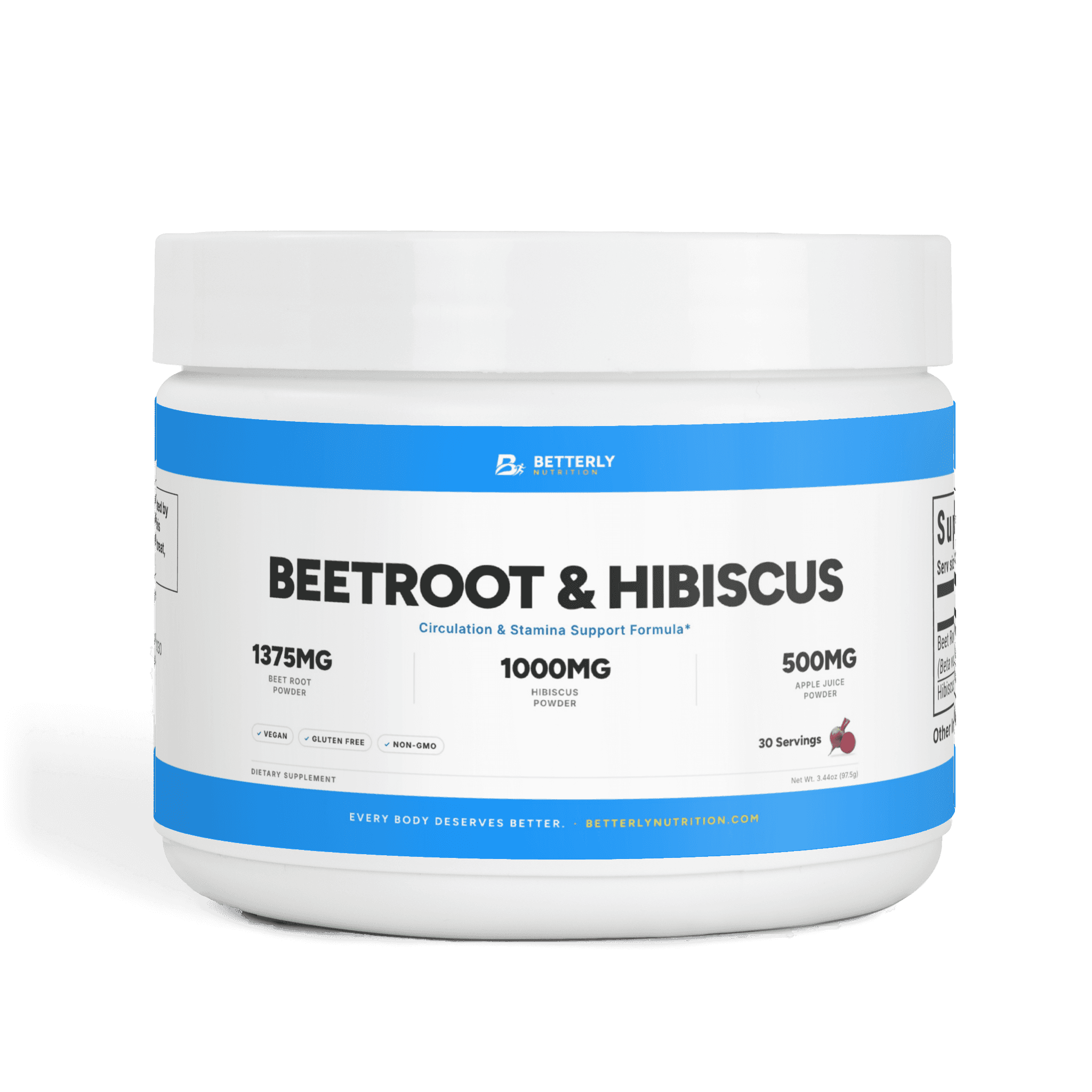
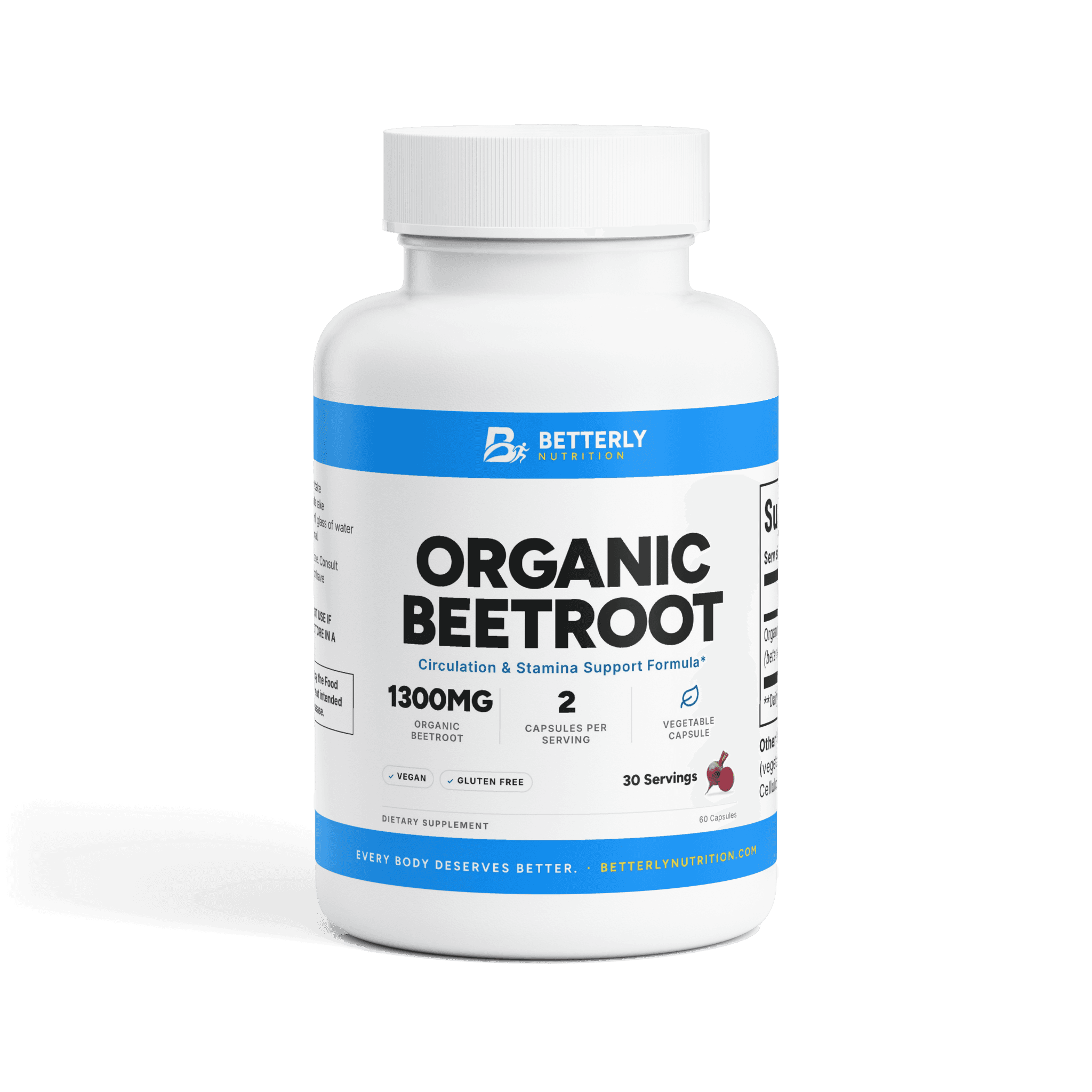
- How do our four greens and produce products compare on paper?
- Are greens powders worth it?
- When don't you need a greens powder?
- How should you take a greens powder, per the label?
- Who should check with a provider before using greens powder?
- FAQ: do greens powders work
- Sources
The short answer: Do greens powders work? At one modest job, yes: they add a few grams of dried plants and a little fiber to your day. Our Barley Grass & Spirulina Greens Powder lists 2 g of dietary fiber per 1-scoop (4.2 g) serving. Greens powders can't replace vegetables, though, and a proprietary blend hides each ingredient's amount, so the label rarely lets you judge any single plant inside.
Key takeaways
- Judge a greens powder by what its panel can show: a few grams of powdered grasses, vegetables, fruit and herbs, weighed out per scoop.
- Barley Grass & Spirulina Greens Powder lists 2 g of dietary fiber (6% DV) per 1-scoop (4.2 g) serving and declares no vitamin or mineral amounts.
- A proprietary blend shows one total weight and the order of its ingredients, so you can't tell how much of any single plant you're getting.
- In a CDC analysis of 2019 survey data, only 10.0% of U.S. adults met the vegetable recommendation, and one scoop a day doesn't close that gap.
- If you take a blood thinner such as warfarin, talk to your prescriber first, because leafy greens carry vitamin K and neither of our greens labels lists an amount.
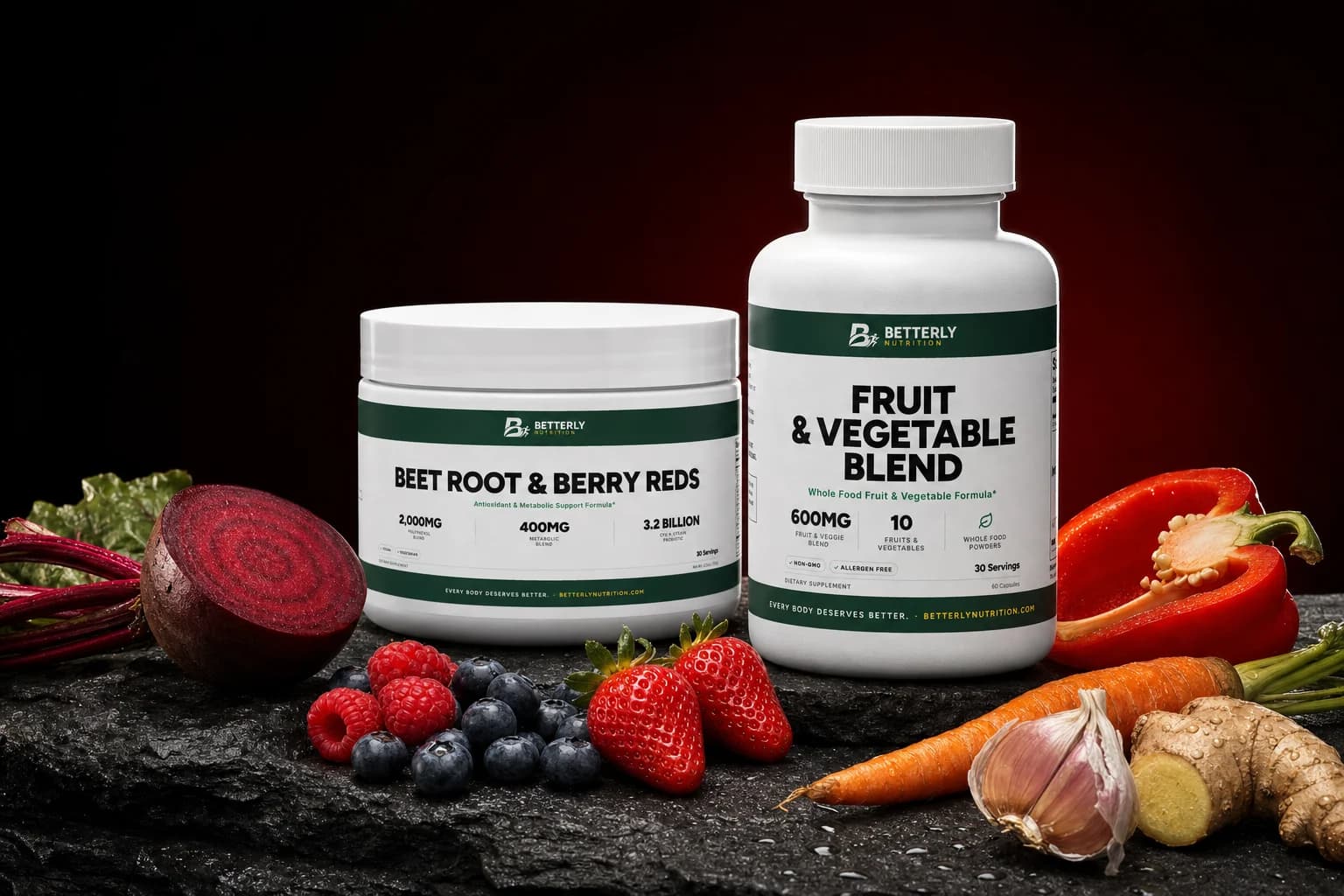
Betterly sells every product this post walks through: two greens powders, one reds powder and one fruit-and-vegetable capsule. Their four Supplement Facts panels are our worked example, and the same checks will work on any tub you're weighing.
Do greens powders work? Three jobs, three different verdicts
Greens powders succeed at adding dried plants to your day, fail as a vegetable replacement, and usually leave any one ingredient's effect impossible to judge from the label.
Scored against our own labels:
- Adding plant material and a little fiber. Pass. The Barley Grass & Spirulina panel prints the weights, down to 2 g of fiber per scoop.
- Standing in for vegetables. Fail, for our tubs and every other brand's. The next section shows the size of that gap.
- Producing a specific effect from one named plant. Usually impossible to judge, because that depends on a dose the blend never prints.
Job three also runs into thin research. In its background page on botanical supplements, the NIH Office of Dietary Supplements (ODS) points to astragalus as a botanical with very little research on its value. Astragalus is one of 16 ingredients in the Herbal Blend of our Alfalfa & Chlorella Greens Powder, and the panel gives no amount for it.
Can greens powder replace vegetables?
No. A 4.2 g scoop of greens powder can't replace vegetables, which the 2020-2025 Dietary Guidelines for Americans set at 2 to 3 cup-equivalents a day for adults.
A CDC report, Adults Meeting Fruit and Vegetable Intake Recommendations, United States, 2019, measured how many adults reach those targets. Using 2019 survey data from 49 states and the District of Columbia, it found that 12.3% met the fruit recommendation and 10.0% met the vegetable one.
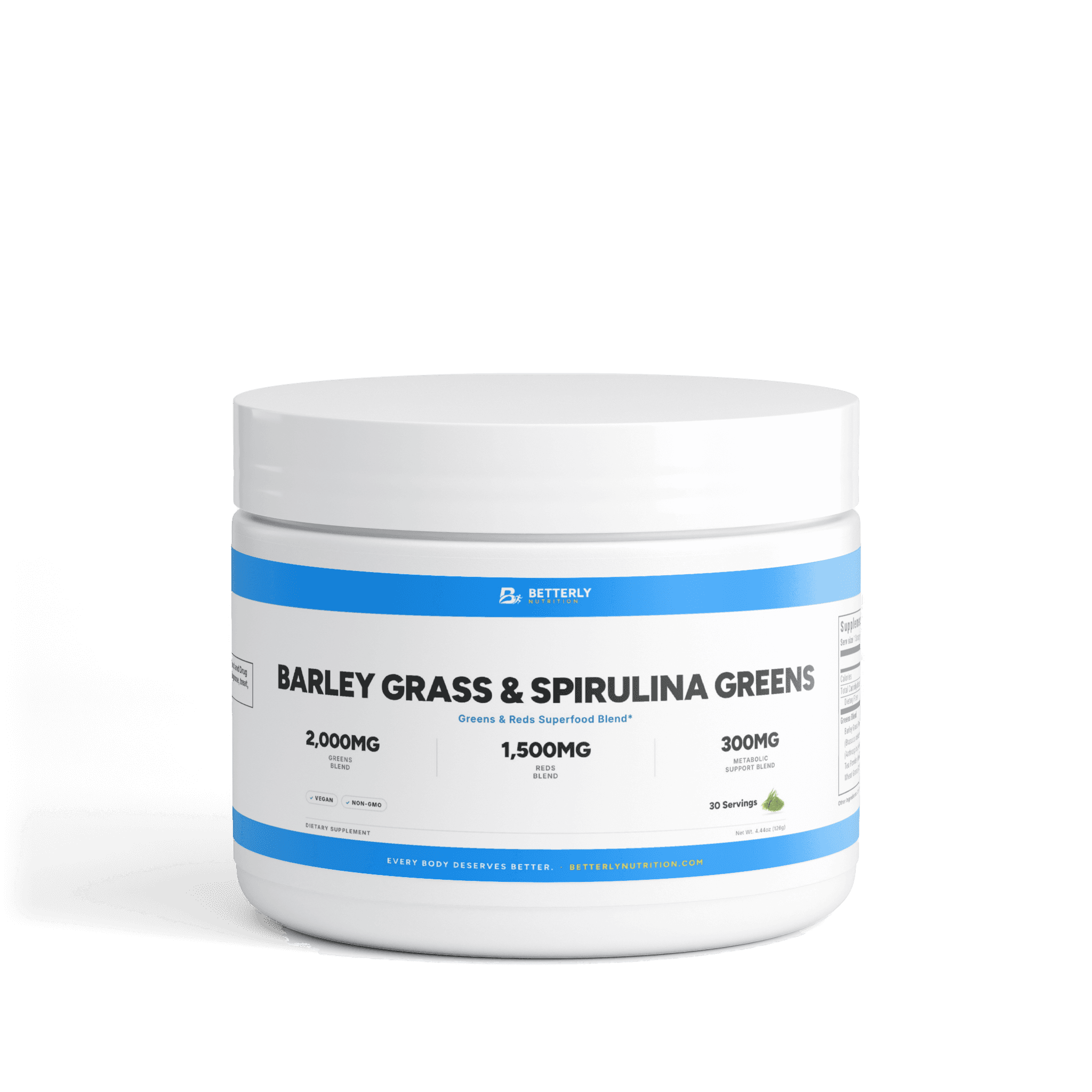
A scoop can't fill much of that gap. The Greens Blend in our Barley Grass & Spirulina Greens Powder weighs 2,000 mg, or 2 g, split among six plants. A cup-equivalent of vegetables is food you sit down and chew. Two grams of dry powder is a small pile you stir into water.
So is greens powder a good substitute for vegetables? Use it as an add-on to the plate, and keep the plate. During a week of airports and takeout, a scoop adds something where there'd otherwise be nothing. During an ordinary week, a bag of frozen broccoli moves you toward that target in a way no scoop can.
Capsules raise the same question in another form, and our guide on whether fruit and vegetable supplements work takes that one on separately.
Does greens powder have fiber?
Some greens powders have a little fiber: our Barley Grass & Spirulina Greens Powder lists 2 g of dietary fiber (6% DV) per 1-scoop (4.2 g) serving.
At 6%, reaching the full Daily Value would take well over a dozen scoops, and the label's suggested use is one a day. Fiber is a small bonus here, not a reason to buy.
Inulin, a fiber from Jerusalem artichoke root (Helianthus tuberosus), leads the 200 mg Digestive Support blend. That blend can supply only a sliver of the 2 g, so most of the fiber has to come from elsewhere in the scoop.
Our other products in this aisle vary:
- The Alfalfa & Chlorella tub lists less than 1 g of fiber (2% DV) per 2-teaspoon (about 5 g) serving, even with apple pectin and flax seed in its blends.
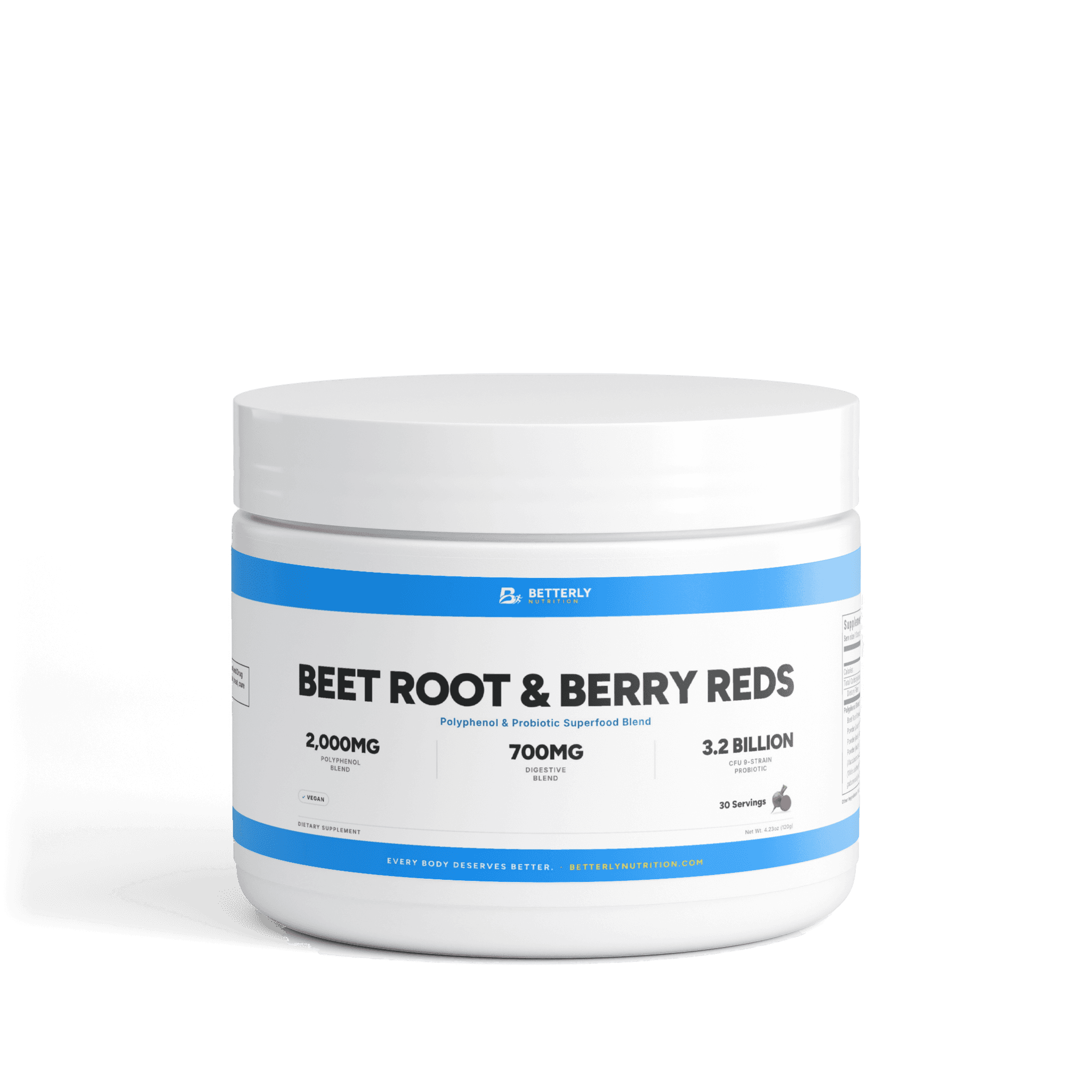
- The Beet Root & Berry Reds Powder lists 2 g (6% DV) per 1-scoop (4 g) serving, with a 700 mg Digestive Blend of oat fiber and inulin.
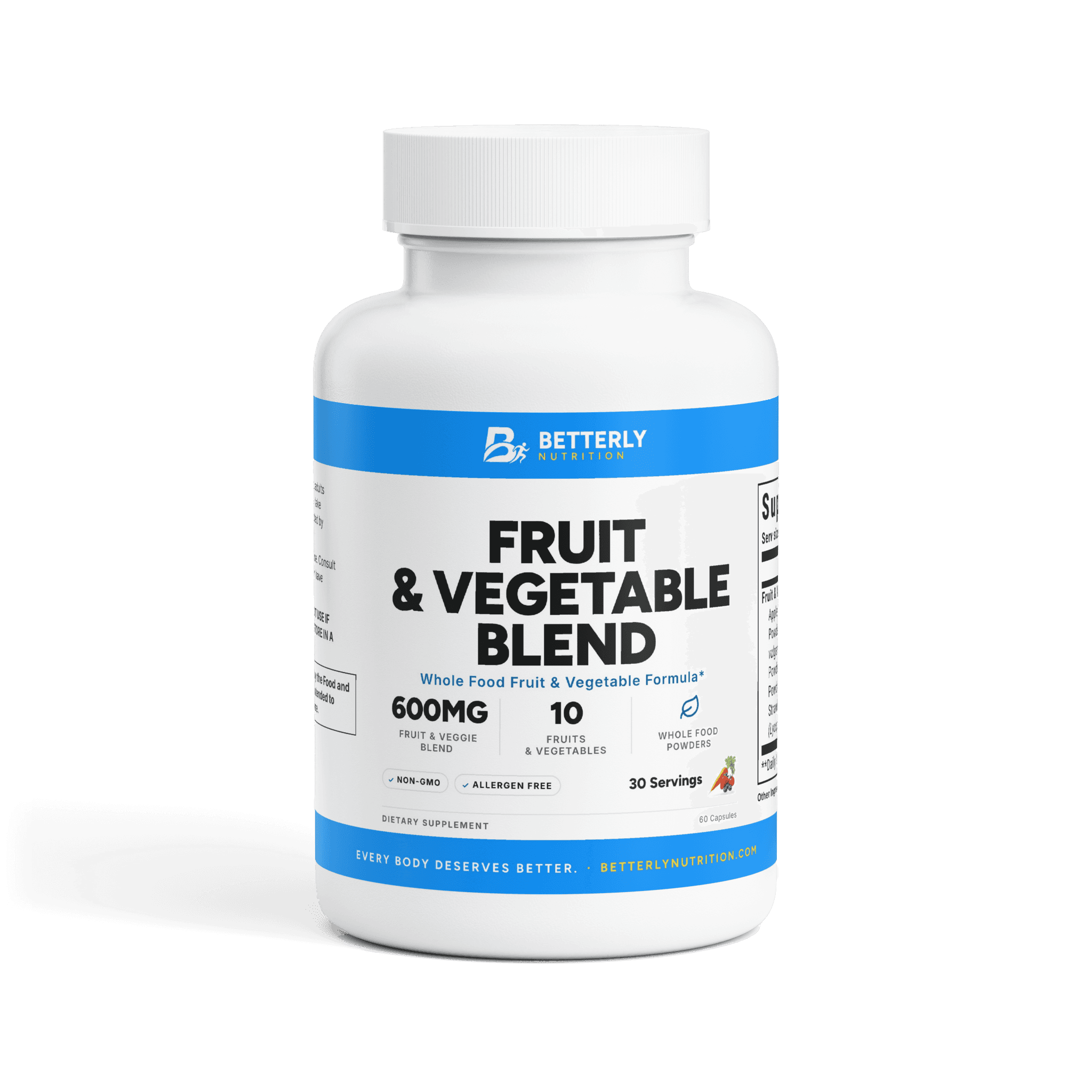
- The Fruit & Vegetable Blend Capsules have no fiber line at all.
Our greens scoop's 6% leaves about 94% of the fiber Daily Value to beans, oats, fruit and other foods. If you'd rather add a supplement, our walkthrough of fiber types and formats sorts through those options.
Why can't a blend label tell you whether a greens powder works?
A proprietary-blend label can't show whether a greens powder works, because it prints one total weight for a group of plants and never the amount of each one.
How much spirulina is in a scoop that names it on the front? On our Barley Grass & Spirulina Greens Powder, the best you can do is set a ceiling. Its 2,000 mg Greens Blend lists six plants: barley grass, broccoli, spirulina (Arthrospira platensis), green tea, alfalfa extract and wheat grass (Triticum aestivum).
Barley grass and broccoli come before spirulina on that list, and under the FDA's Dietary Supplement Labeling Guide, a blend has to list its ingredients from heaviest to lightest. So spirulina can't outweigh either plant ahead of it. If all three were tied, each would be a third of 2,000 mg, which caps spirulina at 667 mg. The real amount could be far lower, and the panel doesn't narrow it down.
Green tea, fourth in line, tops out at 500 mg by the same math, and the panel prints no caffeine figure. ODS's background page on botanical supplements lists green tea as a natural caffeine source, so count this glass toward your day's caffeine.
The same FDA guide makes any ingredient with a Daily Value leave the blend and show its own amount. That's why the Alfalfa & Chlorella panel prints its vitamin A on a separate line.
Research on a plant uses a known amount of it, and a blend total hides that amount, ours included.
How do our four greens and produce products compare on paper?
Our four greens and produce products differ most in what they declare: only the Alfalfa & Chlorella Greens Powder lists vitamins or minerals, and two list 2 g of fiber.
| Product (serving) | Blend totals | Fiber | Vitamins or minerals listed |
|---|---|---|---|
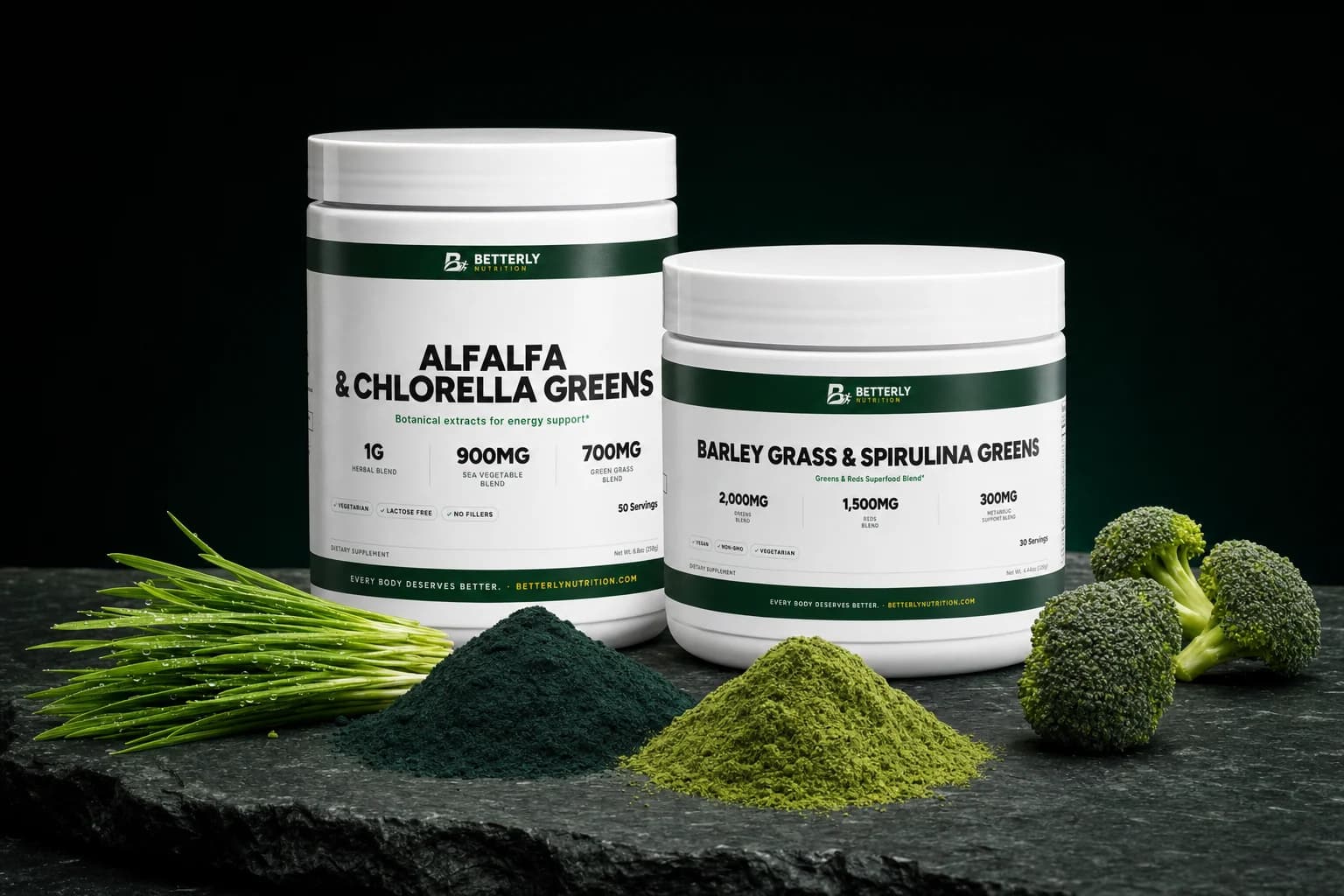
| Barley Grass & Spirulina Greens Powder (1 scoop, 4.2 g) | 4,000 mg in 4 blends | 2 g (6% DV) | None |
| Alfalfa & Chlorella Greens Powder (2 teaspoons, about 5 g) | 4,900 mg in 6 blends, plus 98 mg FOS | Less than 1 g | Vitamin A 270 mcg (30% DV), calcium, sodium, potassium |
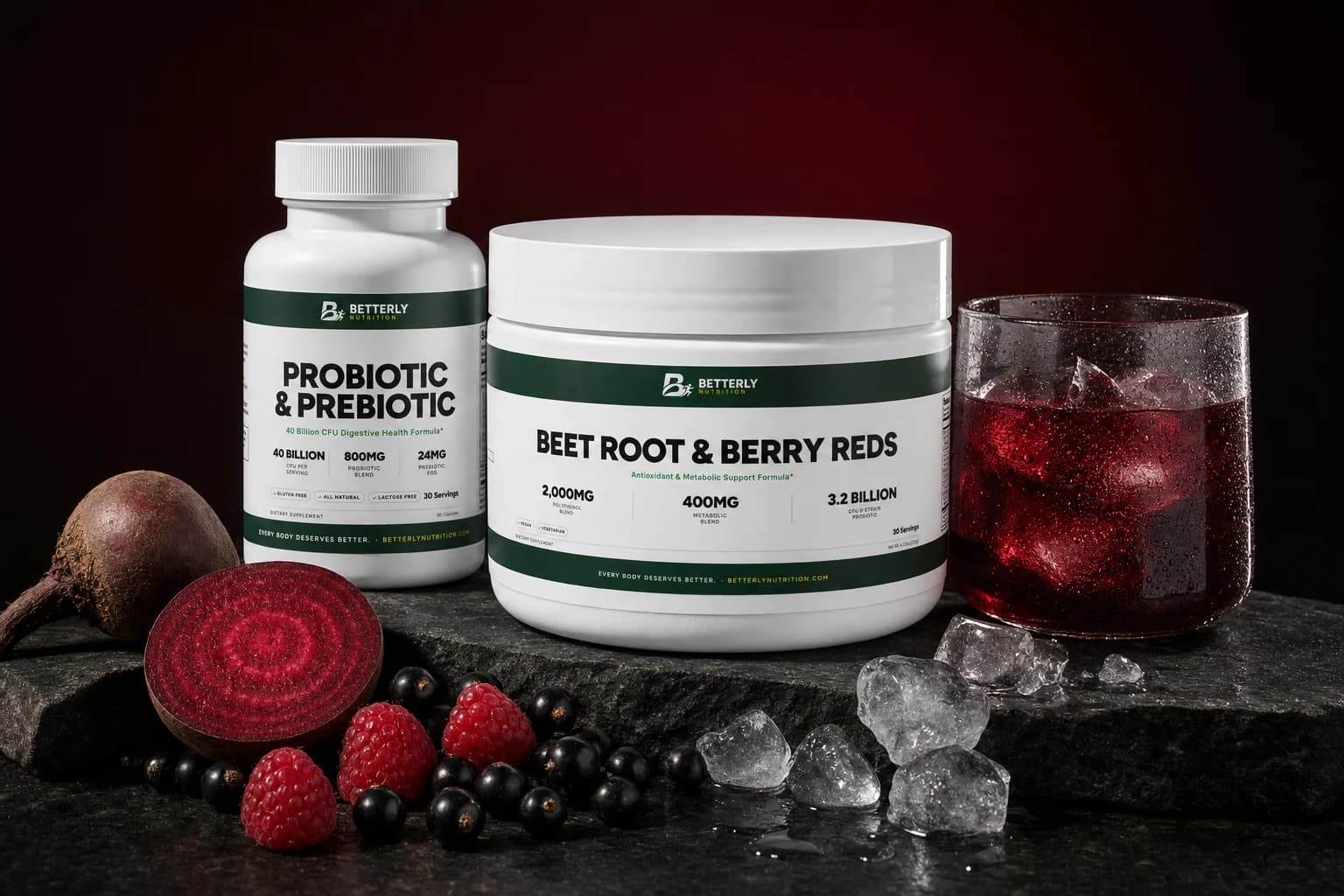
| Beet Root & Berry Reds Powder (1 scoop, 4 g) | 3,100 mg in 3 blends, plus a 100 mg probiotic | 2 g (6% DV) | None |
| Fruit & Vegetable Blend Capsules (2 capsules) | 600 mg in 1 blend | No line | None |
We added up each panel's blend rows to get these totals. The takeaway: a bigger blend total doesn't mean more declared nutrition. Only the Alfalfa & Chlorella panel lets you count a vitamin, 270 mcg of vitamin A as beta carotene per 2-teaspoon serving. The other three ask you to go on the plants alone.
If you're torn between the two scoops, our reds vs greens powder comparison maps where those labels overlap. All four products sit in our greens and superfoods collection.
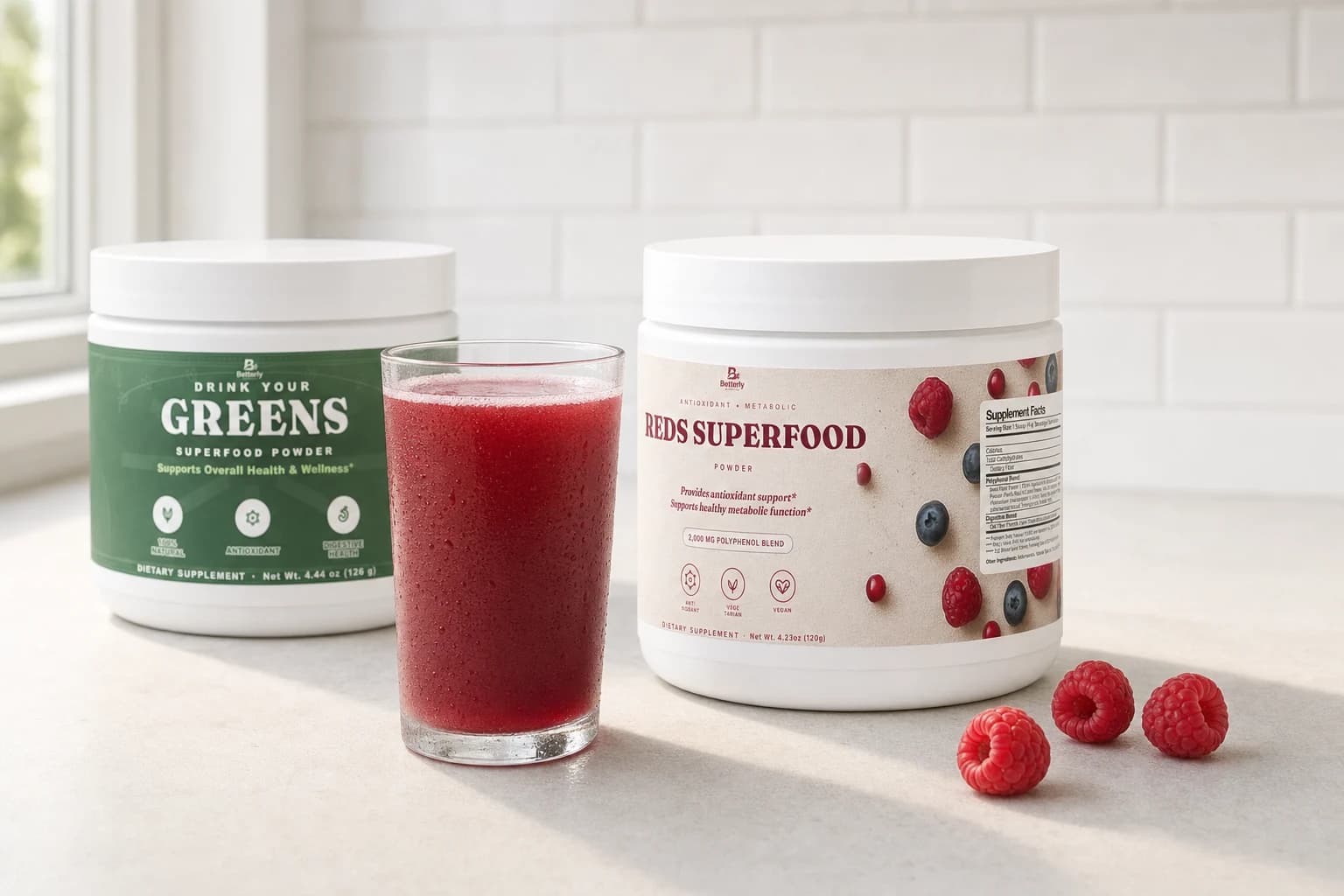
From our shop: Barley Grass & Spirulina Greens Powder — a 2,000 mg Greens Blend plus a 1,500 mg Reds Blend per 1-scoop (4.2 g) serving, with 2 g of fiber and 10 calories, labeled vegan.
Are greens powders worth it?
A greens powder is worth it if you'll drink it daily through stretches when vegetables drop off your plate, and not if vegetables already show up at most meals.
| Your situation | Greens powder? | Better first move |
|---|---|---|
| You eat vegetables most days | Optional | Keep going and save the money |
| Travel or long shifts wreck your meals | Reasonable | A scoop, plus whatever produce you can get |
| You want one specific nutrient | Probably not | A product that lists it with an amount |
| You're mainly after fiber | Not ideal | A fiber supplement, or more beans and oats |
The pattern across those rows: a greens powder earns its keep as a habit that covers bad weeks, not as a fix for one specific need.
Check the tub math, too. The Barley Grass & Spirulina tub holds 30 servings, a month at one scoop a day, while the Alfalfa & Chlorella tub holds 50 of its 2-teaspoon servings. If you're comparing big-name brands, our honest look at AG1 alternatives covers the premium all-in-ones.
When don't you need a greens powder?
You don't need a greens powder if your meals already include vegetables most days, or if a daily scoop would quietly become your excuse to skip them.
Watch for that second one: a scoop sits beside your vegetables and can't do their job once they're gone.
One greens powder is plenty, too. Ours repeat eight plants between them: barley grass, broccoli, spirulina, green tea, alfalfa, wheat grass, beet and ginger. That's 8 of the 22 blend ingredients in the Barley Grass & Spirulina scoop. Taking both would stack a second serving of those eight, green tea included, with no caffeine amount on either panel.
How should you take a greens powder, per the label?
Follow the label: our Barley Grass & Spirulina Greens Powder calls for one scoop in 6 to 8 ounces of cold water or another drink, once daily.
- Barley Grass & Spirulina Greens Powder and Beet Root & Berry Reds Powder: one scoop in 6 to 8 oz (177 to 237 ml) of cold water or a favorite beverage, once daily, finished within 10 minutes of mixing.
- Alfalfa & Chlorella Greens Powder: two teaspoons stirred into 8 oz (237 ml) of apple juice or another liquid. The label notes it's sold by weight, not volume, and settling may occur.
- Fruit & Vegetable Blend Capsules: two capsules daily with 6 to 8 oz of water.
All four labels say "Do not exceed recommended dose." Three of them set that dose at one serving a day. The Alfalfa & Chlorella label sets a 2-teaspoon serving but doesn't say how often to take it.
From our shop: Alfalfa & Chlorella Greens Powder — six blends of grains, herbs, sea vegetables, fruit, grasses and vegetables per 2-teaspoon (about 5 g) serving, with 50 servings per tub.
Who should check with a provider before using greens powder?
Talk to a healthcare provider before starting a greens powder if you're pregnant or nursing, under 18, on prescription medication, facing surgery, or managing a medical condition.
Our greens labels say it directly: "Consult a physician if pregnant, nursing, under 18, or have a medical condition."
Blood thinners come first. The ODS vitamin K fact sheet names green leafy vegetables such as spinach, kale and broccoli as vitamin K sources, and for people on warfarin it says "it's very important to get about the same amount of vitamin K each day." Broccoli appears on both of our greens panels, and the Alfalfa & Chlorella adds spinach, yet neither panel prints a vitamin K amount. Your prescriber has no number to work from, so ask before a scoop joins your routine.
Herbs matter too. The Barley Grass & Spirulina's 300 mg Metabolic Support Blend includes turmeric, Panax ginseng and ashwagandha. The Alfalfa & Chlorella's herbal blend includes ginkgo, licorice and Siberian ginseng, plus bee pollen and royal jelly, so skip it if bee products have ever given you trouble. Both powders list cereal grasses, and neither label makes a gluten-free claim.
FAQ: do greens powders work
Should you drink greens powder in the morning or at night?
Morning or midday is the cautious choice for our greens powders, because both list green tea and neither panel prints a caffeine amount. The labels themselves don't name an hour. They do set one timing rule: the Barley Grass & Spirulina directions say to drink the glass within 10 minutes of mixing, so stir it right before you plan to drink it, not the night before.
Do greens powders make you poop?
Not reliably. Our Barley Grass & Spirulina Greens Powder lists 2 g of fiber per 1-scoop (4.2 g) serving, a small amount for a whole day. Its 200 mg Digestive Support blend names inulin, ginger and sodium alginate but doesn't split the 200 mg among them, so the label can't tell you what each one adds. If a new powder doesn't sit well with you, stop using it and check with your healthcare provider.
Do greens powders have vitamins in them?
Some greens powders declare vitamins and some don't. Our Barley Grass & Spirulina Greens Powder lists no vitamin or mineral amounts. Our Alfalfa & Chlorella Greens Powder lists 270 mcg of vitamin A as beta carotene (30% DV), 15 mg of calcium, 15 mg of sodium and 50 mg of potassium per 2-teaspoon serving. If a nutrient isn't on the panel with an amount, don't count on it.
Is greens powder safe during pregnancy?
Check with your healthcare provider first, since our greens labels tell anyone pregnant or nursing to consult a physician. Both greens powders pair green tea with other herbs, such as ashwagandha in the Barley Grass & Spirulina scoop and licorice in the Alfalfa & Chlorella tub. Neither panel shows how much of any single herb a serving holds, so your provider will be judging from the ingredient list alone.
Do greens powders expire?
Yes. If your tub is stamped with a best-by or expiration date, treat that date as your deadline. The label text on our two greens powders doesn't state a shelf life, and its storage line reads "STORE IN A COOL, DRY PLACE." Dry applies inside the tub as well, so never drop a damp scoop back into the powder after rinsing it.
Sources
- Adults Meeting Fruit and Vegetable Intake Recommendations — United States, 2019, CDC Morbidity and Mortality Weekly Report
- Dietary Supplement Labeling Guide: Chapter IV. Nutrition Labeling, U.S. Food and Drug Administration
- Vitamin K: Fact Sheet for Consumers, NIH Office of Dietary Supplements
- Botanical Dietary Supplements: Background Information for Consumers, NIH Office of Dietary Supplements
If this left you looking for somewhere to start, read barley grass and spirulina greens powder with 2 g of fiber per scoop — its amounts per serving are listed on the page. For the practical questions this raises, how dosing, sourcing and subscriptions work is answered in one place.