On this page
- Key takeaways
- What's the difference between a greens powder and a multivitamin?
- Greens supplement vs multivitamin: how do the panels compare?
- Are green powders better than multivitamins?
- Can greens powder replace a multivitamin?
- Can you take greens powder and a multivitamin together?
- Greens powder vs multivitamin: which fits your situation?
- What do the labels say about taking a greens powder and a multivitamin?
- When can you skip both a greens powder and a multivitamin?
- Who should check with a healthcare provider first?
- FAQ: greens powder vs multivitamin
- Sources
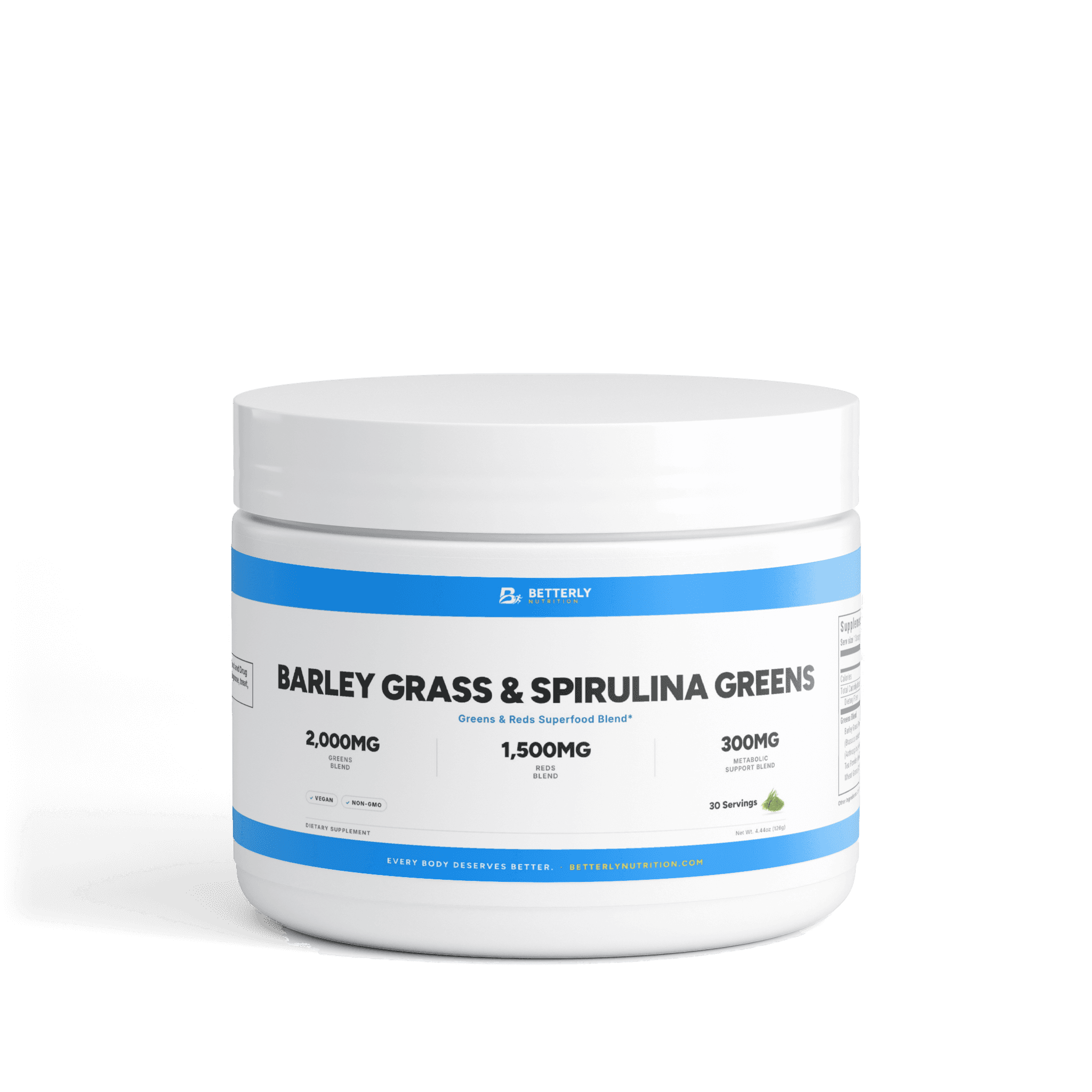
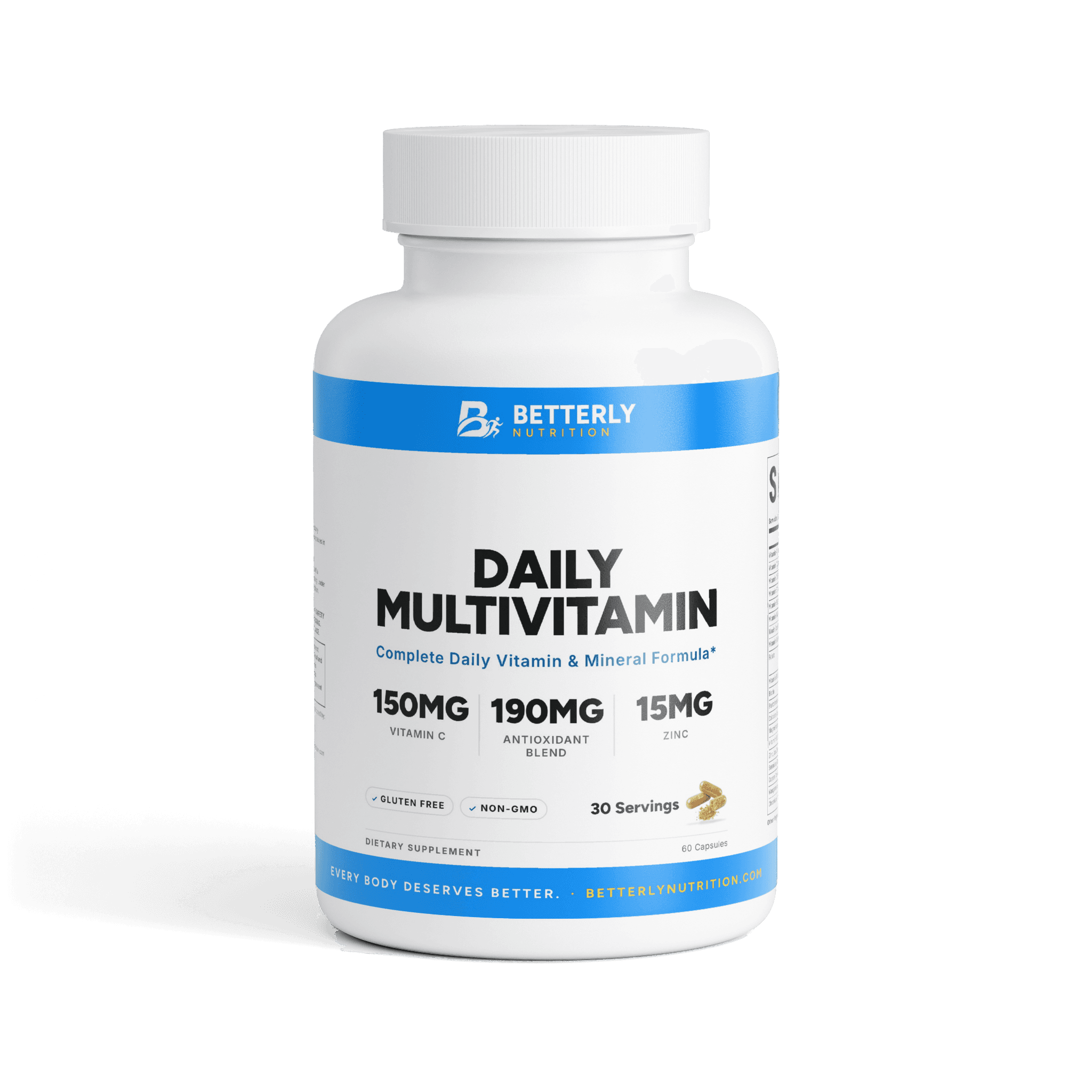
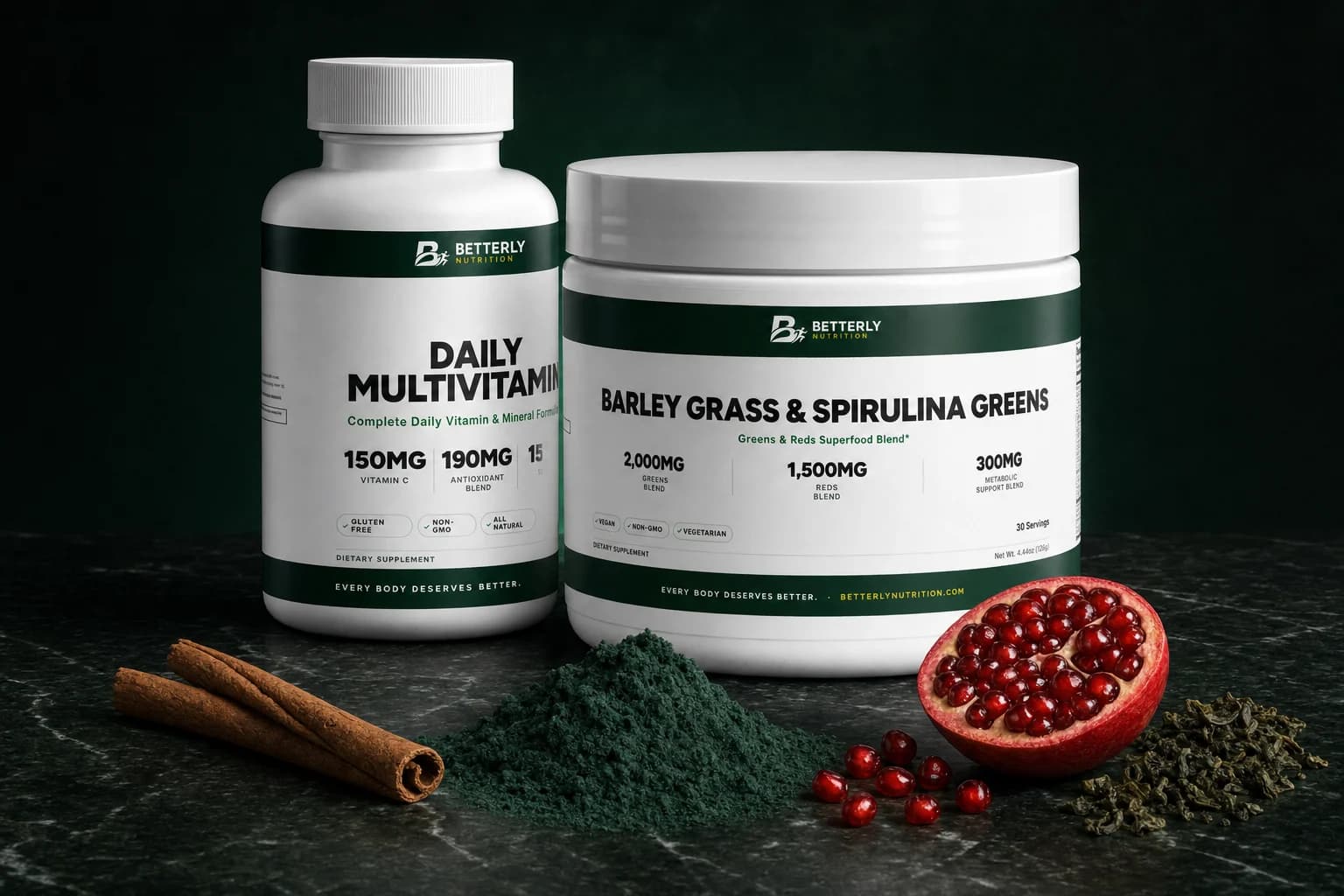
The short answer: Greens powder vs multivitamin comes down to what you can count on each label. Our Daily Multivitamin Capsules print 20 vitamins and minerals per 2-capsule serving, each with a % Daily Value. Our Barley Grass & Spirulina Greens Powder prints none per 1-scoop (4.2 g) serving and names 22 blend ingredients instead. Some all-in-one greens add a vitamin panel, so check yours, and nothing on our labels rules out taking both.
Key takeaways
- Our two greens panels print one vitamin between them, so you read them as ingredient lists, while our multivitamin gives you 20 nutrients to count.
- Daily Multivitamin Capsules list 30 mg of niacin per 2-capsule serving, just under the 35 mg adult upper limit from supplements on the NIH's niacin fact sheet.
- The only vitamin on our Alfalfa & Chlorella Greens Powder panel is vitamin A, at 270 mcg (30% DV) as beta carotene per 2-teaspoon (about 5 g) serving.
- Our greens and multivitamin labels share two counted nutrients, vitamin A and calcium, plus a few blend ingredients, such as spirulina and green tea, that carry no separate amounts.
Betterly sells both greens powders and the multivitamin compared here. That's a conflict of interest, so we stick to what their Supplement Facts panels print and name the blanks on our own labels too.
What's the difference between a greens powder and a multivitamin?
A multivitamin starts from a list of vitamins and minerals, while a greens powder starts from a list of dried plants whose nutrients go uncounted unless the panel prints them.
The NIH Office of Dietary Supplements (ODS) notes in its fact sheet on multivitamin/mineral supplements that there's no standard multi. Each company decides which nutrients go in, and how much of each.
On the greens side, the maker picks the plants, such as cereal grasses, algae, vegetables and herbs, then dries them and weighs them into blends. The plants bring their own nutrients along, but on our two tubs, each plant gets only its blend's total weight.
A multivitamin answers, "How much vitamin D am I getting?" A greens powder answers, "Which plants am I adding to my day?"
Greens supplement vs multivitamin: how do the panels compare?
Our Daily Multivitamin Capsules print 20 vitamins and minerals, while our two greens powders print none and four, and only the greens list fiber.
| What you can count | Barley Grass & Spirulina | Alfalfa & Chlorella | Daily Multivitamin |
|---|---|---|---|
| Serving | 1 scoop (4.2 g) | 2 teaspoons (about 5 g) | 2 capsules |
| Vitamin and mineral rows | None | 4 | 21 (20 nutrients) |
| Top vitamin or mineral %DV | None listed | 30% (vitamin A) | 1125% (vitamin B12) |
| Rows at 100% DV or more | 0 | 0 | 14 (13 nutrients) |
| Dietary fiber | 2 g (6% DV) | Less than 1 g (2% DV) | No row |
Each greens scoop weighs 4 to 5 grams, yet the Barley Grass & Spirulina panel gives no vitamin or mineral its own row. Of the Alfalfa & Chlorella tub's four vitamin and mineral rows, only vitamin A gets past 1% DV. The multivitamin's two capsules go the other way: 13 of its 20 nutrients reach a full Daily Value or more.
What stands out on the multivitamin panel?
Per 2-capsule serving, the Daily Multivitamin Capsules panel runs high on B vitamins and low on calcium and magnesium:
- B vitamins well past 100% DV, such as vitamin B1 at 7 mg (583% DV) and biotin at 300 mcg (1000% DV).
- Vitamin C at 150 mg (167% DV) and vitamin D at 10 mcg (50% DV).
- Calcium at 50 mg (4% DV) and magnesium at 50 mg (12% DV). ODS says basic multis are usually low in both.
- No row at all for iron, iodine or vitamin K.
Pantothenic acid shows up twice, once as pantothenic acid and once as vitamin B5, each at 10 mg (200% DV) from D-calcium pantothenate. That's why the panel has 21 vitamin and mineral rows for 20 nutrients. If you add up B5 across products, count both rows, since the label doesn't say whether they describe the same 10 mg.
Are green powders better than multivitamins?
Green powders aren't better or worse than multivitamins: a greens powder adds weighed plant material and a little fiber, and a multivitamin adds vitamins and minerals you can count.
The Barley Grass & Spirulina scoop lists 22 ingredients across four blends, from barley grass to ginger, plus 2 g of fiber. The multivitamin scores on something else: every nutrient's amount is printed per 2-capsule serving.
You'll often hear that greens powders "have vitamins naturally." Plants do contain vitamins, but "naturally" isn't a number, and Daily Value math needs one.
Our reds vs greens breakdown sets a reds tub beside the greens.
Can greens powder replace a multivitamin?
A greens powder can only replace a multivitamin if its panel lists the nutrients you're after in countable amounts, and our Barley Grass & Spirulina scoop lists none.
The Alfalfa & Chlorella tub gets closer, but not close: 30% of one nutrient's Daily Value. The multivitamin has 18 nutrients at 50% DV or higher.
Try a quick test on any tub. Pick the three nutrients you care most about, say vitamin D, B12 and zinc, and look for each on the greens panel with an amount beside it. If they aren't there, the powder isn't covering them.
Some all-in-one super greens drinks do print a vitamin and mineral panel, and this test is how you'd check one. Our look at AG1 alternatives covers that premium end.
The test cuts the other way too: a multivitamin can't stand in for a daily habit of dried plants and fiber, since its panel has no fiber row.
Can you take greens powder and a multivitamin together?
Yes, a greens powder and a multivitamin can share a routine at label directions. Our labels overlap on vitamin A, calcium and a handful of blend ingredients.
| Ingredient | Daily Multivitamin | Barley Grass & Spirulina | Alfalfa & Chlorella |
|---|---|---|---|
| Vitamin A (beta carotene) | 600 mcg RAE (67% DV) | Not listed | 270 mcg (30% DV) |
| Calcium | 50 mg (4% DV) | Not listed | 15 mg (1% DV) |
| Spirulina | In a 110 mg blend | In the 2,000 mg Greens Blend | In a 900 mg blend |
| Green tea | Extract, 190 mg blend | Leaf, Greens Blend | Leaf, 1 g blend |
| Cassia cinnamon | In the 190 mg blend | In a 300 mg blend | Not listed |
| Pomegranate | Extract, 190 mg blend | Powder, 1,500 mg blend | Not listed |
Only the top two rows add up: the multivitamin plus the Alfalfa & Chlorella tub comes to 97% of the Daily Value for vitamin A, all from beta carotene, and 5% for calcium. The other repeats are doubled by unknown amounts.
Is doubling up on beta carotene a problem?
The ODS fact sheet on vitamin A and carotenoids says there are no upper limits for beta carotene; the limits it lists cover preformed vitamin A only. A lot of beta carotene can turn skin yellow-orange, which ODS calls harmless.
Smoking changes that answer. ODS advises smokers, and perhaps former smokers, to avoid multis with large amounts of beta carotene and vitamin A. If that's you, ask your provider before pairing a multi with a beta carotene greens powder.
Where does real doubling up happen?
On our labels, real doubling up would come from a second vitamin product. The multivitamin lists 30 mg NE of niacin (188% DV), and the ODS niacin fact sheet sets the adult upper limit from supplements at 35 mg a day.
Neither greens powder lists niacin, but a B-complex or a second multi could push you past that limit. The same sheet ties a skin reaction to nicotinic acid: at 30 mg or more from supplements, the face, arms and chest can turn red, burn, tingle or itch. The "Niacin (as Niacin)" line on our panel doesn't say which form it is, nicotinic acid or nicotinamide. If it's nicotinic acid, one 2-capsule serving sits right at that 30 mg threshold.
Greens powder vs multivitamin: which fits your situation?
Pick a multivitamin when you want counted nutrients, a greens powder when you want a daily plant habit with some fiber, and both only if you want both.
| What you're after | Our closer fit | The label line behind it |
|---|---|---|
| You want to know your vitamin D, B12 and zinc | Daily Multivitamin Capsules | 10 mcg, 27 mcg and 15 mg per 2 capsules |
| You want a daily drink of dried plants | Barley Grass & Spirulina Greens Powder | 22 blend ingredients and 2 g of fiber per scoop |
| You want plants plus one counted vitamin | Alfalfa & Chlorella Greens Powder | Vitamin A, 270 mcg (30% DV) per 2 teaspoons |
| You'd rather swallow than stir | Daily Multivitamin Capsules | 2 capsules, taken at breakfast |
| You're pregnant or trying to be | A talk with your provider first | Our multi lists no iron or iodine |
No row sends you to both products at once. If none sounds like you, skipping both may be the honest call, covered below.
You'll find both greens tubs in our greens and superfoods collection.
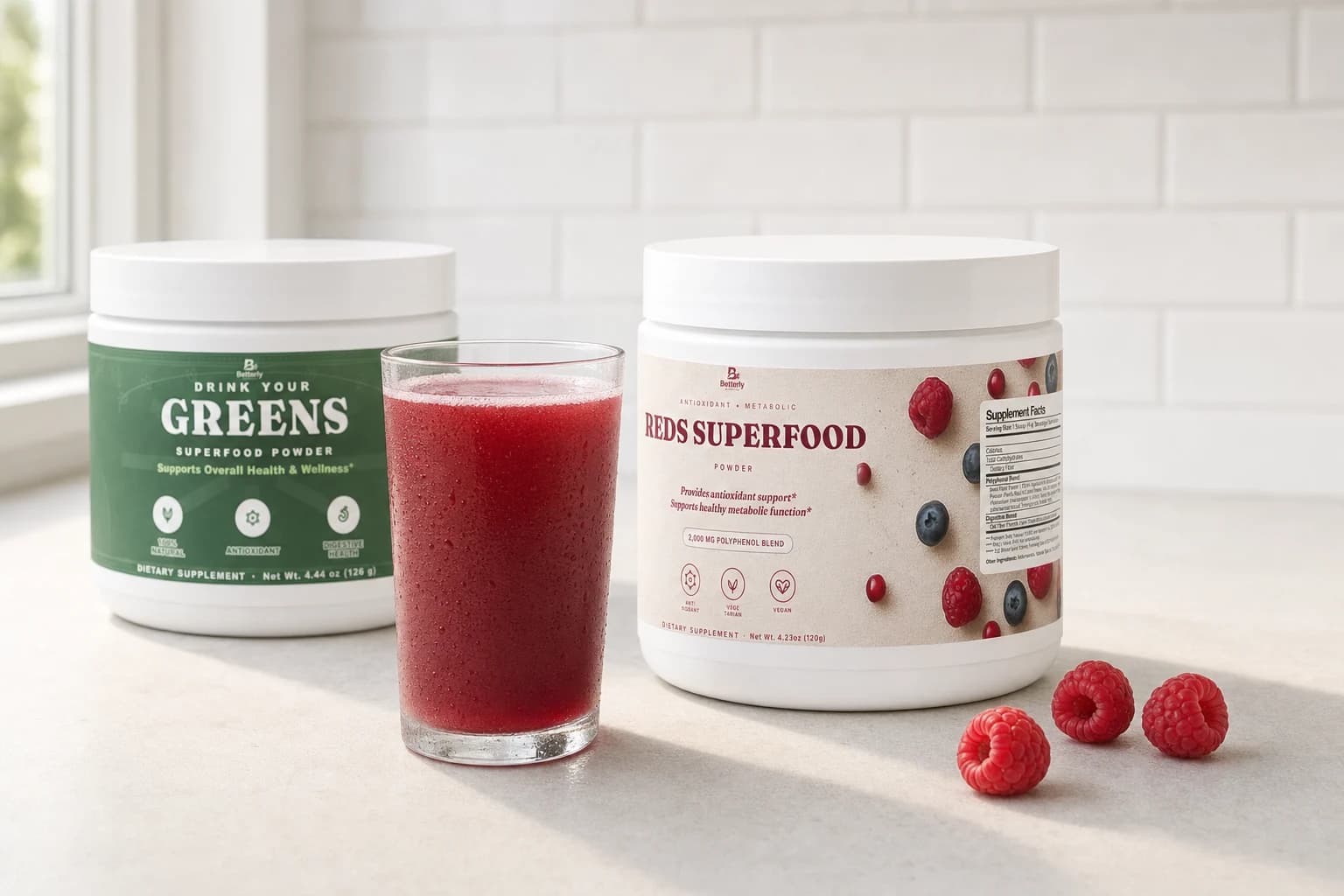
From our shop: Barley Grass & Spirulina Greens Powder — 30 servings of a 1-scoop (4.2 g) drink with 22 ingredients across four blends, for someone who wants plants rather than counted vitamins.
What do the labels say about taking a greens powder and a multivitamin?
Our labels set a simple routine: Daily Multivitamin Capsules with a morning meal, and one Barley Grass & Spirulina scoop in cold water, once a day.
- Daily Multivitamin Capsules: "take two (2) capsules in the morning with a meal."
- Barley Grass & Spirulina Greens Powder: one scoop for adults in 6 to 8 oz (177 to 237 ml) of cold water or a favorite beverage, once a day, drunk within 10 minutes.
- Alfalfa & Chlorella Greens Powder: adults add 2 teaspoons to 8 oz (237 ml) of apple juice or a favorite liquid, and no frequency is given.
Nothing on our labels asks you to space them apart, and the multivitamin's "in the morning with a meal" is the only time of day on any of them. So one breakfast can hold both the glass and the capsules. All three labels also print "Do not exceed recommended dose." Miss a morning, and the next day is still one serving.
Green tea sits on all three panels, and NCCIH's page on green tea's usefulness and safety notes that green tea contains caffeine. None of our panels gives a caffeine figure.
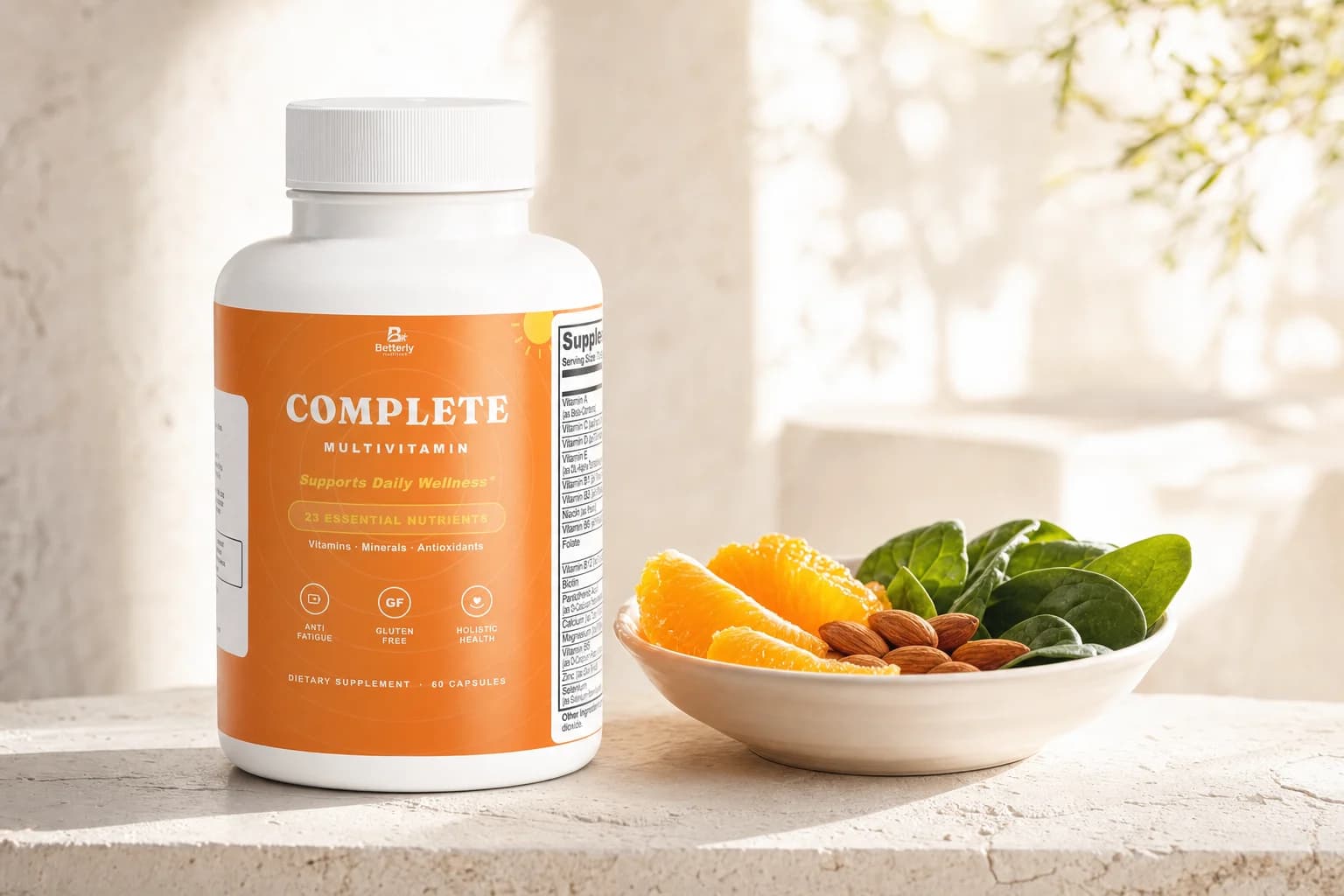
From our shop: Daily Multivitamin Capsules — 20 vitamins and minerals per 2-capsule serving, including 150 mg of vitamin C and 15 mg of zinc (136% DV), labeled gluten free.
When can you skip both a greens powder and a multivitamin?
You may not need either one if you eat a varied diet most days, and you don't need a multivitamin just to back up a greens powder.
ODS notes that people who take multis often already get more vitamins and minerals from food than people who don't. Other honest reasons to pass:
- Your provider named one nutrient. Then you want that nutrient's own row at their amount, not a 20-nutrient multi or a plant blend.
- You already take a multi or a B-complex. The niacin math above shows how little room some rows leave.
- You'd add the multi only because the greens panel prints no vitamins. That blank says nothing about your diet; your meals settle that.
Our guide to who a daily multivitamin actually suits covers the multi side of that call.
Who should check with a healthcare provider first?
A greens powder or multivitamin needs a provider's input first during pregnancy or nursing, before age 18, alongside prescription medicine, ahead of surgery or with any medical condition.
The caution on all three of our labels covers the first two and the last. Also bring up:
- Blood thinners: ODS says anyone taking warfarin should talk to a provider before taking a multi or any supplement with vitamin K. Our multivitamin has no vitamin K row, but our greens list broccoli leaf and spinach leaf with no vitamin K amount.
- Smoking, now or in the past: raise the beta carotene totals from the table above.
- Green tea extract: NCCIH reports uncommon cases of liver injury in people using green tea products, mostly extracts in tablets or capsules. Our multivitamin lists green tea extract in its 190 mg blend.
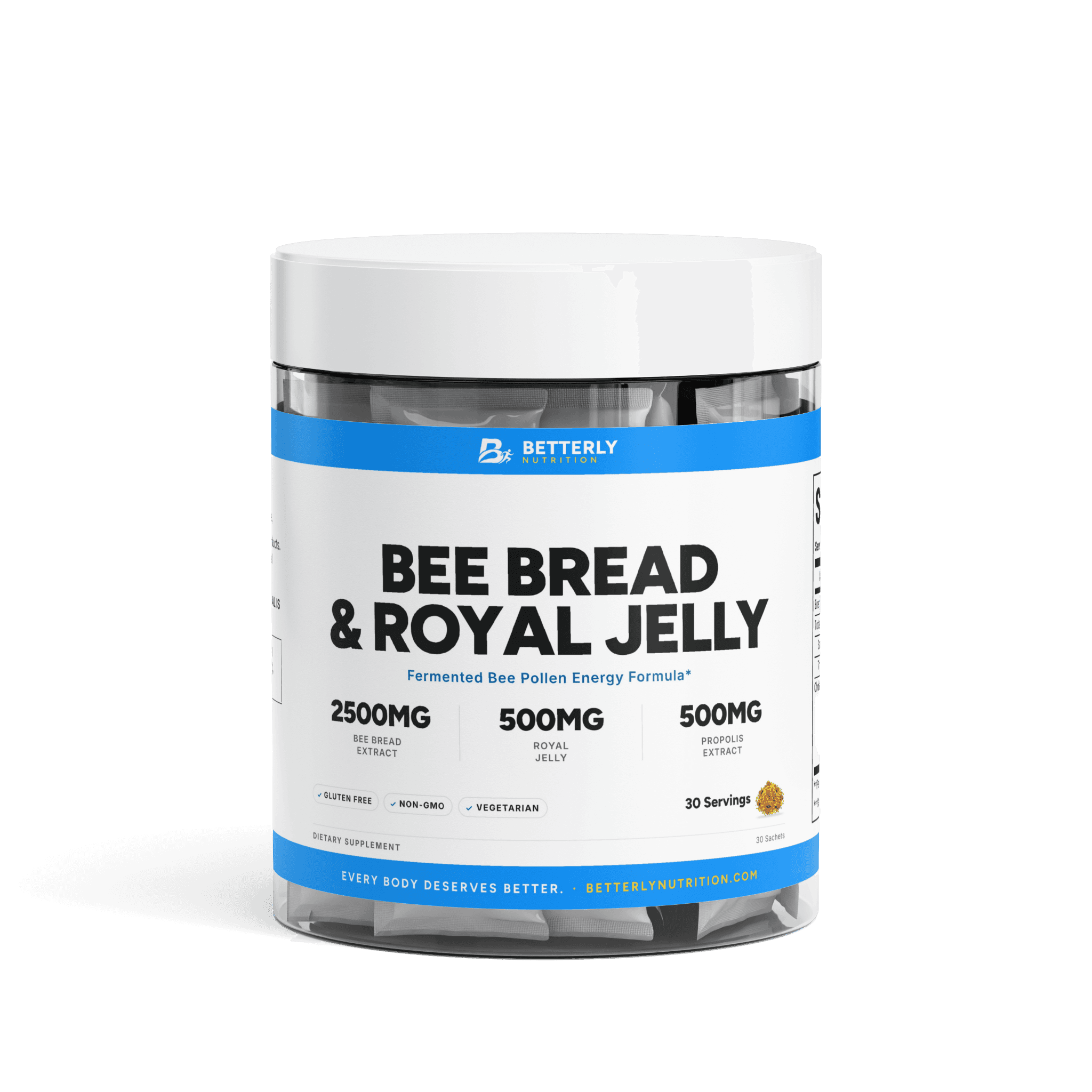
- Other herbs: the Barley Grass & Spirulina scoop lists turmeric, Panax ginseng and ashwagandha, and the multivitamin lists echinacea and garlic. If a bee product has ever given you a reaction, say so: bee pollen and royal jelly sit in the Alfalfa & Chlorella's Herbal Blend, beside ginkgo, licorice and Siberian ginseng. Bring every container.
FAQ: greens powder vs multivitamin
How long does a tub of greens powder last compared with a bottle of multivitamins?
Our Barley Grass & Spirulina Greens Powder tub and Daily Multivitamin Capsules bottle each hold 30 servings, so at one serving a day both last 30 days. The bottle's 60 capsules divide into 30 two-capsule servings. The Alfalfa & Chlorella tub holds 50 servings of 2 teaspoons, but its label names no frequency, so it has no printed day count.
Can you take greens powder twice a day?
Not our Barley Grass & Spirulina Greens Powder. Its label calls for one scoop once daily and says, "Do not exceed recommended dose." A second scoop would double every blend, green tea included. The Alfalfa & Chlorella label sets no frequency for its 2-teaspoon serving, so ask your healthcare provider before going past one a day.
Is a greens powder or a multivitamin vegan?
Only one of our three is labeled vegan: the Barley Grass & Spirulina Greens Powder, which also claims non-GMO. The Daily Multivitamin Capsules label claims gluten free and non-GMO and says nothing about vegan, so we don't either. The Alfalfa & Chlorella's claim stops at vegetarian, which fits its Herbal Blend: bee pollen and royal jelly are bee products, and most vegan diets leave those out.
Is it safe to take a greens powder and a multivitamin while pregnant?
Ask your healthcare provider before taking either one while pregnant, since all three of our labels send pregnant and nursing readers to a physician first. ODS says a prenatal multi can help cover folic acid, iron, iodine and vitamin D during pregnancy. Our Daily Multivitamin Capsules aren't a prenatal and list no iron or iodine, and all three products list green tea, a source of caffeine.
Sources
- Multivitamin/mineral Supplements: Fact Sheet for Consumers, NIH Office of Dietary Supplements
- Vitamin A and Carotenoids: Fact Sheet for Consumers, NIH Office of Dietary Supplements
- Niacin: Fact Sheet for Consumers, NIH Office of Dietary Supplements
- Green Tea: Usefulness and Safety, National Center for Complementary and Integrative Health
If this left you looking for somewhere to start, read greens powder to take alongside a multivitamin — its amounts per serving are listed on the page. For the practical questions this raises, how dosing, sourcing and subscriptions work is answered in one place.