On this page
- Key takeaways
- Do fruit and vegetable supplements work, and what counts as working?
- How many servings of fruit and vegetables per day do adults need?
- Can supplements replace fruits and vegetables?
- What's inside our Fruit & Vegetable Blend Capsules?
- Fruit and vegetable supplements vs a multivitamin: which is better?
- What are the real benefits of fruit and vegetable supplements?
- How should you take fruit and vegetable capsules?
- When don't you need a fruit and vegetable supplement?
- Who needs a provider's okay before taking a produce capsule?
- FAQ: fruit and vegetable supplements
- Sources
The short answer: Fruit and vegetable supplements work as a small, convenient add-on, not a stand-in for produce. Our Fruit & Vegetable Blend Capsules hold a 600 mg blend of ten dried fruit and vegetable powders per 2-capsule serving. That's 0.6 g. MedlinePlus lists one serving of raw fruit as 1 cup, or 100 grams, so count a capsule as an extra, never as a serving.
Key takeaways
- Food is counted in cups and a produce capsule in milligrams: a 2-capsule serving of our Fruit & Vegetable Blend Capsules is 0.6 g of dried powder, and MedlinePlus counts 1 cup (100 grams) of raw fruit as one serving.
- Betterly's Fruit & Vegetable Blend Capsules list one 600 mg blend of ten powders per 2-capsule serving and no amounts for vitamins, minerals or fiber.
- MedlinePlus says most children and adults should eat 1 1/4 to 4 or more servings of vegetables and 1 to 2 1/2 servings of fruit a day.
- A multivitamin states vitamin and mineral amounts, while a produce capsule names plant powders under one blend weight.
- The capsule contains garlic powder, and NCCIH says garlic supplements may raise bleeding risk, so ask first if you take an anticoagulant or aspirin or have surgery coming up.
We sell the capsule in this article, and the two powders and the multivitamin it's measured against are ours too. Where more produce on your plate is the better buy, we'll say that plainly.
Do fruit and vegetable supplements work, and what counts as working?
Fruit and vegetable supplements work on a small scale: a daily serving of our Fruit & Vegetable Blend Capsules is 0.6 g of powder, and food is measured in cups.
It helps to separate the product from the promise. The product is simple: powdered plants in a capsule, plus a label that says how much. The promise, when a brand makes one, is usually bigger than a few hundred milligrams can carry.
Produce capsules also face a harder comparison than most supplements. They borrow their name from foods you eat by the cupful, water, fiber and all. A capsule keeps a dry sliver of each plant and leaves the rest behind. Our panel lists 600 mg of a Fruit & Veggie Blend per two capsules, split among ten powders in shares it doesn't show.
How many servings of fruit and vegetables per day do adults need?
Most children and adults should eat 1 1/4 to 4 or more servings of vegetables and 1 to 2 1/2 servings of fruit a day, according to MedlinePlus.
That range comes from the MedlinePlus summary of the Dietary Guidelines for Americans 2025-2030. Where you land depends on your age, your sex and how active you are. The page gives these examples of one serving:
- 1 cup (100 grams) of raw or cooked vegetables
- 2 cups (60 grams) of raw, leafy greens
- 1 cup (100 grams) of raw fruit
- 1/4 cup of dried fruit
Frozen, canned and dried produce all count, and the page calls them good options when they have little to no added sugar. Juice gets a caution: limit it, or mix it with water. Capsules and powders don't appear on the list at all.
Can supplements replace fruits and vegetables?
No, supplements can't replace fruits and vegetables: a month of Fruit & Vegetable Blend Capsules is 18 g of dried powder, with no fresh-produce equivalent on the label.
The NIH Office of Dietary Supplements (ODS) is blunt about this in Dietary Supplements: What You Need to Know: supplements "can't take the place of the variety of foods that are important to a healthy eating routine." The same page adds that many supplements still need more study to show whether they have value. The ODS multivitamin/mineral fact sheet notes that foods bring fiber and other ingredients along with their vitamins and minerals.
Here's the math from our panel. Two capsules hold 600 mg, or 0.6 g. Sixty capsules make up the 30 servings in a bottle, which comes to 18 g of powder for the month.
Put that next to one 100-gram fruit serving on the MedlinePlus list and the gap looks huge, but the comparison isn't perfectly fair. Drying removes water, so 18 g of powder started out as more fresh produce than 18 g. How much more depends on the plant and the process, and our label doesn't give a ratio. Even the most compact serving on the MedlinePlus list, a quarter cup of dried fruit, is a handful you can see and chew.
What do "servings of fruits and vegetables" claims mean?
A "servings" claim on a produce supplement is the maker's own calculation, not a federal serving, so look for how that number was worked out.
Before you count that number toward your day, find out what it rests on, such as the fresh weight of produce before drying. Our label makes no servings claim, and we won't make one here.
What's inside our Fruit & Vegetable Blend Capsules?
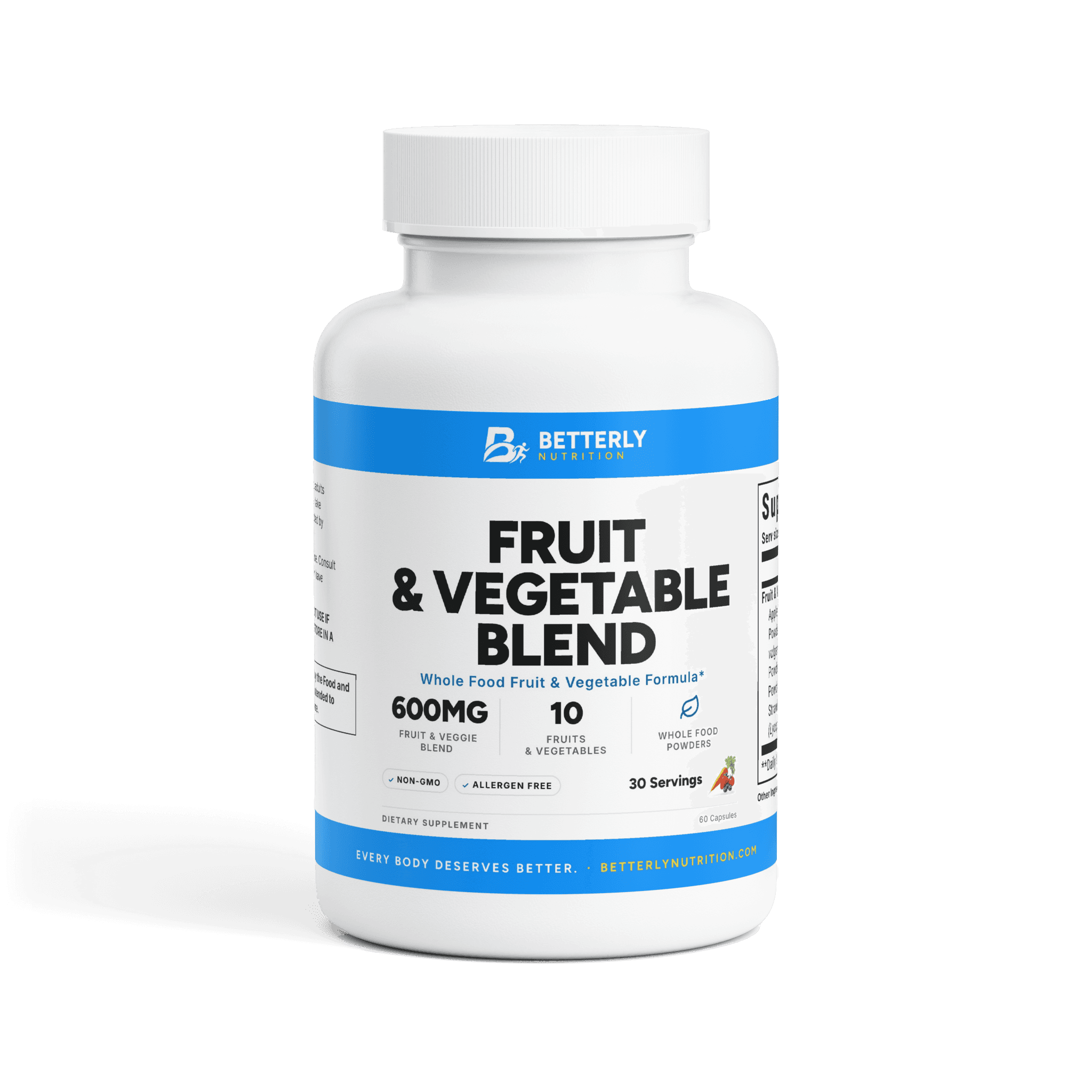
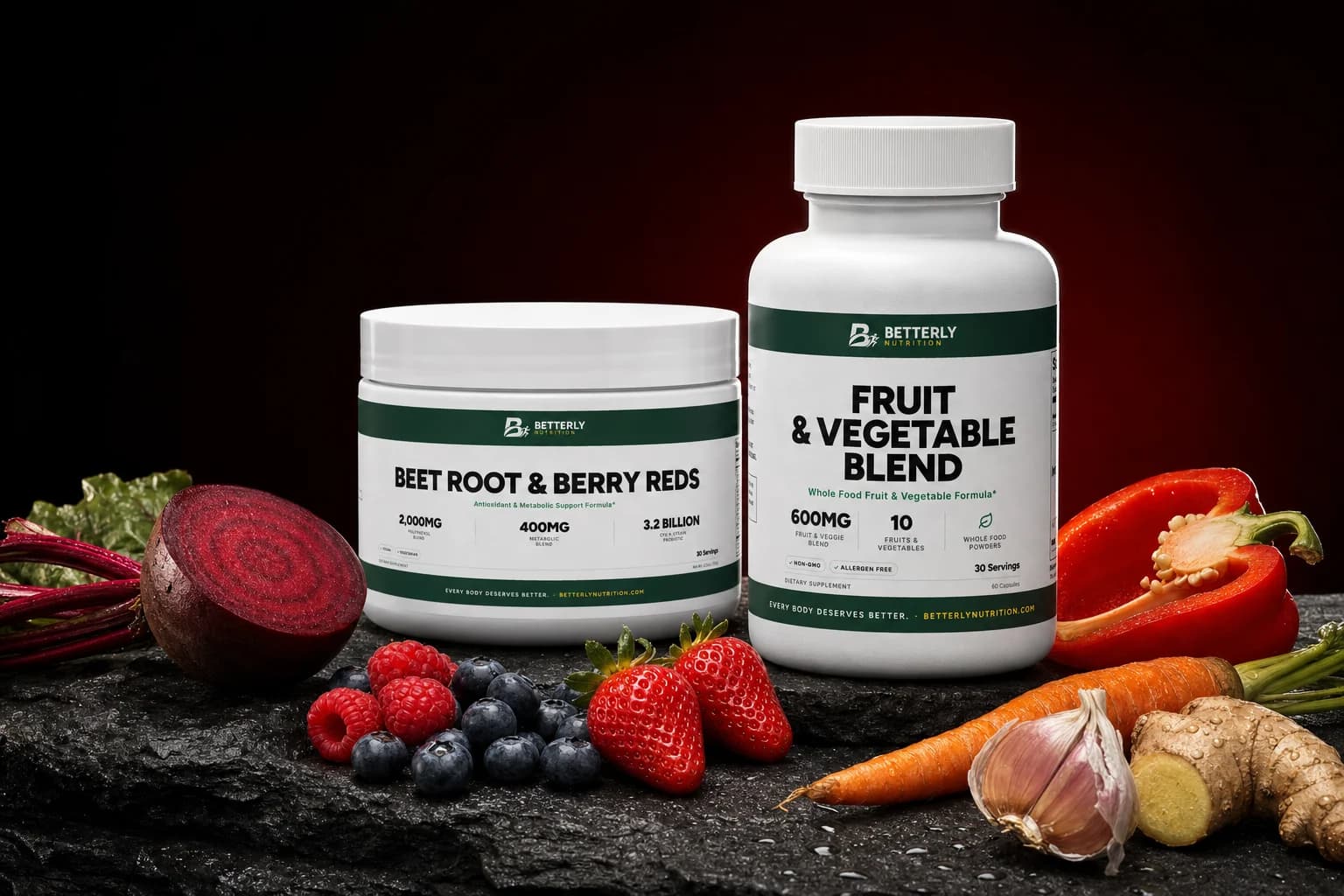
Our Fruit & Vegetable Blend Capsules contain one 600 mg Fruit & Veggie Blend of ten powders per 2-capsule serving.
The Supplement Facts panel has a single row, and its ten ingredients fall into two groups:
- Whole-food powders: carrot (listed as whole carrot), beet root (Beta vulgaris), blueberry, garlic bulb, ginger root, raspberry and red bell pepper.
- Processed a step further: apple fiber powder (Malus pumila), strawberry juice powder and tomato extract (Lycopersicon esculentum).
The front of our bottle says "Whole Food Fruit & Vegetable Formula." Seven of the ten fit that neatly. The other three are a fiber fraction, a juice powder and an extract, and we'd rather you know that up front.
There are no rows for vitamins, minerals, calories or fiber, and no split of the 600 mg among the ten.
The label's two callouts are NON-GMO and ALLERGEN FREE. The capsule shell is gelatin (brown rice flour is the only other added ingredient), so skip this one if you avoid animal products. It sits with our greens, reds and produce products in the greens and superfoods collection.
Fruit and vegetable supplements vs a multivitamin: which is better?
A multivitamin and a fruit and vegetable supplement do different jobs: one lists vitamins and minerals with amounts, the other lists plant powders under one blend weight.
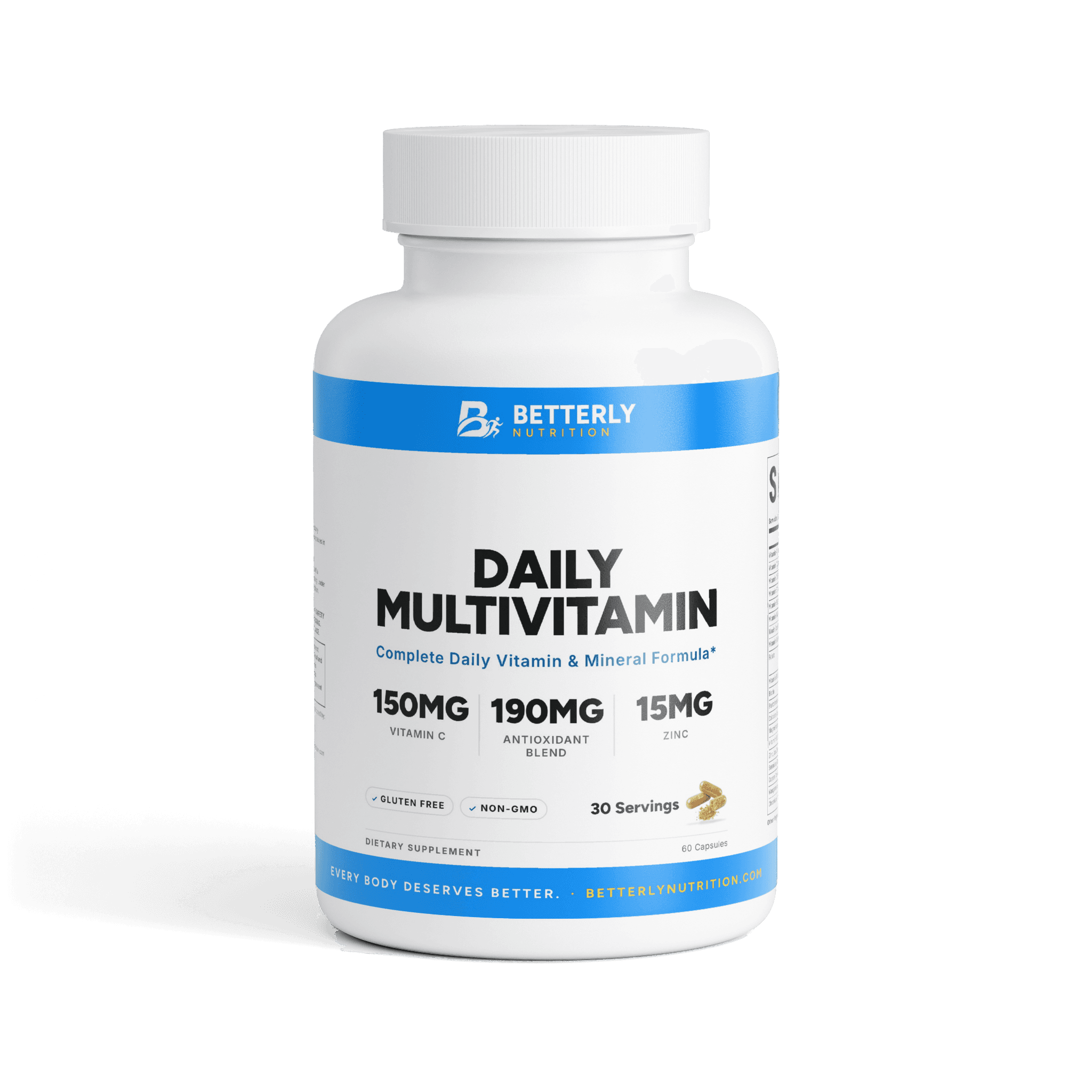
Our Daily Multivitamin Capsules show the difference. Per 2-capsule serving, that panel lists 150 mg of vitamin C (167% DV), 10 mcg of vitamin D (50% DV) and 15 mg of zinc (136% DV), among others.
The ODS fact sheet says a multivitamin increases the nutrients you get each day. It also warns about getting too much of some, such as iron, vitamin A, zinc, niacin and folic acid, so read the %DV column on any multi. Not sure your eating pattern calls for one? Start with who does and doesn't need a daily multi.
| If you mainly want... | Closer fit | What the label or source shows |
|---|---|---|
| Vitamins and minerals in stated amounts | Daily Multivitamin Capsules | Vitamin C 150 mg (167% DV) and zinc 15 mg (136% DV) per 2 capsules |
| A little dried produce with nothing to taste | Fruit & Vegetable Blend Capsules | A 600 mg blend of 10 powders per 2 capsules |
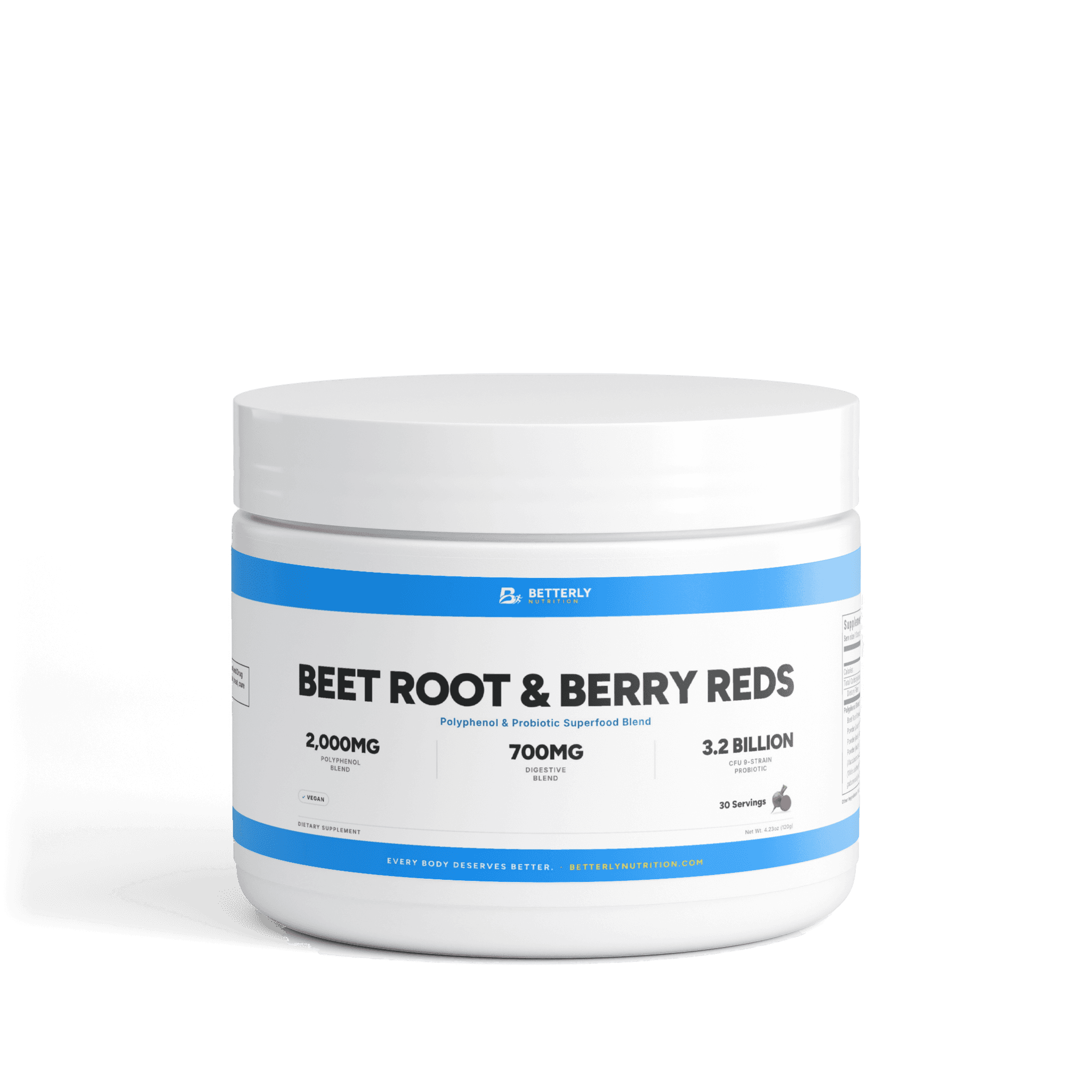
| A drink with fiber and a bigger plant blend | Beet Root & Berry Reds Powder | A 2,000 mg Polyphenol Blend of 11 plants and 2 g of fiber per 1-scoop (4 g) serving, plus herb and probiotic rows |
| Fiber, water and fullness from food | Fruits and vegetables | 1 cup (100 grams) of raw fruit is one serving, per MedlinePlus |
Read down the last column and a pattern shows up. Only food supplies real bulk, only the multivitamin states vitamin and mineral amounts, and the produce capsule's strength is ease, not quantity.
From our shop: Fruit & Vegetable Blend Capsules — ten fruit and vegetable powders in one 600 mg blend per 2-capsule serving, 30 servings to a bottle, nothing to mix or taste.
What are the real benefits of fruit and vegetable supplements?
The real benefits of fruit and vegetable supplements are practical: a set amount of dried produce each day, with no taste, no mixing and a bottle that travels well.
Are fruit and vegetable supplements good for you? They can be a reasonable add-on for adults who follow the label, but they don't bring the fiber and volume of food. Whether one is worth it depends on your week. A capsule like ours tends to suit you if:
- You travel a lot, and the hotel breakfast is the only produce you'll see all day.
- You tried a greens drink and couldn't get past the taste.
- You already eat fruits and vegetables and like a small, steady extra.
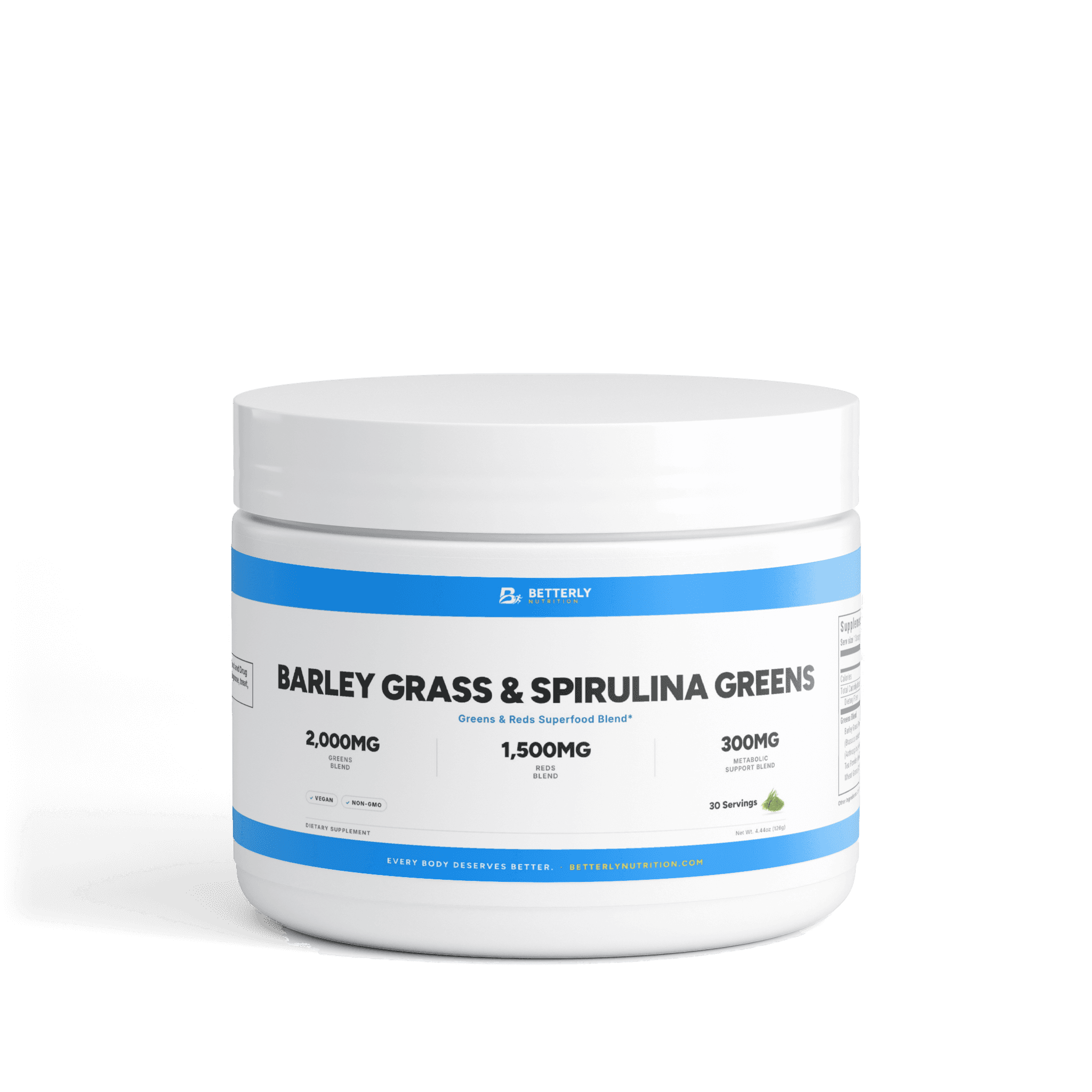
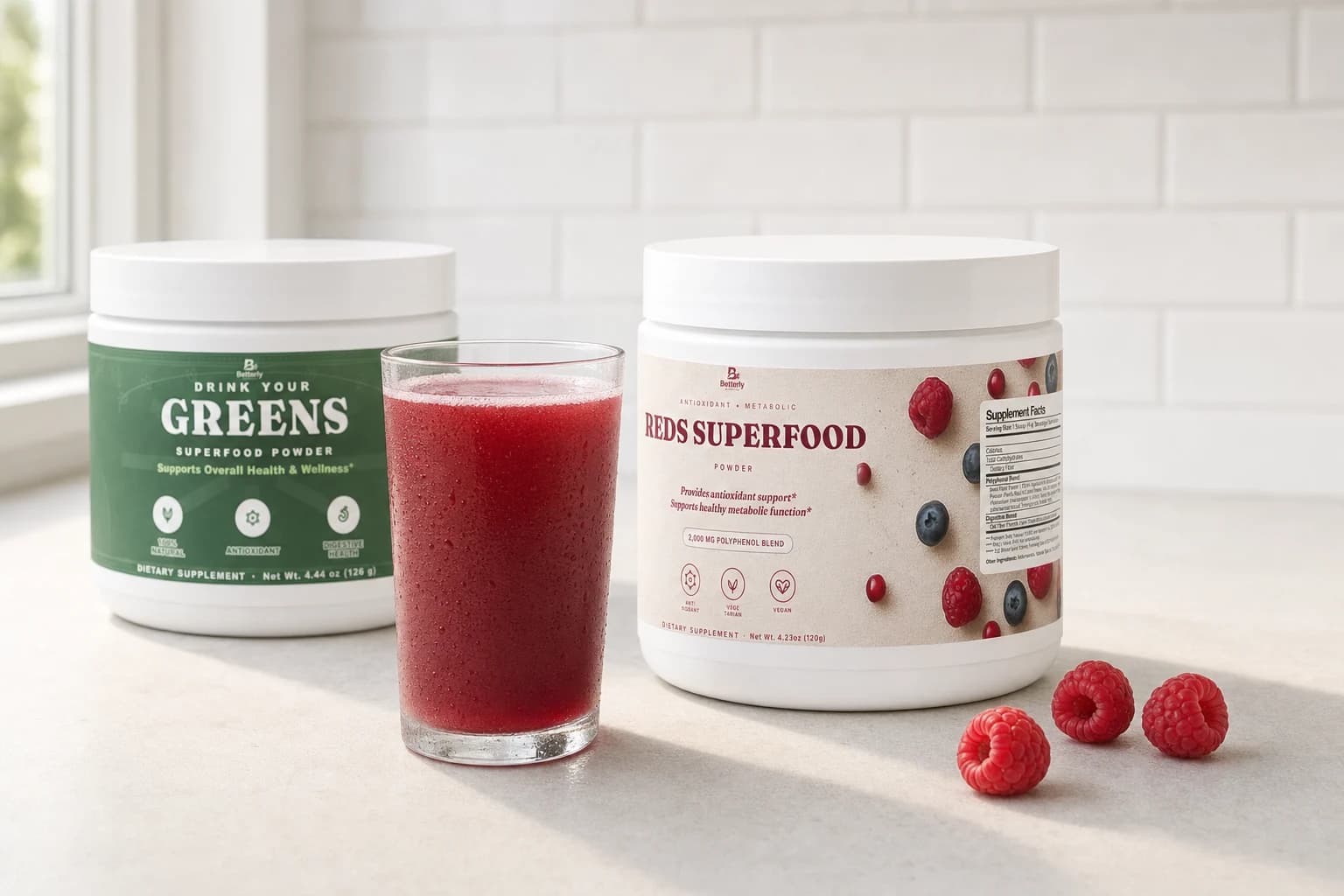
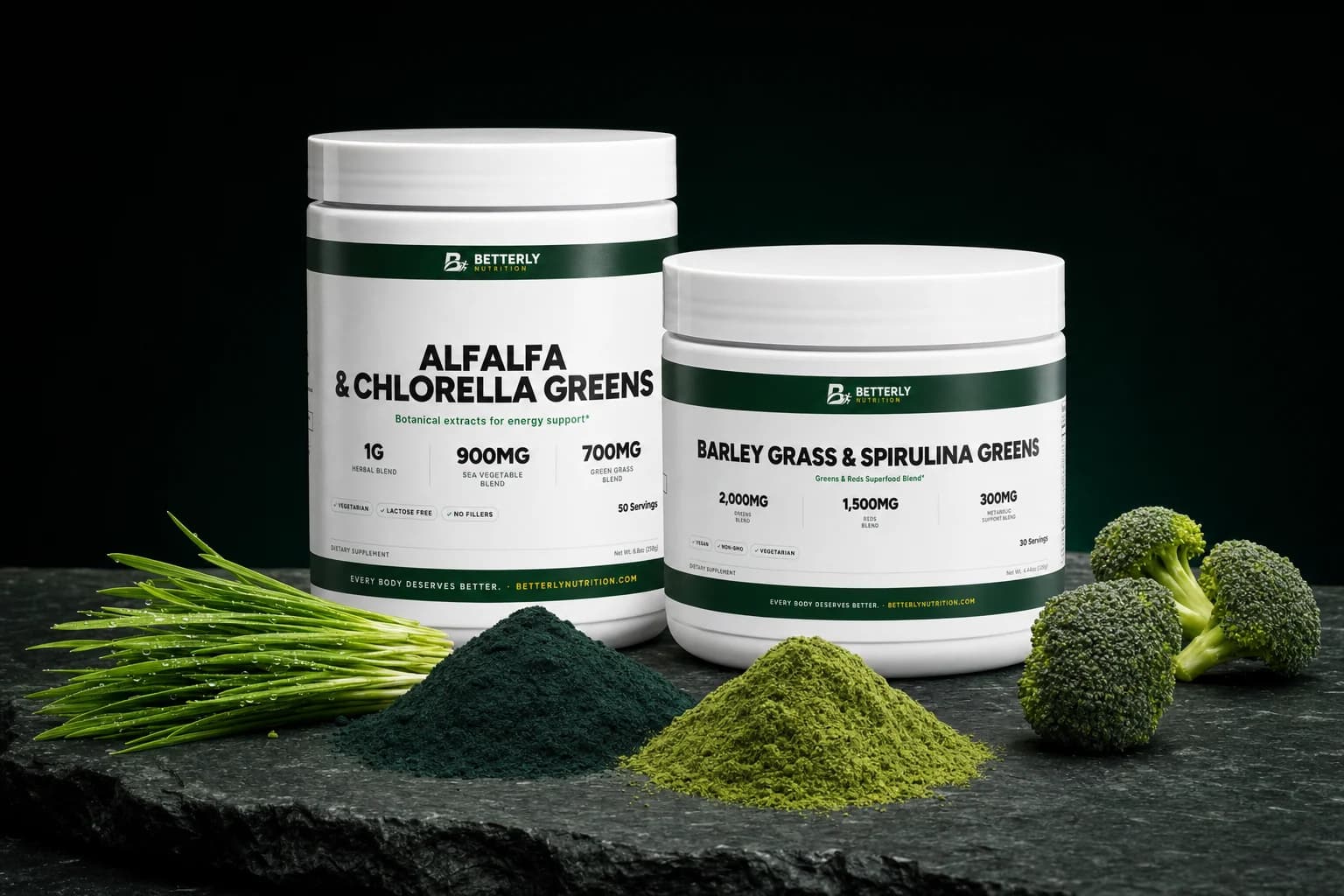
If you're open to a drink, a powder carries more grams per serving. Our Beet Root & Berry Reds Powder lists a 2,000 mg Polyphenol Blend of eleven plants per 1-scoop (4 g) serving, over triple the 600 mg in two capsules. The Barley Grass & Spirulina Greens Powder puts 2,000 mg in its Greens Blend and 1,500 mg in its Reds Blend per 4.2 g scoop. Both scoops also carry herb blends, including green tea and turmeric (plus ashwagandha and Panax ginseng in the Greens), so they're more than extra produce.
More grams isn't a proven effect, and those herbs are a reason to read each label before you switch. Our side-by-side of reds and greens powders lines those two scoops up, and our look at whether greens powders work takes on the scoop version of this question.
From our shop: Beet Root & Berry Reds Powder — a 2,000 mg Polyphenol Blend of eleven plants and 2 g of fiber per 1-scoop (4 g) serving, plus herbs like turmeric and green tea, labeled vegan.
How should you take fruit and vegetable capsules?
Adults take two Fruit & Vegetable Blend Capsules a day with 6 to 8 oz (177 to 237 ml) of water, following the directions printed on our bottle.
The rest of the label fills in the details:
- If your provider gives you different directions, the label says to follow theirs.
- No time of day is named. Pair the capsules with something you already do, like breakfast.
- It says "Do not exceed recommended dose." Four capsules won't make a serving of produce; they'll just empty the bottle in 15 days.
- Keep it somewhere cool and dry that children can't reach, as the label directs.
When don't you need a fruit and vegetable supplement?
You don't need a fruit and vegetable supplement if you already eat produce most days, or if the capsule would quietly become your reason to skip it.
If your week already has fruit at breakfast and vegetables at dinner, two capsules add very little you'd miss. Put the money toward groceries. Frozen and canned produce with little to no added sugar counts on the MedlinePlus list too.
And if a capsule would make you feel covered enough to drop the side salad, skip it. That trade leaves you with 0.6 g of powder where a cup of food used to be.
Who needs a provider's okay before taking a produce capsule?
Pregnancy, nursing, being under 18, a medical condition, prescription medicine and planned surgery are all reasons to run a fruit and vegetable supplement past your healthcare provider first.
The first four come straight from our bottle's caution: "Consult a physician if pregnant, nursing, under 18, or have a medical condition." The last two come from garlic, one of the ten powders.
Garlic supplements may raise the risk of bleeding, according to the garlic page from the National Center for Complementary and Integrative Health (NCCIH). The page asks anyone taking anticoagulants, aspirin or any other medicine to talk with a provider before using garlic, and it flags surgery. It also says garlic may not be safe in pregnancy or breastfeeding at amounts above those in foods.
Our panel doesn't show how much garlic sits in the 600 mg blend, so bring the bottle to that appointment. Ginger root is in the blend too, and herbs can interact with medicines, so mention it if you take any prescription. Weighing one of our scoops instead? Bring that label as well, since both add herb blends the capsule doesn't have.
FAQ: fruit and vegetable supplements
Do fruit and vegetable pills work as well as powders?
Fruit and vegetable pills can't hold as much plant material per serving as a scoop of powder, and neither format has a proven edge. Two of our capsules hold 600 mg, while our Beet Root & Berry Reds Powder lists a 2,000 mg Polyphenol Blend and 2 g of fiber in each 4 g scoop. Capsules win on taste and travel. Powders win on grams, though ours add herbs too. Pick the one you'll take every day.
Do fruit and vegetable supplements have fiber?
A fruit and vegetable capsule can't hold much fiber, and ours has no fiber line on its panel. Even if the whole 600 mg blend were fiber, it would be 0.6 g per serving. Our reds and greens powders each list 2 g (6% DV) per scoop. When fiber is the whole point, see how psyllium stacks up against other fibers.
Are fruit and vegetable supplements safe for kids?
Our Fruit & Vegetable Blend Capsules aren't labeled for kids: the suggested use names adults only, at two capsules daily. Their caution lists "under 18" among the reasons to consult a physician, so that call belongs to your child's provider. The ODS also advises care before giving any supplement to a child unless their health care provider recommends it. For kids, fruit and vegetables at meals and snacks are the better route, and frozen or canned produce with little added sugar counts.
How long does a bottle of fruit and vegetable capsules last?
A bottle of our Fruit & Vegetable Blend Capsules holds 60 capsules, enough for 30 days of the two-capsule serving. The label doesn't promise a result in any time frame, and we won't either. The better yardstick is whether two capsules a day slot easily into your day.
Can you take fruit and vegetable capsules with a multivitamin?
Neither of our labels warns against pairing them, but compare the two panels first. Our Fruit & Vegetable Blend Capsules and Daily Multivitamin Capsules both list garlic, and the multivitamin's lycopene comes from tomato, which overlaps with the capsule's tomato extract. At label use, that's four capsules a day. If you take prescription medicine, show both bottles to your pharmacist first.
Sources
- Dietary Guidelines for Americans 2025 - 2030, MedlinePlus Medical Encyclopedia, National Library of Medicine
- Dietary Supplements: What You Need to Know, NIH Office of Dietary Supplements
- Multivitamin/mineral Supplements: Fact Sheet for Consumers, NIH Office of Dietary Supplements
- Garlic: Usefulness and Safety, National Center for Complementary and Integrative Health
If this left you looking for somewhere to start, read fruit and vegetable capsules with a 600 mg blend of 10 produce powders — its amounts per serving are listed on the page. For the practical questions this raises, how dosing, sourcing and subscriptions work is answered in one place.