On this page
- Key takeaways
- What's the difference between olive leaf extract and olive oil?
- What does a tablespoon of olive oil actually give you?
- What does olive leaf extract give you that olive oil doesn't?
- Does olive oil contain oleuropein?
- Olive leaf extract vs extra virgin olive oil: does the grade matter?
- Is olive leaf extract better than olive oil?
- How do olive leaf capsules fit alongside olive oil?
- When should you skip olive leaf extract and stick with the oil?
- Who should check with a healthcare provider first?
- FAQ: olive leaf extract vs olive oil
- Sources
The short answer: Olive leaf extract vs olive oil is really a choice between two parts of the same tree. Olive oil is pressed from the fruit, and USDA data puts one tablespoon at 13.5 g of fat and about 119 calories. Olive leaf extract concentrates the leaf's polyphenols, led by oleuropein, and our capsule's panel lists no fat or calories. In the oil, that same family shows up mainly as compounds formed while the olives become oil.
Key takeaways
- Olive oil is pressed from the fruit of Olea europaea, and a tablespoon is nearly all fat: USDA FoodData Central counts about 9.9 g of its 13.5 g as monounsaturated.
- Oleuropein is the most abundant polyphenol in olive leaves, while virgin olive oil's most abundant phenolics are derivatives formed from it and its relatives during oil extraction.
- A U.S. bottle labeled plain "olive oil" can include refined oil, which USDA's grade standards describe as flavorless and odorless.
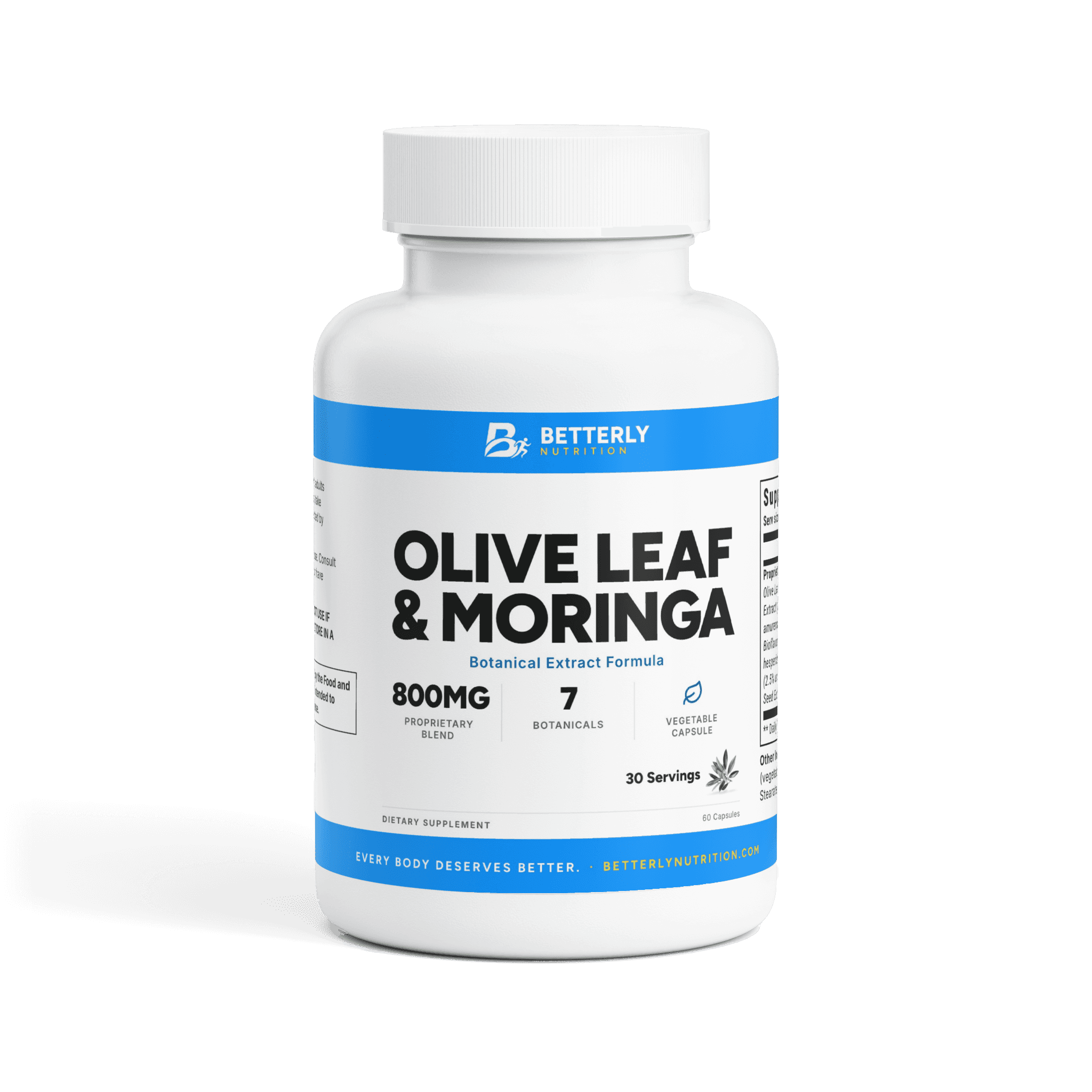
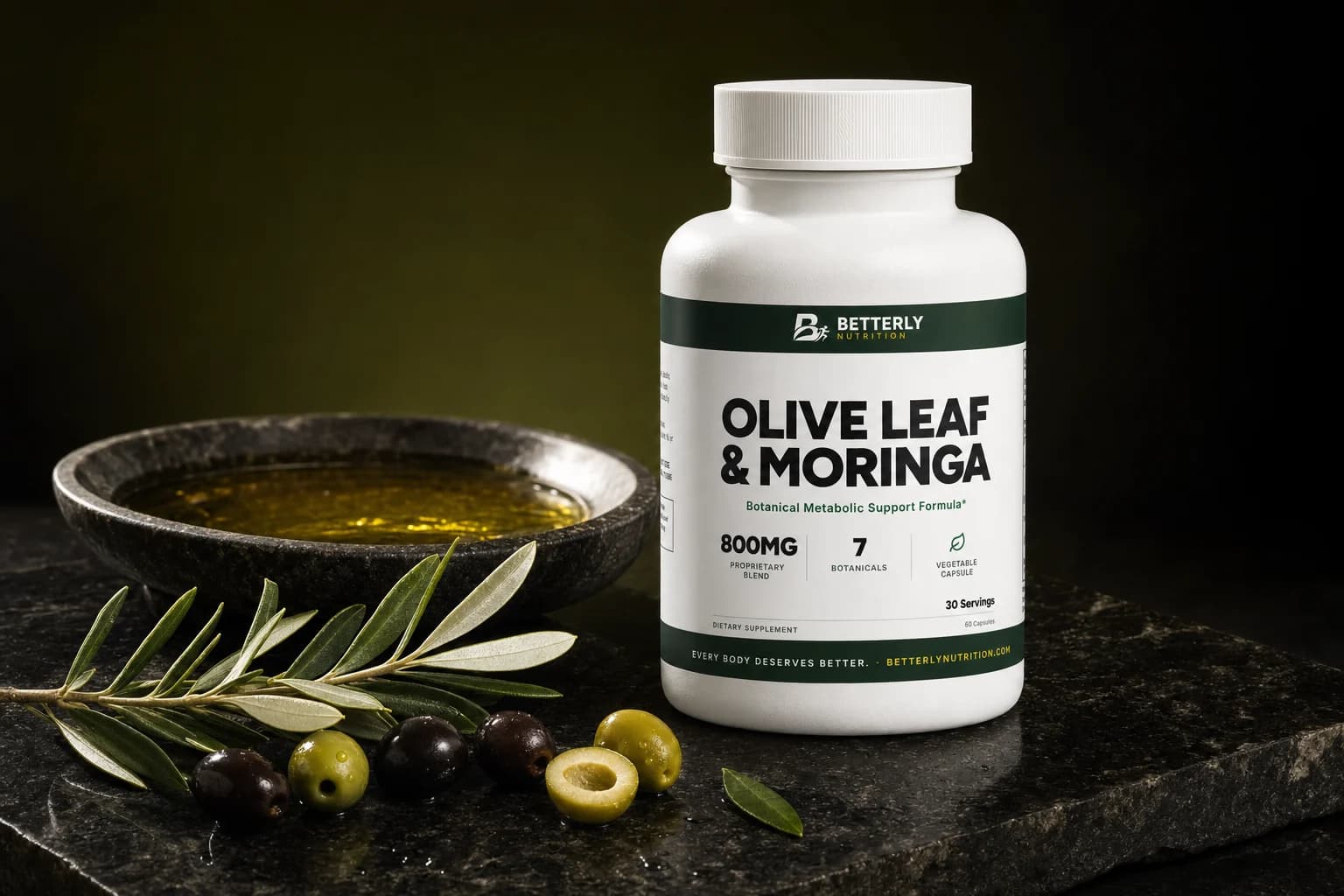
- Our olive leaf capsule lists a 20% oleuropein extract first in an 800 mg blend per 2-capsule serving, and gives the leaf no amount of its own.
We sell olive leaf extract, not olive oil. It leads the blend in our Olive Leaf, Moringa & Holy Basil Capsules, and olive leaf also turns up in the longer blend of our Choline & DHA Focus Capsules. That gives us a reason to favor the leaf, so every number about our capsule comes from, or is worked out from, its Supplement Facts panel. The verdict still tells you to keep the oil.
What's the difference between olive leaf extract and olive oil?
Olive oil is a cooking fat pressed from olive fruit, while olive leaf extract is a concentrated powder or liquid made from the olive tree's leaves.
The leaves are a leftover of the oil business. A 2021 study of oleuropein in olive leaves, published in the journal Antioxidants, calls them a waste material from oil mills. It says pruning yields 1.5 to 3 tons of leaves per hectare each year, and that those leaves have traditionally been burned or fed to animals.
Here's a normal serving of each, side by side, from USDA data and our own label:
| Olive oil | Olive leaf extract (our capsules) | |
|---|---|---|
| Part of the tree | Fruit, pressed | Leaves, extracted |
| Serving | 1 tablespoon (13.5 g) | 2 capsules |
| Calories and fat | About 119 calories, 13.5 g fat | None listed |
| Oleuropein | Mainly as derivatives | Intact, 20% of the extract |
| Amount of the olive part | 13.5 g of oil | Not stated, inside an 800 mg blend |
| How you use it | Cooking, dressing, drizzling | 2 capsules a day with water |
Read down the two columns and the gap is one of scale and purpose: the oil is a measured amount of food, while our capsule holds a small, partly unstated amount of leaf concentrate.
What does a tablespoon of olive oil actually give you?
A tablespoon of olive oil gives you about 119 calories and 13.5 g of fat, mostly monounsaturated, plus small amounts of vitamins E and K.
Those figures come from USDA FoodData Central, the federal food composition database, in its entry for salad or cooking olive oil. For one 13.5 g tablespoon, rounded:
- Monounsaturated fat: about 9.9 g
- Saturated fat: about 1.9 g
- Polyunsaturated fat: about 1.4 g
- Vitamin E: about 1.9 mg
- Vitamin K: about 8.1 mcg
- Protein, carbohydrate and fiber: 0 g
About 73% of that fat, 9.9 of the 13.5 g, is monounsaturated. It's a fat you cook with, pour over salads and count toward your day's calories, and a capsule can't fill that role.
What does olive leaf extract give you that olive oil doesn't?
Olive leaf extract gives you oleuropein in its whole, intact form, the leaf's most abundant polyphenol, while olive oil's main phenolics are compounds formed from it.
In the 2021 Antioxidants study, oleuropein led the leaf's polyphenols, and the team's dried leaf powder started out at 49.33 mg of it per gram. That's roughly 5% of the powder's weight.
An extract concentrates that. Our label prints "Olive Leaf Extract (20% oleuropein)," which means oleuropein makes up a fifth of the extract's weight. That's about four times the share in that study's plain leaf powder.
The panel doesn't say how much of that extract a serving holds. Olive leaf is listed first in an 800 mg Proprietary Blend per 2-capsule serving, which guarantees only a floor of about 114 mg of extract, or about 23 mg of oleuropein, and our olive leaf extract benefits guide lays out the full range in a table.
Six other botanicals share that 800 mg, so a serving never delivers olive leaf by itself.
Does olive oil contain oleuropein?
Olive oil holds oleuropein mainly in transformed forms, because enzymes rework it and its relatives while the olives are crushed for oil.
A 2019 paper on hydroxytyrosol compounds in virgin olive oil, also in Antioxidants, lays out the chemistry. Oleuropein is the most abundant compound of its type in the fruit's flesh. During oil extraction, enzymes such as β-glucosidase transform it and its relatives. The products, including the aglycone form of oleuropein (the molecule minus its sugar), are the most abundant phenolic compounds in virgin olive oil.
How are oleuropein and hydroxytyrosol related?
Oleuropein is built from hydroxytyrosol, elenolic acid and a glucose sugar, so hydroxytyrosol is one of the pieces left when oleuropein breaks apart.
The 2021 leaf study tracked this in storage. In water-based olive leaf extracts kept at room temperature, half the oleuropein was gone in about 13 days, and hydroxytyrosol rose over the first week before falling again. Dried leaf powder held on to its oleuropein better than the liquid did, except in the most humid storage the team tested.
The 2019 paper tracks olive oil's phenolics as hydroxytyrosol and its derivatives, while leaf extract labels, ours among them, print a percentage of oleuropein.
Olive leaf extract vs extra virgin olive oil: does the grade matter?
The grade matters if olive compounds are why you buy olive oil, because virgin oils skip refining, while the grade labeled plain "olive oil" includes refined oil.
USDA's voluntary grade standards for olive oil pin down the terms. Virgin oils come from the fruit by mechanical or other physical means only, with no refining. Here's how four of the grades compare:
| USDA grade | What it is | Free fatty acid limit |
|---|---|---|
| U.S. Extra Virgin Olive Oil | Virgin oil with excellent flavor and odor | 0.8 g per 100 g |
| U.S. Virgin Olive Oil | Virgin oil with reasonably good flavor and odor | 2.0 g per 100 g |
| U.S. Olive Oil | A blend of refined and virgin oils | 1.0 g per 100 g |
| U.S. Refined Olive Oil | Refined from virgin oils; flavorless and odorless | 0.3 g per 100 g |
Free fatty acid content is a quality measure, not a polyphenol count, and refined oil actually has the strictest limit. What matters for this comparison is processing. USDA calls refined oil flavorless and odorless, and the 2019 paper ties virgin oil's phenolic compounds to its taste and aroma. If the olive compounds are the point, a virgin grade, extra virgin or virgin, is the one to buy.
Even a bottle of extra virgin won't hand you a figure to set beside a leaf extract label. Each grade name describes how the oil was made and how it tastes, not how much oleuropein or hydroxytyrosol it holds.
Is olive leaf extract better than olive oil?
Olive leaf extract isn't better than olive oil, because the two don't do the same job: the oil is a food fat, and the extract is a polyphenol supplement.
Ask which one is built to deliver intact oleuropein, and it's the extract, with a percentage printed on its label. Ask which one belongs in your meals, and it's the oil by default, since the capsule's panel lists no fat or calories and there's nothing to cook with.
What happens to the leaf's oleuropein after you swallow it is a separate question, and human research on it is still thin. The benefits guide linked above walks through the small trials and why they can't speak for a healthy adult. For polyphenols in general, from foods to capsules, see our polyphenol supplements guide.
From our shop: Olive Leaf, Moringa & Holy Basil Capsules — each 2-capsule serving pairs a 20% oleuropein olive leaf extract with six other botanicals, and the panel lists no calories or fat.
How do olive leaf capsules fit alongside olive oil?
Our Olive Leaf, Moringa & Holy Basil Capsules fit around olive oil easily, since the directions ask only for 2 capsules daily with 6-8 oz (177-237 ml) of water.
The directions, written for adults, name no hour and no meal. So a lunch salad dressed in olive oil is a fine time to take them, and so is any other point in your day.
A few more label details:
- The label's caution, "Do not exceed recommended dose," means staying at 2 capsules even when a bigger oleuropein number tempts you.
- Each bottle's 60 capsules make 30 servings, a month at 2 a day.
- Olive oil is one of the Other Ingredients, with no amount given. Two capsules can't hold anything close to a 13.5 g tablespoon, so don't count it toward your cooking oil.
Our rundown of olive leaf extract side effects covers timing and stomach comfort with the blend's other extracts.
When should you skip olive leaf extract and stick with the oil?
Skip olive leaf extract if you hoped it would replace your olive oil, since a capsule can't supply the oil's fat, calories or vitamins.
It also misses the mark when:
- You want exact milligrams of olive leaf. Our panel doesn't give them.
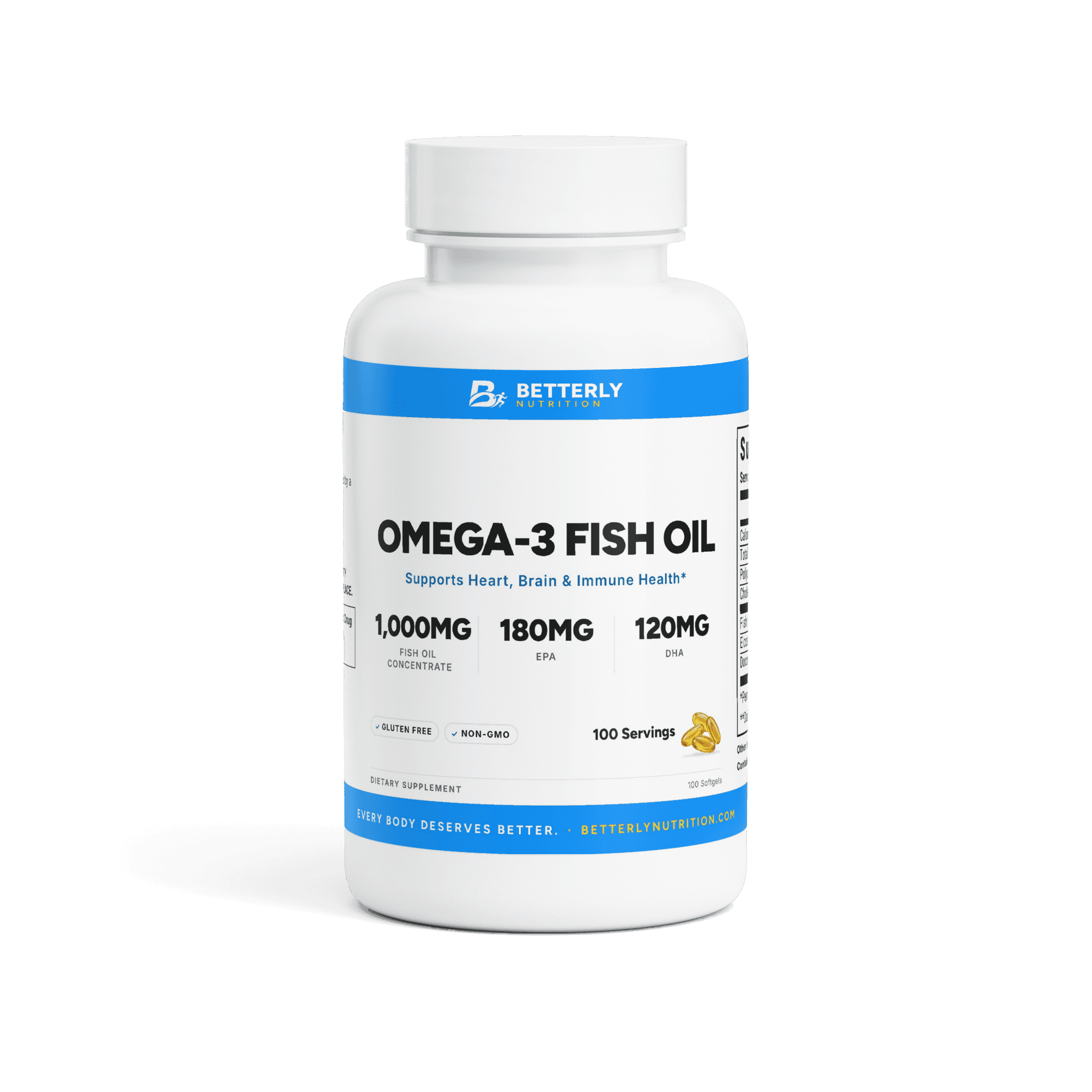
- You were after a fat in capsule form. A fish oil softgel is one, and even it's tiny next to cooking oil: our Omega-3 Fish Oil Softgels carry just 1 g of total fat and 10 calories per 1-softgel serving, inside a gelatin shell.
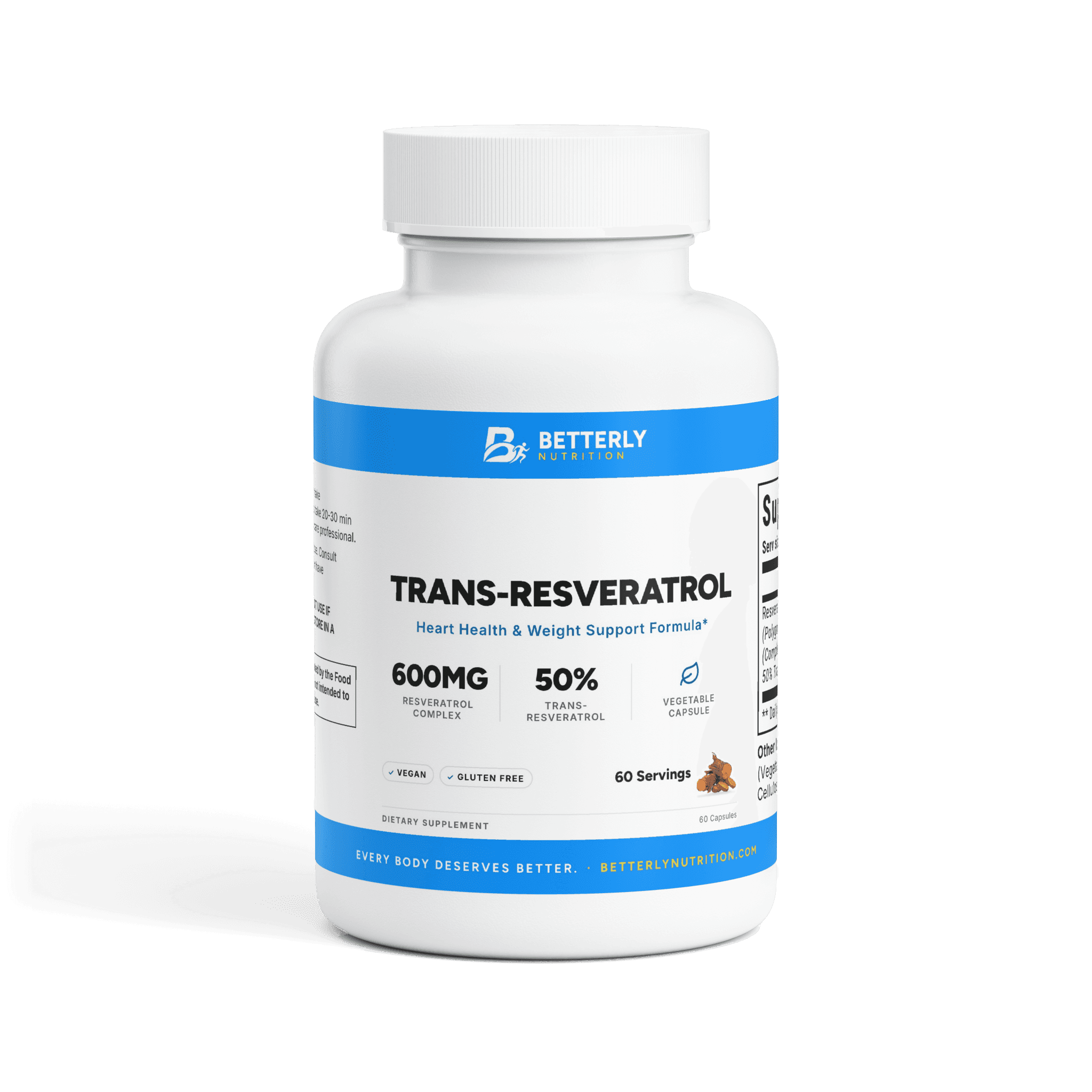
- You'd rather have one polyphenol at a stated amount. Our Trans-Resveratrol Capsules give resveratrol its own row: 600 mg from Polygonum cuspidatum root per 1-capsule serving, as a complex containing 50% trans-resveratrol.
If a botanical blend still appeals, compare labels across our adaptogen capsules and drops.
From our shop: Omega-3 Fish Oil Softgels — the panel shows 180 mg of EPA and 120 mg of DHA per softgel, and its directions call for one softgel at each of two meals a day.
Who should check with a healthcare provider first?
Anyone taking prescription medication, managing a medical condition, pregnant, nursing or under 18 should get a provider's okay before adding olive leaf extract to their routine.
On our capsule, the caution reads: "Consult a physician if pregnant, nursing, under 18, or have a medical condition." Bring up your prescriptions in the same visit, and keep each prescribed medicine on the schedule your provider set, whatever you decide about olive leaf.
Two details from these labels are worth raising there:
- Berberine you already take. Phellodendron bark extract, standardized to 8% berberine, sits third of the seven extracts. Because blends list the heaviest ingredient first, as our proprietary blend explainer describes, it can't weigh more than about 267 mg, a third of 800 mg. That caps its berberine at about 21 mg per 2-capsule serving, with no minimum printed, and that ceiling is the number to hand your pharmacist.
- A fish allergy, if our fish oil is also on your list. The Omega-3 Fish Oil Softgels name fish (sardines, anchovies) on their Contains line.
FAQ: olive leaf extract vs olive oil
Can you take olive leaf extract and olive oil together?
Yes, you can take olive leaf extract and use olive oil on the same day, and nothing printed on our Olive Leaf, Moringa & Holy Basil Capsules says otherwise. The directions only ask for 2 capsules daily with water. We found no source saying the oil changes how the extract works, so pair them for convenience, not for an effect.
How much oleuropein is in olive oil?
Olive oil has no fixed oleuropein amount, and no federal source we checked gives a figure for it. The 2019 paper we cite explains that enzymes break the fruit's oleuropein apart during oil extraction, so the oil's main phenolic compounds are derivatives of it and its relatives rather than oleuropein itself. That paper also found the fruit's phenolic levels shifting with olive variety and ripeness. If a bottle prints no polyphenol figure, you can't work one out.
Is olive leaf extract better in capsules or liquid?
Neither format of olive leaf extract is better by default, because the label is what tells you how much you get. Look for the extract's weight in mg and its oleuropein percentage, then multiply. One 2021 lab study found oleuropein held up better in dried leaf powder than in plain water extracts. It didn't test store-bought tinctures, so it can't rank brands. We sell only a capsule.
Is olive leaf extract a substitute for fish oil?
No, olive leaf extract isn't a substitute for fish oil, because our olive leaf capsule's panel lists no fat, let alone EPA or DHA. Those two omega-3 fats are why people take fish oil, and our Omega-3 Fish Oil Softgels print 180 mg of EPA and 120 mg of DHA for each 1-softgel serving. Olive oil isn't a stand-in either: USDA FoodData Central shows no EPA or DHA in it, and only about 0.1 g of ALA, the plant omega-3, per tablespoon.
Can you take olive leaf extract if you're on medication?
Ask your provider or pharmacist before you take olive leaf extract with any prescription medication. Our blend isn't olive leaf alone: it also holds Phellodendron bark extract, standardized to 8% berberine, plus cayenne pepper and four more extracts, none with its own amount. The label's caution also asks anyone with a medical condition to consult a physician. The product name mentions just three of the seven extracts, so read your pharmacist the blend's whole list rather than the name alone.
Sources
- Oil, olive, salad or cooking (FDC ID 171413), USDA FoodData Central
- United States Standards for Grades of Olive Oil and Olive-Pomace Oil (effective October 25, 2010), USDA Agricultural Marketing Service
- An Aromatic Aldehyde Synthase Controls the Synthesis of Hydroxytyrosol Derivatives Present in Virgin Olive Oil (Sánchez et al., Antioxidants, 2019), via PubMed Central
- Oleuropein Degradation Kinetics in Olive Leaf and Its Aqueous Extracts (Martínez-Navarro et al., Antioxidants, 2021), via PubMed Central
If this left you looking for somewhere to start, read a seven-extract capsule led by a 20% oleuropein olive leaf extract — its amounts per serving are listed on the page. For the practical questions this raises, how dosing, sourcing and subscriptions work is answered in one place.