On this page
- Key takeaways
- What are L-carnitine and MCT oil?
- Why put L-carnitine and MCT oil together in one capsule?
- How much L-carnitine is in a supplement like ours?
- What else is in the 4-capsule serving?
- Why does the chromium row matter more than the carnitine row?
- Is L-carnitine a stimulant, and how do caffeinated formulas differ?
- How do you take MCT Oil & L-Carnitine Capsules, per the label?
- When don't you need L-carnitine and MCT oil at all?
- Who should check with a healthcare provider first?
- FAQ: L-carnitine and MCT oil
- Sources
The short answer: L-carnitine and MCT oil can be taken together. No NIH fact sheet we read flags the pair, though the NIH weight-loss sheet notes that many ingredients haven't been tested in combination. In our MCT Oil & L-Carnitine Capsules, the pair makes up about 5% of what the panel lists by weight. The weight-loss sheet also says carnitine supplements seem safe at up to 2 g a day for a year, 80 times what one serving holds.
Key takeaways
- Healthy people make all the carnitine they need, according to the NIH Office of Dietary Supplements, so a carnitine supplement is optional for most adults.
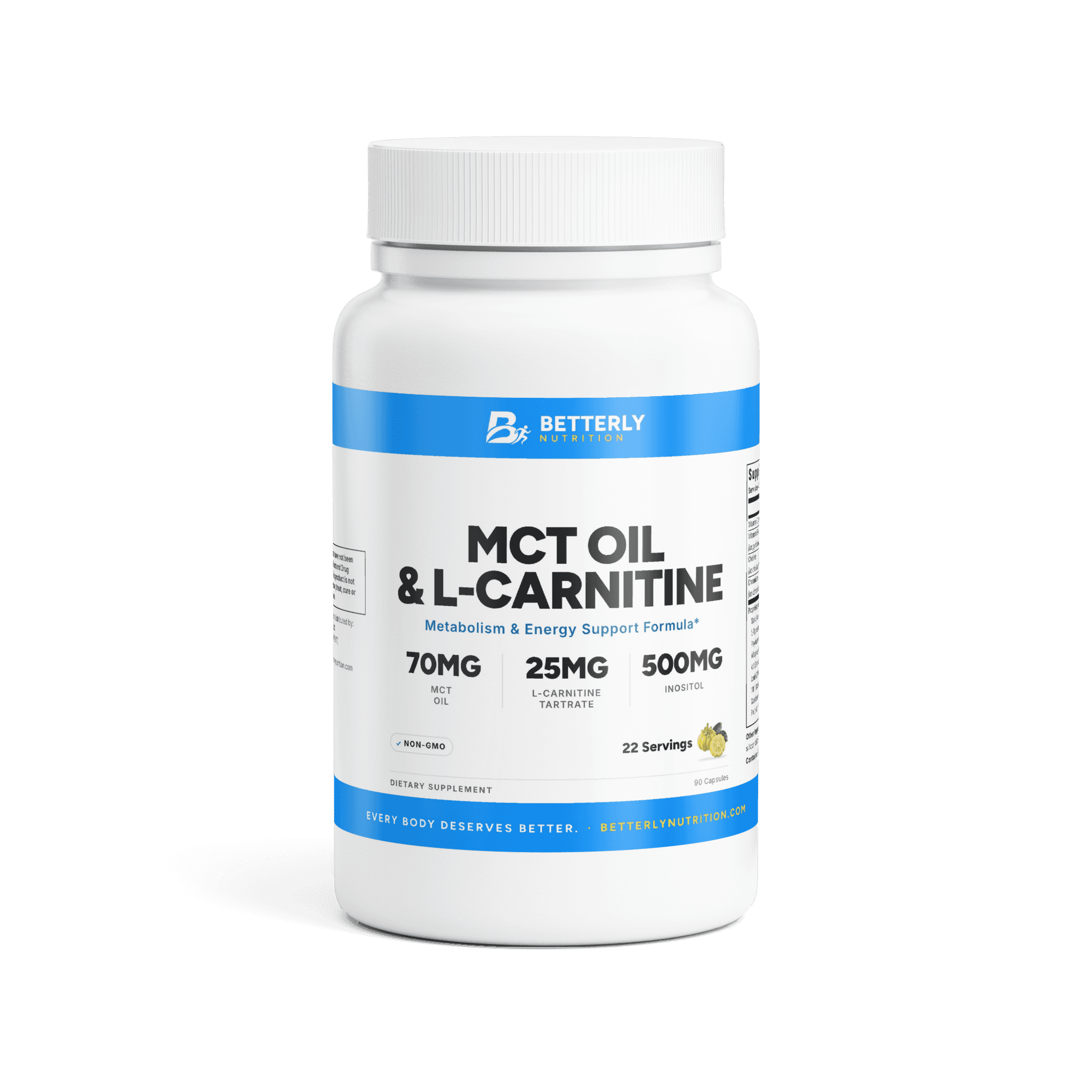
- In Betterly's MCT Oil & L-Carnitine Capsules, the 70 mg MCT oil row and the 25 mg L-carnitine row share each 4-capsule serving with 500 mg of inositol and a 631 mg blend.
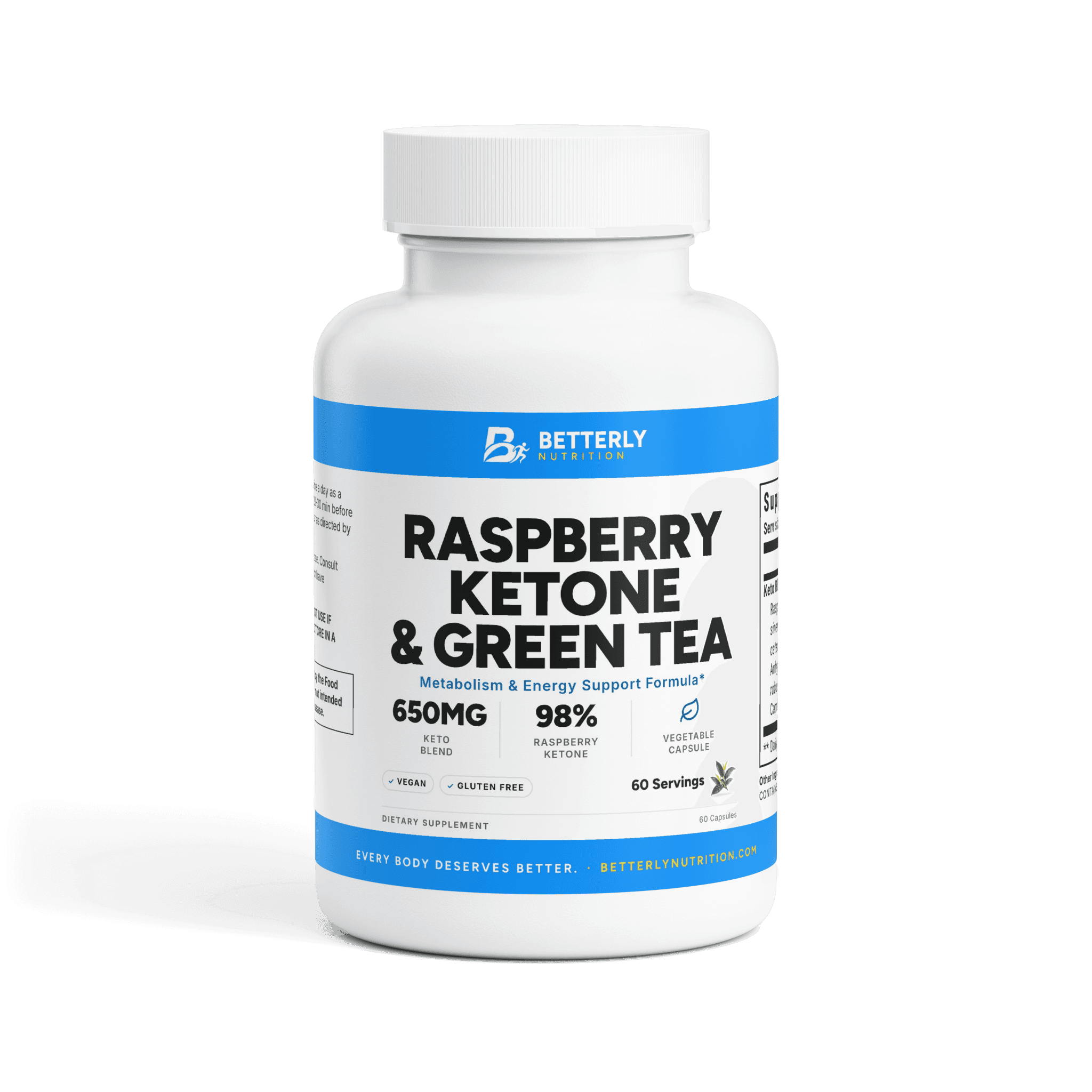
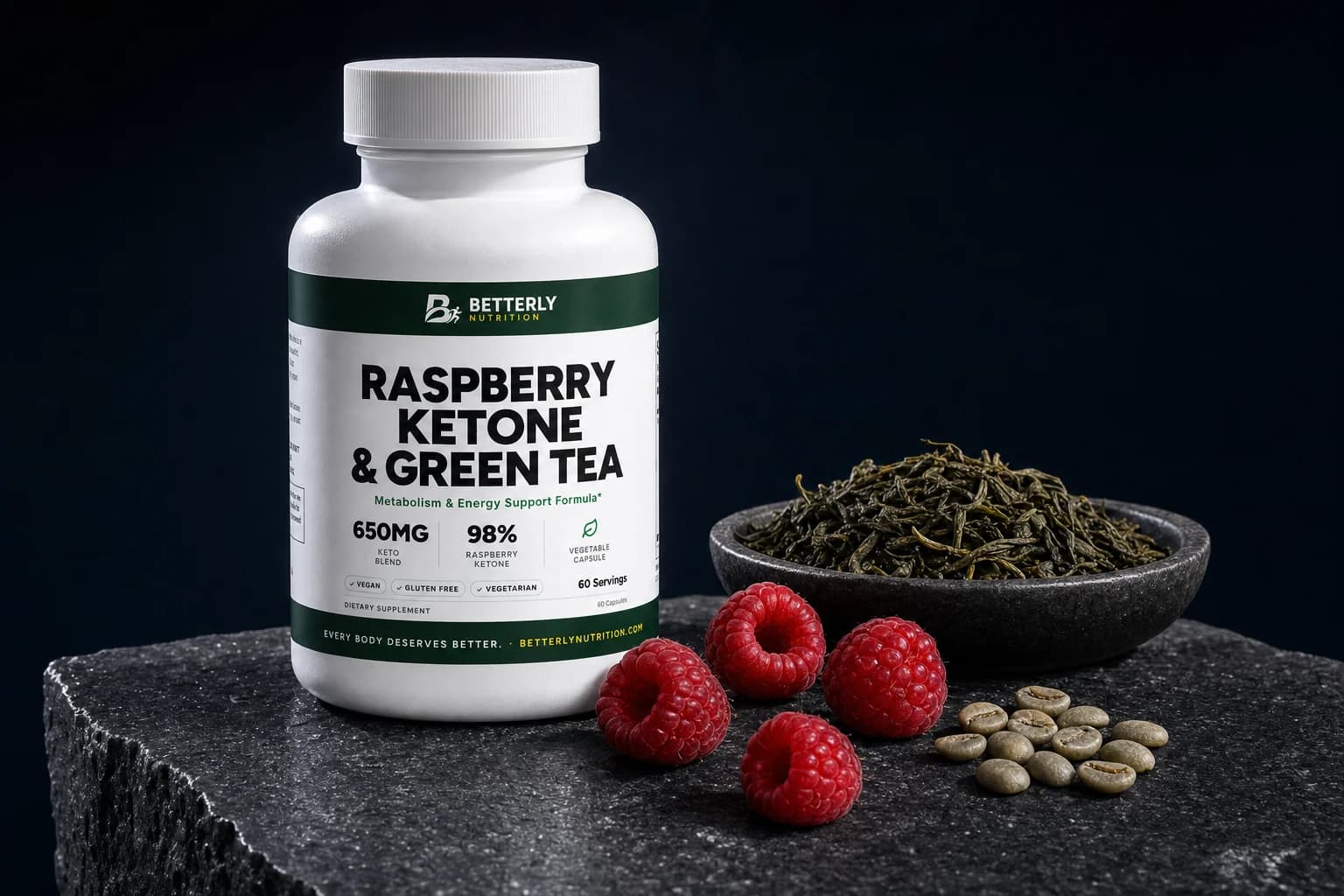
- L-carnitine isn't a stimulant, and this capsule's panel lists no caffeine source. Our Raspberry Ketone & Green Tea Capsules, by contrast, print "CONTAINS CAFFEINE."
- The same serving holds 200 mcg of chromium, well above the 20 to 45 mcg a day the NIH lists as recommended for adults. Talk with a provider before you start, and never add a second chromium product.
Full disclosure: we sell MCT Oil & L-Carnitine Capsules. So this guide reads our own Supplement Facts panel row by row, including the one row we'd most want you to see before you buy.
What are L-carnitine and MCT oil?
L-carnitine is a nutrient your body makes and also gets from food, while MCT oil is a concentrated source of medium-chain triglycerides, a type of fat.
According to the NIH Office of Dietary Supplements carnitine fact sheet, healthy children and adults make all the carnitine they need, so experts haven't set a recommended daily amount. Red meat is a good source, and poultry, fish and dairy have some. The sheet also notes that your body absorbs carnitine from food much better than from supplements. Our panel lists L-carnitine at 25 mg, supplied as L-carnitine tartrate.
"Medium-chain" refers to the fatty acids in each triglyceride, which are shorter than the ones in most fats you eat. Our panel calls the ingredient "Medium Chain Triglycerides Oil" and stops there, with no source or fatty acid split.
Seventy milligrams is 0.07 g, and straight MCT oil is measured in grams. If grams are your goal, our MCT oil capsules vs liquid breakdown does the spoon-to-softgel math. For what carnitine does in your cells, see our honest buying guide to metabolism support supplements.
Why put L-carnitine and MCT oil together in one capsule?
MCT Oil & L-Carnitine Capsules pair an oil with a nutrient that helps turn food into energy, but we have no study of this exact formula in people.
On paper, the logic is short. The NIH carnitine sheet says carnitine "helps turn the food you eat into the energy you need." MCT oil is an edible oil, so it's part of that food. One ingredient supplies fuel, and the other is a nutrient your cells use when they process fuel.
Paper isn't proof, though. The NIH fact sheet on weight-loss supplements cautions that many products in this aisle combine ingredients nobody has tested as a set, so what they do in combination is unknown. It adds that makers rarely study their finished products in people. That's true of ours. We can show you exactly what's in the bottle, but not a trial of it. What you can judge is the amounts.
How much L-carnitine is in a supplement like ours?
Betterly's MCT Oil & L-Carnitine Capsules hold 25 mg of L-carnitine per 4-capsule serving, a little over 6 mg per capsule, far below the gram amounts NIH sheets discuss.
Every brand sets its own carnitine amount, so compare milligrams and serving size first. Here's our serving next to figures from three NIH Office of Dietary Supplements sheets, including the one on vitamin B6.
| Panel row | Per 4-capsule serving | NIH figure | Comparison |
|---|---|---|---|
| L-carnitine | 25 mg | Seems safe up to 2 g a day for a year | 1/80 of 2 g |
| Chromium | 200 mcg (571% DV) | Recommended 20 to 45 mcg a day for adults | About 4 to 10 times |
| Vitamin B6 | 25 mg (1471% DV) | Adult upper limit 100 mg a day | A quarter of the limit |
| MCT oil | 70 mg | Not covered in these sheets | No figure |
The carnitine row sits far below its NIH figure, and the MCT row has no NIH figure to measure against. The chromium row stands out, in the wrong direction. That's the honest read of this label: the two ingredients in its name make up a small slice of the serving, while a mineral in the fine print runs well past what adults are advised to get.
What else is in the 4-capsule serving?
Besides its two headline ingredients, MCT Oil & L-Carnitine Capsules list four vitamin, mineral and nutrient rows, a 631 mg blend and eight other ingredient amounts per 4-capsule serving.
Add every printed amount and you get roughly 1,921 mg per serving. The two ingredients in the product's name account for 95 mg of it, about 5%. That's a rough share, since a few rows give a nutrient's weight rather than its whole compound.
The rest of the panel, per 4-capsule serving:
- Vitamins, minerals and choline: vitamin C 60 mg (67% DV), vitamin B6 25 mg (1471% DV), choline 200 mg (37% DV) and chromium 200 mcg (571% DV).
- The heaviest single-ingredient rows: inositol at 500 mg, Garcinia cambogia fruit extract (50% hydroxycitric acid) at 200 mg, and CLA, or conjugated linoleic acid, at 100 mg.
- The smaller rows: bladderwrack at 50 mg, gymnema leaf and turmeric root extracts at 25 mg each, and coenzyme Q10 and GLA (gamma-linolenic acid) at 5 mg each.
- The blend: 631 mg shared by 15 ingredients, from spirulina and L-phenylalanine to cranberry concentrate and grapefruit extract, with no amount for any one of them.
Vitamin B6 deserves a second look. Its 25 mg is a quarter of the ODS adult upper limit, but the same sheet notes that the European Food Safety Authority set a lower adult upper limit of 12 mg a day in 2023. One serving is about twice that, and B6 also turns up in multivitamins.
Why does the chromium row matter more than the carnitine row?
The chromium row matters more because MCT Oil & L-Carnitine Capsules print 200 mcg per 4-capsule serving, 571% of the Daily Value, while carnitine has no Daily Value set.
If a 571% figure is hard to picture, our guide comparing daily chromium needs with label amounts explains what a chromium % DV means and whether 200 mcg a day is too much.
Our position is plain. One serving runs well past the NIH's recommended range, so please check with a healthcare provider before you start. And don't stack another chromium product on top, including a multivitamin that lists it.
Is L-carnitine a stimulant, and how do caffeinated formulas differ?
No, L-carnitine isn't a stimulant, and the NIH weight-loss fact sheet doesn't group it with the stimulant ingredients it describes.
The stimulants that sheet does flag are caffeine and the plants that carry it, such as guarana and yerba mate, plus bitter orange and ephedra. It also warns that caffeine isn't always listed on labels. Our MCT Oil & L-Carnitine panel names all 15 blend ingredients, and none of them is one of the caffeine plants the sheet mentions.
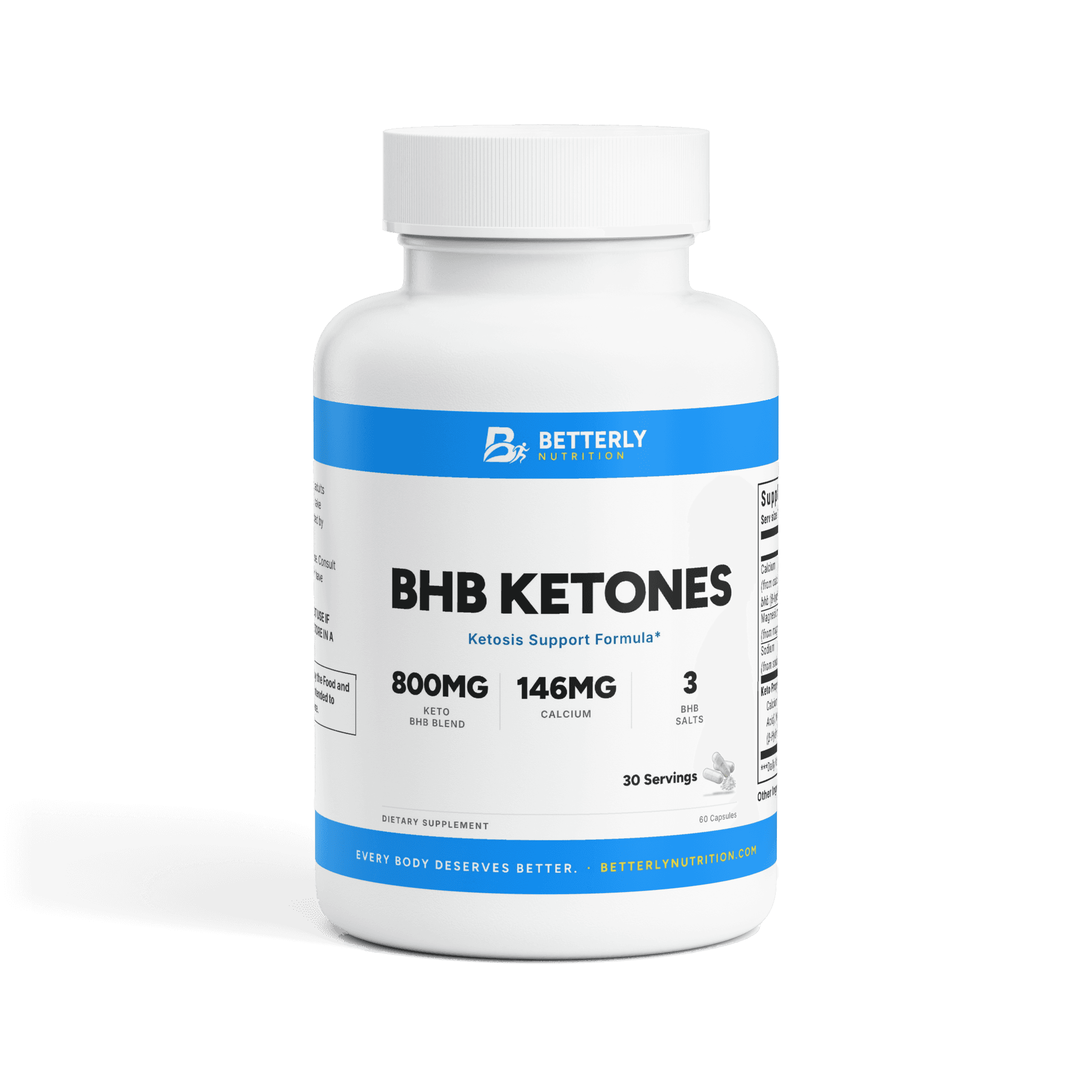
A formula with no stimulant on its panel suits people who already get caffeine from coffee or tea. Here's how it compares with our caffeinated capsule and our BHB Ketone Capsules:
| What to check | MCT Oil & L-Carnitine | Raspberry Ketone & Green Tea | BHB Ketone |
|---|---|---|---|
| Caffeine sources | None listed | Caffeine anhydrous, green tea, green coffee bean | None listed |
| Headline ingredients' amounts | 70 mg and 25 mg | Inside a 650 mg blend | Inside an 800 mg blend |
| Label's daily use | 4 capsules with meals | 1 capsule twice a day | 2 capsules |
Only the MCT label prints an amount for each ingredient in its name, and only the raspberry label adds caffeine, with no milligram total. If you drink coffee, that missing number makes it hard to keep your day within the 400 to 500 mg the ODS calls safe for most adults.
From our shop: Raspberry Ketone & Green Tea Capsules — a 650 mg Keto Blend per 1-capsule serving that lists raspberry ketone, green tea and caffeine anhydrous, labeled vegan and gluten free.
Pick one of the two, not both. They share garcinia cambogia, and doubling up would hide which bottle disagreed with you.
How do you take MCT Oil & L-Carnitine Capsules, per the label?
The label's suggested use for MCT Oil & L-Carnitine Capsules is 4 capsules daily with meals, split into a pair before breakfast and a pair before dinner.
- Morning: swallow the first pair with a glass of water before breakfast.
- Evening: repeat with the second pair ahead of dinner.
- Stop at 4. The label says "Do not exceed recommended dose," so don't add capsules to chase a bigger carnitine or MCT number.
- Don't add another chromium product, including a multivitamin that lists it; if you already take one, ask your provider before starting.
The label ties the capsules to meals, not workouts, so they don't belong in a gym bag. If this capsule isn't a fit, the rest of our Weight Support collection lists the amounts per serving on every product page.
From our shop: MCT Oil & L-Carnitine Capsules — 70 mg of MCT oil and 25 mg of L-carnitine (as tartrate) on their own rows, plus 500 mg of inositol, per 4-capsule serving in a 90-capsule bottle.
When don't you need L-carnitine and MCT oil at all?
You likely don't need an L-carnitine and MCT oil supplement if you're healthy, since the NIH says healthy bodies make all the carnitine they need.
Skip this capsule in particular if:
- You want MCTs by the gram for coffee or cooking.
- You already take a multivitamin or another product with chromium or vitamin B6.
- You avoid animal ingredients. The capsules use bovine gelatin.
- You have a fish or shellfish allergy. The label's Contains line lists both.
- You want an amount for every ingredient, which the 631 mg blend doesn't give.
For most people, their own body and everyday meals already cover carnitine. The honest case for this capsule is convenience, not necessity.
Who should check with a healthcare provider first?
Talk to a healthcare provider before starting MCT Oil & L-Carnitine Capsules if you're pregnant, nursing or under 18, take medication, have surgery coming up, or have a medical condition.
The label's caution reads: "Consult a physician if pregnant, nursing, under 18, or have a medical condition." This panel adds specific things to ask about:
- Prescription medicines. The ODS carnitine sheet says certain antibiotics and some other prescriptions can lower carnitine levels, and the ODS chromium fact sheet says chromium might interact with some medicines. Show your pharmacist the whole panel.
- Grapefruit. The blend lists grapefruit fruit extract, so ask first if a prescription of yours carries a grapefruit warning.
- Kidney or liver concerns. The chromium sheet advises caution with high chromium amounts for people with kidney or liver problems.
- Iodine. The panel lists two seaweeds, kelp and bladderwrack, but no iodine row. If you've been told to watch iodine, bring the bottle.
- Vitamin B6. The ODS warns that high supplement amounts taken for a year or longer can harm nerves, so count every B6 source.
FAQ: L-carnitine and MCT oil
Does L-carnitine have caffeine?
No, L-carnitine has no caffeine. The NIH carnitine fact sheet describes it as a nutrient your own body makes, one that helps convert the food you eat into usable energy. That's a different job from a stimulant's. The MCT Oil & L-Carnitine panel also lists no tea, coffee, guarana, kola nut or yerba mate, so the label gives you no caffeine to add to your day's count.
Can you take L-carnitine with coffee?
Yes, as far as the label and the NIH carnitine sheet go: the sheet's interaction examples are prescription medicines, and caffeine isn't among them. Our label puts the first 2 capsules with water before breakfast, so they can share the table with your morning cup. If you also use a caffeinated capsule, count its caffeine alongside your coffee's, since that's where a day's total can quietly climb.
Can L-carnitine cause a fishy body odor?
Yes, L-carnitine can cause a fishy body odor, but the NIH links it to 3 g or more a day from supplements, along with nausea, vomiting, stomach cramps and diarrhea. Our capsules list 25 mg per 4-capsule serving, which is 1/120 of that amount. If you notice an odor or an upset stomach while taking the label's dose, stop and check with a healthcare provider.
Is L-carnitine tartrate the same as acetyl-L-carnitine?
No. The NIH consumer sheet names L-carnitine and acetyl-L-carnitine as the two main supplement forms, and L-carnitine tartrate is a way of supplying the first. Our panel reads "L-Carnitine (as L-Carnitine Tartrate)," at 25 mg per 4-capsule serving. The sheet doesn't compare tartrate with either form, so we can't tell you it works differently. Across labels, compare the milligram amount and the serving it belongs to.
Do vegetarians need an L-carnitine supplement?
Not by default. The NIH carnitine fact sheet says healthy people's bodies make all the carnitine they need, and vegetarians aren't among the groups it says might have low levels. The same sheet notes that vegetables, fruits and grains carry only very small amounts. If you avoid animal ingredients, our MCT Oil & L-Carnitine Capsules wouldn't suit you anyway, since the shell is bovine gelatin.
Sources
- NIH Office of Dietary Supplements: Carnitine, Fact Sheet for Consumers
- NIH Office of Dietary Supplements: Dietary Supplements for Weight Loss, Fact Sheet for Consumers
- NIH Office of Dietary Supplements: Chromium, Fact Sheet for Consumers
- NIH Office of Dietary Supplements: Vitamin B6, Fact Sheet for Consumers
If this left you looking for somewhere to start, read MCT oil and L-carnitine capsules with 25 mg of L-carnitine per serving — its amounts per serving are listed on the page. For the practical questions this raises, how dosing, sourcing and subscriptions work is answered in one place.