On this page
- Key takeaways
- MCT oil capsules vs liquid: which gives you more MCT per serving?
- How many MCT oil capsules equal a tablespoon of liquid?
- Do MCT oil capsules have calories?
- Are MCT oil pills as good as liquid MCT oil?
- Where do MCT oil capsules like ours fit?
- MCT powder vs MCT oil in coffee: is powder as good?
- How do you take MCT capsules, oil or powder by the label?
- When don't you need MCT capsules or oil at all?
- Who should check with a healthcare provider first?
- FAQ: MCT oil capsules vs liquid
- Sources
The short answer: MCT oil capsules vs liquid is mostly a question of grams. On the labels we opened, one MCT softgel works out to 1,000 mg, while one tablespoon of liquid MCT oil holds 14 g. So it takes 14 softgels to match a single spoonful. Capsules win on portability and zero taste. Liquid wins on dose. Powder lands in between and stirs into coffee.
Key takeaways
- A tablespoon (15 mL) of liquid MCT oil listed 14 g of MCTs and 130 calories on the label we checked, against 3,000 mg and 25 calories for a 3-softgel serving.
- The headline milligrams on a softgel bottle can cover a whole serving rather than one softgel, so divide by the softgel count before you compare.
- MCT powder pairs the oil with a carrier, and the scoop we looked at held 6 g of MCTs plus 3 g of acacia in 10 g.
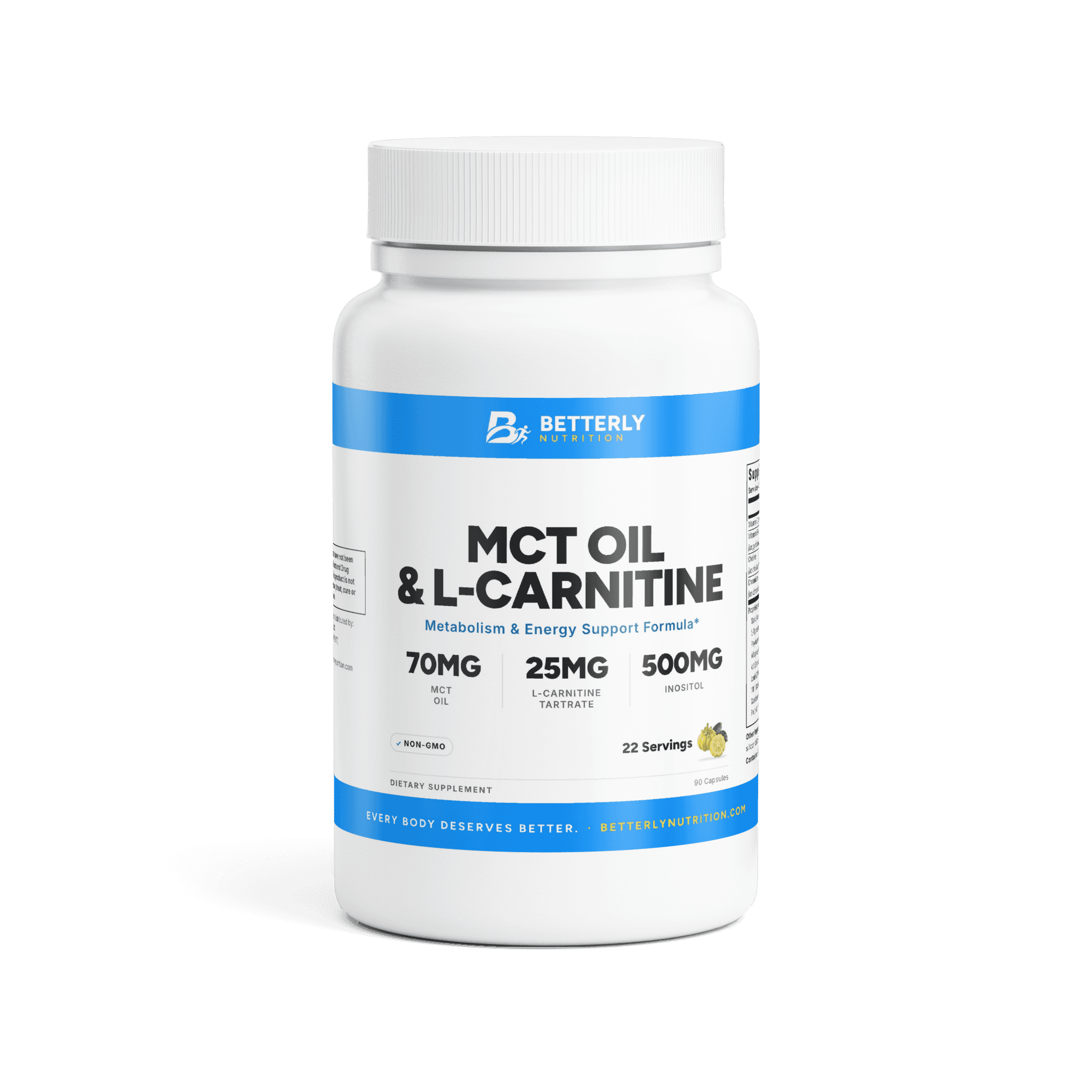
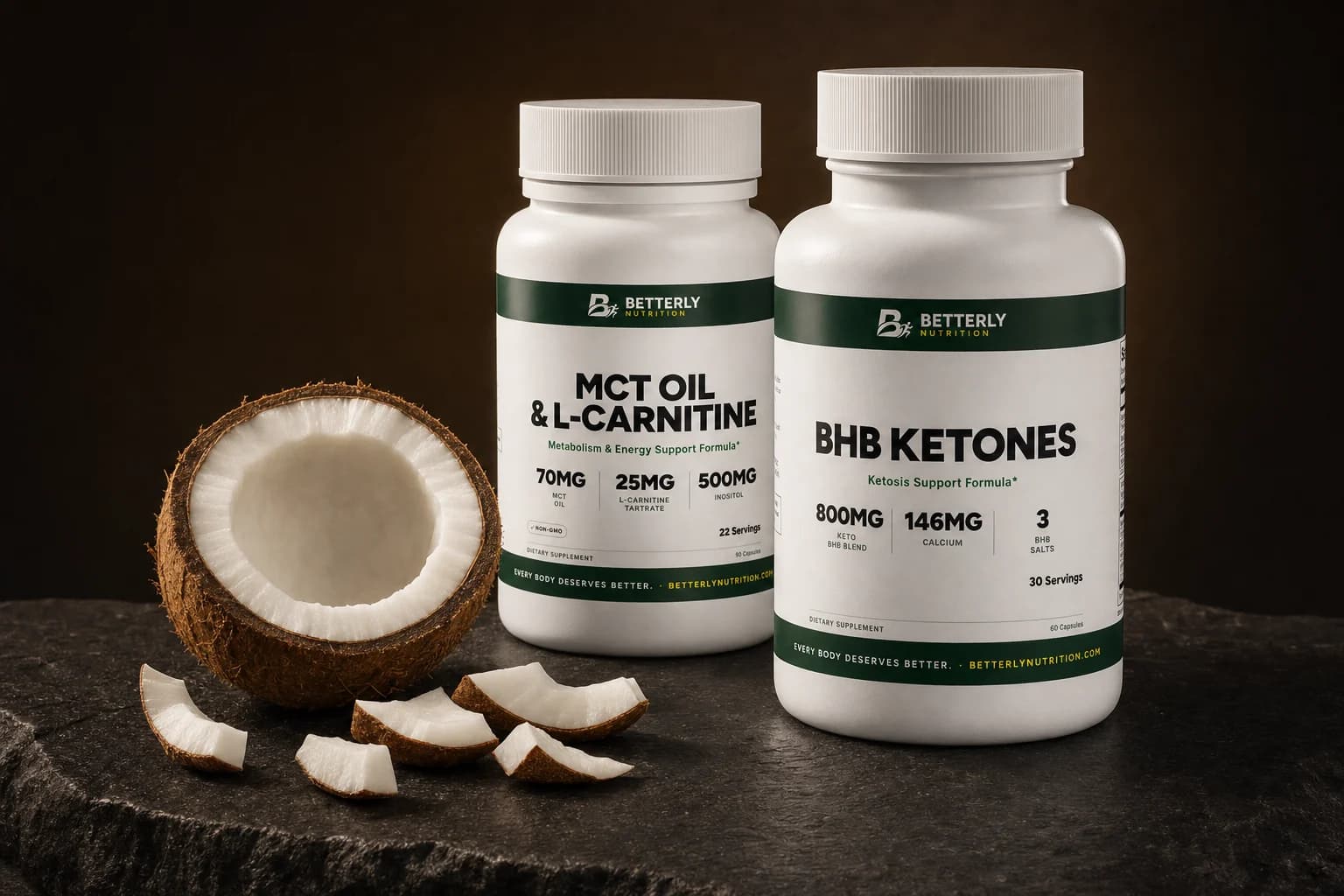
- Betterly's MCT Oil & L-Carnitine Capsules carry 70 mg of MCT oil in each 4-capsule serving, so they're a pick for the whole formula, not for MCT grams.
A note before the numbers: we sell MCTs inside several products, including two capsules, a creamer, and our whey and plant protein powders, and none of them is a straight MCT oil. So the pure-MCT figures below come from three other brands' labels in a federal database, and we aren't affiliated with any of them.
MCT oil capsules vs liquid: which gives you more MCT per serving?
Liquid MCT oil gives you far more per serving: 14 g per tablespoon on the label we checked, against 3 g in a full 3-softgel serving of capsules.
Each row below comes from one current label in the Dietary Supplement Label Database, which the NIH Office of Dietary Supplements runs. The softgel row is Sports Research's MCT Oil 3000 mg, the liquid row is NOW Sports Organic MCT Oil, and the powder row is Nutiva's Organic MCT Powder. The last row is ours.
| Format and serving | MCT per serving | Calories | Best at |
|---|---|---|---|
| Softgels, 3 softgels | 3,000 mg | 25 | Travel, no taste |
| Liquid oil, 1 tbsp (15 mL) | 14 g | 130 | Grams per spoon |
| Powder, 1 scoop (10 g) | 6 g | 60 | Stirring into coffee |
| Our capsule, 4 capsules | 70 mg | No row | Its other ingredients |
The takeaway: the tablespoon carries almost five times the softgel serving's MCTs and more than twice the scoop's. Capsules make sense when a no-mess, no-taste routine matters more than grams.
How many MCT oil capsules equal a tablespoon of liquid?
About 14 MCT softgels equal one tablespoon of liquid MCT oil, when each softgel holds 1,000 mg, as the Sports Research label works out to.
Here's the trap. The product name says "3000 mg," but the serving size is 3 softgels. Divide 3,000 by 3 and each softgel holds 1,000 mg, or 1 g. Now divide the liquid's 14 g by 1 g per softgel, and you get 14. That's more than four and a half days of that label's daily serving in one spoon. The math is for comparing bottles, not counting out softgels, and your dose still comes from your own label.
Our MCT Oil & L-Carnitine Capsules land somewhere else entirely:
- The panel lists 70 mg of Medium Chain Triglycerides Oil per 4-capsule serving, which is about 17.5 mg per capsule.
- One 1,000 mg softgel holds about as much MCT as 57 of our capsules.
- One tablespoon of that liquid equals 200 of our 4-capsule servings.
- A full 90-capsule bottle adds up to roughly 1.6 g of MCT oil, a little over a tenth of one tablespoon.
Our capsule isn't built to deliver MCT by the gram, and a later section shows what else is in it.
Do MCT oil capsules have calories?
Yes, MCT oil capsules have calories because MCTs are fat, and the softgel label we checked lists 25 calories per 3-softgel serving.
MedlinePlus, the National Library of Medicine's consumer health site, says in Dietary fats explained that fat has 9 calories per gram. Carbohydrate and protein have 4 each.
The softgel and liquid labels match that math, give or take rounding. The powder runs a little low:
- Softgels: 3 g of MCTs times 9 is 27 calories, printed as 25.
- Liquid: 14 g times 9 is 126 calories, printed as 130.
- Powder: 6 g of fat and 3 g of carbohydrate come to 66 by that math, but the scoop prints 60. It also lists 3 g of acacia, a fiber, next to its 3 g of carbohydrate, which likely explains the lower figure.
Our capsule's panel has no calorie row. At 9 calories per gram, its 70 mg of MCT oil comes to about 0.6 of a calorie per 4-capsule serving.
If you count calories, format matters. A daily tablespoon adds 130 calories, or 910 over a week, against 25 for a daily 3-softgel serving.
Are MCT oil pills as good as liquid MCT oil?
MCT oil pills and liquid MCT oil hold the same kind of fat, so the bigger difference is grams per serving.
We found no federal source comparing how your body handles a softgel against a spoonful, so we won't claim either form is absorbed faster or better. The same goes for MCT oil capsules' benefits. MCTs are fat, so they supply calories, 9 per gram by MedlinePlus's count, but no federal source we opened backs a benefit that belongs to the capsule form itself.
What you can compare is the fatty acid split, which some labels print. The softgel label lists 60% caprylic acid (C8) and 40% capric acid (C10). The liquid label gives a typical range of 50% to 80% C8 and 20% to 50% C10. Our capsule, creamer and whey labels don't give a split, so we can't tell you theirs.
The differences you'll actually notice are practical:
- Taste and texture. A softgel has none. Liquid oil sits on hot coffee in a slick unless you blend it. Powder stirs in.
- Kitchen use. The NOW label suggests the oil for dressings and sauces, but not for frying, because of its low smoke point.
- Measuring. Softgels come pre-counted. A free pour of liquid isn't a tablespoon, so use a measuring spoon.
- What else you swallow. The softgel adds a shell of gelatin, glycerin and purified water. The liquid lists only the oil.
If ketones are why you're shopping, our comparison of exogenous ketones and MCT oil covers the amounts used in research and our per-product MCT table.
Where do MCT oil capsules like ours fit?
Betterly's MCT Oil & L-Carnitine Capsules fit someone who wants a multi-ingredient daily capsule, not someone shopping for grams of MCT.
Rank the panel's 15 listed amounts by weight and MCT oil comes sixth. Per 4-capsule serving, inositol (500 mg) outweighs it about seven to one, and the 631 mg proprietary blend about nine to one. Choline and garcinia cambogia fruit extract (200 mg each) and CLA, short for conjugated linoleic acid (100 mg), also rank higher. The panel also lists 25 mg of L-carnitine (as L-carnitine tartrate).
So the product name and the panel tell different stories. MCT oil leads the name, but at 70 mg it's a small part of the formula. If MCT grams are your goal, a pure oil or powder is the better tool, even one from a brand we don't sell.
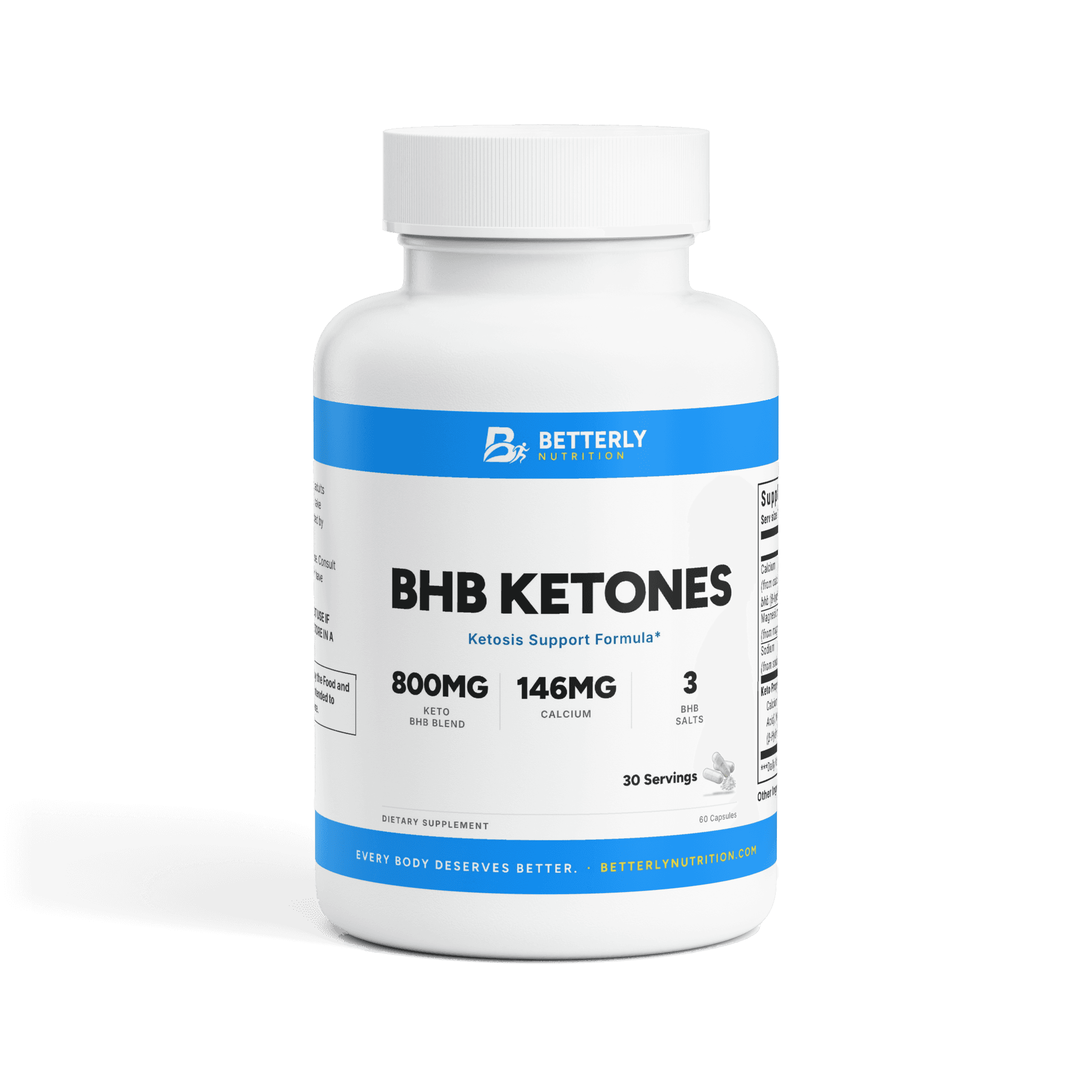
Our BHB Ketone Capsules share that limit for a different reason. Their MCT powder is one of five ingredients sharing an 800 mg Keto Proprietary Blend per 2-capsule serving, with no amount of its own. That whole blend weighs less than the MCT in one 1,000 mg softgel.
Both capsules sit in our Weight Support collection, where every product page lists its amounts per serving.
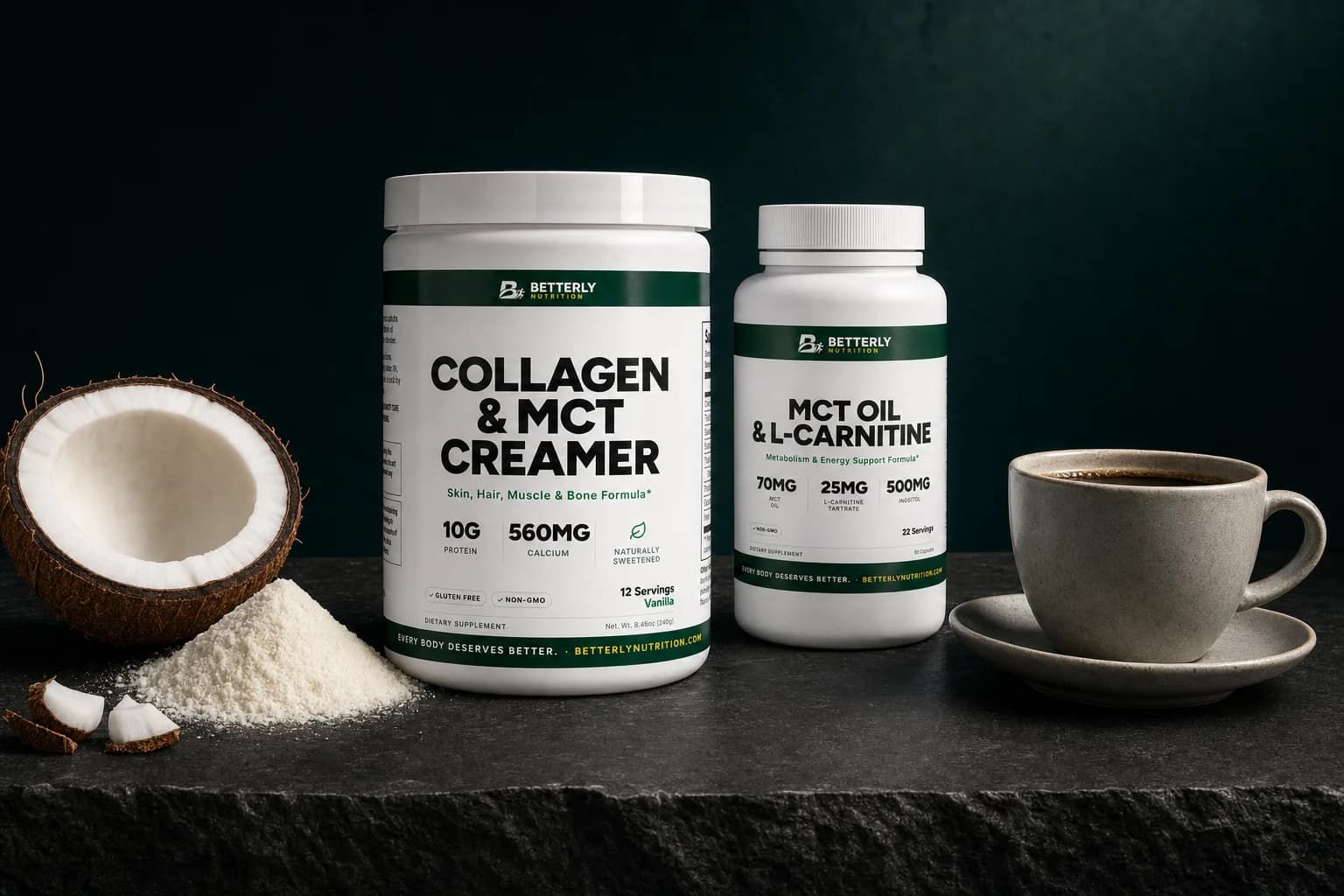
From our shop: MCT Oil & L-Carnitine Capsules — a 4-capsule daily serving with 70 mg of MCT oil, 500 mg of inositol and 25 mg of L-carnitine, 90 capsules to a bottle.
MCT powder vs MCT oil in coffee: is powder as good?
MCT powder combines MCT oil with a carrier, so a scoop gives you less MCT than its weight suggests: 6 g in a 10 g scoop on Nutiva's label.
Gram for gram, powder is diluted, and its carrier adds carbs. In a morning coffee, though, powder mixes in instead of floating, which is its real advantage.
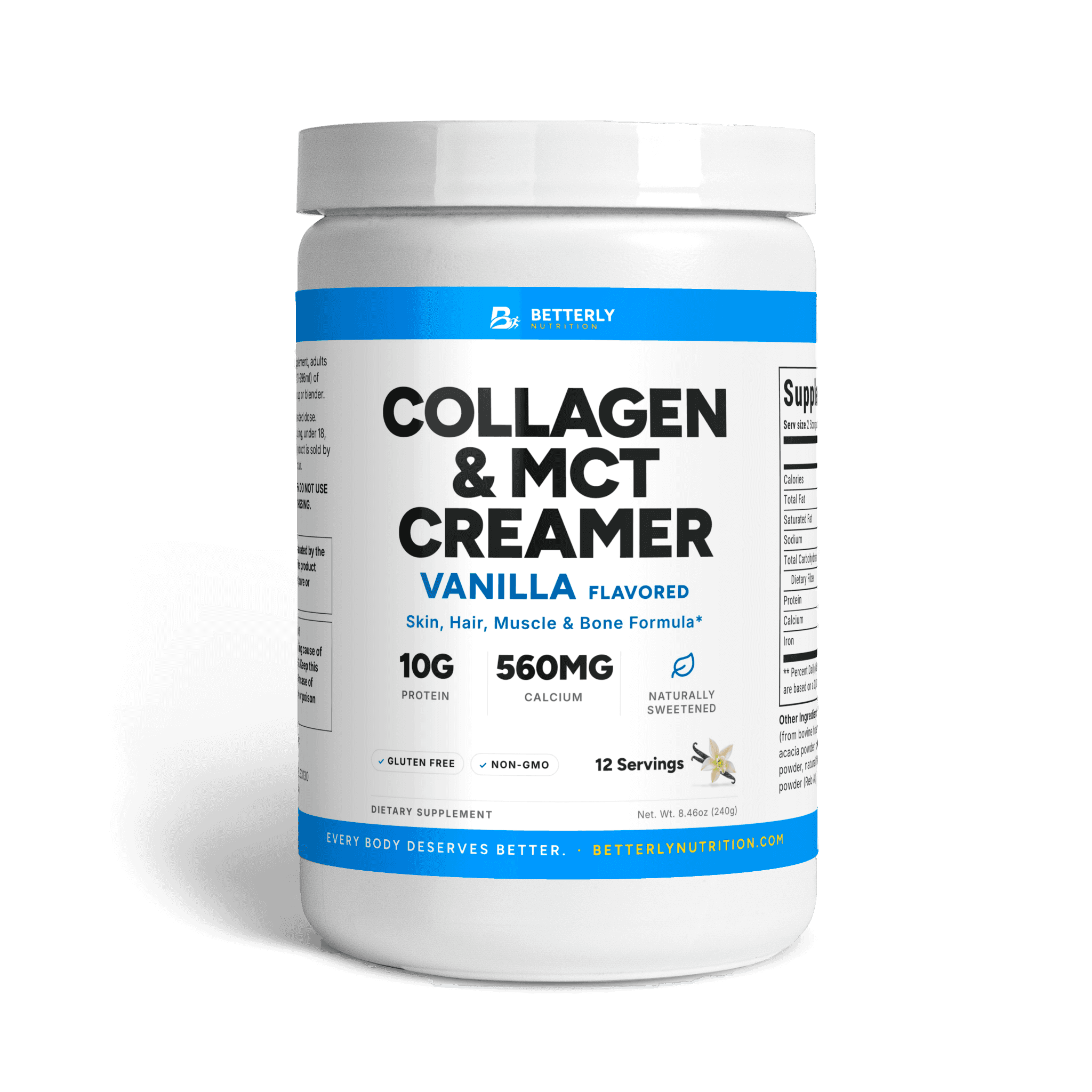
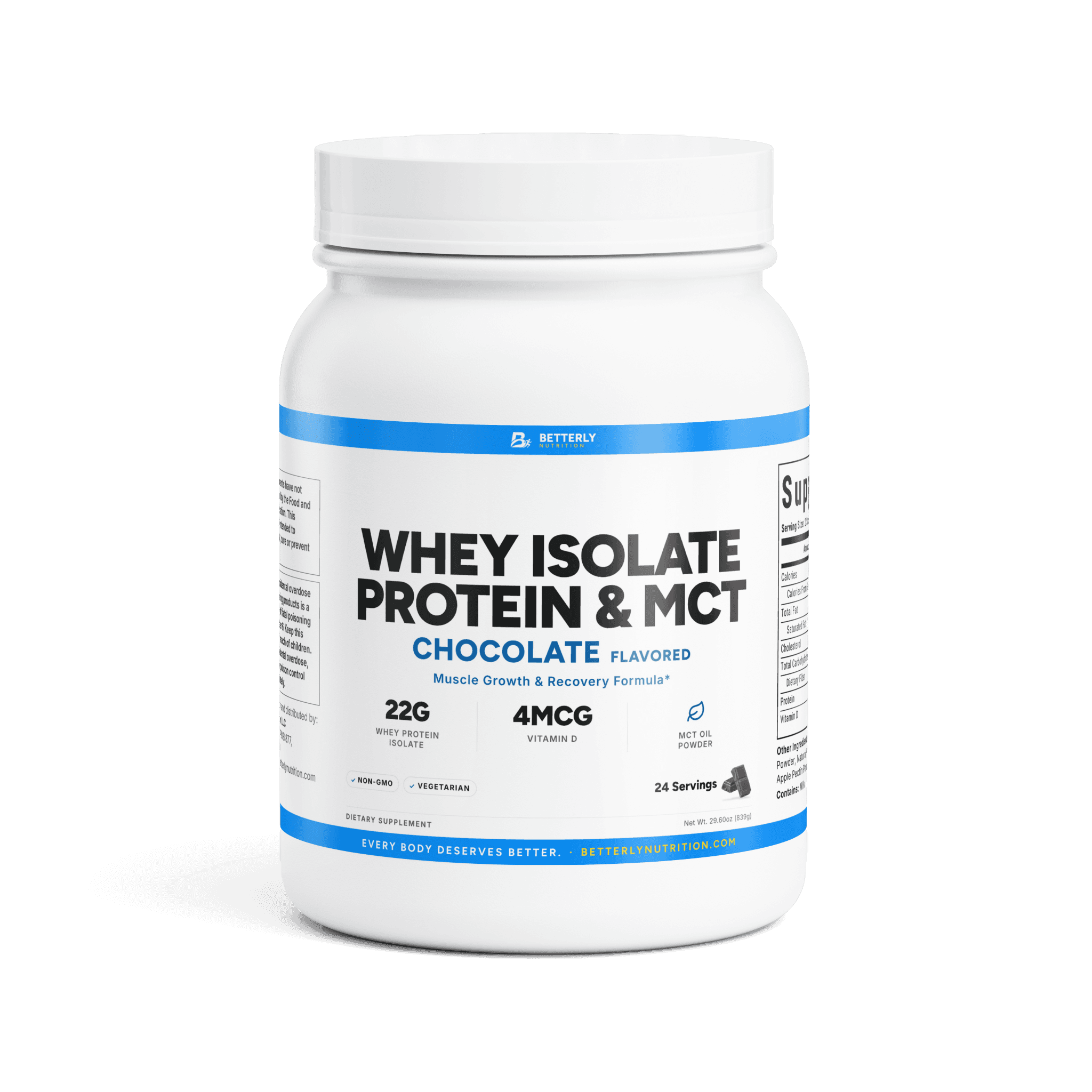
Unlike Nutiva's, our two tubs here don't give MCTs a row, so the Total Fat line caps what they could hold:
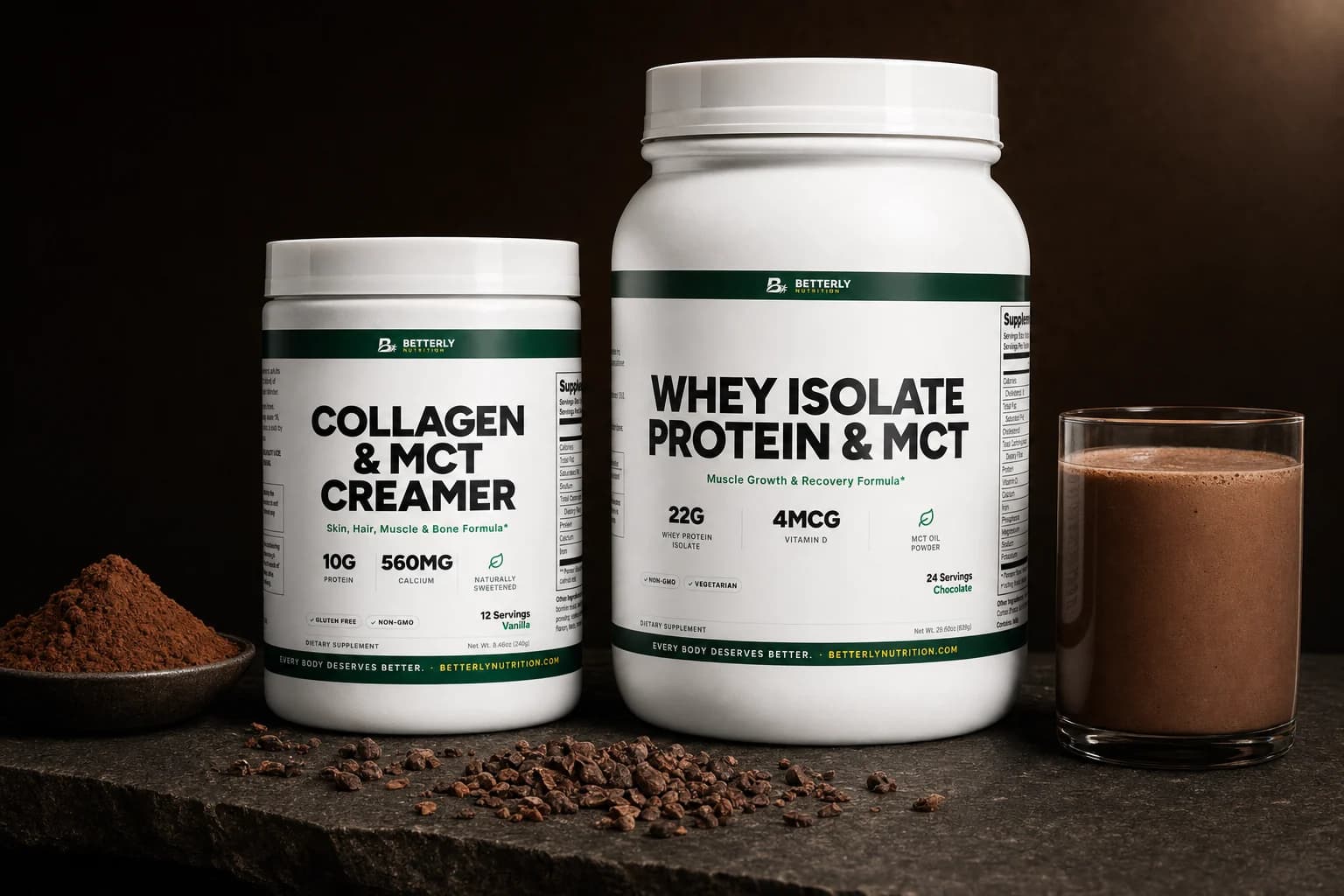
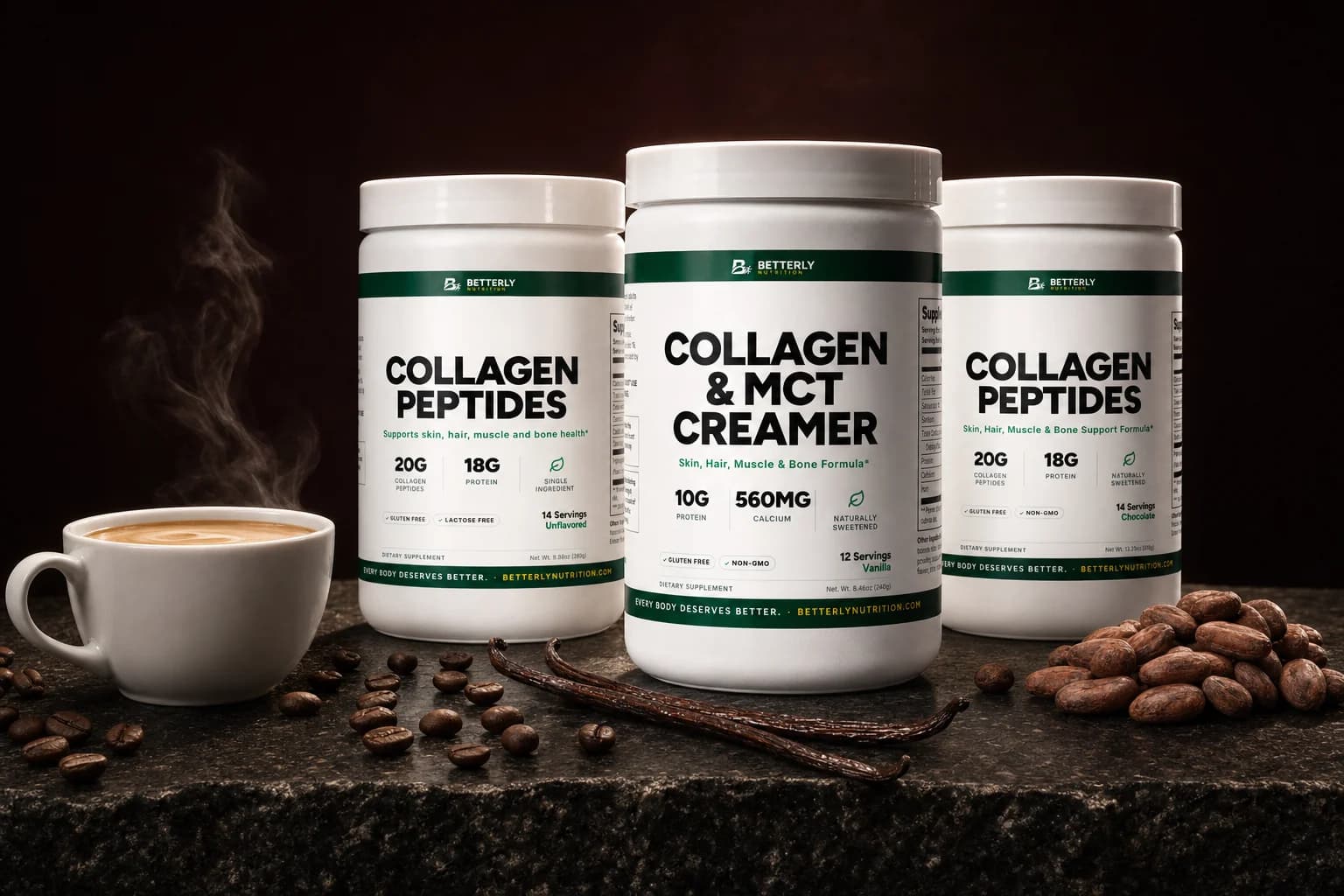
- Collagen Peptides & MCT Creamer (Vanilla): 2 g of total fat per 2 Scoops (20 g) serving. Even if all of it were MCT, one tablespoon of oil would match seven servings.
- Whey Protein Isolate & MCT Powder (Vanilla): 1 g of total fat per 2 Scoops (34g) serving, a fourteenth of that tablespoon at most.
These tubs are protein first. By the same 9-and-4 math, the creamer's 10 g of protein supplies about 40 of its 70 calories, and the whey's 22 g supplies about 88 of its 120.
Where MCTs sit in each tub's ingredient list, and what a carrier adds to a scoop's weight, is covered in our guide to protein powder with MCT oil.
How do you take MCT capsules, oil or powder by the label?
Take any MCT product exactly as its own label says, and our MCT Oil & L-Carnitine Capsules call for 4 capsules daily with meals.
For best results, that label splits the four: 2 capsules with water before breakfast and 2 before dinner. Our BHB capsule label says 2 capsules daily, ideally with 6-8 oz (177-237ml) of water. The creamer takes 2 scoops in 8-10 oz (237-296ml) of your favorite beverage, shaken or blended, and the whey takes 2 scoops in 6-8 oz (177-237 ml) of water or another drink, daily.
If you're switching between formats, these habits keep the numbers honest:
- Compare grams per serving, not the milligrams in the product name.
- Drop your old count. Four of one product's capsules tell you nothing about another product's softgels.
- Take it with food when the label says so.
- Start one MCT product at a time, so you can tell how your stomach takes each.
From our shop: Collagen Peptides & MCT Creamer (Vanilla) — 70 calories and 10 g of protein in each 2 Scoops (20 g) serving, made to mix into 8-10 oz of your favorite drink, labeled gluten free and non-GMO.
When don't you need MCT capsules or oil at all?
You can skip MCT capsules, oil and powder if you have no specific reason to add MCTs, because every softgel, spoon or scoop is still added fat and calories.
Save your money if any of these sound like you:
- You want a gram target from pills. At 1 g per softgel, that means a handful of pills.
- Oils have upset your stomach before. Both the softgel and liquid labels warn about digestive trouble.
- A daily 130 calories doesn't fit your plan. That's one tablespoon, before anything else goes in the mug.
- You avoid gelatin. The softgel we checked uses it, and both of our capsules list gelatin, bovine in the MCT one.
Who should check with a healthcare provider first?
A healthcare provider should weigh in before you start any MCT product if you're pregnant or nursing, under 18, on medication, managing a medical condition or facing surgery.
Every one of our labels with MCTs in it says: "Consult a physician if pregnant, nursing, under 18, or have a medical condition." We'd ask about daily medicines and planned operations too. The NOW liquid is also marked for adults only.
Allergen lines are easy to miss. Our MCT Oil & L-Carnitine Capsules print "Contains: fish and shellfish," and our whey prints milk. On the other brands' labels, Sports Research lists coconut as a tree nut, and Nutiva prints "Contains: Coconut."
Our capsule also holds 25 mg of vitamin B6 (1471% DV) per serving, so count it with any multivitamin or B-complex. Its 200 mg of garcinia cambogia extract has its own cautions, covered in our guide to garcinia cambogia side effects. On a prescription? Show your pharmacist the whole panel, since 15 rows plus a 15-ingredient blend is a lot to judge from memory.
The creamer lists 3 mg of iron (17% DV) per serving and carries an iron warning, so store it well out of reach of children.
FAQ: MCT oil capsules vs liquid
Can you take MCT oil capsules on an empty stomach?
MCT oil capsules aren't labeled for an empty stomach on the labels we checked, since the softgel, liquid and capsule labels all pair MCTs with food. The Sports Research softgel label says 3 softgels daily with food, and the NOW liquid label suggests food to reduce possible GI upset. Our MCT Oil & L-Carnitine Capsules call for 4 capsules daily with meals, ideally 2 before breakfast and 2 before dinner.
Do MCT oil softgels cause stomach upset?
Yes, MCT oil softgels can upset your stomach, and MCT labels warn about it themselves. The Sports Research softgel label says excessive consumption may cause digestive discomfort, and the NOW liquid label says MCT oil may cause GI upset. Stay within your label's serving, and take it with food if the label says so.
How long does a bottle of MCT Oil & L-Carnitine Capsules last?
A bottle of our MCT Oil & L-Carnitine Capsules lasts 22 days at the label's suggested use. It holds 90 capsules, listed as 22 servings of 4 capsules each. Taking extra to raise the MCT amount isn't an option, since the label says not to exceed the recommended dose.
Are MCT oil softgels vegetarian?
MCT oil softgels aren't always vegetarian. The Sports Research label we checked lists gelatin first among its other ingredients, and our MCT Oil & L-Carnitine Capsules use bovine gelatin and contain fish and shellfish. The NOW liquid and Nutiva powder are both tagged vegan in the NIH label database.
Can you take MCT capsules and liquid MCT oil together?
Taking MCT capsules and liquid MCT oil together isn't something either label covers, so the simpler route is one MCT product at its own suggested use. The Sports Research softgel label also says not to exceed the recommended daily intake. If you still want both, ask a healthcare provider first and bring the math: a 3-softgel serving plus a tablespoon adds up to 17 g of MCTs a day, and both labels warn about digestive upset.
Sources
- NIH Dietary Supplement Label Database: MCT Oil 3000 mg, Sports Research
- NIH Dietary Supplement Label Database: Organic MCT Oil, NOW Sports
- NIH Dietary Supplement Label Database: Organic MCT Powder Unflavored, Nutiva
- MedlinePlus Medical Encyclopedia: Dietary fats explained
If this left you looking for somewhere to start, read our inositol and L-carnitine capsules with 70 mg of MCT oil — its amounts per serving are listed on the page. For the practical questions this raises, how dosing, sourcing and subscriptions work is answered in one place.