On this page
- Key takeaways
- What is garcinia cambogia, and what is hydroxycitric acid?
- Which garcinia cambogia side effects do federal sources list?
- Can garcinia cambogia side effects include liver damage?
- Does garcinia cambogia have caffeine?
- Does garcinia cambogia interact with any medications?
- How much garcinia is in our two capsules?
- How should you take garcinia if you decide to try it?
- When don't you need garcinia cambogia?
- Who should check with a healthcare provider before taking garcinia?
- FAQ: Garcinia cambogia side effects and safety
- Sources
The short answer: The garcinia cambogia side effects listed by the NIH's National Center for Complementary and Integrative Health (NCCIH) are headache, nausea, diarrhea and other digestive symptoms. The rarer, more serious concern is the liver: NCCIH says several cases of liver damage have been reported, some of them severe. Garcinia itself isn't a caffeine source, though some blends it's sold in do contain caffeine.
Key takeaways
- NCCIH names headache, nausea, diarrhea and other gastrointestinal symptoms as garcinia cambogia side effects, and the NIH Office of Dietary Supplements adds upper respiratory symptoms.
- NCCIH says garcinia products, including multi-ingredient ones, may be unsafe. Several cases of liver damage have been reported, though severe cases appear uncommon.
- Neither NCCIH nor ODS lists caffeine in garcinia or calls it a stimulant, so a garcinia product with caffeine gets it from other ingredients.
- Our MCT capsule lists 200 mg of garcinia extract at 50% HCA per 4-capsule serving, or about 100 mg of HCA. Our other garcinia formula prints no separate amount.
- Check with a healthcare provider first if you're pregnant or nursing, younger than 18, on any medication, scheduled for surgery, or managing a medical condition.
We sell two garcinia products: the MCT Oil & L-Carnitine Capsules and the Raspberry Ketone & Green Tea Capsules. The federal safety language comes first here, even where it's unflattering.
What is garcinia cambogia, and what is hydroxycitric acid?
Garcinia cambogia is a tree native to India and Southeast Asia. Hydroxycitric acid (HCA) is the natural acid in its fruit rind, and supplement extracts are measured by it.
According to NCCIH's garcinia cambogia page, the tree grows in evergreen forests and also goes by Malabar tamarind and brindle berry. Its Latin name is Garcinia gummi-gutta. The rind is widely used in cooking and has a history as a traditional food preservative.
Supplements usually use a fruit extract standardized to a set share of HCA. Our MCT label reads "Garcinia cambogia Fruit Extract (50% hydroxycitric acid)," meaning half the extract's weight is HCA. So 200 mg of that extract works out to about 100 mg of HCA.
Which garcinia cambogia side effects do federal sources list?
The garcinia cambogia side effects federal sources list are headache, nausea, diarrhea and other stomach or intestinal symptoms.
That's the list on NCCIH's page. The NIH Office of Dietary Supplements (ODS) covers garcinia too. Its consumer fact sheet summarizes the safety of about two dozen common formula ingredients. ODS says garcinia seems fairly safe. Then it adds headache, nausea, and symptoms in the upper respiratory tract, stomach and intestines.
Neither page puts a number on how often these happen. If you've wondered whether garcinia "makes you poop," diarrhea is on NCCIH's list, so looser stools are a known possibility.
A multi-ingredient capsule makes cause and effect harder to read. Our MCT Oil & L-Carnitine formula pairs garcinia with 100 mg of conjugated linoleic acid (CLA) per 4-capsule serving. It also has a blend that includes psyllium husk powder. ODS notes that CLA can cause an upset stomach, loose stools and indigestion.
Chromium belongs on the suspect list too. The same capsule lists 200 mcg of chromium per 4-capsule serving. ODS puts recommended amounts for adults at 20 to 45 mcg a day, and says larger amounts can cause watery stools, headache and nausea. So if your stomach protests, garcinia is one of several candidates on that panel.
Can garcinia cambogia side effects include liver damage?
Yes. NCCIH says several cases of liver damage have been reported with garcinia cambogia products. Some were severe, though severe cases appear to be uncommon.
Here it is in NCCIH's own words: "It may be unsafe to consume garcinia cambogia products, including multi-ingredient products containing garcinia cambogia extract."
The two federal pages don't sound alike. The ODS sheet dates from March 2021 and says garcinia seems fairly safe, and its garcinia entry doesn't mention the liver. NCCIH's page dates from February 2025 and is more cautious. Where they differ, we'd lean on the newer page, which covers garcinia alone.
Case reports can't tell you how likely a reaction is for you, and NCCIH doesn't give odds. They do show the concern is real. It applies whether garcinia is the headline ingredient or one row among twenty.
Our Raspberry Ketone & Green Tea Capsules raise a second liver question. Their green tea row is standardized to 98% polyphenols and 45% EGCG, a green tea compound, which makes it an extract. The same ODS sheet says green tea extract might not be safe and has been tied to liver damage in some people.
Neither federal page lists kidney effects for garcinia, and we won't fill that gap with guesses. If you feel unwell after starting a garcinia product, stop taking it and call your healthcare provider.
Does garcinia cambogia have caffeine?
No, garcinia cambogia isn't a known caffeine source: neither NCCIH nor ODS lists caffeine in it or calls it a stimulant. But blends that pair garcinia with caffeinated ingredients do contain caffeine.
ODS names tea, guarana, kola nut and yerba mate as natural caffeine sources, and garcinia isn't on that list. Its green coffee bean entry flags caffeine, while its garcinia entry never mentions it. ODS also warns that supplement labels don't always list caffeine.
Our two garcinia formulas show both sides. Alongside garcinia, the raspberry ketone capsule's blend lists caffeine anhydrous, green coffee bean extract, and green tea leaf standardized to 6% caffeine. Its label says "CONTAINS CAFFEINE" but prints no milligram figure. The MCT formula lists no caffeine and no caffeine-bearing plant on its panel.
ODS says caffeine is safe for most adults at up to 400 to 500 mg a day. It can still make you jittery and affect your sleep. Our breakdown of what 50 mg of caffeine equals in everyday drinks helps with a daily tally. Raspberry ketone has safety notes of its own, which our raspberry ketone side effects guide covers.
Does garcinia cambogia interact with any medications?
Garcinia cambogia can interact with some medications. NCCIH says interactions have been reported with some drugs that affect the liver and some that affect serotonin. Serotonin is a chemical made by nerve cells.
NCCIH adds that garcinia might, in theory, interact with other drugs too. Its advice: if you take any type of medicine, talk with your healthcare provider before using garcinia or other herbal products.
The FDA explains why in its consumer guide to mixing medications and supplements. Some supplements change how a medication is absorbed, broken down or cleared, which can leave you with too much or too little of it.
Bring the bottle itself to your pharmacist so they can read every row. Our MCT capsule has garcinia plus more than two dozen other ingredients, and each one is part of the interaction question.
Supplement overlap counts too. Don't take our two garcinia formulas on the same day, or pair either one with another garcinia or HCA product. Each label's directions assume that product alone.
How much garcinia is in our two capsules?
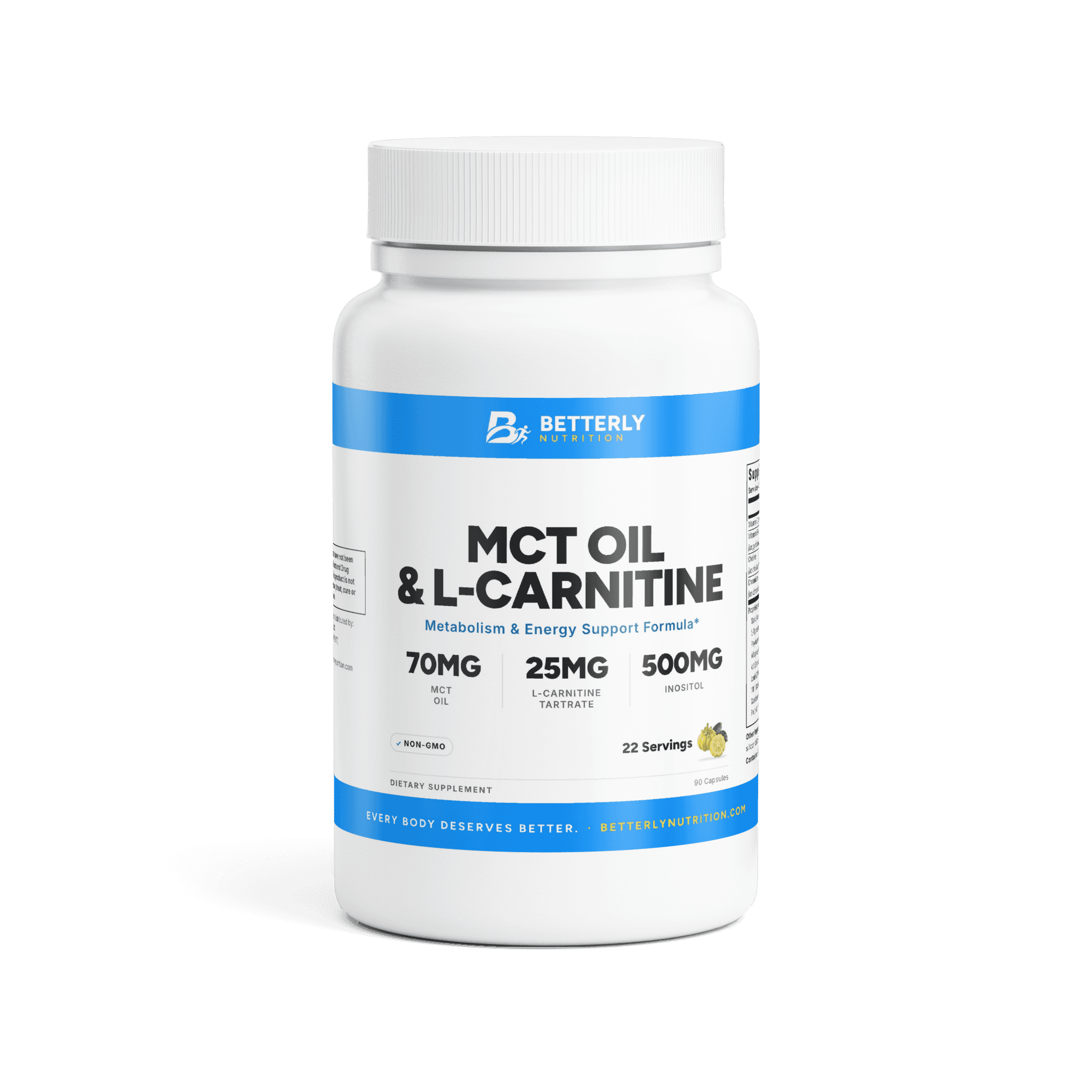
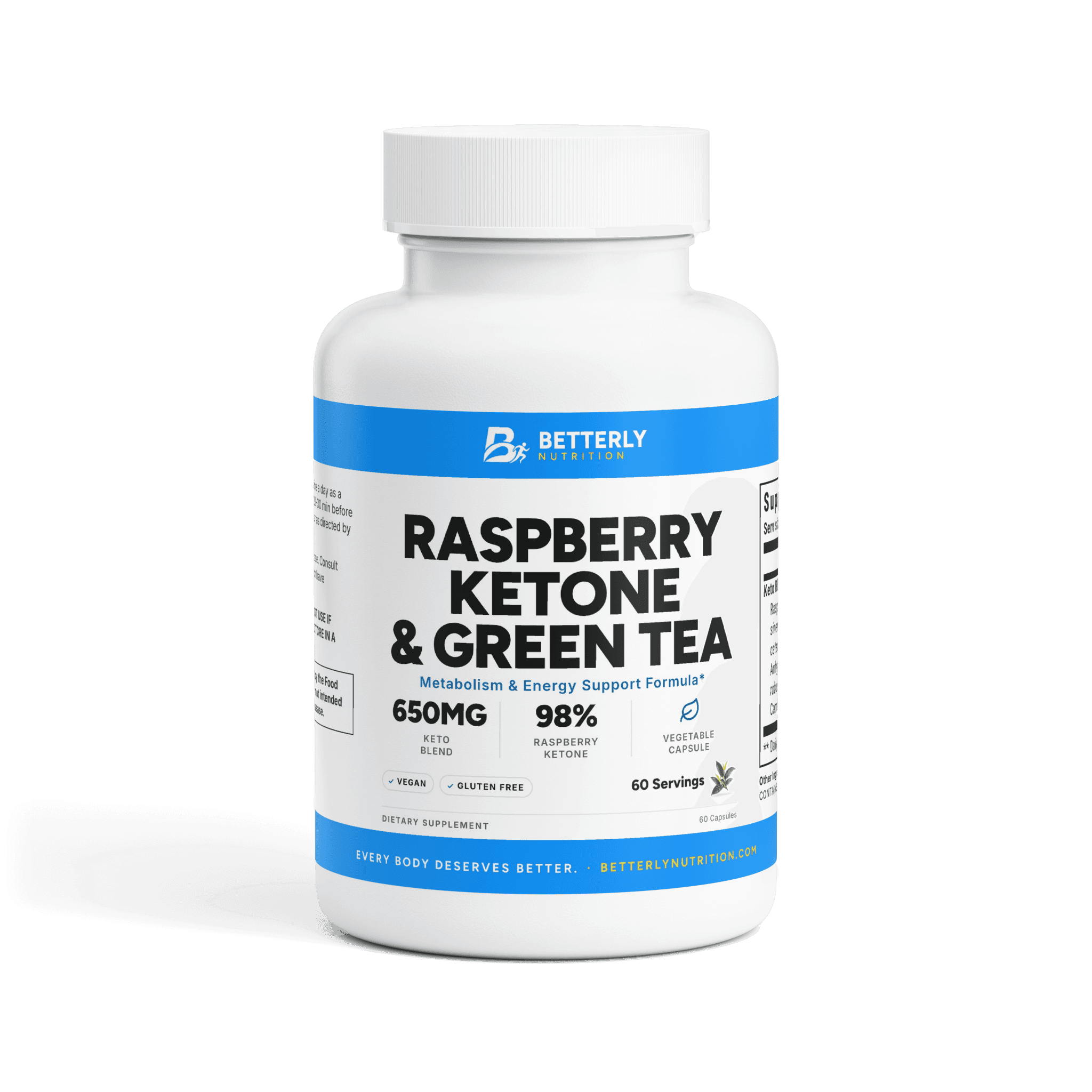
Our MCT Oil & L-Carnitine Capsules disclose 200 mg of garcinia extract (50% HCA) per 4-capsule serving. Our Raspberry Ketone & Green Tea Capsules list garcinia inside a 650 mg blend with no separate amount.
| Label detail | MCT Oil & L-Carnitine | Raspberry Ketone & Green Tea |
|---|---|---|
| Serving size | 4 capsules | 1 capsule |
| Garcinia amount | 200 mg extract | Not listed; inside a 650 mg Keto Blend |
| HCA content | 50%, about 100 mg per serving | "50% Extract," HCA not named |
| Caffeine | None listed | Caffeine anhydrous, green tea, green coffee bean |
| Label's daily use | 4 capsules | 2 capsules |
| Capsule shell | Gelatin (bovine) | Cellulose (vegetable) |
Only the MCT label lets you do the HCA math. The raspberry ketone label prints "50% Extract" after garcinia but doesn't say 50% of what. So you can't work out its HCA from the bottle.
You can still set a ceiling. The FDA's Dietary Supplement Labeling Guide says ingredients inside a proprietary blend must be listed in descending order of predominance by weight. Garcinia comes last of five in that 650 mg blend. Under that rule, it can't outweigh any of the other four.
That caps garcinia at 130 mg per capsule (650 divided by 5), and the real figure could be lower. Our plain-English guide to proprietary blends explains this kind of label math.
The MCT formula has its own trade-off. Its panel names 29 dietary ingredients, 15 of them inside a 631 mg proprietary blend. You know the garcinia number exactly, but the formula is busy.
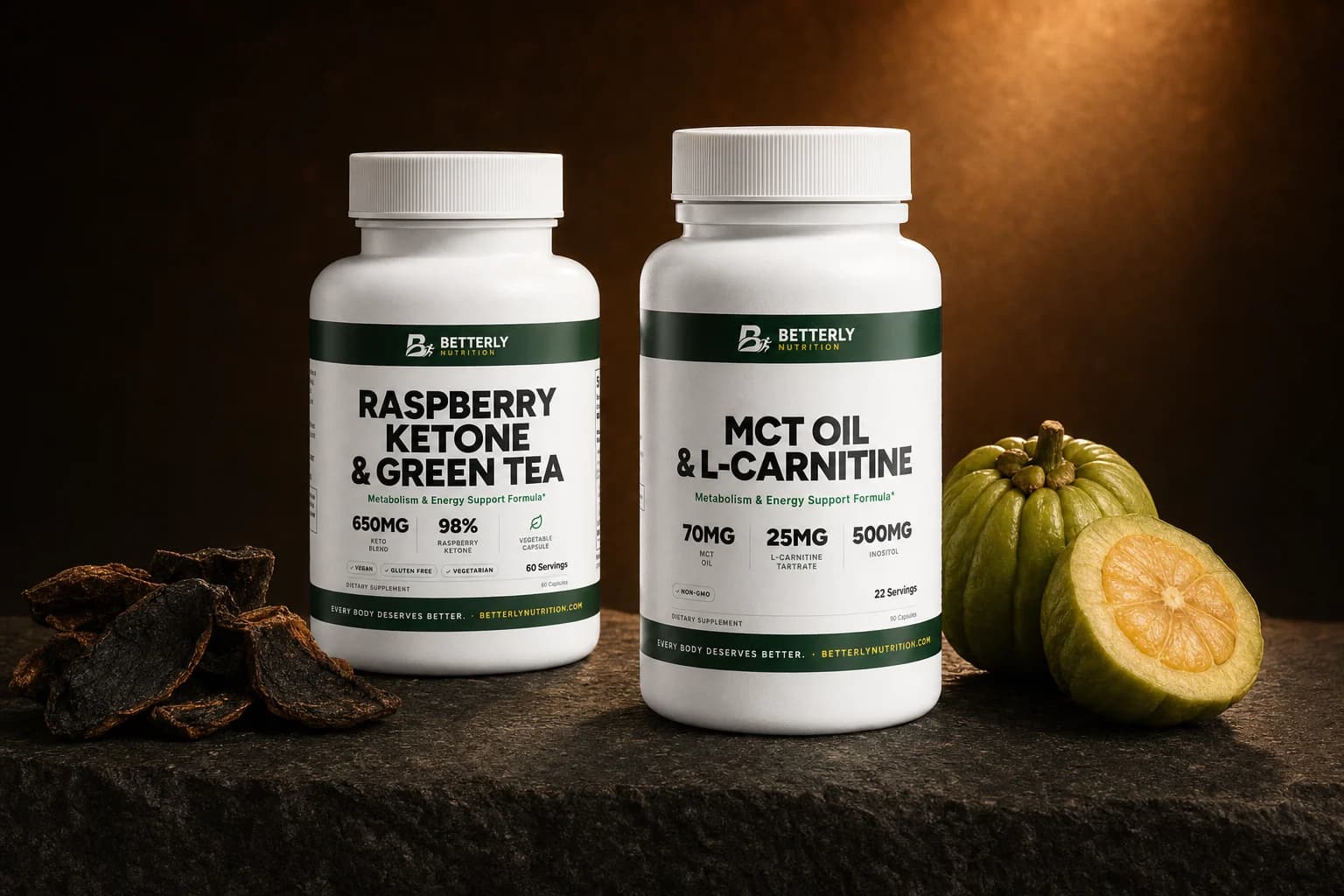
From our shop: MCT Oil & L-Carnitine Capsules — the garcinia row is printed in full, 200 mg of extract standardized to 50% hydroxycitric acid in every 4-capsule serving, and the panel names no caffeine source.
How should you take garcinia if you decide to try it?
Take garcinia only as the label directs. For MCT Oil & L-Carnitine Capsules, the label's suggested use is 4 capsules daily with meals. For best results, it says to take 2 with water before breakfast and 2 before dinner.
For Raspberry Ketone & Green Tea Capsules, the label's suggested use is 1 capsule twice a day. For best results, take it 20 to 30 minutes before a meal with an 8 oz (237 ml) glass of water. Because it contains caffeine, pair both capsules with earlier meals instead of a late dinner.
A few habits make any garcinia product easier to judge:
- Don't go past the suggested use. Both labels say "Do not exceed recommended dose."
- Start during an ordinary week, so a headache isn't confused with a new food or a short night.
- Add up overlapping rows if you take a multivitamin. The MCT formula lists 25 mg of vitamin B-6 (1471% DV) per 4-capsule serving. Our guide to how much vitamin B6 is too much explains why that total matters.
- Count chromium too. The MCT formula's 200 mcg (571% DV) per 4-capsule serving is already above ODS's recommended adult amounts before a multivitamin adds more.
The MCT label lists fish and shellfish as allergens. The raspberry formula's label is marked vegan and gluten-free.
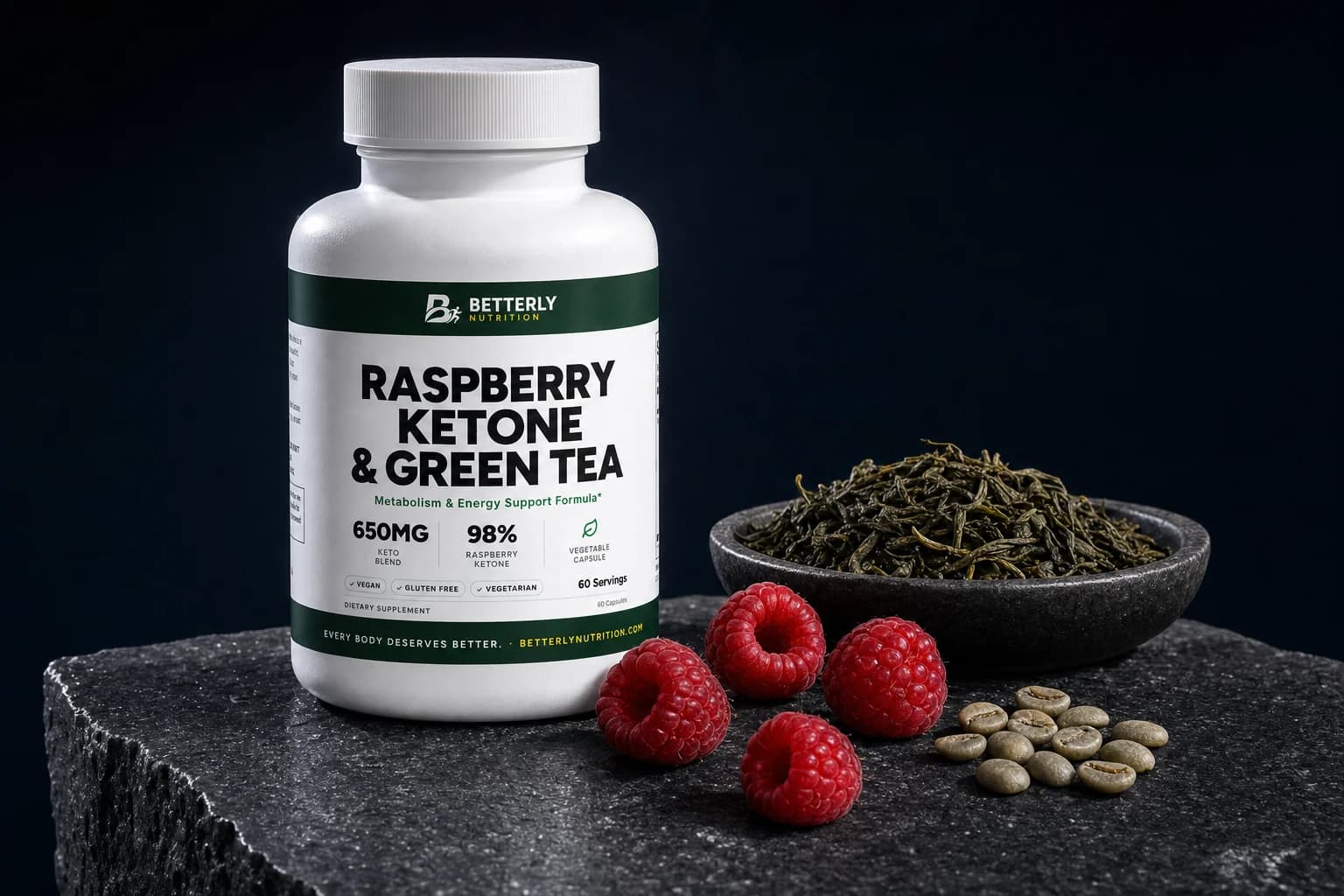
From our shop: Raspberry Ketone & Green Tea Capsules — each 1-capsule serving holds a 650 mg blend of raspberry ketone, green tea, caffeine anhydrous, green coffee bean and garcinia, suited to adults who already keep count of their caffeine.
When don't you need garcinia cambogia?
You don't need garcinia cambogia for any basic nutritional need, because HCA isn't an essential nutrient and has no Daily Value.
There are plenty of fair reasons to pass on it:
- The liver reports tied to garcinia and green tea extract make you uneasy. That's reason enough by itself.
- You're sensitive to caffeine and were weighing a blend that contains it.
- You'd rather know every amount you swallow, which a proprietary blend can't give you.
- You already take a product with garcinia or HCA in it.
- You want a single-ingredient supplement. Garcinia usually comes packed inside bigger formulas, ours included.
We'd rather you skip a product than take one you're uneasy about. If you're still comparing, our Weight Support collection shows the other formulas we carry.
Who should check with a healthcare provider before taking garcinia?
Check with a healthcare provider before taking garcinia cambogia if you're pregnant or breastfeeding, under 18, taking any medication, planning surgery, or managing a medical condition.
Each of our garcinia labels prints this caution: consult a physician if pregnant, nursing, under 18, or have a medical condition. Federal sources add detail:
- Pregnancy and breastfeeding: NCCIH says little is known about garcinia's safety during either.
- Any medication: NCCIH reports interactions with some drugs that affect the liver or serotonin.
- Children and teens: the FDA notes that children metabolize substances at different rates as they grow.
- Liver monitoring: if a provider already watches your liver, ask before starting garcinia or any product with green tea extract. NCCIH reports liver cases with garcinia, and ODS links the extract to liver damage in some people.
ODS also asks you to tell your healthcare providers about every supplement you take, so they can help you head off interactions and side effects.
FAQ: Garcinia cambogia side effects and safety
Is garcinia cambogia safe?
Garcinia cambogia's safety is uncertain, and the federal sources don't fully agree. In 2021, ODS said it seems fairly safe. NCCIH's 2025 page is more cautious. It says garcinia products may be unsafe because of reported liver damage, though severe cases seem uncommon. If you try it, follow the label exactly, use one garcinia product at a time and check with a healthcare provider first.
Can garcinia cambogia keep you awake at night?
Garcinia cambogia itself isn't a caffeine source, but a garcinia product can keep you up if it's blended with caffeinated ingredients. Read the panel for caffeine anhydrous, green tea, green coffee bean, guarana or yerba mate. Our raspberry ketone formula contains caffeine, and its twice-daily directions fit breakfast and lunch more comfortably than an evening meal.
Can you drink coffee while taking garcinia cambogia?
Coffee and garcinia cambogia carry no federal interaction warning that we could find, but caffeine from every source adds up. Our MCT formula lists no caffeine, so your coffee stays your main source. Our raspberry ketone capsules contain caffeine in an unstated amount, so you can't total your day precisely. ODS considers 400 to 500 mg of caffeine a day safe for most adults.
Is garcinia cambogia safe during pregnancy or breastfeeding?
No one can say garcinia cambogia is safe during pregnancy or breastfeeding, because NCCIH says little is known about either. Both of our garcinia labels tell you to consult a physician if you're pregnant or nursing. With liver reports and thin safety data, the simplest path is to skip garcinia during these months unless your healthcare provider says otherwise.
Should you stop garcinia cambogia before surgery?
Tell your surgeon or care team about garcinia cambogia well before any procedure. The FDA says healthcare professionals may ask you to stop dietary supplements two or three weeks before surgery. Some can interact with medications used around the operation. Since NCCIH reports garcinia interactions with some drugs that affect the liver, it belongs on the list you share.
Sources
- Garcinia Cambogia (National Center for Complementary and Integrative Health)
- Dietary Supplements for Weight Loss: Fact Sheet for Consumers (NIH Office of Dietary Supplements)
- Dietary Supplement Labeling Guide: Chapter IV. Nutrition Labeling (U.S. Food and Drug Administration)
- Mixing Medications and Dietary Supplements Can Endanger Your Health (U.S. Food and Drug Administration)
If this left you looking for somewhere to start, read capsules with 200 mg garcinia cambogia extract — its amounts per serving are listed on the page. For the practical questions this raises, how dosing, sourcing and subscriptions work is answered in one place.