On this page
- Key takeaways
- What are the known raspberry ketone side effects?
- Is it the raspberry ketone or the caffeine you're feeling?
- How much caffeine is in raspberry ketone pills?
- What are the side effects of green tea extract capsules?
- Do raspberry ketones interact with any medications?
- Are raspberry ketones safe, or are they dangerous?
- What does our raspberry ketone label say about dosing?
- Who can skip raspberry ketone capsules altogether?
- Who should check with a healthcare provider first?
- FAQ: raspberry ketone side effects
- Sources
The short answer: Raspberry ketone side effects are mostly unknown, because the NIH Office of Dietary Supplements says the compound hasn't been studied enough to tell if it's safe. The side effects federal health pages list belong to the other ingredients sold alongside it. Our capsule lists three caffeine sources and prints "CONTAINS CAFFEINE" with no milligram figure. Its green tea is a concentrated extract, which carries an uncommon liver caution that brewed tea doesn't.
Key takeaways
- Raspberry ketone's safety is an open question. The NIH Office of Dietary Supplements says it hasn't been studied enough to judge, so a short side effect list reflects missing data.
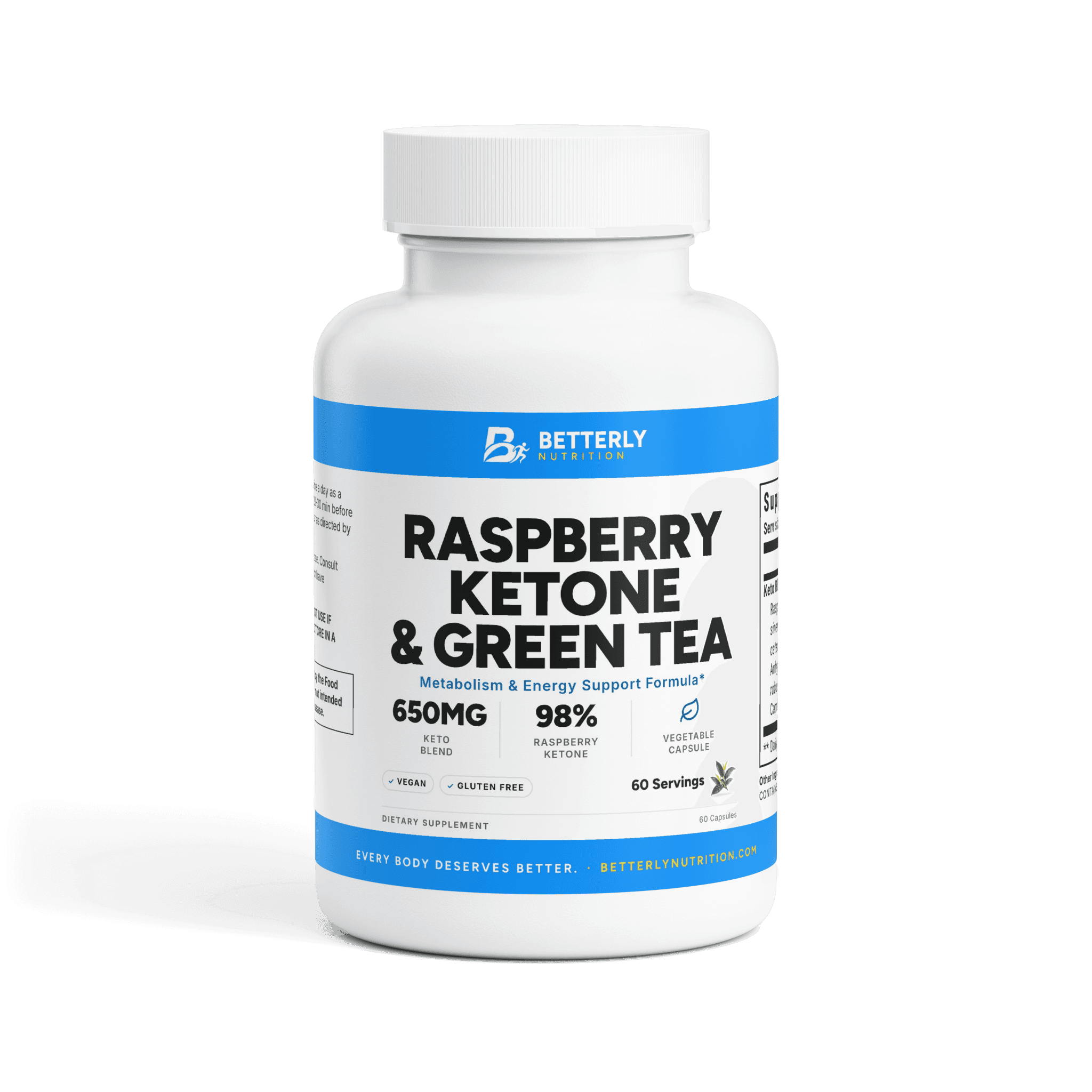
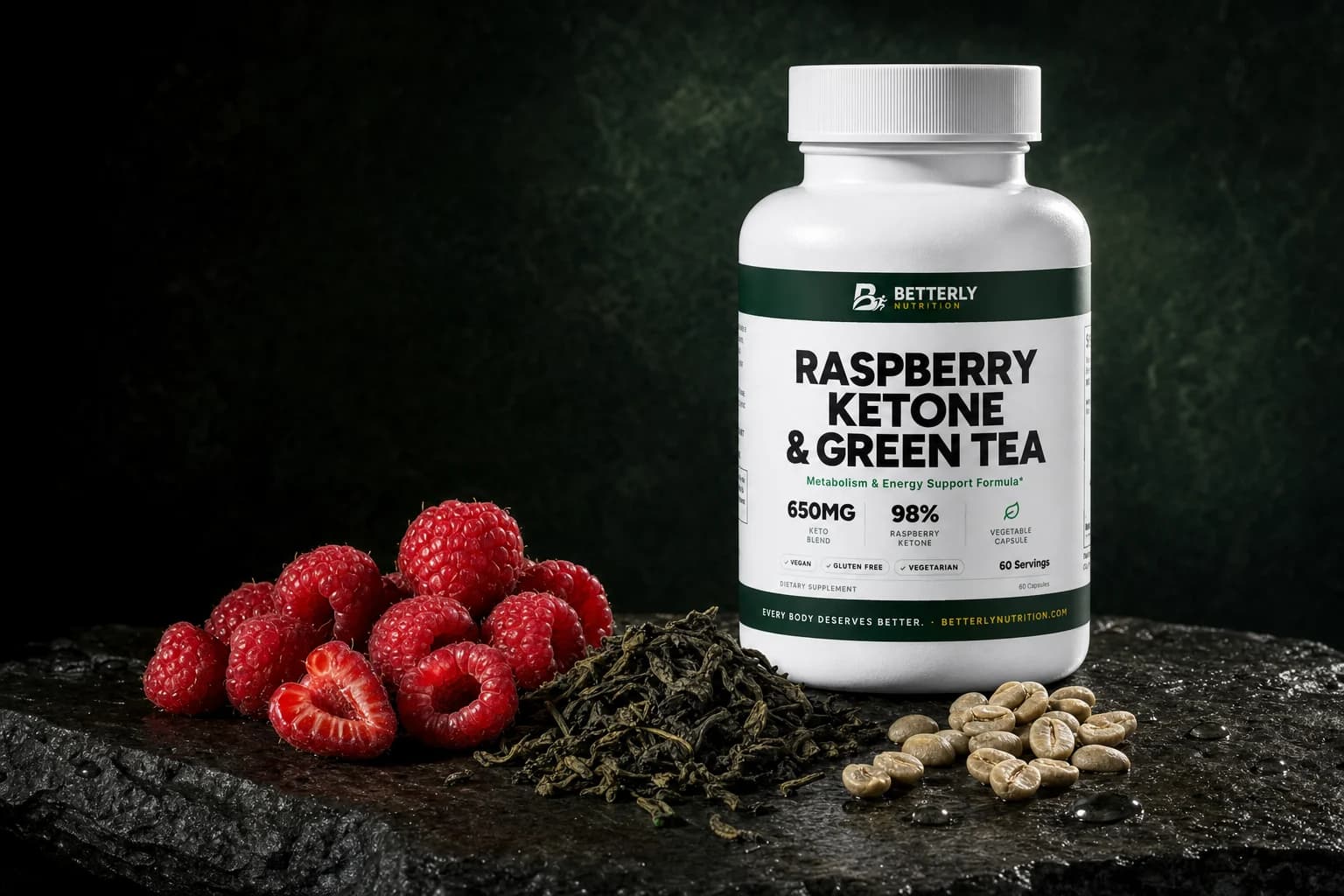
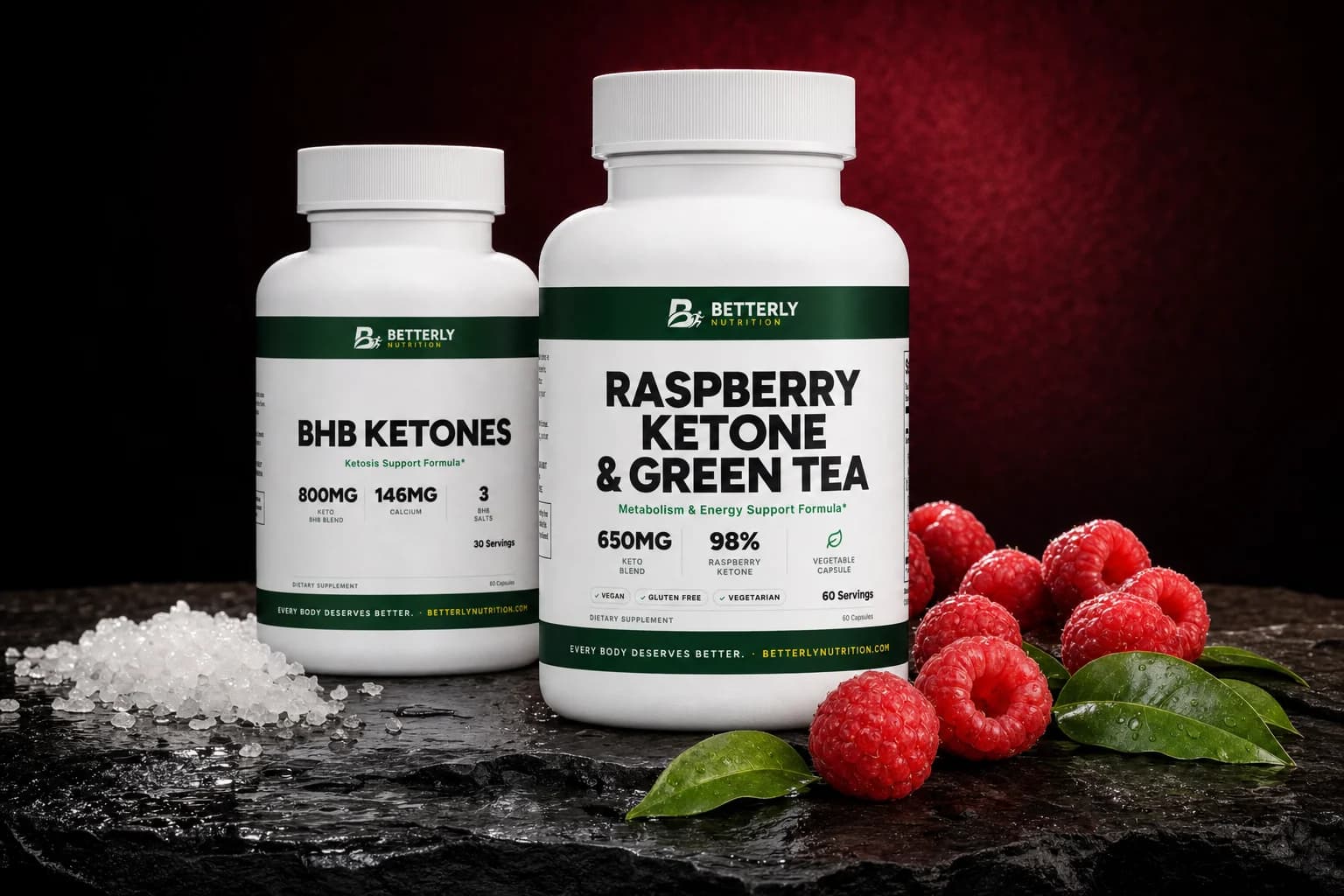
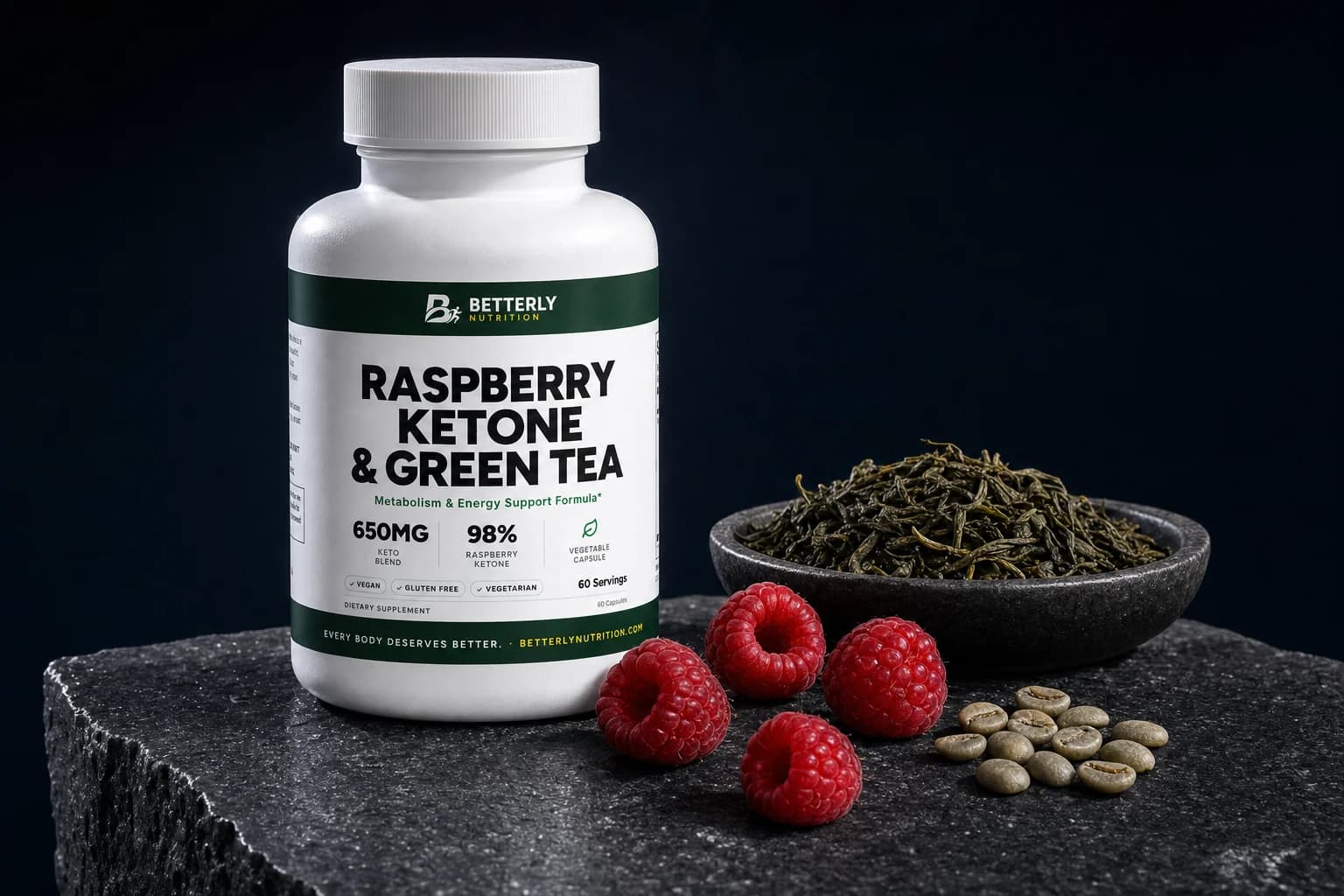
- Betterly's Raspberry Ketone & Green Tea Capsules list caffeine anhydrous, green tea and green coffee bean inside a 650 mg blend per 1-capsule serving, and the label gives no caffeine total.
- NCCIH reports uncommon liver injury tied mainly to green tea extracts in tablets or capsules, while green tea as a drink has no reported safety concerns for adults.
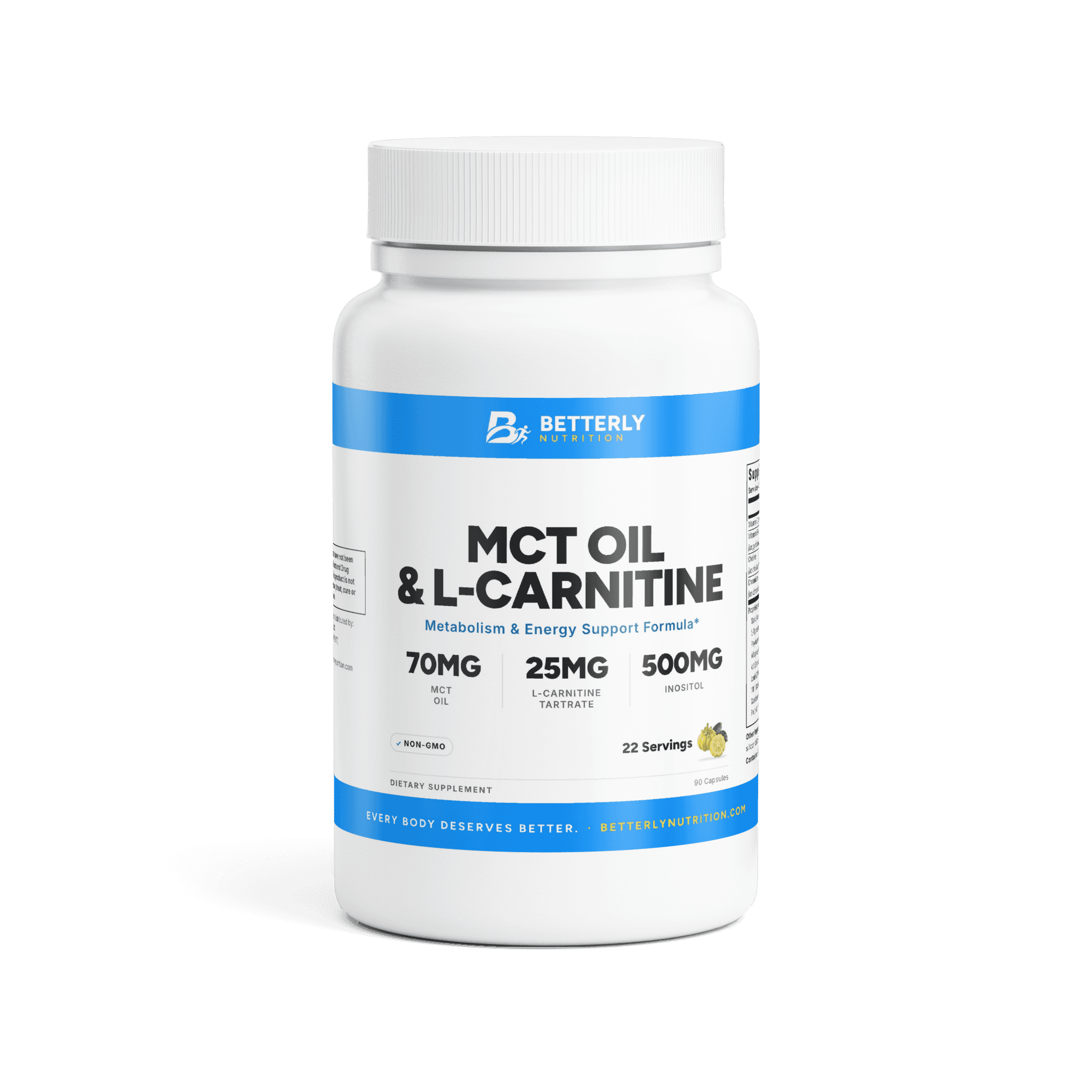
- Our MCT Oil & L-Carnitine Capsules list no caffeine source, but their panel raises its own questions: garcinia, 200 mcg of chromium, two seaweeds, and fish and shellfish.
Betterly makes money on this caffeinated capsule, which puts us in an uncomfortable place: writing the side-effects guide for a formula whose label never says how much caffeine it holds. We sell the MCT alternative too, and the federal cautions for both stay in, flattering or not.
What are the known raspberry ketone side effects?
Raspberry ketone has no well-mapped side effect profile, because the federal government's dietary supplement office says it hasn't been studied enough to tell whether it's safe.
That office, the NIH Office of Dietary Supplements (ODS), reviewed the ingredients most common in this aisle. It reports that every study of raspberry ketone for the purpose it's sold for combined it with other ingredients. So when a mixed formula causes trouble, no one can pin it on the raspberry ketone. No one can clear it, either.
Does raspberry ketone have side effects, then? It may, but they haven't been measured well. The other four ingredients in our capsule have far more on record.
Is it the raspberry ketone or the caffeine you're feeling?
In Betterly's Raspberry Ketone & Green Tea Capsules, caffeine is a well-documented cause of jitters or a racing heart, and the blend lists three ingredients that supply it.
Here's where it comes from on our panel:
- Caffeine anhydrous (98%): caffeine added directly rather than carried in a plant.
- Green tea leaf, listed at 6% caffeine.
- Green coffee bean extract, made from unroasted beans, which ODS notes contain caffeine.
Effects of too much caffeine listed by MedlinePlus, the National Library of Medicine's health site, include restlessness and shakiness, trouble sleeping, headaches, dizziness, a fast heart rate and dehydration. It also says caffeine raises stomach acid, which can leave your stomach upset.
Timing gives you a clue. MedlinePlus says caffeine reaches its peak level in your blood within an hour, so a shaky spell that starts soon after a capsule fits that curve. Timing alone can't prove the cause, though. If a symptom worries you, stop the capsules and call your healthcare provider.
Caffeine isn't the only suspect on our panel:
- Green tea extract: nausea, constipation and abdominal discomfort, among other listed effects, plus an uncommon liver caution covered below.
- Green coffee bean extract: headache, among the effects ODS lists, on top of its caffeine.
- Garcinia cambogia extract: headache, nausea, and stomach, gut or upper-airway symptoms, per ODS. Our garcinia cambogia side effects guide covers it in full.
How much caffeine is in raspberry ketone pills?
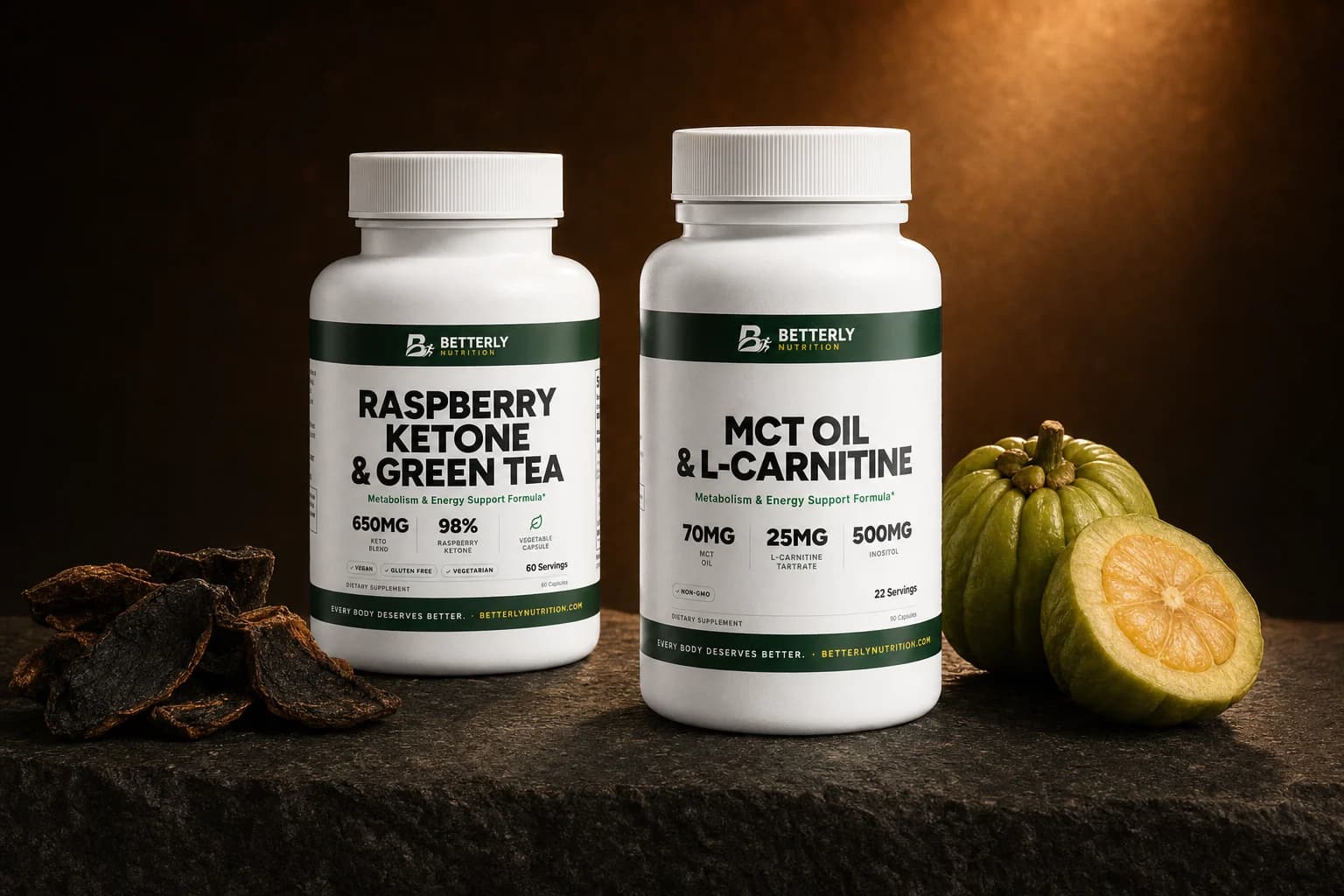
Betterly's Raspberry Ketone & Green Tea Capsules don't state a caffeine amount. The panel prints "CONTAINS CAFFEINE" and keeps all three sources inside one 650 mg blend.
A proprietary blend shows one total weight and lists its ingredients heaviest first, with no individual amounts. Our label also never defines its bare 98% figures or its "50% Extract" notes, though the 98% ones are most likely purity grades. The green tea percentages describe its makeup. None of these numbers is a weight, so we won't turn them into a caffeine estimate.
ODS points out that some caffeinated supplements don't list caffeine at all. Ours names it, but without a number.
What does that mean if you already drink coffee? Count each capsule as an unknown extra on top of your cups, tea, soda or energy drinks. Our pre-workout vs energy drink comparison sets out the daily caffeine figure most adults are given and how fast common drinks add up.
What are the side effects of green tea extract capsules?
Green tea extract supplements, capsules included, can cause nausea, constipation and abdominal discomfort, among other side effects listed by the National Center for Complementary and Integrative Health (NCCIH).
Its page has the full list and also reports uncommon liver injury, mostly with extracts taken as tablets or capsules.
The same page separates the cup from the capsule: no safety concerns have been reported for adults who drink green tea, and the liver reports center on concentrated extracts.
Our label puts its green tea on the extract side of that line. It lists green tea leaf (Camellia sinensis) at 98% polyphenols, 75% catechins, 45% EGCG and 6% caffeine. EGCG (epigallocatechin gallate) is one of tea's catechins. Numbers like these describe a concentrate.
NCCIH adds a detail no label can show you. People with a particular gene variant involved in immune function appear especially susceptible, and NCCIH says 5 to 15 percent of Americans carry it.
Do raspberry ketones interact with any medications?
No federal source we checked lists a specific medication interaction for raspberry ketone, but that reflects missing research, and the caffeine and green tea beside it do carry interaction cautions.
- Caffeine. MedlinePlus says people taking certain medicines or supplements should check for interactions. Its examples include stimulants, certain antibiotics and heart medicines.
- Green tea. NCCIH says green tea at high doses, or as an extract, can lower the blood levels of some prescription drugs, and may interact with others.
- The whole formula. ODS says supplements sold in this category may interact with prescription and over-the-counter medicines, and that many of their ingredients haven't been tested together.
Nobody knows yet whether raspberry ketone is harmless alongside your medicine. So take the bottle itself to your pharmacist, since the five-ingredient line on the back is what they need to read.
Are raspberry ketones safe, or are they dangerous?
Raspberry ketones can't honestly be called safe or dangerous yet, because ODS says there isn't enough research to judge. The more useful question is whether the whole formula suits you.
For our formula, the same ODS sheet flags green tea extract: taking it might not be safe, and in some people it has been linked to liver damage. ODS also warns that some products in this aisle have turned up tainted with prescription drugs or controlled substances missing from the label, and it urges caution with any claim that sounds too good to be true.
Hidden drugs won't show up on a Supplement Facts panel. What a raspberry ketone panel can tell you is which stimulants it carries and how much the maker discloses. Four spots cover it:
- Find the caffeine. Scan for guarana, kola nut, yerba mate, green coffee bean, green tea and caffeine anhydrous. ODS names the first three as natural caffeine sources.
- Look for a milligram figure. Caffeine named without a number is an unknown dose.
- Spot the extract. Green tea with a percentage of polyphenols, catechins or EGCG is the concentrated form NCCIH's liver note concerns.
- Check for a blend. One weight above a list of names tells you the order but no single amount.
Our capsule names its caffeine sources, so it clears the first check. It prints no milligram figure, uses the concentrated green tea form and keeps every amount inside a blend, so it falls short on the other three. Whether raspberry ketone does anything useful is a separate question, covered in our look at whether raspberry ketones work.
What does our raspberry ketone label say about dosing?
Raspberry Ketone & Green Tea Capsules' label says 1 capsule twice a day, 20 to 30 minutes before a meal, with an 8 oz (237 ml) glass of water.
Three points keep it simple:
- Two capsules is the whole day. The caution reads "Do not exceed recommended dose."
- Pick your two earlier meals. The label leaves the choice to you, and the caffeine argues against dinner.
- Don't start another new supplement or add caffeine the same week, and consider trimming your usual coffee on capsule days, since the label gives no caffeine total. Fewer changes also make any new effect easier to trace.
Two a day empties the 60-capsule bottle in 30 days. The label's one alternative is "as directed by your healthcare professional," so any change to that schedule starts with your provider.
From our shop: Raspberry Ketone & Green Tea Capsules — names all three caffeine sources inside its 650 mg blend per 1-capsule serving, for adults comfortable with caffeine they can't measure to the milligram.
Who can skip raspberry ketone capsules altogether?
You can skip raspberry ketone capsules if caffeine already fills your day or you want every amount printed, because our formula gives neither a caffeine total nor ingredient weights.
It's also a pass if an afternoon coffee already costs you sleep, or you take another green tea extract or garcinia product. At best, a formula like ours can support healthy weight management alongside diet and exercise.
Want to skip the caffeine but stay on this shelf? Our MCT and L-carnitine capsules list no caffeine, green tea or coffee, but they bring side-effect questions of their own.
Each 4-capsule serving holds 200 mg of garcinia cambogia extract and 200 mcg of chromium (571% DV). ODS puts the recommended chromium amount for adults at 20 to 45 mcg a day and lists headache and nausea among its effects in larger amounts.
The panel also lists two seaweeds, kelp extract inside the 631 mg blend and 50 mg of bladderwrack, plus uva ursi leaf and grapefruit extract. The ODS iodine fact sheet lists seaweed among iodine-rich foods, and our panel gives no iodine amount.
The MCT capsules use bovine gelatin and list fish and shellfish as allergens, while the raspberry formula uses a cellulose capsule labeled vegan and lists no allergens.
| Panel ingredient | Some listed effects (source) | Raspberry Ketone & Green Tea | MCT Oil & L-Carnitine |
|---|---|---|---|
| Caffeine | Shakiness, fast heart rate (MedlinePlus) | 3 sources, no mg total | None listed |
| Green tea extract | Nausea, constipation, uncommon liver injury (NCCIH) | In the blend | None listed |
| Garcinia cambogia | Headache, nausea (ODS) | In the blend | 200 mg |
| Chromium | Headache, nausea in larger amounts (ODS) | None listed | 200 mcg (571% DV) |
| Kelp, bladderwrack | Rich in iodine (ODS) | None listed | Kelp in blend, 50 mg bladderwrack |
| Raspberry ketone | Not studied enough to judge (ODS) | First in the blend | None listed |
Most of the raspberry formula's listed effects trace to caffeine and green tea extract. The MCT formula swaps those for chromium above ODS's recommended range and seaweeds with no iodine figure. Both contain garcinia, so don't take them together.
From our shop: MCT Oil & L-Carnitine Capsules — 25 mg of L-carnitine and 70 mg of MCT oil per 4-capsule serving, with no caffeine source on the panel and a fish and shellfish allergen line.
The rest of the shelf, amounts per serving included, is in our weight support collection.
Who should check with a healthcare provider first?
Anyone who's pregnant or nursing, under 18, on medication, managing a medical condition or facing surgery should clear raspberry ketone capsules with a healthcare provider first.
Our label's caution reads: "Consult a physician if pregnant, nursing, under 18, or have a medical condition." The details:
- Pregnant or nursing: NCCIH says caffeine during pregnancy shouldn't go past moderate levels, and MedlinePlus notes caffeine passes to a baby through breast milk. With no caffeine number on our label, you can't tell where "moderate" ends.
- Under 18: MedlinePlus lists children and teens among those who should ask a provider about caffeine.
- Taking any medicine: prescription or over-the-counter, bring the bottle.
- Past liver test results worth a follow-up: you can't feel whether you carry the gene variant NCCIH describes, so let your provider weigh the green tea extract with that history in mind.
- A procedure on the calendar: give your surgical team the full list of supplements you use.
FAQ: raspberry ketone side effects
How long do raspberry ketone side effects last?
Caffeine-type effects from a raspberry ketone capsule like ours usually fade within hours, since MedlinePlus says caffeine's effects last four to six hours. Raspberry ketone's own timeline is unknown. If a symptom outlasts the day, keeps coming back or feels severe, stop the capsules and contact your healthcare provider.
Can stopping raspberry ketone pills give you a headache?
Stopping raspberry ketone pills can bring on a headache if the formula had caffeine and you took it daily. MedlinePlus describes caffeine withdrawal as headaches, drowsiness, irritability, nausea and trouble concentrating after regular caffeine stops suddenly, and says these usually clear up after a couple of days. If a headache is severe or doesn't ease, call your healthcare provider.
Is it OK to drink coffee while taking raspberry ketone capsules?
Drinking coffee with raspberry ketone capsules isn't ruled out by our label, but it stacks caffeine on top of an amount the label doesn't give. ODS lists feeling nervous, jittery or shaky, plus disturbed sleep, among caffeine's effects. On capsule days, consider trimming your usual coffee rather than keeping every cup, and don't add extra ones.
Do raspberry ketone pills make you pee more?
Raspberry ketone pills that contain caffeine may send you to the bathroom more often. MedlinePlus calls caffeine a diuretic, meaning it helps your body get rid of extra salt and water through urine. Our label already pairs each capsule with an 8 oz (237 ml) glass of water. Raspberry ketone itself has no documented effect here.
Are raspberry ketone "plus" or "complex" formulas riskier?
A raspberry ketone "plus" or "complex" formula isn't automatically riskier, but every added ingredient brings its own side effect list. ODS notes that many ingredient pairings in this aisle have never been tested together, so their combined effects are unknown. Read each add-in on the panel, and show the label to your pharmacist if you take any medication.
Sources
- NIH Office of Dietary Supplements: Dietary Supplements for Weight Loss, Fact Sheet for Consumers
- NIH Office of Dietary Supplements: Iodine, Fact Sheet for Consumers
- National Center for Complementary and Integrative Health: Green Tea: Usefulness and Safety
- MedlinePlus, National Library of Medicine: Caffeine
If this left you looking for somewhere to start, read raspberry ketone and green tea capsules with caffeine — its amounts per serving are listed on the page. For the practical questions this raises, how dosing, sourcing and subscriptions work is answered in one place.