On this page
- Key takeaways
- Why do people take resveratrol and NMN together?
- What does the research on NMN with resveratrol show?
- Does resveratrol raise SIRT1 in people?
- Which claims about the pair are more hype than evidence?
- When should you take resveratrol and NMN each day?
- How much is that per day at label directions?
- Should you add our NAD+ capsules or choose them instead?
- When don't you need this pair?
- Who should check with a healthcare provider first?
- FAQ: Resveratrol and NMN
- Sources
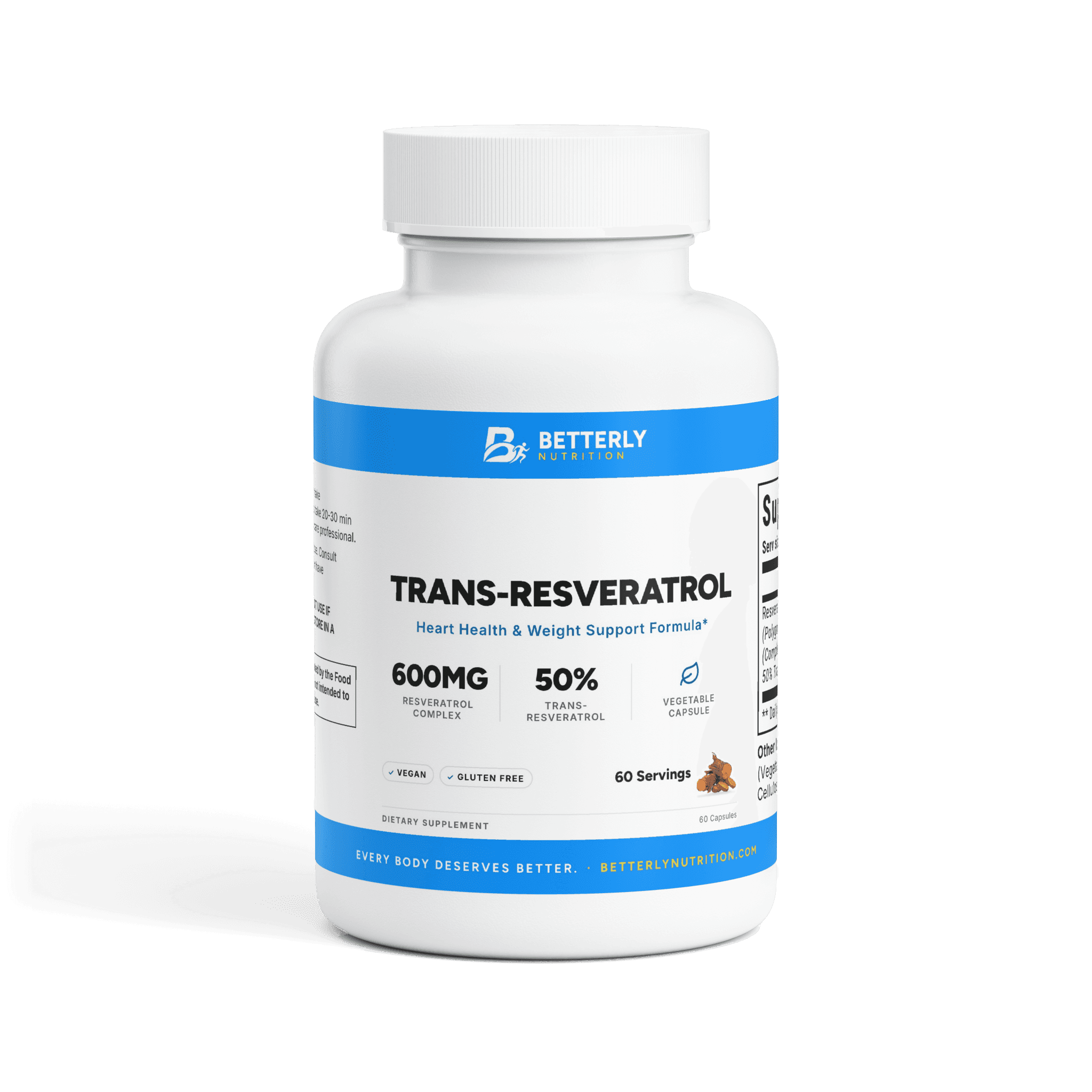
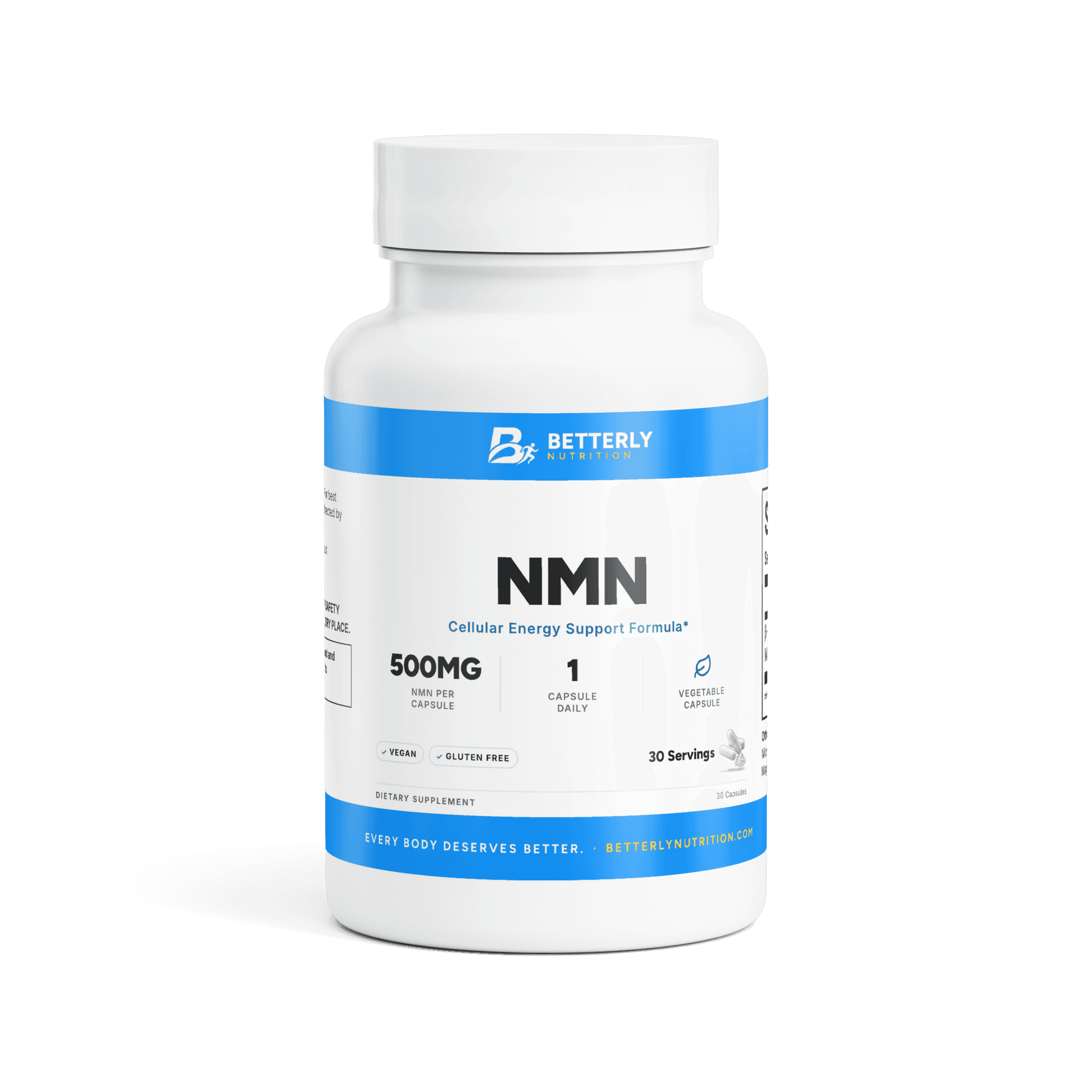
The short answer: Resveratrol and NMN together is a popular pairing with a thin evidence base. The only direct test we found is a 2022 study that gave young mice a single dose of each, and no human trial of the pair turned up. If you still want both, keep each label's schedule: our Trans-Resveratrol Capsules call for one capsule twice a day before meals, and our 500mg NMN Capsules call for one a day.
Key takeaways
- The one direct study of NMN with resveratrol we found tracked NAD+ in mouse tissue for six hours after a single dose.
- A 2025 meta-analysis of 11 human trials found no significant overall change in SIRT1, the enzyme the pairing's pitch depends on.
- Following our Trans-Resveratrol and NMN labels means three capsules a day: 1,200 mg of resveratrol complex (about 600 mg of trans-resveratrol by our math) and 500 mg of NMN.
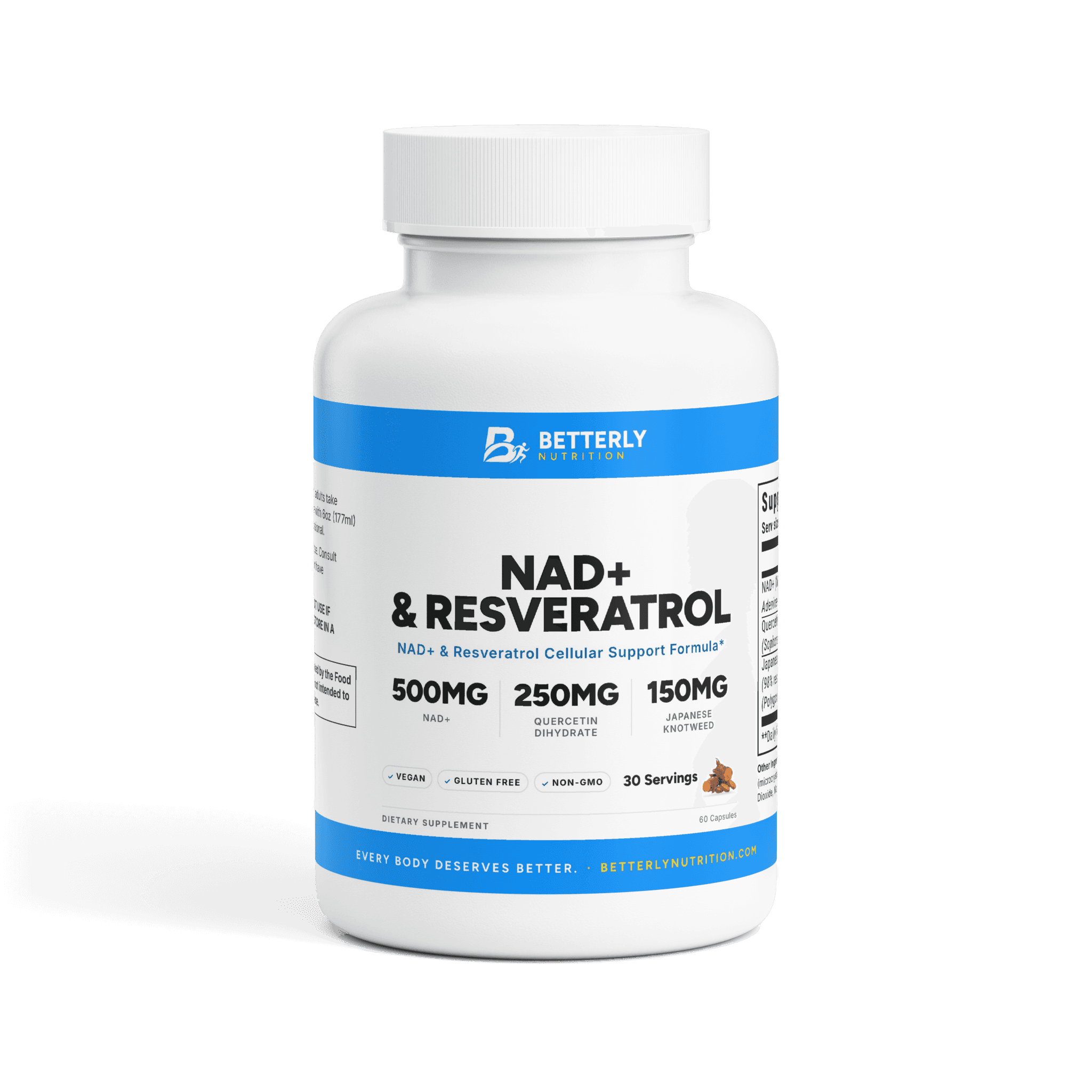
- Our 500mg NAD+ & Resveratrol Capsules already contain resveratrol, so they're an alternative to the pair, not an add-on.
We sell all three of those bottles, so weigh our view with that in mind. Every product number below is copied from a label, and every research claim names its source.
Why do people take resveratrol and NMN together?
People pair resveratrol and NMN because NMN is a building block for NAD+, and resveratrol is studied alongside sirtuins, a family of enzymes that can't work without NAD+.
NMN is short for β-nicotinamide mononucleotide. Your cells turn it into NAD+ (nicotinamide adenine dinucleotide), a coenzyme they use to convert food into energy.
Resveratrol is a polyphenol that plants make. LiverTox, the NIH's liver-safety database for medicines and supplements, says it's most concentrated in red grape skins. Many supplements, ours included, extract it from Japanese knotweed root (Polygonum cuspidatum).
Sirtuins are where the two stories meet. The 2025 meta-analysis below describes SIRT1, the sirtuin most tied to resveratrol, as NAD+-dependent. So the sales pitch is simple: NMN stocks up NAD+, and resveratrol is supposed to get the sirtuins using it.
Much of the buzz comes from podcasts and social posts about personal routines. A routine isn't evidence, even when a scientist shares it.
What does the research on NMN with resveratrol show?
The only direct test of NMN with resveratrol we could find is a 2022 mouse study, which tracked NAD+ in tissues for six hours after one dose.
The study, published in Pharmacology Research & Perspectives, used male mice 6 to 8 weeks old. One group got NMN alone. Another got resveratrol first, then NMN. Researchers checked tissues at 1, 2, 4 and 6 hours, with three mice per group at each time point.
Compared with NMN alone, adding resveratrol left NAD+ about 1.6 times higher in heart tissue and about 1.7 times higher in muscle. That's the kind of result behind "synergy" claims.
What it can't tell you:
- Whether the same thing happens in people.
- Whether it holds up over weeks, since each mouse got one dose.
- Whether higher tissue NAD+ in a young mouse changes anything you'd notice.
A 2023 review of human NMN trials in Advances in Nutrition calls combining NMN with other ingredients a recent trend, and for resveratrol it points to that same mouse work. We couldn't find a published human trial of the combination.
Does resveratrol raise SIRT1 in people?
Resveratrol hasn't reliably raised SIRT1 in people: a 2025 meta-analysis of 11 randomized trials found no significant overall effect on its gene expression, protein or blood levels.
That analysis, in the Journal of the Academy of Nutrition and Dietetics, pooled four trials on gene expression, five on protein and three on blood levels.
It isn't a flat zero. In a subgroup of trials shorter than 12 weeks that tested blood, SIRT1 gene expression did rise, and the authors say the dosing schedule seemed to matter.
LiverTox adds two cautions. It calls resveratrol's oral bioavailability poor, and it says the purity of commercial products is rarely well defined. Its summary is blunt: "At present, there is no conclusive evidence that resveratrol has beneficial effects in humans."
So the pitch needs two steps. The 2023 review reports that NAD+ precursors such as NMN can raise NAD+ in human blood, which supports step one. Step two, resveratrol reliably acting on SIRT1, is the weak link.
Which claims about the pair are more hype than evidence?
The shakiest resveratrol and NMN claims are proven teamwork in people, a required fatty food, a must-have TMG add-on and the idea that extra capsules add extra benefit.
| Claim you'll see | What we could verify | Where that leaves you |
|---|---|---|
| "They work better together." | One single-dose study in young mice | Open question in people |
| "Resveratrol turns on your sirtuins." | No significant pooled SIRT1 change in 11 trials | Unproven in people |
| "Take resveratrol with yogurt or oil." | Our label says 20-30 minutes before a meal | Follow your label |
| "NMN needs TMG alongside it." | Neither of our labels mentions TMG | Ask a pharmacist first |
| "More capsules, more NAD+." | Both labels say not to exceed the dose | The label is your ceiling |
The confident claims come from mouse work, theory or personal routines, and the human data is either small or, for sirtuins, flat.
On fat: some routines pair resveratrol with a fatty food, but our label puts each capsule before a meal, and the bottle in your hand outranks a podcast. The TMG idea (trimethylglycine, also sold as betaine) rests on an online theory that NMN use draws on the body's methyl groups. We didn't find a federal source that tests it.
When should you take resveratrol and NMN each day?
Resveratrol and NMN fit into one routine if you keep each label's schedule: one Trans-Resveratrol capsule before two meals, and one NMN capsule with water once a day.
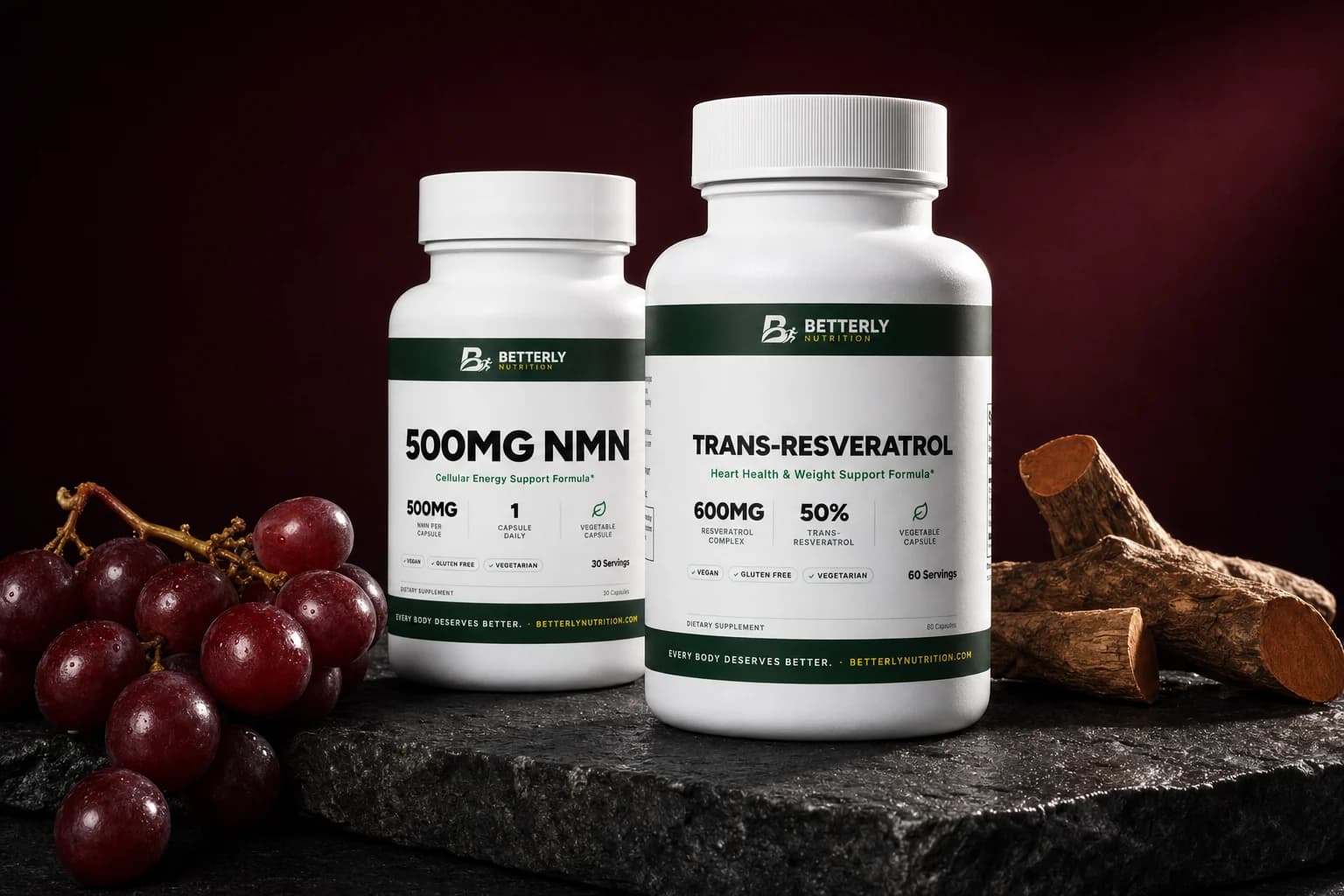
The Trans-Resveratrol label says one capsule twice a day, 20 to 30 minutes before a meal, or as your healthcare professional directs. The NMN label says adults take one capsule daily with 6-8 oz (177-237 ml) of water, and it names no time of day.
| When | Trans-Resveratrol Capsules | 500mg NMN Capsules |
|---|---|---|
| 20-30 min before breakfast | 1 capsule | 1 capsule with 6-8 oz of water |
| 20-30 min before your evening meal | 1 capsule | None |
| Daily total | 2 capsules | 1 capsule |
Taking NMN with your first resveratrol capsule means one moment to remember, not two. Its label doesn't set a clock, so lunch or later works too.
Neither bottle refers to the other or asks you to space them out, so run the plan past a pharmacist if you take medication.
Missed the window before a meal? Don't double up before the next one, because the label calls for one capsule at a time. We cover single-ingredient timing in a separate guide on when to take resveratrol.
How much is that per day at label directions?
At label directions, our Trans-Resveratrol and NMN capsules add up to 1,200 mg of resveratrol complex, about 600 mg of it trans-resveratrol, plus 500 mg of NMN daily.
The Trans-Resveratrol label lists 600 mg per 1-capsule serving of a Polygonum cuspidatum root complex containing 50% trans-resveratrol, or 300 mg of trans-resveratrol per capsule by our math. It's labeled vegan and gluten-free. The NMN label lists 500 mg of β-nicotinamide mononucleotide per 1-capsule serving. Neither panel shows a Daily Value, because none has been established.
LiverTox says human trials have used 20 mg to 5 grams of resveratrol a day, and trials at 1.5 to 3 grams daily saw slight liver enzyme rises that settled after stopping.
Label use, about 600 mg of trans-resveratrol a day, sits below the doses in those liver-enzyme trials. Still, the label, not the trial range, is your limit. Both cautions open with "Do not exceed recommended dose." For NMN, the 2023 review in Advances in Nutrition says there's no established upper limit, and we cover what short trials recorded in our look at NMN side effects.
You'll also see "ideal ratios" of NMN to resveratrol online. We found no source that sets one.
The resveratrol bottle holds 60 capsules and the NMN bottle 30, so at label use both last 30 days.
From our shop: Trans-Resveratrol Capsules — 600 mg of a Japanese knotweed root complex labeled 50% trans-resveratrol per 1-capsule serving, 60 vegetable capsules to a bottle.
Should you add our NAD+ capsules or choose them instead?
Don't stack our 500mg NAD+ & Resveratrol Capsules on top of the pair: that formula already contains resveratrol, and it's a second route to NAD+ alongside NMN.
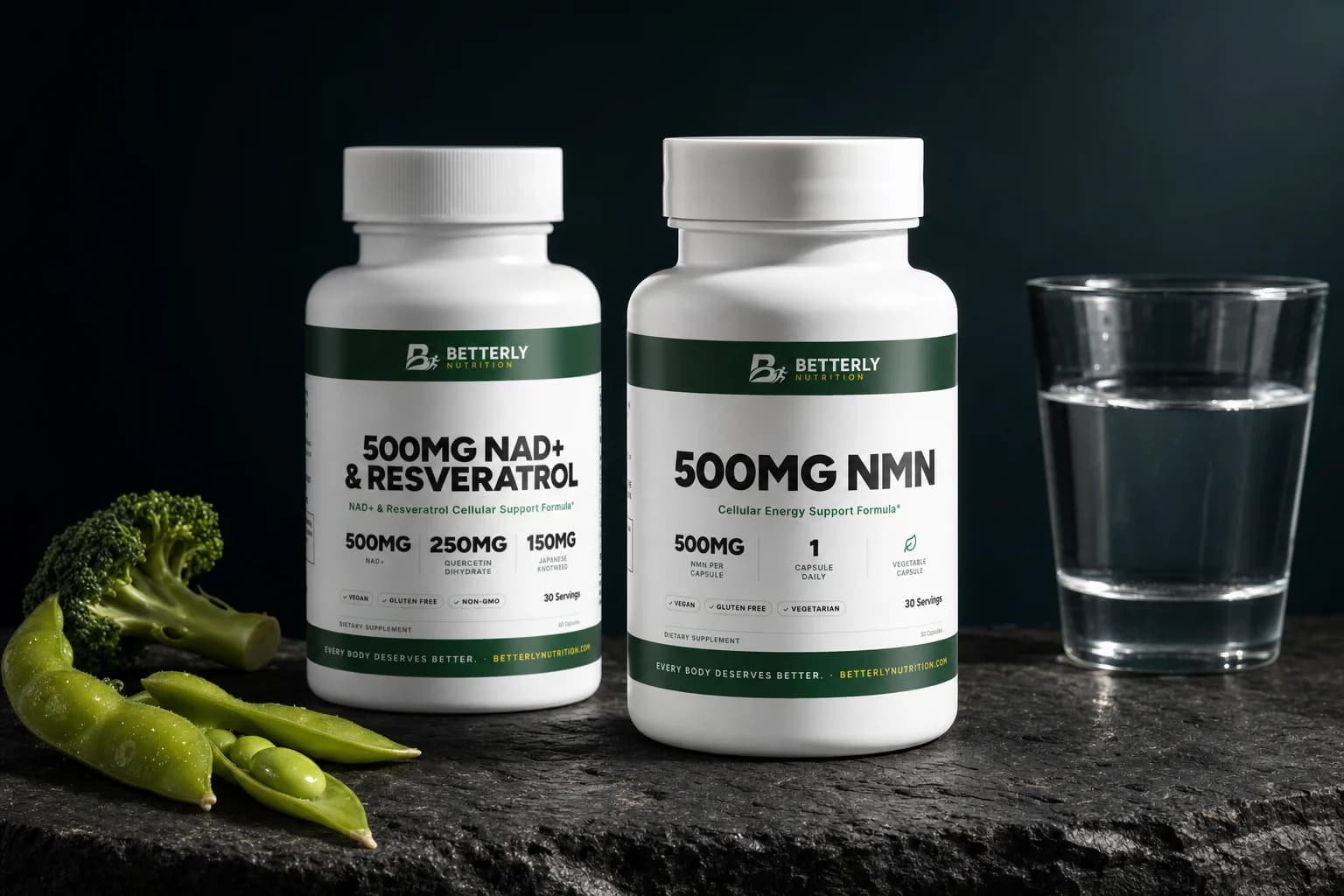
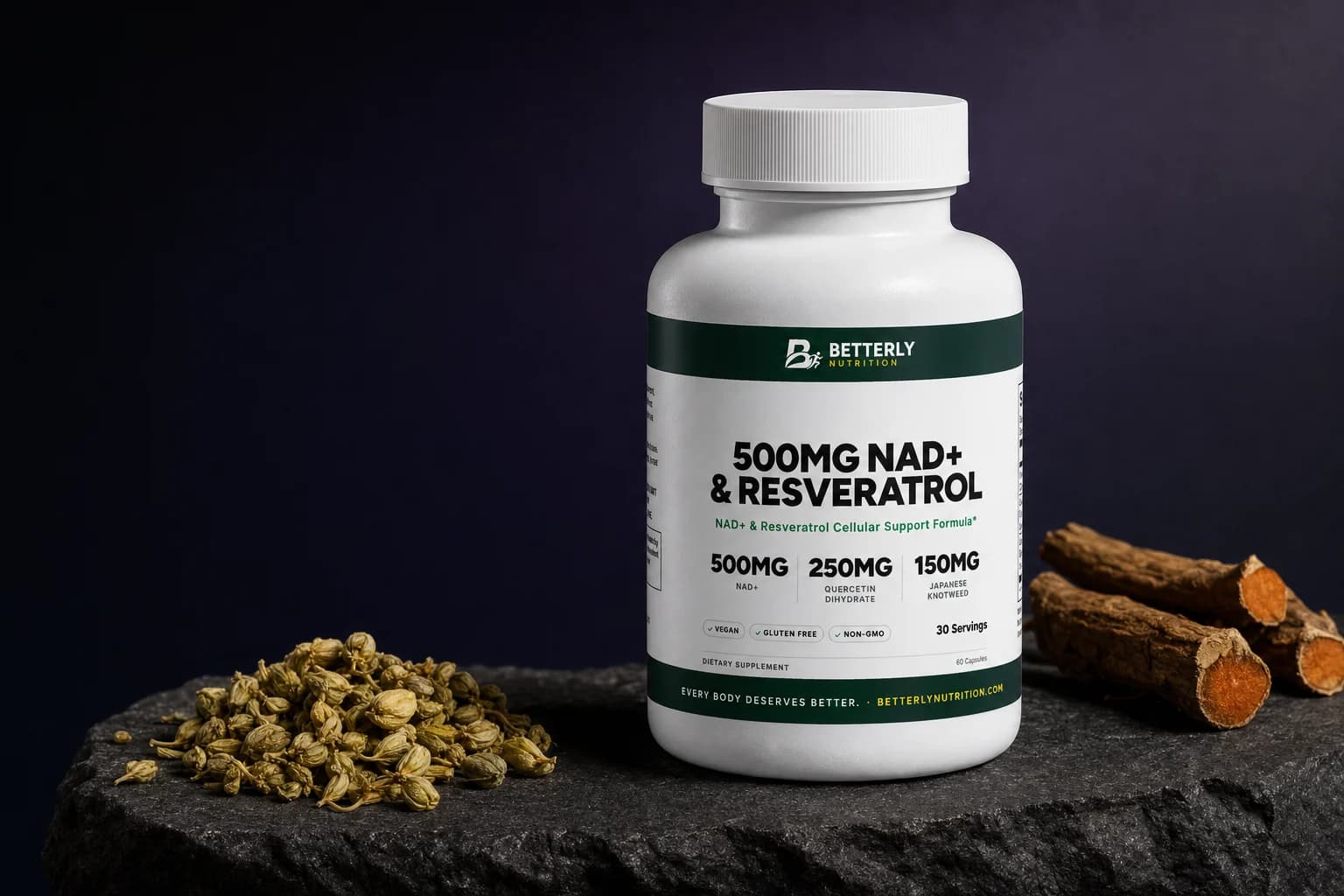
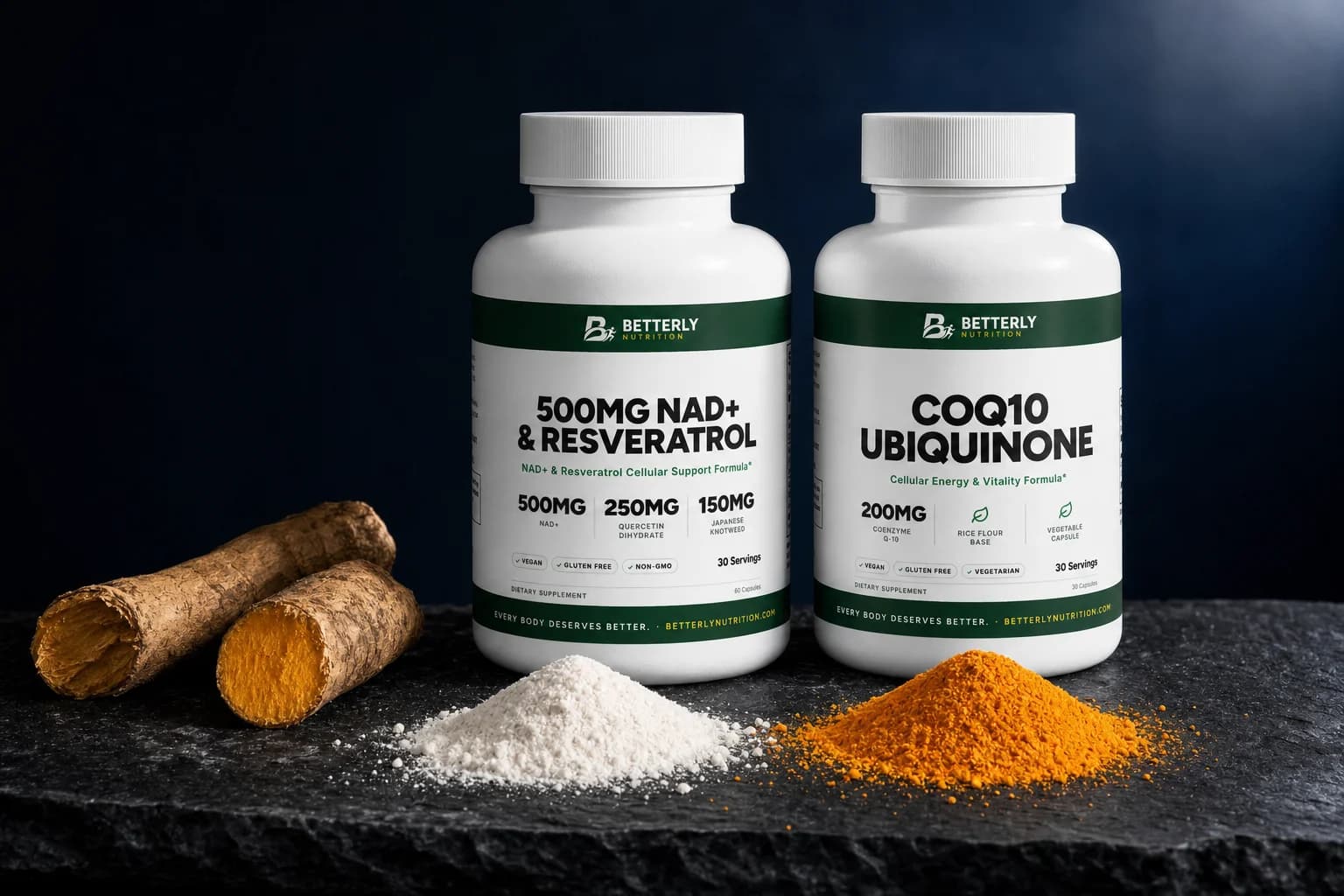
Per 2-capsule serving, its label lists 500 mg of NAD+, 250 mg of quercetin dihydrate extract and 150 mg of Japanese knotweed extract labeled 98% resveratrol. By our math, that's about 147 mg of resveratrol a day.
Add the two Trans-Resveratrol capsules a day, about 600 mg of trans-resveratrol by our math (1,200 mg of the 50% complex), and you'd be taking resveratrol from two bottles whose labels don't account for each other. Put NMN on top and you're at five capsules with two routes to NAD+. We weigh those routes in our NMN vs NAD+ comparison.
| Option | Capsules a day | Per day, at label directions | Fits if you want |
|---|---|---|---|
| NMN + Trans-Resveratrol | 3 | 500 mg NMN, 1,200 mg resveratrol complex (about 600 mg trans) | Each on its own schedule |
| NAD+ & Resveratrol alone | 2 | 500 mg NAD+, 250 mg quercetin extract, about 147 mg resveratrol | One bottle, one step |
| NMN alone | 1 | 500 mg NMN | The simplest start |
| All three bottles | 5 | Two resveratrol sources, two NAD+ routes | Not a mix either label covers |
The pair makes sense only if you want more resveratrol on a before-meal schedule. We look at that three-ingredient formula more closely in a separate guide to taking NAD+, quercetin and resveratrol together.
Checking a two-in-one capsule
Some brands sell both in one capsule. Check its facts panel for:
- Which form of resveratrol it lists. "Trans-resveratrol 250 mg" and "resveratrol complex 500 mg (50% trans)" deliver the same trans-resveratrol.
- How many capsules make a serving, and how many servings a day. Multiply them to get your real daily amounts.
- Whether there's a proprietary blend. If the two actives share one blend total, you can't know how much of each you're getting.
The best NMN + resveratrol supplement is the one whose label shows every number. Each product in our NAD+ & Longevity collection lists its amounts per serving.
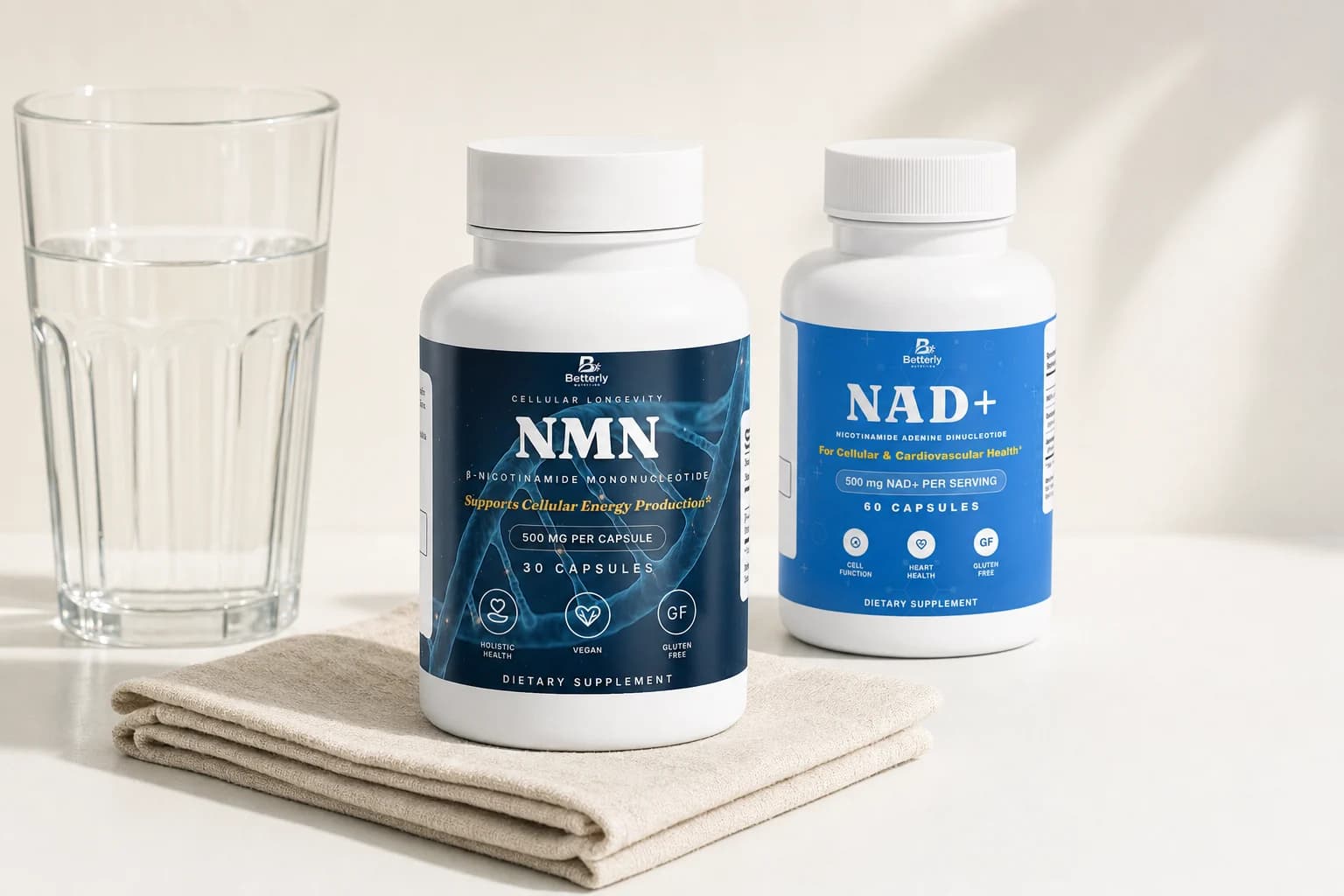
From our shop: 500mg NMN Capsules — 500 mg of β-nicotinamide mononucleotide in each 1-capsule serving, with an adult suggested use of one capsule a day with water.
When don't you need this pair?
You don't need resveratrol and NMN if you want an effect you can feel, if you already take our NAD+ formula, or if two more bottles would squeeze your budget.
- If you want to feel a change. The findings here come from mouse tissue and blood samples, and neither label promises you'll notice anything.
- If the NAD+ formula is already in your cabinet. It has NAD+ and resveratrol, so adding the pair repeats both.
- If your routine is already long. Every added capsule makes it harder to tell what's doing what. Our guide to building a supplement routine you'll keep helps you trim first.
- If money matters more elsewhere. Two bottles a month is a real cost for an unproven pairing.
Who should check with a healthcare provider first?
Check with a healthcare provider before starting either resveratrol or NMN if you're pregnant, nursing, under 18, managing a medical condition, taking any medication or facing surgery.
Both of our labels carry the same caution: "Consult a physician if pregnant, nursing, under 18, or have a medical condition." One conversation can cover both bottles.
Medication matters here. LiverTox mentions possible interactions between resveratrol and some prescription medicines, and the NMN trials in the 2023 review were small. Show your pharmacist both Supplement Facts panels before you start, and tell your care team about every supplement you take if surgery is coming up.
If you feel unwell after starting either capsule, stop and contact a healthcare provider.
FAQ: Resveratrol and NMN
What are the benefits of resveratrol and NMN together?
No benefit of taking resveratrol and NMN together has been shown in people, because we found no human trial of the pair. The one direct study gave young mice a single dose and measured more NAD+ in heart and muscle tissue than NMN alone produced. In people, the 2023 review reports that NMN can raise NAD+ in blood, while the 2025 meta-analysis found resveratrol didn't reliably raise SIRT1. That's where the evidence stops today.
Can I take NMN and resveratrol on an empty stomach?
Yes, our Trans-Resveratrol label asks for each capsule 20 to 30 minutes before a meal, and our NMN label only asks for water. Taking both before breakfast, with 6-8 oz (177-237 ml) of water, fits both labels. If your stomach objects, stop and ask a healthcare provider.
Can I take NMN at night?
NMN can go at night as far as our label is concerned, because the 500mg NMN Capsules label sets no time of day. Resveratrol is different: its label ties each capsule to a meal. So your second resveratrol capsule belongs 20 to 30 minutes before your evening meal, not at bedtime on its own.
Do I need TMG with NMN?
You don't need TMG to follow either of our labels, since neither the NMN nor the Trans-Resveratrol directions mention it. TMG, short for trimethylglycine, shows up in online stacks because of a theory that NMN use draws on the body's methyl groups, and we didn't find a federal source that tests it. If you're considering it anyway, ask a pharmacist first.
What are the side effects of taking resveratrol and NMN together?
Side effects of resveratrol and NMN taken together haven't been studied, because we found no human trial of the pair. Separately, LiverTox lists minor stomach upset, nausea, headache and fatigue for resveratrol, and the 2023 NMN review says existing short human trials suggest oral NMN is generally safe. Stay within both labels, and call a healthcare provider if you feel unwell.
Sources
- Resveratrol (LiverTox, National Library of Medicine, NIH)
- Impact of Resveratrol Supplementation on Human Sirtuin 1 (Journal of the Academy of Nutrition and Dietetics, 2025, PubMed)
- Improvement of tissue-specific distribution and biotransformation potential of nicotinamide mononucleotide in combination with ginsenosides or resveratrol (Pharmacology Research & Perspectives, 2022, PMC)
- The Safety and Antiaging Effects of Nicotinamide Mononucleotide in Human Clinical Trials: an Update (Advances in Nutrition, 2023, PMC)
If this left you looking for somewhere to start, read trans-resveratrol capsules from Japanese knotweed root — its amounts per serving are listed on the page. For the practical questions this raises, how dosing, sourcing and subscriptions work is answered in one place.