On this page
- Key takeaways
- What's the difference between trans-resveratrol and resveratrol?
- Is trans-resveratrol better than cis or plain resveratrol?
- What does "600mg complex containing 50% trans-resveratrol" mean?
- Is Japanese knotweed the same as resveratrol?
- How do our two resveratrol labels compare side by side?
- What does the Trans-Resveratrol label say about taking it?
- What should you check on any resveratrol label before buying?
- Who can pass on a resveratrol supplement?
- Who should check with a healthcare provider first?
- FAQ: Trans-resveratrol and resveratrol labels
- Sources
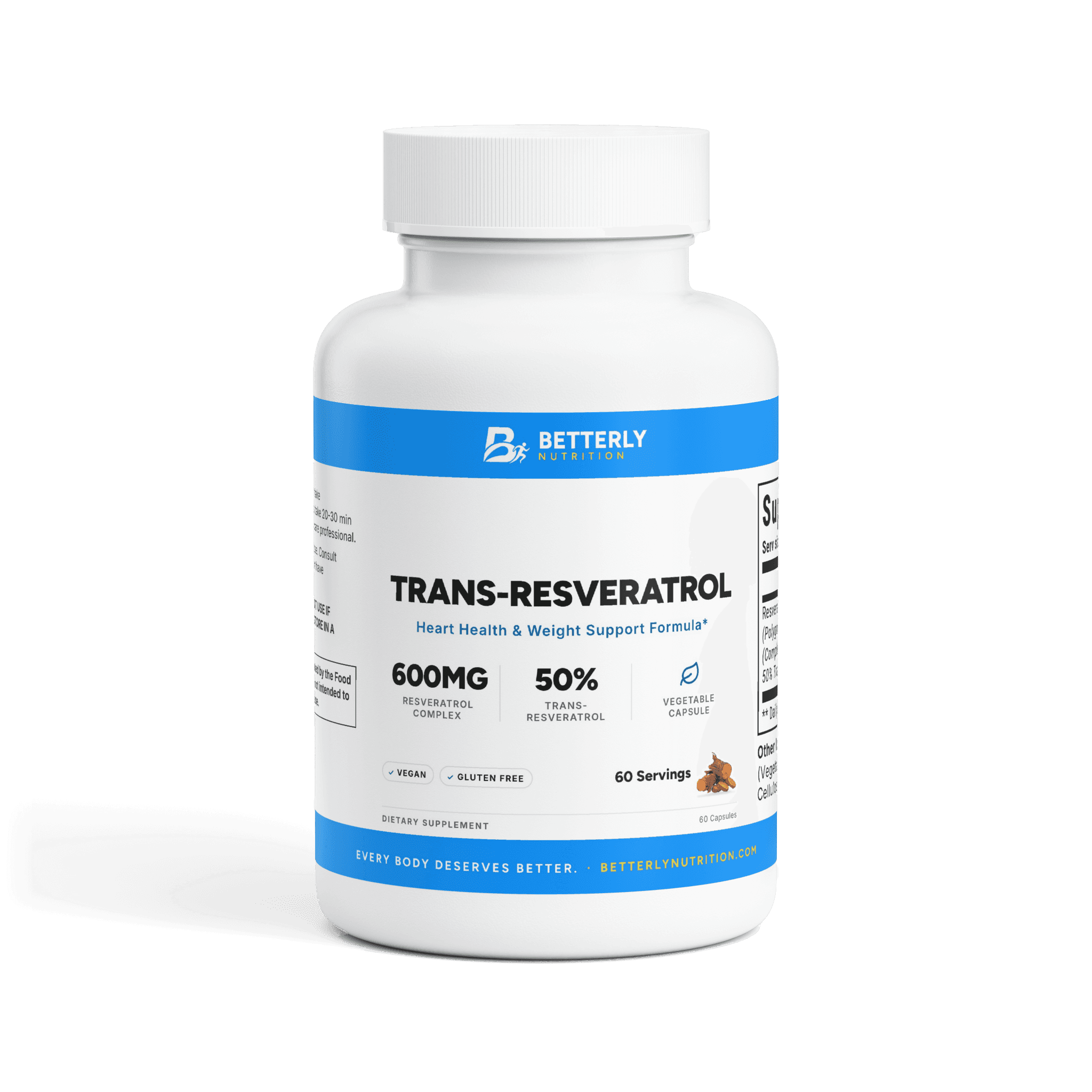
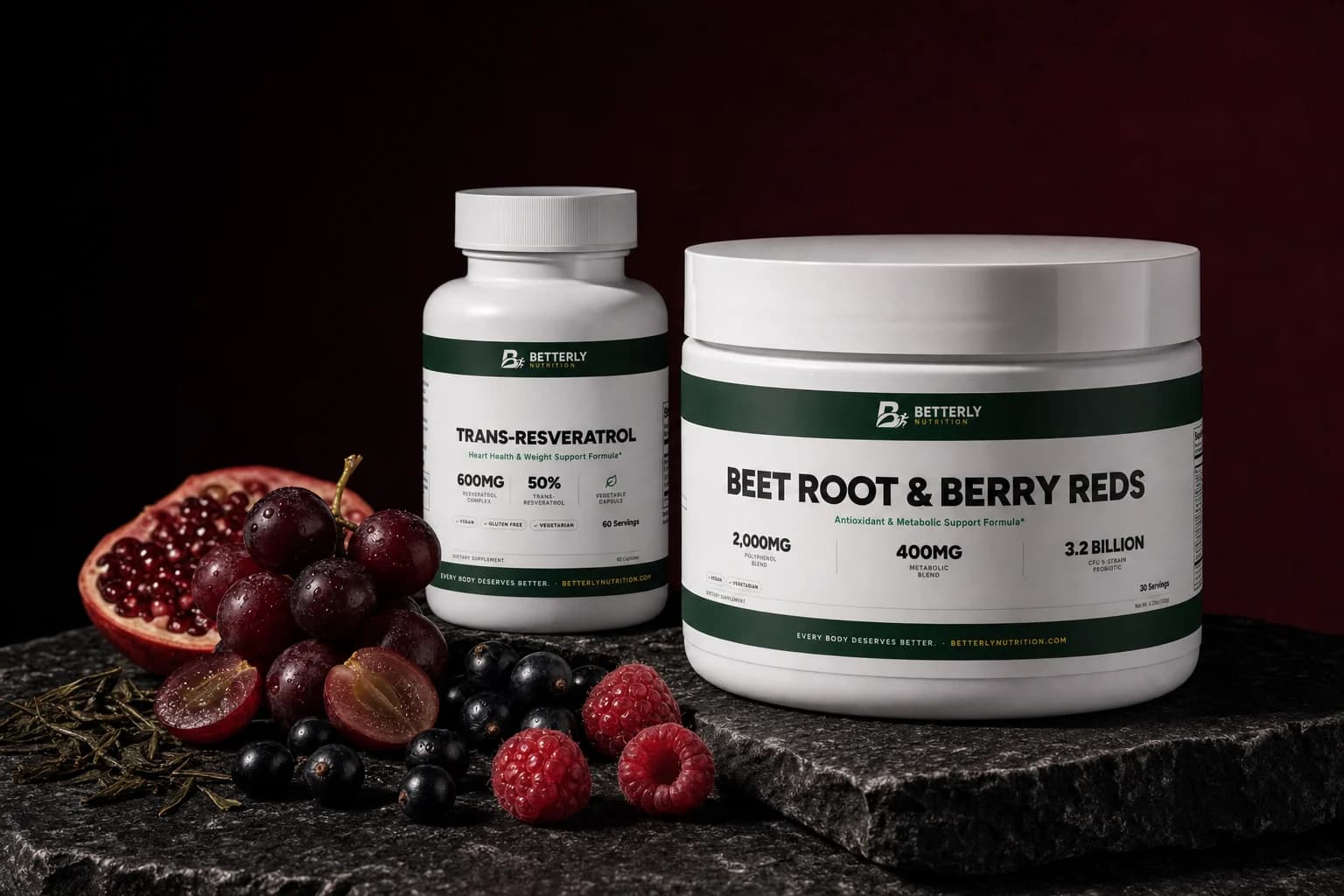
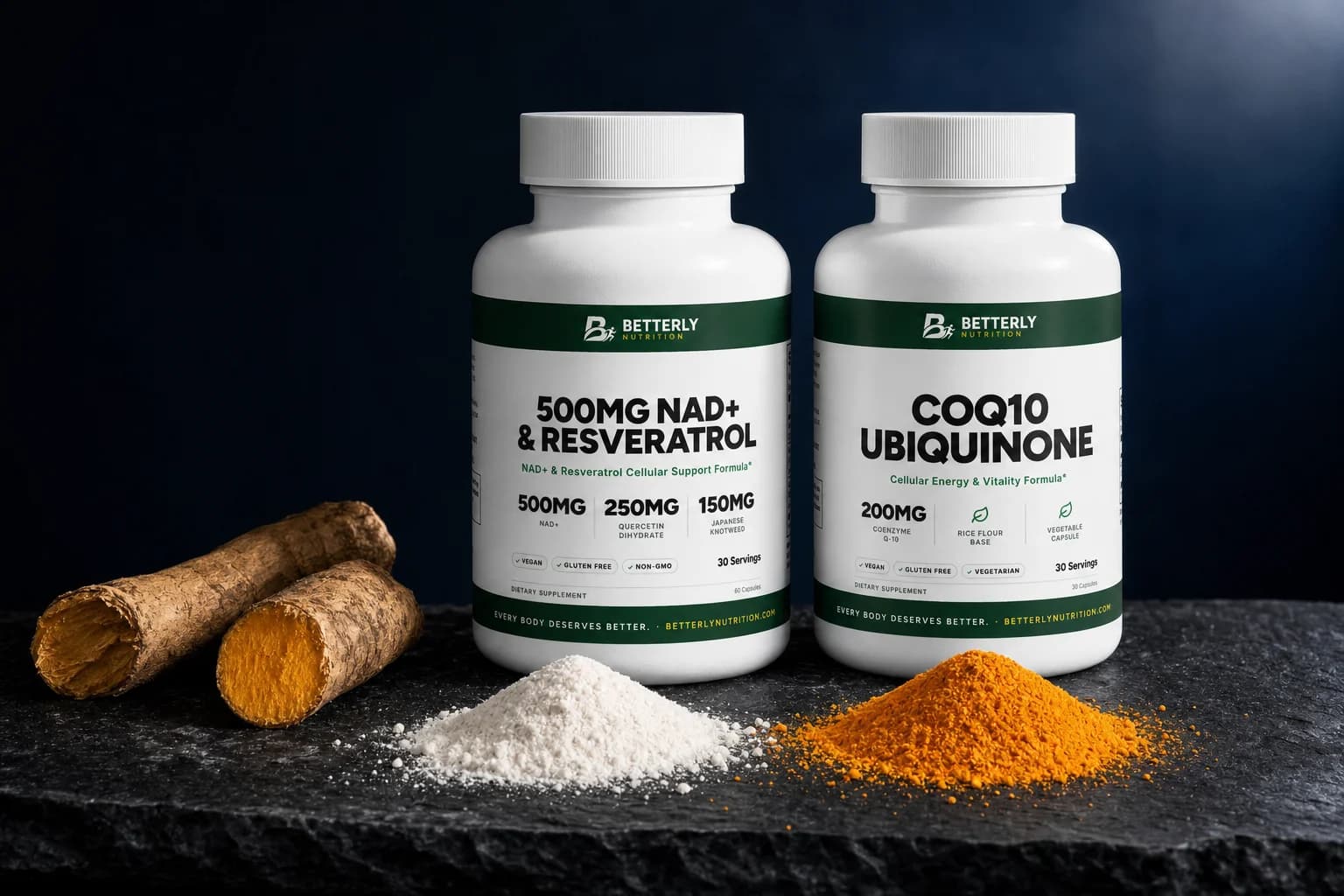
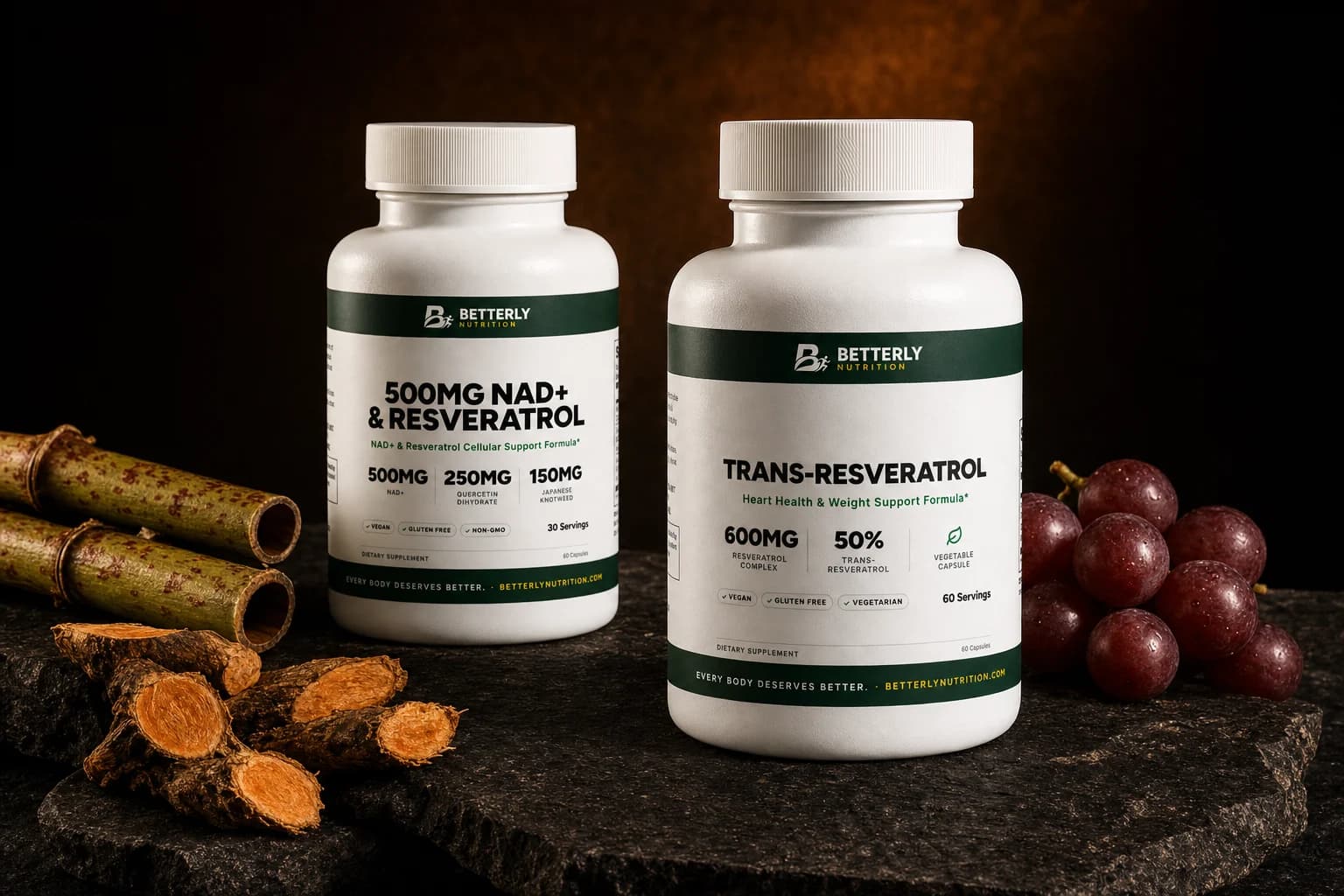
The short answer: Trans-resveratrol vs resveratrol is a naming difference with a label trap inside it. "Resveratrol" is the compound's general name, and it comes in two shapes, trans and cis. "Trans-resveratrol" names one of them. Our Trans-Resveratrol Capsules list 600mg of a knotweed root complex containing 50% trans-resveratrol per 1-capsule serving. That's 300 mg of trans-resveratrol by simple arithmetic, a figure the panel itself doesn't print.
Key takeaways
- Resveratrol exists in a trans shape and a cis shape, and a row that just says "resveratrol" doesn't tell you which one you're buying.
- A supplement row's milligrams weigh the ingredient as the row describes it, so a 600mg resveratrol complex is 600 mg of complex, not trans-resveratrol.
- At two capsules a day, our Trans-Resveratrol Capsules work out to about 600 mg of trans-resveratrol daily, by arithmetic.
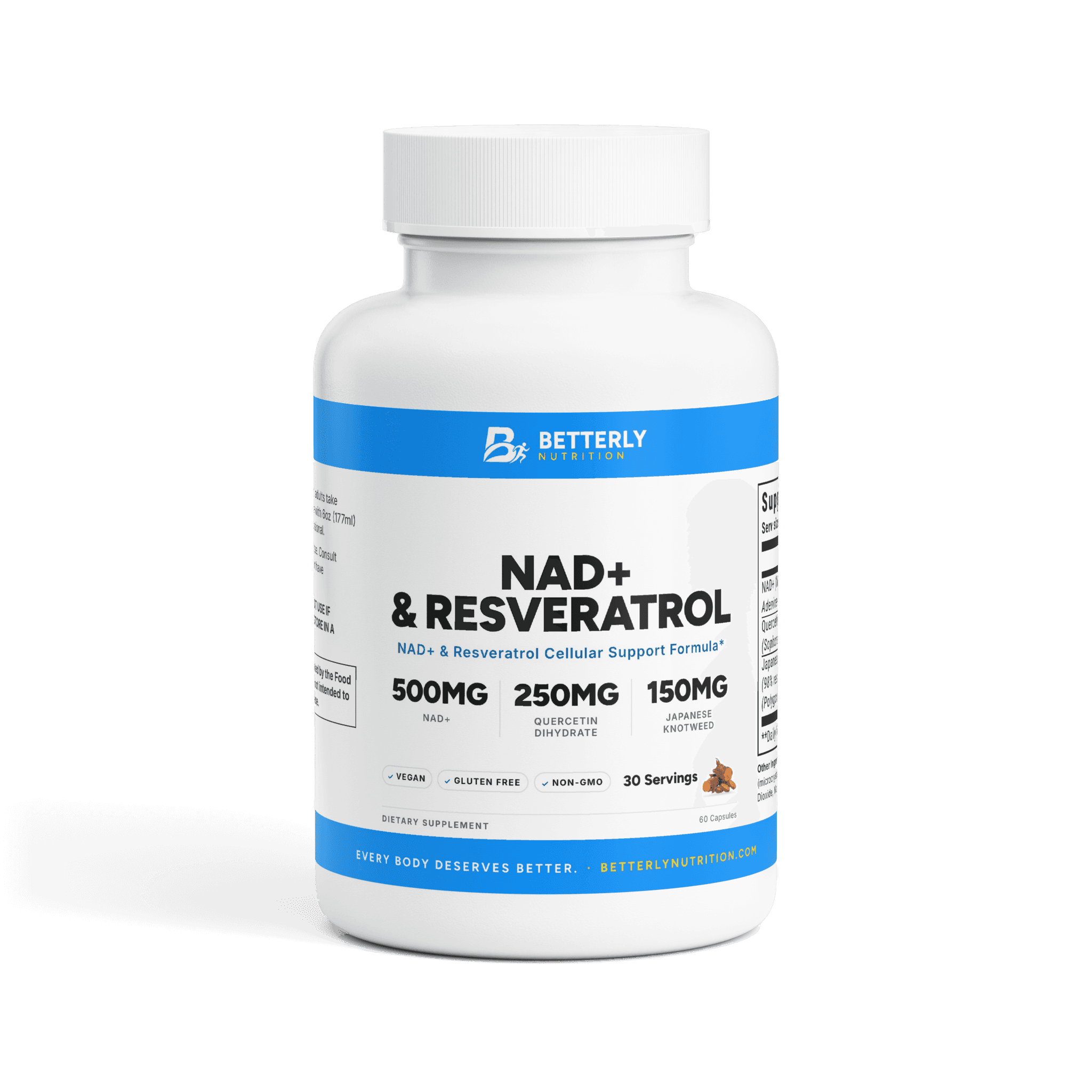
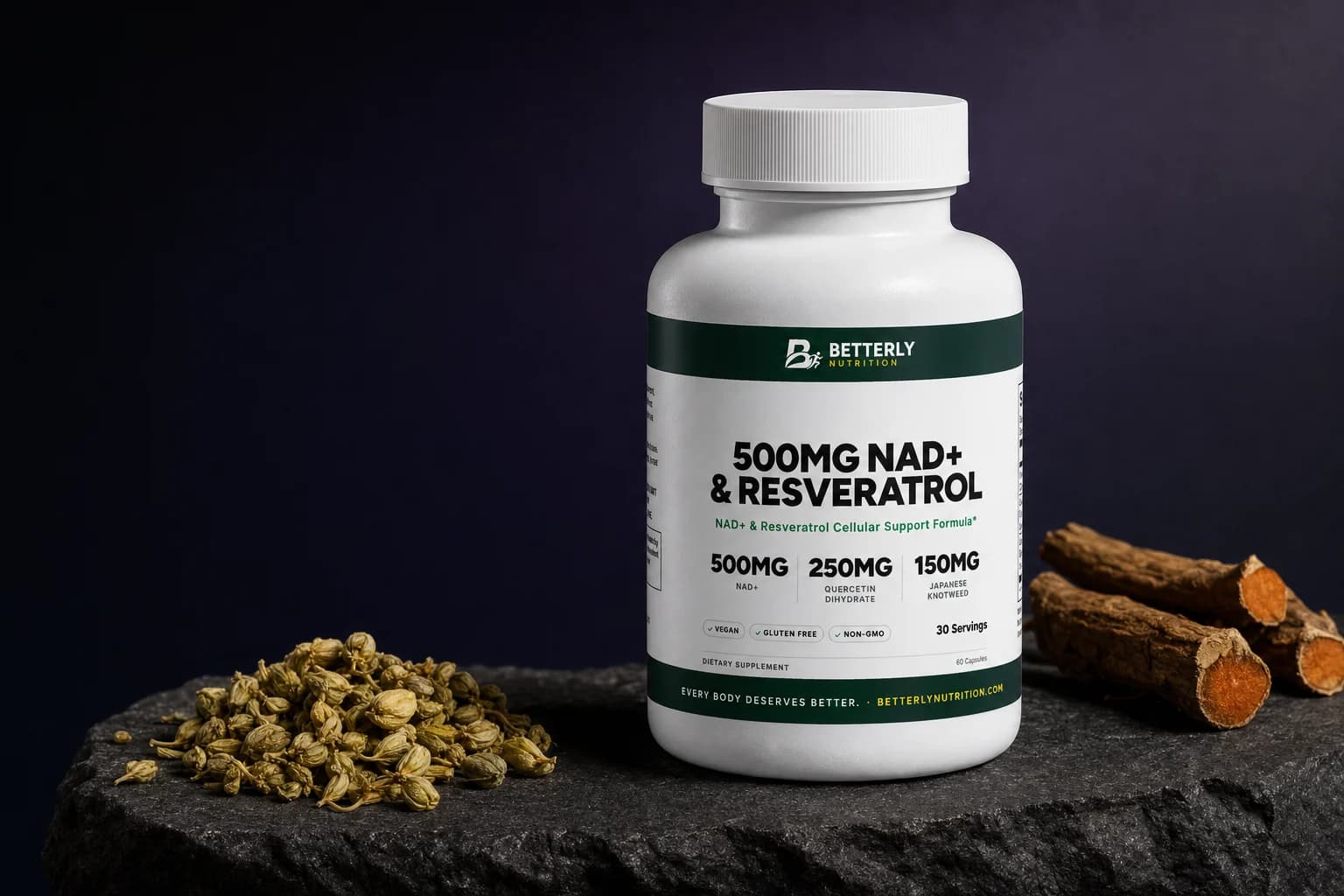
- Our 500mg NAD+ & Resveratrol Capsules list 150mg of Japanese knotweed extract at 98% resveratrol per 2-capsule serving, with no form named.
Both resveratrol products compared here are ours, and that's a conflict of interest you should know about up front. Every label figure is copied from their Supplement Facts panels, and the six checks further down work on any brand's bottle, ours included.
What's the difference between trans-resveratrol and resveratrol?
Resveratrol is a plant compound that exists in two shapes, and trans-resveratrol is one of them, so all trans-resveratrol is resveratrol but not the reverse.
Chemists call the two shapes isomers: the same atoms, arranged differently. Resveratrol has two ring-shaped groups joined by a short bridge with a double bond in it. A double bond can't spin, so the rings lock in place. In trans-resveratrol they sit on opposite sides of the bridge. In cis-resveratrol they sit on the same side.
LiverTox, an NIH database that covers supplements as well as medicines, notes that resveratrol occurs in both a trans and a cis configuration. It's a stilbene, one branch of the plant-compound family we map in our guide to polyphenol supplements.
A bare "resveratrol" row leaves the shape, or the mix of shapes, unstated. LactMed, the NIH's drugs-and-breastfeeding database, builds the form right into the chemical name it gives: 3,4',5-trans-trihydroxystilbene.
Is trans-resveratrol better than cis or plain resveratrol?
Trans-resveratrol is the form labels name when they name one, but we found no federal source showing it does more in people than cis-resveratrol or an unnamed mix.
You'll read online that trans is "the active form" or that it absorbs better. We found no government source for either claim, so we don't make them.
LiverTox describes resveratrol's oral bioavailability as poor, meaning little of a swallowed dose shows up in the blood as free resveratrol. Most of what circulates carries an attached sulfate or glucuronide group, and it isn't known which component accounts for resveratrol's activity.
What "trans" on a panel does give you is a defined target: you know which molecule the percentage counts. That's worth having, because LiverTox points out that commercial resveratrol products seldom spell out their purity clearly.
What does "600mg complex containing 50% trans-resveratrol" mean?
On our Trans-Resveratrol Capsules, that phrase means each capsule holds 600mg of knotweed root complex, and half of that weight is trans-resveratrol.
Word for word, the only row on the panel says "Resveratrol (Polygonum cuspidatum) (root) (Complex Containing 50% Trans-Resveratrol)," with 600mg beside it. The bottle's front prints 600MG over "Resveratrol Complex."
That reading rests on the label's own word, "complex." It also fits the FDA's supplement labeling rule, 21 CFR 101.36, which counts a dried extract's printed weight as the whole extract's weight.
So 600mg is the complex, and the trans-resveratrol is a share of it:
- 600 mg x 50% = 300 mg of trans-resveratrol per capsule
- 2 capsules a day at label use x 300 mg = 600 mg of trans-resveratrol a day
- 2 capsules x 600 mg = 1,200 mg of complex a day
Those figures are our arithmetic, not label claims. The same regulation lets a brand list a component indented under an ingredient with its own weight, but our panel prints a percentage instead.
That's also the answer to "resveratrol vs resveratrol complex." On our panel, "complex" tells you the 600mg isn't all trans-resveratrol. Half of it is, and the panel doesn't say what the other 300 mg in each capsule is.
The same "600mg" can describe very different amounts:
| How the row reads | What the 600mg weighs | Resveratrol, by arithmetic |
|---|---|---|
| Resveratrol complex 600mg (50% trans-resveratrol) | The whole complex | 300 mg, trans |
| Trans-resveratrol 600mg | The trans form itself | 600 mg, trans |
| Knotweed extract 600mg (98% resveratrol) | The whole extract | About 588 mg, form not stated |
| Knotweed root 600mg, no percentage | Root or unstandardized extract | Can't be worked out |
| Blend 600mg that includes resveratrol | Several ingredients together | Can't be worked out |
One "resveratrol 600mg" bottle can hold twice the trans-resveratrol of another, and a third can hold an amount you can't calculate. The row's wording, not the front-label number, tells you which you've got.
Is Japanese knotweed the same as resveratrol?
No. Japanese knotweed is a plant, Polygonum cuspidatum, and resveratrol is one compound drawn from its root, so the plant's name alone doesn't reveal a resveratrol amount.
Japanese knotweed is a fast-spreading East Asian plant, also listed as Reynoutria japonica or Fallopia japonica. The "(root)" after its name on both our panels isn't decoration: the FDA labeling rule requires a botanical ingredient to state the plant part it comes from. A row that says only "Japanese knotweed," with no percentage, could be ground root or an extract of any strength.
Grapes get most of the attention, and LiverTox does put red grape skins among resveratrol's richest food sources. Still, trans-resveratrol is the same molecule whether it started in a grape or a root. What differs is everything else in the extract, and how much resveratrol you get.
LactMed puts the size gap plainly: "Resveratrol supplements usually contain hundreds of times the amounts found in wine or other foods." So a glass of red wine isn't a resveratrol plan.
How do our two resveratrol labels compare side by side?
Our Trans-Resveratrol Capsules name the trans form and supply about four times the daily resveratrol of our 500mg NAD+ & Resveratrol Capsules, going by label arithmetic.
| Panel detail | Trans-Resveratrol Capsules | 500mg NAD+ & Resveratrol Capsules |
|---|---|---|
| Resveratrol row | Complex containing 50% trans-resveratrol | Japanese knotweed extract, 98% resveratrol |
| Plant and part | Polygonum cuspidatum root | Polygonum cuspidatum root |
| Printed amount | 600mg per 1-capsule serving | 150mg per 2-capsule serving |
| Form named | Trans | Not stated |
| Resveratrol, our math | 300 mg per capsule | 147 mg per serving |
| Per day at label use | About 600 mg trans | About 147 mg |
| Other actives | None | 500mg NAD+, 250mg quercetin dihydrate extract |
A 98% figure looks stronger than 50%, but it applies to a much smaller weight. Ninety-eight percent of 150mg is 147 mg, under half the 300 mg that 50% of 600mg gives you, and that's before the second daily capsule.
With no form named, the 147 mg we calculated for the NAD+ formula is a total, not a trans figure. Why that formula puts resveratrol beside NAD+ and quercetin is covered in our guide to NAD+, quercetin and resveratrol.
Neither label mentions the other, so if you're thinking of taking both, show both panels to a pharmacist first.
From our shop: Trans-Resveratrol Capsules — suits anyone who wants resveratrol on its own with the trans share printed, at 600mg of complex containing 50% trans-resveratrol per 1-capsule serving.
What does the Trans-Resveratrol label say about taking it?
The Trans-Resveratrol Capsules label says to take one capsule twice a day, 20 to 30 minutes before a meal, unless your healthcare professional directs otherwise.
That's two capsules, or 1,200mg of complex, as the whole day. Its caution begins "Do not exceed recommended dose," and the directions never call for two capsules at once.
The label doesn't say which meals, so pick two you eat most days. Our separate guide on when to take resveratrol digs further into timing.
The panel marks resveratrol "Daily Value not established," and we didn't find an upper limit for it from any federal source, so the label's two capsules are the ceiling.
The label asks for a cool, dry shelf that kids can't get to, and it says not to use a bottle whose safety seal is damaged or missing. Besides the complex, each capsule contains only hypromellose, the plant-based shell, and microcrystalline cellulose. Vegan and gluten-free are the claims printed on the label.
The NAD+ formula runs on different directions: adults take two capsules daily with 6oz (177ml) of water, with no time of day or meal named.
What should you check on any resveratrol label before buying?
Check six things on any resveratrol label: the form, what the milligrams weigh, the percentage, the plant and part, the daily amount, and the caution line.
LactMed adds a sobering note: differences often turn up between the ingredients a supplement lists and what it actually contains. A clear panel is the minimum you should expect, not a guarantee.
- Find the form. Look for "trans-resveratrol" in the row or the note beneath it.
- Find out what the milligrams weigh. The number could belong to the compound, a complex or extract, or a blend. A blend prints one total for everything in it, and our guide to what a proprietary blend is shows how to spot one.
- Do the percentage math. Multiply the printed weight by the percentage to estimate the compound.
- Look for the plant and the part. Expect a Latin name and a part, such as Polygonum cuspidatum root. Knotweed with no percentage says nothing about resveratrol content.
- Work out the daily amount. Multiply capsules per serving by servings per day from the suggested use.
- Read the caution and the other ingredients. See who should ask a physician first, and which claims are actually printed.
We'll grade ourselves first: our NAD+ formula misses check 1, because its knotweed row names no form. Run the list on anything in our NAD+ & Longevity collection, and hold our bottles to it like anyone else's.
From our shop: 500mg NAD+ & Resveratrol Capsules — fits readers who want NAD+ first with a smaller resveratrol line alongside, listing 150mg of Japanese knotweed extract (98% resveratrol) per 2-capsule serving.
Who can pass on a resveratrol supplement?
A resveratrol supplement is easy to pass on if you want a result you'll notice, already take a formula with it, or can't see a label's numbers.
- If you want something you'll notice. LiverTox finds no conclusive evidence of benefit in humans at present.
- If resveratrol is already in your cabinet. Our NAD+ formula carries a knotweed extract, so a second bottle doubles up on the same compound.
- If you'd rather get it from grapes and berries. That's a fine food choice, just not a supplement-sized amount.
- If a bottle hides its form or percentage. Skip it rather than guessing, whoever makes it.
Who should check with a healthcare provider first?
Resveratrol calls for a provider's go-ahead first if you're expecting or breastfeeding, younger than 18, taking any medicine, managing a medical condition, or booked for surgery.
Our two labels word their caution identically, including: "Consult a physician if pregnant, nursing, under 18, or have a medical condition."
LiverTox flags estrogens and anticoagulants (blood thinners) as possible interaction concerns, and its short side-effect list covers headache, tiredness, nausea and mild stomach upset.
For nursing parents, LactMed found no data on whether resveratrol reaches breast milk, or on how safe it is for a nursing parent or baby.
A 2014 National Institute on Aging research summary quotes the study's paper noting there's no data on resveratrol's safety at high doses or over the long term in older people, who often take several medications.
Have an operation coming up? Your surgeon's team should hear about each supplement in your cabinet. If anything seems wrong once you begin, stop the capsules and phone your provider.
FAQ: Trans-resveratrol and resveratrol labels
Is trans-resveratrol the same thing as NAD+?
No, trans-resveratrol and NAD+ are different molecules. Trans-resveratrol is a plant polyphenol, while NAD+, short for nicotinamide adenine dinucleotide, is a coenzyme involved in how your cells make energy. The two can share a bottle, as in our 500mg NAD+ & Resveratrol Capsules, whose panel gives each one its own row.
Why do some resveratrol labels say 50% and others 98%?
Those percentages are standardization levels: the share of an extract's weight made up of the named compound. Our Trans-Resveratrol Capsules use a complex that's 50% trans-resveratrol, and our NAD+ formula uses a knotweed extract that's 98% resveratrol. A higher percentage means less of everything else per milligram, but it tells you nothing about the dose until you multiply it by the printed weight.
How long does a bottle of Trans-Resveratrol Capsules last?
At the label's suggested use, one bottle of Trans-Resveratrol Capsules covers 30 days. It holds 60 capsules, and the directions call for one capsule twice a day. The front says "60 Servings" because the panel counts one capsule as a serving, so don't read that as 60 days. Our NAD+ formula also holds 60 capsules at two per serving, which comes to the same 30 days.
Is trans-resveratrol safe to take daily?
Trans-resveratrol's long-term daily safety is unproven: its reported side effects are few and minor, but no safety data exist for high doses or years of use in older people. LiverTox adds that resveratrol may interact with estrogens and blood thinners. Our directions call for one capsule twice a day, and the caution says not to go past that. If you're pregnant, nursing, under 18 or on any medication, ask a physician first.
Is trans-resveratrol from Japanese knotweed natural?
Trans-resveratrol that a label traces to Japanese knotweed is plant-sourced, but "natural" isn't a claim our panels make, so we don't use it. Both list Polygonum cuspidatum root as the source. Because the FDA's labeling rule requires a botanical row to name its plant part, a row like that tells you where the compound started. A resveratrol row that names no plant or part leaves its origin open, so ask that brand before you buy.
Sources
- Resveratrol (LiverTox, National Library of Medicine, National Institutes of Health)
- Resveratrol (Drugs and Lactation Database, LactMed, National Institutes of Health)
- 21 CFR 101.36: Nutrition labeling of dietary supplements (eCFR)
- Resveratrol does not affect health, longevity in population study (National Institute on Aging)
If this left you looking for somewhere to start, read 50% trans-resveratrol capsules from knotweed root — its amounts per serving are listed on the page. For the practical questions this raises, how dosing, sourcing and subscriptions work is answered in one place.