On this page
- Key takeaways
- CoQ10 vs NAD+: how do the two compare side by side?
- What does NAD+ do that CoQ10 doesn't?
- Where do CoQ10 and NAD+ meet inside your mitochondria?
- Which is better, CoQ10 or NAD+?
- Can you take CoQ10 and NAD+ together, and should you?
- How do you take CoQ10 and NAD+ at the same time?
- Where does NMN fit into the CoQ10 vs NAD+ choice?
- When don't you need CoQ10, NAD+ or both?
- Who should check with a healthcare provider first?
- FAQ: CoQ10 and NAD+
- Sources
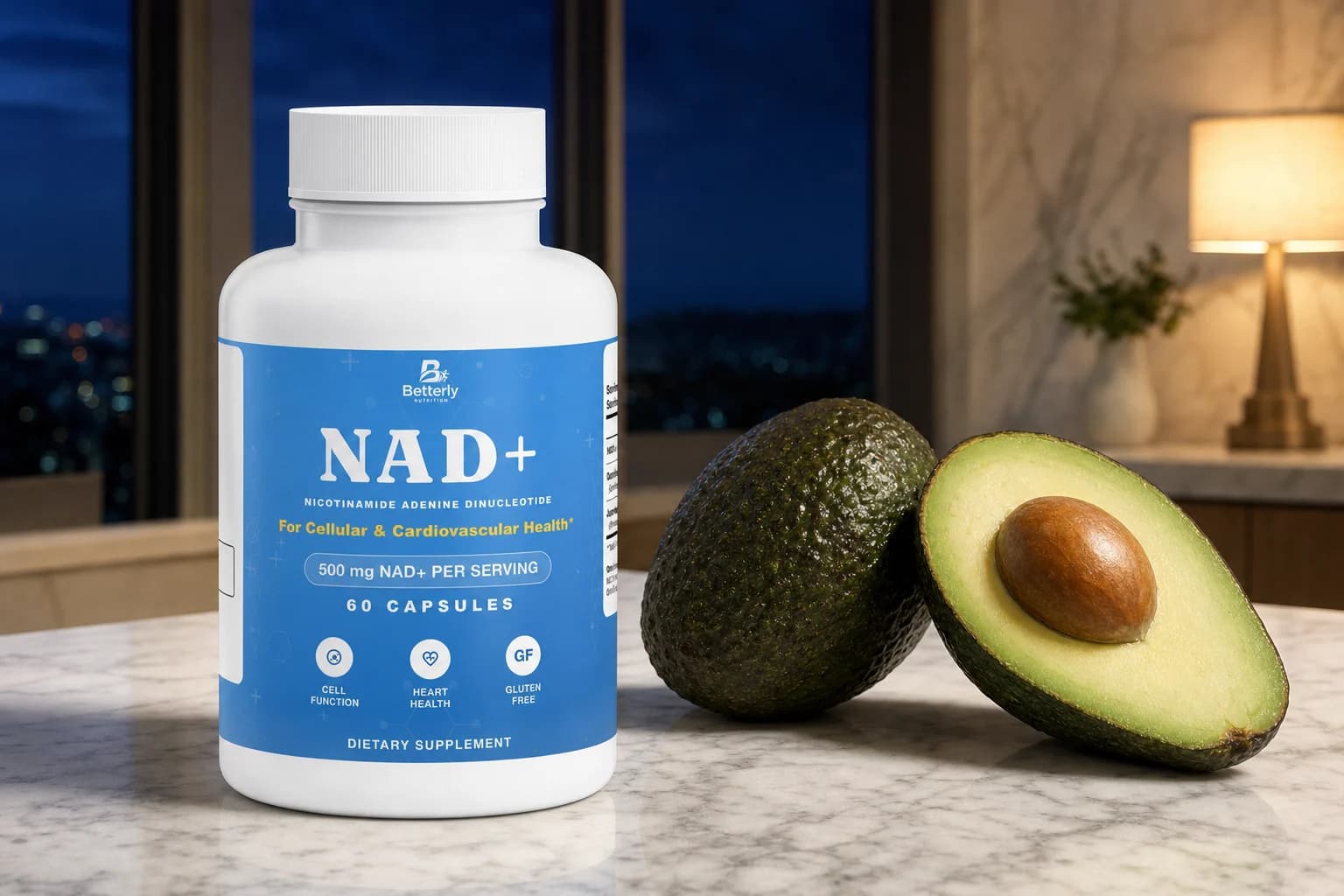
The short answer: CoQ10 vs NAD+ isn't a contest between rivals. NAD+ is a coenzyme that many metabolic reactions use to move electrons, while CoQ10 is best known as an electron carrier in your mitochondria. The two meet at a single step. Betterly's labels list 200 mg of CoQ10 per 1-capsule serving and 500 mg of NAD+ per 2-capsule serving. Neither label warns against taking both, but no government health source we checked shows the pair outperforming either one alone.
Key takeaways
- CoQ10 and NAD+ both take part in the chemistry that turns food into cellular energy, but at different steps, so neither one covers the other's job.
- Their best-documented meeting point is complex I in the mitochondria, which MedlinePlus says hands electrons from NADH on to ubiquinone.
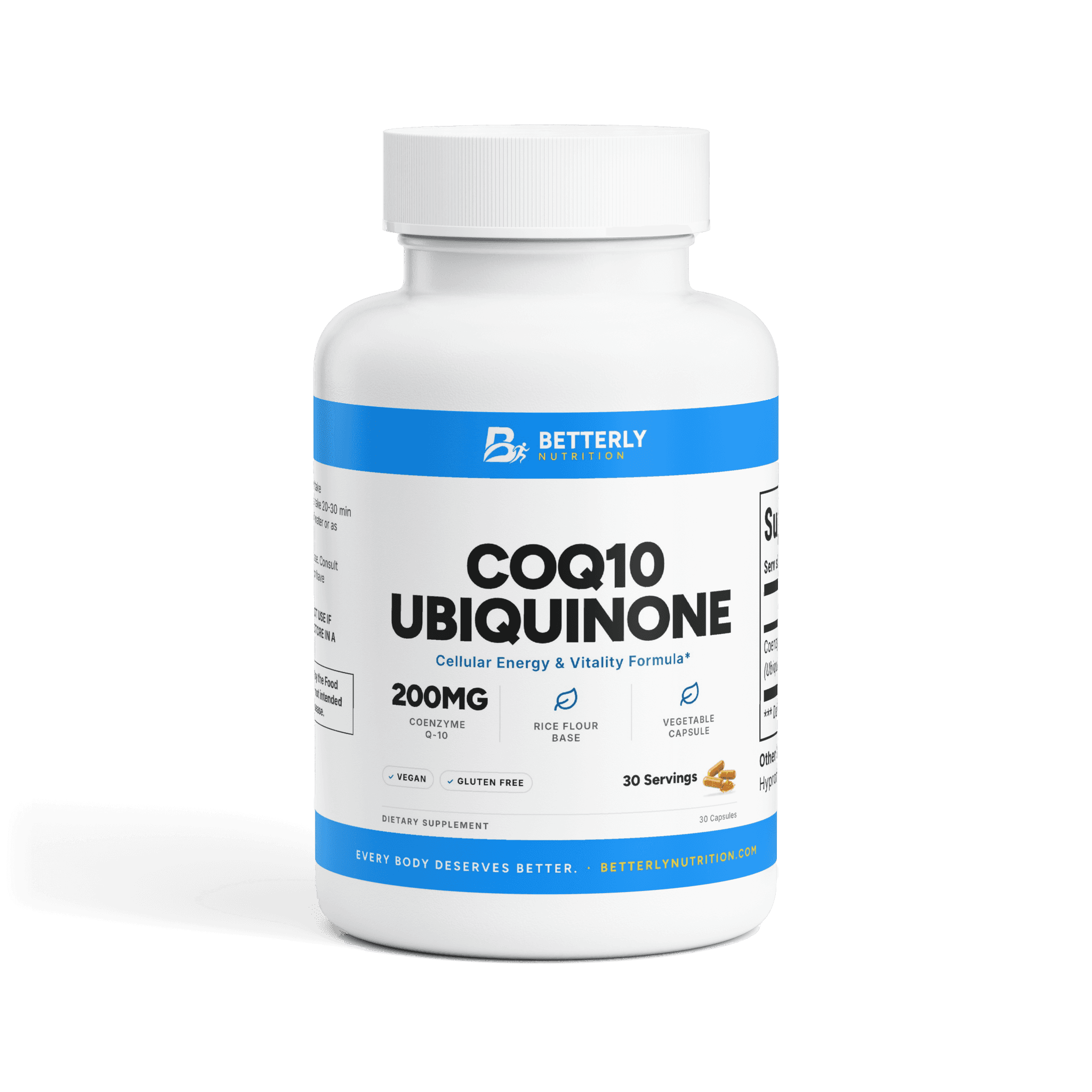
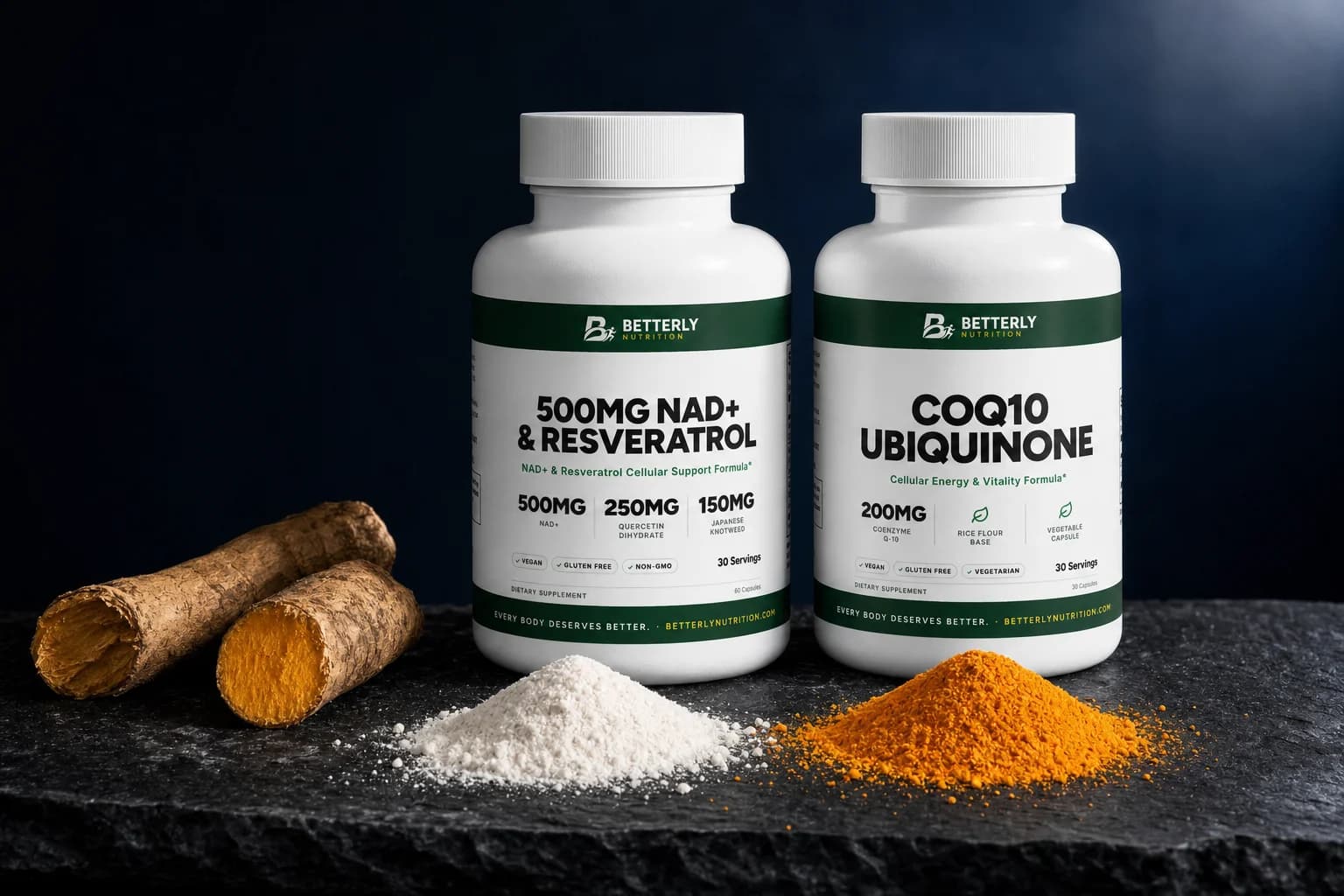
- Betterly's CoQ10 Ubiquinone Capsules hold a single active, coenzyme Q-10 in its ubiquinone form, at 200 mg per 1-capsule serving.
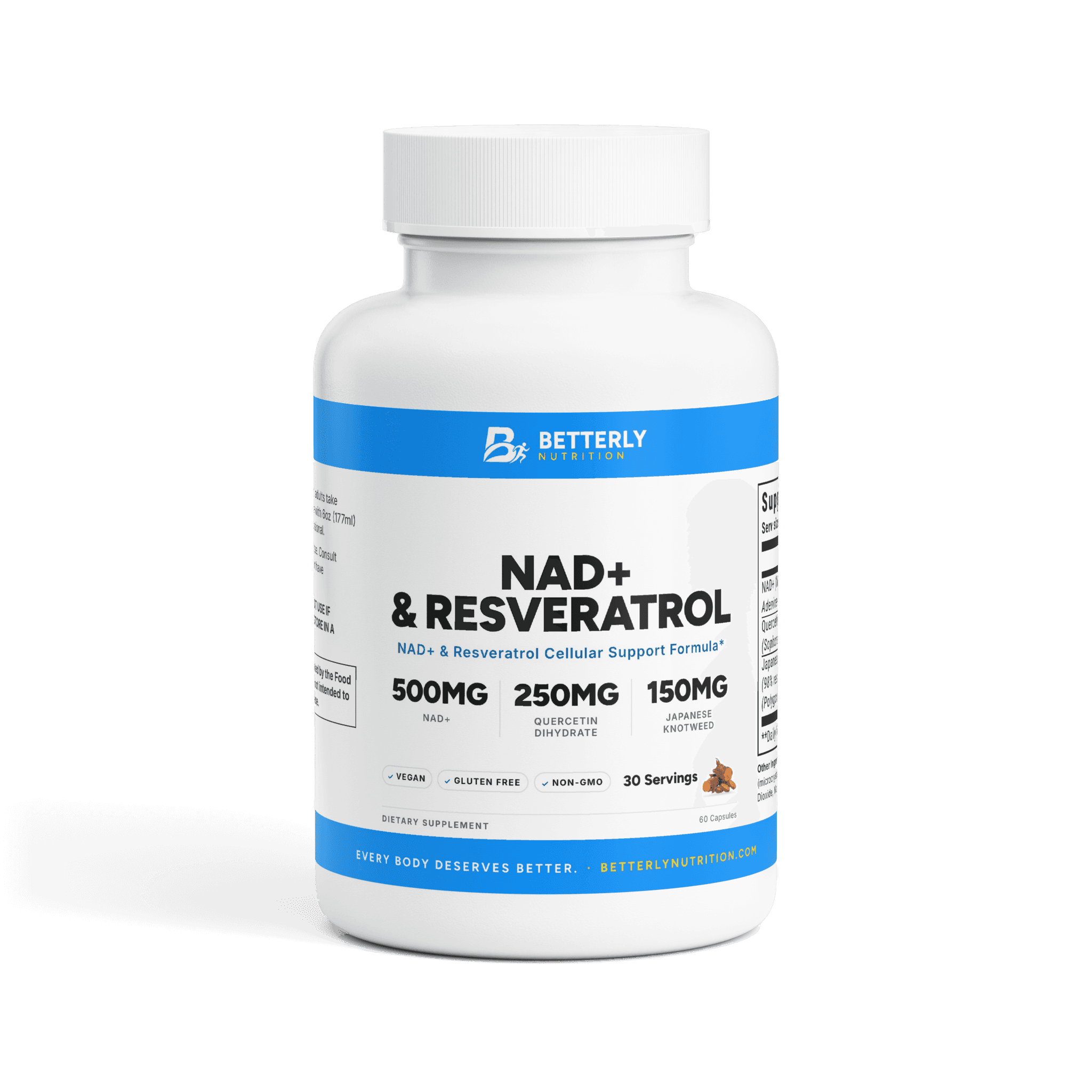
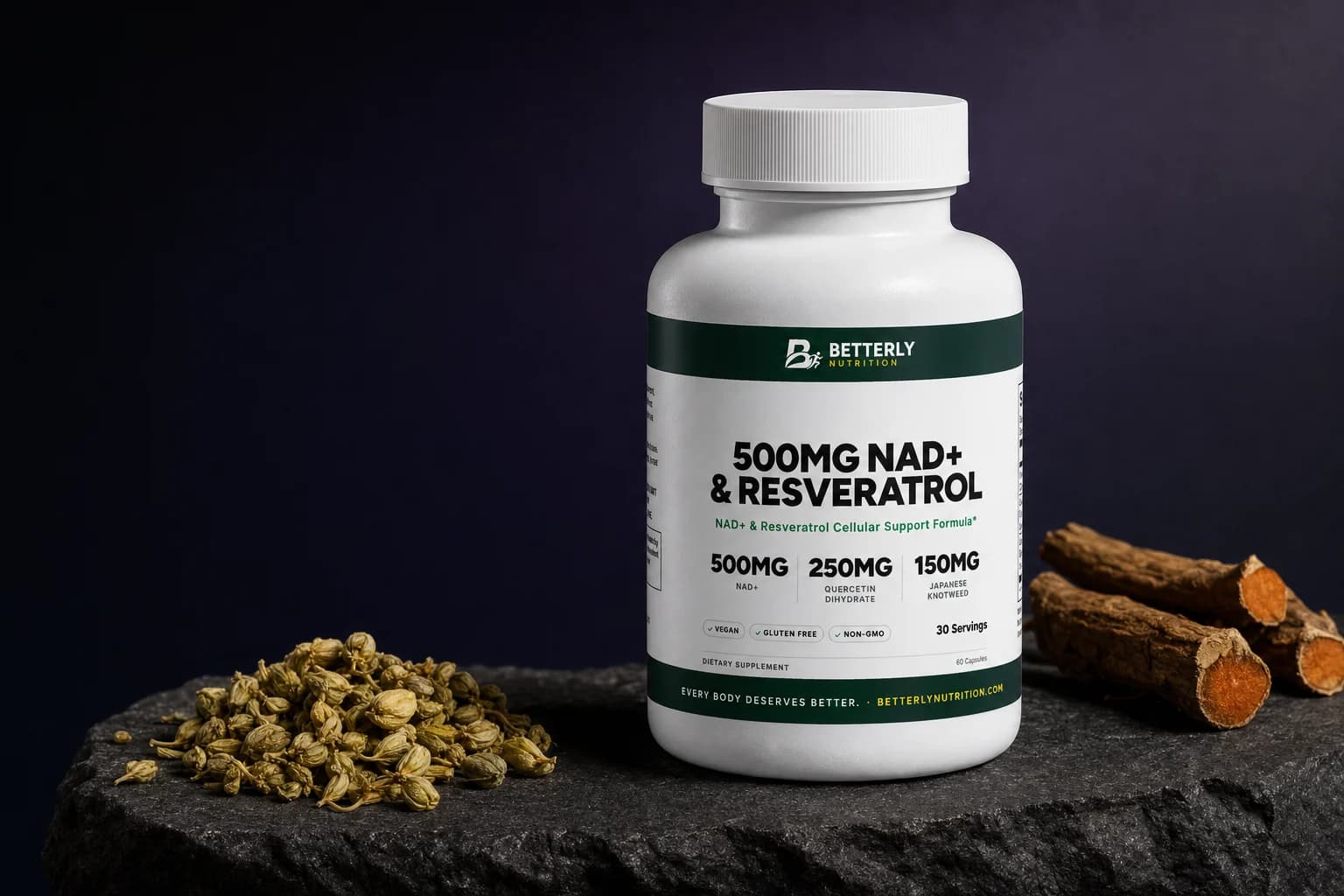
- Betterly's 500mg NAD+ & Resveratrol Capsules list three actives per 2-capsule serving: NAD+ (500 mg), quercetin dihydrate extract (250 mg) and Japanese knotweed extract (98% resveratrol) (150 mg).
- Taking both of our bottles means 3 capsules and 4 active ingredients a day, a bigger commitment than either bottle on its own.
Full disclosure: Betterly sells the CoQ10 and NAD+ capsules compared here, and the NMN capsule that comes up later. We'd earn more if you bought two bottles instead of one, so keep that in mind when you reach the part about taking both. Each milligram and direction below can be checked against the amounts per serving and directions on each product page.
CoQ10 vs NAD+: how do the two compare side by side?
CoQ10 and NAD+ are both helper molecules in energy metabolism: NAD+ works across many reactions, while CoQ10 is best known for its job in the mitochondrial electron transport chain.
Here's how our two bottles line up:
| CoQ10 Ubiquinone Capsules | 500mg NAD+ & Resveratrol Capsules | |
|---|---|---|
| Actives per serving | 200 mg coenzyme Q-10 (ubiquinone) | 500 mg NAD+, 250 mg quercetin dihydrate extract, 150 mg Japanese knotweed extract |
| Serving size | 1 capsule | 2 capsules |
| Label timing | Once a day, 20-30 min before a meal | Daily, no hour or meal named |
| Water, per the label | 8 oz (237 ml) | 6 oz (177 ml) |
| Bottle | 30 capsules, 30 servings | 60 capsules, 30 servings |
| Printed claims | Vegan, gluten free | Vegan, gluten free, non-GMO |
The biggest gap in that table isn't the milligrams. It's scope. Our CoQ10 bottle holds one active in one capsule, while our NAD+ bottle holds three actives in two, so choosing it means choosing quercetin and resveratrol as well. Both panels also print asterisks in the %DV column, because none of the four actives has an established Daily Value.
One question the table can't settle is how much NAD+ from a capsule arrives in your cells unchanged. That hasn't been established, and our look at the NAD+, quercetin and resveratrol formula sets out what is and isn't known.
What does NAD+ do that CoQ10 doesn't?
NAD+ helps move electrons in many of the reactions that break down food, while CoQ10's best-known work happens in the mitochondrial electron transport chain.
NAD+ is short for nicotinamide adenine dinucleotide, the full name printed in the first row of our NAD+ panel. You'll also see NADH, which isn't a separate ingredient. It's the same coenzyme while it's holding electrons, and the "+" version is the empty one, ready to accept more.
Food gets broken down in many small reactions, and NAD+ turns up at a lot of them, inside mitochondria and elsewhere in the cell, switching to NADH and back as it goes.
CoQ10 is a different kind of molecule. On its coenzyme Q10 page, the National Center for Complementary and Integrative Health (NCCIH) points out that the human body contains CoQ10 naturally. Its headline job is in the electron transport chain, which the next section covers.
It isn't a one-job molecule, though. MedlinePlus's COQ2 gene page adds that CoQ10 works as an antioxidant within cell membranes and has a hand in making pyrimidines, a group of building blocks for DNA and RNA.
So the two overlap without matching. Swapping one for the other isn't like switching coffee brands.
Where do CoQ10 and NAD+ meet inside your mitochondria?
CoQ10 and NAD+ meet at complex I, the first enzyme group in the electron transport chain, which MedlinePlus says passes electrons from NADH to ubiquinone.
That single step, described on MedlinePlus's MT-ND1 gene page, is the usual basis for the "CoQ10 plus NAD+" pitches you'll see online. For the rest of the chain and how it ends in ATP, our guide to whether CoQ10 gives you energy goes through it in order.
Here's what the shared step does tell you. At complex I, NADH is the giver and ubiquinone is the receiver. Those are different roles, so the molecules aren't interchangeable.
Here's what it doesn't tell you. MedlinePlus is describing chemistry your body runs with its own supply of both molecules. The page doesn't say that swallowing more of either one changes that step, or that they do more when bought together. A shop can fairly say the two meet at complex I. It can't fairly turn that into proof that you need both bottles.
For choosing a bottle, the shared step is background. The labels carry the useful facts: what's in each capsule, how many you'd take and when.
Which is better, CoQ10 or NAD+?
Neither wins the NAD supplement vs CoQ10 matchup outright; the better pick is the one whose label fits your goal, your routine and what's already in your cabinet.
| If this sounds like you | Start with | Why, going by the labels |
|---|---|---|
| You prefer a single-ingredient capsule | CoQ10 | 200 mg, no other actives |
| You're curious about NAD+ and its resveratrol pairing | NAD+ & Resveratrol | All three actives in 2 capsules |
| A resveratrol product is already in your cabinet | CoQ10 or NMN | Skips a second source of knotweed extract |
| You rarely plan a meal 20-30 min ahead | NAD+ or NMN | Neither label ties the capsules to a meal |
| You're after something you'd notice | Neither | No stimulant on either panel |
Your routine and your cabinet decide as much as the ingredient does. If you graze all day, the CoQ10 label's before-meal window is hard to hit. If you already take resveratrol, the NAD+ formula repeats it.
Our CoQ10, NAD+ and NMN panels list neither caffeine nor any other stimulant, so don't choose between them based on how awake you hope to feel.
From our shop: CoQ10 Ubiquinone Capsules — a single daily capsule with 200 mg of coenzyme Q-10 (ubiquinone), and rice flour and a hypromellose vegetable capsule as its only other ingredients.
Can you take CoQ10 and NAD+ together, and should you?
Our CoQ10 and NAD+ labels don't forbid taking the two on the same day, but no federal source we found has studied them together.
You'll see other sites call the pair synergistic or say it has no known interactions. We can't back either claim with a source we trust, so we won't repeat them.
Here's what "together" means in practice with our bottles:
| Routine | Capsules a day | Active ingredients |
|---|---|---|
| CoQ10 alone | 1 | CoQ10 |
| NAD+ & Resveratrol alone | 2 | NAD+, quercetin extract, knotweed extract |
| CoQ10 plus NAD+ & Resveratrol | 3 | All four of the above |
| CoQ10 plus NMN | 2 | CoQ10, NMN |
Stacking our two bottles triples your capsule count compared with CoQ10 alone and brings in two plant extracts you may not have been shopping for. That's a reason to decide on purpose.
The ODS guide Dietary Supplements: What You Need to Know lists three situations where side effects become most likely: high doses, supplements taken instead of prescribed medicines, and many different products at once. Two bottles isn't "many," but each addition moves you that way.
So should you take CoQ10 with NAD+? For most people, our honest answer is to start with one and give it a steady place in your routine. NCCIH says no serious side effects of CoQ10 have been reported, though mild ones such as trouble sleeping or an upset stomach can happen. If you begin both bottles on the same morning and something feels off, you won't know which one to question.
How do you take CoQ10 and NAD+ at the same time?
Follow each label on its own terms: one CoQ10 capsule 20-30 minutes before a meal with 8 oz of water, and two NAD+ capsules daily with 6 oz of water.
A simple way to set up the day:
- Tie the CoQ10 capsule to a meal you can see coming, and take it 20-30 minutes ahead with an 8 oz (237 ml) glass of water.
- Give the two NAD+ capsules a daily cue of their own. Their label names no hour and doesn't mention food, so any steady habit works.
- Want both at one sitting? The labels don't address it either way, so a pharmacist is the right person to ask about your situation.
- Missed a day? Don't double up. Both labels open their caution with "Do not exceed recommended dose."
Both bottles hold 30 servings, so if you start them together, they should empty together. If one has more days left than the other, a habit is slipping.
From our shop: 500mg NAD+ & Resveratrol Capsules — one bottle of 60 vegetable capsules that pairs 500 mg of NAD+ with quercetin and knotweed-sourced resveratrol extracts, taken 2 capsules daily per the label.
Where does NMN fit into the CoQ10 vs NAD+ choice?
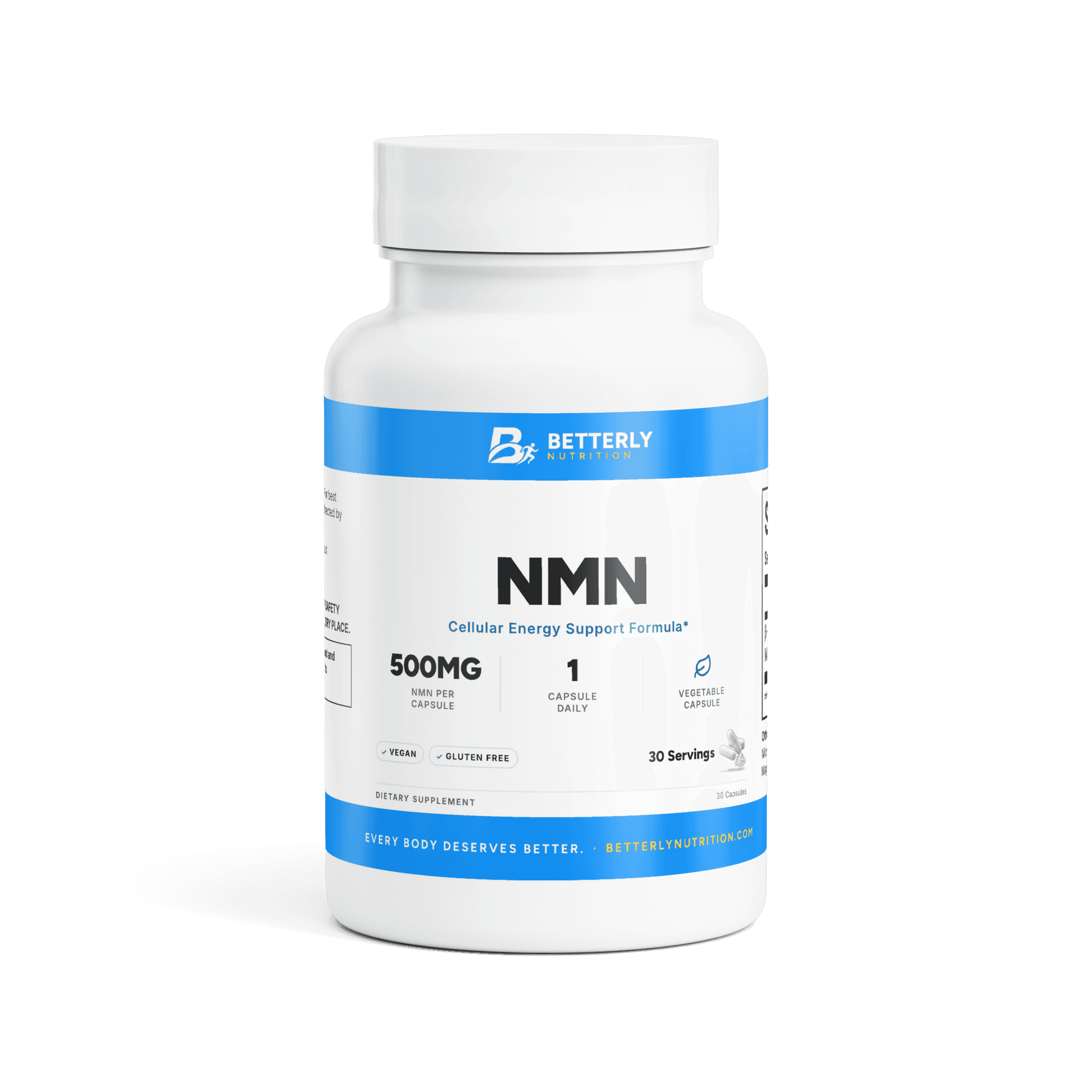
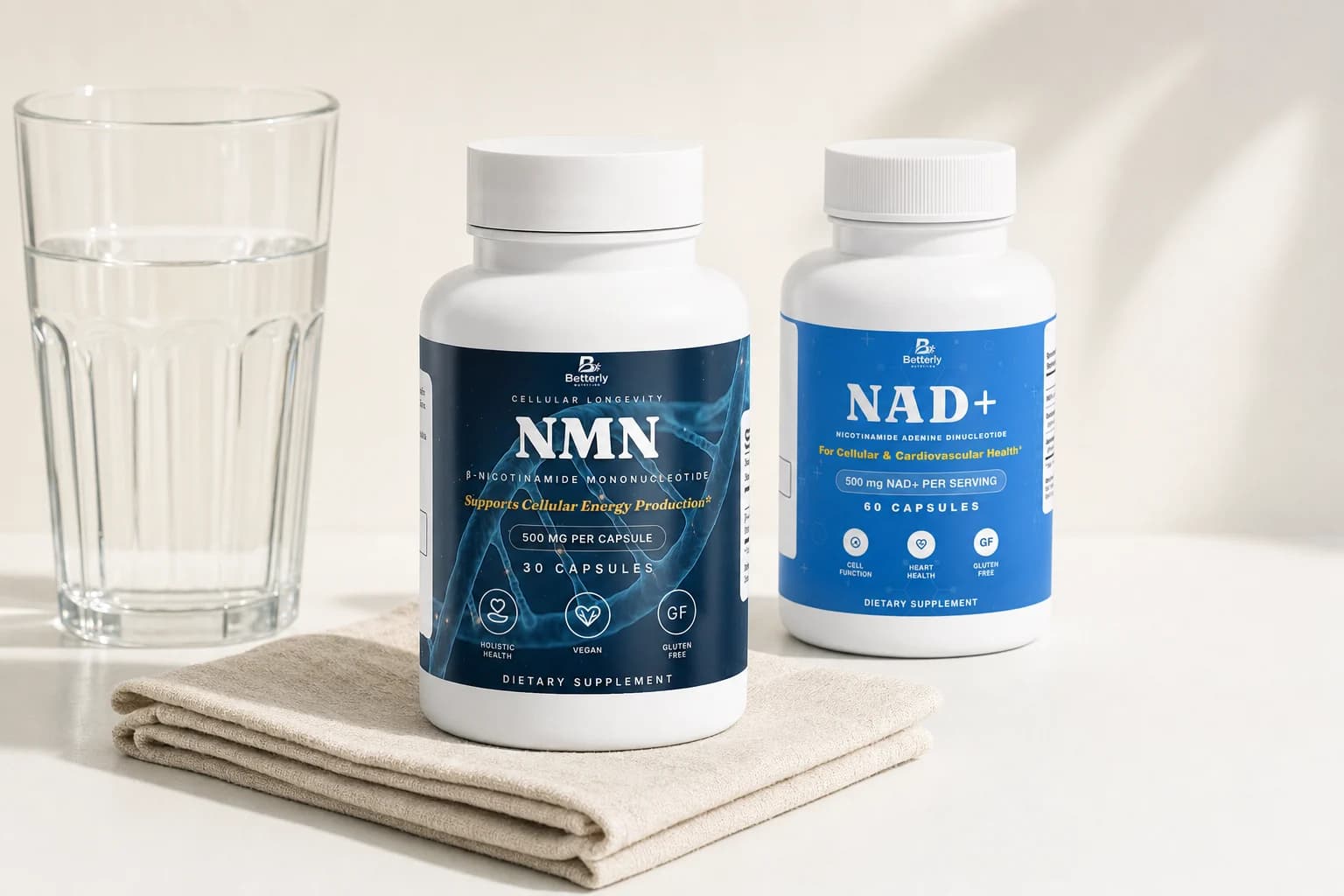
NMN sits on the NAD+ side of this choice: the body converts it into NAD+, and our 500mg NMN Capsules hold 500 mg per 1-capsule serving.
That panel names one active, β-nicotinamide mononucleotide. Its directions ask adults for 1 capsule daily, with 6-8 oz (177-237 ml) of water. There are 30 servings per bottle.
Some readers weighing CoQ10 against NAD+ really want an NAD+-related ingredient without quercetin and resveratrol attached. NMN is the single-active option on our shelf for that. Our NMN vs NAD+ breakdown covers how those two molecules differ and what's known about each one's trip through digestion.
Could you add NMN on top of the NAD+ formula? That guide says NMN and NAD+ can share a routine, though it's rarely necessary, and it suggests starting with one. We'd be a notch more cautious with our formula in particular, because its 2 capsules also carry quercetin and resveratrol. Choosing one NAD+-side bottle keeps your routine easier to read.
CoQ10 plus NMN comes to 2 capsules a day, the lightest pairing in the earlier table. All three bottles share a shelf in the NAD+ & Longevity collection.
When don't you need CoQ10, NAD+ or both?
You probably don't need CoQ10 or NAD+ if you want a quick lift, already take the same ingredients, or would buy a second bottle just to feel thorough.
- You want to feel more awake today. Neither panel lists a stimulant.
- Your cabinet already covers it. Multi-ingredient "cellular" or "longevity" blends can include CoQ10 (sometimes as ubiquinol) or an NAD+-related ingredient, so read those panels before adding ours.
- You're hoping a capsule will make up for rushed meals. The ODS consumer guide is blunt that no supplement can take over from a varied plate.
- The second bottle is insurance. If you'd only add it "just in case," that money may do more good elsewhere.
Who should check with a healthcare provider first?
CoQ10 and NAD+ deserve a healthcare provider's input before you start if you're under 18, pregnant, breastfeeding, taking prescription medicine, managing a medical condition or booked for an operation.
You'll find the same caution on the CoQ10 and NAD+ bottles: "Consult a physician if pregnant, nursing, under 18, or have a medical condition."
Next, think about any medicines you take. NCCIH's page says CoQ10 may interact with certain medicines, and the NAD+ formula adds two plant extracts, so let your pharmacist check both panels. Any change to a prescription is your prescriber's call, never a supplement's.
Surgery counts as well. According to the ODS "What You Need to Know" sheet, certain supplements raise the chance of bleeding, and some can change how your body handles anesthesia when taken before an operation. If one is on the calendar, make sure your care team knows about every capsule in your routine.
Should a new capsule leave you feeling off, set the bottle aside and tell your provider what you took and when you started it.
FAQ: CoQ10 and NAD+
Does a CoQ10 supplement need NAD+ alongside it?
No, a CoQ10 supplement doesn't need an NAD+ supplement to go with it. Inside your mitochondria, ubiquinone does receive electrons from NADH, the electron-carrying form of NAD+, at complex I. That exchange runs on the NADH your cells already have. Our CoQ10 label names no partner ingredient, and its directions stand on their own: one capsule a day, 20-30 minutes before a meal.
Does CoQ10 interact with other vitamins?
NCCIH's CoQ10 page doesn't answer that: it warns that CoQ10 may interact with certain medicines, and it doesn't discuss vitamins either way. If you take a multivitamin or other supplements alongside CoQ10, show every panel to a pharmacist. ODS also suggests a home record of your supplements and medicines, with the dose and how often you take each one, that you can hand to your providers.
Can you take CoQ10, NAD+ and resveratrol together?
Our labels don't prohibit CoQ10, NAD+ and resveratrol together, but resveratrol is already inside our 500mg NAD+ & Resveratrol Capsules: their 2-capsule serving includes 150 mg of Japanese knotweed extract (98% resveratrol). A separate resveratrol bottle would give you two sources of it. With CoQ10 added, you're at 3 capsules a day before any extra bottle, so bring all the panels to your provider first.
Should you take CoQ10 and NAD+ in the morning or at night?
Either time fits our CoQ10 and NAD+ labels, since neither names a time of day. The CoQ10 capsule just needs a meal 20-30 minutes later. NCCIH lists trouble sleeping among CoQ10's possible mild side effects, so if your nights change after you start, mention it to your provider rather than guessing at a new schedule.
How long before you notice CoQ10 or NAD+?
You might never notice CoQ10 or NAD+, and neither label promises a felt change or a timeline. Neither panel lists a stimulant, so there's no quick effect to wait for. If you want to judge a change honestly, keep short notes on your sleep, meals and caffeine, and review them with your provider.
Sources
- MT-ND1 gene, MedlinePlus Genetics, National Library of Medicine
- COQ2 gene, MedlinePlus Genetics, National Library of Medicine
- Coenzyme Q10, National Center for Complementary and Integrative Health
- Dietary Supplements: What You Need to Know, NIH Office of Dietary Supplements
If this left you looking for somewhere to start, read 200 mg ubiquinone CoQ10 capsules — its amounts per serving are listed on the page. For the practical questions this raises, how dosing, sourcing and subscriptions work is answered in one place.