On this page
- Key takeaways
- How does CoQ10 energy production work inside your cells?
- Why doesn't CoQ10 feel like a cup of coffee?
- Does CoQ10 give you energy right away?
- What does "cellular energy" on a CoQ10 label mean?
- Do CoQ10 supplements raise your energy levels?
- CoQ10 vs caffeine, NAD+ and NMN: what can you expect?
- How should you take CoQ10 if you decide to try it?
- Who can skip CoQ10 if energy is the goal?
- Who should talk to a healthcare provider before starting CoQ10?
- FAQ: CoQ10 and energy
- Sources
The short answer: Your body makes its own coenzyme Q10 (CoQ10), and your mitochondria use it to pass electrons along as they turn food into energy your cells can spend. So the answer to "does CoQ10 give you energy?" comes in two parts. Inside your cells, CoQ10 is part of how energy gets made, supplement or not. In how alert you feel, don't expect a change, because CoQ10 isn't a stimulant.
Key takeaways
- Coenzyme Q10 (CoQ10) carries electrons inside your mitochondria, and your body makes its own supply for that job.
- MedlinePlus says CoQ10 plays an essential role in oxidative phosphorylation, the process that converts the energy from food into a form cells can use.
- The NIH Office of Dietary Supplements (ODS) sees little scientific evidence for CoQ10 as a performance supplement when a nutritious diet already covers your needs.
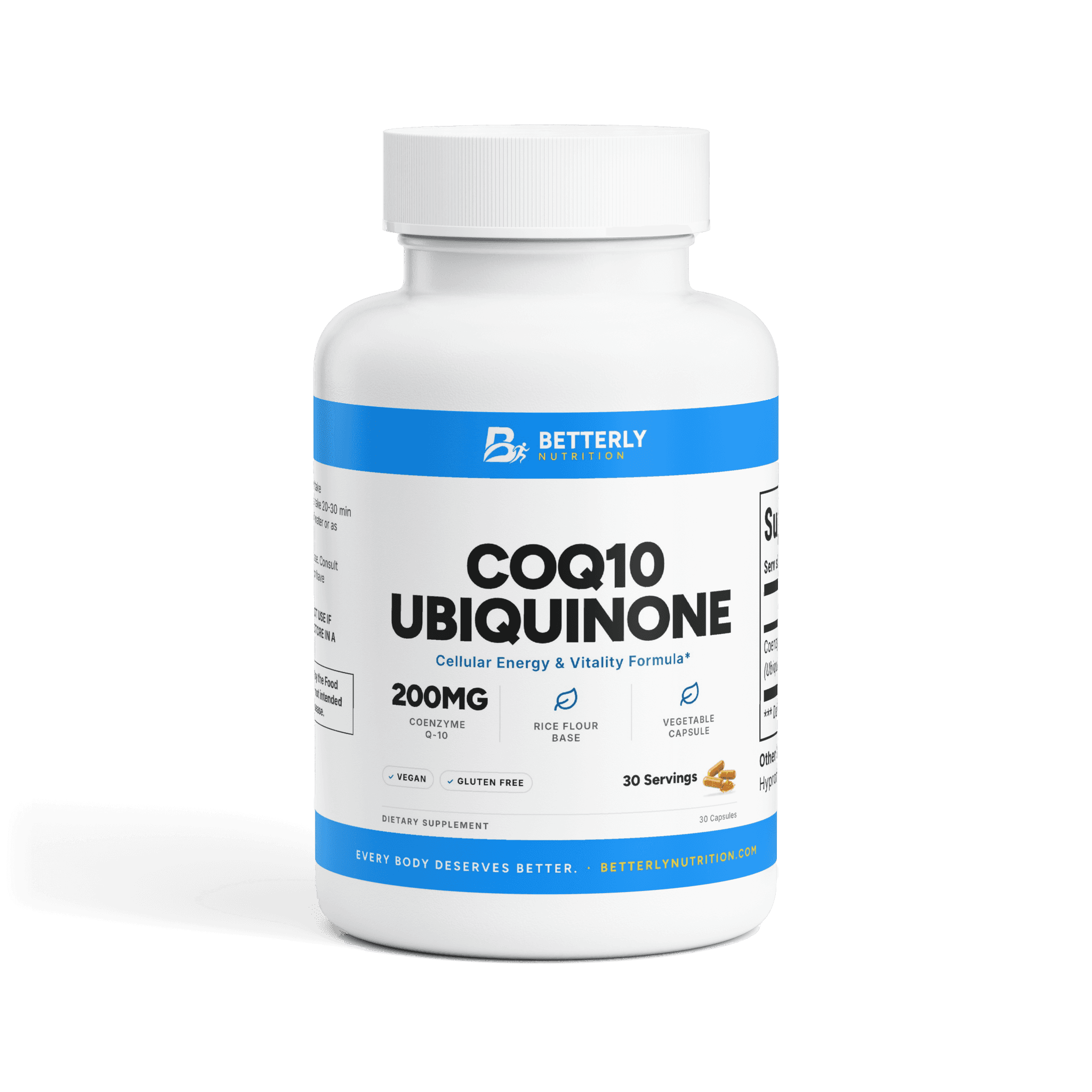
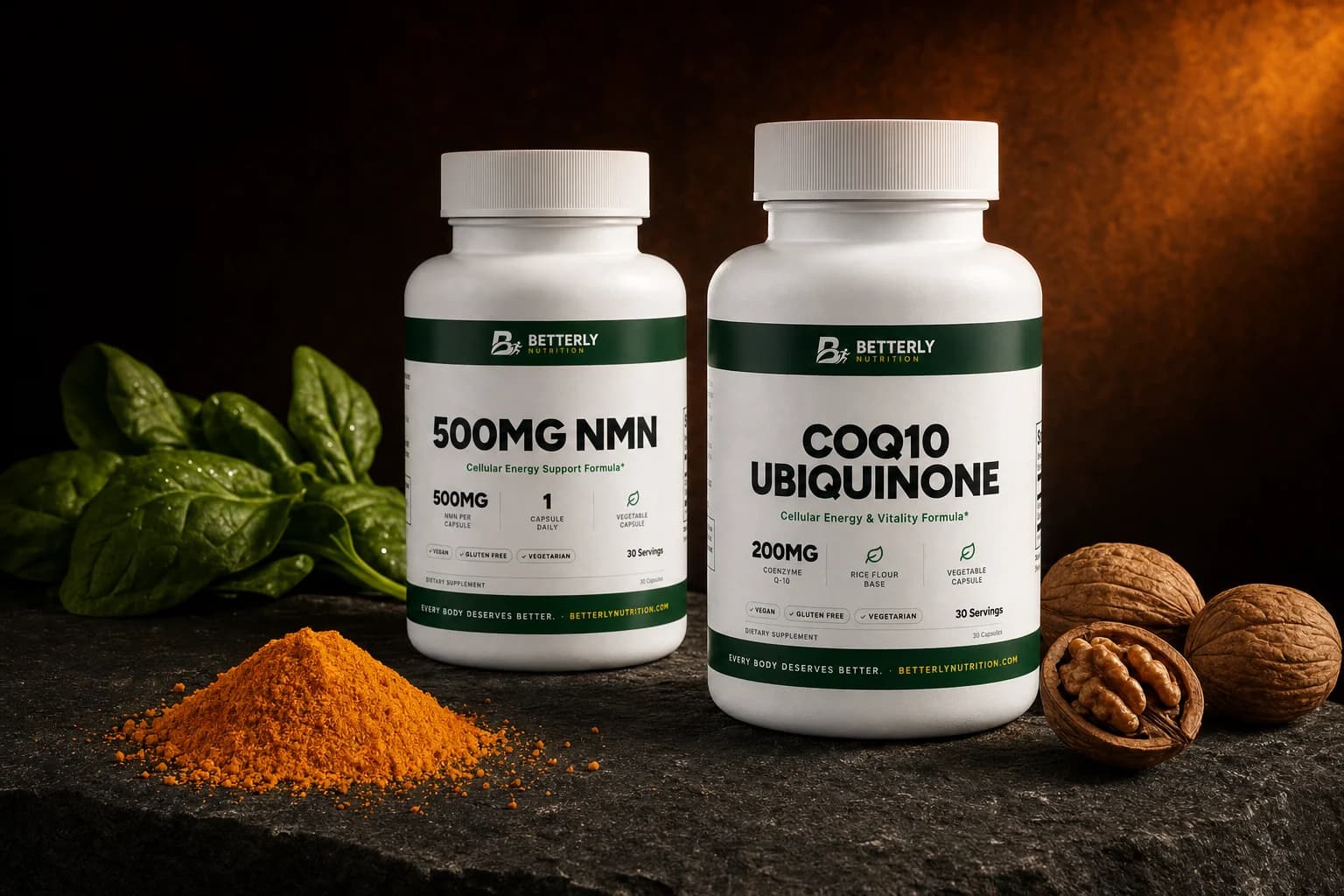
- Betterly's CoQ10 Ubiquinone Capsules list 200 mg of coenzyme Q-10 (ubiquinone) per 1-capsule serving, and the panel lists no caffeine.
- "Cellular energy" on a CoQ10 label describes chemistry inside your cells, not a promise that you'll feel more awake.
A disclosure first: the CoQ10 Ubiquinone Capsules in this guide are ours, and so is every other product in the comparison table below. A seller has every reason to answer the title question with a cheerful yes. You'll get the plain version instead, even where it makes our own bottle look less exciting.
How does CoQ10 energy production work inside your cells?
CoQ10 energy production happens in your mitochondria, where coenzyme Q10 is one working part of the process that turns food energy into a form cells can spend.
MedlinePlus, the National Library of Medicine's consumer health site, explains this on its page about the COQ2 gene, a gene your body uses to make CoQ10. Inside cell structures called mitochondria, that page says, CoQ10 plays an essential role in oxidative phosphorylation. That's the process that converts the energy from food into a form cells can use.
How does it help? Mostly by passing electrons along. MedlinePlus's page on the MT-ND6 gene describes a step-by-step transfer of electrons inside mitochondria. The first handoff moves electrons from a molecule called NADH to ubiquinone, the form of CoQ10 named on our label. Ubiquinone then passes them through more enzyme groups, and that flow supplies the energy to make ATP, a molecule cells use as an energy source.
MedlinePlus calls this the electron transport process, and you'll also see it called the electron transport chain. Picture a bucket brigade, with ubiquinone taking the bucket from one worker and handing it to the next. Some bottles name ubiquinol instead, and our guide to how ubiquinone differs from ubiquinol sorts out the two forms.
The COQ2 page names two more jobs. CoQ10 helps your body make pyrimidines, which are building blocks for DNA, RNA and energy molecules such as ATP. In cell membranes, it also acts as an antioxidant, shielding cells from free radicals, the unstable oxygen-containing molecules that form as a byproduct of making energy.
Why doesn't CoQ10 feel like a cup of coffee?
CoQ10 doesn't feel like coffee because caffeine is a stimulant, while CoQ10 is a working part of the energy chemistry inside your cells.
ODS describes caffeine plainly in its consumer fact sheet on exercise and athletic performance supplements. It's a stimulant found in coffee, tea and energy drinks, and moderate amounts might raise your energy levels and reduce tiredness for several hours. That's an effect you notice, and then it fades.
Nothing in the MedlinePlus description of CoQ10 involves alertness. Your cells run the relay described above whether or not you ever swallow a supplement.
Does CoQ10 give you energy right away?
No. CoQ10 doesn't give you energy right away, because there's no stimulant effect to feel, and none of the federal sources we used gives a timeline for feeling anything later.
So what might you notice early? Possibly nothing. Possibly a side effect. On the ODS sheet, CoQ10's possible side effects are tiredness, headaches, poor sleep and some digestive discomfort, all of which it says tend to be mild. The National Center for Complementary and Integrative Health (NCCIH) adds on its coenzyme Q10 page that no serious side effects have been reported.
Read that list once more. The only word in it that touches energy is tiredness, and it points the wrong way. If you start CoQ10 and feel more worn out than before, mention it to your healthcare provider.
What does "cellular energy" on a CoQ10 label mean?
"Cellular energy" on a CoQ10 label refers to the energy-making chemistry inside your cells, which is a different thing from feeling awake or alert.
Our front label reads "Cellular Energy & Vitality Formula*." That asterisk matters. It points to a notice on the bottle saying the statement hasn't been evaluated by the Food and Drug Administration. The "cellular energy" part describes the role CoQ10 plays in the body. It doesn't promise an experience.
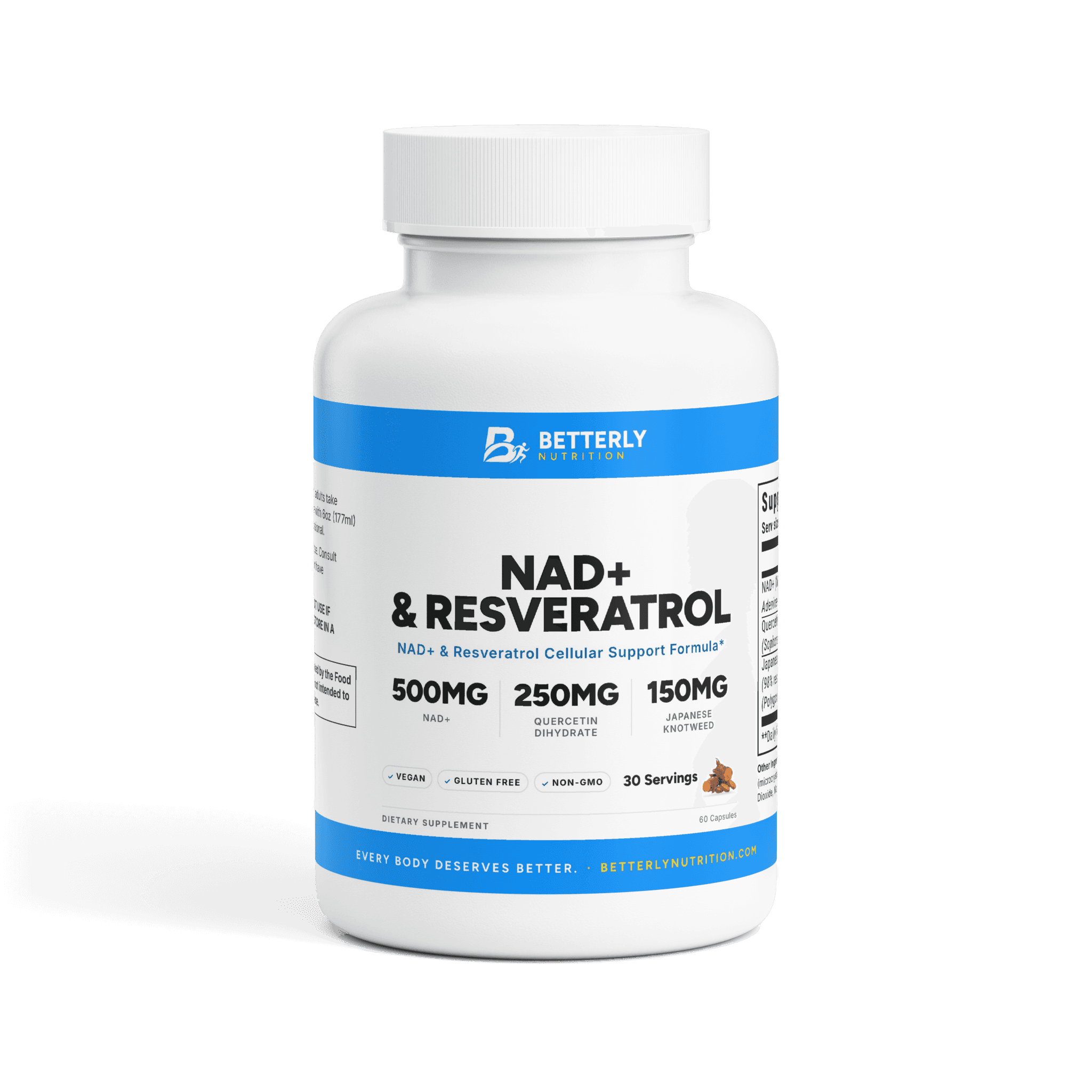
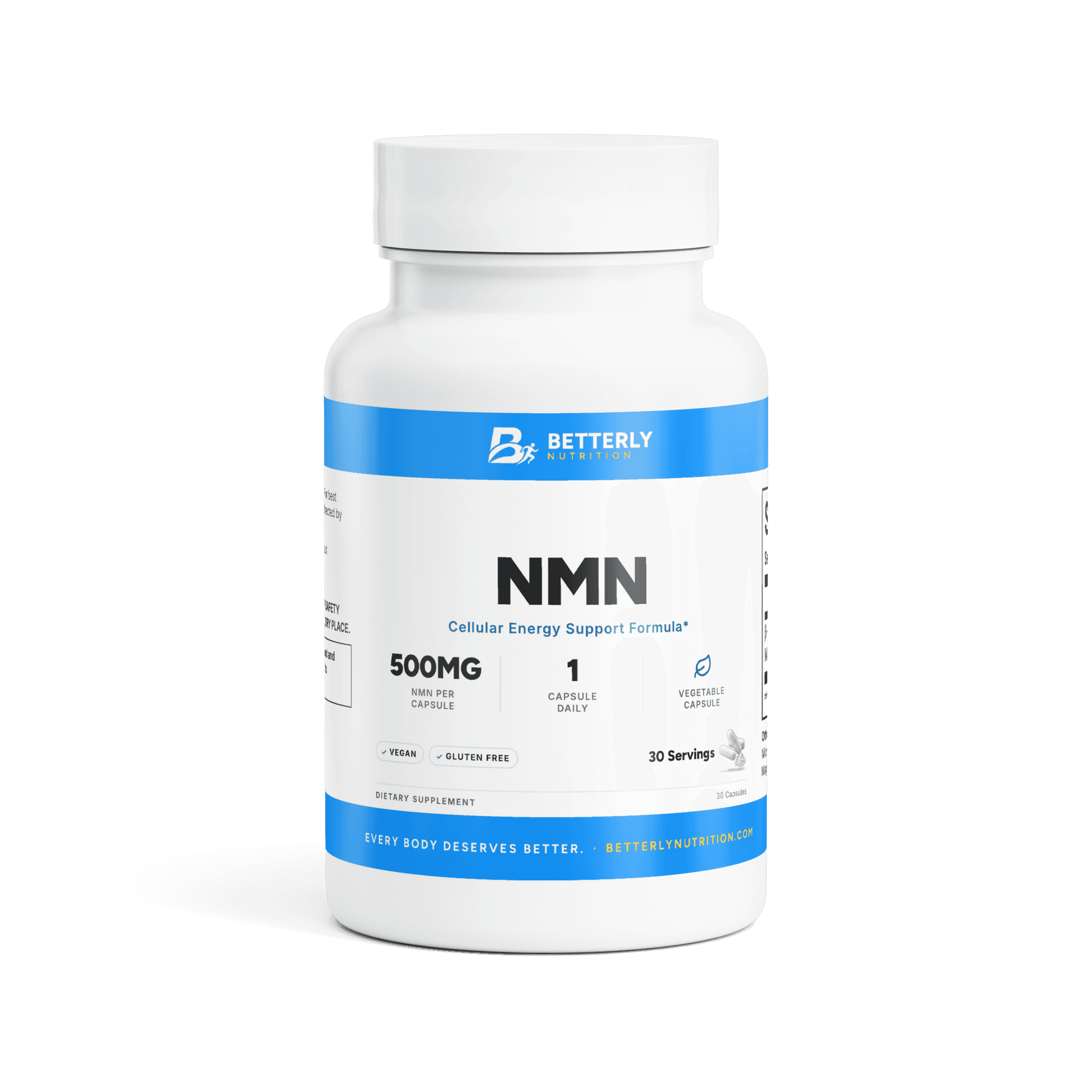
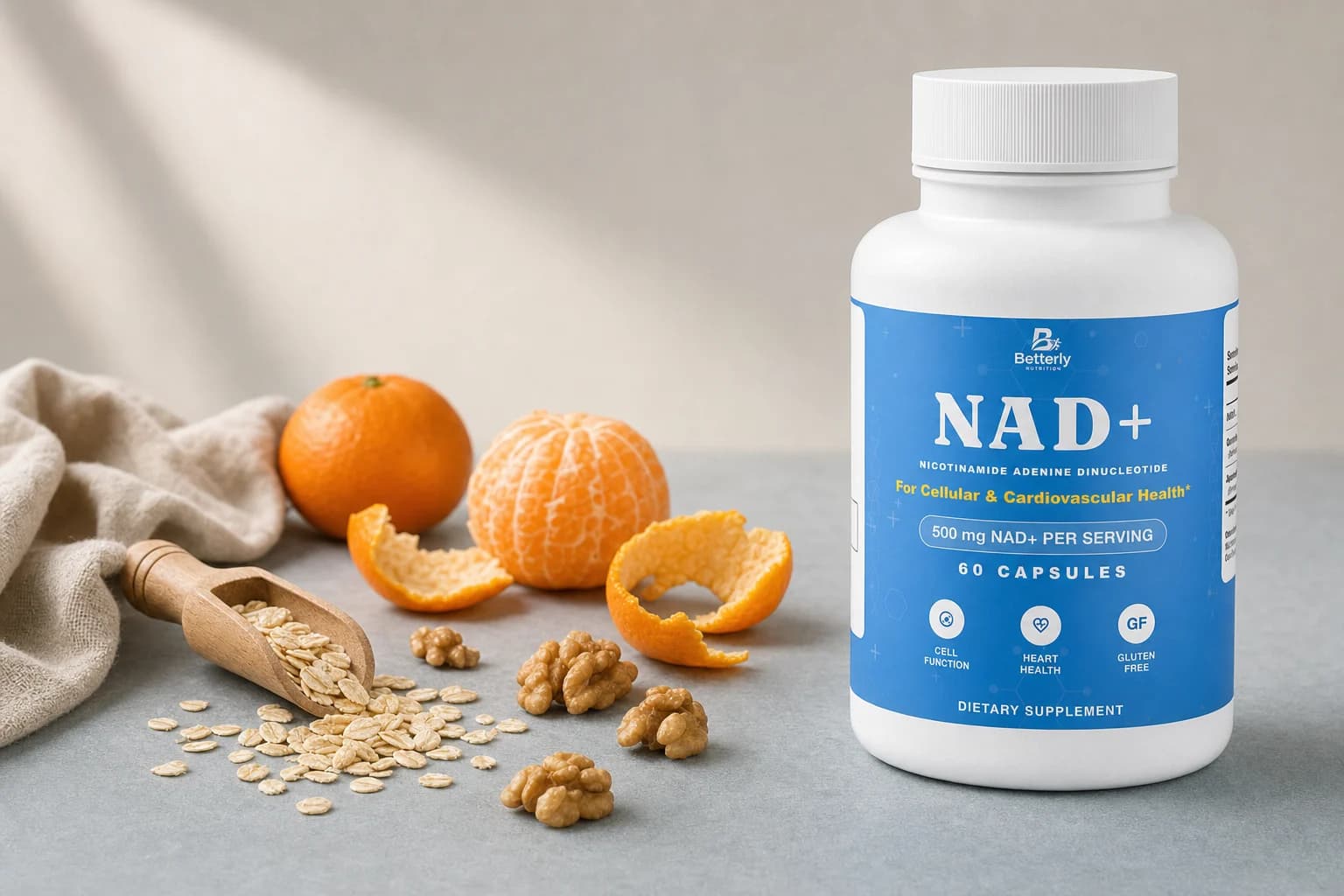
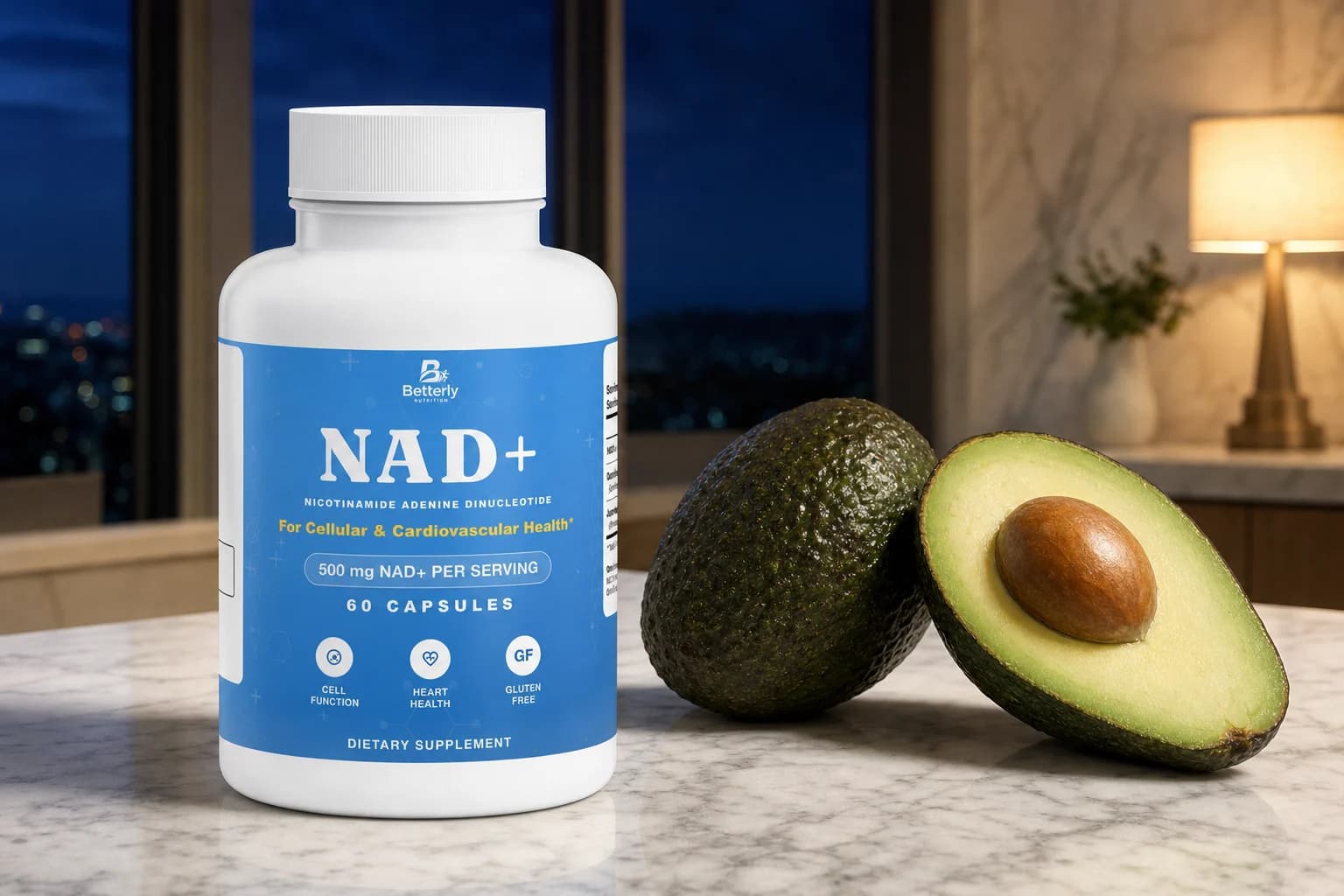
Our NMN and NAD+ capsules use the same kind of wording. The 500mg NMN Capsules say "Cellular Energy Support Formula*," and the 500mg NAD+ & Resveratrol Capsules say "NAD+ & Resveratrol Cellular Support Formula*." None of the three lists caffeine on its panel.
Whatever brand you're reading, it helps to sort "energy" words into two piles:
- Cell words: cellular energy, mitochondria, ATP, energy metabolism. These describe biology.
- Feeling words: energized, awake, alert, "all-day energy." These describe an experience.
Cell words on a product with no stimulant are normal. Feeling words on a product with no stimulant deserve a question: what on this panel is supposed to create that feeling?
Hold our label to the same test. "Vitality" is its looser word, a general wellness term that sits closer to the feeling pile than "cellular energy" does. Nothing on our CoQ10 panel is a stimulant, so don't read "vitality" as a promise that you'll feel more energetic.
Do CoQ10 supplements raise your energy levels?
Federal sources don't show CoQ10 supplements raising everyday energy levels: ODS finds little evidence they help performance with an adequate diet, and NCCIH's page doesn't discuss everyday energy.
ODS groups CoQ10 with vitamins C and E as antioxidants. It lays out the thinking behind taking them: exercise produces free radicals, so maybe an antioxidant supplement could ease muscle soreness and tiredness. ODS's answer to whether that works is no.
Its explanation is the interesting part. The free radicals made during exercise seem to help muscle fibers grow and produce more energy. That's why ODS says antioxidant supplements might cut into some of exercise's own rewards, including muscle growth and power output. It adds that they do little for aerobic fitness or for endurance activities like distance running.
The cellular role is real and well described. What's missing is a federal source tying it to energy benefits you'd notice day to day, so read any ad or label that promises that link with care.
CoQ10 vs caffeine, NAD+ and NMN: what can you expect?
Caffeine is the only stimulant among CoQ10, caffeine, NAD+ and NMN; the other three work in the background of how cells handle energy.
Here's how the four compare, using the amounts printed on our own panels:
| Our label, per serving | What it is | Stimulant? | A realistic expectation |
|---|---|---|---|
| CoQ10: 200 mg per 1 capsule | A compound cells use to make usable energy | No | A background role you likely won't feel |
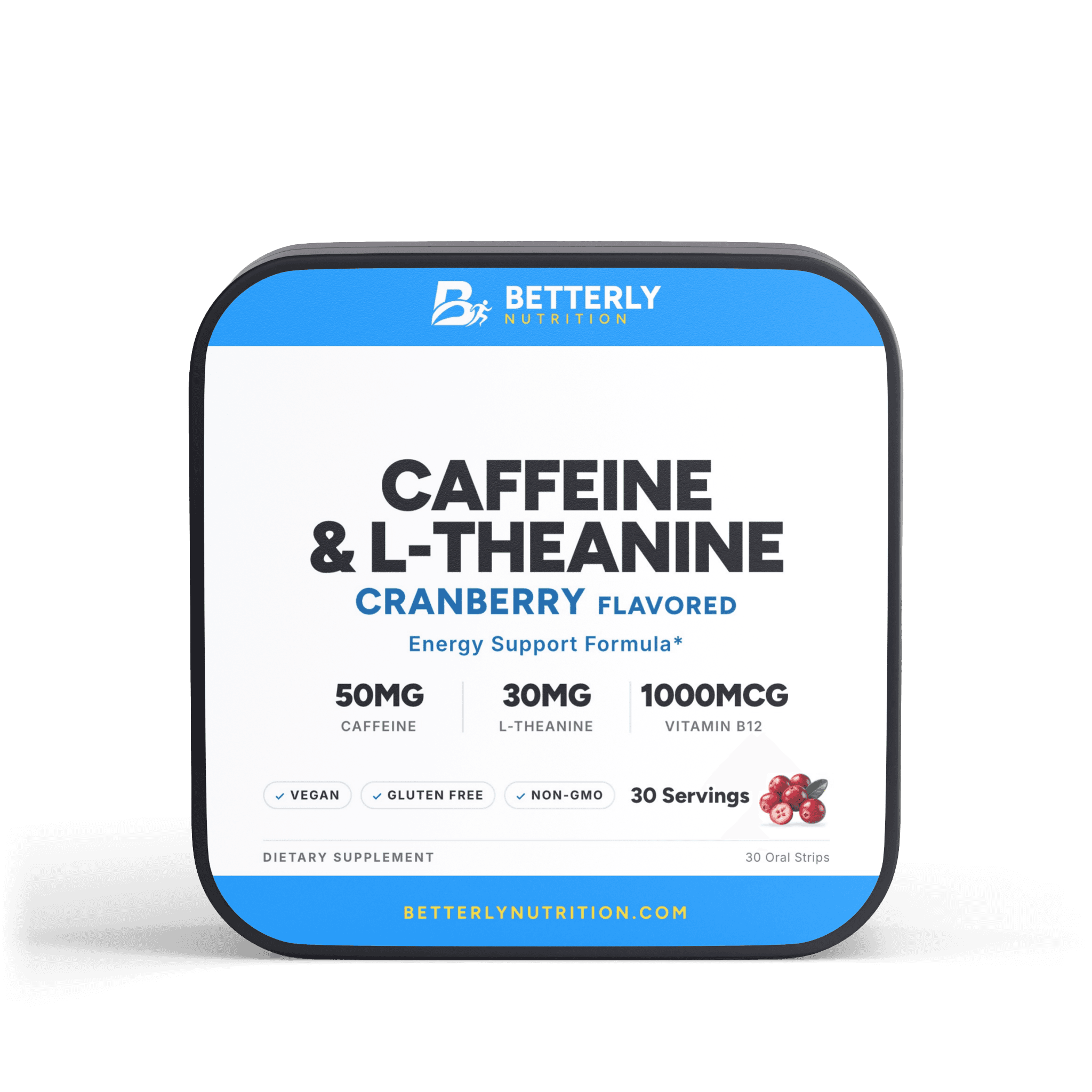
| Caffeine: 50 mg per 1 oral strip (290 mg) | A stimulant found in coffee and tea, per ODS | Yes | The one row here you may notice |
| NAD+: 500 mg per 2 capsules | A coenzyme in cellular energy | No | A background role, like CoQ10 |
| NMN: 500 mg per 1 capsule | A raw material the body uses to make NAD+ | No | A background role, like CoQ10 |
The biggest milligram figures in the table, 500 mg each, belong to NAD+ and NMN, and neither is an ingredient you'd feel. What sets caffeine apart is the kind of ingredient it is, not the amount. So if a noticeable effect is what you're after, check the caffeine row rather than hunting for the largest number.
The caffeine row comes from our Caffeine & L-Theanine Energy Strips. For scale, ODS puts a cup of coffee at about 85 to 100 mg of caffeine, so one strip holds roughly half a cup's worth. The NAD+ capsule also lists 250 mg of quercetin dihydrate extract and 150 mg of Japanese knotweed extract (98% resveratrol) per 2-capsule serving.
For the other two rows, our NMN vs NAD+ comparison explains how the body turns NMN into NAD+ and what NAD+ does for cellular energy. All three cellular capsules sit together on our longevity shelf.
From our shop: CoQ10 Ubiquinone Capsules — 200 mg of coenzyme Q-10 as ubiquinone per 1-capsule serving, taken once a day, with no caffeine on the panel, for anyone who wants CoQ10 for what it is rather than for a jolt.
How should you take CoQ10 if you decide to try it?
Follow the label: Betterly's CoQ10 Ubiquinone Capsules ask for a single capsule each day, taken with an 8 oz (237 ml) glass of water 20-30 minutes before a meal.
The bottle's 30 capsules make 30 servings. Apart from the CoQ10, the panel names just rice flour and hypromellose, the vegetable capsule. The label calls it vegan and gluten free. Its caution opens with "Do not exceed recommended dose," so one capsule a day is the ceiling, not a starting point.
CoQ10 won't announce itself, so a few habits make your own experience easier to read honestly:
- Leave the rest of your routine alone for a while. If you begin CoQ10 the same week you cut back on coffee or move your bedtime, you won't know which change you're noticing.
- Keep your caffeine steady and counted, including tea, soda and pre-workout drinks.
- Write two or three lines about how your days feel before you start. It's easy to misremember how you felt before a change.
- Tie the capsule to one meal you rarely skip. Our guide to timing your daily CoQ10 helps you choose that meal.
Who can skip CoQ10 if energy is the goal?
You can probably skip CoQ10 for energy if you're after quick alertness, or if short sleep and skipped meals already explain your tiredness.
A few situations where we'd point you elsewhere:
- You need to feel sharper by this afternoon. That's a stimulant's job, and a clear label prints its caffeine in milligrams.
- Your tiredness has an obvious cause. Short nights, long gaps between meals and very little movement are worth working on first, and our habit-first plan for steadier daily energy goes through them one by one.
- You're weighing other energy ingredients that skip the caffeine. Our honest guide to energy supplements without caffeine covers cordyceps, shilajit, NAD+ and beetroot, limits included.
From our shop: Caffeine & L-Theanine Energy Strips — each dissolving strip lists 50 mg of caffeine, 30 mg of L-theanine and 1000 mcg of vitamin B12 per 1 oral strip (290 mg) serving, dissolved on the tongue once a day per the label.
Who should talk to a healthcare provider before starting CoQ10?
Talk to a healthcare provider before starting CoQ10 if you're pregnant, nursing, under 18, taking a prescription, facing surgery, or managing a medical condition.
Our label's caution covers most of that list in one line: "Consult a physician if pregnant, nursing, under 18, or have a medical condition."
If you take warfarin, a blood thinner, or insulin, check with your prescriber before your first capsule. NCCIH's CoQ10 page flags possible interactions with both and says CoQ10 may not suit some other treatments. The same goes for any prescription you take: bring the bottle to that conversation, and never adjust a medicine on your own to make room for a supplement.
If surgery is coming up, give your care team a list of every supplement you take, CoQ10 included, and ask whether to pause any of them.
And if tiredness is the reason you're shopping in the first place, and it has hung around for a while, see a provider before you buy anything.
FAQ: CoQ10 and energy
Is CoQ10 good for you?
CoQ10 is a normal and needed part of your body's chemistry, but whether a CoQ10 supplement is good for you depends on why you want it and what else you take. NCCIH describes CoQ10 as naturally present in the human body, and MedlinePlus explains that your cells use it to turn food into usable energy. NCCIH reports no serious side effects, though mild ones can happen. For exercise performance, ODS sees little evidence of a benefit when your diet is already nutritious.
Can CoQ10 make you feel tired?
Yes, CoQ10 can leave some people feeling tired. Tiredness appears on the NIH Office of Dietary Supplements' short list of possible CoQ10 side effects, which it says tend to be mild. If you feel more drained after starting CoQ10, talk with your healthcare provider before you keep taking it, and don't change the amount on your own.
Is CoQ10 the same as NAD+?
No, CoQ10 and NAD+ are different molecules, though both take part in how your cells handle energy. MedlinePlus describes one point where they meet: inside mitochondria, electrons pass from NADH, the reduced form of NAD+, to ubiquinone, the form of CoQ10 on our label. Our explainer on NAD+ and cellular energy covers the rest of what NAD+ does in the cell.
Can you take CoQ10 with your morning coffee?
Probably, since none of the federal pages we used flags CoQ10 with caffeine, but our CoQ10 label calls for water to wash the capsule down. It asks for one capsule with 8 oz (237 ml) of water, 20-30 minutes before a meal. If you're counting caffeine, ODS says intakes of up to 400 to 500 mg a day seem safe in adults. Your provider can tell you whether a lower number suits you.
Is 200 mg of CoQ10 a lot?
It's hard to call 200 mg of CoQ10 a lot or a little, because none of the federal pages we used sets an upper limit, but it is the entire daily serving on our label. CoQ10 has no Daily Value either, which is why the %DV column on our panel shows only asterisks. Without a yardstick, the label's amount is the one to follow, and its caution says "Do not exceed recommended dose."
Sources
- COQ2 gene, MedlinePlus Genetics, National Library of Medicine
- MT-ND6 gene, MedlinePlus Genetics, National Library of Medicine
- Dietary Supplements for Exercise and Athletic Performance: Fact Sheet for Consumers, NIH Office of Dietary Supplements
- Coenzyme Q10, National Center for Complementary and Integrative Health
If this left you looking for somewhere to start, read 200 mg CoQ10 ubiquinone capsule, once a day — its amounts per serving are listed on the page. For the practical questions this raises, how dosing, sourcing and subscriptions work is answered in one place.