On this page
- Key takeaways
- Ubiquinol vs ubiquinone: what's the difference between the two forms?
- Ubiquinone vs ubiquinol: which is better for your routine?
- Is ubiquinone the same as CoQ10 or ubidecarenone?
- Is ubiquinol better absorbed than ubiquinone?
- Why is ubiquinol often priced higher than ubiquinone?
- Does ubiquinol need a different dose than ubiquinone?
- How do you take CoQ10 Ubiquinone Capsules?
- When don't you need a CoQ10 supplement?
- Who should check with a healthcare provider before taking CoQ10?
- FAQ: ubiquinol and ubiquinone
- Sources
The short answer: Ubiquinol vs ubiquinone comes down to one detail: they're two states of the same nutrient, coenzyme Q10 (CoQ10). Ubiquinone is the oxidized form, and ubiquinol is the reduced form, carrying two extra hydrogen atoms. A label that says only "CoQ10" doesn't tell you which state is inside. None of the federal health pages we used ranks one form above the other, so compare the named form, the milligrams and the price.
Key takeaways
- Ubiquinone and ubiquinol are both coenzyme Q10, and the only difference is whether the CoQ10 is oxidized (ubiquinone) or reduced (ubiquinol).
- "CoQ10" and "coenzyme Q10" are umbrella names for both forms, so look for "ubiquinone," "ubidecarenone," "ubiquinol" or "reduced" on the panel to learn which one you're getting.
- "Better absorbed" is a common selling point for ubiquinol, but the federal sources in this guide don't address it, so treat it as a marketing claim until you see the evidence.
- Ubiquinol holds two extra electrons that oxygen in the air can take, and losing them turns it back into ubiquinone.
- CoQ10 has no Daily Value, so the suggested use on your label sets the amount, whichever form you buy.
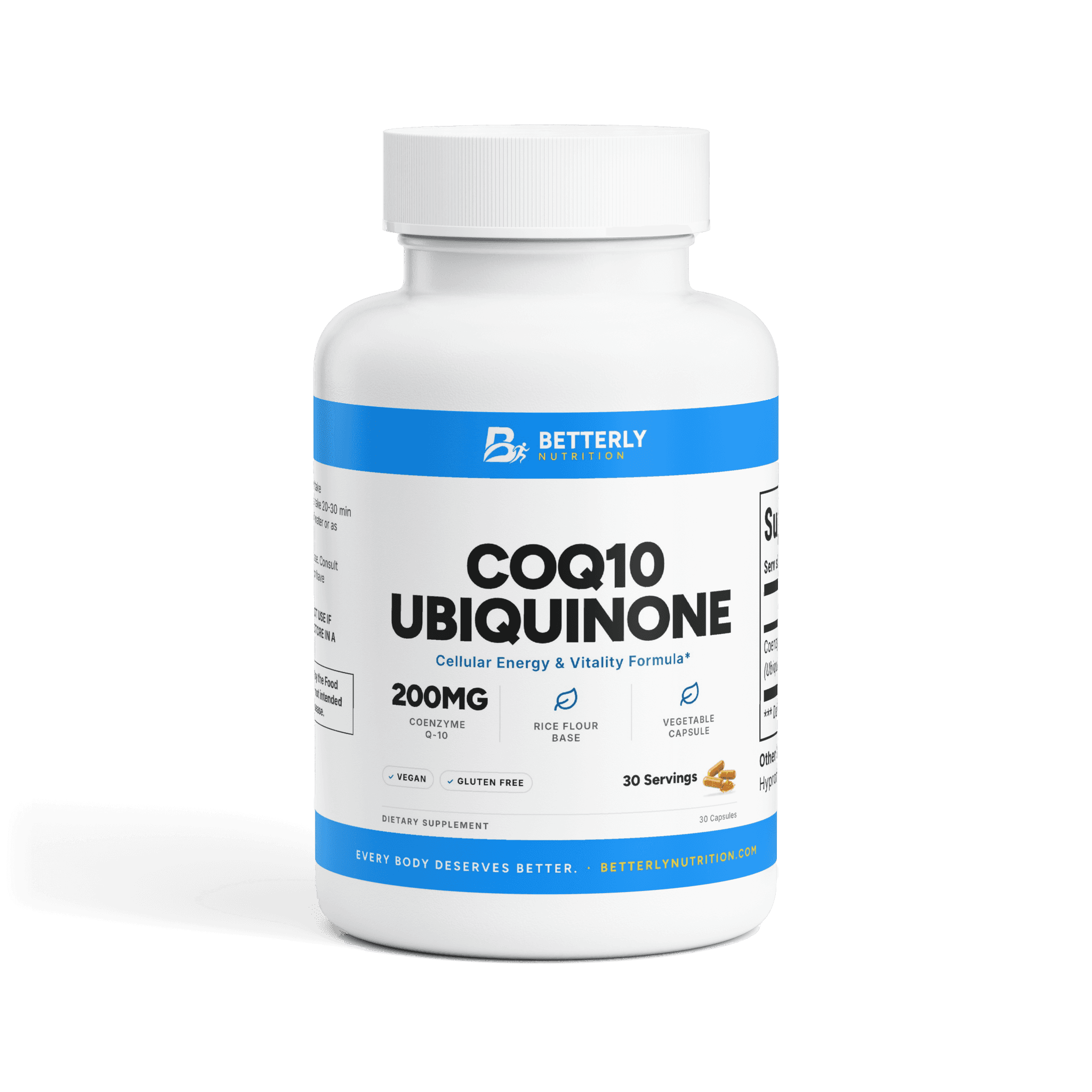
A heads-up before we compare: we sell one dedicated CoQ10 product, and it's ubiquinone. Our CoQ10 Ubiquinone Capsules hold 200 mg per 1-capsule serving, and we don't carry a ubiquinol version. That's a reason for us to lean one way, so read this as a seller's guide and hold our panel to the same checks you'd use on any other brand.
Ubiquinol vs ubiquinone: what's the difference between the two forms?
Ubiquinone is the oxidized form of coenzyme Q10 and ubiquinol is the reduced form, so the two differ by a pair of hydrogen atoms, not by nutrient.
In chemistry, "oxidized" describes a molecule that has handed off electrons, and "reduced" describes one that has taken them on. CoQ10 is built to do that swap. It works as a carrier, which is why the same nutrient shows up under two names depending on which state it's in.
A quick way to remember it: ubiquinol ends in "-ol," the chemist's suffix for an oxygen carrying a hydrogen, which is where its extra hydrogens sit.
The FDA runs a registry that gives every substance in its records a unique ID, called a UNII. A UNII names a chemical; it isn't an approval or registration of any product. The registry keeps the two forms in separate entries, and the FDA registry's ubiquinol record lists "reduced coenzyme Q10" and "dihydrocoenzyme Q10" among ubiquinol's names. That second name is shorthand for "Q10 plus a pair of hydrogens."
The National Center for Complementary and Integrative Health (NCCIH) describes CoQ10 as a substance naturally present in the human body, so a supplement adds to what's already there.
Ubiquinone vs ubiquinol: which is better for your routine?
Neither CoQ10 form is shown to be better in the federal sources we checked, so the right pick is whichever label, price and storage needs fit your life.
The verdict, side by side:
| What you're weighing | Ubiquinone | Ubiquinol |
|---|---|---|
| Chemical state | Oxidized CoQ10 | Reduced CoQ10 |
| Names on labels | Ubiquinone, ubidecarenone (often just CoQ10) | Ubiquinol, reduced CoQ10 |
| Air sensitivity | No extra electrons for air to take; store per label | Extra electrons that oxygen can take; store per label |
| Price | Compare cost per mg yourself | Often priced higher; compare cost per mg |
| Who might choose it | Anyone happy with a named "ubiquinone" panel | Anyone whose provider names it |
The takeaway: the only hard differences are chemistry and handling. Anything a brand adds beyond that, like "the active form" or "made for older adults," belongs in the marketing column until a source you trust backs it up.
If a healthcare provider who knows your history has a reason to prefer ubiquinol, that's a real reason. A bottle's front label isn't.
Is ubiquinone the same as CoQ10 or ubidecarenone?
Ubiquinone is one form of CoQ10, and ubidecarenone is its formal name. "CoQ10" itself is an umbrella name that covers ubiquinol too.
The FDA registry's ubidecarenone record uses UBIDECARENONE as its preferred name. Its list of synonyms includes coenzyme Q10, CoQ10, ubiquinone and ubiquinone 10. It even lists "vitamin Q," so don't be thrown if you ever see that name.
The registry happens to file CoQ10 as a synonym under ubidecarenone, the oxidized form, while ubiquinol sits in its own entry as "reduced coenzyme Q10." A synonym list isn't a labeling rule, though. It can't tell you what a particular bottle means by "CoQ10."
Ubiquinone and ubidecarenone are two names for the same oxidized form. Why would a maker print the longer word? The registry tags ubidecarenone as an international nonproprietary name (INN), which is a formal generic name, and that may be why some panels use it.
Our panel prints "Coenzyme Q-10 (Ubiquinone)," which gives the umbrella name first and the state second, in parentheses. The four words that settle the question are ubiquinone, ubidecarenone, ubiquinol and reduced.
What if a label names no form?
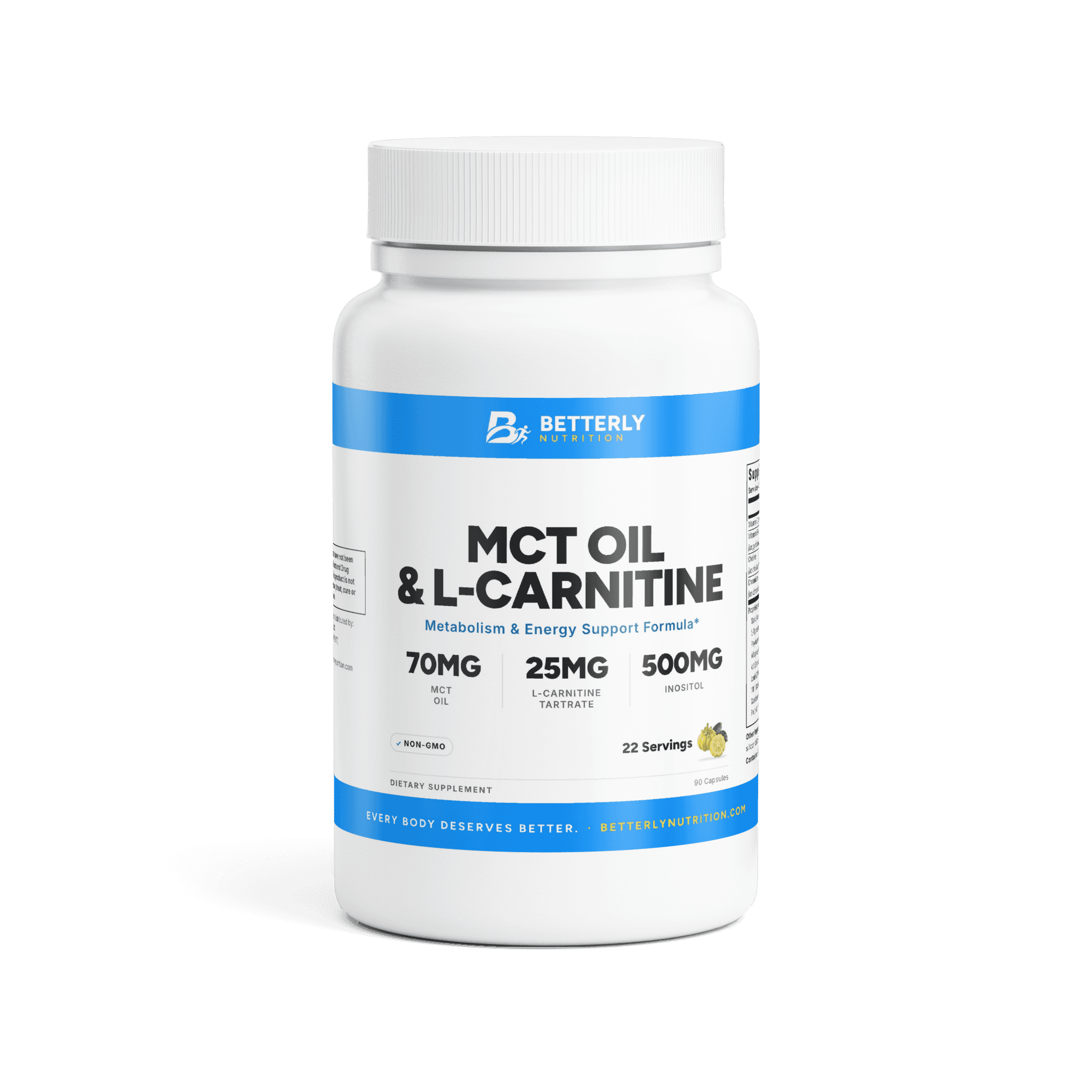
Plenty of panels print CoQ10 with nothing beside it, and one of ours does too. Our MCT Oil & L-Carnitine Capsules list "Coenzyme Q10" at 5 mg per 4-capsule serving, one row among more than a dozen ingredients. From that row alone, you learn how much CoQ10 the capsules hold but not which state it's in.
If the form matters to you, ask the seller before you buy. It also helps to set the milligrams side by side. At label directions, that formula gives 5 mg of CoQ10 a day, while our dedicated capsule gives 200 mg, a 40-fold gap.
Is ubiquinol better absorbed than ubiquinone?
Ubiquinol is widely sold as better absorbed than ubiquinone, but the federal health pages in this guide, including NCCIH's CoQ10 overview, don't compare how well the two forms absorb.
Bioavailability is the share of a dose that makes it into your bloodstream in a usable form. That's what "better absorbed" claims are really about, and it's where the sales copy gets loudest.
Here's what our sources do and don't cover:
- The FDA registry confirms the chemical difference. It says nothing about absorption.
- NCCIH's page covers safety, interactions and the research areas it has reviewed. Form isn't among them.
- The NIH Office of Dietary Supplements' exercise fact sheet groups CoQ10 with antioxidants and doesn't split it by form.
So when a bottle promises that ubiquinol is "up to" some number of times better absorbed, it's fair to ask three questions. Where did the number come from? Who paid for that research? And was the product in your hand the one that was measured?
Why is ubiquinol often priced higher than ubiquinone?
Ubiquinol is often priced higher per milligram, and handling may be one reason: the reduced form holds extra electrons that oxygen can take.
Once oxygen pulls those electrons away, ubiquinol simply becomes ubiquinone. So a ubiquinol product exposed to air could end up as a mix of both forms, and keeping it reduced would take extra care in how it's made and packed. We can't see any brand's costs, though, so treat this as a likely explanation, not a known one.
Ubiquinone has no extra electrons for air to take. That's a chemistry note, not a reason to call it better for your body, and it doesn't mean the bottle can sit anywhere. Whichever form you buy, follow the label's storage line (ours: cool, dry place).
To compare price fairly, multiply servings per container by milligrams per serving. Our capsule has 30 servings of 200 mg, or 6,000 mg of CoQ10 per bottle. Divide any bottle's price by its total, and you have a cost per mg that works across brands and forms.
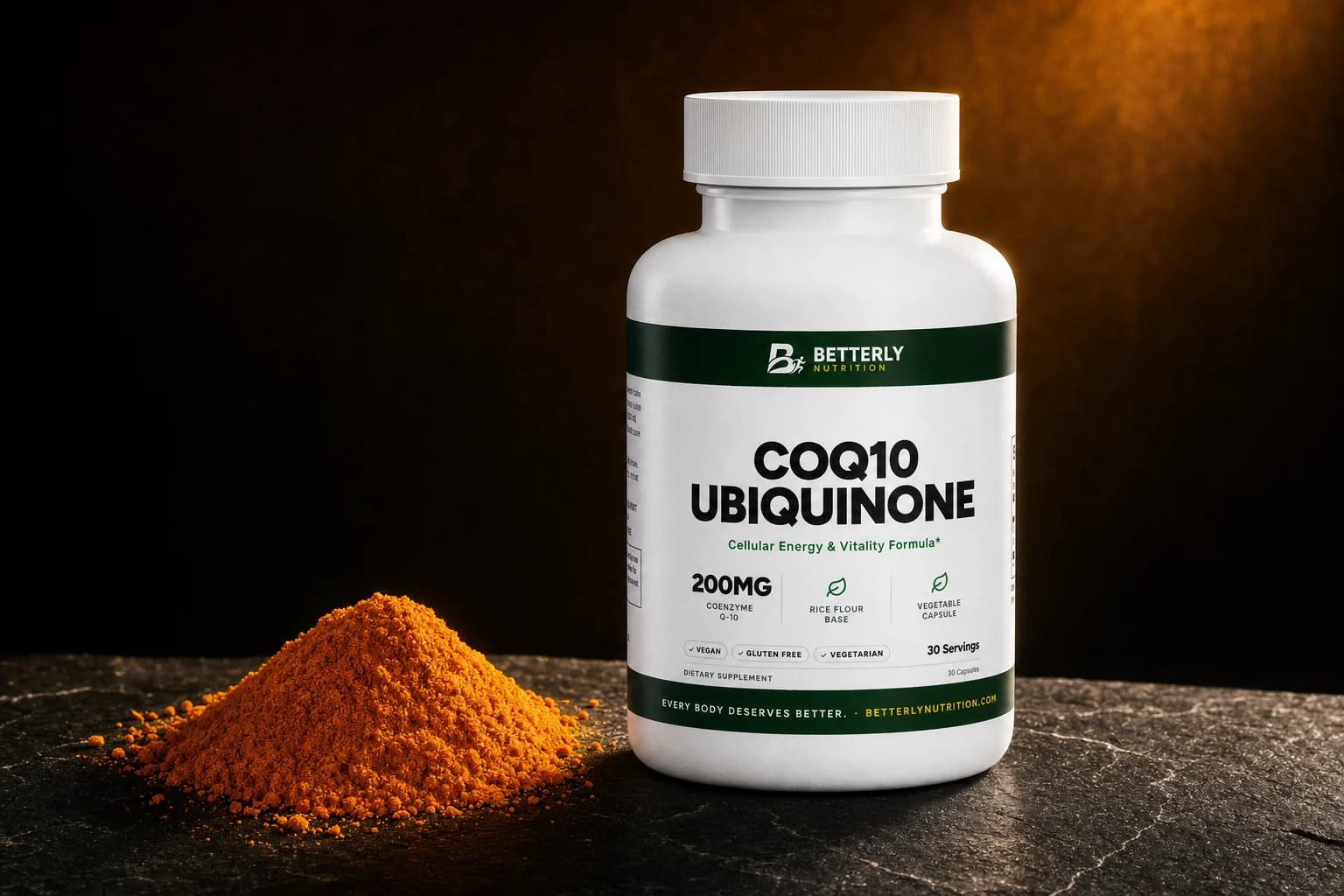
From our shop: CoQ10 Ubiquinone Capsules — 200 mg of coenzyme Q-10 as ubiquinone per 1-capsule serving, in a hypromellose vegetable capsule with rice flour as the only other ingredient.
Does ubiquinol need a different dose than ubiquinone?
No federal source we used sets a different dose for ubiquinol; CoQ10 has no Daily Value in either form, so your label's suggested use sets the amount.
Our panel shows three asterisks where a %DV would sit, with the footnote "Daily Value (DV) not established." Our label's suggested use is one 200 mg capsule once a day, and the amount on your own label is the number that counts.
Four dose rules that do hold, whichever form you buy:
- Follow one label and don't exceed it. Our label's first caution is "Do not exceed recommended dose."
- Add up every product. Formulas that list CoQ10, like the MCT capsule above, count toward your total. Some multivitamins add it too, so check yours.
- Don't double up by mixing forms. Ubiquinone and ubiquinol are the same CoQ10 in two states, so one bottle of each simply stacks your CoQ10.
- Don't convert milligrams on a brand's say-so. A dose shouldn't shrink just because a bottle claims better absorption.
For help lining up every label in your routine, we have a step-by-step walkthrough. If a broad formula might already cover you, see whether a multivitamin earns a spot.
How do you take CoQ10 Ubiquinone Capsules?
The label's suggested use for CoQ10 Ubiquinone Capsules is one capsule once a day, taken 20-30 minutes before a meal with an 8 oz (237 ml) glass of water.
Each bottle holds 30 capsules, or 30 servings, so it covers 30 days at one a day. The panel lists one active ingredient, Coenzyme Q-10 (Ubiquinone), at 200 mg per 1-capsule serving. The other ingredients are rice flour and hypromellose (the vegetable capsule). The front panel lists vegan and gluten free. Don't use it if the safety seal is damaged or missing.
The label anchors timing to a meal rather than a clock. Choose whichever meal is most regular for you and take the capsule 20-30 minutes ahead of it. Morning vs evening and other timing questions get their own guide on when to take CoQ10.
From our shop: CoQ10 Ubiquinone Capsules — 30 once-a-day capsules per bottle, with the form named on the panel, for anyone who has settled on ubiquinone.
When don't you need a CoQ10 supplement?
You may not need CoQ10 for workout performance: the NIH Office of Dietary Supplements finds little evidence it helps when your diet is already adequate.
The ODS fact sheet on supplements for exercise and athletic performance groups CoQ10 with vitamins C and E as antioxidants. Its bottom line is plain: there's little scientific evidence for taking them to improve performance if a nutritious diet already supplies enough. It also notes that antioxidant supplements might dull some of the gains exercise brings, such as muscle growth and power output.
You can also skip it, or at least slow down, if:
- You're switching from ubiquinone to ubiquinol only because an ad said your age demands it.
- A formula you already take lists CoQ10, and you haven't done the math.
- You want a quick lift you can feel. Our capsule lists no caffeine, and the energy question gets its own look in a guide on whether CoQ10 gives you energy.
CoQ10 is already in your body, per NCCIH, so taking more is a choice to make with your provider, not a gap you must fill.
It's also worth checking that CoQ10 is the nutrient you meant to shop for. NAD+ is a different coenzyme with a different job, explained in our guide to what NAD+ does for cellular energy, and both sit in our NAD+ & Longevity collection.
Who should check with a healthcare provider before taking CoQ10?
Anyone taking warfarin or insulin should ask a provider before starting CoQ10, and so should anyone pregnant, nursing, under 18, facing surgery or managing a medical condition.
NCCIH says CoQ10 may interact with the blood thinner warfarin and with insulin. It adds that CoQ10 may not be compatible with some other medical treatments. These notes are about CoQ10 itself, so switching forms doesn't sidestep them. If you take any prescription medicine, ask whoever prescribed it whether CoQ10 fits alongside it, and name the form you're considering.
On side effects, NCCIH reports no serious ones. It lists mild possibilities such as digestive upset and trouble sleeping. The ODS exercise fact sheet adds tiredness and headaches, and says these effects tend to be mild.
Our label's caution reads: "Do not exceed recommended dose. Consult a physician if pregnant, nursing, under 18, or have a medical condition." Add a scheduled surgery to that list.
FAQ: ubiquinol and ubiquinone
Is ubiquinol the same as CoQ10?
Yes, ubiquinol is CoQ10 in its reduced form, and "CoQ10" is the umbrella name for both states. The FDA's substance registry lists "reduced coenzyme Q10" among ubiquinol's names and keeps it in a separate entry from ubidecarenone, the oxidized form also called ubiquinone. A bottle labeled only "CoQ10" doesn't state its form, so look for ubiquinol, "reduced," ubiquinone or ubidecarenone on the panel. If none appears, ask the seller which form is inside.
Can you take ubiquinol with warfarin?
Ask your prescriber first: NCCIH says CoQ10 may interact with warfarin and with insulin, and that note covers ubiquinol and ubiquinone alike. Your prescriber knows your dose and how closely it's monitored, so they're the right person to say whether CoQ10 fits your routine. While you're taking warfarin, don't start or stop a CoQ10 product on your own.
Do you need ubiquinol after 40?
No federal source we used for this guide says adults over 40 need ubiquinol. The idea that older adults convert ubiquinone poorly and must switch is a common marketing claim, and neither NCCIH nor the NIH Office of Dietary Supplements makes it. If age is part of why you're shopping, ask your provider which form and amount make sense, then follow the label's suggested use.
Can you take ubiquinone and ubiquinol together?
You can, but there's rarely a reason to, because they're the same CoQ10 in two states. Taking one product of each just stacks your CoQ10 milligrams. Pick one form, follow that label's suggested use, and count any CoQ10 in other formulas, such as a multi-ingredient capsule, toward your daily total. If a provider has suggested an amount, bring both labels to that conversation.
How long does a bottle of CoQ10 Ubiquinone Capsules last?
One bottle of CoQ10 Ubiquinone Capsules lasts 30 days at the label's directions. It holds 30 capsules, and the suggested use is one capsule once a day, 20-30 minutes before a meal with an 8 oz (237 ml) glass of water. Store it in a cool, dry place, as the label directs.
Sources
- Ubidecarenone (UNII EJ27X76M46), FDA UNII substance registry
- Ubiquinol (UNII M9NL0C577Y), FDA UNII substance registry
- Coenzyme Q10, National Center for Complementary and Integrative Health
- Dietary Supplements for Exercise and Athletic Performance: Fact Sheet for Consumers, NIH Office of Dietary Supplements
If this left you looking for somewhere to start, read 200 mg ubiquinone CoQ10 capsules — its amounts per serving are listed on the page. For the practical questions this raises, how dosing, sourcing and subscriptions work is answered in one place.