On this page
- Key takeaways
- Why do NAD+, quercetin and resveratrol end up in one capsule?
- What do we actually know about NAD+ and resveratrol benefits?
- What is quercetin dihydrate from Sophora japonica?
- What does "Japanese knotweed extract (98% resveratrol)" mean?
- How do you read an NAD+ and resveratrol label, row by row?
- Is the combo better than taking trans-resveratrol and NMN separately?
- How do you take the 500mg NAD+ & Resveratrol Capsules?
- When don't you need an NAD+ and resveratrol supplement?
- Who should check with a healthcare provider first?
- FAQ: NAD+, quercetin and resveratrol
- Sources
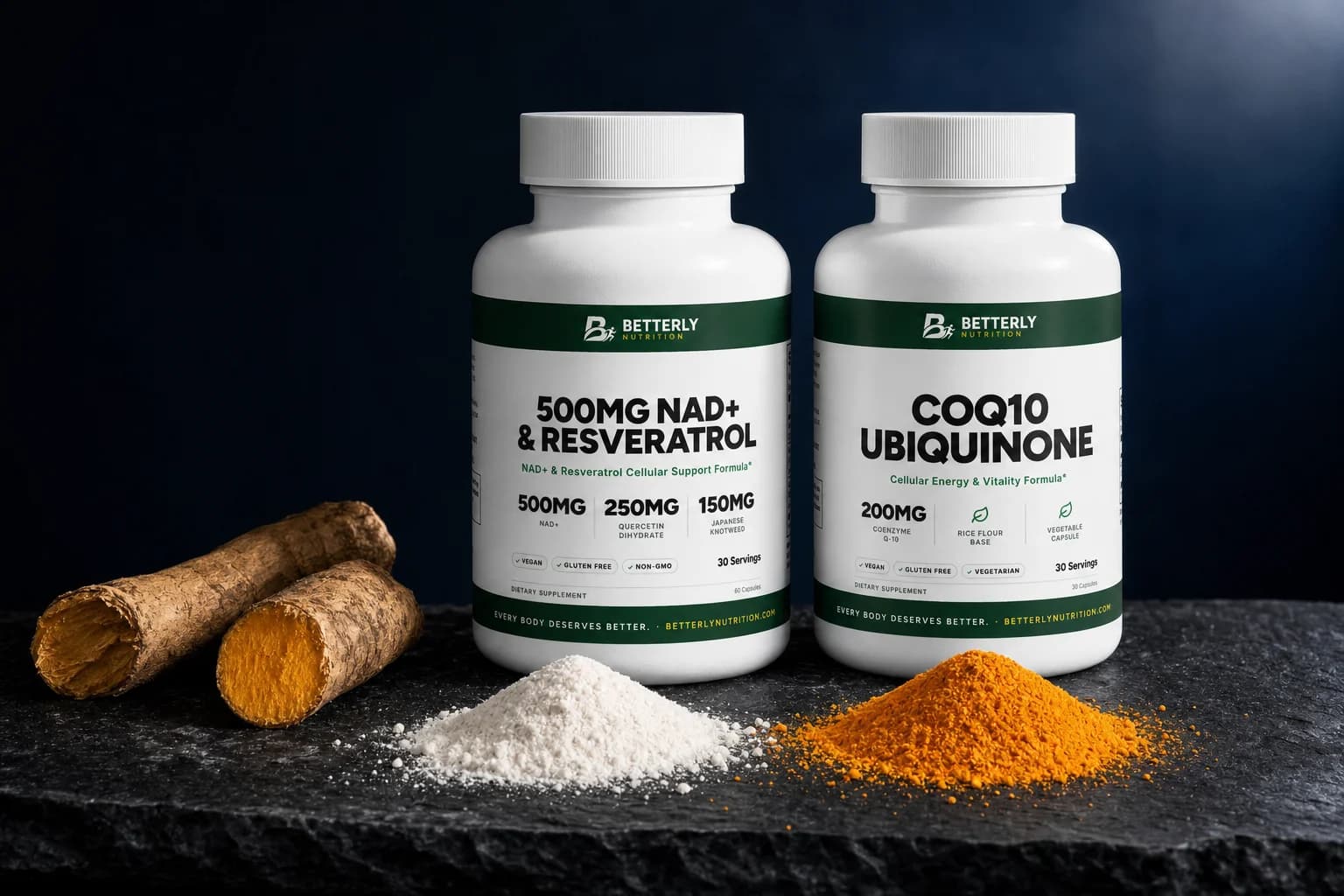
The short answer: NAD+, quercetin and resveratrol share a capsule because of a theory about sirtuins, a family of enzymes that run on NAD+. Resveratrol is studied for its effect on sirtuin activity, and quercetin's assigned job is protecting the NAD+ supply. We found no human trial of all three together. Our 500mg NAD+ & Resveratrol Capsules list 500mg NAD+, 250mg quercetin dihydrate extract and 150mg Japanese knotweed extract (98% resveratrol) per 2-capsule serving.
Key takeaways
- The case for pairing NAD+, quercetin and resveratrol is a theory about sirtuin enzymes, and we found no published human trial of the mix.
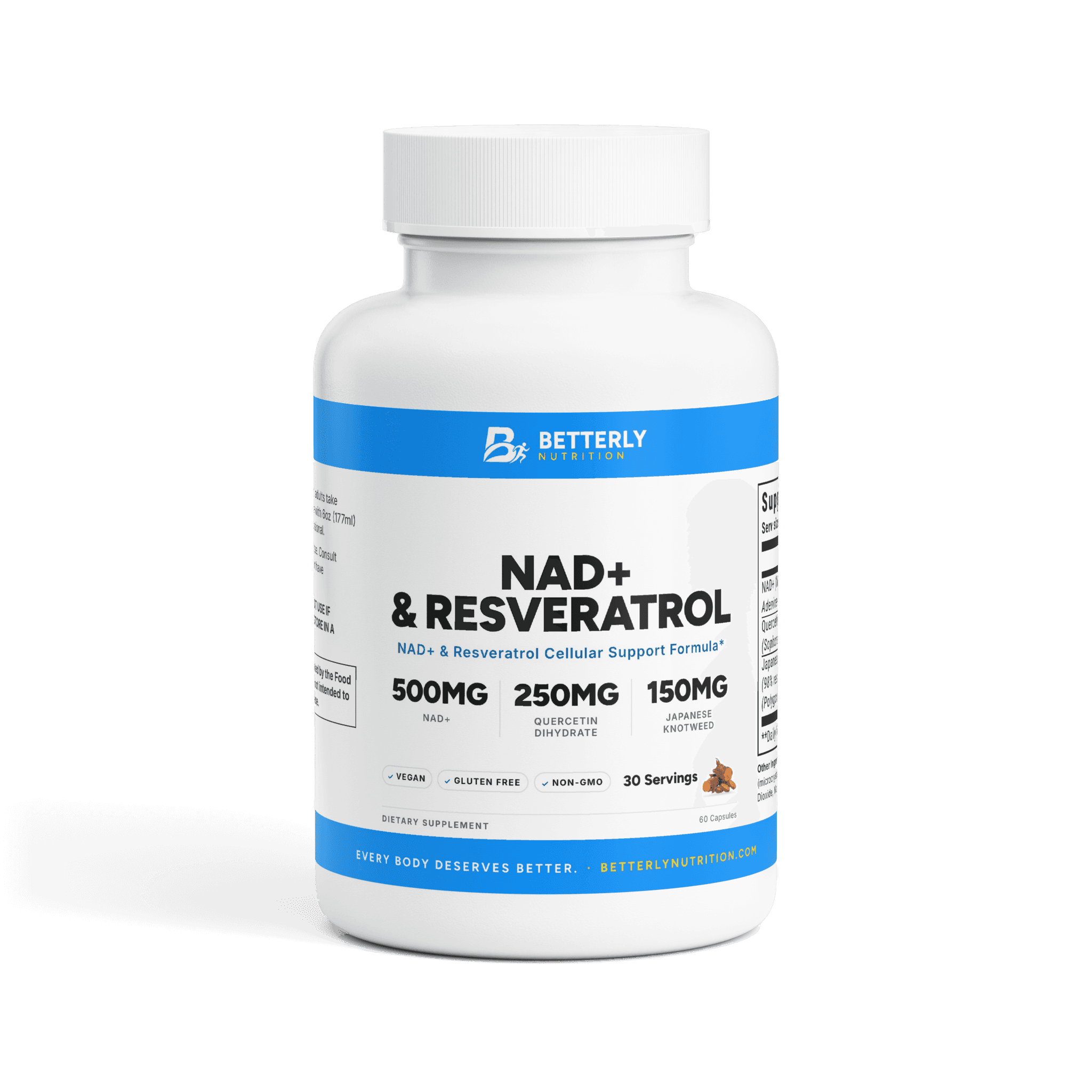
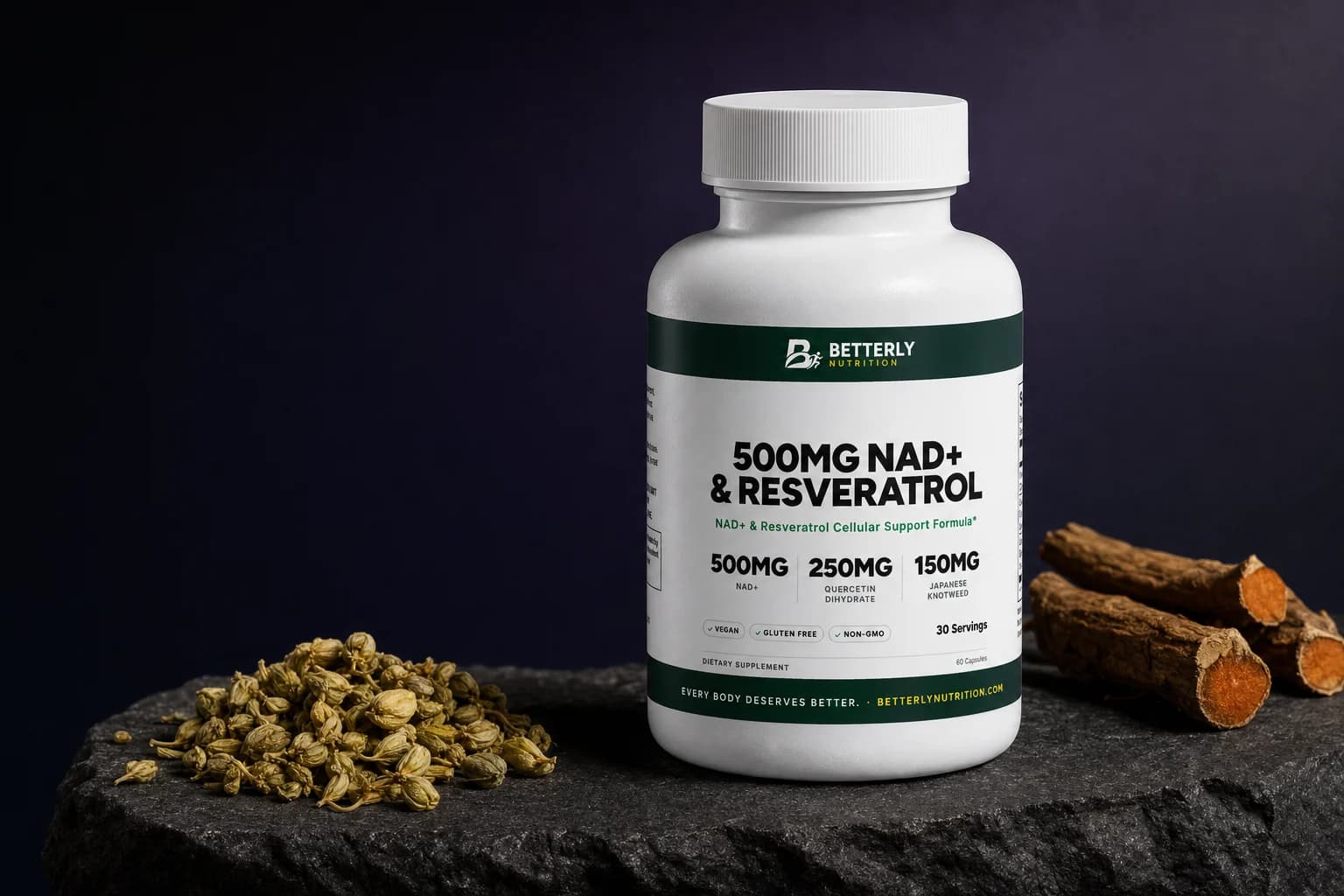
- Our 500mg NAD+ & Resveratrol Capsules list 500mg NAD+, 250mg quercetin dihydrate extract and 150mg Japanese knotweed extract (98% resveratrol) per 2-capsule serving.
- A "98% resveratrol" line gives the extract's standardized share, but it doesn't say trans or cis, and it isn't a separate resveratrol amount.
- Taking our Trans-Resveratrol Capsules and 500mg NMN Capsules instead of the three-ingredient formula means 3 capsules a day, NMN in place of NAD+, and no quercetin.
We sell this three-ingredient formula and both single-ingredient bottles it's weighed against below, so read us as an interested party. Every product number here is copied from our own Supplement Facts panels, and each health-research point names and links its source.
Why do NAD+, quercetin and resveratrol end up in one capsule?
NAD+, quercetin and resveratrol end up in one capsule because each one maps onto a step of the same theory about sirtuins and their NAD+ supply.
NAD+ (nicotinamide adenine dinucleotide) is a coenzyme, a helper molecule your cells use to turn food into energy. Our plain-English guide to NAD+ and cellular energy covers the basics. Sirtuins are enzymes whose activity rises and falls with how much NAD+ a cell has on hand.
The theory hands each ingredient a job:
- NAD+ is the supply, since the capsule holds the coenzyme itself.
- Quercetin is the guard. The idea is that it slows CD38, an enzyme that breaks NAD+ down, so more of the supply stays put. We couldn't find a federal health source that covers this step.
- Resveratrol is the switch. LiverTox, a National Institutes of Health reference, says resveratrol stimulates the activity of SIRT1, one of the sirtuins.
Supply, guard, switch. The trouble is that none of those steps has been reliably shown in people taking a capsule.
What do we actually know about NAD+ and resveratrol benefits?
We know little about NAD+ and resveratrol benefits in people: no human trial of this formula turned up, and the pairing theory rests on lab work.
| Step in the theory | Where it stands | What's still open |
|---|---|---|
| Quercetin slows CD38 | No federal source we found covers it | Whether a swallowed dose does it in you |
| Resveratrol engages SIRT1 | Lab and animal research | Whether it happens reliably in people |
| Oral NAD+ reaches your cells | Not established | How much of 500mg survives digestion |
Every row stops short of a human body. LiverTox says there's no conclusive evidence yet of resveratrol benefits in people.
The same reference is candid about absorption. It calls oral bioavailability poor, and says most of what reaches the blood has a sulfate or glucuronide group attached rather than being free resveratrol. Its reference list includes a 12-week, placebo-controlled trial of 75 mg a day in 29 volunteers that found no change in SIRT1 expression in muscle or fat tissue.
How much swallowed NAD+ reaches your cells intact is still open. We dig into it in our NMN vs NAD+ comparison, and our look at NAD+ capsules versus IV drips covers the route that skips digestion.
What is quercetin dihydrate from Sophora japonica?
Quercetin dihydrate is quercetin, a plant flavonoid, in a form that carries two water molecules per molecule; our label says it's extracted from Sophora japonica whole flower buds.
The NIH Office of Dietary Supplements (ODS) covers quercetin on its exercise and athletic performance fact sheet. It says quercetin is found in fruits, vegetables and some drinks like tea, and that a nutritious diet supplies up to about 13 mg a day.
Sophora japonica is a tree often called the Japanese pagoda tree. Its flower buds are a common source of rutin, a sugar-bound form of quercetin. Our label names the plant and the part, but not how the supplier gets from bud to quercetin.
Here's the honest gap in our own panel. The quercetin row reads "Quercetin Dihydrate Extract" at 250mg, with no purity percentage. That's the weight of the extract as named, water included. The panel doesn't say how much of it is quercetin itself, and we'd rather point that out than guess.
For scale, 250mg of extract sits well above that 13 mg. It's below the roughly 1,000 mg a day used in the athlete studies ODS reviewed, which lasted up to 8 weeks. ODS found limited research there, with any benefits tending to be small. Those studies found no side effects, but ODS adds that quercetin "hasn't been studied enough to know whether it's really safe."
What does "Japanese knotweed extract (98% resveratrol)" mean?
"Japanese knotweed extract (98% resveratrol)" means the resveratrol comes from Polygonum cuspidatum root, and the extract was standardized so resveratrol makes up 98% of it.
LiverTox says resveratrol is most concentrated in the skin of red grapes and other fruits such as mulberries, blueberries and blackberries. Our two resveratrol products name Polygonum cuspidatum root instead.
The ODS background sheet on botanical supplements describes standardization as measuring specific marker chemicals and adjusting batches so they come out consistent. It also notes that U.S. law doesn't require it, and that "there is no legal or regulatory definition of the term in the United States."
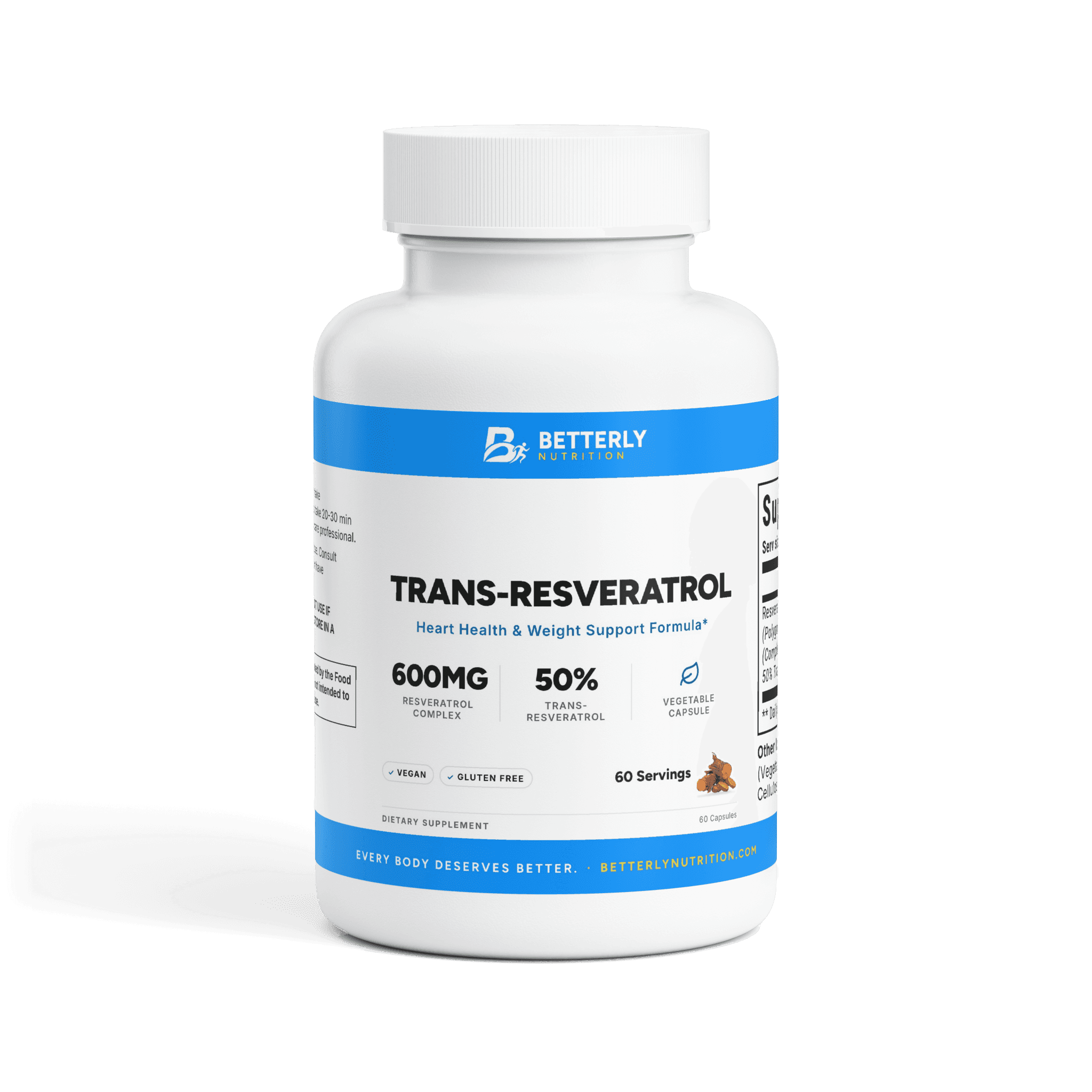
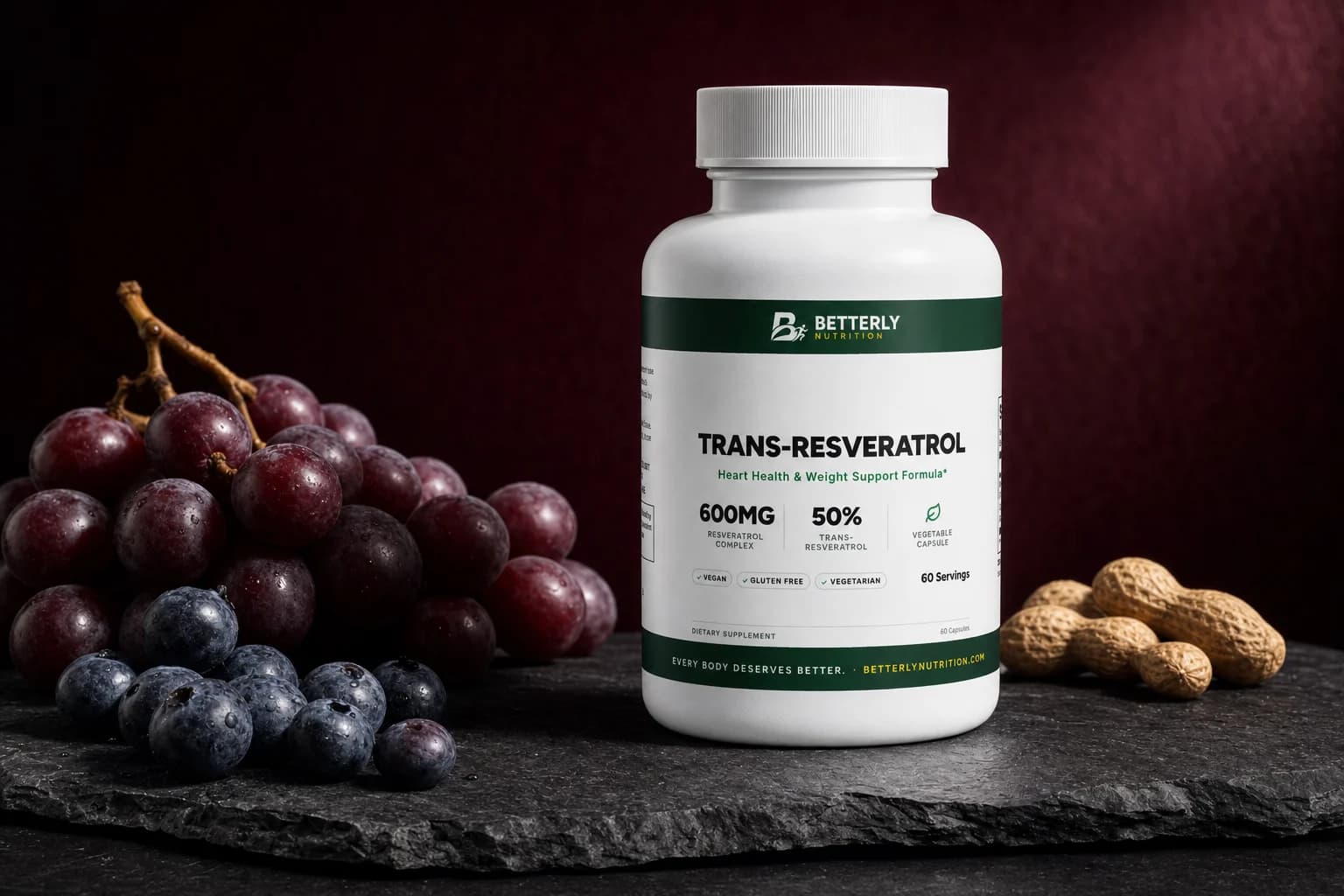
The 98% still leaves two blanks. First, it doesn't name a form. LiverTox notes that resveratrol exists in both trans and cis configurations. Our combo's line just says "resveratrol." Our Trans-Resveratrol Capsules do name the form, listing 600mg of a root complex containing 50% trans-resveratrol per 1-capsule serving.
Second, the percentage isn't a separate amount. The combo panel lists 150mg of extract and prints no standalone resveratrol row, so any milligram figure you work out from the 98% is your estimate, not a label fact.
How do you read an NAD+ and resveratrol label, row by row?
Read an NAD+ and resveratrol label one row at a time: confirm the serving size, check each ingredient's molecule, plant part and percentage, then note what's missing.
| Row as printed | What it tells you | What it leaves open |
|---|---|---|
| Serving Size 2 Capsules, 30 servings | Each amount covers the full day | Nothing; 60 capsules last 30 days |
| NAD+ 500mg | Names NAD+ itself, not NMN or NADH | How much survives digestion |
| Quercetin Dihydrate Extract 250mg (whole flower bud) | Plant and part are named | No purity percentage |
| Japanese Knotweed Extract 150mg (98% resveratrol, root) | Plant, part and standardized share | Trans or cis; no resveratrol row |
| Daily Value ** | No reference intake exists for these three | Nothing to measure against |
Our panel is specific about plants and parts, exact about the knotweed, and quiet on quercetin purity and resveratrol form. Each ingredient also gets its own amount, which matters: a proprietary blend lists one total for several ingredients and hides how much of each you get. Beyond the three actives, the panel lists brown rice flour, olive oil, microcrystalline cellulose, silicon dioxide, magnesium stearate and an HPMC vegetable capsule, and the label says vegan, gluten-free and non-GMO.
ODS makes a humbling point: judging a botanical product's quality from its label is difficult, and a word like "standardized" doesn't by itself signal high quality. A clear panel lets you compare bottles. It doesn't prove what's inside.
Holding a different brand? Run its panel through the same three columns, and watch for a 3- or 4-capsule serving behind a big front-label number. Every product in our NAD+ & Longevity collection lists its amounts per serving, so you can check ours the same way.
From our shop: 500mg NAD+ & Resveratrol Capsules — no proprietary blend: 500mg NAD+, 250mg quercetin dihydrate extract and 150mg Japanese knotweed extract (98% resveratrol) per 2-capsule serving, 60 vegetable capsules per bottle.
Is the combo better than taking trans-resveratrol and NMN separately?
Neither the NAD+ combo nor trans-resveratrol and NMN singles has been shown better; the combo is 2 capsules with quercetin, the singles 3 capsules with NMN instead of NAD+.
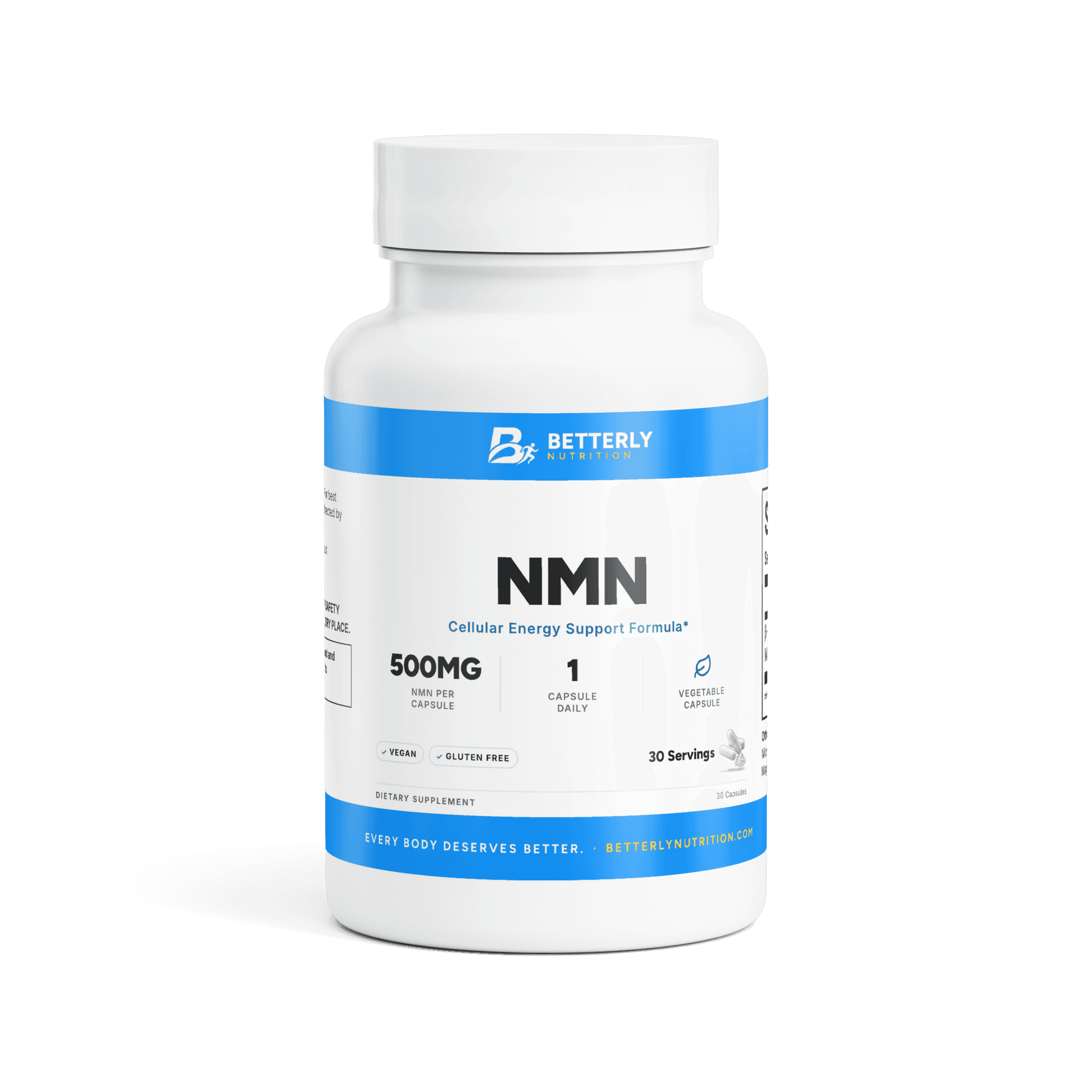
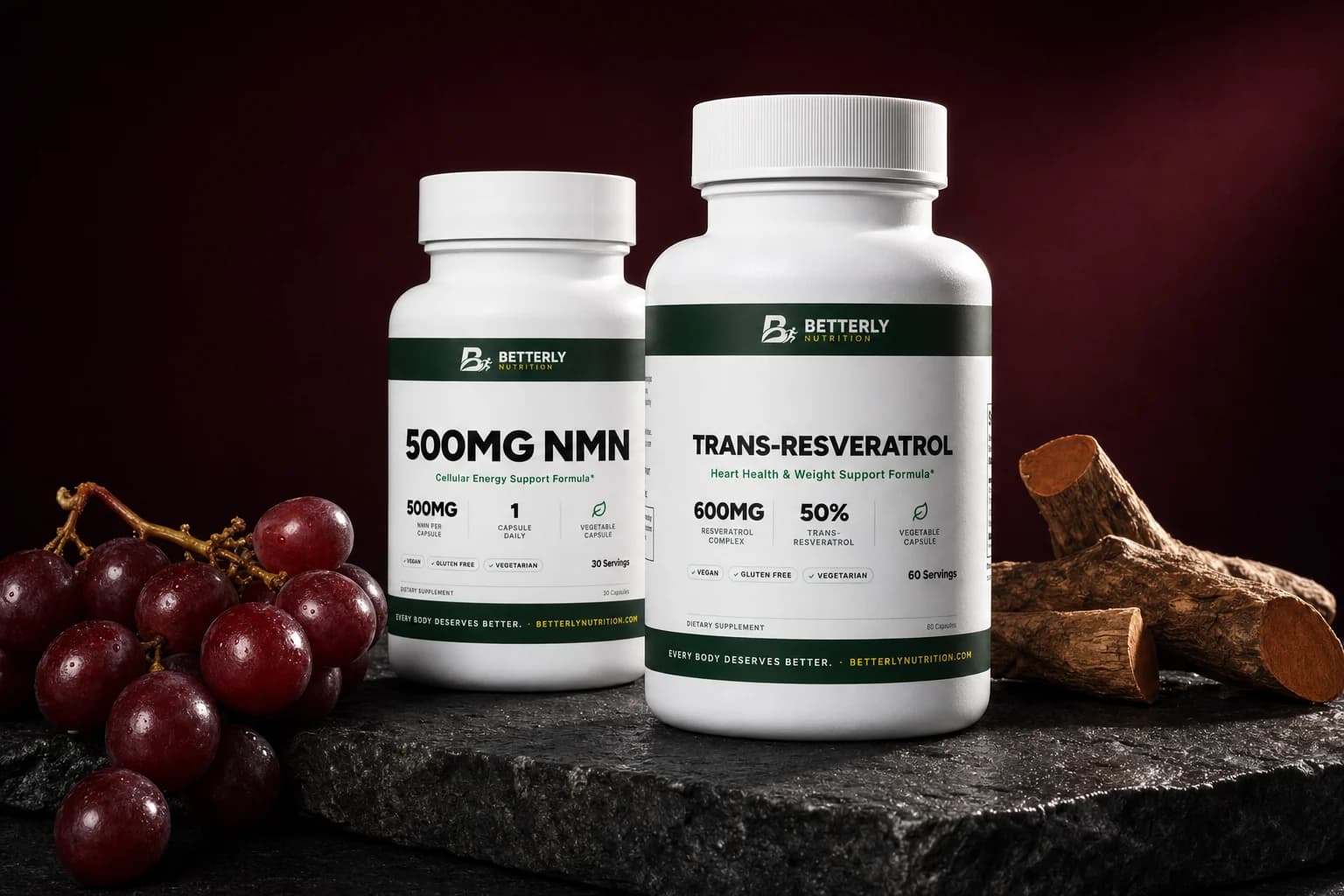
The singles route pairs our Trans-Resveratrol Capsules with our 500mg NMN Capsules. NMN (β-nicotinamide mononucleotide) is a building block your cells turn into NAD+, rather than NAD+ itself.
| Per day, at label use | The combo | The two singles |
|---|---|---|
| Capsules | 2 | 3 |
| NAD+ source | 500mg NAD+ | 500 mg NMN |
| Resveratrol line | 150mg extract (98% resveratrol) | 1,200mg complex (2 x 600mg, 50% trans) |
| Quercetin | 250mg extract | None |
| Label timing | 2 capsules daily with water | Resveratrol before 2 meals, NMN once daily |
Going by printed weights, the singles give you 1,200mg of resveratrol complex a day against the combo's 150mg of knotweed extract. They also name the trans form and let you change one ingredient without touching the other. The combo is one bottle, and it's the only route with quercetin.
What we'd avoid is stacking the routes. Adding the singles to the combo puts resveratrol in two bottles and gives you two ways to NAD+, and none of the three labels was written for that mix. If the two-bottle routine appeals, our guide to taking resveratrol and NMN together walks through the schedule.
From our shop: Trans-Resveratrol Capsules — a single-ingredient option whose panel names the trans form, with 600mg of Polygonum cuspidatum root complex containing 50% trans-resveratrol per 1-capsule serving.
How do you take the 500mg NAD+ & Resveratrol Capsules?
Take the 500mg NAD+ & Resveratrol Capsules the way the label says: adults take 2 capsules daily with 6oz (177ml) of water, or as a healthcare professional directs.
The caution line opens with "Do not exceed recommended dose," so those 2 capsules are the whole day.
The label doesn't name a time of day, doesn't say whether to swallow both capsules at once, and doesn't mention food. Nothing on the panel, such as caffeine, points to morning or evening, so tie it to something you already do daily.
- Store the bottle somewhere cool and dry, out of children's reach.
- Pass on any bottle whose safety seal is damaged or missing.
- Missed a day? Skip it rather than taking 4 the next.
Before you start, scan your other bottles for Polygonum cuspidatum, resveratrol, quercetin, NMN or NAD+. If any turn up, raise the overlap with a pharmacist first.
When don't you need an NAD+ and resveratrol supplement?
You don't need an NAD+ and resveratrol supplement if you're hoping to feel a change, already take resveratrol or NMN, or want to control each ingredient's amount.
- You want to notice something. The theory rests on lab work, and our label promises nothing you'll feel.
- Resveratrol or an NAD+ building block is already in your cabinet, so the combo would repeat it.
- You'd like to adjust one ingredient. A combo locks the three amounts together.
- Your budget has more pressing jobs. Fruit, vegetables and tea give you some quercetin anyway, per ODS, and red grapes and berries carry some resveratrol, per LiverTox.
Who should check with a healthcare provider first?
Ask a healthcare provider before starting NAD+ with quercetin and resveratrol if you're pregnant or nursing, under 18, on any medication, living with a health condition or due for surgery.
Our label's caution reads: "Consult a physician if pregnant, nursing, under 18, or have a medical condition."
Medication is the other big one. LiverTox flags possible supplement-drug interactions for resveratrol with estrogens and with anticoagulants, the medicines often called blood thinners. If you take either, or any prescription, show your pharmacist the Supplement Facts panel before your first capsule.
Quercetin's safety picture is thin, as ODS says, and we didn't find a federal fact sheet on oral NAD+ to cite. If surgery is on the calendar, give the surgical team your full supplement list. And if you feel unwell after starting, stop taking it and call a healthcare provider.
FAQ: NAD+, quercetin and resveratrol
Is quercetin the same as resveratrol?
No, quercetin and resveratrol are different plant compounds, though both are polyphenols. Quercetin is a flavonoid found in fruits, vegetables and tea. Resveratrol is a stilbene that LiverTox says is most concentrated in red grape skins and some berries, and our supplements source it from Japanese knotweed root.
Are NAD+ and resveratrol the same thing?
No, NAD+ and resveratrol are different compounds. NAD+ is a coenzyme your own cells make and use to turn food into energy, while resveratrol is a compound made by plants. They're linked only by theory: sirtuin enzymes depend on NAD+, and resveratrol is studied for how it affects sirtuin activity. Neither ingredient turns into the other in your body.
Does quercetin help your body absorb resveratrol?
We found no evidence that quercetin helps your body absorb resveratrol, and no federal source that says so. LiverTox describes swallowed resveratrol as poorly available to the body, with most of what reaches the blood chemically altered, and it doesn't mention quercetin changing that. If a brand makes the claim, ask which human study it means.
What are the side effects of NAD+ and resveratrol?
Side effects of NAD+ and resveratrol taken with quercetin as one formula haven't been studied in people, as far as we could find. For resveratrol alone, LiverTox names mild digestive upset, nausea, headache and tiredness. ODS reports that athlete studies of quercetin found no side effects but calls its safety under-studied. Our label lists no side effects and tells you to stay within the recommended dose.
Does the NAD+ and resveratrol formula contain NMN or NADH?
No, the 500mg NAD+ & Resveratrol Capsules list NAD+ itself, not NMN or NADH. The panel's first row reads NAD+ (nicotinamide adenine dinucleotide) at 500mg per 2-capsule serving. NMN is a building block your cells turn into NAD+. NADH is the same coenzyme after it picks up electrons, as our NAD+ basics guide explains. So if another bottle lists NMN or NADH, it holds a different ingredient from ours.
Sources
- Botanical Dietary Supplements: Background Information for Consumers (NIH Office of Dietary Supplements)
- Dietary Supplements for Exercise and Athletic Performance: Fact Sheet for Consumers (NIH Office of Dietary Supplements)
- Resveratrol (LiverTox, National Library of Medicine, National Institutes of Health)
If this left you looking for somewhere to start, read NAD+ with resveratrol and quercetin capsules — its amounts per serving are listed on the page. For the practical questions this raises, how dosing, sourcing and subscriptions work is answered in one place.