On this page
- Key takeaways
- What's the difference between bilberry and blueberry?
- Is bilberry the same as huckleberry or wild blueberry?
- How do bilberries and blueberries taste, and can you buy them fresh?
- Bilberry vs blueberry benefits: what does the research say?
- Is bilberry better than blueberry for your eyes?
- Bilberry powder or extract: how do you read the label?
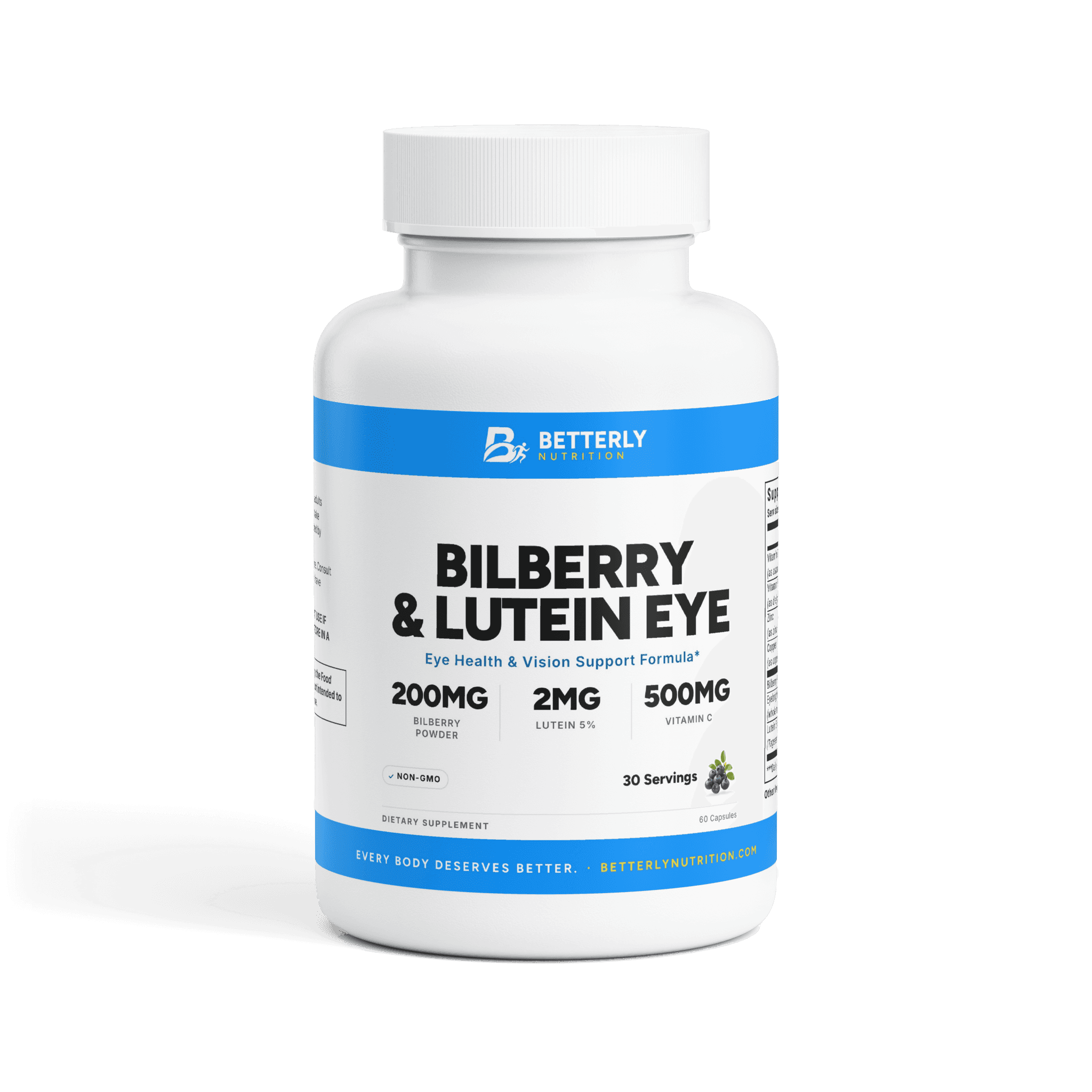
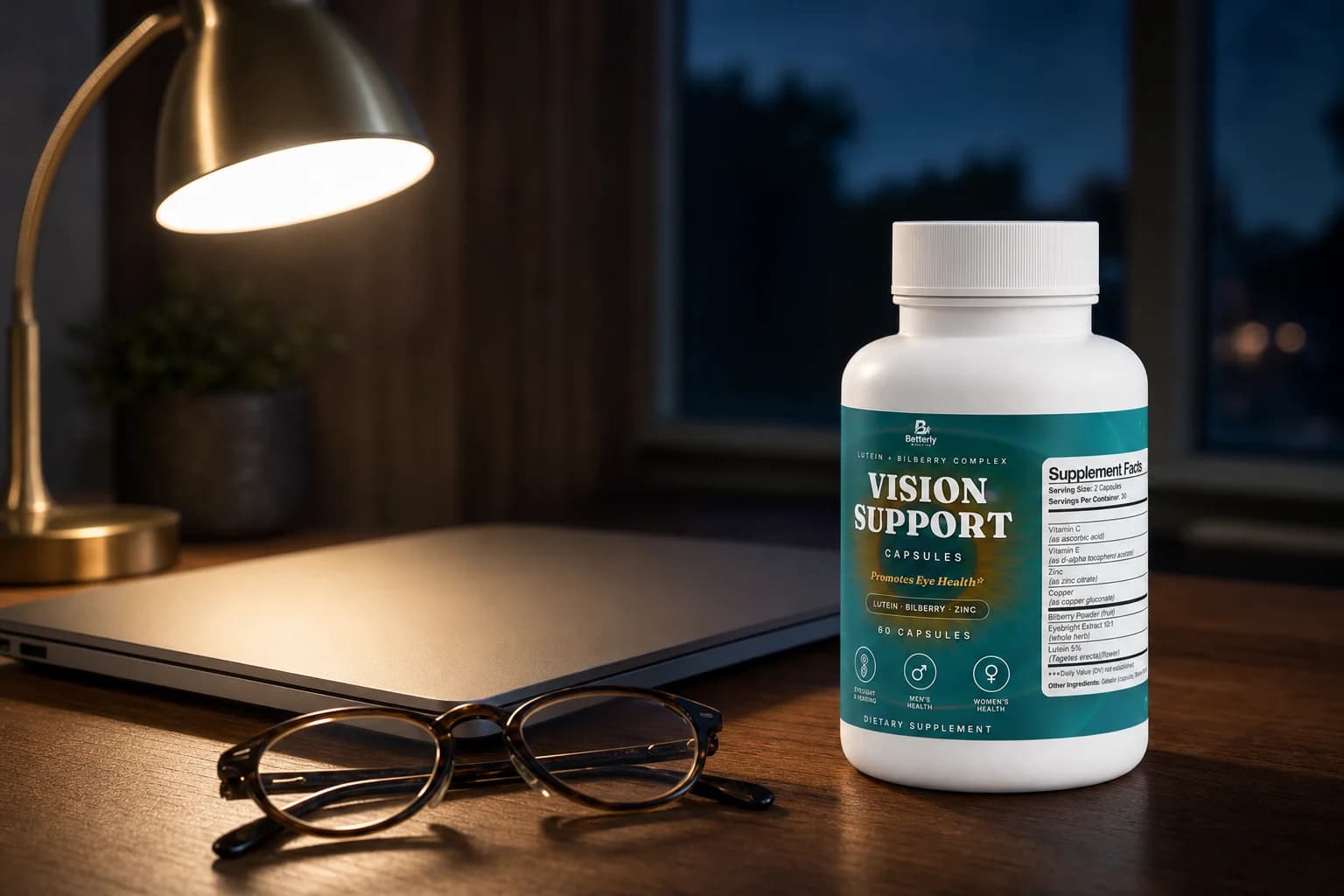
- What does the Bilberry & Lutein Eye Capsules label say?
- When don't you need a bilberry or blueberry supplement?
- Who should check with a healthcare provider first?
- FAQ: bilberry vs blueberry
- Sources
The short answer: Bilberry vs blueberry compares two related Vaccinium species. Bilberry (Vaccinium myrtillus) is a small berry that grows singly on a shrub about 4 to 18 inches tall. Highbush blueberry (Vaccinium corymbosum), one of North America's main farmed blueberries, grows on a bush 6.5 to 10 feet tall. Slice one of each and the bilberry is usually red-purple inside. NCCIH says bilberry hasn't been clearly shown to help any health condition.
Key takeaways
- Bilberry and the grocery-store blueberry are separate species in the same plant genus, Vaccinium.
- Slice a bilberry open and its flesh is usually red-purple, while a grocery blueberry is pale inside.
- NCCIH says the most rigorous studies haven't found that bilberry improves night vision in healthy people.
- Bilberry fruit powder and bilberry extract are different forms, so their milligrams don't compare one to one.
- Our Bilberry & Lutein Eye Capsules list 80 mg of zinc per 2-capsule serving, twice the NIH adult upper limit.
We sell a bilberry capsule in our targeted support range and a reds powder that lists blueberry extract, so we have a stake in both berries. Below is the botany, the evidence and the label math, with our own panels held to the same standard.
What's the difference between bilberry and blueberry?
Bilberry and blueberry are different Vaccinium species, and the quickest way to tell them apart is to cut one open: bilberry flesh is red-purple, while a grocery blueberry's is pale.
That inside color comes from anthocyanins, the purple-blue pigments in dark berries. In a bilberry you can see them running through the flesh. In a store blueberry you'll mostly see them in the skin, with pale green-white fruit underneath.
The plants differ too. The U.S. Forest Service's Fire Effects Information System (FEIS) profiles bilberry under the name whortleberry, a dwarf shrub whose berries grow singly on the stem. It also has a review of highbush blueberry, one of North America's most important farmed blueberries. Here's how FEIS describes the two species growing wild:
| Trait | Bilberry | Highbush blueberry (wild) |
|---|---|---|
| Species | Vaccinium myrtillus | Vaccinium corymbosum |
| Native range | Europe, Asia, western North America | Eastern North America |
| Plant height | About 4 to 18 inches | About 6.5 to 10 feet |
| Berry size | 5 to 8 mm | About 7 to 10 mm |
| Skin color | Dark red to bluish or purplish black | Blue-black |
Bilberry is the smaller plant with the smaller berry. Keep in mind that the highbush column describes the wild shrub. FEIS notes that more than 50 highbush cultivars have been developed since the 1920s, and the berries in a grocery clamshell come from bred varieties like these, which often run larger than wild fruit. So the size gap you see at the store is usually wider than the table shows.
Is bilberry the same as huckleberry or wild blueberry?
Bilberry isn't the same as a North American huckleberry or a wild blueberry, although they're close cousins and their common names overlap.
NCCIH lists bilberry, whortleberry and even huckleberry as common names for Vaccinium myrtillus. In the western US, "huckleberry" usually means other species, such as thinleaf huckleberry (Vaccinium membranaceum). FEIS notes that bilberry may carry genetic material from it, which shows how close these plants are.
"Wild blueberry" in US stores usually means lowbush blueberry (Vaccinium angustifolium), which FEIS calls low sweet blueberry and mentions in commercial fields. It's a separate species from both bilberry and highbush blueberry.
To tell them apart:
- Check the flesh. Pale flesh rules out bilberry, though it can't tell you which cousin you're holding.
- Check the plant. A bilberry patch stays around knee height or lower, and FEIS describes bilberry as single-fruited, so you won't see heavy bunches.
- Read the Latin name. On a jar or a supplement panel, Vaccinium myrtillus means bilberry.
How do bilberries and blueberries taste, and can you buy them fresh?
FEIS describes highbush blueberries as sweet and juicy, and bilberries as juicy with a "nutlike flavor." Fresh bilberries are hard to find in US grocery stores.
Our sources don't rank the two for tartness, so we won't either. If you find fresh bilberries, taste one next to a blueberry and decide for yourself.
People eat bilberries fresh or in jams and jellies, according to FEIS, which adds that gathering enough of the small berries can be difficult. A low shrub that bears its berries singly doesn't suit a grocery supply chain the way a tall blueberry bush does. So in the US, you'll mostly meet bilberry as a jam, a powder or an extract, and blueberry as fresh or frozen fruit.
Bilberry vs blueberry benefits: what does the research say?
NCCIH says bilberry "has not been clearly shown to be helpful for any health condition." We'd think of blueberries as a food first and a supplement ingredient a distant second.
The National Center for Complementary and Integrative Health keeps a short bilberry usefulness and safety page, and it's blunt. Many studies in people didn't use rigorous methods or were too small to settle anything. Bilberry does contain substances researchers want to keep studying, including anthocyanins, tannins and flavonoids. So a "bilberry benefits" list promising specific results is running ahead of the evidence.
Blueberries are simpler to place. FEIS describes highbush blueberries as a good source of vitamin C and natural sugars. Just keep scale in mind: a handful of blueberries is real fruit, while the 200 mg of bilberry powder in our eye capsule's 2-capsule serving is a fifth of a gram of dried fruit.
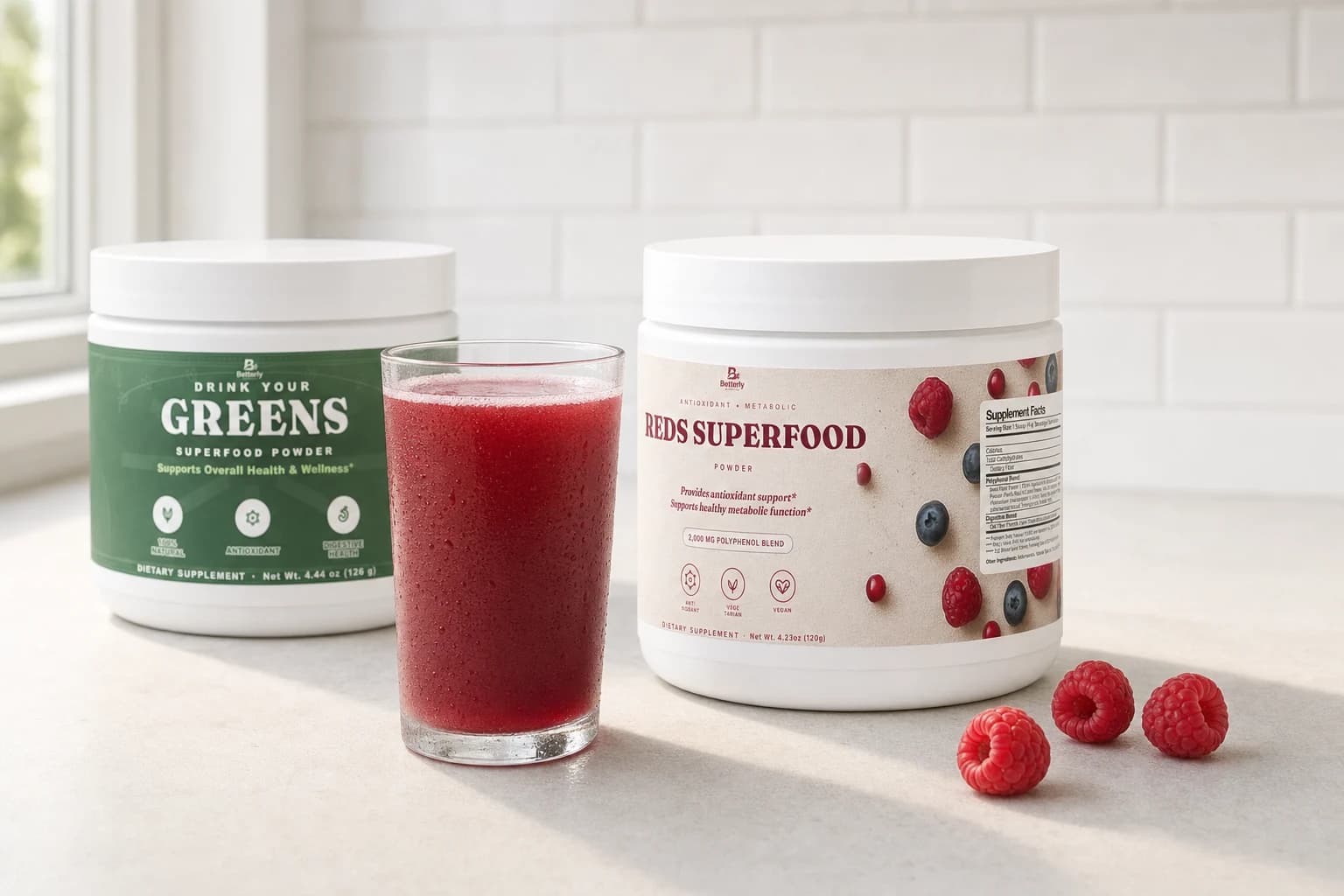
If you'd like berry pigments in a daily drink, a berry powder sits between fresh fruit and a capsule. Our comparison of reds and greens powders covers what each type holds.
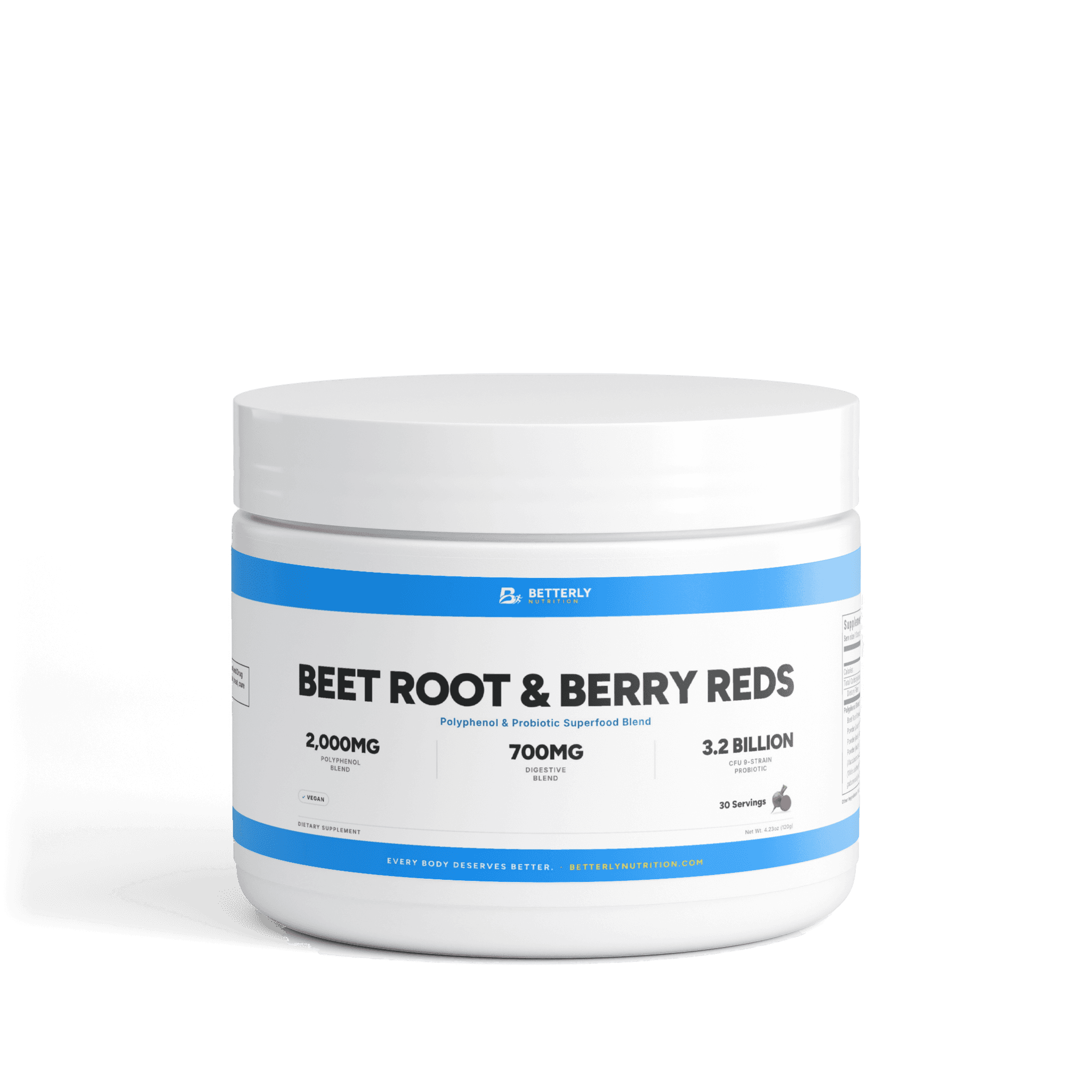
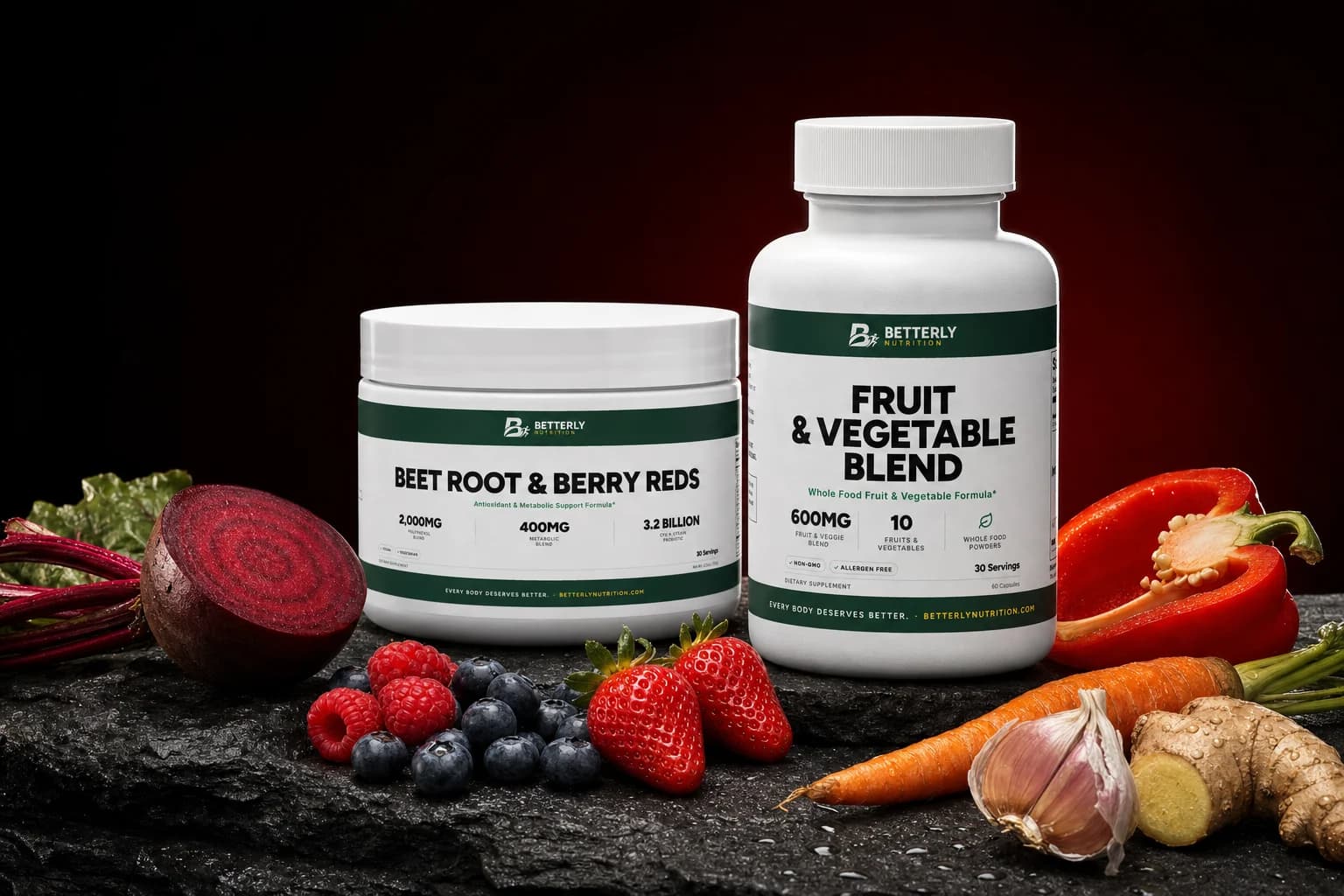
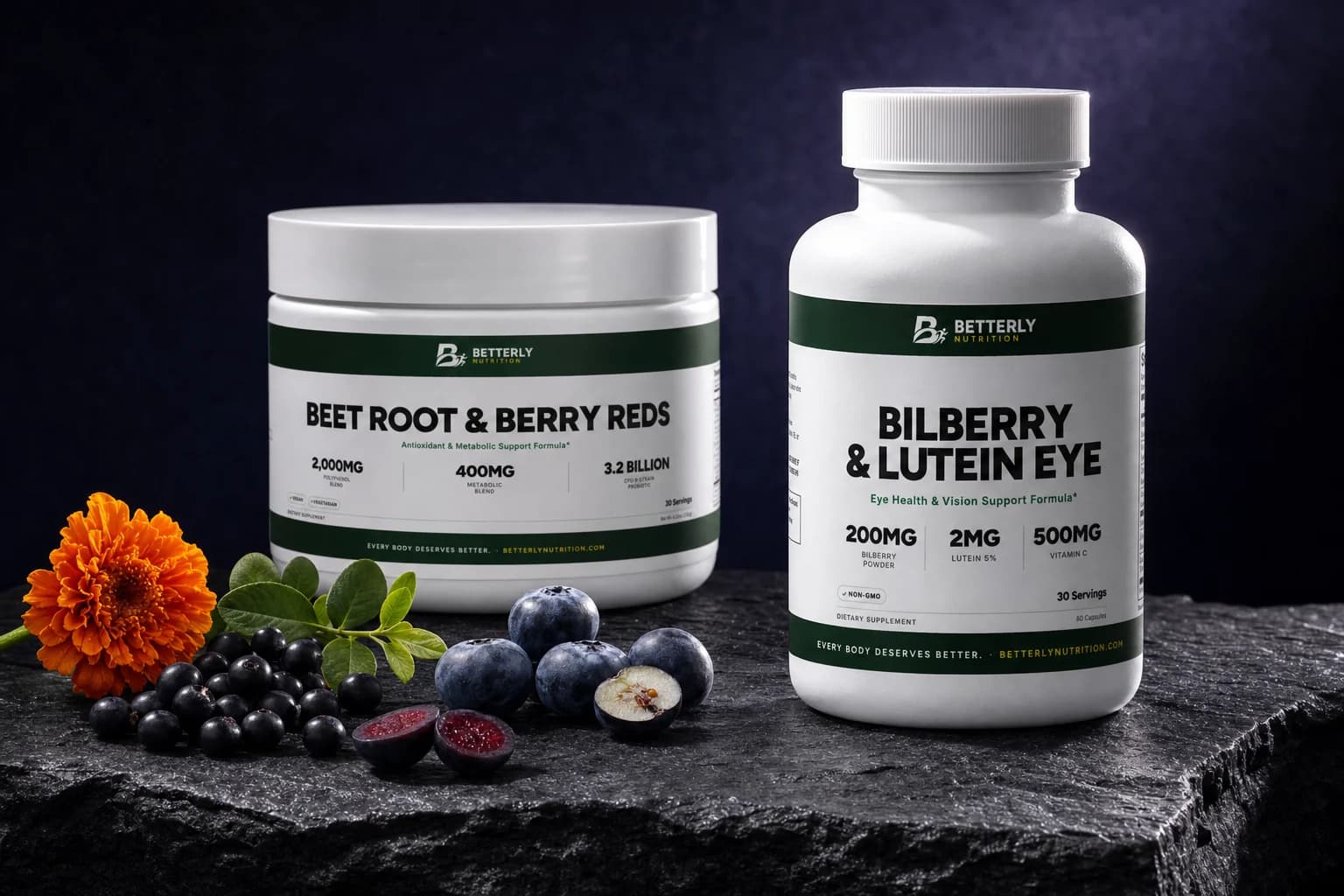
From our shop: Beet Root & Berry Reds Powder — a 2,000 mg Polyphenol Blend per 1-scoop (4 g) serving that lists blueberry extract among its 11 plants, and it's vegan per its label.
Is bilberry better than blueberry for your eyes?
Bilberry isn't proven better than blueberry for your eyes. NCCIH says the most rigorous studies haven't found that bilberry improves night vision in healthy people.
NCCIH notes a reported story that during World War II, British pilots ate bilberry jam, thinking it would help their night vision. It may have been superstition, or a deliberate hoax to hide improvements in radar. Either way, it prompted research on bilberry and night vision, and NCCIH says those results conflict and much of the work was poor quality.
So why do eye formulas choose bilberry over blueberry? Mostly tradition. The pilot story and the research that followed were about bilberry, so eye formulas kept using it.
We present our own eye capsule as a formula that supports normal eye health, and we won't promise more. If long screen days are what bother your eyes, our guide to eye vitamins for screen time covers lutein, zinc and the free habits that help most.
Bilberry powder or extract: how do you read the label?
A bilberry fruit powder is the whole dried berry, ground up. A bilberry extract concentrates certain compounds pulled out with a liquid, so the two don't compare milligram for milligram.
That's why numbers around the web don't line up. Our screen-time guide describes an office-worker study that used 480 mg of bilberry extract a day. The panel on our Bilberry & Lutein Eye Capsules lists 200 mg of Bilberry Powder (fruit) per 2-capsule serving. That's a different form, not a smaller dose of the same thing, and the panel prints no anthocyanin percentage to convert between them.
For reference, NCCIH says bilberry fruit extracts have been used in research at up to 160 mg a day for up to 6 months and appeared well tolerated.
Bilberry or blueberry shows up on seven of our labels. Here's each one, printed as the panel lists it:
| Betterly label | Berry as printed | Amount per serving |
|---|---|---|
| Bilberry & Lutein Eye Capsules | Bilberry Powder (fruit) | 200 mg per 2 capsules |
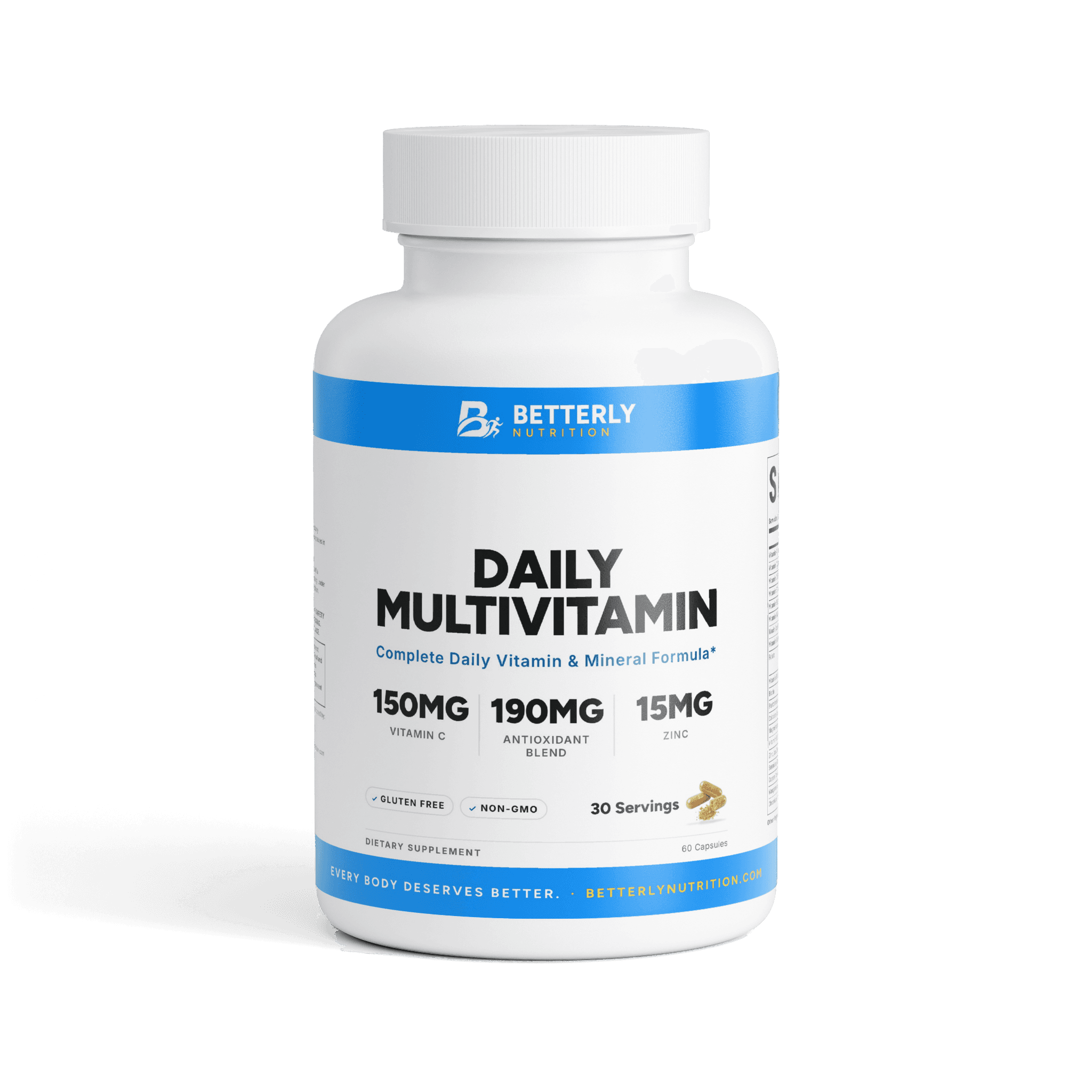
| Daily Multivitamin Capsules | Bilberry Extract (Vaccinium myrtillus) (fruit) | In a 190 mg blend per 2 capsules |
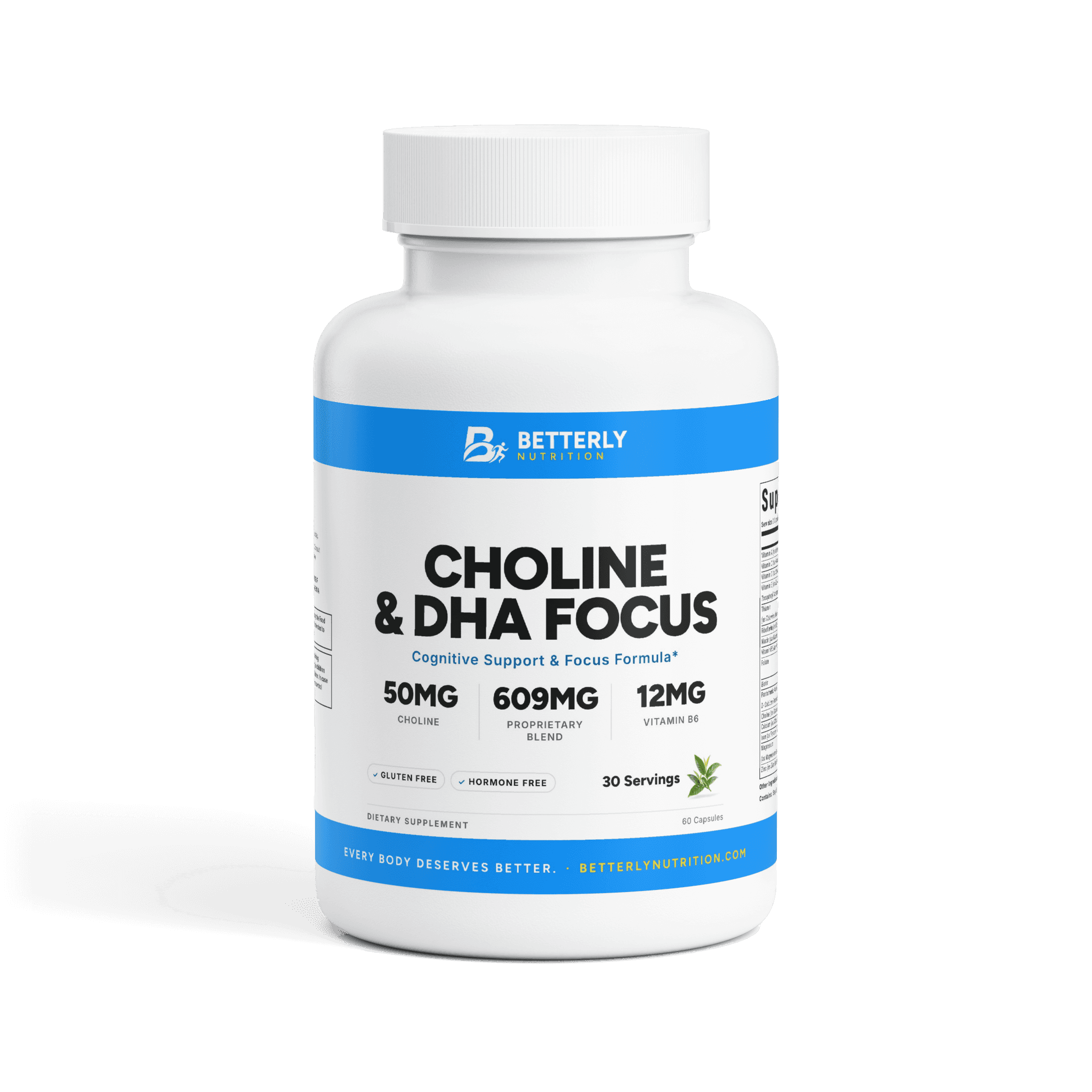
| Choline & DHA Focus Capsules | Bilberry Fruit Extract (Vaccinium myrtillus) | In a 609 mg blend per 2 capsules |
| Alfalfa & Chlorella Greens Powder | Bilberry Powder (leaf) | In a 1 g blend per 2 tsp (about 5 g) |
| Beet Root & Berry Reds Powder | Blueberry Extract (berry) | In a 2,000 mg blend per 1 scoop (4 g) |
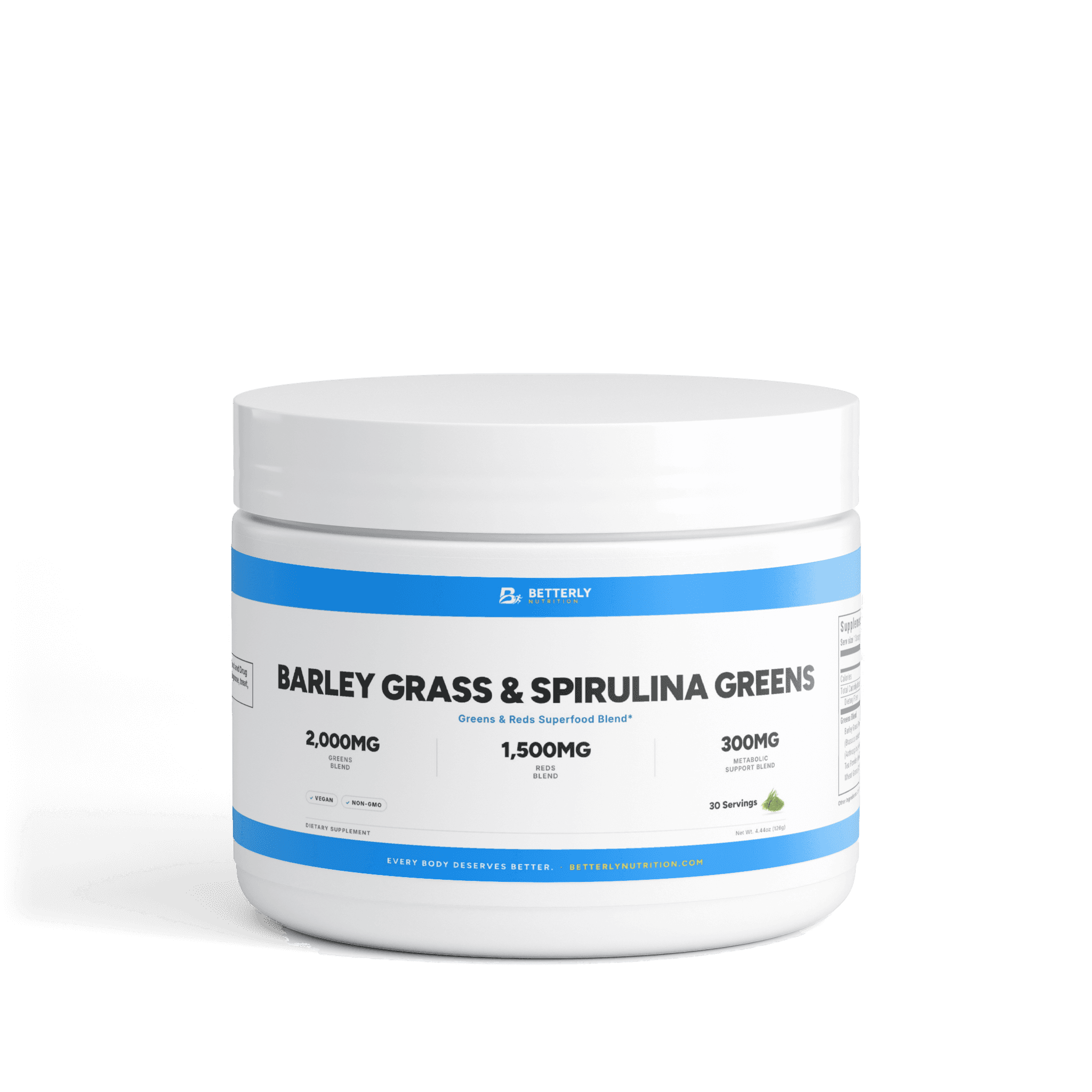
| Barley Grass & Spirulina Greens Powder | Blueberry Extract (berry) | In a 1,500 mg blend per 1 scoop (4.2 g) |
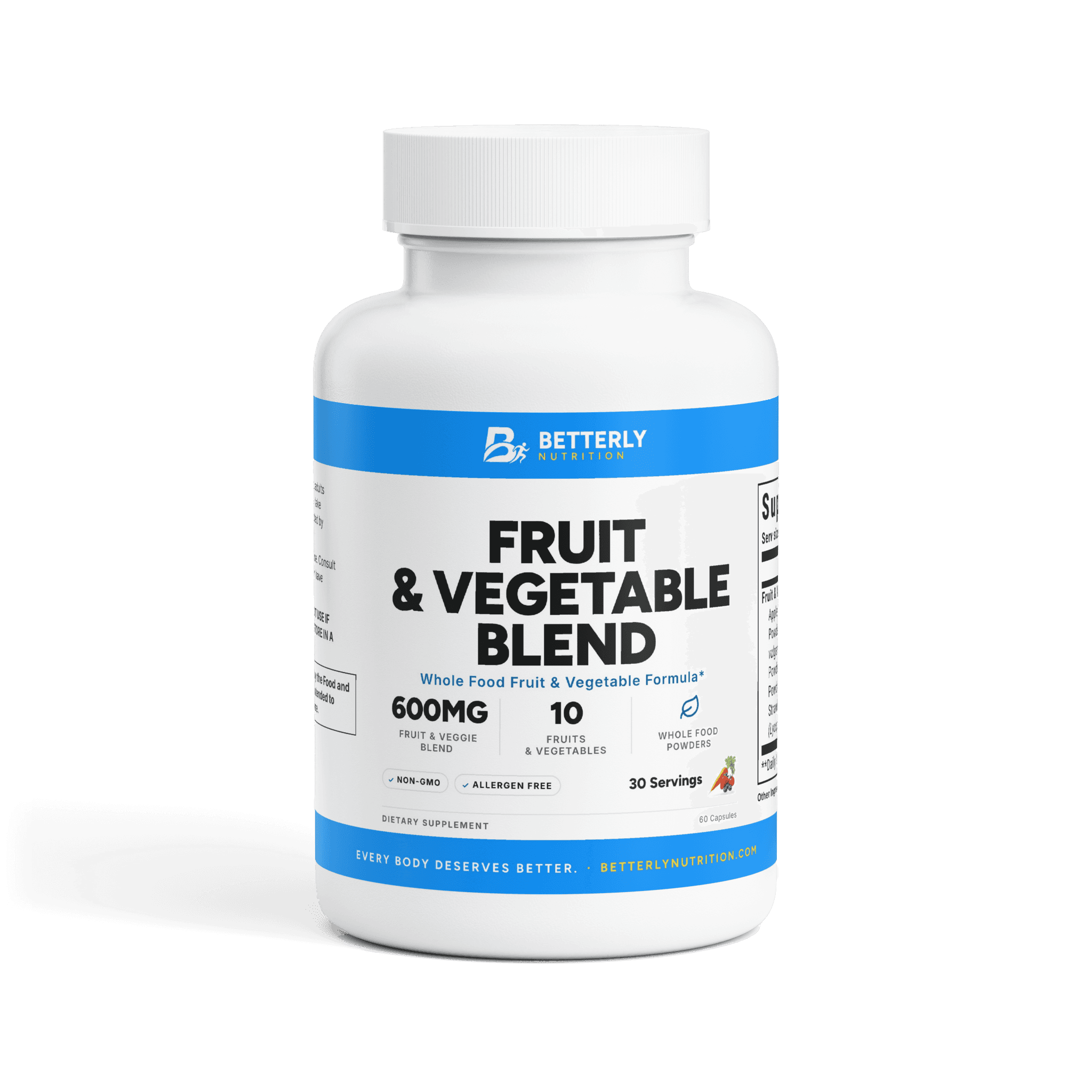
| Fruit & Vegetable Blend Capsules | Blueberry Powder (fruit) | In a 600 mg blend per 2 capsules |
Only the eye capsule gives bilberry its own amount. Every other row sits inside a blend, so you know the berry is there but not how much.
The parentheses matter too. NCCIH says bilberry leaves may be unsafe in high doses or over long periods. Our Alfalfa & Chlorella Greens Powder lists bilberry leaf inside a blend with no separate amount, so ask your provider about it if you use that powder daily.
When you read any bilberry label, check:
- The Latin name, Vaccinium myrtillus, so you know it isn't blueberry.
- The plant part: fruit or leaf.
- The form: powder or extract.
- Whether the berry has its own amount or hides inside a blend.
- The serving size. Our 200 mg covers 2 capsules, so each holds 100 mg.
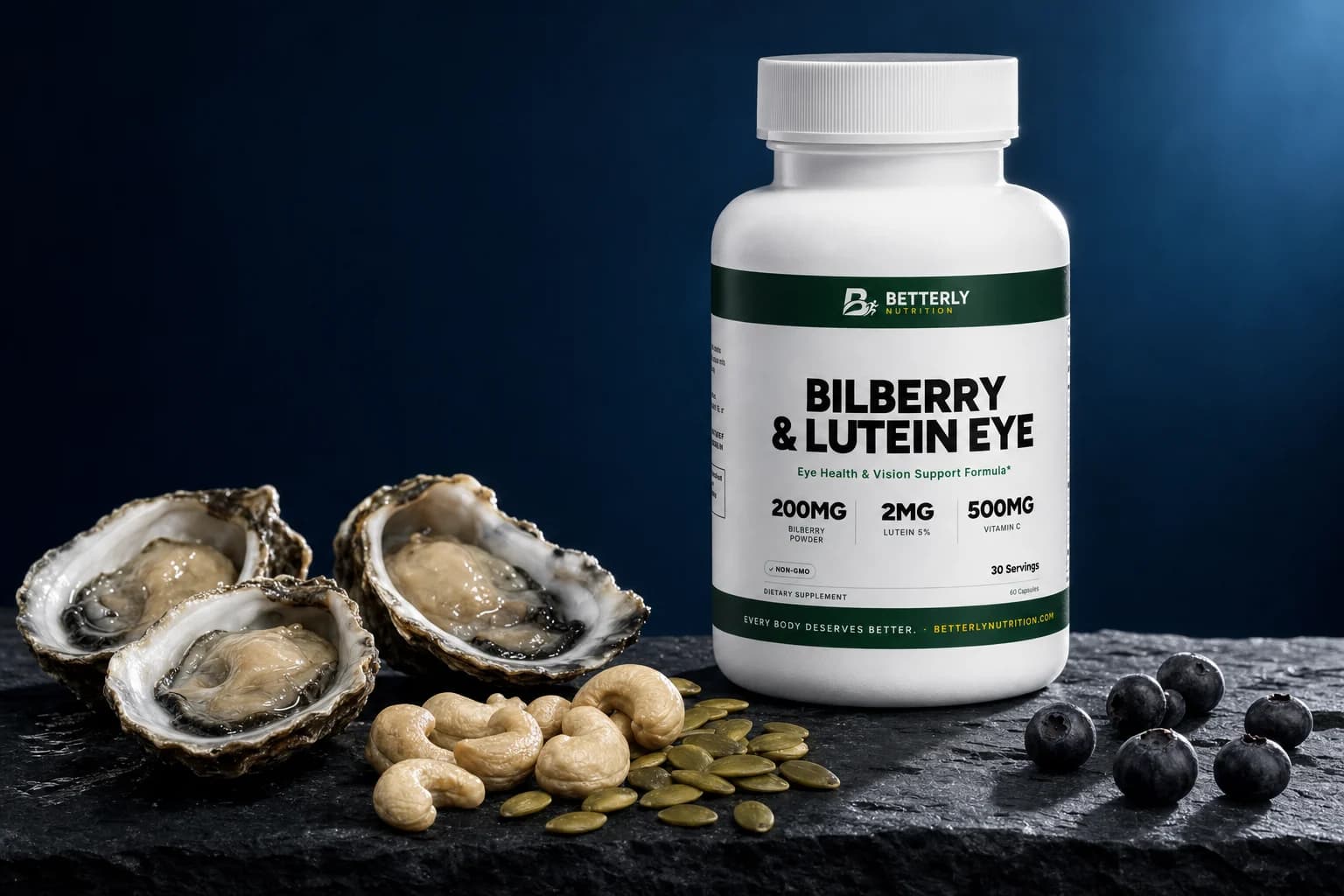
From our shop: Bilberry & Lutein Eye Capsules — 200 mg of bilberry fruit powder and 80 mg of zinc per 2-capsule serving, so read the zinc note below before you buy.
What does the Bilberry & Lutein Eye Capsules label say?
The label's suggested use for Bilberry & Lutein Eye Capsules is two capsules a day with 6 to 8 oz of water. That serving has 80 mg of zinc, twice the NIH adult upper limit of 40 mg, so talk with a healthcare provider before taking it.
Here's the panel per 2-capsule serving, as printed:
- Vitamin C (as ascorbic acid): 500 mg, 560% DV
- Vitamin E (as d-alpha tocopherol acetate): 30 mg, 200% DV
- Zinc (as zinc citrate): 80 mg, 730% DV
- Copper (as copper gluconate): 0.9 mg, 100% DV
- Bilberry Powder (fruit): 200 mg
- Eyebright Extract 10:1 (whole herb): 10 mg
- Lutein 5% (Tagetes erecta, flower): 2 mg
The bottle holds 60 capsules, or 30 servings, and the capsule shell is gelatin. Nothing on the bottle says morning or night.
Now the zinc. The NIH Office of Dietary Supplements zinc fact sheet for consumers puts the adult upper limit at 40 mg a day, counting every source, food included. One serving here is 80 mg on its own. ODS lists nausea, dizziness, headaches, upset stomach and loss of appetite as signs of too much zinc, and says long-term excess can lead to low copper levels.
We don't recommend taking this product at its labeled dose unless a healthcare provider has told you to, so talk with one before you start. Please don't improvise a smaller schedule on your own.
Add up zinc from everything else, too. Our Daily Multivitamin Capsules list 15 mg of zinc per 2-capsule serving, so the two together would reach 95 mg a day before food. For more, see our guide on whether 80 mg of zinc is too much.
When don't you need a bilberry or blueberry supplement?
You probably don't need a bilberry or blueberry supplement if you already eat berries, or if sharper night vision is your main reason for buying one.
- You eat berries most weeks. Fresh or frozen blueberries are easy to buy, and a bowl of fruit comes with no zinc question.
- Your routine is already heavy on zinc. Adding this capsule's serving only pushes the total higher.
- You want a guaranteed result. No honest bilberry label can promise one.
- Screen strain is the real complaint. Breaks, full blinks and a better screen setup come first, and they're free.
Who should check with a healthcare provider first?
Check with a healthcare provider before taking bilberry capsules if you're pregnant, nursing, under 18, on any medicine, facing surgery or managing a health condition.
- Pregnancy and nursing. NCCIH says little is known about bilberry in amounts greater than food during pregnancy or breastfeeding.
- Any medicine. If you take any type of medicine, NCCIH suggests a word with your provider before trying bilberry. ODS adds that zinc can interact with some antibiotics and thiazide diuretics.
- Teens. The label is written for adults, and ODS sets a lower zinc limit of 34 mg a day for ages 14 to 18.
The label's own caution reads: "Do not exceed recommended dose. Consult a physician if pregnant, nursing, under 18, or have a medical condition."
FAQ: bilberry vs blueberry
Is bilberry extract the same as blueberry extract?
No, bilberry extract and blueberry extract come from different fruits. Bilberry extract is made from Vaccinium myrtillus. Blueberry extract comes from a blueberry species, often cultivated highbush or wild lowbush, and the label may not say which. Our Daily Multivitamin Capsules print "Bilberry Extract (Vaccinium myrtillus) (fruit)," while our reds powder lists "Blueberry Extract (berry)" with no species named.
Can you eat bilberries raw?
Yes, ripe bilberry fruit is edible raw. FEIS says people eat the berries fresh or cook them into jams and jellies, and NCCIH considers bilberry fruit safe in amounts typically found in foods. The leaves are a different matter, and you should never eat a wild berry you can't identify with confidence.
Is bilberry the same as berberine?
No, bilberry and berberine are unrelated despite the similar spelling. Bilberry is a fruit, Vaccinium myrtillus. Berberine is a compound found in several other plants and sold as its own supplement. If berberine is what you meant, our berberine guide covers dosing and safety.
Is it safe to take bilberry every day?
Taking bilberry every day is a question for your healthcare provider, and with our eye capsule, zinc matters more than the berry. One 2-capsule serving already passes the ODS adult upper limit for zinc before you count food. NCCIH also suggests talking with a provider before using bilberry or other herbal products, especially if you take any medicine.
How long does a bottle of Bilberry & Lutein Eye Capsules last?
A bottle of Bilberry & Lutein Eye Capsules holds 60 capsules, which is 30 servings at the label's two capsules a day with water. Every daily serving carries 80 mg of zinc, twice the NIH adult upper limit of 40 mg, so check with your healthcare provider before using it.
Sources
- Bilberry: Usefulness and Safety, National Center for Complementary and Integrative Health
- Zinc: Fact Sheet for Consumers, NIH Office of Dietary Supplements
- Vaccinium myrtillus, whortleberry, USDA Forest Service, Fire Effects Information System
- Vaccinium corymbosum, highbush blueberry, USDA Forest Service, Fire Effects Information System
If this left you looking for somewhere to start, read bilberry fruit powder capsules with lutein — its amounts per serving are listed on the page. For the practical questions this raises, how dosing, sourcing and subscriptions work is answered in one place.