On this page
- Key takeaways
- Beet powder vs beet juice: what's actually different?
- Is beet powder as good as beet juice?
- How much beet is actually in one scoop of beet powder?
- Beet powder vs fresh beets: what do you give up?
- Beet juice vs beet pills: are beetroot capsules as good as powder?
- What about beet crystals, reds powders and beet gummies?
- How do you take beet powder and beetroot capsules, per the label?
- When don't you need a beet supplement at all?
- Who should check with a healthcare provider first?
- FAQ: beet powder and beet juice
- Sources
The short answer: Weighing beet powder vs beet juice starts with one detail: the exercise studies the NIH describes used juice. In those studies, the usual approach is 2 cups about 2.5 to 3 hours before exercise, and the NIH says it isn't known whether beetroot powder supplements have the same effects. Powder and capsules win on storage, prep and taste, not on matching that research.
Before the details, a disclosure. We sell a beet drink powder, beet capsules and a reds blend that names beet first, and beet also appears in several of our other blends, including two greens powders. We don't sell beet juice, so a win for powder is a win for us.
Key takeaways
- The NIH Office of Dietary Supplements says beet juice might improve aerobic exercise performance if you're recreationally active, and its summary rests on juice, not powder.
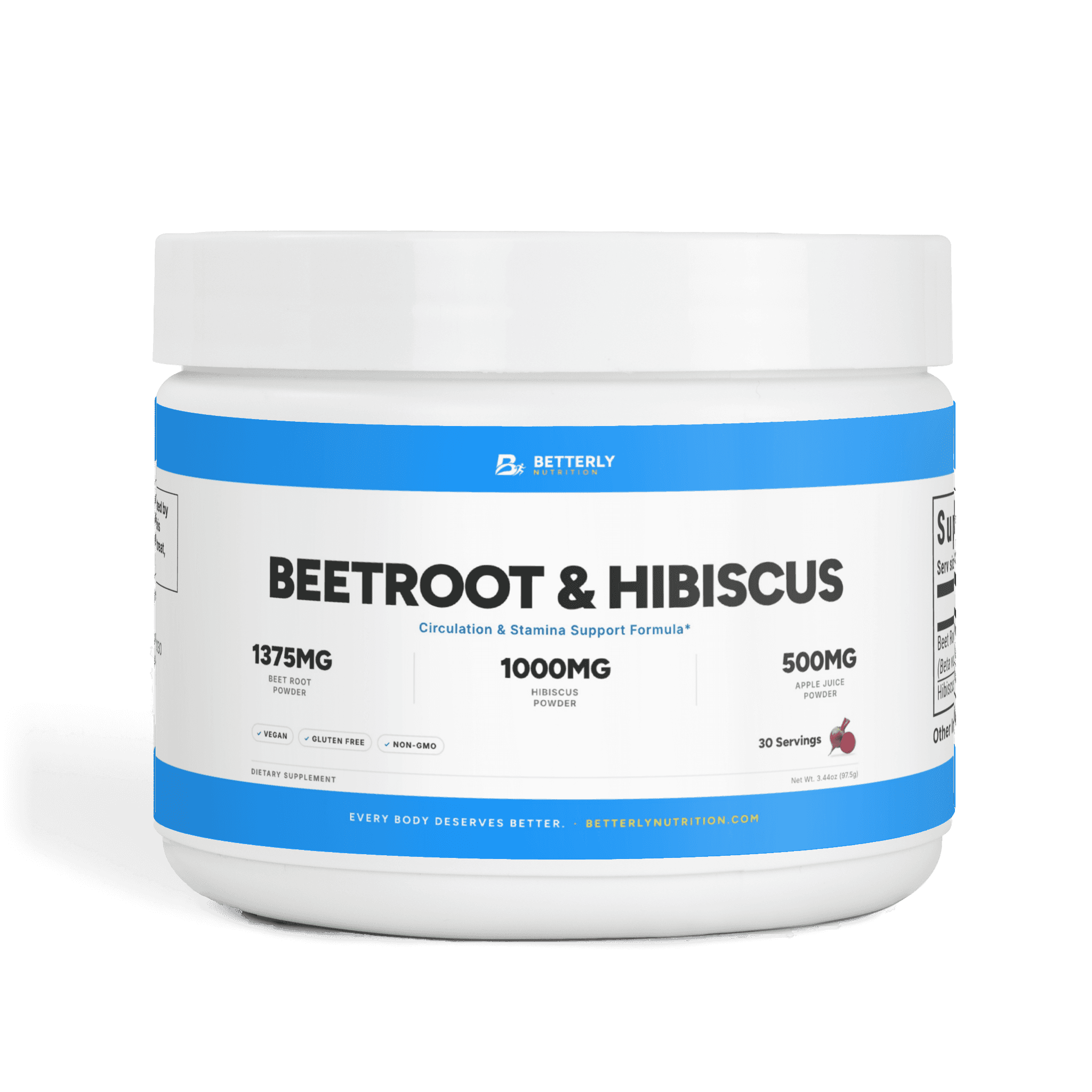
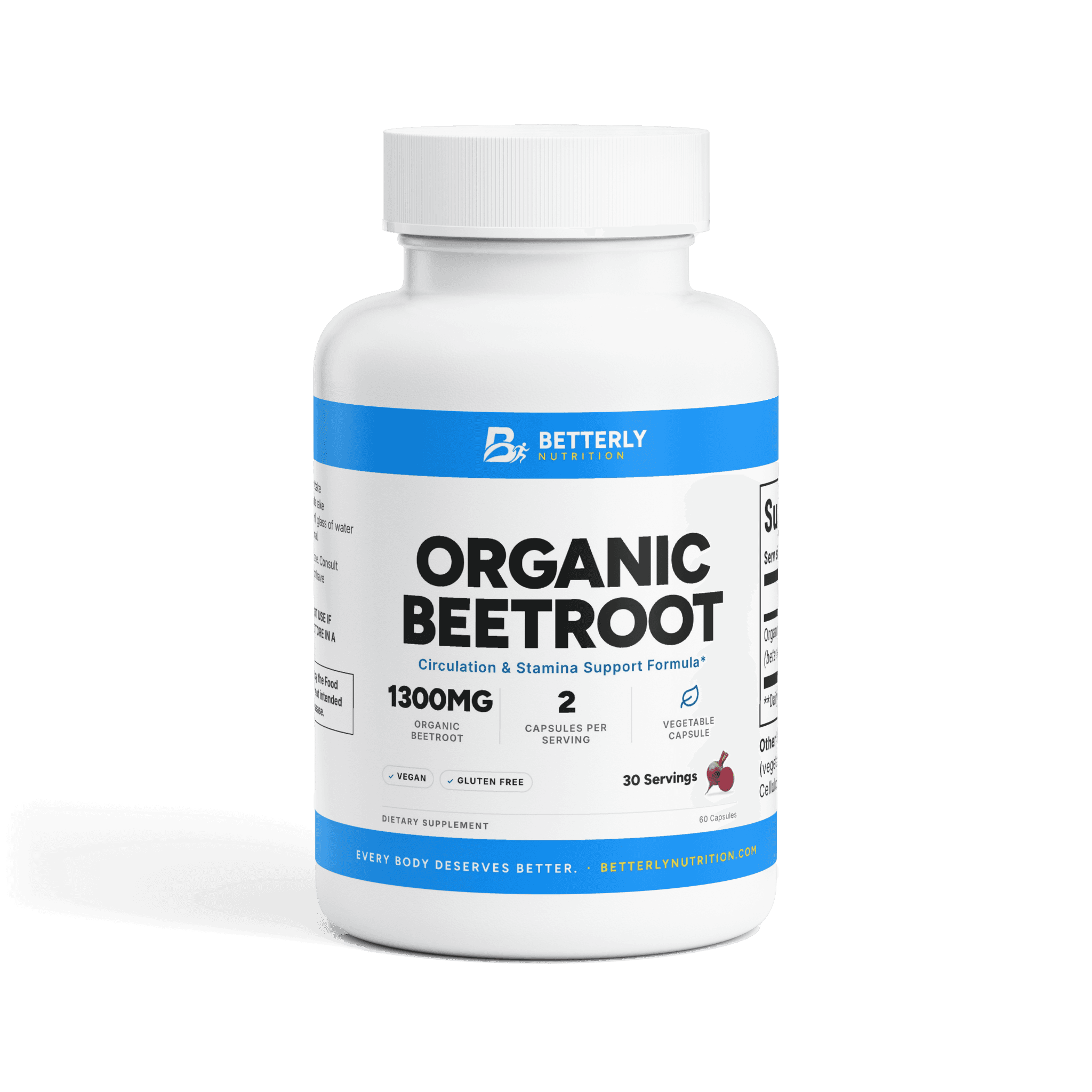
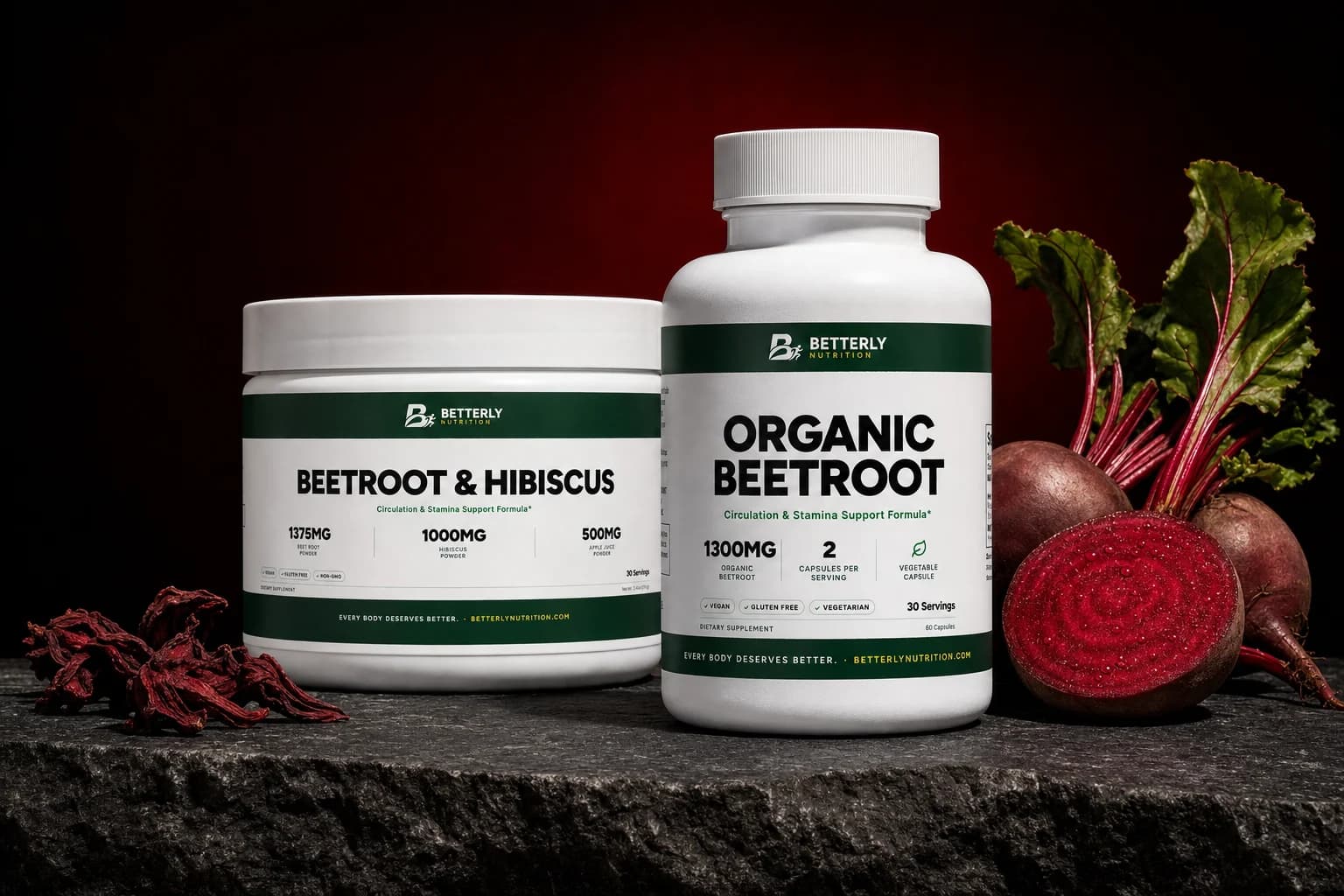
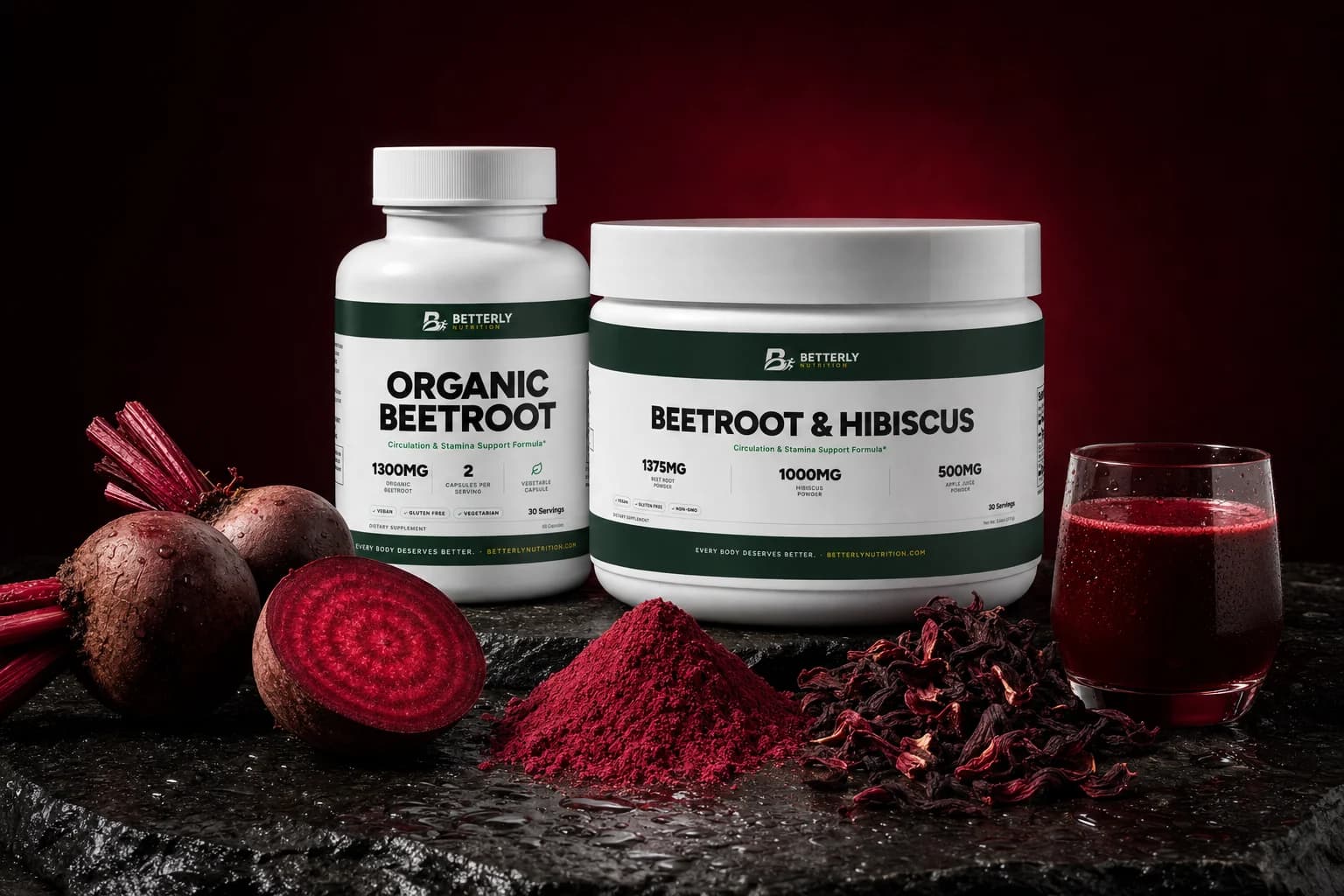
- Betterly's Beetroot & Hibiscus Powder has 1,375 mg of beet root powder per 1-scoop (3.25 g) serving, and the Organic Beetroot Capsules have 1,300 mg per 2-capsule serving. Neither label states nitrate.
- By USDA figures, a 1,375 mg scoop holds at most the dried solids of about 11 g of raw beet, while 2 cups of pure beet juice start from at least a pound of beets.
- Juice poured at a juice bar may be unpasteurized, and the FDA says untreated juice is riskiest for children, older adults, pregnant women and people with weakened immune systems.
Beet powder vs beet juice: what's actually different?
Beet powder is dried, ground beet root, and beet juice is the root's pressed liquid. Juicing leaves most of the fiber behind in the pulp, while drying keeps the whole root minus its water.
Here's how the common beet formats line up, including our three.
| Format | Beet per serving | Nitrate on the label? | Where it wins |
|---|---|---|---|
| Beet juice | 2 cups in the studies the NIH describes | Only if the brand lists it | The format the studies used |
| Fresh beets | 82 g in one 2-inch beet (USDA) | No label | Fiber and a real portion of food |
| Beetroot & Hibiscus Powder | 1,375 mg per 1-scoop (3.25 g) serving | No | Shelf storage, a quick cold drink |
| Organic Beetroot Capsules | 1,300 mg per 2-capsule serving | No | No taste, nothing to mix |
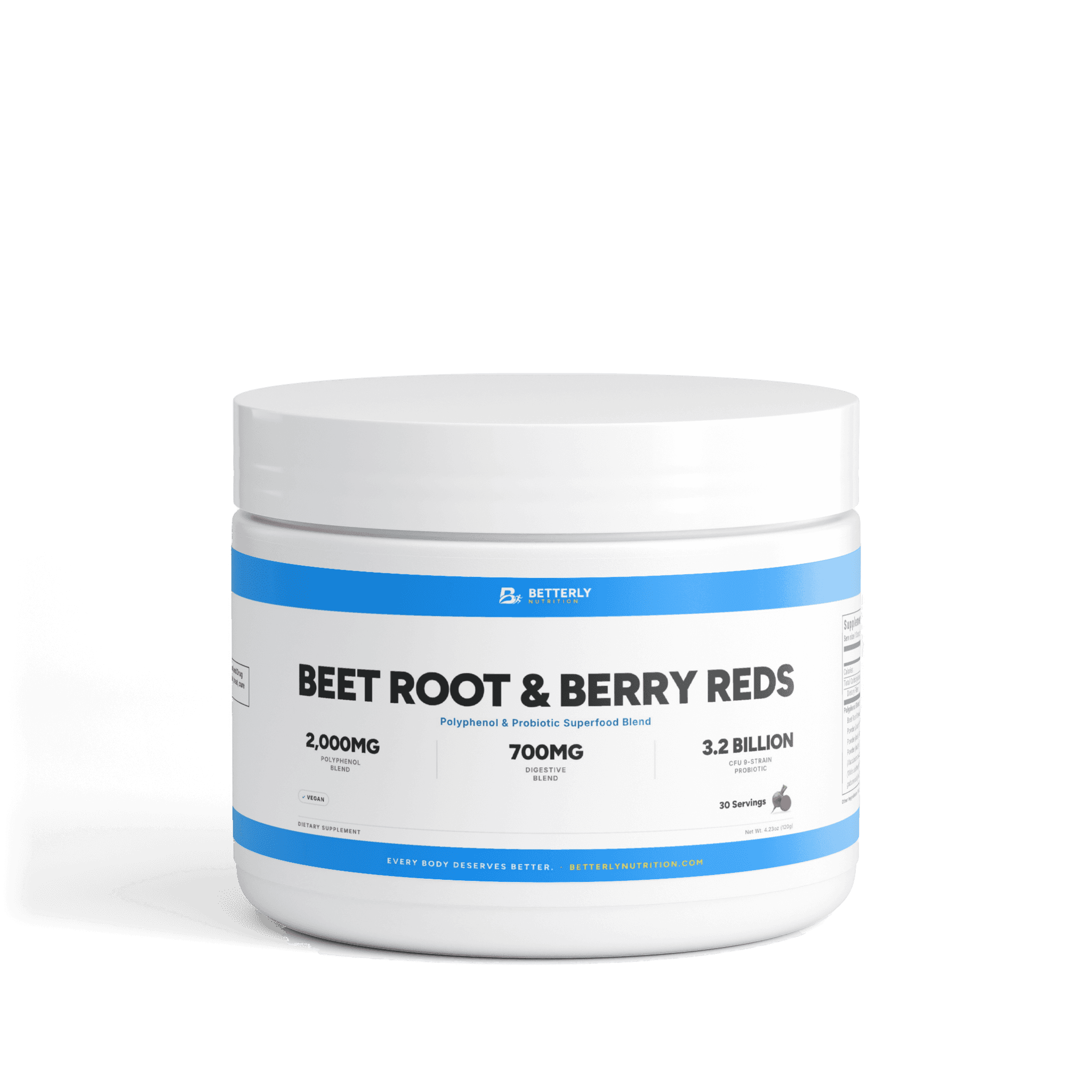
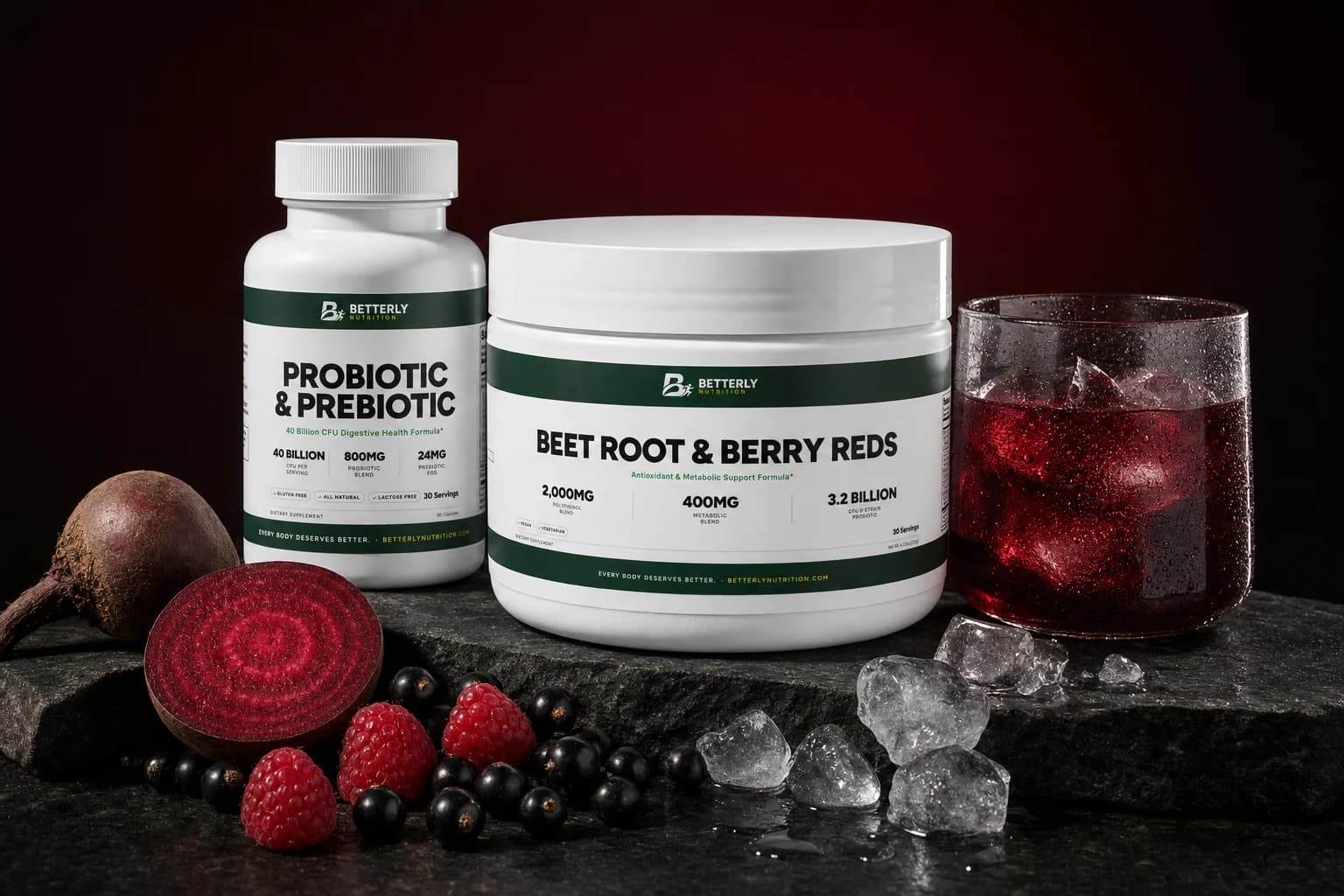
| Beet Root & Berry Reds Powder | Inside a 2,000 mg blend, share not listed | No | Beet plus berries in one scoop |
Only the juice row matches the research. Fresh beets bring fiber and a real portion of food, and the three supplement rows trade that research match for shelf storage and no prep.
Storage is where the supplements pull ahead. Each of our three beet labels says to store the product in a cool, dry place, while opened juice follows the bottle's fridge directions.
Is beet powder as good as beet juice?
No one can say yet whether beet powder performs like beet juice, because the exercise research the NIH summarizes tested juice, not powder.
According to the NIH fact sheet on exercise and athletic performance supplements, beets and beet juice are among the best food sources of nitrate. Your body converts some of that nitrate to nitric oxide, which widens blood vessels and increases blood flow to working muscle.
The same fact sheet says many, but not all, studies have found that beet juice can improve performance and endurance in aerobic activities like running, swimming, cycling and rowing. Whether it helps with strength training isn't known.
Then comes the line that matters if you're holding a tub of powder: "whether dietary supplements containing beetroot powder have the same effects as beet juice isn't known."
Why the gap? The juice studies used a specific drink in a specific amount, while a powder label tells you grams of beet, which isn't a nitrate measurement. If a beet label prints a nitrate figure, that's the number to compare with a study. Ours don't, and we won't guess at one.
So read any performance talk about beet as research on juice, and think of our beetroot and hibiscus drink powder as a simple way to fit beetroot into your day.
How much beet is actually in one scoop of beet powder?
Betterly's Beetroot & Hibiscus Powder holds 1,375 mg of beet root powder per 3.25 g scoop. By USDA figures, that's the dried solids of at most about 11 g of raw beet.
USDA FoodData Central lists raw beets at 87.6 g of water per 100 g, which leaves about 12.4 g of everything else. Divide 1.375 g by 0.124 and you get roughly 11 g of fresh beet.
The USDA weighs a 2-inch beet at 82 g, so one scoop carries the solids of about one-seventh of a small beet. We say "at most" because the math assumes every drop of water is gone. Real powders keep a little moisture, which would pull the figure slightly lower.
Now set that beside the juice studies. Two cups is 16 fluid ounces, and juice pressed straight from beets can't weigh more than the beets it came from. So that glass of pure beet juice starts from at least a pound of beets, or five to six 2-inch beets by the USDA's weight.
Put those figures together and the glass in the studies starts from more than 40 times the raw beet behind one of our scoops. A scoop isn't that glass of juice shrunk down to a spoonful.
Beet powder vs fresh beets: what do you give up?
Fresh beets give you fiber and a real portion of vegetable, while beet powder gives you a small, shelf-stable amount of dried root in a drink.
The USDA lists 2.8 g of fiber and 6.76 g of total sugars in 100 g of raw beets. If you already roast beets or grate them into salads, you're eating far more beet than any scoop provides.
Juice keeps most of the beets' natural sugars but loses most of their fiber, which stays in the pulp. The FDA explains in its guide to added sugars on the Nutrition Facts label that sugars naturally found in vegetables don't count as added sugars. So a plain beet juice can show little or no added sugar, and Total Sugars is the line worth reading.
Powder earns its place on the days you won't cook. Our scoop isn't straight beet, though: per 1-scoop (3.25 g) serving, it pairs 1,375 mg of beet root powder with 1,000 mg of hibiscus powder and 500 mg of apple juice powder, so beet is a little over 40% of the scoop by weight.
The other ingredients are maltodextrin (a starch-based carbohydrate) and stevia extract. Vegan, gluten free and non-GMO are the three claims on its label. The panel doesn't list a calorie or sugar figure, but don't read that as zero: apple juice powder is dried fruit juice, and fruit juice has natural sugar.
From our shop: Beetroot & Hibiscus Powder — 1,375 mg of beet root powder per 1-scoop (3.25 g) serving in a vegan, gluten-free drink mix, with 30 servings per tub.
Beet juice vs beet pills: are beetroot capsules as good as powder?
Beetroot capsules and beet powder carry nearly the same beet in our range: 1,300 mg per 2-capsule serving versus 1,375 mg per scoop. Next to beet juice, both are small.
By the same USDA math, the capsules' 1,300 mg of dried root is at most about 10.5 g of raw beet, and the label states no nitrate. Juice is what the NIH's studies used, so beet pills trade that research match for something you can swallow in seconds.
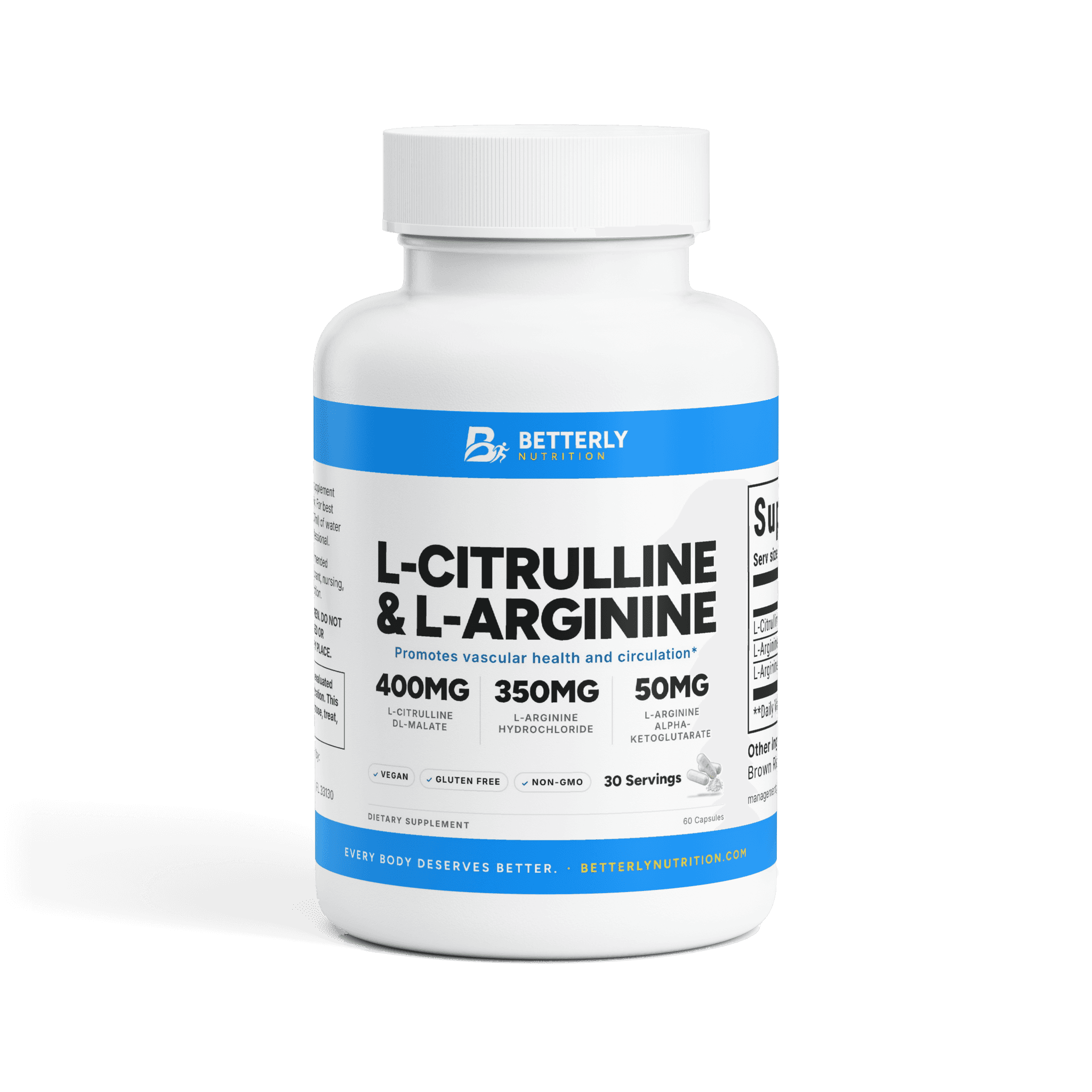
"Beet pills" usually just means capsules, and the choice between pills and powder comes down to routine. Our 2-capsule beetroot supplement holds organic beetroot powder in a hypromellose vegetable capsule, with microcrystalline cellulose and magnesium stearate as the only other ingredients. Its label claims vegan and gluten free.
That makes the capsule the pick if you want beet alone, with no flavor and nothing to stir. The powder suits you better if you like a cold drink in your day or would rather not swallow capsules.
What about beet crystals, reds powders and beet gummies?
Beet crystals, reds powders and beet gummies all contain beet, but each hides a different detail, so the ingredient line matters more than the name on the front.
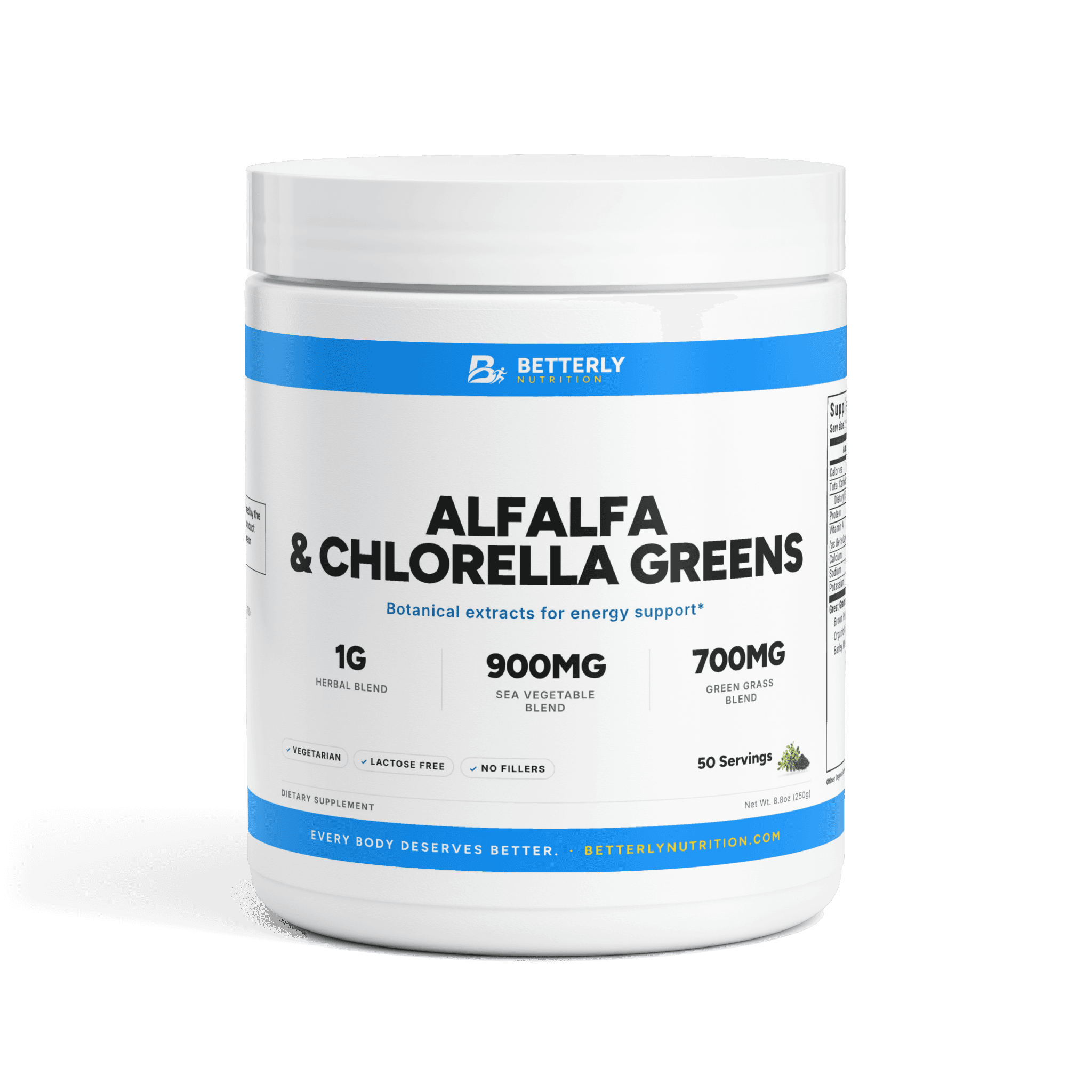
If a product is sold as beet crystals, check whether its ingredient line lists dried beet juice or ground root. "Beet root powder (root)" means dried root, while "beet juice powder" or "juice concentrate" means dried juice. Our own labels show both: the Beetroot & Hibiscus Powder uses dried root, and our Alfalfa & Chlorella Greens Powder lists Beet Juice Powder (root) inside a 265 mg Vegetable Blend per 2-teaspoon (about 5 g) serving.
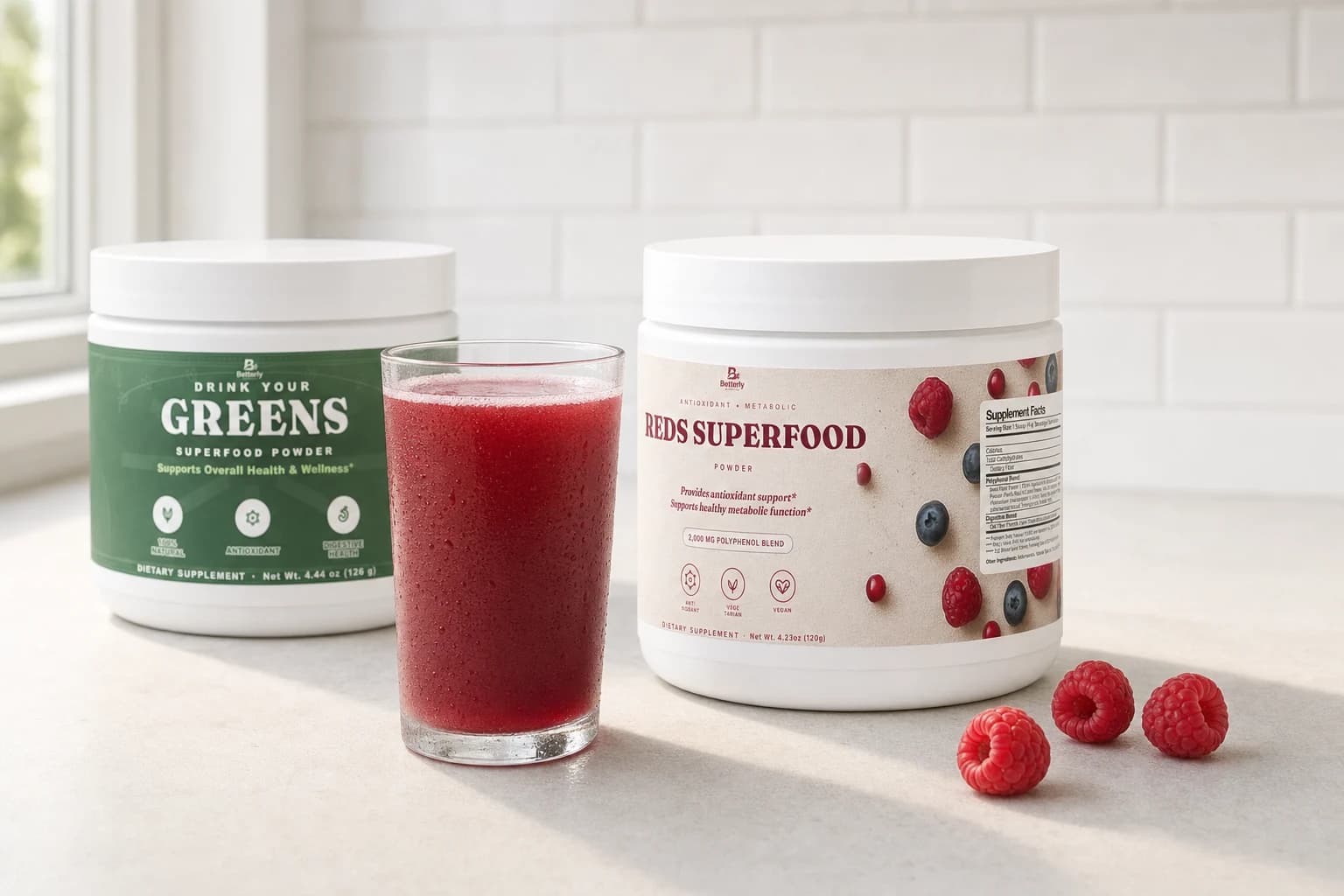
Reds powders fold beet into a bigger mix. Our Beet Root & Berry Reds Powder names beet root powder first among the 11 plants in its 2,000 mg Polyphenol Blend, per 1-scoop (4 g) serving, without listing the beet's share. That scoop also holds a 700 mg Digestive Blend of oat fiber and inulin, plus a 9-strain probiotic.
Its 400 mg Metabolic Blend includes green tea powder, and the label gives no caffeine figure. Treat it as a broad reds blend, not a beet supplement. Our guide to how reds and greens powders differ covers that category.
Weighing beet gummies or chews? Compare milligrams of beet per serving and the sugars line. Our beet products sit beside our greens powders in the Greens & Superfoods collection.
How do you take beet powder and beetroot capsules, per the label?
Follow each Betterly beet label as written: one scoop of powder once daily in cold water, or two capsules once a day before a meal.
- Beetroot & Hibiscus Powder and Beet Root & Berry Reds Powder: the label's suggested use is one scoop in 6-8 ounces (177-237 ml) of cold water or your favorite beverage, once daily, consumed within 10 minutes of mixing.
- Organic Beetroot Capsules: the label's suggested use is two capsules once a day, 20-30 minutes before a meal, with an 8 oz (237 ml) glass of water.
All three labels say "Do not exceed recommended dose." Please don't add scoops or capsules to chase the amount of beet in the juice studies.
The 2.5-to-3-hour window in the NIH summary describes juice before exercise. Neither of our beet labels gives any pre-exercise timing, so we don't suggest one here. For mixing ideas, see our guide to drinking beet powder, and for capsule timing, see when to take beetroot capsules.
From our shop: Organic Beetroot Capsules — 1,300 mg of organic beetroot powder per 2-capsule serving, in vegetable capsules, with 60 capsules (30 servings) per bottle.
When don't you need a beet supplement at all?
You probably don't need a beet supplement if you already eat beets or drink beet juice and enjoy it, since whole beets hold far more beet per serving.
A supplement adds little in a few other cases too:
- You want a dose that lines up with the juice research, which a label without a nitrate figure can't give you.
- You want to feel something right away. Beet isn't a stimulant, and neither our Beetroot & Hibiscus Powder nor our capsules list a caffeine source. If energy is what you're after, our roundup of stimulant-free energy supplements looks at other ingredients.
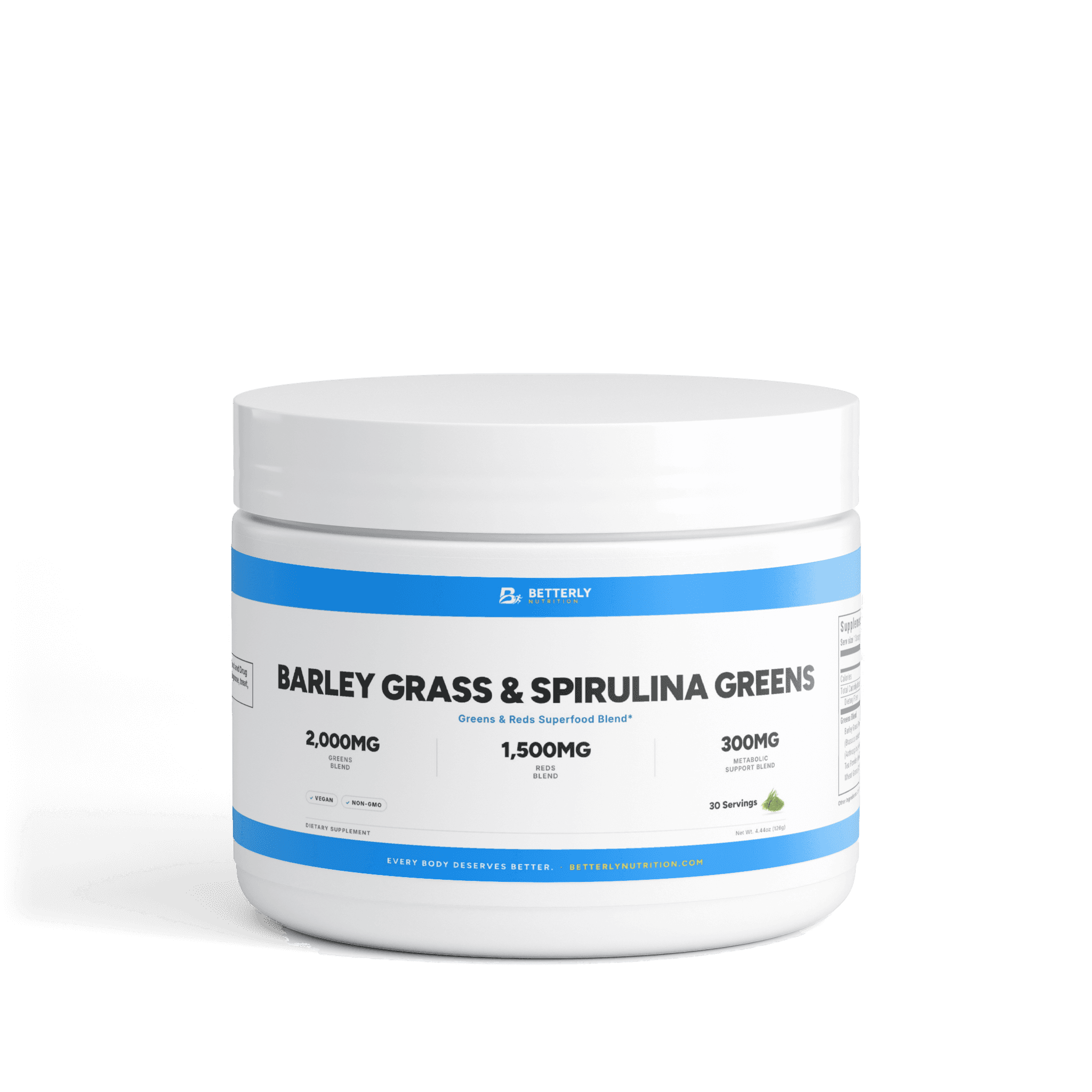
- You already take a greens or reds powder with beet in it, like our Barley Grass & Spirulina Greens Powder, whose 1,500 mg Reds Blend per 1-scoop (4.2 g) serving includes beet root powder.
- You train at a high level. The NIH notes that beet juice is more likely to help recreational exercisers than highly trained athletes.
Who should check with a healthcare provider first?
Check with a healthcare provider before using beet powder or capsules if you're pregnant, nursing, under 18 or managing a medical condition. Both labels say so.
The same goes if you take any prescription medication or have surgery coming up. Bring the label, so your provider sees every ingredient, including the hibiscus in our powder.
Juice has its own safety question. The FDA's page on juice safety explains that bacteria from produce can end up in fresh-squeezed juice. Packaged untreated juice must carry a warning label, but juice sold by the glass, as at juice bars, doesn't need one.
The FDA says children, older adults, pregnant women and people with weakened immune systems face the most serious risk from untreated juice. If that's you, ask whether a juice has been treated before you buy it.
FAQ: beet powder and beet juice
Is beetroot powder the same thing as beet powder?
Yes, beetroot powder and beet powder usually mean the same thing: the dried, ground root of Beta vulgaris, the table beet. The words that signal a different material are "juice powder" and "extract," so read the ingredient line rather than the front of the tub.
Does beet juice have more sugar than beet powder?
Yes, a glass of beet juice carries more sugar than a scoop of beet powder, and scale is the reason. Two cups of pure juice start from at least a pound of beets and keep most of their natural sugars. Our 3.25 g scoop can't hold more than 3.25 g of anything, and its beet carries the natural sugars of only about 11 g of raw beet. The scoop also contains apple juice powder and maltodextrin, and its panel doesn't list a sugar figure.
Is beet powder cheaper than beet juice?
Beet powder may cost less per serving than beet juice, but a scoop and a glass don't hold equal amounts of beet. Divide a tub's price by the servings on its label (each of our three beet products lists 30) and compare that with the juice you'd actually drink. Just remember that a lower cost per serving isn't a lower cost per gram of beet.
Can you take beet powder and beetroot capsules together?
There's little reason to take beet powder and beetroot capsules together, since you'd mostly be doubling one ingredient. Neither label suggests combining them, and each says not to exceed its recommended dose. If you're pregnant, nursing, under 18 or on medication, ask a provider before combining any supplements.
Sources
- NIH Office of Dietary Supplements: Dietary Supplements for Exercise and Athletic Performance, Fact Sheet for Consumers
- U.S. Department of Agriculture: FoodData Central, Beets, raw (SR Legacy, FDC ID 169145)
- U.S. Food and Drug Administration: What You Need to Know About Juice Safety
- U.S. Food and Drug Administration: Added Sugars on the Nutrition Facts Label
If this left you looking for somewhere to start, read beetroot and hibiscus powder — its amounts per serving are listed on the page. For the practical questions this raises, how dosing, sourcing and subscriptions work is answered in one place.