On this page
- Key takeaways
- How do you drink beet powder, step by step?
- Why does the label say cold water and 10 minutes?
- How do you drink beetroot powder if you don't like the taste?
- What's the best way to drink beet powder: water, juice or a smoothie?
- How do you mix beetroot powder with water without clumps?
- How is Beet Root & Berry Reds Powder different to mix?
- When is beet powder the wrong fit for you?
- Who should check with a healthcare provider first?
- FAQ: how to drink beet powder
- Sources
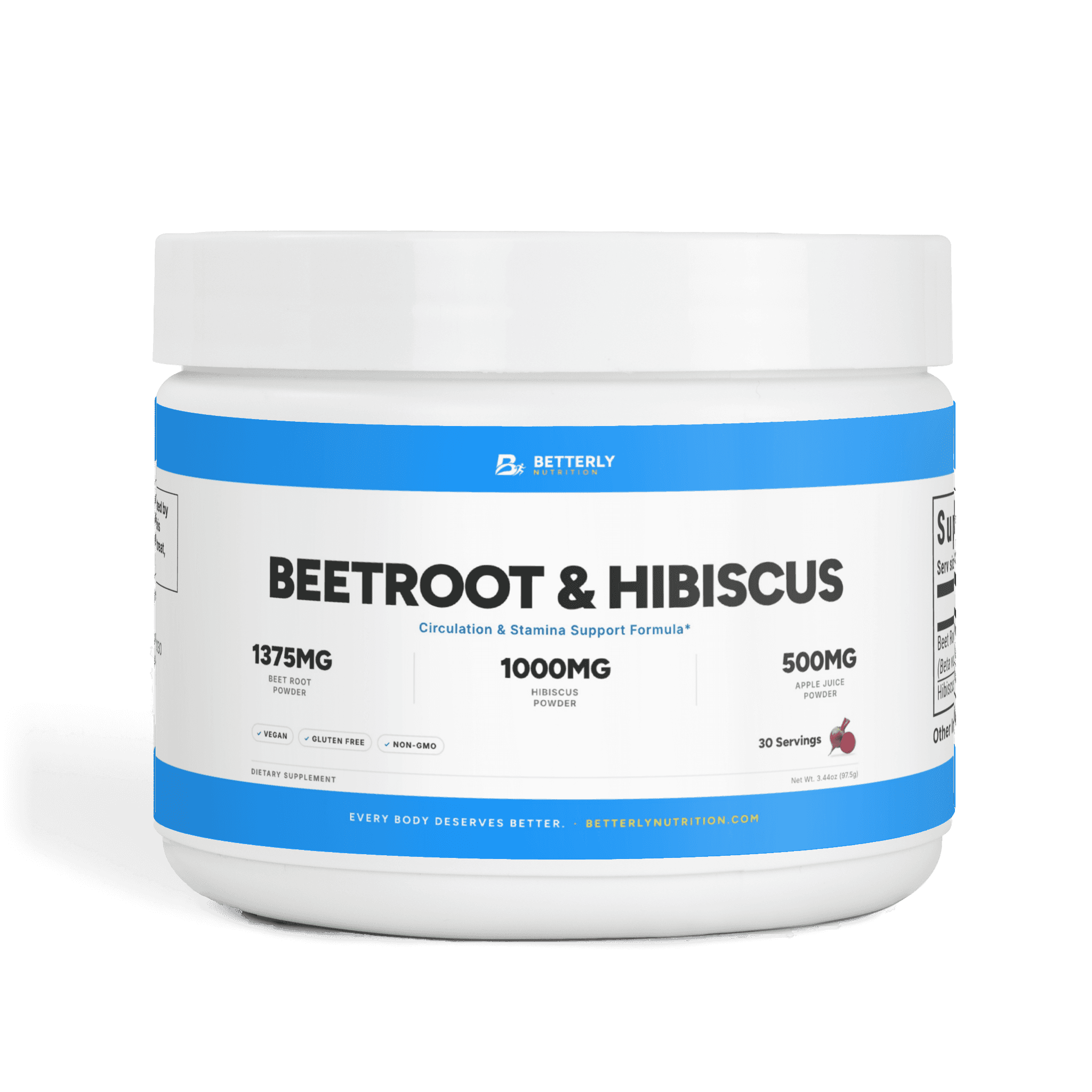
The short answer: How to drink beet powder depends on the tub, and ours is specific. Our Beetroot & Hibiscus Powder label calls for one 3.25 g scoop in 6-8 oz of cold water or another beverage, once a day, finished within 10 minutes of mixing. Pour the liquid in first, add the scoop, shake or stir hard, and drink it before it has time to settle.
Key takeaways
- A tub of Betterly's Beetroot & Hibiscus Powder holds 30 servings of 3.25 g, 97.5 g in all, so one glass a day lasts about a month.
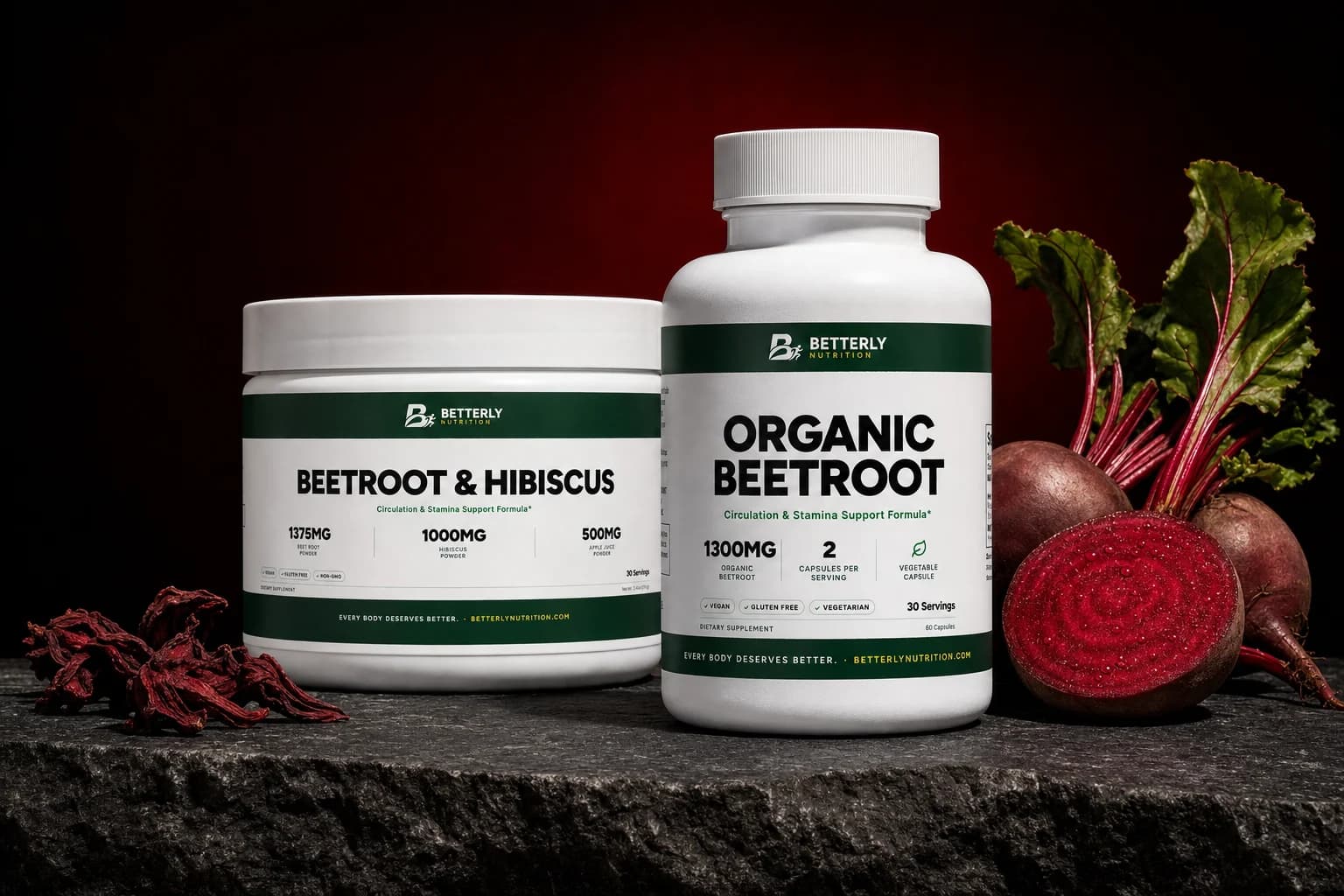
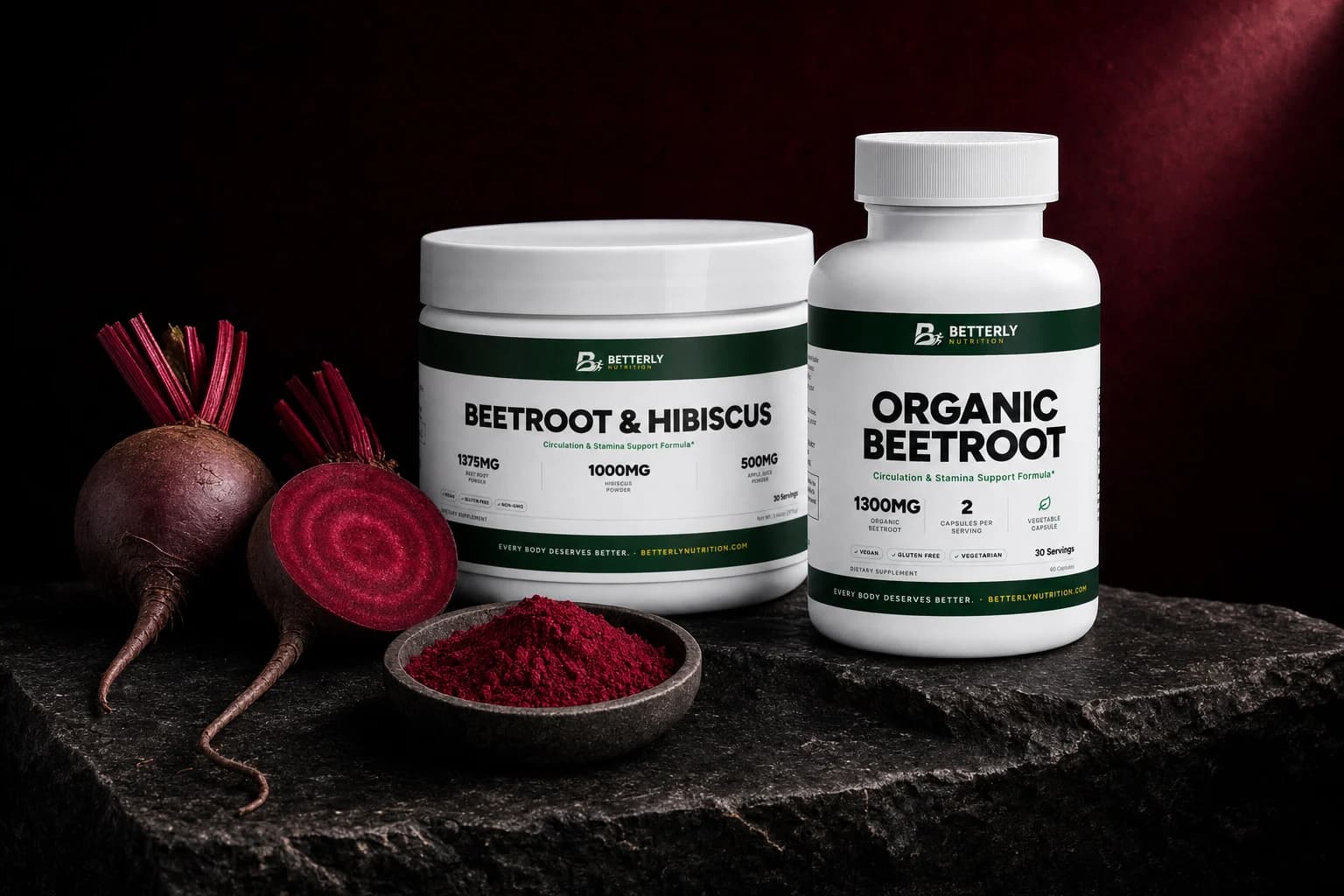
- Each 1-scoop (3.25 g) serving lists 1,375 mg of beet root powder, 1,000 mg of hibiscus powder and 500 mg of apple juice powder, so the flower and fruit together outweigh the beet.
- Cold is the only temperature the label names, and it gives no reason for the cold water or the 10-minute window.
- MedlinePlus names beets as one of several causes of pink or red urine, and it says to see a provider if that color isn't from a food or medicine, or if you ever see blood in your urine.
A quick disclosure: Betterly sells the beet and hibiscus tub, the reds powder and the capsules in this guide, and every direction below comes from their labels. Where those labels leave a question open, like how warm other drinks can be or why the 10-minute limit exists, we mark the answer as our own call.
How do you drink beet powder, step by step?
The simplest way to consume beet powder is to follow the Beetroot & Hibiscus Powder label, then add one trick of our own: liquid first, powder second.
The tub's wording, in full: "adults use one (1) scoop of powder in 6-8 ounces (177-237 ml) of cold water or favorite beverage once daily. Consume within 10 minutes of mixing."
In practice, that's four small moves:
- Pour 6-8 oz of cold liquid into a glass, jar or shaker bottle.
- Add one level scoop on top. A heaped scoop is more than the 3.25 g the facts panel counts.
- Seal and shake, or stir briskly, until no dry powder floats on the surface.
- Drink it within 10 minutes, and swirl the glass before the last few sips.
The label says "once daily" and names no time of day or meal, so tie it to something you already do. Our guide to pinning a new supplement to a habit you already have shows how, and our guide on when to take beetroot capsules covers capsule timing.
Here's what the label leaves open, and the cautious way to fill each gap:
| Label wording | What it leaves open | Our read |
|---|---|---|
| "one (1) scoop" | Level or heaped | The panel counts 3.25 g, so don't heap it |
| "6-8 ounces (177-237 ml)" | Which end of the range | 6 oz tastes bolder, 8 oz lighter |
| "cold water or favorite beverage" | How warm other drinks can be | Keep every mix cold |
| "once daily" | Time of day and food | Whenever you'll remember |
| "within 10 minutes of mixing" | The reason | Mix right before you drink |
Where the label is silent, the right-hand column keeps you close to its intent: no extra powder, a cold glass, and no mixing ahead.
Why does the label say cold water and 10 minutes?
The Beetroot & Hibiscus Powder label never says why it wants cold water and a 10-minute finish, and the manufacturer's reason isn't printed anywhere we can check.
Some pages claim heat or time wipes out a set percentage of what's in beets. We haven't found a federal source with figures like that for a drink mix, and our label claims nothing of the kind.
There's a practical side too. The scoop is ground beet root and ground hibiscus flower, which spread through water rather than disappearing into it the way table sugar does. Leave a mixed glass standing and you may find a pink layer on the bottom. A fresh stir and a prompt finish keep every sip even.
So a thermos for the afternoon isn't what this label describes. Away from home, keep one scoop in a small dry jar and tip it into your water when you get there.
How do you drink beetroot powder if you don't like the taste?
Betterly's Beetroot & Hibiscus Powder tastes earthy and tart, so if that bothers you, use the full 8 oz, chill it well or swap half the water for juice.
Taste is personal, so read what follows as a rough map of where each flavor comes from. Per 3.25 g scoop, the three listed ingredients add up to 2,875 mg: 1,375 mg of beet, 1,000 mg of hibiscus and 500 mg of apple juice powder. That leaves roughly 375 mg for the two other ingredients, maltodextrin and stevia extract.
Here's what each one brings to the glass:
- Beet root powder is the ground root of the table beet (Beta vulgaris), and it gives the drink its earthy base.
- Hibiscus powder is ground hibiscus flower, the same part that gives hibiscus tea its deep red color and sour, cranberry-like edge.
- Apple juice powder is dried apple juice. It adds fruitiness and natural sweetness, which is why we wouldn't call this a sugar-free drink.
- Stevia extract is a sweetener from the stevia plant. The FDA's page on sweeteners in food says steviol glycosides, its sweet compounds, are reported to be 200 to 400 times sweeter than table sugar.
- Maltodextrin is a mild, powdery carbohydrate made from starch.
The gentlest fixes stay inside the label: the full 8 oz dilutes the earthy and sour notes, and plenty of ice keeps the glass cold. For tartness, try a sweeter mixer from the next section.
What's the best way to drink beet powder: water, juice or a smoothie?
The best way to drink beet powder is the one you'll repeat: cold water keeps it simple, and citrus juice or a small smoothie softens the earthy edge.
"Favorite beverage" gives you room, but the amount stays 6-8 oz and the 10-minute clock still runs.
| Mix it with | Fits the label? | Taste | Keep in mind |
|---|---|---|---|
| Cold water | Named on the label | Beet and hibiscus, unmasked | The plainest option |
| Orange juice | Favorite beverage | Citrus covers the earthiness | Adds the juice's sugar |
| Cranberry or pomegranate juice | Favorite beverage | Tart on tart | Can taste sharp |
| Cold milk or oat milk | Favorite beverage | Softer, bright pink | Shake it well |
| Small smoothie | If the liquid is 6-8 oz | Fruit hides the texture | Drink it right away |
| Hot tea, coffee or water | Not named | Not covered | Stick with cold |
Every cold option fits the label, so the choice comes down to taste and what the mixer adds. Juice covers the earthy note fastest but brings its own sugar, so half juice and half water is a fair middle ground.
Two easy builds:
- Citrus beet cooler. Shake 4 oz of cold orange juice, 4 oz of cold water, one scoop and a squeeze of lime. Pour it over ice.
- Berry beet smoothie. Blend 6 oz of cold water or milk with one scoop, a handful of frozen berries and half a banana. Drink it straight from the blender.
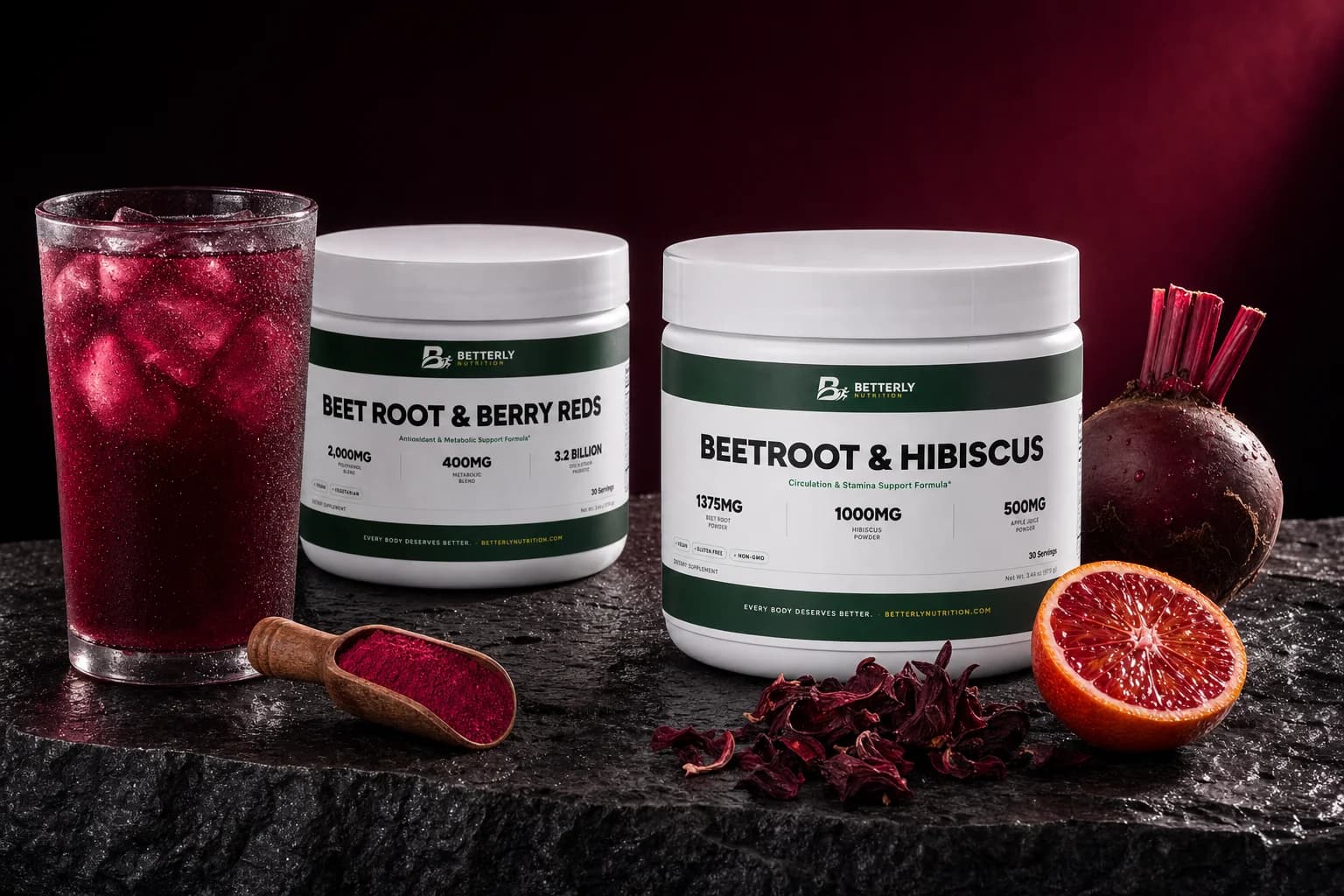
From our shop: Beetroot & Hibiscus Powder — 1,375 mg of beet root powder, 1,000 mg of hibiscus powder and 500 mg of apple juice powder per 1-scoop (3.25 g) serving, with 30 scoops per tub.
How do you mix beetroot powder with water without clumps?
To mix beetroot powder with water without clumps, pour the cold water first, add the scoop, then shake it in a sealed bottle or whisk with a fork.
Clumps usually start when powder goes into an empty glass and water lands on top. The top layer wets first and forms a skin that traps dry powder beneath it. Reversing the order fixes most of it.
A few more habits help:
- Put a lid on it. A shaker bottle or a jam jar does more in a few seconds than a spoon does in a minute.
- Keep the tub dry. Hard lumps inside it usually mean moisture got in, so use a dry scoop and snap the lid shut.
- Swirl before the last sips. A little fine sediment at the bottom is most likely ground root and flower, not a mixing failure.
Beet's deep color can also tint a pale plastic shaker. Rinse it right away, or mix in glass.
How is Beet Root & Berry Reds Powder different to mix?
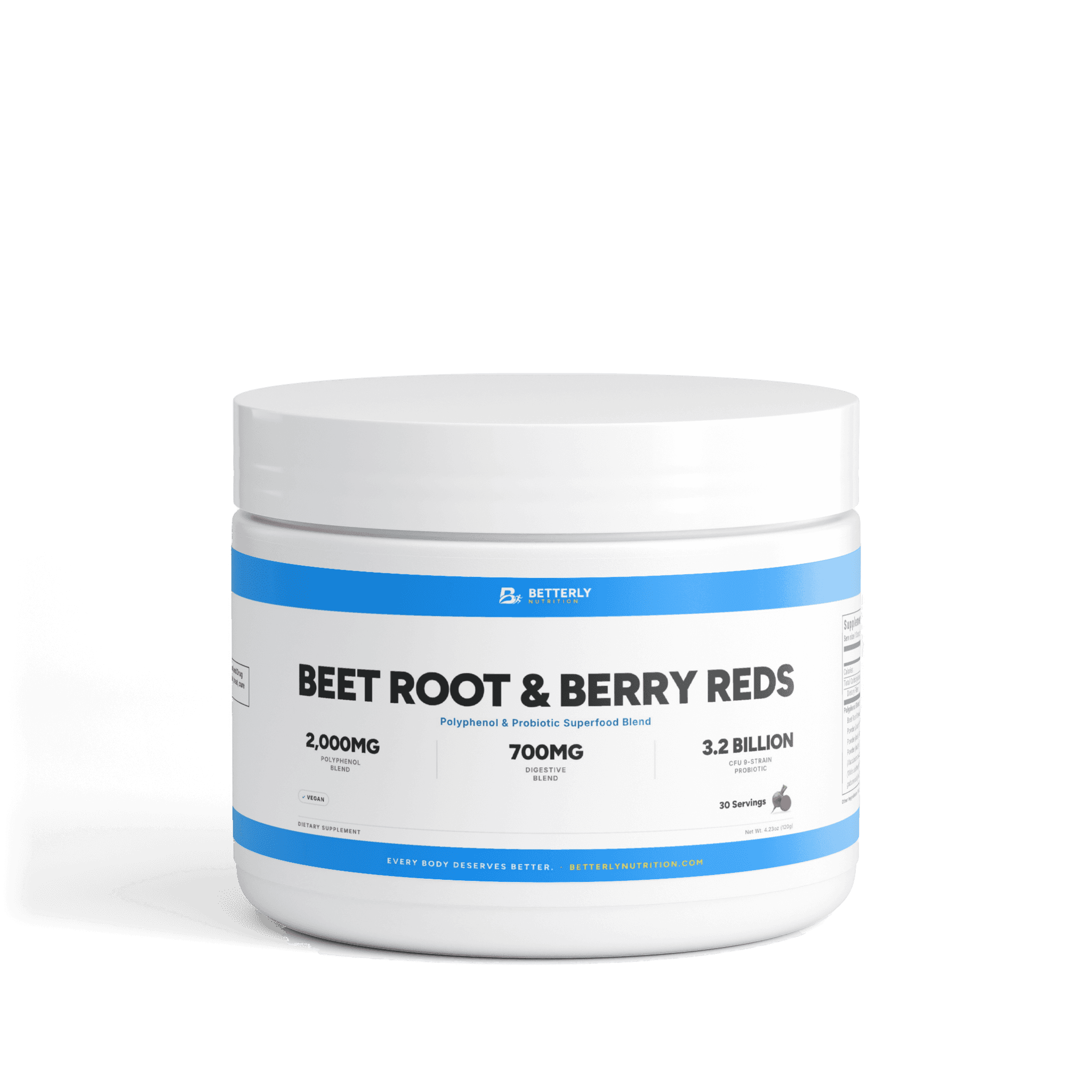
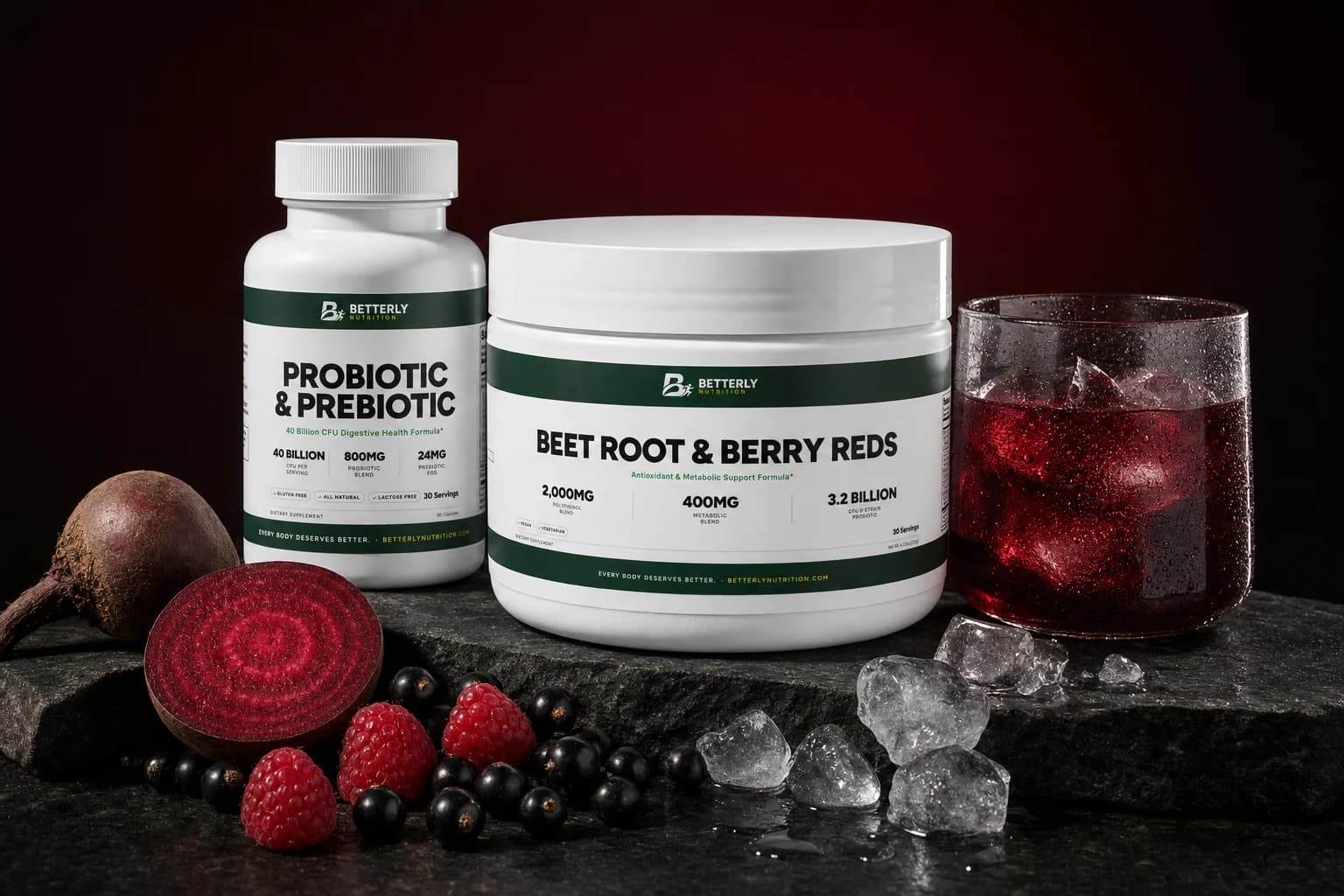
Betterly's Beet Root & Berry Reds Powder carries the same label direction word for word, but its 4 g scoop puts more into the glass.
The flavor base shifts first. The reds scoop's other ingredients add natural flavors and citric acid to the maltodextrin and stevia extract both tubs share. The label doesn't say what those flavors are, so try your first glass in plain cold water before you pick a mixer.
Texture comes next. Per 1-scoop (4 g) serving, the reds panel lists 10 calories and 2 g of dietary fiber, alongside a 700 mg Digestive Blend of oat fiber powder and inulin. That fiber may leave the glass a little thicker and quicker to settle, so give it a longer shake and swirl again before you finish.
Then there are the live cultures. The panel lists a 9 Strain Probiotic at 100 mg, with 3.2 Billion live CFU at the time of manufacture. Cold water is the only temperature this label names too, so we'd keep the reds scoop out of hot drinks as well.
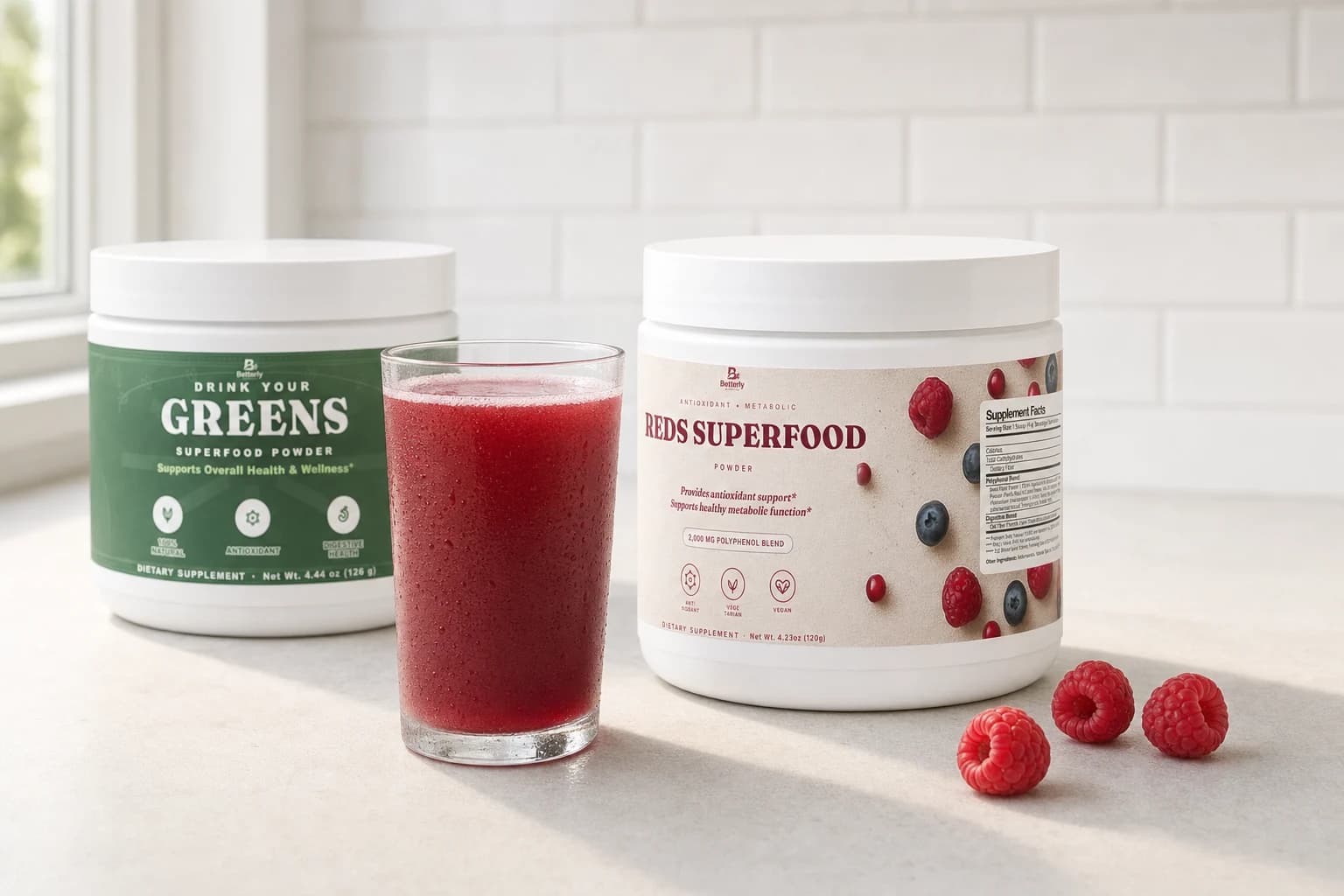
For the full formula, including the 11 plants in its Polyphenol Blend, our breakdown of how reds and greens powders differ covers the category. Both tubs sit in our greens and superfoods range, and both contain beet and hibiscus, so pick one scoop a day rather than stacking them.
From our shop: Beet Root & Berry Reds Powder — beet root powder leads the 2,000 mg Polyphenol Blend in each 1-scoop (4 g) serving, which also lists a 700 mg Digestive Blend, a 9-strain probiotic and a 400 mg Metabolic Blend.
When is beet powder the wrong fit for you?
Beet powder is the wrong fit if you want plain beet, would only drink it hot or premixed, or won't finish a tart glass most days.
Each one clashes with the tub itself:
- You want beet and nothing else. Our tub also carries hibiscus, apple juice powder, maltodextrin and stevia, so a single-ingredient beet powder suits cooking or an unsweetened drink better.
- Your routine runs on a hot mug or a bottle mixed hours ahead. Neither matches a label that names cold liquid and a 10-minute finish, so the tub would keep fighting your habits.
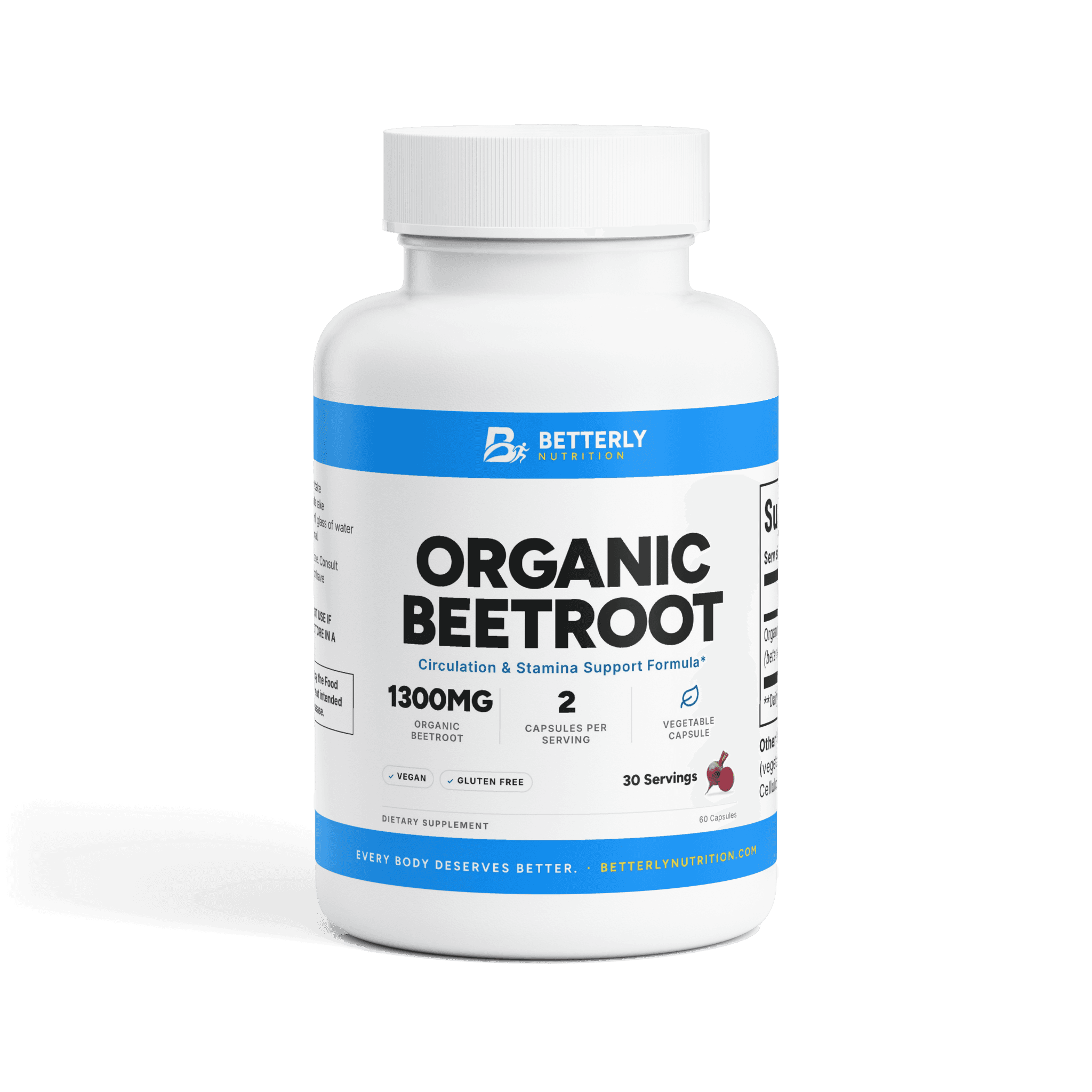
- A tart 6-8 oz glass every day sounds like a chore. Our Organic Beetroot Capsules hold 1,300 mg of organic beetroot powder per 2-capsule serving, taken as two capsules once a day. For best results, their label says 20-30 minutes before a meal with an 8 oz (237 ml) glass of water.
If your real question is whether a scoop can stand in for the beet juice used in exercise studies, our side-by-side of beet powder, juice and capsules takes that on.
Who should check with a healthcare provider first?
Check with a healthcare provider before drinking beet powder if you're pregnant, nursing, under 18, taking a prescription medication, scheduled for surgery or managing a medical condition.
The caution on both of our beet powder tubs reads: "Do not exceed recommended dose. Consult a physician if pregnant, nursing, under 18, or have a medical condition." Bring the tub to that conversation, since hibiscus is the second-largest ingredient in the beet and hibiscus scoop.
The reds scoop needs a longer look. Besides an 11-plant Polyphenol Blend, oat fiber, inulin and a 9-strain probiotic, it has a 400 mg Metabolic Blend of seven ingredients: cinnamon, green tea powder, ginger, turmeric, shilajit extract, bitter melon extract and black pepper extract. Show those to your provider or pharmacist by name. The panel prints no caffeine amount for the green tea powder, so mention it if you limit caffeine.
FAQ: how to drink beet powder
Can you drink beetroot powder every day?
Yes, daily use is how Betterly's Beetroot & Hibiscus Powder label is written: one scoop, "once daily." If you miss a day, don't double up the next, since the caution reads "Do not exceed recommended dose." If you're pregnant, nursing, under 18 or managing a medical condition, the label asks you to check with a physician before starting.
Can you put beet powder in hot water or coffee?
Betterly's Beetroot & Hibiscus Powder label doesn't cover hot drinks either way: its directions name cold water or a favorite beverage, and cold is the only temperature they mention, so we'd keep it cold. Cold brew or iced coffee fits that reading. Any caffeine in the glass would come from the coffee, since the beet and hibiscus panel lists no caffeine source.
Can beet powder turn your urine pink?
Yes, it can. Betterly's Beetroot & Hibiscus Powder has 1,375 mg of beet root powder per 3.25 g scoop, and MedlinePlus includes beets among several causes of pink or red urine. We found no source on how often a scoop that size does it. Other causes on that list need a doctor, and the page says to see a provider about pink or red urine that isn't due to a food or medicine, or blood in your urine even once. Our guide to beetroot capsule side effects goes further.
Can you mix beet powder with creatine or pre-workout?
Betterly's Beetroot & Hibiscus Powder label doesn't cover it either way: it doesn't mention other supplements, so it neither suggests nor rules out a shared glass. Keep each product's own serving size and daily limit, and remember that a pre-workout may add caffeine. On any prescription medication? Ask a healthcare provider before combining supplements.
How do you use beet powder besides drinking it?
Beyond drinks, beet powder can color food: the FDA's summary of color additives lists "dehydrated beets (beet powder)" among colors exempt from certification. Betterly's Beetroot & Hibiscus Powder isn't that product. It's a drink blend with hibiscus, apple juice powder and stevia, and its label describes only a drink. For frosting, pasta dough or pancakes, a plain single-ingredient beet powder is the better fit.
Sources
- Urine - abnormal color, MedlinePlus Medical Encyclopedia
- Aspartame and Other Sweeteners in Food, U.S. Food and Drug Administration
- Summary of Color Additives for Use in the United States in Foods, Drugs, Cosmetics, and Medical Devices, U.S. Food and Drug Administration
If this left you looking for somewhere to start, read beet and hibiscus drink powder — its amounts per serving are listed on the page. For the practical questions this raises, how dosing, sourcing and subscriptions work is answered in one place.